A custom kitchen cabinet quote is more than a final price. It is a working summary of what a supplier believes your project includes: cabinet scope, materials, finishes, hardware, drawings, delivery expectations, and sometimes installation support. If two quotations appear to describe the same kitchen but include different details, the lower figure may not represent the lower overall project cost.
That is why buyers should compare custom kitchen cabinet quotes line by line rather than comparing only the total at the bottom of the page. A clear quotation helps homeowners, designers, builders, and overseas buyers understand what they are purchasing before the project reaches production. It also creates a more reliable starting point for drawings, material approvals, quality checks, packing, delivery, and installation planning.
This guide explains what to request, what to compare, and which questions to ask before approving a custom cabinet quotation. It is designed for projects ranging from a single kitchen to multi-room homes, villas, apartments, and overseas orders.
What Should a Custom Kitchen Cabinet Quote Include?
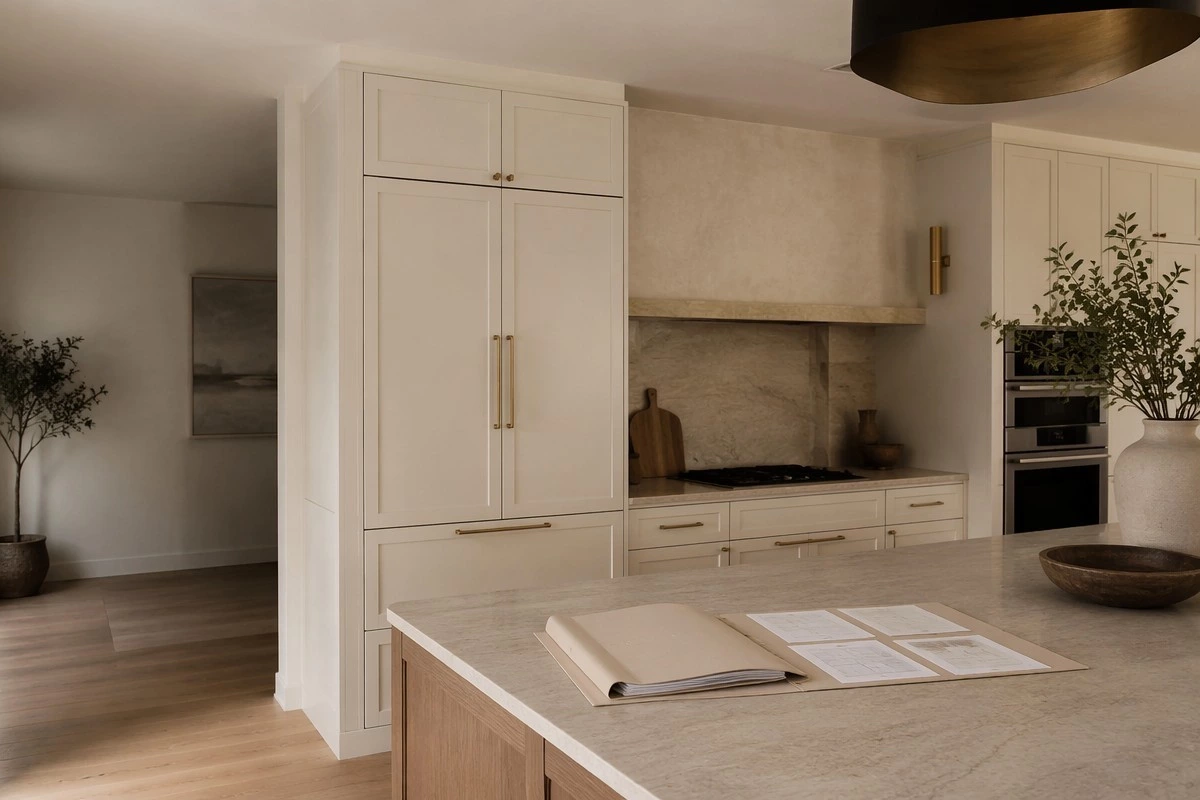
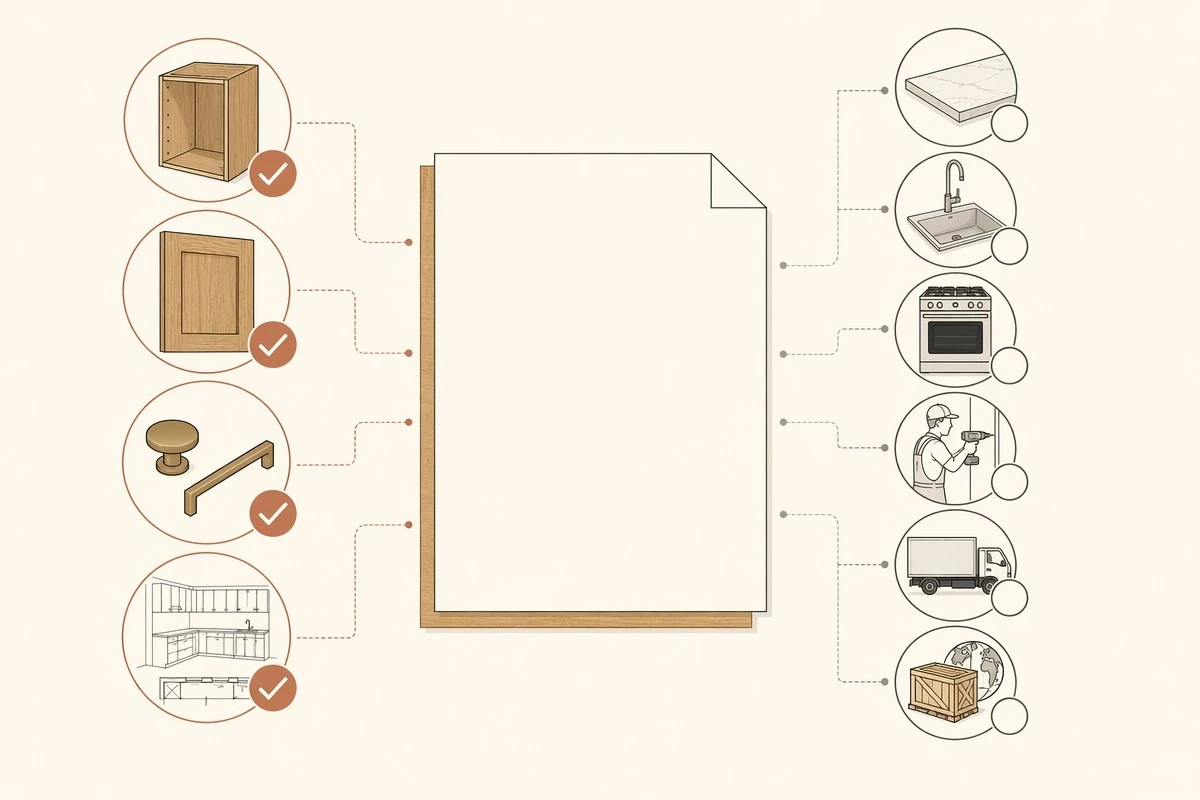
A useful custom kitchen cabinet quote should make the project scope understandable. It does not need to contain every construction drawing at the first enquiry stage, but it should identify enough information for the buyer to see what is included, what remains open, and what may affect the final price.
At a minimum, review whether the quotation identifies:
- the rooms or cabinet zones included in the project;
- the cabinet types included, such as base cabinets, wall cabinets, tall units, islands, pantry units, or appliance housings;
- the material and construction direction for cabinet boxes, doors, visible panels, and internal components;
- door style, finish, color reference, or finish category;
- hardware, handles, drawer slides, hinges, and internal accessories;
- countertop, glass, lighting, metal, or other special elements when they are included;
- drawings, design support, or technical approvals required before production;
- packing, delivery, shipping, installation, or support scope; and
- terms that are still to be confirmed.
A quotation does not become more trustworthy simply because it has many pages. It becomes more useful when a buyer can connect every important line item to the actual room, drawing, material, or service required for the project.
Start With the Scope: Are You Comparing the Same Project?
Before comparing prices, make sure every supplier is pricing the same scope. This is the first and most important cabinet quotation checklist item.
For example, one quotation may include a kitchen island, tall pantry cabinets, appliance panels, interior organizers, and finished end panels. Another may show only the main base and wall cabinets. Both may use a similar headline description, but they are not directly comparable.
Use your floor plan, elevations, room list, appliance schedule, and storage requirements to create a comparison baseline. For each quotation, check:
- Which rooms are included?
- Which cabinet types are included in each room?
- Are fillers, end panels, plinths, cornices, trims, and appliance panels included?
- Are internal accessories included or priced separately?
- Are countertops, backsplash panels, sinks, or appliances excluded?
- Does the quotation cover one unit, multiple units, or a phased project package?
If the project includes more than a kitchen, separate the pricing by room whenever possible. A room-by-room breakdown makes it easier to evaluate wardrobes, vanities, laundry cabinetry, media units, or other items without confusing them with the kitchen package.
Before finalizing the cabinet scope, it is useful to review your overall custom kitchen cabinet cost factors. The objective is not to choose the cheapest option by default; it is to understand which design, material, and service decisions are influencing the price.
Check the Drawings and Dimensions Behind the Quote
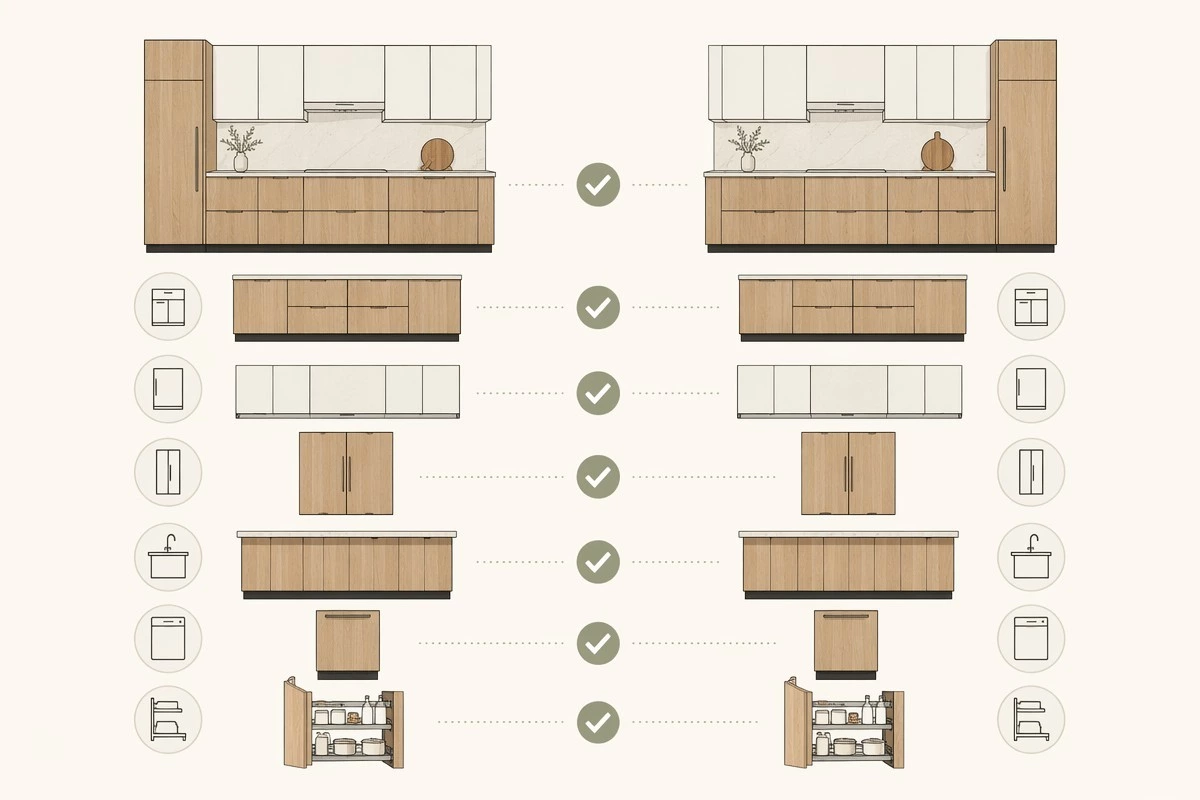
A quotation is only as accurate as the information used to prepare it. If a supplier is pricing from a rough sketch or early layout, the quote may be a useful budget estimate, but it should not be treated as a final production document.
Ask what documents support the quotation. These may include a floor plan, cabinet layout, elevations, appliance schedule, room measurements, or material direction. For a more developed project, confirm whether the quote refers to approved shop drawings or whether detailed drawings will be prepared after the design stage.
Key points to review include:
- cabinet width, height, depth, and total run length where relevant;
- ceiling height and any tall-cabinet or cornice conditions;
- appliance model dimensions and required clearances;
- island size, seating overhangs, and countertop interfaces;
- sink, cooktop, dishwasher, refrigerator, and range hood locations;
- door and drawer opening clearances; and
- wall, floor, plumbing, electrical, and ventilation constraints.
Do not approve production based on a quotation alone. The quote should work together with final drawings and material approvals. A clear drawing review before production can reduce avoidable changes during installation. For more detail, read how to prepare a kitchen for cabinet installation.

Compare Cabinet Box Materials and Door Finishes
A cabinet quote should identify more than a broad label such as “wood cabinet” or “modern kitchen.” Cabinet box materials, door construction, surface finishes, edge treatments, and visible panels all influence the appearance, durability, maintenance needs, and cost of the finished project.
Ask each supplier to clarify the material direction for:
- cabinet carcasses or boxes;
- shelves, backs, and internal partitions;
- doors and drawer fronts;
- end panels, fillers, plinths, and decorative trim;
- moisture-sensitive areas around sinks, dishwashers, or utility zones; and
- any special surfaces, such as veneer, lacquer, PET, glass, metal, or textured panels.
The same color can be achieved with different materials and finish systems. A quote that specifies a finish category but does not state the intended visible components may leave room for different interpretations. Where visual consistency matters, ask for finish references, sample approval, and confirmation of grain direction or sheen when applicable.
Use this guide to custom kitchen cabinet materials to prepare material questions before comparing quotes. The correct choice depends on the room, design direction, maintenance expectations, project budget, and supplier capability.

Review Hardware and Storage Accessories Separately
Hardware can significantly change the everyday experience of a kitchen, yet it is often grouped into a single vague line item. A clear quote should state what hardware is included and whether it applies to all relevant cabinets.
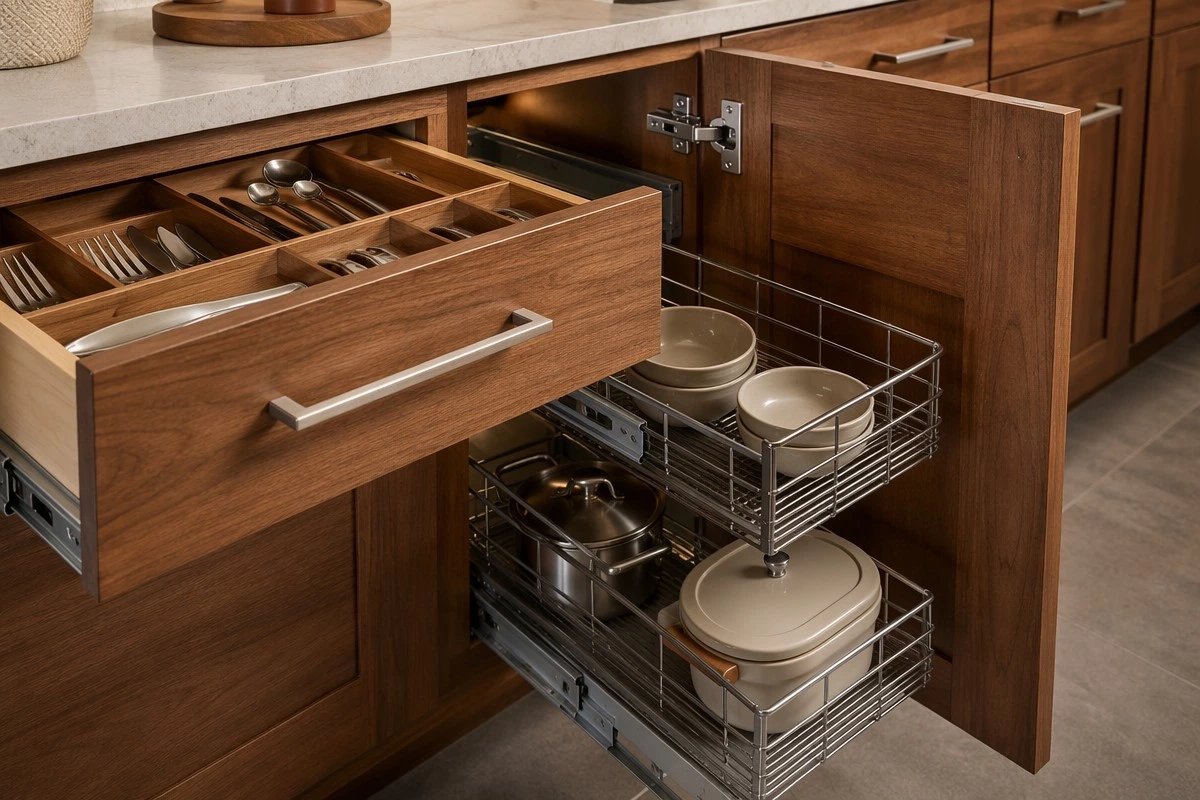
- hinge type and soft-close function;
- drawer slide type and intended use;
- handles, handleless profiles, or opening systems;
- pull-out storage, corner solutions, pantry systems, and waste bins;
- lift-up mechanisms, internal dividers, and special organizers; and
- hardware for glass doors, tall units, or appliance cabinets.
If a quote lists only “hardware included,” ask for a schedule that connects hardware to the specific cabinet types. This does not mean every screw needs to be listed during an early estimate. It means the buyer should understand the level of hardware and storage function that the total price represents.
You can compare common cabinet components in the kitchen cabinet hardware guide. Use it to distinguish essential functional hardware from optional storage upgrades.
Identify What Is Included, Excluded, and Still To Be Confirmed
A transparent quotation should separate confirmed items from exclusions and open items. This is important because some project costs sit outside the cabinet supply scope.
- countertops, sinks, appliances, faucets, and backsplash materials;
- electrical work, plumbing work, wall preparation, flooring, or demolition;
- site measurement and local installation;
- delivery access, unloading, storage, and local handling;
- customs, duties, insurance, and destination-specific logistics requirements; and
- special project coordination, mock-ups, samples, or third-party inspection.
An exclusion is not automatically a problem. It simply needs to be visible so the buyer can plan it. Ask suppliers to distinguish between “not included,” “optional,” and “to be confirmed.” These three labels have different implications for the final scope and project budget.
For buyers importing cabinets, the supply quote should be reviewed alongside the project’s transport and destination arrangements. The kitchen cabinets from China import guide provides related sourcing and import considerations.
Compare Packing, Delivery, and Installation Support
A cabinet quotation should not end at factory release if the project requires delivery, export packing, remote coordination, or installation support. This is especially important for builders, designers, and overseas buyers.
Ask how the cabinet package will be protected, labeled, and documented. For multi-room projects, cabinet codes and packing lists can help the receiving team identify parts by room, unit, or installation sequence. For international delivery, clarify which party is responsible for freight arrangements, local receiving, storage, and any destination-side requirements.
- What type of packing is included?
- Will cartons or components be labeled by room or cabinet code?
- Is a packing list included?
- What delivery point is covered by the quotation?
- Is local unloading, storage, or installation included, optional, or excluded?
- What drawings, installation guidance, or remote support are available?
A project should also plan the jobsite handoff. Cabinets need a dry, protected location and a clear path from receiving to installation. A delivered cabinet package is not automatically an installation-ready kitchen.

Understand Timing Without Relying on One Number
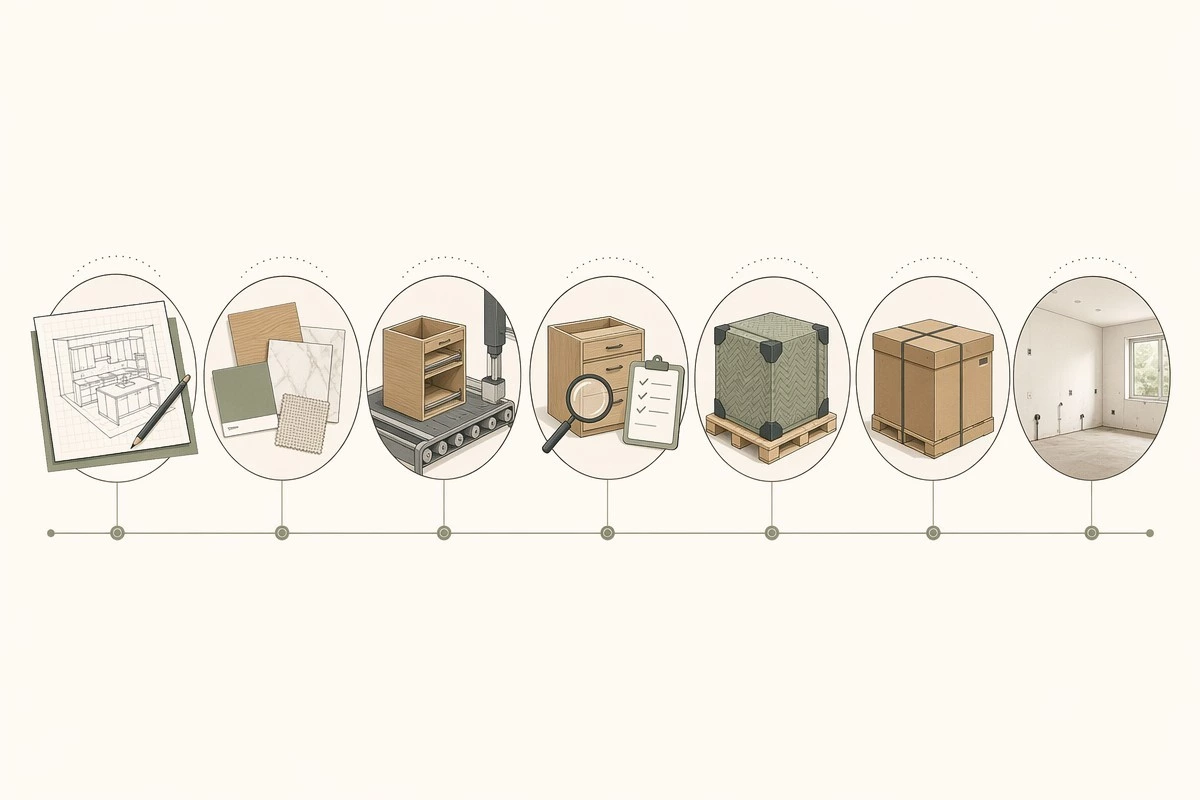
A quotation may mention a production or delivery estimate, but a custom cabinet timeline includes more than manufacturing. It can depend on drawing completion, material and hardware confirmation, order scope, inspection requirements, packing, destination arrangements, and site readiness.
When comparing timelines, ask which stage the estimate covers. Does it refer to drawing development, production, release from factory, freight departure, delivery, or installation completion? A date is more useful when the project assumptions behind it are visible.
For a full explanation of the sequence, see how long custom kitchen cabinets take. It explains how project intake, design approval, production, inspection, shipping, delivery, and installation readiness work together.
Review Warranty and After-Sales Terms Before Ordering
Price and scope are important, but they should not be the only decision factors. Before ordering, review what happens if a problem is found during receiving, installation, or normal use.
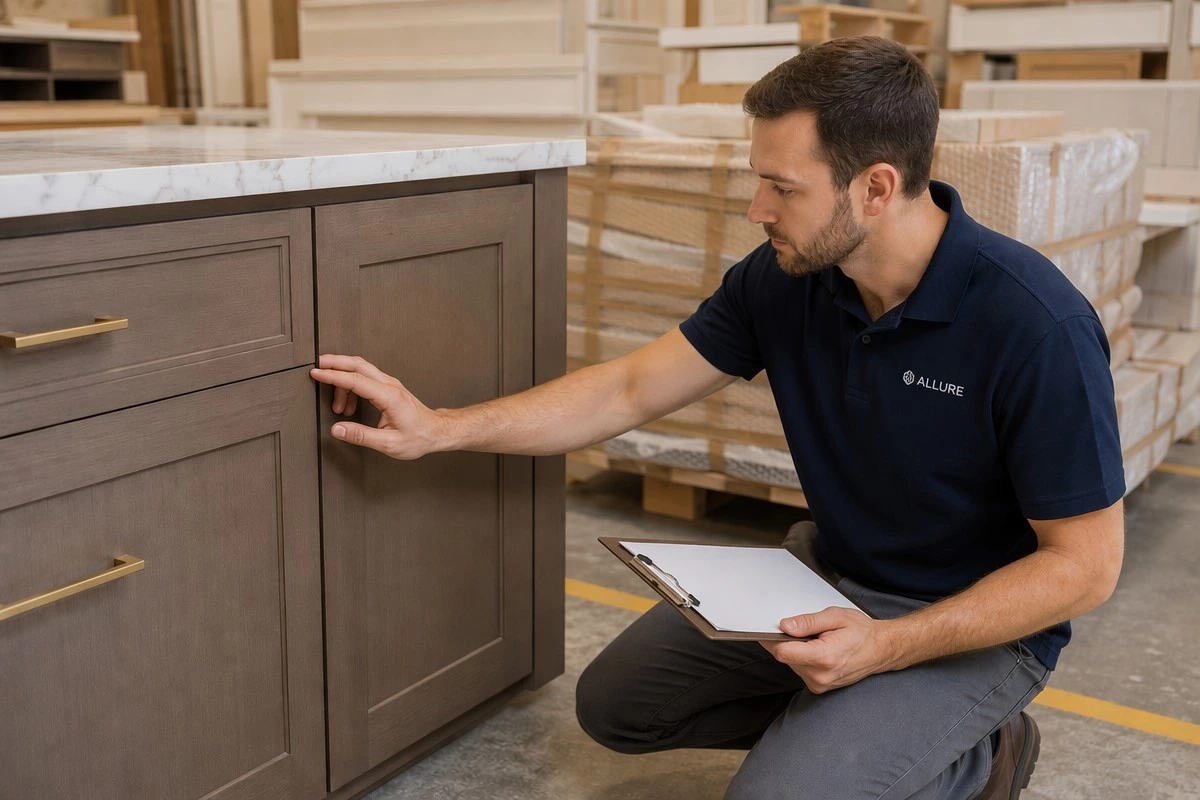
Ask what documentation is required if there is a claim, what types of conditions are covered, how replacement parts are handled, and what buyer responsibilities apply during receiving and installation. Confirm how visible damage, missing components, or specification differences should be reported.
A clear warranty does not remove the need for inspection on arrival. It gives the project team a defined process for handling issues if they arise. Read the kitchen cabinet warranty guide before comparing warranty terms from different suppliers.
A Practical Custom Kitchen Cabinet Quote Comparison Table
Use the table below to compare quotations consistently. Create one row for each supplier and fill it with the documents and specifications actually provided.
| Comparison area | What to check | Why it matters |
|---|---|---|
| Project scope | Rooms, cabinet types, quantities, visible panels, accessories | Confirms whether each supplier is pricing the same project. |
| Drawings | Layout, elevations, dimensions, appliance coordination, approval stage | Connects the price to the room and production requirements. |
| Materials | Cabinet boxes, doors, finishes, panels, edge treatment | Clarifies construction and visible quality expectations. |
| Hardware | Hinges, slides, handles, organizers, opening systems | Shows the functional level included in the price. |
| Special items | Countertops, glass, lighting, metal, appliance panels | Prevents important features from being overlooked. |
| Exclusions | Appliances, site work, installation, local handling, duties | Helps prevent unexpected scope gaps. |
| Packing and delivery | Labels, packing list, delivery point, receiving responsibility | Supports a controlled handoff to the site. |
| Timeline assumptions | Drawing approval, material confirmation, production, delivery stage | Makes the schedule easier to interpret. |
| Warranty and support | Claim process, documentation, replacement support | Defines what happens if an issue is found. |

Questions to Ask Before You Accept a Cabinet Quote
Before you approve a quotation, ask these questions in writing:
- Which rooms, cabinets, and accessories are included in this price?
- Which materials, finishes, and hardware apply to each cabinet type?
- Which drawings or dimensions were used to prepare the quote?
- What must be approved before the final production price and schedule can be confirmed?
- Which items are excluded, optional, or still to be confirmed?
- Are countertops, appliances, glass, lighting, or special metal elements included?
- How will any changes after drawing approval be recorded?
- What packing, labeling, and delivery documents are included?
- What delivery point and site responsibilities are included in the quotation?
- What warranty and after-sales process applies if an issue is found?
These questions do not make a project slower. They help the buyer and supplier align the quote with the actual project before more expensive decisions are made.
Get a More Useful Custom Cabinet Quote
A good custom cabinet quote is clear, traceable, and connected to the project you plan to build. It should help you understand the scope, compare materials and hardware, identify open items, plan delivery, and move toward final drawings with fewer surprises.
To request a more useful quotation, send your floor plan, room dimensions, appliance list, cabinet scope, preferred style, material direction, project location, and target handoff date. Photos, inspiration images, and information about building access or delivery requirements can also help define the project.
Planning a custom kitchen cabinet project? Share your floor plan, appliance schedule, room scope, project location, and material preferences. A detailed review can help clarify the information needed for a cabinet quotation and the next approval steps.
FAQ: Custom Kitchen Cabinet Quotes
What information do I need for a custom kitchen cabinet quote?
Provide a floor plan, room dimensions, appliance list, cabinet scope, preferred style, material direction, project location, and target handoff date. The more complete the project information is, the easier it is to compare scope and prepare an accurate quotation.
Why are two kitchen cabinet quotes so different?
Two quotes may include different room scopes, cabinet types, materials, finishes, hardware, accessories, packing, delivery terms, or installation support. Compare the details behind the total before deciding which option represents better value for your project.
Should a cabinet quote include drawings?
An early budget quote may be based on a plan, sketch, or preliminary layout. Before production, the project should use approved drawings and specifications that confirm cabinet dimensions, appliance coordination, materials, and visible details.
What is usually excluded from a custom cabinet quote?
Exclusions vary by supplier and project. They may include appliances, sinks, faucets, countertops, site work, local installation, delivery handling, customs-related costs, or other destination-specific services. Ask the supplier to identify exclusions, options, and open items clearly.
How do I compare cabinet hardware in different quotes?
Ask each supplier to identify the hinge, drawer slide, handle, opening system, and storage accessories included. A hardware schedule connected to cabinet types makes it easier to compare functional scope rather than relying on a general “hardware included” line.
Can I approve a custom cabinet order from a quote alone?
A quotation is an important commercial document, but final production should also rely on approved drawings, material and finish references, confirmed hardware, quantities, delivery requirements, and agreed terms for changes.