Why More Homeowners, Builders & Developers Are Buying Cabinets From China
For years, many overseas buyers associated “Made in China” cabinets with low prices and inconsistent quality.
That perception has changed dramatically.
Today, some of the world’s largest villa projects, apartment developments, and luxury residential interiors are being manufactured in China — especially in Foshan, the center of China’s cabinetry and whole-house customization industry.
After working with buyers from the USA, Australia, Canada, and the Middle East, one thing becomes very clear:
Most people do not regret buying kitchen cabinets from China.
They regret choosing the wrong supplier.
I’ve seen clients save over $30,000 on full-house cabinetry projects while achieving better customization than local suppliers could offer. I’ve also seen buyers lose money because they focused only on the cheapest quotation without understanding materials, logistics, or production standards.
This guide is designed to help you avoid those expensive mistakes.
Whether you are:
- building a luxury villa
- renovating a kitchen
- sourcing for apartment projects
- or looking for wholesale cabinet supply
This article will help you understand the real advantages, risks, costs, and strategies behind importing kitchen cabinets from China.
What Are “Kitchen Cabinets From China”?
Understanding the Modern China Cabinet Industry
China is no longer just a low-cost manufacturing country.
In the cabinet industry, China has evolved into a highly specialized production ecosystem with:
- automated factories
- advanced CNC machinery
- integrated supply chains
- and export-focused manufacturing systems
Many overseas cabinet brands actually manufacture in China and simply rebrand the products locally.
This surprises many buyers.
What changes the final product quality is not the country —
It is:
- factory standards
- engineering systems
- materials
- and quality control.
Why Foshan Became China’s Cabinet Manufacturing Center
If you research kitchen cabinets from China seriously, you will eventually hear about Foshan.
Foshan is often called:
“The furniture and cabinetry capital of China.”
The reason is simple.
Nearly the entire supply chain exists within one industrial ecosystem:
- cabinet factories
- hardware suppliers
- stone manufacturers
- aluminum systems
- glass suppliers
- lighting systems
- packaging suppliers
This concentration dramatically improves:
- production efficiency
- material access
- customization flexibility
- and manufacturing speed.
For international buyers, this means:
- more design options
- faster production
- and better pricing.
How Chinese Cabinet Factories Operate Today
Modern export factories operate very differently from the small workshops many buyers imagine.
Professional factories now use:
- CNC cutting systems
- laser edge banding
- automated drilling
- UV finishing lines
- barcode production management
This allows:
- higher consistency
- precise sizing
- reduced production errors
- better installation accuracy
Large export factories also have dedicated teams for:
- international communication
- CAD drawings
- logistics coordination
- and project management.

Factory Direct vs Trading Company — What’s the Difference?
This is one of the most misunderstood areas for overseas buyers.
Factory Direct Suppliers
Advantages:
- lower pricing
- direct communication
- faster customization
- better production control
Best for:
- developers
- villa owners
- wholesalers
- contractors
However, not every factory has strong export service experience.
Trading Companies
Trading companies do not manufacture products themselves.
Instead, they source from multiple factories.
Advantages:
- easier communication
- supplier coordination
- lower minimum order requirements
Disadvantages:
- additional markup
- less production transparency
- inconsistent quality control
For larger projects, factory-direct sourcing is usually more cost-effective.
Why So Many Buyers Import Kitchen Cabinets From China
Lower Manufacturing Costs Without Sacrificing Design
The biggest reason buyers source from China is cost efficiency.
Compared with local custom cabinetry in the USA or Australia, Chinese factories often reduce project costs by:
- 20%
- 30%
- sometimes even 50%.
Why?
Because China has:
- lower labor costs
- large-scale production
- mature supply chains
- centralized manufacturing clusters
But lower cost does not automatically mean lower quality.
In many cases, buyers receive:
- better customization
- more material options
- and more modern finishes
than what local suppliers offer.
Massive Customization Capabilities
One major advantage of China cabinet manufacturers is flexibility.
Many factories can fully customize:
- cabinet sizes
- layouts
- colors
- finishes
- hardware systems
- lighting integrations
- storage organizers
This is especially valuable for:
- irregular layouts
- luxury villas
- modern apartments
- open-plan kitchens
Unlike many local suppliers who rely heavily on standard sizing, Chinese factories often build entirely based on project drawings.

Access to More Materials, Finishes & Hardware
China’s cabinet industry now offers nearly every mainstream global finish.
Popular options include:
- melamine
- laminate
- lacquer
- veneer
- PET finishes
- acrylic surfaces
- aluminum-frame systems
Hardware options often include:
- Blum
- Hettich
- DTC
- Hafele
Many buyers are surprised by how modern and premium current China cabinet systems have become.
Modern Production Technology & Automation
Many buyers still imagine manual cabinet workshops.
That is outdated.
Top export factories now use:
- German machinery
- automated panel systems
- intelligent production management
This improves:
- accuracy
- consistency
- and installation performance.
For large projects, automation becomes extremely important.
Even small sizing errors can create major installation problems across hundreds of cabinets.
One-Stop Whole House Customization Advantage
Many Chinese factories now provide:
- kitchen cabinets
- wardrobes
- bathroom vanities
- TV units
- wall panels
- interior doors
This creates:
- better style consistency
- centralized project management
- easier coordination
- lower total costs
For villa projects, especially, this is a major advantage.
Are Chinese Kitchen Cabinets Actually Good Quality?
The Truth About “Made in China” Cabinets
This is the question almost every buyer asks first.
The honest answer is:
Chinese cabinet quality ranges from extremely poor to extremely high-end.
China produces:
- budget-level products
- mid-range export systems
- luxury custom cabinetry
The difference depends entirely on:
- factory standards
- material quality
- hardware selection
- engineering capability
Blaming “Made in China” itself is inaccurate.
Why Factory Selection Matters More Than Country
A high-end Chinese export factory may outperform a low-quality local supplier.
Meanwhile, a cheap, unknown supplier may create major problems.
Buyers should evaluate:
- production systems
- project experience
- engineering quality
- packaging standards
- communication professionalism
—not simply the country of origin.
Differences Between Low-End and High-End Factories
Low-end factories often use:
- weak particleboard
- poor edge banding
- cheap hardware
- manual production
Common issues include:
- cabinet warping
- edge peeling
- poor alignment
- installation problems
High-end export factories use:
- CARB-certified panels
- advanced machinery
- strict QC systems
- premium hardware
The final result feels completely different.
How Export Factories Meet International Standards
Professional export factories often comply with:
- CARB P2 standards
- EPA standards
- FSC certification
- E0/E1 environmental standards
These certifications are especially important for:
- USA buyers
- Canadian projects
- Australian developments
Always request:
- certification reports
- test documentation
- hardware specifications
before production begins.
Popular Cabinet Materials Used in China
Melamine Cabinets
Melamine is one of the most common budget-friendly options.
Advantages:
- affordable
- scratch-resistant
- easy maintenance
Best for:
- rental apartments
- budget kitchens
- large-volume projects
However, lower-quality melamine may have:
- weaker moisture resistance
- edge chipping issues
Plywood Cabinets
Plywood is one of the best balance options between:
- durability
- moisture resistance
- and cost.
High-quality plywood cabinets are extremely popular in:
- villas
- premium apartments
- export projects
Especially in humid climates.
Laminate Cabinets
Laminate offers:
- stronger surface durability
- better impact resistance
- modern appearance
Compared with melamine:
- Laminate is generally more durable
- but slightly more expensive.
Lacquer Cabinets
Lacquer cabinets are popular in luxury modern kitchens.
Advantages:
- ultra-smooth finish
- seamless appearance
- premium aesthetics
Disadvantages:
- higher cost
- more sensitive to scratches
Wood Veneer Cabinets
Wood veneer creates a natural wood appearance without the full solid-wood pricing.
Very popular in:
- luxury villas
- contemporary designs
- high-end apartments
Solid Wood Cabinets
Solid wood remains premium —
But it is not always the best choice.
Challenges include:
- expansion
- contraction
- higher costs
- longer production time
Many experienced designers now prefer plywood + veneer combinations for stability.
China Cabinets vs Local Cabinets
Price Comparison
This is where China becomes highly competitive.
Example:
- Local USA custom kitchen: $35,000–$70,000
- Similar China-manufactured project: $18,000–$40,000
Savings can be substantial.
Especially for:
- multi-unit projects
- villas
- developers
Customization Comparison
Chinese factories often provide greater flexibility because production is highly manufacturing-oriented rather than showroom-oriented.
Custom sizing is usually easier.
Material Selection Comparison
China’s supply chain offers a vast range of materials.
This allows buyers to:
- combine finishes
- explore modern trends
- optimize budget more efficiently
Production Speed & Lead Time Comparison
Local suppliers may offer faster communication —
but not always faster production.
China factories often complete:
- large custom orders
- more efficiently
- Due to the production scale.
Real Cost Breakdown — What Do Kitchen Cabinets From China Really Cost?
Average Cabinet Pricing by Material
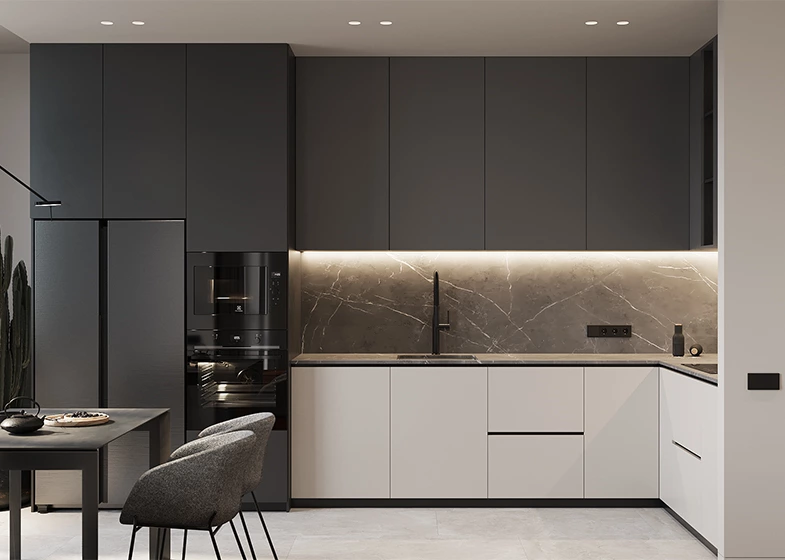
Approximate pricing ranges:
- Melamine kitchens:
$120–$250/m² - Plywood kitchens:
$250–$450/m² - Lacquer kitchens:
$350–$700/m² - Veneer kitchens:
$400–$900/m²
Actual pricing depends on:
- hardware
- finish complexity
- accessories
- project scale
Shipping Costs & Container Pricing
Shipping is a major cost factor.
Typical container shipping costs vary based on:
- destination country
- season
- container size
For large projects, shipping becomes more cost-efficient per cabinet.
Hidden Costs Many Buyers Forget
Common overlooked costs:
- customs clearance
- port fees
- local delivery
- installation labor
- warehouse storage
- inspection fees
Experienced suppliers help buyers plan these earlier.
Understanding U.S. Tariffs & Import Policies
What is a Section 301 Tariff?
Many Chinese products entering the USA are affected by Section 301 tariffs.
Cabinets may face additional duties depending on:
- product classification
- manufacturing origin
- import category
Anti-Dumping Duties Explained Simply
Anti-dumping duties are designed to protect domestic industries from low-priced imports.
This area is complicated.
Buyers should work with:
- customs brokers
- experienced suppliers
- import professionals
before finalizing orders.
How the Import Process Works
Step 1 — Design Consultation & Quotation
The process usually starts with:
- floor plans
- inspiration images
- style requirements
- material selection
Factories then prepare:
- quotations
- layouts
- preliminary designs
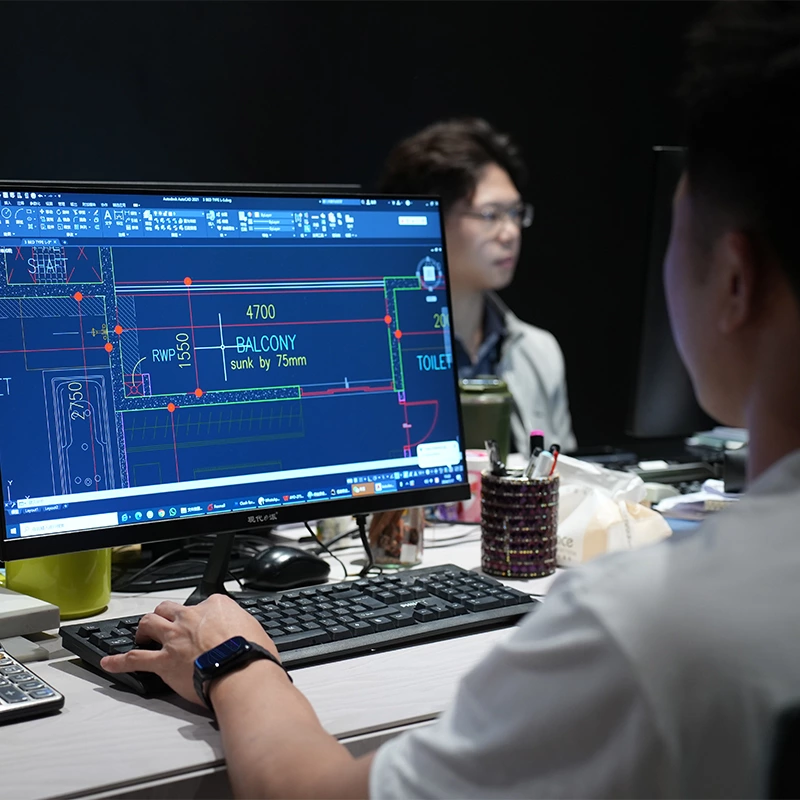
Step 2 — Shop Drawing Confirmation
This is one of the most critical stages.
Detailed drawings confirm:
- dimensions
- appliance spacing
- cabinet sizing
- storage systems
Mistakes here become expensive later.

Step 3 — Production & Quality Inspection
Once drawings are approved:
- production begins
- QC inspections are performed
- Hardware is verified
Professional factories provide:
- progress photos
- production updates
- inspection reports

Step 4 — Packaging & Shipping
Good packaging is critical.
High-end factories use:
- foam protection
- reinforced corners
- plywood crates
- barcode systems
Poor packaging is one of the main causes of shipping damage.
Common Problems Buyers Face When Importing Cabinets From China
Choosing Suppliers Based Only on Price
The cheapest quotation is often the most expensive mistake later.
Low-cost suppliers may reduce:
- panel quality
- hardware standards
- packaging quality
to win orders.
Weak Packaging & Shipping Damage
Even high-quality cabinets can arrive damaged if the packaging is poor.
Always verify:
- packaging methods
- protection systems
- loading procedures
Inaccurate Measurements & Drawing Errors
One wrong measurement can delay entire installations.
Professional engineering support is essential.
How to Choose a Reliable China Cabinet Supplier
How to Verify a Real Factory
Request:
- factory videos
- production photos
- machinery demonstrations
- export case studies
Many “factories” online are actually trading companies.
Questions Serious Buyers Should Ask
Important questions:
- What board brands do you use?
- What hardware systems are included?
- Do you provide CARB certification?
- How is packaging handled?
- What export markets do you serve?
Why Real Project Experience Is Critical
A supplier experienced in:
- USA projects
- Australian standards
- Middle East villas
will better understand:
- logistics
- compliance
- installation expectations
Real Project Examples & Buyer Scenarios
USA Luxury Villa Project
One USA client compared:
- local quotation: $82,000
- China factory quotation: $49,000
After shipping and duties, total savings still exceeded $20,000.
Australian Apartment Development Case
A developer is needed:
- consistent finishes
- fast production
- budget control
China sourcing allowed:
- large-volume production
- standardized quality
- reduced procurement costs
Expert Tips to Reduce Risk When Importing Cabinets
Request Material Samples Before Production
Never rely only on photos.
Always confirm:
- colors
- textures
- finishes
- hardware quality
physically.
Never Skip Shop Drawing Approval
This is where most major project problems begin.
Carefully review:
- dimensions
- appliance clearances
- storage layouts
before production.
Focus on Structure, Not Just Appearance
Beautiful finishes mean little if:
- hinges fail
- boards swell
- cabinets deform
Good structure matters more than surface appearance.
Why Many Global Buyers Choose ALLURE
At ALLURE, we help overseas buyers simplify the entire process —
from:
- design
- material selection
- engineering
- production
- export logistics
to final project coordination.
Our focus is not simply on selling cabinets.
It is helping clients achieve:
- better value
- better customization
- and fewer project risks.
Final Verdict — Are Kitchen Cabinets From China Worth It?
For many buyers, the answer is absolutely yes.
But success depends on:
- choosing the right supplier
- understanding materials
- planning logistics properly
- and focusing on long-term value instead of the lowest price.
China offers:
- outstanding customization
- competitive pricing
- advanced manufacturing
- and scalable production capability
when sourced correctly.
The smartest buyers do not simply ask:
“How cheap are cabinets from China?”
They ask:
“Which supplier can deliver the best balance of quality, cost, and reliability for my project?”
That question leads to much better results.
FAQ
Are kitchen cabinets from China of good quality?
Yes — high-end Chinese export factories can produce excellent quality cabinets. The key is choosing an experienced and reliable supplier.
How much cheaper are kitchen cabinets from China than those in the U.S.?
Depending on the project, buyers often save between 20% and 50% compared with local custom cabinetry.
How long does shipping kitchen cabinets from China take?
Typical shipping time ranges from:
- 18–25 days to the USA West Coast
- 30–45 days to the USA East Coast
- 15–25 days to Australia
excluding production time.
Is it better to buy directly from a factory?
For larger projects, factory-direct sourcing usually offers:
- lower prices
- better customization
- and clearer communication.


