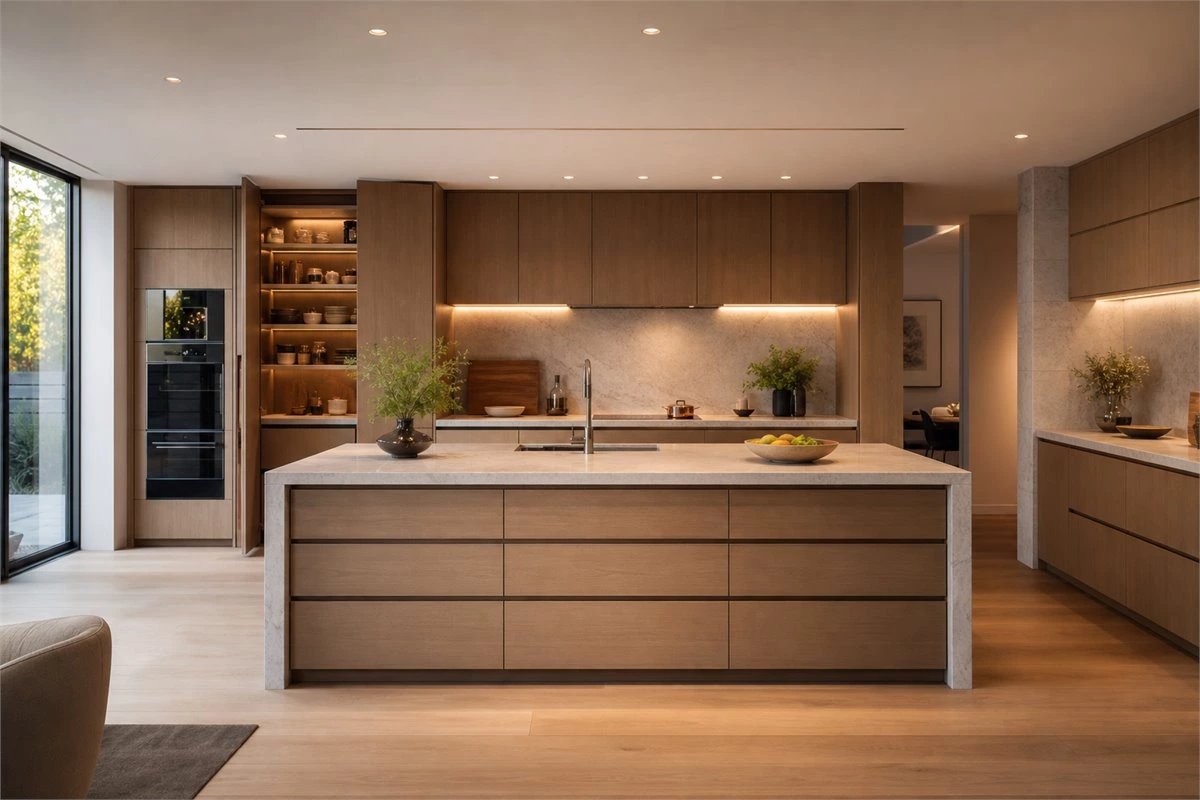
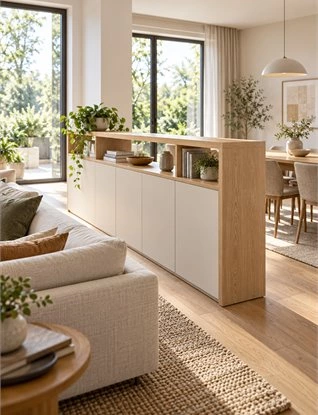
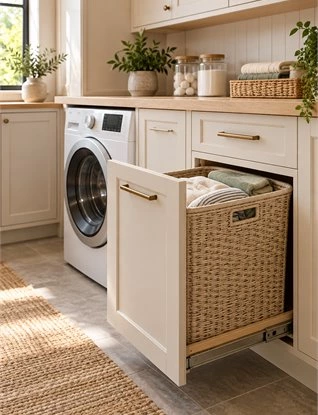
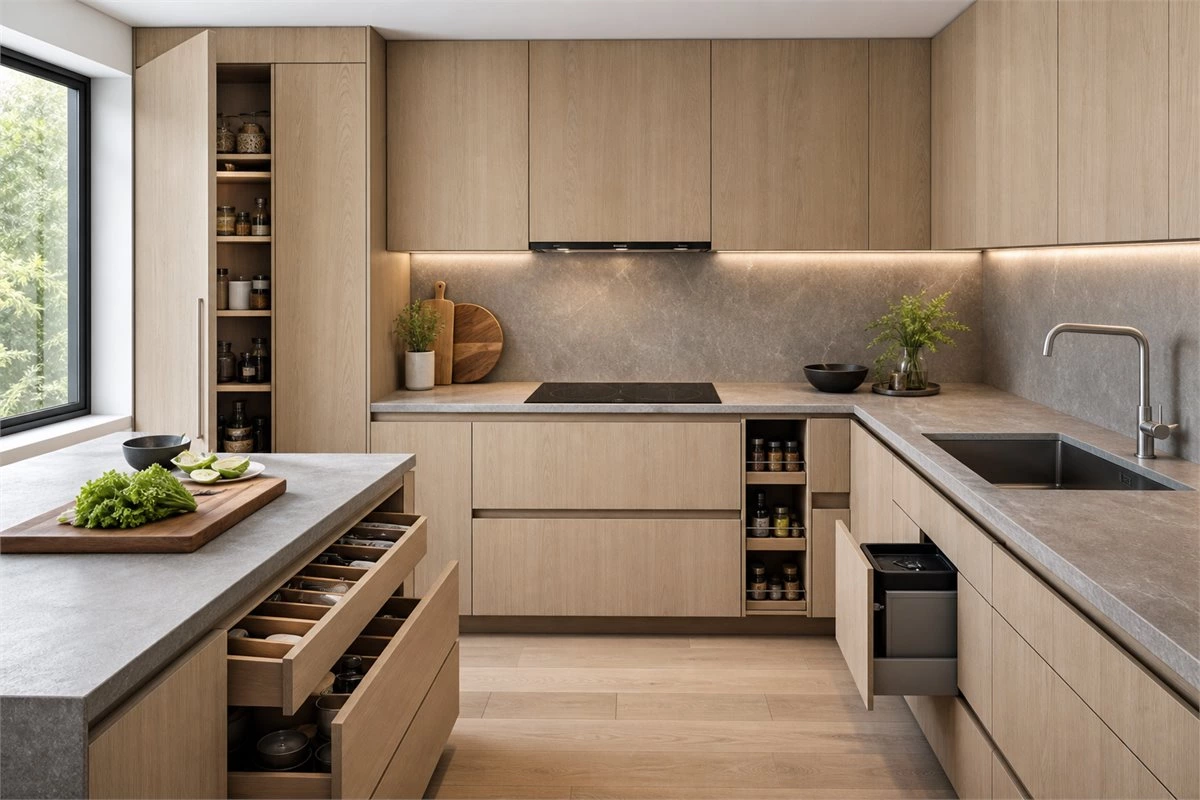
Kitchen cabinets are often judged by their door style, finish, countertop, and layout. Yet the parts that determine how a kitchen feels in daily use are usually hidden: hinges, drawer slides, pull-out systems, organizers, and opening mechanisms. The right hardware helps doors stay aligned, drawers move smoothly under load, and storage remain easy to reach for years.
This kitchen cabinet hardware guide explains how to choose the essential components for a practical custom kitchen. Whether you are planning a compact apartment kitchen, a family kitchen, or a larger builder project, the goal is the same: select hardware that suits the cabinet construction, your storage habits, the level of daily use, and the overall budget.
What Is Kitchen Cabinet Hardware?
Kitchen cabinet hardware includes the functional components that allow cabinets to open, close, slide, lift, and organize storage efficiently. It includes concealed hinges, drawer slides, lift-up mechanisms, pull-out pantry systems, waste-bin pull-outs, corner organizers, internal drawer dividers, knobs, pulls, and handleless opening systems.
It is useful to separate hardware into two groups. Functional hardware affects movement, access, weight capacity, and durability. Decorative hardware affects the visual finish of the kitchen, including knobs, bar pulls, edge pulls, and handle profiles. Functional hardware should be planned first, because even the most attractive cabinet doors can become frustrating if drawers do not extend fully or doors do not open comfortably.
A well-planned hardware package makes the kitchen easier to use in small but important ways. It helps you reach pots at the back of a deep drawer, keep spices beside the cooktop, separate recycling from household waste, and use difficult corner cabinets more effectively. For a broader view of cabinet layouts, materials, and storage possibilities, explore ALLURE custom kitchen cabinets.
Start with Your Kitchen Layout and Daily Storage Needs
Before selecting any hinge or drawer slide, consider how the kitchen will be used. A kitchen for occasional cooking does not need the same hardware specifications as a busy family kitchen, a rental project, or a home where several people prepare meals at once. Start by identifying the areas that need the most convenient access.
Plan Hardware Around the Main Work Zones
- Preparation zone: Deep drawers, cutlery organizers, knife inserts, and easy-access containers for prep tools.
- Cooking zone: Spice pull-outs, cookware drawers, utensil organizers, and storage close to the cooktop.
- Cleaning zone: Pull-out waste bins, recycling storage, and moisture-resistant organizers near the sink.
- Pantry zone: Internal drawers, tall pull-out systems, adjustable shelves, and visible storage for dry goods.
In compact kitchens, every base cabinet should have a clear purpose. Deep drawers often provide more practical access than a large cabinet with one shelf, because the entire contents can be moved forward with the drawer. In larger kitchens, hardware can create more specialized zones for appliances, pantry supplies, cookware, entertaining items, and cleaning products.
Kitchen Cabinet Hinges: Choose for Door Style and Opening Needs
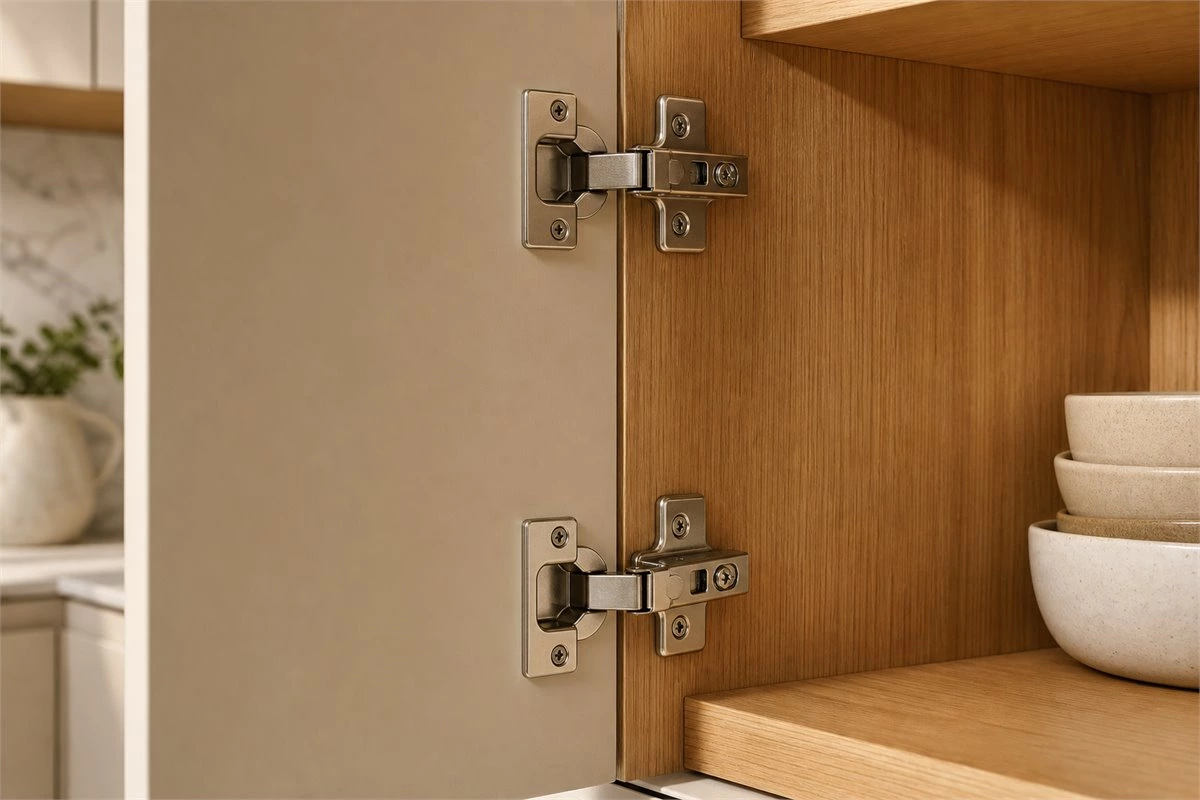
Hinges are small components with a major effect on cabinet performance. They control door movement, alignment, opening angle, and closing speed. When choosing hinges, consider the cabinet construction, door style, door weight, opening direction, and whether the project requires soft-close performance.
Concealed Hinges for a Clean Cabinet Appearance
Concealed hinges are hidden when cabinet doors are closed, making them a popular choice for modern kitchens, flat-panel doors, Shaker cabinets, and minimalist projects. They also allow for adjustment after installation, which is useful when fine-tuning door gaps and alignment. Many premium systems combine concealed construction with integrated soft-close movement. For example, manufacturers such as Blum offer concealed hinge systems for multiple cabinet applications, including soft-close options.
Overlay, Inset, and Partial-Overlay Hinges
The hinge must match the cabinet construction. Full-overlay doors cover most of the cabinet box front and create a clean, continuous appearance. Inset doors sit within the cabinet frame or opening, creating a more tailored and detailed look. Partial-overlay doors are commonly used when two doors share a center partition or when a traditional construction style is preferred.
These choices are not only visual. They change the required hinge arm, mounting position, door clearance, and opening behavior. Confirm the cabinet construction before ordering hardware so the hinge type, mounting plate, and door drilling pattern are compatible.
Are Soft-Close Hinges Worth It?
Soft-close hinges use a damping mechanism to slow the door near the end of its closing movement. They reduce slamming, help protect door edges, and create a quieter kitchen experience. For family kitchens, frequently used cabinets, and higher-end custom projects, soft-close hinges are usually a worthwhile specification.
However, good results depend on more than the hinge itself. Door size, door weight, accurate installation, and correct adjustment all affect how smoothly the door closes. A high-quality hinge installed incorrectly will not perform as intended.
Drawer Slides: Prioritize Access, Capacity, and Smooth Movement
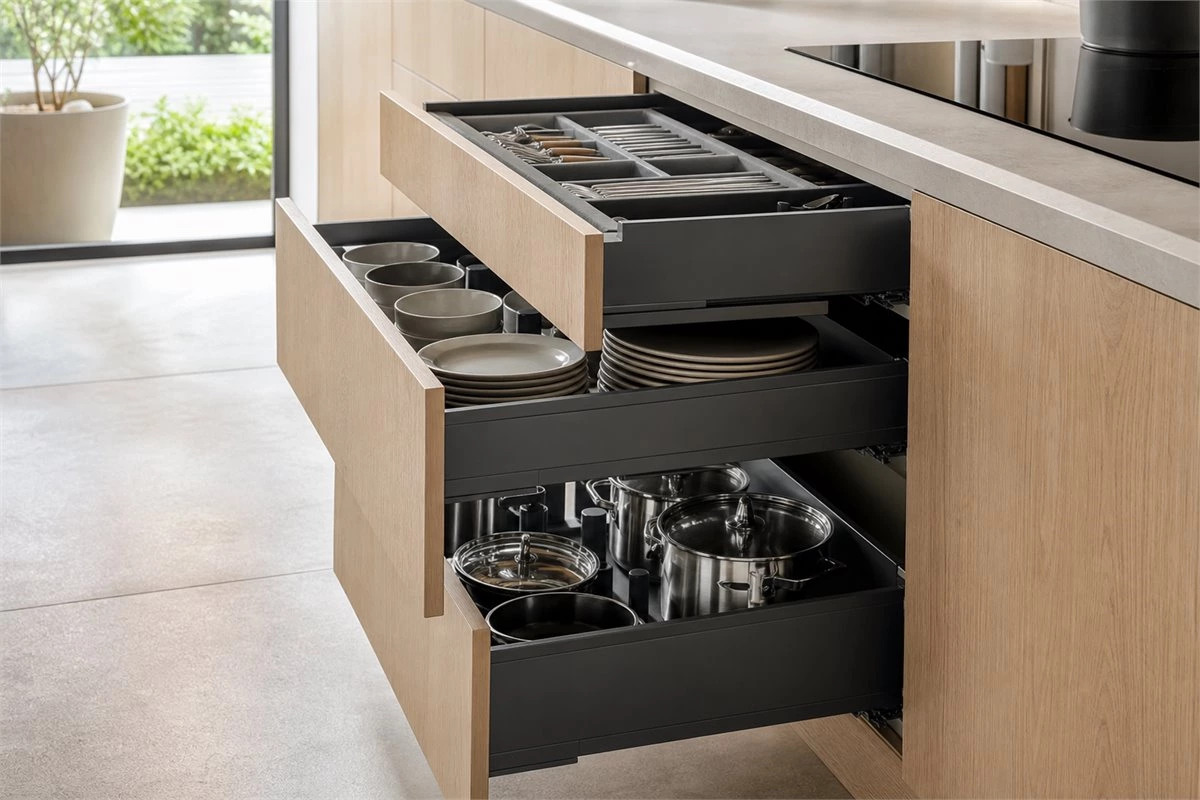
Drawers are among the hardest-working parts of a kitchen. They store cutlery, plates, cookware, food containers, small appliances, and pantry items. The best drawer slide is not simply the most expensive option; it is the one that matches the drawer’s purpose, expected weight, available depth, and desired appearance.
Side-Mount vs Undermount Drawer Slides
Side-mount slides are installed along the sides of a drawer. They are visible when the drawer is open and can be suitable for practical, budget-conscious cabinet systems. Undermount slides are hidden beneath the drawer, giving the interior a cleaner appearance and allowing a more refined cabinet presentation.
Undermount systems are frequently selected for custom kitchen cabinets because they work well with soft-close movement, full-extension access, and modern drawer-box designs. However, each system has specific requirements for drawer width, bottom thickness, locking devices, and installation clearance. The cabinet manufacturer should select the runner system during the shop-drawing stage, not after the cabinet boxes have been finalized.
Why Full-Extension Slides Matter
Full-extension slides allow the drawer to extend outward, making items stored at the back easier to reach. This is especially valuable for pots, pans, plates, food containers, and deep pantry drawers. Partial-extension slides may be sufficient for lighter or shallower storage, but they can leave rear items harder to access.
Some drawer runner systems are available in partial- and full-extension formats, with different load capacities. Always compare the manufacturer-rated capacity with the items the drawer will hold. A cookware drawer, for example, should be specified differently from a shallow cutlery drawer. The Blum TANDEM runner system overview is a useful example of how slide options can vary by extension type, movement technology, and intended load.
Soft-Close and Push-to-Open Drawer Systems
Soft-close drawer slides are practical for most kitchen projects because they help drawers close gently and reduce impact. Push-to-open systems allow a drawer front to open with a light press, making them suitable for handleless kitchens. They create a streamlined look, but they require accurate drawer alignment and should be selected carefully for heavy or frequently used drawers.
Pull-Out Storage: Turn Deep Cabinets into Useful Space
Pull-out storage is one of the most effective ways to improve kitchen usability. It brings stored items forward instead of requiring you to reach into a deep cabinet. The right pull-out system can make compact kitchens feel more organized and help large kitchens maintain a calm, uncluttered appearance.
Pull-Out Pantry Storage
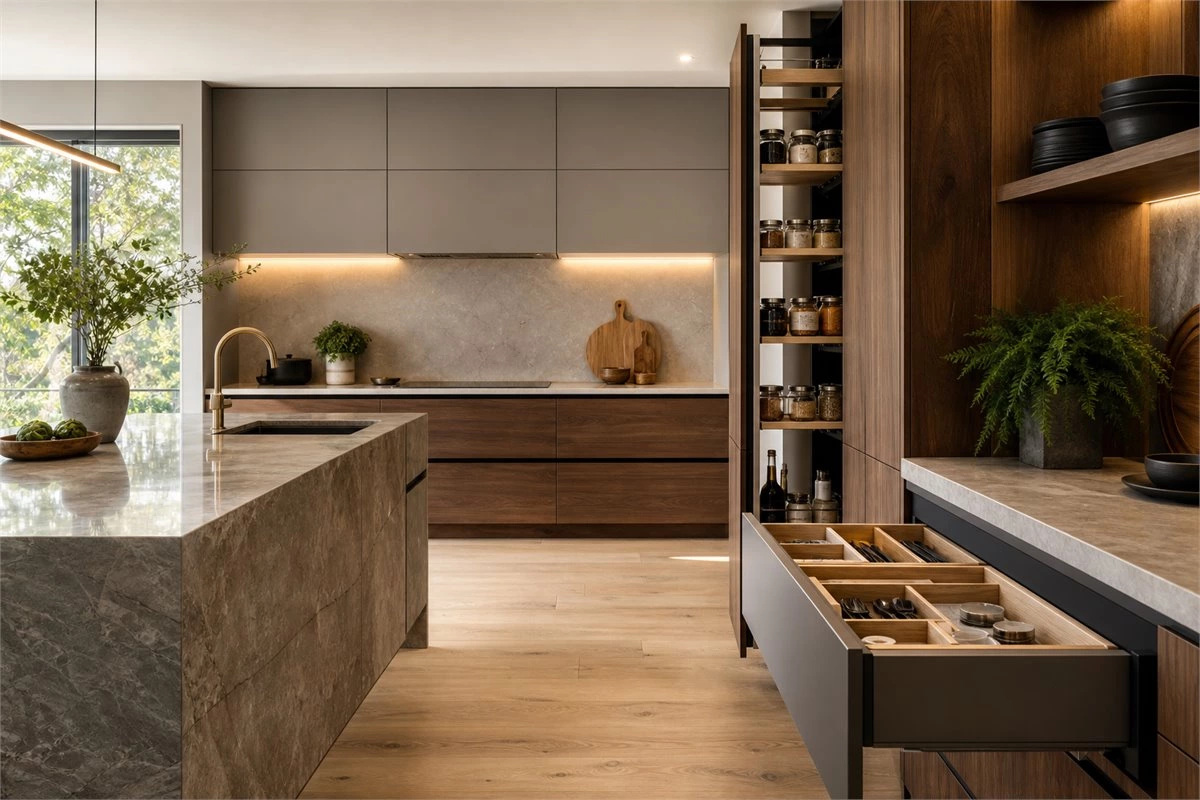
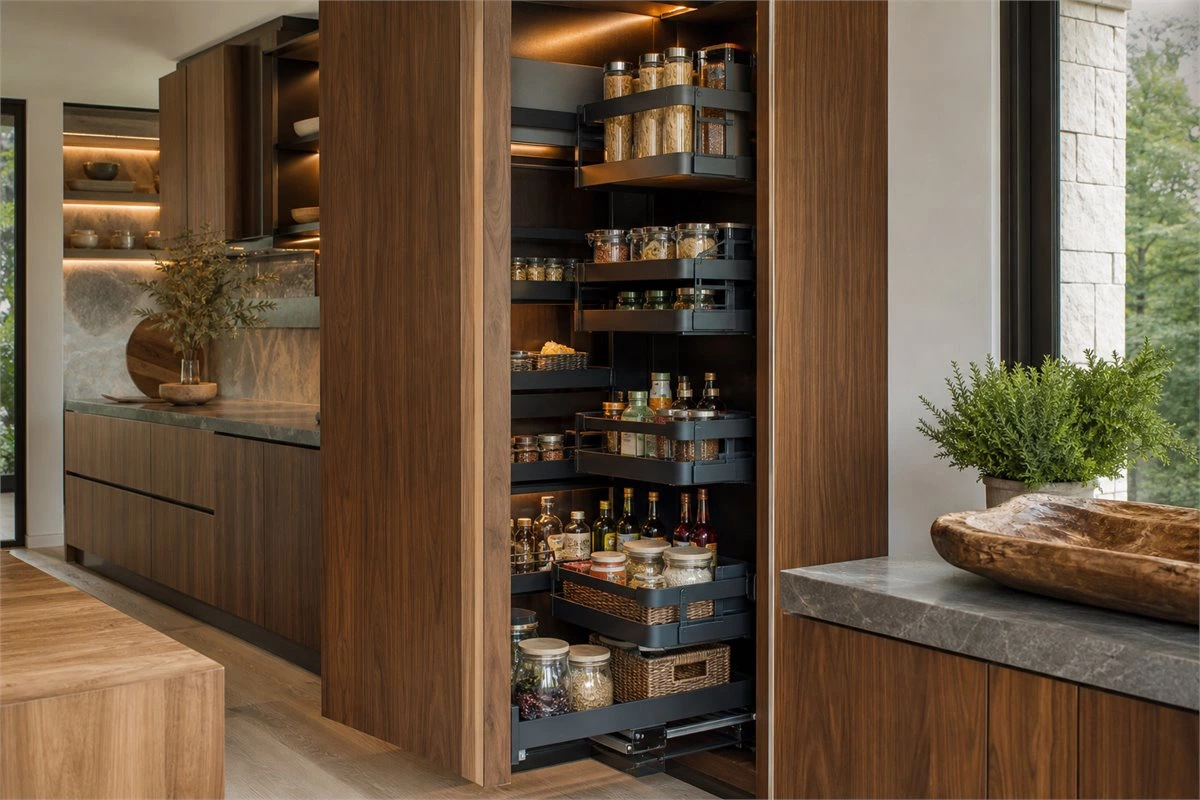
Tall pantry pull-outs and internal pantry drawers make dry goods, bottles, small appliances, and serving items easier to see. They are particularly useful in narrow pantry cabinets, where standard fixed shelves can leave items hidden at the back. A pull-out system should be sized according to cabinet width, depth, door opening, and expected load.
For a pantry-focused project, hardware planning should happen alongside the cabinet layout. See this guide to custom pantry cabinets, layout, storage, and cost factors for related planning ideas.
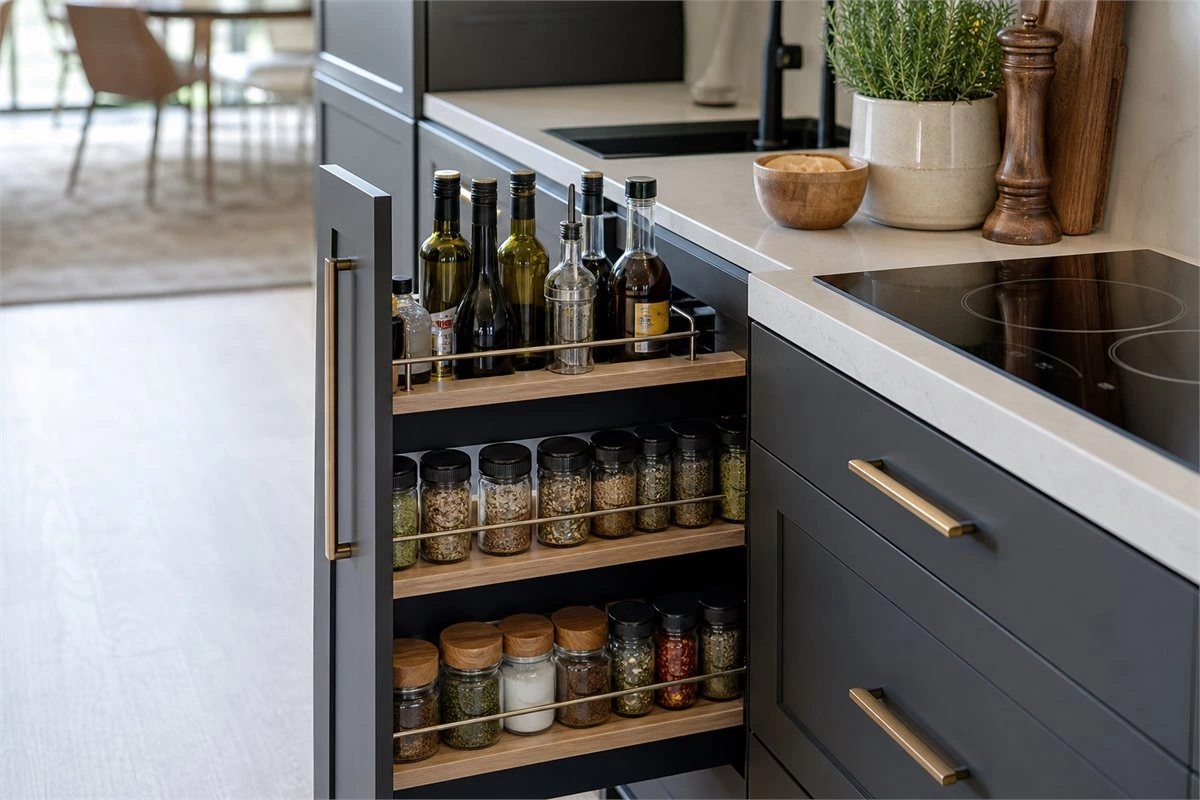
Pull-Out Spice Storage
A narrow pull-out spice cabinet placed beside the cooktop can keep oils, sauces, seasonings, and frequently used ingredients close to the cooking zone. This storage solution is especially useful when countertop space is limited. Select stable shelves or metal baskets with enough edge protection to keep bottles secure when the unit moves.
Keep the width realistic. A slim pull-out can be highly useful for spices, but it should not be overloaded with heavy bottles or used as a substitute for a properly planned pantry cabinet.
Pull-Out Waste and Recycling Bins
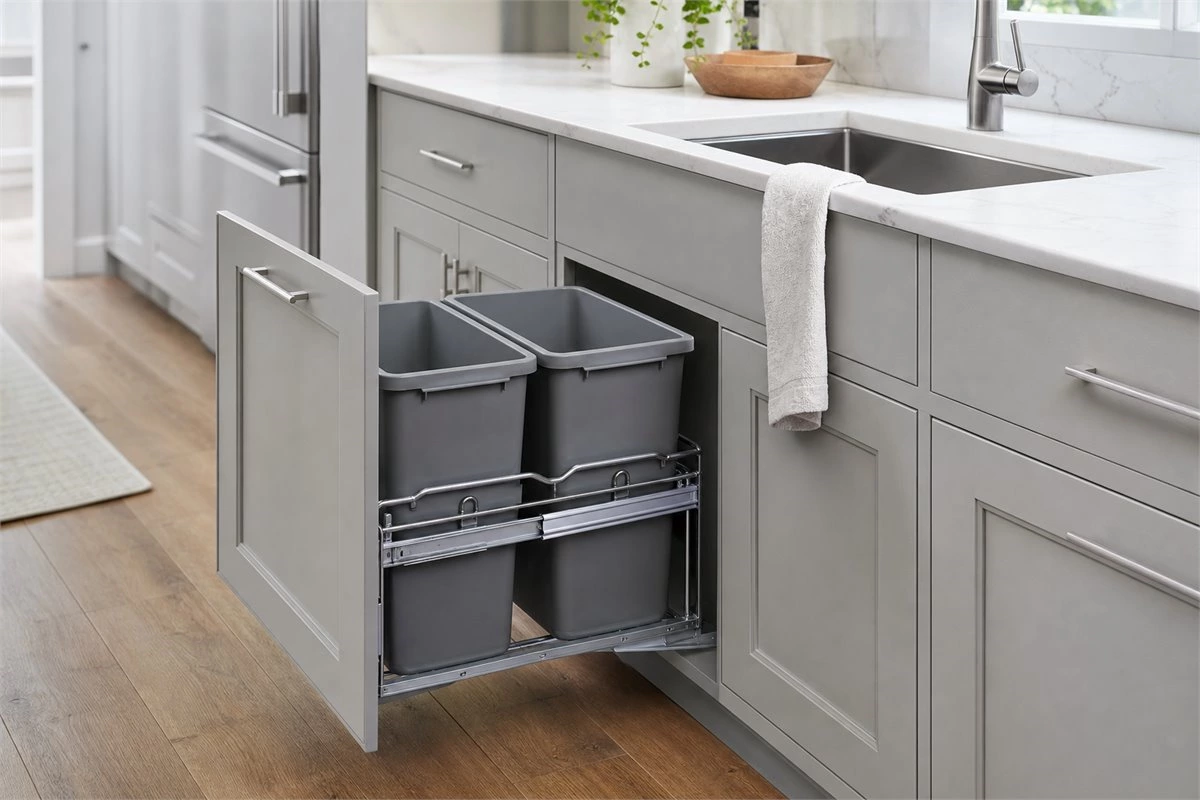
A pull-out waste system keeps bins hidden while making them easy to access during meal preparation and cleanup. The most practical location is usually near the sink or preparation zone. A double-bin configuration can separate general waste from recycling, while larger kitchens may need additional sorting capacity.
Consider the bin size, cleaning access, cabinet ventilation, and the direction in which the drawer opens. The system should be strong enough for daily use and easy to remove for cleaning.
Corner Cabinet Hardware
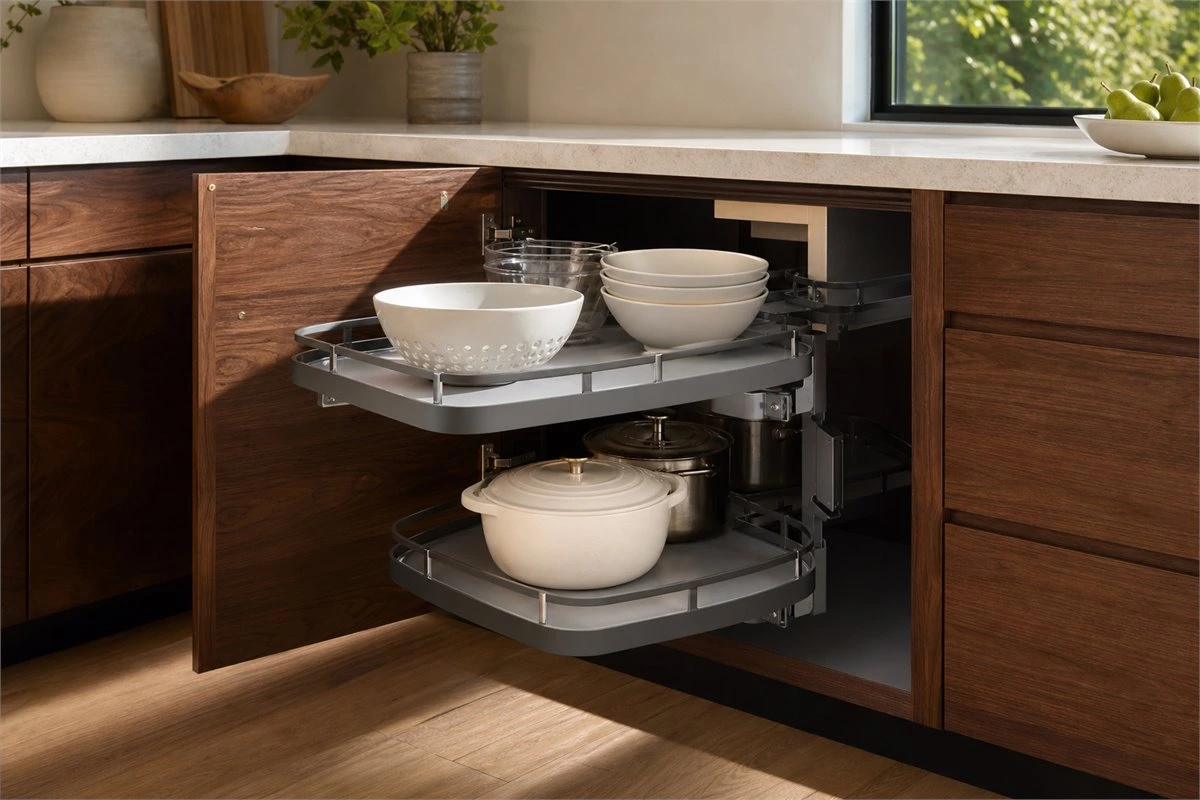
Corner cabinets often have generous internal volume but poor access. A Lazy Susan, rotating shelf, pull-out tray, or blind-corner organizer can make this area more practical. The best choice depends on the cabinet shape, adjacent door swing, available opening width, and the kinds of items you plan to store.
Do not choose a complex corner mechanism only because it looks impressive in a showroom. In some kitchens, a simple rotating shelf is easier to clean, easier to use, and more suitable for the budget. The best solution is the one that lets you reach stored items without wasting too much usable cabinet space.
Handles, Pulls, and Handleless Cabinet Systems
After the functional hardware has been selected, decorative hardware helps define the kitchen’s style. Knobs, pulls, edge profiles, and handleless systems should complement the cabinet door style, finish, appliance color, faucet finish, and lighting details.
Knobs and Bar Pulls
Knobs work well on smaller doors and can suit traditional, transitional, or Shaker kitchens. Bar pulls provide more leverage on wide drawers, tall pantry doors, and heavy cabinet fronts. For a consistent appearance, keep the finish coordinated and choose a pull length that feels proportional to each door or drawer front.
Edge Pulls and Integrated Handle Profiles
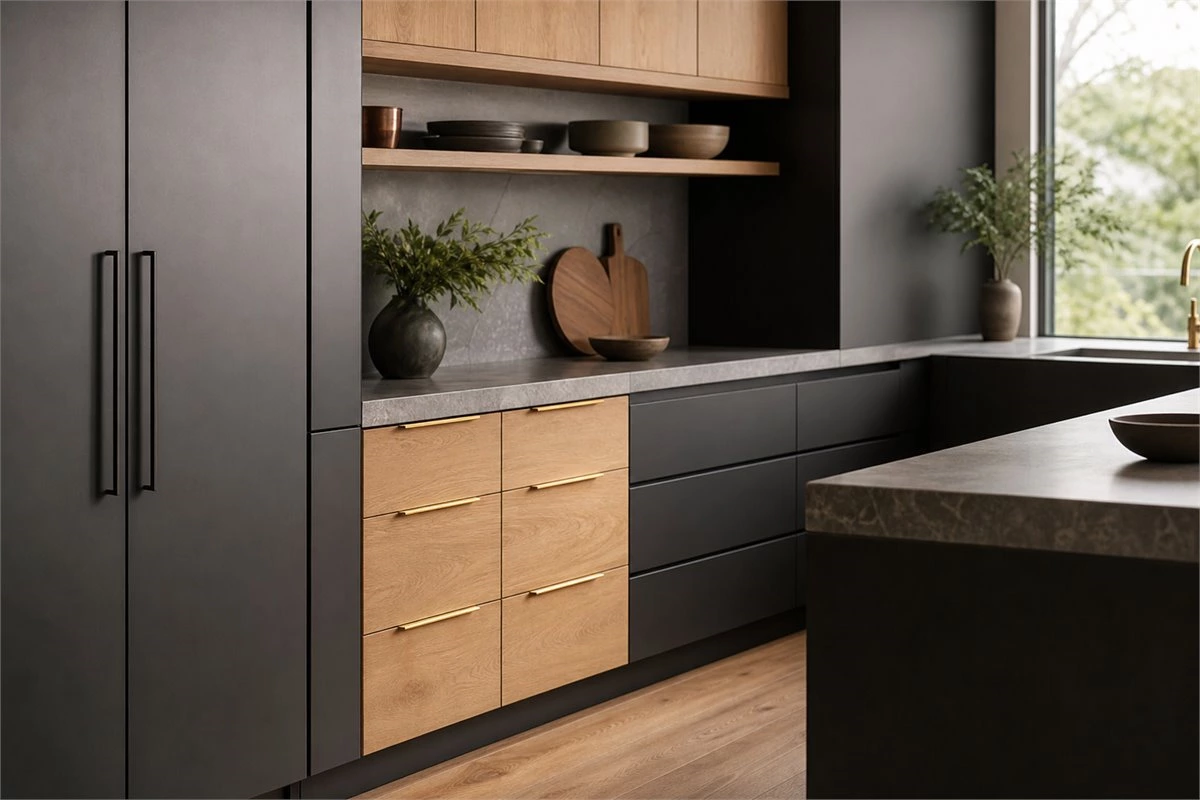
Edge pulls, recessed channels, J-pulls, and bevelled finger pulls create a more streamlined appearance because the grip is integrated into the door or drawer design. These options are suitable for contemporary kitchens and can reduce visual clutter in small spaces.
Handleless Push-to-Open Cabinets
Push-to-open systems can produce a clean, uninterrupted cabinet façade. They are often used with flat-panel doors in modern kitchens. However, handleless cabinetry should still be planned around real habits. High-touch areas may show fingerprints more easily, and large drawers may need a practical grip profile or a well-specified opening mechanism.
If you are considering a minimalist look, make sure the opening method is discussed alongside cabinet materials, lighting, and appliance placement. It should look refined while remaining comfortable to use every day.
How to Evaluate Hardware Quality and Durability
Hardware quality should be judged by performance, not only appearance. Look for smooth movement, secure mounting, reliable adjustment, appropriate load capacity, and finishes that are suitable for a kitchen environment. In humid zones near sinks and dishwashers, corrosion resistance and proper ventilation matter even more.
For larger projects or buyers who want an additional performance reference, cabinet certification programs can be useful. The Kitchen Cabinet Manufacturers Association (KCMA) explains that cabinet performance testing can include door and drawer operation, structural integrity, and finish durability. Even when a project does not require a specific certification, this is a helpful reminder to ask suppliers how cabinet doors, drawers, and hardware have been tested.
Ask These Questions Before Confirming Hardware
- Is the hinge or drawer slide appropriate for the door size or drawer load?
- Does the selected slide offer partial or full extension?
- Are soft-close mechanisms included for doors and drawers?
- Can cabinet doors be adjusted after installation?
- Will the hardware work with inset, overlay, or handleless cabinet fronts?
- Are pull-out systems easy to clean and accessible for daily use?
- Does the supplier provide clear installation specifications and replacement support?
Good, Better, and Best Hardware Packages
| Package Level | Best For | Recommended Features |
|---|---|---|
| Good | Budget-conscious kitchens and lower-use spaces | Reliable standard hinges, practical drawer slides, basic cutlery organization, and simple cabinet pulls. |
| Better | Family kitchens and everyday custom projects | Soft-close hinges, full-extension drawer slides, pull-out waste bins, spice storage, and improved drawer dividers. |
| Best | Luxury homes, villas, and highly customized kitchens | Premium concealed runners, lift-up systems, internal pantry drawers, tailored organizers, corner pull-outs, and refined handleless opening systems. |
It is not necessary to specify premium hardware for every cabinet. A smart approach is to invest more in high-use areas: cookware drawers, pantry storage, waste pull-outs, frequently opened doors, and heavy appliance storage. Simpler hardware can often be used in less demanding areas without reducing the overall kitchen experience.
A Practical Kitchen Cabinet Hardware Checklist
Before production begins, use this checklist to review the complete hardware plan:
- Confirm cabinet construction and door style: overlay, inset, framed, frameless, or handleless.
- Identify drawers that need full-extension or higher-capacity slides.
- Plan storage for cookware, spices, waste, recycling, and pantry supplies.
- Choose a practical solution for every corner cabinet.
- Select soft-close systems for the doors and drawers used most often.
- Coordinate pulls, knobs, or edge profiles with the overall kitchen style.
- Check appliance clearances, door opening angles, and drawer movement before finalizing drawings.
- Review the hardware budget separately from the cabinet material and countertop budget.
Hardware planning should be part of the cabinet design process, not a last-minute accessory decision. It can also prevent expensive changes after production begins. For more project-planning advice, see common mistakes to avoid when buying custom kitchen cabinets.

FAQ About Kitchen Cabinet Hardware
What is the best hardware for kitchen cabinets?
The best hardware depends on cabinet construction, daily use, storage requirements, and budget. In most custom kitchens, soft-close concealed hinges, full-extension drawer slides, practical pull-out waste storage, and organizers for high-use drawers offer a strong balance of durability and convenience.
Are soft-close hinges and drawer slides worth it?
For frequently used kitchen cabinets, soft-close hardware is usually worth the investment. It reduces slamming, helps protect cabinet doors and drawers, and gives the kitchen a quieter, more refined feel.
Which drawer slides are best for heavy pots and pans?
Choose full-extension slides with a manufacturer-rated load capacity appropriate for the intended cookware. Heavy drawers should also have a strong drawer box, proper bottom support, and accurate installation.
What is the difference between undermount and side-mount drawer slides?
Undermount slides are hidden beneath the drawer and create a cleaner interior appearance. Side-mount slides are installed along the drawer sides and remain visible when the drawer is open. Both can work well when specified for the correct drawer design and load.
What pull-out storage is most useful in a small kitchen?
For small kitchens, the most useful pull-out storage usually includes full-extension base drawers, a narrow spice pull-out, a pull-out waste bin, and practical corner storage. These systems improve access without requiring additional floor space.
Should I choose handles or handleless kitchen cabinets?
Choose handles if you prefer easy leverage, traditional detail, or a strong decorative accent. Choose edge pulls or handleless systems if you prefer a clean, minimalist cabinet façade. The most suitable choice should match your kitchen style, cleaning habits, and everyday use.
Conclusion: Select Hardware That Makes the Kitchen Easier to Live With
The best custom kitchen is not defined only by its cabinet color or countertop material. It should also open smoothly, store daily items logically, and remain comfortable to use over time. Hinges, drawer slides, and pull-out storage are the core decisions that shape this experience.
Use this kitchen cabinet hardware guide to prioritize the areas you use most, compare performance rather than appearance alone, and select hardware that supports your layout, storage habits, and budget. When these details are planned early, the finished kitchen feels more organized, durable, and enjoyable every day.