Fluted paneling is a popular design feature in interior design that is rich in visual rhythm. They are commonly made from wood and have remarkable plasticity and a captivating aesthetic. Typically vertical in nature, these panels can also be crafted into different patterns to cater to diverse interior styles. Three-dimensional wooden fluted paneling finds extensive application, perennially serving as a classic element for cabinet doors, background walls, or wainscoting. Read on to better figure out what design ideas you can do with fluted panels.
These fluted wall paneling ideas show how one repeated linear detail can connect different rooms without making a custom home look overly decorated. Whether the goal is to introduce a light divider, add texture to cabinetry, or create a more architectural feature wall, fluting works best when its scale, material, lighting, and surrounding finishes are planned together.
For a larger project, whole-home cabinet customization helps coordinate wall panels, cabinetry, interior doors, lighting details, and storage so that the same design language continues naturally from room to room.
How to Plan Fluted Wall Paneling Ideas
Before selecting a fluted finish, decide what the surface needs to do. A decorative TV wall, a room divider, a wardrobe door, and protective wainscoting each have different requirements for durability, cleaning, privacy, and installation. The most successful fluted wall paneling ideas use texture to support the room rather than applying it to every available surface.
- Choose the visual role: Use fluting as a quiet background texture, a focal point, or a transition between two functional zones.
- Match the flute scale to the room: Fine grooves feel refined in compact spaces, while wider flutes can create a stronger architectural statement on larger walls.
- Coordinate material and color: Wood veneer, painted MDF, moisture-resistant boards, glass, and metal-backed details all create different effects.
- Plan lighting early: Grazing light, concealed LED strips, and warm ambient lighting can make the grooves more dimensional.
- Confirm practical details: Consider cleaning, door openings, edge protection, electrical outlets, switch panels, and ventilation before production.
For a broader look at profile types, materials, and modern applications, see our guide to fluted panels for modern home interiors.
Fluted Panel Partition
Fluted panel partitions embody a continuous beauty of separation. The design, blending the tangible and intangible, is striking, partitioning spaces without completely isolating them. Particularly suitable for Chinese, Japanese, or minimalist luxury styles, the varied forms of fluted paneling infuse artistic flair into the space.
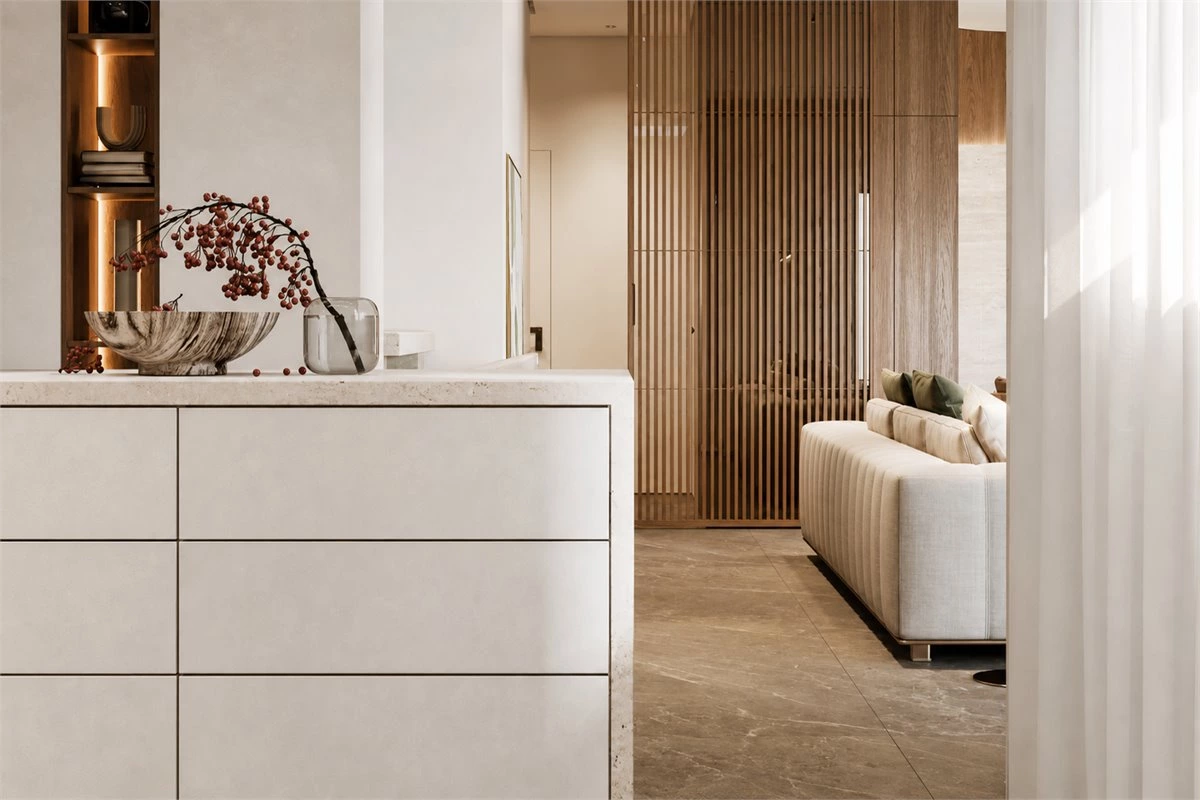
A fluted partition is particularly useful between an entryway and living room, a dining area and kitchen, or a bedroom and dressing space. It establishes a boundary while allowing light, air, and sightlines to travel through the room. For greater privacy, use closer-spaced slats or pair the paneling with reeded glass; for a lighter effect, use wider spacing and keep the surrounding palette restrained.
When the divider is part of a renovation or a new-build plan, confirm whether it is decorative or structural before installation. Door swings, circulation width, electrical routing, and the location of nearby furniture should all be reviewed on the final drawings.
Fluted Cabinet Doors
When employed abundantly in a space, fluted panels define the gentle beauty of cabinetry lines. Creating a rhythmic spatial tone, they contribute to a more cohesive space. The artful interplay of well-defined lines and a full visual effect is favored and employed in modern and light luxury styles.
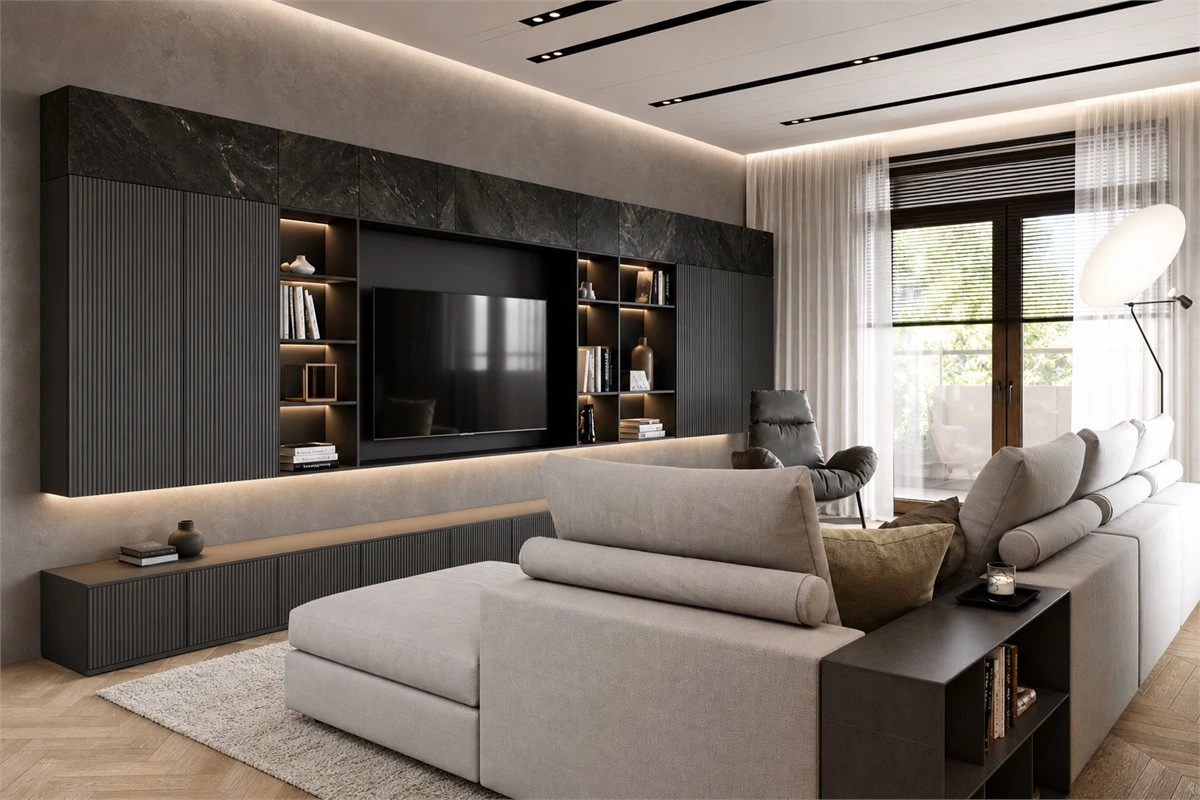
Fluted cabinet doors can work beautifully on wardrobes, sideboards, bathroom vanities, bar cabinets, and selected kitchen units. They are especially effective when used on one cabinet zone rather than every door front. For example, a fluted buffet cabinet can become a dining-room focal point, while smooth adjacent panels keep the composition calm.
Consider the opening method before choosing a profile. Deep grooves may suit a decorative tall cabinet, but frequently used drawers and doors still need a comfortable grip. Concealed edge pulls, integrated rail profiles, or selected visible handles can make textured fronts easier to use. See our cabinet handles vs. handleless design guide when planning the opening system.
Choosing the Right Fluted Cabinet Profile
Fine linear fluting usually gives cabinetry a tailored, understated appearance, while wider rounded flutes create a softer and more sculptural look. A vertical profile can make a tall cabinet appear higher, while horizontal fluting can visually widen a low sideboard or TV unit. Request a full-size door sample whenever possible, because groove depth and shadow can look very different under daylight, warm LEDs, and cool task lighting.
Fluted Panel Feature Walls
Similar to their use in cabinetry, fluted panels contribute to defining the soft beauty of walls. Establishing a rhythmically rich spatial ambiance, they enhance the overall completeness of the space.
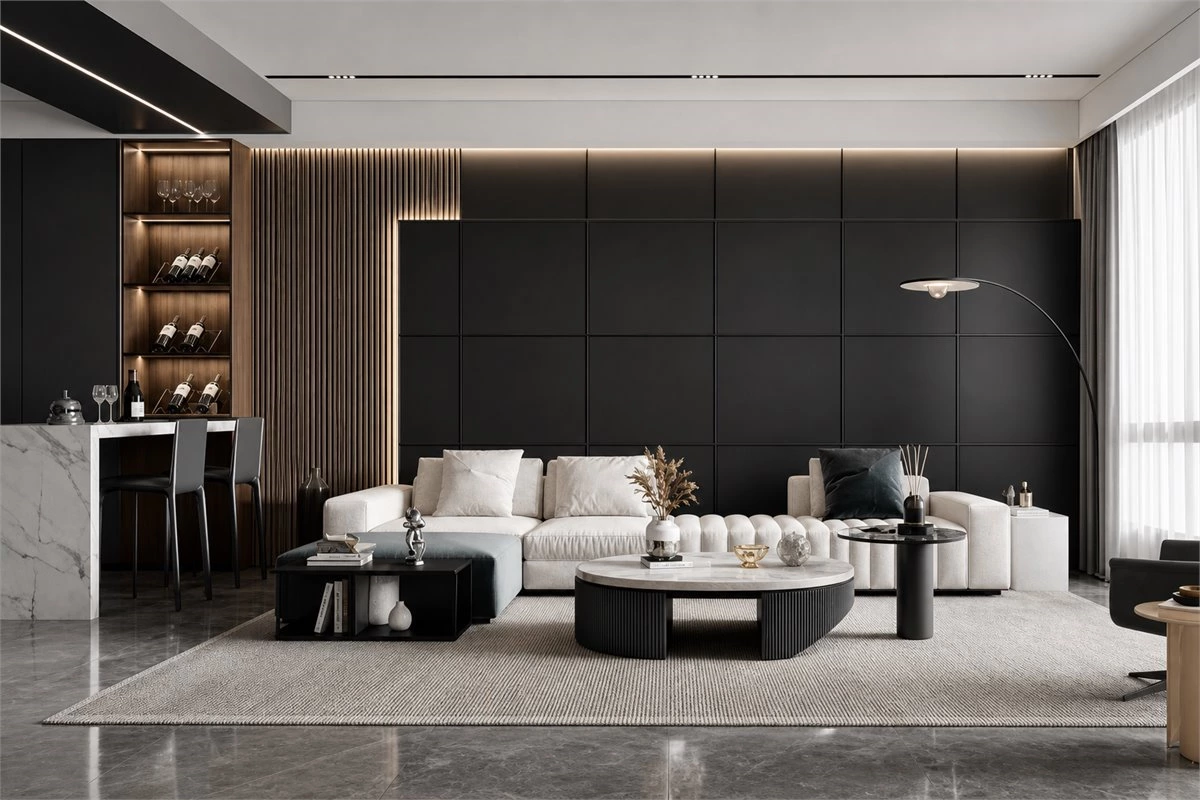
When used as a detailed decorative accent, these panels delicately modulate the tension in the space, emanating a dynamic essence and a unique aesthetic.
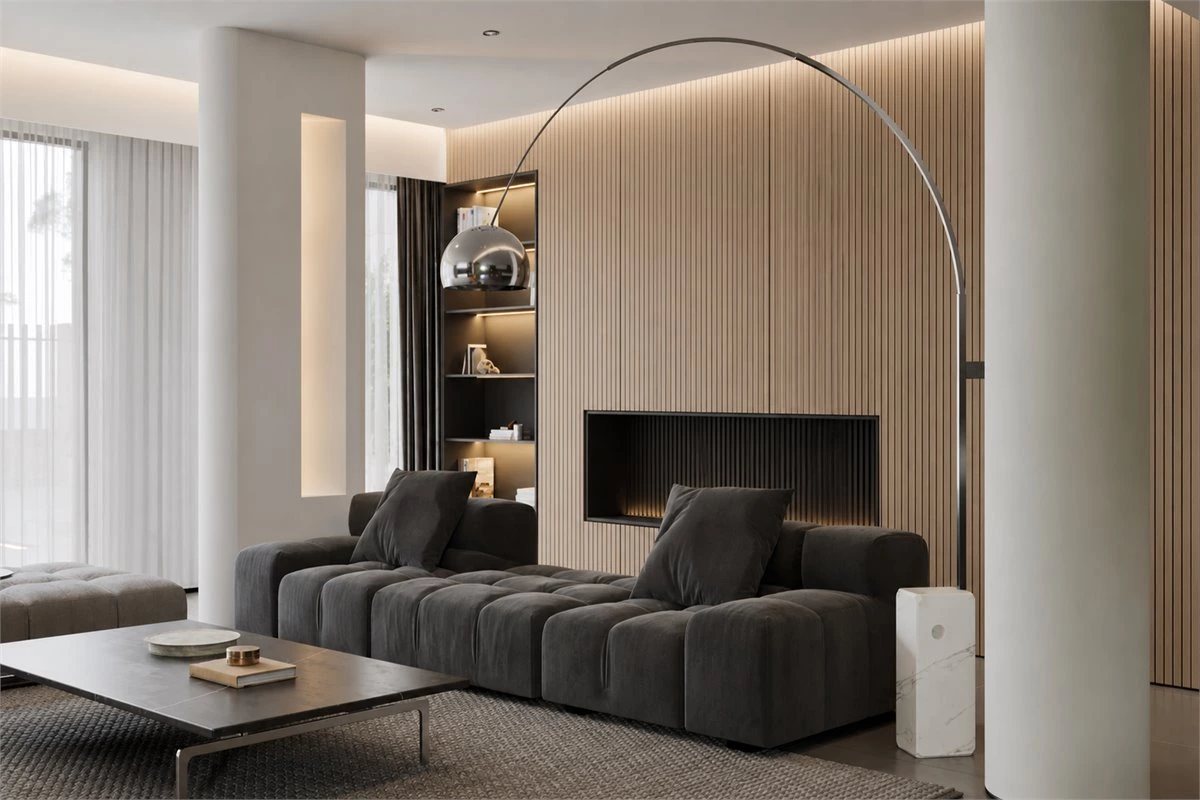
A fluted feature wall can be placed behind a television, sofa, bed, dining table, or entrance console. To avoid a busy appearance, balance the textured surface with plain wall paint, smooth stone, glass, or calm cabinetry. Repeating the same wood tone in a nearby cabinet, door frame, or tabletop can make the entire room feel intentionally designed.
Lighting is central to this type of fluted wall paneling idea. A concealed LED strip placed near the panel edge can cast soft shadows into the grooves, while wall washers emphasize the profile over a broader surface. Avoid placing strong point lighting too close to glossy finishes if glare may distract from the texture.
Fluted wall panels can also help conceal a hidden door, storage entrance, or service access when the panel rhythm continues across the door seam. If this approach is used, confirm the hardware, clearance, and edge detail before fabrication. For coordinated door and wall-panel options, explore custom interior doors and wall panels.
Fluted Wainscoting
Wooden fluted wainscoting can protect and enrich the walls, elevating the visual sensory experience and providing a source of aesthetic pleasure in home spaces. Enhanced by ambient lighting, the atmosphere becomes distant and contemplative, accentuating the nuanced texture of the overall material and infusing the walls with a sense of depth and artistry.
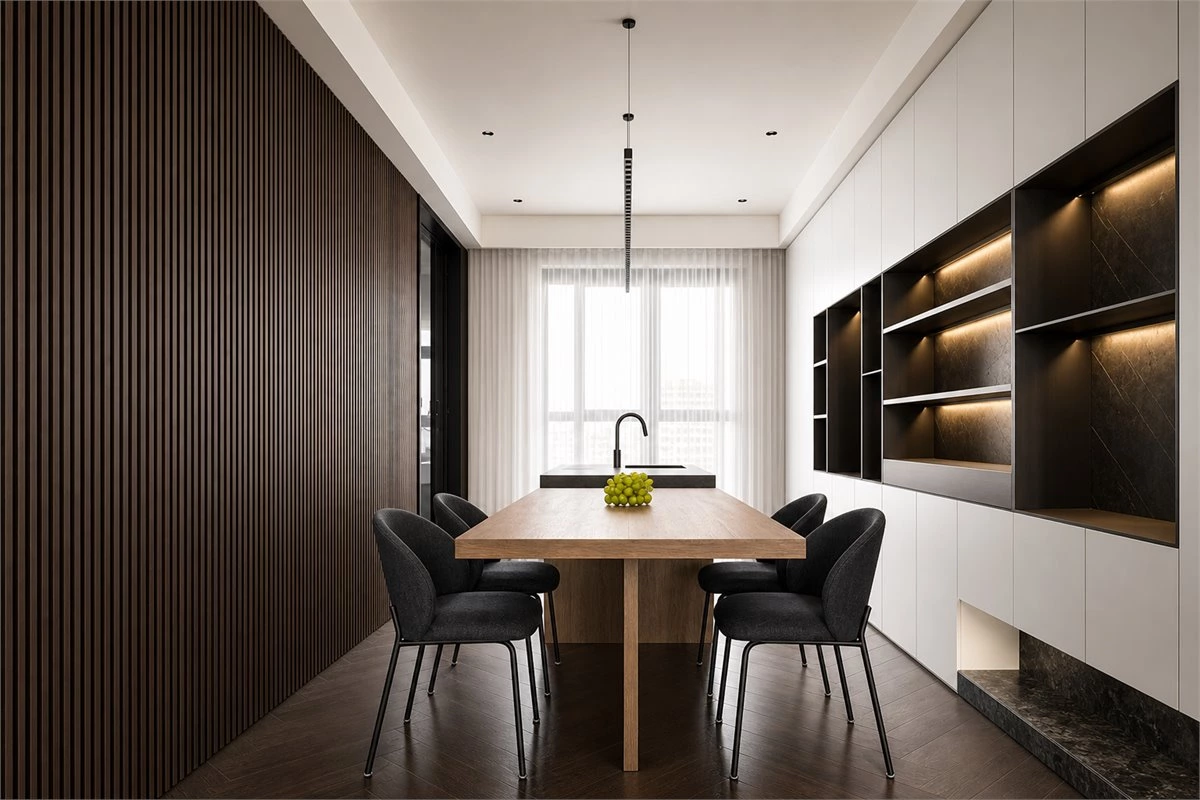
Fluted wainscoting is a practical choice for entryways, corridors, dining rooms, and bedroom walls where a lower wall finish needs more visual interest and everyday protection. The height can be aligned with a console, countertop, windowsill, or chair rail so that the paneling relates naturally to the room architecture.
In areas exposed to moisture, splashes, or frequent cleaning, choose a finish and substrate suitable for the room. Wood-look finishes, moisture-resistant boards, and properly sealed edges are often more practical than untreated timber in bathrooms, laundry areas, or humid climates. For specification-focused projects, the Architectural Woodwork Institute provides industry resources on wood paneling, finishing, and architectural woodwork standards.
Material, Finish, and Lighting Tips
Material selection changes both the appearance and maintenance needs of fluted panels. Natural veneer highlights grain variation and warmth, painted panels allow a color-matched architectural finish, and durable engineered boards can provide a consistent profile for larger cabinet runs. A matte finish generally softens the shadows between grooves, while a satin or gloss finish reflects more light and creates a stronger decorative effect.
- Natural wood veneer: Best for warm, layered interiors and projects that celebrate wood grain.
- Painted or lacquered panels: Suitable for color continuity with cabinets, doors, and wall finishes.
- Moisture-resistant panel systems: Better suited to bathrooms, laundry spaces, and other humid zones.
- Reeded glass or metal details: Useful where a lighter, more contemporary contrast is desired.
- Concealed LED lighting: Adds depth, supports wayfinding, and emphasizes the rhythm of the grooves.
Keep a sample board in the actual project lighting before approving production. This simple step helps confirm whether the groove depth, spacing, color, and sheen still look balanced alongside flooring, stone, upholstery, and cabinet finishes.
Practical Checklist Before Ordering Fluted Panels
- Confirm where fluting will be used and what function each surface must serve.
- Choose the profile direction, flute width, groove depth, and edge treatment.
- Approve material samples beside the intended flooring, cabinetry, and wall finishes.
- Mark electrical outlets, switches, vents, access panels, and lighting locations on the elevations.
- Confirm the opening method for fluted cabinet doors and concealed doors.
- Check wall conditions, installation tolerances, and finishing details at corners and ceiling lines.
- Specify a cleaning routine appropriate for the selected finish and room conditions.
For more texture-forward cabinetry and architectural details, you may also like 10 Design Trends for Innovative High-End Cabinets.
Fluted Wall Paneling Ideas FAQ
Are fluted wall panels suitable for small rooms?
Yes. Fine vertical flutes can make a compact room feel taller and more detailed without adding bulky furniture. Use one focused wall or a small cabinet zone, and combine it with light colors to keep the room open.
Can fluted panels be used in kitchens and bathrooms?
They can, provided the panel material, edges, finish, and installation method suit the moisture and cleaning demands of the room. Keep water-sensitive finishes away from direct splash zones, and confirm that cabinet fronts are practical for daily use.
Do fluted cabinet doors collect dust?
Grooves can collect more dust than a flat door, especially when the profile is deep. Choosing a moderate groove depth and a durable, wipeable finish makes routine cleaning easier.
What is the best lighting for fluted wall paneling?
Concealed linear LEDs, soft wall-washing light, and warm ambient lighting usually reveal the depth of the profile most effectively. Test lighting direction with a sample because very strong direct light can create harsh shadows or glare.
Should fluted paneling be used throughout the whole house?
It is usually more effective when repeated selectively. Using the same profile in two or three connected zones—such as an entry screen, sideboard, and bedroom feature wall—can create continuity without making every room feel identical.
Conclusion: Add Texture With Purpose
Fluted wall paneling ideas can give a custom home more rhythm, warmth, and architectural character. From open partitions and fluted cabinet doors to feature walls and wainscoting, the best results come from using texture with purpose.
By matching the profile, material, lighting, opening details, and maintenance needs to each room, homeowners and project teams can create fluted interiors that feel cohesive, practical, and visually lasting.