10 Design Trends for Innovative High-end Cabinet Functionality and Aesthetics
Functionality and Aesthetics
Cabinetry today is more expressive, more architectural, and far more experimental than it has ever been. What once relied on flat panels and predictable finishes now embraces texture, light, radius, and hybrid construction. If your projects have begun to feel more functional than delightful, it might be time to revisit the design elements that are quietly reshaping contemporary custom work. The following trends represent the most distinguished and influential design directions in the recent years, offering a different lens through which contemporary customization continues to evolve.
Fluted Style Doors
Fluting brings architectural rhythm without changing proportions. When paired with a contrasting backboard (glass, metal, or stone), it creates depth and a boutique display quality—useful for islands, tall units, and wardrobe feature walls. In recent years, fluted cabinetry remains one of most photographed trends and functions well in both traditional and highly modern schemes.
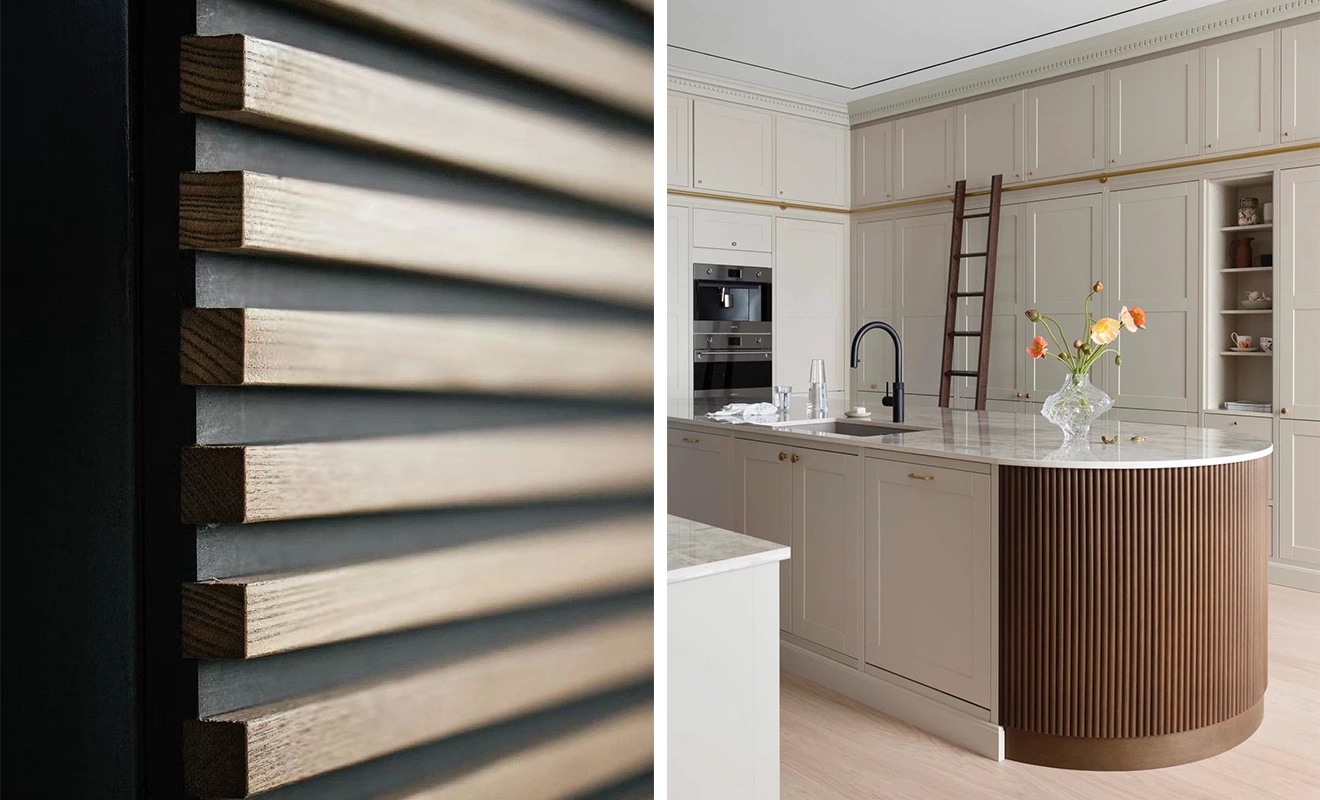
Fluting started as a texture but has grown into an organizing principle for cabinet façades. Rather than a single decorative treatment, contemporary approaches stack profile, material, and depth to create layered surfaces that read differently depending on the light and viewing distance.
Profile variety: micro-flutes (fine, refined), half-round reeds (sculptural), broad ripple flutes (organic motion).
Layered assemblies: solid-wood or MDF flutes fixed to a contrasting backboard—common backboards include tinted glass, ribbed glass, or thin stone veneers. A glass backboard behind timber flutes introduces translucency and cast shadow; a dark stone backboard emphasizes silhouette and silhouette contrast.
Functional flutes: thickened edge flutes that become concealed finger pulls; flutes that terminate into a recessed channel for integrated lighting.
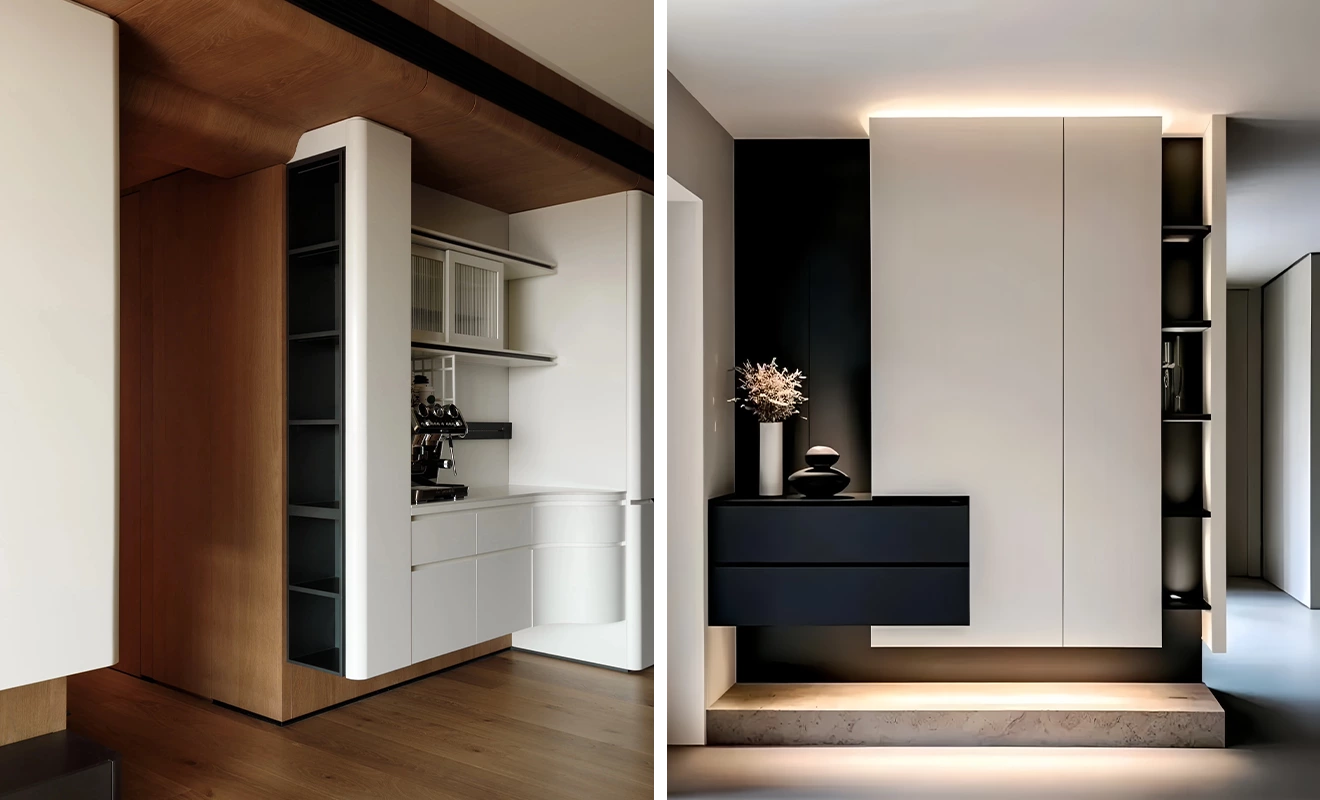
Radius Corner and Curved Cabinet
Curved craftsmanship has surged in popularity in high-end cabinet customization and even interior design. You can see curves everywhere now—arched wall paneling, radiused island ends, gently bowed vanities in bathrooms, and the list goes on. Wrapped in matte lacquer, fluted veneer, or sculpted stone, the effect is both understated and sophisticated.
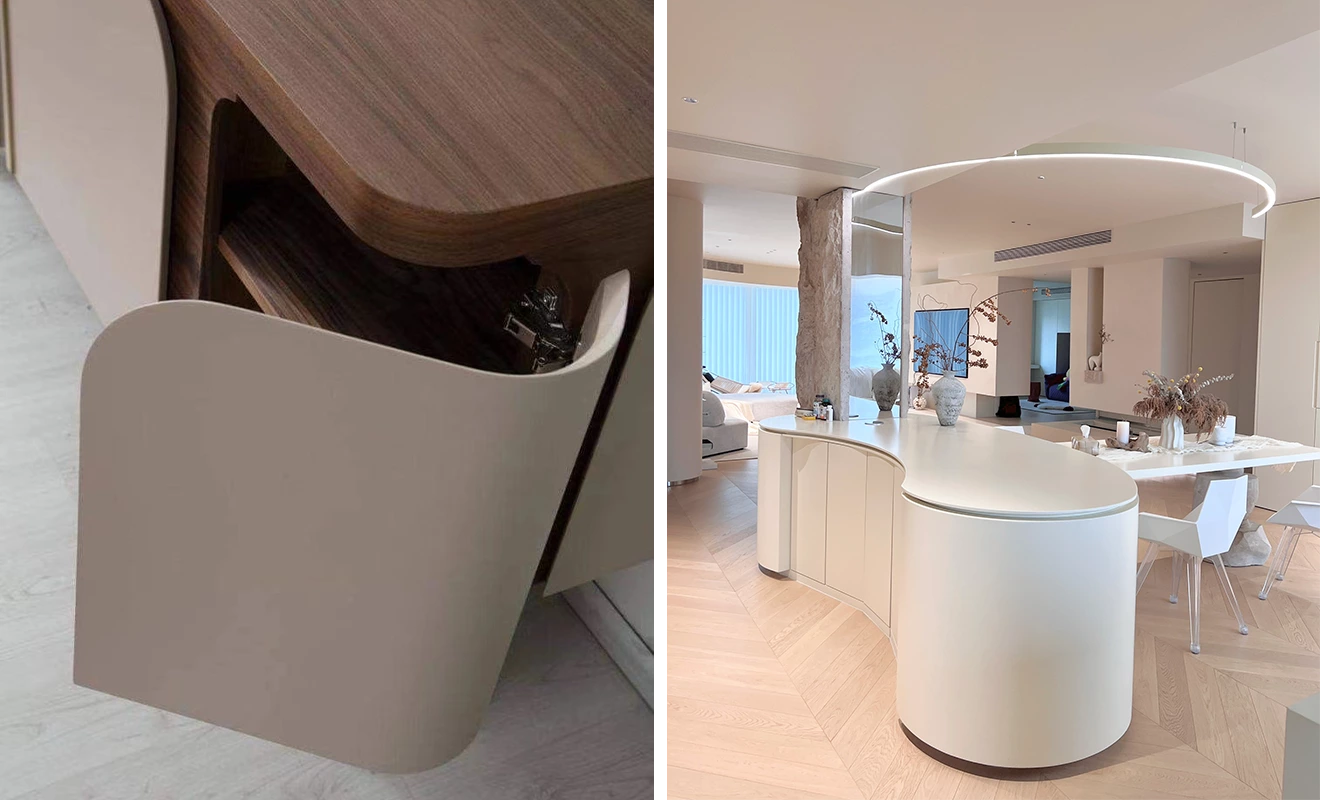
While its soft silhouettes are undeniably beautiful, homeowners love it for another reason. In tight kitchen walkways or busy family homes, rounded corners help prevent the accidental bumps that sharp-edged islands are notorious for. The curves also guide circulation more naturally, making spaces feel wider and more inviting.
Integrated Lighting
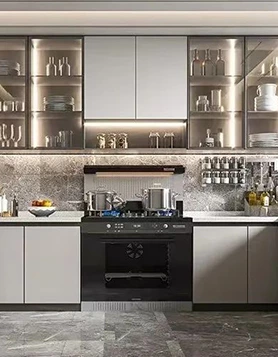
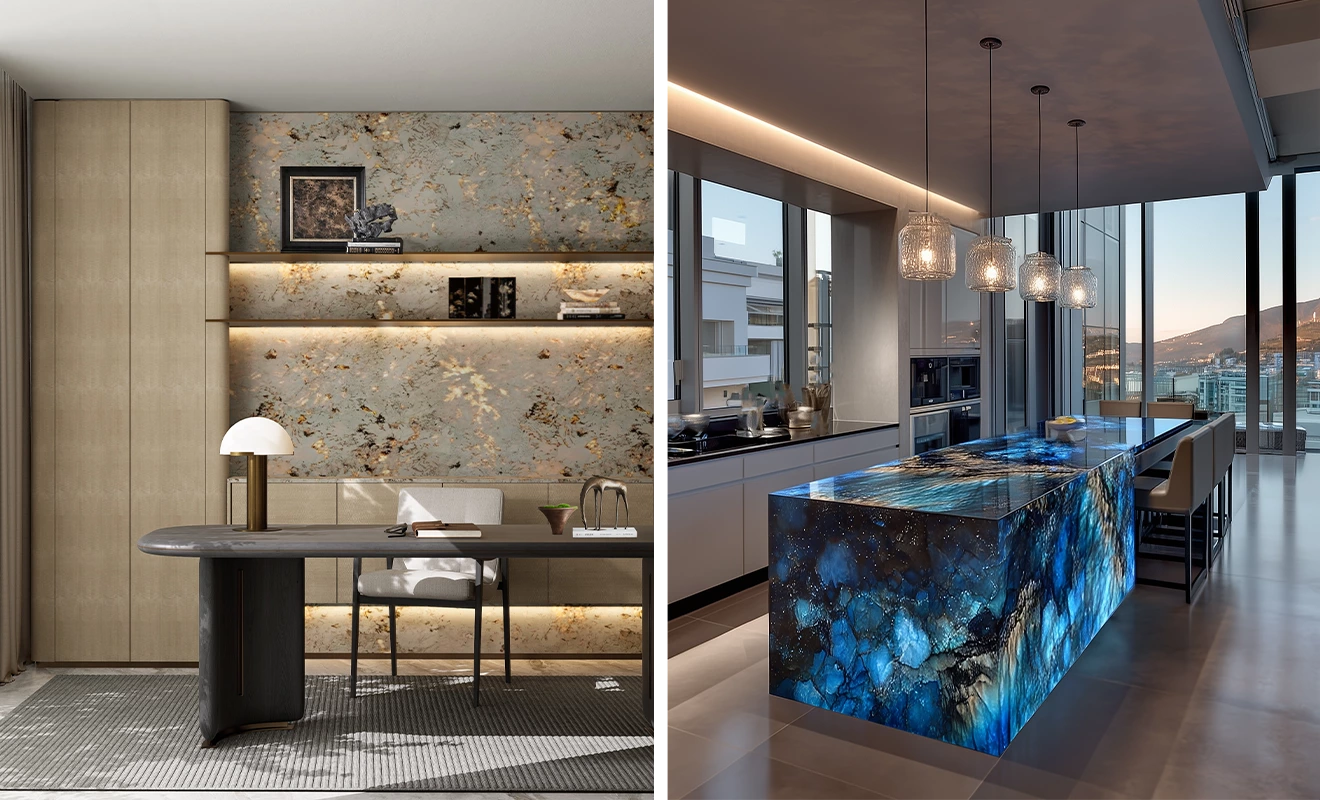
Lighting is no longer an accessory; it has become part of the cabinet’s structure. Edge-illuminated glass doors, motion-sensing drawers, under-shelf LED ribbons, and micro-LED sheets laminated behind acrylic backdrops now provide both function and ambiance. These systems highlight textures, and create gallery-like display moments. When combined with tinted glass or translucent stone, lighting transforms storage into a curated visual layer.
Ultra-Matte, Anti-Fingerprint Finish
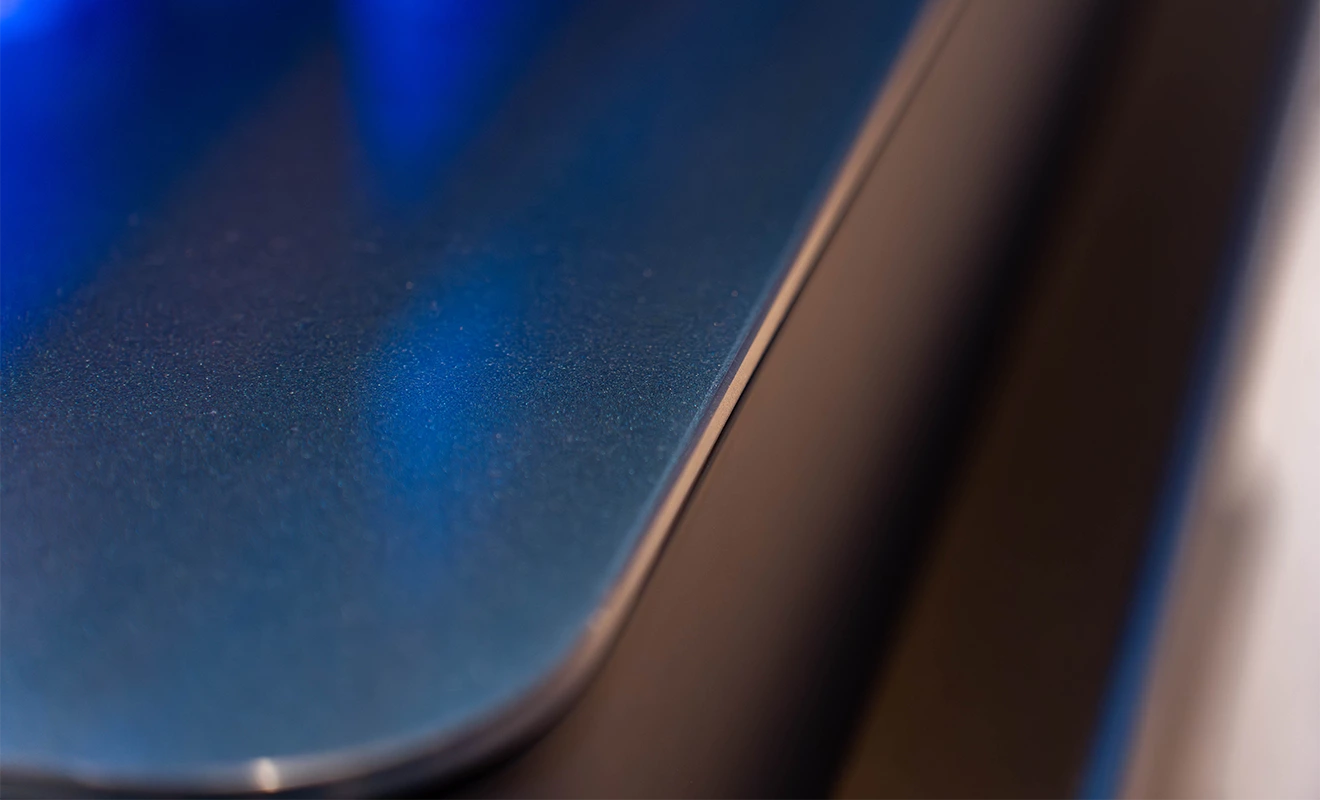
The rise of ultra-matte materials has fundamentally shifted the visual language of cabinetry. These surfaces eliminate glare, diffuse light softly, and provide a tactile, velvety finish that feels luxurious to the touch. Anti-fingerprint technology ensures durability, making them ideal for large monolithic walls, pantry towers, and open-plan kitchens. Their understated presence allows surrounding textures, including stone, wood, metal to stand out.
Pocket Door System & Hidden Kitchen
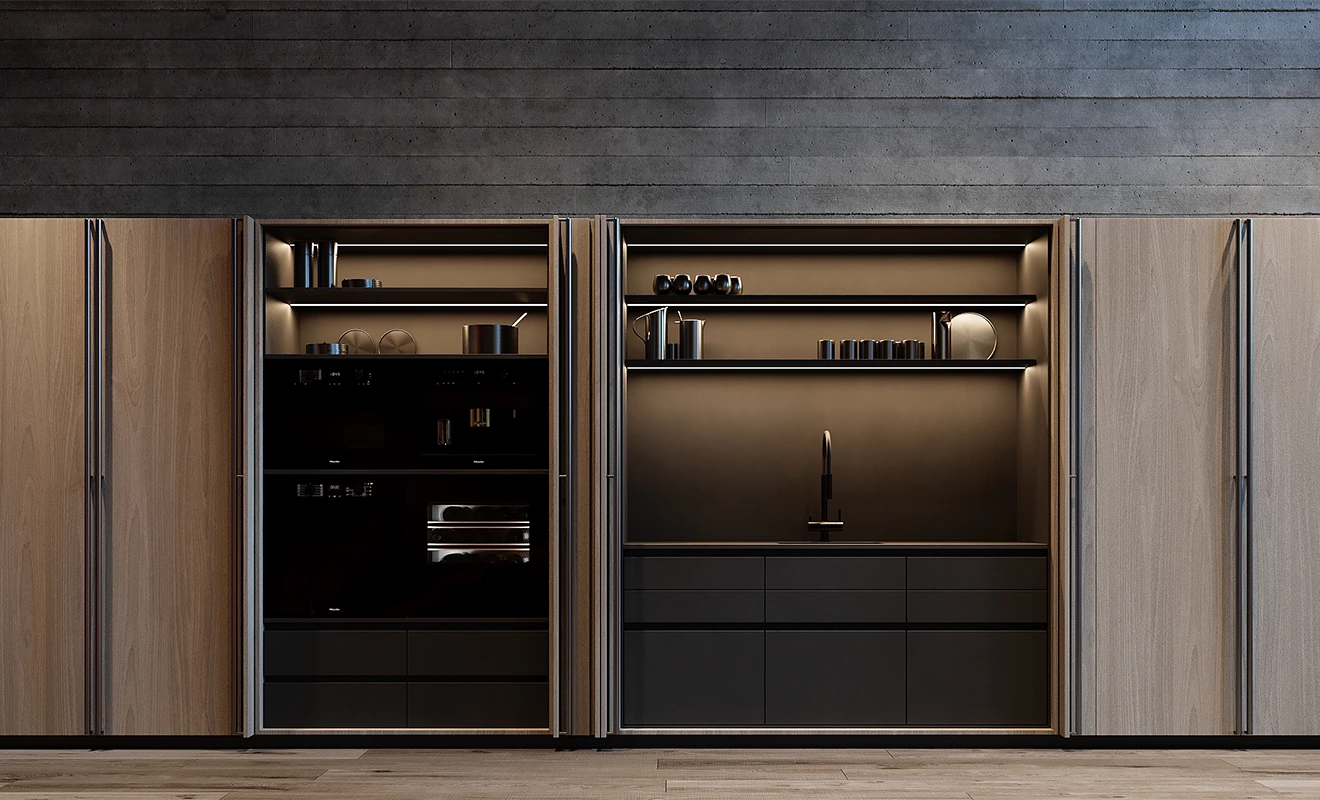
If you’ve ever wished the most hard-working part of your kitchen could just disappear after busy cooking, pocket doors are really helpful. With a gentle slide, these doors are pulled out from the reserved space on both sides of the cabinets, to tuck away prep zones, appliance hubs, or even an entire secondary kitchen. It’s a favorite feature for open-plan living and compact homes that need to lower visual noise and enhance flexibility.
Mixed-Depth Wall System
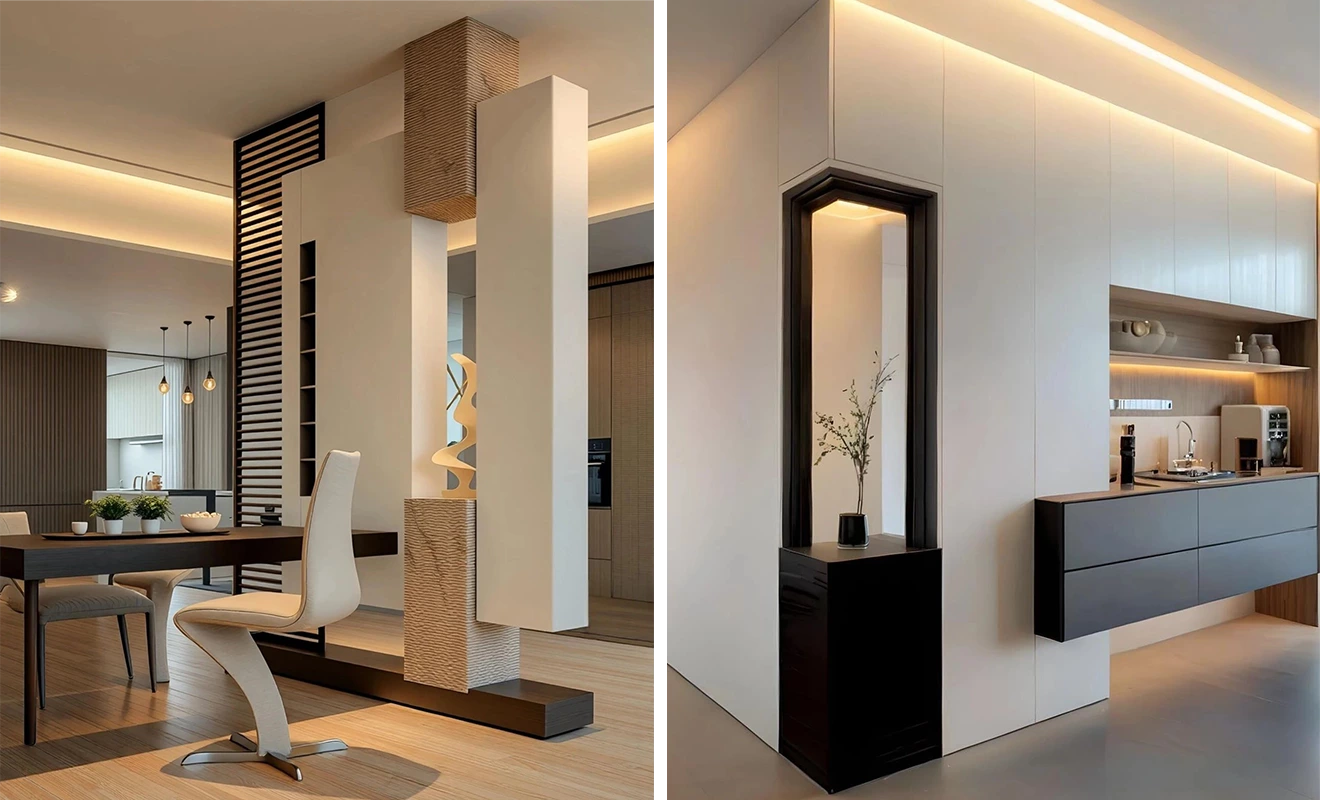
When every cabinet sits flush on the same plane, your storage wall can look heavy and monolithic. Mixed-depth systems break that up in the best way. Designers layer shallow display shelves over deeper cabinets, recess small niches for sculptural objects, or stagger depths to introduce dimension and breathing room. The result is more than typical cabinetry. You get shadow lines, display pockets, and a living-room-level level of polish—without sacrificing usable storage.
Floating Cabinetry
A cabinet that doesn’t touch the floor instantly changes a room’s energy. Floating vanities, wall-mounted consoles, and suspended sideboards create negative space that makes a room feel larger and more open.
This style isn’t only about looks. Because the base is off the floor, cleaning becomes significantly easier, and under-cabinet lighting can be added to create a soft glow at night. The final look feels refined, modern, and almost effortless.
Integrated Tech Modules
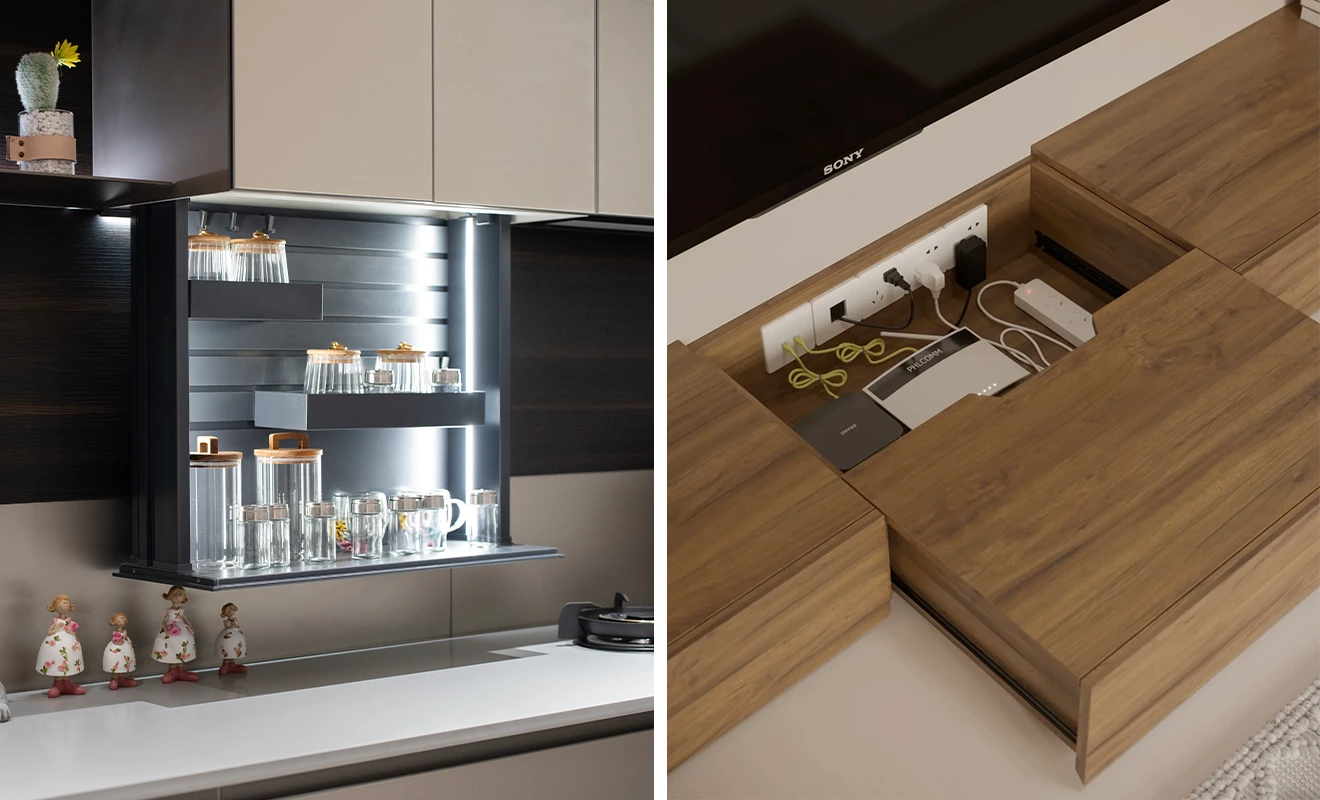
The newest generation of cabinetry doesn’t just store things. Over the past two years, it has stepped confidently into the world of smart living, integrating power access, appliances, and sensor control devices into its very structure. For example, outlets migrate into the shadows of drawers, where phones recharge out of sight and countertop clutter never has a chance to form. A wardrobe may hide a chilled skincare niche that quietly hums at the perfect temperature, ready for a morning routine. Designers are now building entire tech ecosystems directly into cabinet pieces, with features that streamline daily routines while keeping every component beautifully out of view.
Micro-Textured Laminates
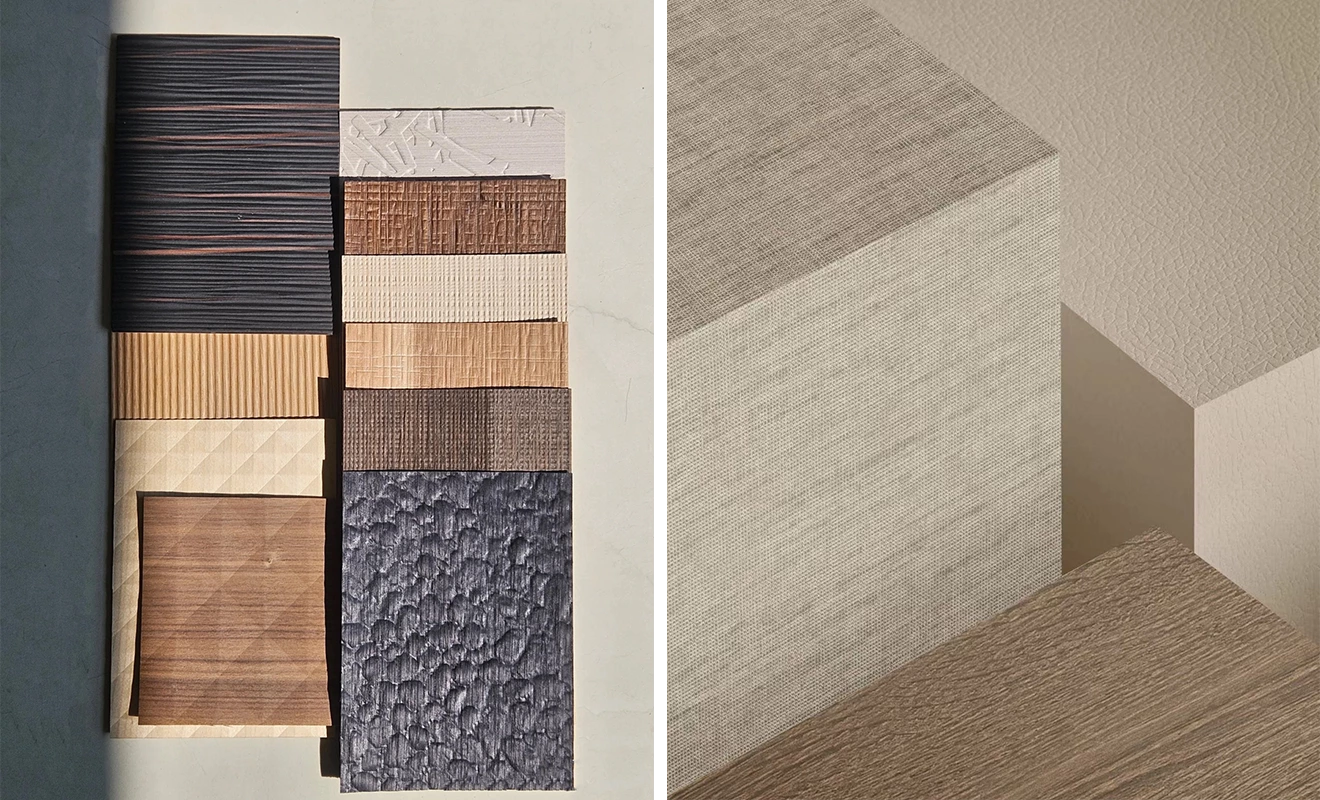
Micro-textured laminates are the quiet achievers of modern cabinetry. They deliver subtle depth without demanding attention, and they offer durability that natural materials can’t always match.
Available in wood-grain embosses, linen-like textures, and stone-inspired patterns, micro-textures add tactile interest to large surfaces. They’re excellent for high-traffic areas where fingerprints, scuffs, and moisture are concerns.
Slim Metal-Framed Door
There’s something undeniably luxurious about opening a slim metal-framed glass cabinet. The frame might be only a few millimeters thick, but it signals precision, craftsmanship, and openness. Inside, your personal collections—be it dishware, books, or wardrobe pieces—feel curated, even if you didn’t plan it that way.

You can choose clear glass for maximum visibility, tinted glass for a moodier look, or reeded glass for partial concealment. No matter the choice, the combination of metal and glass adds levity to otherwise solid runs of cabinetry. Here's another design note: Frame thickness (5–12 mm) matters visually—specify frame width relative to door size to avoid disproportionate sightlines.