An increasing number of individuals are showing interest in holistic kitchen design. Exquisite craftsmanship and precisely aligned cabinet panels often captivate us with their aesthetic appeal. However, practicality in cabinet design is frequently overlooked. Although kitchen spaces are brimming with cabinets, their usability can sometimes be less than ideal. In the following article, we would like to share some kitchen design tips focusing on base cabinet storage to promote convenience and practicality.
Well-planned kitchen base cabinet organization turns everyday cooking into a smoother routine. The most useful storage solutions place frequently used items close to the prep, cooking, and cleaning zones, while keeping heavy cookware, sharp tools, and occasional-use pieces safely contained. When planning custom kitchen cabinets, consider not only cabinet style and finishes but also how each interior section will support your daily habits.
How to Plan Kitchen Base Cabinet Organization
Before choosing drawers, pull-outs, or interior organizers, make a short inventory of what you use every day. Group cookware near the cooktop, dishes near the dishwasher or dining area, and cleaning supplies near the sink. This simple zoning approach prevents long reaches across the kitchen and helps keep countertops clear.
- Store by task: Keep tools where they are most likely to be used.
- Use full-depth drawers: They make pots, dishes, and pantry items easier to see than deep cabinets with fixed shelves.
- Weight plan: Heavy cookware and stacked dishes need durable drawer hardware and sensible internal dividers.
- Leave room to grow: Avoid filling every compartment at once, so the system can adapt to new kitchen tools over time.
For broader layout and storage inspiration, explore these kitchen cabinet design trends and consult recognized kitchen-planning resources from the National Kitchen & Bath Association when developing a complete renovation plan.
Cabinet Drawer
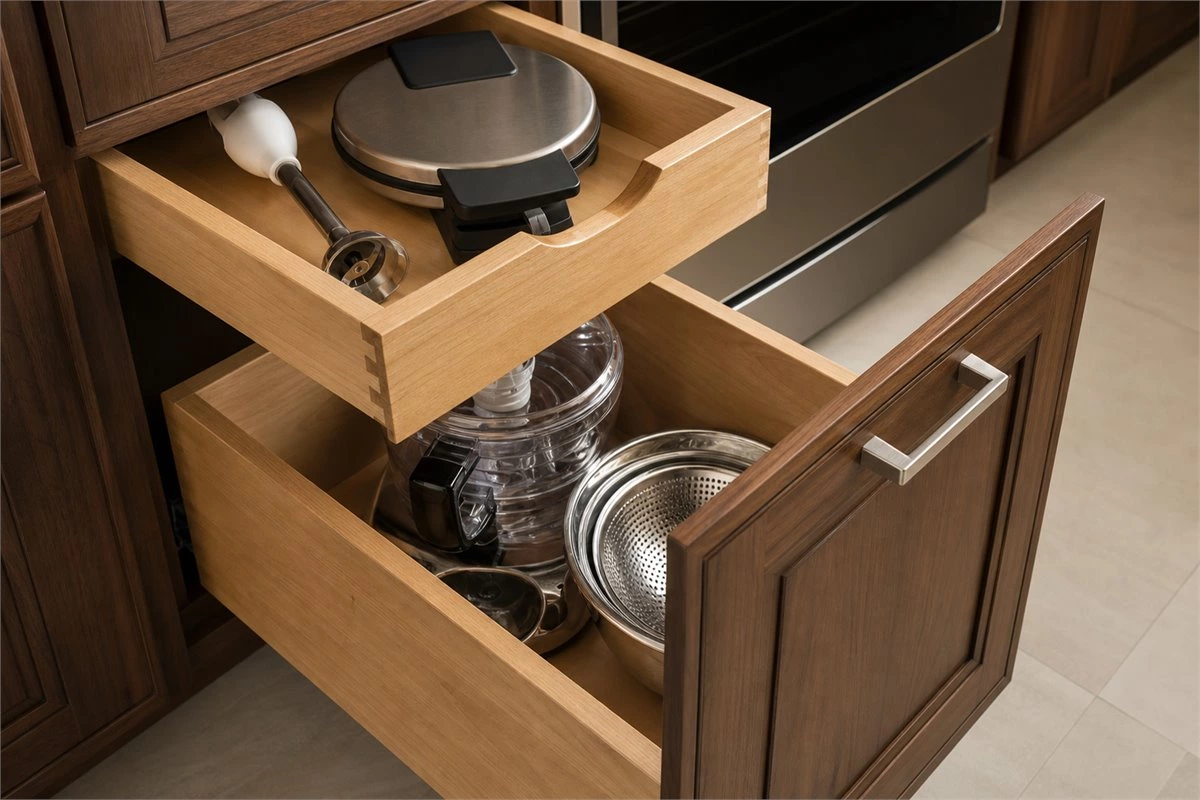
In addition to traditional hinged doors, base cabinets can be thoughtfully designed with drawer fronts. This not only preserves the cabinet's seamless appearance but also optimizes the utilization of space while enhancing accessibility. The featured design incorporates a drawer system within the cabinet, with a smaller upper drawer and a larger lower one. These two drawers are thoughtfully spaced apart to accommodate larger utensils in the lower section and smaller ones in the upper drawer. This ingenious design adds both sophistication and practicality to your kitchen.
For effective kitchen base cabinet organization, use the shallow top drawer for cutlery, foil, wraps, or measuring tools. Reserve the deeper drawer below for mixing bowls, food containers, or serving dishes. Full-extension drawer runners are especially helpful because they allow you to see the entire drawer without bending or searching behind stored items.
Bowl and Dish Organization
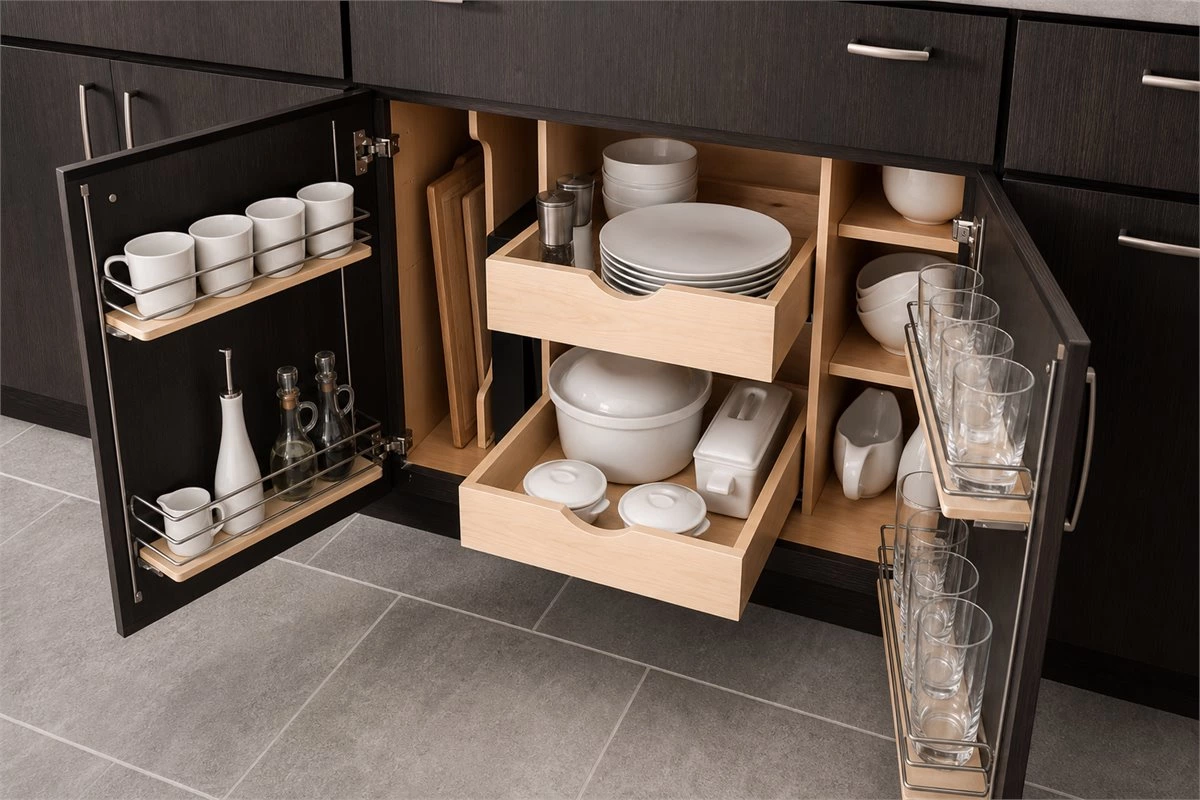
This particular base cabinet features a conventional hinged door design. Notably, it not only provides ample storage space within the cabinet itself but also offers storage options on the cabinet door. Managing an extensive collection of tableware often necessitates systematic organization. The cabinet's interior includes drawers for accommodating larger bowls and dishes, while the cabinet doors offer dedicated spaces for cutting boards and smaller tableware items like saucers. This strategic design imparts a sense of order and convenience to the arrangement of your tableware.
Place everyday plates and bowls in the most accessible zone, ideally between waist and knee height. Vertical dividers help keep trays and cutting boards upright, while a non-slip base liner can stop stacks from shifting when drawers open. This type of base cabinet storage also makes unloading a dishwasher faster and keeps delicate tableware from being mixed with heavy cookware.
Corner Cabinet
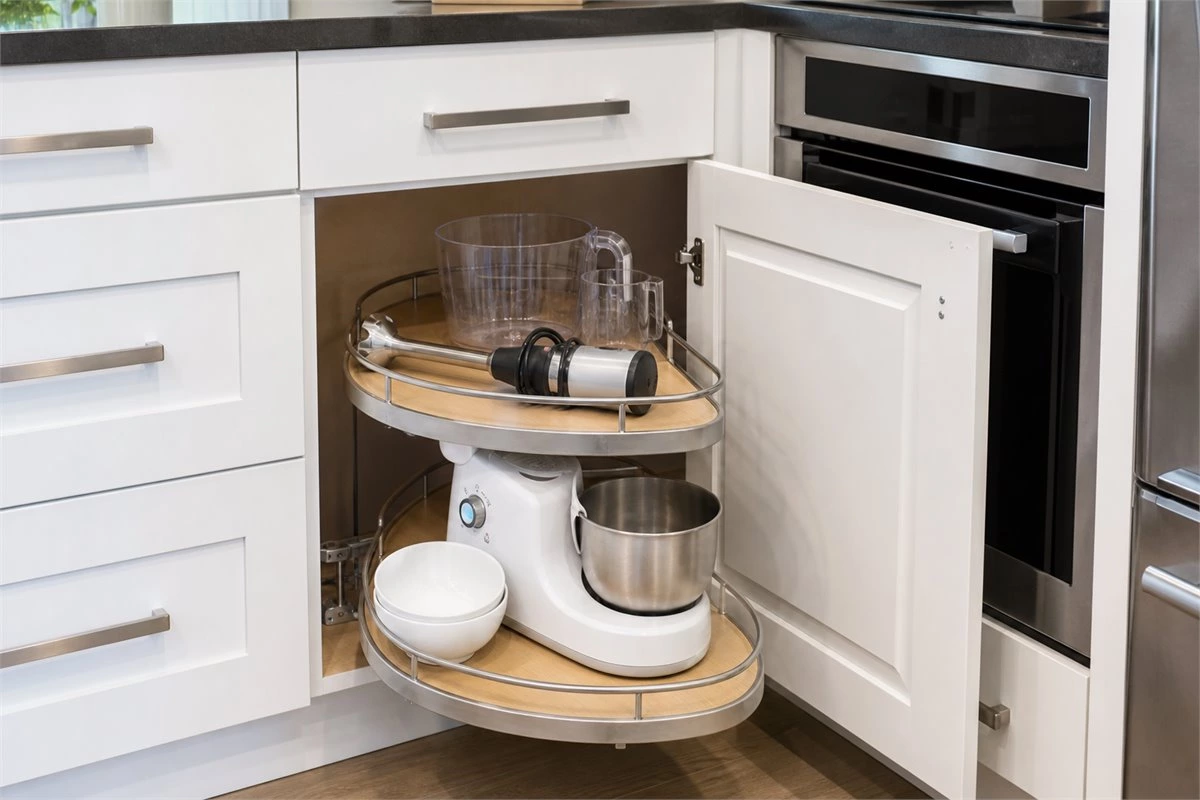
Base cabinets often include challenging-to-utilize spaces, such as the corners where two cabinets meet. This results in a portion of the cabinet's space being hard to access, even if internal dividers are incorporated. To address this issue, rotating shelving units can be employed to maximize cabinet space effectively. This innovative design fully utilizes the cabinet space, rendering it exceptionally practical.
Corner cabinet storage works best when it is designed around the items you actually need to retrieve. A rotating shelf is useful for small appliances, mixing bowls, or dry goods, while a pull-out corner system can bring stored items forward in one smooth movement. Avoid using the deepest corner for daily essentials; use it instead for larger items that are needed less often.
Small Utensil Organization
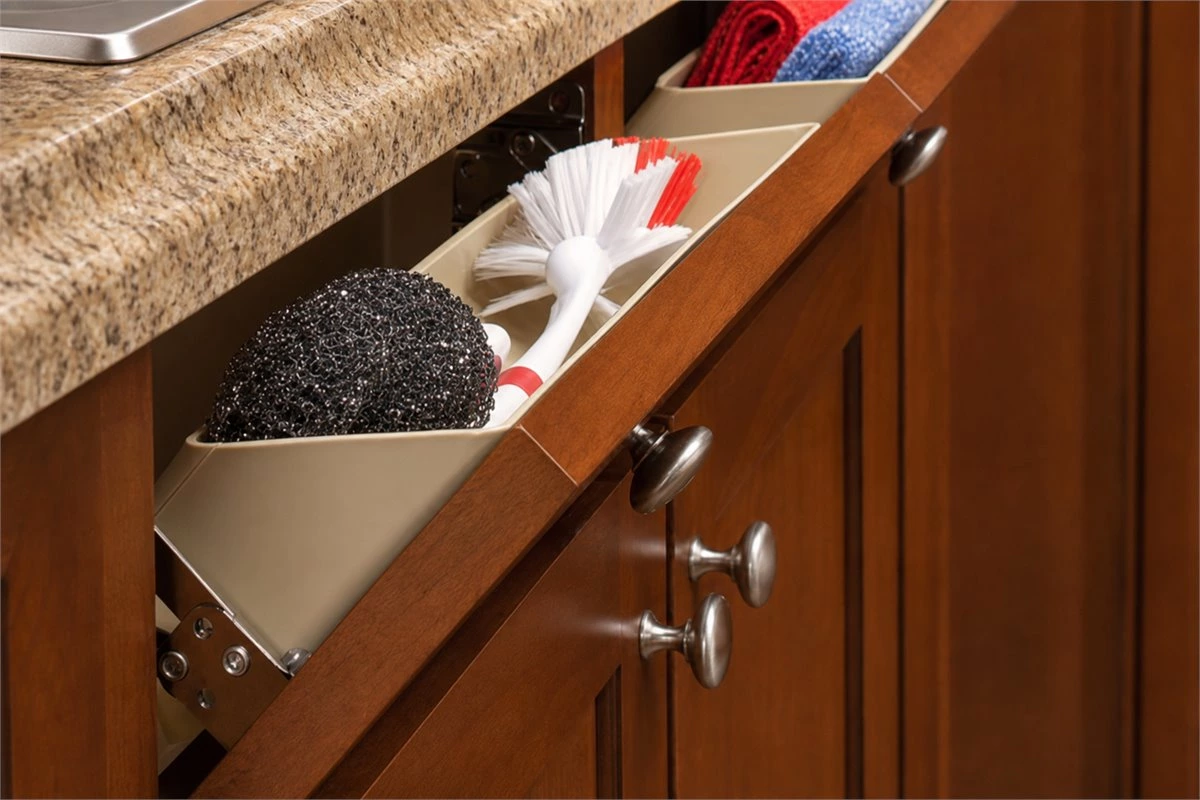
The base cabinet also presents an opportunity for storing and organizing cleaning and clearing tools, offering a compact and cleverly designed, slant-opening cabinet door. This space is perfect for accommodating items like dishcloths, steel wool pads, and other small kitchen tools, ensuring both convenience and utility.
Small pull-out storage is particularly valuable around the sink zone. Separate wet-cleaning tools from dry items, and use removable bins or trays so the cabinet is easy to wipe down. A narrow storage section can also hold cleaning gloves, brushes, dishwasher tablets, and cloths without taking valuable drawer space away from cookware or tableware.
Knife Organization
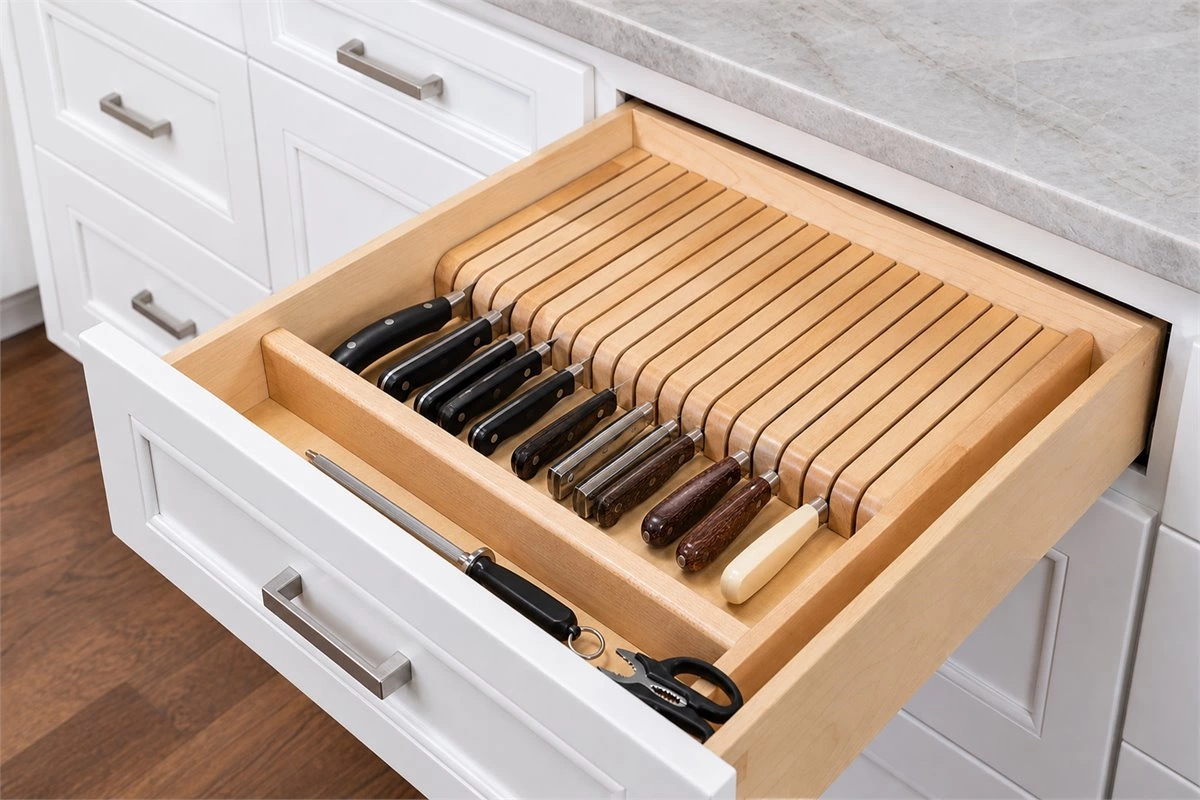
In this base cabinet design, a dedicated drawer is provided for the organized storage of various-sized knives. This arrangement ensures a tidy and ordered kitchen setup, making access to your knives notably convenient.
A dedicated knife drawer is safer than leaving knives loose in a general utensil drawer. Use fitted inserts or angled blocks that keep blades separated and prevent handles from shifting. Position knife storage close to the preparation counter, but away from areas that children can access easily. This small detail makes kitchen base cabinet organization safer as well as more efficient.
Ladle and Spoon Organization
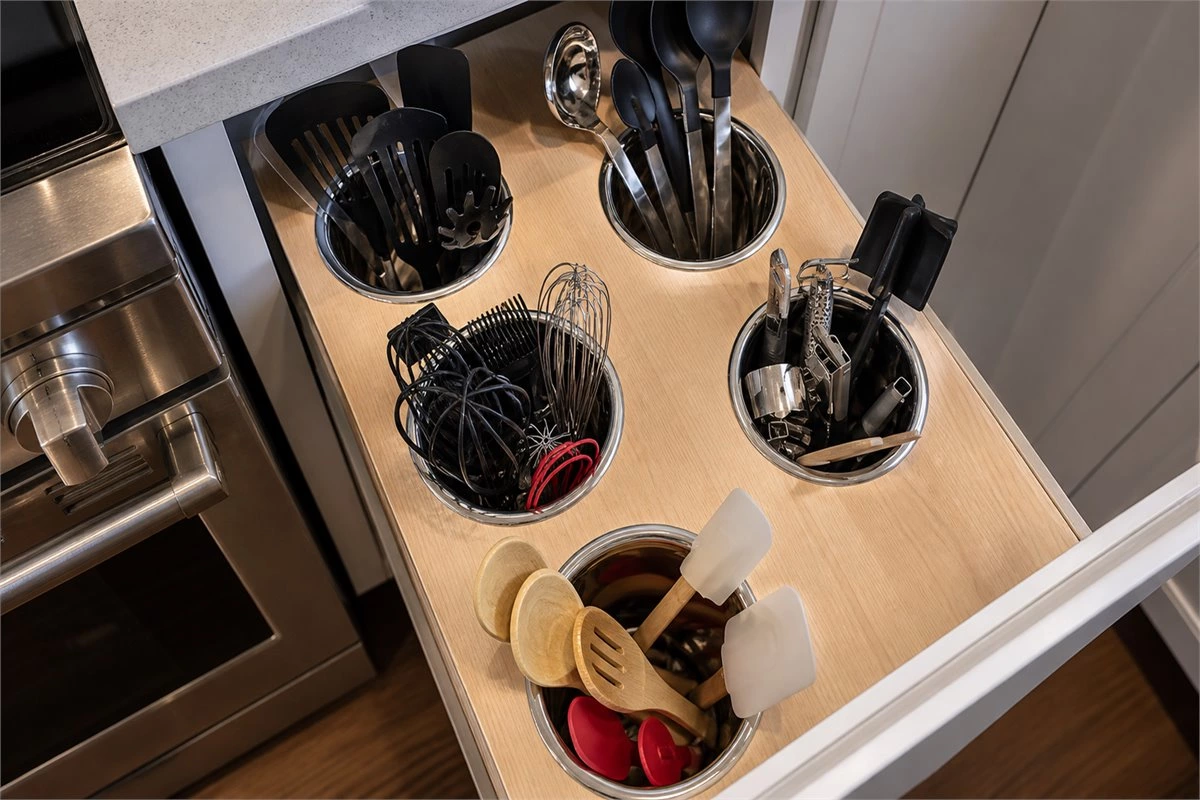
This base cabinet is specifically designed for housing ladles and spoons, with its storage space taking on a cylindrical shape. Multiple compartments are incorporated, and a pull-out drawer system is used. Categorizing utensils in the kitchen is of paramount importance, as it not only enhances efficiency but also contributes to a neater kitchen space.
Long utensils are easier to manage when they are separated by type. Keep ladles, spatulas, tongs, whisks, and serving spoons in dedicated compartments rather than one deep, mixed drawer. If the cabinet is close to the cooktop, choose a shallow pull-out that opens smoothly with one hand. Clear organization helps you find the right utensil quickly while cooking.
Cookware Organization
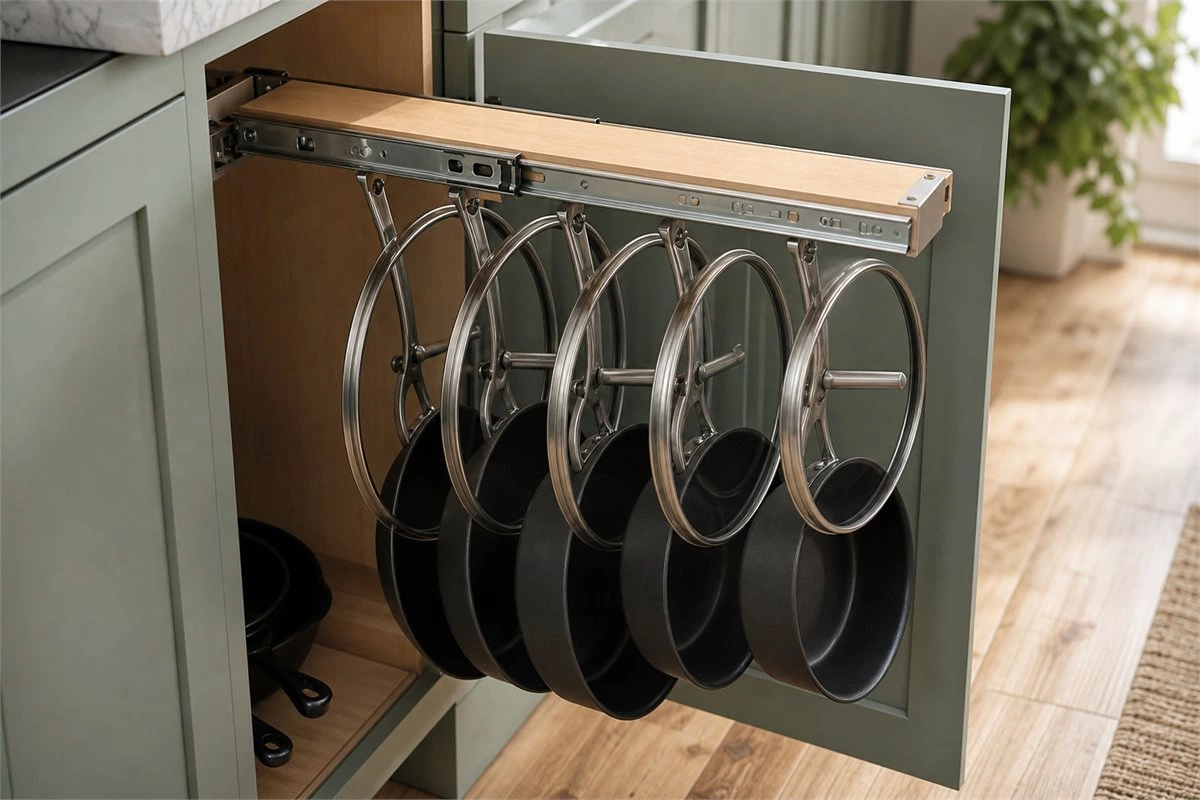
This base cabinet design features dedicated hanging spaces for frying pans. Household kitchens often house an assortment of pans for various purposes, such as frying, stewing, or making omelets. This hanging system ensures orderly and accessible storage for a range of differently-sized pans. The pull-out design of the hanging bar adds further convenience to this practical storage solution.
Cookware is heavy, awkward to stack, and often used daily, so it deserves a strong drawer or pull-out system. Vertical pan dividers, pull-out rails, and deep drawers can stop pots and pans from scratching one another. Place lids vertically beside their matching cookware where possible; this reduces clutter and makes it easier to select the correct pan at a glance.
Choose Storage Hardware That Supports Daily Use
Good organization depends on more than cabinet dimensions. Quality runners, hinges, and pull-out systems support the weight of dishes and cookware while maintaining smooth movement over time. Soft-close hardware improves the experience of opening and closing drawers, while adjustable organizers make it easier to adapt the interior as your cooking habits change.
For a cohesive result, combine practical storage planning with the exterior design of your cabinetry. Handleless fronts, integrated appliances, and streamlined drawer lines can create a clean look without sacrificing functionality. You can find more visual ideas in these simple kitchen cabinet design ideas.
Frequently Asked Questions About Base Cabinet Organization
What should be stored in kitchen base cabinets?
Kitchen base cabinets are ideal for heavy, frequently used items such as pots, pans, dishes, mixing bowls, small appliances, and cleaning supplies. Organize each cabinet according to its nearby work zone to reduce unnecessary movement during cooking and cleaning.
Are drawers better than shelves in base cabinets?
Drawers are often easier to use because they bring stored items fully into view. Deep drawers are especially practical for cookware and dishes, while shelves can still work well for large appliances or specialized pull-out systems.
How can I make a corner base cabinet more useful?
Use a rotating shelf, pull-out corner organizer, or another system that brings items from the back of the cabinet toward the opening. Store less frequently used pieces in the deepest portion of the corner.
How do I organize cookware without scratching it?
Use vertical dividers for pans and lids, add protective liners where needed, and avoid stacking cookware too tightly. A deep drawer or pull-out rail system helps keep each item stable and easy to access.
Final Thoughts
Thoughtful kitchen base cabinet organization makes a kitchen easier to use every day. From drawer systems and dish storage to corner solutions and pull-out cookware organizers, each detail can reduce clutter and improve your cooking workflow. The best solution is not simply the one with the most cabinets; it is a cabinet system designed around the way you prepare, cook, serve, and clean.