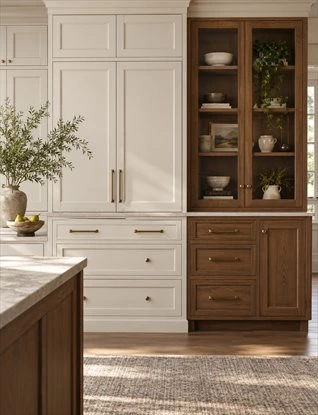
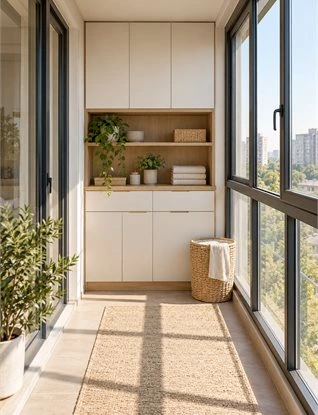
Painted vs stained cabinets is first a choice about what you want the finished surface to show. An opaque painted finish gives you a defined color and a comparatively consistent visual field. A stained wood finish lets the grain and natural variation remain part of the design. Neither choice is automatically more durable, less expensive or better for every room: the door construction, protective coating, workmanship and use conditions matter just as much as the appearance.
For a whole-home cabinetry project, the question becomes more interesting than “Which finish looks better?” A kitchen, wardrobe, dining cabinet and home-office built-in may be visible from one another, yet they do not all need identical surfaces. The most successful scheme gives each finish a clear role, compares physical samples under the intended lighting and records the approved combination before production.
This guide focuses on the final painted-versus-stained appearance and how to coordinate it across rooms. If you are deciding between particular coating products or cabinet-board constructions, request the complete specification rather than relying on the words painted or stained alone.
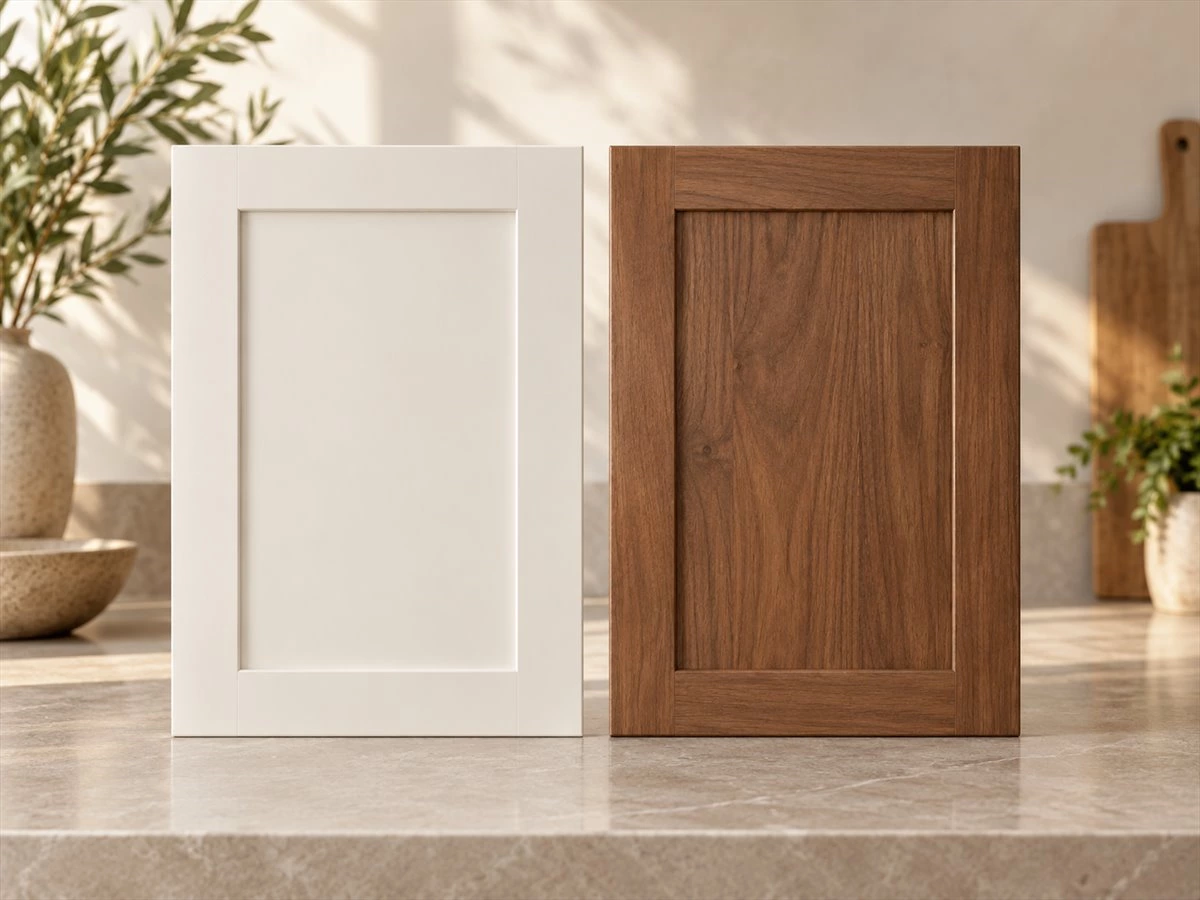
Painted vs Stained Cabinets: The Short Answer
Choose paint when a controlled color is the design priority
A painted cabinet can carry a specific warm white, muted green, deep blue or another selected color across a run of doors. Because an opaque finish largely conceals the underlying grain, it can help large banks of storage read as one calm surface. That visual consistency is particularly useful when cabinets are intended to blend with walls or when the room already contains prominent wood flooring or stone.
“Painted” is not a complete technical specification, however. The substrate, preparation, coating system, sheen and edge details all influence the finished result. Two doors described as painted may look and perform differently. Judge the actual approved sample and product information, not the category name alone.
Choose stain when visible wood character is part of the design
Staining changes the color of a suitable wood surface while allowing its grain to remain visible. It can add warmth and depth to an island, wardrobe, study or display cabinet without introducing another flat color. The variation is part of the appeal, but it must be expected and reviewed: the same stain can read differently across wood species, veneer selections and individual pieces.
If you want every door to look precisely alike, ask whether that expectation suits a natural-wood surface. If you want the wood to feel expressive, review more than one sample so the approved range reflects the likely production result.
Mix both when each finish has a job
A painted perimeter with a stained island is one familiar example, but the principle can extend through the home. Painted wardrobes may sit quietly against bedroom walls while a stained desk or sideboard provides a focal point. A mixed scheme works best when the two finishes have a hierarchy—one dominant surface and one deliberate accent—rather than competing for attention in every room.
What Do Painted and Stained Cabinet Finishes Actually Mean?
Paint describes an opaque appearance, not the entire door
Painted cabinet fronts may be built on different approved substrates and finished through different systems. The surface color can hide the material's natural figure, but it cannot tell you what the cabinet box, door core, edge or back is made from. Before comparing quotations, ask for those components to be named separately. Also review whether the chosen door profile, panel size and sheen suit the finish system proposed by the manufacturer.
Stain, wood and protective finish are different decisions
A stained cabinet may use a suitable solid-wood component or a real-wood veneer over a specified substrate. Stain affects the visible tone of the wood; a protective finish is a separate part of the complete surface system. Ask for the wood or veneer identity, stain reference, sheen, protective coating and edge construction. A photograph of a brown door cannot establish any of those details.
Do not confuse stain with veneer or paint with lacquer
Veneer is a thin real-wood surface, whereas staining is a coloring process applied to a suitable surface. Likewise, painted describes the visual result more broadly than a particular lacquer formulation or production method. If a proposal uses terms such as lacquer, PET, veneer or laminate, request its exact material and finish schedule. ALLURE's lacquer-versus-PET guide addresses a different coating-system decision; it should not be treated as a substitute for this appearance comparison.
| Term | What it describes | What still needs confirmation |
|---|---|---|
| Painted | An opaque colored surface | Substrate, coating system, sheen, edge detail and care |
| Stained | A colored wood surface with visible character | Wood or veneer, stain reference, protective finish and variation range |
| Veneer | A real-wood surface layer | Species, substrate, matching, edges and finish |
| Lacquer | A coating-system term | Specific product, application, performance and repair guidance |
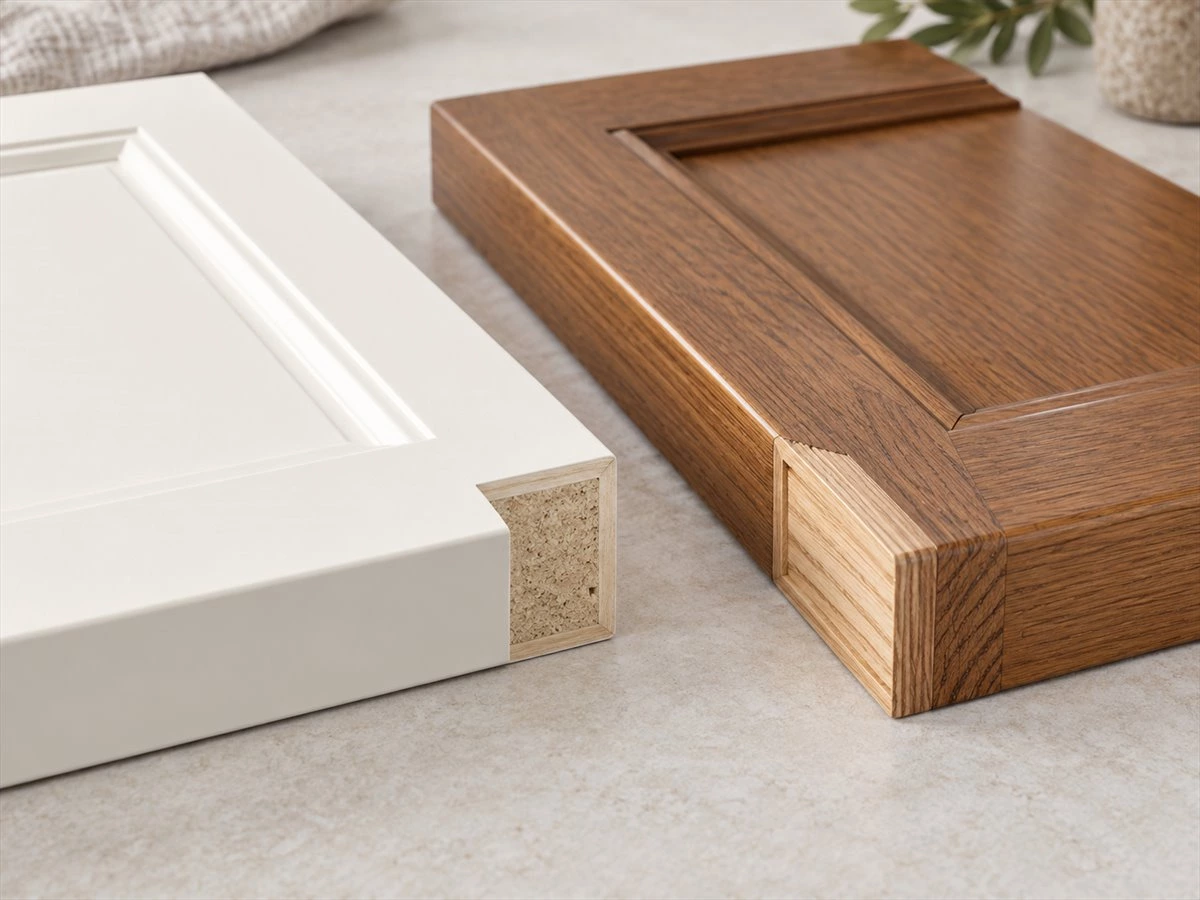
Compare Color, Wood Grain and Door Profiles
Look at a whole elevation, not just one sample square
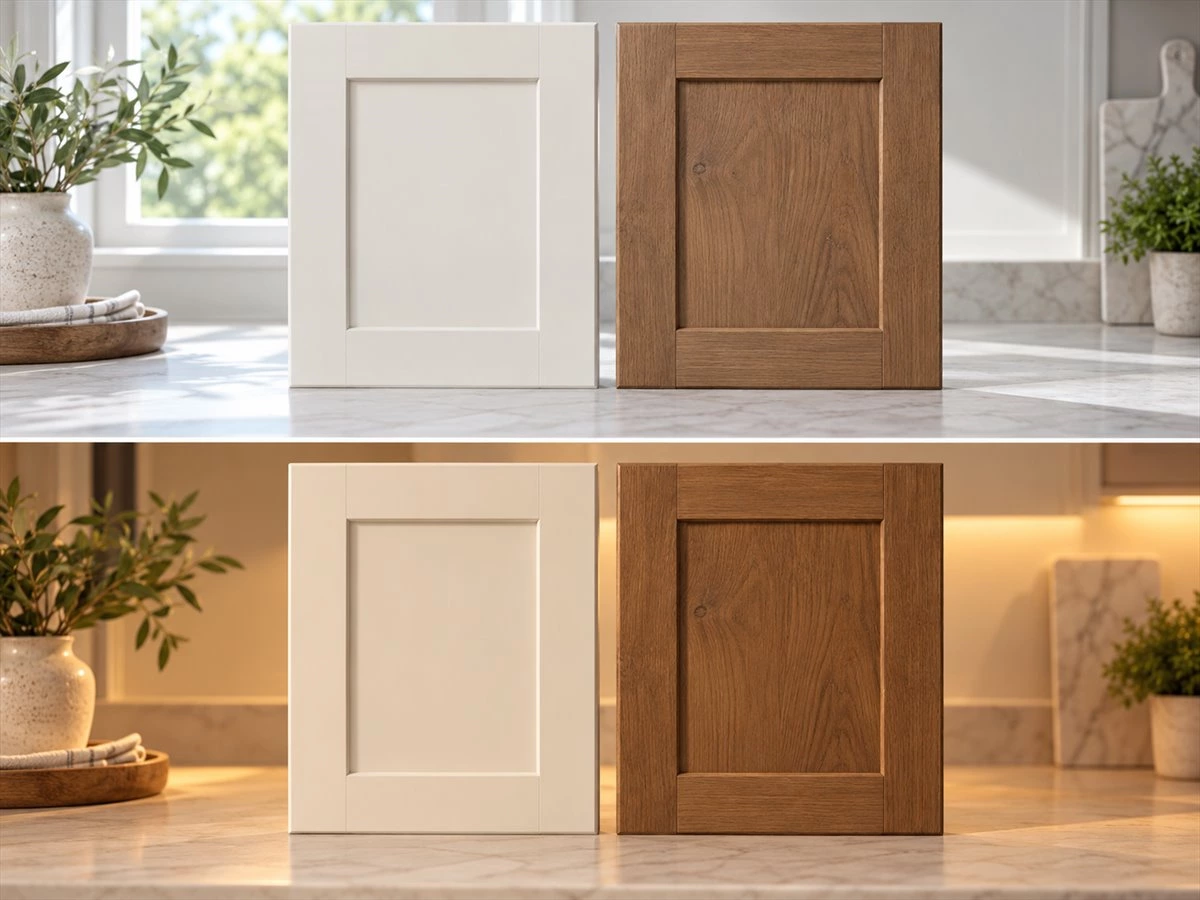
A small painted swatch can appear quiet, while the same color across a full wall of tall cabinets may become dominant. A stained sample may show attractive grain, yet a large bank of doors introduces more joints, grain changes and tonal variation. View the finish at the scale at which it will be installed. Ask for a door-sized sample or a clear elevation when a small chip does not show the full effect.
Decide how much natural variation you welcome
With stained wood or veneer, review the range of grain and color, the intended grain direction and any matching requirements across adjacent doors or drawers. A demand for perfectly identical natural faces may be unrealistic. Conversely, a heavily varied grain may be too active for a room with patterned flooring and stone. Painted fronts reduce visible grain variation but bring color, sheen and surface preparation into sharper focus.
Match the finish to the door profile
Simple slab doors can show off either an uninterrupted painted color or the movement of wood grain. Framed and routed doors create highlights and shadows; these details can make a painted color feel more architectural, while stained profiles emphasize the underlying wood. Review corners, seams and edges closely. The finish should complement the profile instead of being selected from a flat color image after the door design is fixed.
| Decision factor | Painted cabinets | Stained cabinets | Confirm before approval |
|---|---|---|---|
| Primary visual effect | Defined, opaque color | Visible wood character | Appearance under actual room lighting |
| Variation across doors | Color and sheen consistency are key | Grain and tonal range are part of the result | Representative sample range and acceptance criteria |
| Large panels | Can read as a continuous color field | Grain scale and sequencing become prominent | Elevation, panel joints and grain direction |
| Maintenance and repair | Depend on the specified coating | Depend on wood surface and protective coating | Written cleaning and repair instructions |
Choose Finishes for Different Rooms
Kitchen: balance a working surface with the room's focal point
Kitchen cabinets are viewed beside countertops, backsplash, appliances and flooring, often under several kinds of light. Painted doors can create a calm perimeter when the stone or floor is visually active. Stained wood can add warmth to an island, pantry or selected upper cabinet. The reverse arrangement can work too. Before choosing, review the exact finish system for cleaning, hand contact and the kitchen's actual use; neither appearance label guarantees resistance to water, heat or wear.
Bedroom and wardrobe: consider the scale of large doors
A floor-to-ceiling wardrobe occupies a large part of the bedroom's view. A painted finish close to the wall color may help it feel quieter. Stained doors or veneer panels can create a warmer, furniture-like presence, especially when the grain is aligned across the elevation. Coordinate bedside cabinets, headboard panels and flooring, but avoid forcing an exact wood match between unrelated materials unless the specified samples support it.
Living, dining and home office: decide what should stand out
A stained sideboard, display cabinet or desk can provide texture in a room dominated by painted walls and upholstery. Alternatively, painted built-ins can recede so books, art or a feature wall take visual priority. Consider how many surfaces will be seen together from an open-plan area. ALLURE's wood-finish ideas for home interiors offers broader room inspiration; this guide focuses on choosing the cabinet surface itself.
Bathroom and utility areas: specify for the conditions
Moisture, ventilation, cleaning and nearby plumbing deserve attention before appearance. A painted vanity is not automatically waterproof, and a stained door is not automatically unsuitable. The complete board, exposed edges, joints, surface coating and installation conditions need to be assessed for the actual room. If a leak or persistent dampness exists, resolve that issue rather than expecting a finish choice to compensate for it.
Can You Mix Painted and Stained Cabinets?
Give the home a primary finish and a supporting finish
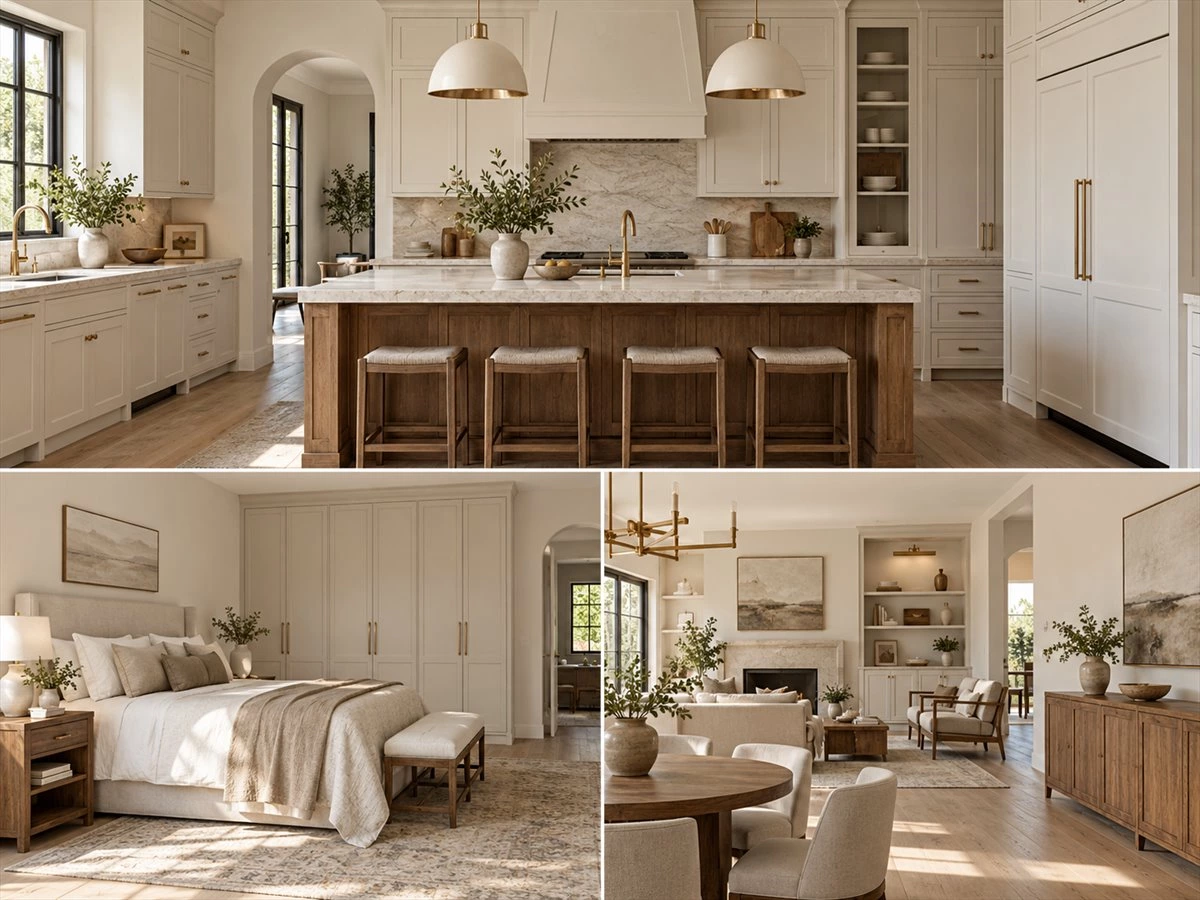
Start with the largest fixed surfaces: flooring, wall color, countertops and major cabinet elevations. Choose one cabinet finish to carry the main visual rhythm, then use the other where it contributes a clear accent or transition. This does not mean every room must use the same material. It means a visitor should understand why a wood tone reappears in certain places and why a painted color supports the spaces around it.
Coordinate undertones before trying to match colors
Two woods can share a similar darkness yet have different warm, red, yellow or gray undertones. Two painted whites can also look different beside a particular floor or stone. Place the proposed samples together in the room, then inspect them in daylight and after dark. Review hardware and wall panels in the same arrangement. Avoid approving each cabinet room separately if the rooms connect visually.
Use a finish schedule to keep the idea buildable
Imagine a home with a painted kitchen perimeter, a stained island and a related stained dining cabinet. A nearby bedroom could use painted wardrobes with a small stained bedside detail. That is an illustration of visual hierarchy, not a prescribed formula or a claim about a completed ALLURE project. Translate the selected scheme into a room-by-room record of cabinet location, material, color, grain direction, sheen and edge treatment. ALLURE's cabinet finish schedule guide covers the detailed coordination process.
Compare Maintenance, Wear and Repair Options
Judge the full finish system, not a broad category
Both painted and stained cabinets can be made for regular daily use, but their care depends on the specified coating and construction. A matte surface, a textured grain, a dark color and a high-gloss panel may each reveal different marks under the same light. Request cleaning guidance for the actual supplied finish. Avoid assuming that a cleaner or repair method suitable for one sample is safe for every door in the home.
Understand what a repair can and cannot hide
A small painted chip may require a color- and sheen-matched repair; the result can remain visible if the finish has aged or the damaged area catches the light. A stained-wood repair must also consider grain and tonal variation. The available procedure depends on the product and the severity and location of the damage. Ask the supplier to explain realistic touch-up, replacement and spare-sample options before ordering, rather than relying on a promise of an invisible repair.
Document normal variation and care expectations
Agree on the approved appearance range for wood surfaces and keep the accepted sample reference. Store the care instructions with the project documents, including any products or practices the finish supplier advises against. Where warranty terms apply, review their actual scope and exclusions. This makes future maintenance and replacement discussions more precise.
What Affects the Cost and Final Appearance?
Compare like-for-like cabinet specifications
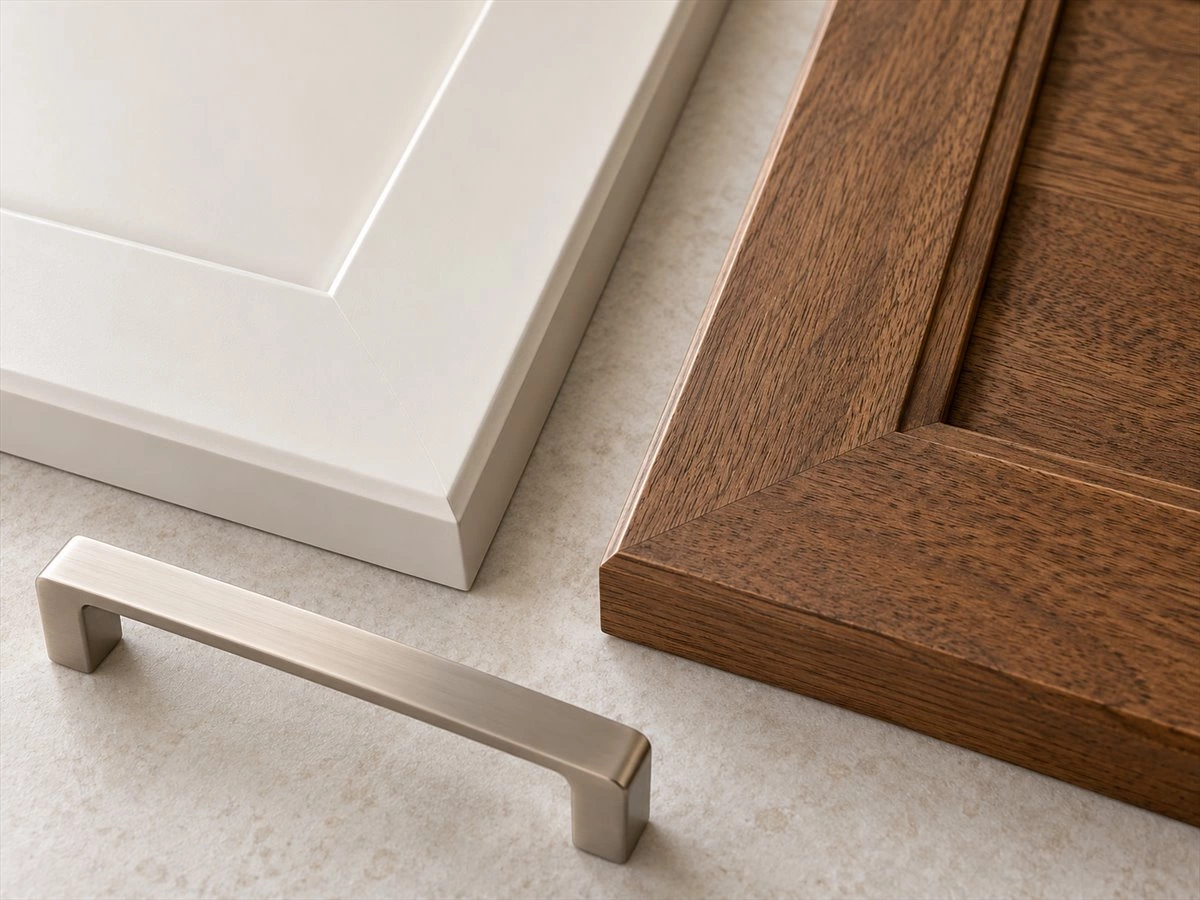
There is no reliable universal rule that painted cabinets always cost more—or less—than stained cabinets. A quotation may change with the door substrate, wood species or veneer, matching requirements, profile, coating process, sheen, order quantity and quality-control expectations. If one proposal includes a different cabinet box, hardware package or installation scope, the total price is not a clean finish comparison.
Look beyond the first sample
Custom color development, several sample rounds, large-area veneer selection or strict grain sequencing can affect time and cost. So can unusual door profiles and demanding edge details. Ask what is included in sample approval, what a revision costs and which reference the finished order will be checked against. These questions are more useful than asking for a generic painted-versus-stained percentage.
Preview the finish at installation scale
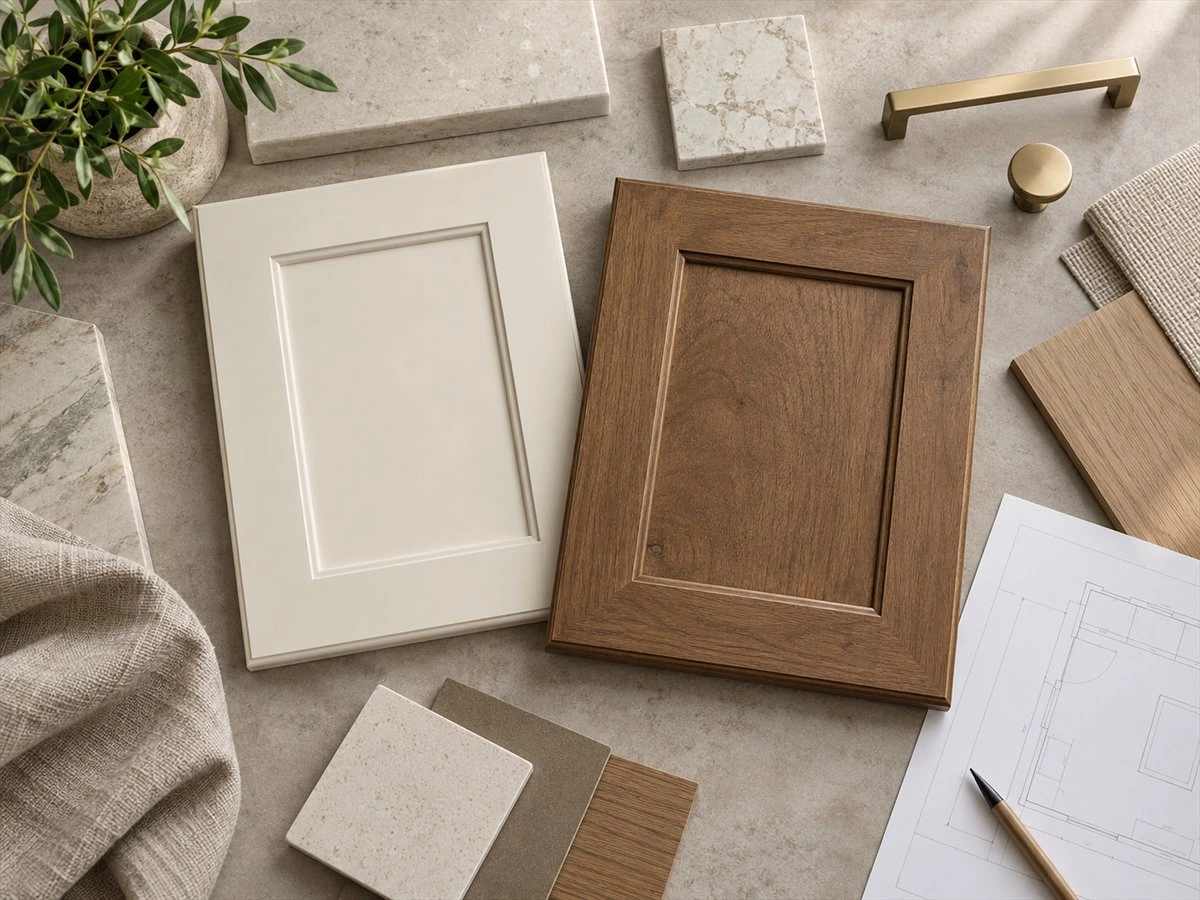
A color that looks restrained on one sample can dominate an entire wall. A wood grain that looks balanced on a door may appear busy when repeated across a long run. Request elevations or a realistic finish board showing the selected samples alongside the floor, stone, wall color and lighting. Renderings can help explore a scheme, but physical samples and approved specifications should resolve the final finish.
What Should You Confirm Before Ordering?
Record the actual finish, room by room
For each cabinet location, identify the door construction and substrate; real wood or veneer where relevant; paint color or stain reference; protective coating and sheen; edge detail; grain direction; and any approved variation range. Include panels, open shelves and visible cabinet ends rather than documenting only the front doors. If different finishes meet in one elevation, mark the junction on the drawing.
Approve samples under the light in which they will be used
View representative, labeled samples beside the intended flooring, countertop, wall panels and hardware. Inspect them in daylight and the planned artificial light. For a significant stained-wood area, ask to see enough variation to understand the likely range. Photograph the approved arrangement for reference, but retain the physical samples or official codes because a phone image can distort color.
Keep the approval and service record together
Retain the signed or otherwise documented finish schedule, sample references, drawings, care instructions and relevant repair or replacement information. Check how a future door or panel would be identified and whether a visual match can reasonably be expected. A clear record matters especially in whole-home projects that may be delivered or installed in stages.
| Before-ordering item | What to record or approve | Why it matters |
|---|---|---|
| Room and cabinet location | Each finish applied to each elevation and component | Prevents the same color name being interpreted differently across rooms |
| Material and finish system | Substrate, wood/veneer, color or stain, topcoat and sheen | Separates visual preference from construction and care |
| Approved appearance | Physical samples, grain direction and acceptable variation | Creates a shared reference for production review |
| Aftercare | Cleaning guidance and repair/replacement references | Supports maintenance after installation |
FAQs About Painted and Stained Cabinets
Are painted cabinets always more uniform in color?
An opaque painted finish is usually selected when a controlled color is desired, but the final appearance still depends on the substrate, application, sheen, light and approved sample. Large panels and adjacent doors should be reviewed together rather than judged from a small color chip.
Do stained cabinets have to be made from solid wood?
No. A suitable real-wood veneer can also receive a stain as part of an approved finish system. Confirm the specific wood surface, underlying substrate, edge treatment and protective coating. “Stained wood” alone does not identify the complete cabinet construction.
Is one finish automatically more durable?
No. Durability and cleaning suitability depend on the complete specified product, its application and the conditions in which the cabinet is used. Compare actual product documentation and samples; do not assign a blanket performance ranking to all painted or all stained cabinets.
Can painted kitchen cabinets and stained wardrobes work together?
Yes. They can share a coherent palette without repeating the same finish in every room. Compare their undertones with the flooring, wall panels and other fixed surfaces, then decide which finish is dominant and where the other adds warmth or contrast.
What samples should I request before approving a whole-home finish?
Ask for representative painted and stained door or panel samples, the material and coating references behind them, the intended sheen and edge details, and a room-by-room finish schedule. Review significant wood variation and photograph the samples together in the planned lighting, while retaining the actual approved references.
Plan a Cabinet Finish Scheme for Your Home
Begin with the rooms that connect visually and the surfaces that are already fixed. If you are considering painted and stained cabinetry together, share your floor plan, photos of existing floors and walls, preferred colors or wood references, and the rooms that need cabinets. With those project details, ALLURE can discuss the finish combinations and samples actually available for the proposed cabinetry. Contact ALLURE about your project to start that review.