Blum vs Hettich vs DTC is a useful comparison only after you define what the hardware must do. A kitchen drawer that carries cookware, a wardrobe door opened twice a day and a bathroom vanity drawer fitted around plumbing have different demands. The brand name alone does not tell you which hinge, runner or drawer system is being quoted.
The practical question is not “Which brand wins?” but “Which documented configuration fits this cabinet, this pattern of use and this project budget?” Blum, Hettich and DTC each publish hardware ranges, yet product families, dimensions and available options vary. Ask the supplier to identify the exact proposed model and supporting technical sheet before treating two quotations as comparable.
This guide walks through the decision from function to service. It is intended for homeowners, designers and project buyers planning custom kitchens, wardrobes, vanities and other built-ins. It does not assume that every ALLURE project includes every brand or series.
Blum vs Hettich vs DTC: Start with the Cabinet Function
Define the user and the opening before choosing a brand
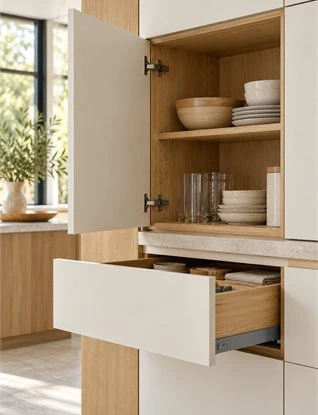
List every opening in the cabinetry plan. Is it a hinged door, a pull-out drawer, an internal drawer behind a door, a lift-up front or a narrow organizer? Record where it sits, who will use it, what will be stored and how often it will be opened. Hardware selection begins with that use case; a single brand preference should not override a poor physical fit.
Separate essential performance from optional features
For each opening, mark essentials such as clear access, suitable movement, safe reach and compatibility with the intended front. Then mark preferences such as a particular closing feel, handle-free operation or a coordinated appearance. If the budget changes, this distinction lets you adjust optional features without accidentally compromising an essential requirement.
Use a cabinet-by-cabinet schedule
Assign an opening ID on the elevation drawing—for example, K-01 for a kitchen door or W-04 for a wardrobe drawer. The ID should link the room, cabinet, front size, proposed mechanism, installation condition and quote line. This is more useful than a blanket note saying “premium hardware throughout,” which does not explain what is supplied.
Compare Equivalent Hardware, Not Brand Names Alone
Compare hinge with hinge and runner with runner
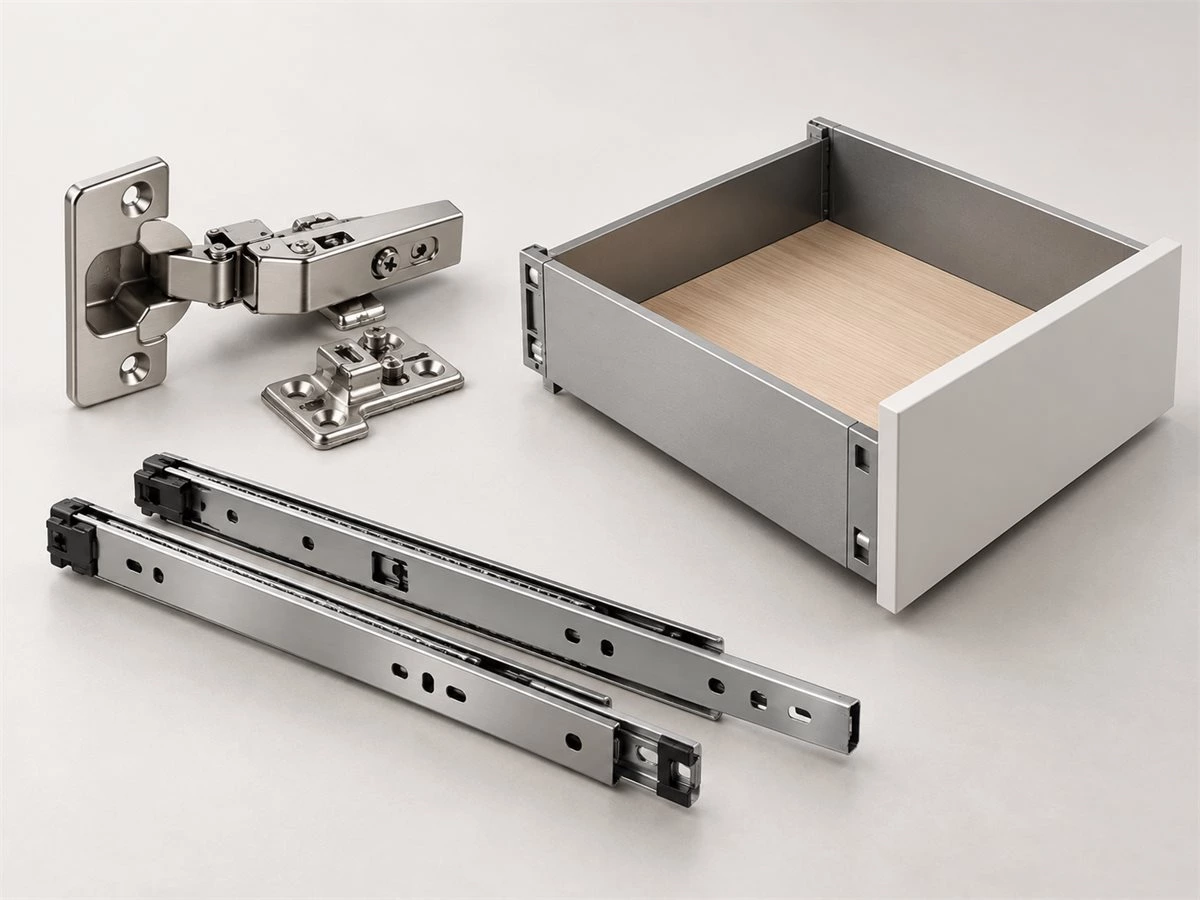
A concealed hinge, a drawer runner and a complete metal-sided drawer system perform different jobs. Even within one category, opening geometry, mounting method, front dimensions, motion features and accessories can vary. A credible Blum vs Hettich vs DTC comparison keeps the hardware category and required function constant, then compares eligible exact models.
Ask for the model, configuration and documentation
A brand logo on a quotation is not a specification. Request the manufacturer name, product family, full model or part number, finish where applicable, compatible cabinet dimensions, installation method, relevant accessories and the version or link of the technical document. If a supplier cannot identify an item yet, enter “To confirm” rather than filling the gap with a brand-wide assumption.
Make the quote scope identical
One quote may include mounting plates, brackets, screws, drawer sides, fronts, installation and adjustment; another may list only the primary mechanism. Ask both suppliers to price the same number of openings and identify what is included, excluded or substituted. Price comparisons mean little until quantities and installation scope match.
| Use requirement | Brand and product family | Exact model / configuration | Fit conditions to check | Document source | Quote inclusions |
|---|---|---|---|---|---|
| Kitchen base drawer for daily utensils | Blum option: To confirm | To confirm | Cabinet depth, drawer width, intended contents and clearance | Current official model sheet: To attach | Runner/drawer parts, brackets, installation: To confirm |
| Same drawer, same required function | Hettich option: To confirm | To confirm | Same cabinet and use brief | Current official model sheet: To attach | Same scope: To confirm |
| Same drawer, same required function | DTC option: To confirm | To confirm | Same cabinet and use brief | Current official model sheet: To attach | Same scope: To confirm |
This is a comparison template, not a product endorsement. Enter actual eligible models only after the cabinet brief and current documents are available. If one brand has no verified project-available match, record that fact rather than forcing a three-way ranking.
Cabinet Hinges: Door Movement and Everyday Access
Check the door, cabinet and mounting condition
Before discussing cabinet hinge brands, confirm whether the front is full overlay, partial overlay or inset, and note its size, material and intended opening path. Frame construction, mounting surfaces and nearby walls or appliances can affect the eligible hinge configuration. The number and placement of hinges must follow the actual front and the manufacturer's guidance rather than a generic whole-house rule.
Consider movement in the finished room
Test the intended door swing on the plan. Can the user reach an internal drawer? Does a door conflict with another front, wall return, refrigerator handle or circulation route? A technically compatible hinge does not solve a bad cabinet layout. Mock up awkward corners and adjacent openings before approving production.
Compare closing, adjustment and maintenance
Ask for a sample door fitted with each shortlisted system. Open and close it at a normal pace, then check the desired closing behavior and how the door is adjusted after installation. Confirm whether the quoted configuration includes the preferred feature or requires another part. Keep the model reference with the project records so later replacement does not depend on someone remembering a brand name.
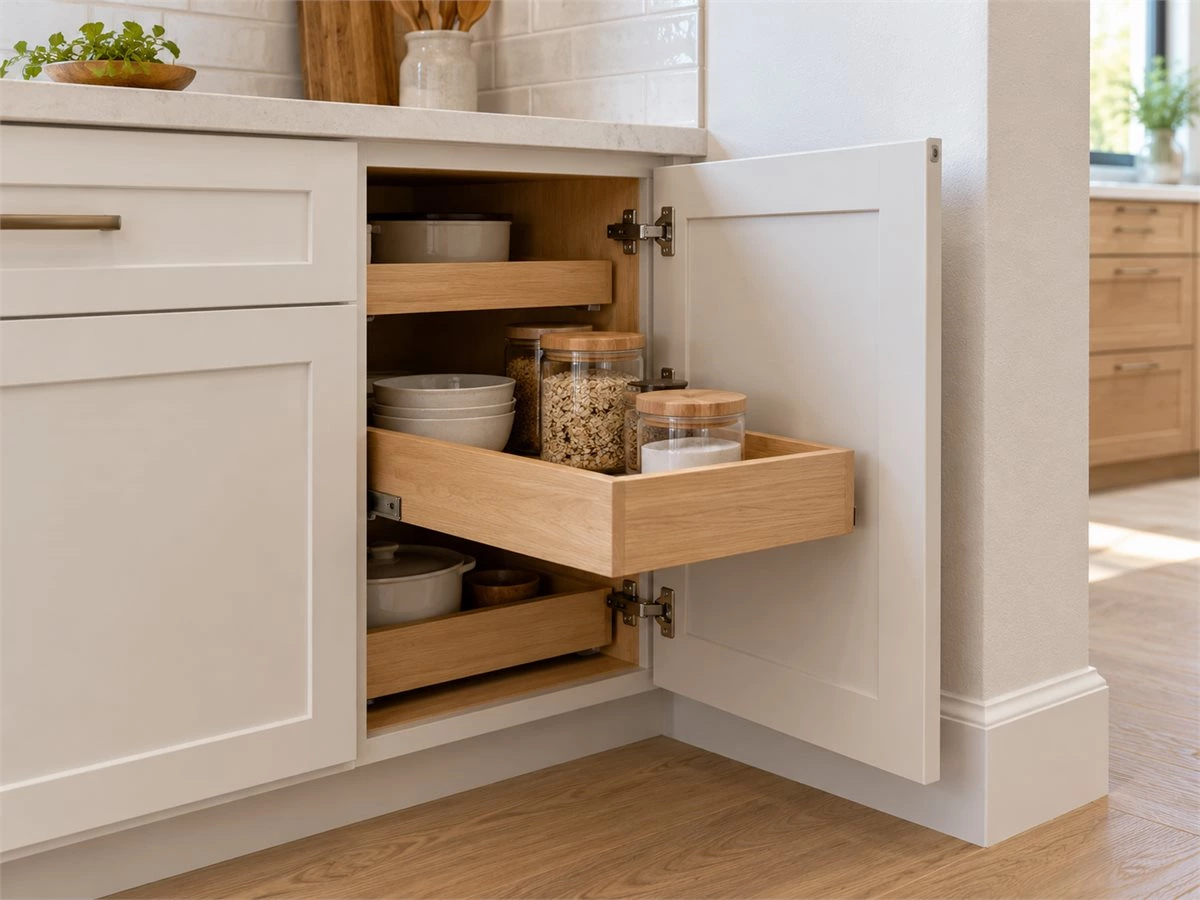
Drawer Systems: Access, Closing and Daily Storage
Start with contents and access
A drawer intended for utensils differs from one intended for cookware, files or folded clothes. Record the expected contents and whether the user needs access to the back of the drawer. Check usable interior dimensions after the selected mechanism, drawer sides, dividers and fronts are accounted for. A catalog photo can make a drawer look spacious while the project-specific usable volume is smaller.
Verify the complete drawer assembly
Ask whether the proposal is for a runner fitted to a constructed drawer box or a coordinated drawer system with additional components. Confirm the exact depth, cabinet fit, front attachment, adjustment, opening/closing behavior and any accessories. Weight capacity or cycle-life claims should be quoted only from a current model-specific manufacturer document under its stated test conditions.
Test a realistic daily-use sequence
On a sample or prototype, open the drawer while standing in the room's normal working position; reach to the back; close it at different reasonable speeds; and check neighboring doors, handles and walkways. A display sample with no contents cannot fully represent a loaded kitchen drawer. Record any objection by opening ID so the supplier can propose a specific revision.
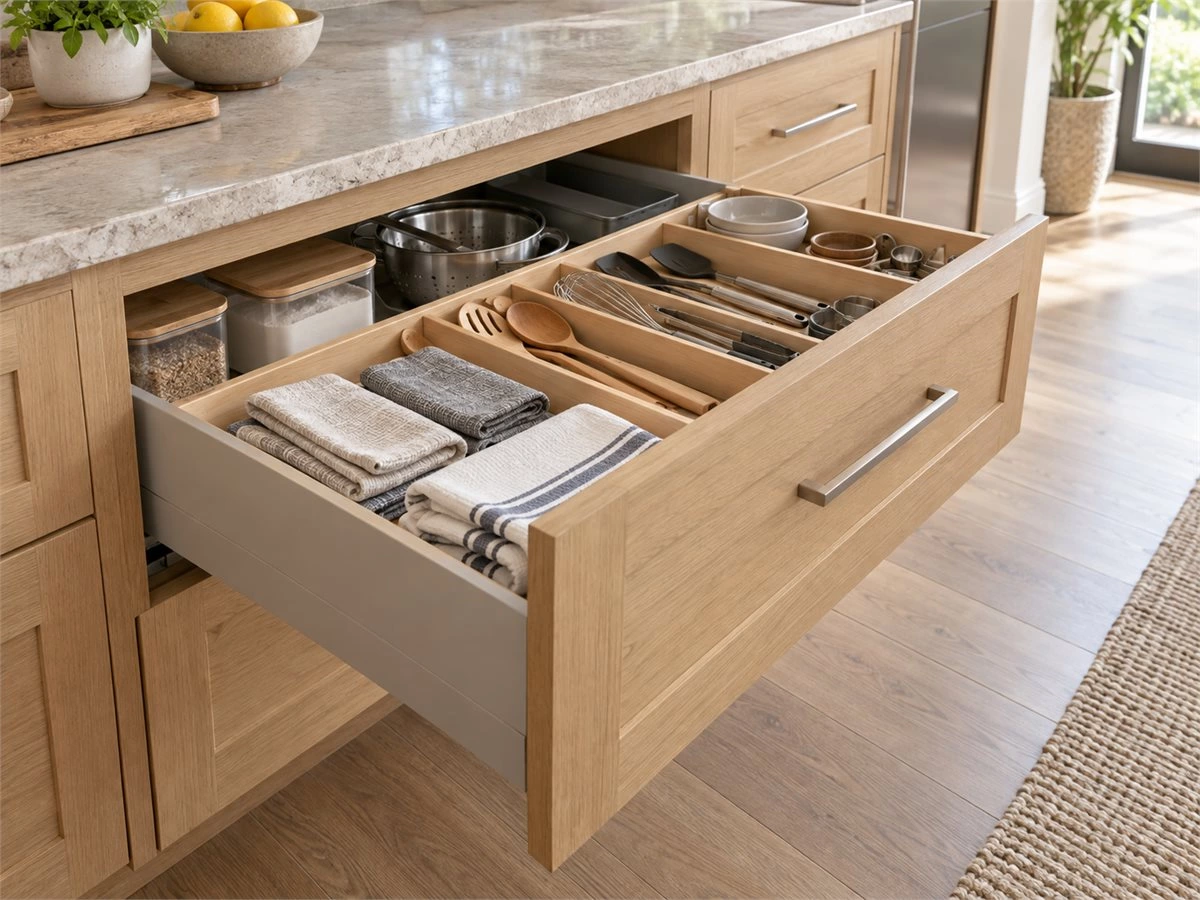
Hardware Choices for Kitchens, Wardrobes and Vanities
Kitchen: frequency, contents and workflow
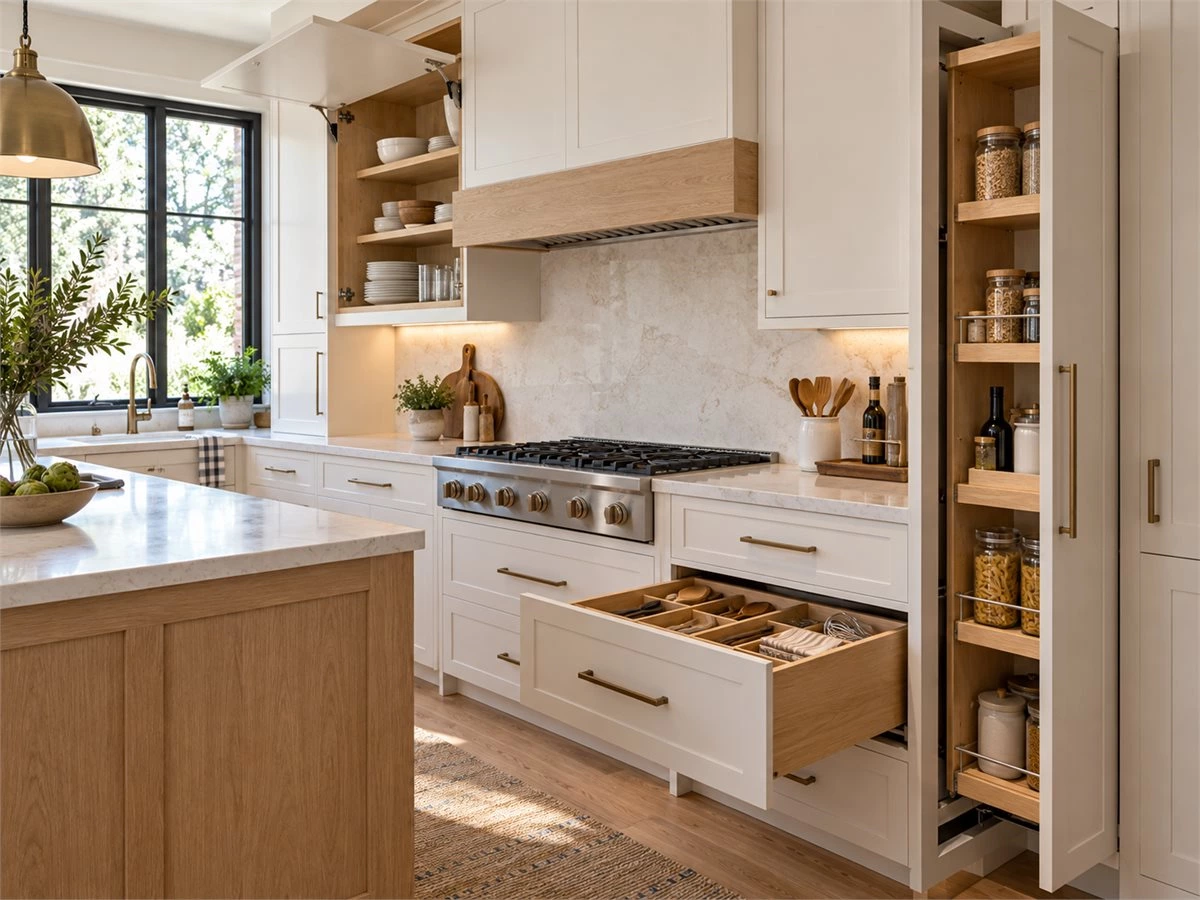
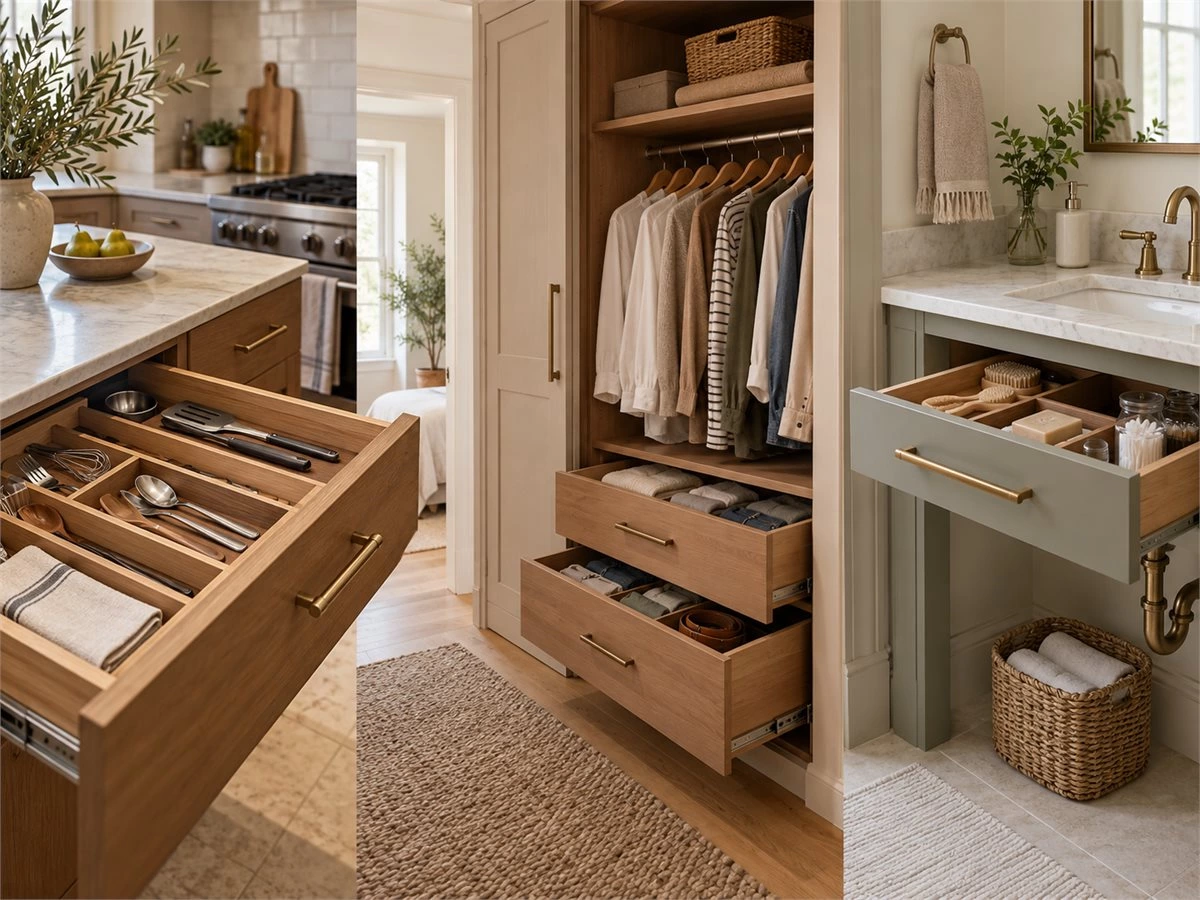
Prioritize the openings used during preparation and cleanup. Decide where drawers improve access and where hinged doors are sufficient. Check corner cabinets, appliance conflicts and cleaning access as part of the hardware brief. The best configuration for a pantry pull-out may not be the best one for a shallow cutlery drawer.
Wardrobe: reach and internal coordination
For wardrobe hardware, check door swing against the bed and passage, and ensure any internal drawers can open after the doors are positioned. A wardrobe may mix standard doors with drawers, pull-outs and specialized accessories. Specify each only where it improves real use; optional fittings can raise complexity and cost without helping every household.
Bathroom vanity: plumbing and service access
Vanity drawer space is shaped by the basin, trap, supply and drain routes. Confirm these with the actual fixtures before selecting runners and drawer layouts. Humidity exposure, cleaning and access for future plumbing work matter alongside the desired closing feel. Do not promise that a specific drawer configuration fits until the pipe-avoidance zone is shown on the approved drawing.
| Room | Typical hardware question | Project check |
|---|---|---|
| Kitchen | Which openings need drawers or pull-outs? | Contents, frequency, appliances and clearance |
| Wardrobe | Can doors and internal storage operate together? | Bedside passage, door travel, internal access |
| Bathroom vanity | Can drawers clear the basin and pipes? | Fixture models, pipe routes and service access |
What Changes the Hardware Budget?
Count openings and define the baseline
The number and type of cabinet openings drive hardware quantities. Count each door, drawer and pull-out before comparing proposals. Then specify a baseline configuration that meets the functional brief. A low total with fewer drawer systems or omitted accessories is not necessarily better value than a higher, complete total.
Price options as explicit changes
Ask for an itemized base price and separate alternates for optional opening or closing features, internal organizers and upgraded drawer constructions. Include installation, adjustment and any special preparation. This makes it possible to see which feature changed the budget instead of treating the difference as a mysterious brand premium.
Compare ownership costs carefully
Replacement availability, local service route and access to exact part references may matter years later. But avoid claiming a fixed lifespan or maintenance cost for an entire brand. Such claims depend on the chosen model, installation, usage and the current written service terms. If a supplier offers a warranty, retain the actual document and identify who handles a claim.
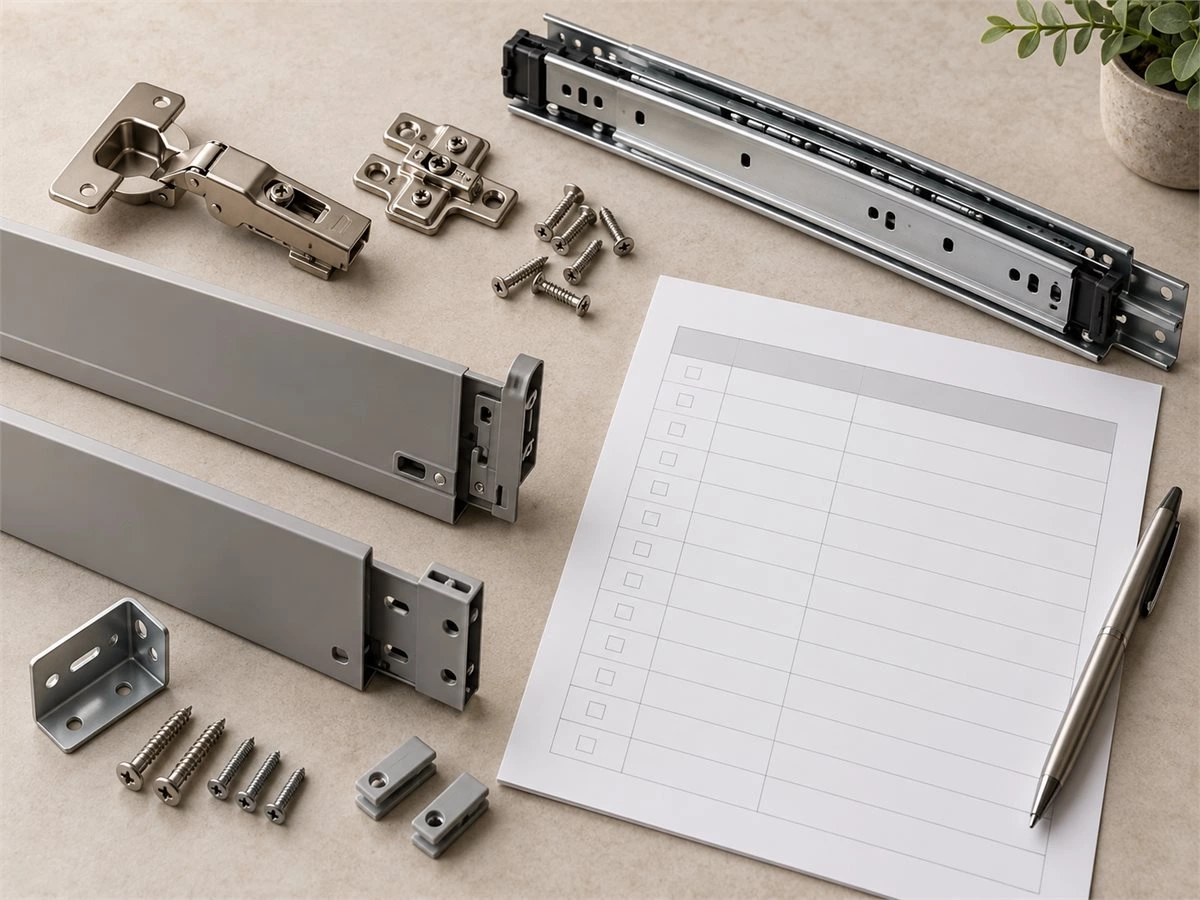
Replacement Parts, Availability and Service
Keep a hardware register at handover
Ask the supplier for a final list linking every opening ID to its installed brand, family, full part numbers, accessories and finish. Keep the approved cabinet elevations, installation photos and any adjustment instructions with that register. This reduces guesswork when a door needs adjustment or a component is replaced.
Confirm compatibility before ordering replacements
A familiar brand name does not guarantee that a new part will fit an older cabinet. Photograph the existing mechanism, label and mounting area; record cabinet dimensions and the symptoms; then have the supplier or manufacturer confirm the replacement path. Avoid drilling new positions or ordering an approximate substitute solely from a product photo.
Clarify who provides after-sales support
Before approving the order, ask who supplies replacement parts in your market, who performs adjustment, what labor and shipping are included, and what happens if a model is discontinued. Distinguish the hardware manufacturer's published terms from the cabinet supplier's installation and service commitments. Save both in writing.
FAQs About Blum, Hettich and DTC Cabinet Hardware
Is Blum, Hettich or DTC the best cabinet hardware brand?
There is no responsible project-wide answer without the actual cabinet and exact model. Compare eligible products within the same category, verify their technical fit and test the intended user experience. Choose the configuration that satisfies the documented brief and comes with clear supply and service terms.
Can one custom home use more than one hardware brand?
Yes, if the supplier can coordinate compatible systems and clearly document the specification for each opening. A mixed approach can match room-specific needs. Avoid silent substitutions: any change to an approved brand or model should appear in a revised hardware schedule and quote.
Does soft closing come with every hinge or drawer system?
No universal brand-wide assumption is safe. Closing behavior depends on the exact product and configuration. Ask the supplier to identify what is included, demonstrate a sample and confirm whether additional components are required.
How do I compare drawer slide systems fairly?
Use the same cabinet dimensions, intended contents, drawer construction and desired access for every option. Compare exact model documents, required components, practical operation and total installed cost. Treat unsupported claims about load capacity or lifetime as unverified until a current model-specific source is provided.
What should I request before placing a custom cabinet order?
Request the cabinet elevations, opening schedule, proposed hardware register, current model documents, quote inclusions, installation responsibility and written after-sales route. Approve the actual sample and any substitutions before production begins.
Make Your Hardware Decision with a Clear Project Brief
The useful outcome of a Blum vs Hettich vs DTC comparison is not a winner's badge. It is a cabinet-by-cabinet choice that can be checked against real drawings, current product information and an itemized proposal. Start with the openings you use most, verify fit and movement, then decide where optional features earn their cost.
For a broader introduction to hinge, runner and organizer selection, see ALLURE's kitchen cabinet hardware guide. If supplier selection is part of your project, review the supplier information page. To check current product ranges directly, consult the official Blum, Hettich and DTC product resources; confirm the applicable regional catalog and series for your project.
Planning custom cabinetry? Share your floor plan, room-by-room cabinet functions, preferred opening feel and approximate budget range. A project team can then propose available hardware configurations with the exact models, fit checks and inclusions stated in writing before you approve production.