How to Elevate Your Home Decor with Wood Finish
Wood is a warm element that can create a natural and comfortable atmosphere in a space. It is often used as a decorative panel integrated into our interior design. Its unique texture not only presents an atmosphere of natural grandeur, comfort, and warmth but also elevates the overall sophistication of the space. In this article, we will explore clever ways to incorporate wood finish in home decor.
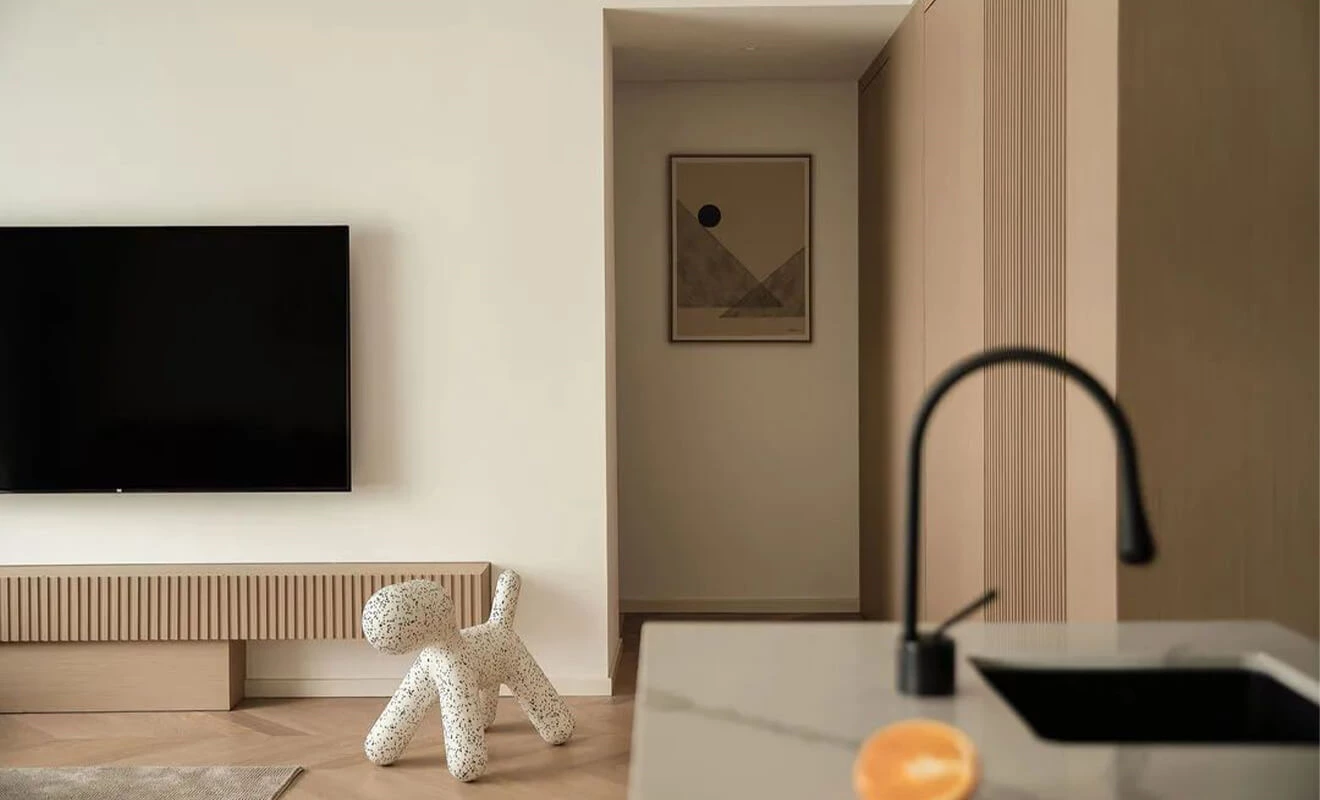
Wood finish ideas work best when the finish is planned as part of the complete room rather than added as a final decoration. Tone, grain direction, panel scale, lighting, cabinet color, flooring, and nearby stone or metal all influence whether a wood finish feels warm and cohesive or visually heavy. The right approach depends on the room, the amount of natural light, and the way the surface will be used.
Quick Comparison of Wood Finish Ideas by Room
| Room | Wood Finish Role | Design Priority | Useful Pairing |
|---|---|---|---|
| Entryway | Create warmth and a clear arrival sequence | Durable lower-wall details, storage, and mirrors | Entry cabinet, bench, and concealed storage |
| Living Room | Build a focal wall or frame a media zone | Panel rhythm, lighting, and material balance | Stone, metal, display storage, or a TV wall |
| Dining Room | Add texture to a social gathering space | Lighting color, tabletop coordination, and cleaning | Dining cabinet, sideboard, and soft lighting |
| Bedroom | Create a calm, layered headboard wall | Comfortable tone, symmetry, and bedside integration | Wardrobe, bedside cabinet, and soft textiles |
| Study | Give a work or reading zone a focused character | Glare control, shelving, and acoustic comfort | Bookcase, desk, and integrated lighting |
These wood finish ideas can be used with natural veneer, engineered panels, laminate, stained wood, or other decorative surface systems. Always confirm the actual material construction, surface finish, and care guidance for the selected product rather than relying on appearance alone.
Areas suitable for Wood Finish:
Entryway Wood Finish
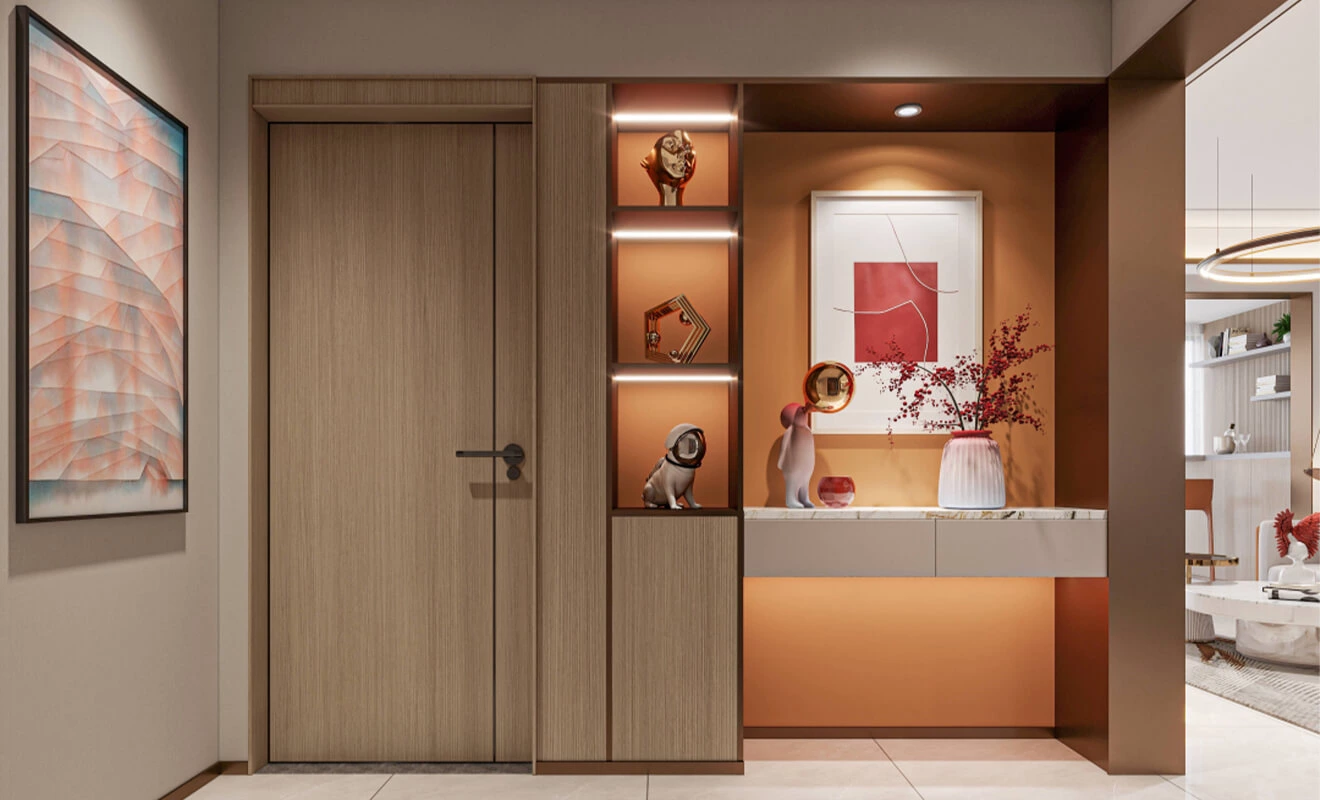
Adding wood finish elements in the entryway area can visually create a warm effect, allowing one to unwind and experience a sense of natural comfort upon arriving home. Wood finish or lattice can be used to decorate the walls, while also enhancing the transition between the entrance space and the rest of the interior.
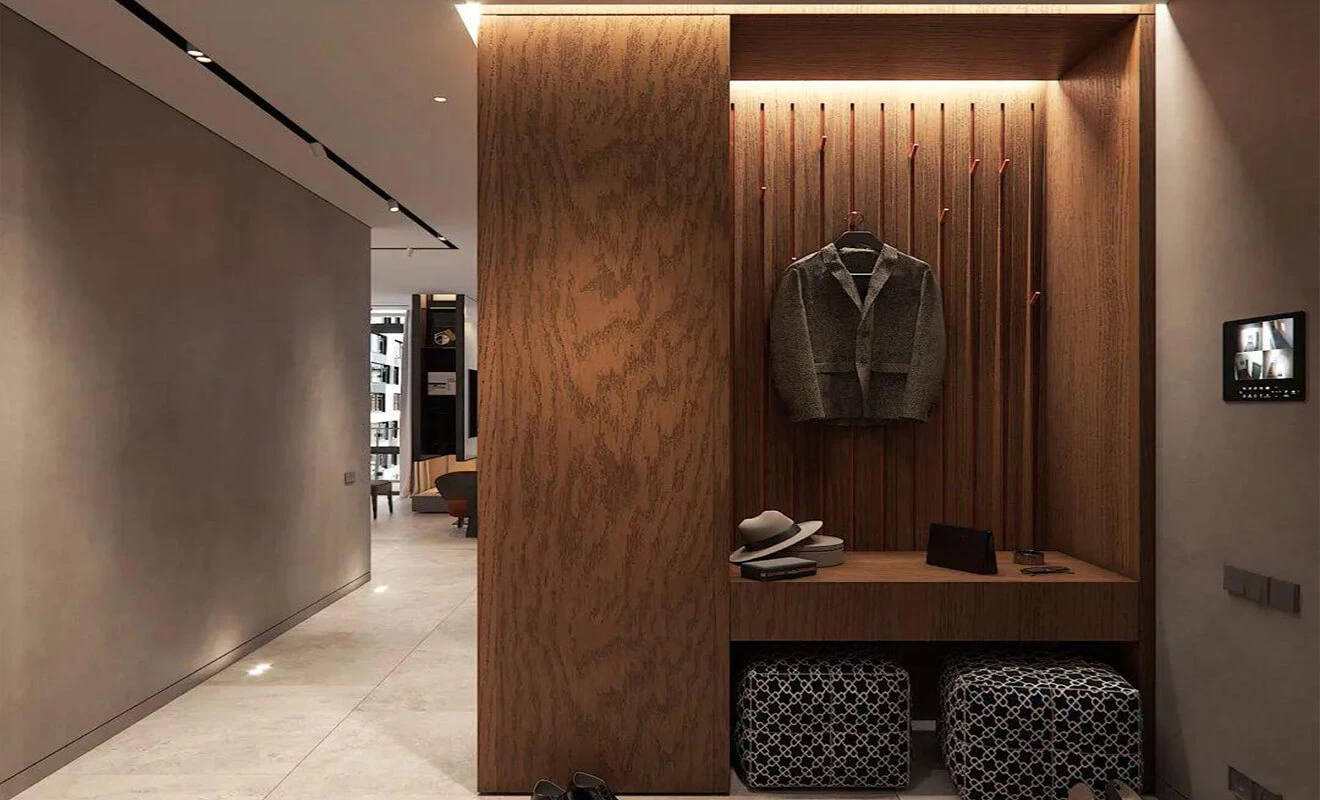
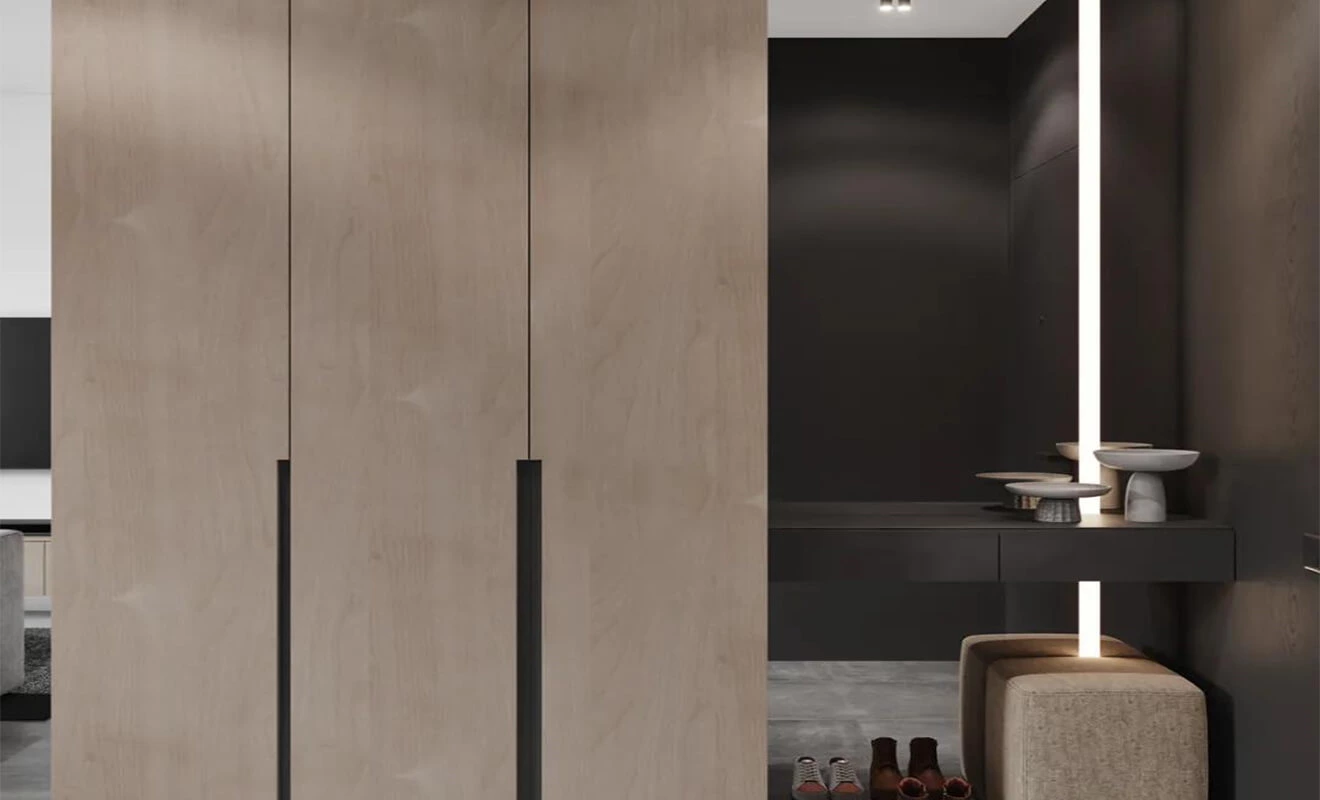
For additional storage space, customized cabinets and practical features like dressing mirrors can be added. Combining them with wood finish walls ensures spatial unity.
Entryway Wood Finish Planning Notes
Entryway panels should be considered with the way people arrive home: shoes, bags, keys, outerwear, and mirrors all affect the cabinet layout. Choose a tone that transitions naturally into the adjacent living area, and protect corners or lower panels where daily contact is likely. Integrated custom entry and storage cabinets can help the finish, storage, and mirror read as one elevation.
Living Room Wood Finish
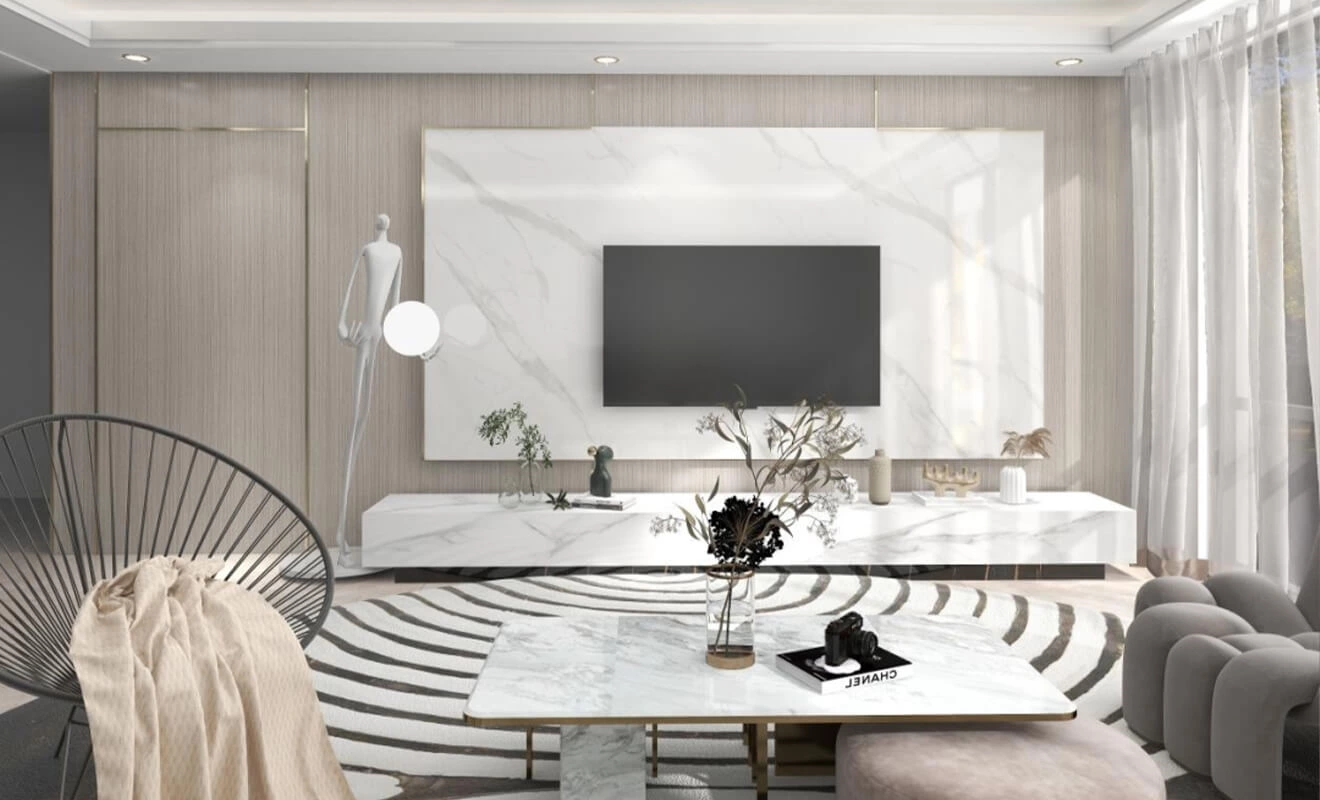
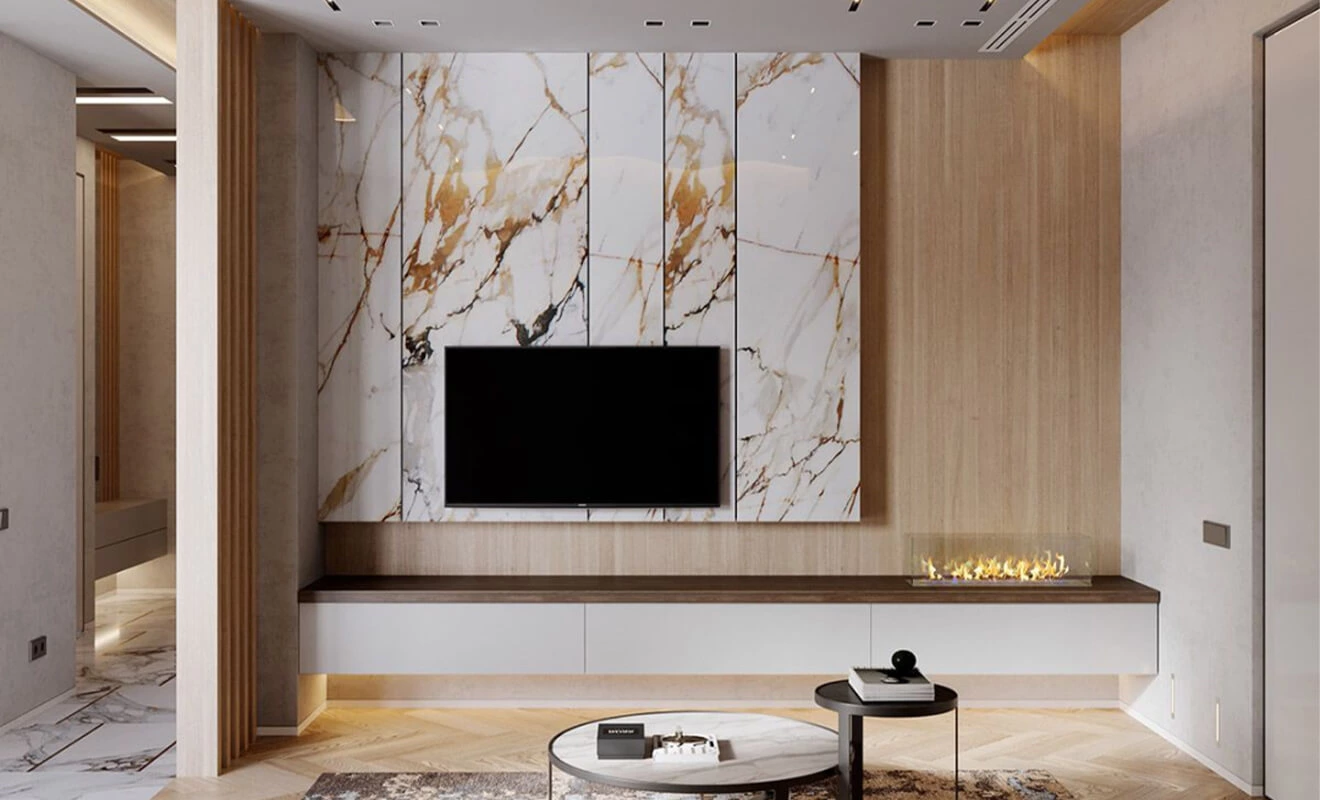
The walls of the living room are the focal point of the entire home, and by using wood finish in different colors, one can create various style effects. Whether it's a full-wall design, partial accents, or a combination with other materials, they all complement each other harmoniously.
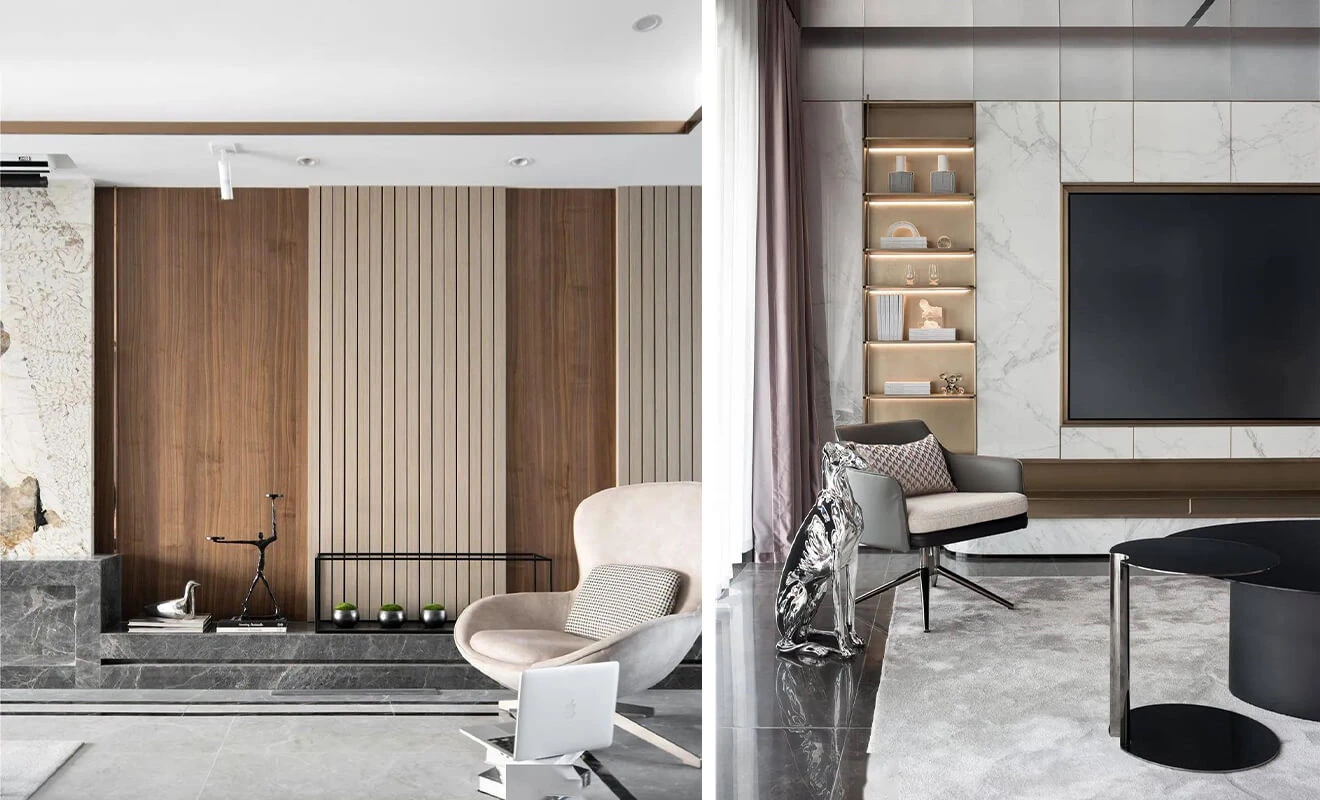
In private residential customization, wood finish plays a crucial role in enhancing aesthetics. Extensive use of wood finish not only showcases a luxurious living space but also elevates its overall taste.
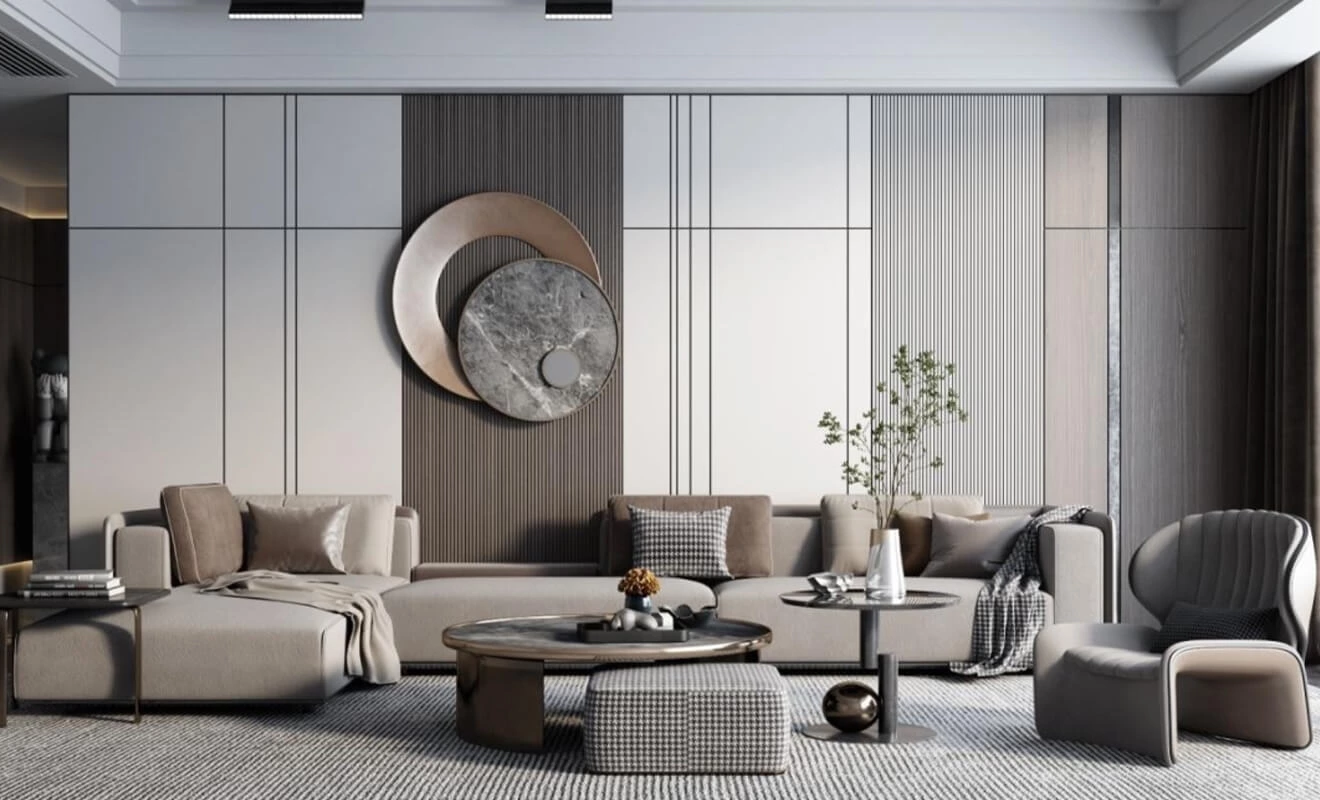
To enhance the ambiance, a wood finish can be combined with elements like marble, slate, or metal, suitable for different spatial tones.
Living Room Wood Finish Planning Notes
In a living room, decide whether wood finish is the main focal point or a supporting layer. A full wall may need fewer competing materials, while a smaller wood panel can frame a television, display cabinet, or fireplace composition. Align joints and grain direction with the room's main architectural lines, and test lighting to avoid emphasizing inconsistent panels or reflections.
For a media wall or a full living-room system, coordinate wood panels with interior doors and wall panels so that related finishes and vertical divisions continue naturally through the space.
Dining Room Wood Finish
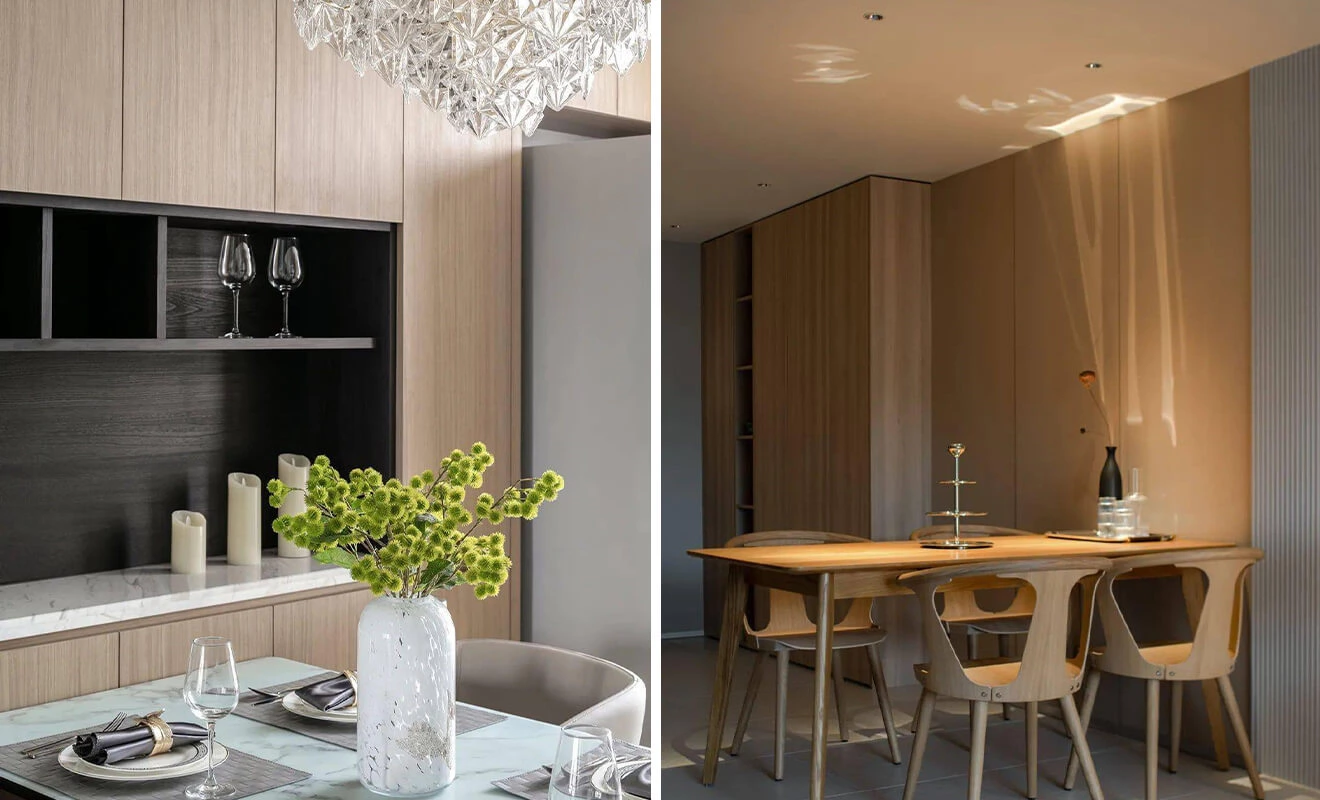
The dining room is an area where families gather for meals, often emphasizing exquisite and practical designs. The clear texture and unique patterns of natural wood, combined with soft lighting, create a warm and inviting ambiance in a home.
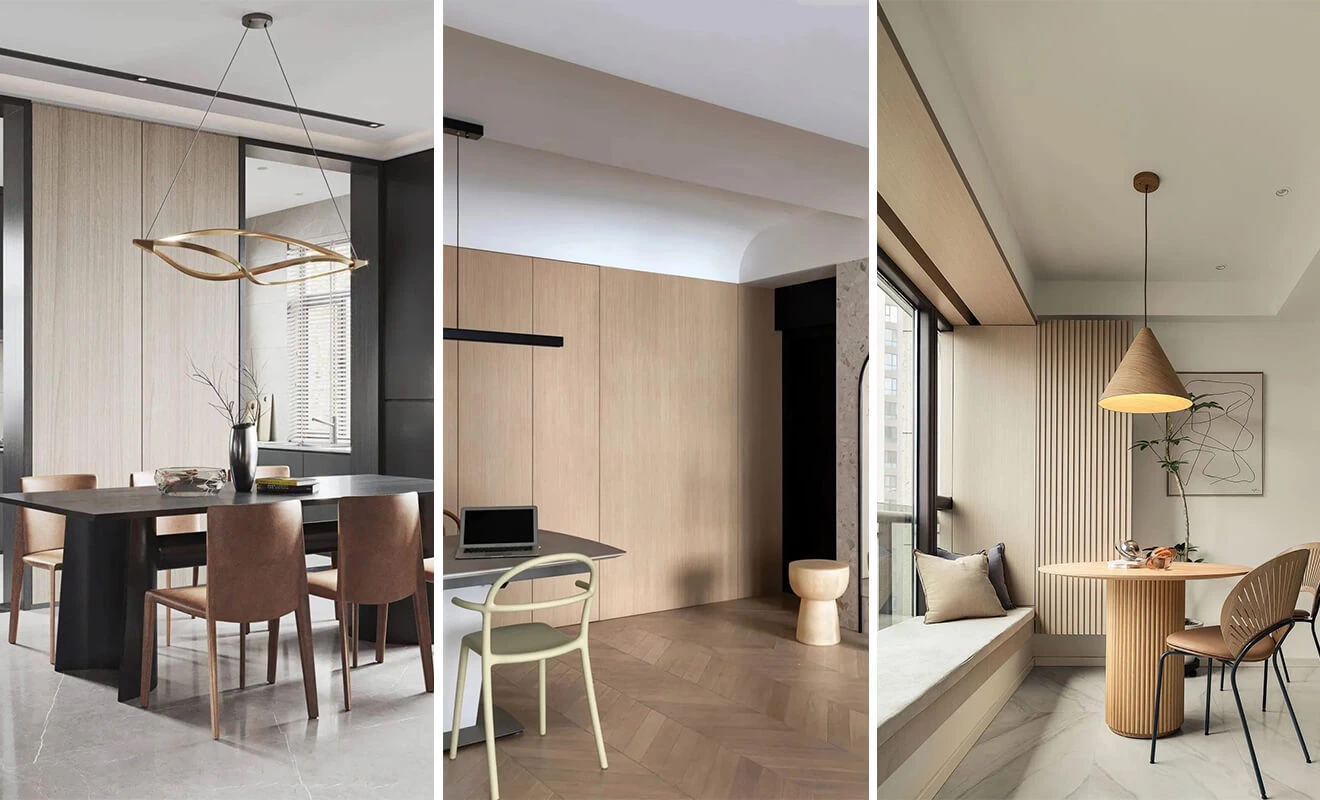
By introducing wood finish as wall decoration in conjunction with cabinets, it also enhances the sense of ceremony in the space.
Bedroom Wood Finish
Wood, as a natural and skin-friendly material, can increase the comfort and relaxation of a bedroom. Combining wood-finish wall panels with bedside cabinets achieves a symmetrical effect, creating a harmonious and comfortable living environment.
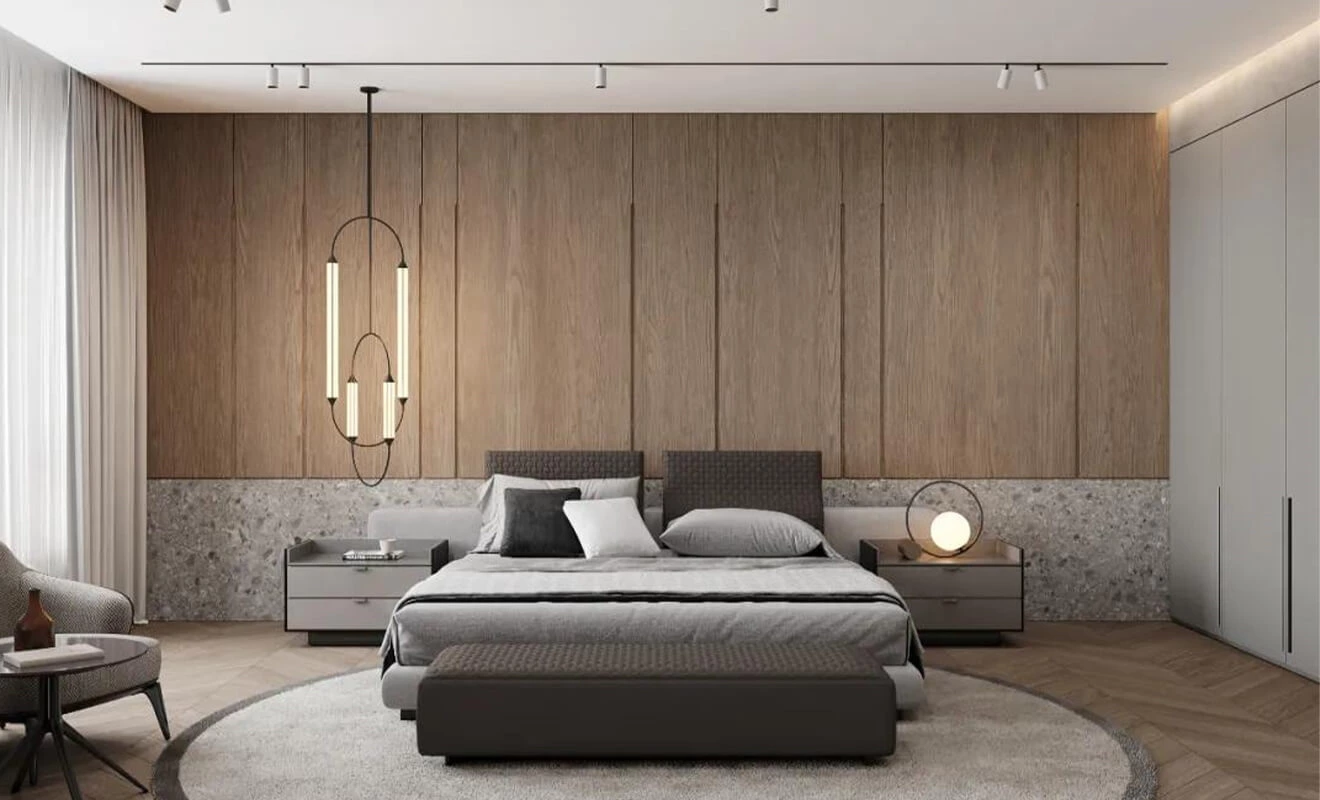
Alternatively, incorporating a wood finish in the form of a half-wall adds a touch of playfulness and is more suitable for household use, without worrying about wall wear and tear.
Bedroom Wood Finish Planning Notes
A bedroom finish should support rest rather than compete with every surface in the room. Use a limited palette, coordinate the headboard wall with bedside units, and consider how the grain reads behind pillows and lamps. A darker finish can create depth when balanced with sufficient lighting, while a lighter finish can keep compact bedrooms visually open.
When a wood finish continues into storage, align it with custom bedroom wardrobes and storage instead of introducing unrelated wood tones in the same sightline.
Study Room Wood Finish
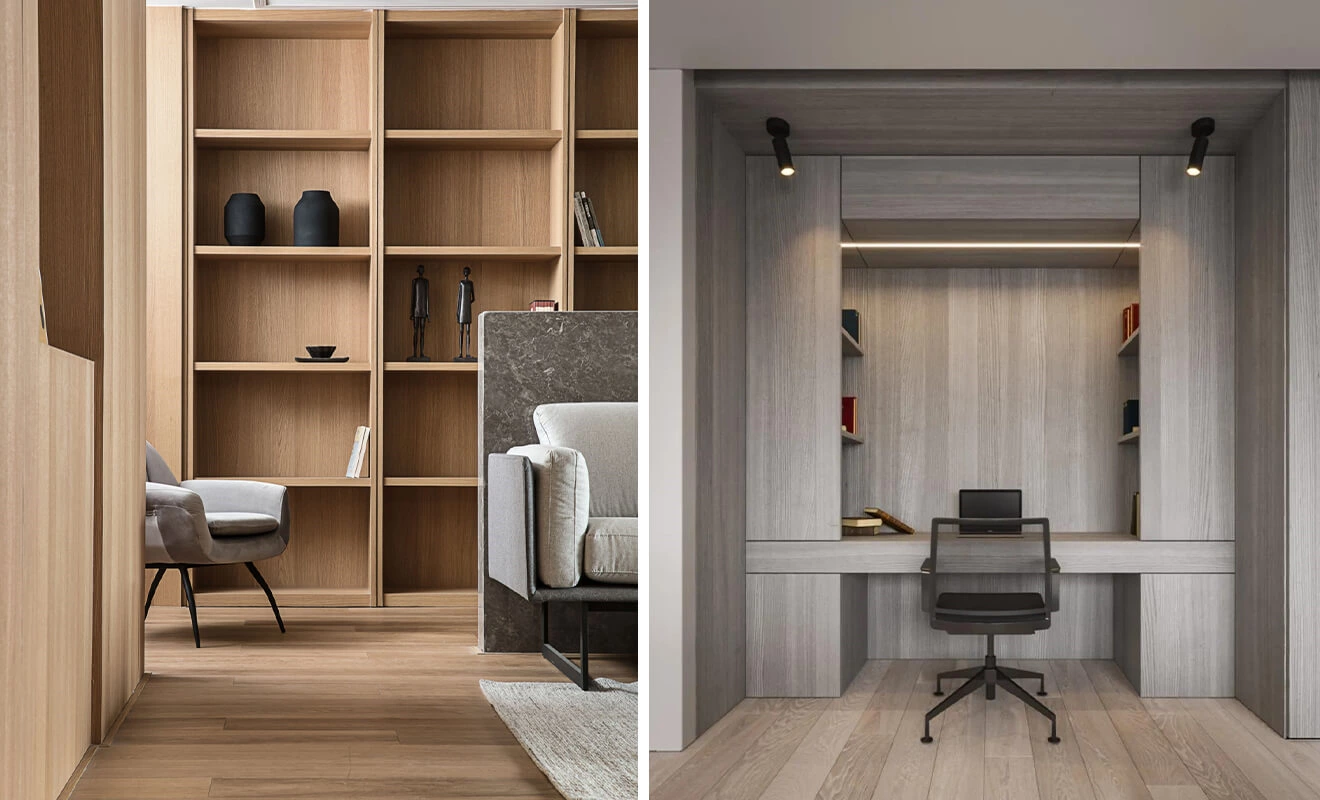
The study room provides a serene environment for focused activities, and the natural essence of wood aligns perfectly with the study's ambiance, evoking a sense of literary charm.
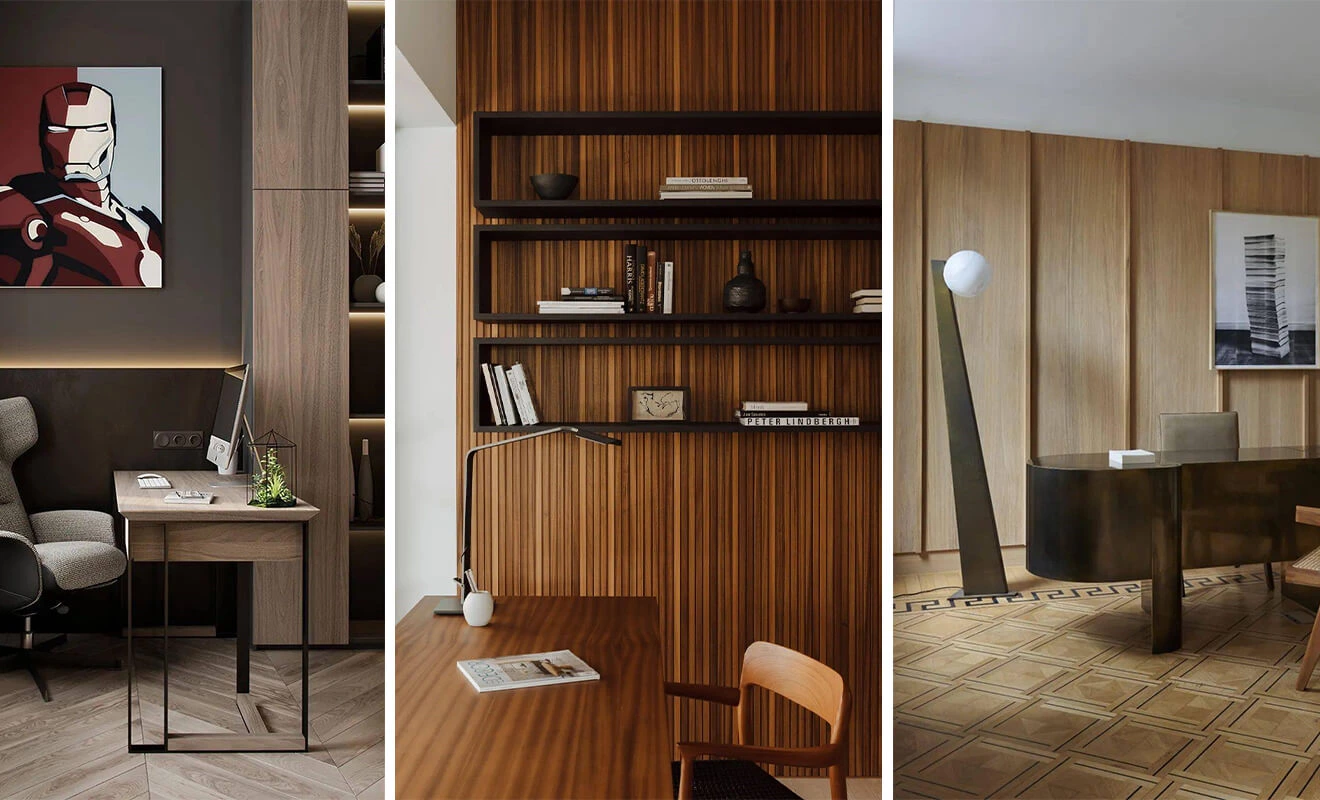
To create a more comfortable reading environment, using wood-finish wall panels as decorative elements not only protects the walls but also helps reduce noise, allowing for better concentration during reading.
Matching Elements with Wood Finish
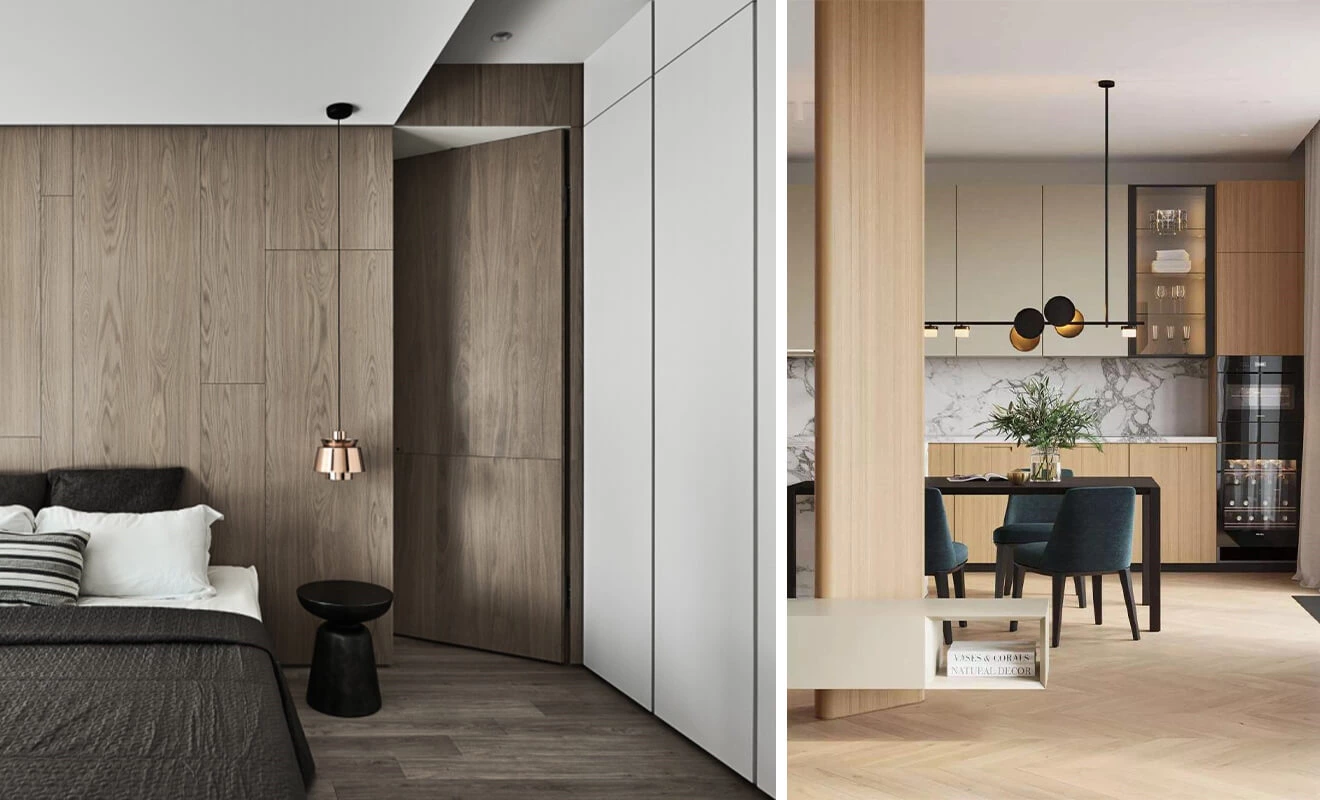
Balance with furniture colors: Start by harmonizing the color tones of the wood finish with the furniture. Dark wood finish is adept at creating a Zen-like, artistic ambiance, while also enhancing the sense of elegance in the space. Light-colored wood finish adds texture to the space and highlights its overall warmth and brightness.
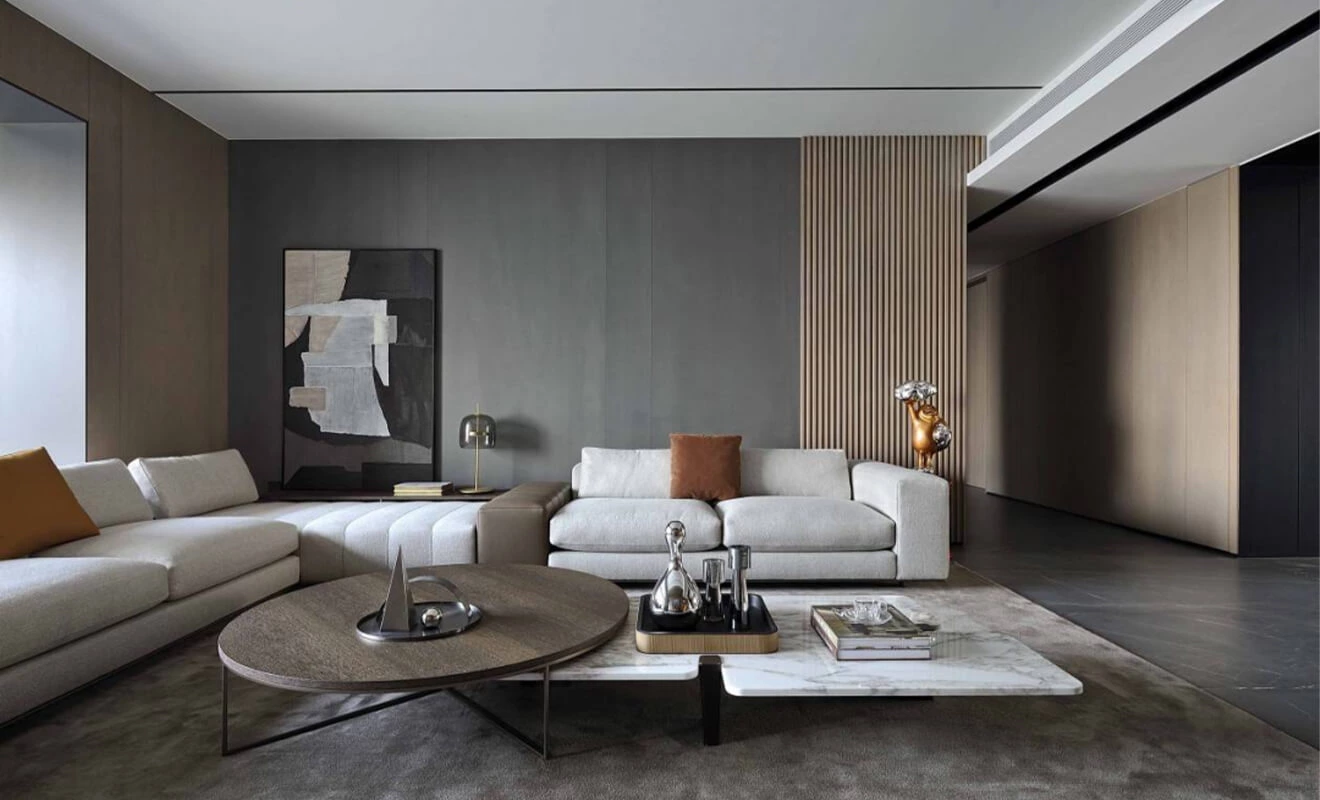
Pay attention to texture details: The clear and visible texture of the wood finish should be examined to determine whether they belong to similar patterns or color schemes, ensuring a harmonious and unified room atmosphere. Combining natural textures with a dark wood finish brings a closer connection to nature and creates a sense of luxury. Delicate textures are more suitable for a light-colored wood finish, facilitating the creation of a ceremonial space.
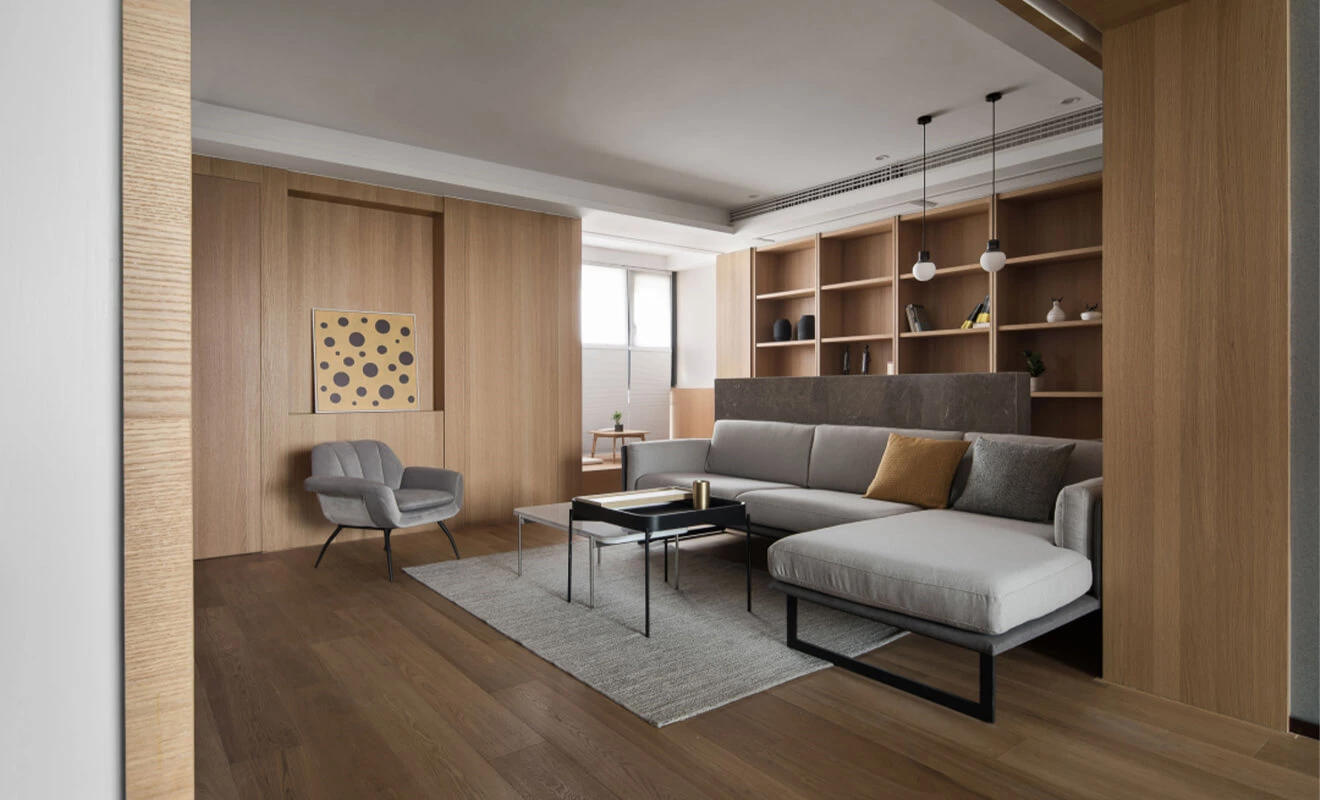
Maintain decorative elements: Keep the color tones of wood finish within 2-3 variations, which can be repeatedly used in different areas of the space to avoid excessive flamboyance and achieve a balanced result. Adding a few decorations or green plants further enhances the coordination and liveliness of the space.
How to Choose a Wood Finish for Interior Design
When selecting wood finish ideas, start with the room's light and the largest fixed elements. Flooring, cabinets, doors, countertops, and wall color usually have more visual weight than small decorations. Choose one dominant wood direction, then use related undertones or smaller accents to add depth without creating a collection of unrelated grains.
- Color temperature: Compare warm, neutral, and cool undertones with the floor, paint, stone, and lighting.
- Grain scale: Use a grain pattern that suits the panel size and viewing distance; very dramatic grain can overwhelm a small wall.
- Panel rhythm: Plan vertical or horizontal divisions, joints, corners, and transitions before fabrication.
- Lighting: Review samples in daylight and at night; grazing light may emphasize texture, joints, and surface variation.
- Touch and maintenance: Choose a finish appropriate to hand contact, cleaning frequency, moisture, and the location of the panel.
- Whole-home consistency: Repeat selected tones or details across rooms without making every surface identical.
Wood Finish Materials, Care and Documentation
“Wood finish” can describe many constructions, including natural veneer, solid wood, laminate, decorative paper, painted wood-look surfaces and engineered panels. Each material has its own edge details, substrate, maintenance requirements, and response to moisture or sunlight. Request a complete sample and product specification before selecting a finish for a large wall or a full room.
For projects using composite wood products, panel and adhesive documentation can be important where local formaldehyde-emission requirements apply. The U.S. Environmental Protection Agency's formaldehyde information provides general regulatory and consumer background. This reference does not mean every wood finish is automatically certified or compliant; confirm the project requirements and documentation for the destination market.
For natural wood sourcing, the Forest Stewardship Council provides general information about responsible forest management. Verify any certification or chain-of-custody claim against the actual material supplied to the project.
Coordinate Wood Finish with Cabinets and Countertops
Wood finishes are strongest when they connect several elements of the home: wall panels, doors, cabinetry, open shelving, and selected furniture. A kitchen may use a wood finish as a warm counterpoint to painted doors or stone, while a living room can repeat the same undertone in a shelf, sideboard, or media cabinet. Explore custom kitchen cabinet designs and kitchen countertop options when planning adjacent materials.
For a larger renovation, a whole-home customization approach helps carry the chosen finish language between rooms while letting each area retain its own function and atmosphere.
Wood Finish Design Checklist
- Identify the dominant wood tone and the rooms where it will repeat.
- Confirm the actual material construction, substrate, surface finish, and edge detail.
- Review full samples under daylight and planned artificial lighting.
- Coordinate grain direction, panel divisions, corners, door openings, and cabinet lines.
- Balance wood with paint, stone, metal, textiles, and flooring instead of adding too many wood tones.
- Check cleaning, moisture exposure, sunlight, daily contact, and likely impact areas.
- Coordinate storage, hardware, electrical points, and lighting before installation.
- Approve the drawings, material sample, and installation sequence before production.
Wood Finish Ideas FAQ
1. What is a wood finish in interior design?
A wood finish is a wood-based or wood-look surface used on walls, cabinets, doors, furniture, or decorative panels. It can use natural veneer, solid wood, laminate, or another specified surface system.
2. Which rooms are best for wood-finish wall panels?
Entryways, living rooms, dining rooms, bedrooms, and studies are common choices. The best location depends on the room's light, function, moisture exposure, and the desired focal point.
3. How do I match wood finish with furniture?
Start with undertones rather than trying to match every grain exactly. Choose one dominant tone, then use related colors or smaller accents to keep the room coherent.
4. Can a dark wood finish work in a small room?
Yes, when used with sufficient lighting and balanced by lighter surfaces or limited to a focal wall. Large dark panels in a poorly lit room can feel heavier, so review a sample in the actual space.
5. Is natural veneer better than wood-look laminate?
They offer different appearance, construction, maintenance, and budget characteristics. Compare actual samples, edge details, use conditions, and the quality of the full system rather than choosing by material name alone.
6. How many wood tones should I use in one home?
There is no fixed rule, but limiting the main tones and repeating related undertones often creates a more unified result than introducing many unrelated wood grains.
7. Does lighting change the appearance of wood finish?
Yes. Daylight, warm light, cool light, and grazing light can change the perceived color and emphasize different parts of the grain or panel joints. Always inspect samples under planned lighting.
8. Can wood finish be used behind a TV?
Yes. A wood-finish wall can frame a television or media cabinet when the panel layout, cable access, ventilation, mounting support, and lighting are planned together.
9. How should wood finish be cleaned?
Use the care instructions for the exact supplied surface. Avoid assuming that natural veneer, laminate, paint, and engineered panels can all be cleaned with the same products or methods.
10. Can a wood finish connect the kitchen and living room?
Yes. Repeating a selected wood tone in a cabinet, wall panel, shelf, or door can connect open-plan spaces without making every element identical.
11. What should be checked before wood wall panels are installed?
Check the wall condition, substrate, dimensions, panel divisions, grain direction, electrical points, lighting, corners, joints, finish samples, and installation access.
12. Are all wood finish products environmentally the same?
No. Material construction, adhesives, surface systems, documentation, and regional requirements vary. Ask for product-specific information and verify what applies to the project location.
Conclusion: Use Wood Finish to Create Continuity
The most effective wood finish ideas use tone, grain, and panel detail to connect the entryway, living room, dining room, bedroom, and study. Wood can be a main focal point or a subtle supporting layer, but it should always relate to the room's light, function, and other materials.
Choose the material system, sample, and panel layout early, then coordinate it with cabinetry, doors, countertops, and lighting. This approach gives a wood finish a natural role in the interior while keeping the result practical for everyday use.