Thinking About Marble? Here’s What Most Buyers Realize Too Late
If you're designing a kitchen—especially for a villa or high-end residence—marble is almost always on the shortlist.
It’s easy to understand why:
- It looks luxurious
- It feels natural
- It instantly elevates a space
But here’s what I’ve seen repeatedly across international projects:
👉 Clients fall in love with marble for how it looks…
👉 and regret it later because of how it performs.
In one Middle East villa project, a client insisted on full marble countertops for both the kitchen and the island. Within 8 months:
- visible etching near prep zones
- oil stains around cooking areas
- uneven gloss across the surface
The material didn’t fail.
👉 The decision context was wrong.
So before you choose marble, you need to understand:
👉 Marble is a design-driven material—not a performance-driven one.
What Marble Really Is (And Why That Matters in Daily Use)
Natural Formation = Beauty + Limitations
Marble is formed when limestone undergoes high pressure and heat over time. This process creates:
- unique veining patterns
- soft, elegant textures
- natural variation between slabs
No two marble slabs are identical, which is exactly why designers love them.
But that same formation also results in:
- micro-porosity
- lower hardness compared to granite
- sensitivity to acids
👉 In simple terms:
The beauty comes with trade-offs built into the material itself.
Porosity Explained (Why Stains Happen)
Marble contains microscopic pores that can absorb liquids.
What this means in real life:
- Spilled coffee can leave a shadow mark
- oil can penetrate and darken the surface
- Water exposure over time can dull the finish
Even with sealing:
👉 sealing slows absorption—it does NOT eliminate it
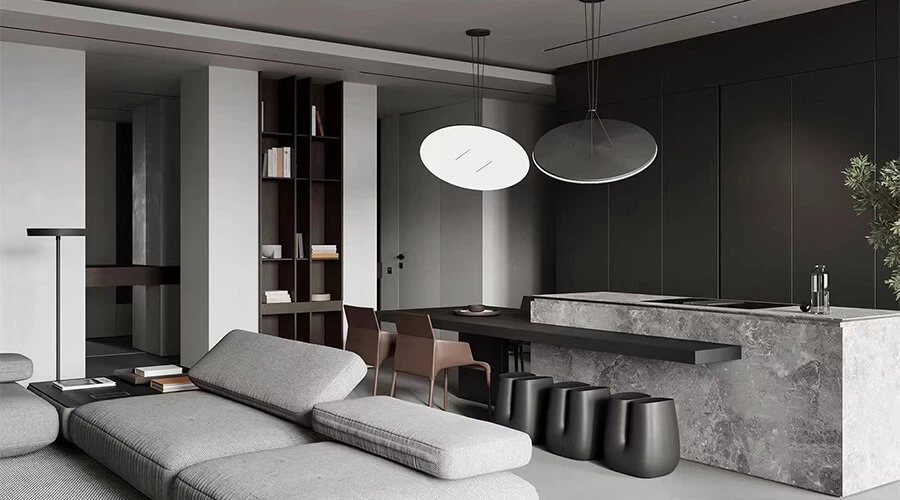
Hardness vs Other Materials
Compared to alternatives:
- Marble → softer
- Quartz → harder
- Granite → more resistant
This affects:
- scratch resistance
- long-term surface integrity
- usability in busy kitchens
Where Marble Works Best (And Why)
Design-Focused Kitchens
Marble works best in spaces where:
- Visual impact is the priority
- Usage is controlled
Typical examples:
- show kitchens
- secondary kitchens
- open-plan luxury interiors
👉 These environments protect marble from heavy wear.
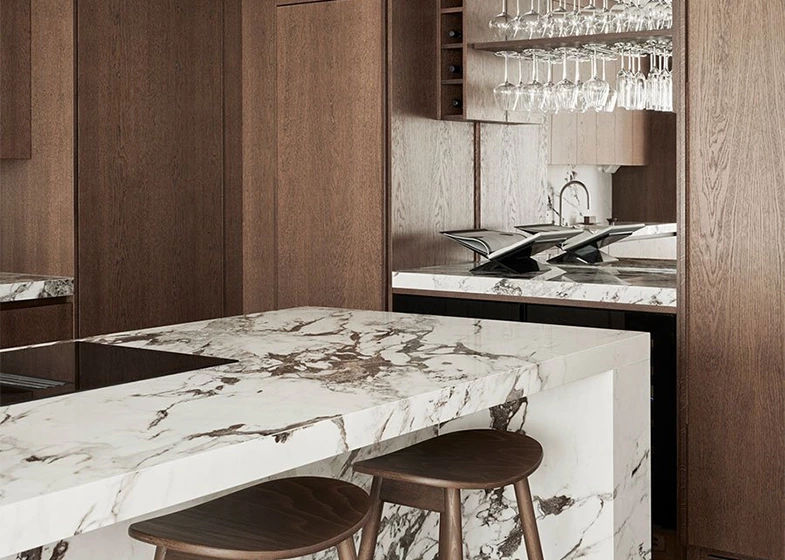
Feature Applications (Smart Use Strategy)
In many high-end projects, we don’t use marble everywhere—we use it strategically:
- island countertops (visual centerpiece)
- backsplash walls
- vanity tops
This approach:
- maximizes aesthetic impact
- minimizes wear and risk
Low-Usage Households
Marble performs better in homes where:
- Cooking frequency is low
- Food prep is minimal
- Maintenance discipline is high
👉 In these cases, marble can age beautifully.
Where Marble Becomes a Problem
Avoid marble in:
- family kitchens with heavy daily use
- rental properties
- clients who expect “no maintenance.”
Because in these cases:
👉 performance expectations don’t match material behavior
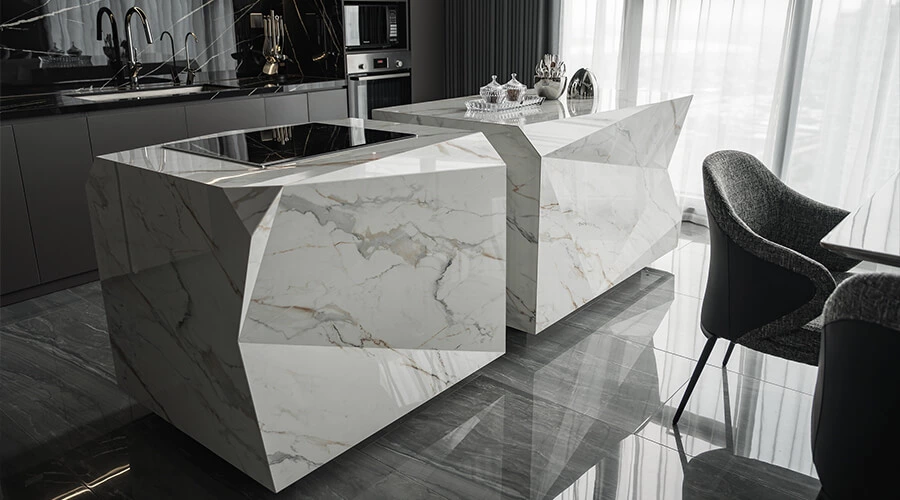
Advantages of Marble (Why It Still Dominates High-End Design)
Unmatched Natural Aesthetic
Marble offers something no engineered material can fully replicate:
- organic veining
- depth of color
- visual softness
Even high-end quartz often looks “too perfect” compared to marble.
👉 That slight imperfection is what creates luxury.
Timeless Appeal
Marble has been used for centuries.
It works across:
- modern minimalist kitchens
- classical European interiors
- luxury villas
👉 It doesn’t follow trends—it outlasts them.
Adds Perceived Property Value
In many markets:
- Marble = premium positioning
- buyers associate it with luxury
Even if performance is not perfect:
👉 Perception alone can justify its use in certain projects
Disadvantages of Marble (The Real Reasons Clients Regret It)
Staining (Most Common Complaint)
Because of porosity:
- oil leaves dark patches
- wine leaves shadows
- Sauces can permanently discolor
👉 Especially problematic in cooking zones
Etching (The Hidden Dealbreaker)
Acidic substances react with marble:
- lemon juice
- vinegar
- cleaning chemicals
Result:
- dull spots
- loss of shine
👉 This cannot be wiped off—it requires polishing
Maintenance Commitment
To maintain marble:
- sealing every 6–12 months
- careful cleaning
- avoiding harsh substances
👉 This is a lifestyle requirement, not a one-time action
Scratch Sensitivity
Compared to harder materials:
- Knives can leave marks
- Heavy objects can scratch
👉 Especially visible on polished surfaces
Long-Term Aging
Over time, marble develops:
- patina
- slight discoloration
- surface wear
Some clients love this.
Others see it as deterioration.
👉 This depends on expectation.
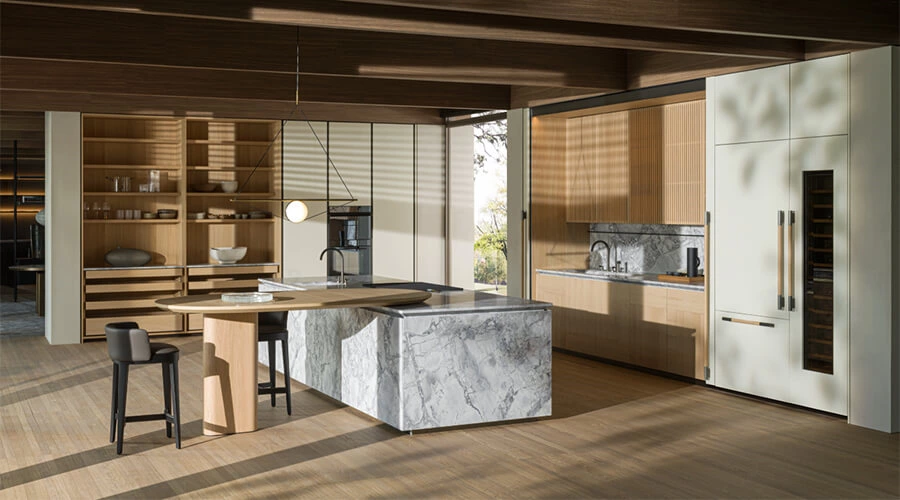
Marble vs Quartz vs Granite (Clear Decision Logic)
Marble
- Best for: design impact
- Trade-off: maintenance
Quartz
- Best for: practicality
- Trade-off: less natural look
Granite
- Best for: durability
- Trade-off: less refined appearance
Practical Recommendation
If you cook daily → quartz
If you want statement design → marble
If you want balance → granite
=> Related Articles:
- HPL vs. Melamine: Choosing the Right Surface for Your Cabinets
- Particle Board vs OSB: Choosing the Right Core for Your Cabinets
- Quartz vs. Sintered Stone Countertops: A Detailed Look at Two
- Melamine vs. Wood Veneer Finishes: Which is Better for Your Kitchen Cabinets
- Lacquer vs. PET Kitchen Cabinet Finishes: Which One is Right for You
Real Cost Breakdown (What Most Quotes Don’t Tell You)
Material Cost
- Marble: $80 – $200+/ft²
- Quartz: $50 – $120/ft²
- Granite: $60 – $150/ft²
Hidden Costs
With marble, you must consider:
- sealing treatments
- refinishing
- potential repairs
Long-Term Cost Reality
In one US project:
- Marble saved ~$3,000 upfront
- required refinishing within 2 years
👉 total cost exceeded quartz alternative
Common Mistakes (Seen in Real Projects)
Mistake 1: Using marble everywhere
→ leads to excessive wear
Mistake 2: Ignoring daily usage habits
→ mismatch between lifestyle and material
Mistake 3: Trusting showroom appearance
→ real usage is very different
Mistake 4: Choosing based on price only
→ wrong decision framework
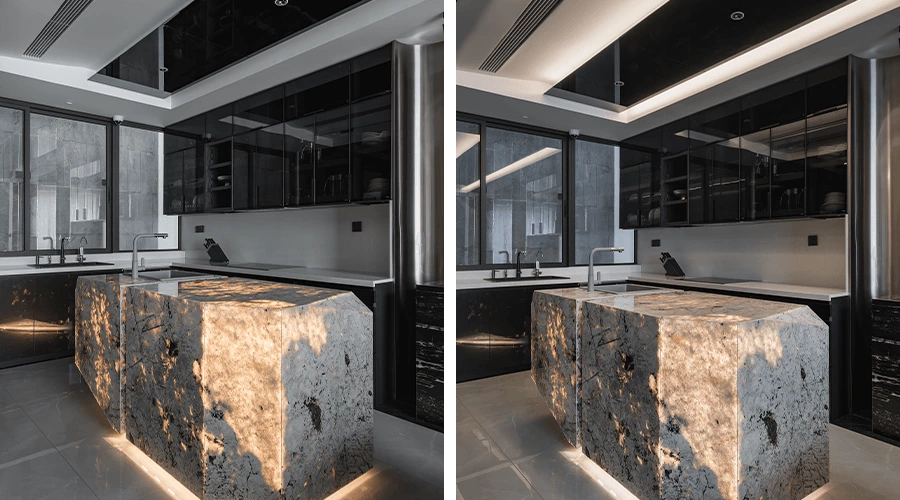
How to Use Marble the Smart Way (Expert Strategy)
✔ Combine Materials
Example:
- quartz for work areas
- marble for feature areas
✔ Choose Honed Finish
- hides scratches better
- reduces visible etching
✔ Limit Exposure Zones
Keep marble away from:
- cooking areas
- heavy prep zones
When We Recommend Marble at ALLURE
We recommend marble when:
- aesthetics are the priority
- The client understands maintenance
- Usage is moderate
We avoid recommending it when:
- heavy daily cooking
- low-maintenance expectation
- long-term durability is key
Final Verdict — Is Marble Worth It?
👉 Marble is not “good” or “bad.”
It is:
a high-end material that requires the right context
If used correctly:
- stunning
- timeless
- valuable
If used incorrectly:
- high maintenance
- ongoing issues
- unnecessary cost
📩 Get Expert Advice Before You Choose
Choosing the wrong material can cost you more than just money—it affects how you live in your space every day.
If you're planning:
- a kitchen
- a villa
- or a full-house project
We can help you:
- Select the right material
- balance design and durability
- avoid costly mistakes
👉 Contact ALLURE today for a professional consultation and quotation.