Choosing the right cabinet door style is one of the most important decisions in a kitchen remodel. Cabinet doors cover a large share of the visible surface in the room, so their profile affects whether the finished kitchen feels modern, timeless, traditional, light, or luxurious.
This guide compares the most popular kitchen cabinet door styles and explains where each one works best. From versatile Shaker doors to minimalist slab fronts, decorative raised panels, and light-enhancing glass doors, the right choice depends on your home’s architecture, kitchen size, maintenance preferences, and the atmosphere you want to create.
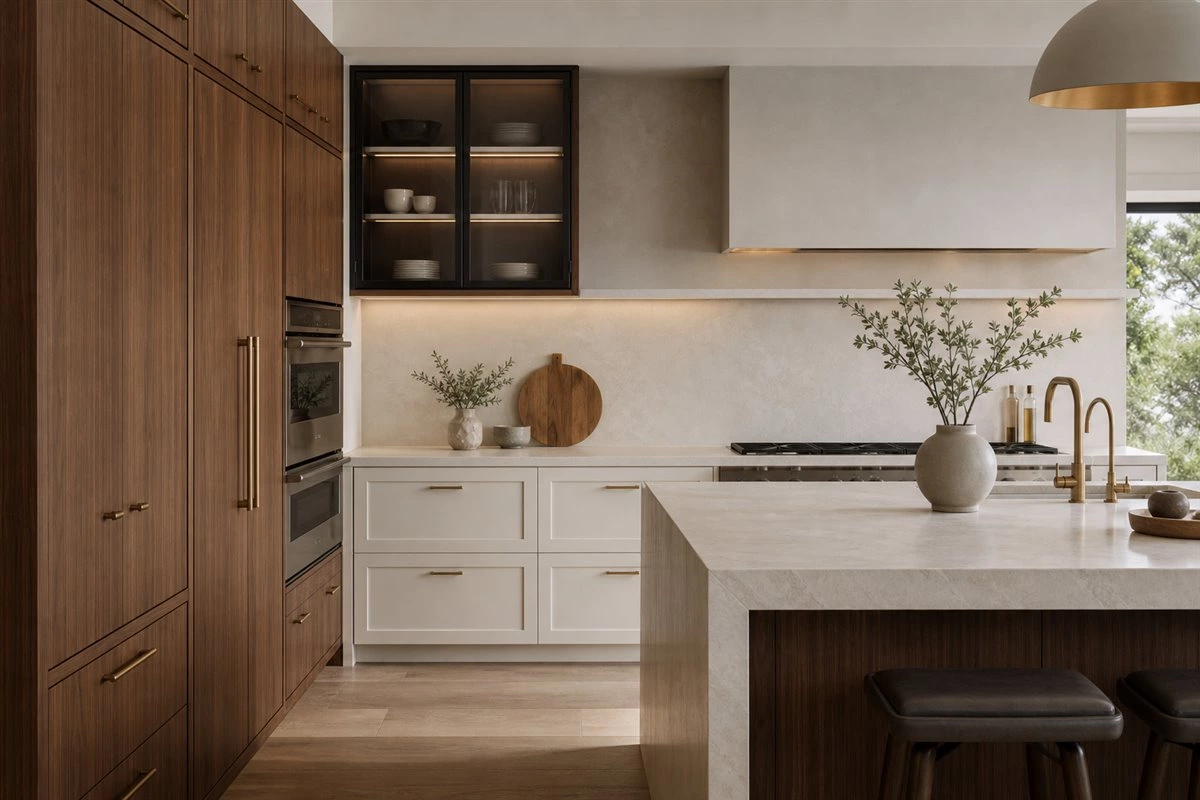
Kitchen Cabinet Door Styles vs. Door Materials: What Is the Difference?
A cabinet door style describes the door's visual profile: whether it is flat, framed, recessed, raised, glass-fronted, or textured. It is the design language that people notice first when they walk into a kitchen.
Door materials and finishes are different. They describe what the cabinet door is made from or covered with, such as plywood, MDF, solid wood, wood veneer, PET, lacquer, acrylic, or melamine. The same style can be produced in different materials. For example, a Shaker door may have a painted MDF center panel, a natural wood veneer finish, or a solid wood frame.
This distinction matters because style and material should be selected together. A flat slab door in a matte PET finish can create a calm modern kitchen, while a Shaker door in a painted finish may create a more transitional look. Before finalizing your door profile, compare the performance, maintenance, and budget implications of the material beneath the finish.
For a material-focused comparison, see our guide to the best materials for custom kitchen cabinets.
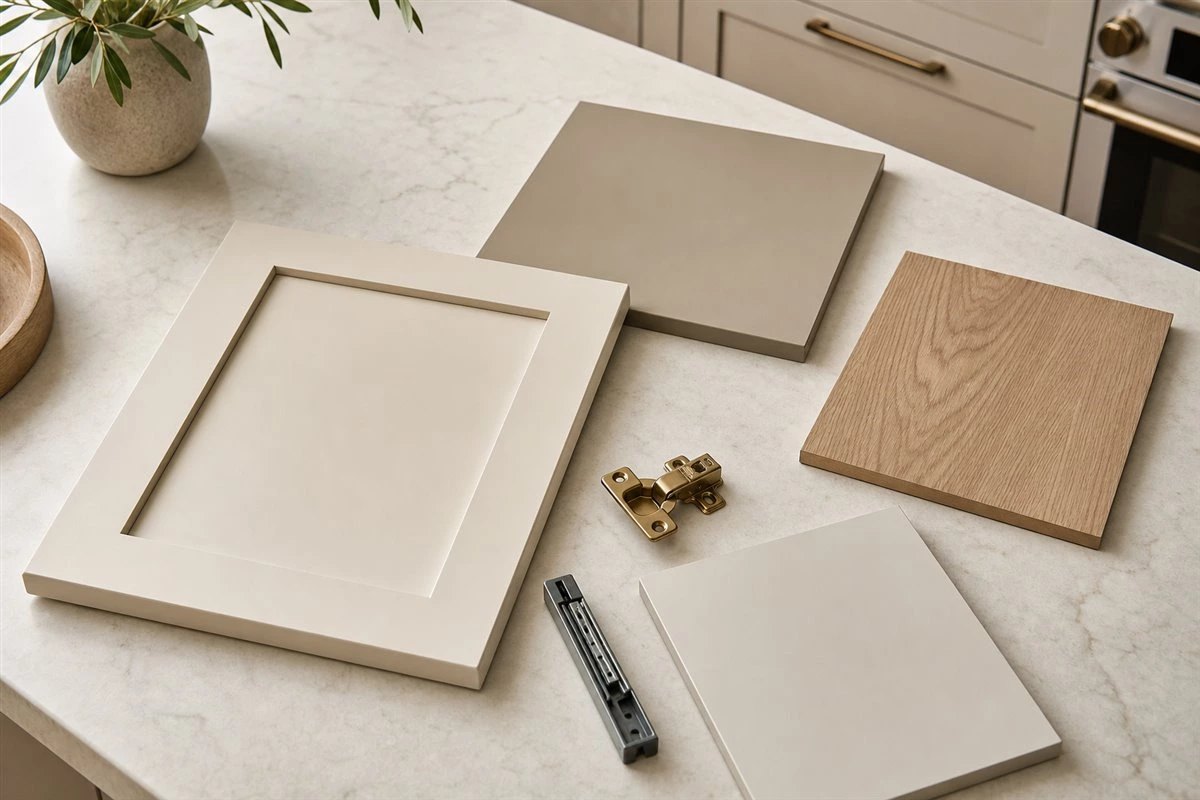
Quick Comparison of Popular Kitchen Cabinet Door Styles
| Door Style | Overall Look | Best For | Cleaning | Budget Tendency |
|---|---|---|---|---|
| Shaker | Timeless and balanced | Transitional, modern classic, farmhouse | Moderate | Mid-range |
| Slim Shaker | Refined and contemporary | Modern transitional kitchens | Moderate | Mid to premium |
| Slab / Flat Panel | Clean and minimal | Modern, Scandinavian, minimalist spaces | Easy | Varies by material |
| Raised Panel | Decorative and dimensional | Traditional and villa kitchens | Higher | Mid to premium |
| Recessed Panel | Architectural and understated | Transitional, craftsman, classic homes | Moderate | Mid-range |
| Glass-Front | Light and display-focused | Upper cabinets, wine zones, coffee stations | Moderate | Varies |
| Fluted / Reeded | Textured and distinctive | Contemporary luxury interiors | Higher | Premium |
The best kitchen cabinet door style is not always the most decorative or the most fashionable. It is the one that fits your space, supports your daily routine, and still feels appropriate after years of use.
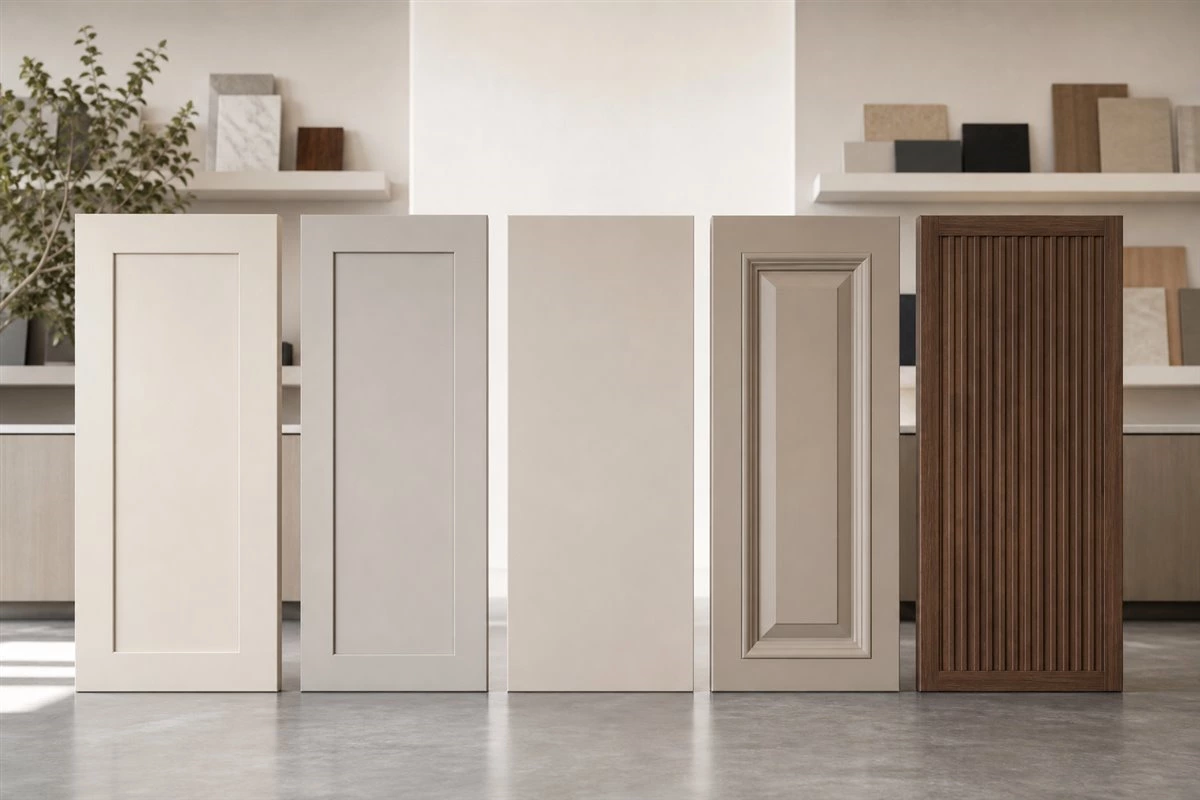
Shaker Cabinet Doors: The Timeless All-Rounder
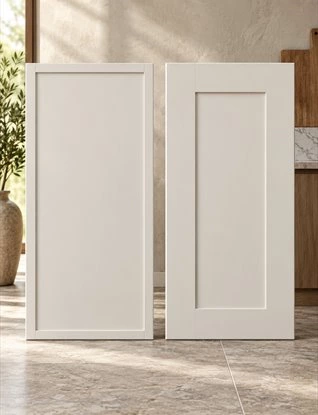
Shaker doors are defined by a simple frame surrounding a recessed center panel. Their clean geometry makes them one of the most flexible kitchen cabinet door styles. They can work in a warm farmhouse kitchen, a transitional family kitchen, or a more tailored contemporary space.
The final effect depends on proportion and finish. Wide rails, traditional handles, and warm paint colors can make Shaker doors feel classic. Narrow rails, matte finishes, and long edge pulls can make the same door style look much more modern. This flexibility is why Shaker cabinets remain a reliable choice for homeowners who want a design with lasting appeal.
Shaker doors have more corners and edges than flat cabinet fronts, so they need slightly more care when cleaning. However, their familiar proportions make them easy to coordinate with stone countertops, wood flooring, tiled backsplashes, and both modern and traditional hardware.
Shaker doors are especially suitable for homeowners who want a balanced kitchen that does not feel too plain or too ornate. For more inspiration, explore our Shaker kitchen cabinet ideas.
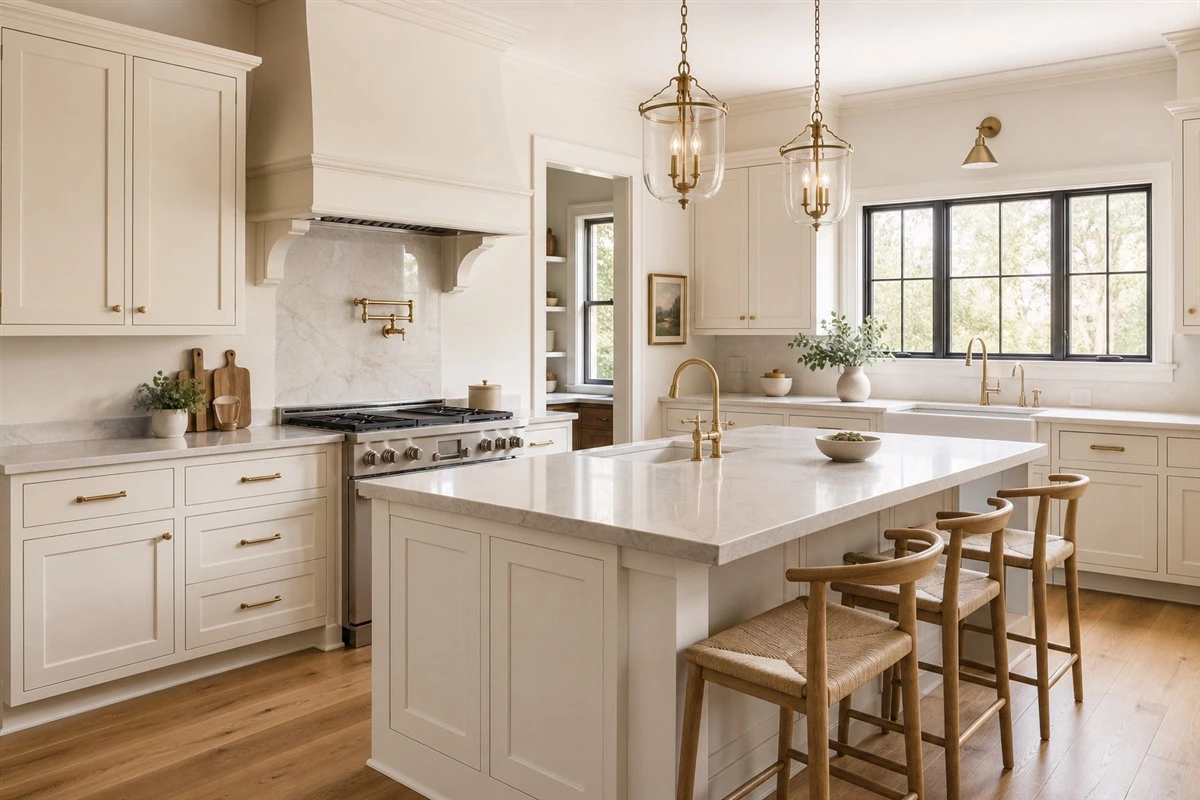
Slim Shaker Cabinet Doors: A More Contemporary Option
Slim Shaker doors use the same basic framed construction as standard Shaker doors but feature narrower rails and stiles. This creates a lighter, more refined appearance that works well in contemporary homes and compact kitchens.
Because the frame is narrower, slim Shaker doors can make a cabinet wall look less heavy. They are particularly effective on tall cabinets, integrated pantry storage, and kitchen islands where the door profile needs to look elegant without becoming visually dominant.
Slim Shaker designs pair well with soft gray, sage green, warm white, taupe, and natural wood finishes. They also work beautifully with discreet brass pulls, black linear hardware, or integrated opening details. The key is proportion: a profile that looks elegant on a standard cabinet may feel too narrow or too busy on a very tall pantry door. Reviewing a full-size sample is always better than choosing from a small swatch.
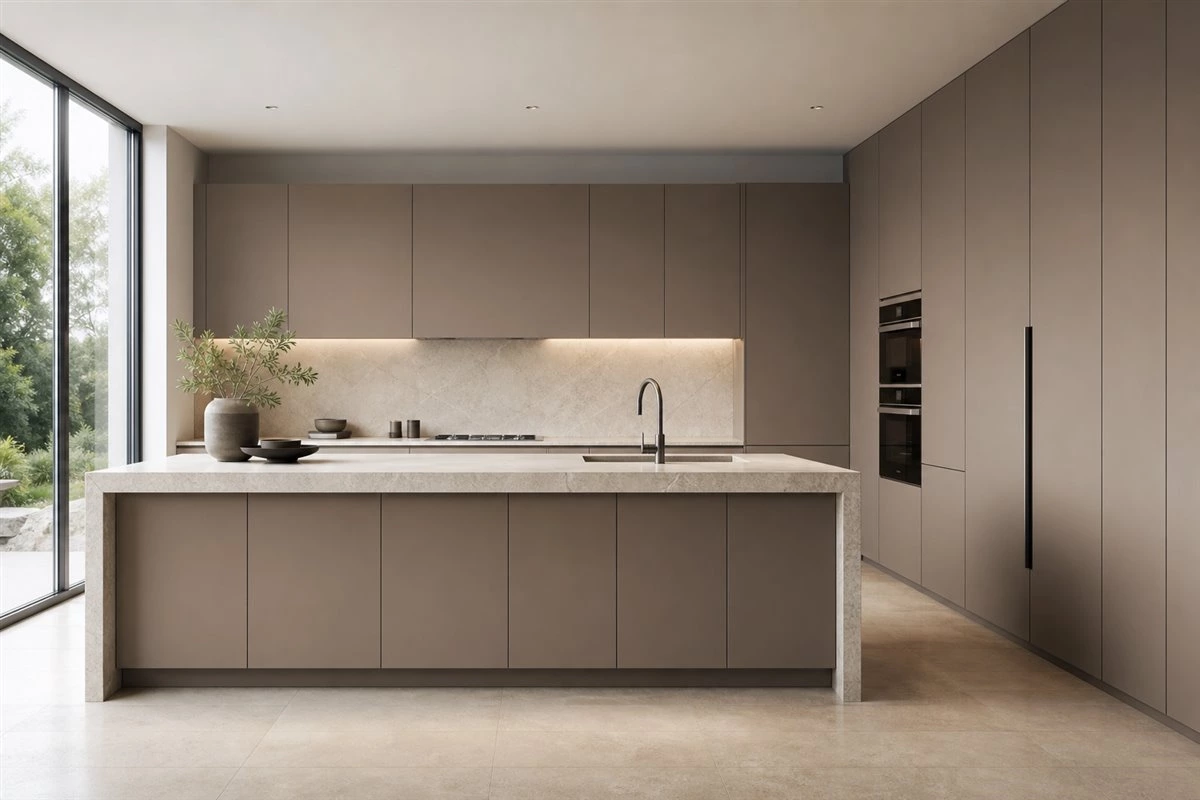
Slab or Flat-Panel Cabinet Doors: Clean, Modern, and Easy to Maintain
Slab doors, also called flat-panel doors, have a smooth and unframed surface. They are a natural choice for minimalist, Scandinavian, modern, and contemporary kitchens because they create long, uninterrupted lines across the cabinetry.
One of the main advantages of slab doors is maintenance. With no grooves, recessed panels, or decorative trim, they are easy to wipe clean. This makes them especially practical for busy households and open kitchens where a calm, uncluttered appearance is important.
However, simple design requires precise execution. On slab cabinetry, door alignment, even gaps, material quality, and hardware choice are all highly visible. A well-designed slab kitchen can look effortless, but it depends on accurate installation and carefully selected finishes.
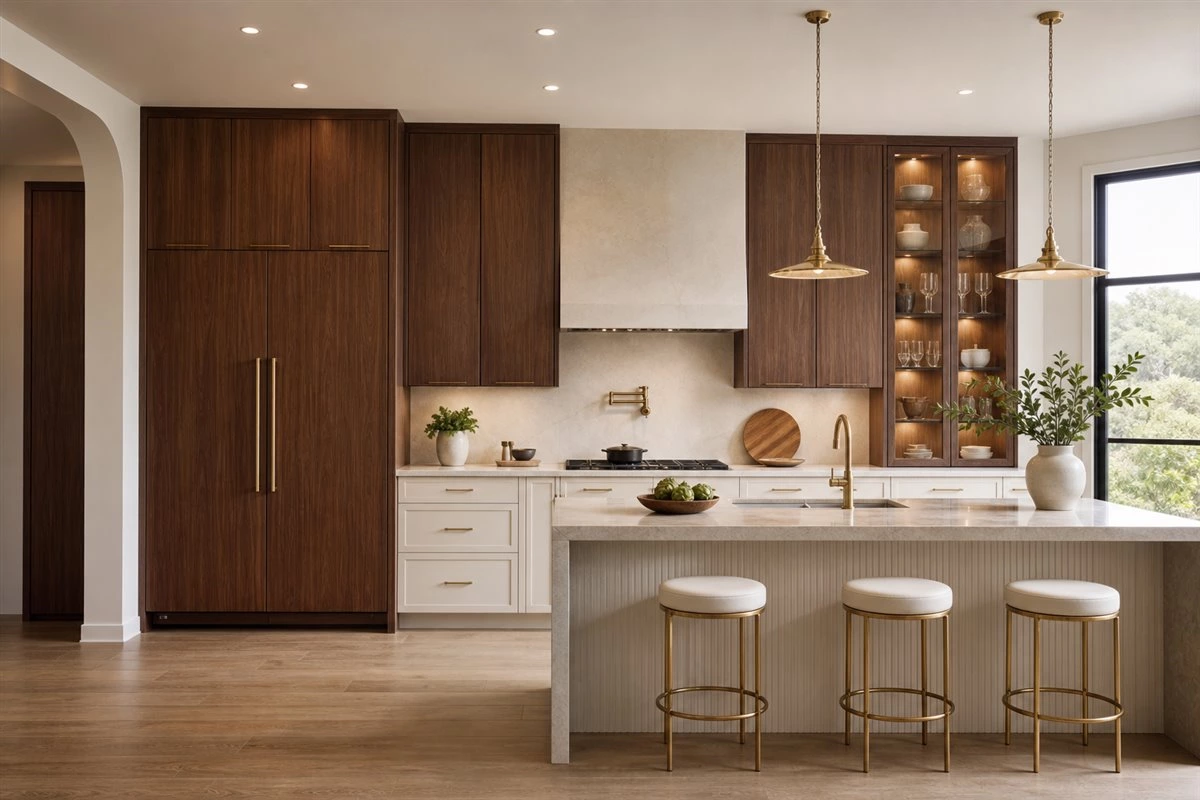
Flat-panel doors are available in many materials, including wood veneer, matte lacquer, PET, acrylic, melamine, and textured laminate. A walnut veneer slab door feels warm and architectural, while a matte white or gray slab door can create a brighter, more minimal space.
Raised-Panel Cabinet Doors: Depth and Traditional Character
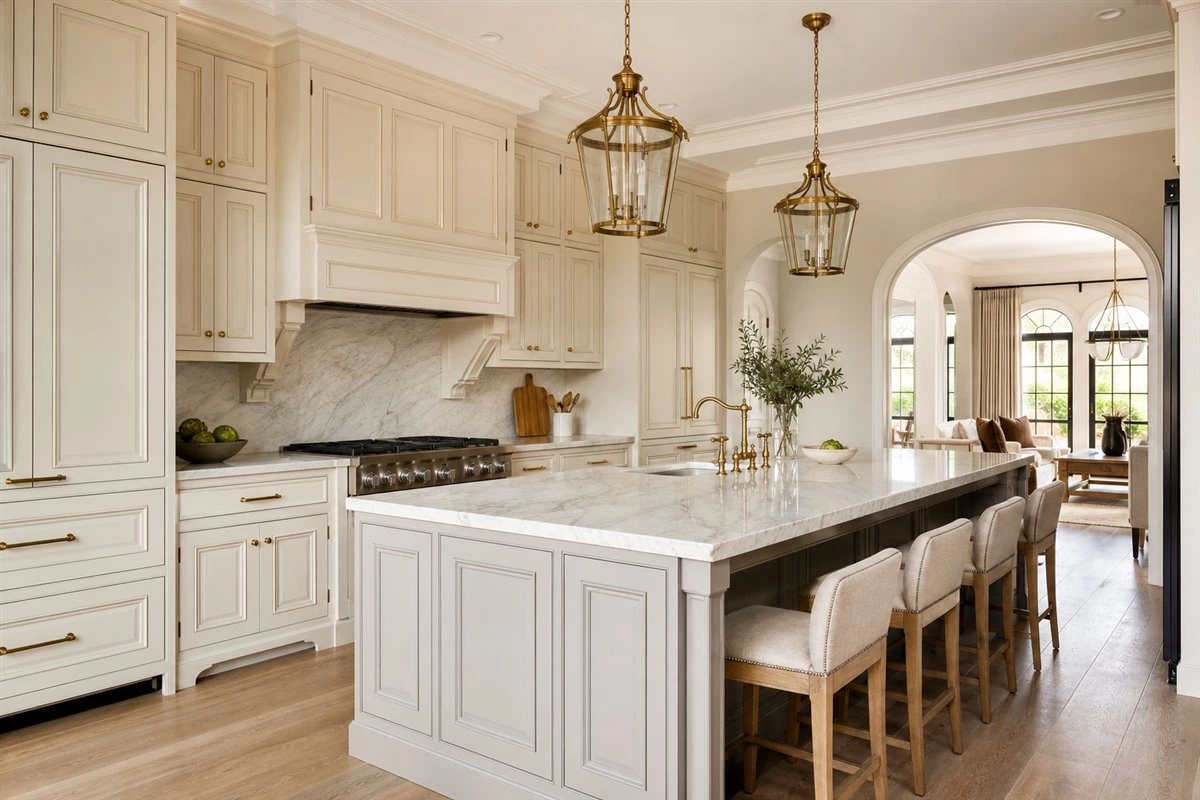
Raised-panel doors feature a center panel that projects outward from the surrounding frame. This gives the cabinet front more depth, shadow, and decorative detail than Shaker or slab doors.
These doors are often associated with traditional, classic, villa, and formal kitchen interiors. They work especially well in larger rooms with high ceilings, crown molding, detailed lighting, and architectural features that can support a more decorative cabinet profile.
In a compact kitchen, raised-panel doors can sometimes feel visually heavy if they are used everywhere. A more restrained approach may be to use them on a feature wall, an island, or selected tall cabinets while keeping other areas simpler. Neutral paint colors, natural wood tones, and understated hardware can help raised-panel cabinets feel elegant rather than overly ornate.
Raised-panel doors are ideal for homeowners who want cabinetry to feel like a permanent architectural feature rather than a minimal backdrop.
Recessed-Panel Cabinet Doors: Quiet Architectural Detail
Recessed-panel doors use an inset center panel to create depth without the stronger decorative effect of a raised panel. They can feel structured and architectural while remaining relatively calm.
Although Shaker doors are also recessed-panel doors, not every recessed-panel profile is Shaker. Shaker doors usually have straightforward square edges and simple proportions. Other recessed-panel designs may include bead detail, more defined molding, or a more traditional frame profile.
This style is a strong option for transitional, craftsman-inspired, and classic kitchens. It offers more character than a slab door but does not require the visual weight of a raised-panel design. Recessed-panel doors look especially natural with painted finishes, warm oak, brushed nickel, aged brass, and subtle stone surfaces.
Glass-Front Cabinet Doors: Display, Light, and Visual Openness
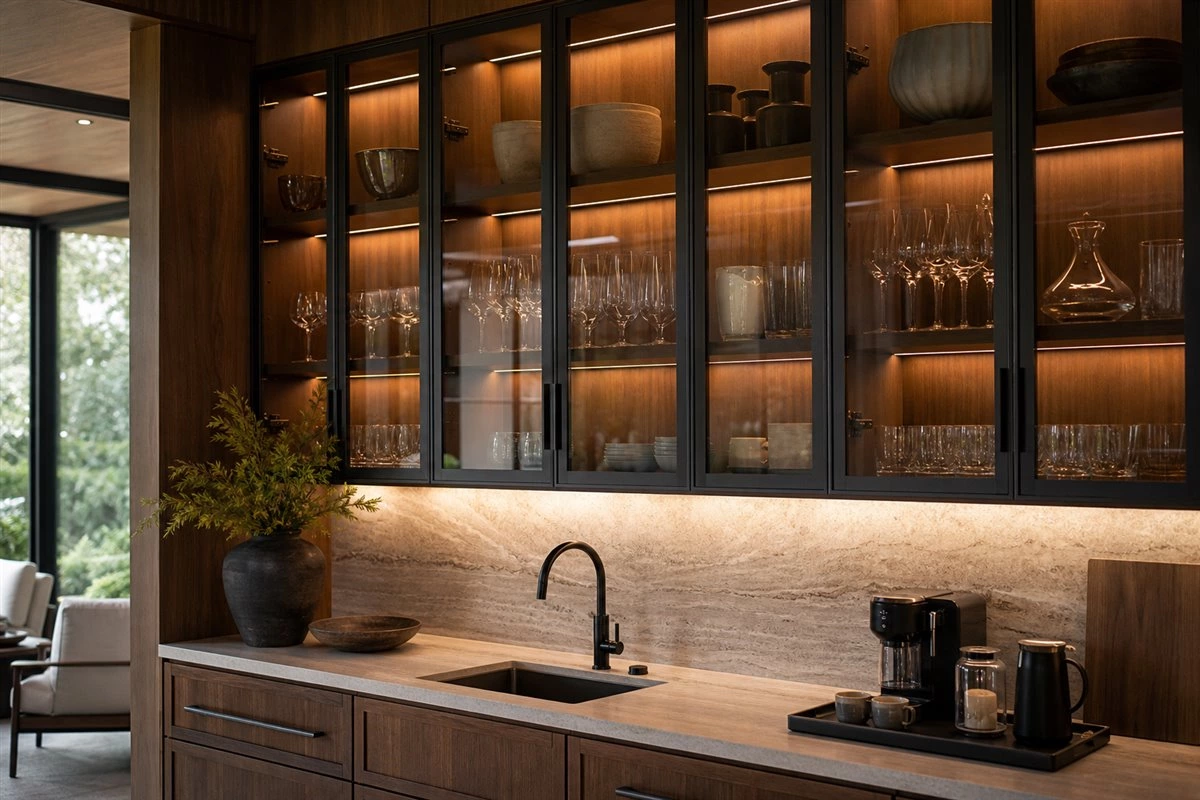
Glass-front cabinet doors are an effective way to break up a large expanse of solid cabinetry. They can make a kitchen feel lighter, provide a place to display glassware or ceramics, and add depth to an otherwise closed storage wall.
Clear glass creates a more open visual effect but requires the cabinet interior to stay organized. Frosted, reeded, or tinted glass offers more privacy while still reflecting light and adding texture. Interior LED lighting can make glass-front doors feel especially refined in the evening.
Glass doors are often best used selectively. Consider them for upper cabinets, a coffee station, a wine cabinet, a dining sideboard, or the end of a tall cabinet run. Using glass doors everywhere can make storage feel exposed, while using them in selected areas creates a more balanced result.
For related ideas, see our guide to glass kitchen cabinet doors.
Fluted and Reeded Cabinet Doors: Texture for Contemporary Kitchens
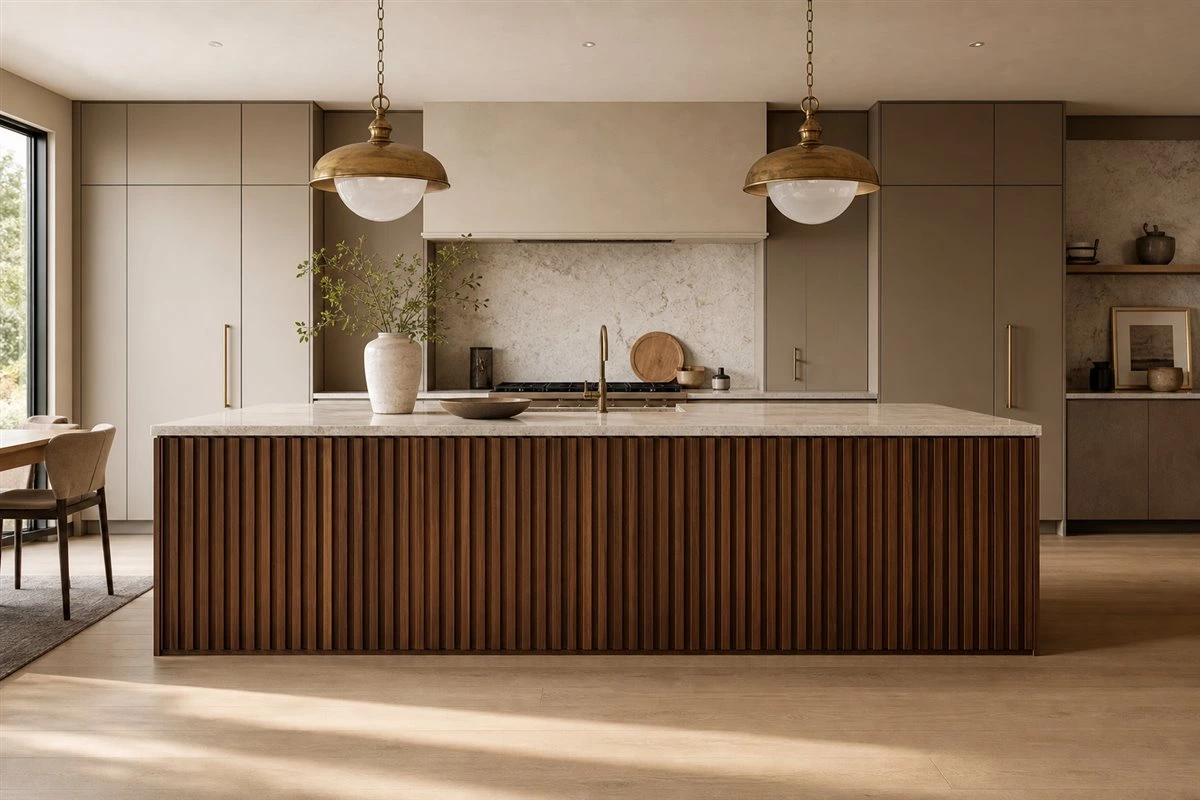
Fluted and reeded cabinet doors introduce vertical texture through repeated grooves or raised lines. They can add depth and visual rhythm without relying on ornate molding. In contemporary kitchens, this texture often works best as an accent rather than as the dominant finish throughout the room.
A fluted island front can become a focal point in an open kitchen. Reeded tall cabinets can add warmth to a minimalist layout. Fluted glass doors can introduce light and texture at the same time. These details are especially effective when paired with otherwise simple slab or slim Shaker cabinets.
Textured door fronts do require more careful cleaning than smooth slab surfaces because dust and cooking residue can settle into the grooves. For this reason, fluted cabinetry is often best used away from heavy cooking areas or on selected storage zones.
How to Choose the Right Kitchen Cabinet Door Style
Start with Your Home’s Architecture
A highly modern apartment may suit slab doors or slim Shaker fronts, while a traditional home may benefit from Shaker, recessed-panel, or raised-panel cabinetry. Your cabinets should support the overall character of the house rather than feel disconnected from it.
Consider Kitchen Size and Visual Weight
Small kitchens usually benefit from lighter colors, simpler profiles, and fewer decorative elements. Slab doors, slim Shaker designs, and selected glass-front cabinets can help a compact kitchen feel more open. Larger kitchens can often support more dimensional raised panels, deep wood tones, and stronger architectural details.
Think About Daily Cleaning
Smooth doors are the easiest to clean, while framed, fluted, and raised designs need more attention around edges and grooves. Think realistically about how often you cook, whether your kitchen is open to the living area, and how much daily upkeep you prefer.
Choose the Finish After Selecting the Profile
A wood veneer slab door and a painted Shaker door can create entirely different moods. The door profile should be selected first, then refined through finish, color, texture, countertop material, and backsplash choices.
Coordinate Hardware and Opening Style
Long pulls, knobs, edge pulls, concealed handles, and push-to-open systems each change the appearance of the same cabinet door. Read our Kitchen Cabinet Hardware Guide to coordinate the right opening system with your chosen style.
Review a Full-Size Sample in Your Actual Lighting
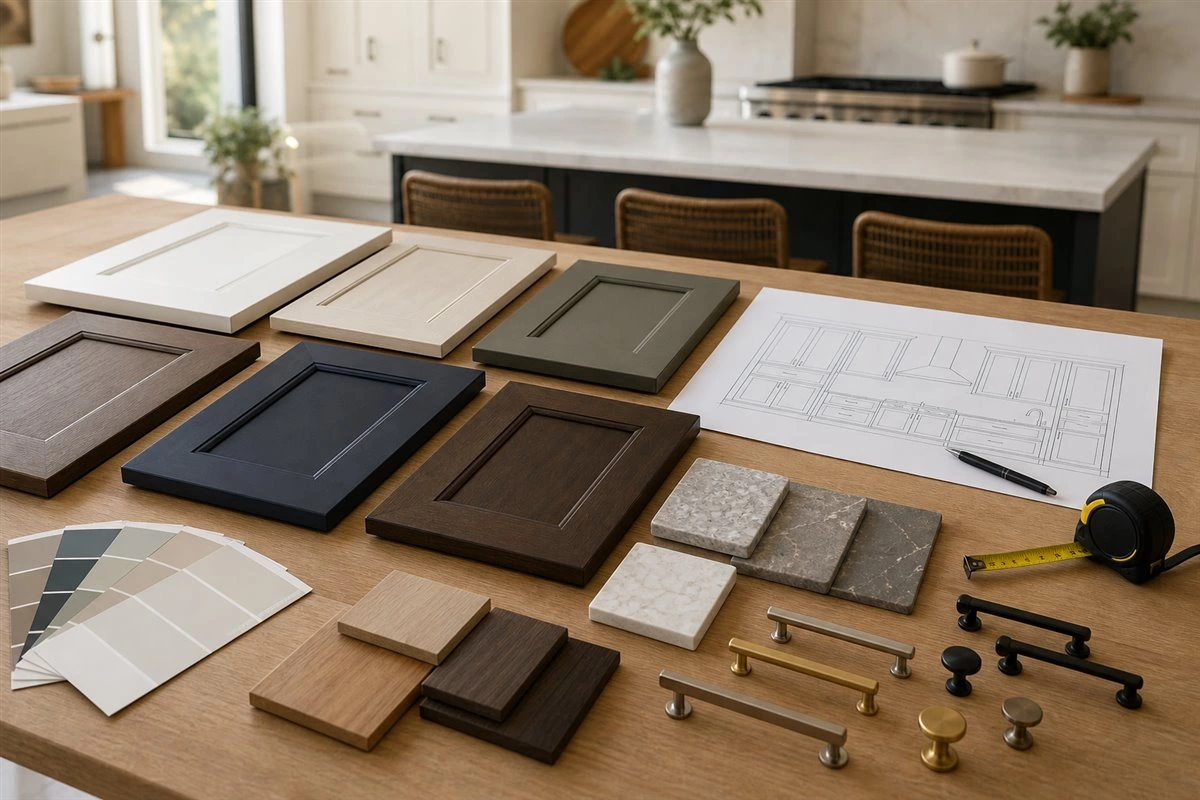
Color, grain, rail width, sheen, and texture can look very different in a showroom than in the home. Before finalizing the order, review full-size door samples beside your countertop, flooring, backsplash, and wall color whenever possible.
Can You Mix Kitchen Cabinet Door Styles?
Yes, mixing cabinet door styles can create a more layered and personalized kitchen when there is a clear design hierarchy. The key is to use one primary style and one secondary accent rather than combining many different profiles at once.
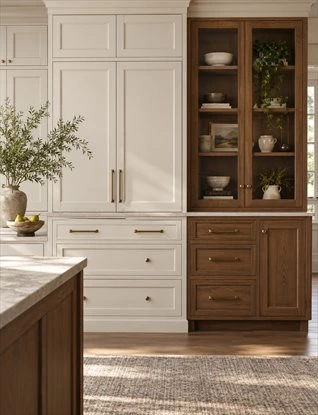
For example, a kitchen may use matte slab doors on tall cabinets, painted Shaker doors on the main base cabinets, and fluted panels on the island. Another approach is to use solid cabinet fronts around the perimeter and glass-front doors in one display area. These combinations work best when they share a common color palette, hardware finish, countertop material, or door proportion.
A small kitchen should generally use fewer contrasts. In larger kitchens, a carefully placed secondary door style can create a focal point and make the cabinetry feel more custom.
Door Style, Cabinet Construction, and Hardware
Cabinet door style is only one part of a successful kitchen design. Overlay type, cabinet construction, hardware, finish, and installation quality all influence how the completed cabinets look and perform.
Full-overlay doors create a more seamless and contemporary appearance because they cover most of the cabinet frame. Inset doors sit within the cabinet frame and can create a tailored, furniture-like look, but they require particularly precise manufacturing and installation. Frameless cabinets often pair naturally with slab and modern Shaker doors, while face-frame cabinets can support both classic and contemporary designs.
Heavy pantry doors, large glass fronts, and tall cabinet panels should also be matched with suitable hinges and adjustment systems. Good hardware supports smooth movement, consistent gaps, and a better long-term experience. For more detail, compare frameless vs. face-frame cabinets.
Kitchen Cabinet Door Styles FAQ
What is the most popular kitchen cabinet door style?
Shaker remains one of the most widely used choices because it balances simple detailing with long-term flexibility. However, slab doors are especially popular in contemporary and minimalist kitchens.
Are Shaker cabinets still in style?
Yes. Shaker cabinets remain relevant because their appearance can change significantly through color, rail width, hardware, and finish. Slim Shaker doors are a particularly popular variation for more modern homes.
Which cabinet door style is easiest to clean?
Slab or flat-panel doors are generally the easiest to clean because they have a smooth surface with fewer edges and grooves.
Are slab cabinet doors cheaper than Shaker doors?
Not always. The final cost depends on material, finish, door thickness, hardware, size, and manufacturing method. A premium wood veneer slab door may cost more than a standard painted Shaker door.
Can I use glass cabinet doors in a small kitchen?
Yes. Used selectively, glass-front upper cabinets can make a small kitchen feel lighter and more open. Tinted or reeded glass can reduce visual clutter while still adding depth.
Which cabinet door style is best for a modern kitchen?
Slab doors are a classic modern option, while slim Shaker doors offer a softer contemporary alternative. The best choice depends on whether you prefer a minimal look or a more detailed but still modern design.
Can I mix Shaker and slab cabinet doors?
Yes. You can use one as the main style and the other as an accent, as long as the materials, colors, and hardware create a coherent overall design.
Does cabinet door style affect durability?
The profile itself is not the only durability factor. Material quality, finish quality, hardware, proper installation, and daily care have a greater impact on long-term performance.
Choose a Door Style That Fits How You Live
The best kitchen cabinet door styles are not chosen by trend alone. They should reflect the architecture of your home, the size of your kitchen, the way you cook, and the level of maintenance you are comfortable with.
Shaker doors offer flexibility and timeless appeal. Slab doors deliver a clean modern look. Raised and recessed panels add depth and traditional character. Glass doors bring light and display value, while fluted designs introduce contemporary texture.
When the door profile, finish, hardware, storage plan, and cabinet construction work together, your kitchen feels more cohesive, more functional, and more personal for years to come.