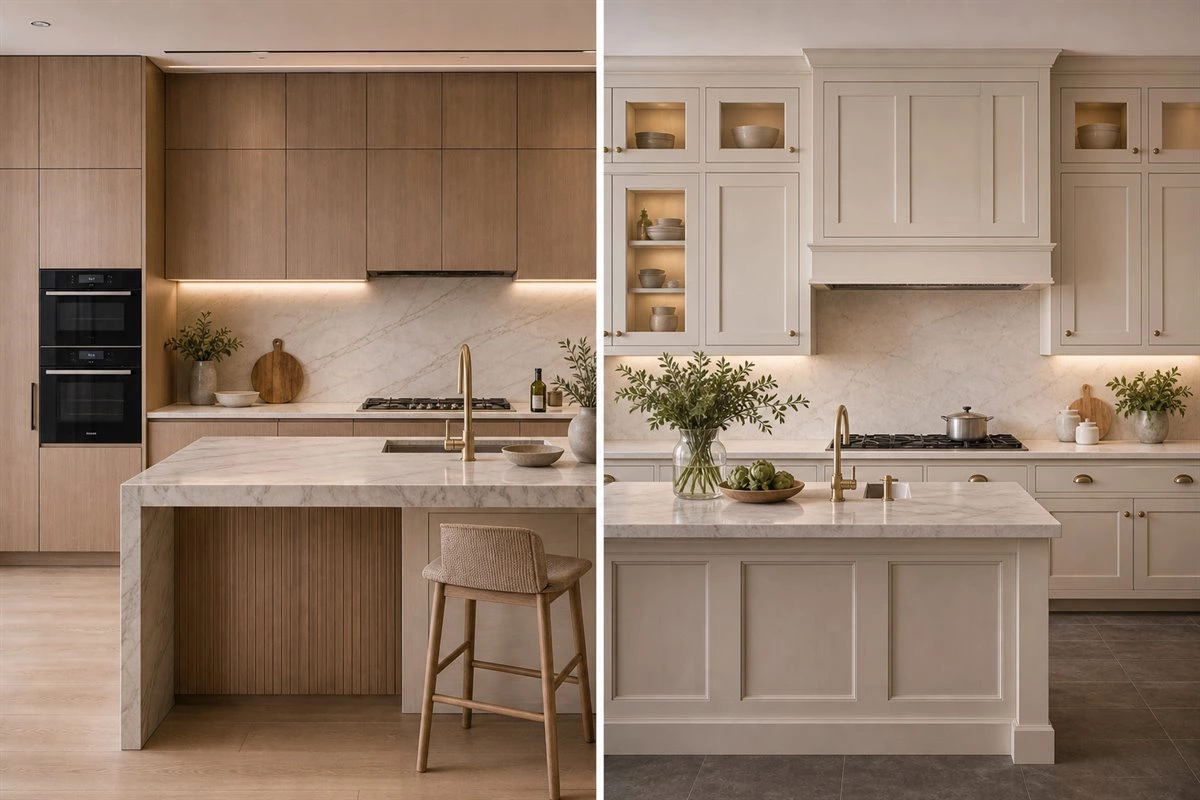
When comparing frameless vs face frame cabinets, the difference is not only about appearance. Cabinet construction affects storage space, door alignment, installation accuracy, durability, hardware choice, and the final kitchen style.
Frameless cabinets are often used in modern and European-style kitchens because they create a clean full-overlay look and wider cabinet openings. Face frame cabinets are common in traditional American-style kitchens because the front frame adds visual detail and structural support.
If you are planning custom kitchen cabinets, understanding these two cabinet construction types will help you choose the right solution for your home, apartment, villa, or project kitchen.
What Are Frameless Cabinets?
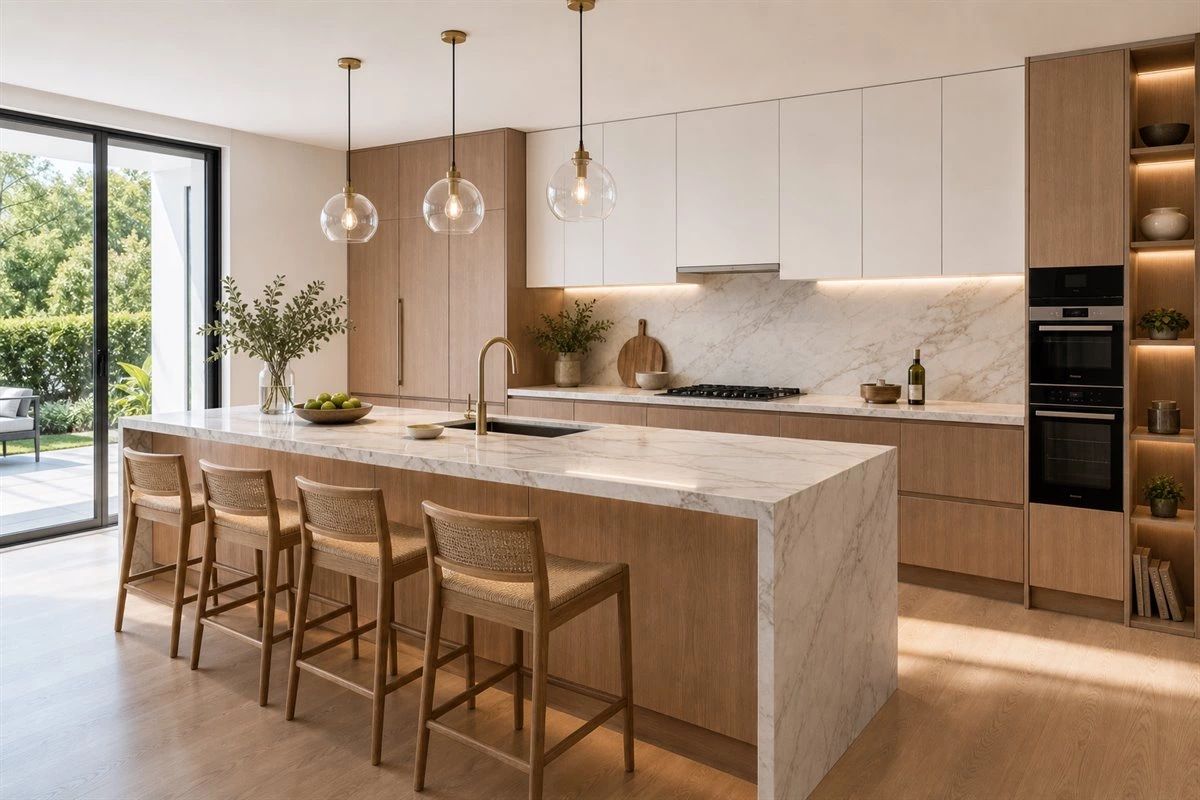
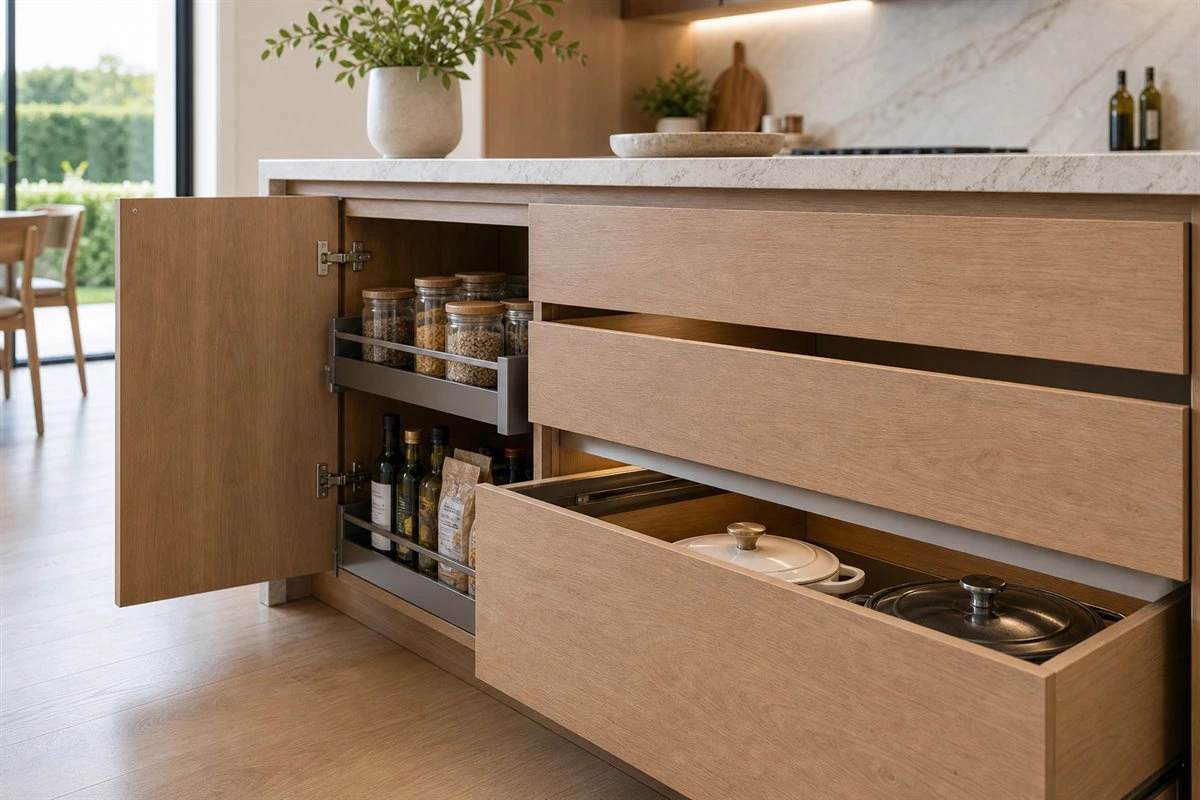
Frameless cabinets are cabinet boxes built without a front face frame. The cabinet doors and drawers attach directly to the cabinet box, usually with concealed hinges. Because there is no front frame blocking the opening, frameless cabinets are also called full-access cabinets or European-style cabinets.
This construction creates a smooth, modern appearance. The doors usually cover most of the cabinet front, leaving narrow and even gaps between panels. Frameless cabinets work especially well with slab doors, PET finishes, lacquer, laminate, veneer, and other clean modern cabinet surfaces.
- Cleaner modern appearance for minimalist kitchens.
- Wider cabinet openings for easier access.
- Efficient storage for apartments and compact kitchens.
- Strong compatibility with full-overlay doors and hidden hinges.
What Are Face Frame Cabinets?
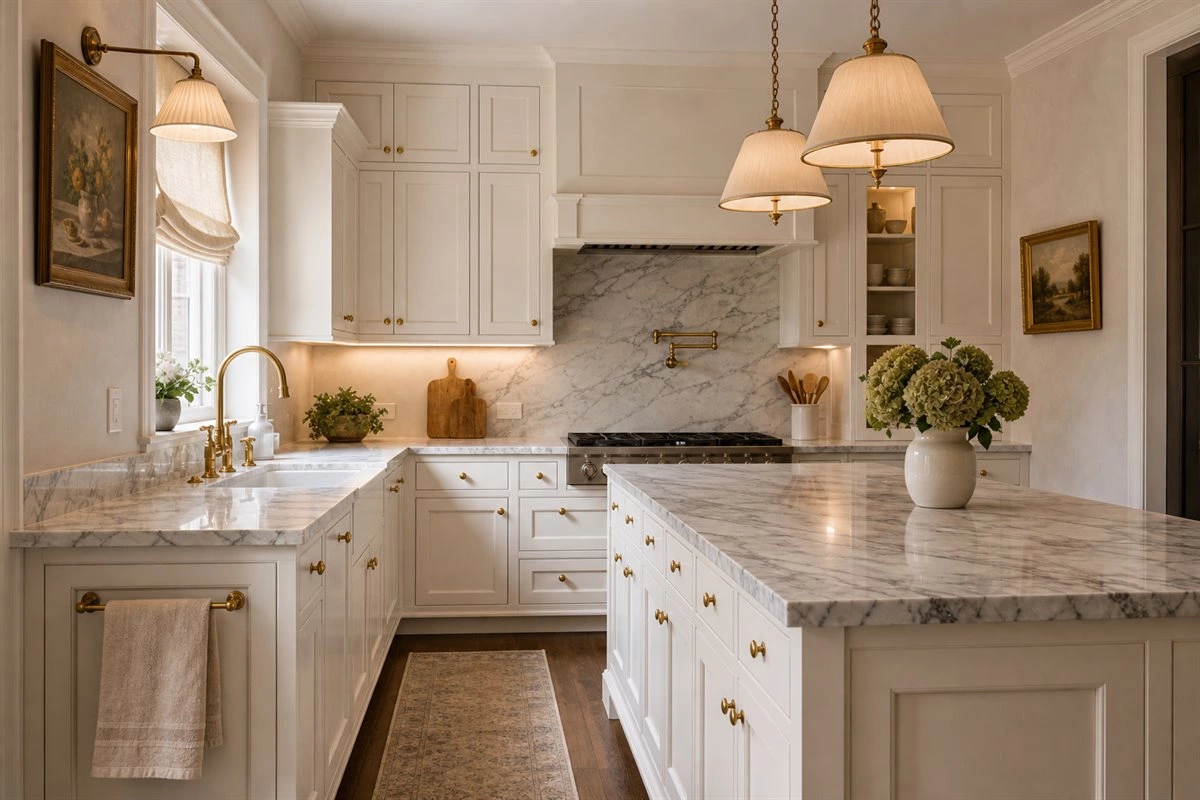
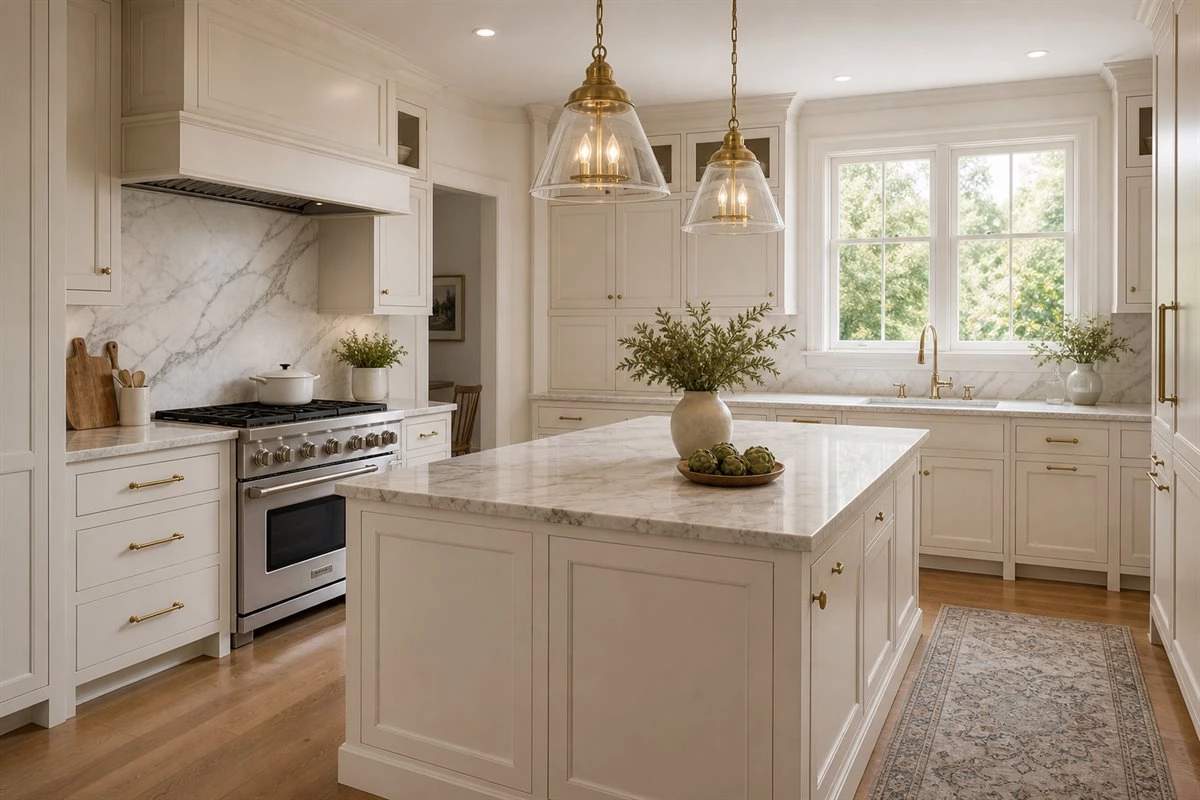
Face frame cabinets are built with a front frame attached to the cabinet box. This frame usually includes horizontal rails and vertical stiles. Doors can attach to the frame, and the frame remains visible depending on the door style.
Face frame cabinets are commonly used in traditional, transitional, farmhouse, and classic American-style kitchens. They work well with shaker doors, inset doors, partial overlay doors, raised panels, and decorative profiles.
- Classic cabinet appearance with visible frame detail.
- Reinforced front structure for the cabinet box.
- More forgiving installation in some wall conditions.
- Good match for shaker, inset, and traditional door styles.
Quick Comparison: Frameless vs Face Frame Cabinets
| Feature | Frameless Cabinets | Face Frame Cabinets |
|---|---|---|
| Structure | No front frame | Front frame attached to cabinet box |
| Style | Modern, clean, full overlay | Traditional, transitional, classic |
| Storage Access | Wider opening | Slightly reduced opening |
| Installation | Requires precise alignment | More forgiving in some layouts |
| Door Look | Sleek and seamless | More visible frame detail |
| Best For | Modern homes, apartments, European kitchens | Shaker kitchens, classic homes, American-style interiors |
For a broader design overview, you can also read our kitchen cabinet design guide.
Cabinet Structure
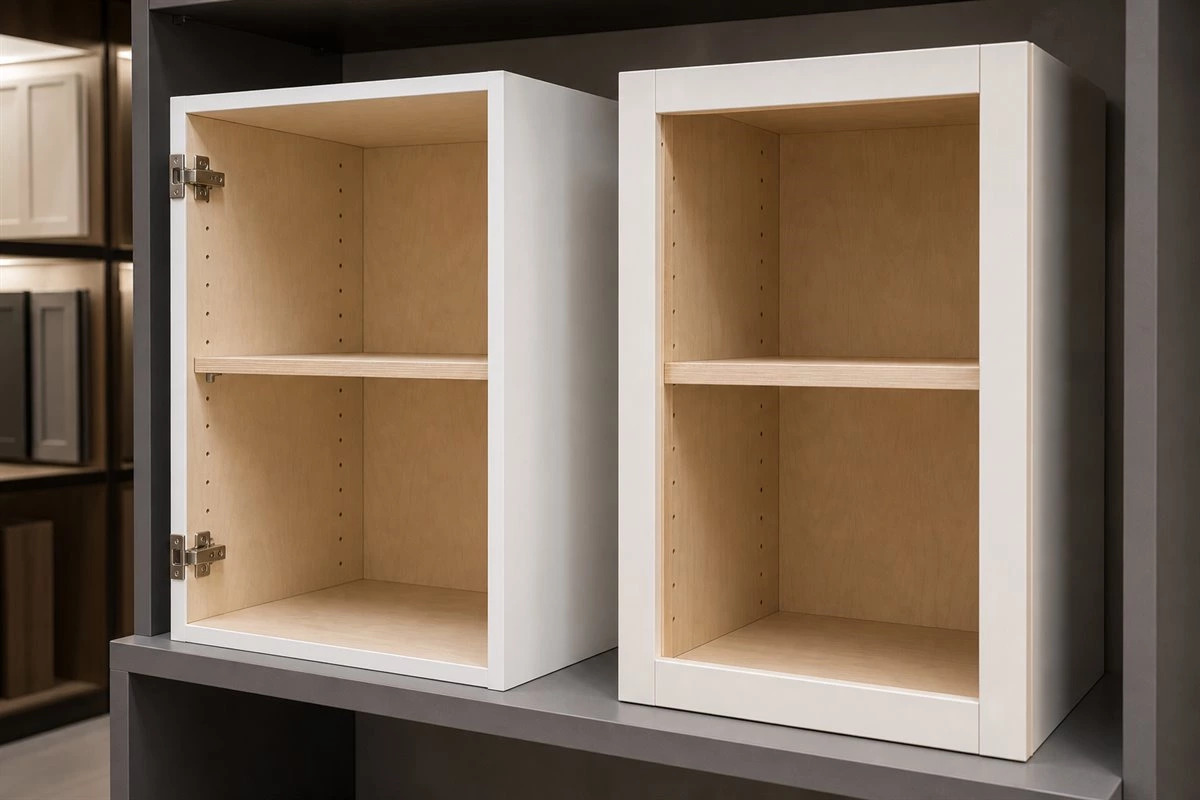
The biggest difference between frameless and face frame cabinets is the cabinet structure. Frameless cabinets rely on the cabinet box itself for support. This means the panel material, drilling accuracy, edge banding, and assembly quality are very important.
Face frame cabinets use an additional front frame. This frame can add rigidity and help cover small gaps or alignment imperfections. It also creates the classic cabinet face that many homeowners associate with traditional cabinetry.
For modern custom kitchens, frameless construction can create a cleaner look. For traditional kitchens, face frame construction can provide more detail and a familiar style.
Storage Space and Interior Access
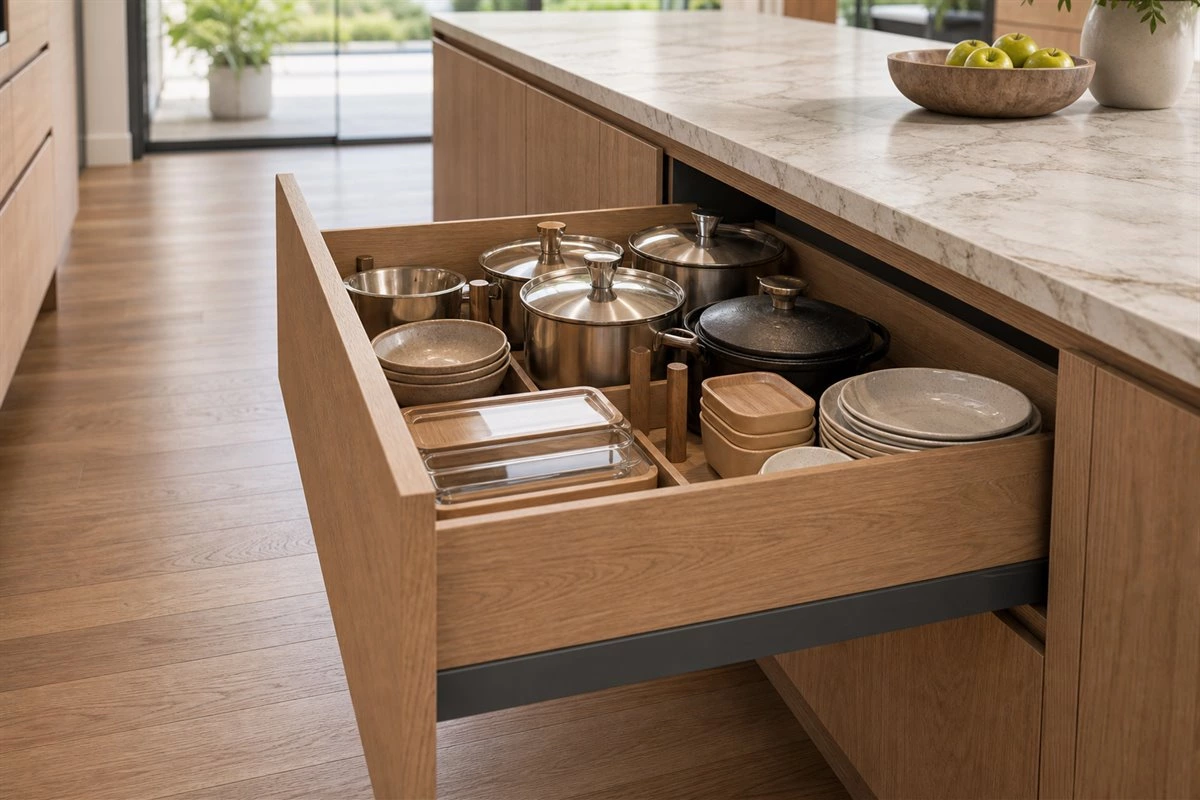
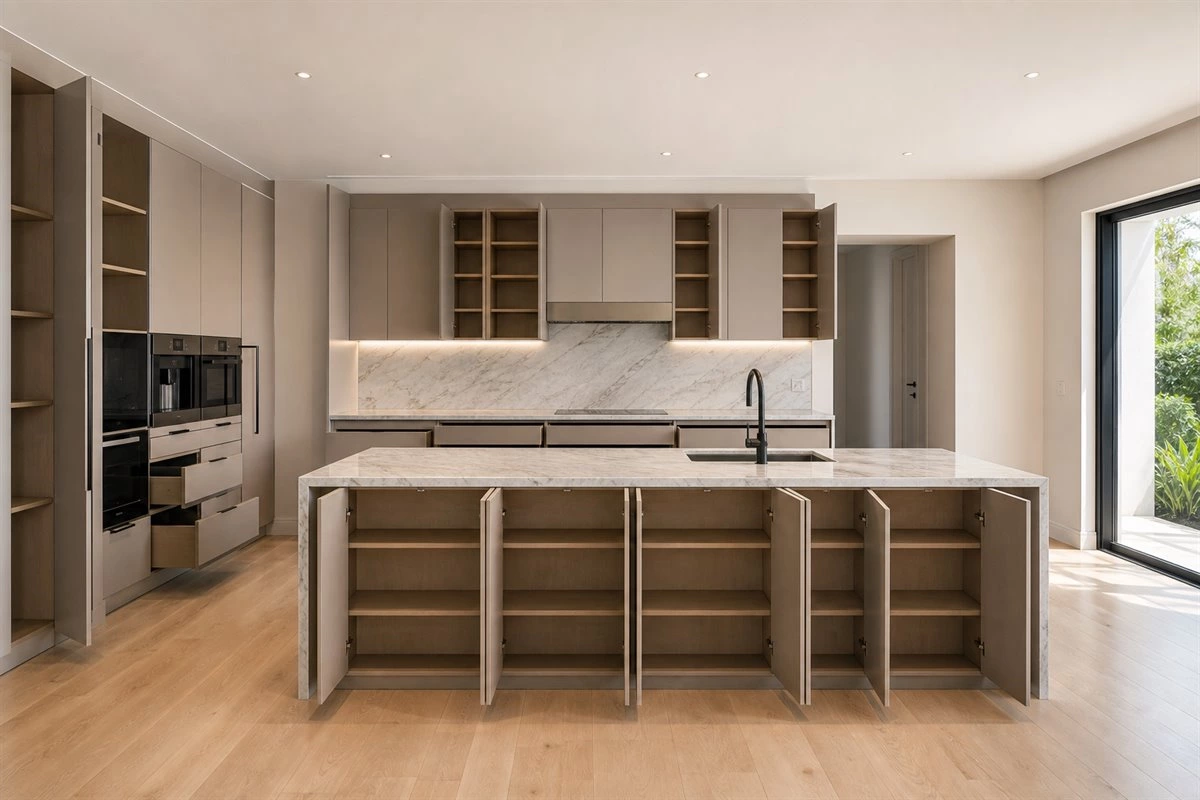
Frameless cabinets usually provide wider interior access because there is no front frame reducing the cabinet opening. This makes it easier to reach cookware, pull-out trays, pantry systems, and large drawer storage.
Face frame cabinets can slightly reduce opening space because the frame occupies part of the front opening. This does not mean they are poor for storage, but it does affect how drawers, pull-outs, and internal organizers are planned.
If storage efficiency is a priority, frameless cabinets often perform better in compact kitchens, apartments, and modern homes. With the right cabinet hardware, wide drawers and pull-out systems can make the space easier to use every day.
Door Style and Appearance
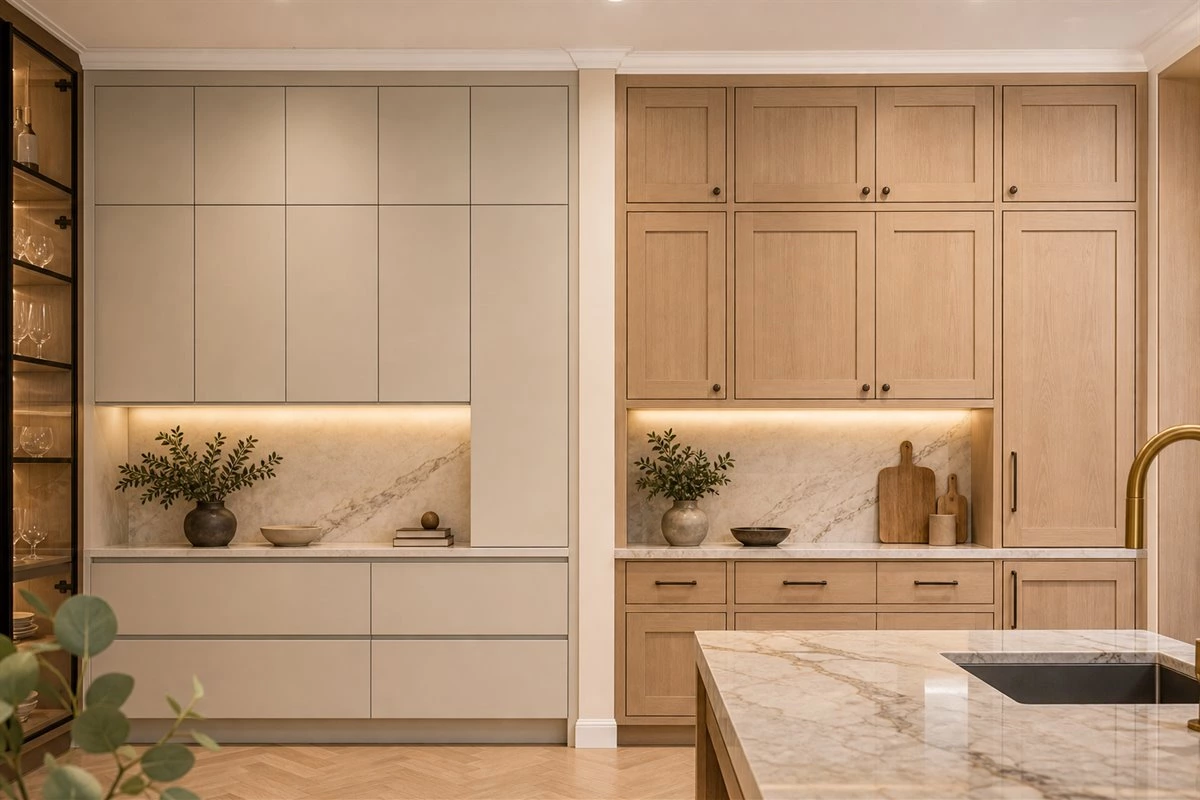
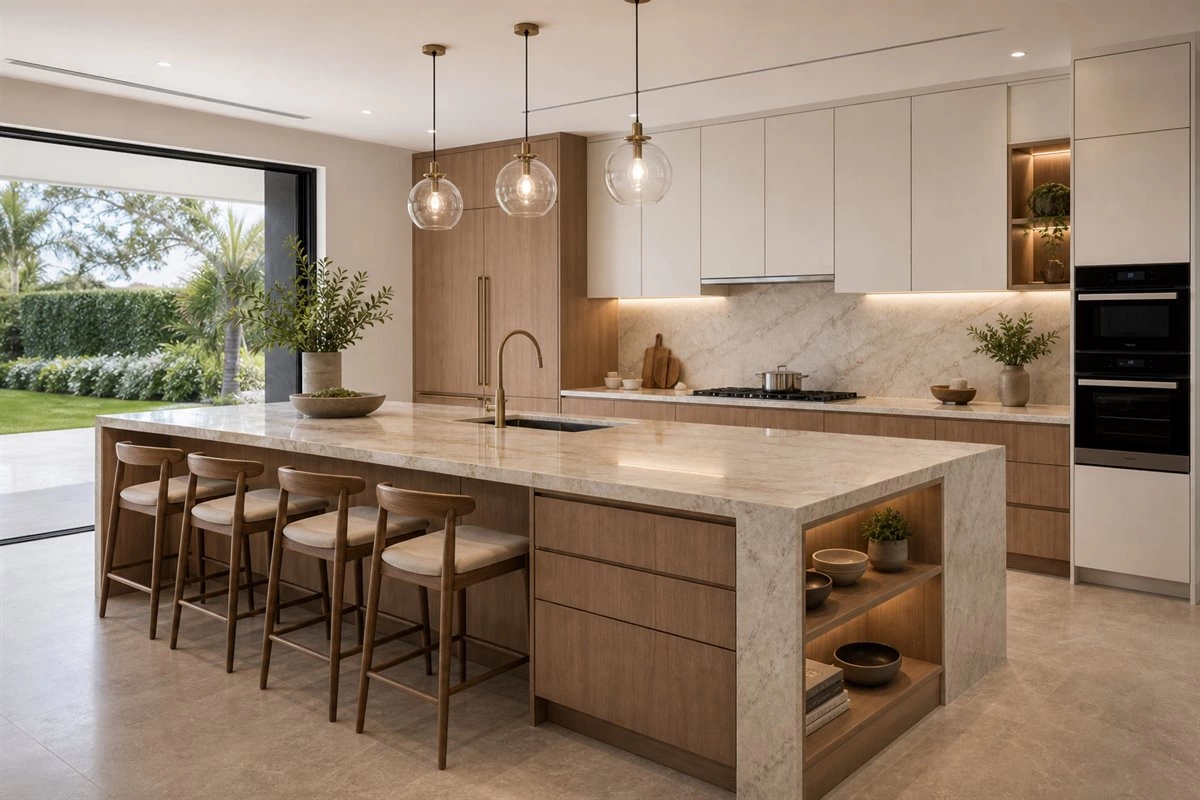
Frameless cabinets are strongly associated with modern kitchen design. They often use full-overlay doors, narrow gaps, slab panels, handleless details, and clean surface finishes. This style works well in minimalist kitchens, open-plan homes, and luxury apartments.
Face frame cabinets offer more visible detail. They are a strong match for shaker doors, inset doors, raised panels, beadboard styles, and transitional kitchens. If your target style is warm, classic, or American-inspired, face frame cabinets may feel more natural.
Both cabinet types can look premium when the design is consistent. The right choice depends on whether you want clean modern lines or framed architectural detail.
Durability and Stability
Both frameless and face frame cabinets can be durable when properly designed and manufactured. The difference is how the strength is achieved.
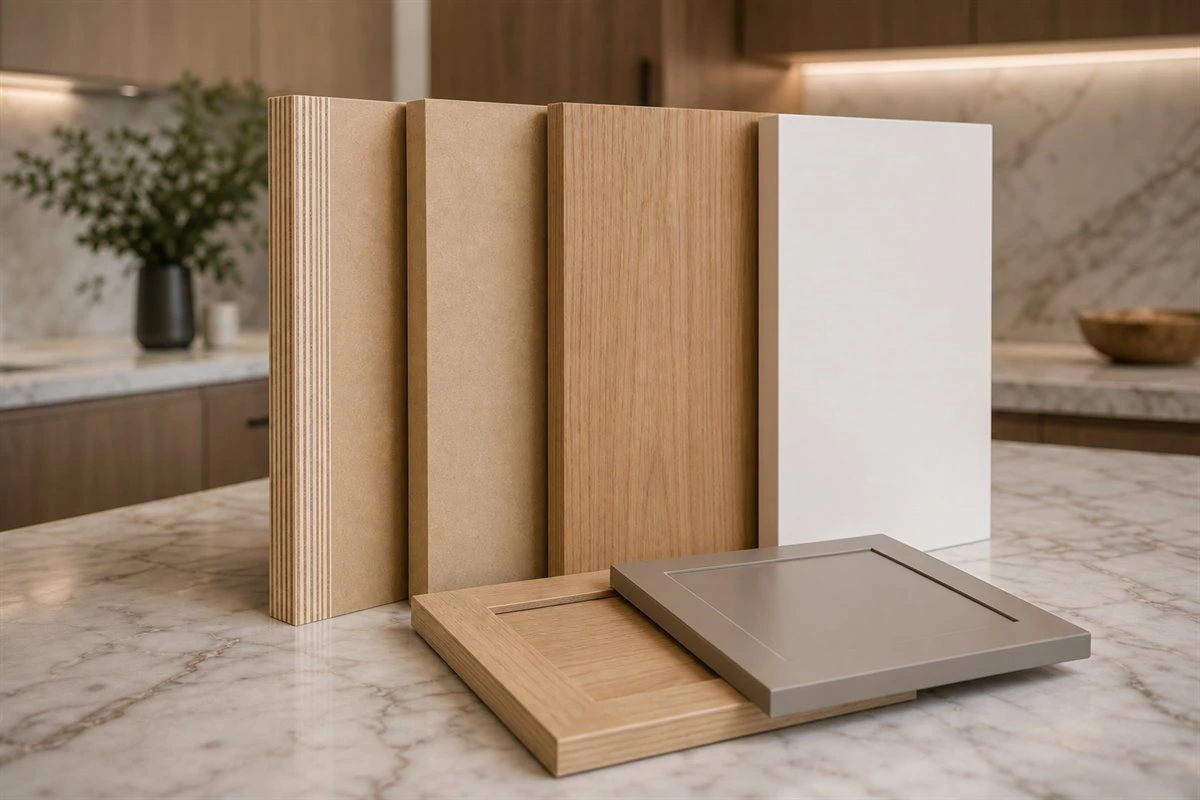
Frameless cabinet durability depends on strong cabinet panels, accurate assembly, reliable hinges, proper edge sealing, and stable box construction. Face frame durability depends on the cabinet box, frame material, frame joinery, hinge support, and door construction.
Common cabinet materials include plywood, MDF, solid wood, particleboard, melamine panels, PET panels, lacquer panels, and veneer panels. For healthier indoor environments, many modern projects prefer E0 or E1 panel options. You can learn more about Allure’s eco-friendly cabinet materials and production standards.
Installation and Alignment
Frameless cabinets require precise installation because the narrow door gaps and full-overlay style make alignment more visible. If the wall is uneven, the floor is not level, or the cabinet boxes are not installed accurately, the final door lines may look uneven.
Face frame cabinets can be more forgiving because the front frame can help cover small gaps and minor irregularities. This can be useful in renovation projects or homes with imperfect wall conditions.
For both cabinet types, professional measurement and installation are important. Fillers, panels, hinge adjustment, drawer alignment, and wall leveling all affect the final result. Correct installation improves appearance, door movement, drawer function, and long-term performance.
Cost Differences
The cost difference between frameless and face frame cabinets depends on materials, finish, hardware, customization level, production method, and installation requirements.
Frameless cabinets may require precise manufacturing, high-quality concealed hinges, stronger box construction, and accurate installation. Face frame cabinets may require more frame material, more construction steps, and more labor depending on the door style.
| Cost Factor | Frameless Cabinets | Face Frame Cabinets |
|---|---|---|
| Materials | Strong cabinet box panels | Box panels plus front frame |
| Hardware | Precise concealed hinges | Frame-compatible hinges |
| Labor | Accurate box production and alignment | Frame construction and fitting |
| Finish | Often modern full-overlay panels | Wider range of traditional door details |
Instead of choosing only by price, compare the total value: storage access, style, durability, installation quality, and how well the cabinet system fits the project.
Best Uses for Each Cabinet Type
Frameless cabinets are often the better choice for modern kitchens, apartments, minimalist interiors, open-plan homes, and projects where storage access matters. They work especially well with slab doors, matte finishes, handleless profiles, PET panels, lacquer, and wood veneer.
Face frame cabinets are often better for traditional homes, shaker kitchens, inset doors, farmhouse kitchens, classic American interiors, and transitional designs. They provide visible structure and a familiar cabinet style.
For developers, contractors, and project buyers, the best option also depends on the target market. Some markets prefer modern European-style kitchens, while others prefer American-style shaker cabinetry.
Frameless Cabinets: Pros and Cons
Pros
- Wider cabinet access improves storage efficiency.
- Clean modern appearance supports minimalist kitchen design.
- Full-overlay doors create a smooth, seamless look.
- Works well for compact kitchens and apartments.
- Good match for modern materials such as PET, lacquer, laminate, and veneer.
Cons
- Requires precise installation and careful door alignment.
- Cabinet box construction must be strong and accurate.
- Door gaps are more visible when installation is poor.
- Hardware quality has a major impact on long-term performance.
Face Frame Cabinets: Pros and Cons
Pros
- Classic cabinet appearance with visible frame detail.
- Front frame can add rigidity to the cabinet structure.
- More forgiving installation in some renovation conditions.
- Works well with shaker, inset, raised panel, and traditional doors.
- Suitable for classic American, farmhouse, and transitional kitchens.
Cons
- Slightly reduced interior access compared with frameless cabinets.
- Visible frame lines may feel less minimal.
- Some styles require more labor and detailed construction.
- May not create the same seamless full-overlay look as frameless cabinets.
Which Is Better for Modern Kitchens?
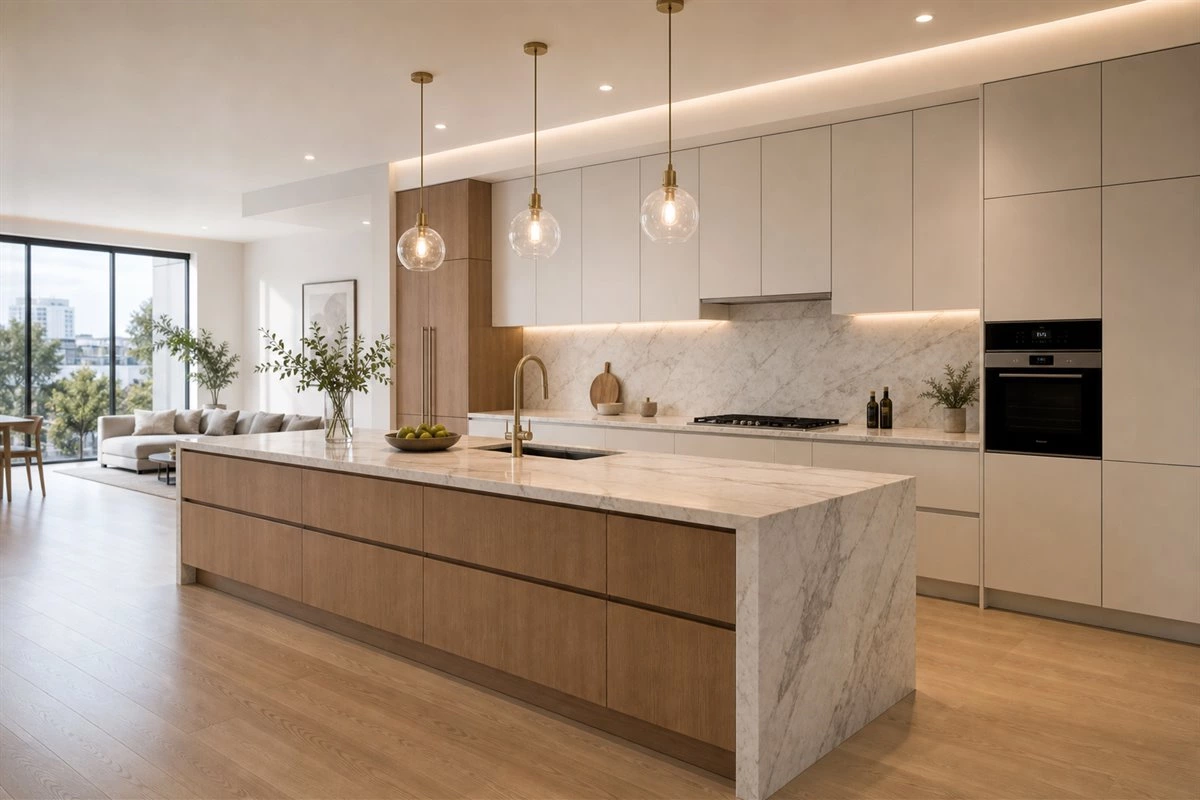
For modern kitchens, frameless cabinets are usually the stronger choice. They create clean lines, wider openings, smooth full-overlay doors, and a more contemporary look. This makes them especially suitable for apartments, luxury villas, high-rise homes, and open-plan kitchens.
Frameless cabinets also work well with handleless systems, hidden storage, large drawer banks, and simple material palettes. If your kitchen style is modern, minimalist, or European-inspired, frameless construction will usually support the design better.
However, face frame cabinets can still work in modern transitional kitchens if the door profile, finish, and hardware are selected carefully.
Which Is Better for Project Buyers?
For project buyers, the best choice depends on the market, design style, budget, installation team, and target buyer preference.
Frameless cabinets can be a good fit for apartment projects, modern villas, hotels, and developments that need efficient storage and a clean contemporary appearance. Face frame cabinets can be better for markets that prefer shaker kitchens, inset doors, and classic American-style cabinetry.
Project buyers should also consider production drawings, material consistency, packaging, shipping, installation instructions, and after-sales support. You can view Allure’s completed custom kitchen cabinet projects for real project references.
How to Choose Between Frameless and Face Frame Cabinets
Choose frameless cabinets if you want a modern look, wider storage access, full-overlay doors, and efficient cabinet interiors. Choose face frame cabinets if you prefer classic detailing, shaker doors, inset doors, or traditional American-style kitchens.
Before making a final decision, consider these factors:
- Kitchen design style: modern, transitional, classic, farmhouse, or luxury.
- Storage needs: drawers, pull-outs, pantry systems, corner storage, or appliance housing.
- Door style: slab, shaker, inset, partial overlay, or full overlay.
- Material choice: plywood, MDF, solid wood, PET, lacquer, veneer, or laminate.
- Installation conditions: new build, renovation, uneven walls, or project site.
- Target market: homeowners, apartments, villas, hotels, developers, or contractors.
- Budget: material cost, hardware cost, production complexity, and installation time.
A professional cabinet supplier can help match the cabinet construction type with the layout, materials, hardware, and installation requirements.
FAQ About Frameless vs Face Frame Cabinets
Are frameless cabinets better than face frame cabinets?
Frameless cabinets are better for modern looks, wider access, and efficient storage. Face frame cabinets are better for classic styles, visible detail, and traditional cabinet construction.
Are face frame cabinets stronger?
Face frame cabinets include a front frame that can add rigidity. However, frameless cabinets can also be highly durable when built with strong panels, accurate assembly, and quality hardware.
Are frameless cabinets more expensive?
Not always. Cost depends on materials, finish, hardware, customization, production method, and installation quality.
Do frameless cabinets give more storage?
Frameless cabinets usually provide wider cabinet openings because there is no front frame blocking the opening. This can improve access to drawers, shelves, pull-outs, and internal storage systems.
Which cabinet type is best for shaker doors?
Face frame cabinets are commonly used with shaker and inset doors, but frameless shaker cabinets are also possible with the right design and hardware.
Which cabinet type is best for apartments?
Frameless cabinets are often a strong choice for apartments because they offer efficient access, modern appearance, and good storage performance in compact spaces.
Can Allure Cabinetry make both cabinet types?
Yes. Allure Cabinetry can support custom cabinet design, material selection, production drawings, hardware planning, and project support based on your preferred cabinet construction type.
Conclusion
The main difference between frameless and face frame cabinets is the front frame. Frameless cabinets remove the frame for a clean modern appearance and wider access. Face frame cabinets use a front frame for classic detail and traditional structure.
If you want a modern, sleek, and storage-efficient kitchen, frameless cabinets may be the better choice. If you prefer shaker doors, inset details, and traditional American-style cabinetry, face frame cabinets may fit better.
Need help choosing the right cabinet construction? Contact Allure Cabinetry for custom kitchen cabinet design, material options, production drawings, and project support.