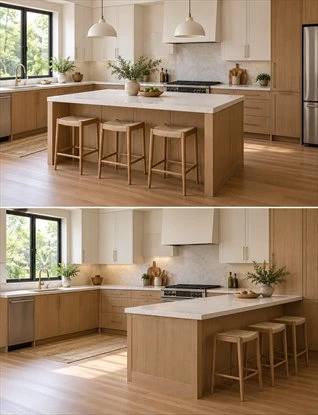
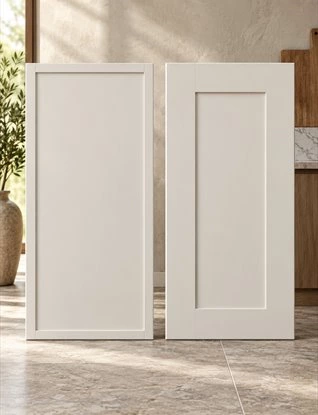
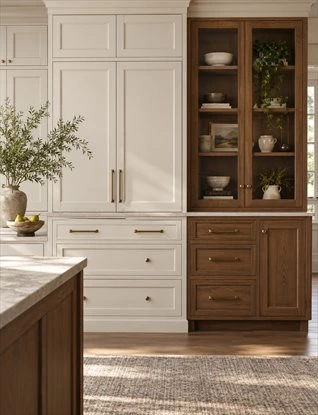
A clean countertop can make an entire kitchen feel larger, calmer, and more premium. Yet coffee machines, toasters, blenders, kettles, air fryers, and food processors can quickly take over the work surface. A well-planned kitchen appliance garage solves this problem by giving frequently used appliances a dedicated place that is easy to reach but easy to hide.
Unlike a standard wall cabinet, a kitchen appliance garage is designed around daily routines. It may sit on the countertop, within a tall pantry unit, or inside a coffee station. The best design considers appliance dimensions, door clearance, power access, ventilation requirements, cleaning needs, and the way people move through the kitchen.
This guide explains how to plan a practical kitchen appliance garage, choose the right door style, and create a storage solution that supports a cleaner and more functional custom kitchen.
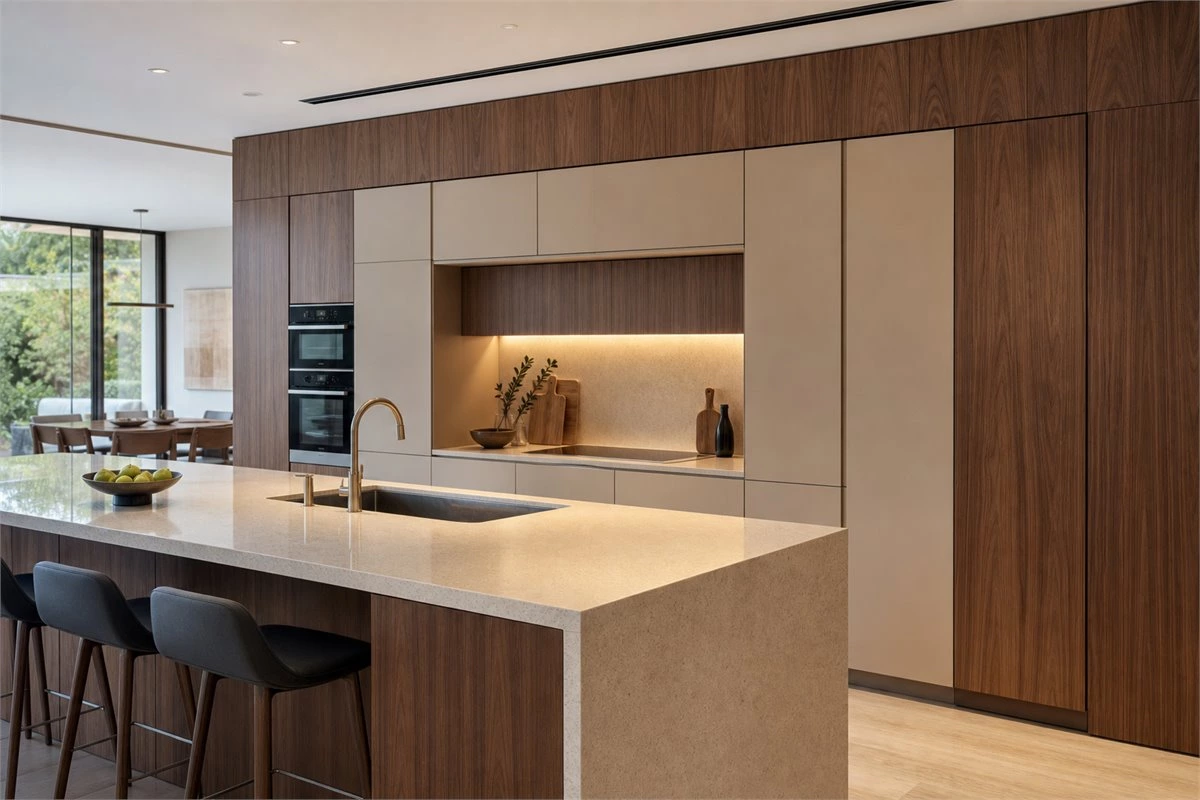
What Is a Kitchen Appliance Garage?
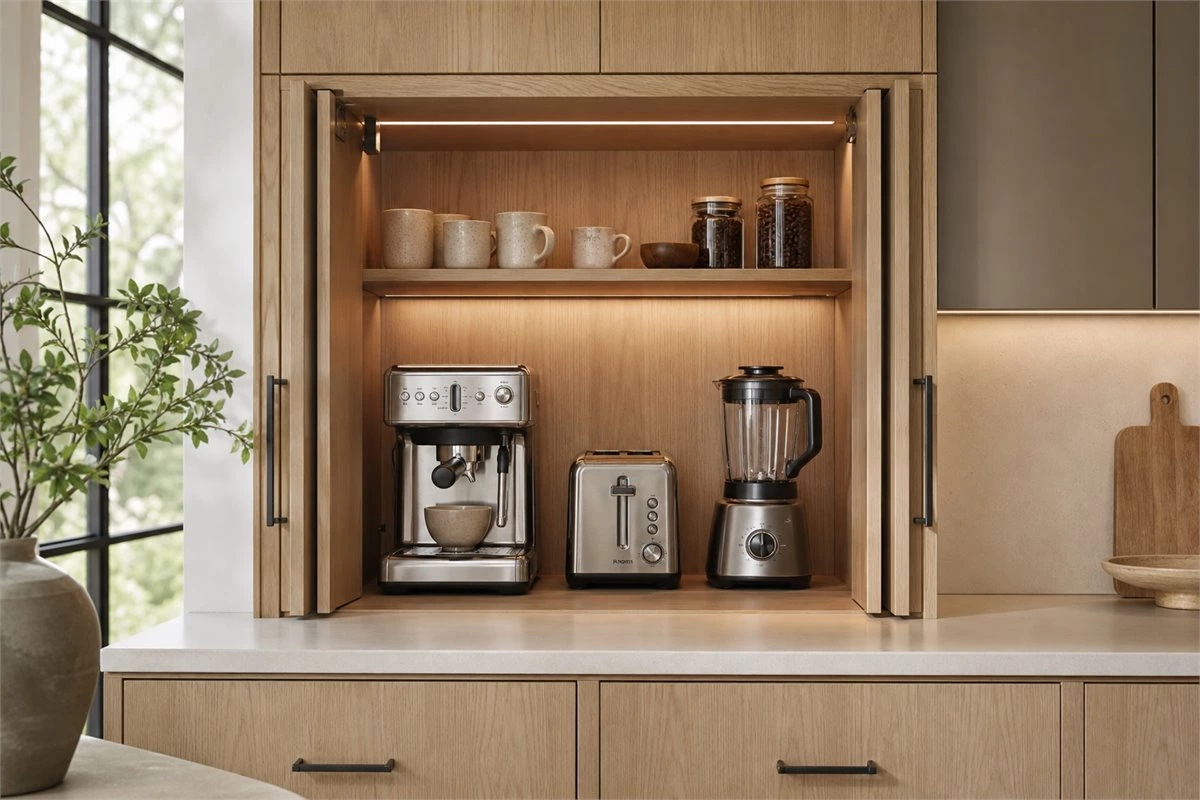
A kitchen appliance garage is a dedicated cabinet zone that stores countertop appliances behind a door while keeping them close to the main work area. It is often used for coffee machines, toasters, blenders, kettles, stand mixers, food processors, or other items that are used regularly but do not need to remain visible all day.
The main benefit is convenience. Instead of lifting a heavy appliance from a low cabinet or leaving it permanently on the countertop, homeowners can open the appliance garage, use the appliance where it sits or on a pull-out shelf, and close the door again when finished.
A kitchen appliance garage can take several forms:
- A countertop cabinet with a lift-up, tambour, or bi-fold door
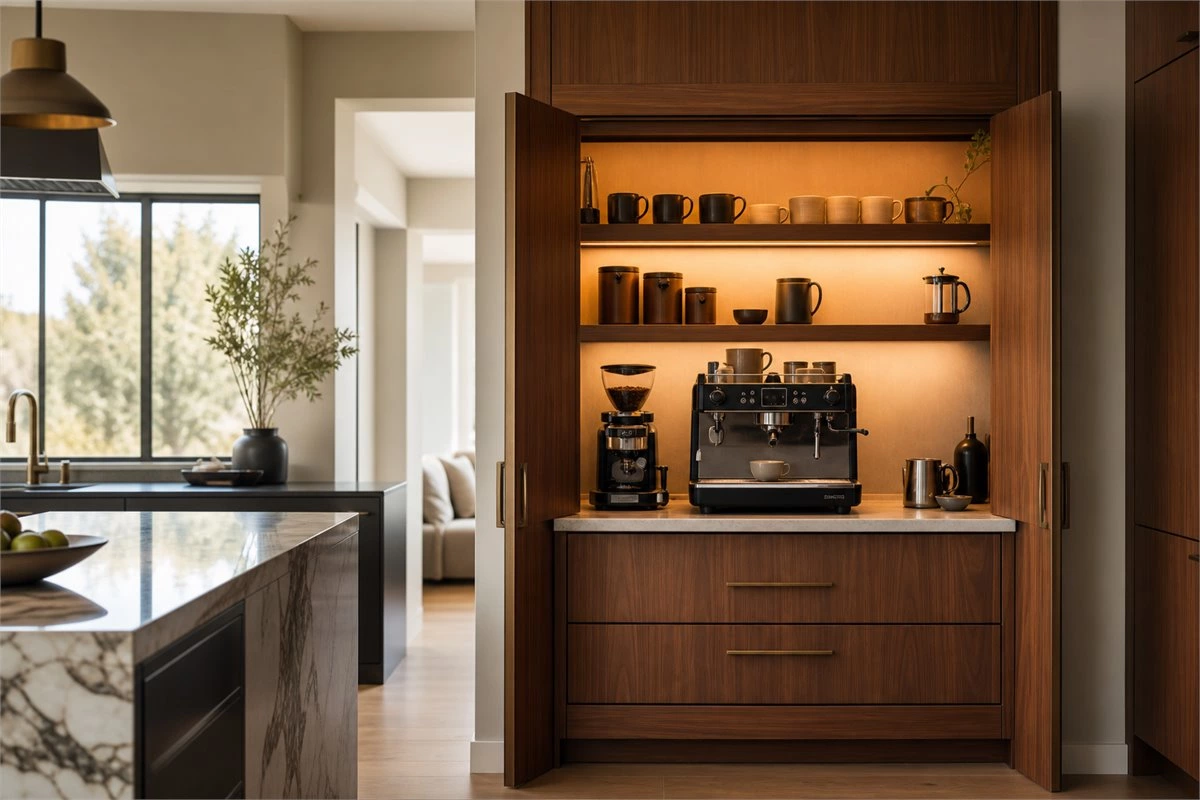
- A coffee station concealed behind pocket doors
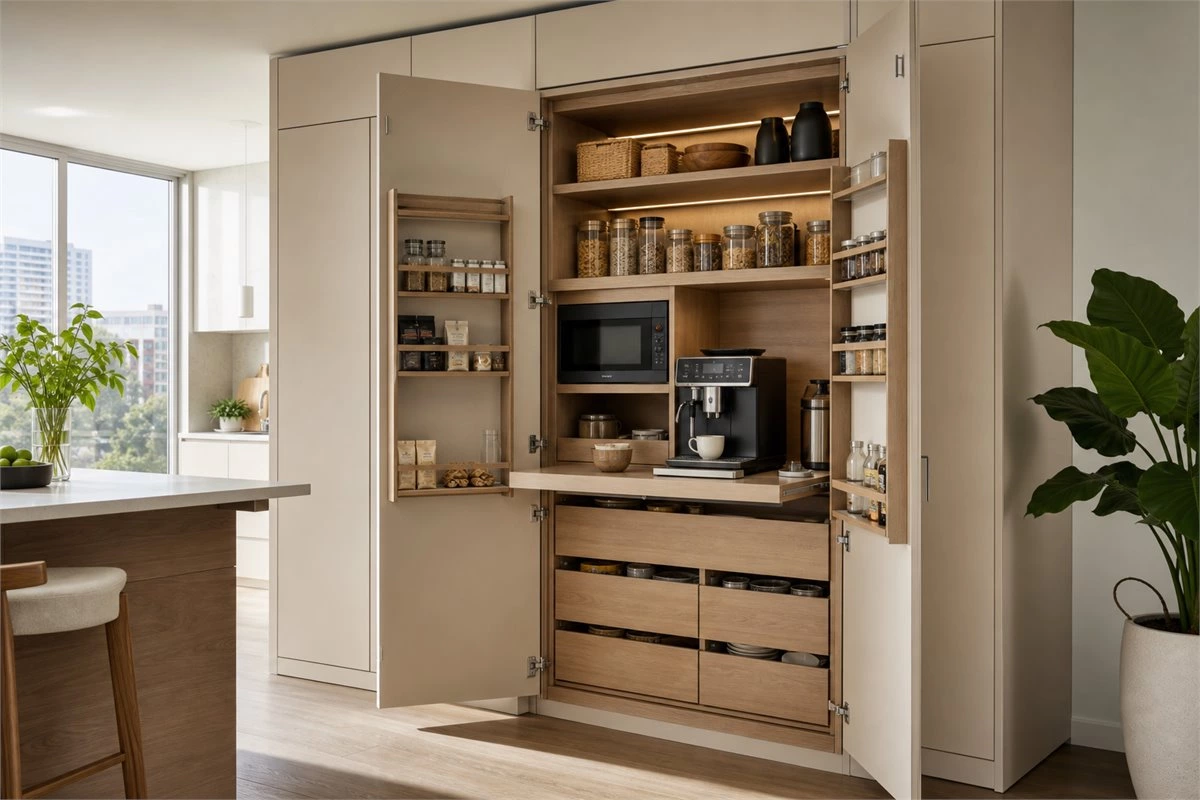
- A tall pantry appliance station with internal shelves
- A corner appliance cabinet in a compact kitchen
- A breakfast station with small appliances, mugs, dry food, and drawers
- A hidden microwave and appliance zone built into a cabinet wall
The right option depends on the kitchen layout, appliance list, daily habits, and desired cabinet style.
Why Add an Appliance Garage to a Custom Kitchen?
A custom kitchen should not only look attractive in photographs. It should make everyday routines easier. An appliance garage improves both appearance and usability by creating a defined home for the items that often cause countertop clutter.
First, it protects valuable preparation space. A toaster, coffee machine, blender, and kettle can occupy a large section of the countertop, especially in a compact kitchen. Moving these items into a purpose-designed cabinet zone creates more room for meal preparation, serving, and cleaning.
Second, it supports a more organized visual style. Open-plan kitchens are visible from dining and living spaces, so small appliances can make the room appear busy even when the kitchen is clean. Concealed appliance storage helps maintain the calm, continuous cabinet lines often preferred in modern and minimalist interiors.
Third, it can make daily use more efficient. A coffee station near cups, beans, water, and breakfast items creates a smoother morning routine. A baking appliance zone near the pantry can keep a stand mixer, food processor, measuring tools, and baking ingredients together.
For broader storage planning, a kitchen appliance garage can be combined with smart kitchen storage cabinet ideas, pantry systems, deep drawers, and pull-out organizers.
Plan Your Kitchen Appliance Garage Before Confirming Cabinet Drawings
Start With Your Real Appliance List
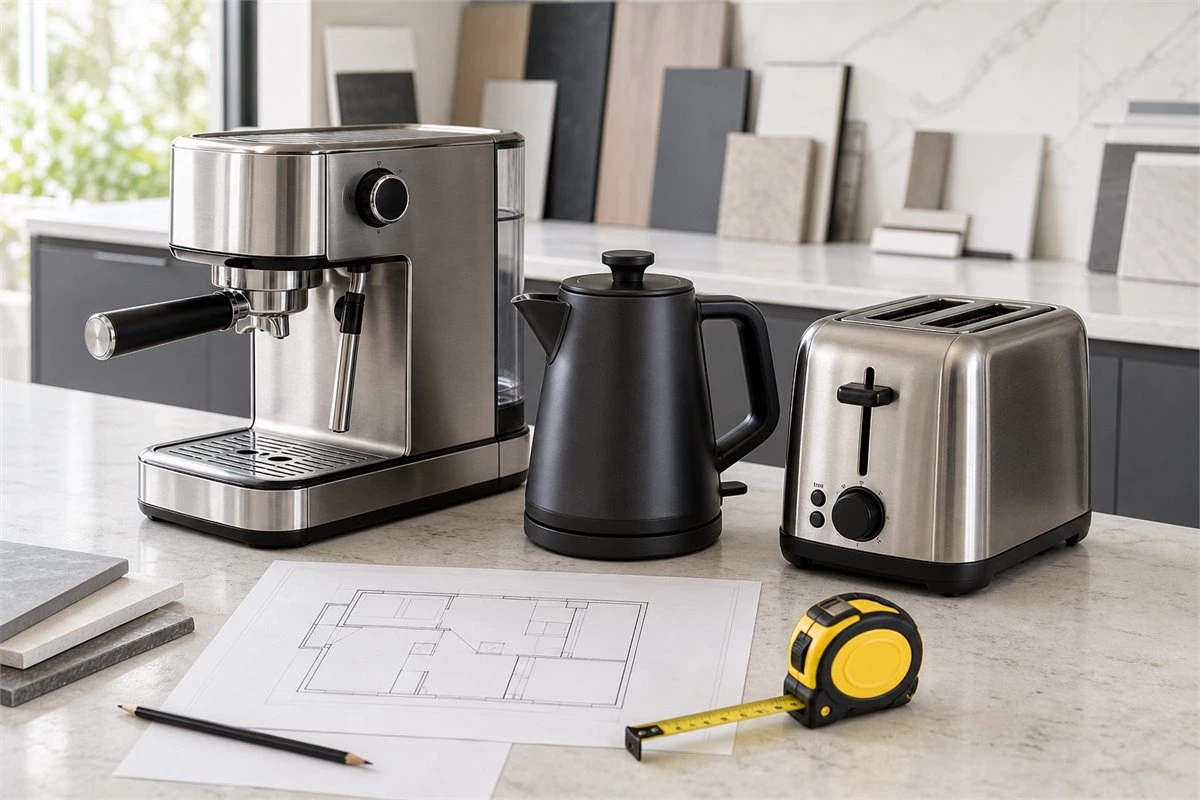
Do not design the space around an imagined appliance collection. Start by listing what you actually use every week.
For example, a daily coffee drinker may need space for a coffee machine, grinder, mugs, beans, filters, and a kettle. A family that cooks frequently may need room for a toaster, air fryer, blender, rice cooker, or food processor. A baking-focused household may need a heavy stand mixer, ingredient storage, and easy access to baking trays.
Measure each appliance before confirming the cabinet design. Record:
- Width at the widest point
- Depth, including handles and rear cables
- Height with lids, water tanks, or doors fully open
- Weight, especially for mixers and larger appliances
- Heat, steam, and ventilation instructions from the manufacturer
- The position of the power cord and plug
- How often the appliance is used
This process helps avoid a common problem: a cabinet that looks beautiful but is too shallow, too low, or too difficult to use comfortably.
Choose a Location That Supports Kitchen Workflow
Location matters as much as cabinet style. A kitchen appliance garage should be near the zone where the appliance is used, but it should not block food preparation, sink access, or traffic routes.
A coffee station often works well near the refrigerator, pantry, dining area, or the end of a countertop run. A breakfast station may be placed close to dry food storage and mugs. A blender or food processor station should be near the main preparation area, while a larger appliance cabinet can be integrated into a tall pantry wall.
In a small kitchen, an appliance garage can occupy the end of a cabinet run or a corner that would otherwise become awkward storage. In a larger kitchen, a tall cabinet appliance station can create a complete coffee bar or secondary preparation zone.
Before confirming the layout, check whether open cabinet doors will conflict with nearby drawers, an island, or a main walkway. A beautiful appliance garage is only useful when it can be opened and used without interrupting the rest of the kitchen.
Kitchen Appliance Garage Sizes and Space Requirements
Measure the Appliance First, Not the Cabinet First
There is no single perfect size for every kitchen appliance garage. The right dimensions should be based on your appliance inventory, cabinet configuration, and how the space will be used.
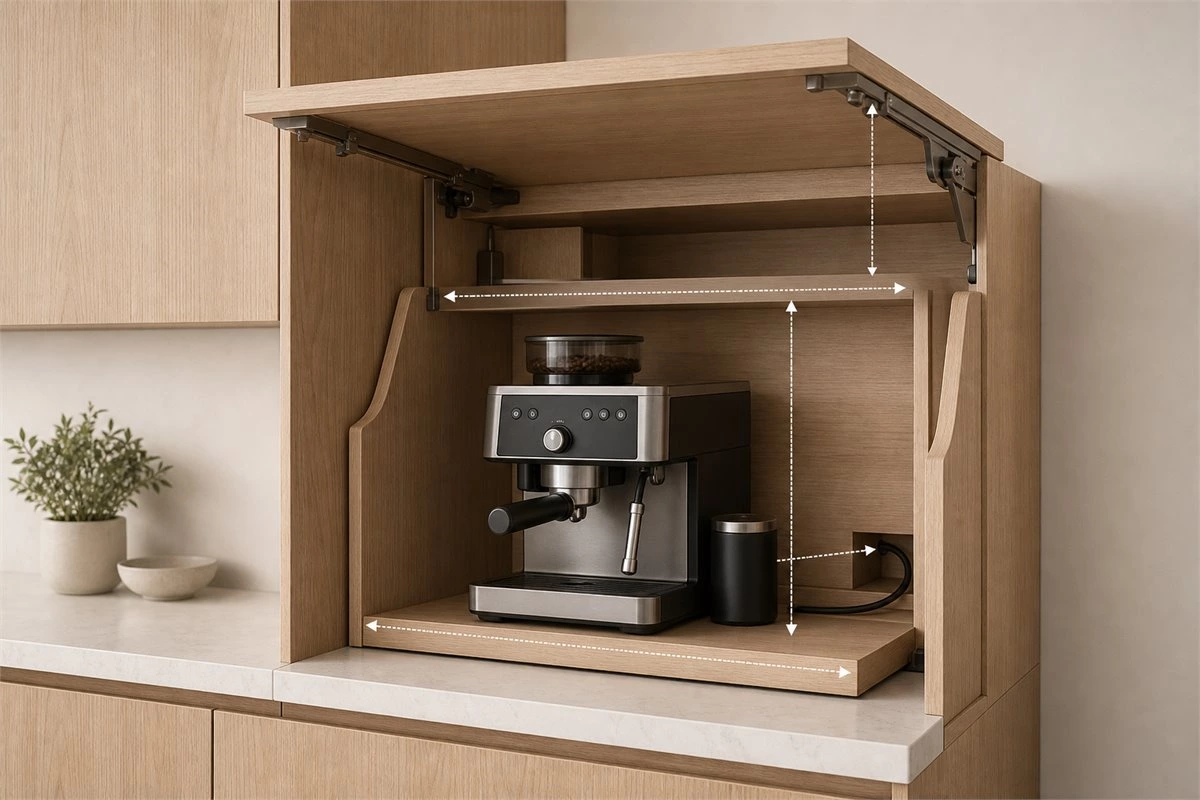
Measure the largest appliance first, then allow practical room for cords, door movement, ventilation, and easy cleaning. A coffee machine with a top-opening water tank, for example, needs more vertical clearance than its closed height suggests.
Plan the Width, Depth, and Height Separately
Width: The internal width should allow the appliance to sit comfortably without touching the cabinet sides. If the station will contain multiple appliances, plan enough space to use one item without moving everything else.
Depth: Depth is especially important. The appliance must fit with its cords, plugs, and doors or lids. It should also leave enough usable space at the front for operation and cleaning.
Height: Measure the appliance in its operating position, not only when it is closed. Coffee machines may have top-opening water tanks, food processors may have removable lids, and blenders may need vertical clearance for jars or accessories.
For help coordinating appliance zones with the rest of the cabinet system, readers can also review this Kitchen Cabinet Sizes Guide.
Choose the Right Appliance Garage Door Style
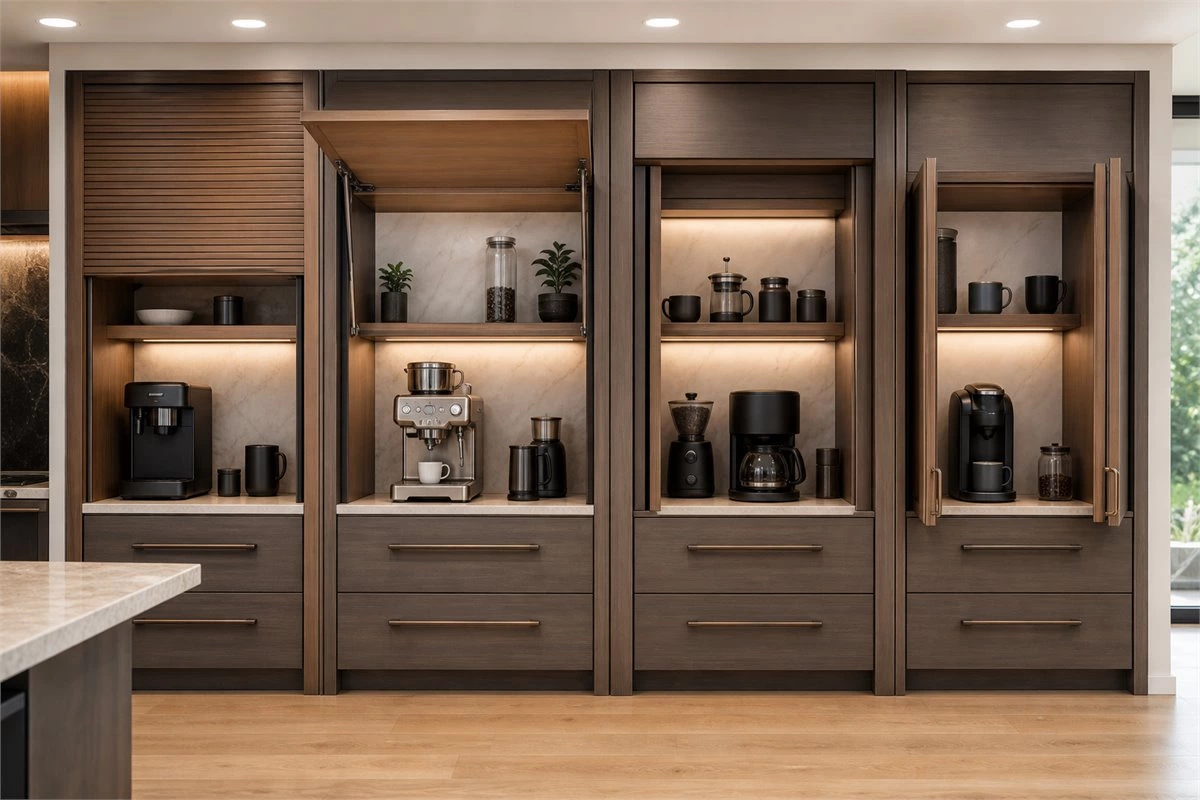
Tambour Doors
Tambour doors roll upward or sideways along a track. They are useful when there is limited space for a hinged door and can suit both modern and transitional kitchens. A well-made tambour door keeps the cabinet front clean while allowing appliances to remain accessible.
Choose smooth, durable tracks and an easy-clean finish, especially when the appliance garage is used for coffee or breakfast preparation.
Lift-Up Doors
Lift-up doors open upward instead of swinging outward. They are popular for countertop appliance garages because the door stays above the working area while the appliance is in use.
This style works well for coffee stations, toaster storage, and compact breakfast zones. Because the mechanism may be used every day, quality hardware is important for smooth opening and reliable long-term performance.
Pocket Doors
Pocket doors slide into the sides of the cabinet when open. They are often used in premium kitchen appliance garage designs because they disappear completely, leaving the internal countertop and appliances fully accessible.
Pocket doors are especially suitable for larger coffee bars, tall cabinet appliance stations, and open-plan kitchens where the cabinet should look refined whether the doors are open or closed.
Bi-Fold, Sliding, and Hinged Doors
Bi-fold doors reduce the amount of forward clearance compared with full hinged doors. Sliding doors can work in some layouts but may leave part of the opening covered. Standard hinged doors are often more economical and easier to maintain, but they need adequate room to open.
The best choice depends on the available aisle space, the frequency of use, and the desired kitchen style.
Kitchen Appliance Garage Ideas for Different Homes
Coffee Station Appliance Garage
A coffee station is one of the most practical uses for an appliance garage. It can include a coffee machine, grinder, kettle, mugs, capsules or beans, drawers for filters, and open shelves for display.
Warm LED lighting can make the space feel inviting in the morning, while pocket doors or lift-up doors allow it to disappear when guests arrive. Choose an internal countertop material that is easy to wipe after coffee preparation.
Pantry Appliance Station
A tall pantry appliance station is ideal for homeowners who prefer to keep the main countertop clear. It can contain a microwave, coffee maker, blender, food processor, and shelves for dry food or serving items.
This design is particularly useful in larger kitchens, villas, or open-plan homes with a full-height cabinet wall. It can also create a dedicated breakfast or beverage zone away from the main cooking area.
Small Kitchen Corner Appliance Garage
In a compact kitchen, a corner appliance garage can turn an underused area into a useful storage zone. It can hold a kettle, toaster, or compact coffee machine while preserving the main countertop for food preparation.
The key is access. Do not place essential appliances in a corner that requires awkward reaching or blocks other cabinets. A lift-up or tambour door can be helpful when a full swing door would interfere with the kitchen layout.
Breakfast Station
A breakfast station can bring together the toaster, kettle, cereal, bread, mugs, and children’s snacks. This reduces morning congestion by allowing one person to prepare breakfast without occupying the main cooking area.
Add drawers for utensils and tea bags, shelves for cups, and closed storage for packaged food. If the kitchen serves a large family, consider placing the breakfast station near the dining table or outside the primary cooking triangle.
Smart Storage Features That Improve Daily Use
Pull-Out Shelves and Appliance Lifts
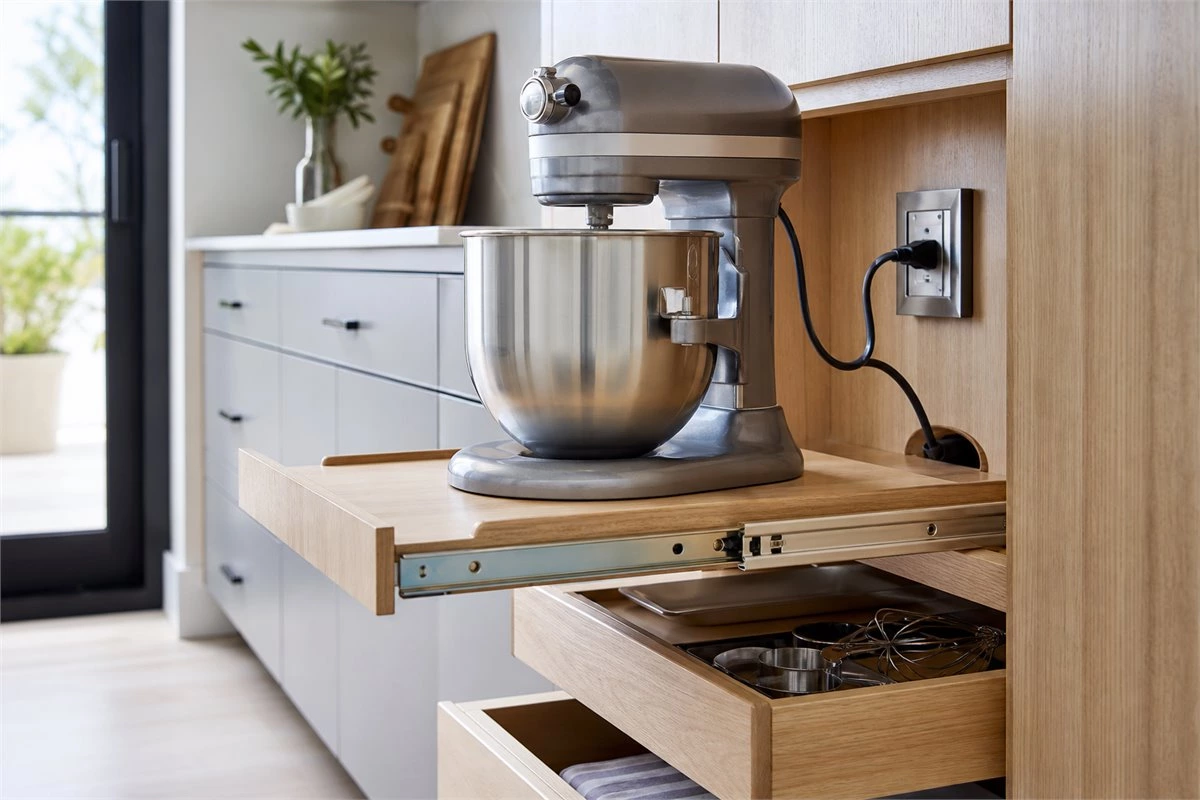
A pull-out shelf can make appliances easier to reach and can reduce the need to lift heavy equipment. This is useful for stand mixers, large blenders, food processors, and coffee machines.
An appliance lift is another option for heavier equipment stored in a base cabinet. It allows the appliance to rise to countertop height when needed and return to storage afterward. Confirm that the hardware load capacity is appropriate for the appliance weight.
Built-In Outlets and Cable Management
A built-in outlet can make a kitchen appliance garage more convenient, but it should be planned professionally before cabinet production. Keep power access easy to reach and make sure cords do not become trapped by shelves, drawers, or door hardware.
The U.S. Consumer Product Safety Commission recommends keeping countertop appliance cords away from heat sources and placing appliances away from the sink. Local electrical requirements and appliance instructions should always be confirmed for the project. Read the CPSC home electrical safety checklist.
Lighting, Drawers, and Internal Organization
Integrated lighting improves visibility and adds a refined visual effect. Small drawers can organize coffee capsules, tea, filters, measuring tools, and appliance accessories. Vertical dividers can store trays, cutting boards, or baking sheets beside a breakfast or baking station.
For more ideas on hinges, drawer slides, pull-outs, and load-bearing hardware, read our Kitchen Cabinet Hardware Guide.
Safety and Practical Details to Confirm
Heat, Steam, and Ventilation
Not every appliance is suitable for operating inside a closed cabinet. Appliances that generate heat, steam, or grease may need specific clearances and ventilation. Always follow the appliance manufacturer’s instructions rather than assuming that a cabinet is suitable.
Do not operate a heat-producing appliance behind closed doors unless the appliance guidance and the cabinet design specifically allow it. The appliance zone should also remain clear of flammable materials.
Electrical Planning
Electrical work should be designed and installed by qualified local professionals. Outlet location, circuit capacity, grounding, and protection requirements vary by jurisdiction and project conditions.
The Electrical Safety Foundation International advises keeping countertop appliances away from sinks and hot surfaces, keeping cords clear of heat, and using suitable protected outlets in kitchen areas. Read the ESFI kitchen safety guidance.
Cleaning and Maintenance
Choose internal materials that are easy to clean, especially for coffee stations, toaster zones, and baking areas. Leave enough access to wipe crumbs, coffee grounds, spills, and dust. If using tracks, tambour doors, or pocket-door hardware, make sure the design allows for routine cleaning and maintenance.
Common Kitchen Appliance Garage Mistakes to Avoid
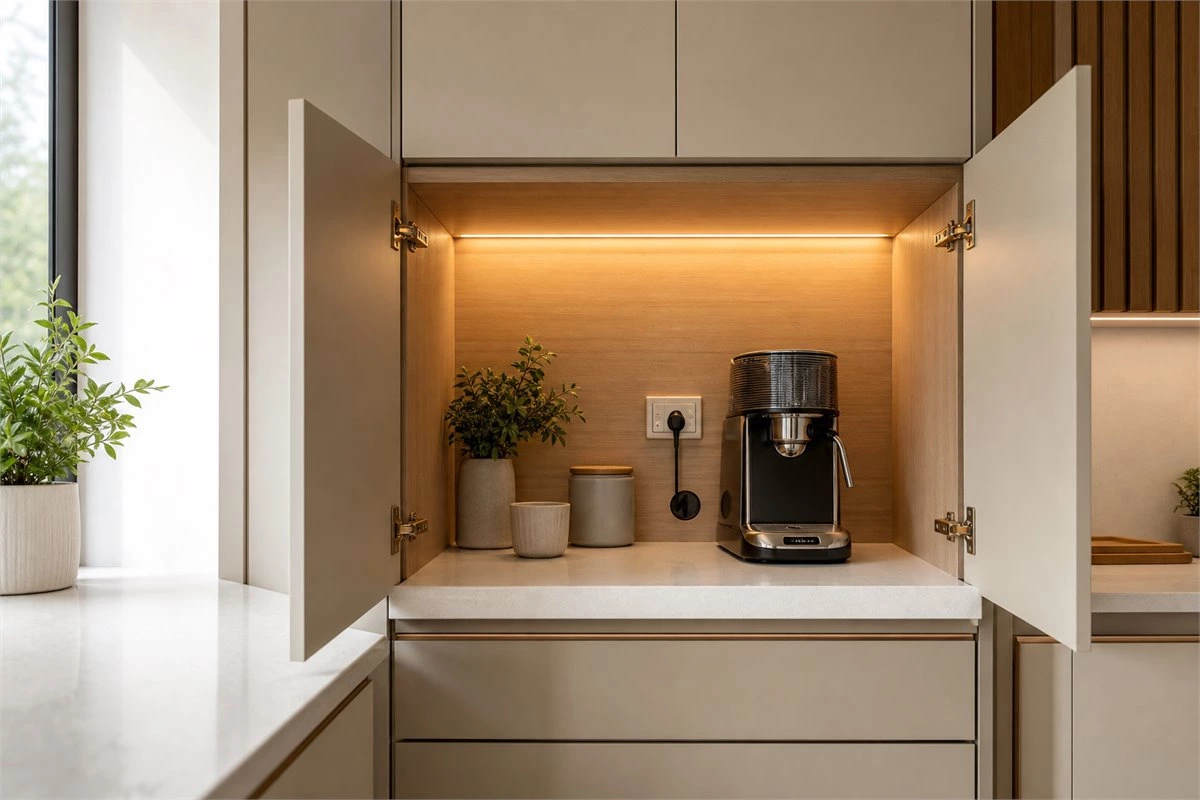
The most common mistake is choosing the cabinet first and measuring appliances later. This often leads to inadequate depth, poor lid clearance, or a cramped internal workspace.
- Forgetting appliance cords, plugs, and rear ventilation space
- Planning a door that blocks nearby drawers or walkways
- Using low-quality lift-up, pocket-door, or pull-out hardware
- Placing heat-producing appliances in poorly ventilated enclosed spaces
- Forgetting outlets until after cabinet production
- Making the appliance station too deep to reach comfortably
- Hiding every appliance instead of prioritizing daily-use items
- Choosing an internal finish that is difficult to clean
- Ignoring the weight of stand mixers and other heavy appliances
A successful design balances appearance with the practical details of daily use.
Is a Custom Kitchen Appliance Garage Worth It?
A kitchen appliance garage is worth considering when countertop appliances regularly create clutter, when the kitchen is open to the living area, or when homeowners want a more polished and organized custom cabinet design.
It is especially valuable for coffee lovers, frequent cooks, families with busy breakfast routines, and homeowners who prefer minimalist kitchens without sacrificing convenience.
The final cost depends on cabinet size, door style, internal materials, lighting, electrical planning, hardware, pull-out shelves, and whether the unit is part of a countertop run or a full-height cabinet wall. A simple appliance garage can be a practical upgrade, while a tall coffee station with pocket doors, premium hardware, lighting, and custom internal organization becomes a higher-end feature.
Kitchen Appliance Garage Planning Checklist
- List every appliance you intend to store.
- Measure width, depth, height, cords, lids, and accessories.
- Identify which appliances are used daily.
- Choose a location that supports your kitchen workflow.
- Confirm countertop or tall-cabinet configuration.
- Select a suitable door style.
- Plan lighting, power access, and cable routing.
- Check appliance heat and ventilation requirements.
- Confirm pull-out shelf or hardware load capacity.
- Review detailed cabinet drawings before production begins.
FAQ About Kitchen Appliance Garages
What is a kitchen appliance garage?
A kitchen appliance garage is a cabinet storage zone designed to hide small countertop appliances while keeping them convenient to use. It can be installed on a countertop, within a pantry wall, or inside a tall cabinet system.
What appliances can go in a kitchen appliance garage?
Coffee machines, toasters, blenders, kettles, food processors, mixers, and similar small appliances can be stored in a kitchen appliance garage. Always confirm the appliance dimensions, heat output, ventilation needs, and manufacturer instructions before finalizing the design.
Does a kitchen appliance garage need an outlet?
Many appliance garages include an outlet so appliances can remain plugged in, but the electrical design should be confirmed by a qualified professional according to local requirements. The outlet location should remain accessible and should not interfere with shelves, cords, or cabinet hardware.
Can I use a toaster or coffee machine inside an appliance garage?
It depends on the appliance instructions and the cabinet design. Heat- or steam-producing appliances should not be used in a closed or poorly ventilated cabinet. Check the manufacturer’s clearance requirements and consult qualified professionals for electrical and ventilation planning.
What door style is best for a kitchen appliance garage?
Lift-up doors are practical for compact countertop stations, tambour doors save forward clearance, pocket doors suit premium concealed coffee bars, and bi-fold doors can work well where a full swing door would be inconvenient. The best option depends on the layout and daily use.
Are appliance garages suitable for small kitchens?
Yes. A compact kitchen appliance garage can keep small appliances off the countertop and improve visual order. The design should prioritize easy access and avoid blocking food-preparation space or cabinet doors.
Conclusion
A well-designed kitchen appliance garage creates a cleaner countertop without making daily appliances difficult to use. Whether it is a small breakfast station, a hidden coffee bar, or a tall pantry appliance zone, the best solution starts with real appliance measurements, a practical location, suitable door hardware, and careful electrical planning.
By designing the appliance garage as part of the complete custom cabinet system, homeowners can create a kitchen that looks calm, stores more effectively, and supports everyday routines with less clutter.