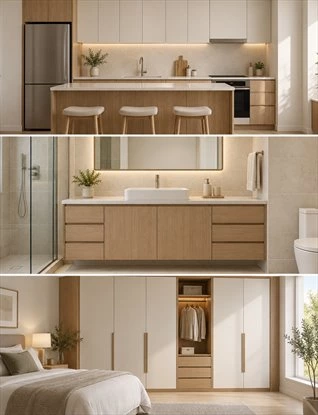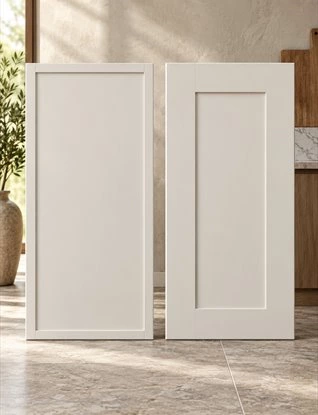
Apartment kitchen cabinets for projects need more than attractive cabinet doors. Developers, contractors, builders, designers, and project buyers need cabinet solutions that save space, control cost, support repeated unit layouts, and reduce installation problems.
In apartment projects, kitchens are often compact, layouts are repeated across many units, and delivery schedules are tight. A small mistake in cabinet size, material choice, hardware, or packaging can affect dozens of kitchens.
This guide explains 7 practical apartment kitchen cabinet solutions for residential projects, helping you improve storage efficiency, simplify production, reduce project risk, and create more attractive kitchens for buyers or tenants.
Quick Summary
- Best for: Apartment developers, contractors, builders, designers, and project buyers.
- Main goal: Improve space use, control cost, and simplify multi-unit cabinet installation.
- Recommended layouts: One-wall, L-shaped, galley, compact island, and peninsula kitchens.
- Best materials: Melamine, laminate, plywood, MDF, PET, and particleboard depending on project level.
- Key project focus: Standardized modules, clear shop drawings, labeled packaging, durable hardware, and turnkey support.
Apartment Kitchen Cabinet Solutions at a Glance
| Solution | Best For | Main Benefit |
|---|---|---|
| Space-saving layouts | Studios and compact apartments | Maximizes storage without crowding the kitchen |
| Standardized modules | Multi-unit apartment projects | Reduces production errors and installation time |
| Durable materials | Rental and high-use kitchens | Improves long-term performance and lowers maintenance |
| Smart storage systems | Small apartment kitchens | Makes compact kitchens more practical and organized |
| Modern finishes | Developers and designers | Improves property appeal and perceived value |
| Reliable hardware | Daily-use apartment kitchens | Improves comfort and reduces after-sales issues |
| Turnkey supplier support | Overseas and large residential projects | Simplifies design, production, packaging, and installation |
Why Apartment Kitchen Cabinets Need Project-Based Planning
Apartment kitchens have different requirements from single-family homes or luxury villa kitchens. The space is usually smaller, the budget is more controlled, and the same cabinet design may need to be produced many times with consistent quality.
Project-based planning helps developers reduce errors, control costs, simplify installation, and create a better living experience for buyers or tenants.
Limited Kitchen Space
Many apartment kitchens are designed within compact spaces, especially in studios, one-bedroom apartments, urban rental units, and high-density residential buildings. The kitchen may be a one-wall layout, a narrow galley kitchen, or an open-plan cooking area connected to the living room.
In these spaces, every inch matters. Cabinets must provide enough storage without making the room feel crowded. Wall cabinets, tall cabinets, corner storage, slim pull-outs, and integrated appliance spaces can greatly improve usability.
A well-planned cabinet layout helps residents store cookware, food, cleaning supplies, and small appliances while keeping countertops clean and easy to use.
Repeated Unit Types
Apartment projects often include repeated floor plans. For example, one building may include dozens of studio units, one-bedroom units, and two-bedroom units with similar kitchen layouts.
This creates an opportunity to standardize cabinet modules. When cabinet sizes, materials, hardware, and accessories are planned as a system, production becomes more efficient, and installation becomes easier.
Repeated cabinet modules also help reduce mistakes during manufacturing, packaging, delivery, and on-site installation.
Budget and Durability Requirements
Apartment kitchen cabinets must look attractive while staying within the project budget. However, choosing the lowest price can create long-term problems if the cabinets use weak panels, poor edge banding, low-grade hardware, or surfaces that are difficult to maintain.
For rental apartments and high-use residential units, durability is especially important. Cabinet surfaces should resist moisture, stains, scratches, and daily wear. Hardware should open and close smoothly after repeated use.
The best solution is not always the most expensive one. It is the material and hardware combination that matches the project level, target market, and expected maintenance cycle.
Delivery and Installation Pressure
Apartment projects usually have strict construction schedules. Cabinets must arrive at the right time, in the right quantity, and with clear labels for each building, floor, room, and unit type.
Poor packaging or unclear drawings can delay installation and increase labor costs. Missing accessories, wrong cabinet sizes, or damaged panels can affect project handover.
A professional apartment cabinet supplier should support project drawings, production coordination, quality control, export packaging, room labels, installation guidance, and after-sales communication.
Solution 1: Use Space-Saving Cabinet Layouts
Space-saving layout planning is the first step in apartment kitchen cabinet design. The layout should match the apartment size, kitchen shape, appliance position, and daily cooking workflow.
Instead of forcing a large kitchen concept into a small space, apartment cabinets should be designed to make compact kitchens easier to use.
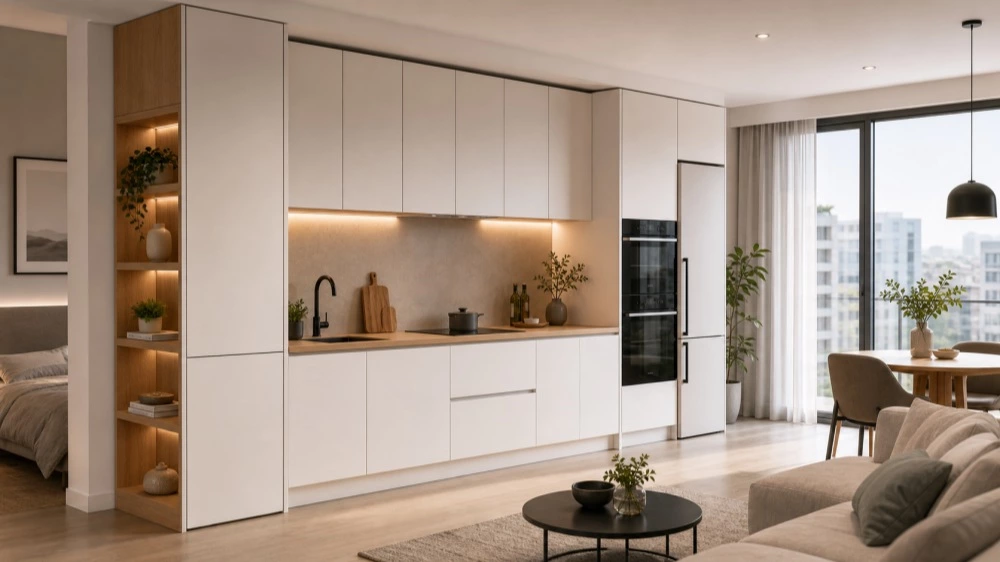
Recommended Layouts
- One-wall kitchen: Best for studio apartments, compact rental units, and open-plan layouts.
- L-shaped kitchen: Best for one-bedroom and two-bedroom apartments with corner space.
- Galley kitchen: Best for narrow apartment kitchens that need efficient workflow.
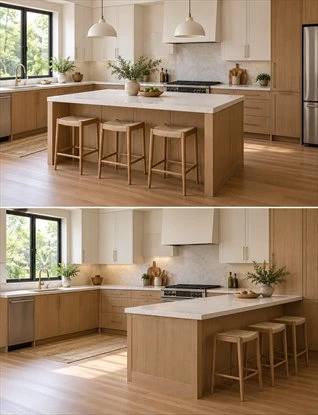
- Compact island: Best for open-plan apartments that need extra storage and countertop space.
- Peninsula kitchen: Best for apartments that need partial separation between kitchen and living area.
One-Wall Kitchen Cabinets
A one-wall kitchen places all cabinets, appliances, sink, and cooking zones along one wall. It is one of the most common layouts for studio apartments and small urban homes.
This layout saves floor space and keeps the living area open. To increase storage, designers can use full-height wall cabinets, tall pantry cabinets, integrated appliances, and deeper drawers.
Light cabinet colors, handleless doors, and simple surfaces can also make a one-wall kitchen feel cleaner and more spacious.
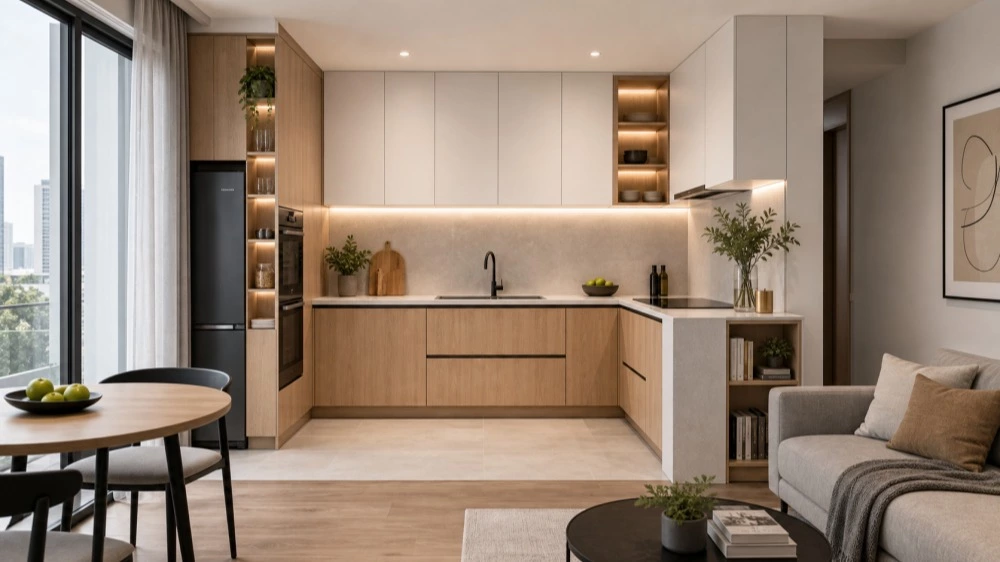
L-Shaped Kitchen Cabinets
An L-shaped kitchen uses two connected walls to create a more efficient cooking zone. It is suitable for one-bedroom and two-bedroom apartments where the kitchen has a corner space.
This layout provides more countertop area and better separation between washing, cooking, and preparation zones. Corner cabinets can be upgraded with pull-out systems or carousel storage to reduce wasted space.
For open-plan apartments, an L-shaped kitchen can also connect naturally with a dining table or small island.
Galley Kitchen Cabinets
A galley kitchen uses two parallel cabinet runs. It is efficient for narrow apartment kitchens because it creates a clear working corridor between storage, sink, cooking, and appliance zones.
The key is to keep enough walking space and avoid oversized cabinet doors or handles that block movement. Full-extension drawers, slim storage units, and wall cabinets can increase capacity without widening the kitchen.
Galley kitchens are practical for apartments where function is more important than decorative design.
Compact Island or Peninsula Cabinets
Some modern apartment projects include open kitchens with a small island or peninsula. This solution can add storage, countertop space, dining function, and visual separation between the kitchen and living area.
For compact apartments, the island should be carefully sized. It should improve the kitchen rather than block circulation. Built-in drawers, open shelves, or seating space can make the island more useful.
Buyer Benefit
Space-saving layouts improve storage efficiency, daily convenience, and visual openness. For developers, a better kitchen layout can make the apartment easier to sell or rent because buyers immediately feel the space is more practical.
Solution 2: Standardize Cabinet Modules for Multi-Unit Projects
Standardized cabinet modules are one of the most effective ways to improve efficiency in apartment kitchen projects. Instead of designing every kitchen from zero, developers can create a repeatable cabinet system for each unit type.
This does not mean every kitchen must look the same. It means the core cabinet structure is standardized while finishes, handles, countertops, and accessories can be adjusted by project level.
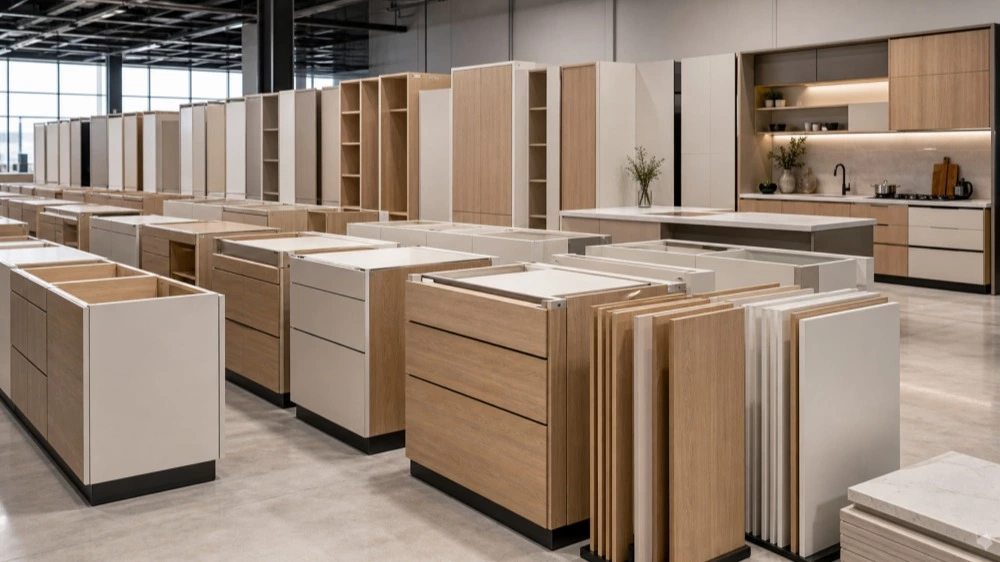
Core Modules to Standardize
- Base cabinets: Drawer cabinets, sink cabinets, door cabinets, and appliance cabinets.
- Wall cabinets: Standard upper cabinets, lift-up cabinets, and open shelf units.
- Tall cabinets: Pantry cabinets, oven cabinets, refrigerator side panels, and utility storage.
- Filler panels: Adjustment strips for walls, corners, and site tolerance.
- Toe kicks and side panels: Finishing parts that create a clean built-in look.
Standard Base Cabinets
Base cabinets form the main structure of the kitchen. In apartment projects, standardizing base cabinet widths, depths, and heights can simplify production and installation.
Common base cabinet modules include drawer cabinets, sink cabinets, door cabinets, corner cabinets, and appliance cabinets. These modules can be combined to fit different kitchen layouts while keeping the production system consistent.
Standard Wall Cabinets
Wall cabinets are important for small apartment kitchens because they add storage without using floor space. Standard wall cabinet modules help keep kitchen elevations clean and consistent across multiple units.
For compact kitchens, wall cabinets can be extended closer to the ceiling to increase vertical storage. Lift-up doors or handleless profiles can improve usability in tight spaces.
Standard Tall Cabinets
Tall cabinets are useful for pantry storage, oven housing, refrigerator panels, cleaning supplies, and integrated appliances. In apartment projects, one well-designed tall cabinet can solve many storage problems.
Standardizing tall cabinet sizes helps maintain a clean design language and reduces production complexity.
Flexible Fillers and Adjustment Panels
Even when apartment units look similar on drawings, real site dimensions may vary slightly. Walls may not be perfectly straight, and floor or ceiling levels can differ.
Fillers, side panels, toe kicks, and adjustment strips help installers manage site tolerance. Planning these parts early prevents visible gaps and installation delays.
Buyer Benefit
Standardized modules reduce production errors, control costs, speed up manufacturing, and simplify installation. For large apartment projects, this can save significant time and reduce project risk.
Solution 3: Choose Durable Materials for Daily Use
Apartment kitchen cabinets need materials that can handle frequent use, moisture, cleaning, and long-term wear. The right material choice depends on the project budget, target buyer, local climate, and maintenance expectations.
A professional cabinet supplier should help you compare materials based on real project value, not only unit price.
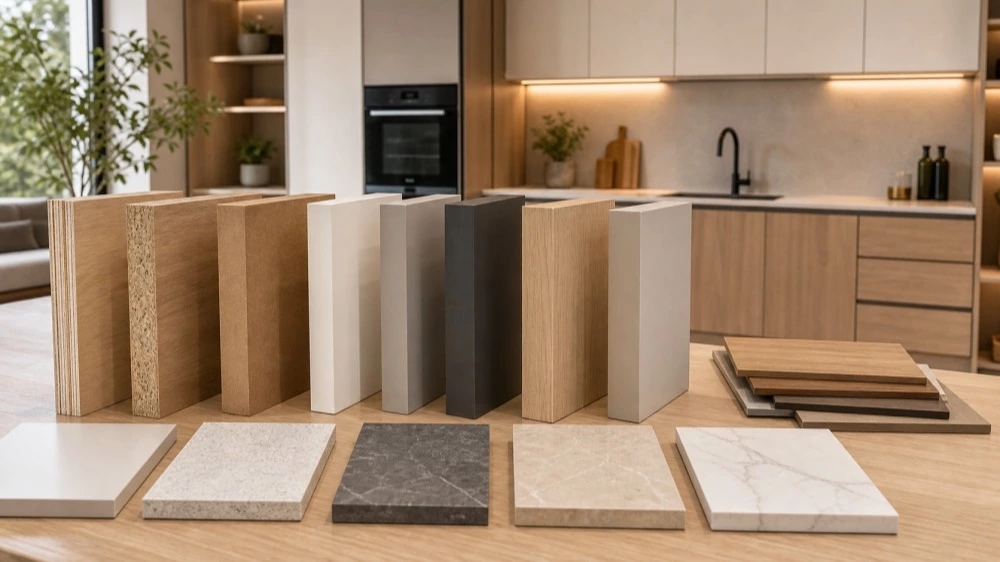
Recommended Materials for Apartment Kitchen Cabinets
| Material | Best Use | Project Benefit |
|---|---|---|
| Plywood | Premium apartment projects | Strong structure and better moisture resistance |
| Particle Board | Cost-controlled projects | Budget-friendly and suitable for repeated units |
| MDF | Painted or lacquer doors | Smooth finish and stable surface |
| Melamine | Rental or standard apartments | Easy cleaning and cost efficiency |
| PET | Modern apartment kitchens | Smooth look and better surface feel |
| Laminate | High-use kitchens | Stronger scratch and stain resistance |
Plywood for Premium Apartment Cabinets
Plywood is a strong and reliable option for higher-end apartment projects. It offers better screw-holding strength and moisture resistance compared with many budget boards.
For premium apartments, serviced apartments, coastal projects, or humid climates, plywood can improve cabinet durability and reduce long-term maintenance problems.
Particle Board for Cost-Controlled Projects
Particle board is commonly used in apartment projects because it offers good cost efficiency for repeated units. When combined with quality surface finishes and proper edge banding, it can be suitable for many standard residential projects.
The key is to confirm board thickness, density, environmental grade, and edge sealing quality before production.
MDF for Smooth Door Finishes
MDF is often used for painted, lacquered, or routed cabinet doors because it has a smooth and stable surface. It works well for modern flat doors and decorative styles that require a clean finish.
For apartment projects, MDF can create a more refined look when used in selected visible areas such as doors and panels.
Melamine for Practical Apartment Kitchens
Melamine is a practical surface option for apartment kitchen cabinets. It is easy to clean, available in many colors and wood grain patterns, and suitable for cost-controlled projects.
For rental units and standard apartments, melamine can offer a good balance between appearance, maintenance, and budget. You can also read this guide on melamine vs PET cabinets to compare surface options in more detail.
PET for Modern Apartment Kitchens
PET cabinet doors have a smooth, modern appearance and are popular in contemporary apartment interiors. They can create a clean look without the higher cost of some premium painted finishes.
PET is suitable for projects that want a modern visual effect with practical daily maintenance.
Laminate for High-Use Kitchens
Laminate surfaces are strong and practical for kitchens that need better scratch and stain resistance. They are useful for rental apartments, student housing, serviced apartments, and other high-use residential projects.
Laminate is also available in many colors and textures, making it flexible for different interior styles.
Buyer Benefit
The right material mix helps developers balance cost, durability, appearance, and maintenance. Instead of using one material everywhere, a project can combine cost-effective carcass materials with more attractive door finishes for better total value.
Solution 4: Add Smart Storage Systems
Small apartment kitchens need smart storage. A compact kitchen can still feel comfortable when cabinet interiors are planned carefully.
Smart storage systems make it easier for residents to organize cookware, tableware, food, spices, cleaning supplies, and small appliances.
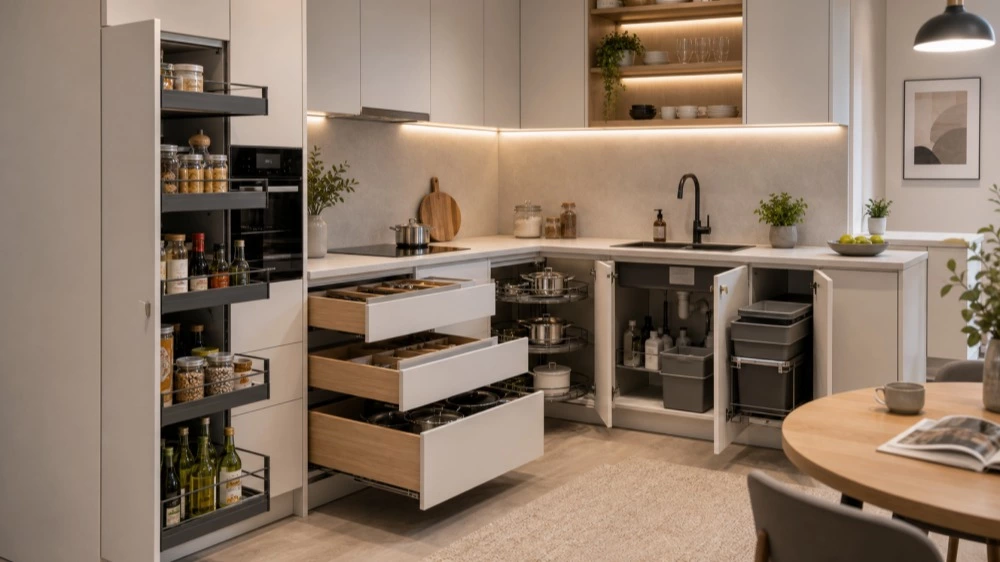
Best Storage Features for Apartment Kitchens
- Pull-out pantry: Uses narrow vertical space for dry food, bottles, and spices.
- Corner storage: Turns hard-to-reach corners into usable cabinet space.
- Soft-close drawers: Makes cookware and utensils easier to access.
- Cutlery organizers: Keep small items clean and organized.
- Waste bin cabinet: Keeps trash hidden in open-plan kitchens.
- Under-sink organizer: Improves storage around plumbing and cleaning supplies.
- Lift-up wall cabinet doors: Saves movement space in compact kitchens.
Pull-Out Pantry
A pull-out pantry uses narrow vertical space for food, bottles, spices, and dry goods. It is especially useful in small apartment kitchens where a full pantry room is not possible.
This system keeps items visible and accessible, reducing wasted storage space inside deep cabinets.
Corner Storage Systems
Corners are often difficult to use in L-shaped kitchens. A corner carousel, magic corner, or pull-out corner unit can turn this area into functional storage.
For apartment projects, corner storage improves real usable space without changing the kitchen footprint.
Soft-Close Drawers
Drawers are often easier to use than deep base cabinets. Full-extension soft-close drawers allow residents to see and reach items more easily.
They also reduce noise, improve daily comfort, and make the kitchen feel more premium.
Cutlery and Drawer Organizers
Drawer organizers keep utensils, knives, cooking tools, and small items separated. This improves kitchen organization and makes compact apartments feel more functional.
For developers, small storage details can improve the perceived value of the unit.
Waste Bin Cabinet
A built-in waste bin cabinet keeps trash hidden and helps maintain a cleaner kitchen appearance. It is especially useful in open-plan apartments where the kitchen is visible from the living area.
This feature improves hygiene and keeps the countertop area more organized.
Under-Sink Organizer
The sink cabinet often becomes messy because of plumbing, cleaning supplies, and moisture. An under-sink organizer helps use this area more efficiently.
Moisture-resistant protection should also be considered for sink cabinets to reduce long-term damage.
Lift-Up Wall Cabinet Doors
Lift-up wall cabinet doors can be useful in compact kitchens because they open upward instead of outward. This helps avoid blocking movement in narrow spaces.
They also create a clean modern look for apartment kitchens. For more ideas, explore cabinet storage solutions.
Buyer Benefit
Smart storage improves the real usability of apartment kitchens. For buyers and tenants, a small kitchen feels more valuable when storage is easy, accessible, and well organized.
Solution 5: Use Modern Finishes for Better Property Appeal
Cabinet finish has a strong impact on how buyers or tenants perceive an apartment. Even when the kitchen is compact, the right color and surface can make it feel brighter, cleaner, and more spacious.
For apartment projects, finishes should be modern, practical, and widely accepted by different users.
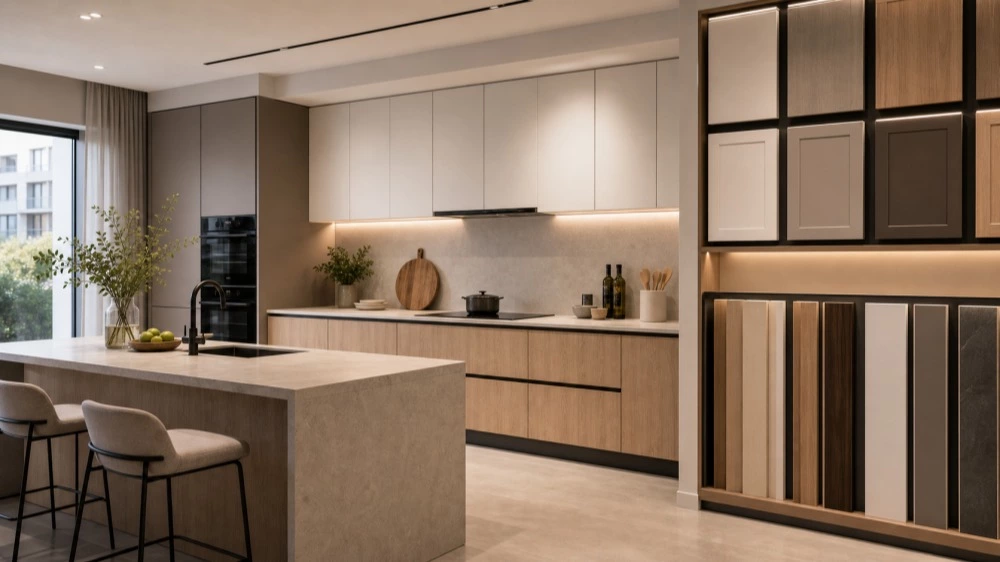
Recommended Cabinet Finishes
- Matte white: Makes compact kitchens feel brighter and more open.
- Light wood grain: Adds warmth and natural texture to modern apartments.
- Warm gray: Creates a calm, practical, and contemporary look.
- Two-tone design: Adds visual interest without making the kitchen too bold.
- Handleless doors: Creates a clean look for open-plan apartment kitchens.
Matte White Cabinets
Matte white cabinets are popular for small apartments because they reflect light softly and make the kitchen feel more open. They work well with wood floors, gray countertops, black hardware, and minimalist interiors.
Matte white is also easy to match with different apartment styles, making it a safe choice for developers.
Light Wood Grain Cabinets
Light wood grain finishes add warmth and natural texture to apartment kitchens. They are suitable for Scandinavian, modern, Japanese-inspired, and warm minimalist interiors.
This finish helps avoid a cold or plain look while keeping the kitchen neutral and market-friendly.
Warm Gray Cabinets
Warm gray cabinets create a contemporary and practical look. They are less stark than pure white and can hide light daily marks better.
Warm gray works well for rental units, modern apartments, and projects targeting young professionals.
Two-Tone Cabinet Designs
Two-tone cabinets combine different colors or materials, such as white wall cabinets with wood base cabinets. This creates visual interest without making the kitchen too bold.
For apartment projects, two-tone designs can make standard layouts feel more customized and attractive.
Handleless Cabinet Doors
Handleless cabinet doors create a clean, streamlined look. They are especially useful for compact open-plan kitchens because they reduce visual clutter.
Options include integrated pulls, aluminum profiles, J-pull doors, and push-open systems.
Buyer Benefit
Modern cabinet finishes improve property appeal and make apartments easier to market. A well-designed kitchen can increase the perceived value of the whole unit, even when the apartment size is limited.
Solution 6: Plan Hardware for Long-Term Performance
Hardware is one of the most important details in apartment kitchen cabinets. Hinges, drawer slides, handles, and pull-out systems affect the daily user experience more than many buyers realize.
Good hardware improves comfort, reduces noise, prevents early failure, and lowers maintenance costs.
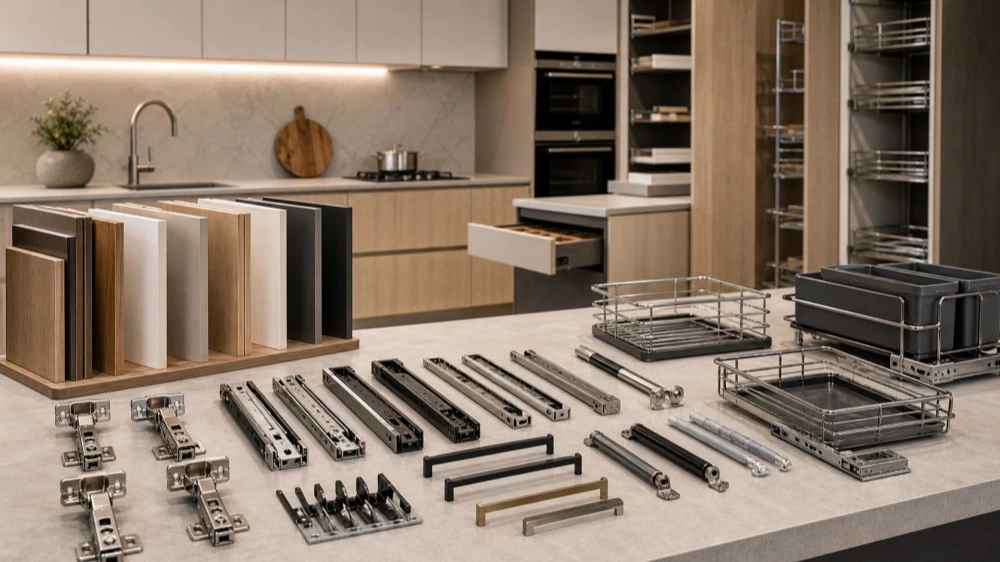
Recommended Hardware for Apartment Projects
- Soft-close hinges: Reduce door slamming and daily noise.
- Full-extension drawer slides: Improve access to stored items.
- Moisture-resistant sink protection: Helps protect the most vulnerable cabinet area.
- Durable handles or profiles: Support long-term daily use.
- Reliable pull-out systems: Improve storage without increasing cabinet size.
Soft-Close Hinges
Soft-close hinges prevent cabinet doors from slamming. They make the kitchen quieter and more comfortable, especially in apartment buildings where noise control matters.
For rental and multi-family projects, soft-close hinges can also reduce wear caused by repeated daily use.
Full-Extension Drawer Slides
Full-extension drawer slides allow drawers to open completely, making it easier to access items at the back. This is very useful in small kitchens where every storage area must be efficient.
Strong drawer slides also improve load capacity for cookware, plates, and food storage.
Moisture-Resistant Sink Cabinet Accessories
The sink cabinet is one of the most vulnerable areas in a kitchen. Water leaks, cleaning products, and humidity can damage cabinet boards if the area is not protected.
Moisture-resistant base protection, aluminum foil lining, stainless trays, or waterproof panels can help extend cabinet life.
Durable Handles or Handleless Profiles
Handles should be comfortable, durable, and suitable for the apartment style. For compact kitchens, slim handles or handleless profiles can reduce visual clutter and improve movement.
For rental projects, choose finishes that resist fingerprints, scratches, and loosening over time.
Reliable Pull-Out Storage Systems
Pull-out systems are useful only when the hardware is strong enough for daily loading. Poor-quality pull-outs may become loose, noisy, or difficult to use.
For project cabinets, choose reliable systems with suitable load capacity and smooth movement.
Buyer Benefit
Good hardware improves daily comfort and reduces the need for after-sales maintenance. For developers and landlords, this helps protect the long-term value of the apartment project.
Solution 7: Work with a Turnkey Cabinet Supplier
Apartment kitchen cabinet projects require coordination across design, materials, production, quality control, packaging, delivery, and installation. A turnkey cabinet supplier can help manage these steps as one complete process.
This is especially important for overseas buyers who source kitchen cabinets from China for apartment developments, multi-family housing, rental buildings, or residential projects.
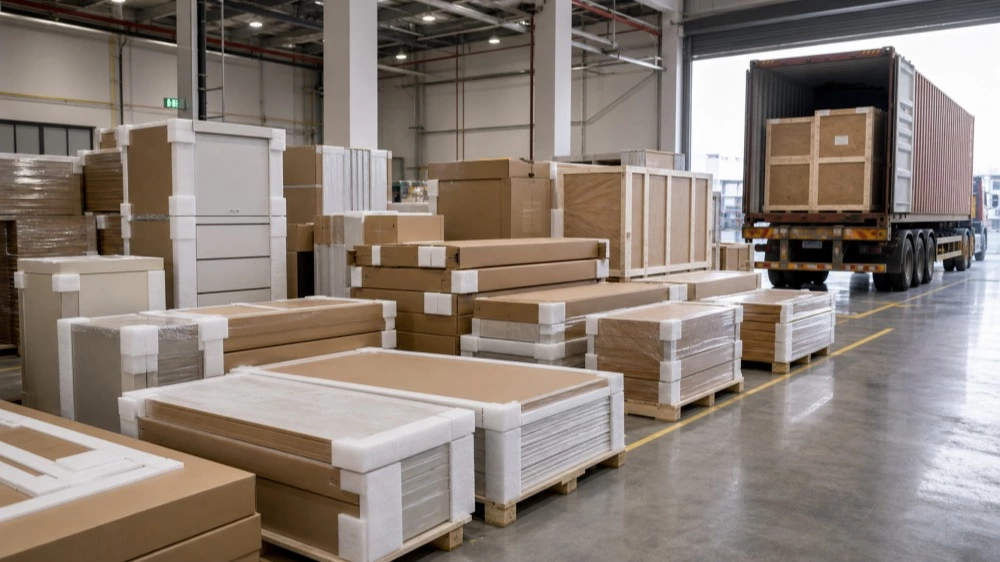
What a Turnkey Cabinet Supplier Should Provide
- 2D layout and 3D rendering: Helps confirm cabinet design before production.
- Shop drawings: Confirms dimensions, materials, appliance openings, and installation details.
- Material and hardware proposal: Matches project budget, climate, usage, and design level.
- Production photos or QC reports: Helps buyers monitor quality before shipment.
- Room-by-room packaging labels: Makes multi-unit installation easier.
- Installation drawings: Reduces site confusion and labor waste.
- Delivery coordination: Helps align cabinet shipments with the project schedule.
- After-sales support: Supports missing parts, damage claims, or installation questions.
2D Layout and 3D Rendering Support
Professional design support helps developers review the cabinet layout before production. 2D layouts show dimensions and cabinet positions, while 3D renderings help confirm the final visual effect.
This reduces misunderstanding between the buyer, designer, factory, and installation team.
Shop Drawings Before Production
Shop drawings are essential for apartment projects. They confirm cabinet sizes, materials, door directions, appliance openings, countertop details, and installation requirements.
Production should begin only after drawings are reviewed and approved.
Material and Hardware Proposal
A professional supplier should recommend suitable materials and hardware based on project level, budget, climate, user type, and maintenance needs.
This helps buyers avoid over-specifying unnecessary details or choosing materials that are too weak for the project.
Production Photos or QC Reports
Production photos and QC reports help buyers monitor progress before shipment. They can show material preparation, cutting, edge banding, assembly, finish inspection, and packaging.
For large projects, third-party inspection can also be arranged before loading.
Room-by-Room Packaging Labels
Apartment cabinet orders may include many similar parts. Clear packaging labels are essential for installation efficiency.
Labels should identify building, floor, room, unit type, cabinet number, and accessory package. This helps installers quickly find the right parts on site.
Installation Drawings
Installation drawings guide the site team during assembly. They show cabinet sequence, wall cabinet position, base cabinet layout, filler locations, countertop details, and hardware placement.
Clear drawings reduce installation mistakes and save labor time.
Delivery Coordination and After-Sales Support
Delivery timing must match the construction schedule. Cabinets arriving too early may require storage space and risk damage. Cabinets arriving too late may delay handover.
After-sales support is also important in case of missing accessories, damaged parts, or installation questions.
Buyer Benefit
A turnkey cabinet solution reduces project risk, improves communication, supports faster installation, and helps developers complete apartments on schedule. If you are importing cabinets from overseas, this kitchen cabinets from China guide can help you understand the sourcing process.
Best Apartment Kitchen Cabinet Layouts by Unit Type
Different apartment types need different kitchen cabinet solutions. A good supplier should adapt the layout to the unit size, lifestyle needs, and target market.
| Unit Type | Recommended Layout | Design Focus |
|---|---|---|
| Studio Apartment | One-wall or compact L-shaped kitchen | Vertical storage, slim appliances, light finishes |
| One-Bedroom Apartment | L-shaped or galley kitchen | Balanced storage, workflow, easy cleaning |
| Two-Bedroom Apartment | L-shaped kitchen with tall cabinets or a small island | Family storage, countertop space, appliance integration |
| Luxury Apartment | Open kitchen with island | Premium finishes, lighting, built-in appliances, high-end hardware |
Studio Apartment
Studio apartments usually need one-wall kitchens or compact L-shaped kitchens. The design should focus on vertical storage, wall cabinets, slim appliances, and light finishes.
Handleless doors, integrated appliances, and full-height storage can help make the small kitchen feel more organized and less crowded.
One-Bedroom Apartment
One-bedroom apartments can usually support an L-shaped or galley kitchen. The layout should balance storage, countertop space, cooking workflow, and easy cleaning.
Wall cabinets, drawer storage, and practical finishes are especially important for daily use.
Two-Bedroom Apartment
Two-bedroom apartments often need more family storage. An L-shaped kitchen with a tall cabinet, pantry unit, or small island can improve function.
More countertop space, appliance integration, and durable materials should be considered for long-term family use.
Luxury Apartment
Luxury apartments can use open kitchens with islands, premium finishes, built-in appliances, LED lighting, and high-quality hardware.
The kitchen should feel integrated with the living and dining area, creating a modern lifestyle space rather than only a cooking zone.
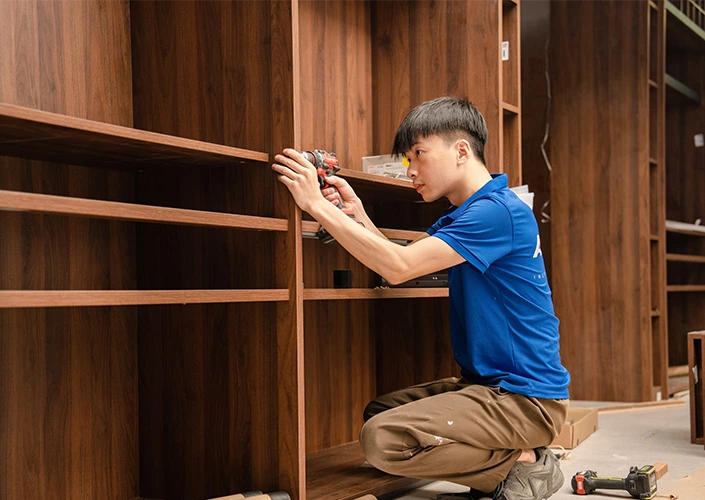
Common Mistakes in Apartment Kitchen Cabinet Projects
Apartment cabinet projects can become costly when early planning is incomplete. The following mistakes are common and should be avoided before production begins.
Choosing Only the Lowest Price
A low cabinet price may hide weak boards, poor edge banding, basic hardware, thin panels, or limited packaging support. These issues can lead to higher maintenance costs later.
Compare complete specifications, not only the final quotation number.
Ignoring Site Tolerance
Apartment buildings often have small differences between drawings and real site dimensions. If fillers, side panels, and adjustment strips are not planned, installation gaps may appear.
Good site tolerance planning makes the final kitchen cleaner and easier to install.
Not Confirming Appliance Sizes
Wrong appliance openings can delay installation and create expensive rework. Confirm the dimensions of refrigerators, ovens, dishwashers, range hoods, sinks, cooktops, and microwaves before production.
Appliance specifications should be included in the shop drawings.
Using Too Many Custom Variations
Too many cabinet variations increase production complexity, cost, and risk. For apartment projects, standardize where possible and customize only where necessary.
This keeps the project efficient while still allowing each unit type to fit properly.
Poor Packaging and Labeling
Without clear packaging labels, installers may waste time sorting similar cabinet panels and hardware packages. This can delay installation across many units.
Room-by-room labeling is essential for apartment cabinet projects.
Apartment Kitchen Cabinet Project Checklist
Use this checklist before confirming an apartment kitchen cabinet order:
- Confirm all apartment unit types and kitchen layouts.
- Prepare floor plans, elevation drawings, and appliance specifications.
- Choose cabinet materials based on budget and durability needs.
- Standardize cabinet modules where possible.
- Confirm hardware brands and storage accessories.
- Review 2D layouts, 3D renderings, and shop drawings.
- Confirm countertop, sink, range hood, and lighting details.
- Approve samples before mass production.
- Confirm packaging labels by building, floor, room, and unit type.
- Arrange quality inspection before shipment.
- Prepare installation drawings and after-sales support plan.
Why Choose ALLURE Cabinetry for Apartment Projects?
ALLURE Cabinetry provides custom kitchen cabinets and whole-house customization solutions for apartment developers, contractors, builders, designers, and overseas project buyers.
From space planning to material selection, production, packaging, and installation guidance, ALLURE supports apartment cabinet projects with a complete project-based approach.

Project-Based Custom Cabinet Design
ALLURE develops cabinet layouts based on apartment floor plans, unit types, storage needs, design style, and project budget.
Custom sizing helps improve wall-to-wall fitting, reduce wasted space, and create more practical kitchens for compact apartments.
Flexible Material and Finish Options
Material options include plywood, MDF, particleboard, melamine, PET, lacquer, laminate, veneer, and stainless steel.
This allows developers to balance cost, durability, appearance, and maintenance based on the apartment project level.
Whole-House Customization Support
For apartment projects, ALLURE can also support wardrobes, bathroom vanities, TV cabinets, interior doors, storage cabinets, and full-house furniture packages.
This helps developers create consistent interiors across kitchens, bedrooms, bathrooms, and living spaces. Learn more about whole-house customization.
Export and Installation Support
ALLURE supports overseas buyers with production coordination, quality control, export packaging, labeled cartons, installation drawings, and project communication.
This helps reduce risks during shipping and installation while improving project delivery efficiency. You can also view our project cases for more custom cabinet applications.
FAQ
What are the best kitchen cabinets for apartment projects?
The best apartment kitchen cabinets are space-saving, durable, easy to clean, cost-controlled, and suitable for repeated unit layouts. They should combine practical materials, smart storage, reliable hardware, and clear installation support.
Which material is best for apartment kitchen cabinets?
Melamine and laminate are practical for cost-controlled projects; plywood is better for premium apartments; MDF works well for smooth painted doors; and PET is suitable for modern apartment kitchens. The best choice depends on budget, usage, climate, and project positioning.
How can developers reduce cabinet costs in apartment projects?
Developers can reduce cabinet costs by standardizing modules, choosing practical materials, limiting unnecessary custom variations, confirming drawings before production, and using repeatable specifications across similar unit types.
Can apartment kitchen cabinets be customized for different unit types?
Yes. A professional cabinet supplier can customize cabinet layouts for studio, one-bedroom, two-bedroom, and luxury apartment units while keeping core modules standardized for better cost control and production efficiency.
How long does apartment kitchen cabinet production take?
Production time depends on project size, material selection, finish complexity, and unit quantity. Most custom apartment cabinet projects take around 30–60 days after drawings, materials, and samples are confirmed.
Do apartment kitchen cabinets need special packaging?
Yes. Apartment projects need clear packaging labels by building, floor, room, unit type, and cabinet number. Good packaging helps reduce shipping damage and makes installation faster on-site.
What should I prepare before requesting a cabinet quote?
Prepare floor plans, kitchen dimensions, unit types, appliance specifications, preferred materials, finish references, target budget, project location, and expected delivery schedule. These details help the supplier provide a more accurate quote.
Conclusion
Apartment kitchen cabinets should be planned as a complete project solution, not just individual cabinet products. The right solution combines space-saving layouts, standardized modules, durable materials, smart storage, modern finishes, reliable hardware, and turnkey project support.
For developers, contractors, and project buyers, a professional cabinet supplier can improve installation efficiency, reduce project risk, and create more attractive apartment interiors.
If you are planning an apartment, multi-family housing, rental building, or residential project, ALLURE Cabinetry can help you create custom apartment kitchen cabinets with practical layouts, durable materials, smart storage, and export-ready project support.