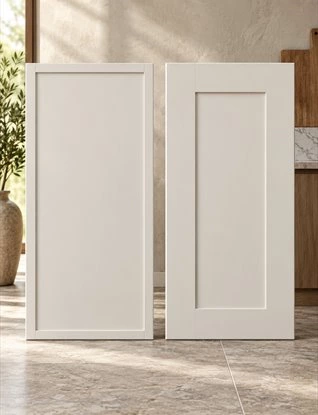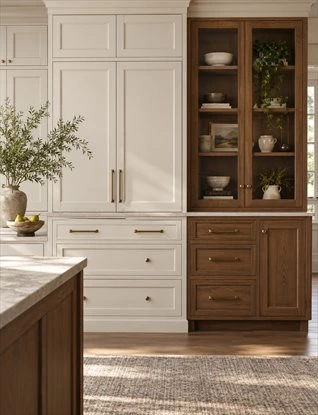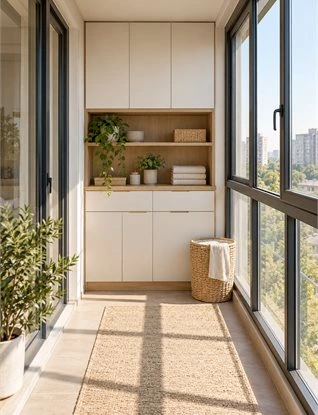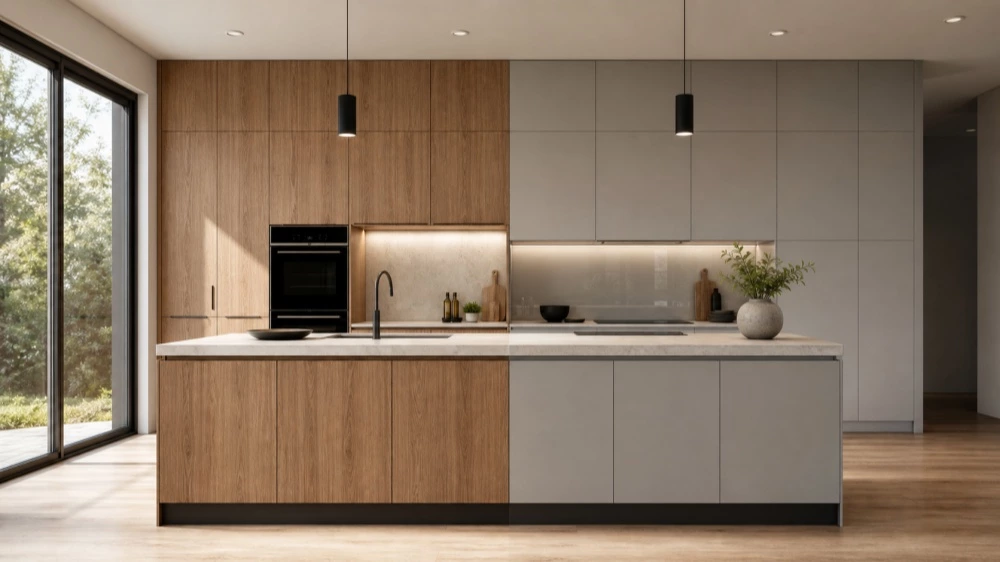
Choosing the right cabinet material is one of the most important decisions in a custom kitchen cabinet project. It affects the final look, daily cleaning, durability, moisture resistance, budget, and long-term user experience.
Among modern cabinet finishes, melamine cabinets and PET cabinets are two popular choices for homeowners, builders, developers, interior designers, and project buyers. Both can create clean, modern kitchens, but they serve different project goals.
Melamine is often chosen for practical, cost-controlled cabinetry, while PET is preferred for smoother surfaces, stronger visual appeal, and better premium positioning. The best choice depends on your kitchen style, budget, project type, and expected durability.
In this guide, we compare melamine vs PET cabinets by appearance, durability, moisture resistance, cleaning, cost, and best project use, so you can choose the right material for your custom kitchen cabinets.
Quick Comparison: Melamine vs PET Cabinets
The table below gives a simple overview of how melamine cabinets and PET cabinets compare in real kitchen projects.
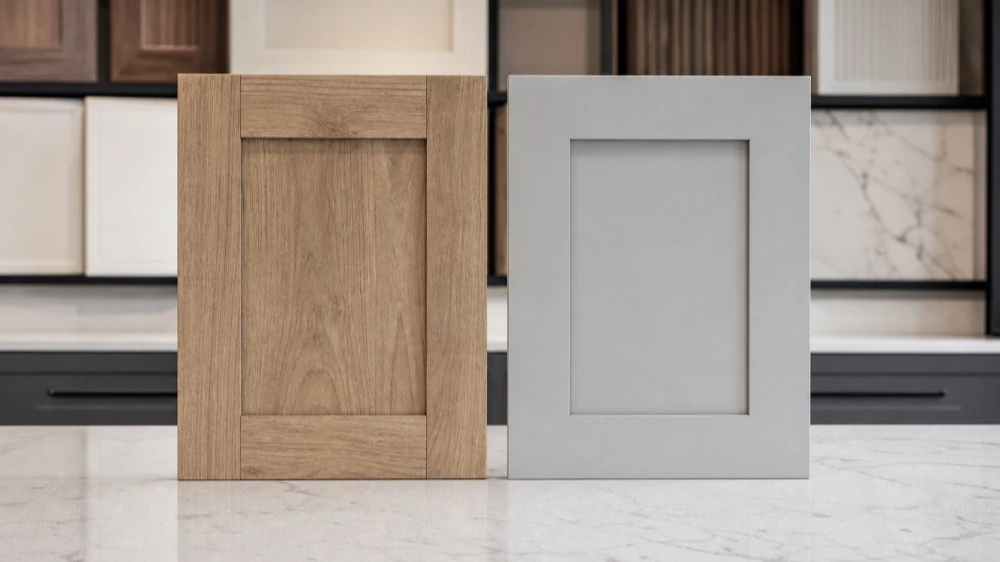
| Factor | Melamine Cabinets | PET Cabinets |
|---|---|---|
| Appearance | Practical, wide color and texture range | Smooth, modern, more premium |
| Durability | Good for daily use | Stronger surface performance |
| Scratch Resistance | Moderate to good | Generally better |
| Moisture Resistance | Depends on board and edge sealing | Better when properly sealed |
| Cleaning | Easy to clean | Very easy to clean |
| Cost | More budget-friendly | Higher cost |
| Best For | Apartments, rentals, large-scale projects | Modern homes, villas, premium kitchens |
What Are Melamine Cabinets?
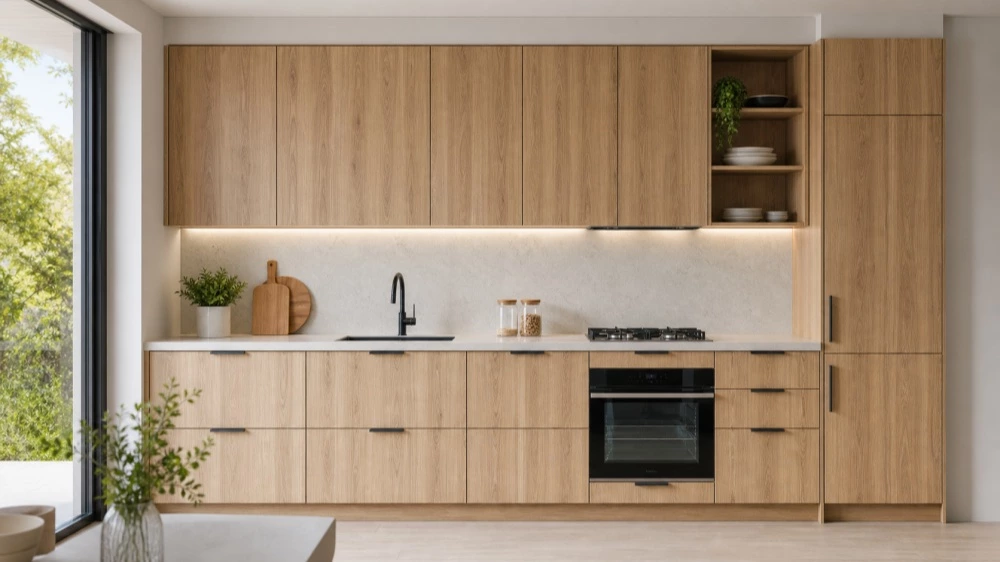
Melamine cabinets are made by bonding a decorative melamine surface to a cabinet board such as MDF, particleboard, or plywood. The surface can be designed in solid colors, wood grain textures, matte finishes, and modern neutral tones.
For custom kitchen cabinets, melamine is widely used because it offers a good balance between appearance, cost, and daily practicality. It is especially suitable for apartments, rental homes, modular kitchens, and large-scale residential projects where budget control and consistent appearance matter.
Melamine cabinet doors are often selected by builders and project buyers who need stable specifications, repeatable colors, and efficient production for multiple kitchens.
Pros of Melamine Cabinets
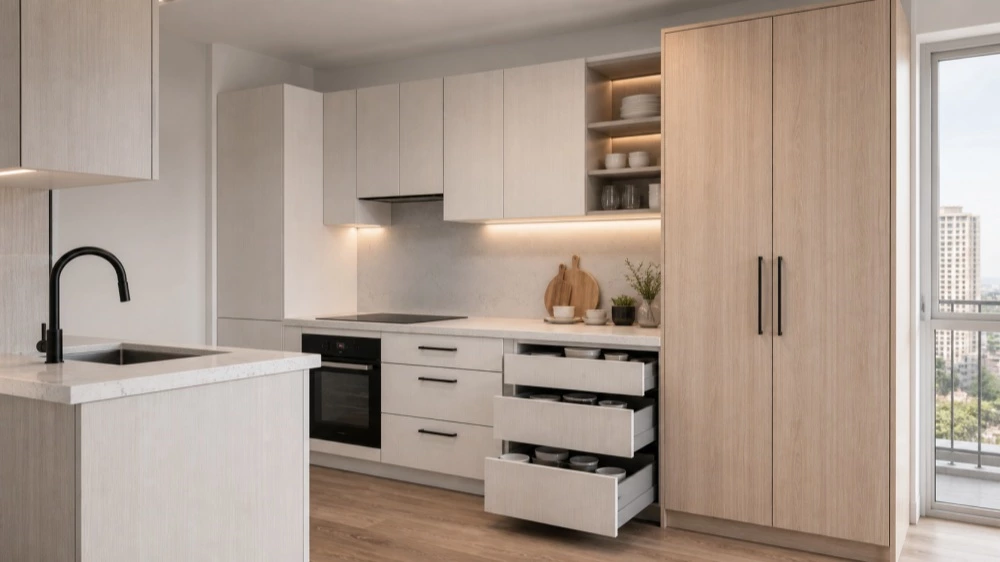
Melamine cabinets offer strong value for projects that need practical design, clean appearance, and controlled cost.
-
Cost-efficient cabinet surface: Melamine helps reduce cabinet material costs, making it suitable for budget kitchens, apartment projects, rental units, and multi-unit developments.
-
Wide finish selection: Melamine is available in many colors, wood grains, textures, and matte finishes, giving designers flexibility for modern, minimalist, natural, or practical kitchen styles.
-
Easy daily cleaning: The surface can be wiped with a soft cloth and mild cleaner, helping homeowners keep the kitchen clean with less effort.
-
Stable design consistency: Melamine is useful for repeated project layouts because the colour and texture can remain consistent across multiple kitchens.
-
Good value for modular cabinets: When combined with quality edge banding, reliable hinges, and accurate installation, melamine cabinets can deliver strong practical performance at a controlled cost.
Cons of Melamine Cabinets
Melamine cabinets are practical, but they also have limits. The surface can chip if the edges are poorly sealed or hit by heavy impact. Lower-grade melamine may look flatter compared with PET, lacquer, veneer, or solid wood finishes.
Moisture resistance also depends heavily on the board core, edge banding, sink cabinet protection, and installation quality. If water enters through exposed edges, the cabinet board may swell over time.
For premium kitchens or luxury interiors, melamine may not always provide the refined finish that buyers expect. It works best when the goal is practical design, good durability, and cost control rather than a high-end glossy or ultra-smooth cabinet effect.
What Are PET Cabinets?
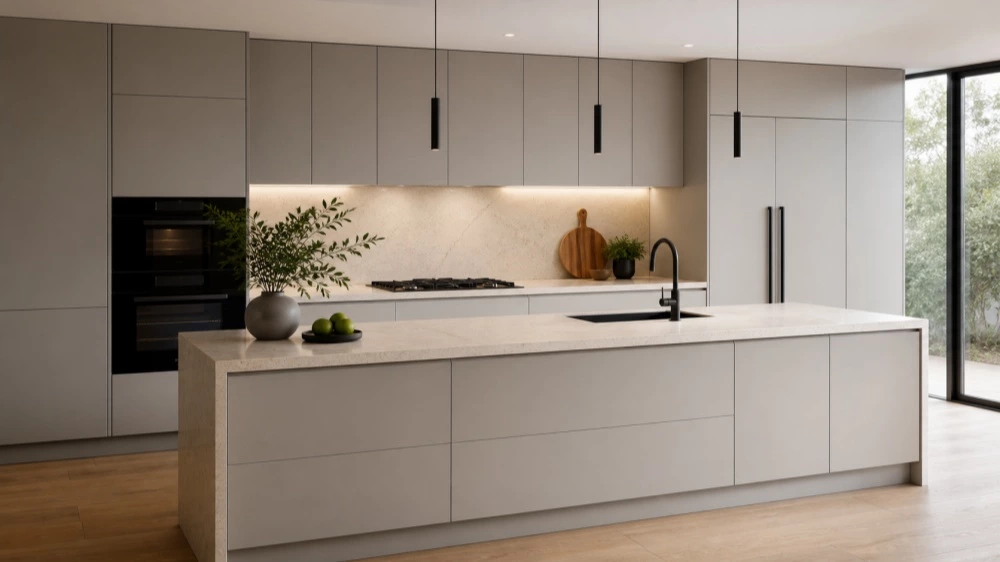
PET cabinets use a PET surface film or PET finish applied to the cabinet door panel. PET is valued for its smooth appearance, clean color expression, and modern visual effect.
Compared with standard melamine, PET usually looks more refined and premium. It is commonly used in modern kitchen cabinets, handleless cabinet designs, matte kitchens, gloss kitchens, and minimalist interiors where the cabinet surface plays a major role in the final design.
PET cabinet doors are especially popular for homeowners and developers who want a cleaner finish, better daily usability, and stronger perceived value in the kitchen space.
Pros of PET Cabinets
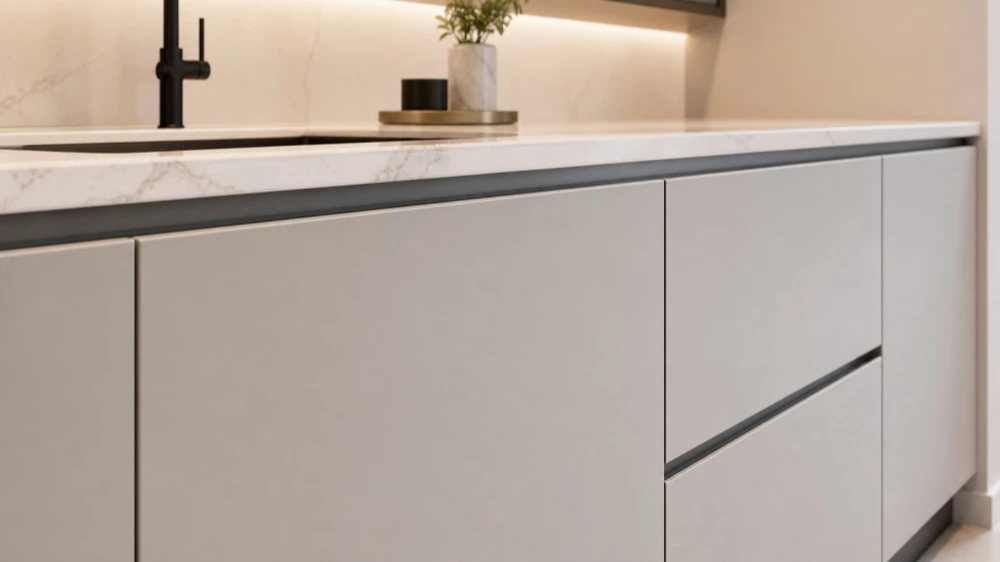
PET cabinets are often selected for modern homes and premium projects because they combine a clean surface with strong daily performance.
-
Premium modern appearance: PET creates a smoother and cleaner cabinet surface, making the kitchen look more refined and visually organized.
-
Better daily resistance: PET surfaces usually offer stronger resistance to stains, fingerprints, and daily wear, especially when used in busy family kitchens.
-
Easy-clean finish: The smooth surface allows oil marks and dust to be wiped away easily, reducing maintenance for homeowners.
-
Strong design flexibility: Matte PET, gloss PET, and solid-color PET panels work well with stone countertops, handleless doors, built-in appliances, lighting systems, and premium hardware.
-
Higher perceived project value: PET cabinets can make a kitchen feel more expensive, helping developers, designers, and homeowners improve the overall value of the space.
Cons of PET Cabinets
PET cabinets usually cost more than melamine cabinets. For projects with strict budgets, this may affect the overall cabinet specification.
PET also requires accurate manufacturing and clean edge sealing. If the edge treatment is poor, the premium surface effect can be reduced. Gloss PET may show fingerprints or fine scratches more easily than matte PET, so finish selection should match the homeowner's usage habits.
For basic rental homes or short-term budget projects, PET may be more than necessary. In these cases, melamine can provide a more practical return on the cabinet budget.
Melamine vs PET Cabinets: Key Differences
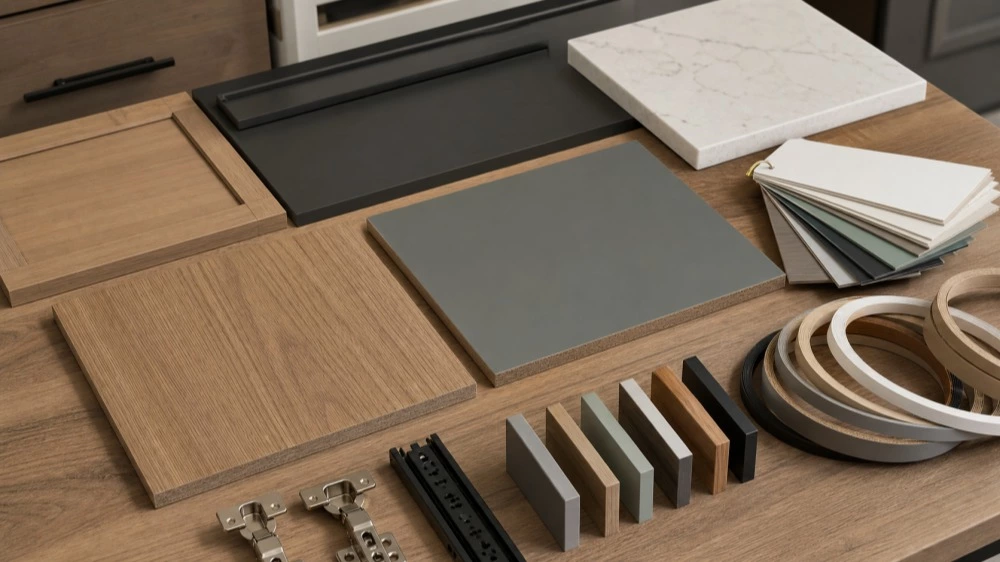
When comparing melamine vs PET cabinets, the decision should not be based on surface material alone. Appearance, durability, moisture resistance, cleaning, and cost all need to be considered together.
Appearance and Design Style
Melamine cabinets are practical and versatile. They are especially strong in wood grain effects, neutral colors, and budget-friendly modern kitchens.
PET cabinets look smoother, cleaner, and more refined. They are better suited for modern, minimalist, and premium kitchen designs.
Choose melamine if you want practical design at a lower cost. Choose PET if the kitchen needs a more polished and high-end appearance.
Durability
Both materials can perform well when manufactured properly. However, PET generally offers stronger surface resistance for long-term daily use.
Melamine durability depends on the quality of the board, surface layer, edge banding, and installation. PET also requires good edge sealing, but its surface usually handles daily cleaning and kitchen use better.
Cabinet durability is not only about the surface material. The board core, hinges, drawer systems, countertop connection, and installation accuracy all affect long-term performance.
Moisture Resistance
Kitchens are exposed to water, steam, oil, and cleaning products, so moisture protection matters.
Melamine cabinets can perform well when edges are sealed properly and moisture-resistant board is used in sink areas. PET cabinets usually offer better surface protection, but poor edge sealing can still cause problems.
For sink cabinets, dishwasher areas, and humid climates, choose moisture-resistant board, strong edge banding, and careful installation.
Cleaning and Maintenance
Both melamine and PET cabinets are easy to clean. Use a soft cloth, mild cleaner, and avoid abrasive pads or harsh chemicals.
PET usually feels smoother and easier to wipe, especially in modern matte or gloss finishes. Melamine is also low-maintenance, but textured finishes may need slightly more care to remove oil or dust from surface grain.
Cost
Melamine is usually more budget-friendly, making it ideal for apartment kitchens, rental projects, and large-scale cabinet production.
PET costs more but delivers a stronger visual effect and better perceived value. For premium residential projects, the extra cost can be worthwhile.
A smart project strategy is to use PET for visible cabinet doors and feature areas, while using melamine for internal panels, utility zones, or secondary spaces to balance cost and appearance.
Melamine vs PET Cabinets Cost: What Affects the Price?
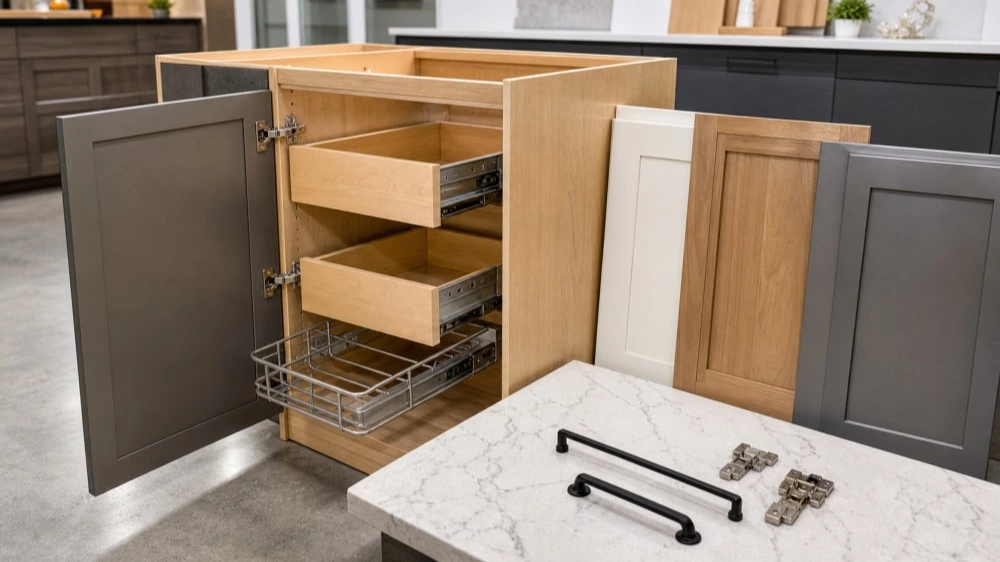
The final cost of kitchen cabinets is not decided by surface material alone. Several factors influence the quotation:
-
Board core: MDF, plywood, particleboard, or moisture-resistant board all affect cost and durability.
-
Door thickness and structure: Thicker or specially structured doors increase material and production costs.
-
Surface finish: Matte, gloss, textured, wood grain, and solid-color finishes have different price levels.
-
Edge banding quality: Better edge banding improves moisture resistance, appearance, and long-term use.
-
Cabinet layout complexity: Tall cabinets, islands, corner units, pantry cabinets, and built-in appliance zones require more design and production work.
-
Hardware: Hinges, drawer slides, pull-out baskets, lift-up systems, and soft-close accessories affect both price and user experience.
-
Countertop selection: Quartz, sintered stone, marble, and stainless steel each create different budget levels.
-
Packing and shipping: RTA packing, fully assembled packing, export packaging, and delivery methods affect total project cost.
-
Installation support: On-site installation, remote guidance, and project coordination can influence the final service cost.
For builders, developers, and importers, comparing cabinet cost should include material, hardware, countertop, packing, shipping, installation support, and project delivery risk. A lower door material cost does not always mean a lower total project cost if rework, missing parts, or poor installation creates delays.
Which Is Better for Custom Kitchen Cabinets?
There is no single best choice for every project. The right material depends on the cabinet's purpose, design level, and budget.
For budget apartment kitchens, melamine cabinets are usually the better choice. They provide practical style, easy cleaning, and strong cost control.
For modern family kitchens, PET cabinets are often more suitable because they offer a smoother finish, better daily resistance, and a more premium look.
For rental or multi-unit projects, melamine is usually more efficient. It helps developers keep costs predictable while maintaining a clean cabinet design.
For villas, luxury apartments, and premium renovations, PET cabinets are often worth the upgrade because the kitchen needs stronger visual impact and long-term value.
For cost-balanced projects, combining PET and melamine can be the best solution. PET can be used on visible cabinet fronts, while melamine can be used for internal or secondary cabinet areas.
Recommended Material Strategy by Project Type
Different project types need different cabinet material strategies. The best specification should match the buyer's budget, usage habits, design expectations, and delivery requirements.
Apartment Owners
Limited space and budget require practical cabinet solutions. Melamine cabinets help maximize storage, maintain a clean appearance, and control renovation cost.
For compact apartment kitchens, melamine works well with full-height cabinets, light wood grain finishes, simple handles, and efficient internal storage accessories.
Villa Projects
Luxury homes need stronger design consistency and refined finishes. PET cabinets create a smoother, more premium kitchen appearance that works well with stone countertops, lighting, and high-end hardware.
For villa kitchens, PET can be combined with quartz or sintered stone countertops, handleless doors, integrated appliances, soft-close hardware, and coordinated whole-house cabinetry.
Builders and Developers
Large projects need stable quality, consistent finishes, and predictable delivery. Melamine cabinets are suitable for repeated layouts, while PET can be used as an upgrade option for premium units.
This allows builders to control base project costs while still offering higher-value cabinet specifications for selected homes or apartment types.
Renovation Buyers
Homeowners upgrading an old kitchen often want easier cleaning, better storage, and a more modern style. PET cabinets can quickly improve the kitchen's visual value and daily usability.
For renovation projects with a tighter budget, melamine can also be used effectively when paired with new countertops, better hardware, and a more efficient cabinet layout.
Importers and Contractors
Material flexibility is important for different markets and budgets. A mixed specification of melamine, PET, plywood, MDF, quartz, sintered stone, and branded hardware helps create competitive cabinet packages.
For export projects, packing method, installation drawings, material consistency, and clear quotation structure are also important parts of the final cabinet solution.
How to Choose Between Melamine and PET Cabinets
Use the following checklist to decide which cabinet material is more suitable for your kitchen or project.
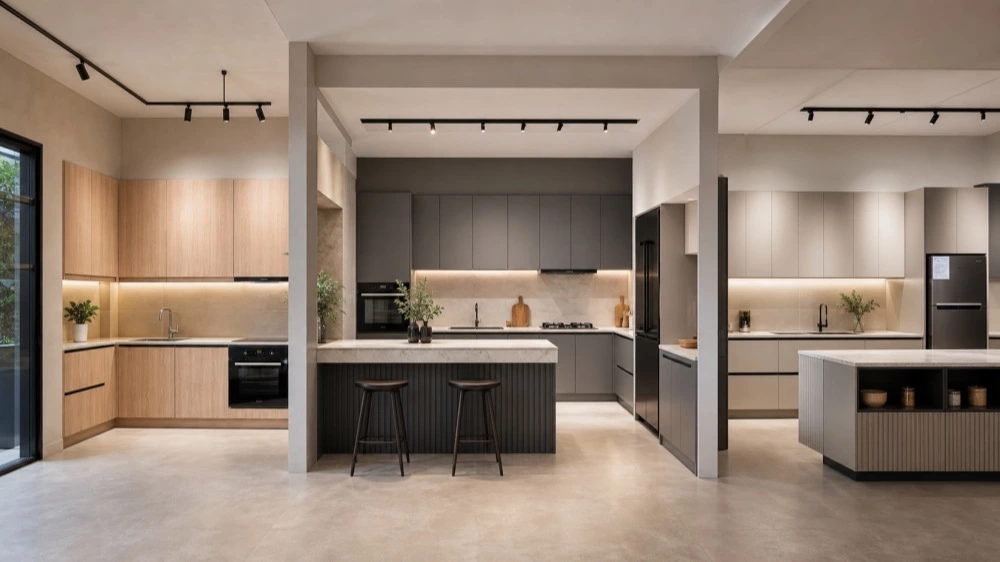
Choose Melamine Cabinets If:
-
You need a budget-friendly cabinet material.
-
You are working on apartments, rentals, or multi-unit projects.
-
You want many wood grain and color options.
-
You need practical cabinets with easy cleaning.
-
You want stable specifications for repeated project layouts.
Choose PET Cabinets If:
-
You want a smoother and more premium kitchen finish.
-
You are designing a modern, minimalist, or luxury kitchen.
-
You need better surface resistance for daily use.
-
You want stronger perceived value for buyers or homeowners.
-
You plan to combine cabinets with stone countertops, lighting, and premium hardware.
Allure Cabinetry Material Support
Allure Cabinetry provides custom kitchen cabinet solutions for homeowners, builders, developers, designers, contractors, and global project buyers.
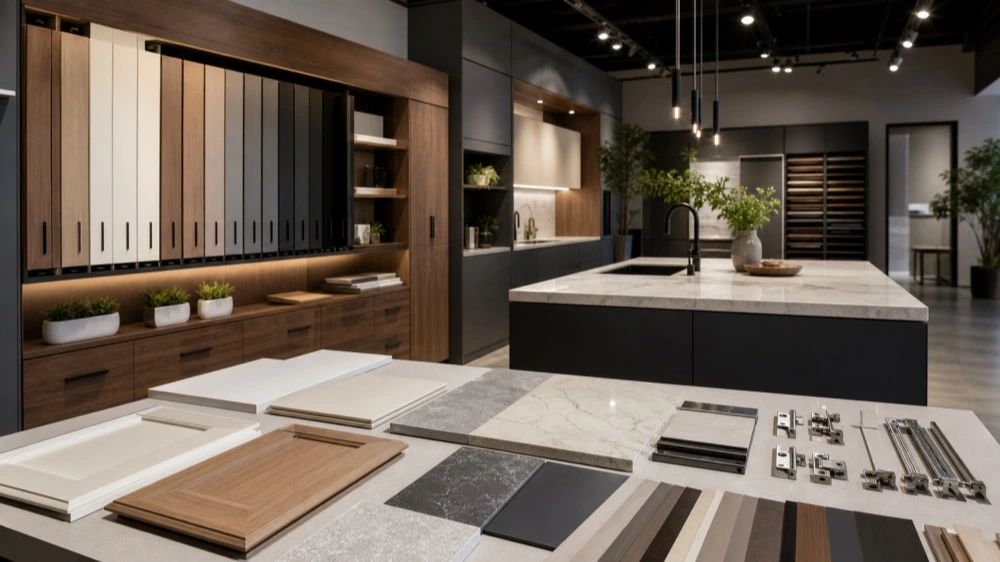
With a wide material library, Allure supports different cabinet specifications, including melamine, PET, lacquer, veneer, solid wood, PVC, stainless steel, MDF, plywood, particleboard, quartz, sintered stone, marble, and stainless steel countertops.
From layout planning and material selection to production, packing, shipping, and installation guidance, Allure helps turn complex cabinet decisions into clear project choices.
Whether the project is an apartment kitchen, villa kitchen, renovation, or full-house customization, the right material strategy can improve both budget control and final living experience.
-
5000+ material options for custom kitchen cabinets and whole-house cabinetry projects.
-
Cabinet board options including MDF, plywood, particleboard, and project-based selections.
-
Door finishes including melamine, PET, lacquer, veneer, solid wood, PVC, and stainless steel.
-
Countertop options including quartz, sintered stone, marble, and stainless steel.
-
Design drawings, quotation support, production, packing, shipping, and installation guidance.
FAQ: Melamine vs PET Cabinets
Are PET cabinets better than melamine cabinets?
PET cabinets usually offer a smoother appearance and stronger surface performance. Melamine cabinets are more cost-effective and practical. The better choice depends on your budget, design style, and project type.
Are melamine cabinets durable enough for kitchens?
Yes. Melamine cabinets can be durable for daily kitchen use when they are made with quality board, proper edge banding, reliable hardware, and accurate installation.
Are PET cabinets worth the extra cost?
PET cabinets are worth the extra cost if you want a more premium appearance, easier cleaning, and better surface resistance for a modern kitchen.
Which cabinet material is better for apartment projects?
Melamine is often better for apartment and rental projects because it offers good design flexibility at a lower cost. PET can be used for higher-end apartments or feature kitchens.
Which is easier to clean, melamine or PET cabinets?
Both are easy to clean, but PET usually has a smoother surface that wipes more easily. Matte PET is especially popular for modern kitchens because it offers a clean look with lower daily maintenance.
Can melamine and PET be used in the same kitchen project?
Yes. Many custom kitchen cabinet projects use PET for visible cabinet fronts and melamine for internal panels or secondary areas. This helps balance appearance, durability, and cost.
Do PET cabinets need special maintenance?
No special maintenance is usually required. Clean PET cabinets with a soft cloth and mild cleaner. Avoid abrasive pads, sharp tools, and harsh chemicals to protect the surface.
Conclusion
Melamine and PET cabinets are both practical choices for modern custom kitchen cabinets, but they serve different project needs.
Melamine cabinets are cost-efficient, versatile, and suitable for apartments, rentals, and large-scale projects. PET cabinets offer a smoother finish, better surface performance, and a more premium look for modern homes, villas, and high-value renovations.
The best cabinet solution should consider more than one material. Board core, edge banding, hardware, countertop, layout, packing, and installation all affect the final result.
Need help choosing between melamine and PET cabinets? Share your kitchen layout with Allure Cabinetry to get a custom material recommendation, quotation, and design plan.