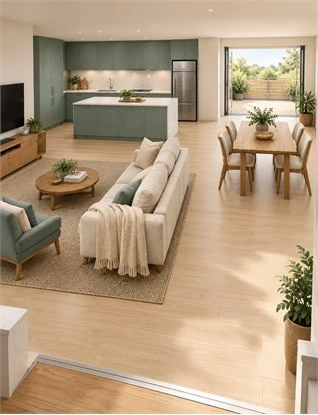
Apartment kitchens often have limited floor space, narrow cabinet runs, compact corners, and fewer drawers than larger homes. Because every inch matters, small kitchens need smarter cabinet planning instead of more bulky furniture.
The right small kitchen cabinet storage ideas can improve daily cooking, reduce countertop clutter, make appliances easier to access, and create a cleaner visual layout. With custom sizing, pull-out hardware, tall storage, and better drawer planning, even a compact apartment kitchen can feel organized and efficient.
At Allure Cabinetry, apartment kitchen cabinets can be customized by size, material, internal storage, finish, and hardware system. This makes them suitable for homeowners, builders, developers, and apartment project buyers who need both space optimization and a consistent modern look.
For project-specific apartment ideas, you can also read our related article: 7 Apartment Kitchen Cabinet Solutions for Projects.
Why Small Apartment Kitchens Need Better Cabinet Storage
A small apartment kitchen does not always need more cabinets. It needs better cabinet structure. Poorly planned cabinets can leave dead corners, unused wall height, narrow gaps, cluttered countertops, and deep lower cabinets that are difficult to reach.
Better cabinet storage focuses on vertical space, narrow pull-outs, drawer access, corner systems, hidden appliance storage, and integrated hardware. When these elements are planned together, the kitchen becomes easier to use every day.
- More usable storage: Tall cabinets, pull-outs, and drawer systems turn wasted space into functional storage.
- Cleaner countertops: Hidden appliance cabinets and organized drawers reduce visual clutter.
- Better workflow: Cooking tools, spices, cookware, and food items stay closer to where they are used.
- Easier daily access: Pull-out shelves and drawers prevent deep storage from becoming hard-to-reach space.
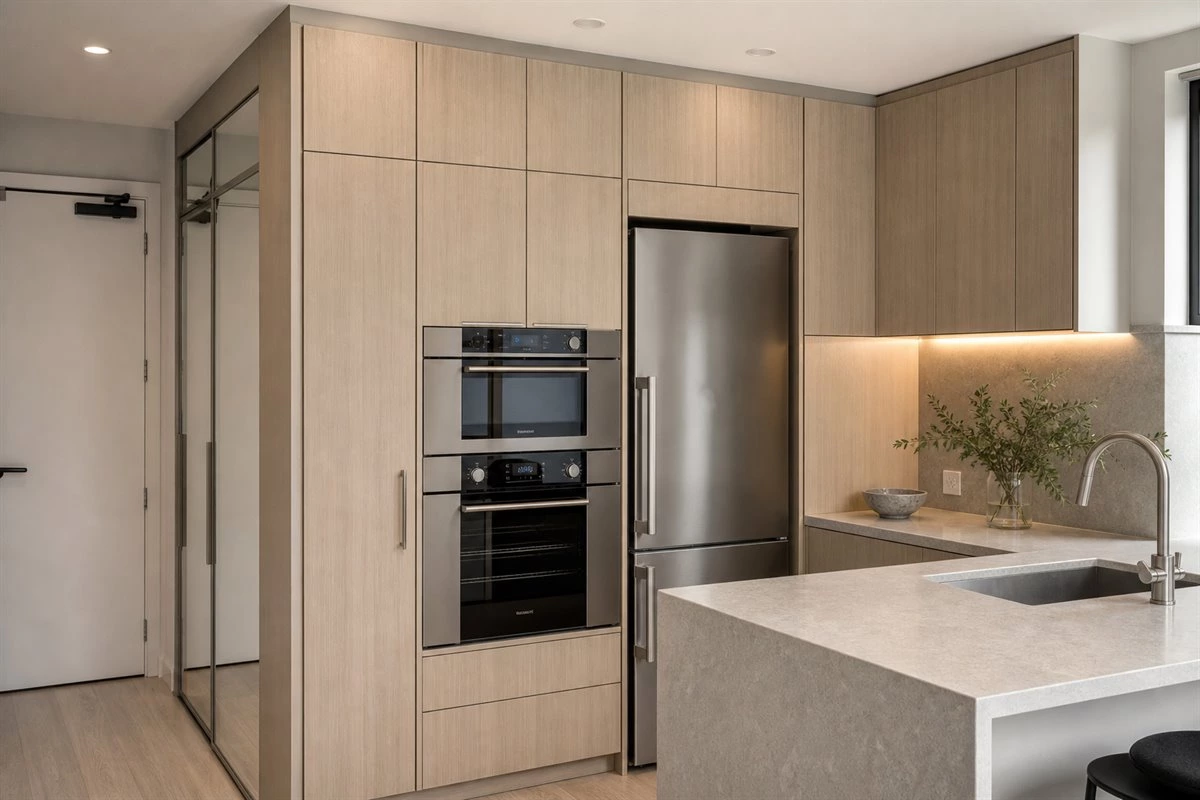
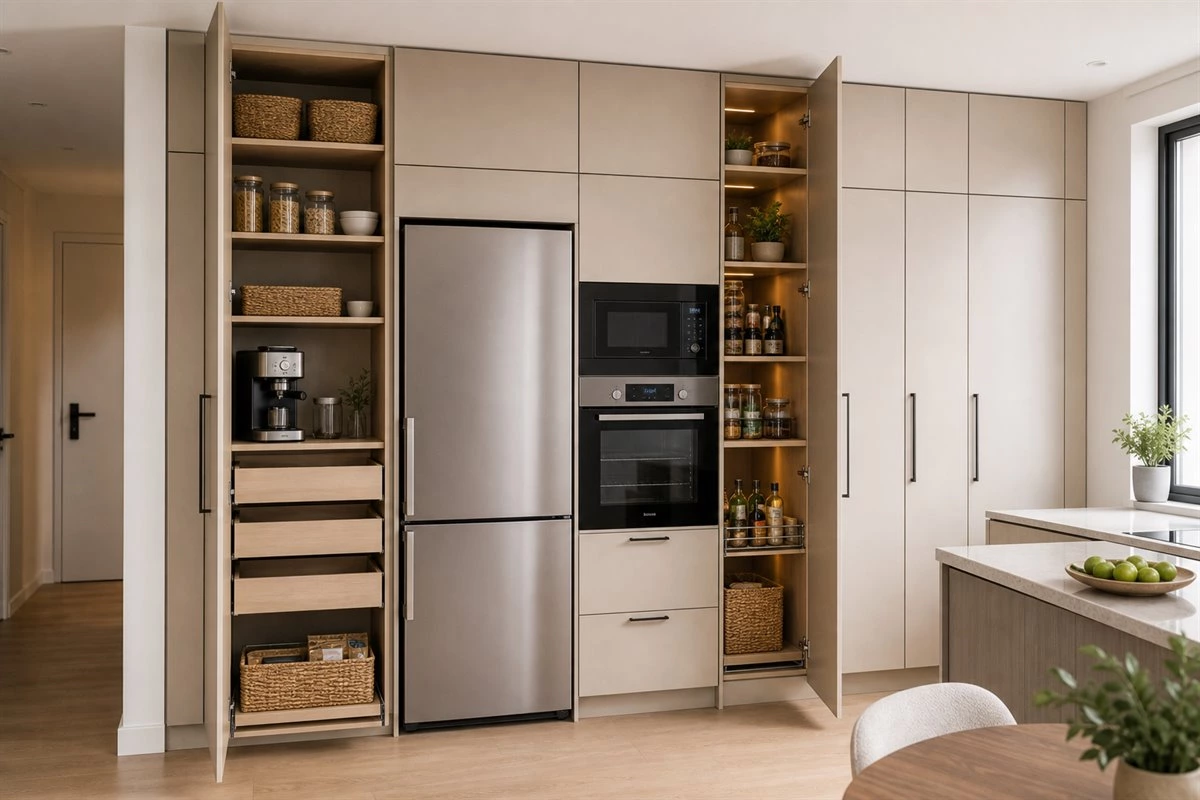
Use Tall Cabinets to Maximize Vertical Space
Tall cabinets are one of the most effective storage solutions for apartment kitchens because they use wall height instead of floor space. A full-height pantry cabinet can store dry food, cleaning supplies, small appliances, cookware, and bulk items in one compact vertical zone.
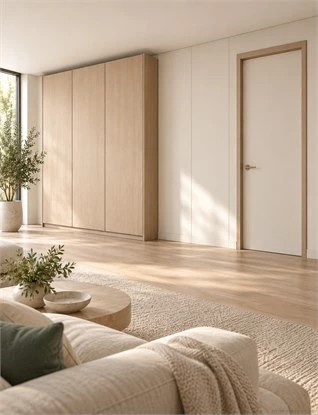
In small apartments, tall cabinets can also help reduce the need for extra freestanding storage furniture. When designed wall-to-wall or floor-to-ceiling, they create a cleaner built-in look and make the kitchen feel more intentional.
Custom tall cabinets can be adjusted by height, depth, width, shelving layout, drawer placement, and door finish. For planning reference, see our kitchen cabinet sizes guide.
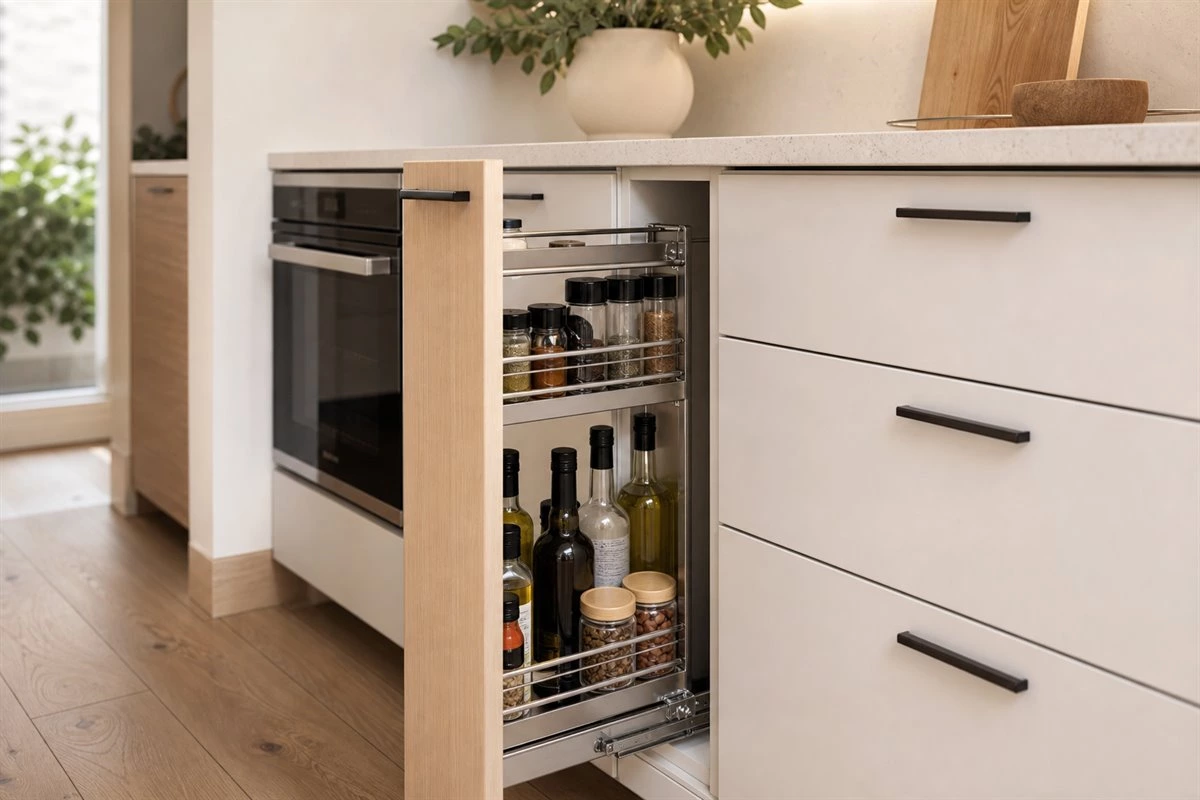
Add Narrow Pull-Out Cabinets
Narrow pull-out cabinets are ideal for small gaps that would otherwise be wasted. Even a 6-inch to 12-inch space can become useful storage for spices, oils, sauces, cutting boards, baking trays, or cleaning items.
These pull-outs work especially well beside cooktops, refrigerators, ovens, and sink cabinets. Instead of leaving filler panels with no function, a slim pull-out turns the space into organized storage.
Hardware quality matters because narrow pull-outs are used frequently. Smooth runners, stable baskets, and soft-close systems make the cabinet easier to use and more durable. Explore available cabinet hardware options for pull-outs, drawers, hinges, and storage accessories.
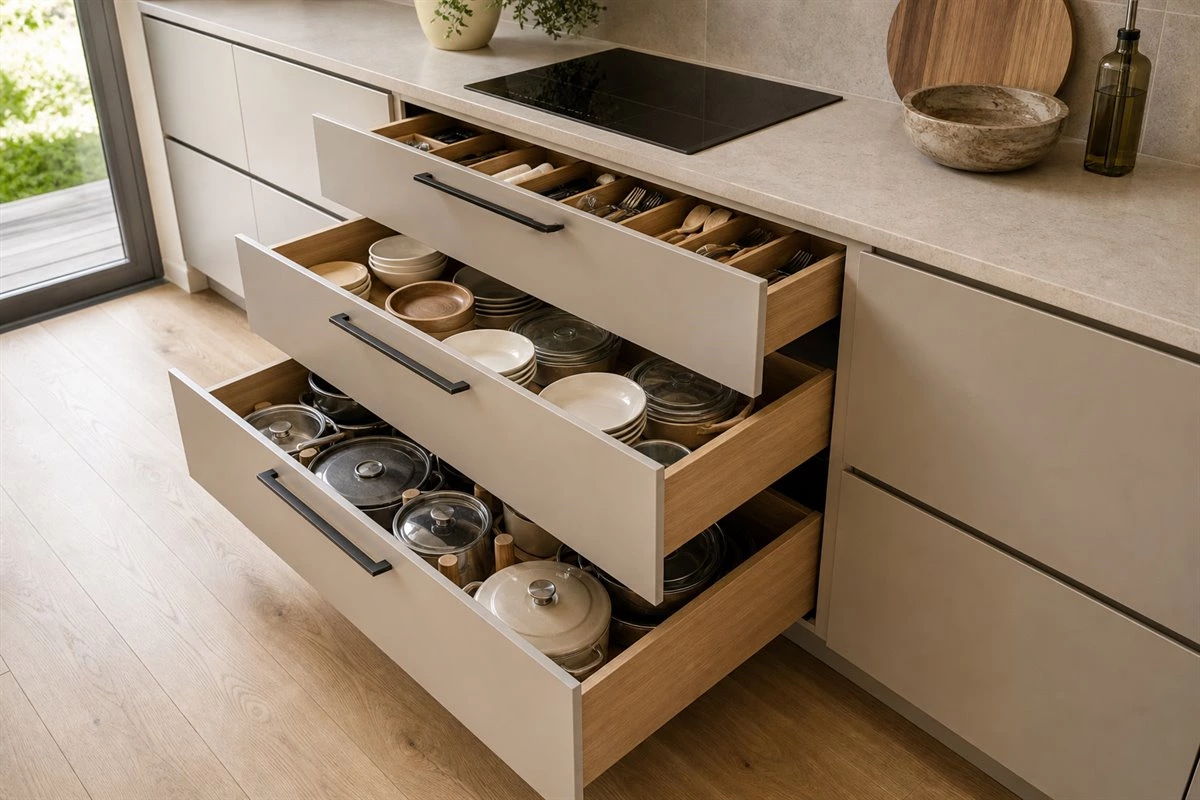
Choose Deep Drawer Base Cabinets
Deep drawer base cabinets are often more practical than lower door cabinets in small kitchens. Instead of bending down and reaching into a deep cabinet, users can pull the drawer out and see everything at once.
Deep drawers are useful for pots, pans, plates, bowls, food containers, and small appliances. With internal dividers, drawer pegs, and heavy-duty runners, they can hold heavier cookware while keeping the kitchen organized.
For apartments, drawer base cabinets can also reduce countertop clutter because frequently used items become easier to store and retrieve.
Use Corner Cabinet Pull-Out Systems
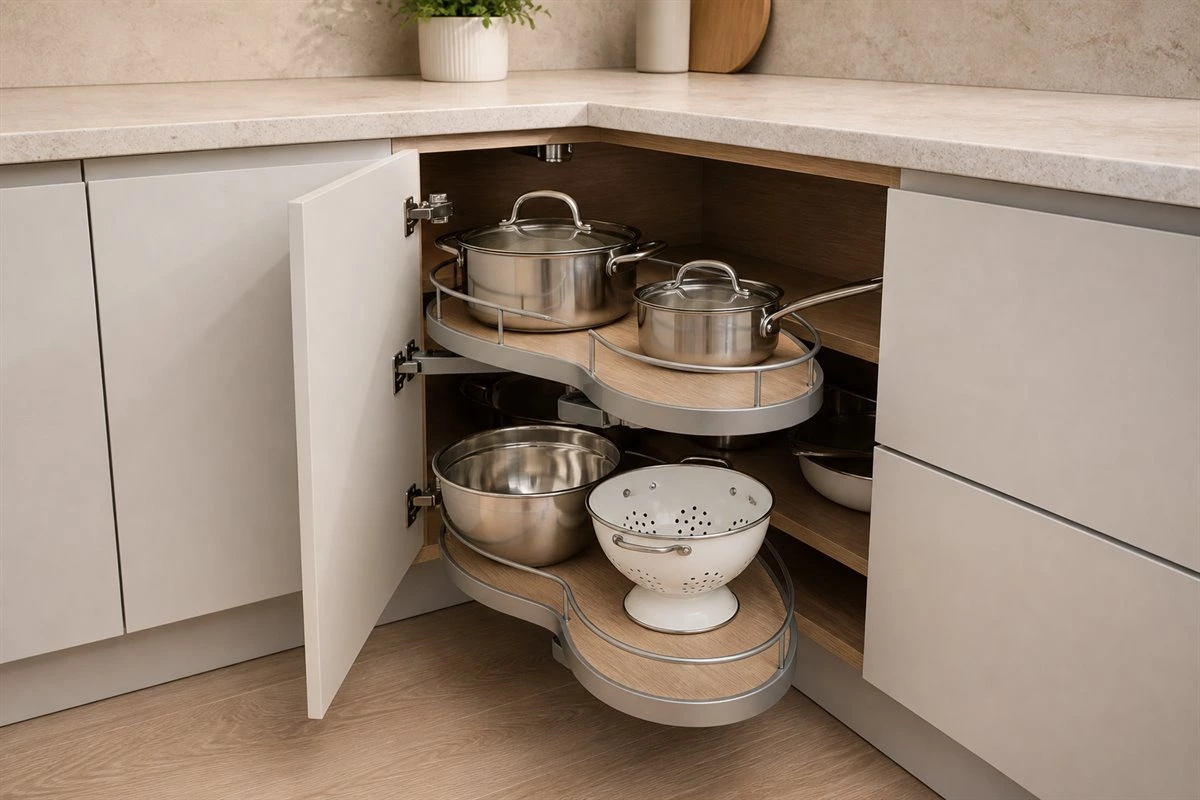
Corner cabinets are often one of the most wasted areas in small apartment kitchens. A deep corner without proper hardware can become a storage zone where items are difficult to see and reach.
Corner cabinet pull-out systems solve this problem by bringing stored items forward. Common options include lazy Susan trays, blind corner pull-outs, magic corner systems, and swing trays.
The NKBA kitchen planning guidelines also emphasize functional corner cabinet storage, making corner hardware an important part of professional kitchen planning.
Install Wall Cabinets Up to the Ceiling
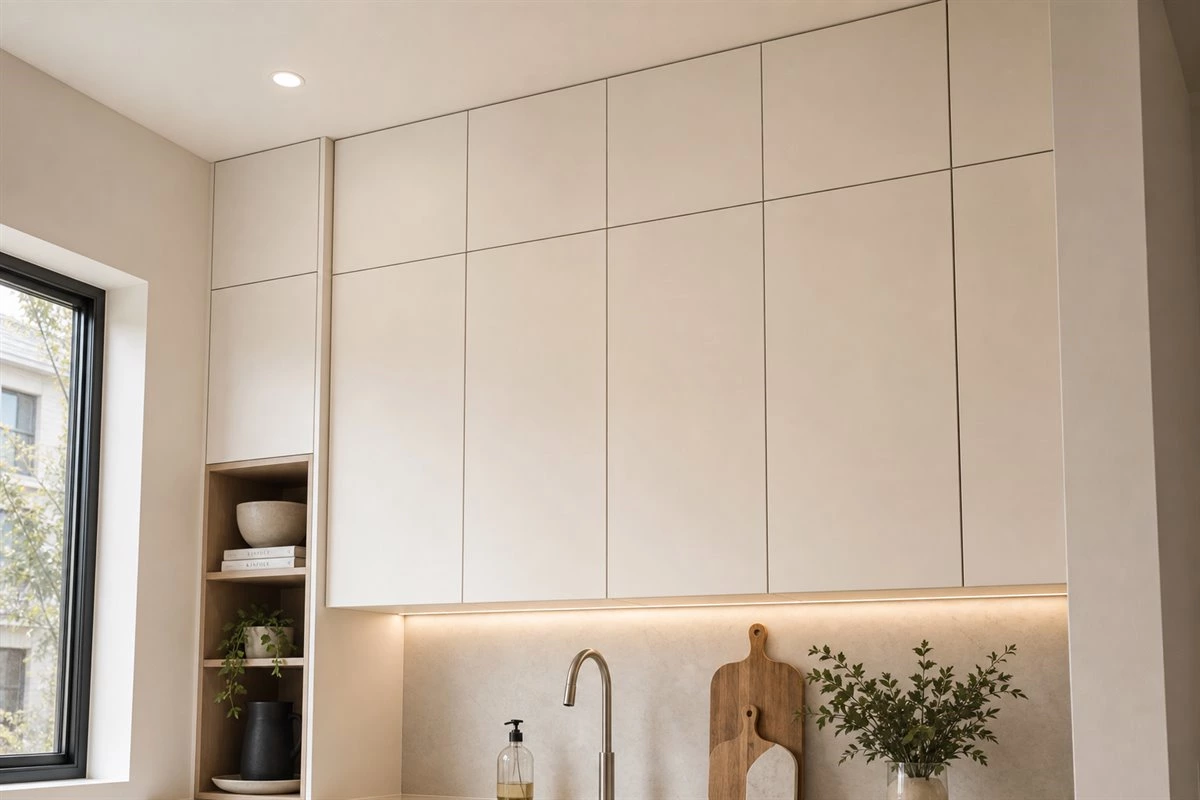
Ceiling-height wall cabinets are a smart choice for small kitchens because they add storage without taking more floor space. They also remove the dust-collecting gap between the top of the cabinet and the ceiling.
The upper section can store seasonal dishes, extra pantry items, rarely used cookware, or backup kitchen supplies. Lower wall cabinet shelves can hold everyday cups, plates, and cooking items.
To avoid a heavy look, use light cabinet colors, simple door profiles, vertical proportions, or glass display sections. In very narrow kitchens, soft white, warm beige, or light wood finishes can make tall wall cabinets feel less bulky.
Use Open Shelves for Everyday Items
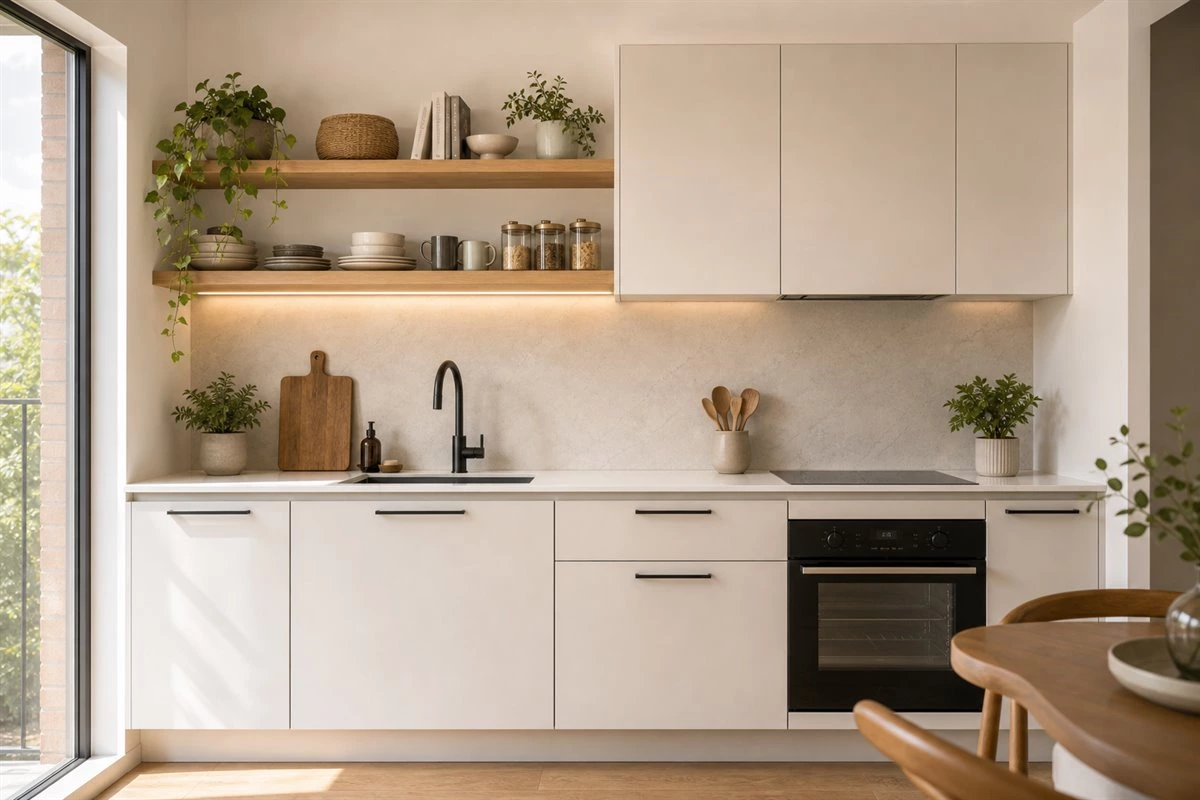
Open shelves can visually lighten a small kitchen when used carefully. They are best for items used every day, such as cups, plates, coffee supplies, bowls, or simple decorative objects.
However, open shelving should not replace too many closed cabinets. Too many exposed items can make a small apartment kitchen look messy. A balanced approach is better: use closed cabinets for bulk storage and open shelves for easy-access daily items.
Open shelves also work well near coffee zones, breakfast counters, or dining areas where frequently used items should be easy to reach.
Add Hidden Appliance Storage
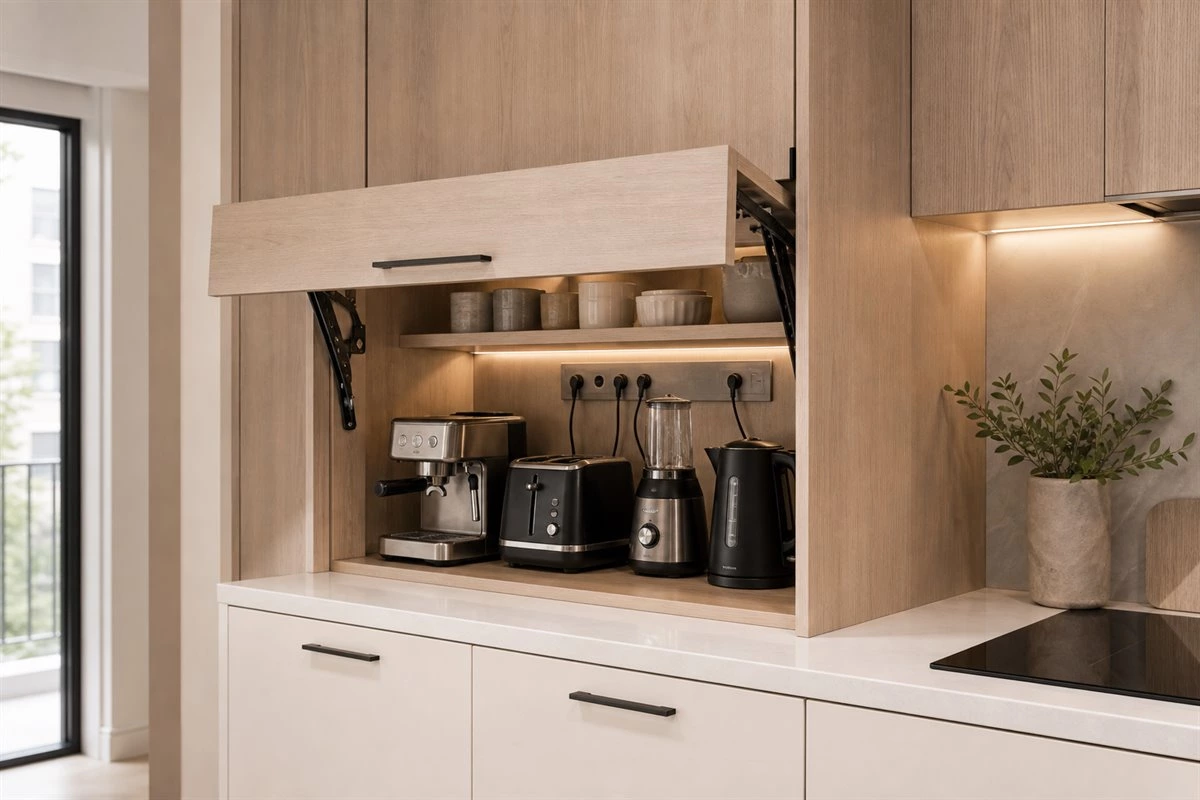
Small kitchens often feel crowded because appliances stay on the countertop. Coffee machines, toasters, blenders, rice cookers, and mixers can quickly take over the limited prep area.
Hidden appliance storage solves this problem. Appliance garages, lift-up doors, pocket doors, and cabinet zones with built-in outlets can keep appliances accessible but visually hidden when not in use.
This type of storage improves both function and appearance. The kitchen looks cleaner, and the countertop becomes more useful for cooking and food preparation.
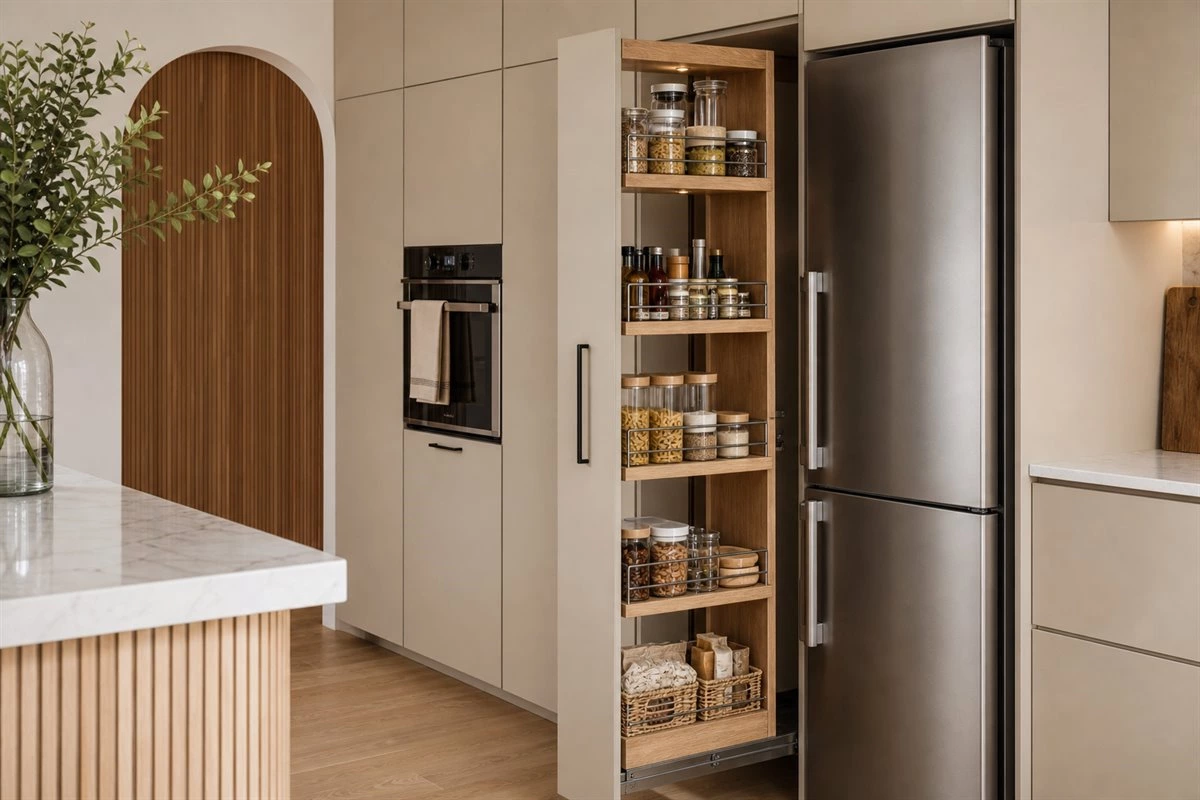
Use Pull-Out Pantry Cabinets
A pull-out pantry cabinet is a compact way to store dry food, snacks, bottles, jars, and cooking supplies. In apartment kitchens, it can replace a larger walk-in pantry or bulky freestanding shelf.
Slim pantry pull-outs can fit into narrow cabinet runs, while taller pantry pull-outs can store more items vertically. Because the storage pulls forward, users can see items from both sides instead of losing them at the back of a deep cabinet.
For small apartments, this type of cabinet is especially useful near the refrigerator, oven, or cooking zone.
Add Under-Sink Organizers
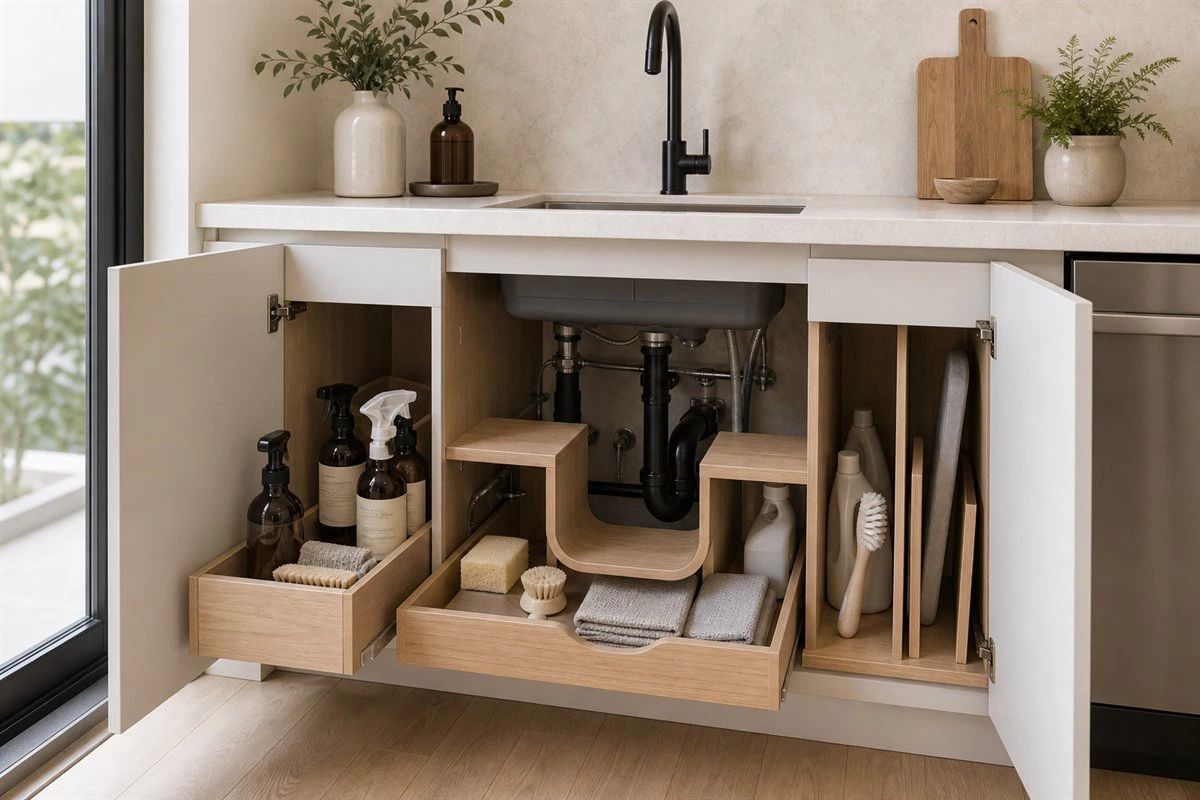
Under-sink cabinets are often poorly used because plumbing takes up space and makes standard shelving difficult. With the right organizer, this area can still store cleaning supplies, trash bags, dish soap, sponges, and small household items.
Useful options include pull-out bins, U-shaped drawers, door racks, cleaning baskets, and adjustable shelves. For apartment kitchens, under-sink organization keeps cleaning items hidden and prevents the cabinet from becoming a cluttered storage space.
Use Toe-Kick Drawers
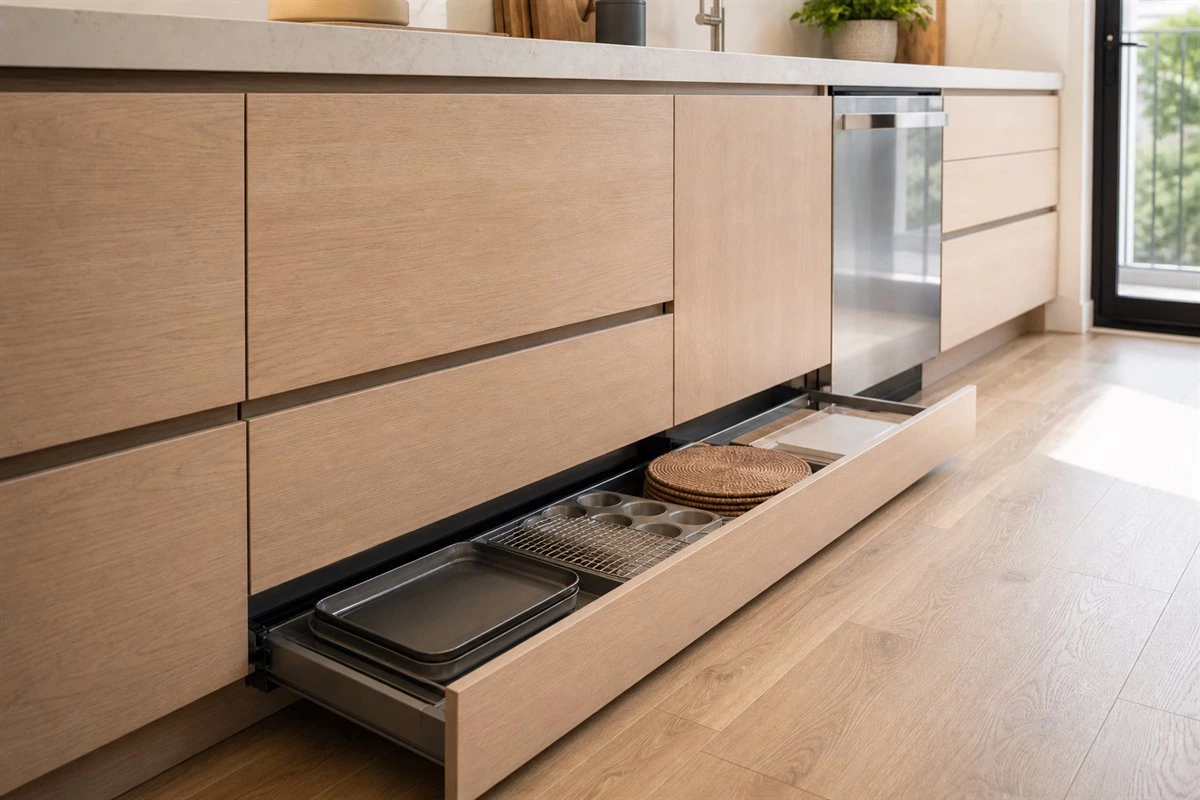
Toe-kick drawers use the space below base cabinets. This area is often ignored, but in a small kitchen it can provide extra storage without changing the cabinet footprint.
Toe-kick drawers are best for flat items such as baking trays, serving boards, table linens, placemats, or rarely used kitchen tools. They should be planned carefully so they do not interfere with standing comfort or cabinet installation.
For compact apartments, toe-kick storage is a smart way to add hidden capacity without making the kitchen look busier.
Choose Light Colors and Reflective Finishes
Cabinet finish affects how spacious a small kitchen feels. Light colors and reflective surfaces can make apartment kitchens look brighter, cleaner, and more open.
Good finish options include white, warm beige, light wood, gloss PET, soft matte lacquer, and pale neutral laminates. Glossy or satin surfaces can reflect more light, while light wood adds warmth without making the kitchen feel heavy.
Dark finishes can still work in small kitchens, but they should be balanced with good lighting, light countertops, and clean cabinet lines. For more color planning tips, read our kitchen cabinet color guide.
Customize Cabinet Layout Around Appliances
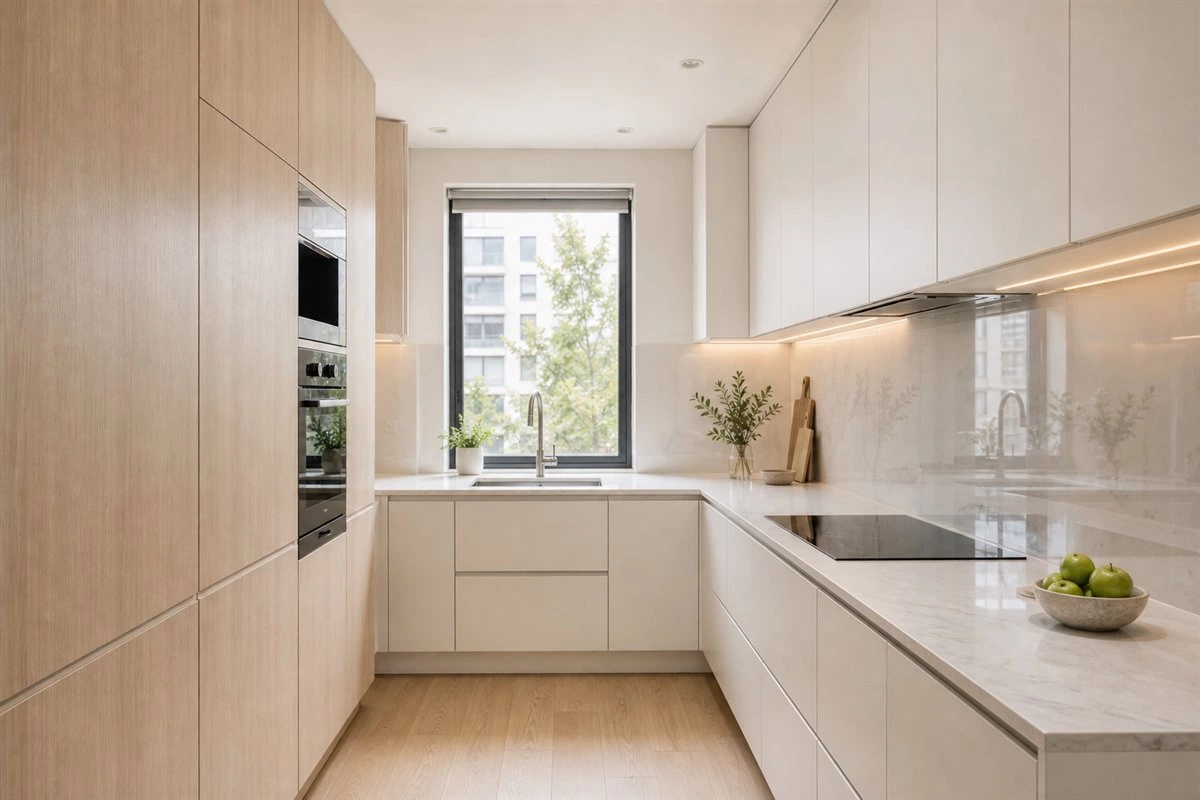
Apartment kitchens often need compact appliance planning. Built-in ovens, integrated refrigerators, dishwasher drawers, microwave cabinets, and compact cooktops must be placed carefully so they do not interrupt workflow.
Custom cabinets make this easier because the cabinet layout can be designed around appliance dimensions, electrical requirements, ventilation, and daily use. For appliance planning, it is useful to check measurement guidance such as this Home Depot appliance measuring guide.
Energy-efficient appliance planning can also support long-term savings. ENERGY STAR provides useful information on energy-efficient products, including refrigerators, dishwashers, cooking products, and other home appliances.
For real design references, browse our custom kitchen cabinet projects.
Best Cabinet Layouts for Small Apartment Kitchens
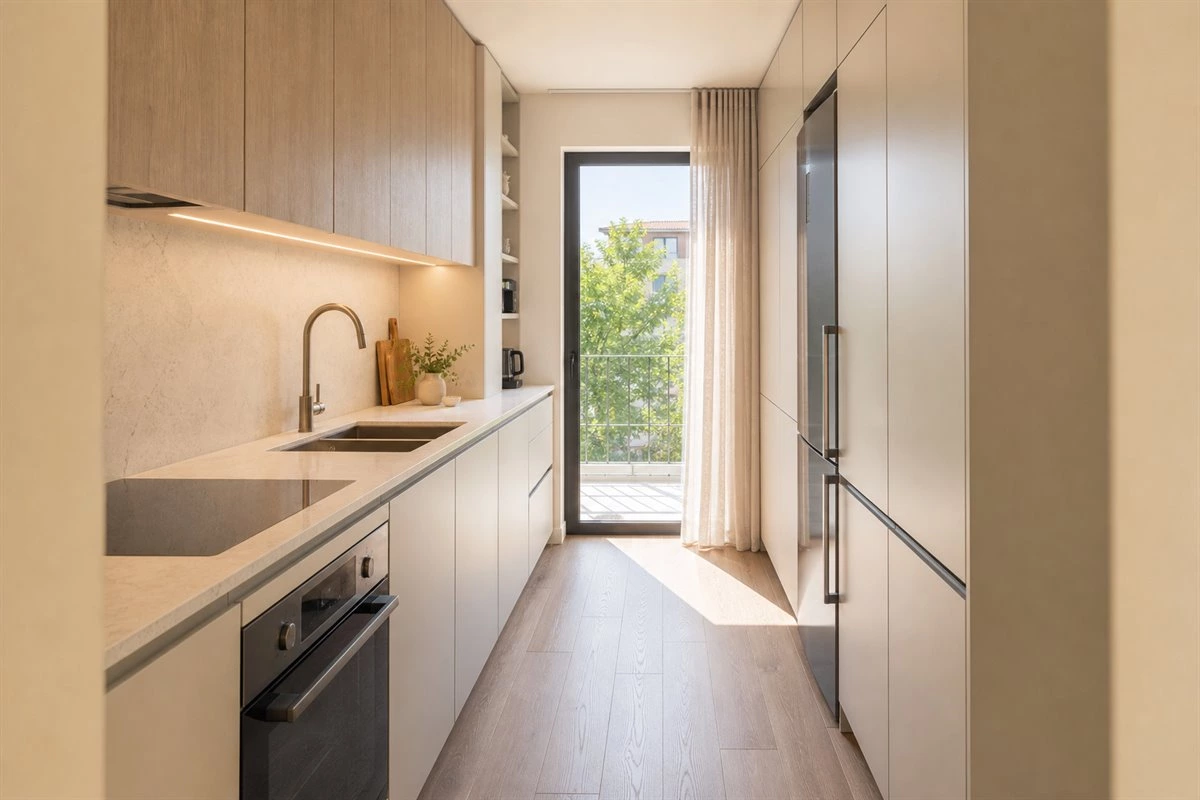
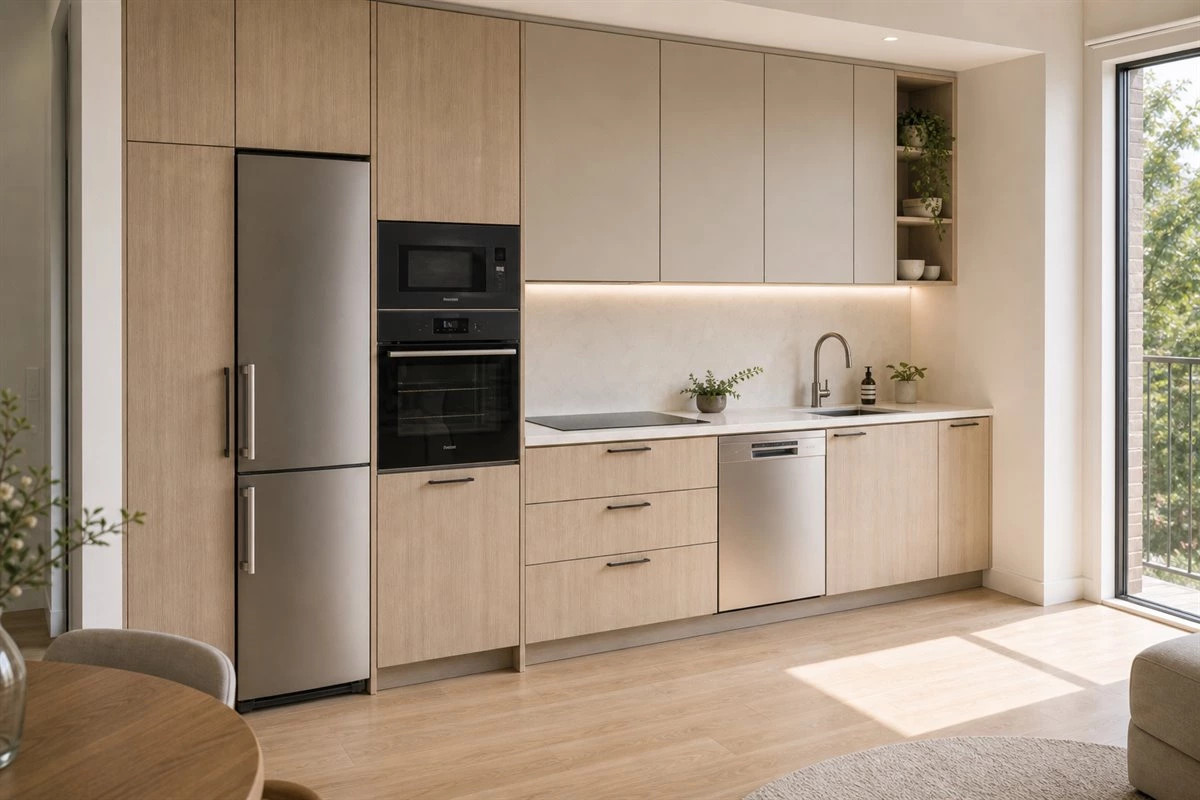
The best cabinet layout depends on the apartment floor plan, window position, appliance needs, and available wall length. A galley kitchen needs a different storage strategy from an open-plan apartment kitchen.
| Layout | Best Storage Strategy |
|---|---|
| Galley Kitchen | Tall cabinets plus narrow pull-outs |
| L-Shaped Kitchen | Corner pull-outs plus deep drawers |
| One-Wall Kitchen | Ceiling-height cabinets plus appliance integration |
| U-Shaped Kitchen | Drawer bases plus under-sink organizers |
| Open-Plan Apartment | Hidden appliance storage plus light finishes |
Materials and Hardware for Small Kitchen Cabinets
Small kitchen cabinets need durable materials because they are used frequently in tight spaces. Common cabinet materials include plywood, MDF, melamine, PET, laminate, lacquer, and veneer. Each material affects cost, appearance, cleaning, moisture resistance, and long-term performance.
For modern apartment projects, E0 or E1 environmental-grade panels are often preferred. These materials support better indoor air quality and are suitable for residential spaces. Learn more about Allure’s eco-friendly cabinet materials.
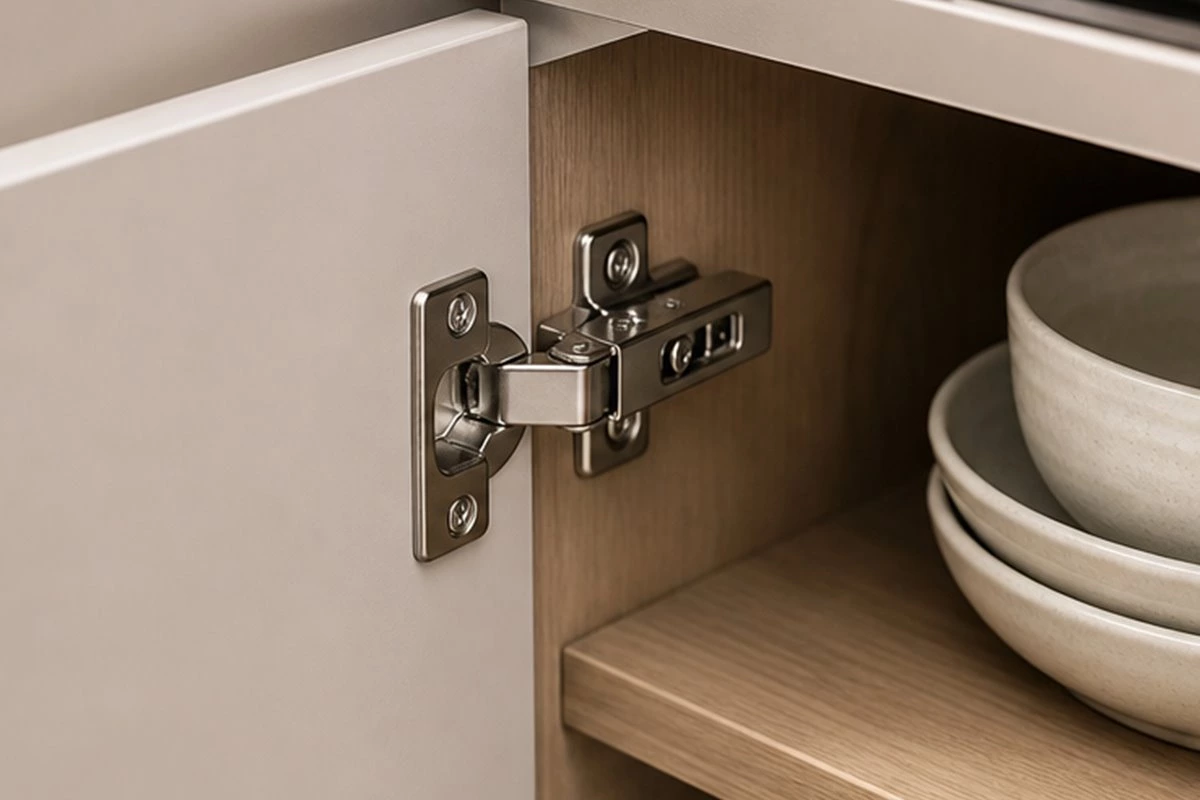
Hardware is just as important as material. Soft-close hinges, heavy-duty drawer slides, pull-out baskets, lift-up systems, corner hardware, and internal organizers make small cabinets more efficient and easier to use.
Common Small Kitchen Cabinet Mistakes
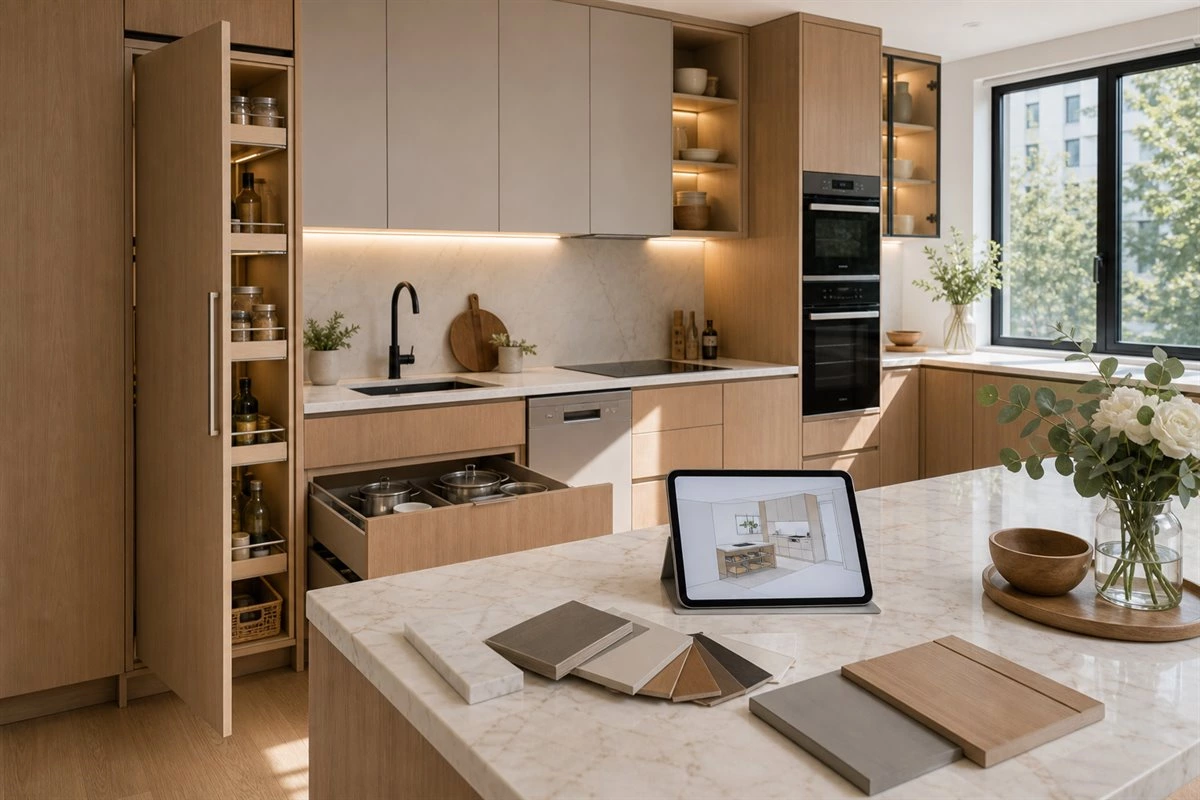
Small kitchens become difficult to use when storage is planned only by appearance. A compact cabinet layout must balance beauty, access, storage capacity, appliance placement, and movement.
- Using too many open shelves and creating visual clutter.
- Ignoring vertical wall space above standard cabinets.
- Choosing oversized appliances for a compact layout.
- Leaving corners without pull-out storage systems.
- Using too few drawers for cookware and daily items.
- Selecting dark finishes without enough lighting.
- Forgetting under-sink organizers.
- Leaving unused gaps between cabinets and ceiling.
- Not measuring appliance dimensions before cabinet production.
FAQ About Small Kitchen Cabinet Storage
What is the best cabinet storage idea for a small apartment kitchen?
Tall cabinets, deep drawers, and pull-out pantry systems are among the best options because they increase usable storage without taking more floor space.
Are custom cabinets worth it for small kitchens?
Yes. Custom cabinets can fit narrow walls, awkward corners, appliance zones, and ceiling heights more precisely, reducing wasted space and improving storage efficiency.
How do I make a small kitchen feel bigger?
Use light cabinet colors, reflective finishes, ceiling-height storage, clean cabinet lines, hidden appliance storage, and organized countertops.
What cabinet color is best for a small kitchen?
White, warm beige, light wood, and soft matte finishes work well because they make the kitchen feel brighter and more open.
How can I add storage without making my kitchen crowded?
Use vertical cabinets, narrow pull-outs, toe-kick drawers, under-sink organizers, hidden appliance storage, and custom drawer systems.
What cabinet hardware is best for small kitchens?
Soft-close drawer slides, pull-out baskets, lift-up doors, corner pull-out systems, and slim pantry hardware are especially useful for small kitchens.
Should small kitchens use open shelves?
Yes, but only in moderation. Open shelves are useful for everyday items, but too many exposed objects can make a small kitchen look cluttered.
Conclusion
Small apartment kitchens need smarter cabinet planning, not more bulky furniture. Tall cabinets, narrow pull-outs, deep drawers, corner systems, hidden appliance storage, toe-kick drawers, and light finishes can all help maximize every inch.
With custom sizing, reliable hardware, durable materials, and professional layout planning, a small kitchen can feel cleaner, brighter, and more practical for daily cooking.
Need small kitchen cabinets that maximize every inch? Contact Allure Cabinetry for custom apartment kitchen cabinet design, storage systems, material options, and project support.