The Latest Beautiful Countertop Trends to Follow
For the latest countertop trends, kitchens are becoming bolder with heavy textures, confident use of colors, and durable, beautiful materials. Countertop trends are increasingly focused on creating drama and impact. Luxurious materials can achieve a stunning effect, whether in busy residential homes or kitchens used for entertaining and socializing. With the constant emergence of kitchen brands and innovative design concepts, you're sure to find a stylish look that suits you.
Kitchen countertop trends are most successful when a distinctive surface also works for the way the kitchen is used. A countertop must coordinate with cabinet finishes, lighting, appliances, splash zones, storage, and the daily cleaning routine. The most lasting trend is not simply a color or pattern; it is a surface choice that remains practical after the first impression.
Dark Countertops
Dark surfaces are a trend in modern kitchen design that can help you achieve a dramatic look. Dark countertops can have different subtle variations and tones, making them more distinctive. Dark colors can be foundational or luxurious, bold or elegant, industrial or classic, traditional or modern.
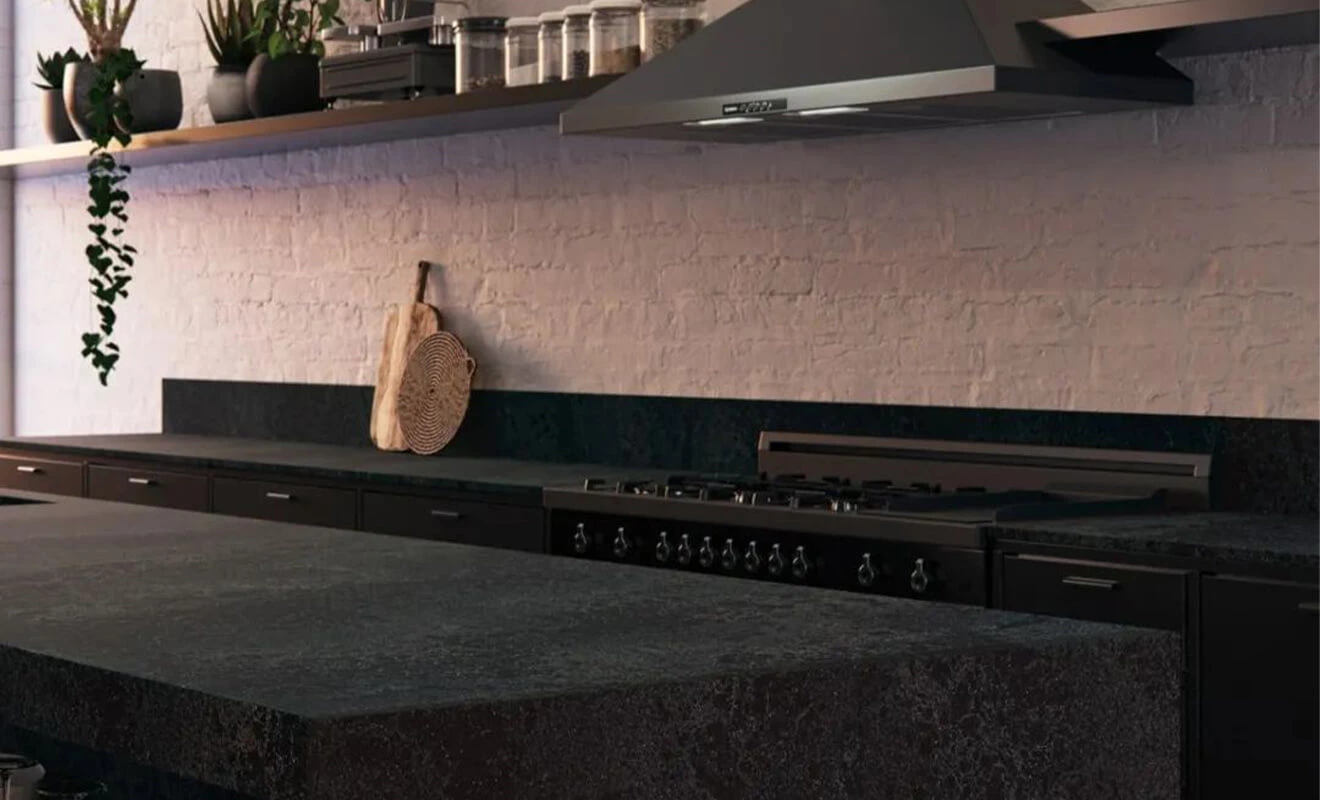
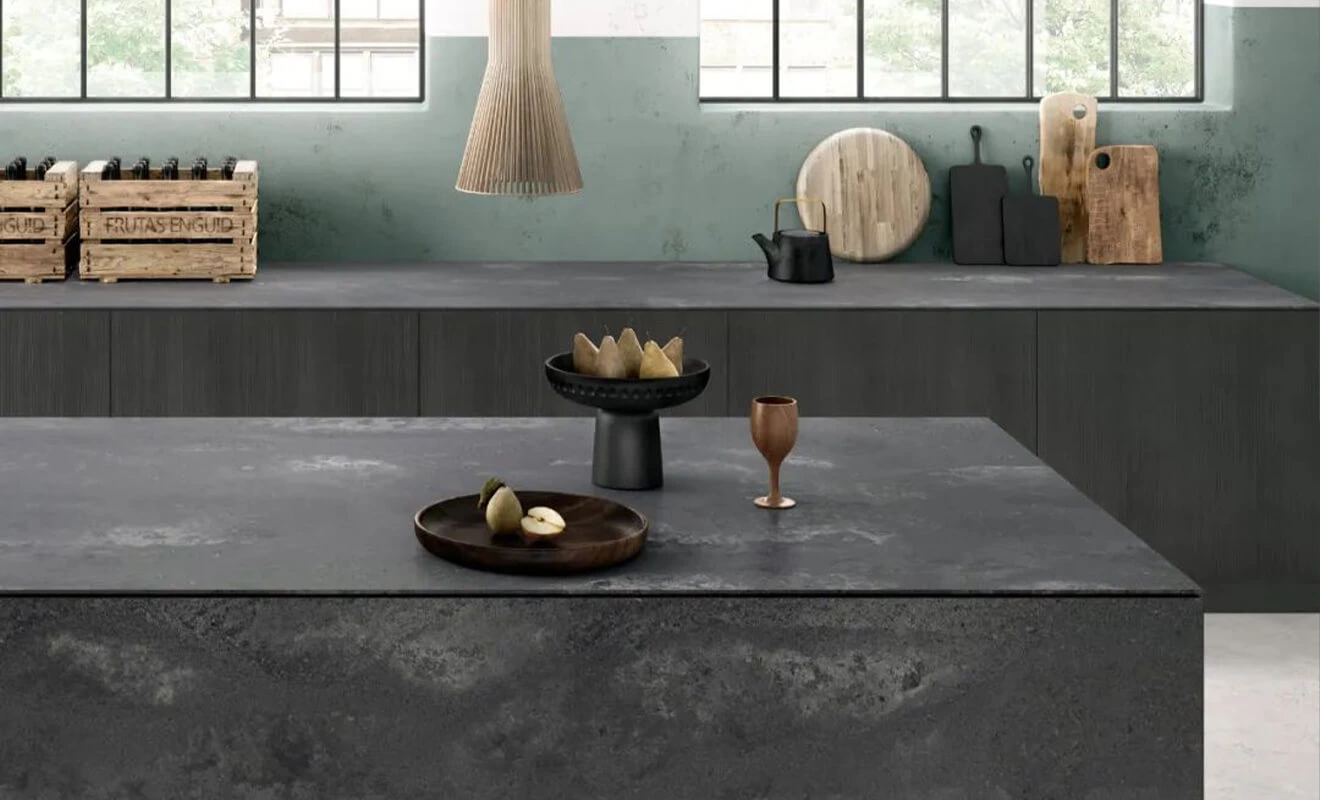
Dark kitchen countertops work particularly well when the room has balanced lighting and enough contrast around the work zone. A charcoal, deep brown, or black surface can anchor pale cabinetry, warm wood veneer, or metal details. In a compact kitchen, consider how a dark slab will read beside the backsplash and floor so that the kitchen retains enough visual depth rather than becoming one heavy block.
Quartz
Quartz is a special material that is highly attractive. It is a man-made stone made from chips, resins, and pigments, while quartz is a metamorphic rock that was once sandstone. It can create stunning kitchen countertops. Some quartz options have a particularly appealing appearance, making them suitable as beautiful and luxurious stones for regular kitchen use. Lovely textures can also be applied to quartz, adding more dimensions to the stone's appearance and highlighting its natural beauty.
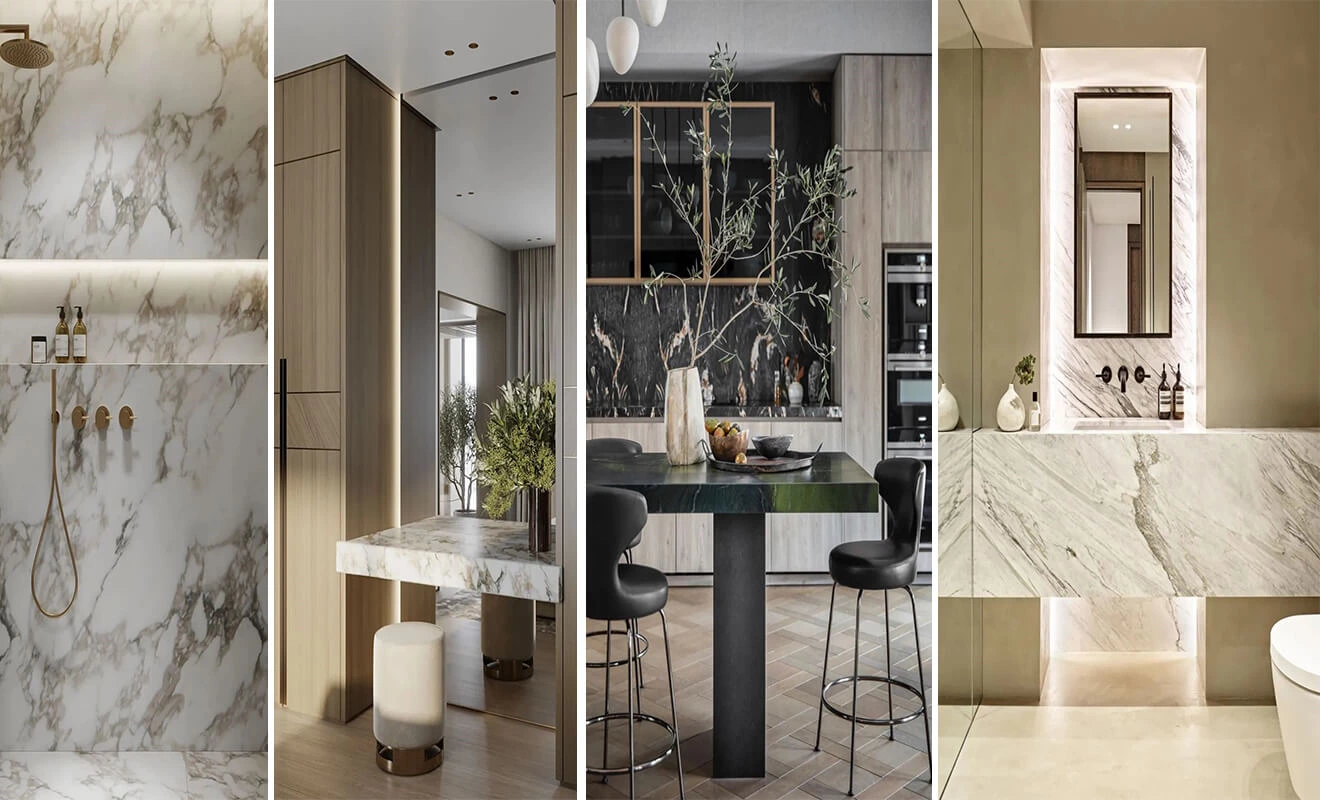
Quartz remains relevant because it can support a wide range of cabinet directions, from calm neutral kitchens to high-contrast contemporary spaces. When reviewing samples, look beyond the main pattern: compare the slab repeat, surface finish, edge profile, seam placement, and how the material looks under the actual kitchen lighting. For a dedicated comparison, see how to choose between quartz and sintered stone countertops.
Countertop Lighting
Personalized marble island countertops and marble kitchen countertops have been popular for a while, and selecting a thick-cut countertop as the centerpiece of the room is often the preferred way to showcase the stone. Now, you can choose to make the island countertop glow. Certain countertop options come with a backlit translucent effect, making them radiant. Crystal textures with golden tones can give it a lava-like appearance that is stunning when paired with warm neutrals and metallic accents. In modern homes, it's about striking a balance between clean spaces and cozy warmth, achieved by adding texture rather than contrasting colors or excessive objects. Maximizing the texture of stone countertops through backlighting creates beautiful features, showcasing not only the unique internal structure but also introducing an overall sense of warmth throughout the design.
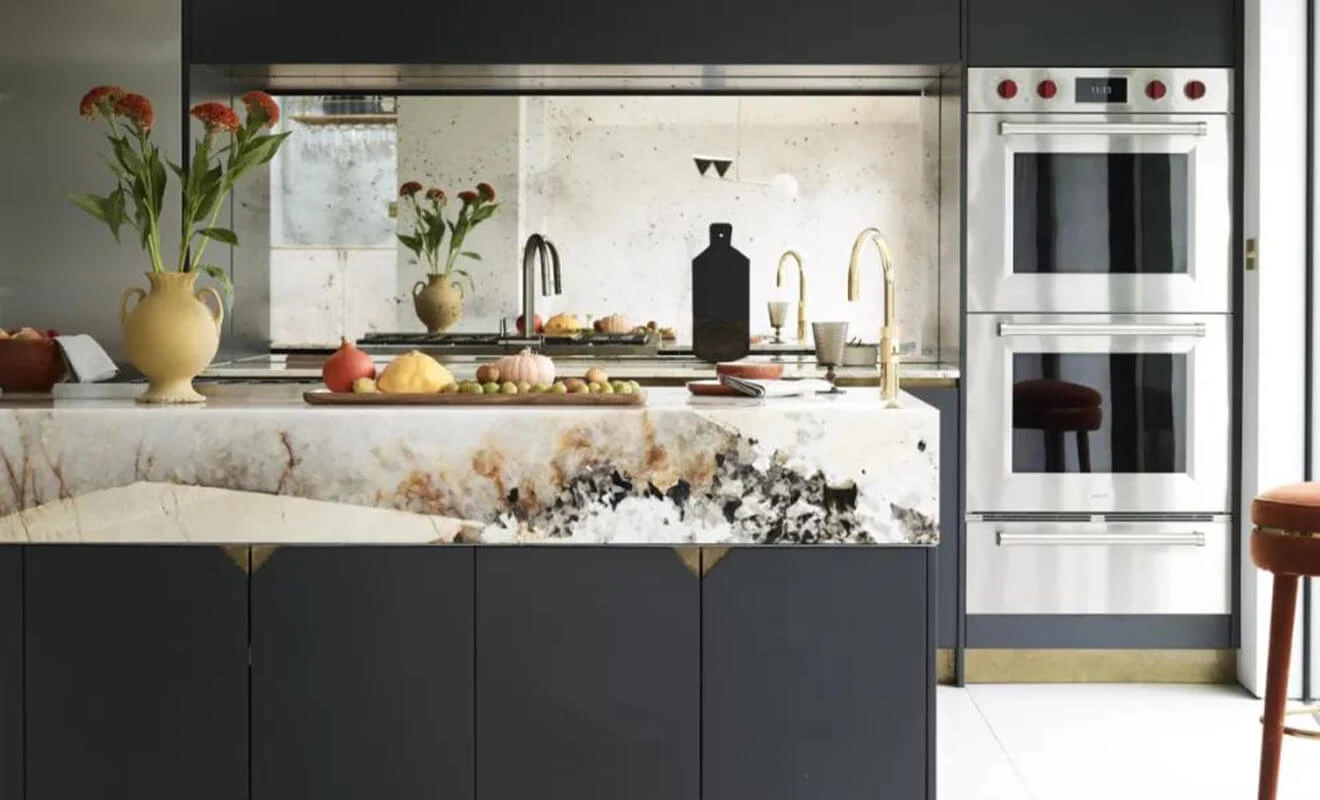
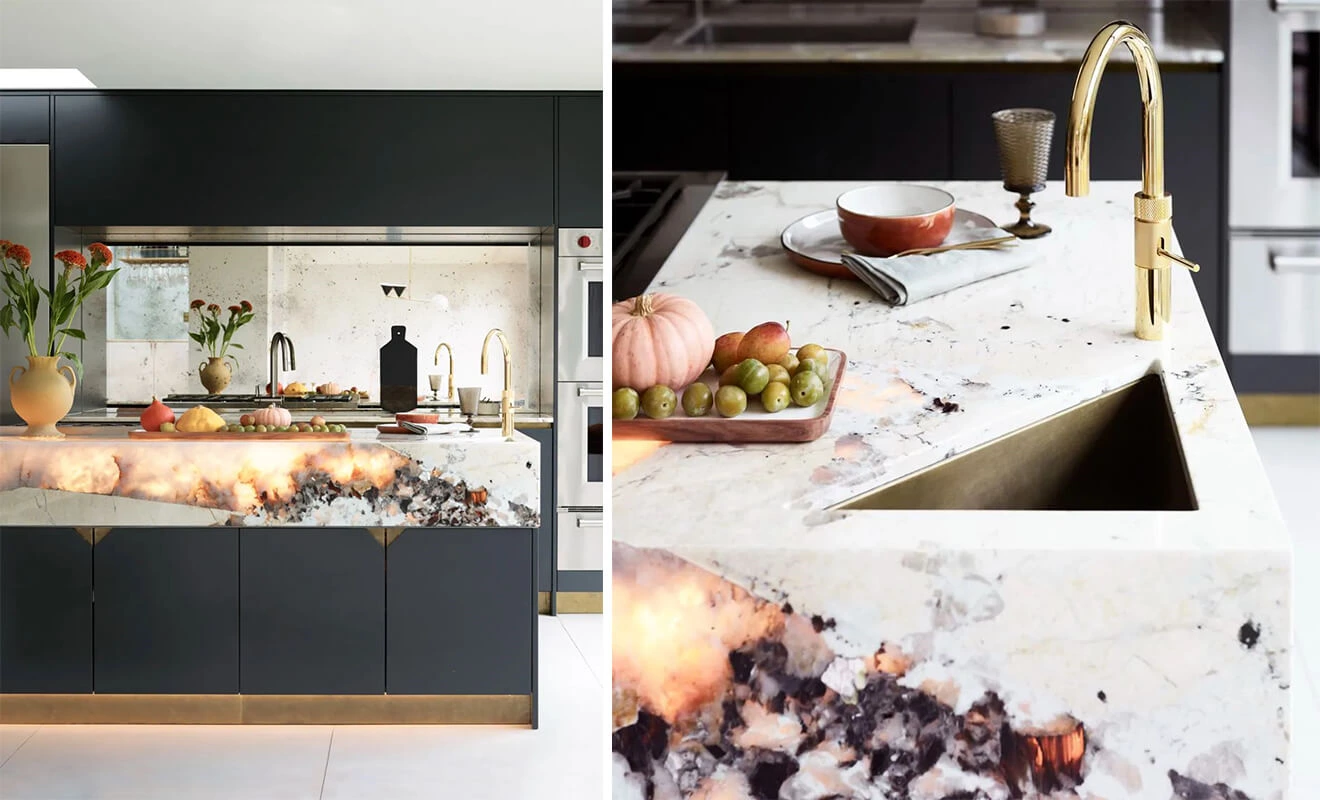
Lighting is most effective when it is designed with the slab and cabinet construction, not added at the end. A backlit feature needs an appropriate material, a concealed support system, ventilation where required, accessible electrical components, and a controlled light temperature. Even without a translucent stone feature, under-cabinet lighting and carefully placed pendants can make veining, texture, and work zones easier to see.
Natural Colors
We've long desired to bring the outdoors inside and create a sense of nature and tranquility in our homes. Natural colors and earthy tones will continue to dominate kitchens this year. From pairing deep olive and sage green walls with dark cabinets to warm surfaces like brown, understated colors show no signs of losing their popularity, combined with wooden accents and warm metallic finishes. Homeowners and designers are increasingly embracing natural hues and finishes as the core of their interiors.
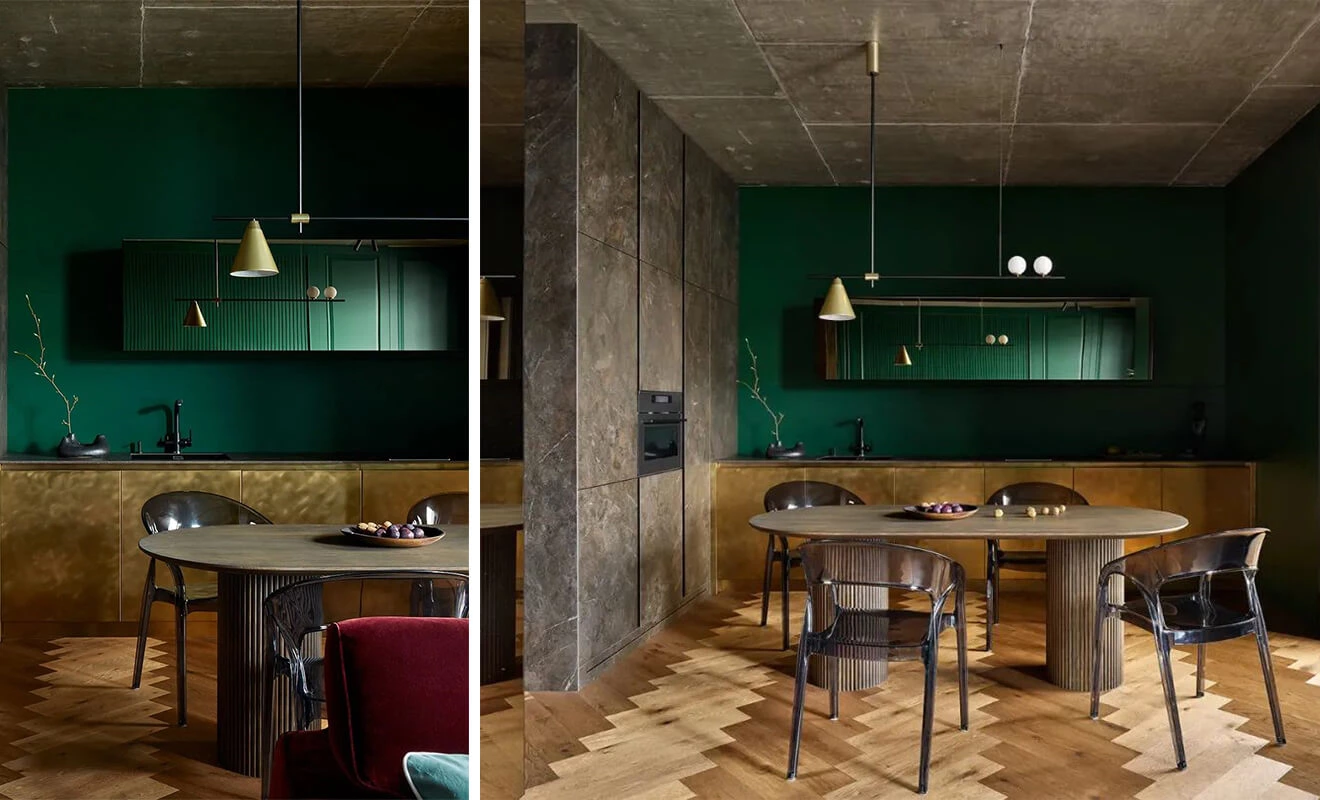
Natural colors make it easier to connect the countertop with the rest of the home. Soft taupe, sand, clay, olive, tobacco, and warm grey tones can pair with wood grain, brushed metal, fluted glass, or painted cabinetry without relying on a strong contrast. Approve full material samples together, including the cabinet door, handle, backsplash, flooring, and countertop, because individual samples can change character when viewed as a complete palette.
Texture
Countertops with textured appearances show no signs of waning, as homeowners often request attention-grabbing patterns that add interest and drama to their kitchens. These incredibly decorative and luxurious materials add charm to the kitchen. We're seeing more people matching their countertop material with their backsplashes, creating a greater impact.
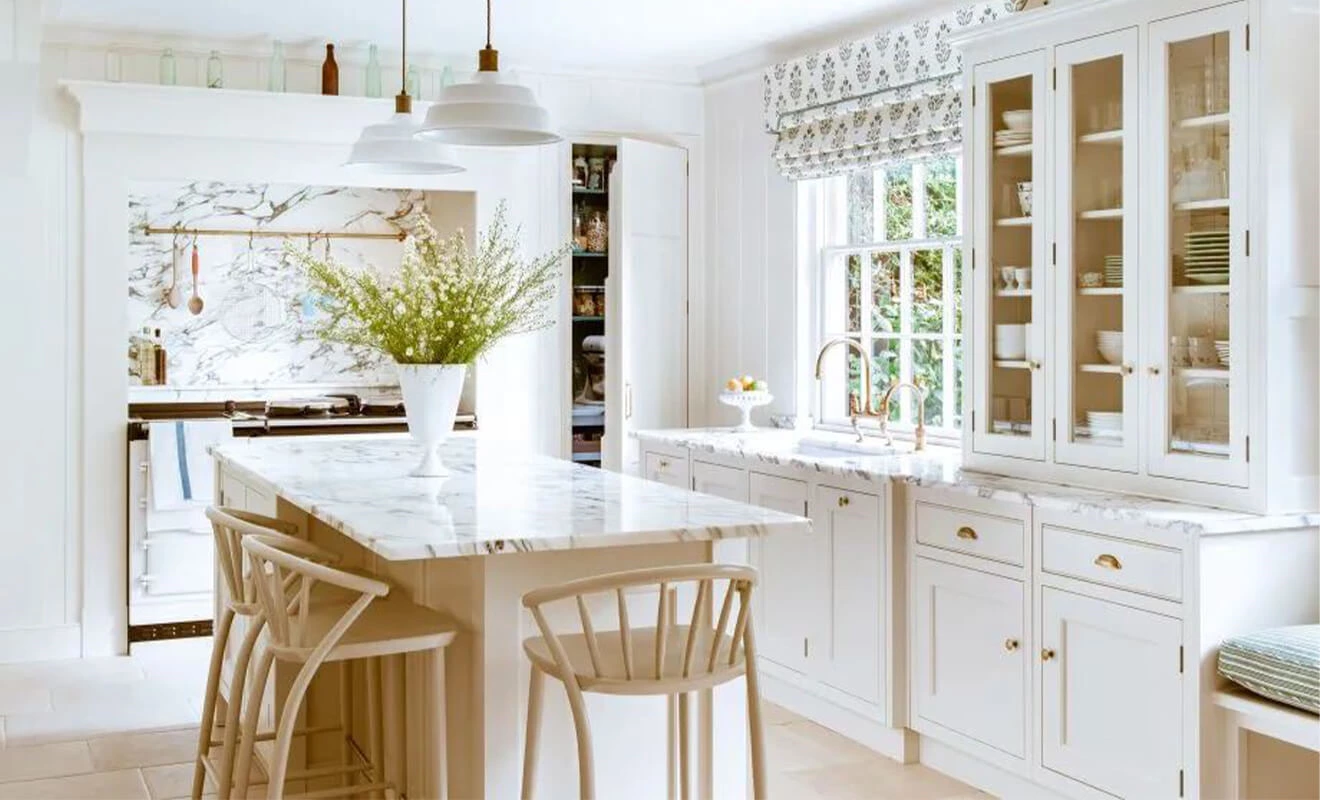
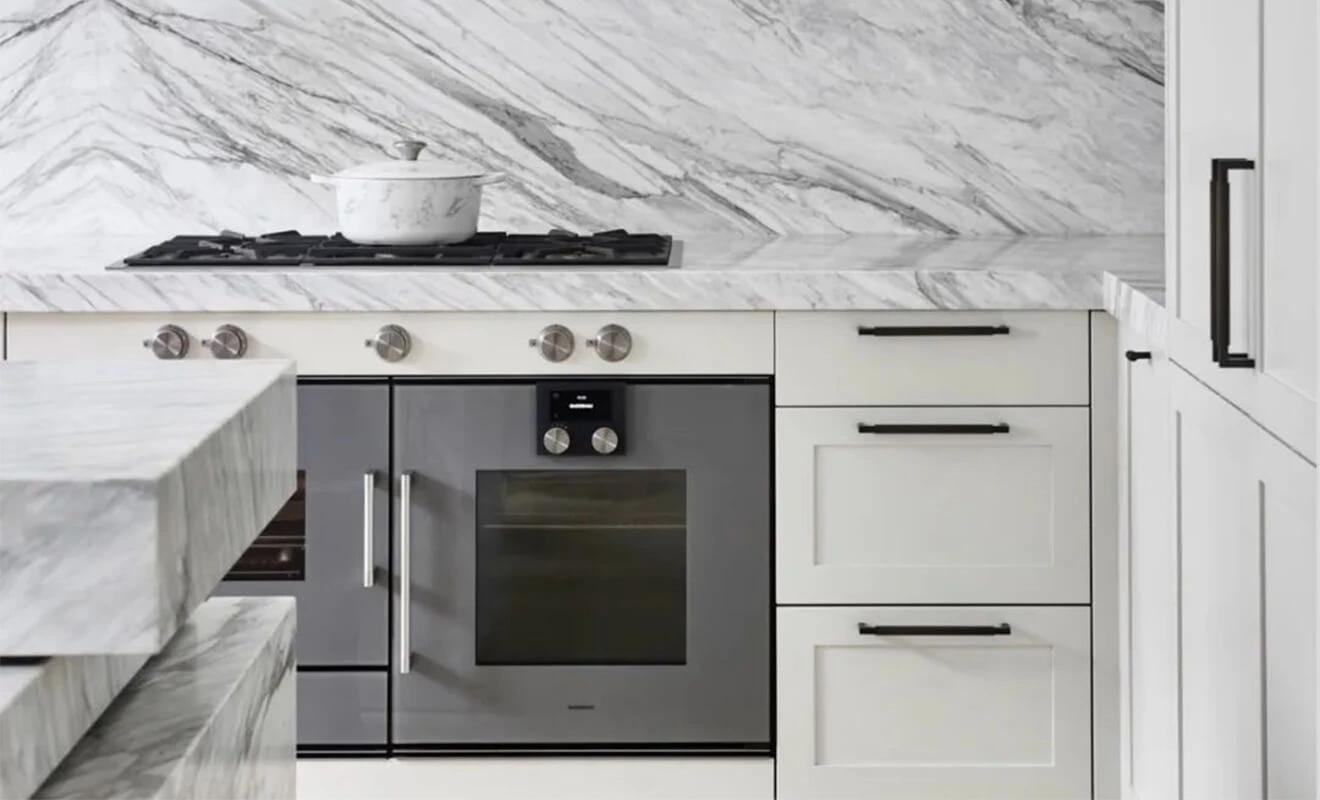
Book-matched slabs, continuous backsplash material, leathered finishes, and directional veining can create a strong architectural effect. They also require a clear drawing set. Confirm the slab layout, pattern direction, seams, outlets, appliance cut-outs, and the transition from horizontal countertop to vertical backsplash before cutting begins. A beautiful slab can lose impact when these details are left to site decisions.
Smooth Curves
Curves had a strong presence in 2022, with their aesthetic appearing in every room of the house, from curved sofas in the living room to rounded edges on kitchen islands and countertops made of hard materials. The hardness and weight of marble are softened beautifully by the curved edges of the island countertop, making the space feel cozy. As we seek a more organic and rounded feel indoors, rough and sharp lines are being replaced by smoother curves and contours.
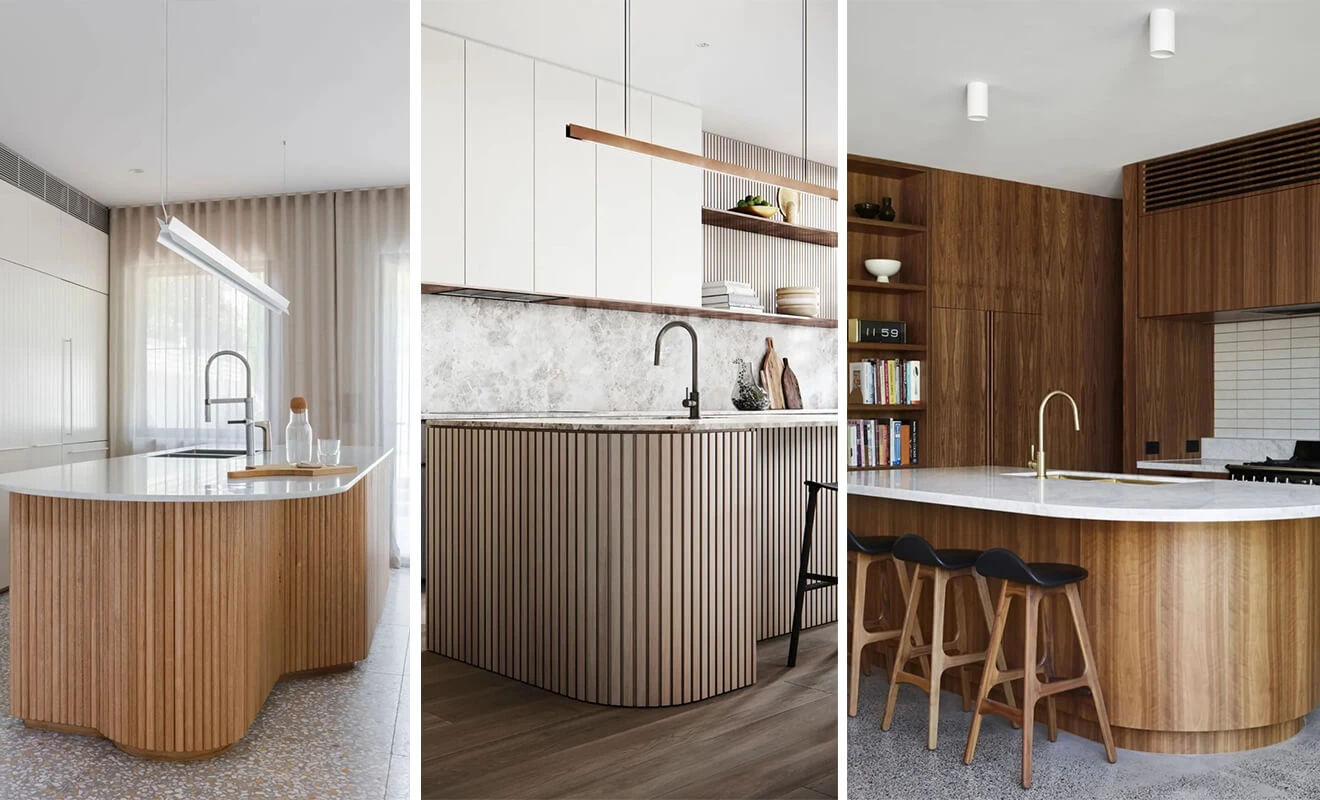
Curved edges can make an island friendlier to move around and create a softer visual transition in open-plan rooms. The radius, cabinet support, material thickness, edge finishing, and template accuracy should be confirmed early. Curves tend to increase fabrication complexity, so a clear approval drawing helps align the design goal with the available material and project budget.
Wood
Wooden countertops are making a comeback in kitchens, particularly for creating a rustic kitchen concept. Although it was once considered a challenging choice due to its porous nature, wood is making a comeback as we learn how to treat wood and moisture. Wood has been underestimated and often seen as a difficult material to work with. However, it provides a warm and tactile feel, is easy to maintain with regular care, and retains a soft and cozy ambiance.
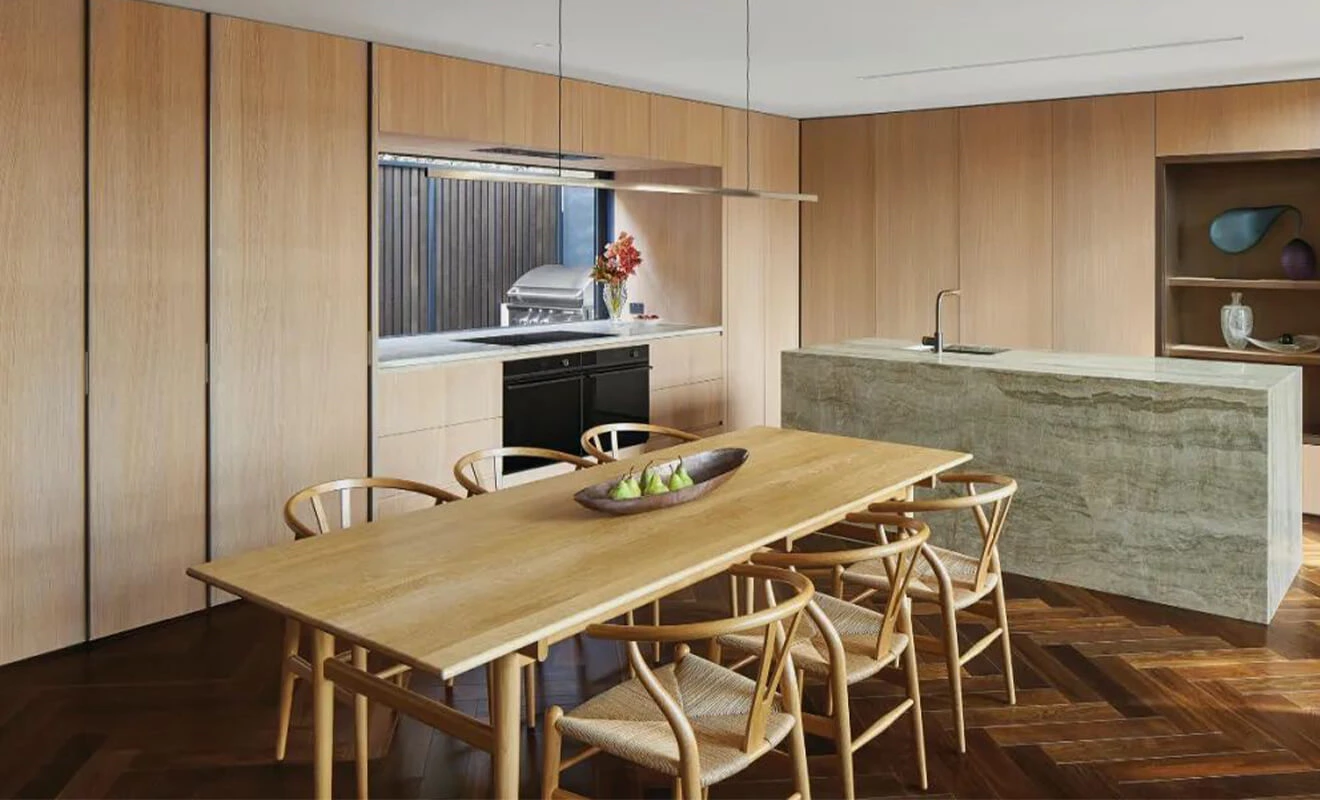
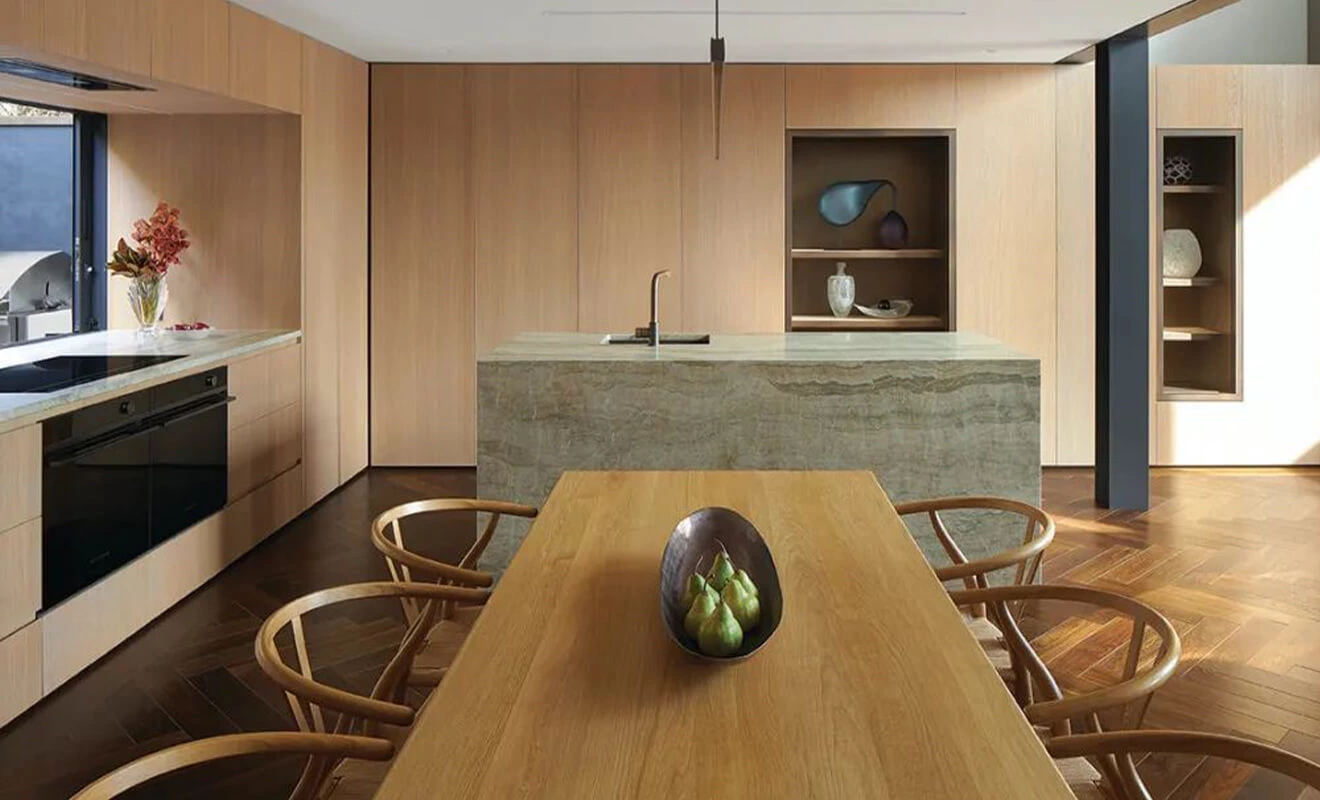
Wood is often most practical as a defined dining ledge, breakfast bar, or secondary preparation zone rather than the only wet work surface in a busy kitchen. Specify the species, construction, finish, edge treatment, and maintenance routine before installation. Keep standing water away from joints and cut-outs, and use a care approach appropriate to the chosen wood and finish.
How to Turn Kitchen Countertop Trends into a Practical Specification
Trends should help narrow choices, not replace a project brief. First decide where the surface will be used: beside a sink, around a cooktop, on an island with seating, as a full-height backsplash, or as a decorative bar surface. Then compare the material's visual direction, cleaning needs, edge requirements, weight, cut-outs, and compatibility with the cabinet structure.
- Busy family kitchen: prioritize easy cleaning, durable edges, practical seam locations, and a pattern that is comfortable for everyday use.
- Open-plan kitchen: give equal attention to the island's visible sides, countertop overhang, rear panels, and how the surface connects to the living area.
- Luxury villa: a book-matched backsplash, thick island profile, curved edge, or lighting feature can be effective when the construction details are resolved.
- Compact apartment: select a surface and color that support available light and avoid overly complex details that crowd the work zone.
- Project procurement: record the approved sample, thickness, finish, edge profile, slab layout, cut-outs, and maintenance expectations in the final specification.
Review the available kitchen countertop materials and thickness options with the cabinet layout. For island projects, the surface should also be coordinated with the island size, seating, and clearance plan.
Countertop Care, Installation, and Planning Checks
A countertop is only as successful as its support, templating, installation, and care plan. Confirm cabinet level, wall conditions, appliance specifications, sink and faucet cut-outs, overhang support, seams, joints, backsplash height, and access for any services before the final slab is cut. Natural stone and engineered surfaces do not have identical care needs, so the selected material should come with project-specific product information from the supplier.
For general natural-stone maintenance guidance, the Natural Stone Institute's care and cleaning reference is useful. For kitchen layout planning and system coordination, the NKBA planning guidelines provide industry context. These resources are references only; final plans must follow the actual material, installer guidance, project conditions, and applicable local requirements.
Kitchen Countertop Trends FAQ
What are the most popular kitchen countertop trends?
Popular kitchen countertop trends include dark stone surfaces, quartz patterns, backlit features, natural warm colors, textured slabs, curved edges, and wood accents. The right choice depends on the kitchen layout and daily routine.
Are dark kitchen countertops difficult to maintain?
Maintenance depends on the specific material and finish. Dark surfaces can look sophisticated, but some finishes may show dust, water spots, or fingerprints more clearly. Review a full sample under the planned kitchen lighting.
Is quartz suitable for a busy kitchen?
Quartz is widely selected for kitchens because it offers consistent patterns and straightforward daily maintenance. Compare the chosen product's care instructions, heat guidance, edge details, and installation requirements before final approval.
Can the countertop and backsplash use the same slab?
Yes. A matching slab backsplash can create a continuous visual effect. Plan pattern direction, seams, outlets, cut-outs, and slab layout before fabrication.
Are curved countertop edges more expensive?
They may require more templating, fabrication, and support than straight edges. The final cost depends on the material, radius, thickness, edge profile, and the supporting cabinet construction.
Is wood a good kitchen countertop material?
Wood can add warmth and works well as a dining ledge or secondary surface when properly specified and maintained. It needs suitable protection from standing water, heat, and heavy wear.
How should countertop lighting be planned?
Plan lighting with the slab, cabinet construction, electrical rough-in, and access requirements. A backlit feature should be supported by an appropriate material and a maintainable lighting system.
What should be approved before ordering a custom countertop?
Approve the material sample, thickness, finish, edge profile, sink and appliance cut-outs, seams, overhang support, backsplash, slab direction, cabinet drawings, and installation conditions.
Conclusion: Choose a Countertop Trend That Lasts Beyond the First Impression
Kitchen countertop trends can create a strong identity for a custom kitchen, from dark dramatic slabs and warm natural colors to textured surfaces, smooth curves, lighting, and wood details. The most effective choice is one that fits the cabinet style, daily work zones, maintenance expectations, and installation conditions.
By confirming the material sample, slab layout, thickness, edge detail, lighting, cabinet support, and care requirements before production, homeowners and project teams can turn a trend-led concept into a countertop that remains practical and visually convincing for years.