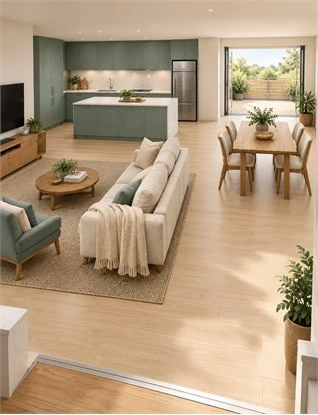
Kitchen island sizes affect far more than the look of a kitchen. The right island dimensions can improve prep space, storage capacity, seating comfort, appliance placement, and daily movement between the sink, cooktop, refrigerator, and surrounding cabinets.
For homeowners, builders, and project buyers, the best island size depends on kitchen width, cabinet depth, walkway clearance, countertop overhang, seating needs, and whether the island includes a sink, cooktop, dishwasher, or pull-out storage. If you are planning a full kitchen, start with our kitchen cabinet sizes guide, then use this kitchen island size guide to plan the island zone in more detail.
At Allure Cabinetry, kitchen islands are usually designed as part of a full custom kitchen cabinet system, so the island can match the wall cabinets, base cabinets, countertops, hardware, lighting, and storage layout.
What Is the Standard Kitchen Island Size?
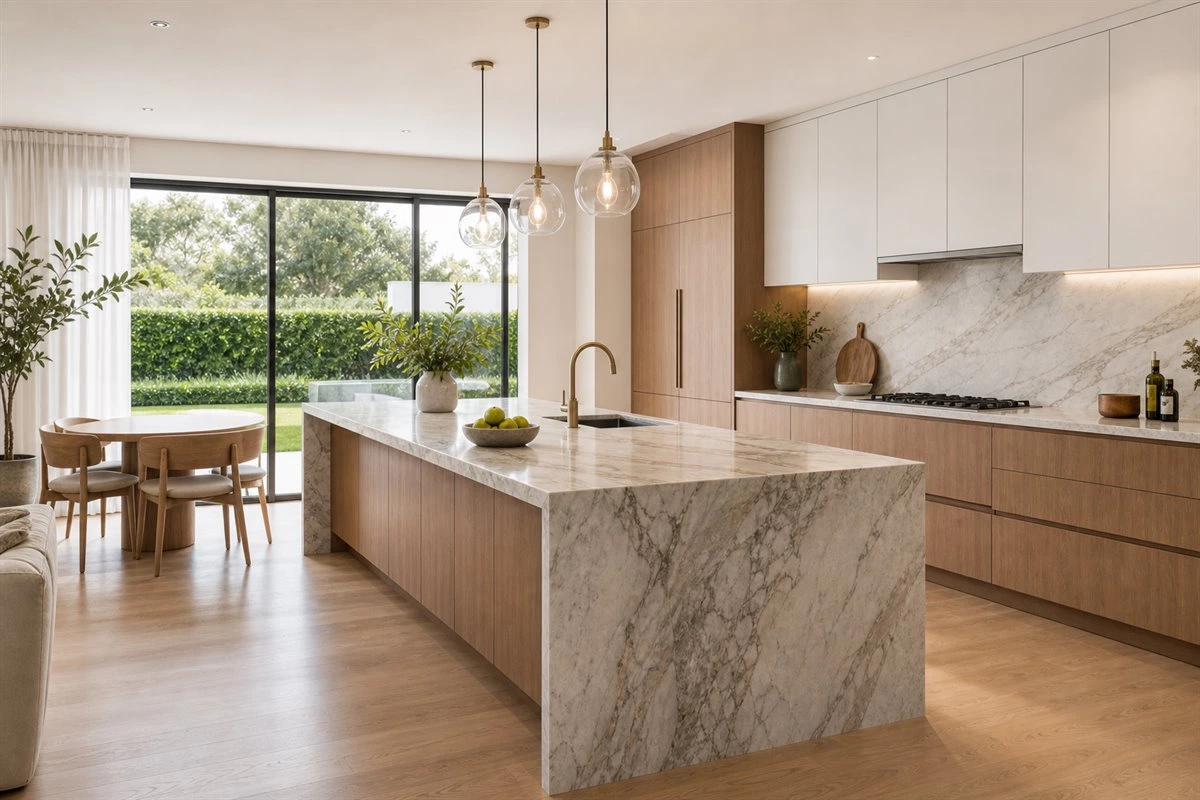
A kitchen island is a freestanding cabinet unit placed in the center of the kitchen. It can be used for food preparation, storage, seating, serving, appliance integration, or as a visual divider between the kitchen and living area.
There is no single standard kitchen island size that works for every home. Most kitchen islands are designed around base cabinet modules, available floor space, seating requirements, and walkway clearance. A small island may only provide extra prep space, while a large custom island can include drawers, appliances, a sink, seating, display shelves, and hidden storage.
| Island Type | Common Size Range | Best For |
|---|---|---|
| Small Island | 24-30 in D x 48-60 in L | Compact kitchens, extra prep space |
| Standard Island | 36-42 in D x 72-96 in L | Storage, seating, family kitchens |
| Large Island | 42-48+ in D x 96+ in L | Luxury kitchens and open-plan homes |
| Custom Island | Project-specific | Built-in appliances, sinks, seating, and storage |
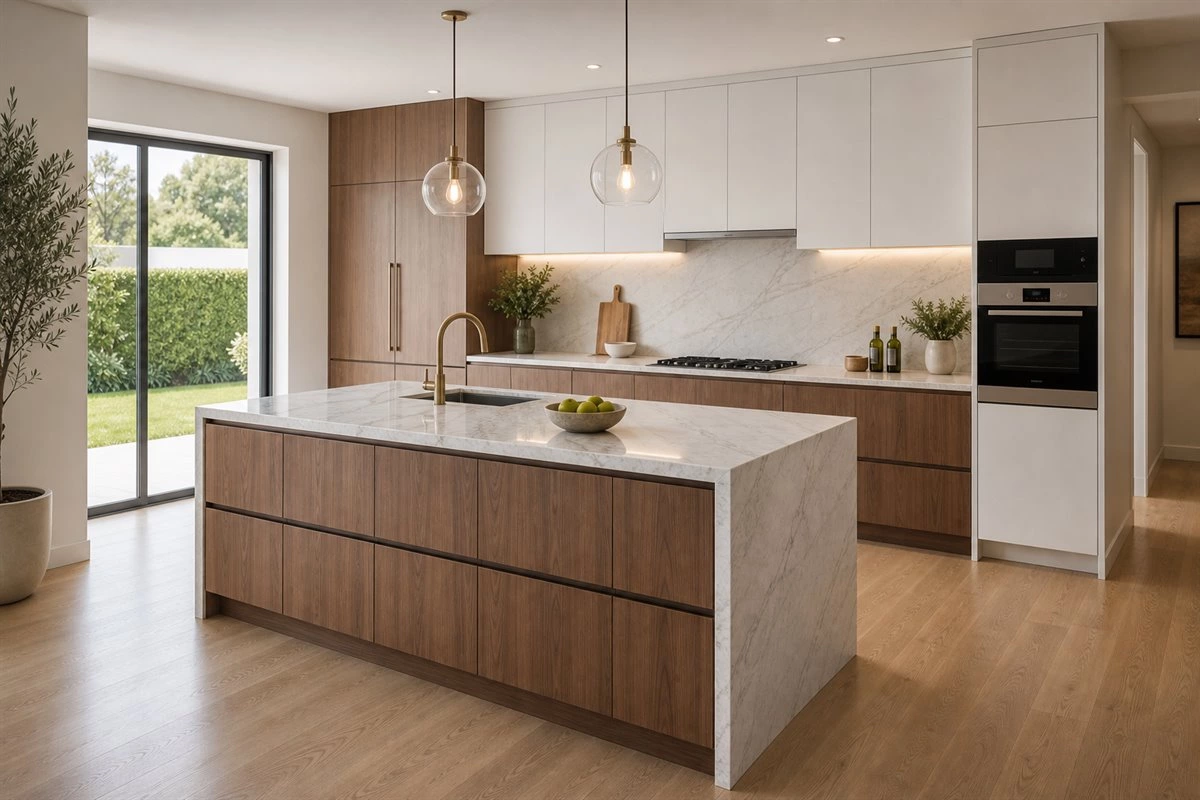
Minimum Kitchen Island Size
The minimum kitchen island size should be large enough to be useful but small enough to keep the kitchen comfortable. In compact kitchens, an island around 24 inches deep and 48 inches long can provide a practical prep surface and limited storage.
However, the island itself is not the only dimension that matters. You also need enough clearance around all sides. If the kitchen is too narrow, a small island can still block cabinet doors, appliance doors, or walking paths.
For very small kitchens, a peninsula, narrow movable island, or shallow cabinet island may work better than a fixed full-size island. The goal is to improve function without overcrowding the room.
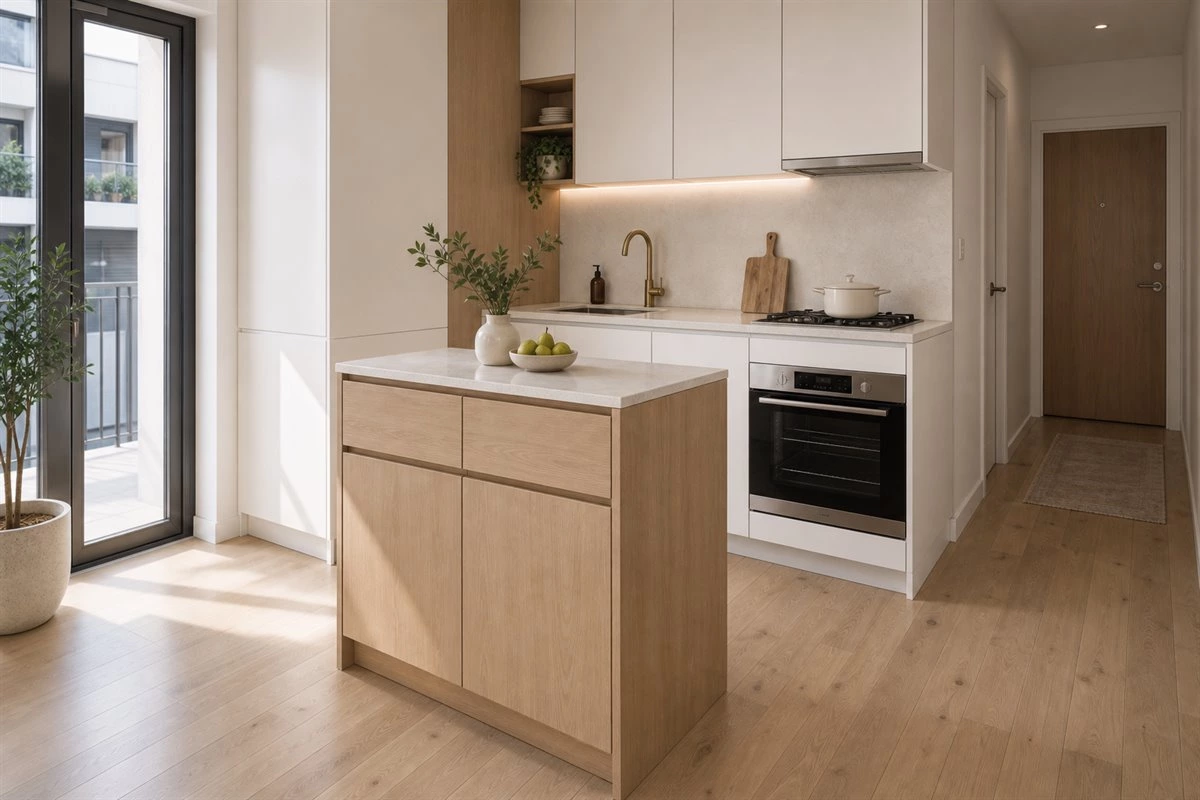
Standard Kitchen Island Depth
Kitchen island depth usually starts with cabinet depth. A single-sided island using standard base cabinets is often around 24 inches deep. This works well when the island is mainly used for storage or prep space.
If the island includes seating, the depth often increases to 36 to 42 inches. This allows room for base cabinets, countertop overhang, and knee space. For larger luxury kitchens, back-to-back cabinets can create an island depth of 48 inches or more.
Correct island depth improves storage without blocking traffic. If the island is too shallow, it may not provide enough storage or seating comfort. If it is too deep, it may make the kitchen feel heavy and reduce clear walking space.
For cabinet module planning, see our related guide on base cabinet sizes.
Kitchen Island Length
Kitchen island length depends on the kitchen layout, cabinet modules, seating count, and whether the island includes a sink, cooktop, dishwasher, wine fridge, or other appliance.
A small kitchen island may be 48 to 60 inches long. A standard family kitchen island is often 72 to 96 inches long. In open-plan homes and luxury villas, islands can be 96 inches or longer, especially when they combine storage, seating, and entertaining functions.
For seating, a useful rule is to allow about 24 inches of width per seated person. This helps prevent stools from feeling too close together and makes the island more comfortable for daily meals, coffee, homework, or casual entertaining.
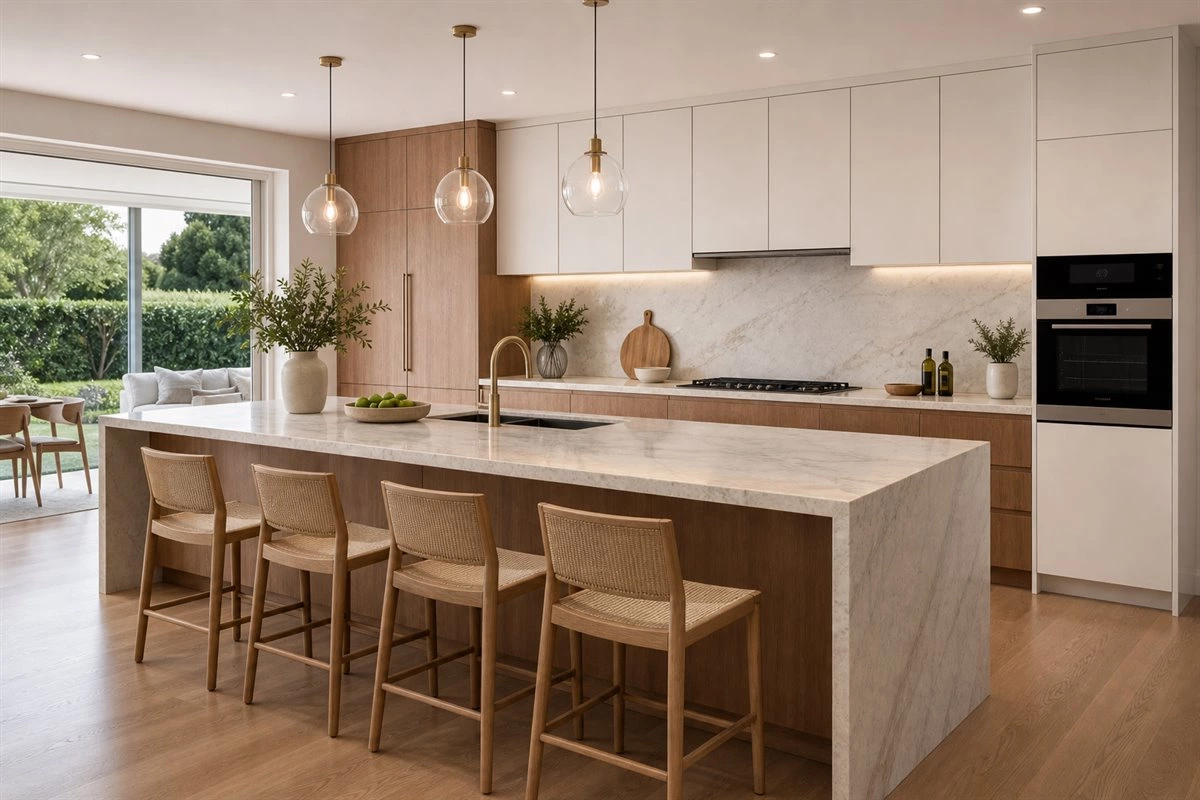
Kitchen Island Clearance
Kitchen island clearance is often more important than island size itself. Even a beautiful island will feel uncomfortable if there is not enough space to move around it.
As a practical planning guide, allow at least 36 inches for a walkway, 42 inches for a more comfortable one-cook work aisle, and 48 inches where two people cook together or where appliance doors need more room.
The NKBA kitchen planning guidelines include recommendations for clearance, fixture location, equipment placement, and accessible design. These guidelines are useful when planning kitchen island position, work aisles, and traffic flow.
| Clearance Area | Recommended Space | Why It Matters |
|---|---|---|
| Basic Walkway | 36 in minimum | Allows one person to pass |
| Work Aisle | 42 in preferred | Improves comfort for cooking and prep |
| Two-Cook Kitchen | 48 in preferred | Allows two people to move and work |
| Appliance Zone | 42-48 in | Helps with dishwasher, oven, and refrigerator access |
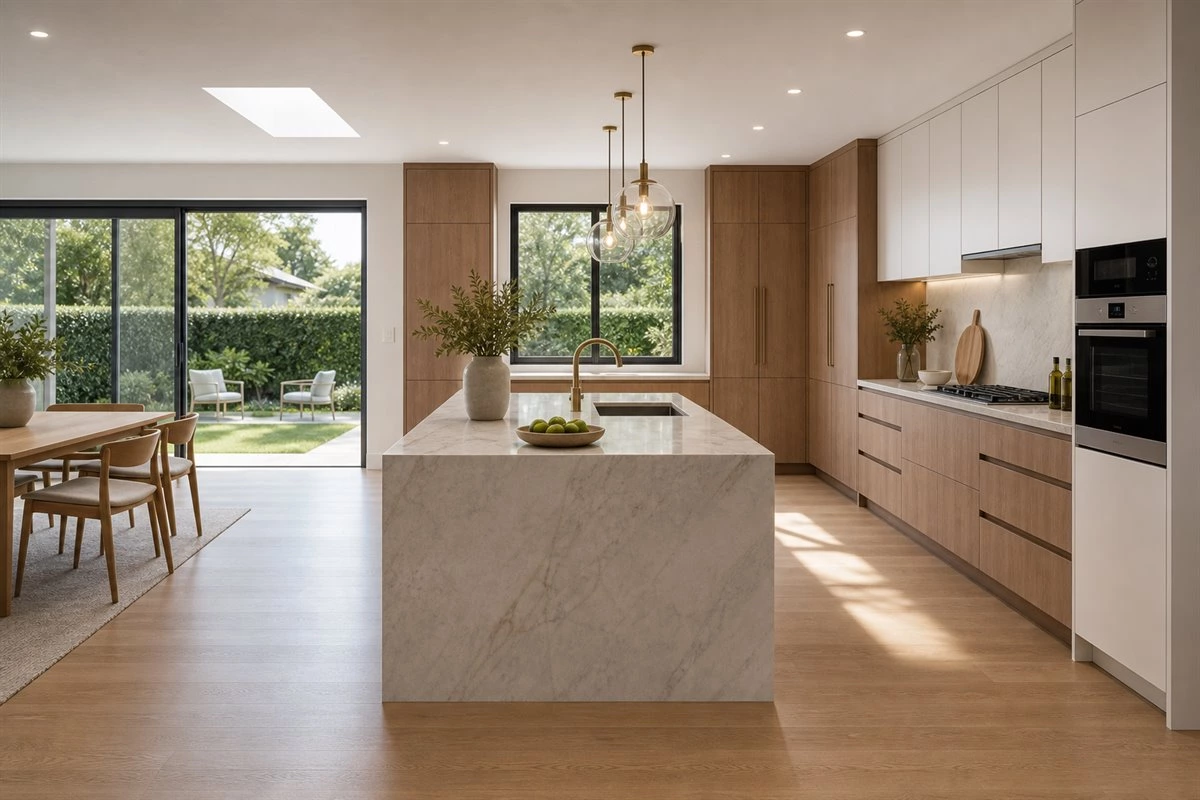
Kitchen Island Seating Dimensions
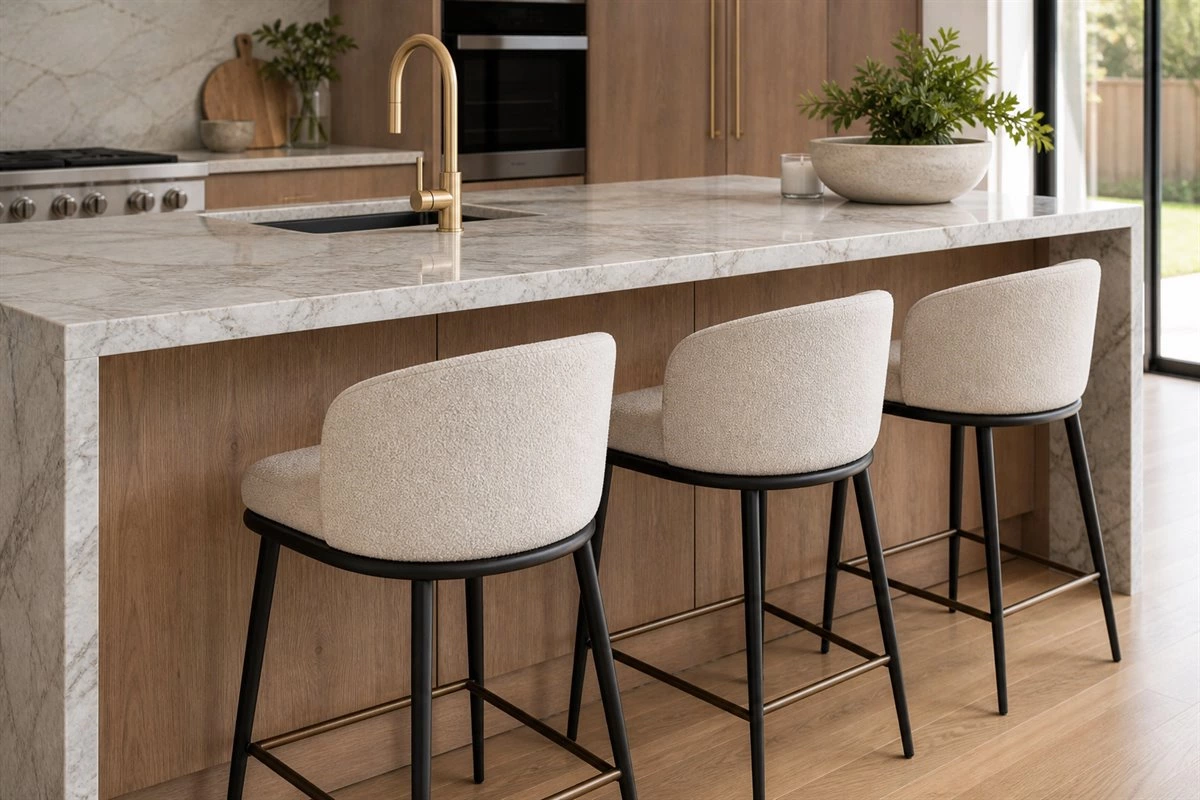
Kitchen island seating should be planned before production, not added as an afterthought. Seating affects countertop overhang, island depth, stool spacing, cabinet placement, and walkway clearance behind the stools.
For comfortable seating, plan around 24 inches of width per person. The required knee space depends on the counter height. A standard 36-inch-high island usually needs about 15 inches of knee space, while a 42-inch bar-height island may need around 12 inches.
| Counter Height | Knee Space Depth | Best Use |
|---|---|---|
| 30 in table height | 18 in | Dining-style seating |
| 36 in counter height | 15 in | Standard island seating |
| 42 in bar height | 12 in | Bar-style seating |
The NKBA seating recommendations also use 24 inches of width per diner with different knee-space depths depending on counter height. This is helpful when planning islands for families, apartments, villas, and open-plan kitchens.
Kitchen Island with Sink or Cooktop
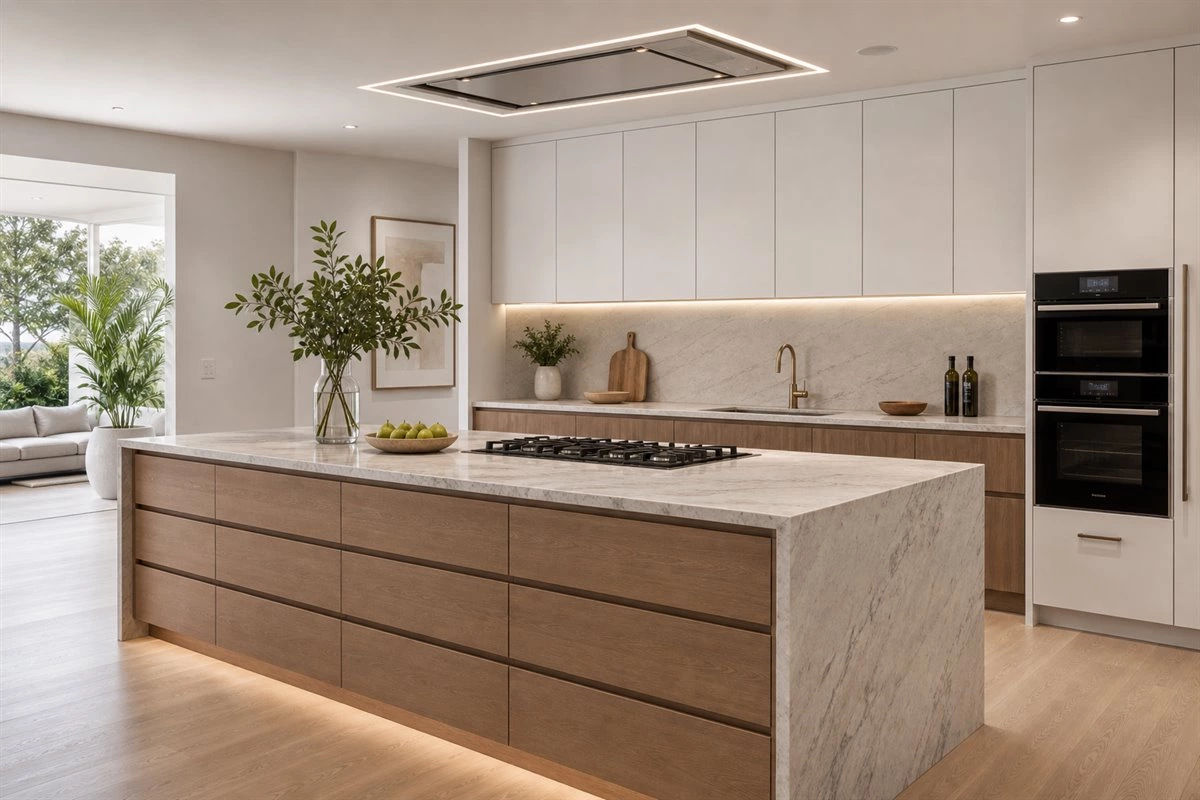
If the kitchen island includes a sink or cooktop, the island size must support more than storage and seating. Plumbing, electrical wiring, ventilation, appliance clearance, landing space, and cabinet structure all need to be planned early.
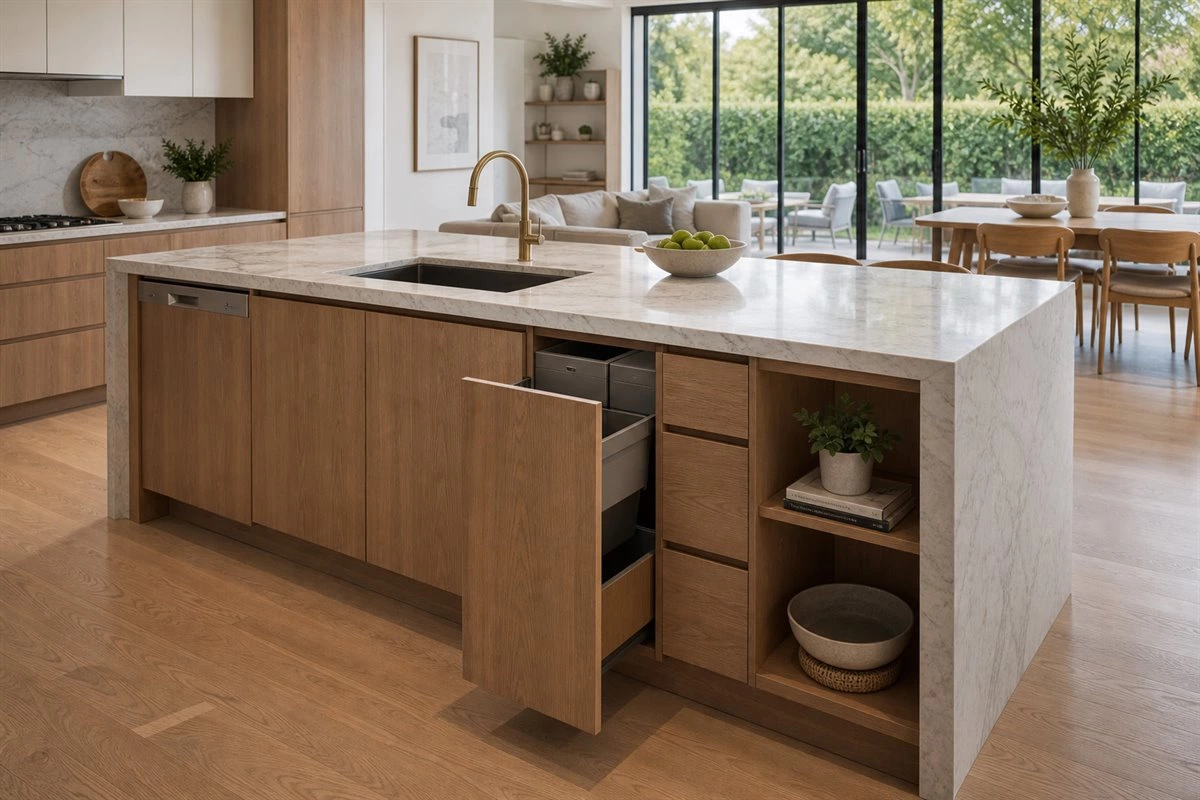
A sink island often needs space for the sink base cabinet, plumbing, waste pull-out, dishwasher, and countertop landing areas. A cooktop island may need ventilation, heat-resistant surfaces, safe landing space, and drawer planning below the cooktop.
Countertop selection also matters. Marble, quartz, sintered stone, and stainless steel surfaces each affect edge design, overhang, durability, and maintenance. You can explore more options on our kitchen countertops page.
For appliance planning, precise measurements are essential. The Home Depot appliance measuring guide is a useful reference for checking appliance dimensions and installation space.
Custom Kitchen Island Sizes
Custom kitchen island sizes are often the best choice when the kitchen has special layout needs, luxury design requirements, or project-level consistency requirements.
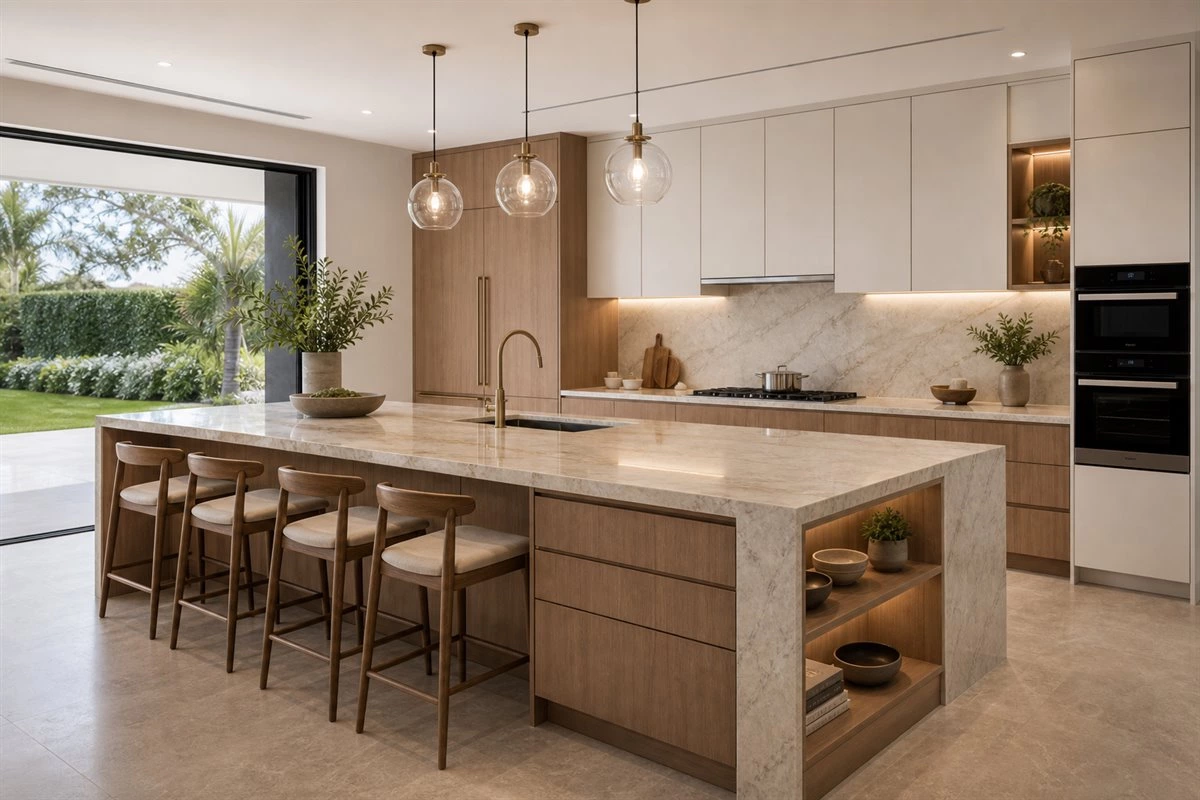
Custom islands are useful for villas, open-plan homes, apartments with limited space, developer projects, hospitality kitchens, and kitchens that need built-in sinks, cooktops, dishwashers, wine coolers, display shelves, or hidden storage.
With custom production, the island can be adjusted in length, depth, height, drawer layout, panel finish, countertop material, lighting, seating overhang, and internal storage system. This creates a better fit than forcing a standard island into a non-standard space.
Allure Cabinetry supports custom cabinet design, material selection, production drawings, cabinet hardware, countertop coordination, and project support. You can view completed custom kitchen cabinet projects to see how kitchen islands are integrated into real homes and villas.
Kitchen Island Sizes by Layout
The right island size changes depending on the kitchen layout. A galley kitchen may not have enough width for a fixed island, while an open-plan kitchen can often support a wider island with seating and storage.
| Kitchen Layout | Island Planning Tip |
|---|---|
| Small Kitchen | Use a narrow island, peninsula, or mobile island alternative |
| Galley Kitchen | Avoid oversized islands and check aisle width first |
| L-Shaped Kitchen | Use the island to improve prep, storage, and seating zones |
| U-Shaped Kitchen | Maintain clear access between cabinet runs |
| Open-Plan Kitchen | Use a larger island to divide cooking and living areas |
| Luxury Kitchen | Combine wide drawers, appliances, seating, and display storage |
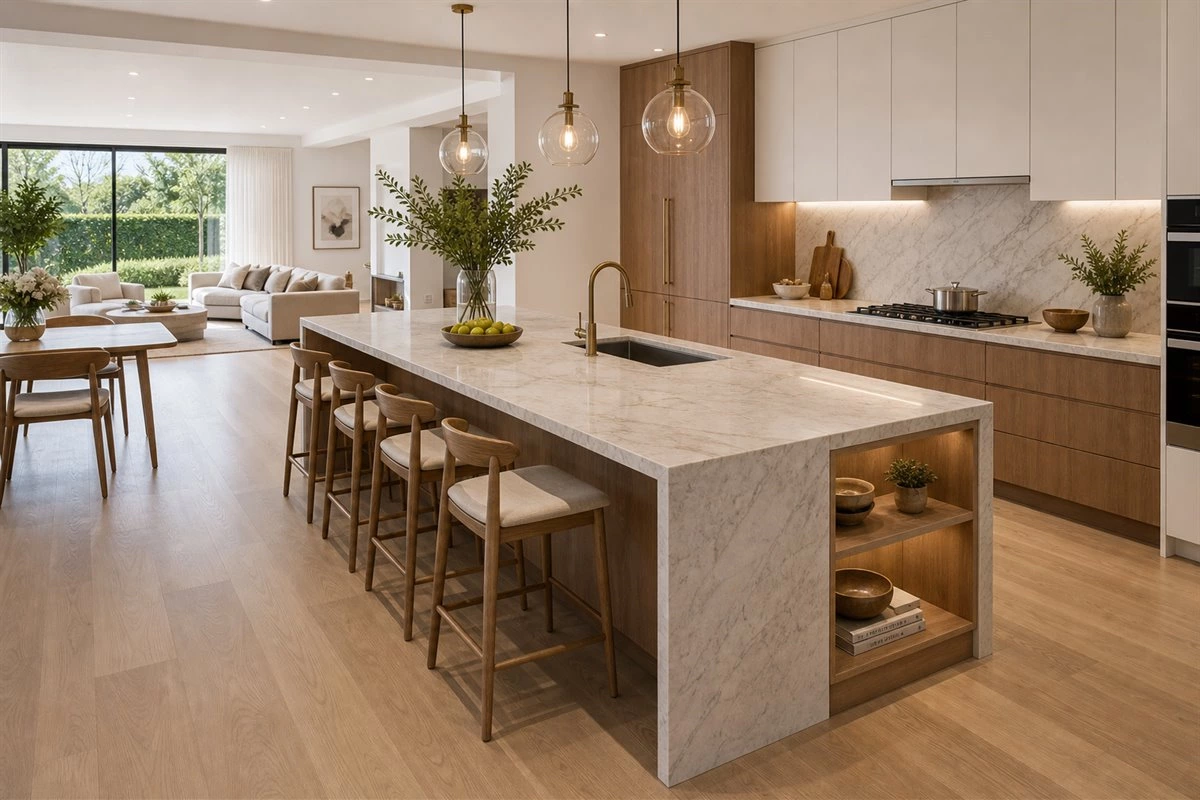
Kitchen Island Storage Options
A kitchen island should be more than a countertop. With the right cabinet layout, it can become one of the most useful storage zones in the kitchen.
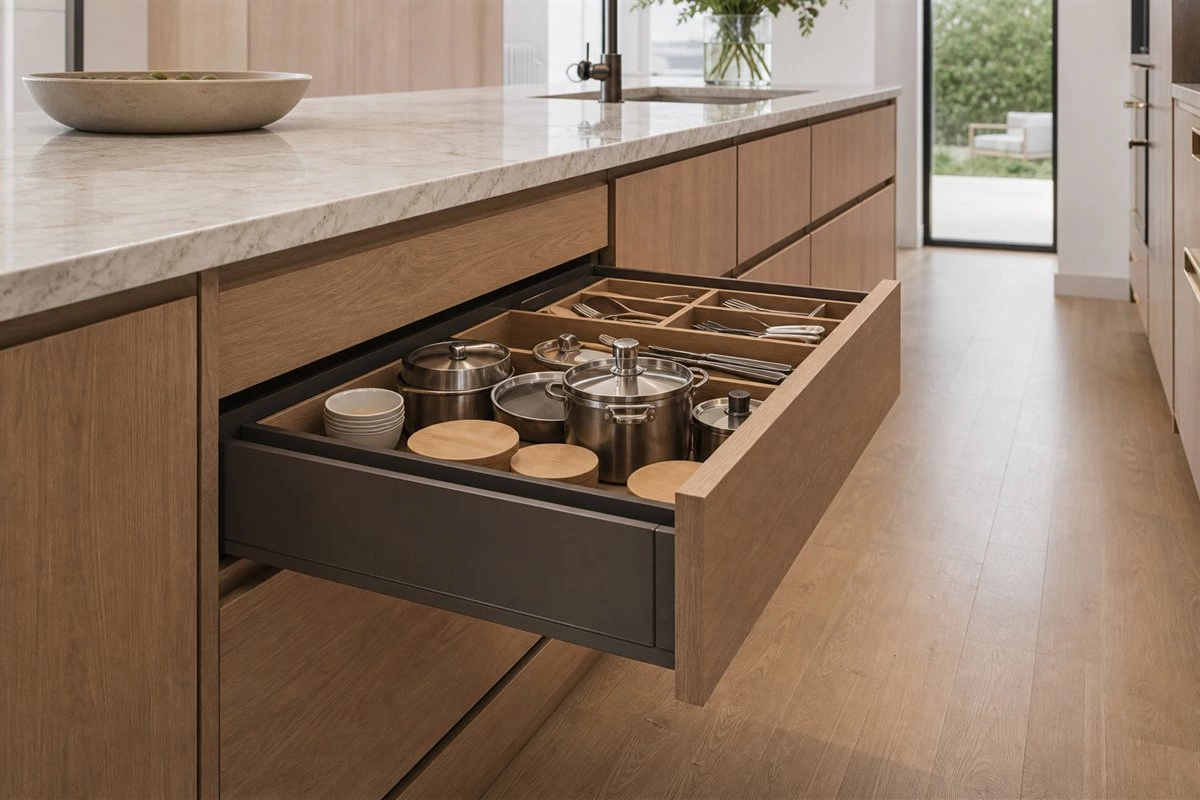
Common kitchen island storage options include deep drawers, pull-out trash bins, tray dividers, open shelves, wine storage, appliance drawers, spice pull-outs, and back-to-back cabinets. These options make the island more practical for cookware, dishes, utensils, pantry items, and daily preparation tools.
Hardware quality is especially important for island storage because drawers are often wide and heavily loaded. Strong slides, soft-close systems, hinges, pull-out baskets, and internal organizers improve durability and daily usability. You can explore hardware options on our cabinet hardware page.
Materials and Countertops for Kitchen Islands
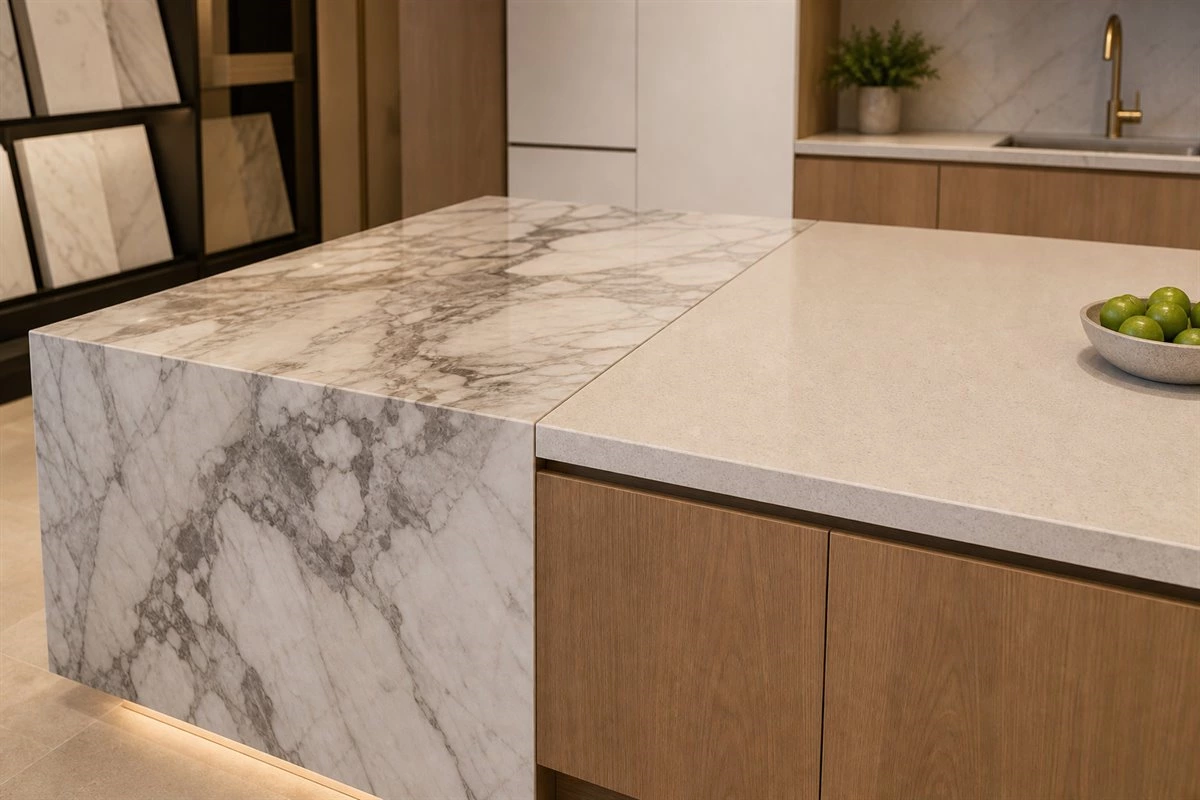
Kitchen islands need durable materials because they are used for cooking, cleaning, serving, seating, and social activities. The cabinet structure can use plywood, MDF, solid wood, or engineered panels depending on budget, project type, and finish requirements.
Popular cabinet finishes include PET, laminate, lacquer, wood veneer, melamine, and stainless steel. For countertops, common options include quartz, marble, sintered stone, stainless steel, and engineered stone. Each material affects durability, stain resistance, cleaning, price, and design style.
For modern homes and project kitchens, E0 or E1 environmental-grade panels are often preferred. You can learn more about Allure’s eco-friendly cabinet materials and production standards.
Common Kitchen Island Size Mistakes
Many kitchen island problems happen because the island is planned for appearance before function. A good island should support movement, storage, seating, appliance use, and cleaning.
- Making the island too large for the room.
- Ignoring clearance around appliance doors.
- Not planning enough seating overhang.
- Forgetting electrical outlets.
- Adding a sink or cooktop without enough landing space.
- Choosing the island style before confirming daily function.
- Using weak drawer hardware for heavy island storage.
- Not checking plumbing, ventilation, or electrical needs early.
- Using too many functions in one island and making it crowded.
The best kitchen island size is not always the largest one. It is the size that fits the room, supports the workflow, and creates storage and seating without making the kitchen feel blocked.
FAQ About Kitchen Island Sizes
What is the standard size of a kitchen island?
A common kitchen island may range from 36 to 42 inches deep and 72 to 96 inches long. The best size depends on kitchen layout, seating, storage, and appliance needs.
How much clearance do you need around a kitchen island?
At least 36 inches is recommended for basic walkways. For cooking areas, appliance access, and two-cook kitchens, 42 to 48 inches is usually more comfortable.
How wide should a kitchen island be for seating?
Plan about 24 inches of width per person. A 36-inch counter-height island usually needs around 15 inches of knee space for comfortable seating.
Can a small kitchen have an island?
Yes, but compact kitchens may need a narrow island, mobile island, or peninsula to avoid blocking traffic and cabinet access.
Is a kitchen island with seating worth it?
Yes, if the kitchen has enough clearance. Island seating can create a casual dining area, improve family interaction, and make the kitchen more social.
Can a kitchen island include both sink and seating?
Yes, but the island must be large enough to support plumbing, countertop landing space, seating overhang, and a safe distance between wet and dining zones.
Is a custom kitchen island worth it?
A custom kitchen island is worth it when you need exact sizing, appliance integration, better storage, premium materials, or a unified kitchen design.
Conclusion
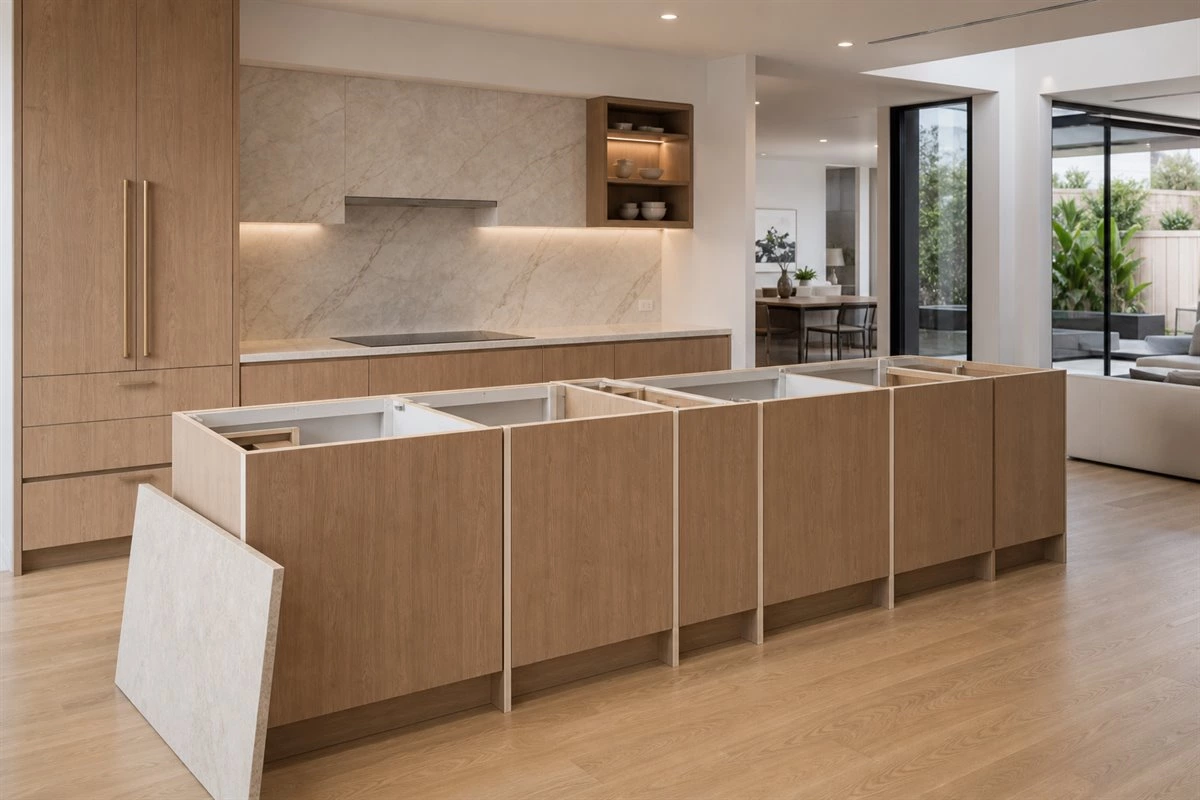
The best kitchen island size depends on clearance, seating, storage, appliances, countertop material, and the full kitchen layout. A small island can improve prep space in a compact kitchen, while a large custom island can become the center of cooking, dining, storage, and entertaining.
Before choosing an island size, measure the available space, confirm walkway clearance, plan seating overhang, check appliance needs, and decide how the island will be used every day.
Need a kitchen island that fits your space perfectly? Contact Allure Cabinetry for custom kitchen island design, cabinet materials, countertop options, and project support.