A Practical Guide for Your Perfect Kitchen Countertop
The essence of a cozy home is often found in the heart of the kitchen, where the aromas of culinary delights fill the air. A visually appealing and functional kitchen is the epitome of modernity, precision, and human-centric design. Choosing the right kitchen countertop that perfectly complements the homeowner's needs is a testament to a designer's attention to detail. If you aspire to elevate the quality of your kitchen design, remember to invest in meticulous countertop selection, as it plays a vital role in enhancing the overall kitchen ambiance.
Kitchen countertop materials should be chosen as part of the complete kitchen system rather than as an isolated decorative surface. The material needs to coordinate with cabinet construction, sink and cooktop cut-outs, edge details, lighting, backsplash, storage, and daily cleaning. A good countertop can support preparation, washing, cooking, serving, and social use while giving the kitchen a clear visual identity.
Materials for Kitchen Countertops
Marble Kitchen Countertops
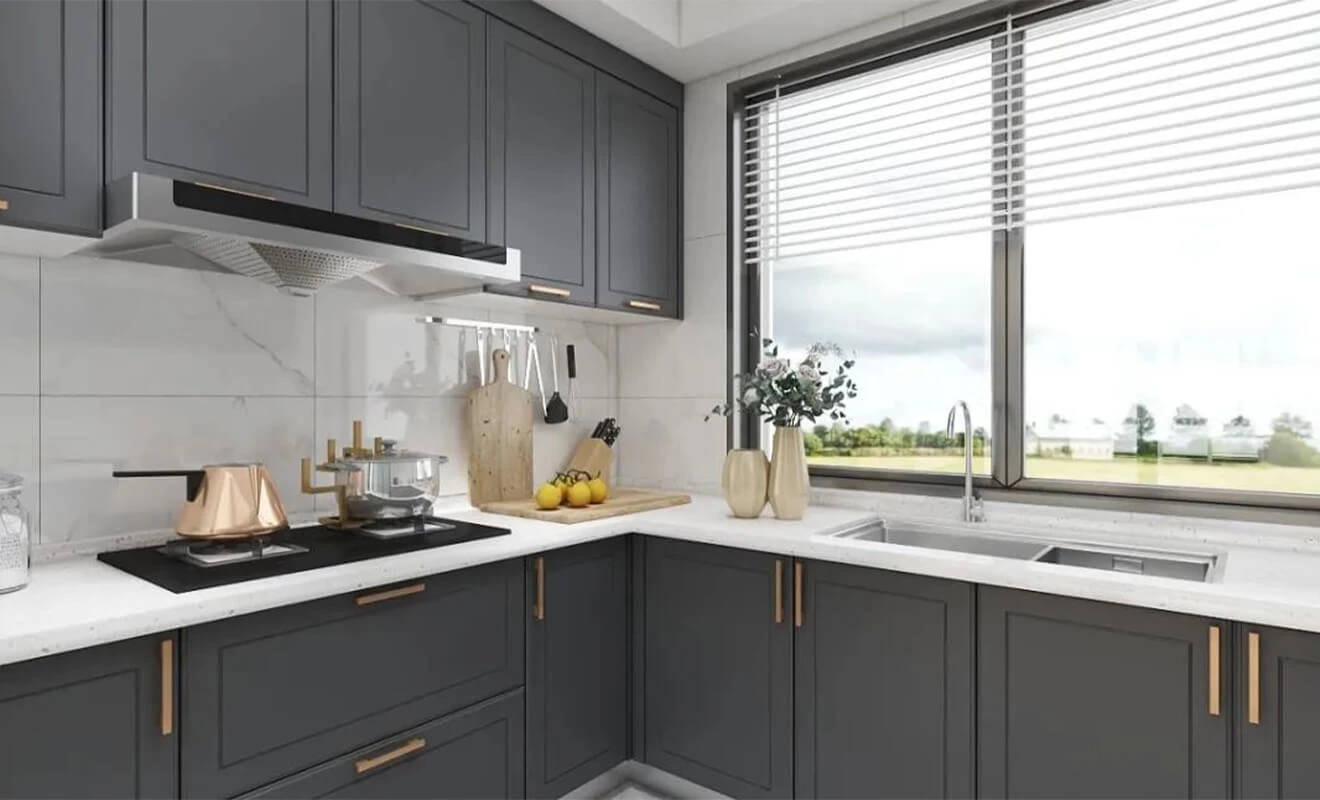
Marble countertops exude natural beauty with their abundant patterns and textures. They elevate the visual appeal of any kitchen space and possess remarkable durability, resisting scratches and withstanding high temperatures and impact. However, marble has porous surfaces that can absorb oil easily and is sensitive to acidic substances like lemon or cola. Proper maintenance and timely cleaning are required to keep it in pristine condition.
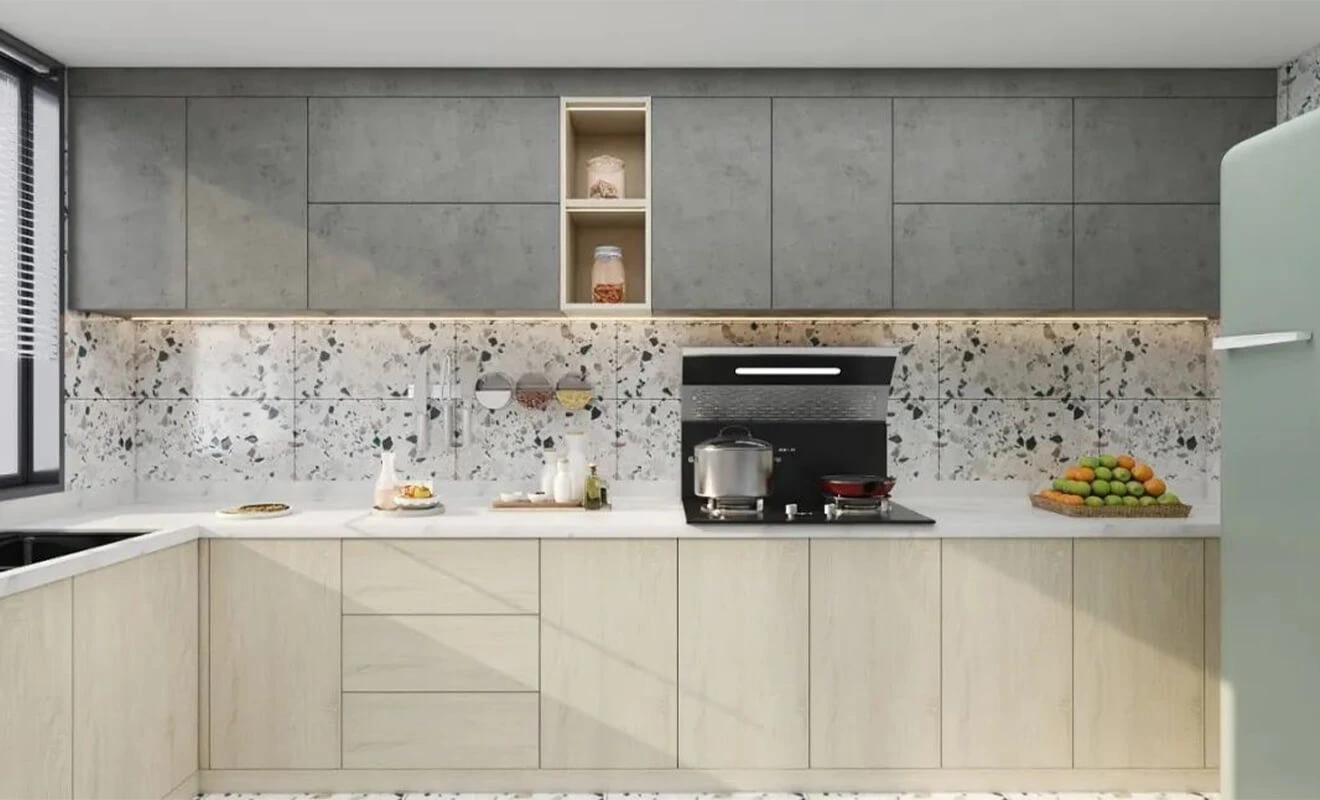
Natural stone brings variation that cannot be exactly repeated from one slab to another. Review the full slab, veining direction, seam positions, edge profile, and backsplash layout before cutting. A maintenance plan is especially important for natural stone in active cooking zones.
Engineered Stone Kitchen Countertops
Engineered stone countertops are created by blending inorganic mineral materials, certain additives, and organic binders through artificial methods. They offer strength, hardness, and resistance to scratching, water, acid, and corrosion. Engineered stone is the most widely used material for kitchen countertops. However, the unnatural appearance and occasional fragility of engineered stone may limit its appeal to some individuals seeking a more authentic feel.
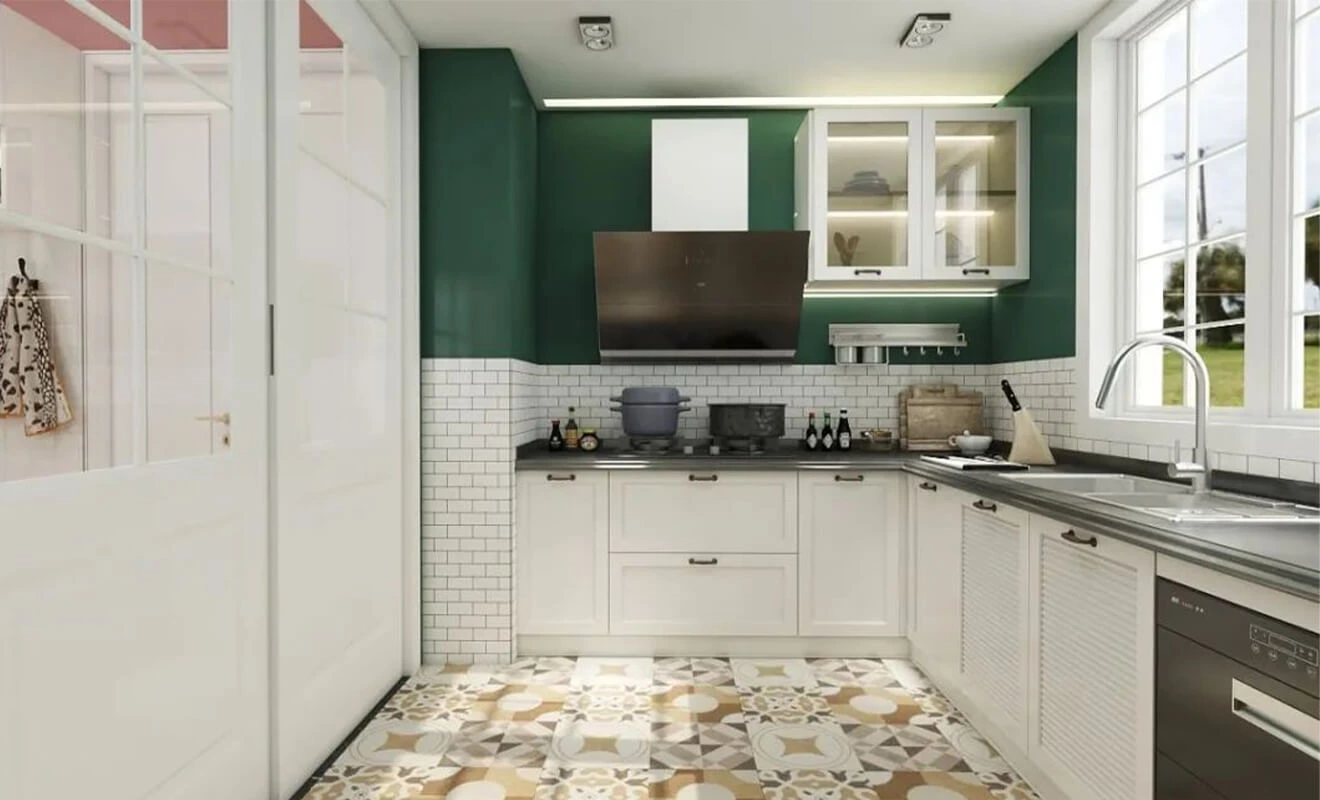
Engineered stone can offer a controlled appearance and broad design choices. When comparing options, confirm the actual product information, thickness, finish, manufacturer care guidance, cut-out requirements, and support detail rather than relying only on a small sample.
Quartz Kitchen Countertops
Quartz kitchen countertops have become the mainstream choice in modern kitchens. They withstand sharp objects without scratches, feature a dense structure with low water absorption, and are easy to maintain. Additionally, quartz countertops are resistant to acid, alkali, oil stains, and high temperatures. Moreover, they offer a wide range of colors and patterns, enabling versatile style combinations.
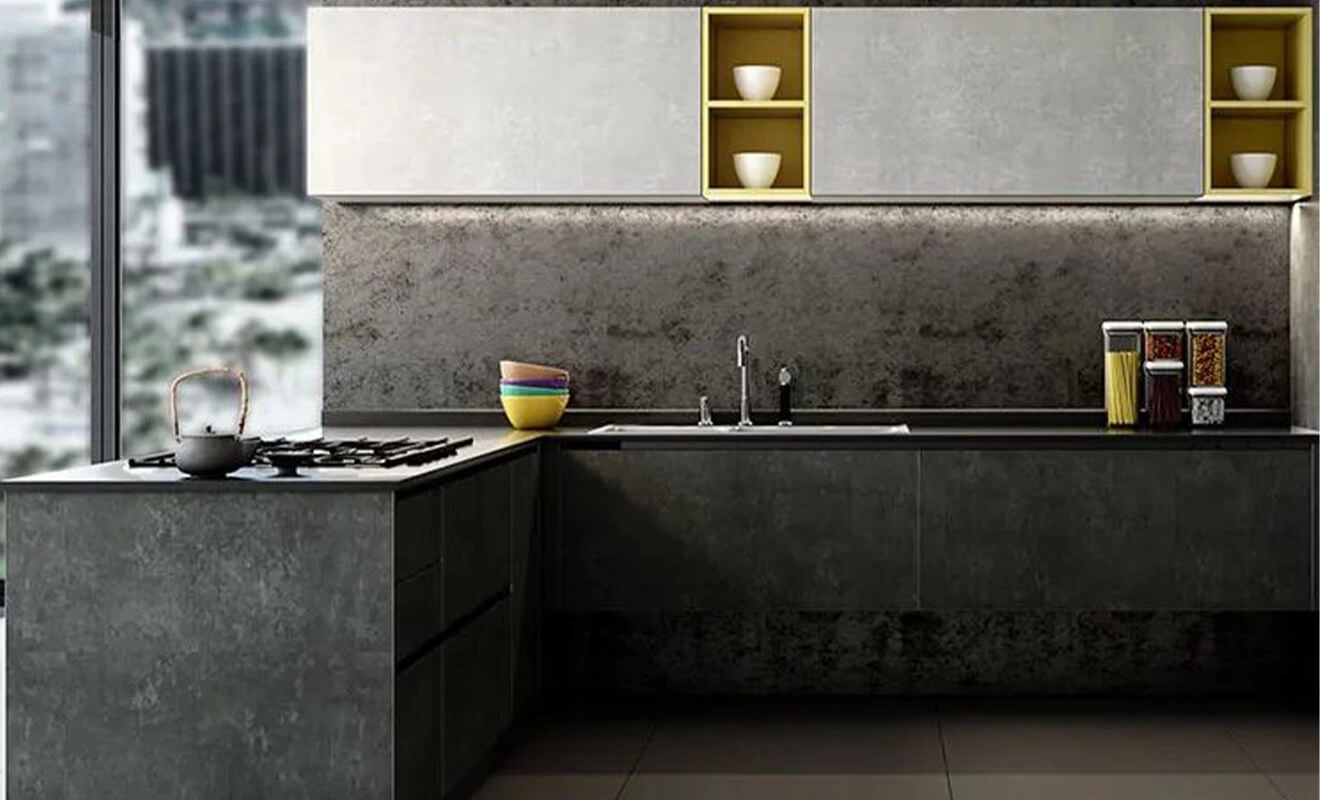
Quartz is often selected for its consistent pattern direction and straightforward daily care. It can work with painted, wood-grain, laminate, or handleless kitchens. For a material-focused comparison, see how to choose between quartz and sintered stone countertops.
Sintered Stone Kitchen Countertops
Sintered stone countertops are renowned for their complex craftsmanship, upscale appearance, thin profile, and diamond-level hardness. They can withstand temperatures as high as 2500 degrees, are easy to clean, scratch-resistant, and have excellent antibacterial properties. Sintered stone countertops are considered the new luxury in kitchen countertop choices.
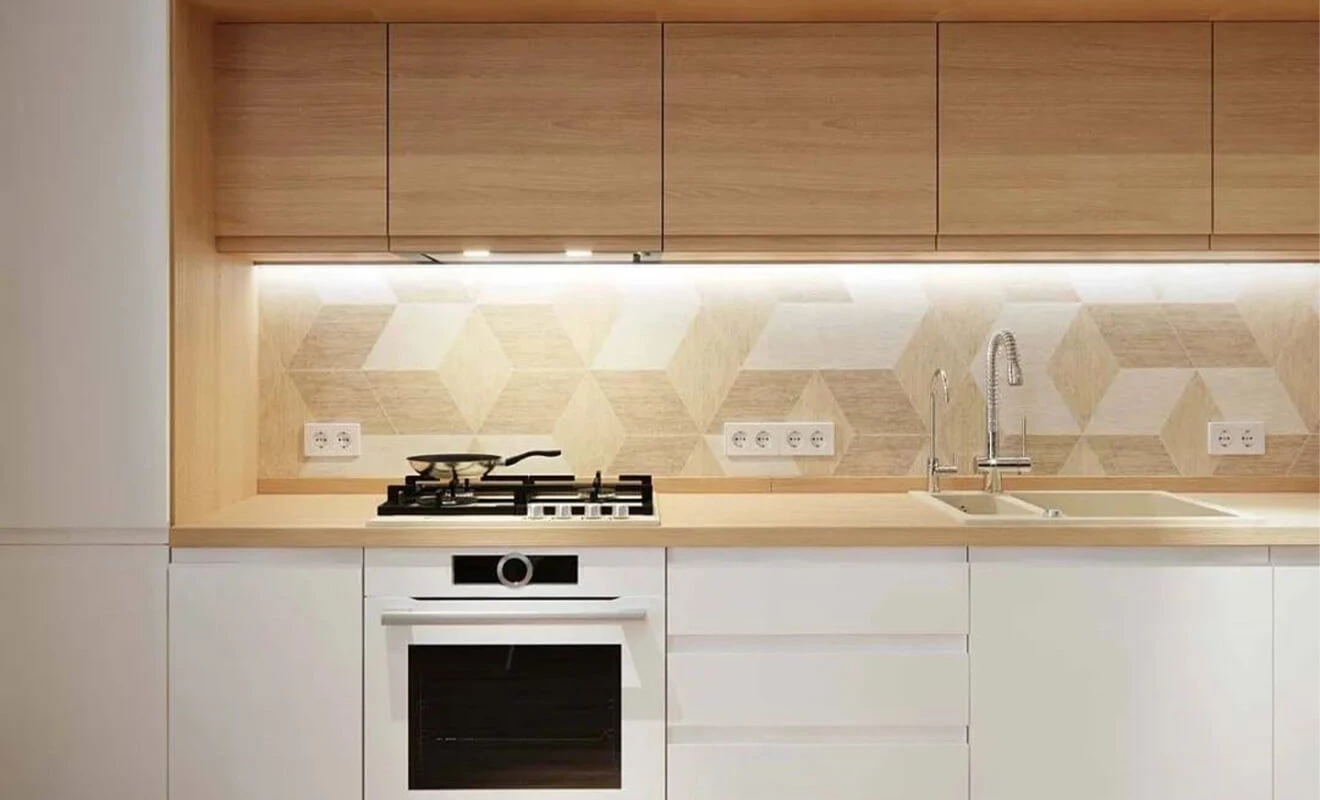
Sintered stone can create a thin, contemporary appearance or a thicker visual profile when combined with suitable fabrication details. Confirm the slab size, edge construction, seams, cut-outs, support, and installer requirements before production, especially for large islands or waterfall edges.
Wooden Kitchen Countertops
Wooden countertops are typically cut from solid wood or made from composite boards. Surface coatings or wood wax oils are applied to prevent cracking. Wooden countertops have gained popularity in kitchens in recent years. Composite boards, consisting of high-strength chipboard and high-strength veneers, provide better durability, while solid wood offers a more natural appearance, though with less resistance to wear and tear. However, wooden countertops are prone to cracking, are less stain-resistant, and require waterproofing, stain-proofing, and insect-proofing measures for everyday use.
Wood is often most practical as a breakfast ledge, dining extension, bar top, or secondary preparation surface. Confirm the wood species, construction, finish, maintenance expectations, and protection around wet areas before using wood as part of a kitchen countertop design.
Kitchen Countertop Design Dimension
■ Countertop Color
Black and white combo: White marble is a timeless and classic choice for kitchen countertops that seamlessly blends into various kitchen styles.
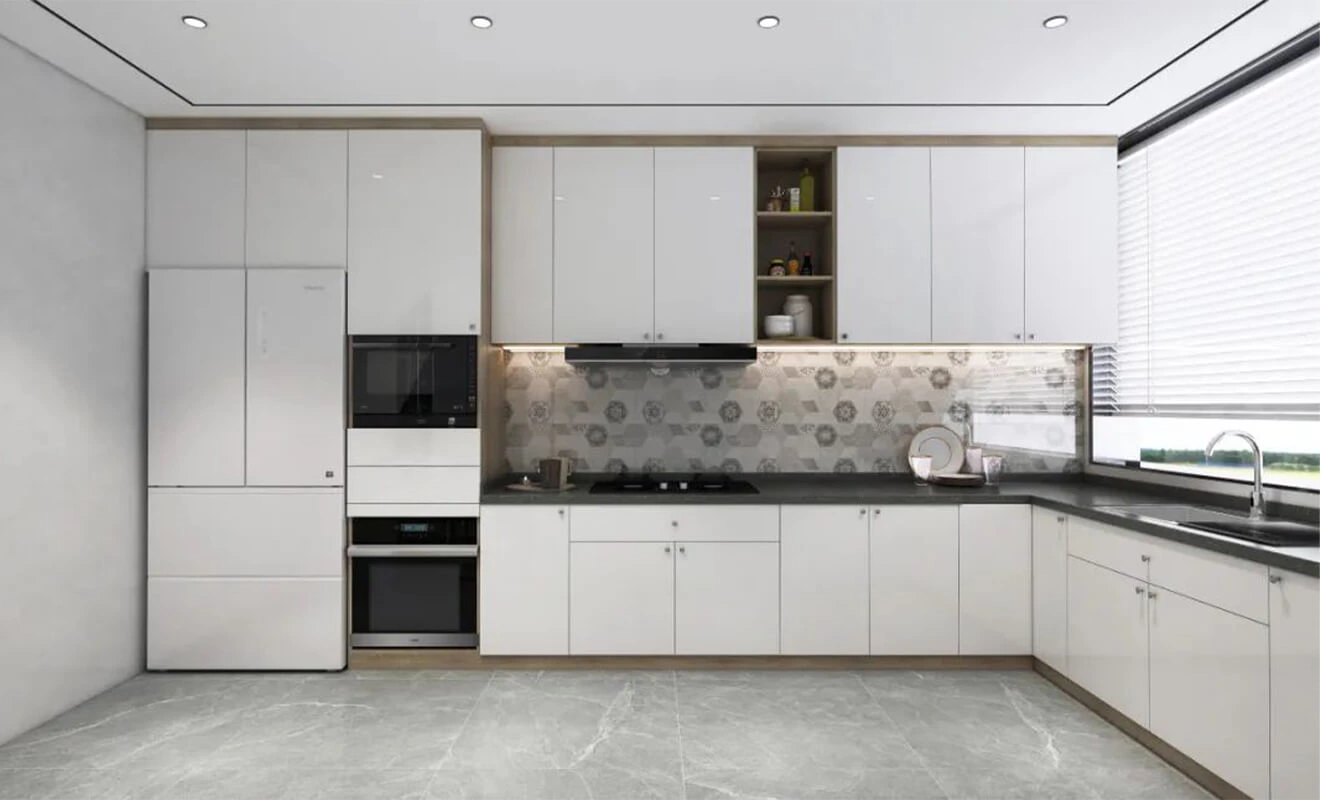
To achieve a more cohesive look, pairing black or white cabinets is recommended.
Creative and vibrant hues: Colorful countertops inject a lively atmosphere into the kitchen space.
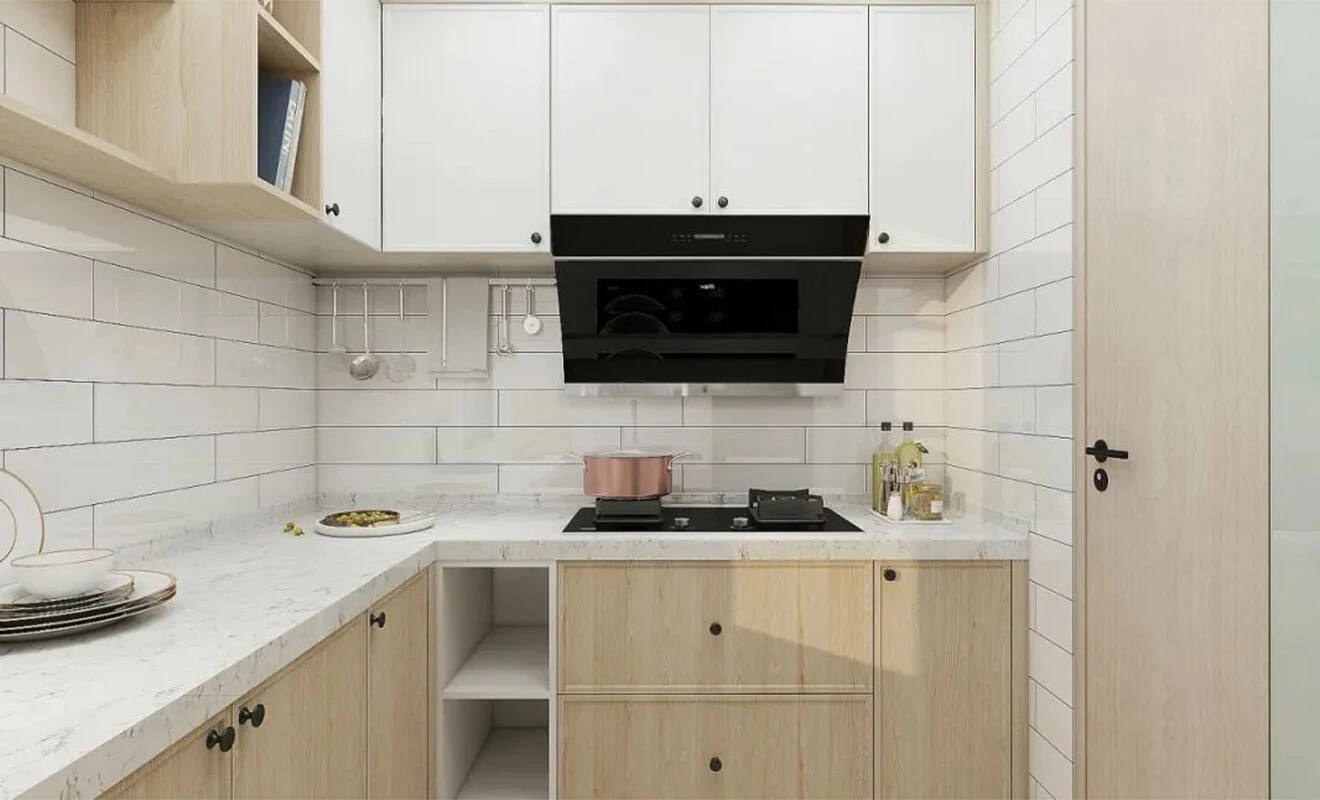
Irregular splashes of colors on a pure white background add a clean and playful touch. Pairing them with light-colored cabinets creates a fresh and vibrant visual experience.
When selecting countertop color, review the complete palette in the planned room light: cabinet doors, handles or handleless rails, backsplash, floor, wall finish, appliances, and pendant lighting. A slab that appears balanced in a showroom can look significantly different beside the final cabinet color and window light.
■ Countertop Thickness
In recent years, substantial and prominent countertops have gained popularity among brands. Thick and visually striking designs, combined with exquisite marble patterns, convey a sense of luxurious lightness.
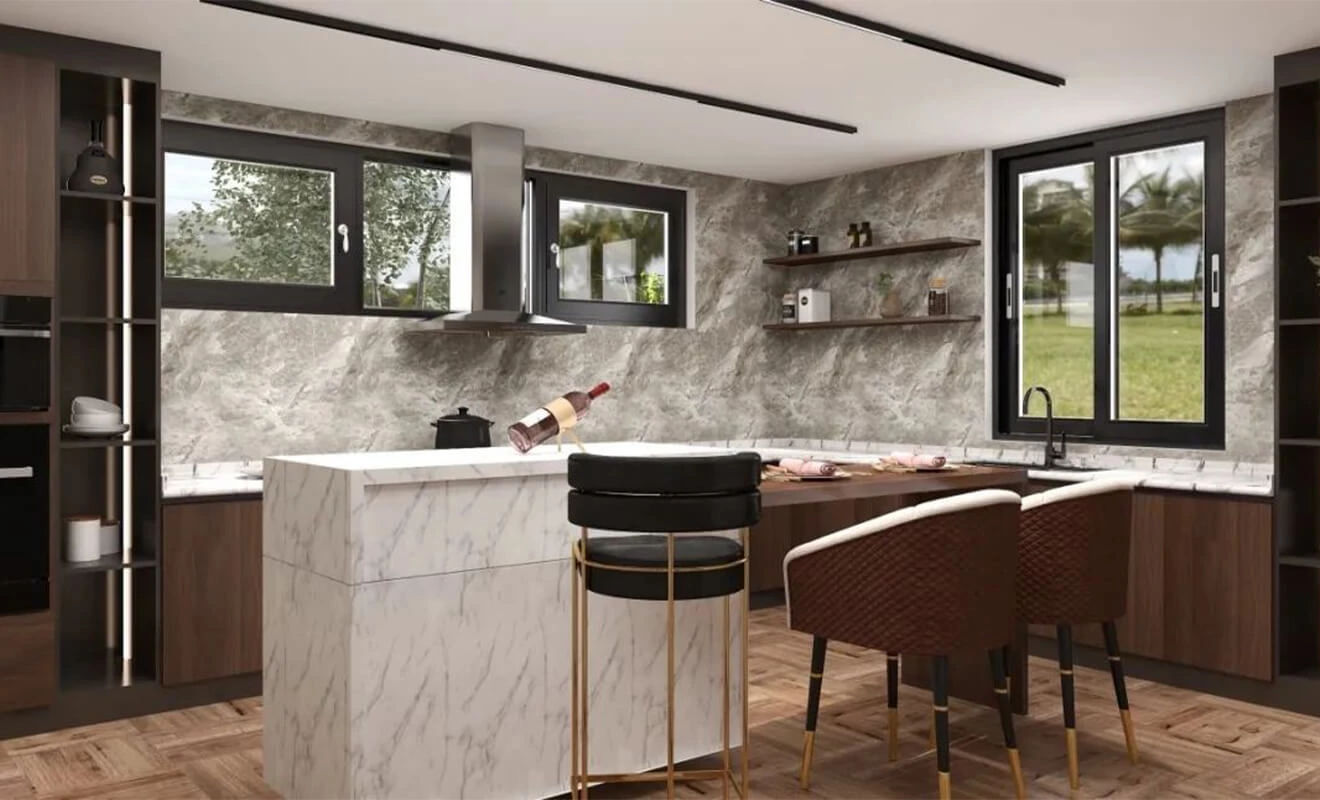
On the other hand, thin traditional countertops emphasize a lighter feel and enable subtle variations in kitchen space. By mixing thin and thick countertops, the kitchen gains a delicate balance of strength and elegance, showcasing meticulous design details.
Countertop thickness affects more than visual style. It can change the cabinet height, sink choice, edge profile, support requirements, appliance alignment, and the weight carried by the base cabinets. Confirm the finished countertop thickness on the elevation drawings before cabinets are fabricated.
■ Countertop Function
A well-planned kitchen with scientifically allocated functional zones enhances the cooking experience. Therefore, kitchen countertops should incorporate at least four designated areas:
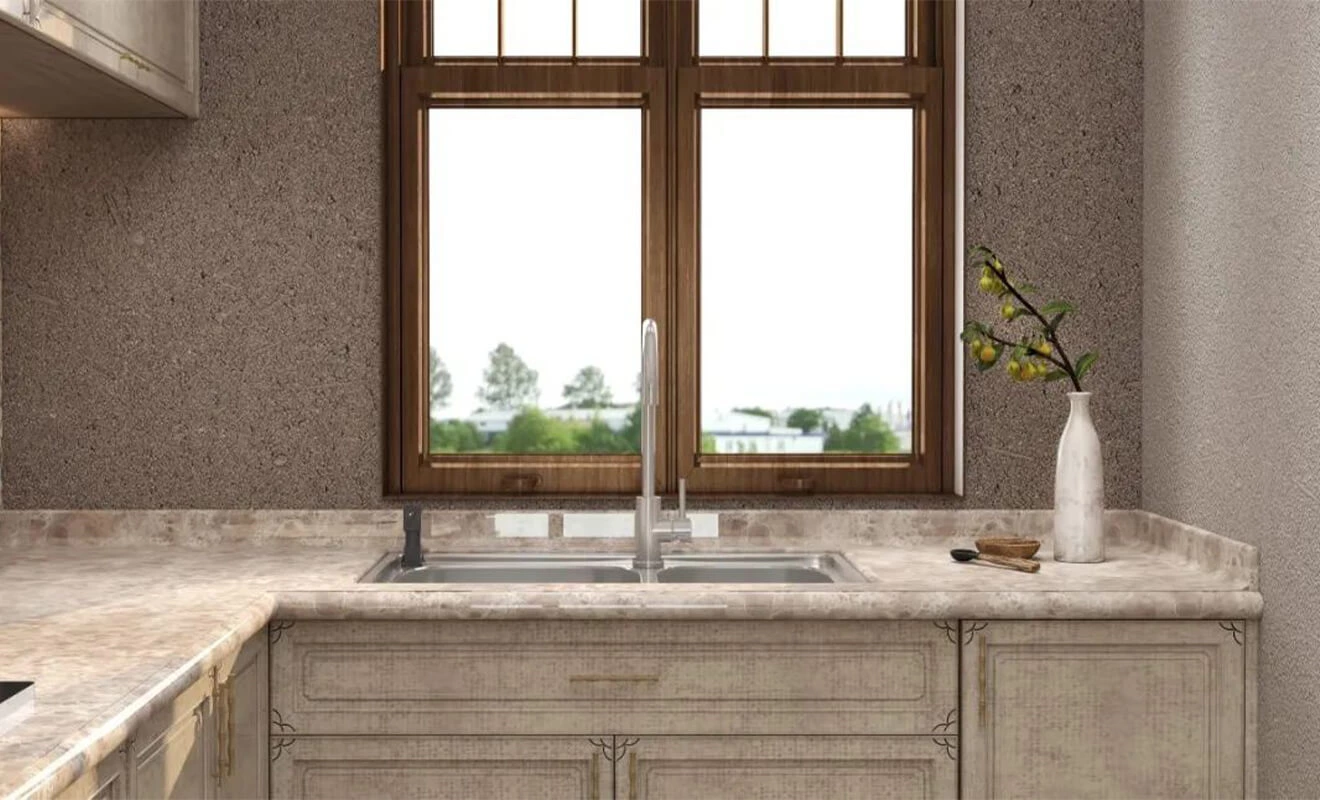
Washing area: Designed with appropriate depth and size to accommodate dishware and food cleaning needs.
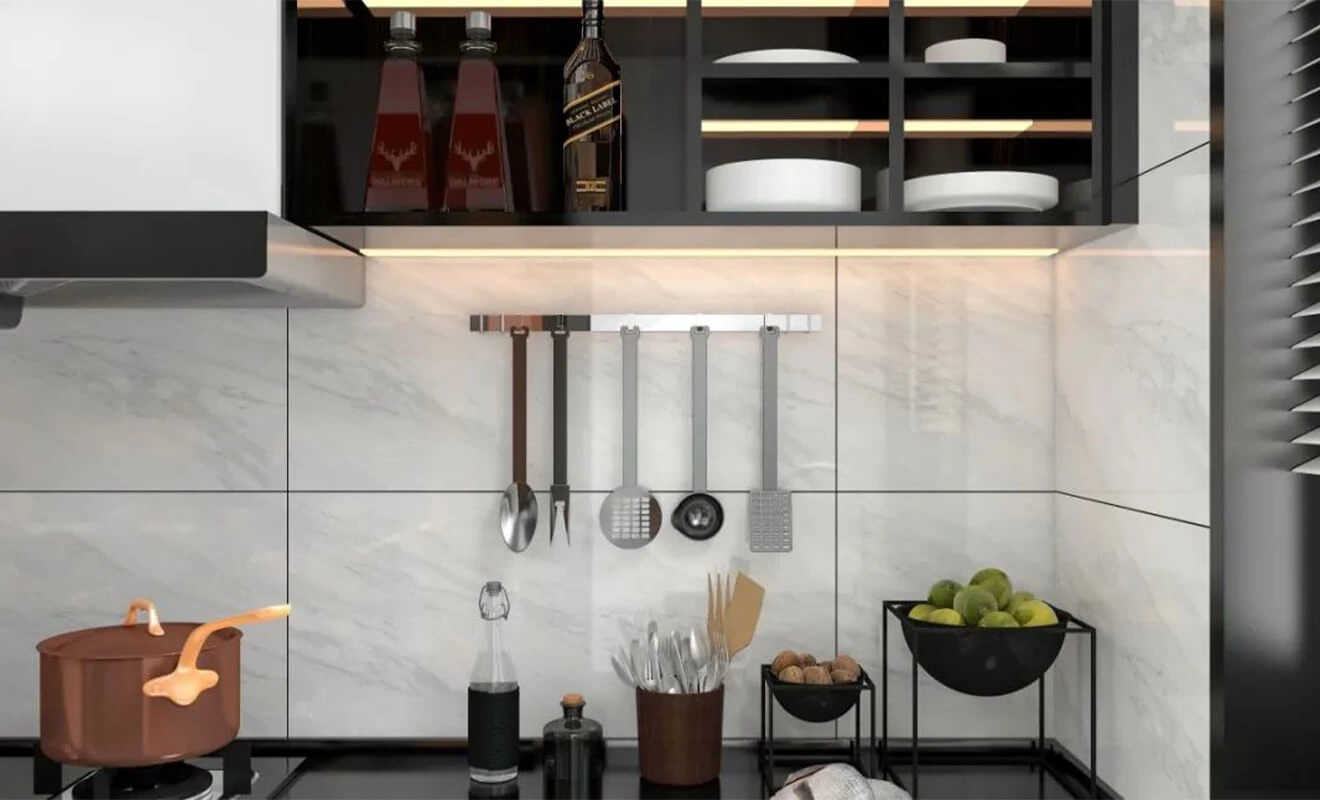
Prep and cooking area: Attention should be given to appropriate height design and lighting, ensuring comfortable meal preparation and minimizing fatigue.
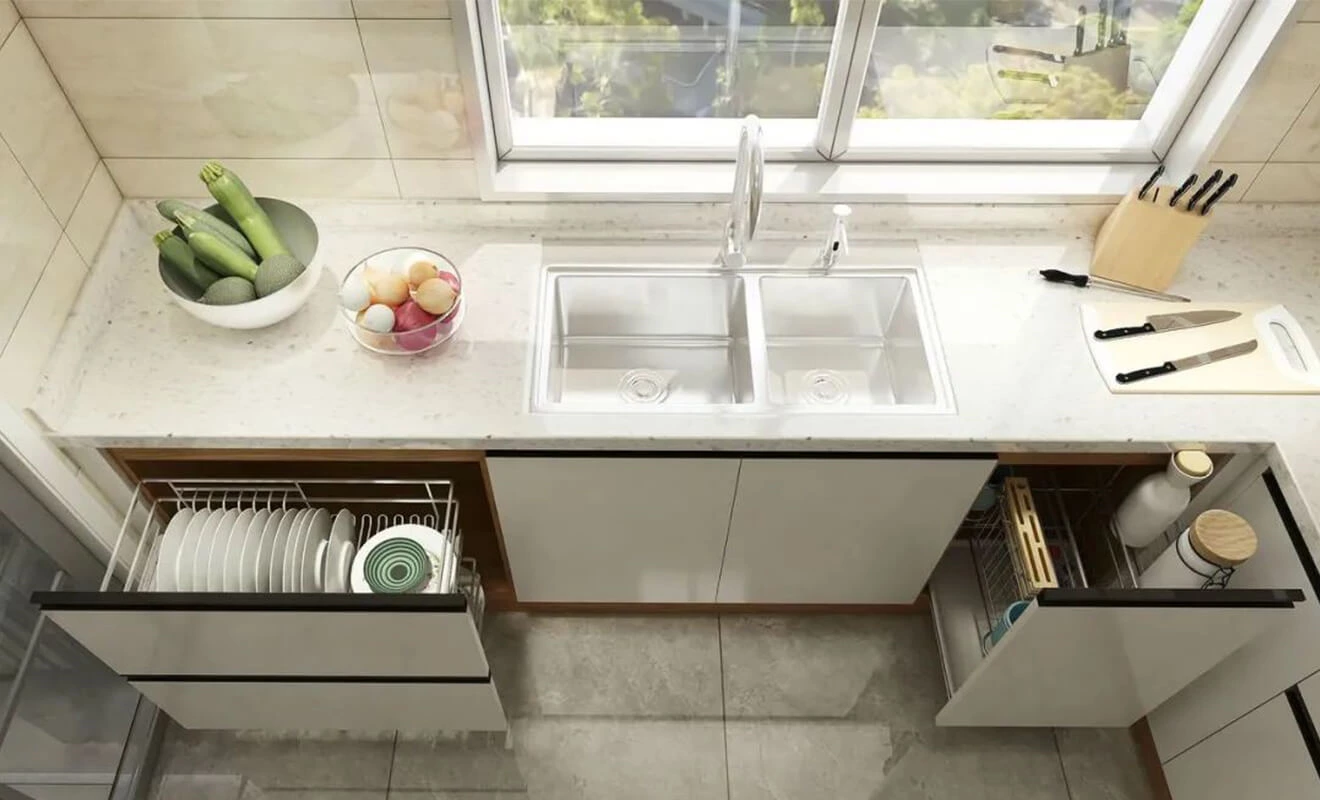
Storage area: Integrated countertops provide a cohesive storage experience, offering versatile storage solutions for a well-organized kitchen.
In addition to washing, preparation, cooking, and storage, many kitchens benefit from a serving or appliance zone. Keep frequently used small appliances near a suitable outlet, provide enough landing space beside the sink and cooktop, and avoid placing important work areas where open appliance doors block circulation.
How to Select Kitchen Countertop Materials for Daily Use
Kitchen countertop materials should be evaluated by how the household actually cooks and cleans. A busy family kitchen may prioritize easy cleaning, durable edges, and practical seam locations. A show kitchen may place greater emphasis on dramatic veining, a waterfall island, or a continuous backsplash. A project buyer should record the approved material, thickness, finish, edge profile, slab layout, cut-outs, and care requirements in the final specification.
- Sink area: confirm the sink mounting method, faucet holes, water protection, sealed joints, and access for plumbing.
- Cooktop area: confirm appliance specifications, heat guidance, ventilation, countertop cut-outs, and landing space.
- Island: confirm overhang support, seating, drawers, power outlets, panel finish, and visible backside details.
- Backsplash: confirm slab direction, seams, outlets, window details, and the transition to wall cabinets.
- Maintenance: follow the selected product's care guidance and avoid assuming that every stone or engineered surface has the same requirements.
Explore available kitchen countertop materials and thickness options alongside the cabinet design. For kitchen islands, use our kitchen island size, clearance, and seating guide to coordinate the worktop with the wider layout.
Installation and Maintenance Checks
A countertop should be installed only after cabinet levels, wall conditions, appliance dimensions, sink specifications, and finished floor heights have been verified. Confirm seam locations, overhang support, access to services, edge profiles, backsplash alignment, and protection for transport and installation before the final slab is cut.
For general natural-stone care information, the Natural Stone Institute care and cleaning guide is a useful reference. For a broader kitchen-planning context, the NKBA planning guidelines offer industry resources. These sources are general references; final decisions should follow the actual material, installer guidance, project conditions, and applicable local requirements.
Kitchen Countertop Materials FAQ
What are the best kitchen countertop materials?
The best kitchen countertop materials depend on the desired appearance, cooking routine, cleaning needs, moisture exposure, heat considerations, budget, and installation details. Marble, engineered stone, quartz, sintered stone, and wood each suit different priorities.
Is quartz or sintered stone better for a kitchen countertop?
Both can be suitable. The right choice depends on the selected product, appearance, thickness, edge detail, cut-outs, installation requirements, maintenance expectations, and the intended kitchen use.
Do marble countertops need more maintenance?
Natural marble may require more attention to spills, acidic substances, cleaning methods, and care than some engineered surfaces. Follow the stone supplier's specific care guidance.
What countertop thickness should I choose?
Thickness depends on the selected material, visual direction, edge profile, cabinet height, sink type, support method, and budget. Confirm the finished thickness before cabinet fabrication.
Can a wood countertop be used near a sink?
Wood can be used in a kitchen when properly specified and maintained, but it requires careful attention to water exposure, joints, finish, and regular care. It is often practical as a dining ledge or secondary surface.
How should a countertop match kitchen cabinets?
Review full samples together under the planned lighting. Compare countertop pattern, cabinet color, door finish, handles, backsplash, floor, and appliance finishes before approval.
What should be checked before ordering a custom countertop?
Confirm site measurements, cabinet levels, appliance specifications, sink and faucet cut-outs, material sample, thickness, edge profile, seams, backsplash, support, and installation access before the final order.
Can the same material be used for a countertop and backsplash?
Yes. A continuous material can create a strong visual effect, but the slab layout, seams, outlet positions, wall condition, and pattern direction should be planned before cutting.
Conclusion: Choose Countertops for Both Style and Function
Kitchen countertop materials influence the look, workflow, maintenance, and long-term comfort of a custom kitchen. Marble, engineered stone, quartz, sintered stone, and wood all bring different strengths when their visual character is matched with the actual work zones and installation conditions.
By confirming materials, thickness, edge details, seam layout, cabinet support, appliances, and maintenance requirements before production, homeowners and project teams can create a kitchen countertop that is visually distinctive and practical for everyday use.