Dark cabinetry can feel architectural, timeless, and surprisingly adaptable. The best black kitchen ideas do more than create contrast: they shape sightlines, define open-plan zones, and give everyday materials such as wood, stone, and metal a stronger presence. The key is to balance black surfaces with the right lighting, textures, and practical finishes.
Black kitchens stand as an expressive solution in interior design. However, beneath such captivating visual solutions also lie practical functionalities. There are numerous reasons to opt for black in the kitchen; consider the advice offered by designers, then embark on crafting your own black kitchen.
Before selecting dark cabinetry, consider how much daylight the room receives, where task lighting is needed, and whether the kitchen connects directly to a dining or living area. A well-planned black kitchen can look dramatic without feeling heavy, especially when it includes warm timber, light countertops, or reflective surfaces.
Visual Partition
In modern minimalist interior design, white and black serve as primary hues. In this apartment, designers opted for neutral light shades while incorporating grey and black as supplementary colors. Against a backdrop of black blocks in the kitchen, the dining area stands out and seizes all attention.
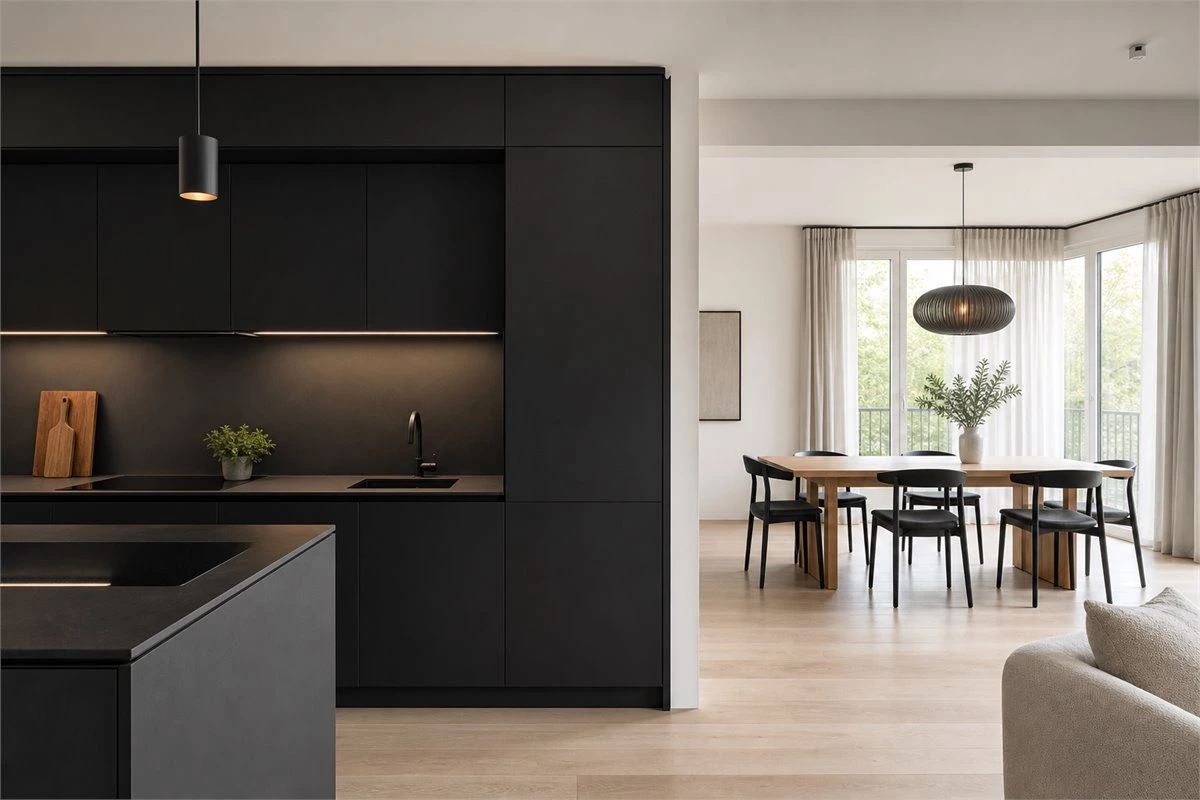
Using black cabinetry as a visual partition is particularly effective in open-plan homes. Rather than adding a full wall, a dark kitchen block can create a clear transition between cooking, dining, and living zones while keeping the space open and connected. Pairing the black finish with pale walls or a lighter dining table helps each area remain easy to read.
Hide Space Imperfections
Black may seem mundane, yet within its embrace, irregularities and twists of space fade into obscurity. In this industrial-themed space, designers selected graphite black as the backdrop, veiling the irregularities of walls and slanting ceilings (with a height difference of 15-20 centimeters). Matching the kitchen's color to the walls allows bright artwork and small appliances to stand out.
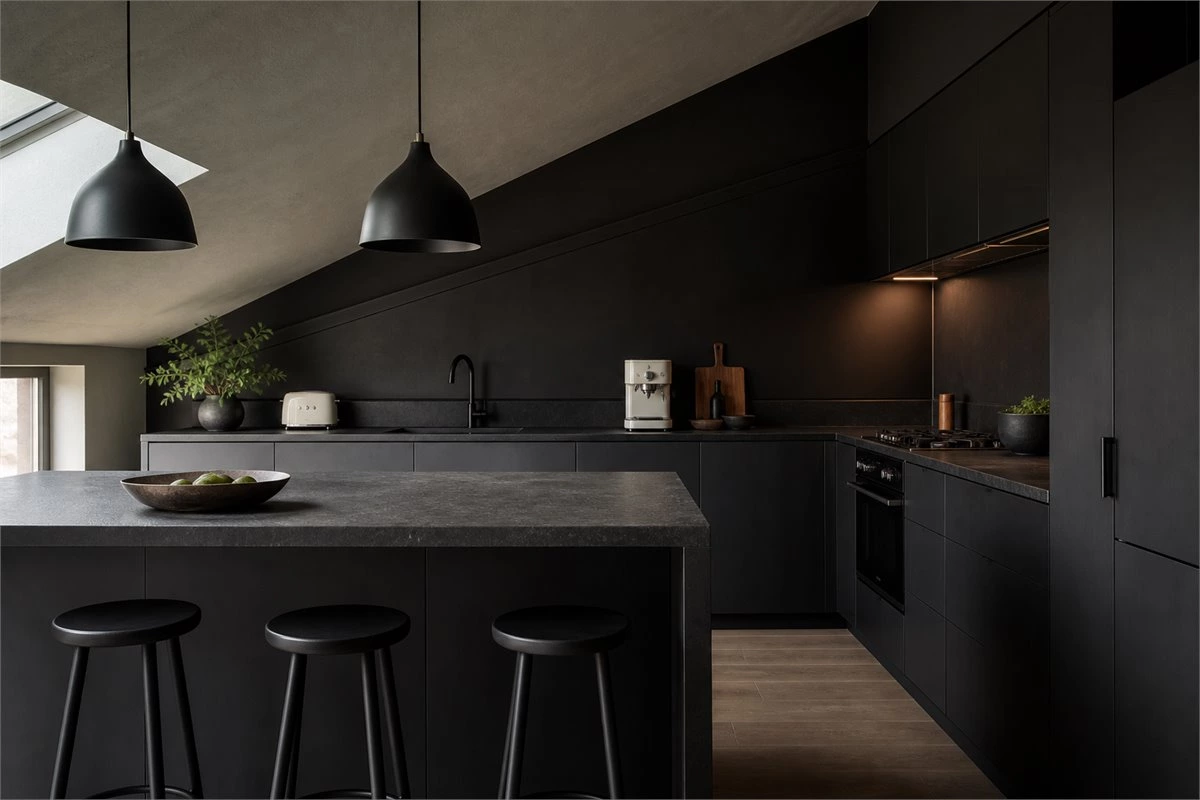
For challenging floor plans, black can visually simplify awkward corners, structural beams, and uneven ceiling lines. Matte cabinet doors are often the best choice because they reduce glare and create a calmer, more continuous backdrop. Keep handles, appliances, and wall finishes restrained so the dark finish works as one cohesive architectural surface.
Expand Visual Space
This apartment melds the living room and dining area into a 64-square-meter space. Despite the evident downside of low ceilings, designers found an elegant workaround: black visually diminishes the corridor, rendering the living quarters seemingly larger by comparison. This game of hide-and-seek finds support from the adjacent walls adorned in black kitchens.
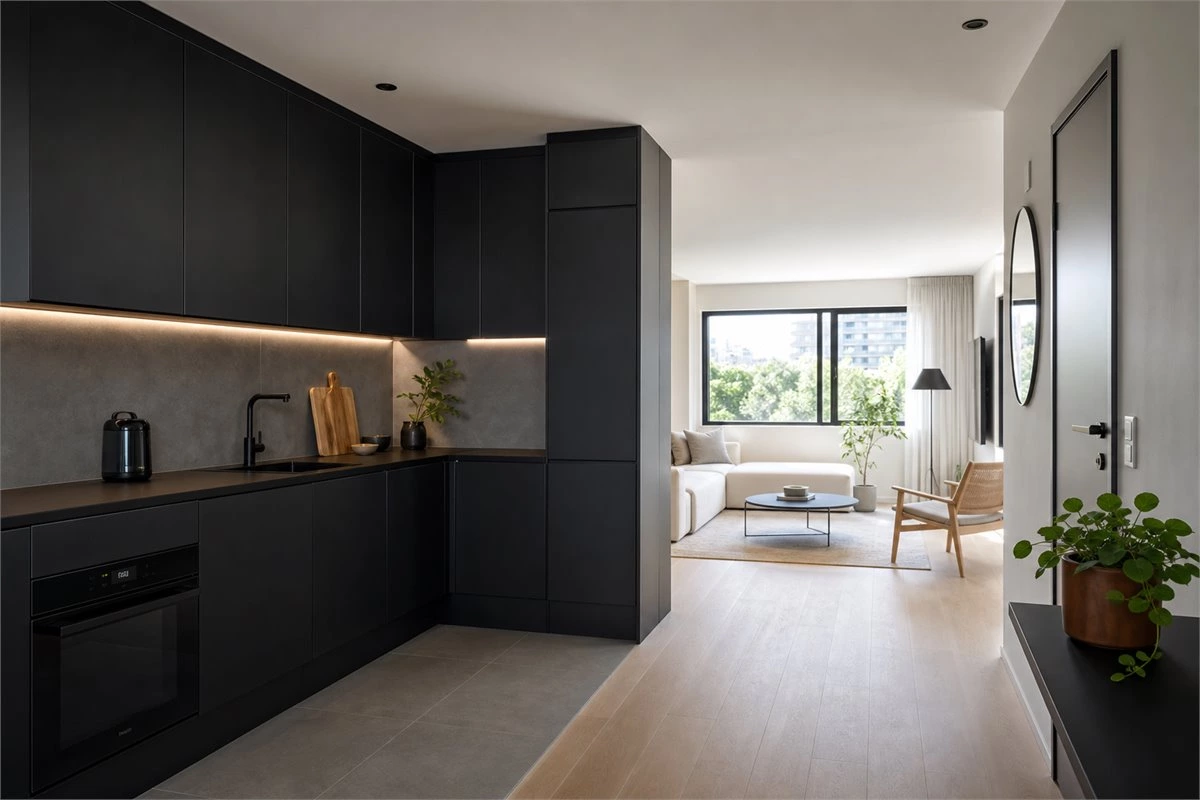
Similarly, another apartment adopted this strategy. The entrance area (entry hall and kitchen) is painted black, which diverts focus away from these zones. The living room, with its gray walls, stands in stark contrast to the black kitchen, appearing remarkably airy despite having only one window. There's also a mirrored panel reflecting light above the kitchen's workspace.
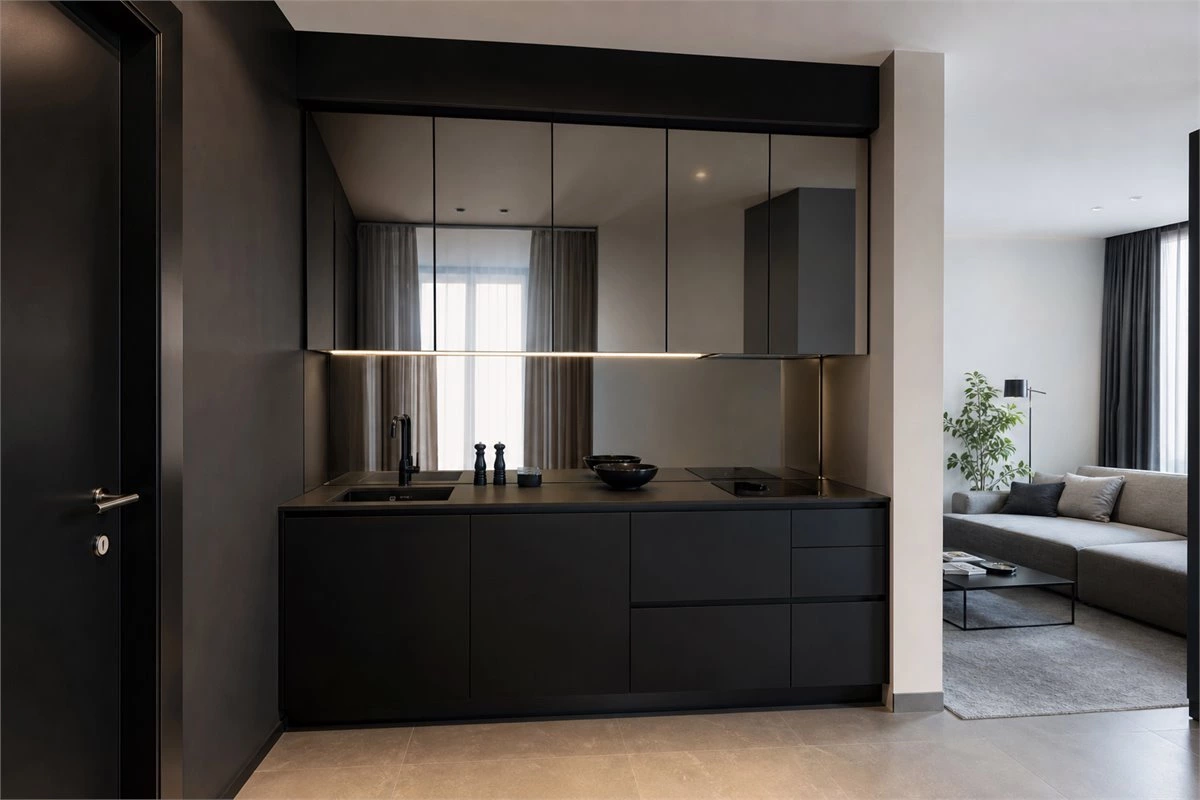
One of the most useful black kitchen ideas for small homes is to concentrate dark finishes in the least prominent area, then place lighter colors where you want the eye to travel. Mirrors, glass-front cabinets, pale flooring, and layered lighting can prevent a dark kitchen from appearing enclosed. For more streamlined inspiration, see these modern minimalist cabinet designs.
Black Wooden Cabinet
A space with a combination of marble, metallic elements, and soft textiles may feel overloaded, so opt for black-painted wooden cabinets for a harmonious look from afar.
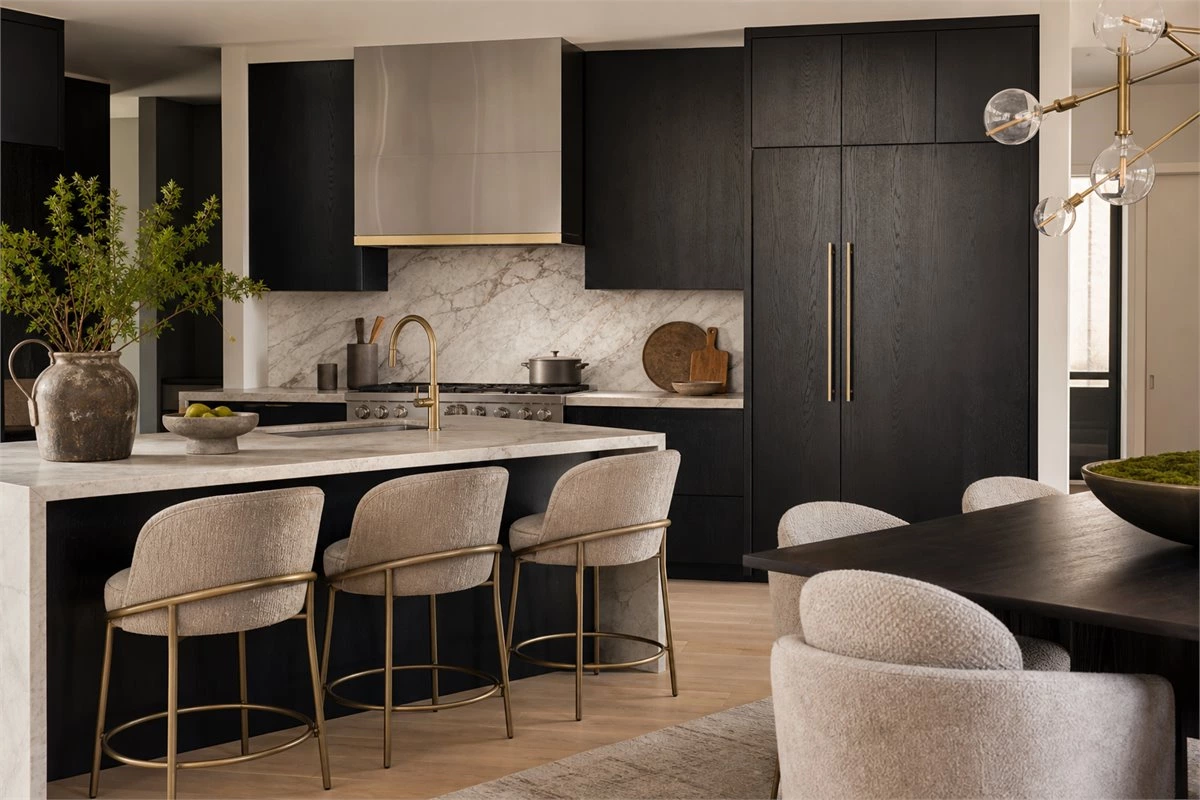
Black-painted wood cabinets introduce depth without losing the warmth that natural timber brings to a kitchen. This combination works especially well with veined stone, brushed metal, and soft textiles because the cabinet color grounds the material palette. If you prefer a warmer interpretation of dark cabinetry, consider combining black lower cabinets with oak accents or explore these wood kitchen ideas.
Focus on Interior Rigor
Black imbues the kitchen with a sense of solidity. Simultaneously, exterior walls should be entirely matte to avoid unnecessary glare and maintain a solemn exterior.
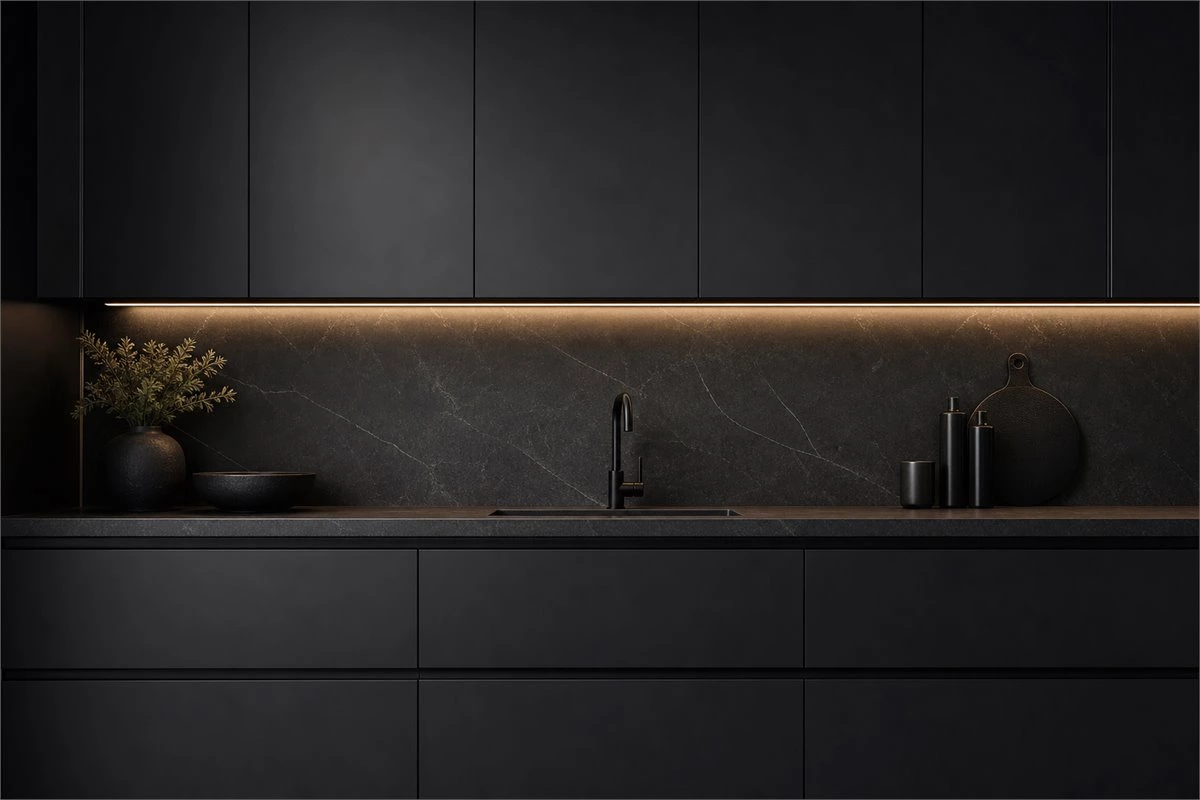
Consistency is important in a dark kitchen. Choose one or two dominant finishes, then repeat them through cabinet fronts, wall panels, or the island base. A matte black finish can feel refined and modern, while satin metal hardware, timber shelving, or a lightly veined countertop can add enough contrast to keep the design from looking flat.
Handle choice also affects the final result. Integrated pulls, recessed channels, and push-to-open systems preserve clean cabinet lines and suit contemporary black kitchens particularly well. See more options in our guide to handleless cabinet designs in modern homes.
Invest in Style
However, it's worth noting that a black kitchen with matte exterior walls isn't the most practical choice: fingerprints or water droplets are clearly visible. Therefore, such kitchens are suited for individuals unburdened by concerns of mess. In other words, they're ideal for those with a spirit of hedonism or individuals who rarely cook at home.
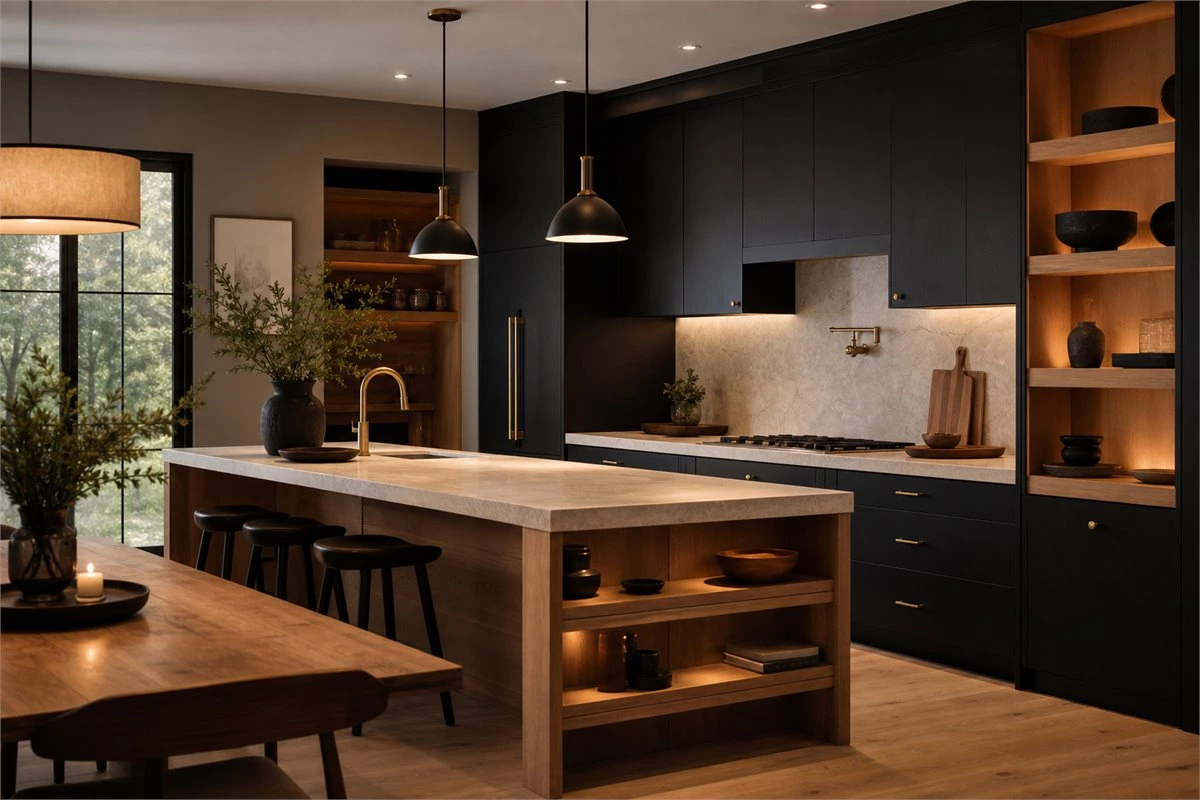
In practice, a black kitchen can still work beautifully for frequent cooks when the finish is selected carefully. Textured matte laminates, wood-grain black finishes, and medium-sheen surfaces tend to disguise fingerprints better than perfectly flat dark doors. Position task lights beneath wall cabinets so worktops are bright enough for food preparation, while keeping ambient lighting soft for evening use.
How to Balance a Black Kitchen
Successful black kitchen ideas usually include at least one light-reflecting material and one warm material. White quartz, pale marble, light oak, fluted glass, brushed stainless steel, and brass hardware all create contrast without competing with the cabinetry. A colored accent can also work well; muted green, warm terracotta, and soft grey are more timeless choices than overly bright finishes. For color-led inspiration, browse these colored kitchen cabinet ideas.
For countertops, choose a surface that fits how the household uses the kitchen. Dark stone creates a dramatic monochrome appearance, while white or pale stone introduces brightness. Stainless steel can offer a more professional look and is widely used in kitchen applications because it is durable, smooth, and easy to clean; learn more from World Stainless' kitchen material guide.
Black Kitchen Ideas: Quick Planning Checklist
- Use warm under-cabinet lighting to brighten food-preparation areas.
- Balance dark cabinet fronts with light flooring, a pale backsplash, or reflective glass.
- Choose fingerprint-resistant matte or textured finishes for busy family kitchens.
- Introduce wood, stone, or metal to give black cabinetry visual warmth and depth.
- Use a dark kitchen block to define an open-plan layout without building a solid partition.
Frequently Asked Questions About Black Kitchens
Do black kitchen cabinets make a kitchen look smaller?
Not necessarily. Black cabinets can create depth and help define a compact kitchen when they are balanced with adequate lighting, pale surfaces, and clear visual contrast. In open-plan homes, a dark kitchen zone can even make adjoining areas feel lighter and more spacious.
What countertop color works best with black kitchen cabinets?
White, cream, light grey, natural stone, and warm wood countertops all work well with black kitchen cabinets. The best choice depends on whether you want a crisp modern contrast, a warm natural look, or a darker monochrome design.
Are matte black kitchen cabinets difficult to maintain?
Matte black cabinets can show fingerprints and water marks, but textured or fingerprint-resistant finishes are easier to maintain. Use a soft microfiber cloth and follow the finish supplier's cleaning guidance rather than abrasive products.
Conclusion
Black kitchens are not limited to one style. They can be minimalist, industrial, warm, luxurious, or quietly modern depending on the materials around them. By balancing dark cabinetry with thoughtful lighting, functional finishes, and contrasting textures, you can create a black kitchen that feels both expressive and comfortable for daily life.