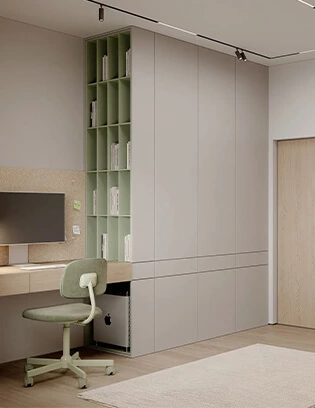
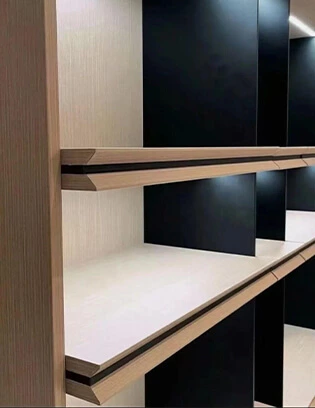
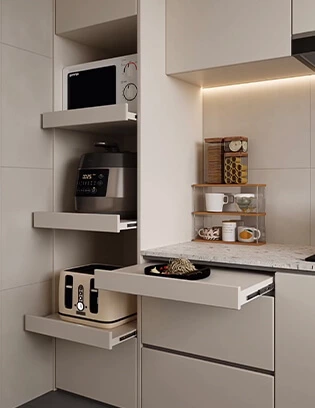
What gives a luxury interior its soul? Often, it’s the subtle mastery behind the millwork, the kind of detail that doesn’t shout but whispers sophistication. High-end bespoke carpentry is more than just wood—it’s about the fusion of tactile materials, refined textures, and time-honored craftsmanship. Here are nine signature techniques used in custom millwork that bring instant elegance and depth to any living space:
Architectural millwork gives custom interiors a more considered relationship between storage, wall surfaces, doors, display zones, and lighting. Rather than treating cabinetry as an isolated product, this approach allows materials, proportions, and finishing details to form a continuous design language throughout the home.
Whether the project includes custom kitchen cabinets, a living-room feature wall, bedroom storage, or interior doors, the most successful result comes from matching each decorative detail to the room’s function, daylight, maintenance needs, and surrounding finishes.
Layered Core Technique (ABA Structure)
This technique involves sandwiching a core panel between two contrasting materials, such as wood veneer, metal, or acrylic. This results in a visually layered surface with richer dimensionality and texture. By playing with color and pattern, designers can create striking contrasts or harmonious blends. Perfect for shelving, tabletops, or any element where detail deserves the spotlight.
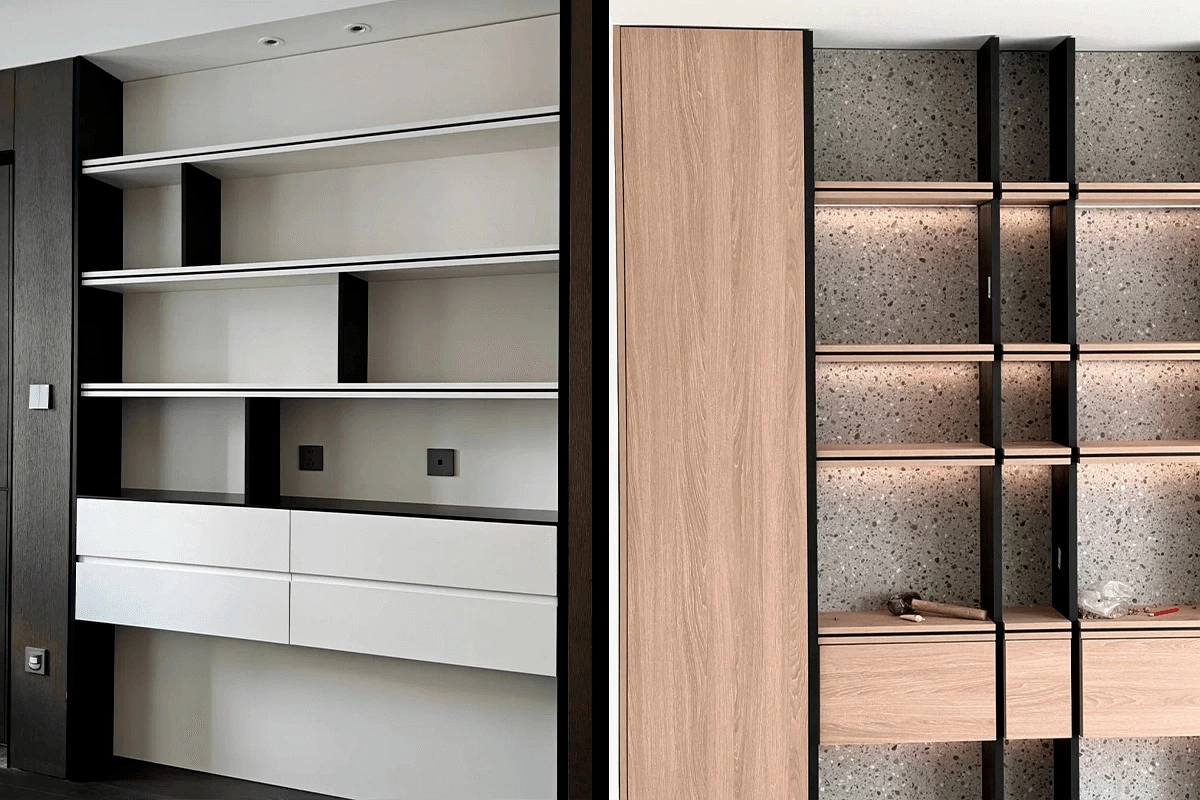
Layered panels work best when the visible edge, core material, finished thickness, and fixing method are all specified together. For a closer look at layered cabinet construction, explore our guide to ABA sandwich craftsmanship for custom cabinetry.
Curved Craftsmanship
Say goodbye to harsh corners. With smooth, sculpted arcs and rounded edges, this technique softens visual lines and invites touch. Curved cabinetry, walls, and doors lend a graceful, almost fluid feel to a space—ideal for modern yet cozy environments. Beyond aesthetics, they’re also safer and more child-friendly. The effect is subtle, but unmistakably elevated.
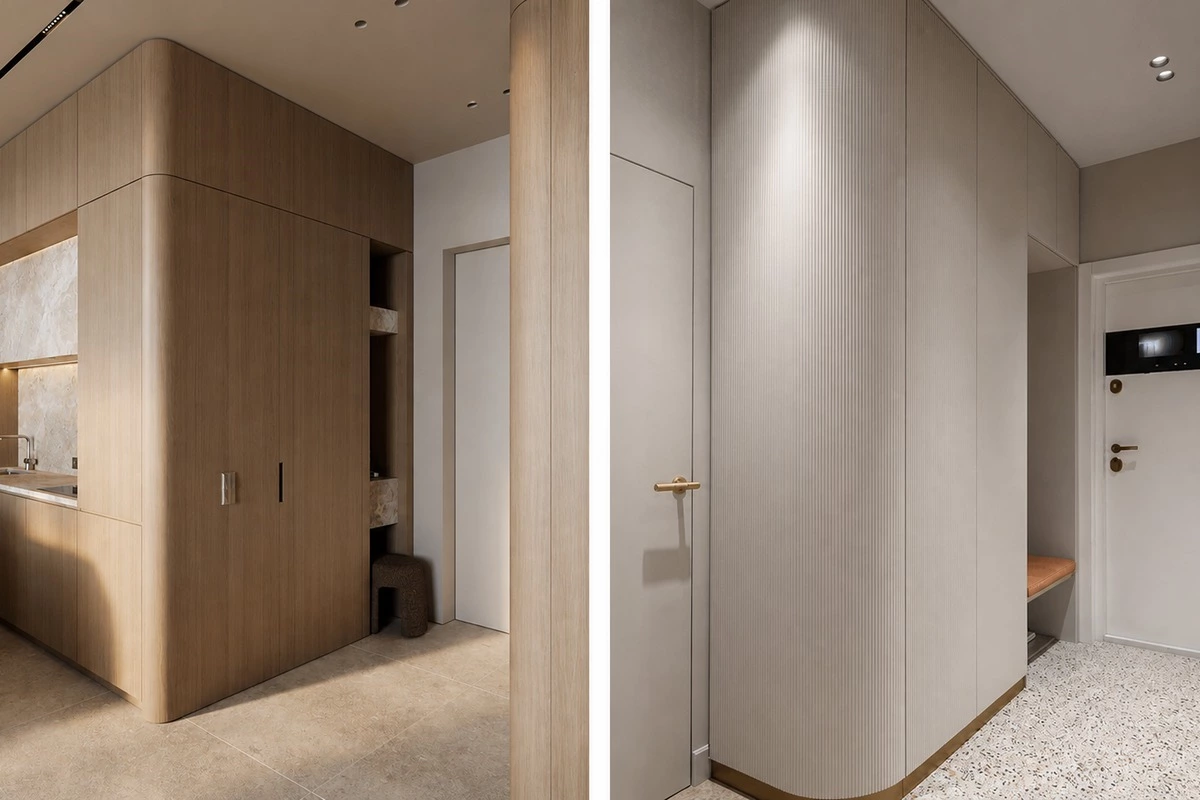
Curves should be reviewed in elevation, section, and full-size material samples before production. Radius, substrate flexibility, veneer direction, paint build-up, and the junction between curved and straight panels all influence the final appearance. Read more about curved craftsmanship in interior furniture design.
Textured Relief (3D Surface Carving)
Texture tells a story. Through advanced techniques like CNC engraving and precision carving software, wood surfaces are transformed into tactile landscapes—rippled, grooved, or embossed with custom motifs. These textures are more than just visual; they’re made to be touched, bringing a sense of depth and craft to feature walls, cabinet panels, or accent pieces.
For textured relief, confirm the depth of the pattern, cleaning requirements, finish sheen, lighting angle, and the distance from which the surface will usually be viewed. Fine textures may create quiet shadow lines, while deeper patterns can become a focal point on a wall panel, cabinet front, or display backdrop.
Liquid Metal Coating
Why just simulate metal when you can apply the real thing? Liquid metal finishes bond a metallic skin to wood or MDF, delivering both the sheen and weight of solid metal—minus the bulk. Seamless and luxurious, this technique is ideal for doors, staircases, and wall panels that call for a sculptural, industrial-chic vibe.
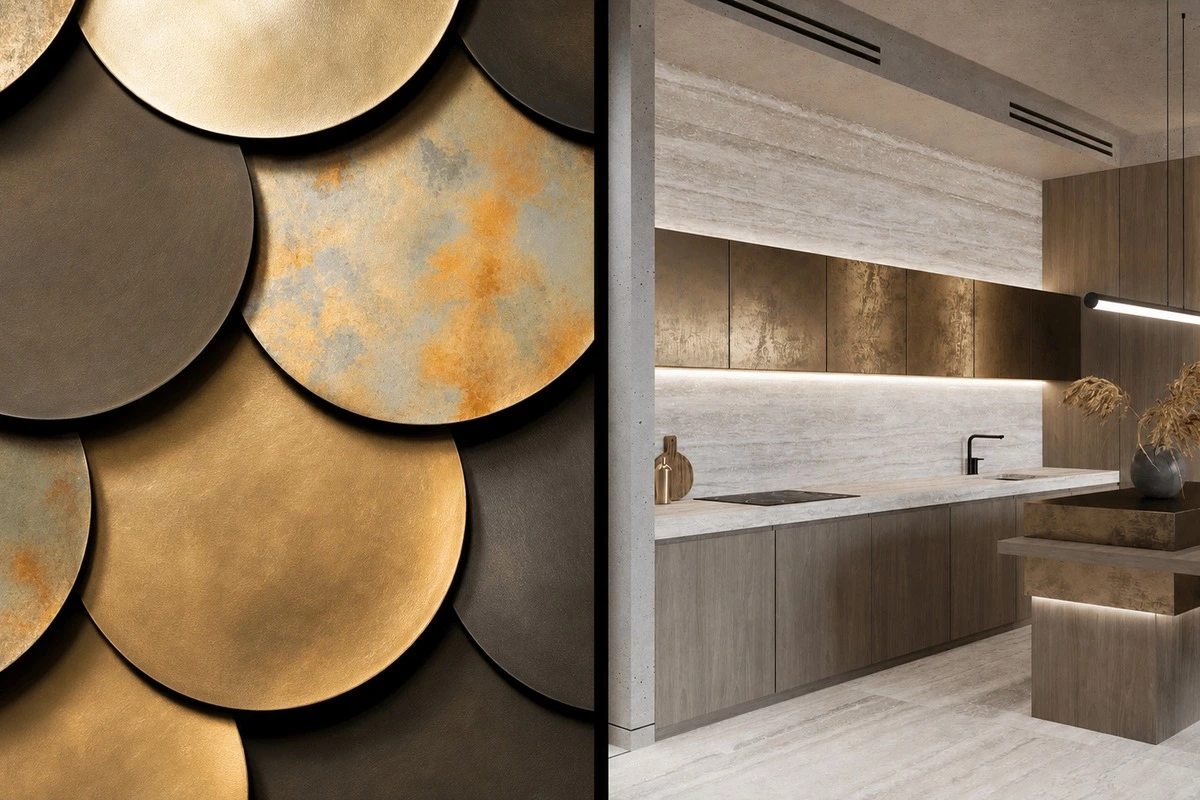
Metallic surfaces are especially sensitive to lighting and surrounding colors. Before approving a liquid metal coating, review a real sample beside nearby stone, wood, glass, and hardware. This helps the design team evaluate tone variation, surface movement, reflectivity, and how fingerprints or daily use may affect the intended look.
Framed Lines (Bone Structure Detailing)
Think of this as architectural tailoring. Clean, bold lines—reminiscent of a skeletal framework—are inset into cabinet fronts and wall panels. The result is a subtle three-dimensional rhythm that adds structure, vintage charm, and visual clarity. Ideal for classic, transitional, or minimalist interiors looking for a sophisticated edge.
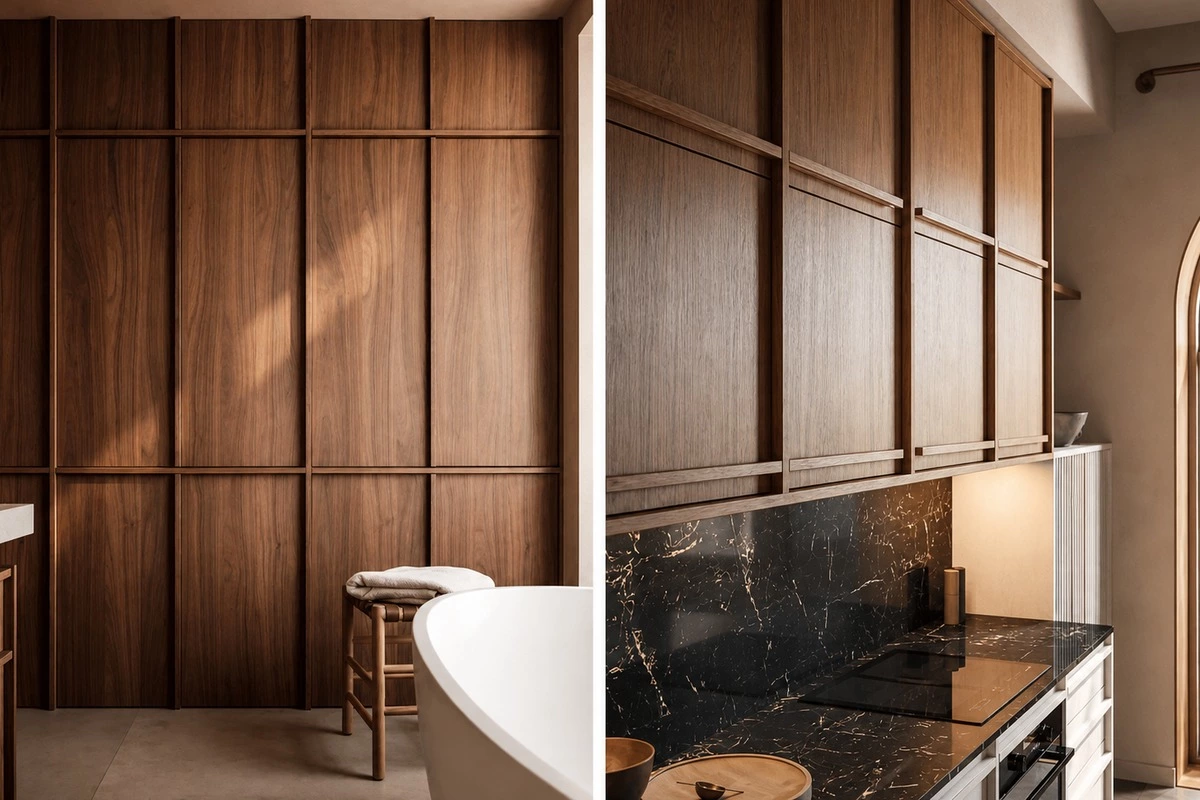
Framed lines should align with door splits, drawer fronts, lighting channels, and adjacent wall panels. Consistent proportions are more important than adding lines everywhere. Used selectively, this technique can define an entry cabinet, display niche, wardrobe elevation, or wall feature without making the room feel busy.
Smoked Wood Finish
Smoked veneer is the secret ingredient in many high-end Italian interiors. It develops a naturally darkened tone and protective carbonized layer by exposing wood to controlled heat, creating rich, moody grain patterns with added durability. It’s resistant to warping, bugs, and fading—aging gracefully with time. Especially popular in oak and eucalyptus species, it pairs beautifully with minimalist or monochrome designs.
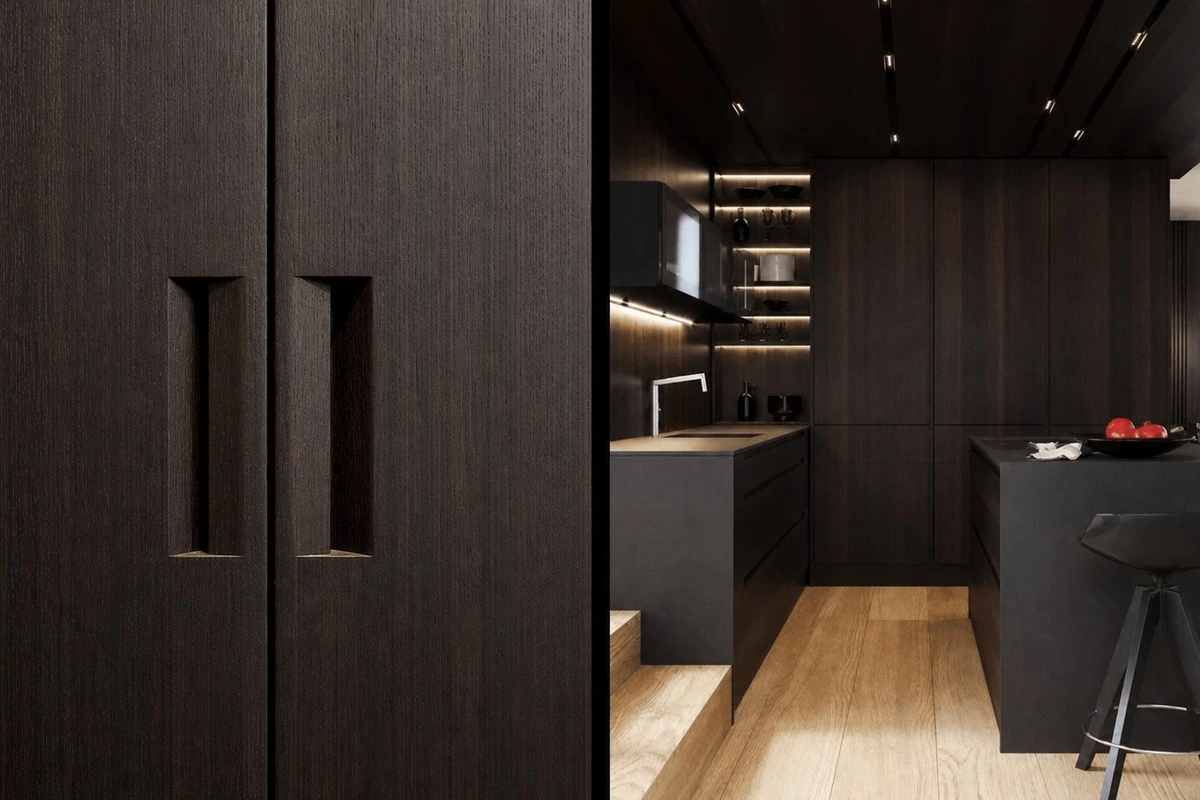
Because every veneer batch can vary in grain and tone, approve the wood sample in the expected project lighting before final production. Dark wood finishes often look different under warm LEDs, daylight, and cool ambient lighting, so sample approval helps maintain consistency across larger cabinet and wall-panel elevations.
Washed & Weathered Finish
To add soul to new wood, this technique mimics years of gentle wear. Think of a sun-washed boardwalk or vintage oak beam; the surface gains a soft patina that feels both rustic and refined through brushing, tinting, and light abrasion. It brings warmth to minimalist spaces and makes luxurious interiors feel lived-in and serene. Frequently used in Italian-style luxury panels and cabinet fronts.
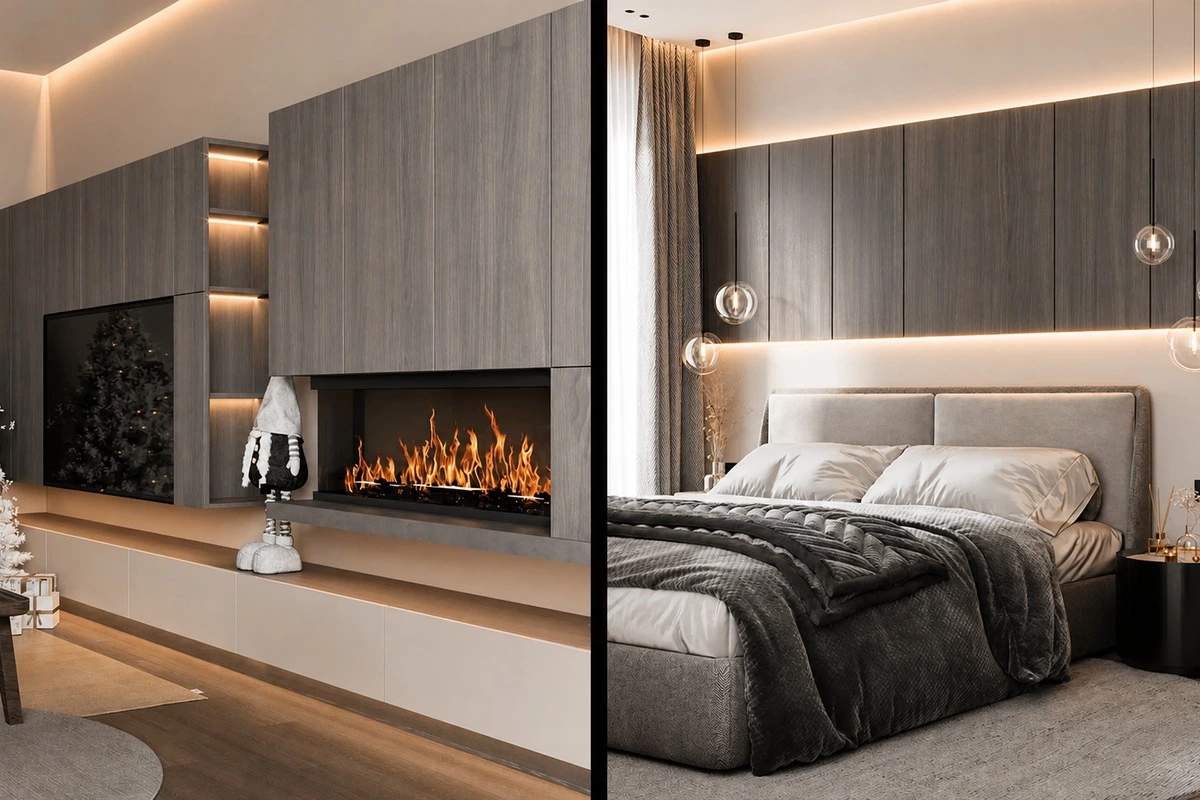
A weathered finish has more visual variation than a uniform lacquer or laminate. It is useful where a room needs warmth and character, but it should be balanced with cleaner surrounding surfaces such as stone, matte lacquer, glass, or smooth metal for a composed architectural millwork scheme.
Woven Rattan Inlays
Handwoven rattan brings texture, transparency, and artisanal charm. Each piece undergoes over ten detailed steps—steaming, peeling, bleaching, dyeing, weaving, and finishing—resulting in intricate panels that breathe. Whether used in cabinet doors, bed headboards, or chair backs, rattan adds lightness and a touch of retro elegance. Ideal for vintage-inspired or biophilic interiors that blend nature with design.
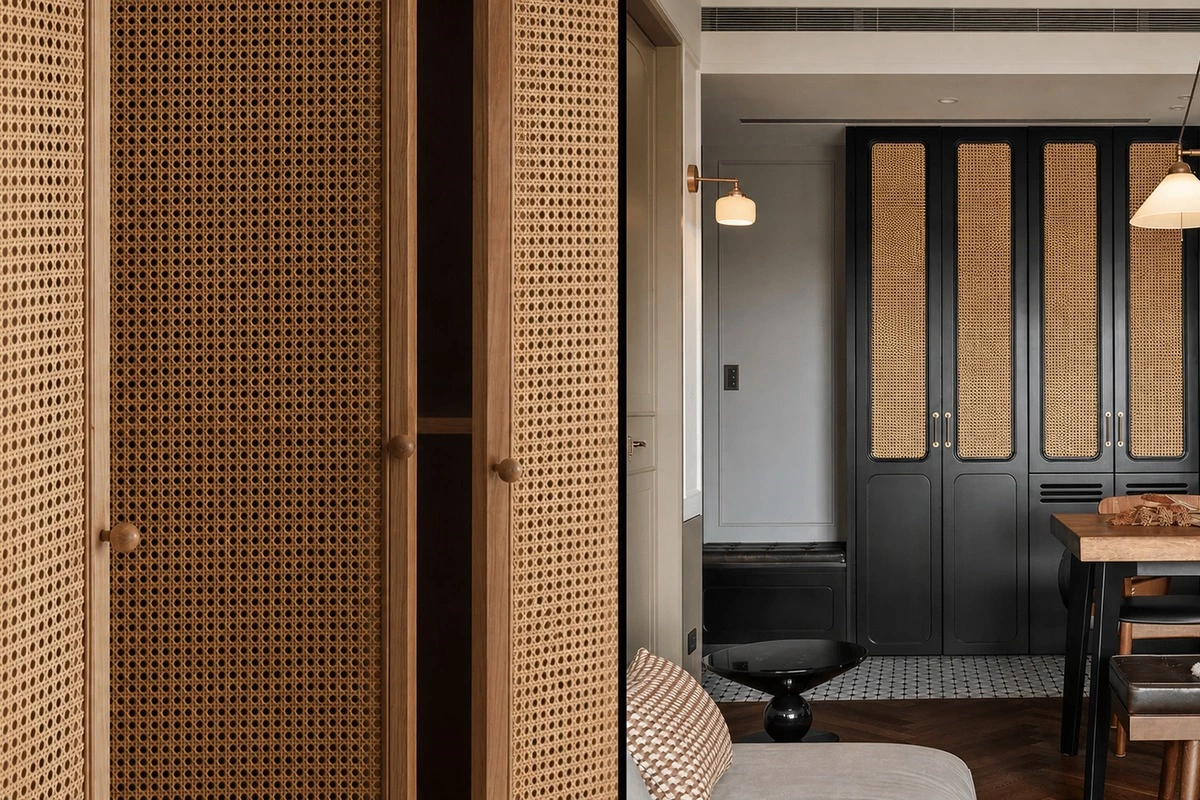
Rattan is most effective when it is used as a breathable accent instead of a dominant finish. It can soften a wardrobe door, sideboard, bedside cabinet, or display unit while allowing solid timber or painted panels to anchor the composition.
Saw-Cut Texturing
Inspired by the marks left by lumber mills, this technique recreates saw-blade scoring on wood veneer, offering a rustic yet curated feel. These subtle ridges organically catch light and shadow, celebrating the raw beauty of timber. Use it on cabinet faces, interior doors, or statement wall cladding to add instant warmth and character.
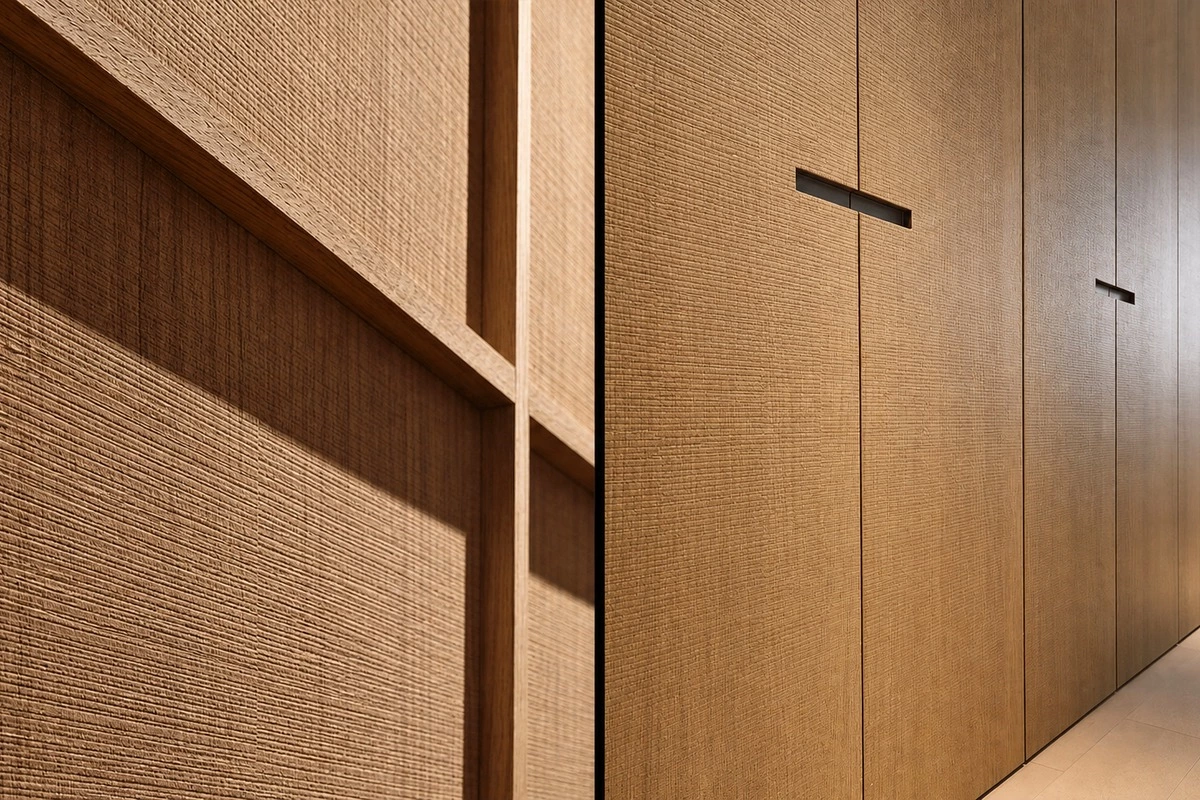
Saw-cut texturing brings a tactile quality to large surfaces without relying on bold color. It works particularly well on interior doors and wall panels, where daylight and grazing light can reveal the natural movement of the surface. Explore ALLURE’s interior doors and whole-home cabinet solutions when coordinating these details across several rooms.
How to Specify Architectural Millwork for a Custom Home
The best architectural millwork is resolved before fabrication. A rendering can communicate the design direction, but drawings and samples determine whether the finished details will align, function, and age as intended.
- Record the material, finish, grain direction, panel thickness, and edge treatment for each visible component.
- Show transitions between cabinet doors, wall panels, ceilings, countertops, and interior doors in enlarged detail drawings.
- Approve physical finish samples under the lighting planned for the project.
- Confirm hardware, opening clearances, maintenance access, and electrical routes before panel production.
- Use one or two distinctive techniques per elevation instead of applying every finish at once.
For architectural woodwork specification references, designers and project teams can consult the Architectural Woodwork Institute standards. If a project uses regulated composite wood materials for a U.S. destination, the U.S. EPA composite wood guidance is also a useful external reference. These links are for planning and compliance context only and do not represent certification claims for a specific supplier or project.
Frequently Asked Questions
What is architectural millwork?
Architectural millwork refers to made-to-measure interior elements such as cabinetry, wall panels, doors, display units, trim, and integrated storage that are designed to suit a specific architectural space.
Which architectural millwork detail is best for a modern home?
There is no single best choice. Curved forms can soften a minimalist space, framed lines can add structure, textured relief can create depth, and layered panels can emphasize material contrast. The right detail depends on the room’s scale, lighting, and intended use.
Can decorative millwork be used in small rooms?
Yes. In a smaller room, choose one controlled focal detail—such as a framed niche, textured cabinet panel, or rattan insert—and keep the rest of the elevation visually calm.
How should finishes be selected for architectural millwork?
Compare physical samples under the project lighting and beside nearby materials. Consider grain direction, color variation, sheen, touch, cleaning needs, and the way each finish connects to countertops, flooring, and hardware.
Do curved cabinet panels require special planning?
Yes. Curved panels require early confirmation of the radius, substrate, finish, joining method, hardware clearance, and transition to straight components. A full-size sample is recommended for prominent curved details.
Why are full-size millwork samples important?
They allow the project team to review actual color, texture, joinery, shadow lines, edge treatments, lighting response, and alignment before the design is repeated across a larger installation.
Conclusion
Architectural millwork turns a custom home into a more complete and tactile interior experience. Layered cores, curved forms, carved textures, metallic coatings, framed lines, distinctive timber finishes, rattan, and saw-cut veneers all bring a different quality to cabinetry and wall surfaces.
The key is not to use every technique in one room, but to select details that support the architecture, daily use, and desired atmosphere. With clear drawings, carefully matched samples, and coordinated cabinet, wall-panel, and door details, ALLURE can help create custom interiors that feel deliberate, refined, and connected from room to room.