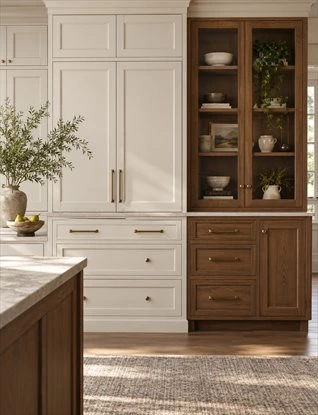
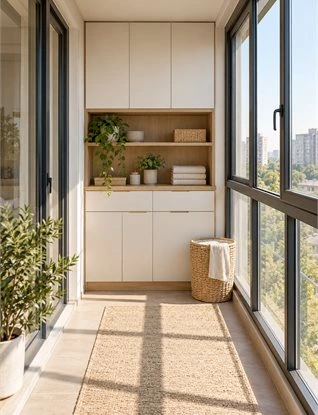
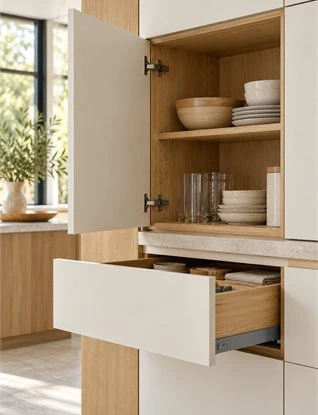
Wood veneer vs solid wood cabinets is not a choice with one winner for every home. The better specification depends on which cabinet part is being discussed, the look you want, the room conditions and the construction your supplier can actually provide.
A wood-veneered door can have a real-wood face over a specified core. A solid-wood door may have solid rails and stiles with a separately constructed center panel. Neither description tells you, by itself, what the cabinet box, shelves, back panel or finish will be. If two quotations simply say “wood cabinet,” they may describe very different products.
This guide explains the material terms, compares practical design and maintenance questions, and shows where each approach may fit in kitchens, wardrobes and other built-ins. Most importantly, it gives you a component-by-component checklist to use before approving samples and production drawings.
Wood Veneer vs Solid Wood Cabinets: The Short Answer
Choose by component and design goal, not by a cabinet-wide label. Wood veneer may be specified for broad, flat visible surfaces where grain direction or a coordinated sequence across fronts is important. Solid wood may be specified for selected frames, edges, profiles or other components suited to the proposed design. A mixed approach can also be appropriate. None of those possibilities is a substitute for a drawing and written material schedule.
Ask first which surfaces are visible, how the doors are built and what each room demands. A large wardrobe elevation, a framed kitchen door and a frequently handled drawer front do not necessarily need identical construction. Appearance is part of the choice, but so are edge detailing, joinery, finish, hardware, maintenance and installation.
If you are comparing quotations, make them comparable before discussing the price difference. Use the same room dimensions, door style, intended species or appearance, finish standard, hardware and installation scope. Otherwise, the less expensive proposal may simply exclude work or specify a different cabinet.
What Are Wood Veneer Cabinets and Solid Wood Cabinets?
What Wood Veneer Means
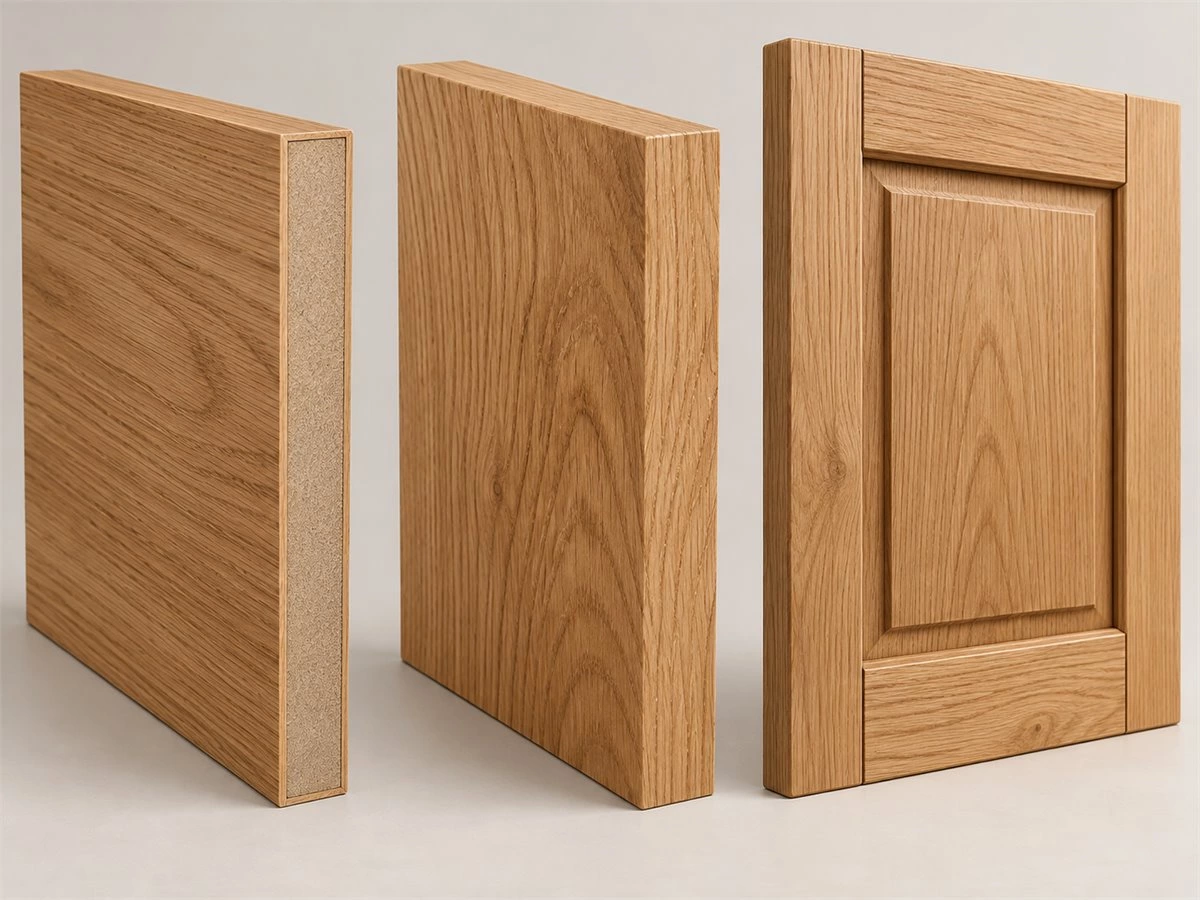
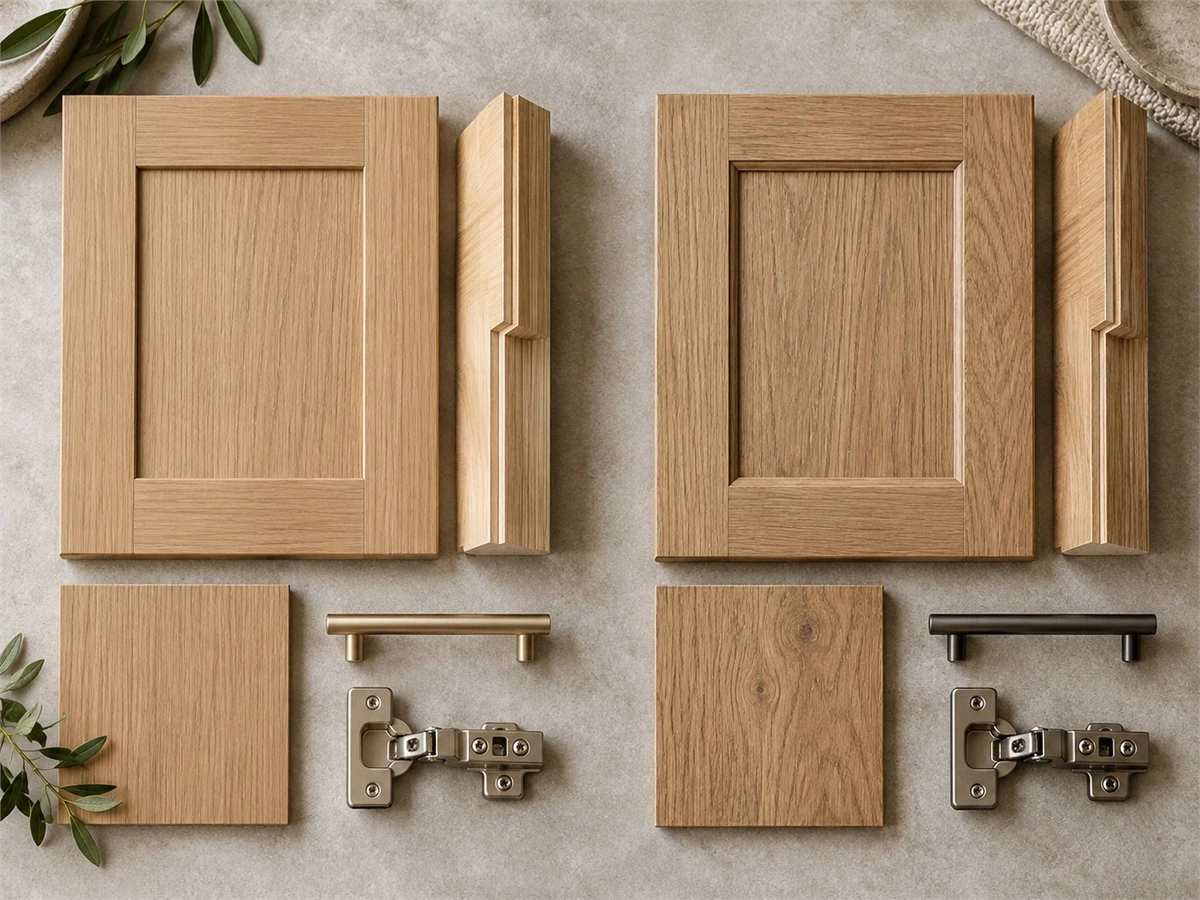
Wood veneer is a layer of real wood used as a visible surface on a specified panel construction. It is not the same thing as a printed wood-look finish. But “wood veneer cabinet” is still incomplete: you need to know the veneer species or appearance standard, the core, the reverse face, how exposed edges are treated and what protective finish is applied.
Veneer can be selected and arranged to create a particular grain direction or relationship between adjacent fronts. That result does not happen automatically. A sample showing an attractive wood figure is not an approved sequence for an entire kitchen or wardrobe. If continuity matters, ask for a front elevation with each visible panel numbered and the intended grain direction marked.
What Solid Wood Means
A solid-wood component is wood through its thickness, but the description should still identify which component is solid. A cabinet door might use solid rails and stiles around a separate center panel; a shelf might be built differently from the door; the cabinet box may use another material altogether. “Solid wood door” should never be interpreted as “every part of the whole cabinet is solid wood.”
Also ask how wider parts are assembled and finished. A species name alone does not tell you the joint design, panel construction, moisture condition, coating or expected appearance range. Two solid-wood doors of the same named species can have noticeably different grain and color.
Read the Cabinet as a Set of Parts
Request a component schedule for doors, drawer fronts, frames, exposed end panels, shelves, cabinet boxes, backs and decorative trim. This avoids a common misunderstanding: a material label may refer only to the most visible face. Professional woodwork references distinguish veneer-faced doors by core and edge construction, illustrating why the face material is only one part of the specification. See the Woodwork Institute's architectural woodwork publications for further technical context.
| Cabinet part | Ask the supplier to identify | Why it matters |
|---|---|---|
| Door and drawer fronts | Face, core or frame, reverse face, edge and coating | Determines visible character and detailed construction |
| Exposed sides and panels | Material, grain direction, edge and finish | These surfaces remain visible after installation |
| Shelves and cabinet box | Panel construction, thickness, support and finish | Appearance alone does not establish storage performance |
| Backs, plinths and trim | Material, visibility and installation detail | Affects the completed look and service access |
Wood Veneer vs Solid Wood: A Practical Comparison
A useful comparison asks what the customer will see and use, then checks the exact construction proposed. Avoid blanket statements such as “veneer is always more stable,” “solid wood always lasts longer” or “one is maintenance-free.” The result depends on the specified core or joinery, finish, environment, handling and workmanship.
Appearance and Grain Continuity
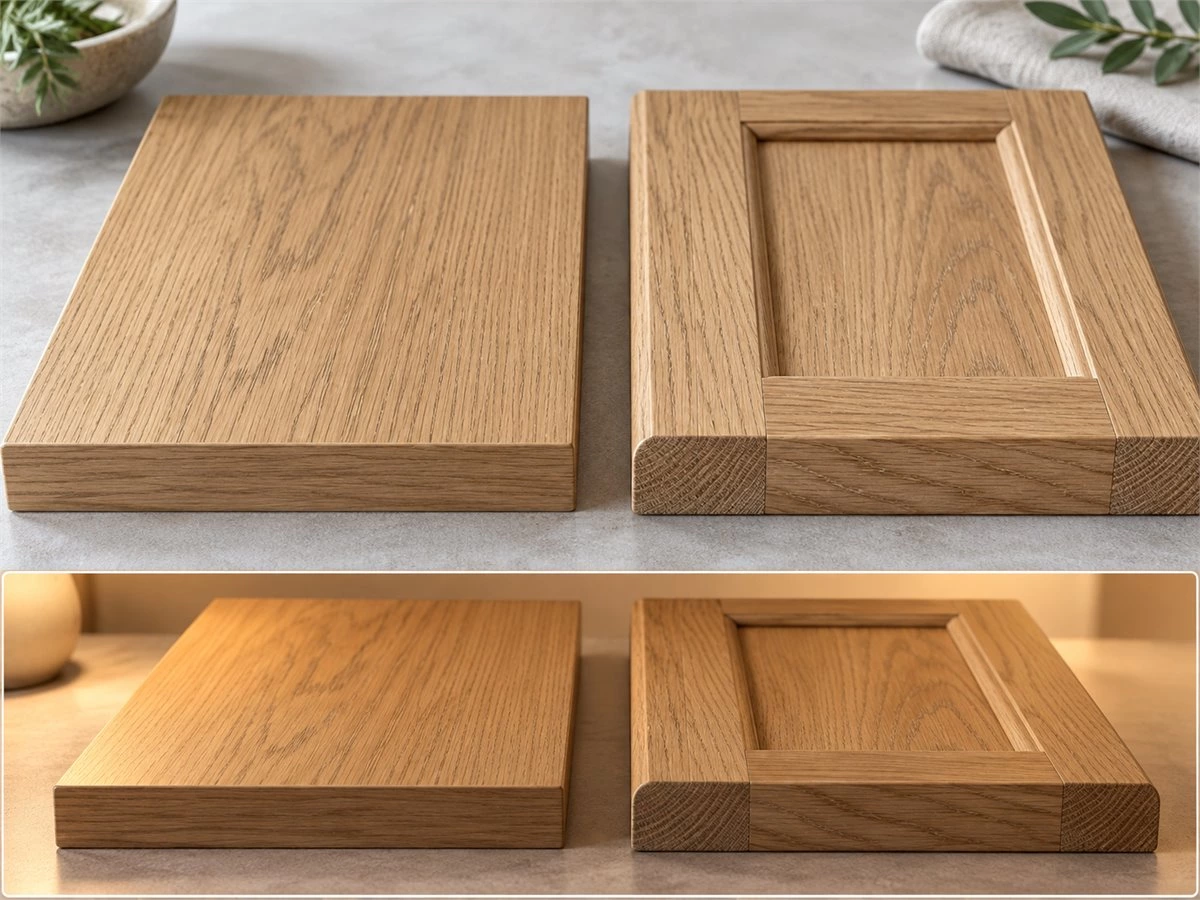
Both materials can show real wood character. In a veneered design, the supplier may be able to plan grain direction and a particular relationship between adjacent faces. In solid wood, each piece also has natural variation, and a framed door creates its own pattern of rails, stiles and center panel. Neither approach guarantees that every door will look identical to a small sample.
Decide what “matching” means for your project: compatible color, consistent direction, or a planned sequence across several fronts. Those are different approval targets. For a more detailed explanation of grain direction and continuity, see ALLURE's cabinet grain matching guide.
Door Style and Shape
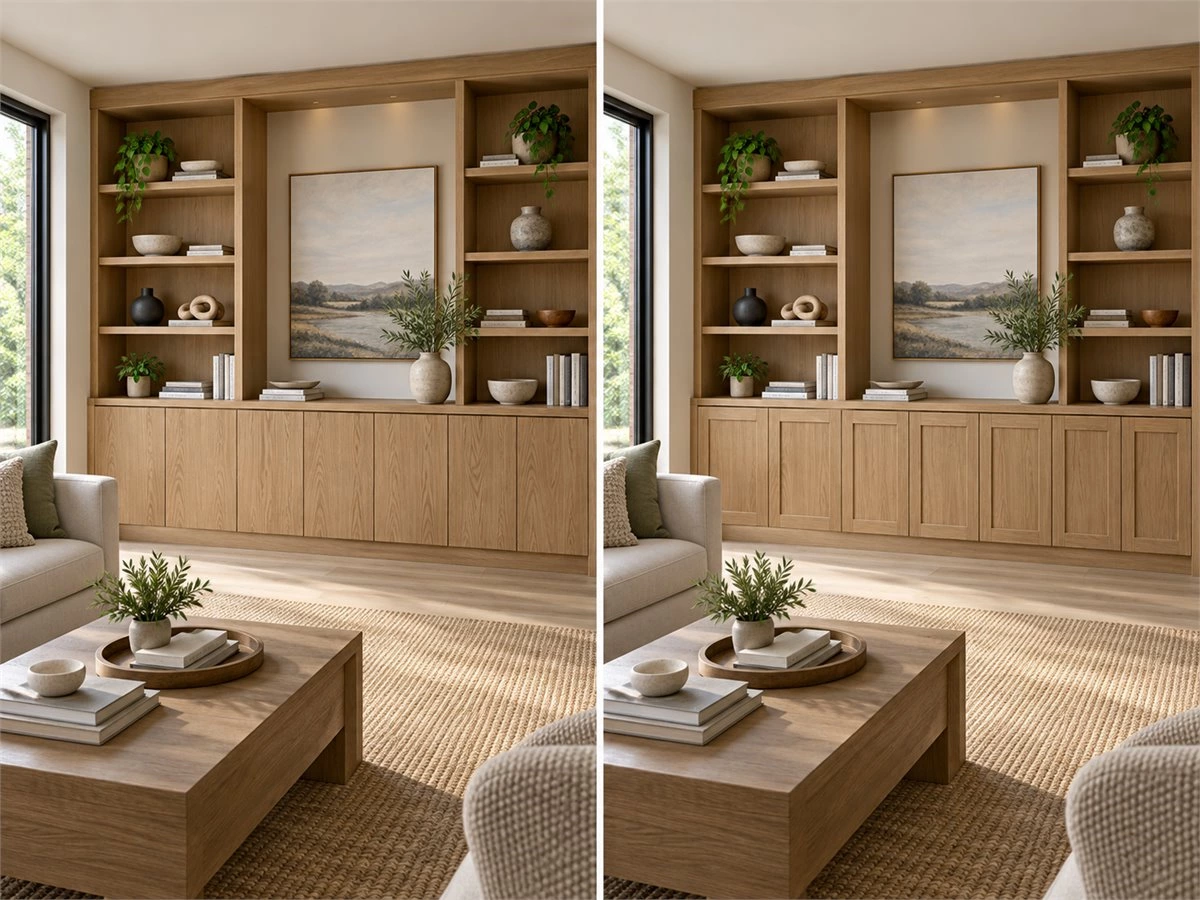
Large flat fronts, framed doors, routed profiles and curved elements place different demands on materials and manufacturing. A veneer-faced slab front and a solid-wood frame can both suit a wood-focused room, but they will not create the same visual rhythm. Ask the manufacturer to confirm the proposed door dimensions and construction before assuming that a detail seen in a photograph can be repeated at a different scale.
Response to Room Conditions
Wood and wood-based panels respond to moisture and temperature in different ways. Actual behavior depends on the product construction, finishing on exposed surfaces, storage before installation and conditions in the room. Do not choose a material on the promise that it will never move, swell, crack or show a seam. Ask what conditions the supplier expects and how the proposed joints, panels and finish accommodate them.
Cleaning, Wear and Repair
Compare the complete finished component, not just the raw material name. Ask which cleaner is recommended, whether standing water must be removed promptly, and what happens if an edge, face or corner is damaged. Some repairs may be local; others may require refinishing or replacement of a front. The answer depends on veneer thickness or solid-wood construction, the coating and the extent of damage, so obtain the supplier's written care and repair guidance.
| Decision factor | Wood-veneer option | Solid-wood option | Project check |
|---|---|---|---|
| Construction | Real-wood face on a specified panel | Wood through the specified part | Name every component, core, edge and joint |
| Visual result | Grain can be planned across selected faces if specified | Natural variation remains visible across pieces | Review samples and the whole elevation |
| Door design | Often considered for flat visible surfaces | Can be specified for selected frames and details | Confirm actual profile, size and construction |
| Care and repair | Depends on face, edge, core and coating | Depends on joinery, species and coating | Request written care and damage remedies |
| Cost | Affected by veneer selection and matching work | Affected by species, joinery and machining | Compare like-for-like quotations |
Which Material Works Best in Different Rooms?
Do not apply one cabinet material to the entire home simply for consistency. A coordinated home can share a tone or design language while using different constructions where the room, door style and intended contents call for them.
Kitchen Cabinets
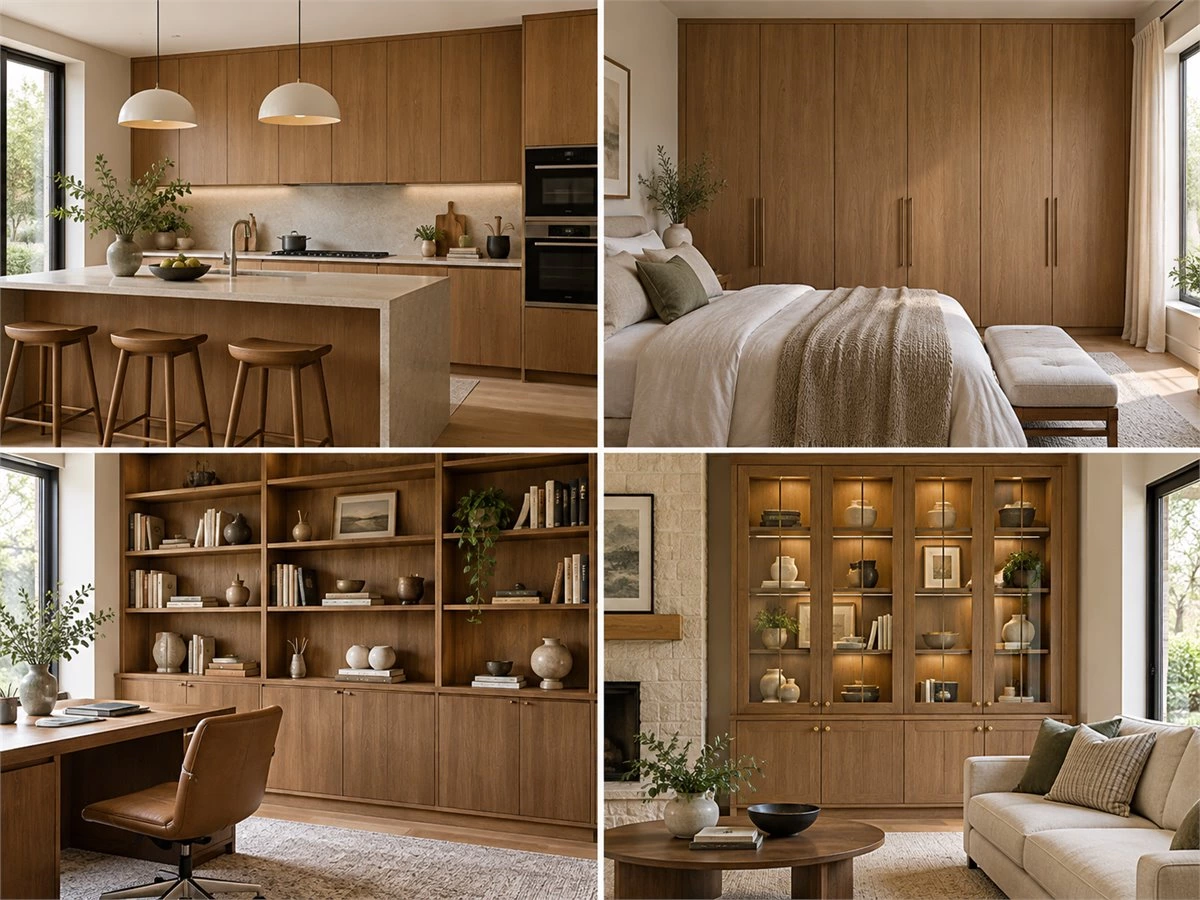
Kitchen doors are handled frequently and may be close to sinks, cooking areas or appliances. Separate the appearance of a wood-faced door from the details that protect its edges, joints and cabinet box. Review the proposed coating, cleaning instructions and the exact location of vulnerable surfaces. Neither veneer nor solid wood should be described as waterproof solely because a sample feels well finished.
Bedroom Wardrobes
A wardrobe may present a broad uninterrupted field of doors, making panel divisions, grain direction and finish variation especially noticeable. Compare the proposed elevations at room scale. Then check door operation, hardware, internal drawer access and how any wood surface relates to the headboard or bedside cabinets. The best appearance is of little value if the doors cannot serve the storage plan.
Study Bookcases and Home-Office Built-Ins
A wood finish can warm a work area, but books and equipment introduce practical questions. Identify what each shelf will carry, how it is supported and whether cables or service openings are needed. A veneered face or solid-wood shelf label alone does not establish shelf-load capacity; span, thickness, supports, connections and actual use all require review.
Living-Room Display Cabinets
In a living room, the material decision is often closely tied to glass, lighting and wall finishes. A consistent wood field may suit a long cabinet elevation, while selected frames or trim can provide a different emphasis. View material samples beside the adjacent stone, paint, metal and upholstery rather than approving a wood tone by itself.
Areas With Greater Moisture Exposure
For a bathroom-adjacent cabinet, laundry room or another area with more moisture exposure, discuss the actual site conditions with the supplier. The core, edge sealing, coating, ventilation and installation details are as important as the face material. Do not rely on a generic “moisture-resistant wood” label without a complete specification.
Can You Combine Veneer and Solid Wood in One Project?
Yes. A mixed specification can be useful when each material has a clear role. For example, a design may use veneer-faced broad panels for a coordinated visual field and specified solid-wood parts for selected frames or details. The combination should be defined on the drawings; it should not be left to a vague description such as “wood finish with solid details.”
Give Every Material a Job
Mark the doors, drawer fronts, exposed sides, open shelves and trim on an elevation. Then state which material and construction applies to each. This prevents an attractive front elevation from concealing unexpected substitutions at cabinet ends or returns.
Coordinate Tone, Grain and Sheen
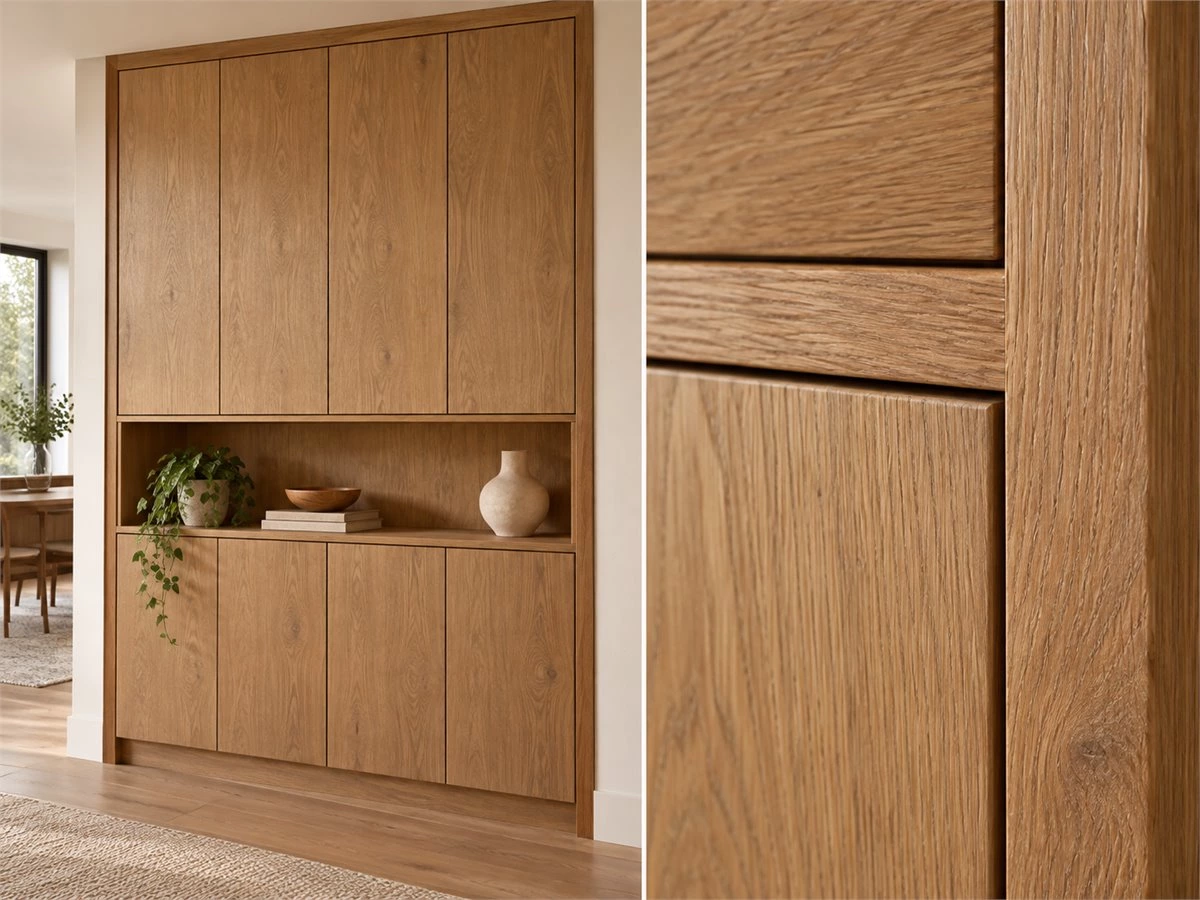
Pieces described with the same wood name can still differ in figure, color and finish. Review veneer and solid-wood samples together under the home's likely daylight and artificial lighting. Agree on an acceptable appearance range, especially where two materials meet in the same sightline. Do not promise an exact visual match from a small swatch alone.
Draw the Transition
Ask how a veneered face meets a solid-wood edge, frame, shelf or decorative trim. Show the joint and grain direction on the detail drawing. A neat transition is partly a design issue and partly a manufacturing issue; both should be confirmed before production.
What Affects the Price?
There is no responsible fixed percentage for the cost difference between wood veneer and solid wood cabinets without two comparable project quotations. Material is only one variable. Species or appearance grade, panel construction, door profile, selected finish, veneer matching, hardware, quantities and installation all influence the price.
Species and Selection
Ask for the actual material identification and the expected range of color and figure. A dark brown sample is not proof of a particular species, and a species name is not a complete quality grade. If a special appearance is required, make that part of the approved sample and supply agreement.
Core, Edges and Joinery
Two veneer-faced doors may have different cores or edge treatments. Two solid-wood doors may differ in frame, center-panel and joint design. These details affect manufacturing work and the finished product, so compare them line by line rather than pricing the material names.
Matching, Coating and Hardware
A continuous grain effect across several fronts may require deliberate selection and layout. A particular sheen, color or coating process can also change the quotation. Hinges, drawer slides, handles and lighting provisions belong in the same comparison because they affect both cost and daily use.
Delivery, Installation and Aftercare
Confirm whether the quote includes site measurement, drawings, samples, freight, installation, adjustments and after-sales support. The apparent low-cost option may exclude work included in the other proposal. Ask how damaged or mismatched parts would be identified and replaced after installation.
What Should You Confirm Before Ordering?
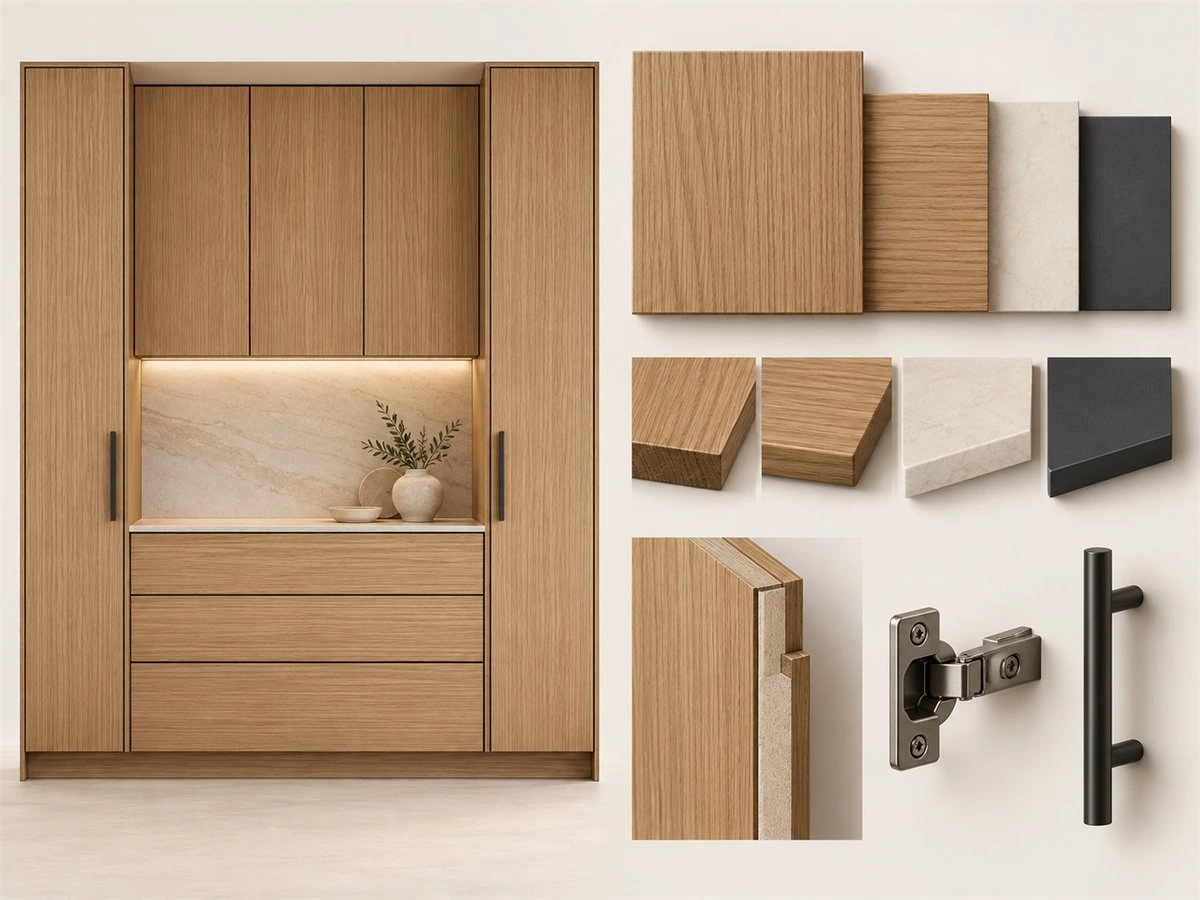
The most valuable decision tool is a written approval set. It should identify what will be supplied, what appearance has been accepted and which document revision controls production. A photograph of a completed room cannot establish the construction hidden behind its cabinet doors.
| Approval item | Record before production | Evidence to review |
|---|---|---|
| Component materials | Doors, drawer fronts, boxes, shelves, backs, edges and trim | Component schedule and section details |
| Wood appearance | Species or veneer reference, grain direction and acceptable variation | Physical sample and marked elevation |
| Finish | Color, sheen, coating reference and care method | Approved finish sample and written instructions |
| Construction | Core, edges, frame or panel design, supports and connections | Shop drawings and material data |
| Commercial terms | Hardware, installation scope, replacement and warranty terms | Final quotation and approval record |
Review the sample as a range of natural appearance rather than expecting every front to duplicate one small patch of grain. Where a precise sequence is essential, ask the supplier to confirm it on an elevation and explain how replacement parts would be matched later. If the drawings, sample and quotation disagree, resolve the difference before approving any of them.
FAQs About Wood Veneer and Solid Wood Cabinets
Is wood veneer real wood?
Yes. Wood veneer is a real-wood face applied to a specified panel construction. The face should not be confused with a printed wood-look surface, and the underlying core should be identified separately. If a proposal simply says “veneer cabinet,” ask which parts have veneer and what lies beneath it.
Are solid wood cabinets always more durable?
No material label guarantees durability by itself. Door and panel construction, coating, hardware, installation, room conditions and care all matter. Compare the proposed finished components and intended use rather than assuming that one category always lasts longer.
Can wood veneer cabinet doors be repaired?
Sometimes, but the remedy depends on the damage, veneer and edge construction, finish and available replacement material. A minor surface mark is different from a damaged edge or a swollen core. Ask the supplier for its repair and replacement procedure before ordering.
Can veneer and solid wood be used in the same cabinet project?
Yes. The important step is to identify each material's role and approve their color, grain, sheen and transition details together. A mixed specification can feel coherent when it is planned across the full cabinet elevation.
Which option is better for a whole-home cabinet project?
Choose room by room and component by component, then review the finishes as one schedule. A kitchen, wardrobe and study can share a related wood tone without using the same construction everywhere. The final decision should be based on the drawings, samples, use conditions and a comparable quotation.
Choose the Specification, Not Just the Material Name
The best answer to wood veneer vs solid wood cabinets is the one you can see in the approved sample and read in the component schedule. Decide where grain continuity matters, where a door profile changes the construction, how each room will be used and what care the chosen finish requires. Then compare proposals that cover the same work.
If you are planning custom cabinetry, share your floor plan, target wood tone, preferred door styles, room list and budget range. A clear brief lets the design team propose a combination of visible materials, cabinet construction and finish details that fits your home. For a separate comparison of printed wood-look and real-wood veneer finishes, read ALLURE's melamine vs wood veneer guide.