Wine cabinet dimensions should be planned around the collection, the way bottles will be stored, and whether the cabinet includes a wine refrigerator or cooler. A beautiful glass-front cabinet can still be impractical if standard bottles do not fit, larger bottles have no space, shelves cannot carry the expected load, or an appliance cannot ventilate and be serviced correctly. The most reliable approach is to define the storage system first, then finalize cabinet width, depth, height, doors, lighting, and finishes.
This guide explains how to plan wine cabinet dimensions for bottle storage, glassware, display zones, ventilation, and built-in cabinetry. It is useful for homeowners, interior designers, builders, and project buyers planning a wine cabinet in a kitchen, dining room, living room, sideboard, or full-height storage wall. All dimension ranges in this article are preliminary planning references only. The final cabinet size, appliance opening, ventilation method, power location, and service clearance must follow the selected product documentation, site conditions, local requirements, and approved shop drawings.
Start With What the Wine Cabinet Must Store
A wine cabinet is often expected to do several jobs at once. It may store bottles, display glassware, hold serving trays, include a beverage appliance, and connect visually to a dining sideboard or kitchen. Before choosing a cabinet elevation, make a practical list of what the cabinet must accommodate.
Bottles Are Not All the Same Size
A cabinet designed only for standard 750 ml bottles may become inefficient when the collection includes Burgundy-style bottles, Champagne bottles, magnums, gift boxes, or other oversized formats. The bottle diameter, length, orientation, and number of bottles should be confirmed before shelf spacing is finalized. Reserve at least one flexible area for larger bottles rather than trying to make every compartment identical.
Plan for Glassware and Serving Items Separately
Wine glasses, decanters, openers, trays, ice buckets, napkins, and serving accessories need different storage conditions from bottles. Tall glasses need vertical clearance. Decanters need stable shelves. Small tools are easier to find in drawers or shallow pull-outs. A cabinet that mixes every item on one shelf may look organized at first, but becomes difficult to use after daily entertaining.
Decide Whether the Cabinet Includes an Appliance
A decorative bottle display, an ambient storage cabinet, and a cabinet built around a wine cooler are different projects. If a wine refrigerator or cooling appliance is planned, select the model early. Its cut sheet should determine the niche dimensions, ventilation approach, power point, door-opening space, and maintenance access. Do not assume that an appliance can be added after a cabinet has already entered production.
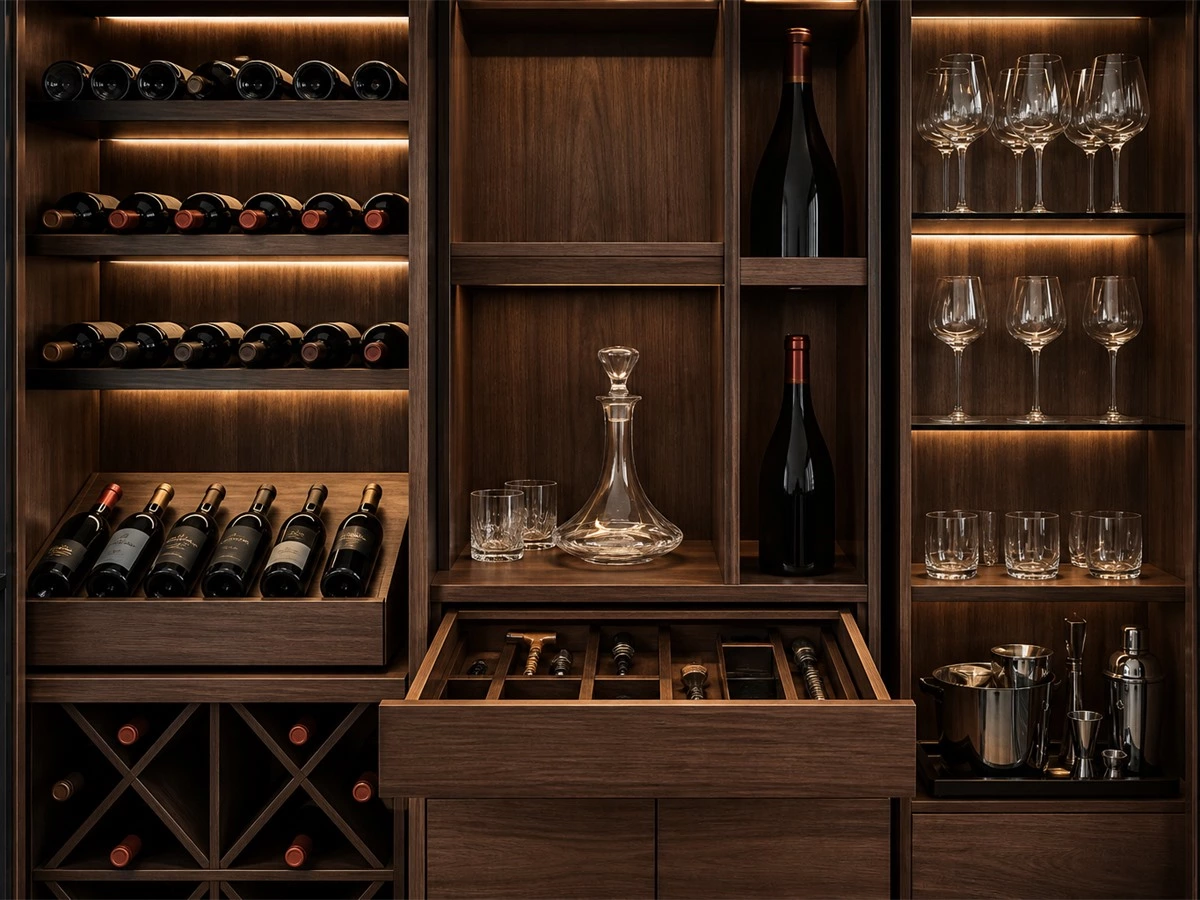
Wine Cabinet Dimensions Begin With Bottle Orientation
There is no single correct wine cabinet depth or shelf size, as bottles can be stored in different orientations. The storage orientation affects shelf depth, front retention, internal clearance, door construction, and the way users access bottles. Confirm the intended orientation on the shop drawings rather than relying only on a reference image.
Horizontal Bottle Storage
Horizontal storage is common in wine racks and bottle-display shelves because it presents bottles in an organized way and can be incorporated into a custom cabinet elevation. The shelf or rack must still match the expected bottle range. Confirm how the bottle will sit, what prevents it from rolling, and whether the front edge or door construction changes the usable storage depth.
Label-Forward Bottle Display
Label-forward display can make a wine cabinet more decorative, especially behind glass doors or within a dining sideboard. Shelf depth, bottle retention, lighting placement, and a clear viewing angle need to be planned together. A display shelf should not rely on lighting or a front lip alone if the bottle position is unstable.
Upright Storage for Daily Use
Upright storage can be useful for selected open bottles, beverages waiting to be served, or bottles kept for short-term access. It should be treated as a dedicated use zone rather than an assumption that every bottle will be stored in the same way. A practical wine cabinet may combine upright serving storage with horizontal display or appliance storage.
Flexible Storage for Larger Bottles
Include adjustable shelves, taller bays, or removable dividers where larger bottles, gift boxes, or unusual bottle shapes are expected. This small allowance can prevent an otherwise well-built cabinet from becoming too rigid after installation.
| Cabinet Zone | What Determines Its Size | Important Drawing Check |
|---|---|---|
| Bottle shelf or rack | Bottle diameter, length, and orientation | Check both standard and oversized bottles |
| Glassware shelf | Glass height, stem clearance,e and shelf loading | Avoid contact with lighting or doors |
| Lower cabinet or drawer | Trays, tools, serving pieces,es and appliance needs | Confirm drawer extension and circulation |
| Appliance niche | Exact appliance model and manufacturer instructions | Confirm ventilation, power,wer and service access |
| Full-height display | Display purpose, access height,ight and door size | Divide tall doors into manageable sections |
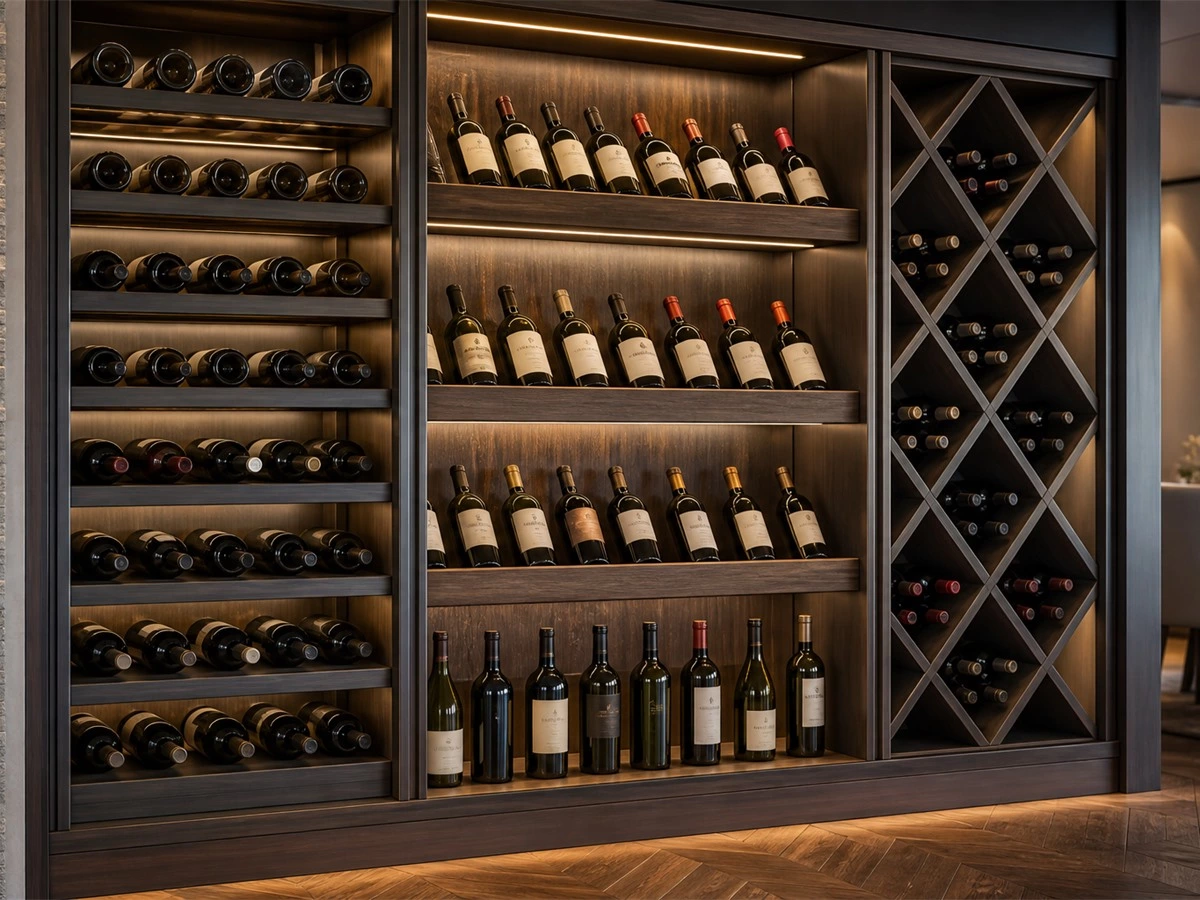
Choose the Right Wine Cabinet Depth
Cabinet depth should follow the storage method and the available room circulation. The finished external cabinet depth is not the same as the usable internal depth because doors, backs, shelves, lighting profiles, and appliance clearances all occupy space. Always review depth in plan view with nearby chairs, islands, doors, and walking routes.
Shallow Display Cabinets
A shallow glass-front display cabinet can work well for selected bottles, glassware, decorative bar items, and smaller accessories. It is particularly useful in dining rooms, narrow living spaces, or sideboard compositions where floor depth is limited. However, shallow cabinets are not automatically suitable for every bottle orientation or appliance type.
Standard Cabinet-Depth Storage
A medium-depth cabinet can support a more flexible combination of bottle shelves, glassware, drawers, and concealed storage. This approach is often useful when the wine cabinet is part of a dining sideboard or a larger wall cabinet. Confirm the usable shelf depth after the back panel, door system, and bottle-retention detail are included.
Deep Built-In Wine Cabinet Zones
Deeper cabinet zones may be needed for selected appliance types, substantial bottle storage, pull-out systems, or a larger collection. Place these deeper sections where the room layout can support them. In a dining room, check the chair pull-out space. In a kitchen, check island circulation and appliance doors. In a living room, check the relationship between seating and media storage.
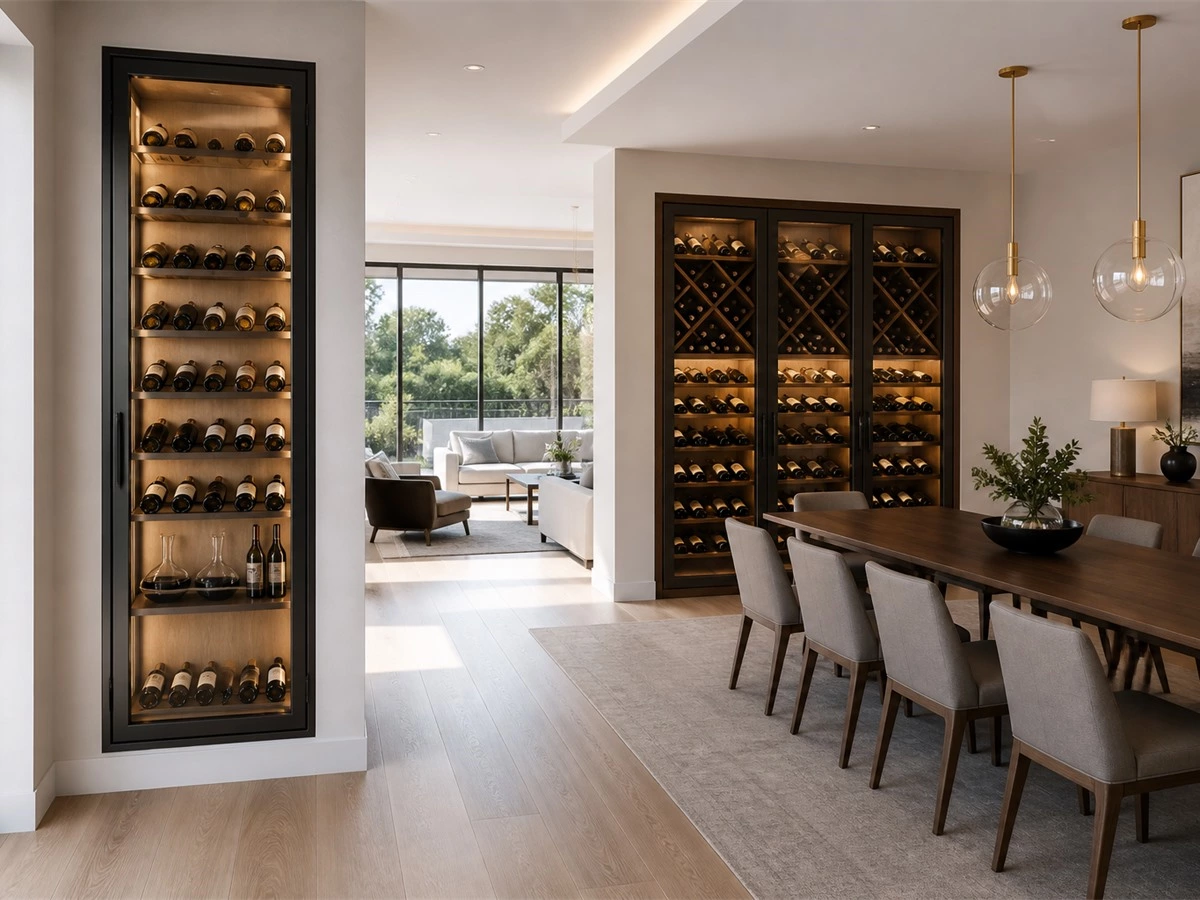
Built-In Wine Cooler Planning: Ventilation, Power and Service Access
A wine cooler should be planned as an appliance installation, not simply placed inside an attractive cabinet opening. Different appliance types have different ventilation, clearance, door-opening, electrical, and servicing requirements. The selected model documentation must be reviewed before the cabinet niche is approved.
Identify the Appliance Type First
Freestanding, under-counter, built-in, and fully integrated wine appliances are not interchangeable. A niche that works for one product may be unsuitable for another. Obtain the exact model, installation manual, cut sheet, and electrical requirements before production drawings are finalized.
Ventilation Is a Technical Requirement
Ventilation requirements depend on the selected appliance design. Some units are intended for a specific ventilation arrangement, while others require different clearances or installation conditions. Decorative trim, side panels, upper cabinets, or an enclosed rear cavity should never be assumed to be harmless. Follow the appliance manufacturer’s instructions exactly and show the approach on the shop drawings.
Provide Power and Maintenance Access
The project should identify the outlet location, cable route, appliance-door swing, and method for removing the appliance later. A cabinet can look seamless while still allowing service access. Avoid trapping an appliance behind fixed shelves, difficult-to-remove trim, or a countertop detail that prevents replacement.
Coordinate Lighting, Heat, and Adjacent Storage
Decorative lighting can enhance a glass-front wine cabinet, but it should be planned with the appliance zone, internal materials, and maintenance access in mind. Keep driver locations accessible, use lighting appropriate for display applications, and avoid treating lighting as a substitute for correct appliance ventilation.
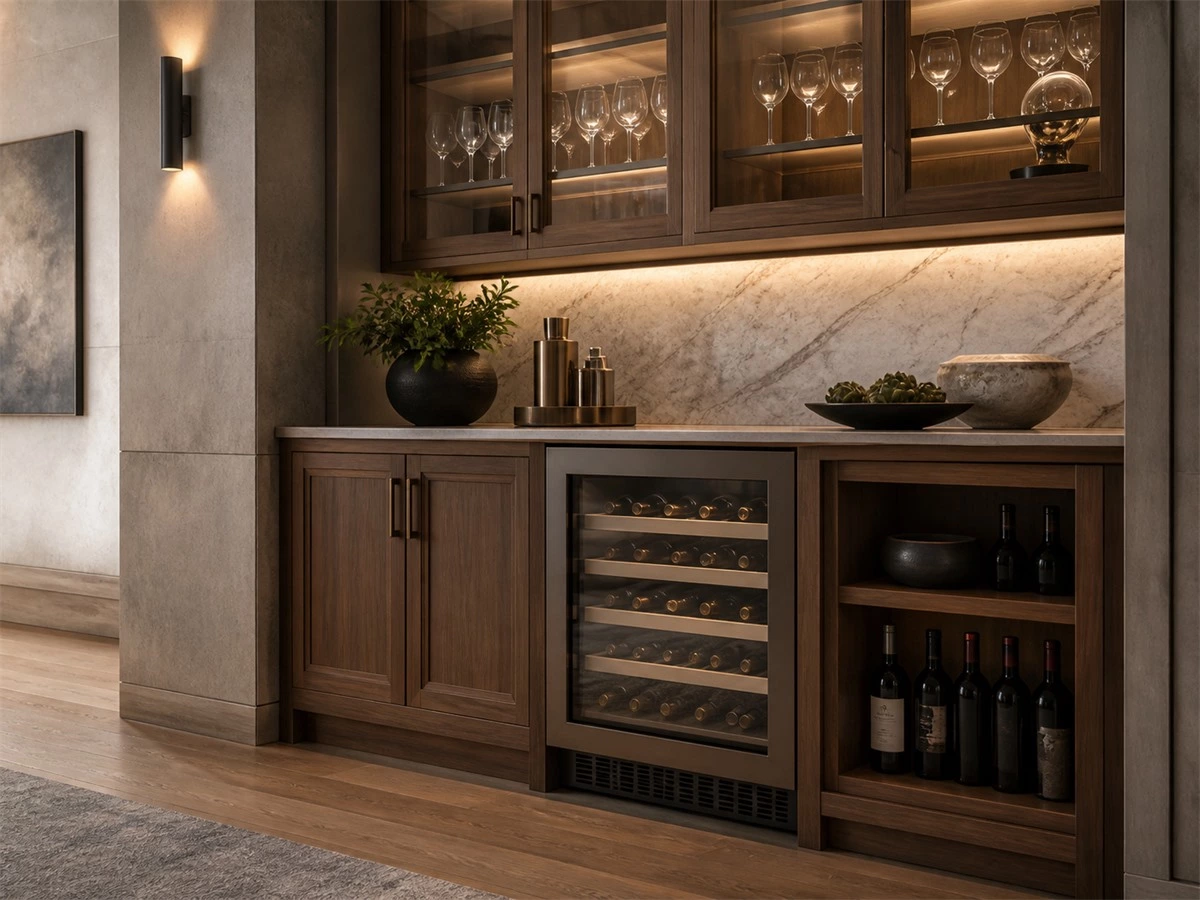
Five Built-In Wine Cabinet Layouts
1. Dining Sideboard With Wine Display
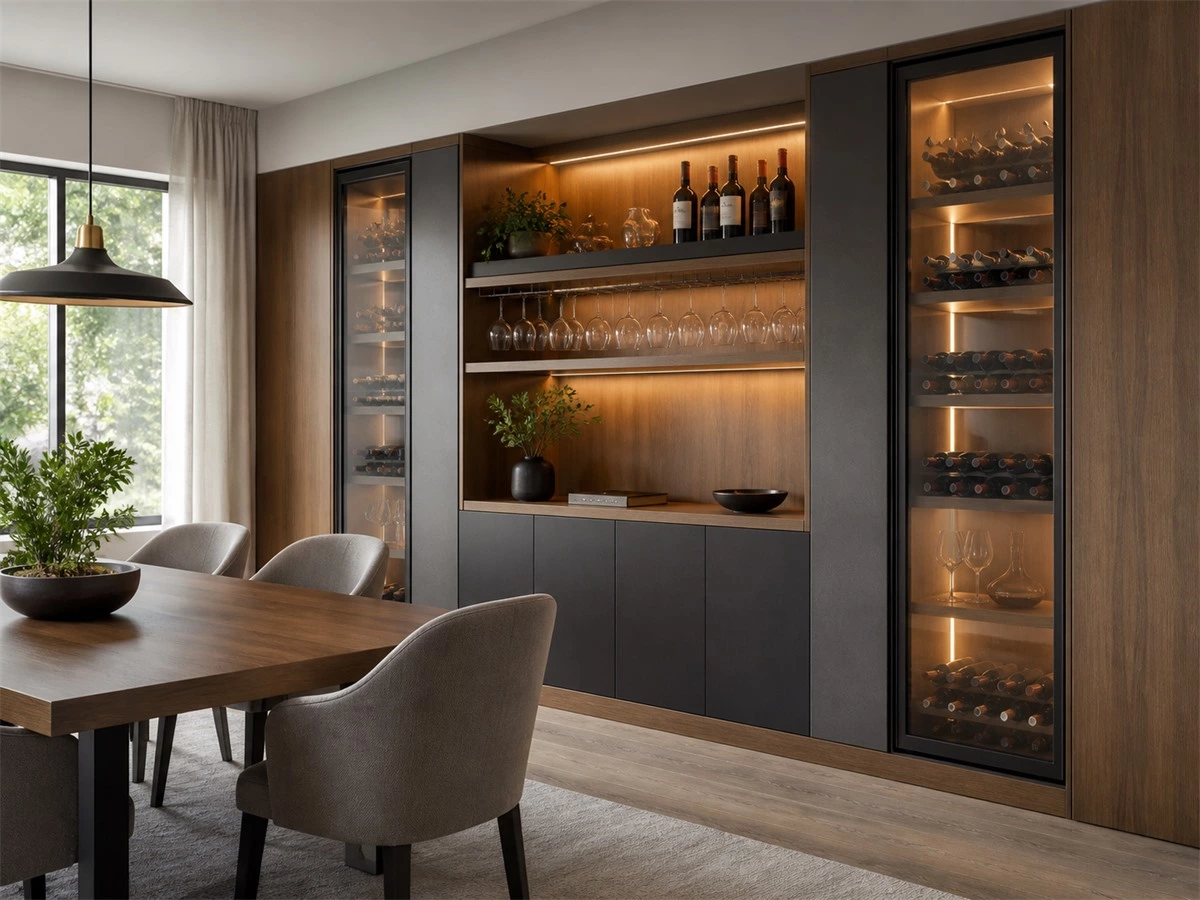
This layout combines lower sideboard storage for serving pieces and tableware with a glass-front wine display above or beside it. It is suitable for dining rooms where the cabinet supports entertaining as well as storage. Keep daily serving items easy to reach and reserve upper display zones for less frequently used bottles or glassware. For related planning, see this guide to built-in sideboard cabinets.
2. Full-Height Wine Display Wall
A floor-to-ceiling wine cabinet can become a strong architectural feature in a dining room, living room, or dedicated entertainment area. Divide the elevation into bottle zones, glassware zones, concealed lower storage, and upper seasonal storage. Avoid making every section glass-fronted; a balance of display and closed cabinetry keeps the wall practical and visually calm.
3. Kitchen Wine Cabinet Near the Dining Transition
A wine cabinet near a kitchen or island can support serving and entertaining, but its depth and door operation must not interfere with cooking circulation. Keep the wine zone distinct from heat-producing appliances, food-preparation storage, and frequently opened kitchen drawers unless the overall layout has been carefully coordinated.
4. Under-Counter Cooler With Upper Display
This compact layout places a selected wine appliance below a countertop or sideboard surface, with bottles, glassware, and bar accessories in an upper display cabinet. It can work well in apartments and compact dining rooms when appliance requirements, service access, and countertop use are considered early.
5. Living Room Wine Cabinet Integrated With a Storage Wall
A living-room wine cabinet can coordinate with wall panels, bookcases, or TV storage while remaining a distinct functional zone. Separate wine storage from media components, cable management, and heat-sensitive equipment. A small glass-front display can create a focal point without turning the entire TV wall into a bar display.
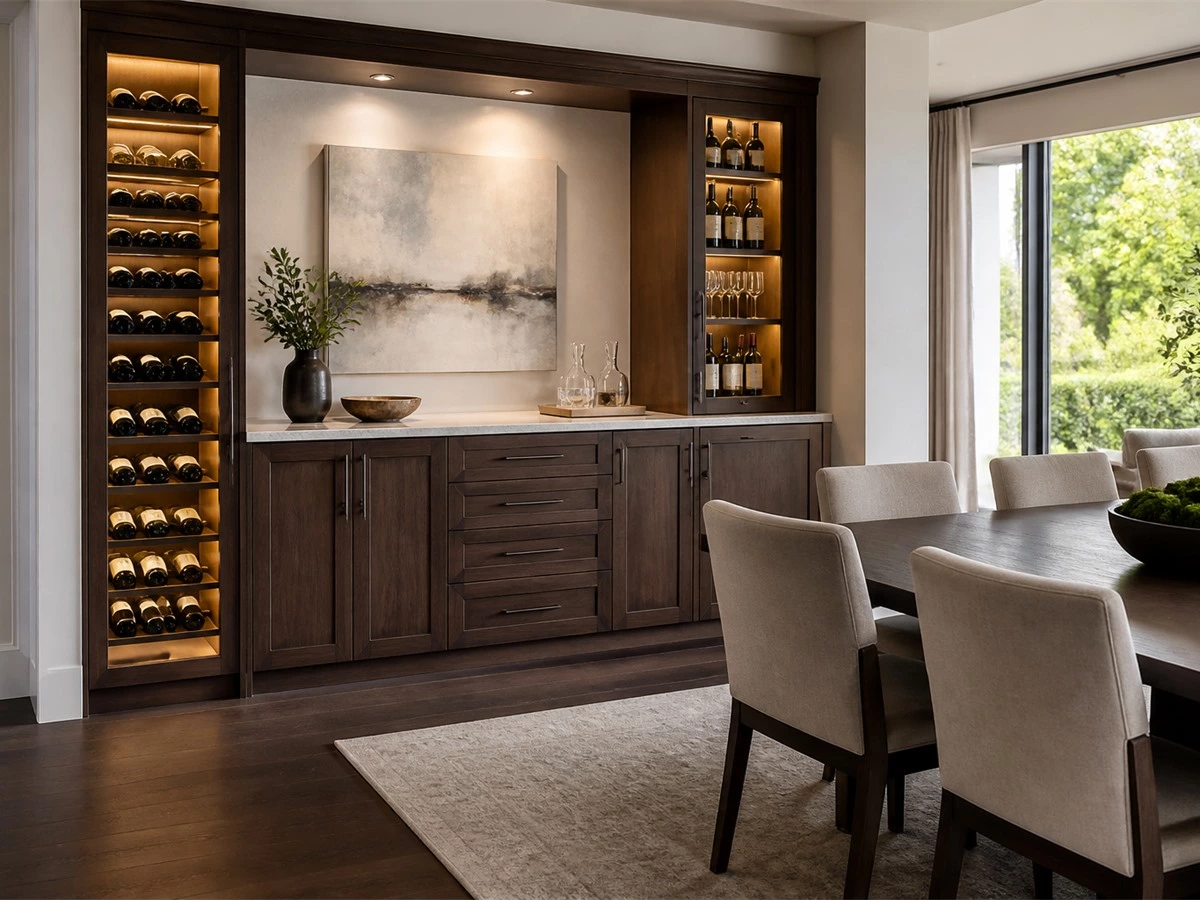
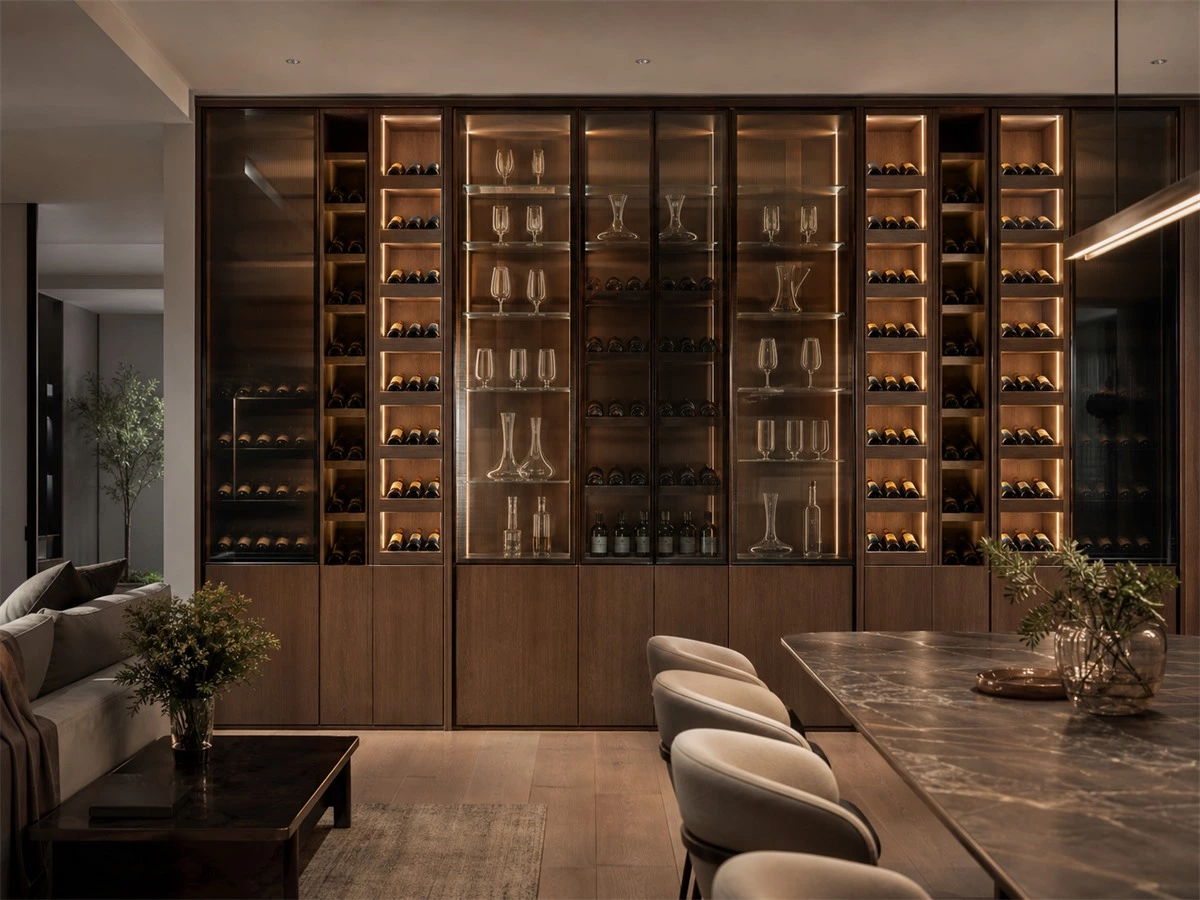
Organize the Cabinet Into Bottle, Glassware, and Accessory Zones
A well-organized cabinet makes a modest collection easier to use than a larger cabinet with no defined zones. Assign each area according to item weight, frequency of use, visibility, and access height.
Lower Zone: Heavy Bottles and Serving Storage
Lower cabinets are often appropriate for heavier bottles, pull-out trays, drawers, serving pieces, and selected appliances. Keep the base detail durable and easy to clean, especially in a dining or entertaining area where spills and frequent use are expected.
Middle Zone: Daily-Use Bottles and Glassware
The most convenient middle zone can hold frequently selected bottles, everyday glassware, decanters, and openers. This is usually the best area for a visually balanced display because users can see and access it without a step stool.
Upper Zone: Seasonal and Less-Frequent Storage
Use upper cabinets for backup glassware, gift boxes, seasonal entertaining supplies, and less frequently used bottles. Confirm door opening and safe access. A tall cabinet is not automatically better if its upper areas cannot be used comfortably.
Open Storage Versus Closed Storage
Glass doors can protect display items from dust while keeping bottles and glasses visible. Closed storage is useful for packaging, cleaning supplies, bulk accessories, and items that create visual clutter. Combining both types gives a wine cabinet a more practical balance.
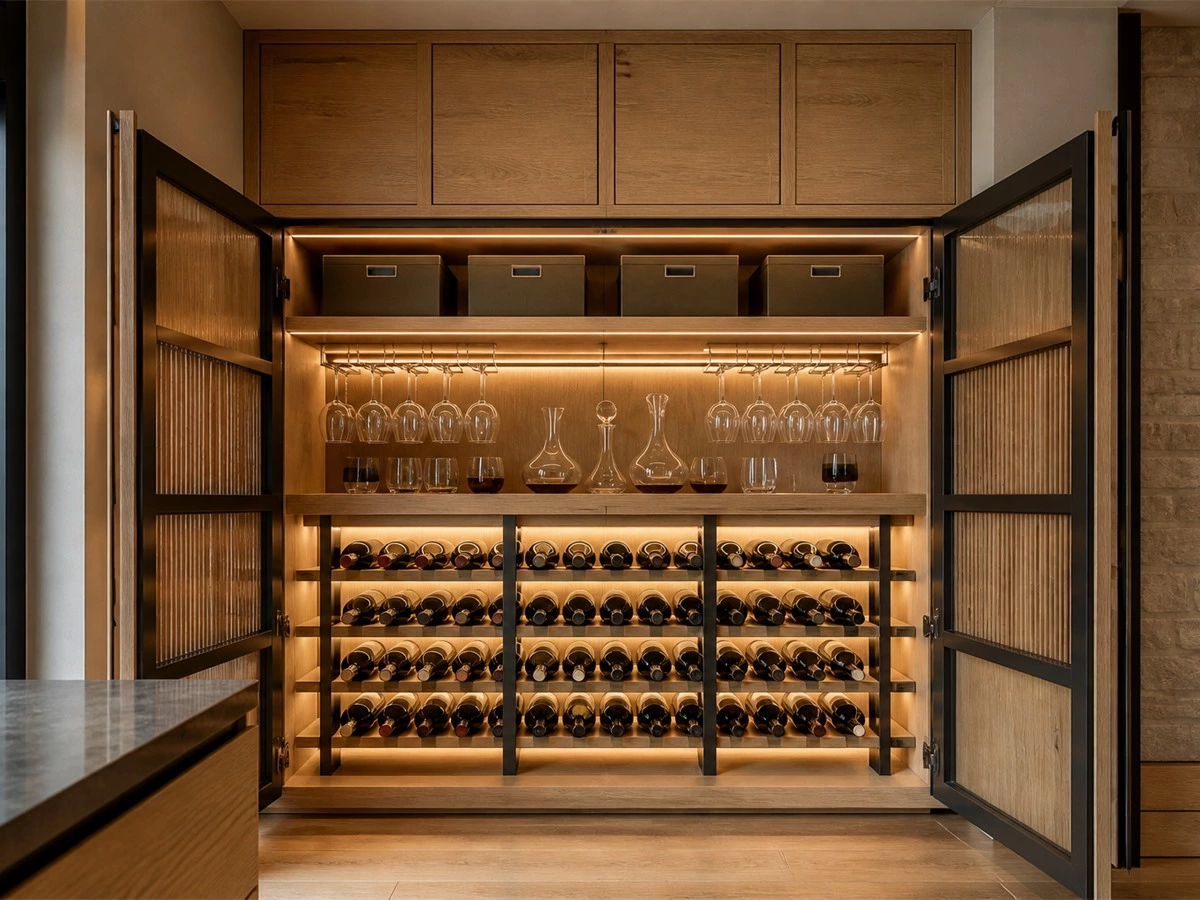
Glass Doors, Lighting and Display Details
Glass, lighting, and metal details can make a custom wine cabinet feel more refined, but each feature should serve the cabinet’s use. The goal is not to make every shelf bright or fully visible. The goal is to make bottles and glassware easy to locate while keeping the cabinet practical to clean and maintain.
Select Glass for Visibility and Maintenance
Clear, tinted, fluted, framed, or metal-edged glass can create different levels of visibility and privacy. Select the glass type together with the interior finish, lighting, and room style. If the cabinet is near a dining table or kitchen, consider how fingerprints, dust, and reflected light willaffect itst daily appearance.
Use Lighting to Improve Access
Concealed shelf lighting or vertical lighting can make a deep display easier to use. Plan lighting profiles, power supplies, cable routes, and driver access before fabrication. Light should reveal the collection without creating glare on glass doors or making the cabinet difficult to service.
Keep the Display Intentional
A wine cabinet often looks more composed when a limited number of bottles, glasses, and objects are displayed. Allow some negative space and avoid making every niche identical. The display arrangement should support the architecture of the cabinet rather than compete with it.
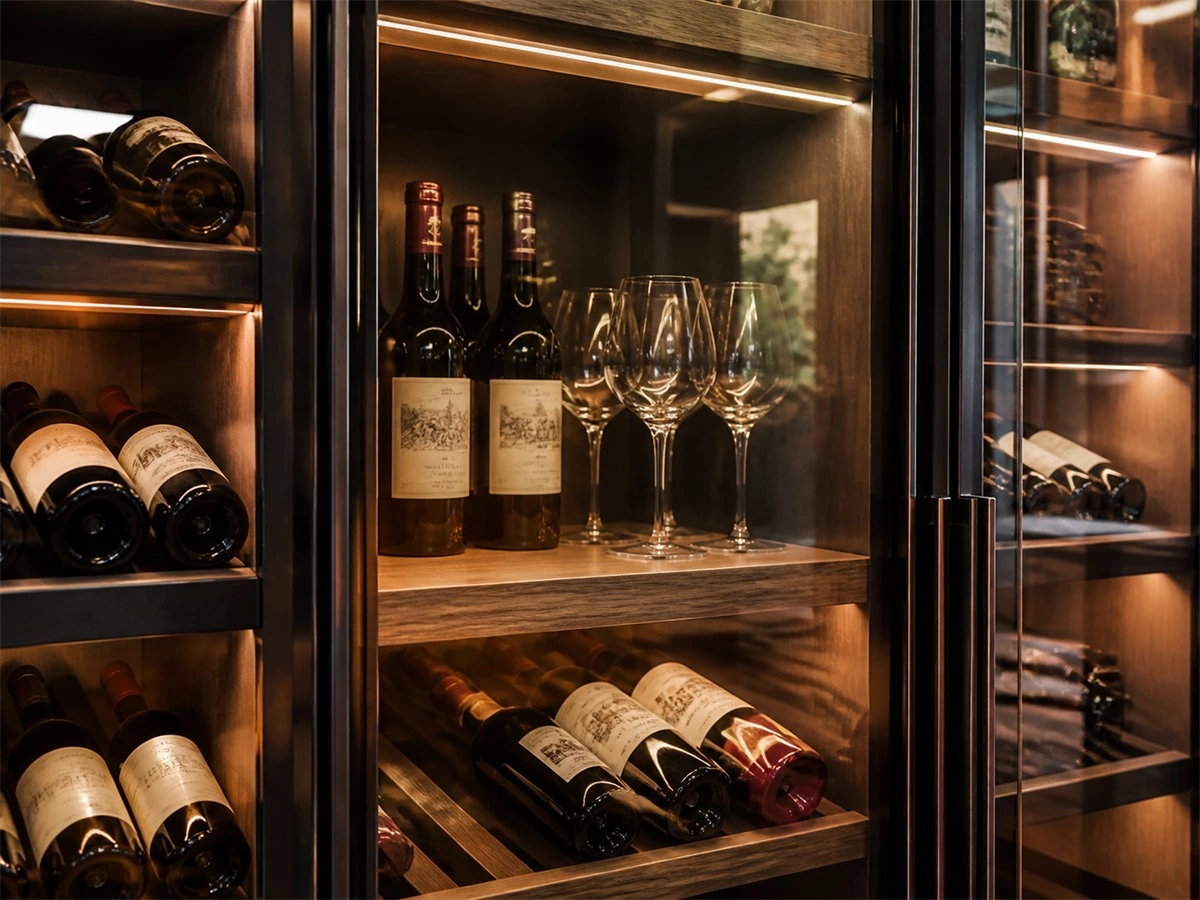
Materials, Shelf Construction and Hardware
Wine bottles and glassware can create substantial shelf loads. Materials and hardware should be selected according to the cabinet design, expected bottle quantity, shelf span, door size, and maintenance needs. A finish sample can confirm appearance, but it does not replace a technical review of shelf support and fixing methods.
Cabinet Finishes and Interior Materials
Veneer, lacquer, laminate, melamine, glass, metal, and textured panels can all be used in a wine cabinet when selected for the project’s desired appearance and maintenance requirements. Approve samples under the project lighting where possible, especially if the cabinet includes tinted glass or integrated lighting.
Shelf Loading and Support
Long shelves filled with bottles require appropriate support. Confirm shelf span, material thickness, internal dividers, brackets, fixing points, and expected load during technical review. Heavy bottles should not be stored on an attractive shelf detail that has not been designed for the intended weight.
Door and Drawer Hardware
Glass doors, tall cabinet doors, pull-out trays, drawers, and lift-up systems all need hardware suited to their size and use. Confirm opening angles, soft-close function, handle or pull detail, and how the user will access the cabinet when the room is in use.
For a broader product reference, explore ALLURE’s custom wine cabinet collection. When the wine cabinet is part of a larger project, it can also be coordinated with whole-home cabinetry and room planning.
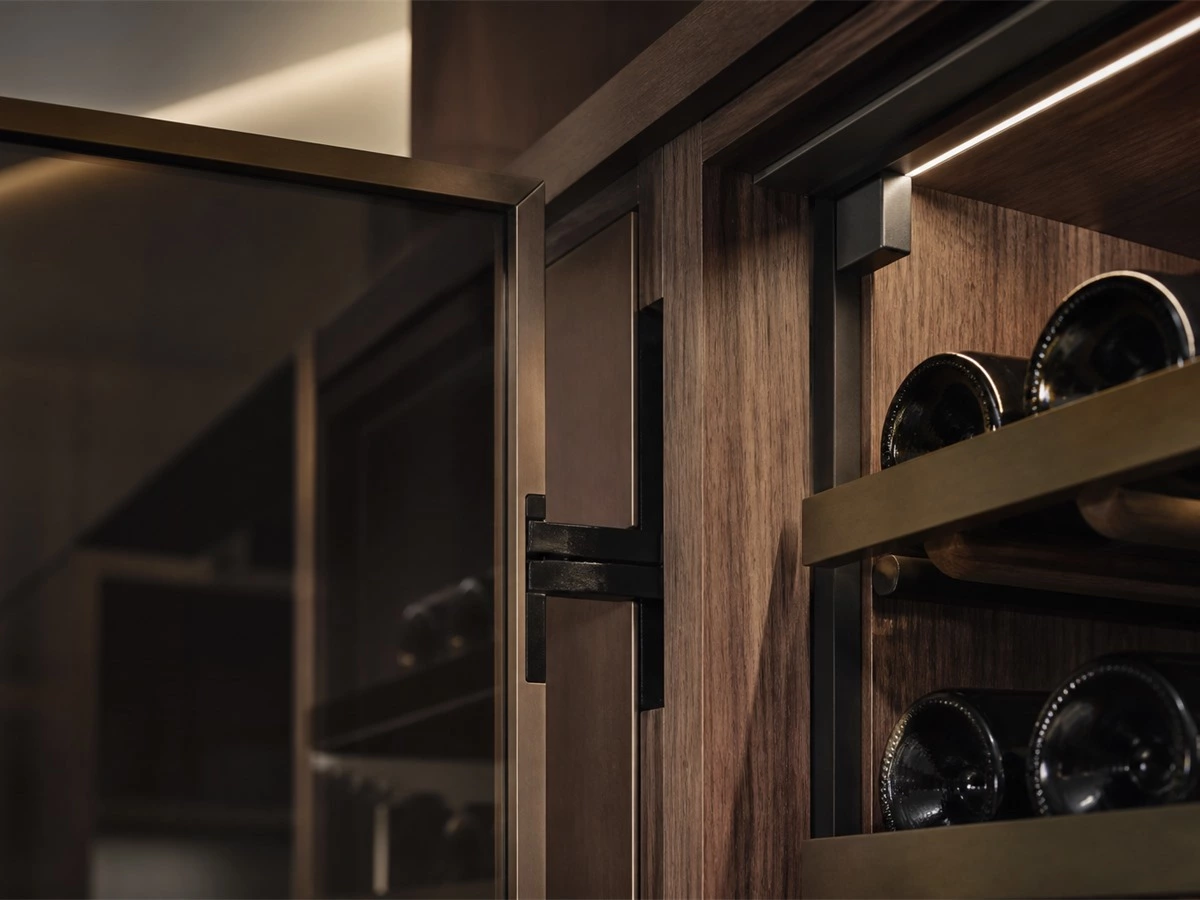
Wine Cabinet Shop Drawing Checklist Before Production
- Confirm bottle types, bottle quantities, and oversized bottle requirements.
- Show bottle orientation for every storage zone.
- Confirm shelf depth, usable internal depth, spacing, and front-retention details.
- Show glassware, decanter, drawer, serving tray, and accessory storage.
- Confirm the exact appliance model if a wine cooler is included.
- Check appliance documentation for ventilation, power, installation, and service requirements.
- Show outlet locations, cable routes, lighting profiles, drivers, and maintenance access.
- Review cabinet depth against dining chairs, islands, doors, and walking routes.
- Confirm shelf loading, support details, hinges, runners, glass-door hardware, and handle positions.
- Approve cabinet finish, glass type, grain direction, metal detail, and internal material selections.

Common Wine Cabinet Planning Mistakes
Designing Only for Standard Bottles
A cabinet that only fits one bottle size may be difficult to use as the collection changes. Include adaptable storage before approving the internal layout.
Selecting the Wine Cooler Too Late
The appliance should be chosen before production drawings are approved. Its installation instructions determine the niche, ventilation, electrical provision, and service strategy.
Blocking Ventilation With Decorative Cabinetry
Decorative panels, fixed trim, and closed cavities can conflict with appliance requirements. Always follow the selected appliance documentation instead of copying a detail from another project.
Ignoring Chair Pull-Out and Door Opening
A dining-room wine cabinet must be reviewed with the table, chairs, circulation route, and nearby doors. In a kitchen, review islands, appliance doors, and working aisles.
Using Long Unsupported Shelves for Heavy Bottles
Bottles are heavy when stored in quantity. Shelf supports, dividers, and fixing details should match the anticipated load rather than rely on appearance alone.
Installing Lighting Without Service Access
Lighting drivers, wiring, and profiles need a practical access strategy. A cabinet should remain maintainable after installation, not only look complete on the first day.
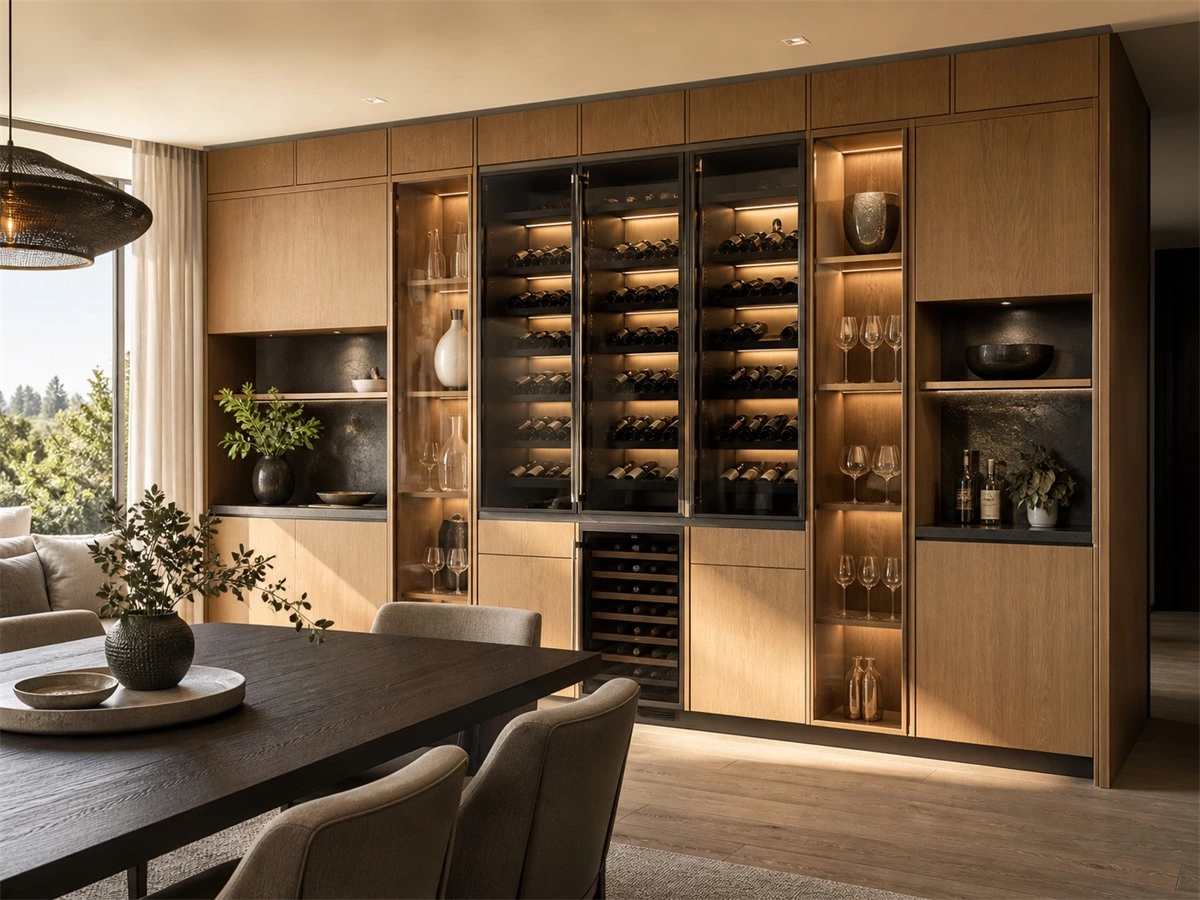
Frequently Asked Questions
What are standard wine cabinet dimensions?
There is no single standard because wine cabinets vary by bottle orientation, bottle type, display style, glassware storage, and appliance requirements. Start with the collection and the selected storage system, then confirm the final dimensions in the shop drawings.
How deep should a wine cabinet be?
The required depth depends on whether bottles are stored horizontally, label-forward, upright, in racks, or beside an appliance. The finished cabinet depth should be reviewed together with usable internal depth, door thickness, bottle-retention details, and room circulation.
How much space does a wine bottle need on a shelf?
The shelf size depends on the bottle’s diameter, length, orientation, and the chosen rack or divider system. Do not plan only around standard bottles if Champagne, Burgundy-style bottles, magnums, or gift boxes are expected.
Should wine bottles be stored horizontally or vertically?
Both orientations can appear in a custom wine cabinet, depending on the cabinet’s purpose. Horizontal storage is common for bottle display and rack systems, while upright zones can be useful for serving or selected short-term storage. Define the intended use before drawing the interior.
Can a wine cooler be installed inside a custom cabinet?
Yes, if the cabinet is designed around the exact appliance model. The niche, ventilation method, electrical provision, door opening, and service access must follow the appliance manufacturer’s installation requirements.
Does a built-in wine cooler need ventilation space?
Ventilation requirements vary by appliance model and installation type. Confirm the selected product documentation before cabinet production. Do not assume that a decorative surround or enclosed rear cavity is acceptable without verification.
Final Takeaway
Well-planned wine cabinet dimensions make the display more useful, the appliance zone more serviceable, and the built-in cabinet easier to live with. Start with the bottles and glassware you actually need to store, confirm whether cooling equipment is required, then coordinate depth, ventilation, lighting, doors, materials, and room circulation. The final design should be approved through a complete shop drawing package before production begins.