Stainless steel cabinet materials should be specified as a complete cabinet system, not selected by grade name alone. The same principle applies whether the brief calls for stainless steel kitchen cabinets throughout or only selected metal components. For most indoor kitchens, Type 304 is a sensible starting point; 316L deserves consideration where chloride exposure is more demanding; and 304L is relevant when the welding specification calls for a low-carbon grade. But the alloy is only one part of the decision. Door construction, core, sheet thickness, folded edges, surface finish, hardware, drainage, and maintenance all affect the finished result.
A quote that says “304 stainless steel” may describe a full stainless carcass, a stainless door skin over a core, or only selected visible parts. Those are different products. This guide explains how to compare the options, where metal cabinetry makes sense, where we would recommend another material, and what to define before approving drawings and production.
Quick Answer: Which Grade Should You Start With?
- 304: A practical starting grade for many indoor residential kitchens and general cabinet components.
- 316L: Consider it for coastal, poolside, or chloride-exposed locations where the added molybdenum can improve resistance to pitting and crevice corrosion.
- 304L: Specify it when the welding procedure, section thickness, or project specification makes the lower carbon grade relevant. It is not a universal upgrade over 304.
- 430: A magnetic ferritic grade that may suit selected dry interior trims or decorative parts after application review.
- 201: A cost-oriented alternative that should not be treated as equivalent to 304 in wet, outdoor, or chloride-exposed service.
There is no grade that makes a cabinet corrosion-proof. The right selection depends on the actual environment, surface condition, fabrication quality, geometry, and cleaning routine. That's why you should assess stainless steel cabinet materials as a system rather than rank them by grade alone. The World Stainless design guidance explains why alloy choice must match the corrosive environment rather than a label alone.
Where Stainless Steel Works — and Where We Would Choose Another Material
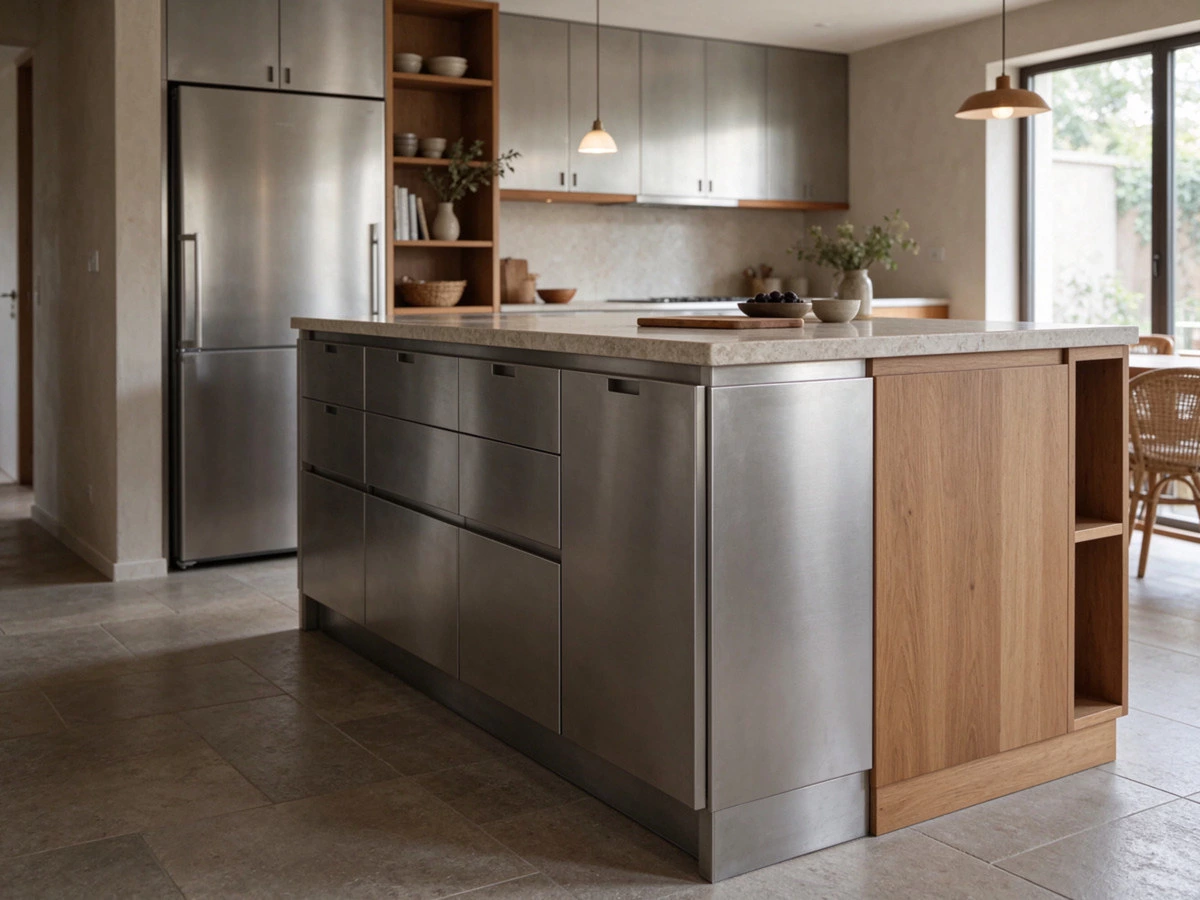
Stainless steel kitchen cabinets earn their place in projects where moisture, frequent cleaning, hygiene, outdoor exposure or a precise contemporary appearance matter. It is not automatically the best choice for every home. A well-designed mixed-material kitchen often gives a better balance of appearance, cost and performance.
| Material | Strengths | Limitations | Typical Fit |
|---|---|---|---|
| Stainless steel | Does not swell like wood-based boards; easy to wipe; suitable for wet or frequently cleaned zones when correctly specified | Can show fingerprints, scratches and water marks; panel construction affects noise and feel; usually a higher initial investment | Sink bases, wet kitchens, outdoor zones, modern metal finishes |
| Lacquered MDF | Smooth painted surface; broad colour and profile options | Edges and damaged coatings need protection from moisture and impact | Dry residential kitchens and colour-led designs |
| Plywood with veneer or laminate | Warm appearance; useful structural performance when correctly selected and finished | Edges and joints still need moisture protection; surface repairs may be visible | Residential kitchens where wood appearance matters |
| Solid wood | Natural grain and repairable character | Moves with moisture changes; needs suitable detailing and maintenance | Feature kitchens and traditional interiors |
| PET or melamine-faced boards | Wide décor choice and practical cleaning | Performance depends on substrate, edge treatment and surface quality | Cost-controlled and mixed-material projects |
If the first decision is whether metal is the right choice at all, read ALLURE’s stainless steel cabinet pros and cons guide. For a wider explanation of wood-based board options, see ALLURE’s raw-material guide. This article keeps the focus on metal grades, finishes, and cabinet construction rather than repeating a general board comparison.
Five Situations Where Stainless May Be the Wrong Answer
- A fixed low budget in a dry kitchen. If the room has no unusual moisture or cleaning demands, lacquered MDF or a suitable board system may deliver the requested appearance at a lower initial cost.
- A precise colour match is the main design requirement. PVD expands the colour range, but it is a deposited surface treatment, not a universal substitute for every painted RAL colour. Approve a physical sample and understand repair limits.
- The design requires uninterrupted high-gloss surfaces over very large panels. Reflective metal makes waviness, handling marks, and alignment differences easier to see. The design and panel engineering must allow for that.
- The site is exposed to salt but has no maintenance plan. A more corrosion-resistant grade helps, but it does not remove salt deposits or eliminate crevice corrosion. If the owner will not clean exposed surfaces, reconsider the material and detailing.
- The installation team has no experience with metal cabinetry. Protective film, folded edges, heavy doors, and surface grain need careful handling. A good cabinet can be damaged during installation if the crew treats it like an ordinary board cabinet.
The goal is not to sell stainless kitchen cabinets for every project. It is to use them where their properties solve a real problem. That is the starting point for choosing stainless steel cabinet materials: match the metal to the room, not the other way around.
Compare the Stainless Steel Grades
Grade selection should follow the cabinet location, expected exposure, and fabrication method. When comparing stainless steel cabinet materials, keep the grade decision separate from the finish and construction decisions. The table below is a selection guide, not a substitute for the material standard or a batch certificate.
| Grade | Family | What Distinguishes It | Cabinet Applications to Evaluate | Main Caution |
|---|---|---|---|---|
| 201 | Austenitic | Uses a different alloy balance from 304 and generally has a lower corrosion margin in demanding environments | Selected for dry, lower-risk interior parts | Do not substitute it for 304 in wet, outdoor or chloride-exposed locations without engineering approval |
| 304 | Austenitic | Broadly used, formable and weldable; good general-purpose corrosion resistance | Many indoor cabinet bodies, doors, shelves and trim parts | Not immune to chloride pitting or poor detailing |
| 304L | Low-carbon austenitic | Lower carbon content than standard 304 | Welded assemblies when the specification or welding procedure calls for it | Low carbon does not provide the molybdenum benefit of 316L |
| 316L | Low-carbon austenitic with molybdenum | Molybdenum improves resistance to localized corrosion in many chloride environments | Coastal, poolside and selected outdoor or washdown applications | Still requires good design, cleaning and maintenance |
| 430 | Ferritic | Magnetic and different in forming and corrosion behaviour from austenitic grades | Selected dry interior decorative parts or trims | Review wet exposure, weld details and forming requirements |
304 and 316L: What the Difference Means
Type 316 contains molybdenum, which improves resistance to pitting and crevice corrosion in many chloride-bearing environments compared with 304. The International Molybdenum Association’s grade guidance also explains the role of molybdenum and the low-carbon “L” grades.
That is why 316L is worth evaluating for coastal air, poolside locations, and some aggressive cleaning environments. It is not a guarantee against seawater corrosion or against salt trapped in joints.
For an ordinary indoor kitchen away from aggressive chloride exposure, 304 is often a reasonable starting point. Specifying 316L for every dry interior panel may add cost without a corresponding benefit. Conversely, using 304 in a severe chloride environment simply because it is cheaper can create a maintenance and appearance problem later.
304L Is a Welding Choice, Not a Premium Badge
The “L” indicates lower carbon. Lower carbon can reduce the risk of sensitisation in certain welded sections exposed to corrosive service. It should be selected for the actual welding and material specification, not marketed as automatically stronger or more corrosion-resistant than 304 in every cabinet application.
430 and 201 Need a Narrower Application
430 is magnetic and may be suitable for selected dry interior trims or decorative panels. It should not be assumed to perform like 304 around sinks, persistent condensation, or outdoor exposure. Grade 201 also needs careful application review; appearance alone cannot distinguish it from 304.
A magnet is not a grade test. Annealed 304 and 316 are generally non-magnetic, but forming and cold working can create some magnetic response. 430 is magnetic. Use the magnet only as a rough clue, never as proof. Ask for a material certificate that identifies the grade and can be linked to the batch supplied for the project.
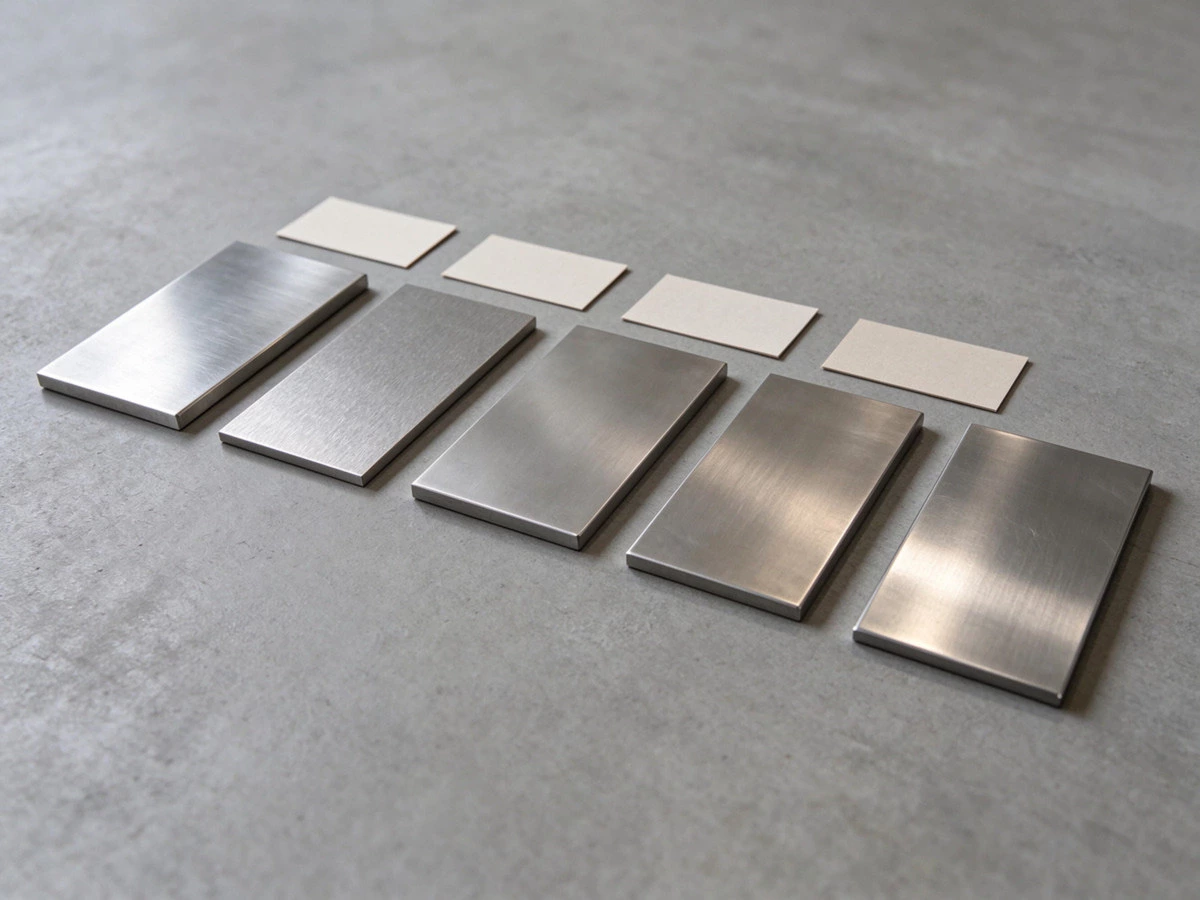
Choose the Finish by Appearance, Use, and Repair Expectations
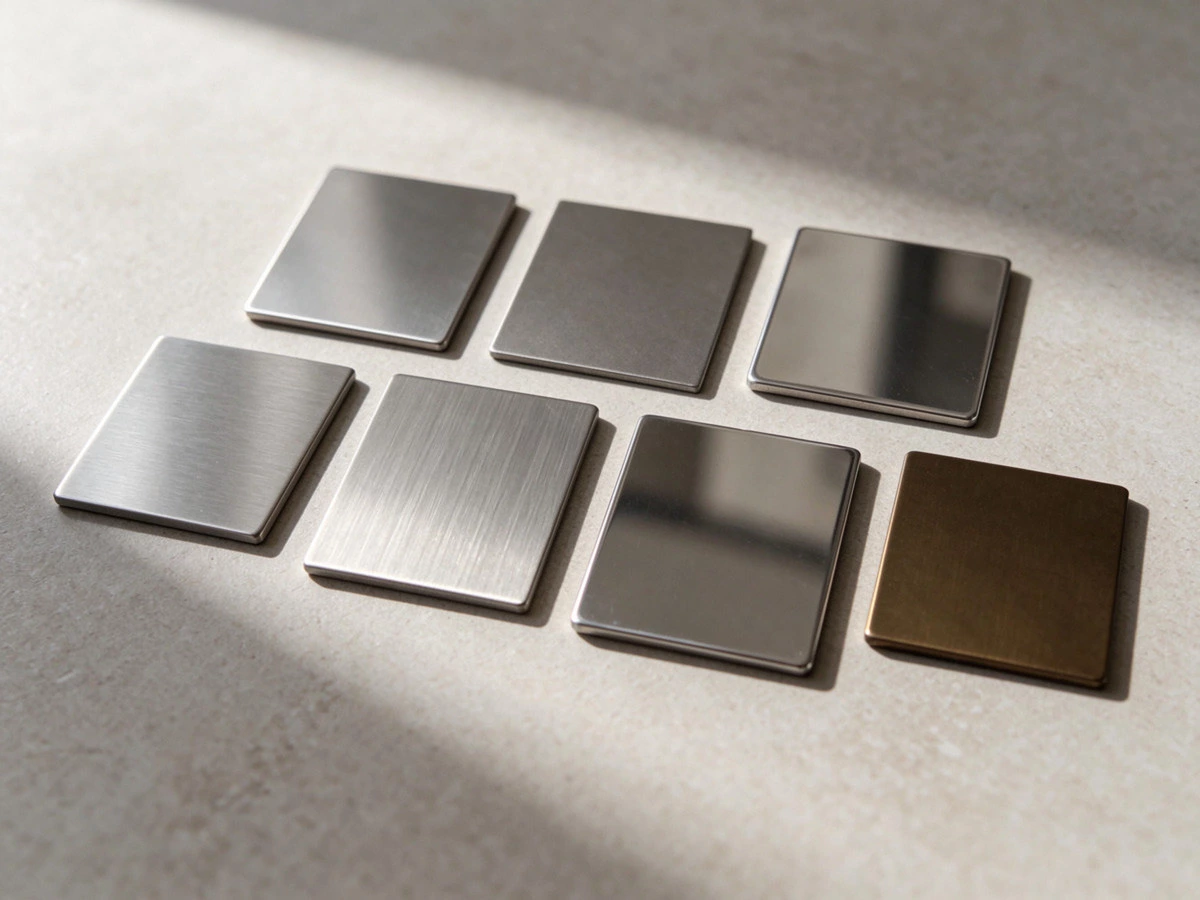
Finish names describe different manufacturing routes and appearances. For stainless steel cabinet materials, the finish specification should be as precise as the grade specification. Some are mill finishes; others are mechanically brushed, polished, patterned, or coloured later. A finish name such as “hairline” or “No. 4” can vary between processors, so the approved physical sample should become the visual reference for production.
| Finish | Appearance | Typical Use | What to Approve |
|---|---|---|---|
| 2B | Smooth, moderately reflective mill finish | Concealed panels or as a base for further finishing | Actual sample and visible-surface suitability |
| 2D | Smooth, duller, non-reflective mill finish | Functional or concealed components | Texture and appearance under project lighting |
| BA / 2R | Bright annealed, reflective surface | Decorative or appliance-style details | Reflectivity, flatness and fingerprint visibility |
| No. 4 / satin brushed | Directional, fine brushed texture | Doors, drawer fronts and visible panels | Grain direction, brush consistency and sample |
| Hairline | Longer, continuous linear grain | Tall fronts and architectural surfaces | Direction and continuity across adjacent panels |
| Mirror / 8K | Highly reflective appearance | Feature panels and selected accents | Flatness, handling protection and scratch visibility |
| Embossed / patterned | Repeated raised or textured pattern | Decorative fronts and selected panels | Pattern scale, direction and bending compatibility |
| PVD colour | Thin deposited colour layer over a prepared surface | Premium coloured accents and fronts | Colour sample, coating specification and repair limitations |
| Anti-fingerprint treatment | Treatment intended to reduce visible marks | Frequently touched fronts | Actual product, cleaning compatibility and durability evidence |
The British Stainless Steel Association’s finish specification guide explains the distinction between mill finishes such as 2B, 2D and 2R and later mechanical finishes. In particular, BA is commonly associated with the 2R bright-annealed finish; No. 4 and hairline are directional decorative finishes whose appearance should be agreed with a reference sample.
Two finish rules prevent many avoidable disputes:
Set grain direction on the drawing. Brushed panels installed in different directions can look like different colours under raking light. The shop drawing should show the grain direction for every visible panel, filler and end panel.
Treat PVD as a surface layer, not as solid-colour metal. Physical vapour deposition creates a thin decorative coating. If a scratch cuts through the coloured layer and exposes the base metal, a local touch-up will not restore the original factory finish. The affected component may need professional refinishing or replacement. Record this limitation in the finish approval and care instructions.
Understand the Door and Cabinet Construction
Two quotations for stainless steel kitchen cabinets can name the same grade and still describe different products. A stainless face does not tell you what is behind it, how the edge is closed, or how the cabinet is assembled.
| Construction | Description | Advantages | Points to Check |
|---|---|---|---|
| Full stainless construction | Cabinet body and specified components are formed from stainless steel | Material continuity in wet or frequently cleaned zones | Weight, joints, drainage, reinforcement and service access |
| Stainless skin over aluminium honeycomb | Stainless face is bonded to a honeycomb core, often with folded returns | Can improve panel stiffness-to-weight performance and reduce a hollow feel | Bonding quality, edge closure, core specification and impact damage |
| Stainless skin over a board core | Stainless face is combined with plywood or another engineered board | Allows mixed-material construction and a different door feel | Core type, moisture protection, edge sealing and adhesive suitability |
| Hybrid cabinet system | Stainless is used only in selected zones, with other cabinet materials elsewhere | Balances performance, appearance and budget | Transitions between materials, fasteners and exposed edges |
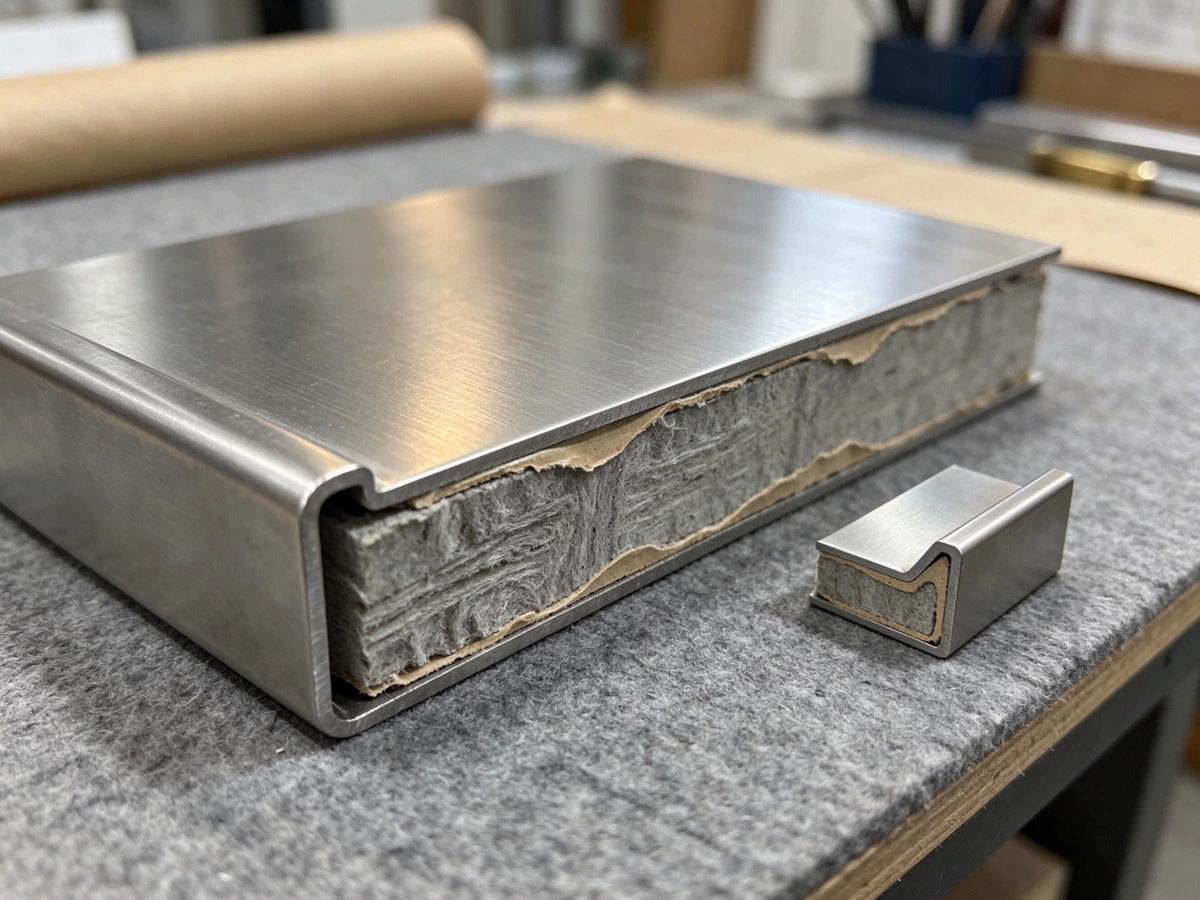
ALLURE’s public product information lists stainless steel among its door-panel and countertop options for custom stainless steel kitchen cabinets and mixed-material projects. The exact construction is project-specific: the approved drawing and quotation should identify the material used for the carcass, door, back, shelf, drawer, and countertop separately. This is especially important when a project combines metal fronts with other cabinet materials.
Door Span, Skin Thickness and Reinforcement
There is no universal sheet-thickness rule that can be applied to every door. A defensible specification must connect the actual door dimensions with the sheet, folded return, core, reinforcement, and hinge layout. Do not accept a thickness figure without knowing which component and construction it describes.
The engineering principle is still important: door skin thickness cannot be selected independently of panel height and width, return depth, core, reinforcement, hinge layout, and finished door weight. A thicker skin alone does not guarantee a flatter door. The core and bonding system, forming sequence, and storage or transport conditions also affect panel stability.
Before production, the approved drawing should record:
- The grade and nominal thickness for each visible component.
- Door height and width.
- Folded-return or edge construction.
- Core material and thickness, if used.
- Reinforcement positions.
- Hinge model, quantity, and adjustment range.
- The agreed flatness and gap tolerances.
ALLURE’s project drawings should record the confirmed values for the actual order. Buyers should not treat generic industry examples as factory standards or accept a quotation that leaves the door construction undefined.
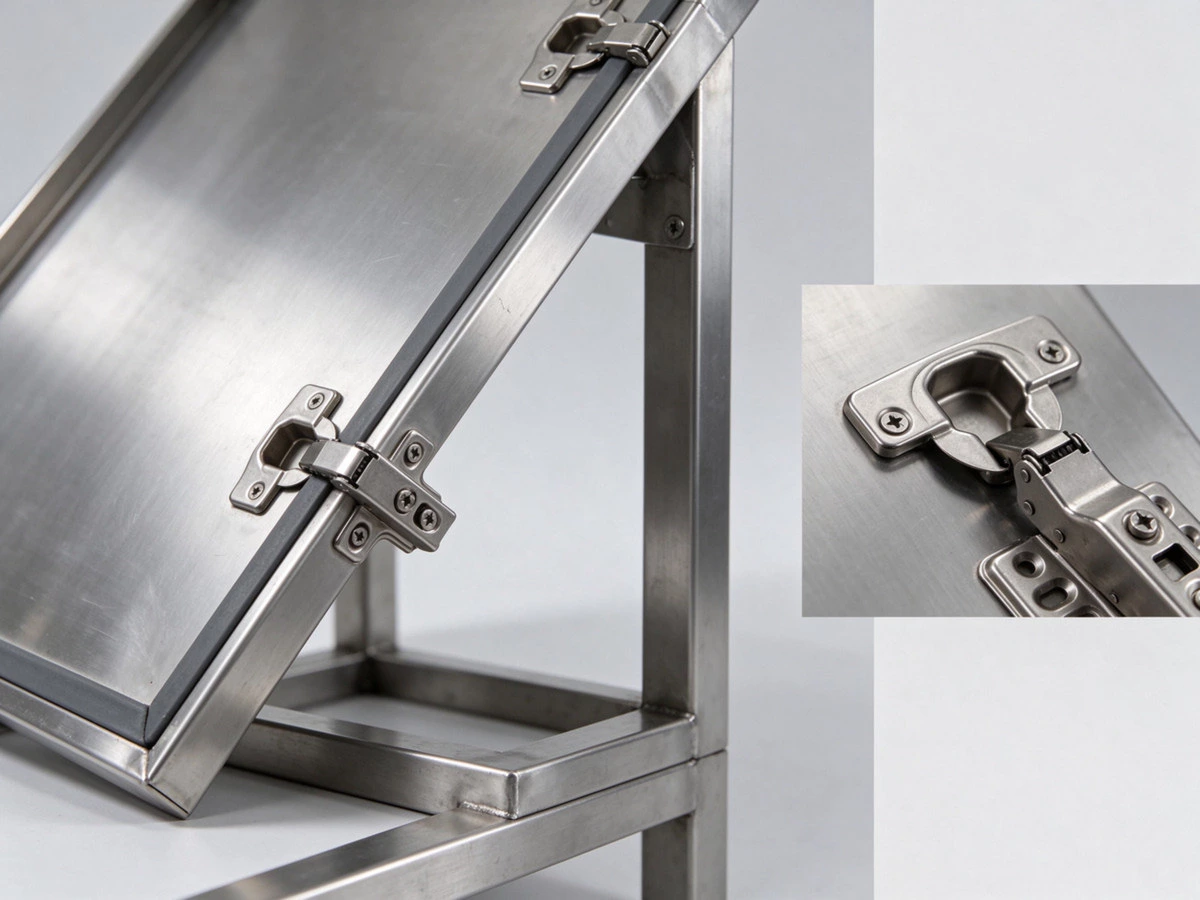
Fabrication, Welding and Corrosion Details
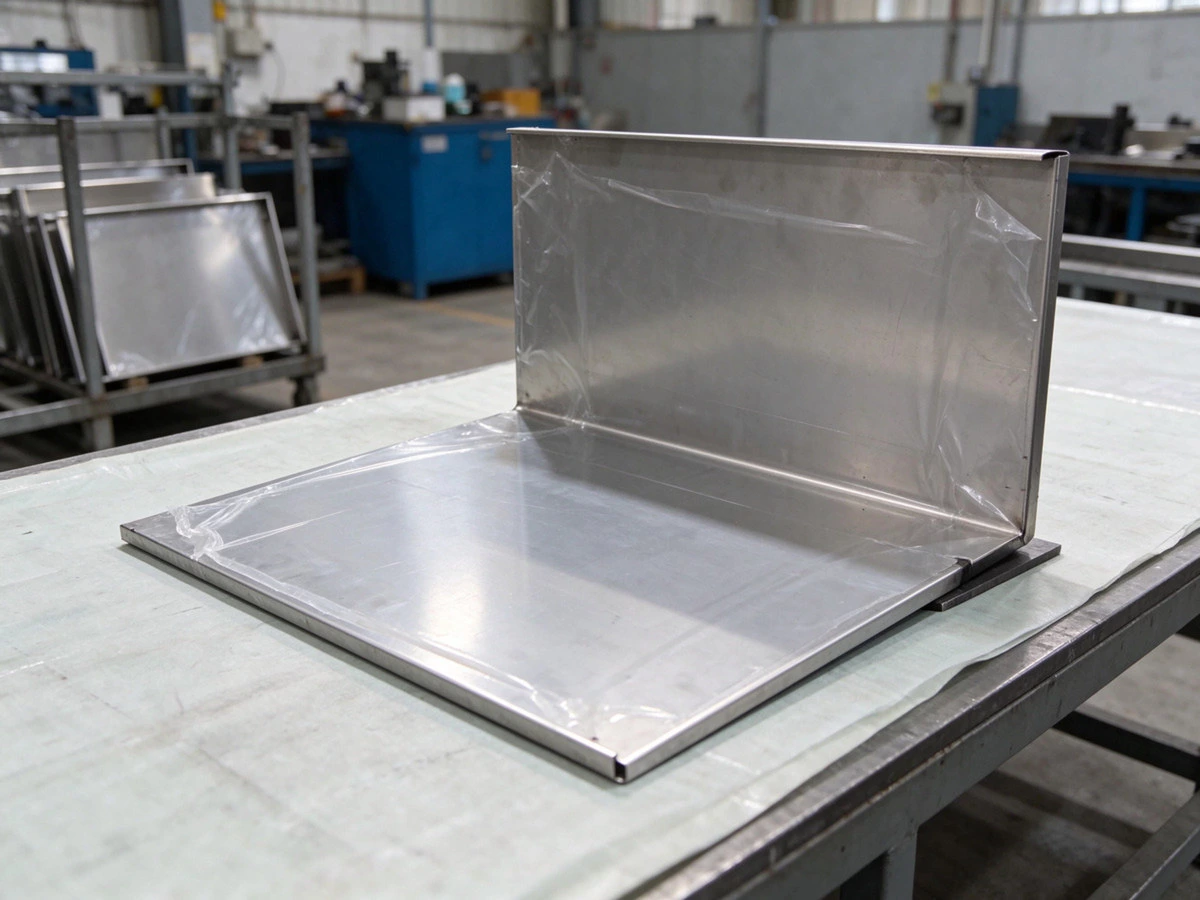
Stainless steel performance depends on more than alloy selection. Handling, cutting, forming, welding, finishing and cleaning can affect the surface condition. The manufacturing specification should keep carbon-steel contamination away from stainless surfaces and should define how visible welds and edges are finished.
A project-specific inspection plan should define the checks that apply to the order. Typical checkpoints include incoming grade and thickness, cutting quality, first-piece bending, weld appearance, grinding and grain restoration, finish comparison, assembly function, and packing inspection. Ask which records will be completed for your batch; a blank inspection template is not the same as a completed report.
Grinding Is Not Pickling or Passivation
These terms must not be used interchangeably.
- Grinding or mechanical finishing removes or levels material and restores the intended surface texture.
- Pickling removes heat tint, scale, and a thin surface layer using a suitable chemical process.
- Passivation is a chemical treatment intended to support the formation or restoration of the passive surface condition after the surface is properly cleaned.
World Stainless’ pickling and passivation guide explains that these are different treatments and that surface preparation must account for contamination and weld scale.
The actual treatment for a cabinet order must be stated in the process specification. Do not assume that every welded assembly is chemically passivated. The purchase specification should state whether the order requires grinding and grain restoration only, pickling and passivation, or a treatment limited to selected coastal, outdoor or sink-base components.
Avoid Galvanic and Crevice Corrosion
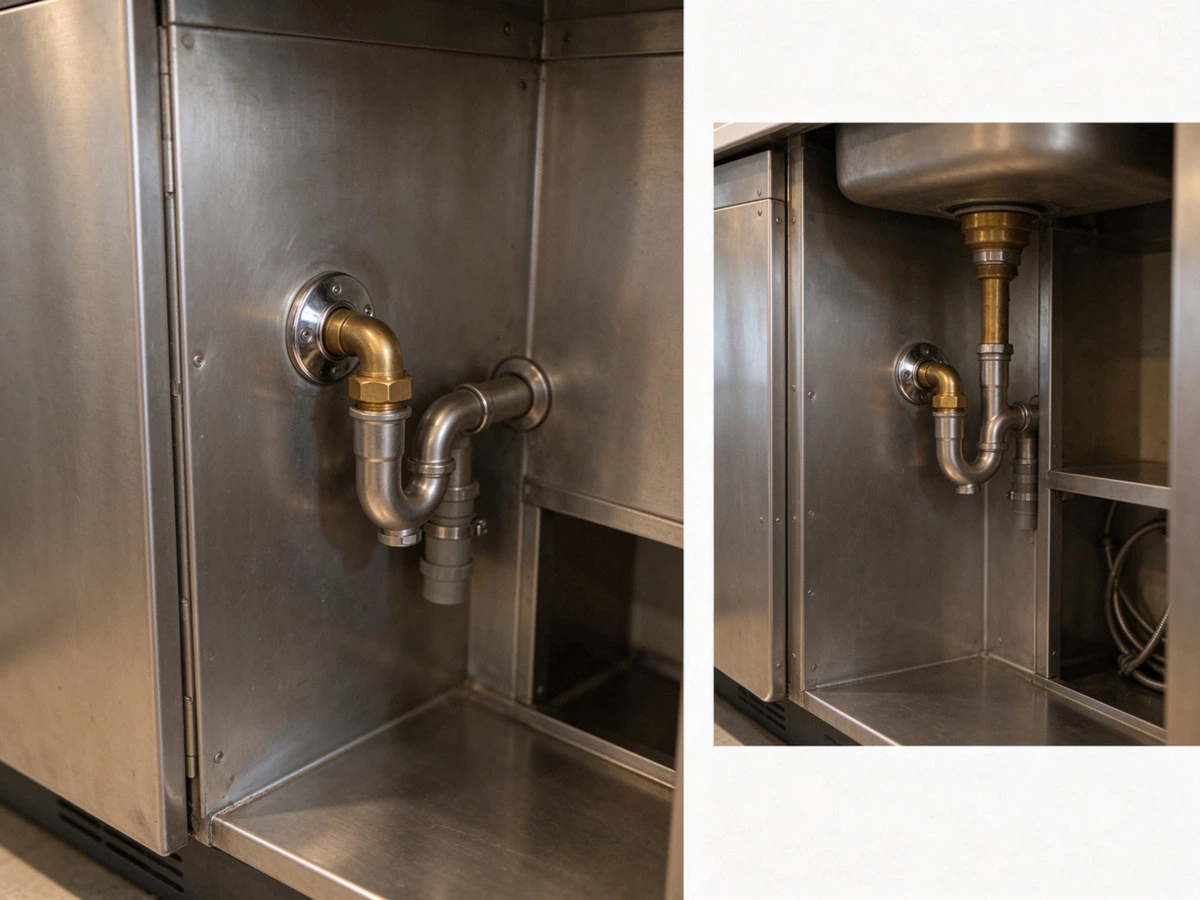
Where stainless steel contacts aluminium or carbon steel in a damp environment, the designer should assess galvanic compatibility and use suitable isolation or compatible fasteners where required. The BSSA overview of stainless steel corrosion mechanisms includes bimetallic corrosion and the importance of good detailing.
Water trapped in narrow overlaps, folded joints, or poorly sealed connections can also create crevice conditions. The safer detail is a cleanable joint with drainage and access, not a hidden pocket that retains moisture.
For outdoor cabinets, the design should consider ventilation, rain exposure, drainage, and the ability to clean salt deposits. Do not assume that a higher grade will compensate for a water trap or incompatible connection.
Match the Grade and Construction to the Location
| Project Condition | Starting Material Discussion | Design and Maintenance Priorities |
|---|---|---|
| Dry indoor kitchen | 304 for many main components; selected 430 or 201 parts only after review | Finish, fingerprints, door construction and hardware |
| Sink or dishwasher zone | 304 or 316L according to exposure and cleaning chemicals | Plumbing access, drainage, joints, and prompt leak response |
| Covered outdoor kitchen inland | Review 304 and 316L against the actual exposure | Rain protection, ventilation, drainage and cleaning |
| Coastal outdoor kitchen | 316L is often the more appropriate starting point | Salt deposits, sheltered crevices, compatible fasteners and regular washing |
| Poolside installation | Evaluate 316L and the actual pool chemicals | Splash exposure, ventilation, cleaning routine and joints |
| Commercial or frequent washdown use | Select grade against cleaning chemicals and frequency | Hygienic detailing, accessible joints and documented cleaning instructions |
The selection is site-specific. Stainless steel kitchen cabinets near a coast, pool or frequent washdown area need a different review from cabinetry in a dry apartment.
The International Molybdenum Association notes that 316 is often considered where salt-water exposure or de-icing salts are present, while the World Stainless guidance emphasises that exposure conditions and design details influence the final selection. Do not use a simple distance-from-coast rule as a substitute for reviewing wind direction, shelter, salt deposition, cleaning and crevice design.
Cleaning, Maintenance and Handover
Stainless steel is not maintenance-free. Routine care is straightforward, but the wrong cleaner or contaminated tool can stain the surface.
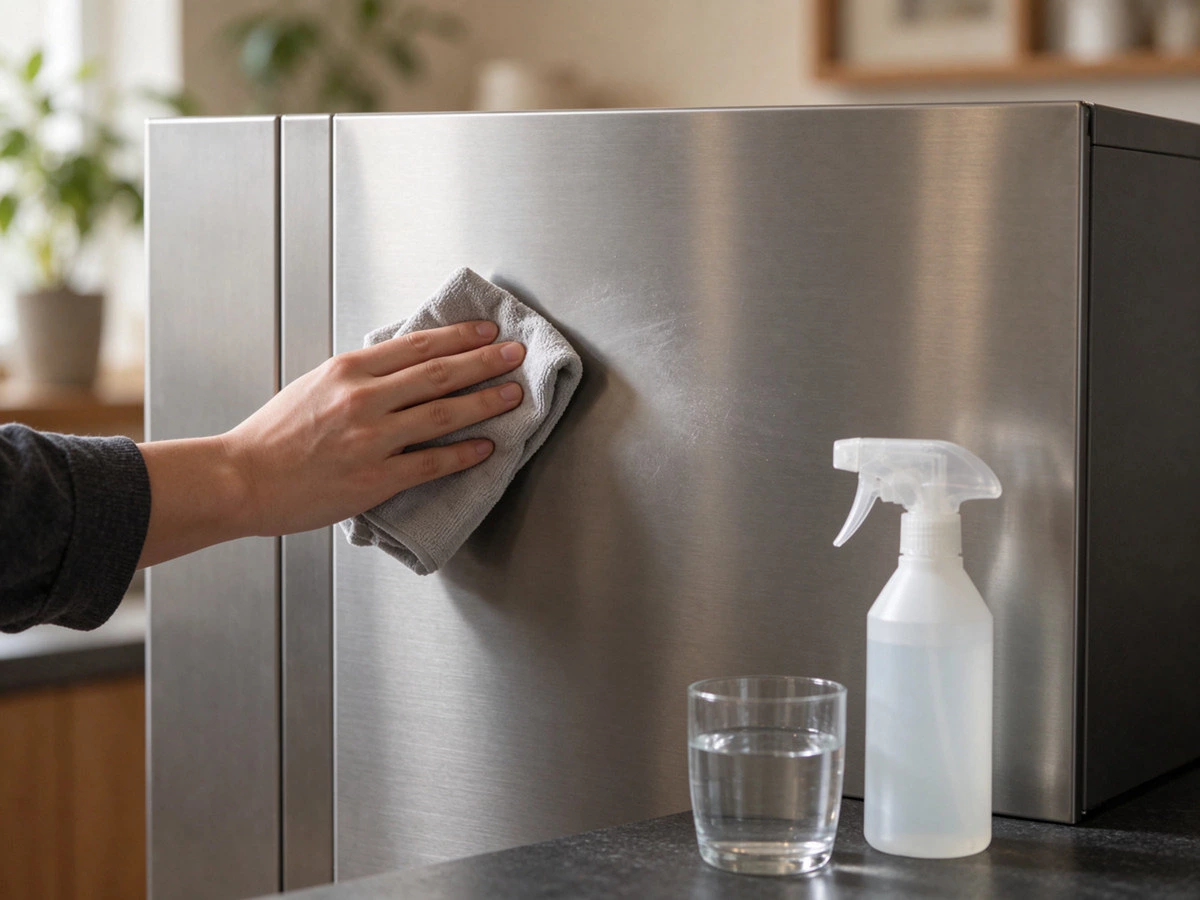
For ordinary household cleaning, the British Stainless Steel Association’s cleaning guide recommends soap or mild detergent in warm water, followed by a clean-water rinse and drying. On brushed surfaces, wipe in the direction of the grain. Avoid chloride-containing cleaning solutions, hydrochloric-acid-based cleaners and carbon-steel wool or brushes. These can cause staining, pitting or iron contamination.
At handover, the care instructions should identify:
- The approved routine cleaner.
- Products and tools to avoid.
- How to remove fingerprints and water marks.
- How to clean brushed surfaces without crossing the grain.
- How often exposed outdoor or coastal surfaces should be rinsed, based on the site conditions.
- Who to contact if staining or coating damage appears.
For PVD surfaces, avoid abrasive repair attempts. If the coating is cut through to the substrate, a local polish cannot recreate the original deposited colour. The approved sample and the written care guide should make this clear before the order is released.
What Affects the Quotation — and What ALLURE Provides
A fair comparison starts with the same scope. The cost of stainless steel cabinet materials is only one part of the complete cabinet quotation. The price of a custom metal cabinet system is affected by grade, sheet thickness, construction, core, finish, fabrication, hardware, countertop details, accessories, packing, and delivery. A quote that omits the core or hardware is not directly comparable with one that includes them.
Clear specifications for stainless steel cabinet materials make supplier quotes easier to compare and reduce ambiguity before production. Ask the supplier to separate:
- Cabinet body, doors, backs, shelves and drawer components.
- Stainless grade and thickness by component.
- Core, reinforcement and edge construction.
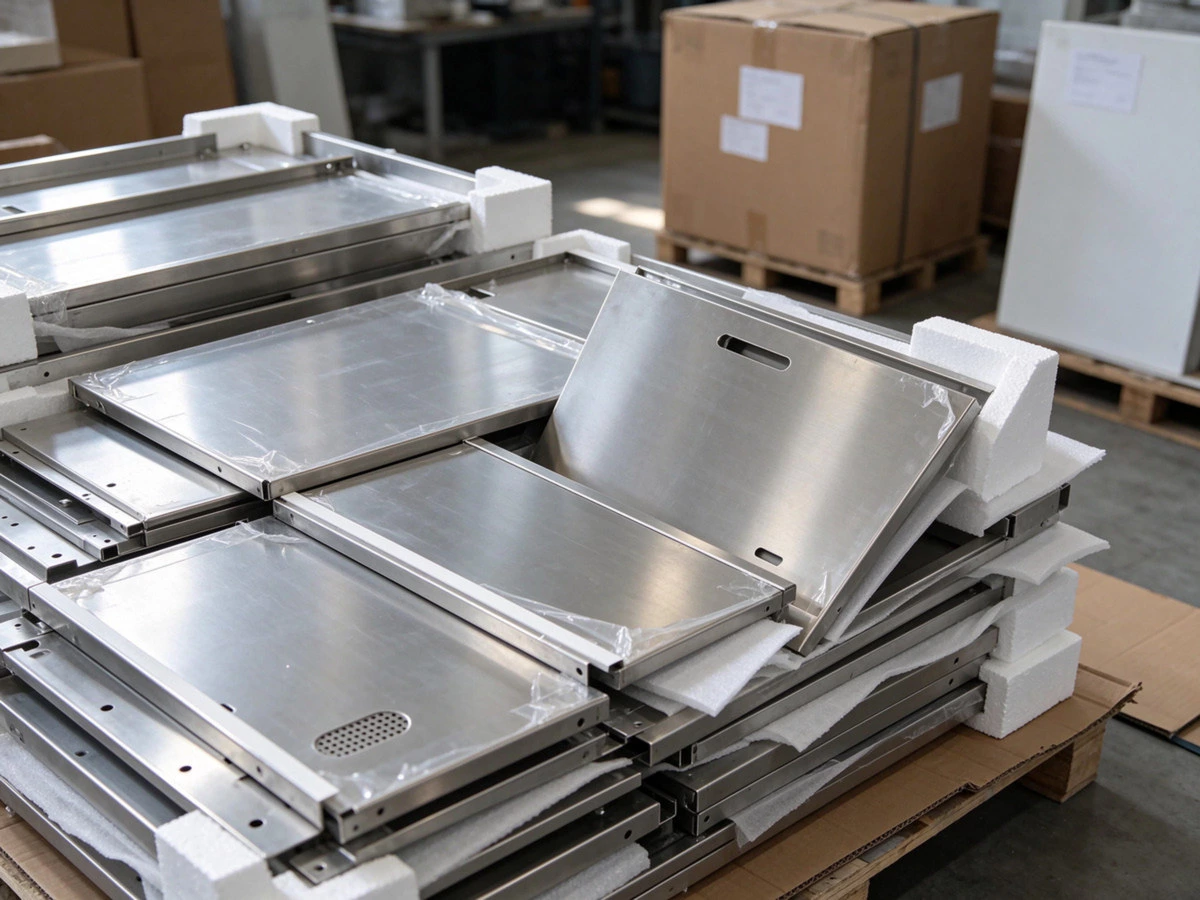
- Surface finish, colour treatment and protective film.
- Hinges, drawer slides, handles and accessories.
- Countertop, sink, cut-outs and connection details.
- Packing, shipping, installation and after-sales scope.
Confirmed Service and Delivery Information
ALLURE’s public FAQ lists a two-year warranty, with the exact coverage to be checked in the written warranty document for the order. Two packing options are available for stainless steel kitchen cabinets: RTA (ready-to-assemble) and fully assembled. The choice affects carton or crate planning, shipping volume, site access, and installation work.
ALLURE’s public FAQ lists the following shipping guidance:
- Asia: 7–14 days
- Australia: 21–27 days
- United States: 40–60 days
These published ranges should not be treated as the full time from order placement to delivery at the project site. Confirm the route, starting point, and estimated transit period in the project quotation. Port pair, vessel schedule, customs clearance, inland transport, and seasonal conditions can change the total timeline. The production period itself is confirmed for the project after drawings and specifications are approved; no universal production-day promise is made here.
ALLURE can provide installation-team support for stainless steel kitchen cabinets where the service is available, and also provides DIY installation instructions in illustrated or video form. Confirm the location, scope, and any additional service costs in the quotation. See the ALLURE order process for the project stages from measurement and design through packing, shipping, and installation.
Eight Questions to Settle Before Production
Use this list during supplier comparison and drawing approval:
- Which grade is used for each component? Ask for the grade and product standard for the carcass, doors, shelves, countertop, and accessories rather than accepting one grade name for the whole kitchen.
- What documents identify the material batch? Agree which material certificate or batch records will be supplied and how the documents link to the delivered material.
- What is the door construction? Confirm skin thickness, folded return, core, reinforcement, panel size, and finished weight on the drawing.
- How is the finish defined? Approve a physical sample and record the finish code, grain direction, colour, gloss, and protective film.
- How are welds and mixed-metal joints treated? State whether the order requires grinding, pickling, passivation, or isolation between dissimilar metals. Do not assume an unselected process is included.
- Which hardware is included? Record hinge and slide brands or models, quantity, load rating, and adjustment method.
- What will the inspection record show? Agree the actual checks and acceptance criteria for dimensions, surface, weld appearance, function, and packing. Do not accept blank templates as completed test reports.
- What is included in the commercial offer? Confirm RTA or fully assembled packing, warranty scope, production schedule, sea-freight estimate, installation responsibility, exclusions, and delivery terms.
A Real Project: Stainless Steel with a Warmer Residential Palette
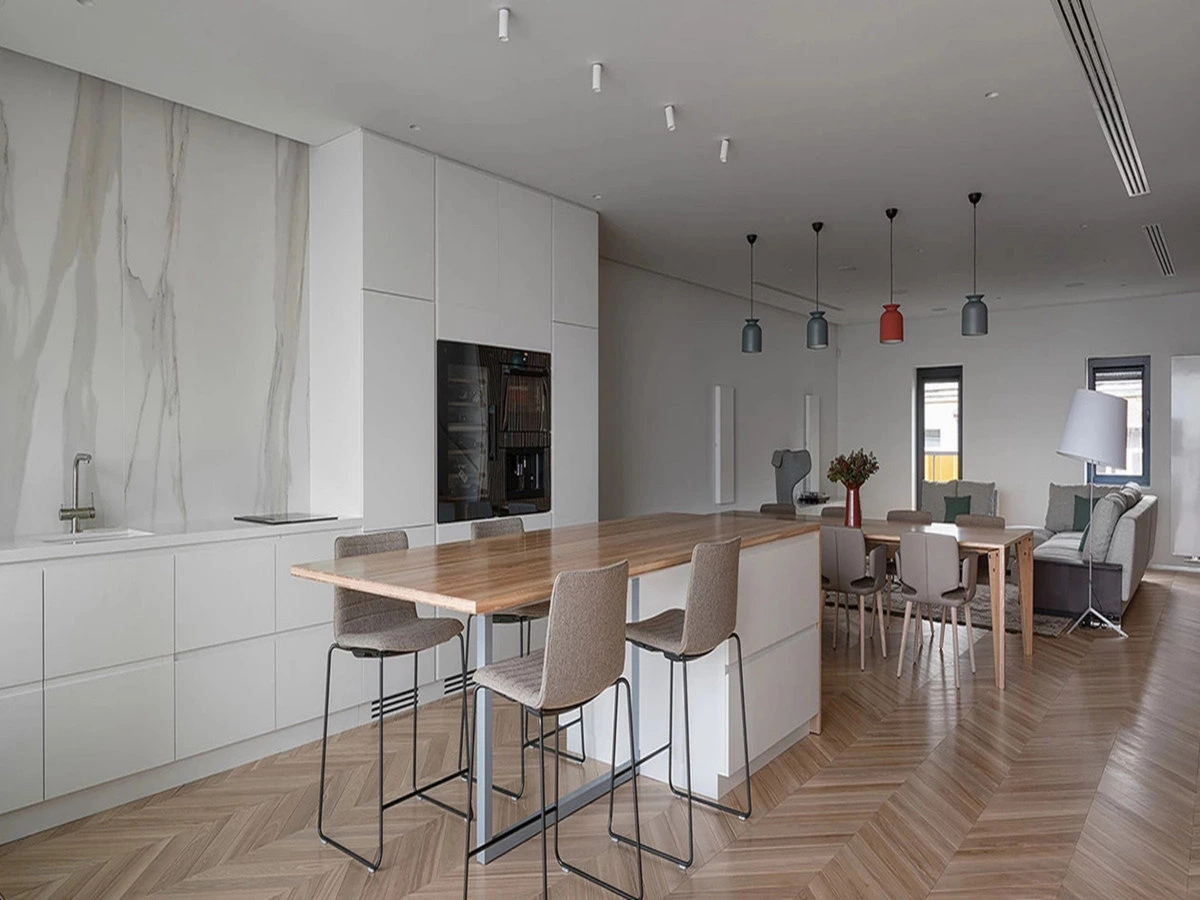
ALLURE’s Moscow two-storey apartment project combines stainless cabinetry with a sintered-stone worktop, grille doors and herringbone hardwood flooring. The project is useful because it shows how a metal kitchen can sit within a residential interior rather than being treated as a standalone commercial-looking room.
The client described the grille-door decision as “unexpected but interesting” and said they were happy to have followed the designer’s advice. That comment is about the design decision, not a technical performance test. The case page documents the materials and interior elements mentioned in the project; it does not publish a stainless grade, sheet thickness, budget, or test report, so none is claimed here.
For more visual references, browse ALLURE’s modern stainless steel kitchen ideas. For a project quotation, review the custom kitchen cabinet options and submit the project layout for a component-by-component proposal.
Frequently Asked Questions
Are stainless steel cabinets more expensive than MDF or plywood cabinets?
They often have a higher initial cost than standard board-based cabinetry, but the final comparison depends on grade, construction, finish, hardware, accessories, installation, and shipping. Compare the same cabinet scope and component specifications rather than comparing a stainless door with a complete board cabinet package.
Does ALLURE have a minimum order quantity for stainless cabinetry?
The minimum order requirement is confirmed according to project scope and quotation. Send the layout, location, cabinet quantity, and required finish so the team can confirm whether the project can be supported. No fixed MOQ is published in this guide.
Can ALLURE supply RTA and fully assembled cabinets?
Yes. The two listed packing options are RTA (ready-to-assemble) and fully assembled. Confirm the selected option before quotation because it affects packing, shipping volume, site access, and installation planning.
Does ALLURE provide installation support?
ALLURE can provide installation-team support where available and also offers DIY installation instructions in illustrated or video form. Confirm the destination, project scope, and service availability before placing the order.
What does the two-year warranty cover?
ALLURE lists a two-year warranty. The written warranty document for the specific order should define the covered cabinet components, hardware, exclusions, claim process, and any maintenance requirements. Do not assume every component has identical coverage unless the document states so.
Can a scratched PVD cabinet door be repaired?
If the scratch only affects surface contamination, cleaning may help. If it cuts through the deposited colour layer and exposes the base metal, a local polish will not restore the original colour. Ask the supplier about professional refinishing or replacement options before approving a PVD finish.
Request a Project-Specific Specification
Send ALLURE your floor plan or cabinet elevations, project country, intended installation environment, preferred grade if already known, finish reference, and whether you want RTA or fully assembled packaging. This information helps the team assess stainless steel kitchen cabinets as a complete project rather than quote a material name in isolation. The team can review the scope, identify the material and construction decisions that need approval, and prepare a project quotation based on the confirmed drawings.
Start with the ALLURE custom kitchen cabinet page or review the order process before submitting your project.