Stainless steel kitchen cabinets are a strong choice for wet kitchens, outdoor kitchens, coastal homes, rental properties, and modern minimalist interiors. They offer excellent moisture resistance, hygiene, and durability, but they may cost more, show fingerprints, or feel too industrial if not designed properly.
This guide compares the main pros and cons, best applications, material grades, maintenance tips, and buying checklist to help homeowners, designers, builders, and project buyers decide whether stainless steel cabinets are right for their kitchen project.
Quick Answer: Are Stainless Steel Kitchen Cabinets Worth It?
Yes, stainless steel kitchen cabinets are worth it if your project needs strong water resistance, easy cleaning, long-term durability, and a modern professional look. They are especially suitable for outdoor kitchens, coastal homes, wet kitchens, rental apartments, and heavy-use kitchens.
However, if you prefer a warm wood look, lower initial cost, or traditional kitchen style, a mixed-material cabinet solution may be better. For example, you can use stainless steel for sink cabinets or outdoor areas, and choose custom kitchen cabinets with wood veneer, PET, lacquer, melamine, or laminate for visible design areas.
Stainless Steel Kitchen Cabinets Pros and Cons at a Glance
| Pros | Cons | Best Solution |
|---|---|---|
| Excellent moisture resistance | Higher initial cost | Use stainless steel in wet or outdoor areas |
| Strong durability | Fingerprints and water marks may show | Choose brushed, matte, or anti-fingerprint finishes |
| Hygienic and easy to clean | Can feel cold or industrial | Combine with wood, stone, warm lighting, or glass |
| Modern professional appearance | Noise or denting if quality is low | Choose reinforced panels and soft-close hardware |
What Are Stainless Steel Kitchen Cabinets?
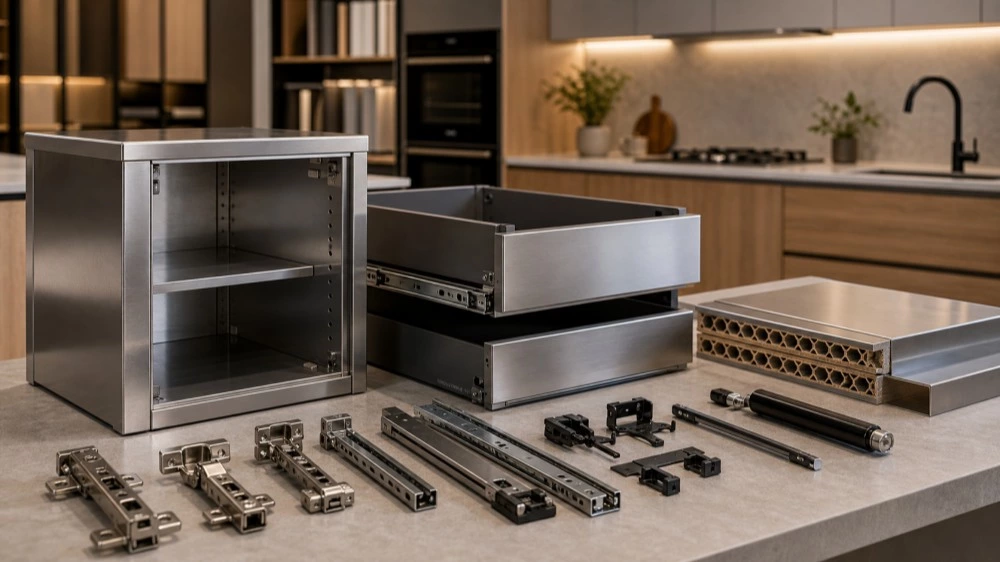
Definition: Stainless steel kitchen cabinets are cabinets made with stainless steel doors, panels, shelves, drawers, carcasses, or complete cabinet bodies. They can be fully stainless steel or combined with wood veneer, PET, lacquer, glass, quartz, sintered stone, or other decorative materials.
A full stainless steel kitchen usually offers the strongest moisture resistance and hygiene performance. A mixed-material kitchen can provide better visual warmth and design flexibility while still using stainless steel where it matters most, such as sink cabinets, outdoor areas, or heavy-use cooking zones.
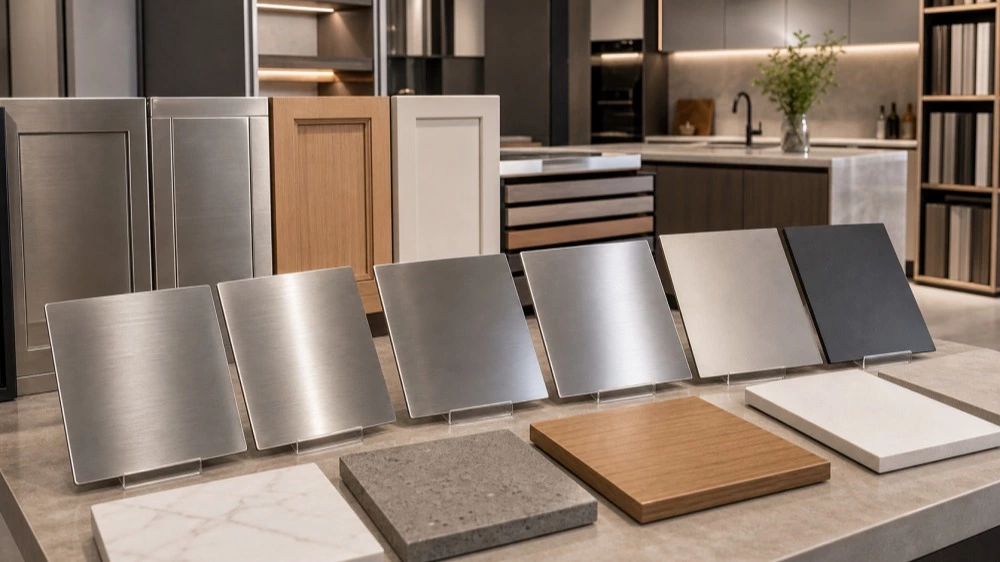
Common stainless steel grades:
- 304 stainless steel: A common choice for most indoor kitchens because it offers good corrosion resistance and stable performance.
- 316 stainless steel: A better choice for outdoor kitchens, coastal homes, and high-humidity environments because it provides stronger corrosion resistance.
- 201 stainless steel: A lower-cost option, but with weaker corrosion resistance. It is not ideal for wet, outdoor, or coastal applications.
The British Stainless Steel Association notes that the right stainless steel grade and surface finish are important for corrosion resistance, especially in seawater or coastal environments. You can learn more from this BSSA guide on 304 and 316 stainless steel.
4 Key Advantages of Stainless Steel Kitchen Cabinets
1. Excellent moisture and water resistance
One of the biggest advantages of stainless steel kitchen cabinets is their moisture resistance. Unlike MDF, particleboard, or plywood, stainless steel does not swell when exposed to water. This makes it a strong choice for sink cabinets, dishwashing areas, wet kitchens, outdoor kitchens, and humid climates.
In many kitchens, the sink cabinet is the first area to show damage. Water leaks, cleaning products, steam, and daily washing can slowly damage wood-based boards if the edge banding or surface protection is weak. Stainless steel greatly reduces this risk.
Best for: sink cabinets, dishwasher areas, outdoor kitchens, coastal homes, humid climates, and wet kitchens.
Buyer benefit: Stainless steel kitchen cabinets help reduce swelling, mold, edge damage, and moisture-related cabinet failure. For buyers who want long-term durability in wet environments, stainless steel is one of the most reliable cabinet materials.
2. Strong durability for heavy use
Stainless steel cabinets are built for performance. They can resist impact, heat, moisture, corrosion, oil, stains, and daily wear better than many wood-based cabinet systems.
This makes them suitable for family kitchens, rental properties, commercial-style kitchens, outdoor kitchens, and high-use projects. When the cabinet structure is properly reinforced and built with the right steel grade, stainless steel cabinets can last for many years with proper care.
Best for: rental apartments, commercial-style home kitchens, family kitchens, outdoor kitchens, and heavy-use residential projects.
Buyer benefit: Durable stainless steel cabinets reduce replacement frequency and long-term maintenance costs. For heavy-use kitchens, this can make the higher initial cost more reasonable over time.
3. Hygienic and easy to clean
Stainless steel is widely used in professional kitchens and food-related environments because it supports hygienic design when properly specified and finished. Its smooth, non-porous surface does not absorb oil, moisture, food stains, or odors as easily as some other materials.
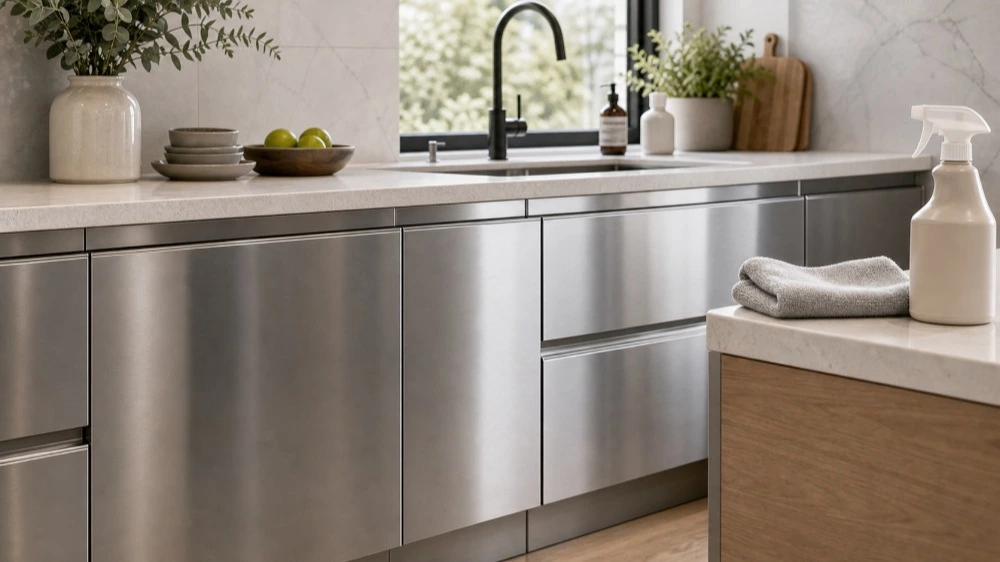
For residential kitchens, this makes daily cleaning easier. Cooking oil, sauce marks, water splashes, and food residue can usually be wiped away with a soft cloth and mild cleaner.
The FDA Food Code emphasizes that food-contact and splash-zone surfaces should be smooth, durable, and easily cleanable. This is one reason stainless steel is widely used in food preparation environments. Reference: FDA Food Code surface cleanability guidance.
Best for: cooking-heavy families, wet kitchens, rental properties, and professional-style kitchens.
Buyer benefit: Stainless steel helps create a cleaner kitchen environment with easier daily maintenance. It is a practical choice for users who want cabinets that can handle frequent cooking and cleaning.
4. Modern professional appearance
Stainless steel kitchen cabinets create a sleek, clean, and contemporary appearance. They work especially well in minimalist kitchens, industrial-style homes, modern apartments, outdoor kitchens, and professional cooking spaces.
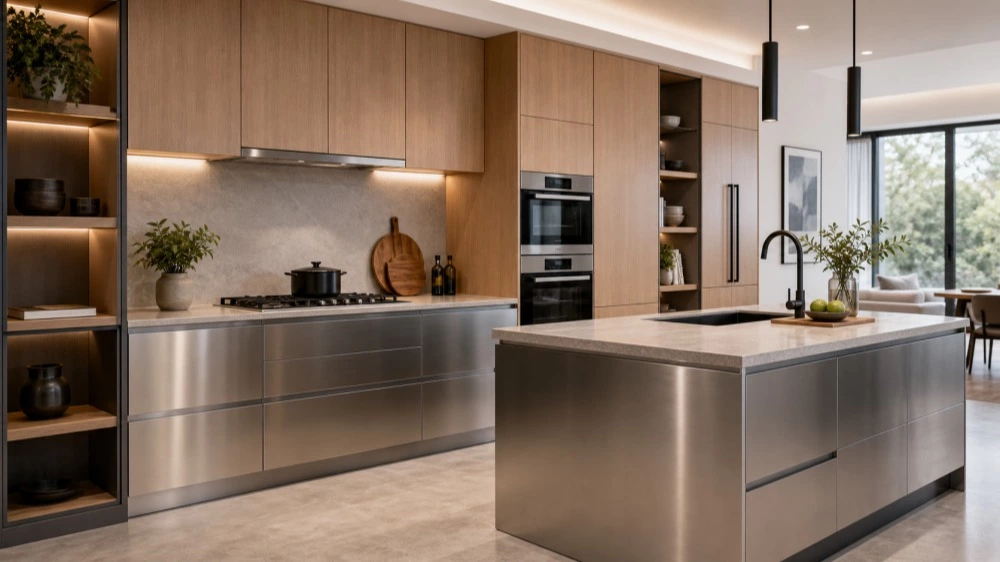
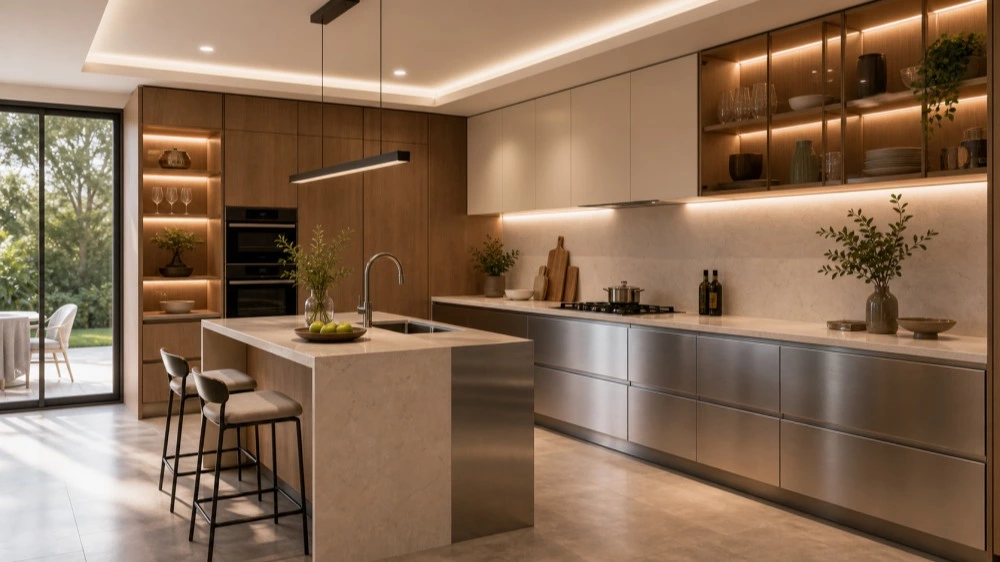
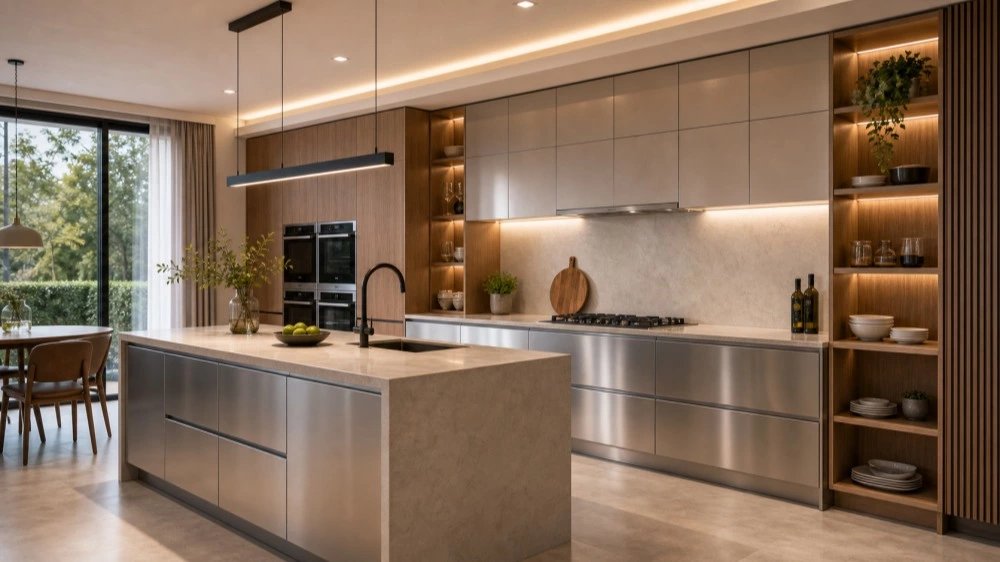
The reflective or brushed metal surface can make a kitchen feel sharp and functional. When paired with stone countertops, black accents, glass doors, wood veneer, and warm lighting, stainless steel can also look premium rather than cold.
Best design combinations:
- Stainless steel cabinets with quartz or sintered stone countertops.
- Brushed stainless steel with warm wood veneer panels.
- Matte stainless steel with black handles or handleless profiles.
- Stainless steel sink cabinets with lacquer or PET upper cabinets.
- Stainless steel base cabinets with warm LED lighting.
Buyer benefit: Modern stainless steel cabinets can make a kitchen look clean, premium, and highly functional. They are especially suitable for buyers who prefer a minimalist or professional kitchen style.
4 Common Disadvantages and How to Solve Them
1. Higher cost than standard cabinets
The biggest concern for many buyers is cost. Stainless steel kitchen cabinets usually cost more than standard particleboard, MDF, melamine, laminate, or lacquer cabinets.
The final cost depends on steel grade, steel thickness, surface finish, cabinet structure, hardware, customization level, countertop selection, and installation requirements. 304 stainless steel is usually more expensive than lower-grade steel, while 316 stainless steel costs more but is better for outdoor or coastal use.
Buyer concern: The initial investment may be higher, especially for full stainless steel kitchen systems.
Practical solution: Use stainless steel strategically. Choose stainless steel for sink cabinets, outdoor cabinets, wet kitchen zones, or high-moisture areas, and combine it with plywood, PET, lacquer, melamine, or wood veneer cabinets in other areas. For more material comparison, read Melamine vs PET Cabinets.
2. Fingerprints, scratches, and water marks can show
Stainless steel is easy to clean, but it can also show fingerprints, smudges, scratches, and water marks. This is especially true for glossy or highly reflective finishes.
In kitchens with strong lighting, even small surface marks may become more visible. Darker stainless finishes can also show fingerprints if they do not have anti-fingerprint treatment.
Buyer concern: The kitchen may look less clean if surfaces are not wiped regularly.
Practical solution: Choose fingerprint-resistant finishes, brushed stainless steel, matte stainless steel, textured surfaces, or anti-fingerprint coating. These options reduce visible marks and make daily maintenance easier.
3. Can feel cold or industrial
A full stainless steel kitchen can feel cold, hard, or too commercial for some homeowners. This is one of the main reasons many residential buyers hesitate before choosing stainless steel cabinets.
Traditional, farmhouse, classic, or warm natural interiors may not match full stainless steel cabinets. If too many metal surfaces are used without balance, the kitchen may feel more like a restaurant workspace than a home.
Buyer concern: Some homeowners may worry stainless steel cabinets look too much like a restaurant kitchen, especially in open-plan homes where the kitchen connects to the living and dining area.
Practical solution: Combine stainless steel with wood veneer, warm lighting, quartz countertops, glass doors, soft neutral colors, or matte cabinet finishes. For villas, apartments, and full-home interiors, whole-house customization can help keep the kitchen consistent with wardrobes, vanities, doors, and storage furniture.
4. Noise and denting depend on quality
Not all stainless steel cabinets feel the same. Thin panels, weak structures, poor welding, and low-quality hardware can make stainless steel cabinets feel noisy, hollow, or less premium.
Metal cabinet doors and drawers may create sound when opening and closing if the cabinet is not properly engineered. Thin panels may also dent more easily under impact.
Buyer concern: Badly made stainless steel cabinets may feel noisy, cheap, or uncomfortable for daily use.
Practical solution: Choose proper steel thickness, reinforced panels, quality hardware, soft-close systems, and professional cabinet engineering. If you need pull-out baskets, drawer systems, or corner storage, explore cabinet storage solutions.
Best Uses for Stainless Steel Kitchen Cabinets
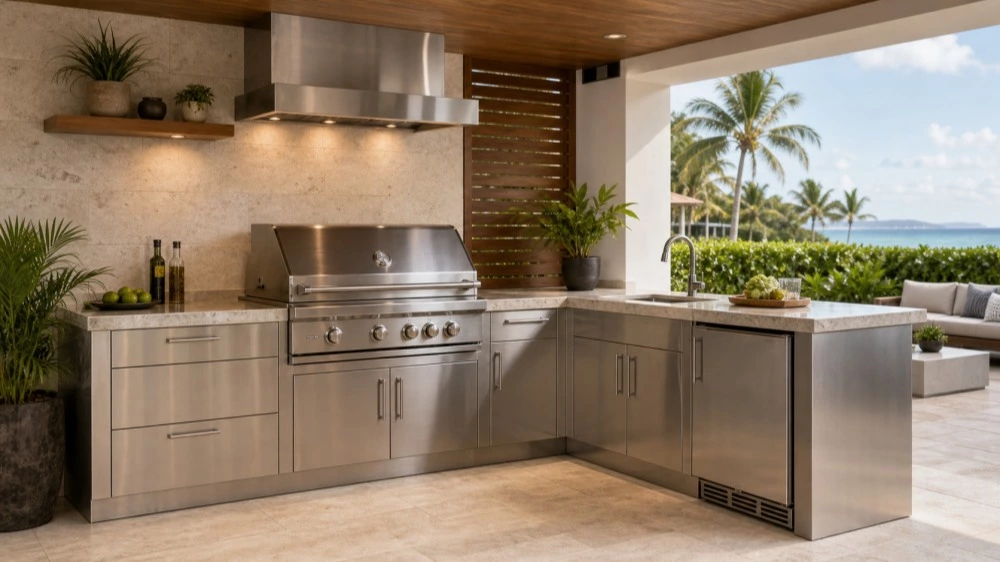
- Outdoor kitchens: Stainless steel resists moisture, weather exposure, and temperature changes better than many wood-based cabinets.
- Wet kitchens: Ideal for heavy cooking, washing, cleaning, sink areas, and dishwasher zones.
- Coastal homes: 316 stainless steel is better for salt-air environments and humid coastal locations.
- Rental properties: Durable surfaces reduce damage from frequent tenant use and lower maintenance problems.
- Commercial-style home kitchens: Suitable for users who cook often and prefer a professional kitchen look.
- Modern villas and apartments: Works well with mixed materials, stone countertops, wood veneer, glass, and integrated lighting.
Stainless Steel vs Wood-Based Kitchen Cabinets
Many buyers compare stainless steel with plywood, MDF, particleboard, melamine, PET, lacquer, or wood veneer cabinets. Each option has its own advantages.
Stainless steel performs better in moisture resistance, hygiene, and heavy-use durability. Wood-based cabinets offer more warmth, color variety, and budget flexibility. The best choice depends on the project environment, design style, and expected usage.
| Feature | Stainless Steel Cabinets | Wood-Based Cabinets |
|---|---|---|
| Moisture Resistance | Excellent for wet, outdoor, and humid areas | Depends on board quality, surface finish, and edge banding |
| Durability | Very strong for heavy-use kitchens | Varies by plywood, MDF, particleboard, and finish |
| Hygiene | Easy to clean and non-porous | Depends on surface material and maintenance |
| Appearance | Cooler, modern, industrial, and professional | Warmer, softer, and more natural |
| Cost | Usually higher | More flexible budget range |
| Best Use | Wet, outdoor, coastal, and heavy-use kitchens | Homes, apartments, villas, and full-house projects |
For many residential projects, a mixed-material kitchen is the most balanced solution. Stainless steel can be used in high-risk areas, while wood-based or decorative panels can create warmth and design flexibility.
How to Choose Quality Stainless Steel Kitchen Cabinets
Check stainless steel grade
Steel grade is one of the most important factors. 304 stainless steel is suitable for most indoor kitchens. 316 stainless steel is better for outdoor kitchens, coastal areas, and humid environments. Avoid low-grade stainless steel for wet areas because it may corrode faster.
Confirm steel thickness
Thicker and reinforced panels improve strength, noise control, and dent resistance. Very thin stainless steel may feel hollow or unstable. Ask your supplier about panel thickness, internal reinforcement, and cabinet structure.
Review surface finish
Surface finish affects both appearance and maintenance. Common options include brushed, matte, textured, anti-fingerprint, powder-coated, and colored stainless steel finishes. For residential kitchens, matte or anti-fingerprint finishes are often easier to maintain.
Inspect cabinet structure
Check welding, seams, corners, shelves, drawer boxes, and internal supports. A good stainless steel cabinet should feel stable, clean, and well-engineered. Poor structure can lead to noise, movement, and a less premium experience.
Choose reliable hardware
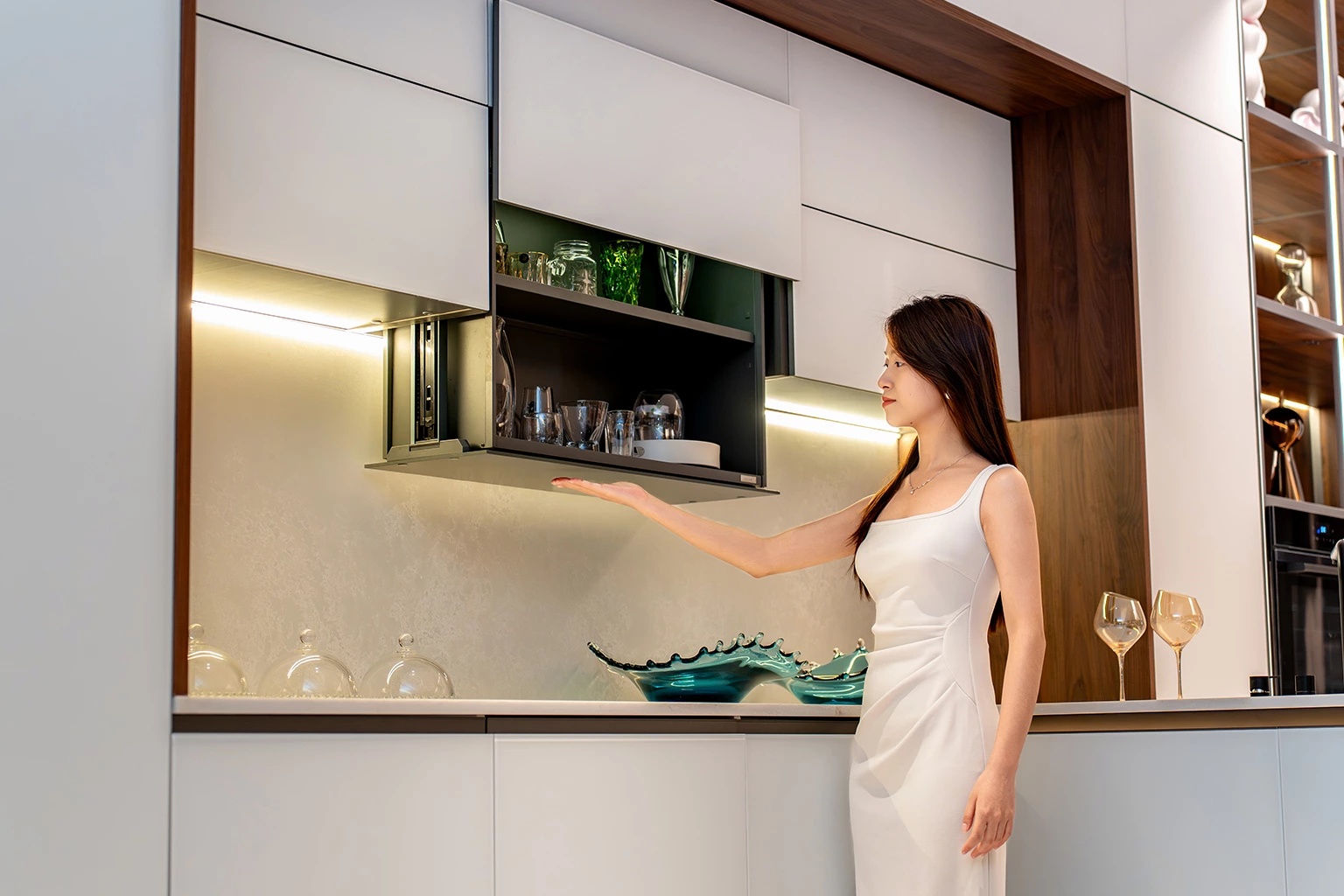
Hinges, drawer slides, lift-up systems, and pull-out accessories should match the cabinet structure. Soft-close hardware is highly recommended because it improves daily comfort and reduces metal noise.
Ask about customization
Custom stainless steel kitchen cabinets should be designed around the floor plan, appliance sizes, sink position, countertop material, storage needs, and installation requirements. Confirm whether the supplier can provide drawings, material samples, and project support before production.
Common Mistakes When Buying Stainless Steel Kitchen Cabinets
Choosing low-grade steel for wet areas
Low-grade stainless steel may rust or corrode faster in wet, coastal, or outdoor environments. If the kitchen is exposed to moisture, choose a suitable grade such as 304 or 316 stainless steel.
Ignoring surface finish
The wrong finish can make fingerprints, scratches, and water marks more visible. Buyers should compare brushed, matte, textured, and anti-fingerprint finishes before making a decision.
Comparing only price
Cheap stainless steel cabinets may use thin panels, weak structures, poor welding, or low-quality hardware. Always compare steel grade, thickness, finish, hardware, structure, and after-sales support.
Forgetting design warmth
A full stainless steel kitchen may feel too cold for some residential spaces. If the kitchen is part of an open living area, consider wood veneer, warm lighting, stone countertops, or mixed cabinet materials.
Not checking hardware compatibility
Metal cabinets need suitable hinges, drawer slides, and pull-out systems. Poor hardware can make the kitchen noisy, unstable, or uncomfortable to use.
Stainless Steel Kitchen Cabinet Buying Checklist
Use this checklist before placing an order:
- What stainless steel grade is used?
- Is it 304, 316, 201, or another grade?
- Is the steel suitable for indoor, outdoor, coastal, or wet kitchen use?
- What is the steel thickness?
- Are the panels reinforced to reduce noise and denting?
- Is the surface brushed, matte, textured, powder-coated, or anti-fingerprint?
- Is the cabinet fully stainless steel or mixed with other materials?
- Are doors, carcass, shelves, and drawers all stainless steel?
- Which hinges and drawer slides are used?
- Are soft-close systems included?
- Can the cabinet size and layout be customized?
- Can the supplier match countertops, sinks, appliances, and storage accessories?
- What maintenance method is recommended?
- Does the supplier provide drawings, samples, packaging, and installation guidance?
Why Choose ALLURE Cabinetry?
ALLURE Cabinetry provides custom stainless steel kitchen cabinets and mixed-material cabinet solutions for homes, apartments, villas, outdoor kitchens, and project developments.
Instead of offering only standard cabinet products, ALLURE can customize cabinet layouts based on your floor plan, kitchen size, cooking habits, climate, material preference, and project budget.
Custom stainless steel cabinet solutions
ALLURE supports custom stainless steel kitchen cabinet design for indoor kitchens, wet kitchens, outdoor kitchens, apartments, villas, and commercial-style home kitchens.
Material combination options
Stainless steel can be combined with wood veneer, PET, lacquer, melamine, glass, quartz, sintered stone, or marble. This allows buyers to keep the durability of stainless steel while creating a warmer and more refined residential look.
Project-based design support
ALLURE supports homeowners, designers, contractors, builders, and project buyers with cabinet layout planning, material recommendations, 3D renderings, production drawings, and customization options.
Turnkey support
From design and material selection to production, quality control, packaging, shipping, and installation guidance, ALLURE helps buyers manage custom kitchen cabinet projects more efficiently.
Explore more options:
FAQ
Are stainless steel kitchen cabinets good for homes?
Yes. Stainless steel kitchen cabinets are suitable for homes that need moisture resistance, hygiene, durability, and a modern kitchen style. They are especially useful for wet kitchens, outdoor kitchens, coastal homes, and heavy-use kitchens.
Do stainless steel kitchen cabinets rust?
High-quality 304 or 316 stainless steel resists rust well, but low-grade steel or poor maintenance can lead to corrosion in humid, outdoor, or coastal environments. Choosing the right steel grade is important.
Are stainless steel cabinets expensive?
Stainless steel cabinets usually cost more than standard wood-based cabinets, especially when using 304 or 316 stainless steel, thicker panels, premium finishes, and custom designs. However, they may reduce long-term repair and replacement costs in demanding environments.
Can stainless steel cabinets be used outdoors?
Yes. Stainless steel is suitable for outdoor kitchens. For coastal or high-humidity areas, 316 stainless steel is usually recommended because it offers better corrosion resistance.
How can I make stainless steel cabinets look warmer?
You can combine stainless steel with wood veneer, warm lighting, quartz countertops, soft neutral colors, glass doors, or matte finishes. Mixed-material design helps reduce the cold industrial feeling.
Which is better, stainless steel or plywood cabinets?
Stainless steel is better for moisture resistance, hygiene, and heavy-use environments. Plywood offers a warmer look and more traditional residential feeling. The best choice depends on climate, usage, budget, and design style.
Conclusion
Stainless steel kitchen cabinets are strong, hygienic, water-resistant, and suitable for demanding kitchen environments. They are especially valuable for wet kitchens, outdoor kitchens, rental properties, coastal homes, and modern minimalist projects.
However, buyers should also consider cost, fingerprints, scratches, visual warmth, noise, steel grade, and cabinet structure before ordering. A high-quality stainless steel cabinet system should use the right steel grade, proper thickness, reliable hardware, a suitable surface finish, and professional design support.
For many homes and projects, the best solution is a balanced design: use stainless steel where moisture resistance and durability matter most, and combine it with warmer materials for a more comfortable residential look.
If you are planning custom stainless steel kitchen cabinets for a home, villa, apartment, outdoor kitchen, or project development, ALLURE Cabinetry can help you create a durable, modern, and practical cabinet solution based on your floor plan and project needs.