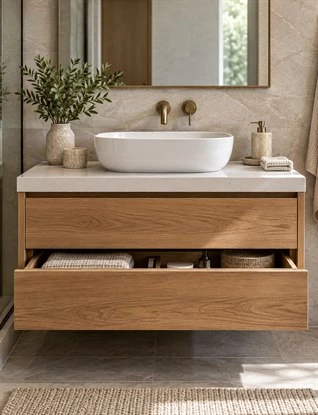
A kitchen may have attractive doors and a well-planned layout, yet still feel disappointing when drawers do not open smoothly, doors slam, or the deepest storage is hard to reach. The difference is often in the fittings behind the cabinet fronts. Kitchen cabinet hardware includes the visible pulls and knobs that shape the look of a room, but it also includes the hinges, drawer slides, lift systems, organizers, and pull-outs that determine how the kitchen works every day.
For homeowners, designers, builders, and project buyers, hardware should be reviewed before cabinet production rather than treated as a final decorative choice. A clear hardware schedule makes it easier to compare quotations, coordinate cabinet drawings and create a kitchen that feels reliable long after installation. When planning custom kitchen cabinets, consider hardware together with cabinet construction, appliance locations, storage habits, and door style.
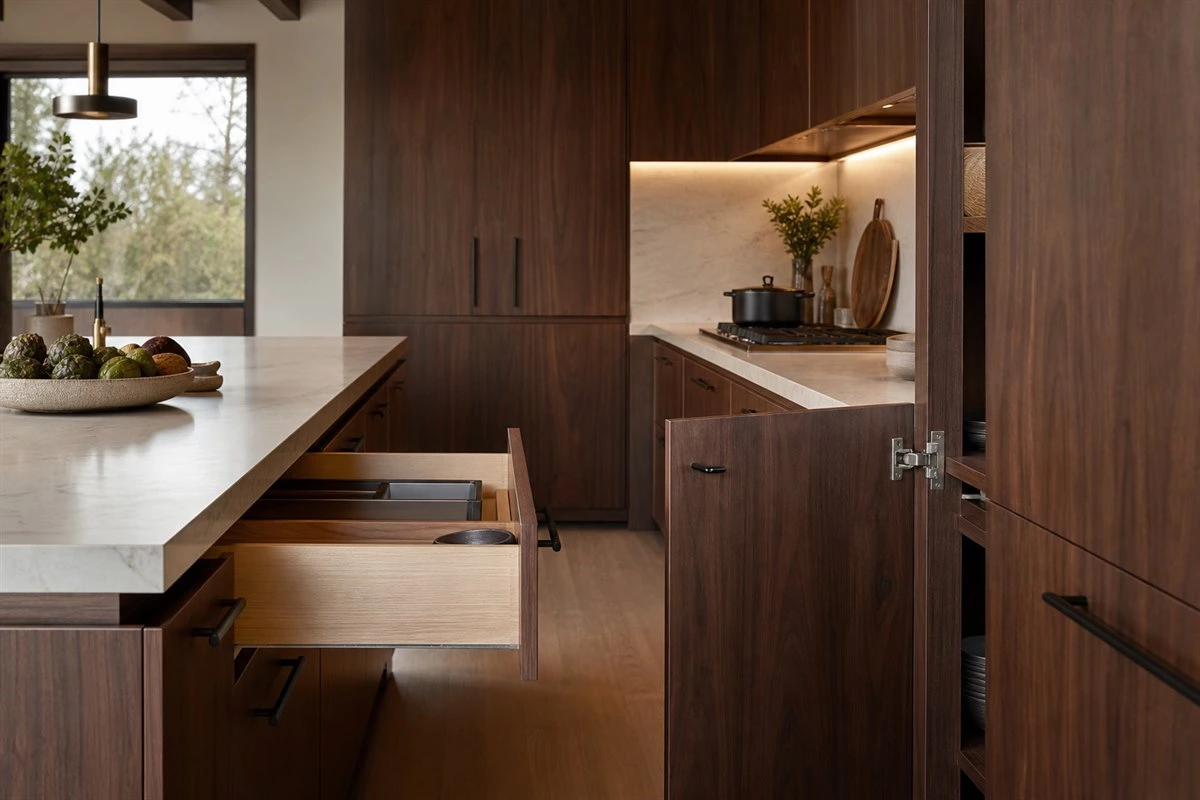
What Is Included in Kitchen Cabinet Hardware?
Kitchen cabinet hardware is easiest to understand in four practical groups. Door hardware controls how cabinet doors open, close, and align. Drawer hardware supports movement, extension, and load capacity. Visible hardware includes pulls, knobs, and integrated handles. Storage hardware brings items forward from deep cabinets or organizes difficult spaces such as corners and sink cabinets.
- Door hardware: concealed hinges, soft-close dampers, push-to-open devices, and lift systems.
- Drawer hardware: side-mount slides, undermount drawer slides, full-extension runners, and drawer dampers.
- Visible hardware: knobs, pulls, recessed handles, edge pulls, and profile systems.
- Storage hardware: pantry pull-outs, corner mechanisms, waste bins, spice pull-outs, and internal organizers.
The best kitchen cabinet hardware is not automatically the most expensive. It is the combination that suits the door design, cabinet dimensions, expected use, project budget, and maintenance needs.
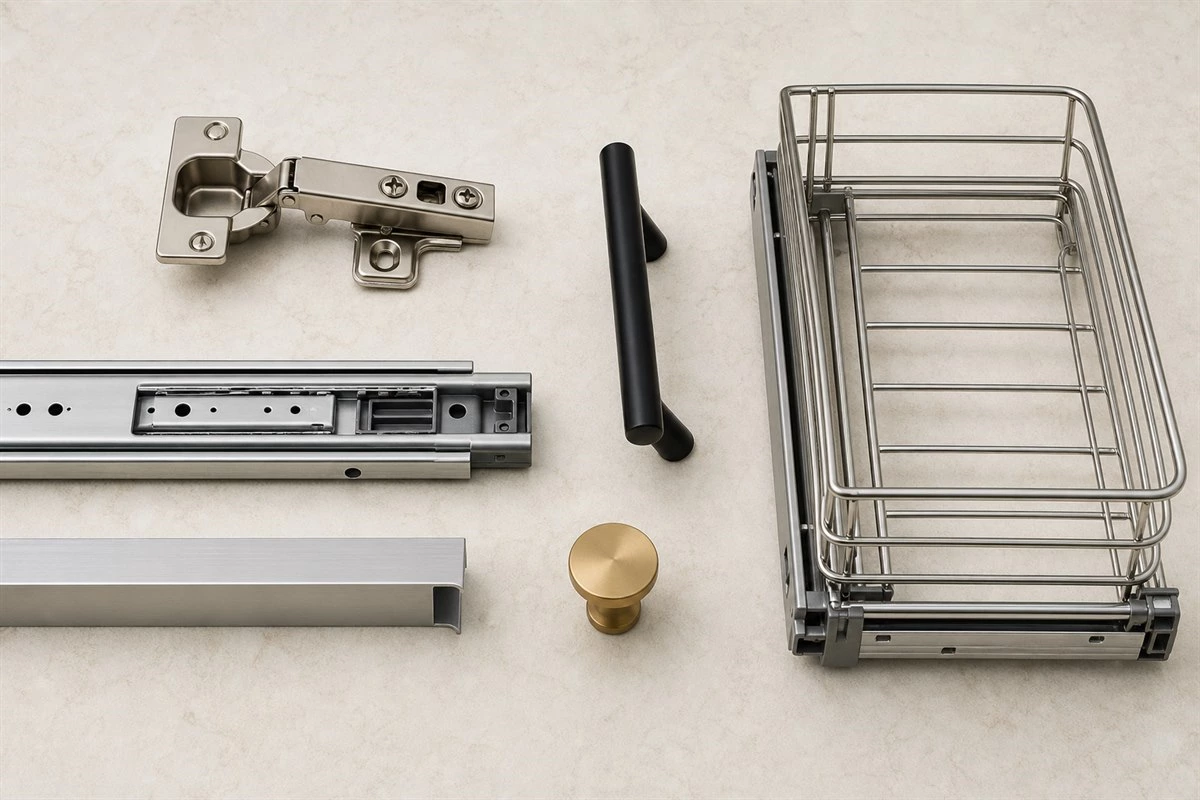
1. Concealed Soft-Close Cabinet Hinges
Concealed hinges are the standard choice for many modern kitchen cabinet doors because they are mostly hidden when the door is closed. They keep the cabinet front clean and allow installers to adjust the door position after installation. Soft-close cabinet hinges add a damping function that slows the door at the end of its closing movement, reducing noise and protecting the door edge.
Before selecting hinges, confirm whether the cabinet uses full-overlay, half-overlay, or inset doors. Full-overlay doors cover most of the cabinet side panel; half-overlay doors share a central panel; inset doors sit within the opening and require more precise tolerances. Hinge quality also matters over time. Weak hinges can lead to rubbing, uneven gaps, and doors that no longer close correctly.
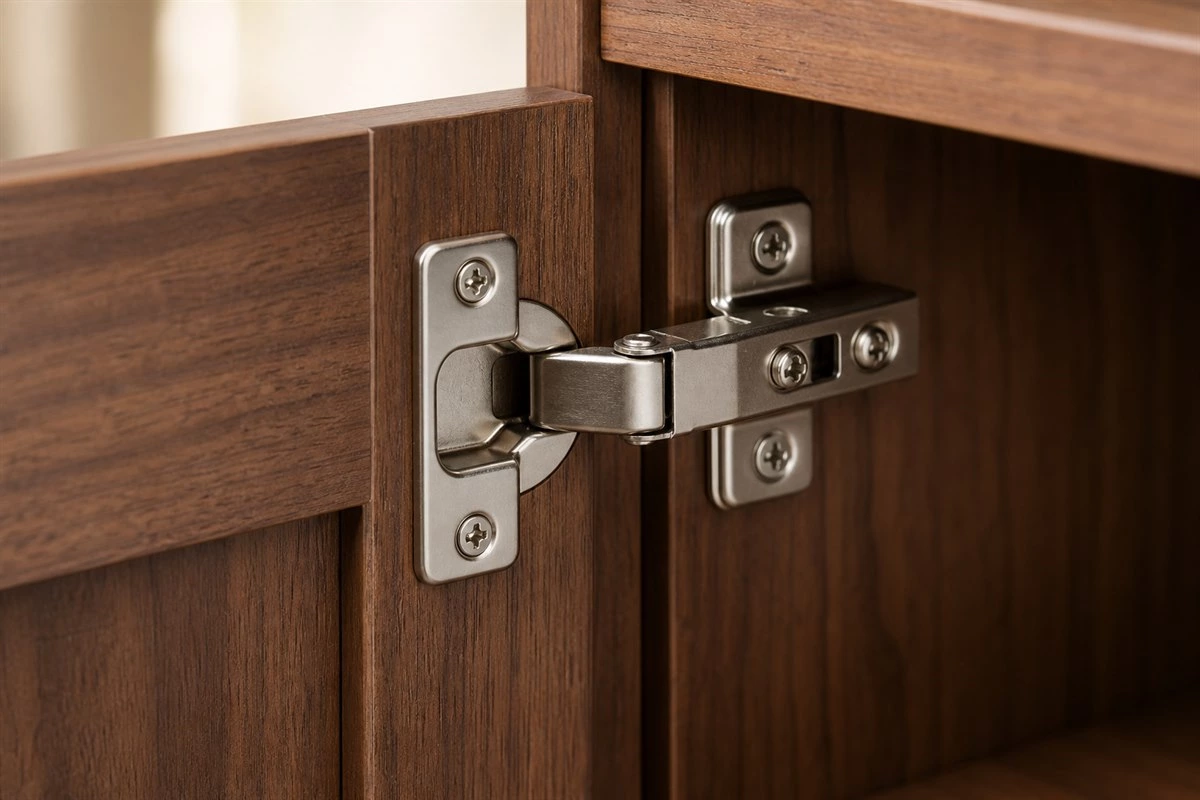
2. Wide-Angle and Zero-Protrusion Hinges
Standard cabinet hinges often open to around 100 to 110 degrees, which is suitable for many cabinets. Wide-angle hinges make it easier to access deep storage, corner units, and internal pull-outs. A wider opening can be useful when a standard door would block the cabinet opening or interfere with a drawer beside it.
Zero-protrusion hinges are designed to reduce the amount of door projection into the opening. In compact kitchens, this can help drawers and pull-out shelves operate without a neighboring open door blocking the route. These details are worth checking on the cabinet drawings, especially around corners, appliance panels, and narrow storage units. A thoughtful kitchen cabinet design guide should identify these conflicts before hardware is finalized.
3. Full-Extension Drawer Slides
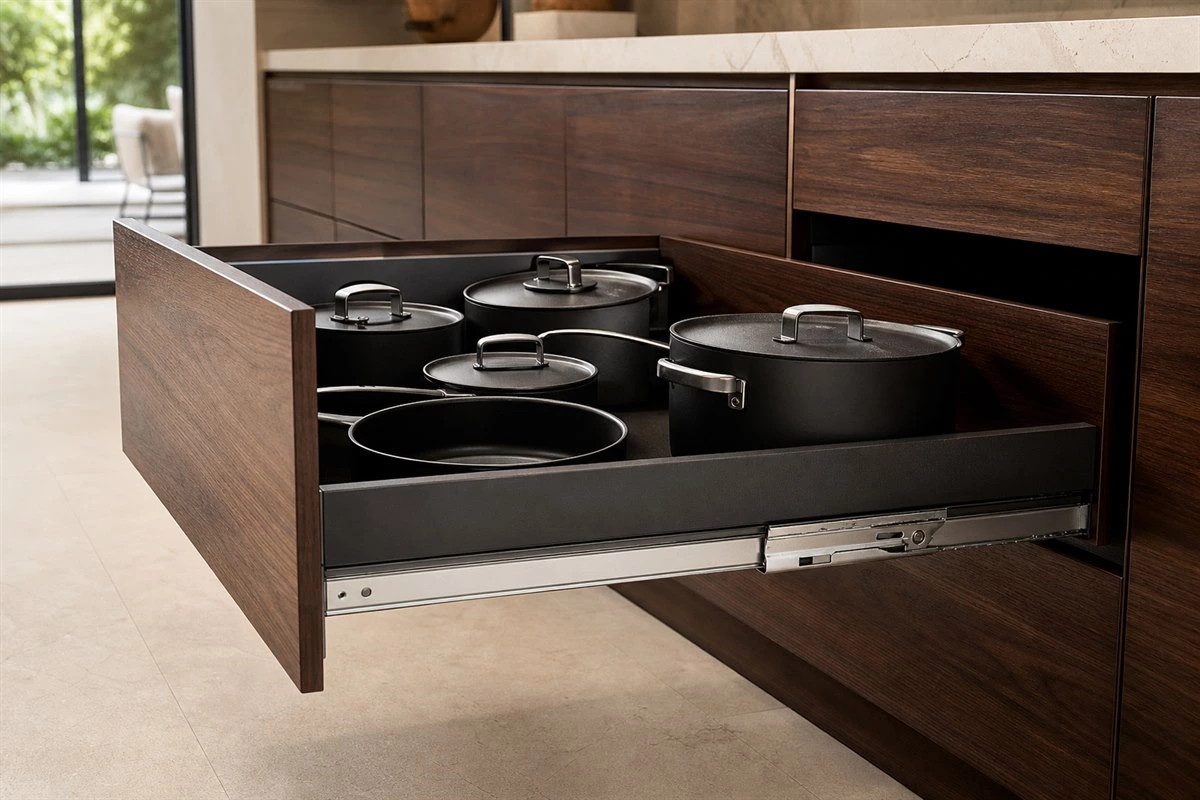
Full-extension drawer slides allow a drawer to open almost completely so items at the back remain visible and accessible. This is especially useful for deep pot drawers, pantry drawers, food containers, and heavy cookware. A drawer that only opens partway may look acceptable in a showroom but can waste valuable storage in daily use.
Side-mount slides are fitted to the drawer sides and can be a practical option for certain cabinet constructions. Undermount drawer slides sit beneath the drawer box, creating a cleaner view when the drawer is open. Both can perform well when the slide type and load rating match the drawer width, drawer depth, and expected contents.
For wide drawers holding cookware, kitchen cabinet hardware should be specified around the real load, not an empty-drawer assumption. Full-extension drawer slides with suitable capacity help keep movement smooth and prevent sagging or unstable operation.
4. Soft-Close and Push-to-Open Drawer Systems
Soft-close drawer systems are popular because they reduce noise and help prevent drawers from closing too hard. They suit almost every kitchen style, from shaker cabinets to contemporary slab doors. They are also forgiving in busy homes because the user does not need to close the drawer gently for the damper to work.
Push-to-open systems are more common in handleless kitchen designs. A light push releases the mechanism so the drawer can open without a pull. This creates a minimalist look, but the system needs accurate production and adjustment. Consider fingerprints on dark or glossy fronts and confirm that the opening method feels comfortable for the people using the kitchen.
5. Cabinet Knobs and Pulls
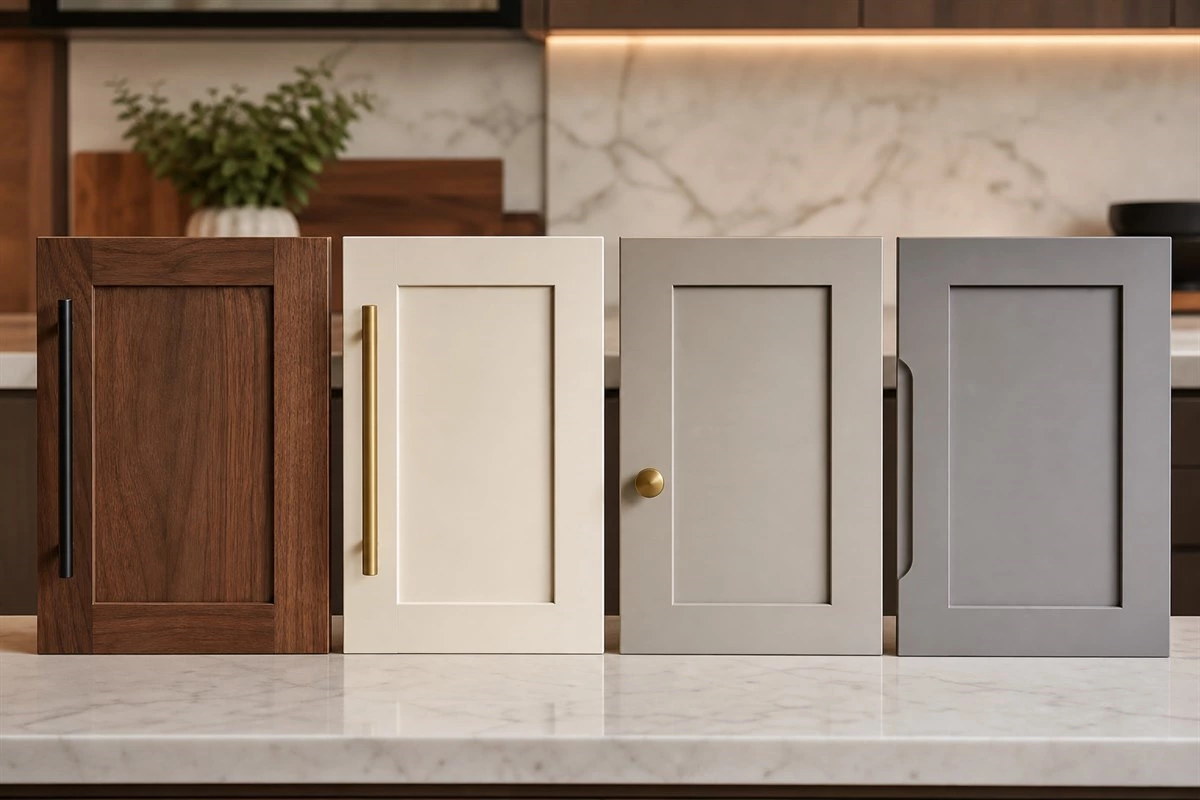
Knobs and pulls are the most visible part of kitchen cabinet hardware. Knobs are often used on narrower doors and small drawers, while pulls give a longer gripping surface for wide drawers, tall pantry doors, and heavier cabinet fronts. The finish can shift a design from classic to industrial, warm or minimal: black, brass, nickel, chrome, and stainless finishes each create a different relationship with the faucet, lighting, and appliances.
Do not choose by finish alone. A pull should feel proportional to the door or drawer, leave enough finger clearance, and provide enough leverage for a heavy unit. Review real samples against the chosen cabinet finish under the intended lighting before approving the final selection.
6. Edge Pulls and Integrated Handles
Handleless kitchens often use edge pulls, recessed handles, J-pulls, or aluminum profile systems instead of separate knobs and bar pulls. These options work well with flat-panel doors and create a calm, uninterrupted cabinet surface.
Integrated handle systems require more than a style decision. The profile, door thickness, opening gap, finger clearance, and adjacent countertop detail must work together. Confirm that the selected system is suitable for base drawers, tall doors, refrigerator panels, and wall cabinets before production begins. This is where the best kitchen cabinet hardware supports both the visual concept and the construction details.
7. Lift-Up Hardware for Wall Cabinets
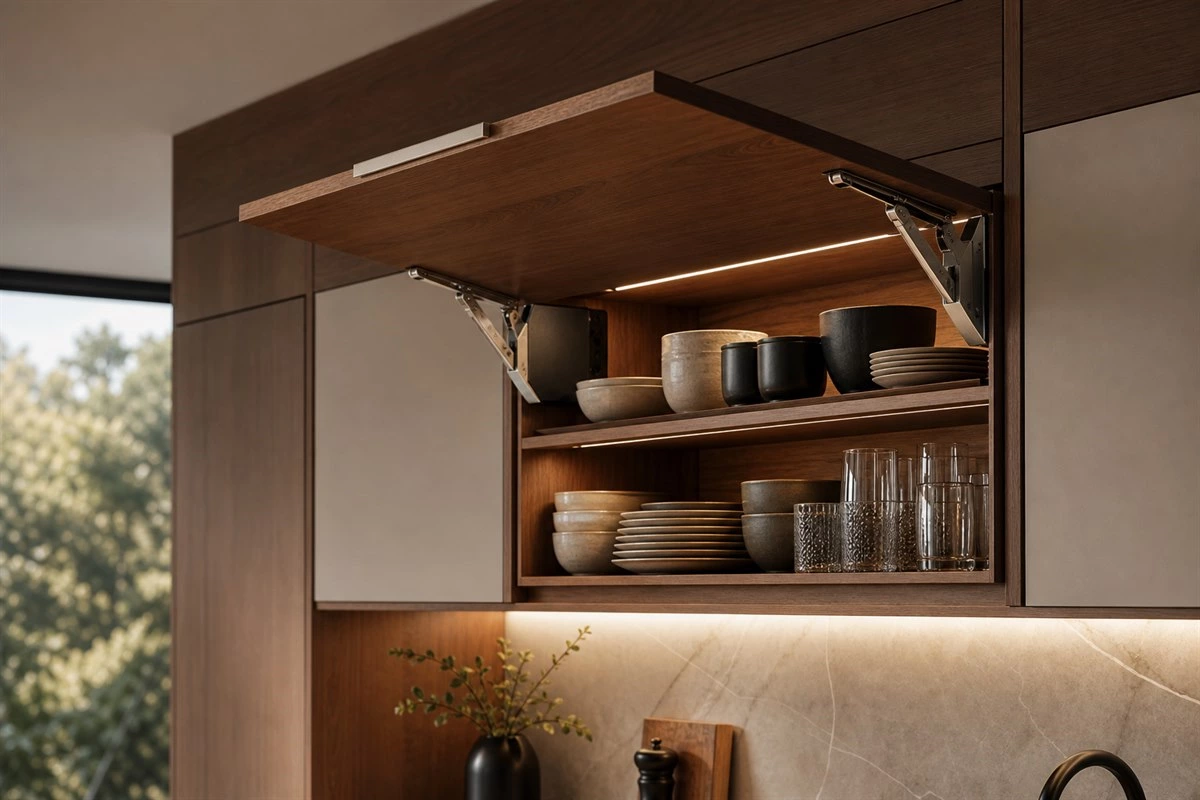
Lift-up systems allow wall-cabinet doors to move upward rather than swing to the side. They can be useful for wide upper cabinets, appliance garages, and kitchens where a side-opening door would interrupt circulation. Options include single lift-up doors, bi-fold systems, and parallel-lift mechanisms.
Select the mechanism around the final door height, width, material, and weight. Heavy doors, glass inserts, and oversized panels may need stronger fittings. Production drawings should show the hardware position clearly so the installer can make final adjustments on site.
8. Pull-Out Pantry and Base Cabinet Accessories
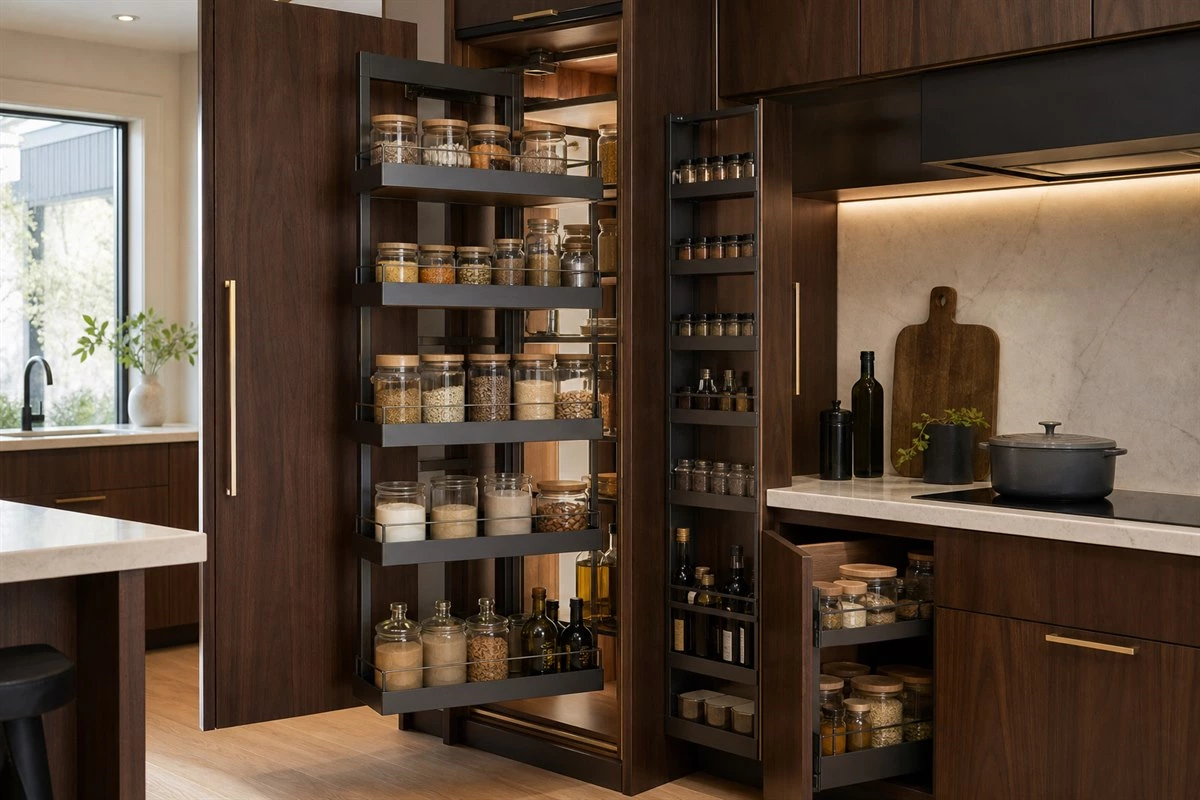
Fixed shelves provide volume, but they do not always provide access. Pull-out pantry systems and base-cabinet accessories bring items forward so that users can see and reach what they need. Useful options include tall pantry pull-outs, narrow spice pull-outs, bottle racks, pull-out shelves, tray dividers, and internal drawer organizers.
These accessories are particularly valuable in compact kitchens. A tall pull-out pantry can organize dry goods without requiring the user to reach into a deep cabinet. A narrow pull-out beside the cooktop can store oils and spices. Base-cabinet pull-outs can make lower storage more comfortable than fixed shelves. When the project includes a pantry zone, plan it with custom pantry cabinets so the storage hardware supports the overall workflow.
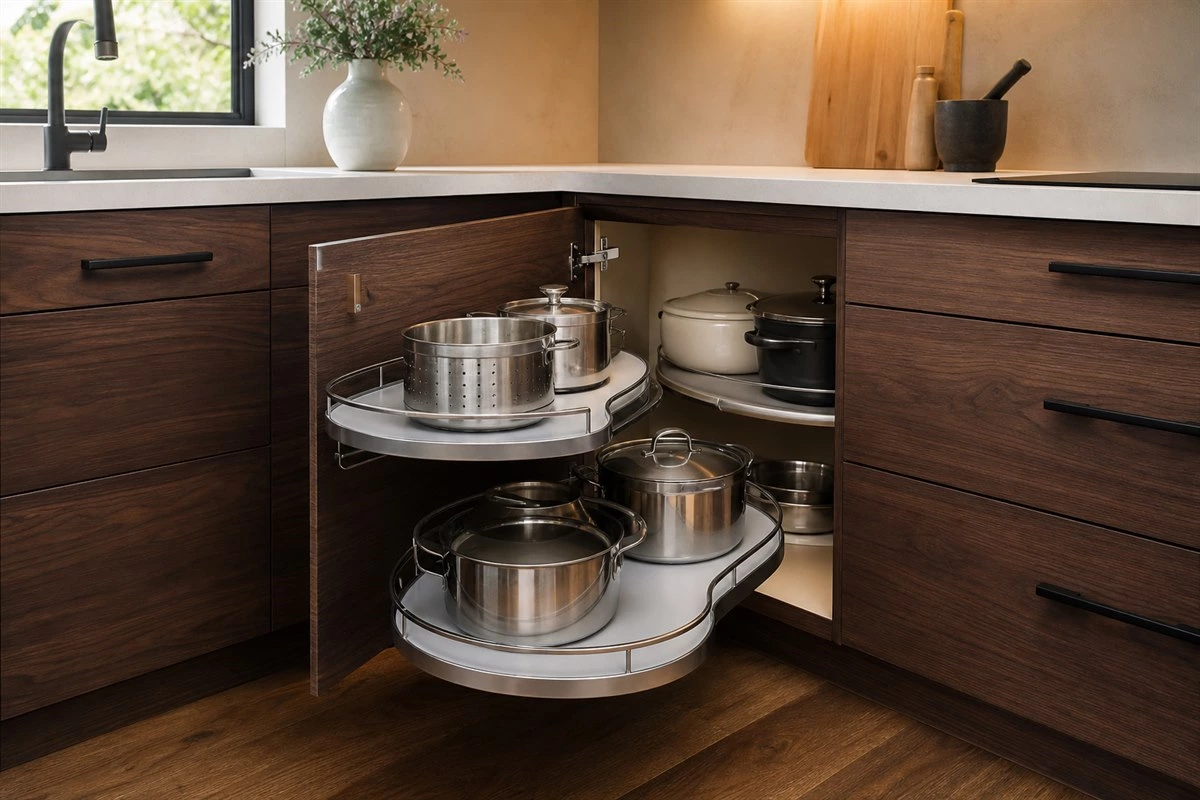
9. Corner Cabinet Hardware Solutions
Corner cabinets can contain useful volume but become frustrating if the deepest area is hard to reach. A Lazy Susan rotates shelves inside the corner and can be a practical choice for lightweight items. More advanced corner pull-out systems move shelves out into the open, improving access in larger or higher-end projects.
The right corner cabinet hardware depends on the cabinet dimensions, kitchen layout, budget, and expected storage. Not every corner needs the most complex mechanism. In some kitchens, a simple adjustable shelf solution is more efficient. The key is to avoid assigning frequently used items to a space that is inconvenient to open or reach.
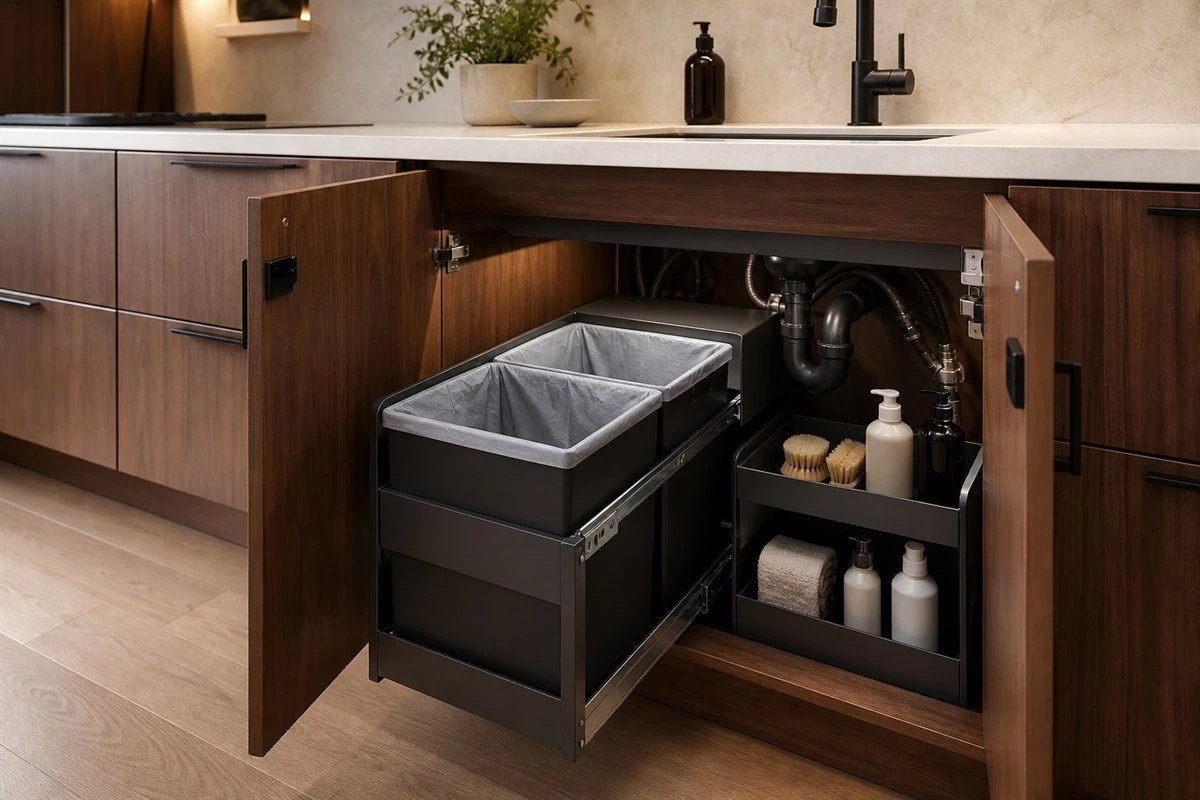
10. Waste Bin, Recycling and Cleaning Accessories
Pull-out waste bins can improve kitchen workflow by keeping rubbish close to the preparation and cleanup zones while freeing floor space. Double-bin systems can support recycling separation, while under-sink organizers help arrange cleaning products around plumbing pipes.
These accessories should be selected early because they affect internal cabinet width and clearance. Moisture also matters near sinks. Choose suitable finishes, maintain enough room for cleaning, and make sure the drawer or pull-out can open without interfering with adjacent cabinet doors.
How to Choose Kitchen Cabinet Hardware for Your Project
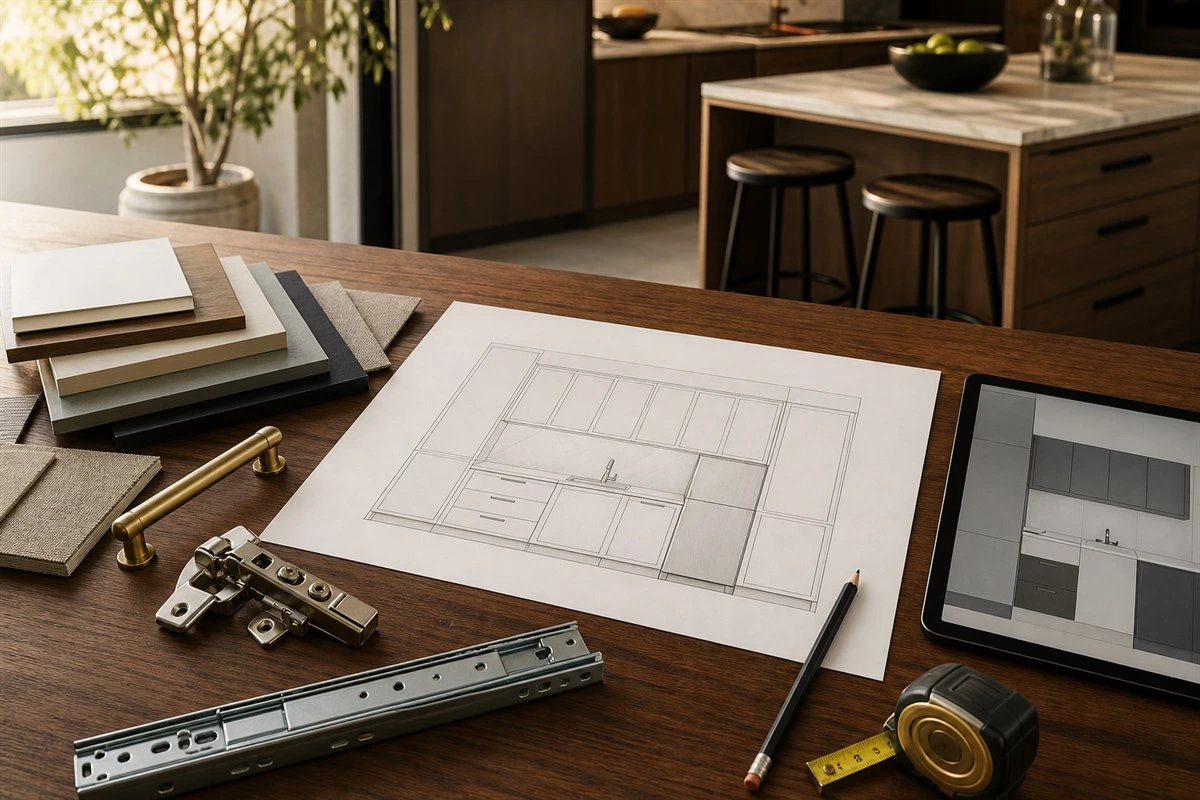
A useful hardware specification starts with the cabinet plan, not a catalog. For doors, confirm overlay type, opening angle, soft-close requirement, and clearance around neighboring cabinets. For drawers, confirm width, depth, expected load, desired extension, and opening method. For handles, review length, finish, and placement on actual door samples.
For storage accessories, use internal cabinet dimensions rather than external dimensions. Pantry pull-outs, waste bins, and corner systems all need specific clearances. It is also helpful to separate essential kitchen cabinet hardware from optional upgrades. Reliable hinges and drawer slides are core performance items; premium lift systems and specialized organizers can be selected where they add clear value.
- Match hinge type to door style and opening requirements.
- Match drawer-slide capacity to drawer width and stored weight.
- Confirm visible hardware with real cabinet and countertop samples.
- Specify pantry, corner, and waste-bin accessories before production.
- Include the approved hardware schedule with final cabinet drawings.
For broad industry terminology, readers can review the National Kitchen & Bath Association's cabinet hardware guidance. For cabinet projects, ALLURE hardware options can be reviewed alongside cabinet styles, material samples, and drawings before production.
Hardware Selection by Kitchen Style
Modern kitchens often use concealed hinges, undermount drawer slides, edge pulls, and lift-up systems. Shaker kitchens commonly pair soft-close hinges and full-extension slides with knobs, cup pulls, or bar pulls. Luxury kitchens may combine premium slides, internal organizers, integrated lighting, and tailored finishes. Small kitchens benefit most from fittings that improve access, including pull-out pantry units, corner solutions and full-extension drawers.
Common Kitchen Cabinet Hardware Mistakes to Avoid
- Choosing pulls before confirming final drawer and door sizes.
- Using low-capacity slides for wide cookware drawers.
- Ignoring clearance between open doors, drawers, and pull-out accessories.
- Selecting hardware only by appearance rather than daily performance.
- Adding pantry, corner, or waste-bin accessories after production has started.
- Failing to document the hardware type, drilling pattern, and finish for future maintenance.
Kitchen Cabinet Hardware FAQ
What is the most important kitchen cabinet hardware?
Hinges and drawer slides are the most important kitchen cabinet hardware because they control daily door and drawer movement. Reliable soft-close hinges and appropriately rated slides improve durability, noise control, and user comfort.
Are soft-close cabinet hinges worth it?
Yes. Soft-close cabinet hinges reduce slamming, help protect door edges, and create a quieter kitchen. They are especially useful in frequently used kitchens and apartment projects.
What is the difference between undermount and side-mount drawer slides?
Undermount drawer slides are installed beneath the drawer and are less visible when it is open. Side-mount slides sit along the drawer sides. Both can work well when correctly matched to the drawer construction and load.
What drawer slides are best for heavy pots and pans?
Full-extension drawer slides with a suitable load rating are often best for heavy cookware. Confirm the drawer width, drawer depth, box construction, and expected stored weight before specifying the slide.
How do I choose the right cabinet pull size?
Choose a pull that feels proportional to the door or drawer and provides a comfortable grip. Wide drawers may need longer pulls, or two pulls to distribute opening force more evenly.
What hardware is best for handleless kitchen cabinets?
Push-to-open mechanisms, edge pulls, recessed handles, J-pulls, and profile systems are common choices. The final option should match the door style, cleaning preference, and project budget.
Can kitchen cabinet hardware be replaced later?
Many pulls, hinges, and slides can be replaced later. Replacement is easier when the original fitting type, drilling pattern, and cabinet dimensions are documented during production.
What is the best corner cabinet hardware?
The best corner cabinet hardware depends on the layout and budget. Lazy Susans are practical for many projects, while pull-out systems can provide better access in larger kitchens.
Should pull-out pantry accessories be included in the first quotation?
Yes. Pull-out pantry accessories should be included early because they affect internal cabinet space, door clearance, hinge selection, and project pricing.
Does premium kitchen cabinet hardware improve kitchen value?
Premium kitchen cabinet hardware can improve perceived quality, daily comfort and storage access. It is usually most valuable on high-frequency doors, deep drawers, pantry units, and specialized storage zones.
Conclusion: Specify Hardware Before Production
Kitchen cabinet hardware is the working foundation of a well-designed kitchen. Hinges control door movement, drawer slides support storage capacity, pulls shape daily comfort, and internal accessories determine how efficiently cabinet space is used.
The right kitchen cabinet hardware should match the layout, door style, drawer load, user habits, and budget. By confirming hinges, slides, handles, lift systems, and storage accessories before production, a project can avoid late revisions and deliver a kitchen that performs as well as it looks. ALLURE can coordinate cabinet layouts, finishes, and hardware specifications as part of the drawing and production-planning process.