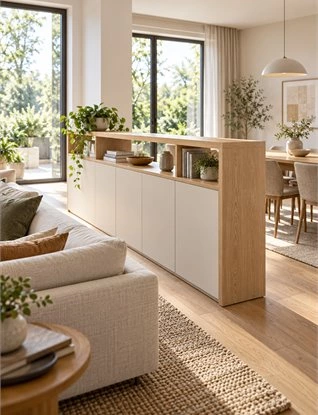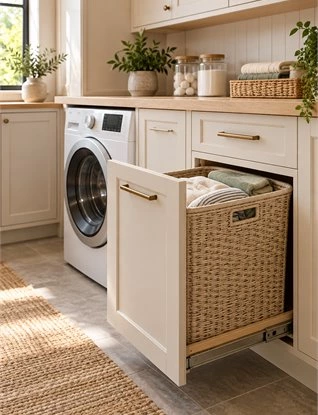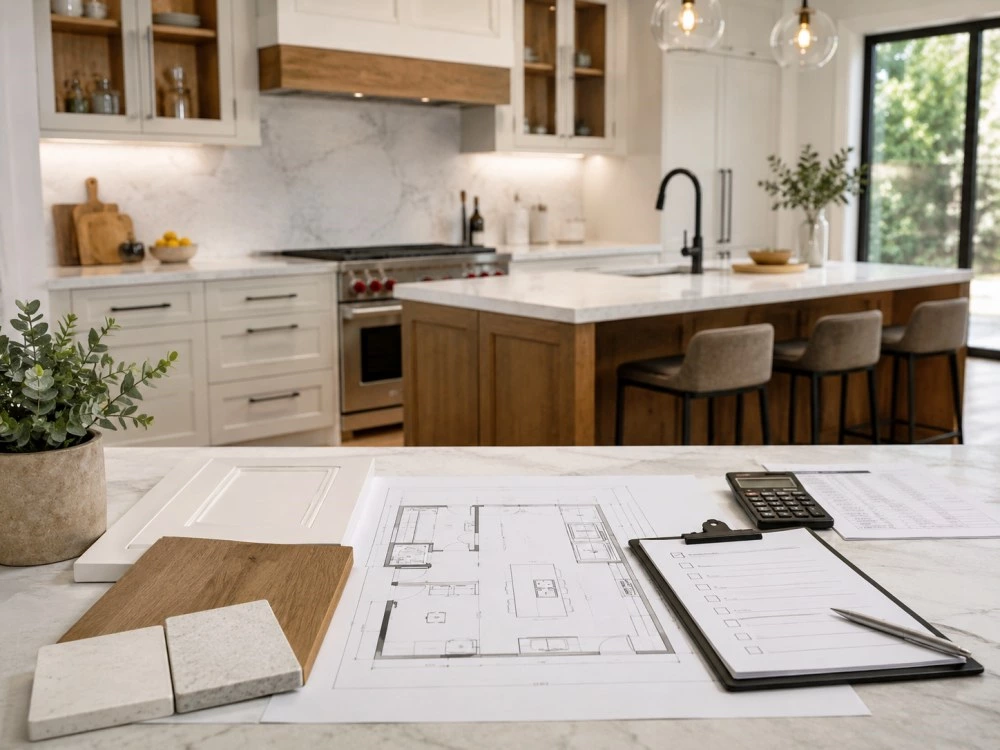
Buying custom kitchen cabinets is one of the most important decisions in a kitchen renovation or new home project. Cabinets affect how the kitchen looks, how much storage it provides, how smoothly the space works, and how long the whole kitchen will last.
Many homeowners start by looking at cabinet photos, colors, or prices. But custom cabinetry is not only about choosing a beautiful door style. It requires accurate measurements, smart layout planning, suitable materials, strong hardware, clear quotation details, and reliable project support.
A mistake made before production can lead to poor fit, installation delays, wasted space, extra cost, or a kitchen that looks good but does not work well in daily life.
This guide explains the most common mistakes to avoid when buying custom kitchen cabinets, so homeowners, builders, developers, and project buyers can make better decisions before confirming production.
For projects that need custom kitchen cabinets, wardrobes, bathroom cabinets, laundry cabinets, and whole-house cabinetry solutions, ALLURE supports buyers with design planning, material selection, 3D drawings, production, export packaging, delivery support, and installation guidance.
Why Buying Custom Kitchen Cabinets Requires Careful Planning
Custom kitchen cabinets are different from stock cabinets. They are made for a specific kitchen layout, project size, material preference, storage requirement, and design goal. Once production begins, cabinet dimensions, door panels, hardware positions, appliance openings, colors, and finishes are already confirmed.
That is why careful planning before production is essential.
Custom Cabinets Are Made for Your Exact Space
Custom cabinets are designed according to the real conditions of your kitchen. This includes wall length, ceiling height, plumbing points, window location, appliance dimensions, door openings, and storage needs.
Unlike ready-made cabinets, custom cabinetry is not simply picked from a shelf. Every detail should match the actual space.
Before buying custom kitchen cabinets, you should confirm:
-
Kitchen floor plan
-
Wall measurements
-
Ceiling height
-
Window and door positions
-
Plumbing and electrical points
-
Appliance dimensions
-
Cabinet height and depth
-
Storage requirements
-
Preferred cabinet color and finish
-
Installation conditions
If these details are not accurate, the final cabinets may not fit correctly. Even a small mistake in measurement can affect cabinet installation, countertop alignment, appliance placement, and drawer or door opening.
Small Decisions Can Affect Cost and Daily Use
Some cabinet decisions may look minor at first, but they can affect daily comfort and long-term durability.
For example, choosing basic drawer slides may reduce the initial cost, but heavy drawers may not feel smooth after long-term use. Choosing open shelves may look beautiful in a photo, but they may require more cleaning. Choosing a large island may improve function, but only if the kitchen has enough walking space.
Important details include:
-
Drawer slides
-
Hinges
-
Pull-out storage
-
Corner cabinet systems
-
Cabinet finish
-
Handle style
-
Lighting
-
Countertop height
-
Appliance integration
-
Installation method
A well-planned kitchen should balance design, budget, storage, durability, and daily convenience.
Mistake 1: Choosing Cabinets Only by Appearance
One of the most common mistakes when buying custom kitchen cabinets is choosing a design only because it looks good in a photo.
A kitchen image from Pinterest, Instagram, or a showroom may look attractive, but it may not match your kitchen size, lighting, floor color, storage needs, or budget.
Good Design Is More Than a Beautiful Photo
A cabinet design should be practical for the space where it will be installed.
For example, dark cabinets can create a luxury look, but they may make a small kitchen feel heavier if there is not enough natural light. Open shelves can make a kitchen feel stylish, but they may not be ideal for homeowners who prefer hidden storage. A large kitchen island can improve cooking and dining, but it needs enough clearance around all sides.
A good custom cabinet design should consider:
-
Kitchen size
-
Natural lighting
-
Daily cooking habits
-
Storage needs
-
Countertop space
-
Appliance position
-
Cleaning habits
-
Family lifestyle
-
Budget
-
Long-term maintenance
Beautiful cabinets are important, but function should never be ignored.
What to Do Instead
Before choosing a cabinet style, compare the design with your actual layout and daily needs.
Ask these questions:
-
Does this design fit my kitchen size?
-
Will the color work with my flooring and walls?
-
Do I need more hidden storage?
-
Is the island size realistic?
-
Will the cabinet finish be easy to maintain?
-
Does this design match my cooking habits?
-
Can this style be customized within my budget?
The best custom kitchen cabinets are not only attractive. They should also make the kitchen easier to use every day.
Mistake 2: Not Measuring the Kitchen Accurately
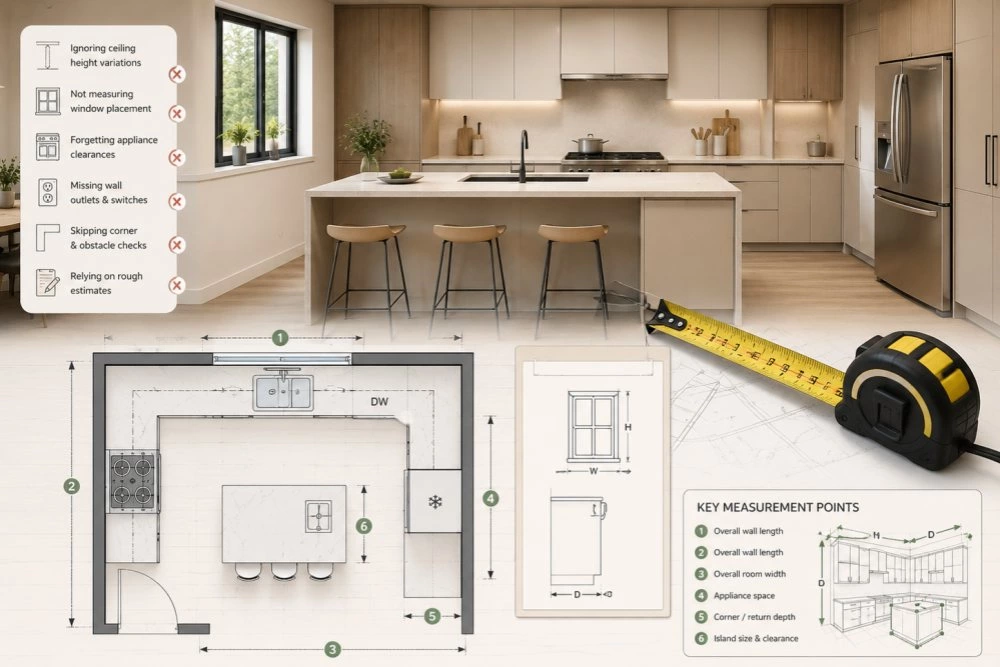
Accurate measurement is one of the most important steps before buying custom kitchen cabinets. If the measurements are wrong, the cabinets may not fit, appliances may not align, and installation may become more difficult.
Inaccurate Measurements Can Create Expensive Problems
Custom cabinets are produced according to confirmed dimensions. If the wall length, ceiling height, window position, or appliance size is wrong, the final kitchen may need extra adjustment.
Common measurement problems include:
-
Cabinet units not fitting the wall
-
Gaps between cabinets and walls
-
Countertop not aligning properly
-
Appliances not fitting into cabinet openings
-
Doors or drawers hitting walls or handles
-
Sink cabinet not matching plumbing position
-
Upper cabinets blocking windows or outlets
-
Installation delays and extra site work
Even small measurement errors can create expensive problems because custom cabinets are made to order.
What to Prepare Before Requesting a Quote
Before requesting a cabinet quote, prepare clear project information.
Useful materials include:
-
Kitchen floor plan
-
Wall dimensions
-
Ceiling height
-
Window and door positions
-
Plumbing location
-
Electrical outlet positions
-
Appliance list
-
Appliance dimensions
-
Site photos
-
Preferred cabinet layout
-
Notes about uneven walls or floors
If you do not have professional drawings, a rough sketch with accurate measurements can still help the cabinet supplier understand your kitchen.
ALLURE can provide layout planning and 3D design support based on project measurements, helping buyers confirm cabinet size, storage layout, and design details before production.
Mistake 3: Ignoring Kitchen Layout and Workflow
Kitchen cabinets should support how the kitchen is used. A beautiful cabinet layout can still feel uncomfortable if the sink, stove, refrigerator, drawers, pantry, and trash bin are placed poorly.
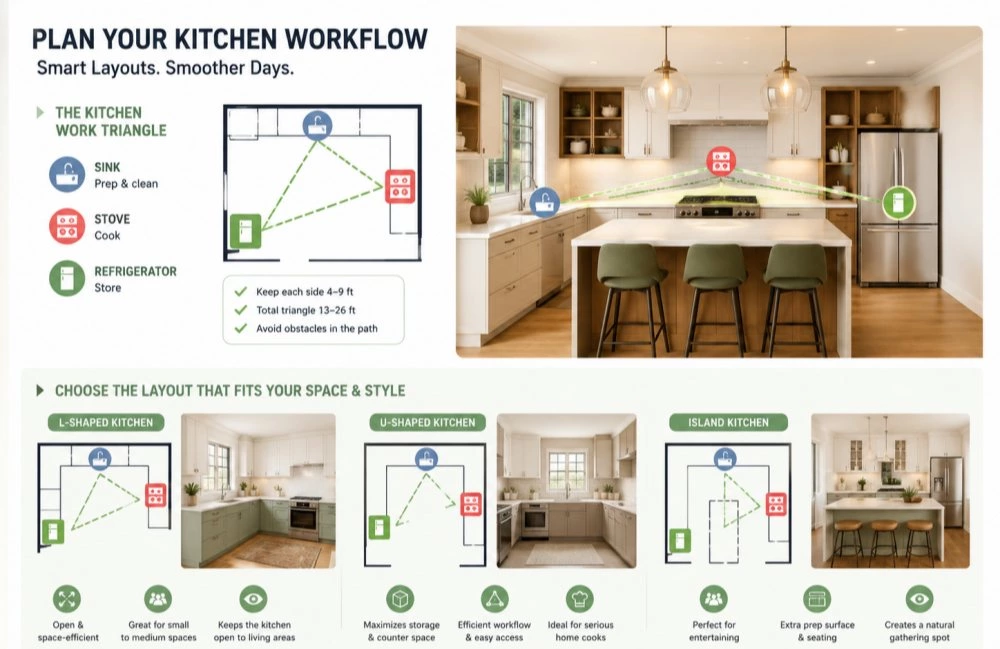
Poor Layout Makes the Kitchen Hard to Use
A poor kitchen layout can create daily inconvenience.
Common workflow problems include:
-
Refrigerator too far from food preparation area
-
Sink too far from dishwasher
-
Trash bin not near the cleaning zone
-
Cookware stored far from the stove
-
Pantry storage placed in an inconvenient location
-
Island blocking movement
-
Drawers hitting opposite cabinet doors
-
Not enough countertop space for preparation
Kitchen workflow should make cooking, washing, storage, and cleaning easier.
The main work zones usually include:
-
Food storage zone
-
Preparation zone
-
Cooking zone
-
Cleaning zone
-
Serving zone
When these areas are planned properly, the kitchen feels smoother and more efficient.
Common Layouts to Compare
Different kitchens need different layouts. Before buying custom kitchen cabinets, compare which layout works best for your space.
Common kitchen layouts include:
-
One-wall kitchen
-
L-shaped kitchen
-
U-shaped kitchen
-
Galley kitchen
-
Island kitchen
-
Open-plan kitchen
A one-wall kitchen is simple and space-saving. An L-shaped kitchen works well for apartments and corner spaces. A U-shaped kitchen offers strong storage and work surfaces. A galley kitchen is efficient for narrow spaces. An island kitchen is ideal for open-plan homes and family interaction.
The right layout depends on your room size, appliance position, cooking habits, and whether the kitchen connects with the dining or living area.
Mistake 4: Selecting the Wrong Cabinet Material
Cabinet material affects cost, durability, moisture resistance, finish quality, and long-term maintenance. Choosing the wrong material can lead to swelling, weak structure, poor surface performance, or unnecessary cost.
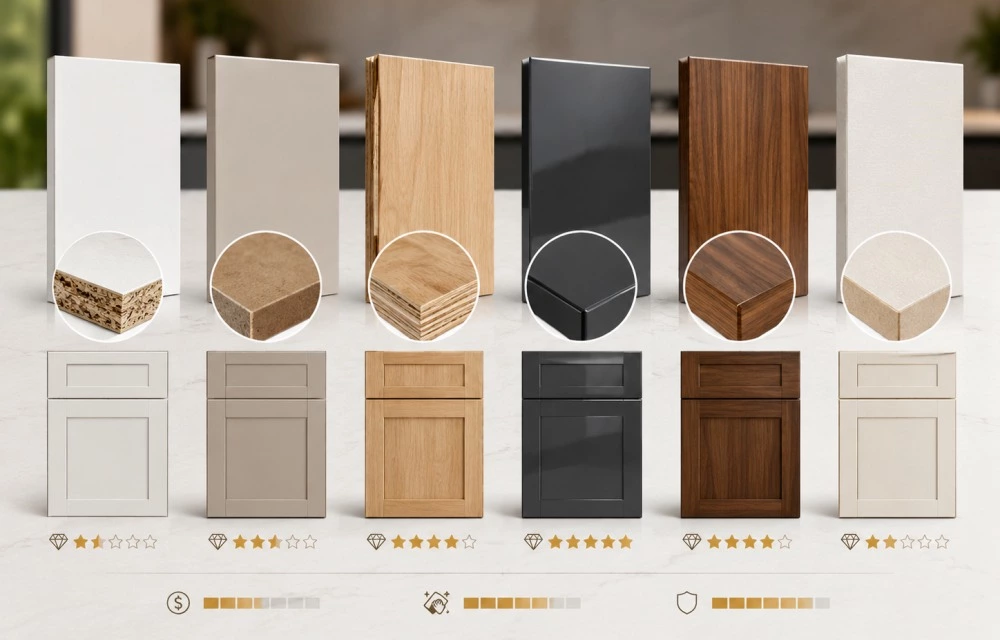
Cabinet Material Affects Durability and Cost
Different materials have different strengths.
Common custom kitchen cabinet materials include:
-
Particle board
-
MDF
-
Plywood
-
Melamine
-
Laminate
-
Lacquer
-
Wood veneer
-
PVC
-
Solid wood
A lower-cost material may be suitable for a rental project or budget renovation, but it may not be the best choice for a busy family kitchen. A premium material may look better and last longer, but it may not be necessary for every project.
The best choice depends on budget, location, finish, expected lifespan, and daily use.
How to Match Material With Project Needs
Here is a simple way to understand common material choices:
Melamine Cabinets
Melamine is practical, budget-friendly, and easy to clean. It is suitable for apartments, rental properties, builder projects, and cost-conscious modern kitchens.
MDF Cabinets
MDF has a smooth surface and is commonly used for painted or lacquered cabinet doors. It is suitable for flat-panel doors, shaker doors, and decorative door designs.
Plywood Cabinets
Plywood offers stronger structure and better screw-holding performance. It is suitable for higher-end kitchens, long-term residential use, and projects that need stronger cabinet boxes.
Lacquer Cabinets
Lacquer creates a smooth and premium finish with strong color flexibility. It is suitable for modern kitchens, luxury homes, and high-end interior projects.
Wood Veneer Cabinets
Wood veneer provides a natural wood texture and a warmer residential feeling. It is suitable for homeowners who want a natural, high-end look without using full solid wood.
PVC Cabinets
PVC finishes can be practical for moisture-resistant and budget-controlled cabinet projects. They are often used when easy maintenance and cost control are important.
Before confirming materials, ask what material is used for the cabinet box, what material is used for the door panel, and what finish is applied to the visible surface.
Mistake 5: Comparing Quotes Without Checking What Is Included
Many buyers compare custom kitchen cabinet quotes by looking only at the final price. This is a serious mistake because different quotes may include different items.
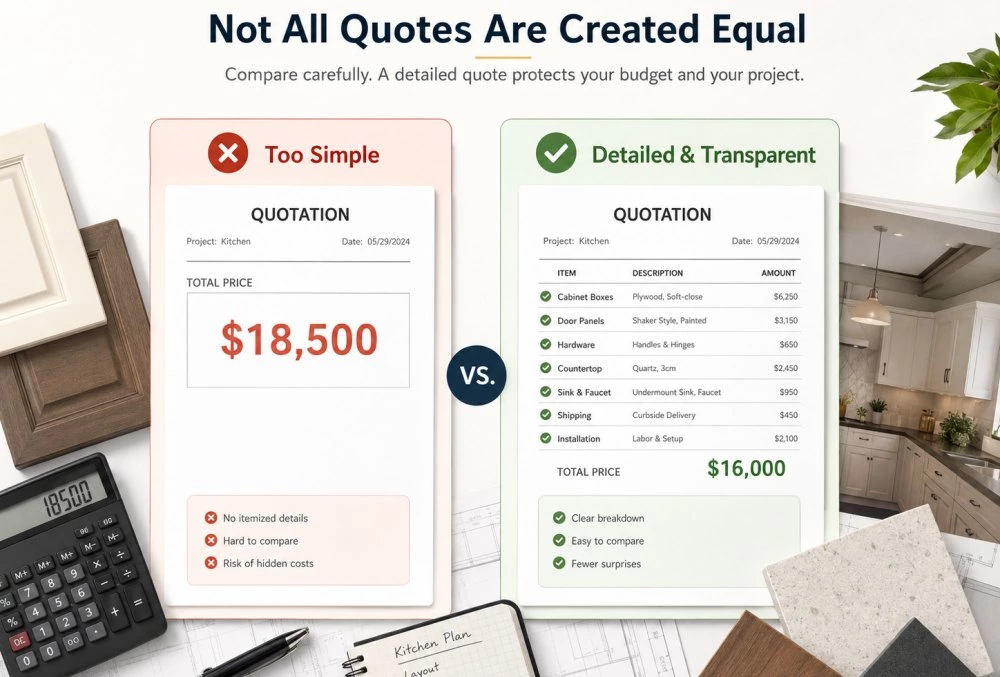
The Cheapest Quote May Not Be the Best Value
One quote may include only cabinet boxes and doors. Another quote may include drawers, hinges, drawer slides, handles, storage accessories, countertop, packaging, shipping, installation guidance, and 3D design.
If you compare only the total number, you may misunderstand the real value.
A cabinet quote may or may not include:
-
Cabinet boxes
-
Door panels
-
Drawers
-
Hinges
-
Drawer slides
-
Handles
-
Countertop
-
Storage accessories
-
LED lighting
-
Packaging
-
Shipping
-
Local delivery
-
Installation
-
Installation guidance
-
3D drawings
-
After-sales support
A low price can become expensive later if many necessary items are excluded.
What a Clear Quote Should Include
A professional cabinet quote should be detailed and easy to understand.
| Quote Item | What to Check | Why It Matters |
|---|---|---|
| Cabinet Boxes | Material, thickness, structure | Affects strength and lifespan |
| Door Panels | Finish, color, edge detail | Affects appearance and cost |
| Drawers | Drawer box and slide quality | Affects daily storage and comfort |
| Hardware | Hinges, slides, handles | Affects durability and use experience |
| Countertop | Included or excluded | Can change the total budget |
| Storage Accessories | Pull-outs, bins, dividers | Adds function and cost |
| Shipping / Delivery | Included or excluded | Affects final project cost |
| Installation | Full service or guidance only | Affects final result |
| Design Service | Drawings or 3D renderings | Helps avoid mistakes before production |
Before buying custom kitchen cabinets, always ask for an itemized quote. This helps you compare value, not only price.
Mistake 6: Forgetting About Storage Planning
Custom cabinets should improve storage, not just fill the wall with cabinet boxes. More cabinets do not always mean better storage if the internal layout is poorly planned.
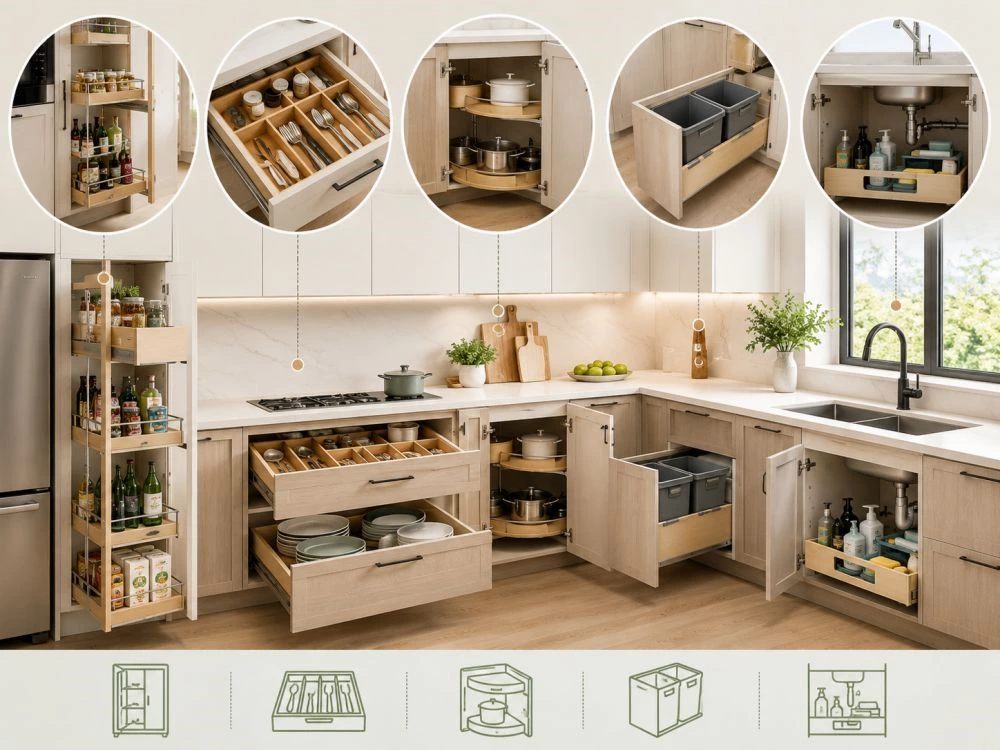
More Cabinets Do Not Always Mean Better Storage
A kitchen with many standard shelves may still feel messy if the internal storage is not designed around daily use.
Good storage planning may include:
-
Deep drawers for cookware
-
Pull-out pantry for dry food
-
Drawer dividers for cutlery
-
Corner storage systems
-
Integrated trash bins
-
Under-sink organizers
-
Spice racks
-
Plate holders
-
Appliance garage
-
Tall pantry cabinets
Storage accessories can increase cabinet cost, but they can also improve convenience and reduce clutter.
Plan Storage Around Daily Habits
The best storage plan starts with how the kitchen is used.
For example:
-
Cookware should be near the stove.
-
Cutlery should be near the preparation area.
-
Pantry storage should be near the refrigerator.
-
Trash bins should be near the sink.
-
Cleaning products should be under the sink.
-
Small appliances should be hidden but easy to access.
-
Plates and bowls should be near the dining or serving area.
Instead of choosing every possible accessory, select the storage features that support your real habits. This keeps the kitchen practical while controlling the budget.
Mistake 7: Choosing Low-Quality Hardware
Hardware is easy to overlook because it is less visible than cabinet doors or countertops. But hardware decides how the cabinets feel every day.
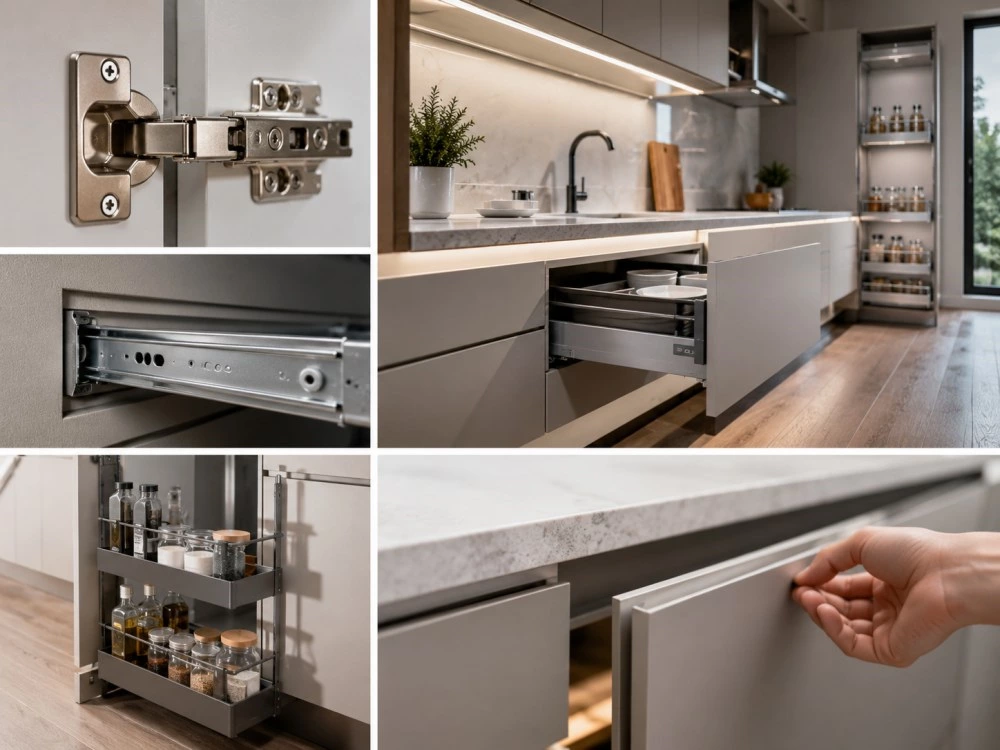
Hardware Decides How Cabinets Feel Every Day
Good hardware improves comfort, safety, and cabinet lifespan. Poor hardware can lead to noisy doors, weak drawers, loose hinges, and difficult operation.
Important hardware includes:
-
Hinges
-
Drawer slides
-
Soft-close systems
-
Push-to-open systems
-
Handles
-
Pull-out pantry mechanisms
-
Corner cabinet hardware
-
Tall cabinet hardware
Soft-close hinges and quality drawer slides are especially important in frequently used areas.
Where to Upgrade Hardware First
If the budget is limited, upgrade hardware in the areas that carry more weight or are used more often.
Priority areas include:
-
Deep drawers
-
Pantry cabinets
-
Corner storage systems
-
Heavy cookware drawers
-
Frequently used cabinet doors
-
Pull-out baskets
-
Integrated bins
Premium hardware does not need to be used everywhere, but key areas should not be too weak. This helps improve long-term use without overspending.
Mistake 8: Not Considering Installation Early Enough
Installation should not be treated as the final step only. It should be considered during the design and production stage.
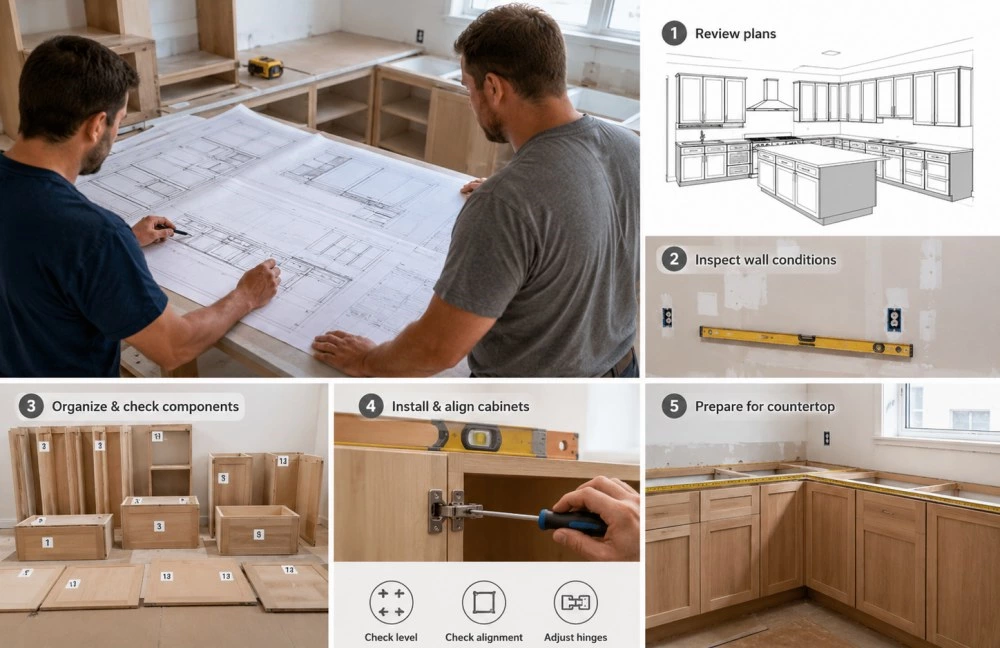
Installation Should Be Planned Before Production
Cabinet installation depends on the room condition, wall structure, floor level, appliance position, countertop support, plumbing, and electrical access.
Important installation details include:
-
Wall unevenness
-
Floor leveling
-
Appliance clearance
-
Door swing direction
-
Countertop support
-
Plumbing coordination
-
Electrical access
-
Island installation
-
Filler panels
-
Toe kicks
-
Wall cabinet fixing
-
Final door and drawer adjustment
If installation details are ignored, the final kitchen may need extra cutting, adjustment, or site modification.
For Imported Cabinets, Installation Guidance Is Important
When buying custom kitchen cabinets from an overseas supplier, installation guidance becomes even more important.
Buyers should confirm whether the supplier provides:
-
Cabinet drawings
-
Panel labels
-
Packing list
-
Hardware list
-
Installation sequence
-
3D drawings
-
Remote installation support
-
Communication with local installers
ALLURE supports project buyers with drawings, packaging details, and installation guidance, helping local installers understand how the cabinet system should be assembled and fitted on site.
Mistake 9: Ignoring Lead Time, Shipping, and Project Schedule
Custom cabinets are made to order. They need time for design confirmation, material preparation, production, quality inspection, packaging, shipping, delivery, and installation.
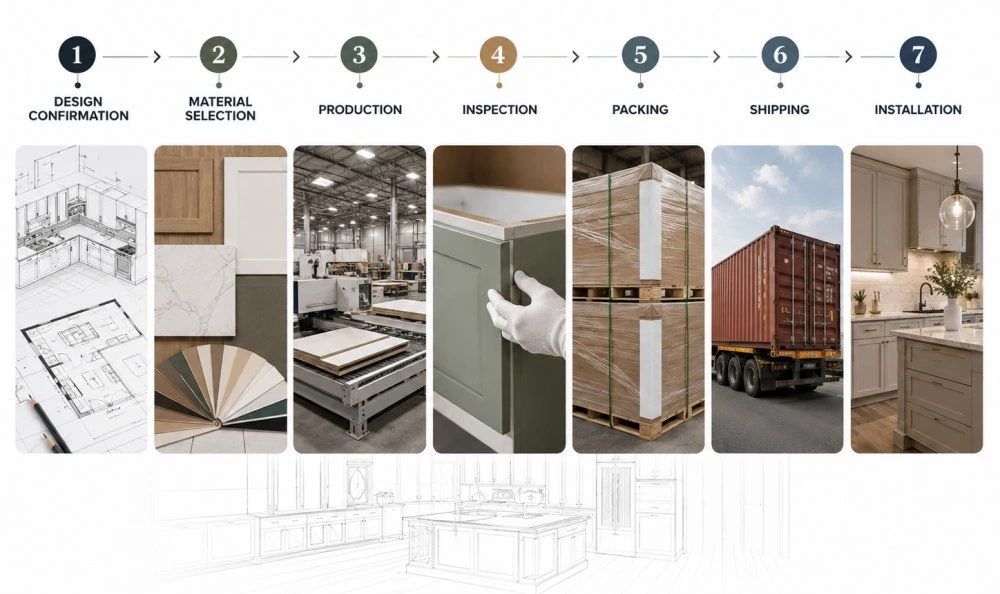
Custom Cabinets Need Time for Design and Production
A custom cabinet project usually includes several stages:
-
Design consultation
-
Measurement confirmation
-
Material selection
-
Color and finish confirmation
-
3D drawing or layout confirmation
-
Production
-
Quality inspection
-
Packaging
-
Shipping
-
Local delivery
-
Installation
If you start too late, the cabinet schedule may delay the entire kitchen renovation.
This is especially important for builder projects, apartment developments, imported cabinets, and full-house customization projects.
How to Avoid Project Delays
To avoid delays, confirm key details early.
Useful steps include:
-
Confirm drawings before production.
-
Finalize cabinet color and finish.
-
Confirm appliance models and dimensions.
-
Confirm countertop requirements.
-
Check site readiness.
-
Plan shipping and delivery schedule.
-
Coordinate with local installer or builder.
-
Keep communication clear with the supplier.
A clear project schedule reduces confusion and helps the renovation move smoothly.
Mistake 10: Choosing a Supplier Without Design and Project Support
A custom cabinet supplier should do more than sell cabinet boxes. They should help buyers plan the design, confirm materials, understand the quote, manage production details, and support installation.
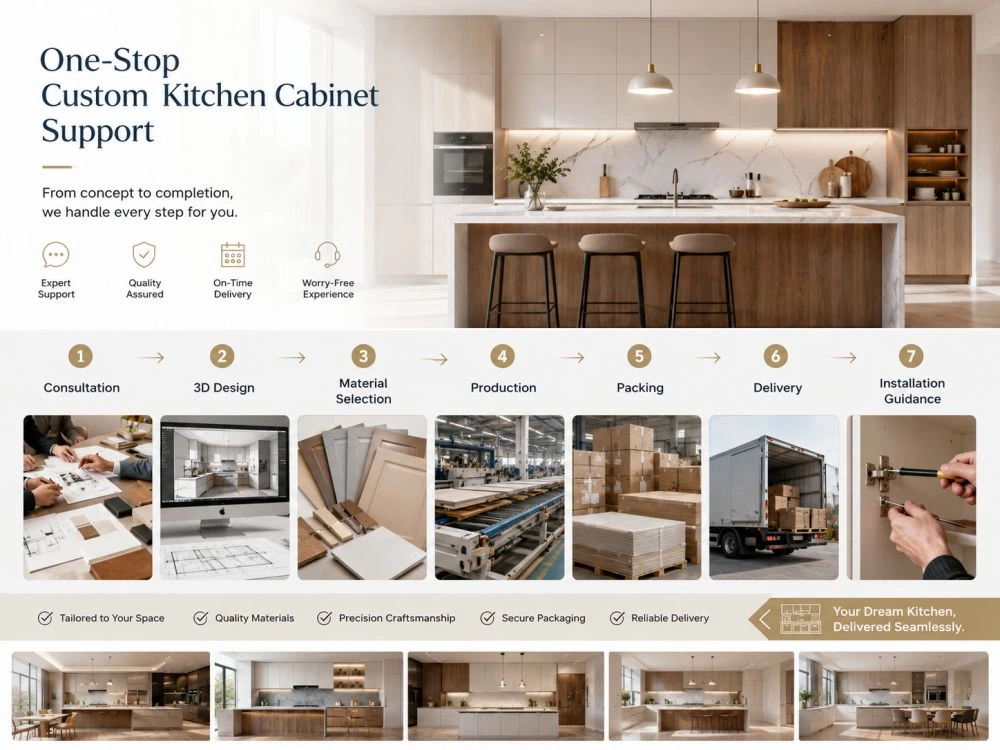
A Good Supplier Should Do More Than Sell Cabinets
When buying custom kitchen cabinets, look for a supplier that can provide:
-
Design support
-
3D drawings
-
Material options
-
Finish samples
-
Production capability
-
Quality control
-
Export packaging
-
Delivery support
-
Installation guidance
-
Clear communication
-
Project coordination
-
Whole-house cabinetry support
Without project support, buyers may face unclear drawings, missing parts, poor communication, or installation confusion.
Why ALLURE Is Suitable for Custom Kitchen Cabinet Projects
ALLURE provides custom kitchen cabinet solutions for homeowners, builders, developers, dealers, and project buyers. The service covers design support, material selection, 3D drawings, production, packaging, delivery support, and installation guidance.
For projects that include kitchens, wardrobes, bathroom cabinets, laundry cabinets, interior doors, and whole-house customization, ALLURE helps maintain consistent materials, finishes, proportions, and project communication.
This is especially useful for buyers who want more than a single kitchen. A coordinated cabinetry solution can improve design consistency across the whole home.
Checklist Before Buying Custom Kitchen Cabinets
Before buying custom kitchen cabinets, prepare the following information:
-
Kitchen floor plan
-
Accurate measurements
-
Site photos
-
Appliance list
-
Preferred cabinet color
-
Material preference
-
Door style preference
-
Storage needs
-
Countertop requirement
-
Hardware preference
-
Budget range
-
Delivery location
-
Installation plan
-
Project timeline
The more details you provide, the more accurate the design and quotation will be.
Buying Custom Kitchen Cabinets: What Questions Should You Ask?
Before confirming an order, ask clear questions about design, materials, cost, and installation.
Questions About Design
-
Can the cabinets be customized to my exact kitchen layout?
-
Do you provide 3D drawings before production?
-
Can I adjust cabinet height, depth, and storage layout?
-
Can the design match my appliances and plumbing position?
-
Can the cabinet color and finish be customized?
Questions About Materials
-
What material is used for cabinet boxes?
-
What material is used for door panels?
-
Are material samples available?
-
What finishes are suitable for my budget?
-
Which material is best for moisture resistance?
-
Which material is best for long-term durability?
Questions About Cost
-
What is included in the quotation?
-
Is the countertop included?
-
Are hardware and accessories included?
-
Are shipping and packaging included?
-
Is installation included or only installation guidance?
-
Are 3D drawings included?
-
Are there any additional costs I should expect?
Questions About Installation
-
Are installation drawings provided?
-
Are cabinets shipped flat-packed or assembled?
-
Is remote installation guidance available?
-
What should my local installer prepare?
-
Are cabinet parts labeled?
-
Is a packing list provided?
-
How are damaged or missing parts handled?
These questions help reduce risk before production starts.
FAQ About Buying Custom Kitchen Cabinets
What is the biggest mistake when buying custom kitchen cabinets?
The biggest mistake is choosing cabinets only by price or appearance without checking layout, material, storage design, hardware quality, installation requirements, and what is included in the quote.
What should I prepare before buying custom kitchen cabinets?
Prepare your kitchen measurements, floor plan, appliance list, preferred style, cabinet color, material choice, storage needs, countertop requirements, budget range, and project timeline.
Are custom kitchen cabinets worth it?
Custom kitchen cabinets are worth considering when you need a better fit, stronger storage, flexible design, premium finishes, or a kitchen layout that standard cabinets cannot solve. They can improve both function and long-term home value.
How do I compare custom kitchen cabinet quotes?
Compare material, cabinet structure, door finish, hardware, countertop, accessories, delivery, installation support, design service, and warranty instead of only comparing the total price.
What material is best for custom kitchen cabinets?
The best material depends on budget, design style, moisture resistance, durability, and finish requirements. Melamine is practical, MDF is good for painted finishes, plywood offers stronger structure, and wood veneer or lacquer creates a more premium look.
How long does it take to buy and produce custom kitchen cabinets?
The timeline depends on design confirmation, material selection, production schedule, shipping method, and installation plan. Fully custom projects usually need more time than stock cabinets because every detail must be confirmed before production.
Should I choose stock or custom kitchen cabinets?
Stock cabinets may work for simple layouts and tight budgets. Custom kitchen cabinets are better when you need exact sizing, better storage, more finish options, integrated appliances, or a more refined kitchen design.
Can custom kitchen cabinets include built-in appliances?
Yes. Custom kitchen cabinets can be designed around built-in ovens, refrigerators, dishwashers, rangehoods, microwaves, wine coolers, and appliance garages. Appliance dimensions should be confirmed before production.
How can I avoid hidden costs when buying custom kitchen cabinets?
Ask for an itemized quote that clearly shows cabinet boxes, door panels, hardware, countertop, accessories, packaging, shipping, installation, and design service. Do not compare quotes by total price only.
Can ALLURE help with whole-house cabinetry projects?
Yes. ALLURE supports custom kitchen cabinets, wardrobes, bathroom cabinets, laundry cabinets, interior doors, and whole-house cabinetry solutions with design support, production, packaging, delivery support, and installation guidance.
Conclusion
Buying custom kitchen cabinets is not only about choosing a cabinet color or door style. It is about planning the right layout, measurements, materials, storage, hardware, quote details, installation method, delivery schedule, and supplier support.
The best custom cabinet project starts with accurate information and clear communication. Homeowners and project buyers should avoid choosing cabinets only by appearance or price. Instead, they should compare the complete value of the cabinet system, including design support, material quality, storage planning, hardware durability, and installation guidance.
For homeowners, builders, developers, and project buyers, ALLURE provides custom kitchen cabinet solutions with design support, 3D drawings, material selection, production, export packaging, delivery support, and installation guidance. Whether you are planning a compact apartment kitchen, an open-plan island kitchen, or a full-house cabinetry project, ALLURE can help you avoid common mistakes and create a kitchen that fits your space, budget, and lifestyle.