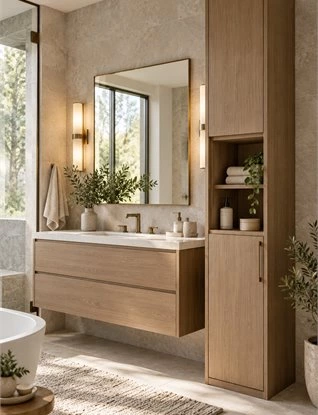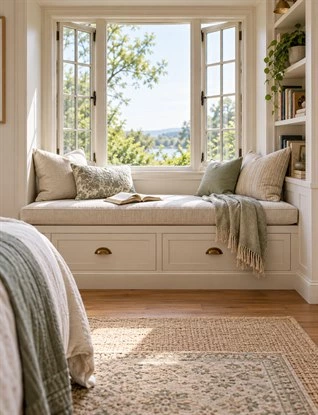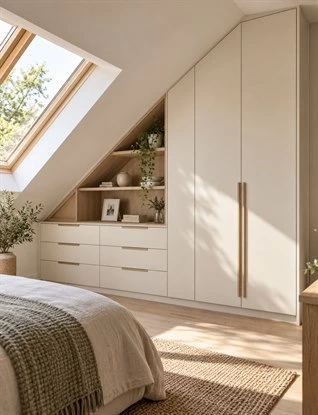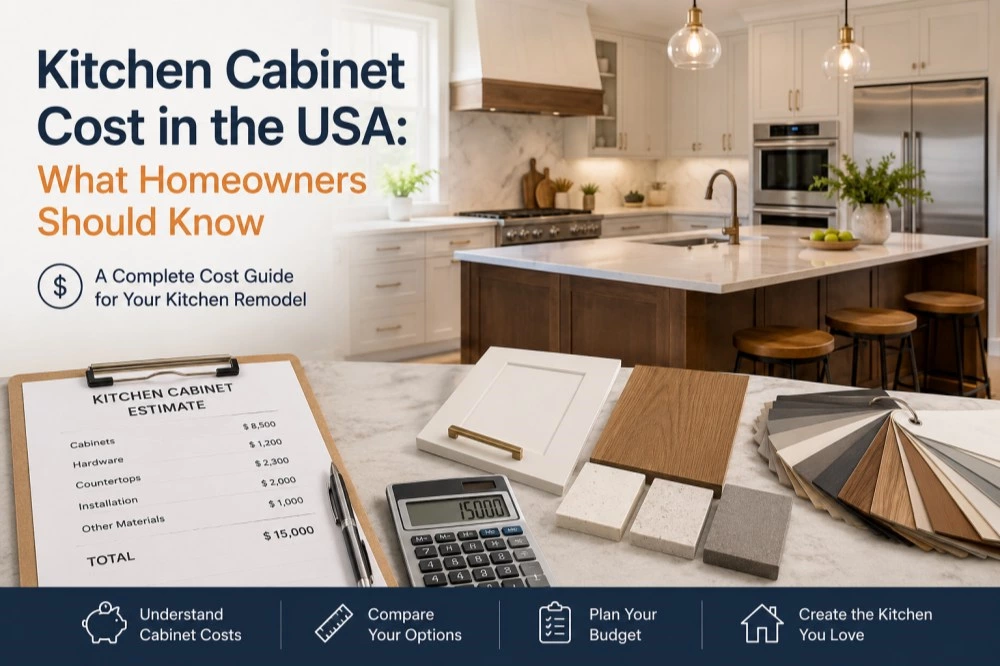
Kitchen cabinets are one of the most important parts of a kitchen remodel. They affect storage, workflow, design style, installation difficulty, and the final project budget. When homeowners search for kitchen cabinet cost USA, they are usually not only looking for a simple price range. They want to understand why cabinet prices vary so much and how to plan a realistic budget before starting a kitchen renovation.
The final kitchen cabinet cost depends on cabinet type, kitchen size, material, finish, hardware, countertop, smart storage accessories, labor, installation, delivery, and customization level. A basic stock cabinet layout may cost much less than a full custom kitchen with tall pantry cabinets, an island, soft-close drawers, premium finishes, and integrated appliances.
For homeowners, builders, dealers, and project buyers, the best approach is to compare total value instead of only looking at the lowest price. A cheaper cabinet may save money at the beginning, but poor layout fit, weak hardware, limited storage, or difficult installation can increase long-term costs.
ALLURE provides custom kitchen cabinet solutions with free 3D kitchen design and quotation based on project layouts. This helps homeowners and project buyers compare materials, finishes, storage systems, and cabinet structures before finalizing a cabinet budget.
Why Kitchen Cabinet Cost USA Vary So Much
Kitchen cabinet pricing in the USA can vary widely because not all cabinets are built, finished, installed, or customized the same way. Two kitchens may look similar in photos, but their actual costs can be very different depending on cabinet construction, material quality, drawer systems, storage accessories, and installation requirements.
A simple straight-line kitchen with standard wall cabinets is usually easier to price. A modern open kitchen with an island, tall pantry, appliance wall, hidden storage, and custom lighting requires more design planning, more material, more hardware, and more installation work.
Cabinet Type Affects the Starting Price
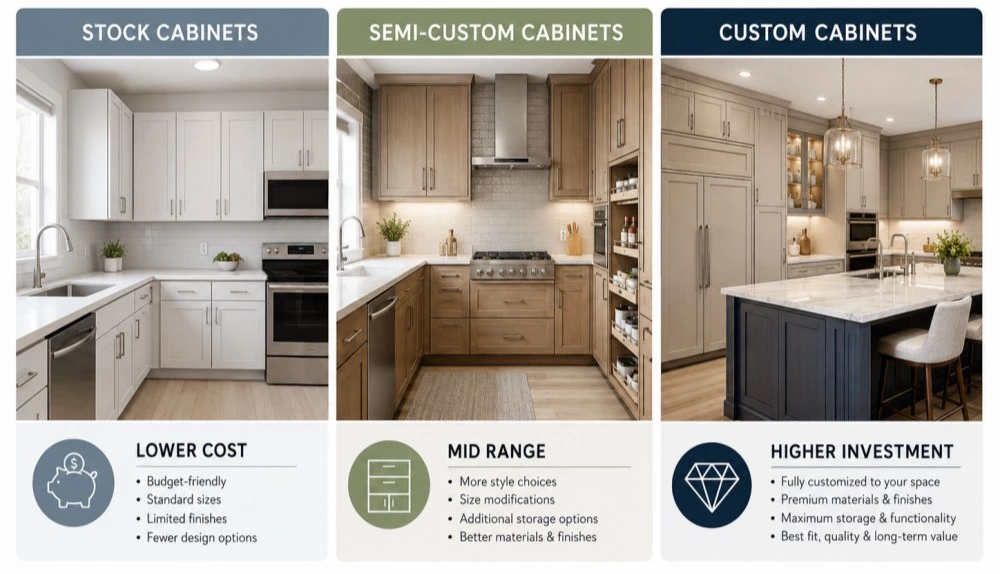
The first major factor is cabinet type. In the USA, kitchen cabinets are usually divided into three main groups: stock cabinets, semi-custom cabinets, and custom cabinets.
Stock cabinets are pre-made in standard sizes and finishes. They are usually the most affordable choice and work well for simple layouts.
Semi-custom cabinets offer more flexibility in size, door style, finish, and internal accessories. They cost more than stock cabinets but provide better design options.
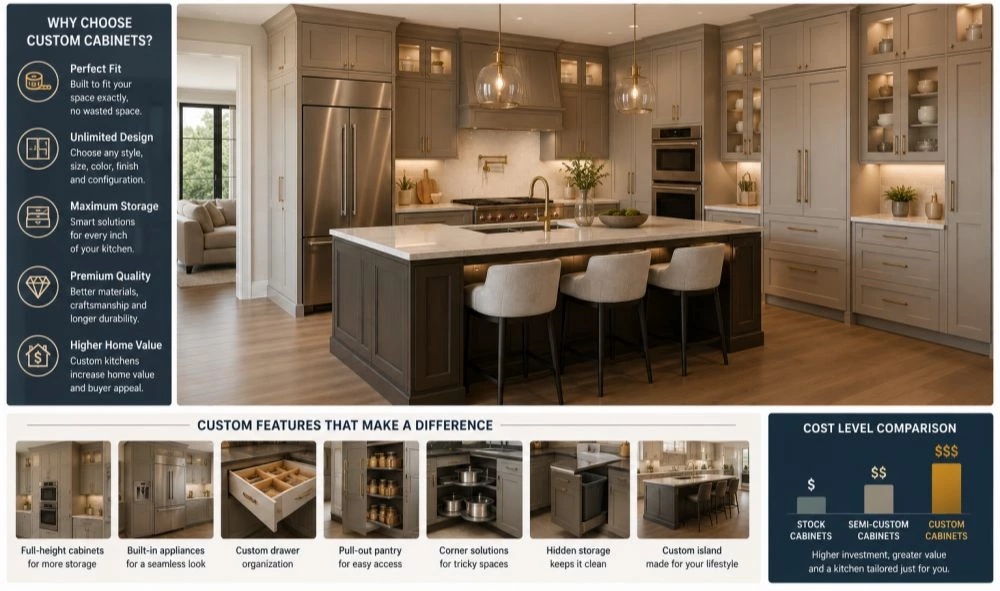
Custom cabinets are made according to the exact kitchen layout, storage needs, material preferences, and design style. They usually require a higher investment but offer a better fit, better storage planning, and a more refined result.
Kitchen Size Changes the Total Cabinet Budget
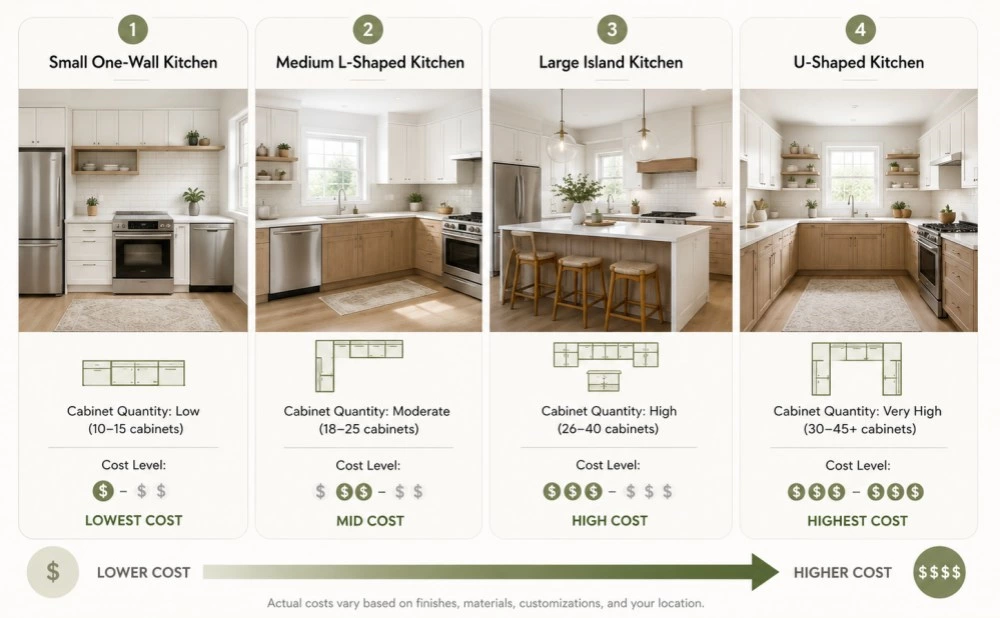
Kitchen cabinet cost is not only about the price of one cabinet. The total budget depends on how many cabinets are needed and how complex the layout is.
A small apartment kitchen may only need base cabinets, wall cabinets, and a few drawers. A medium family kitchen may require more storage, deeper drawers, pantry cabinets, and upgraded hardware. A large open kitchen may include full-height cabinets, island cabinets, appliance panels, display cabinets, and more finishing panels.
Kitchen layouts that usually increase cabinet cost include:
-
U-shaped kitchens
-
L-shaped kitchens with corner systems
-
Island kitchens
-
Kitchens with full-height pantry walls
-
Open-plan kitchens with visible cabinet finishes
-
Kitchens with built-in appliances
-
Luxury kitchens with decorative panels or special finishes
Material and Finish Make a Big Difference
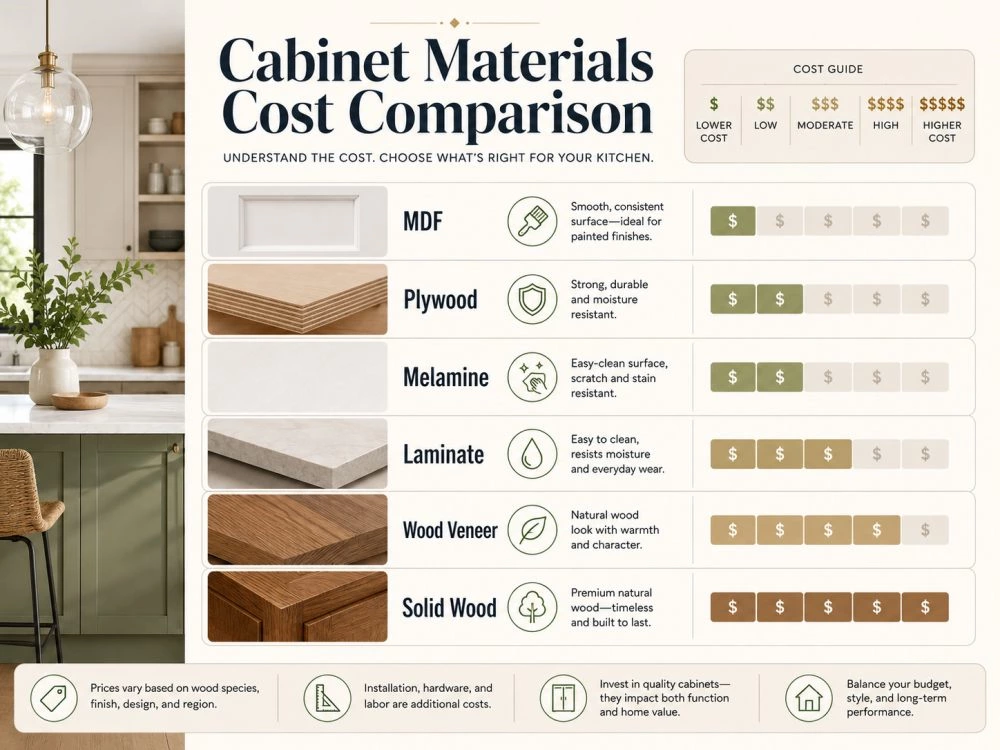
Material selection can significantly affect kitchen cabinet cost USA. MDF, particle board, plywood, melamine, laminate, wood veneer, solid wood, lacquer, stainless steel, and sintered stone all have different cost levels, durability, and design effects.
For example, melamine is often used for budget-controlled projects because it offers a clean surface and many design options at a lower cost. Plywood usually costs more but provides better structure and long-term stability. Wood veneer and solid wood create a warmer and more premium look, but they can increase the overall budget.
The surface finish also matters. Matte lacquer, high-gloss lacquer, natural veneer, textured laminate, shaker-style doors, handleless doors, and custom colors all affect production cost and final appearance.
Stock Cabinets: Lower Cost, Less Flexibility
Best for Simple Layouts and Tight Budgets
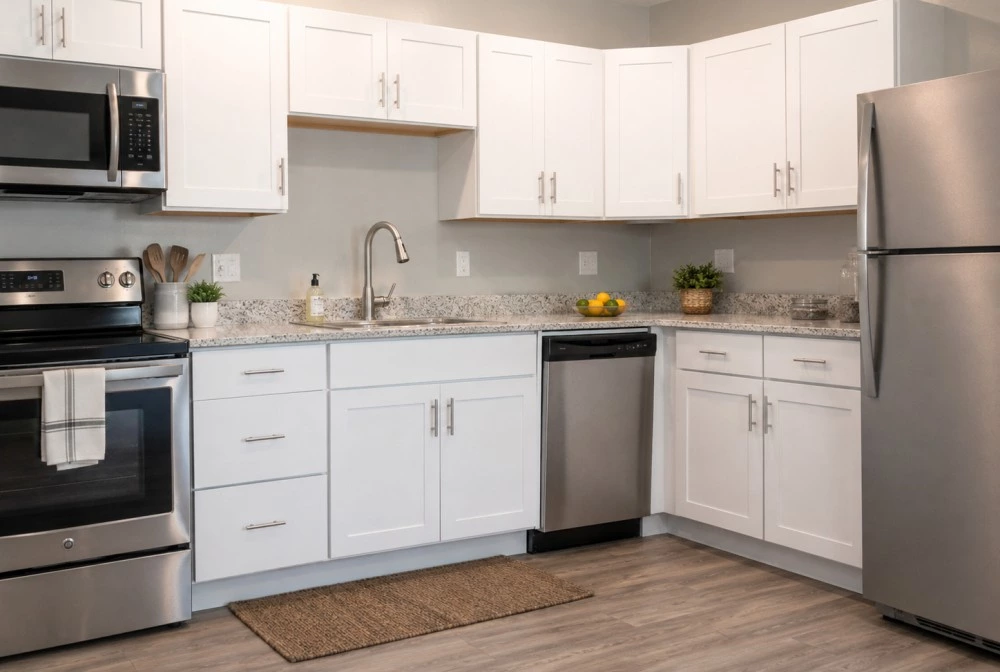
Stock cabinets are usually the most budget-friendly option for homeowners who need a basic kitchen upgrade. They are manufactured in standard sizes and common finishes, which makes them easier to buy and faster to install.
Stock cabinets can be a practical choice for:
-
Rental properties
-
Simple apartment kitchens
-
Short-term renovations
-
Budget-controlled remodels
-
Standard wall layouts
-
Homeowners who need faster delivery
Because they are pre-made, stock cabinets usually cost less than semi-custom or custom cabinets. They can help homeowners control the upfront remodel budget, especially when the kitchen layout is simple and does not require many special sizes.
When Stock Cabinets May Not Be Enough
The main limitation of stock cabinets is flexibility. Since the sizes, colors, finishes, and internal layouts are limited, they may not fully match the actual kitchen space.
Stock cabinets may not be the best choice when the kitchen has:
-
Awkward corners
-
Uneven walls
-
Tall ceilings
-
Built-in appliances
-
A large island
-
Special storage needs
-
Open-plan visibility
-
Premium design requirements
Extra fillers may be needed to cover gaps between cabinet units and walls. This can make the kitchen look less seamless. For homeowners who want a built-in, high-end, or highly organized kitchen, stock cabinets may feel too basic.
Semi-Custom Cabinets: Balanced Cost and Design Options
Best for Homeowners Who Need More Choices
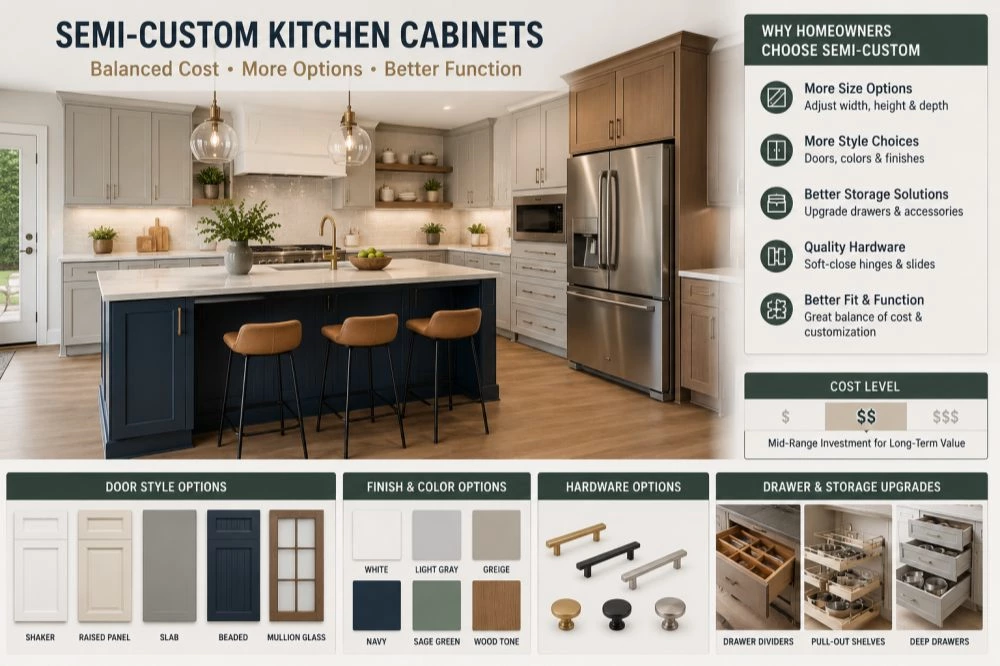
Semi-custom cabinets sit between stock and fully custom cabinets. They offer more design freedom than stock cabinets while still being more controlled in cost than full custom cabinetry.
This option is suitable for homeowners who want:
-
More door styles
-
More finish choices
-
Better cabinet sizing
-
Improved storage accessories
-
Soft-close hardware options
-
A more refined visual effect
-
Better fit than standard cabinets
Semi-custom cabinets are often a good choice for medium-budget kitchen remodels. They allow homeowners to improve both storage and design without paying for every detail to be made from scratch.
What Can Usually Be Customized
Semi-custom cabinets often allow adjustments to cabinet width, depth, height, door style, finish, drawer type, and hardware. Homeowners may also choose pull-out shelves, soft-close slides, decorative panels, crown molding, glass doors, or upgraded drawer systems.
Common semi-custom upgrades include:
-
Wider drawers
-
Taller upper cabinets
-
Pull-out shelves
-
Lazy Susan corner storage
-
Soft-close hinges
-
Custom paint or stain colors
-
Decorative side panels
-
Better drawer boxes
-
Pantry cabinet options
For many homeowners, semi-custom cabinets provide a good balance between price, function, and design flexibility.
Custom Kitchen Cabinets: Higher Investment, Better Fit
Best for Modern Homes, Luxury Kitchens, and Full Remodels
Custom kitchen cabinets usually require a higher investment, but they offer the most flexibility. Instead of forcing standard cabinet sizes into the space, custom cabinets are designed around the actual kitchen layout, ceiling height, appliance position, storage needs, and design style.
Custom cabinets are ideal for:
-
Luxury homes
-
Villas
-
Modern open kitchens
-
Full house customization projects
-
Apartments with limited space
-
Kitchens with special layouts
-
Built-in appliance designs
-
Homeowners who need better storage
-
Project buyers who need a consistent design
Custom cabinetry can create a cleaner and more integrated kitchen because every cabinet can be planned around the room. The result is usually better storage, fewer wasted corners, better visual balance, and stronger design consistency.
What Increases Custom Cabinet Cost
Custom cabinet cost can increase depending on materials, finishes, hardware, layout complexity, and accessories.
Common cost-increasing factors include:
-
Plywood cabinet boxes
-
Solid wood or veneer door panels
-
Lacquer or special textured finishes
-
Large kitchen islands
-
Full-height pantry cabinets
-
Built-in refrigerator panels
-
Appliance garages
-
Pull-out pantry systems
-
Corner storage hardware
-
LED lighting
-
Custom handles or handleless grooves
-
Stone or sintered stone countertops
-
Complex installation details
The more customized the design, the more planning and production work is required. However, custom cabinets can also help homeowners avoid wasted space and create a kitchen that works better for long-term daily living.
Cabinet Materials and Their Cost Impact
Materials play a major role in kitchen cabinet cost USA. Homeowners should not only ask how much cabinets cost, but also what materials are included in the quote.
MDF Cabinets
MDF is often used for painted or lacquered cabinet doors because it has a smooth surface. It works well for modern flat-panel cabinets, shaker doors, and clean painted finishes.
MDF can be a cost-effective choice for homeowners who want a smooth, modern look without using solid wood. However, moisture resistance, edge sealing, and finish quality are important. Poor sealing can lead to swelling or damage in humid kitchen areas.
Plywood Cabinets
Plywood is often preferred for stronger cabinet boxes and better long-term stability. It has better screw-holding strength than many lower-cost core materials and is commonly used in higher-quality kitchen cabinet construction.
Plywood may cost more than MDF or particle board, but it can be a better choice for homeowners who want a stronger cabinet structure, better durability, and long-term performance.
Melamine and Laminate Cabinets
Melamine and laminate cabinets are popular in modern kitchens because they provide clean surfaces, many color options, and practical daily maintenance.
Melamine is usually more cost-effective and suitable for budget-controlled projects, rental properties, and practical residential kitchens. Laminate, especially higher-pressure laminate options, can offer better surface durability and moisture resistance depending on the specification.
These materials are useful for homeowners who want a modern cabinet finish without the higher cost of solid wood, veneer, or premium lacquer.
Solid Wood and Wood Veneer Cabinets
Solid wood and wood veneer cabinets create a warmer, more natural, and more premium appearance. They are often used in luxury kitchens, traditional kitchens, and high-end residential projects.
Solid wood can be more expensive due to material cost, processing, finishing, and maintenance requirements. Wood veneer can offer a natural wood look with better design control and often lower cost than full solid wood construction.
For homeowners who want a high-end kitchen with natural texture, wood veneer can be a strong balance between style and cost.
Labor, Installation, and Delivery Costs
Installation Can Change the Final Price
Cabinet installation is a major part of the final kitchen remodel budget. Even if the cabinet price looks reasonable, installation details can increase the total cost.
Installation may include:
-
Removing old cabinets
-
Preparing walls
-
Leveling cabinet bases
-
Assembling cabinet boxes
-
Installing wall cabinets
-
Adjusting doors and drawers
-
Adding filler panels
-
Installing toe kicks
-
Installing crown molding
-
Coordinating countertops
-
Adjusting plumbing
-
Coordinating appliances
-
Final alignment and finishing
A simple straight-line kitchen is usually easier to install. A large kitchen with an island, tall cabinets, appliance panels, or uneven walls requires more work and can increase labor costs.
Imported Cabinets May Have Different Cost Logic
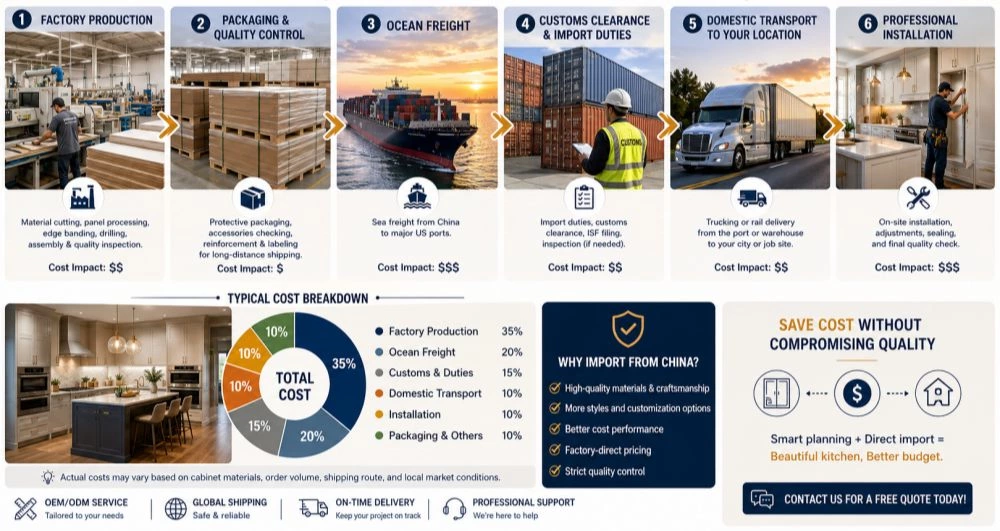
For homeowners and project buyers comparing local USA cabinets with imported custom cabinets, the cost structure is different.
Imported kitchen cabinets may include:
-
Factory production cost
-
Design service
-
Material selection
-
Hardware selection
-
Packaging
-
International shipping
-
Customs and tariffs
-
Local delivery
-
Local installation
-
Project coordination
When comparing imported cabinets, homeowners should calculate the full landed cost, not only the factory price. A lower factory price may still require shipping, customs, warehousing, and local labor. A clear quote should explain what is included and what is not included.
Kitchen Layout and Storage Features That Add Cost
Kitchen layout and storage accessories can greatly affect cabinet cost. A simple kitchen with standard doors and shelves will usually cost less than a kitchen with smart storage systems, integrated lighting, and custom hardware.
Island Cabinets
A kitchen island adds function, storage, and visual value, but it also increases cabinet cost. Island cabinets may include base cabinets, drawers, open shelves, seating panels, waterfall countertops, sink cutouts, power outlets, or wine storage.
An island can improve food preparation, dining, and family interaction, but homeowners should include both cabinet cost and countertop cost when budgeting.
Tall Pantry Cabinets
Tall pantry cabinets add strong storage capacity, especially for modern homes where homeowners want cleaner countertops and better food organization.
Tall cabinets may include:
-
Food pantry storage
-
Built-in oven cabinets
-
Appliance garages
-
Refrigerator panels
-
Pull-out pantry shelves
-
Cleaning supply storage
-
Full-height cabinet walls
They increase cost because they use more material, require more hardware, and often need careful installation.
Smart Storage Accessories
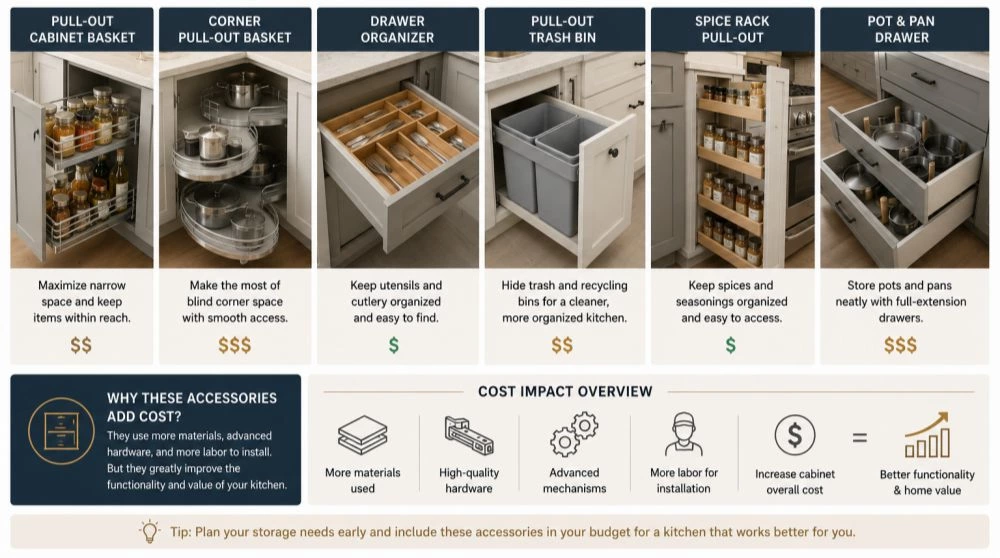
Smart storage accessories make the kitchen easier to use, but they also add to the cabinet budget.
Common smart storage features include:
-
Pull-out baskets
-
Lazy Susan systems
-
Magic corner hardware
-
Drawer dividers
-
Pull-out pantry racks
-
Integrated trash bins
-
Under-sink organizers
-
Soft-close hinges
-
Soft-close drawer slides
-
LED cabinet lighting
These features are not always necessary in every cabinet. The best approach is to choose accessories based on daily use. For example, a pull-out pantry near the refrigerator may be more valuable than decorative hardware that does not improve function.
How to Budget for Kitchen Cabinets in the USA
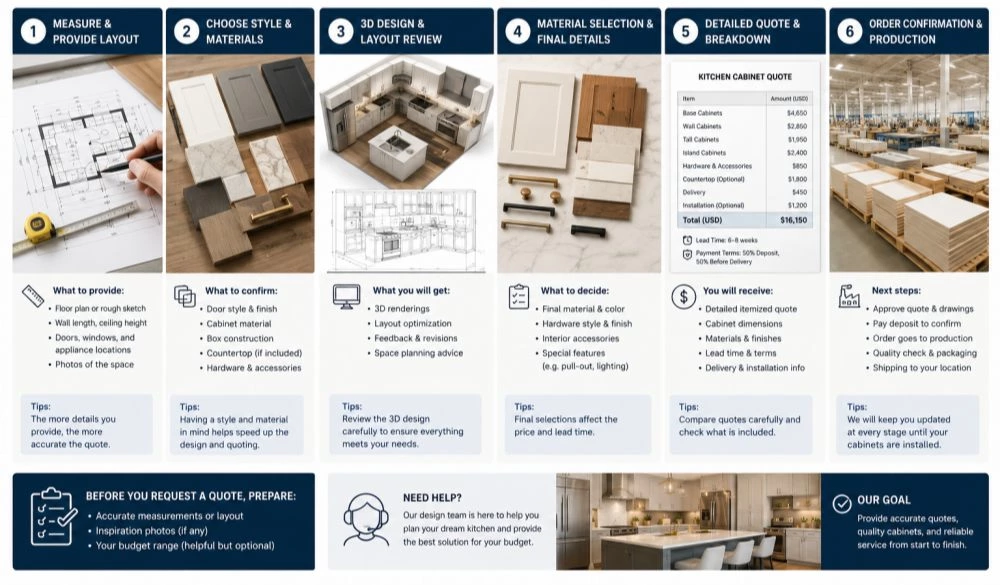
Start With Your Kitchen Layout
Before asking for a kitchen cabinet quote, homeowners should prepare accurate kitchen measurements or a floor plan. A supplier cannot provide a reliable quote without understanding the layout.
Useful information includes:
-
Wall dimensions
-
Ceiling height
-
Window and door positions
-
Plumbing location
-
Appliance sizes
-
Preferred cabinet style
-
Storage needs
-
Countertop preference
-
Budget range
-
Installation location
A clear layout helps the cabinet supplier estimate cabinet quantity, materials, accessories, and installation requirements more accurately.
Decide Your Cabinet Priority
Every kitchen project has different priorities. Some homeowners want the lowest upfront cost. Others care more about long-term durability, premium design, storage efficiency, or full customization.
Before choosing cabinets, homeowners should decide what matters most:
-
Lowest cost
-
Fast delivery
-
Better storage
-
Durable materials
-
Premium finishes
-
Custom layout fit
-
Easy maintenance
-
Long-term home value
-
Full house design consistency
A clear priority helps avoid overspending on unnecessary features while keeping the most important functions.
Compare Total Value, Not Only Price
The lowest cabinet quote is not always the best option. A low price may not include hardware, countertops, installation, delivery, storage accessories, or design service.
When comparing quotes, homeowners should check:
-
What material is used for cabinet boxes
-
What material is used for door panels
-
Whether hardware is included
-
Whether soft-close hinges are included
-
Whether countertops are included
-
Whether installation is included
-
Whether delivery is included
-
Whether storage accessories are included
-
Whether 3D design is included
-
Whether after-sales support is included
A complete quote helps homeowners compare real value instead of comparing incomplete prices.
Estimated Kitchen Cabinet Cost USA: What Should Be Included?
A reliable kitchen cabinet quote should clearly show what is included. This helps homeowners avoid unexpected costs during installation.
| Cost Item | What It Includes | Why It Matters |
|---|---|---|
| Cabinet Boxes | Base, wall, and tall cabinets | Forms the main structure and storage system |
| Door Panels | Style, finish, thickness, color | Affects both appearance and price |
| Drawers | Drawer boxes, slides, dividers | Improves daily storage and function |
| Hardware | Hinges, slides, handles | Affects durability and comfort |
| Countertop | Quartz, stone, sintered stone, laminate | Can greatly affect the total budget |
| Storage Accessories | Pull-outs, Lazy Susan, pantry systems | Adds convenience and cost |
| Installation | Assembly, leveling, fitting | Affects final appearance and usability |
| Delivery / Shipping | Local or international logistics | Important for the total project cost |
| Design Service | 3D design and layout planning | Helps reduce mistakes before production |
What Homeowners Should Ask Before Getting a Quote
Before confirming a kitchen cabinet order, homeowners should ask detailed questions:
-
Is the quote based on exact kitchen measurements?
-
What cabinet material is included?
-
Are door panels and cabinet boxes the same material?
-
Is hardware included?
-
Are soft-close hinges and drawer slides included?
-
Is the countertop included?
-
Are pull-out baskets or drawer dividers included?
-
Is installation included?
-
Are shipping and delivery included?
-
Is 3D design included?
-
What is the production lead time?
-
What happens if the layout changes?
These questions help homeowners avoid unclear pricing and make better decisions.
How ALLURE Helps Homeowners and Project Buyers Control Cabinet Cost
ALLURE helps homeowners, builders, dealers, and project buyers control cabinet cost from the design stage. Instead of quoting only by rough cabinet quantity, ALLURE can provide a free 3D kitchen design and quotation based on the actual layout.
This makes it easier to compare:
-
Cabinet size
-
Material options
-
Door finishes
-
Countertop choices
-
Hardware systems
-
Storage accessories
-
Island design
-
Pantry cabinet layout
-
Project requirements
ALLURE offers custom kitchen cabinets, modular kitchen cabinets, island kitchens, L-shaped kitchens, wardrobes, wine cabinets, interior doors, and full house cabinetry solutions. This is useful for apartments, villas, showrooms, commercial projects, and whole-house customization projects that need consistent design and project-level coordination.
For buyers comparing kitchen cabinet cost USA, a clear custom cabinet design helps avoid budget confusion and makes the final quote more accurate.
FAQ About Kitchen Cabinet Cost USA
What is the biggest factor affecting kitchen cabinet cost USA?
The biggest factors are cabinet type, kitchen size, material, finish, hardware, installation, and customization level. A simple stock cabinet layout costs much less than a custom kitchen with tall storage, island cabinets, premium finishes, and smart storage accessories.
Are custom kitchen cabinets worth the higher cost?
Custom kitchen cabinets are worth considering when homeowners need a better fit, improved storage, premium design, or a layout that standard cabinets cannot solve. They can reduce wasted space and create a more refined long-term result.
Why do kitchen cabinet quotes vary so much?
Quotes vary because suppliers may include different materials, hardware, countertops, installation, delivery, storage accessories, and design services. Homeowners should compare the full quote, not only the cabinet unit price.
Do imported kitchen cabinets cost less than local USA cabinets?
Imported cabinets may offer competitive factory pricing, but homeowners should also calculate shipping, packaging, tariffs, delivery, and local installation. The final decision should be based on total landed cost, quality, and project coordination.
What should I prepare before requesting a kitchen cabinet quote?
Prepare your kitchen measurements, floor plan, appliance list, preferred style, material preference, storage needs, and budget range. This helps suppliers provide a more accurate design and quotation.
Does cabinet material affect long-term cost?
Yes. Lower-cost materials may reduce the upfront budget, but stronger materials, better edge sealing, durable hardware, and moisture-resistant finishes can improve long-term performance and reduce maintenance issues.
How can homeowners reduce kitchen cabinet cost without losing quality?
Homeowners can control costs by choosing practical materials, using standard cabinet sizes where possible, selecting smart storage only where needed, avoiding unnecessary decorative details, and comparing complete quotes instead of only unit prices.
Conclusion
Kitchen cabinet cost USA is not a fixed number. It depends on cabinet type, kitchen size, material, finish, hardware, storage features, installation, shipping, and customization level.
Stock cabinets can work for simple layouts and tight budgets. Semi-custom cabinets offer more design choices with controlled cost. Custom kitchen cabinets require a higher investment but offer a better fit, more effective storage planning, and a more refined result for modern homes.
For homeowners, builders, dealers, and project buyers planning a kitchen remodel or custom cabinetry project, ALLURE provides free 3D kitchen design and quotation based on your layout. From modern kitchen cabinets and modular cabinet systems to island kitchens, L-shaped layouts, and whole-house customization, ALLURE helps you compare materials, storage systems, finishes, and project requirements before finalizing your cabinet budget.