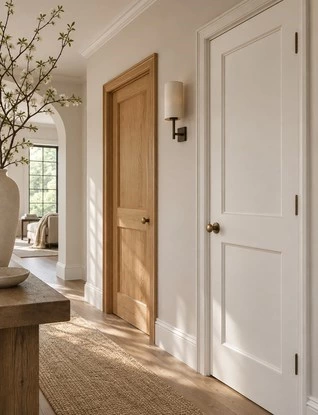
When comparing interior door manufacturers, start with what each opening needs. A bedroom with a sound existing frame may call for a replacement slab. A rebuilt hallway may need a prehung door. A study with wall panels may require a coordinated frame, finish, and panel edge. Each job gives you a different reason to contact a supplier.
Two quotes for the same bedroom can look far apart until you see that one covers the leaf and the other includes a frame and hinge preparation. This U.S. residential shortlist helps you identify a product family, find its buying channel, and ask every candidate to price the same scope.
Key Takeaways
- Separate openings with retained frames from openings that need new assemblies.
- Verify the actual model and local ordering channel before comparing price or availability.
- Assign responsibility for frames, hardware, finishes, and junctions when doors meet panels or cabinetry.
- Send one door schedule to every supplier and compare inclusions opening by opening.
How We Built This Shortlist
Market and project scope
The shortlist is for U.S. homeowners, designers, and builders sourcing residential interior doors for renovations or new construction. It covers standard replacements and selected custom options. A brand can be a starting point for several types of openings, so each name appears once in the comparison.
What qualified a brand for comparison
Each listed brand has official documentation for residential interior products and a published dealer or purchasing route relevant to U.S. buyers. The review uses manufacturer documentation and dealer resources. Actual model availability, price, delivery, and installation arrangements depend on the project and seller. The shortlist is organized by buying needs and carries no performance scores.
For each opening, distinguish what the manufacturer publishes from what the seller is prepared to quote. For example, a model page may show a wood option while the seller still needs to confirm whether the requested size, finish, and frame can be ordered together. Record that item as “Confirm with supplier.” Use “Not disclosed” when a relevant detail is absent from the public documentation.
Interior Door Manufacturers at a Glance
| Brand | Documented starting point | Buying channel | First question to ask |
|---|---|---|---|
| JELD-WEN | Flush and molded interior doors. The brand also lists prehung interior doors as a purchasing category. | JELD-WEN dealer locator | Which model and frame configuration can the seller quote for my opening? |
| Masonite | Residential solid-core interior doors and other named catalog categories. | Masonite residential interior doors links to Where to Buy. | Can the seller quote the exact model, core, finish, and preparation I need? |
| Simpson Door Company | Interior styles for applications including bedrooms, bathrooms, and pantries. | Simpson dealer locator | Who would supply the jamb, arrange prehanging, and provide hardware? |
| TruStile | TMF1000 flush interior model in the Tru&Modern collection. | TruStile ordering FAQ | What finish and assembly options can the dealer confirm for this model and opening? |
JELD-WEN
Start here if you are comparing flush or molded doors for a set of ordinary residential openings. Bring one opening from the schedule to a seller who handles the relevant product category. If some frames will stay and others will be replaced, ask for separate slab and prehung lines where the model permits them. Confirm preparation and finish by line item, particularly if you want the same appearance across both configurations. JELD-WEN interior door guide and JELD-WEN dealer locator.
Masonite
The residential catalog is a starting point when you want to evaluate a solid-core interior door for a bedroom or another opening with specific preferences. Select a model before asking about the frame or hardware. Have the seller identify the exact door and how it is supplied. If sound control matters, ask which documentation applies to the proposed complete assembly and confirm how perimeter details will be handled. Masonite residential interior doors.
Simpson Door Company
Consider Simpson when you want to select an interior wood door by application and design, such as a glazed pantry door or a bedroom door with a particular panel layout. Take the exact design number to an authorized dealer. Check size and finish options for that design, then ask the dealer to itemize any prehanging, jamb, machining, and hardware it would arrange. Simpson interior door styles and Simpson dealer locator.
TruStile
The TMF1000 gives buyers a specific starting point for a flush interior door in a custom residential scheme. Provide a finish reference and opening schedule to the dealer and ask which configuration can be quoted. Verify the relationship between the door face, frame, and neighboring finishes on the drawings. Carry any hardware preparation and finish samples as distinct quote items. TruStile TMF1000 and TruStile ordering FAQ.
Options for Standard Replacements
Decide whether the existing frame can stay
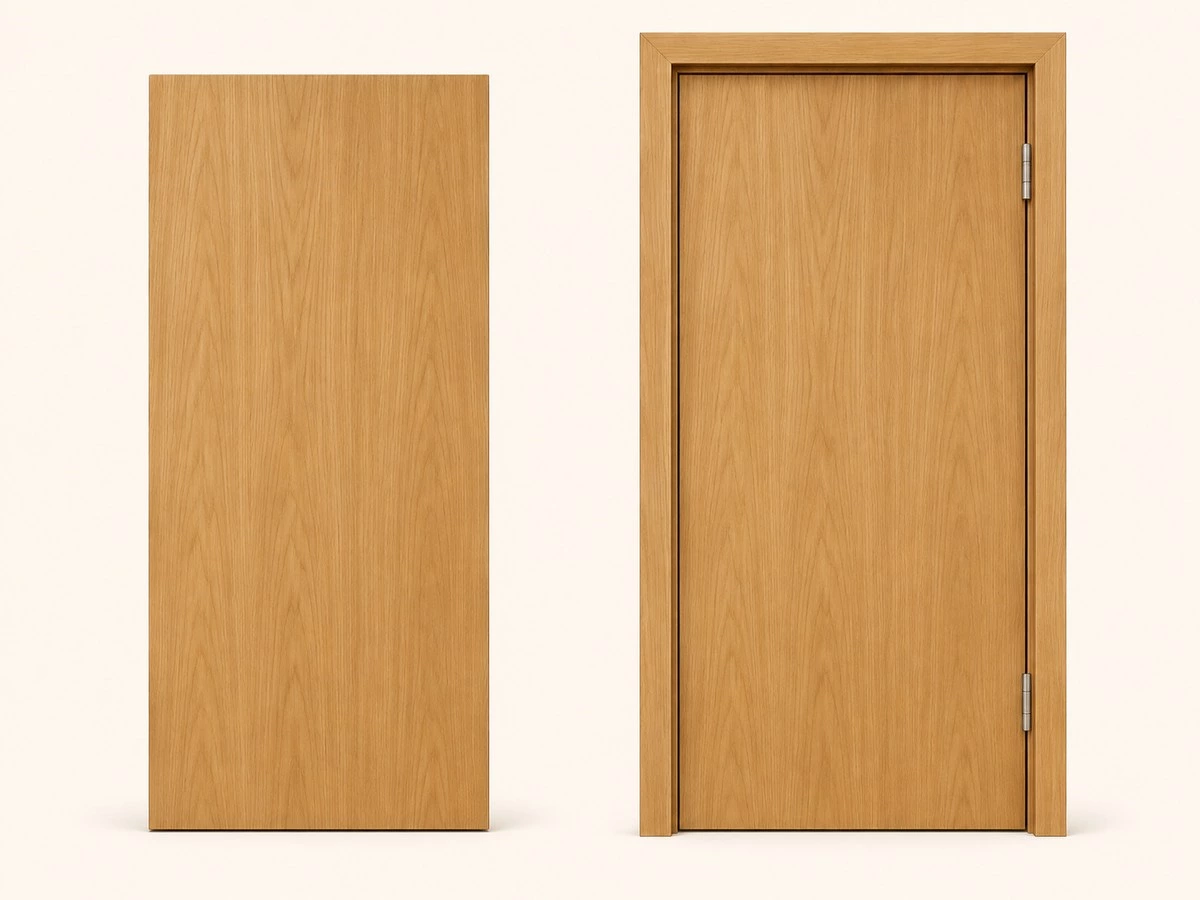
A slab is the door leaf. A prehung unit comes with the leaf mounted in its frame. The quote should state whether trim, a latch set, finish, and installation are included. If you plan to retain a frame, have the project team check its condition, geometry, hinge locations, latch position, handing, and the dimensions of the existing door before specifying a replacement.
Consider two bedrooms with the same desired door profile. The first has a retained frame and needs a leaf prepared to match it. The second is being reframed and needs a complete assembly. Ask both sellers to price the same division of work. A single price for “two interior doors” leaves the installer guessing about what arrives for each room.
Confirm the model and who handles the fit
Give the seller the opening ID, measurements, and frame condition. Ask who verifies field dimensions, who prepares the hinge and latch locations, and who finishes and fits the door. Check the process for a discrepancy between the order dimensions and the retained frame before agreeing to the work.
Options for Custom Sizes and Finishes
Turn a design preference into a specification
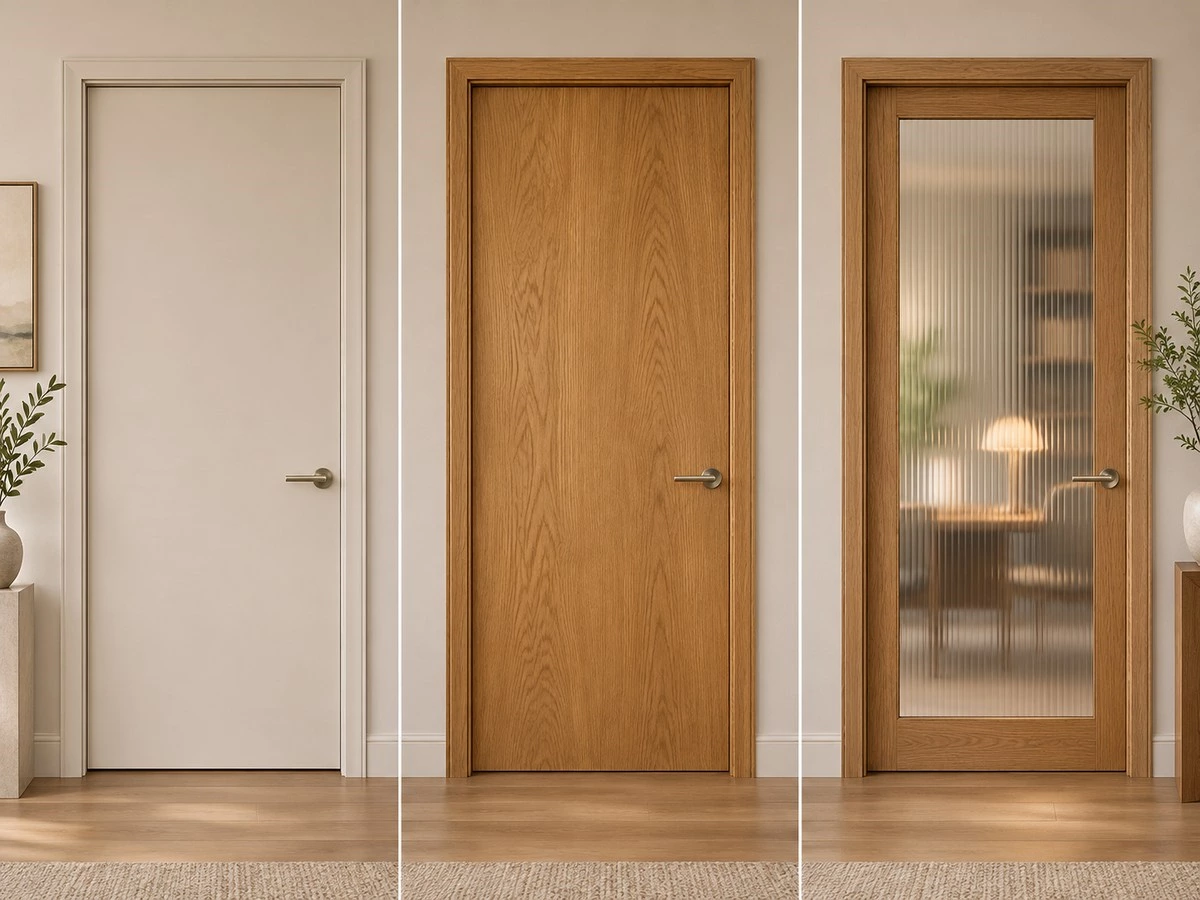
For a tall painted flush door, specify the opening, proposed dimensions, swing, and finish reference. For a stain-grade wood door, add the wood and grain preference and ask what physical sample can be approved. For a glazed study door, identify where the glass sits and describe the privacy the room needs. Ask the dealer to confirm which requests are supported by the selected series.
Check the components and approval process
Request separate lines for the leaf, frame, glazing, machining, and finish. Ask when measurements, drawings, and finish samples must be approved and who signs off on them. If an opening requires documented fire, acoustic, or other performance, have the project team confirm the requirement and request supporting documentation for the exact proposed assembly before it is specified.
Options for Coordinated Doors and Wall Panels
Compare a combined package with separate suppliers
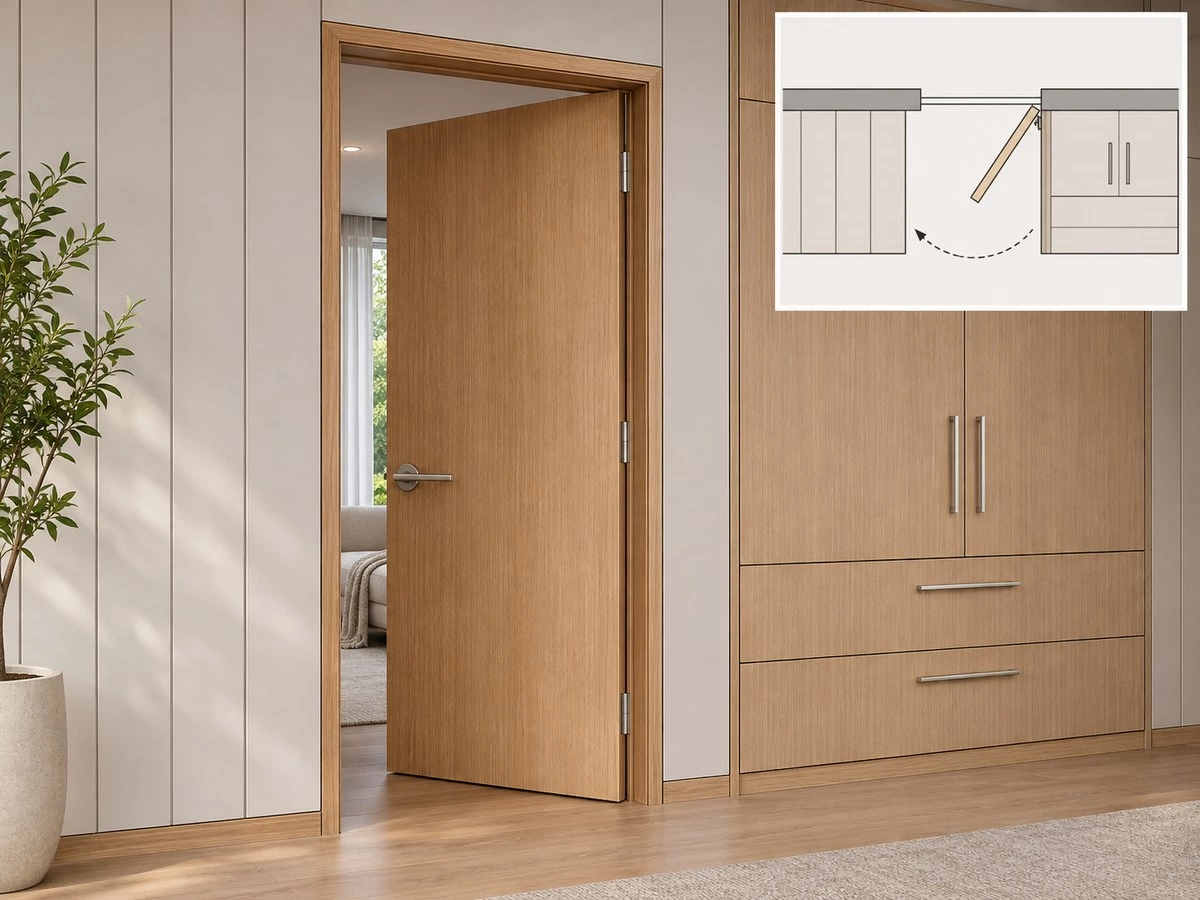
When a door shares an elevation with panels or cabinets, list the leaf, frame, hinges, panel edge, trim, and finishes on one scope sheet. A combined proposal may include several of those items. For separate proposals, ask each supplier to identify the components it supplies and the drawings it needs from the other trades. Assign responsibility for site measurements and any adjustments at the junction.
Review the junction with the door open and closed
Request an elevation and a junction detail showing where the wall panel ends, how the frame meets it, and what the leaf passes as it opens. Include nearby cabinet fronts and pulls. Review finish samples together under the intended lighting. Readers still deciding on the visual direction can compare profiles, glazing, and finishes in the ALLURE interior door design guide.
Compare Quotes Using the Same Door Schedule
Send one schedule to every candidate
Assign an ID to every opening. Record the room, quantity, measured dimensions, who verified them, handing and swing, frame condition, finish, hardware, and delivery location. Mark provisional dimensions clearly. For example, D-01 can be a bedroom slab in a retained frame, D-02 a hallway prehung unit, and D-03 a study door with a new frame next to wall panels.
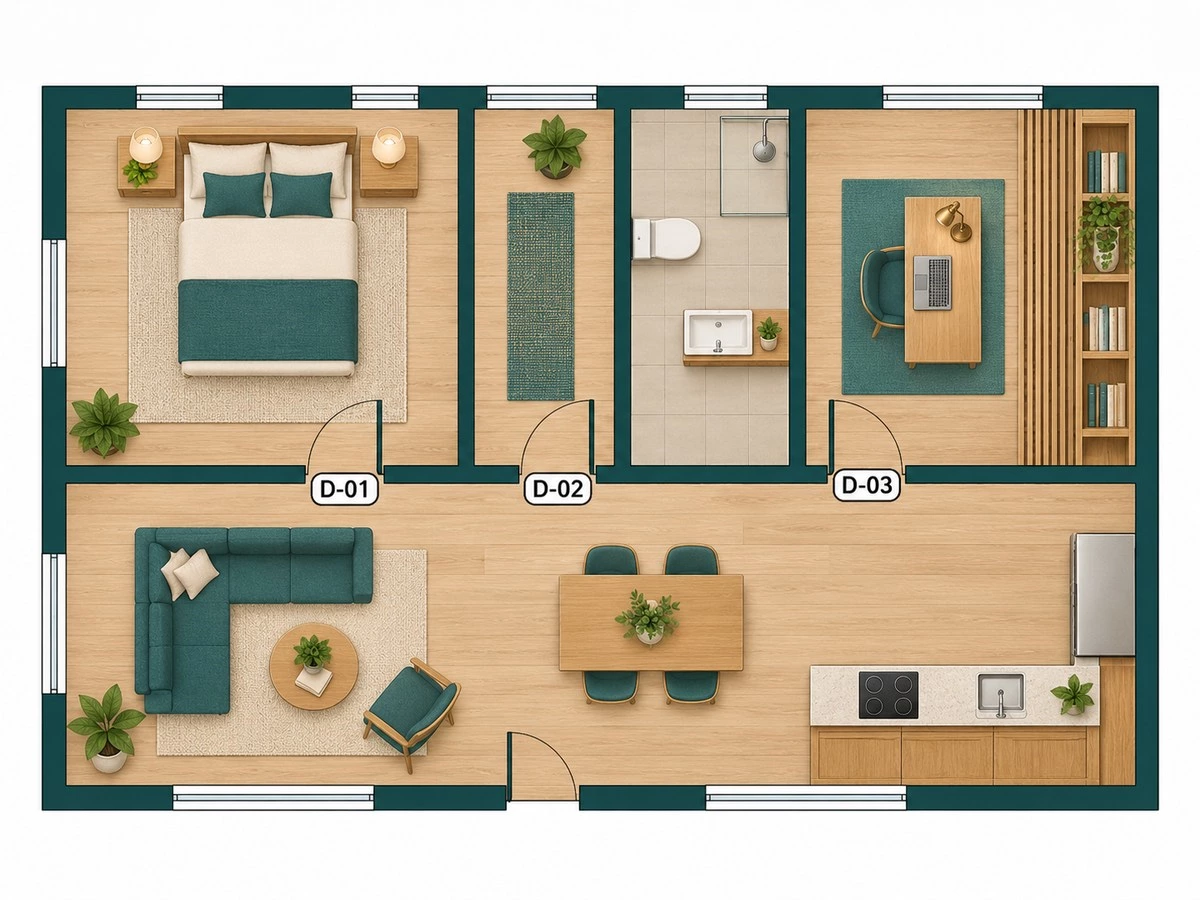
Compare what each supplier actually priced
The following example shows how two written quotes for D-03 can differ. Ask each seller to mark each item as included, separately priced, excluded, or pending. Add separate trade quotes where needed to compare the same finished opening.
| Item | Quote A | Quote B | Buyer follow-up |
|---|---|---|---|
| Leaf and finish | Primed leaf | Factory-finished leaf | Price the finish for A and confirm the sample for B. |
| Frame and trim | Excluded | Frame included, trim separate | Confirm the required frame and panel termination. |
| Hardware and machining | Hardware excluded, machining pending | Machining included, hardware separate | Confirm the hardware and preparation for both quotes. |
| Delivery and installation | Seller pickup, installation excluded | Site delivery, installation excluded | Compare delivery to the same location and confirm who installs. |
Compare local and overseas purchase routes
Use the same delivery point for both proposals. For an overseas order, confirm the freight scope, who handles import arrangements, who unloads and inspects the shipment, and how damaged or incorrectly supplied pieces are handled. For a local order, check which of those services the seller provides and which are charged separately. Obtain the installer’s scope for any work outside either supply quote.
Choose the Supplier That Fits Your Project
For a standard replacement, start with the seller who can confirm the exact model and preparation for the existing frame. For a custom size or finish, ask for written confirmation of the configuration and a clear process for approving drawings and samples. For a door and wall panel package, review who supplies each part and who resolves the frame and panel junction.
Choose one representative opening and send the same schedule line to your candidates. Resolve any difference in finish, frame, or installation scope first. Once the comparison covers the same work, carry the format across the remaining openings.
FAQs About Interior Door Manufacturers
What is the difference between a slab door and a prehung door?
A slab is the leaf. A prehung door comes mounted in a frame. Ask about trim, finish, hardware, and installation separately because those inclusions can vary.
Can I order a custom interior door without replacing the existing frame?
It may be possible if the frame is suitable and the new leaf can be prepared to fit it. Have the project team verify geometry, thickness, handing, and hinge and latch positions before ordering.
What should be included in an interior door quote?
Ask for the opening ID and a written list covering the leaf, frame, machining, hardware, finish, delivery, and installation responsibilities. Ask the seller to identify exclusions and items awaiting confirmation.
How do I compare a local supplier with an overseas manufacturer?
Compare the same door assembly delivered to the same point. Include import responsibilities where applicable, installation, replacement procedures, and after-sales support.
Start With One Opening
Send one representative opening to every shortlisted seller, resolve the differences in scope, and use the resulting schedule for the rest of the house. Planning doors alongside panels or cabinetry? Share the schedule, project location, and desired supply scope with ALLURE. Explore ALLURE doors and wall panels.