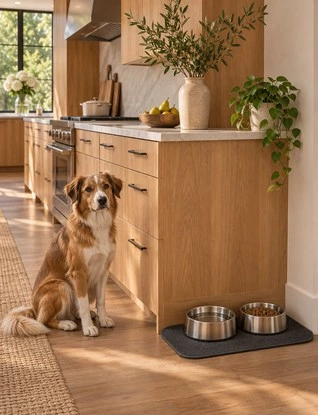
Start a pet-friendly cabinetry plan by walking through three routines: getting out the door, serving food and water, and cleaning up. Put the supplies used for each task near where it happens. Then decide which storage deserves a permanent cabinet and which pieces need to come out for washing or move as the household changes.
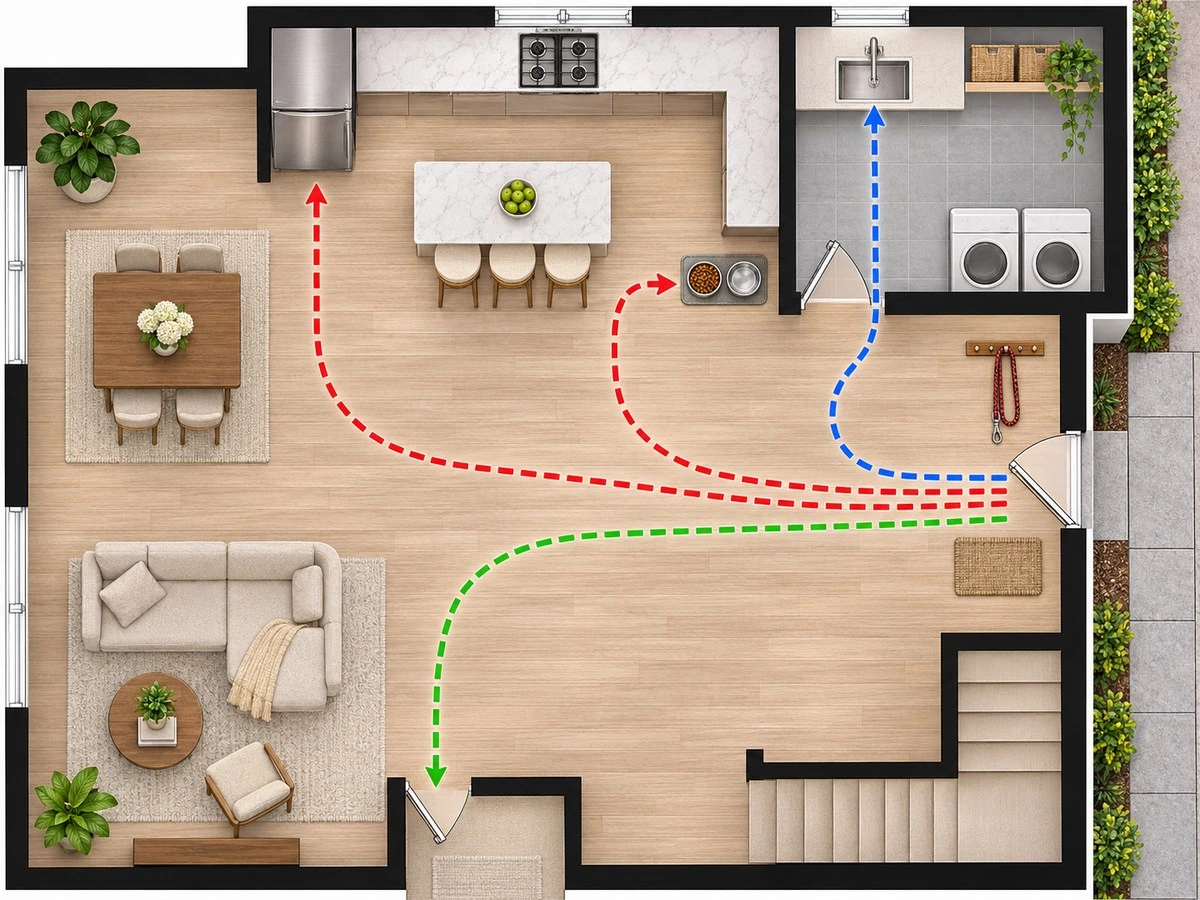
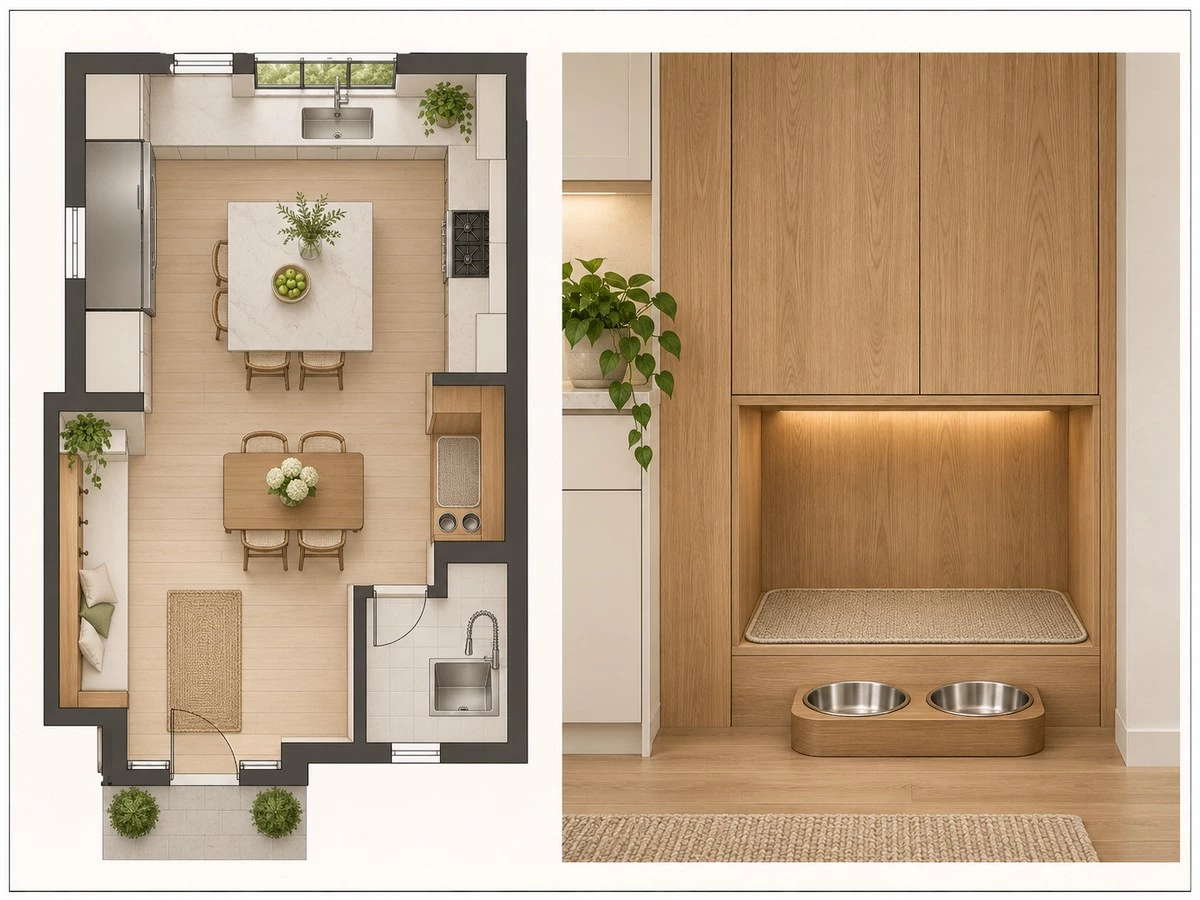
Consider a home where walks start at the side entry, meals are served at the quiet end of the kitchen, and bowls are washed in the utility room. A leash hook near the door, a movable mat in the kitchen, and a utility compartment can serve those routines without forcing them into one cabinet. Test the arrangement while people are using the rooms, especially when doors and drawers are open.
Key Takeaways
- Mark walking, feeding, and cleanup routes on one floor plan.
- Mock up the feeding area with your actual bowls and mat before choosing a fixed niche or movable station.
- Check how you will remove wet pieces and reach the floor, cabinet base, and back edge for cleaning.
Give Each Pet Care Activity a Location
Map the Three Routes During Normal Household Use
Start at the door used for walks. Reach for the leash while another person is putting on shoes or holding the door. If the gear lives in a hallway closet but every walk starts at the side entry, a hook or shallow compartment near that entrance may be enough. Try this location with the door fully open before marking the cabinet position.
Next, carry a bowl from the place you portion food to the place where the pet eats. Repeat the trip while someone unloads the dishwasher. Finally, take a used bowl or damp towel to the cleanup area. Mark where these trips cross and where you need a free hand or temporary landing surface. A short route through a busy kitchen can be less convenient than a slightly longer route around its edge.
Assign Storage by Task and Frequency
| Location | What belongs nearby | What to check |
|---|---|---|
| Entryway | Leash, harness, and everyday walking gear | Reach the gear with the door and bench in use. Give wet towels a temporary spot outside dry storage. |
| Feeding area | Bowls, removable mat and supplies used at each feeding | Lift a full bowl and carry it away while adjacent drawers are open. |
| Utility area | Clean towels, spare supplies, and cleanup items | Give dry supplies, used towels, and food separate places. Keep cleaners away from food and follow their storage labels. |
Keep daily gear closest to the point of use and move duplicates or rarely used items to backup storage. Once you know what belongs by the door, compare benches, hooks, and lockers in the ALLURE custom mudroom cabinet guide.
Compare a Built-In Bowl Niche With a Movable Feeding Station
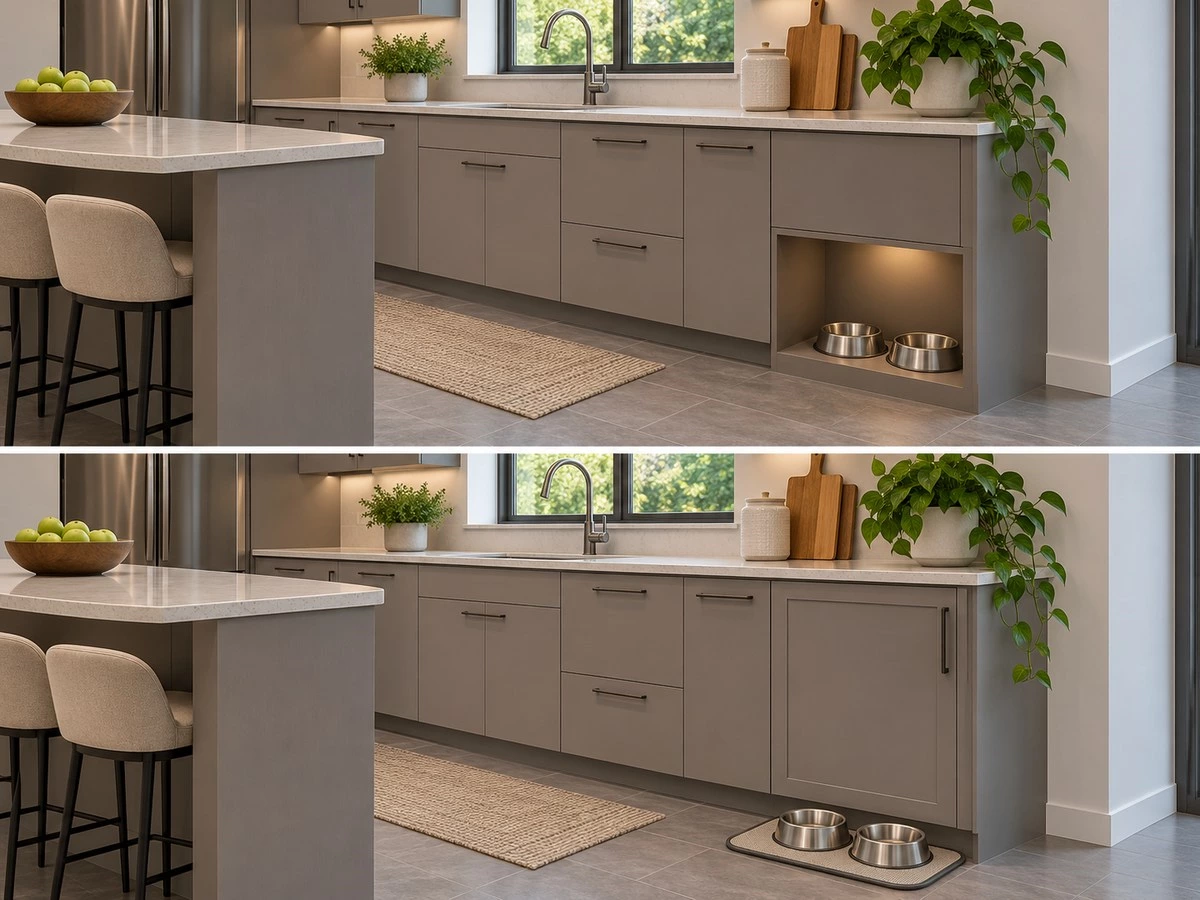
Test an Open Niche With the Bowls You Already Use
Place the actual bowls and mat where the niche would go. Use cardboard to represent the sides and any overhead panel, then lift a full bowl while keeping it level. The widest point of the bowl is only part of the measurement. Your hands also need room to grip it, and the mat needs a clear path out. Try wiping the rear corners with the bowls removed.
A pet feeding station cabinet can make sense when the location works every day, the pet approaches it comfortably, and the removable parts come out easily. If you have to angle the bowl around a cabinet edge or fold the mat to pull it free, try changing the opening or moving the station in front of the cabinet run.
Check How Movable and Pull-Out Stations Work
A movable station can adapt to different bowls, a growing pet, or furniture rearrangements. Check that the tray or mat stays stable during use and that the new location still leaves space to pass. If the station is moved for washing, identify where the bowls will sit until it goes back.
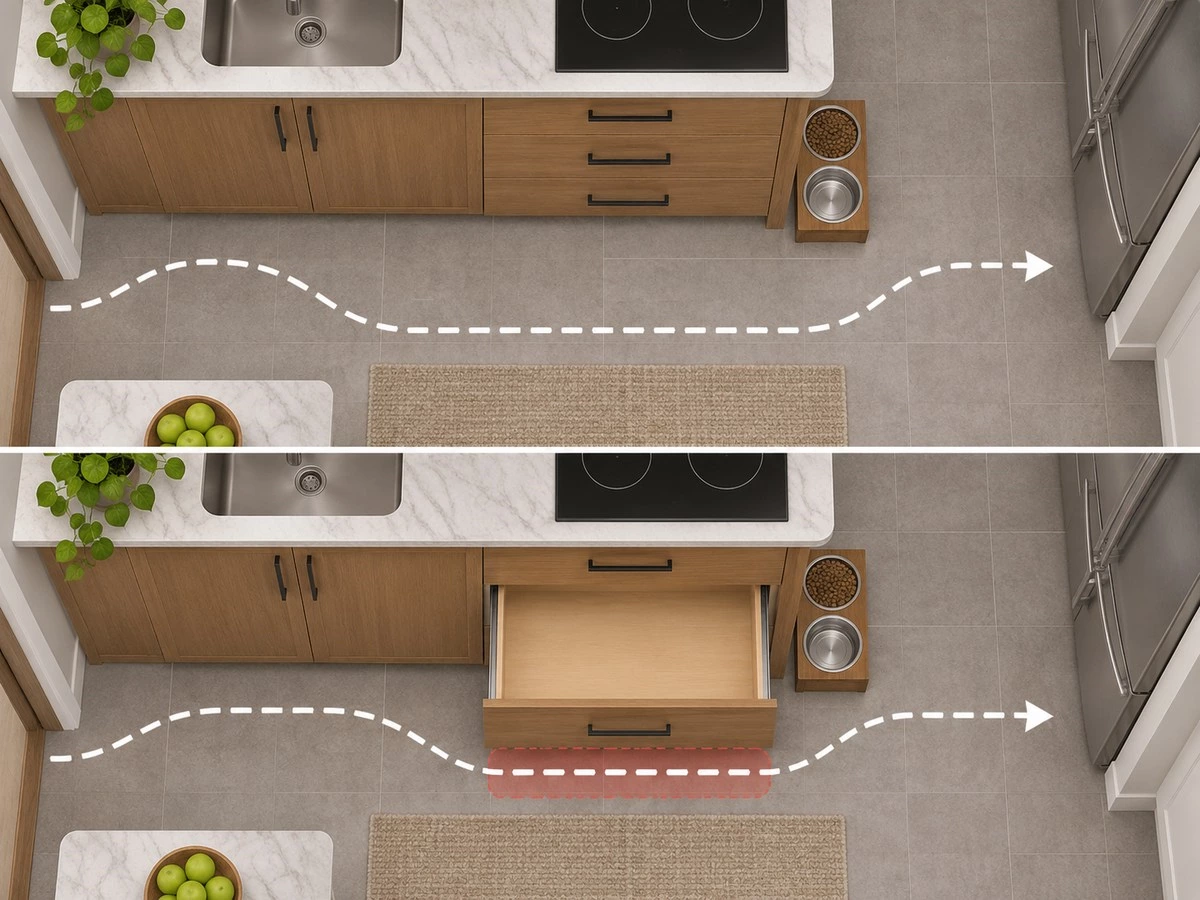
For a pull-out station, show the unit fully extended on the plan. Mark adjacent fronts, the pet’s approach, and the place where someone stands to refill the bowls. If the unit is sometimes closed, keep regular water access available independently.
| Option | When it fits | Check before choosing |
|---|---|---|
| Open niche | Stable feeding location with room to reach inside | Level bowl removal, tray removal and access to the back edge |
| Movable station | Placement or bowl sizes may change | Stability in use and a clear route for washing the tray |
| Pull-out | Space is available in front of the cabinet during use | Open footprint, neighboring fronts, and water access when closed |
Plan Wet Edges and Cleanup Before Selecting Finishes
Follow the Water From the Bowl to the Floor
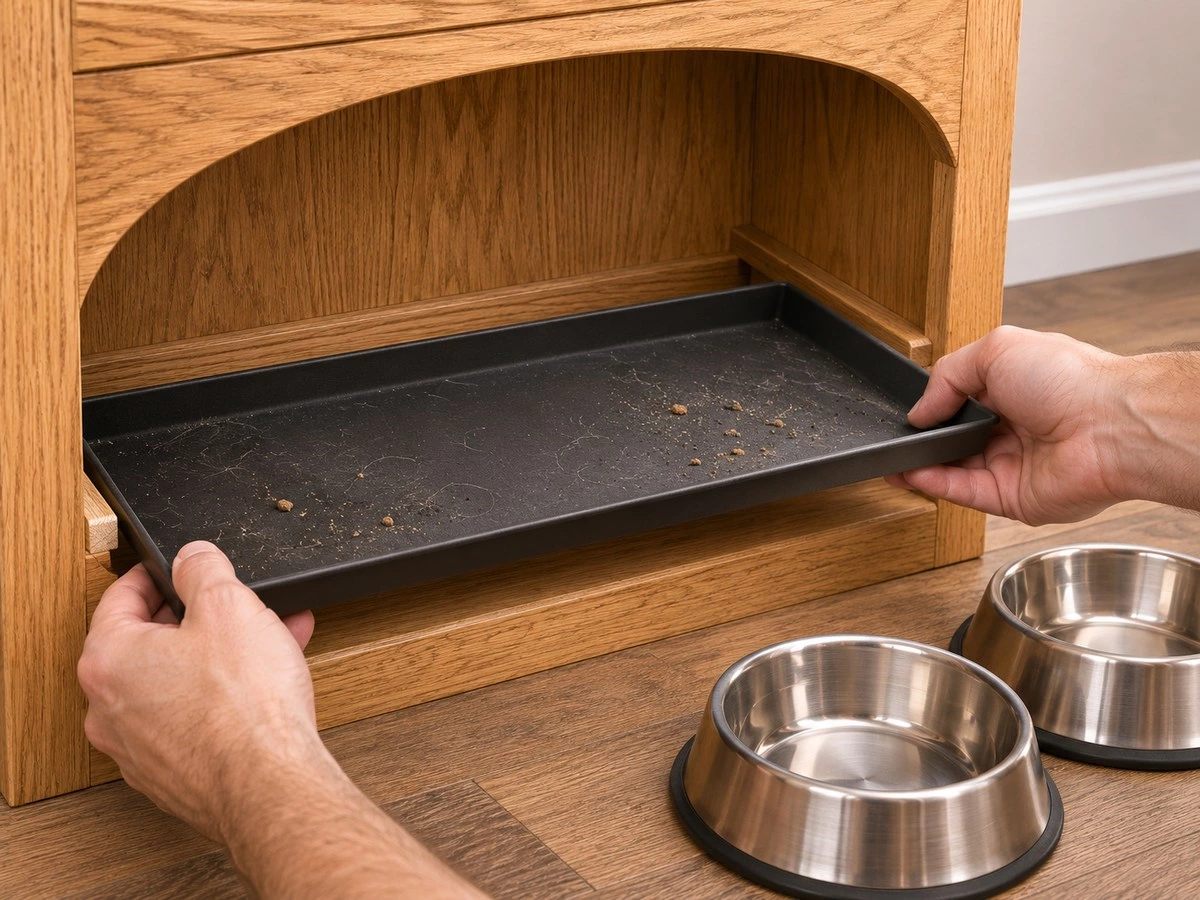
Look at the area around your current bowls after a refill or meal. Check the floor beside the mat, the cabinet base, and the joint at the back. Try the whole cleanup routine: lift the bowls, set them down, remove the mat, wipe underneath, and carry the loose pieces to the sink. If water gathers in a fixed recess, make sure a cloth can reach the corners without tools or dismantling.
Confirm the Cabinet Assembly and Care Instructions
Ask the cabinet team to identify the proposed finish, substrate, and edge treatment near the floor and sides. Review the seams and exposed edges alongside the surface. Use the manufacturer’s care instructions for the selected materials when choosing how to wipe or clean the area.
Set aside separate places for clean bowls, dry supplies, and used towels. A removable bin can help carry items to the wash area. Keep food in conditions specified on its packaging and store cleaning products away from food according to their labels.
Check Pet Routes With Doors and Drawers Open
Draw the Room in Its Busiest Configuration
Trace the route from where the pet usually waits to the bowls. Draw the entry door swing and the extension of nearby drawers using actual dimensions where available. Then place the people in the plan: one sitting at the bench, one carrying a bowl, and another opening a drawer. Repeat the check from the cleanup area back to the feeding spot.
If the routes converge at the same corner, try moving the bowls to the end of the cabinet run or shifting a frequently used drawer to another bay. A movable station lets you live with the revised location before committing to cabinet changes.
Review a Pet Opening as Its Own Design Decision
Define where the opening leads and what task it supports. Review the approach on both sides, including nearby doors, steps, and furniture. Ask the project team to confirm the clear opening required for the animal and hardware, the surrounding construction, and access for inspection and cleaning. Avoid using an enclosed cabinet recess as a pet living space.
The ALLURE bookcase with a pet door offers a product reference for discussing how an opening can sit beside storage. Assess the proposed opening separately for the specific animal, cabinet, and room.
Give the Cabinet Team a Practical Brief
Supply the Room Plan and Actual Items
Mark the walking entrance, feeding location, cleanup area, retained furniture, and main circulation paths. Add photographs of nearby doorways, cabinet bases and floor transitions. Measure the widest parts of the bowls, mat, and food containers and include lids, handles, or trays that affect how they are lifted.
For a pet supply storage cabinet that also serves the household, list what each compartment should hold and how often it is used. Mark which items need quick access, which should go behind doors, and which should lift out for washing.
Request Views That Show the Layout in Use
Ask for a floor plan with nearby fronts open and an elevation of the feeding area showing the removable parts. Use the drawings to check where a full bowl is lifted, where the tray is set down, and who can pass while a drawer is extended. List unresolved dimensions, hardware, surface care, and site details for confirmation before cabinet approval.
FAQs About Pet-Friendly Cabinetry
Do I Need a Built-In Feeding Station?
No. Try your bowls and mat in the proposed spot first. Consider a niche if the location works during normal use and both pieces come out comfortably.
Where Should I Put Pet Bowls in a Busy Kitchen?
Start with a stable spot clear of the main passage and frequently opened fronts. Test it during meal preparation and while unloading the dishwasher.
Can Pet Supplies Share a Utility Cabinet?
Yes. Assign separate places for food, clean supplies, and used towels. Store cleaning products away from food and according to their labels.
Can a Pull-Out Hold the Pet’s Regular Water Bowl?
Check how the pet gets water when the pull-out is closed. Set up regular water access separately if the station is sometimes shut or its open position blocks circulation.
What Should I Check Before Adding a Pet Door?
Confirm its purpose, the route on both sides, the clear opening required by the selected product, and how the surrounding cabinet or wall will support the hardware.
Build In the Storage and Keep the Routine Flexible
Before ordering, take out the walking gear, carry a full bowl to the feeding area, and remove the mat for cleaning. Repeat with adjacent cabinet fronts open. Use what you learn to decide where permanent storage helps and which parts you need to lift, wash, or relocate.
Planning cabinetry for a home with pets? Share your floor plan, retained furniture, actual bowl and container sizes, and daily routines with ALLURE to discuss whole-home cabinetry options.