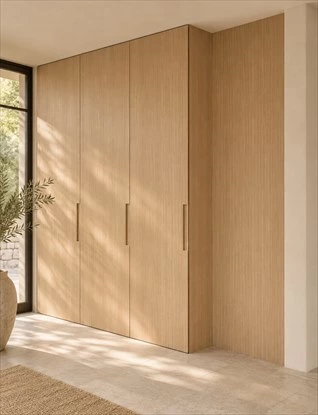
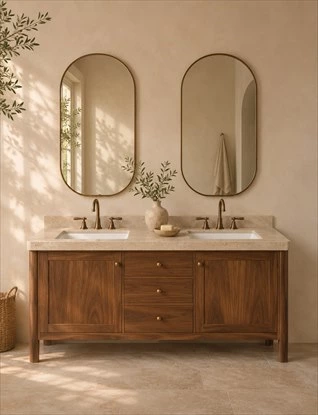
The best HPL brands to shortlist for cabinet doors and interior wall panels include Formica, Wilsonart, Arborite, and Pionite. Start by comparing specific decor and finish samples. Then have your supplier confirm the sheet grade, available size, and edge treatment for each surface.
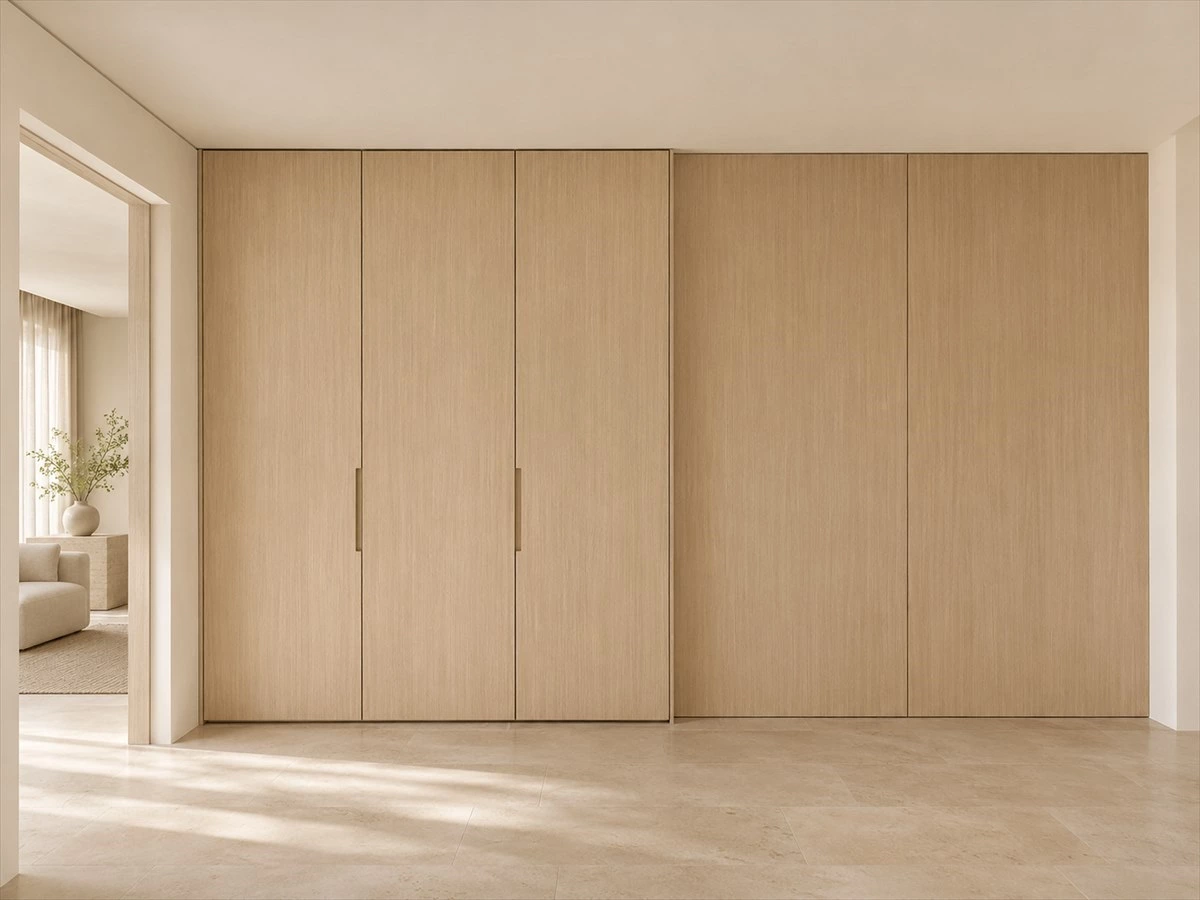
Consider an entryway with a tall storage cabinet next to a paneled wall. The owner wants the two surfaces to look coordinated from the front door. The cabinet needs doors that open freely and edges that look good at arm’s length. The wall needs a seam layout that works around the corner and skirting. A sample review should address both jobs before anyone orders sheets.
Key Takeaways
- Request samples by brand, decor, and finish. Ask the supplier to quote the grade and sheet size separately.
- Review the edge band on a fabricated door sample. Compare face, edge, and back while the door is upright.
- Draw the cabinet door gaps and the fixed wall panel seams together. Check grain direction and room lighting before approving the finish.
- Ask for separate pricing for laminate sheets, fabricated components, and installation.
Best HPL Brands by Use Case
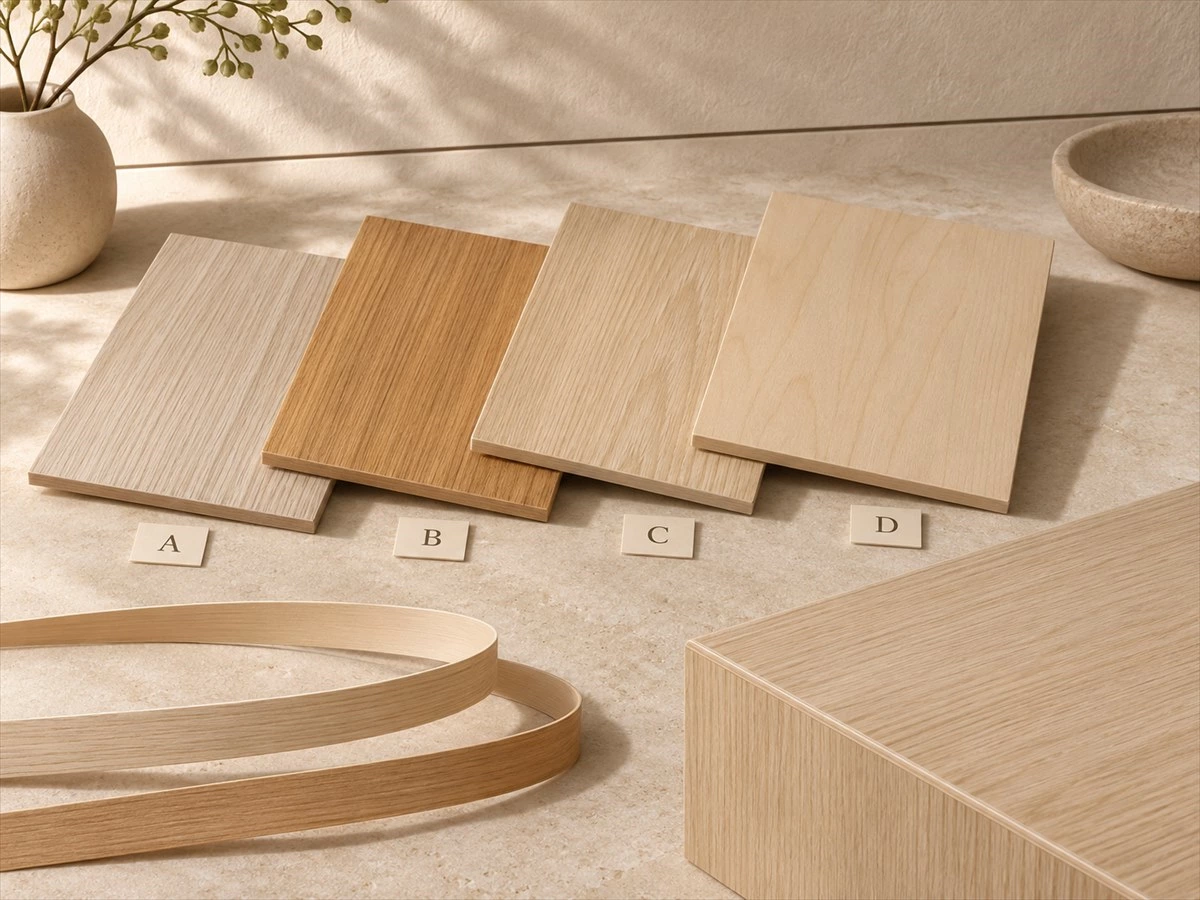
Use these four woodgrains to start sampling. Each line identifies a specific manufacturer reference and the questions that still need a project answer. The options are organized by what to check first.
| Brand and decor | Published finish reference | Where to use the sample | What to confirm with the supplier | Manufacturer source |
|---|---|---|---|---|
| Formica Natural Ash 8843 | WR Woodbrush is listed as standard. 58 Matte is listed as made to order on the product page. | Review a woodgrain cabinet front and its exposed edge. | Confirm grade, sheet size, and edge band. Ask for both finishes only if you want to compare gloss and texture. | Product details · Edge guide |
| Wilsonart Nepal Teak 7209 | 78 FineGrain. Woodgrains brochure shows 7209K-78. | Assess a warmer woodgrain across a bank of cabinet doors. | Confirm exact HPL type, grade, sheet dimensions, grain orientation, and edge code. | Product and sample page · Woodgrains brochure |
| Arborite Lakeshore White Oak W493 | The product page shows TW. An older brochure shows CW. | Compare an oak woodgrain on an upright panel beside the cabinet sample. | Verify the current U.S. finish code in writing, plus thin-sheet grade, sheet dimensions, and edge source. | Product and sample page · Older standard collection brochure |
| Pionite Hardrock Maple WM791 | SD Textured/Suede. The pattern page lists Standard HPL. | Add a maple option if it works with the flooring and trim. | Confirm the grade and available sheet dimensions for WM791 SD, local availability, and edge match. | Pattern and sample page · Availability guide |
These manufacturer references identify samples you can ask for. Your fabricator still needs to confirm the exact sheet configuration, including whether the quantities and sheet dimensions work for the entryway elevation. Verify supply with the distributor serving the project ZIP code.
What We Compared
Scope and source method
ALLURE prepared this shortlist using public manufacturer listings and technical guides for the U.S. market, reviewed on November 16, 2026. The scope is interior thin-sheet decorative high-pressure laminate. The comparison uses published information on decor, finish, and sampling, with project-specific supply and fabrication checks left visible. It is a catalog-based comparison. TFL, exterior cladding and compact laminate fall outside this comparison.
Identify what you are buying
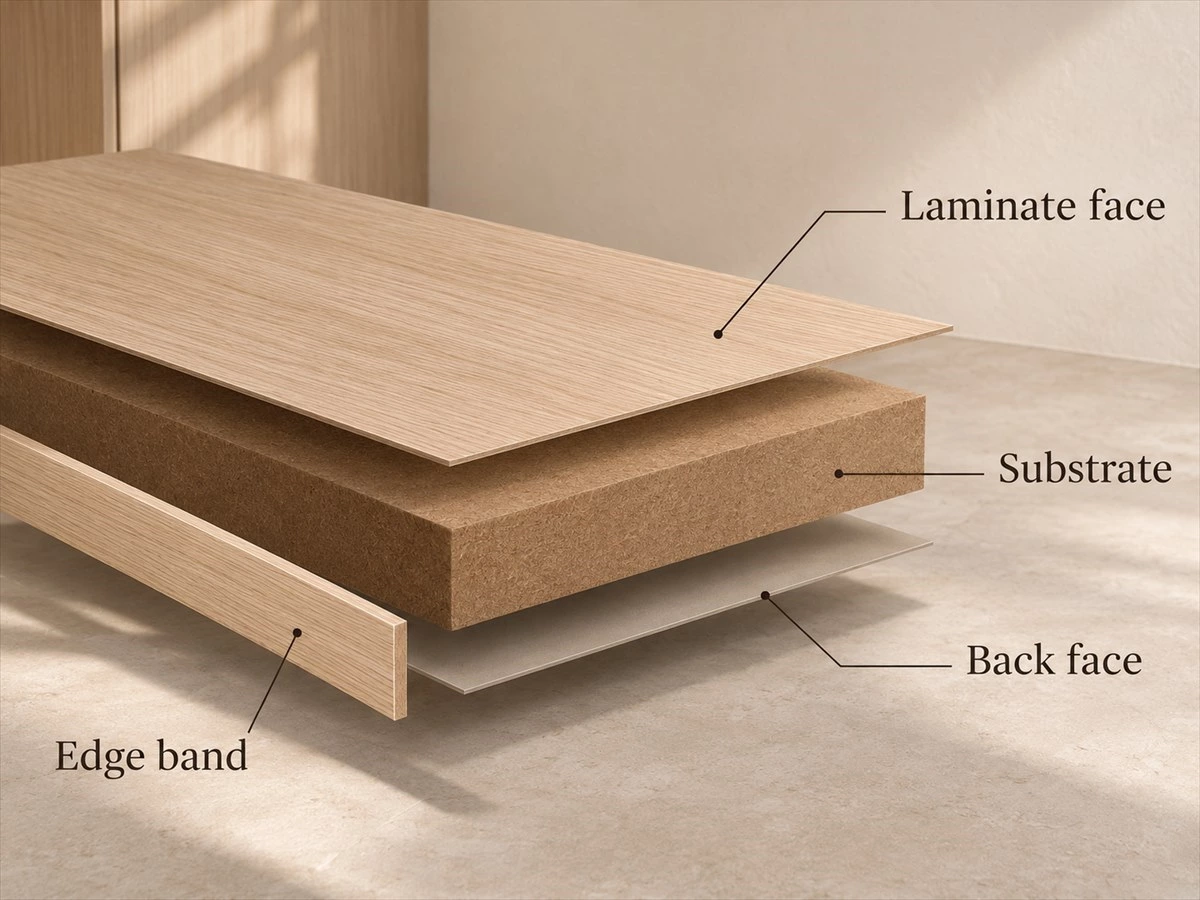
A laminate sheet supplies the decorative surface. The substrate is the board that carries it. A fabricated cabinet door adds the face and back construction, finished edges and any specified machining. On the wall, the assembled panel may also require joints, trim, backing and site fitting. Ask your quote to identify which of those components and services it covers.
For a broader comparison of board and surface options, see the ALLURE HPL vs. melamine guide.
Formica vs. Wilsonart and Other HPL Options
Formica Natural Ash 8843
Request 8843 in WR Woodbrush for the standard sample shown on the product page. If you want a quieter read in the entry, ask about 58 Matte and confirm sample and order availability. Formica’s cross-reference guide lists Döllken 8300AA and REHAU CP20762 for Natural Ash. Use those codes to start the edge-band search and ask for actual strips in the proposed finish beside the approved face. Check the national guide and your distributor for the grade and sheet size that can be ordered for your cut list. Formica Natural Ash · Formica National Product Guide · Formica edge cross-reference
Wilsonart Nepal Teak 7209
Wilsonart describes Nepal Teak as caramel brown with golden undertones and a pronounced grain. Its Woodgrains brochure identifies 7209K-78, and the product page identifies the FineGrain finish. Ask for a full-sheet image or larger sample before drawing the doors. A strong figure can become much more visible across three tall fronts than it is on a small chip. Confirm the appropriate thin-sheet grade, available sheet size along the grain, and the edge-band reference with your supplier. Wilsonart Nepal Teak · Wilsonart Woodgrains brochure
Arborite Lakeshore White Oak W493
Use W493 as a separate oak sample to compare with the ash and teak choices. Arborite’s product page lists TW as the standard HPL finish, while its older brochure pairs W493 with CW. Have a U.S. distributor confirm the finish it can supply and label the sample accordingly. Request the matching grade, sheet size, and a sample of the proposed edge before approving any cabinet or wall panel drawing. Arborite W493 listing · Arborite standard collection brochure
Pionite Hardrock Maple WM791
Panolam lists WM791 in SD Textured/Suede and includes Standard HPL among the product types. The Pionite availability guide lists F28, F39, and G48 as Standard HPL grade codes. Ask which grade and size the local distributor can supply for WM791 SD and which the fabricator proposes for each surface. A pattern page is a starting point for the sample request. The written quote should identify the exact grade and sheet size. Panolam Hardrock Maple · Pionite Product Availability Guide
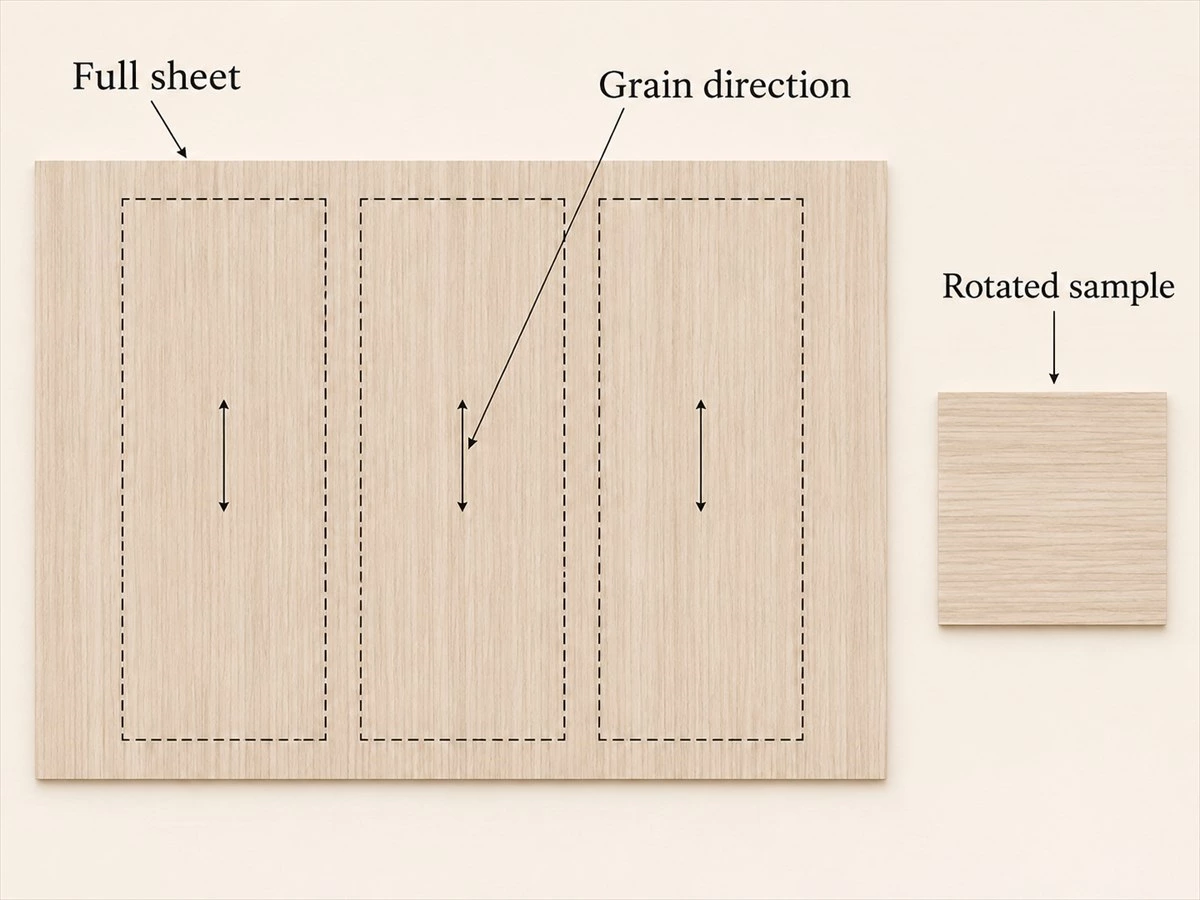
Review the available full-sheet images at comparable scale. Mark the direction of the grain on both the drawing and the cut list so you can see how much sheet width the planned orientation consumes.
Choosing HPL for Cabinet Doors
Approve the edge on a finished corner
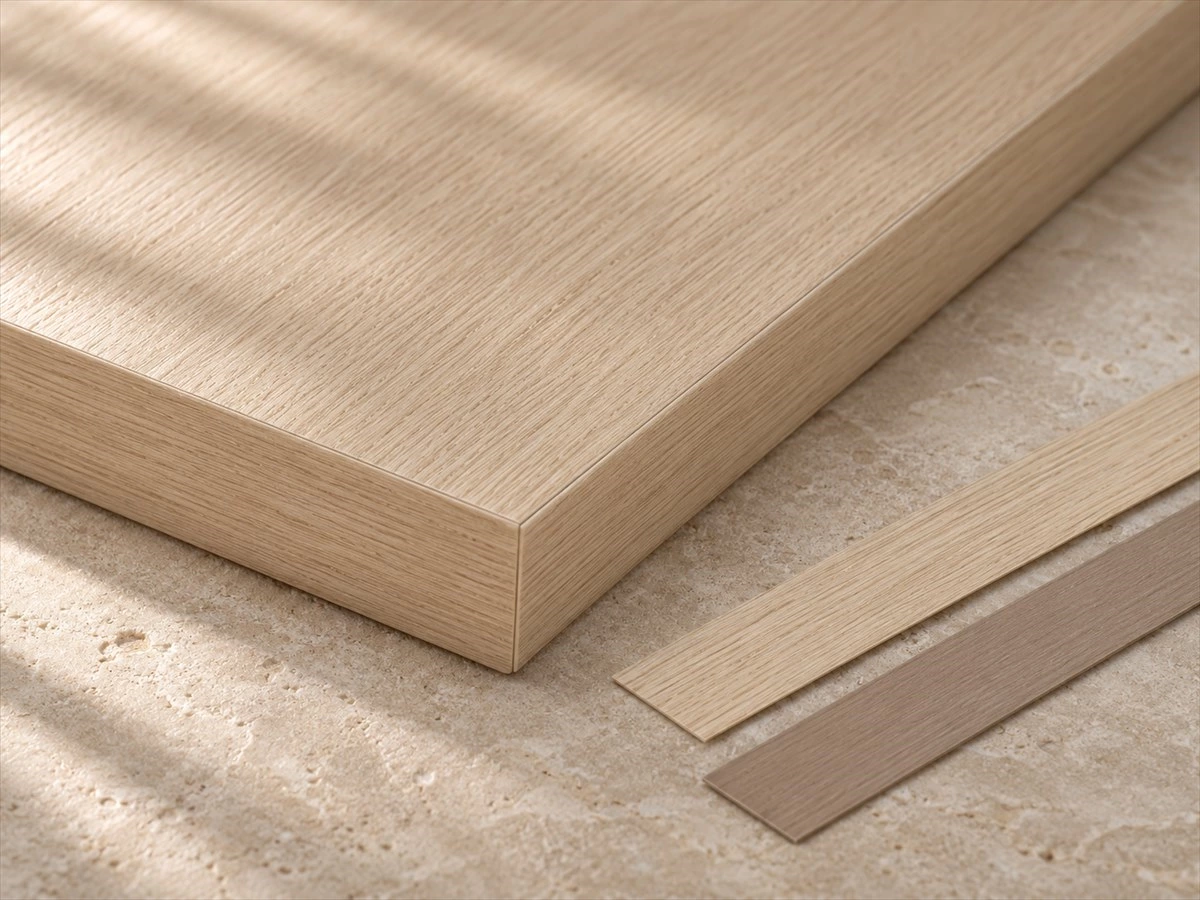
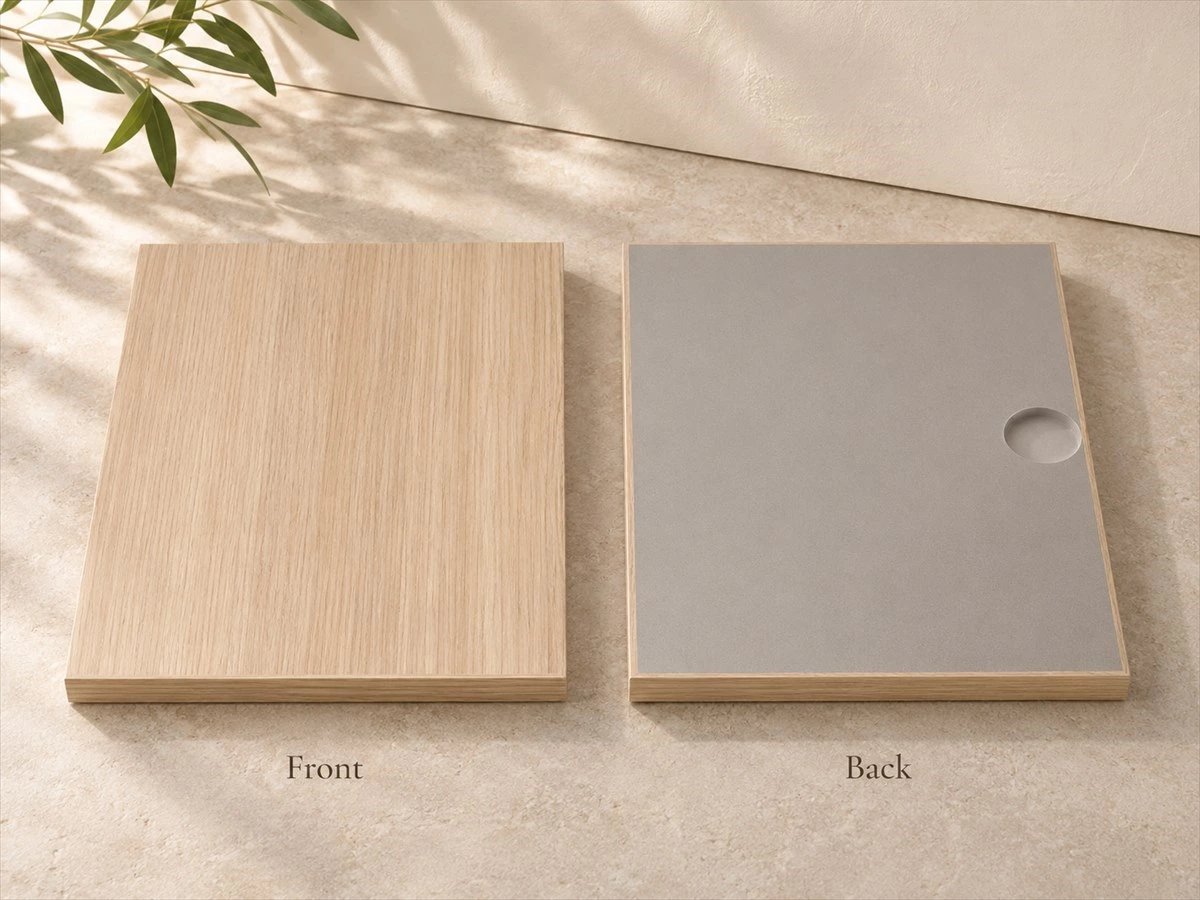
For HPL cabinet doors, put the actual face sample against the proposed edge strip, then review a sample that has already been edged by the fabricator. Move it into daylight and electric light. Look at the exposed corner, especially along the pull side, where the edge and face are often seen together. Compare undertone, sheen, grain direction, and the visibility of the joint line. A coordinated edge can work well where the edge remains visible, even when its pattern differs slightly from the face.
Check the front, back, and door operation together
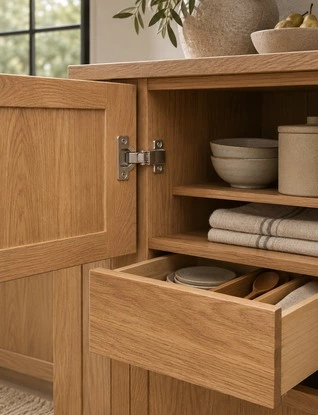
Ask the fabricator for the proposed substrate, face sheet, back construction, edge code, and finished door dimensions on one sample record. Use a door sample to see how the edge finishes at a corner and how the back appears when open. Have the cabinet supplier check the hinge machining, adjacent clearances and the edge detail against the actual door size and hardware.
If specifications call for heat, wear, moisture, fire or emissions performance, request evidence for the exact product or assembly required. Where documentation covers only the laminate sheet, record its scope and check the door or wall assembly separately.
Matching HPL Wall Panels to Cabinet Fronts
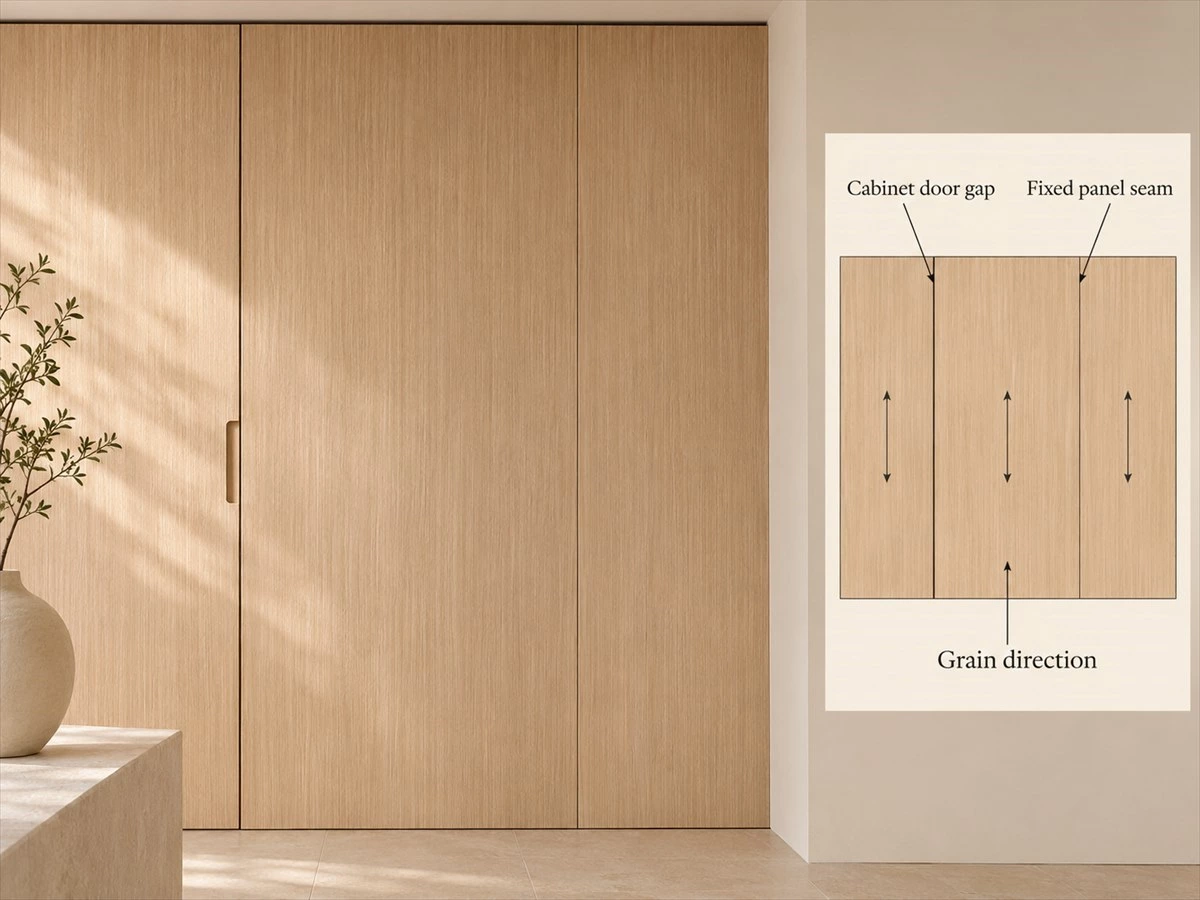
Draw the door gap, fixed seam and corner on one elevation
Mark the last operable cabinet door, the first fixed wall panel, the inside or outside corner, the skirt line, and any access points. Identify how the cabinet run ends and who supplies and installs the filler, reveal, or trim. Ask the fabricator to confirm door swing and handle clearance against the panel face and corner. If a cabinet door gap lines up with a wall seam, verify that each detail can still do its own job.
Compare a matching decor with a coordinated finish
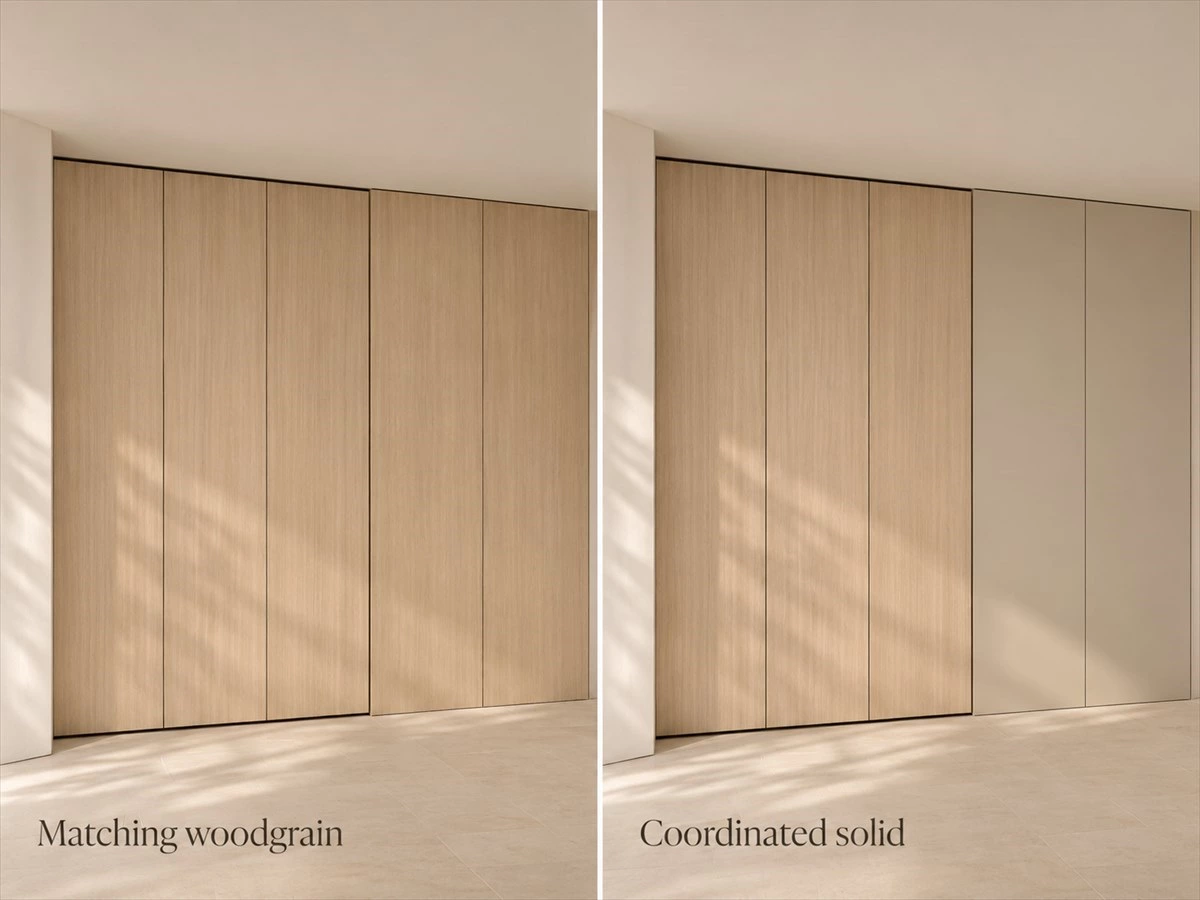
Option A runs the same woodgrain decor across both surfaces. Specify grain direction and identify which pieces, if any, should be cut from a common sheet for continuity. Verify that the necessary sheet sizes are available and decide where a break can occur if a continuous grain layout is impractical.
Option B keeps the wood grain on the cabinet and uses a coordinated solid or quieter texture on the wall. Give the change a clear location, such as a cabinet end or a corner. Keep the same furniture, wall, and light positions in both drawings to make the comparison meaningful.
Bring both samples into the actual light
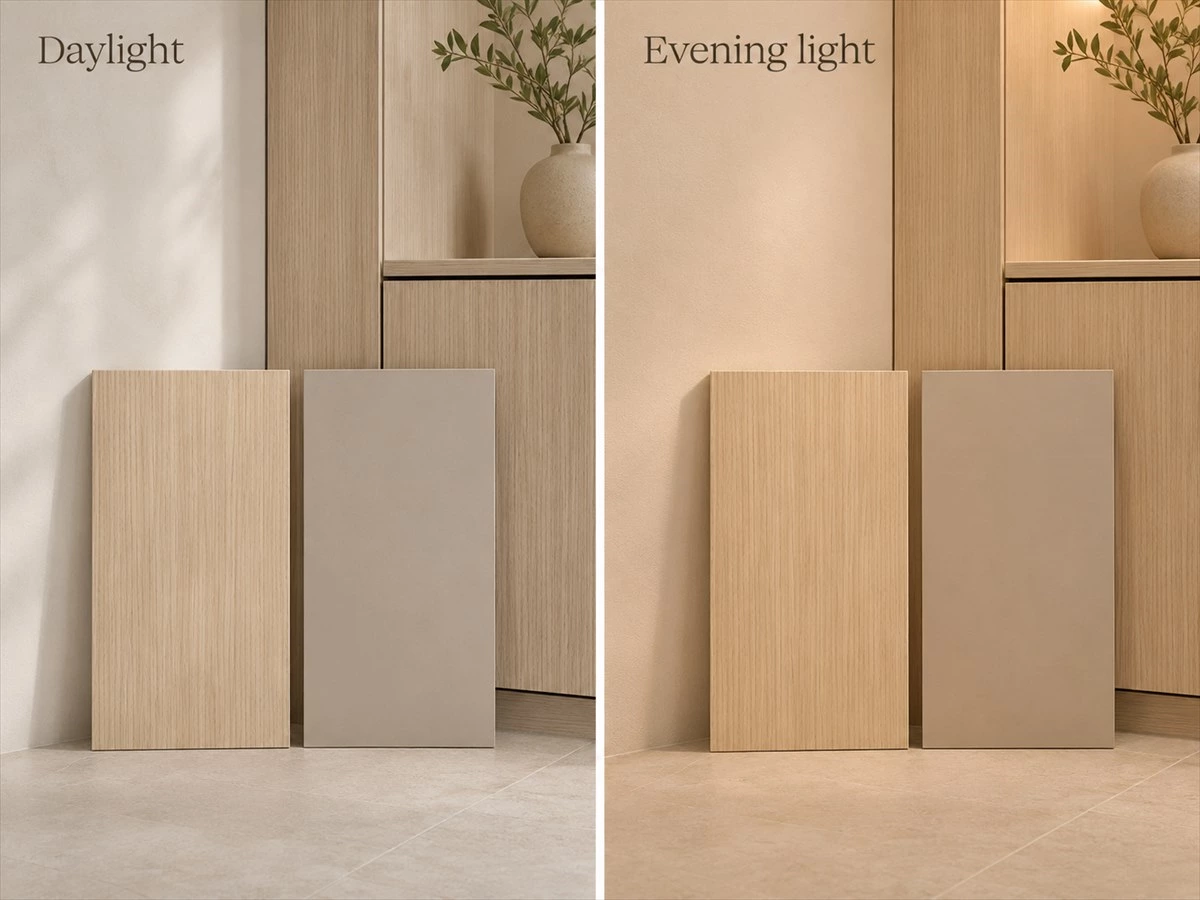
Hold the samples upright at the junction and look from the entry door and along the corridor. Repeat in daylight and with the proposed fixtures switched on. Look for differences in reflected light, especially if different finishes, panel suppliers or production batches are involved. If continuity is critical, record how the supplier will control the lot and how any later replacements will be checked. For a wider look at panel selection and assembly, see the ALLURE wall panel materials guide.
Sample and Quote Checklist
Request the same information for every quote
Send suppliers the same elevation, opening schedule and cut list. At the cabinet-to-wall junction, identify who owns the finished edges, trim and site fitting. Ask the supplier to mark each item as Included, Separate, or Verify, with an owner and due date for anything pending.
| Item | What to request |
|---|---|
| Identification | Brand and line, decor code, finish code, grade, and sheet width and length. Confirm the market and project ZIP code. |
| Sample approval | Face sheet, labeled edge strip, and fabricated corner. Record the approved sample ID, date, and reviewer. |
| Fabrication | Substrate, back construction, edge material and code, grain direction, sheet yield, cutting and hardware machining. |
| Site scope | Site measures, proposed fixing approach, seam layout, corners, fillers, trim, and which party provides and installs each item. |
| Commercial terms | Separate sheet supply, fabrication, delivery, site work and installation. Confirm lead time, minimum order, spare material, and reorder terms. |
Copy this supplier request
Please quote the attached entryway cabinet fronts and wall panels for delivery to [ZIP code]. For each surface, confirm the brand, decor and finish codes, grade, sheet dimensions, grain direction and local availability. Please provide a face sample, the proposed edge strip and a fabricated corner sample. Identify the substrate, back construction, edge code and responsibility for trims and site fitting. List material, fabrication, delivery and installation separately. Include lead time, minimum order, spare material and reorder terms.
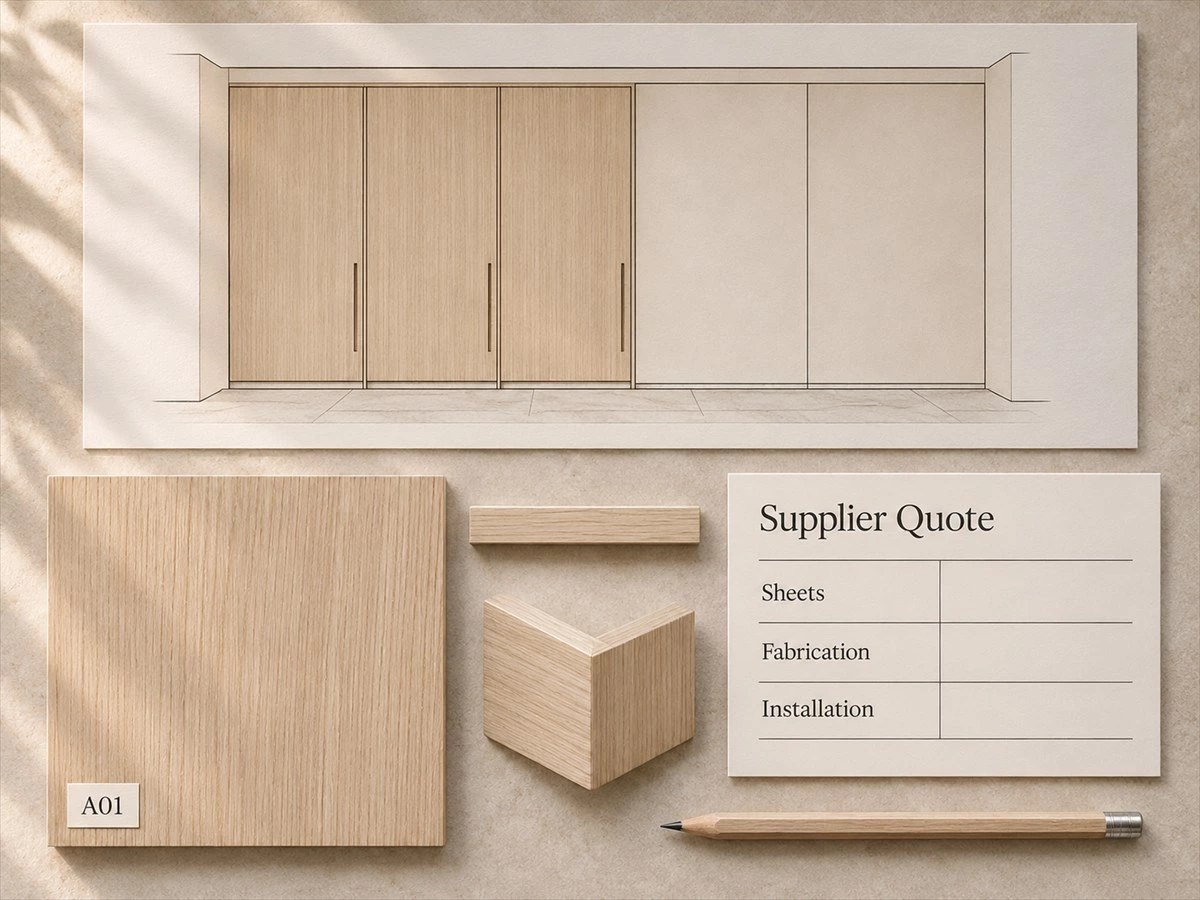
Compare totals after both suppliers have priced the same components and services. If a quotation covers sheets only, keep fabrication and installation visible when calculating the project total.
FAQs About HPL Brands and Samples
Can I use the same HPL decor on cabinet doors and wall panels?
Yes, if the fabricator can supply a suitable grade and size for both surfaces. Approve the finish in the room, then check grain direction, cut layout, panel seams, door gaps, and edges together.
Does a decor code tell me the finish and grade?
A decor code identifies the pattern or color. Record the finish, grade, and sheet dimensions in their own fields and use the manufacturer’s exact order reference on the final quote.
How do I check whether the edge band matches the sample?
Ask for the actual edge strip and a finished corner made with the proposed sheet. Compare their color, sheen, grain, and joint line with the sample upright, in both daylight and the room’s electric light.
Can I approve the wall panel and cabinet doors from small chips?
Use chips for the first selection. For the sign-off, review a full-sheet preview or larger sample for pattern scale, along with an edged corner for the fabrication detail. Examine the proposed junction on the elevation before approving the order.
Send Your Finish Codes and Elevation for Review
Share your preferred finish codes, elevations, and edge details with ALLURE so we can review compatible fabrication options. Include the proposed wall panel seam, grain direction, and anything your supplier still needs to confirm. Explore ALLURE door panels.