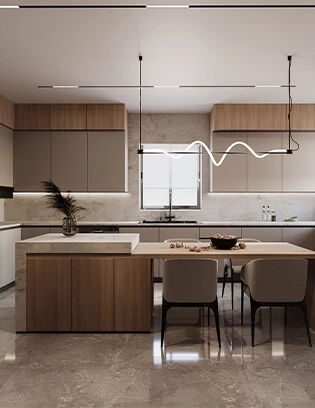
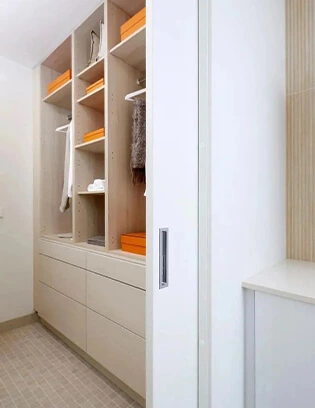
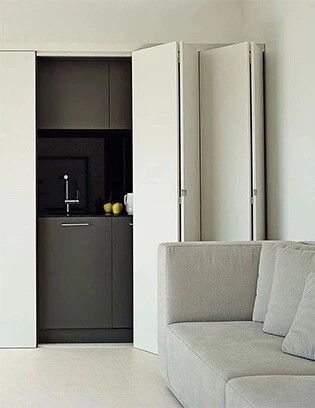
Stainless steel kitchen units can bring a precise, professional character to a residential kitchen while pairing naturally with stone, timber, glass, and darker architectural finishes. Beyond their visual impact, the most successful designs organise preparation, cooking, washing, storage, and social space into clear working zones.
The three examples below show different approaches: a dual-island kitchen for intensive cooking, a warmer wood-and-metal composition, and a modular workshop-inspired layout. When planning a custom scheme, cabinet proportions, appliance access, worktop depth, lighting, and storage should all be considered together. Explore custom kitchen cabinets for coordinated kitchen planning ideas.
Kitchen cabinets made from stainless steel highlight the sleek texture and modern sophistication of the material, bringing a luxurious flair to any kitchen space. Check out 3 high-end stainless steel kitchen designs in the following:
Dual-Island Stainless Steel Kitchen Units
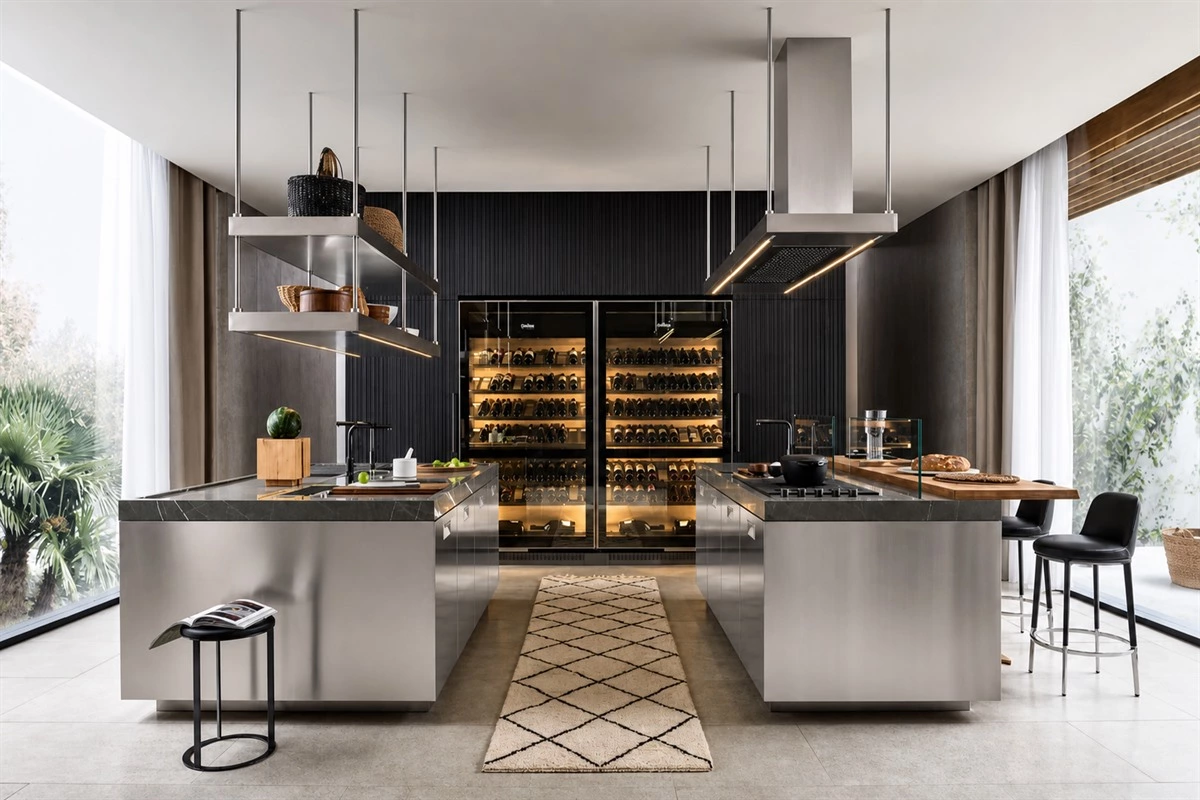
This island kitchen by Arclinea features a signature dual-island layout, along with a large cast-iron stove, a deeper countertop with dual sinks, a suspended range hood, and unique handles—perfect for chefs who seek a professional restaurant experience at home.
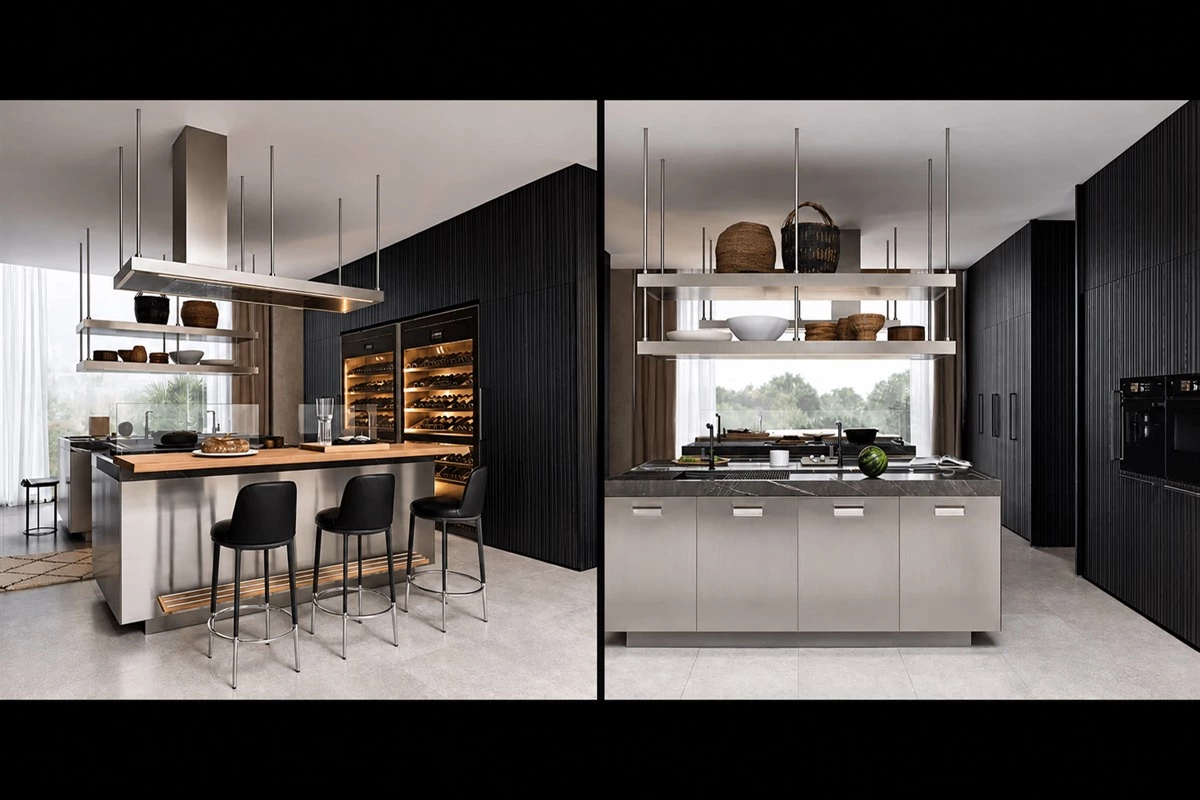
The island spans 242 cm and includes a 60 cm base unit with deep drawers and metallic accents. The recessed handles in nickel pearl are integrated into vintage stainless steel doors.
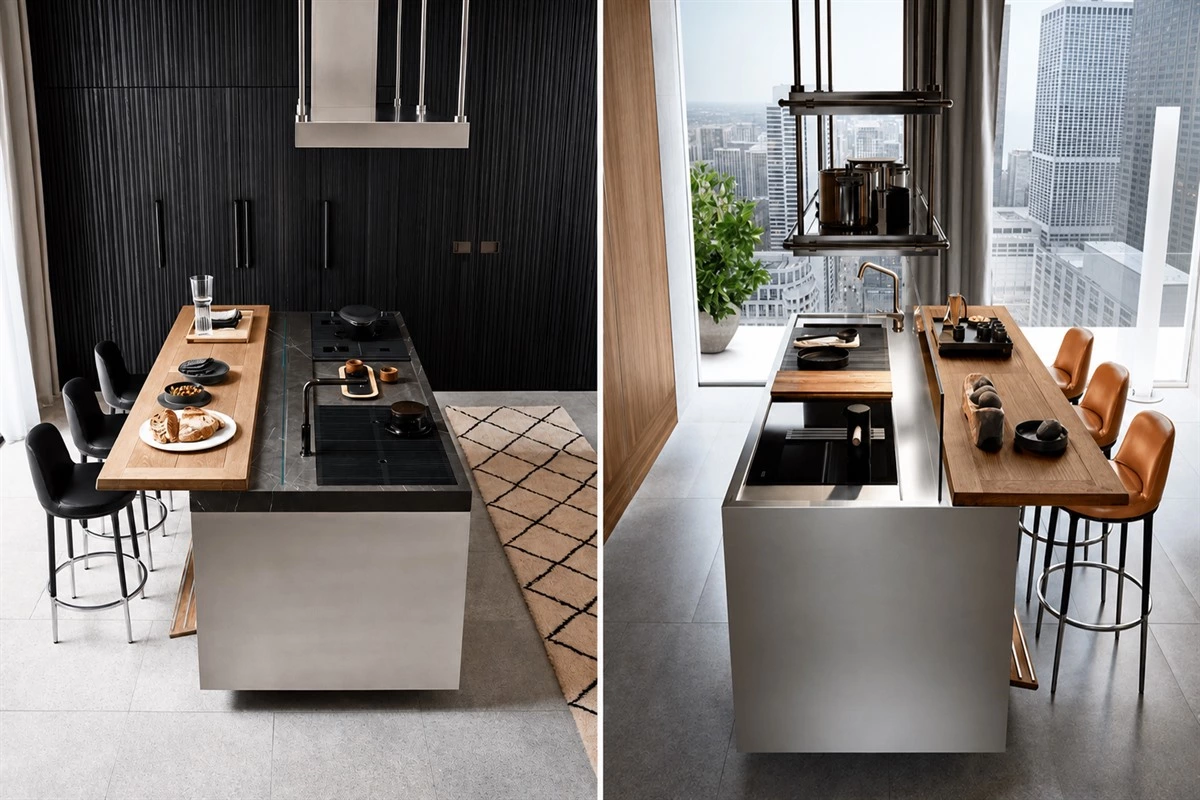
The island features a 31 mm thick stainless steel countertop, a 12 mm deep groove, and a 6 mm front edge. Equipped with an induction cooktop, an integrated sink, a sliding wooden cutting board, and a paper stone grid, it also includes a glass splash guard, stainless steel dual shelves with pipe edges, and built-in 3000K LED lighting.
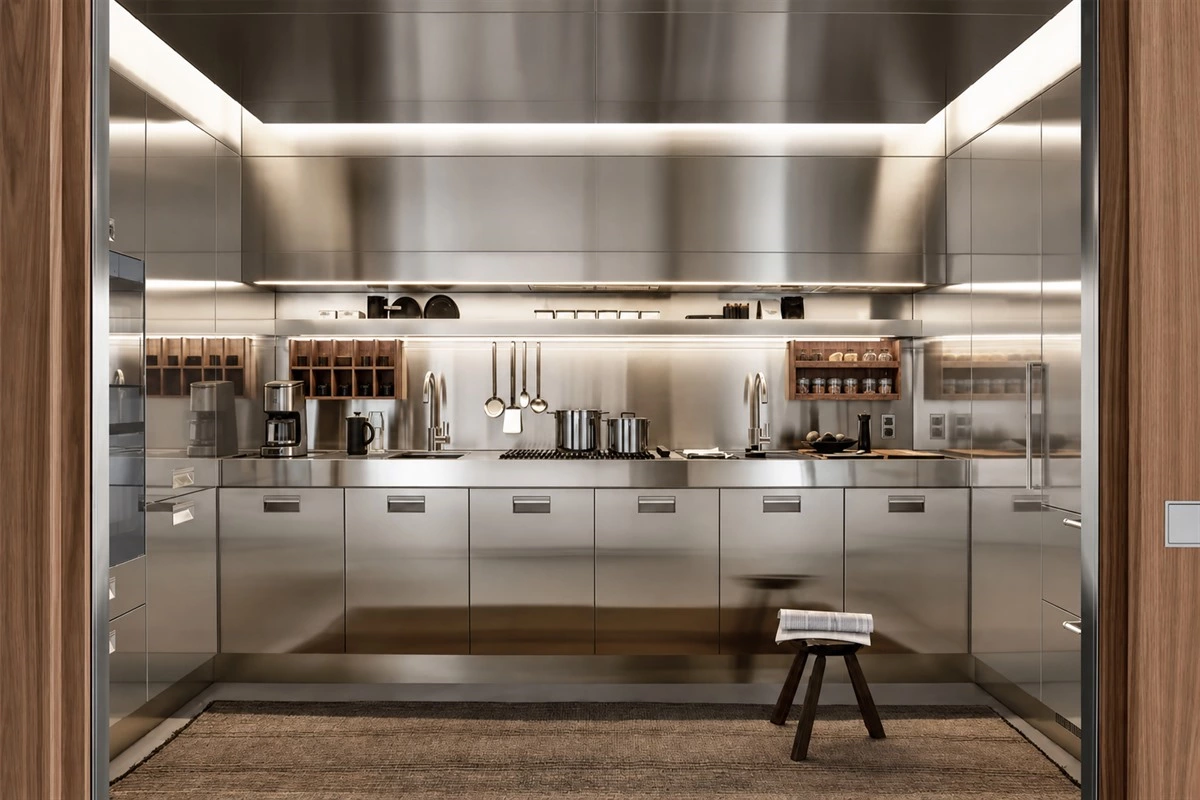
The central workspace has a 12 cm thick countertop with a 12 mm deep groove, ensuring a smooth workflow for preparation, cooking, and cleaning. Each side of the stove is equipped with a sink—one for washing produce and the other for dishes.
In a high-use kitchen, separating preparation, cooking, and cleaning functions can make the room easier to operate with more than one person. Countertop edges, splash protection, drawer access, and task lighting should support the chosen workflow. Browse kitchen countertop options when comparing surface finishes and material combinations.
Wood and Stainless Steel Kitchen Cabinets
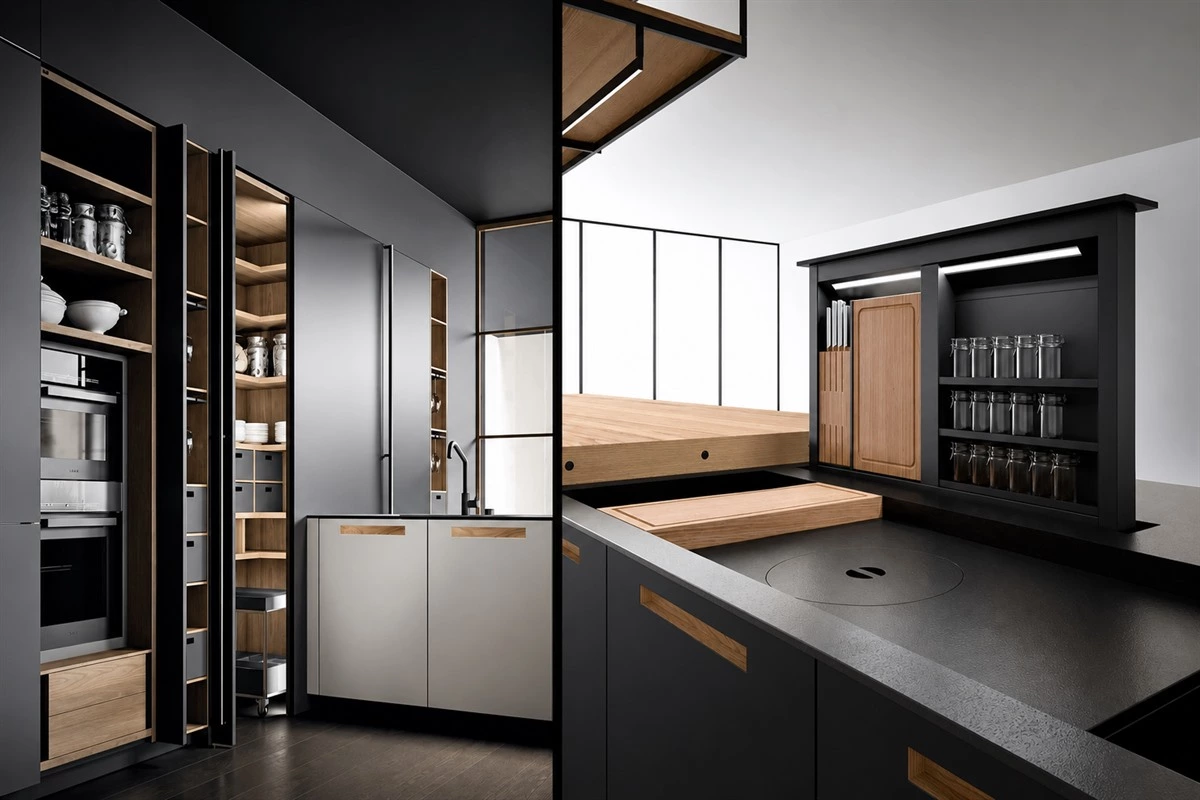
The APRILE SLOANE cabinet by Boffi emphasizes the use of natural materials. The wood is meticulously treated, complemented by protective stainless steel for a refined look.
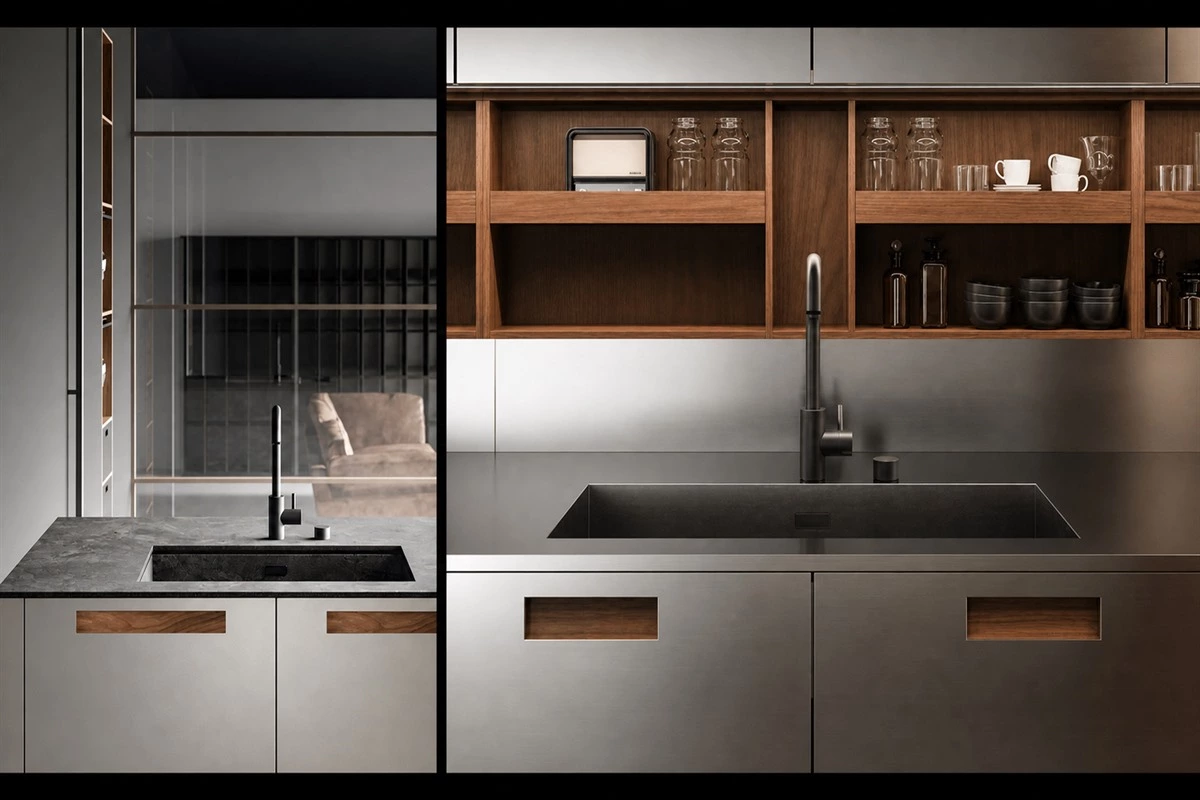
The handle design has been updated to add character to the classic APRILE kitchen system. Both the inner and outer sides of the handles can feature a different material from the cabinet doors to create a striking contrast in color and texture that enhances the visual appeal.
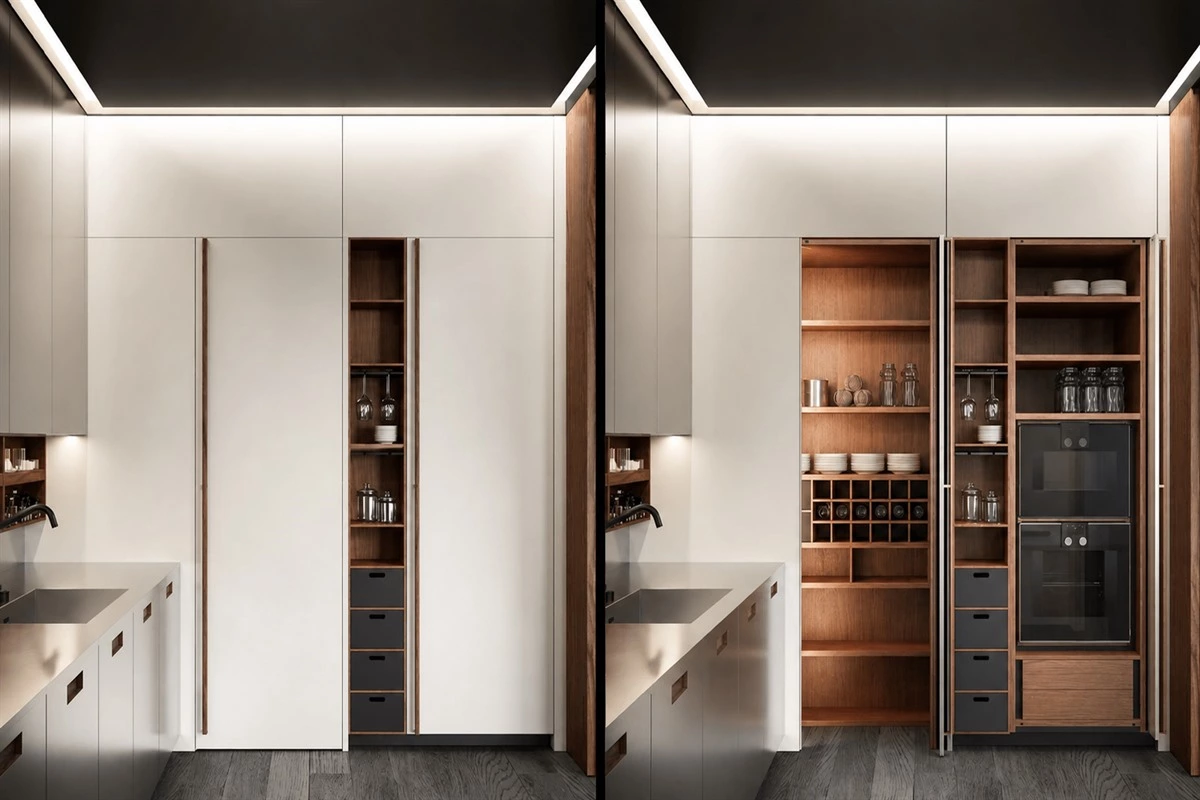
The cabinet system is equally impressive, with doors made from high-quality solid wood and ample internal storage space thoughtfully designed for optimal item placement.
Combining wood with stainless steel can soften the visual coolness of metal while retaining a precise, contemporary look. The relationship between door panels, handle finishes, grain direction, and open storage is especially important. See more door panel finishes and cabinet hardware details for design coordination ideas.
A Modular Kitchen Workshop Layout
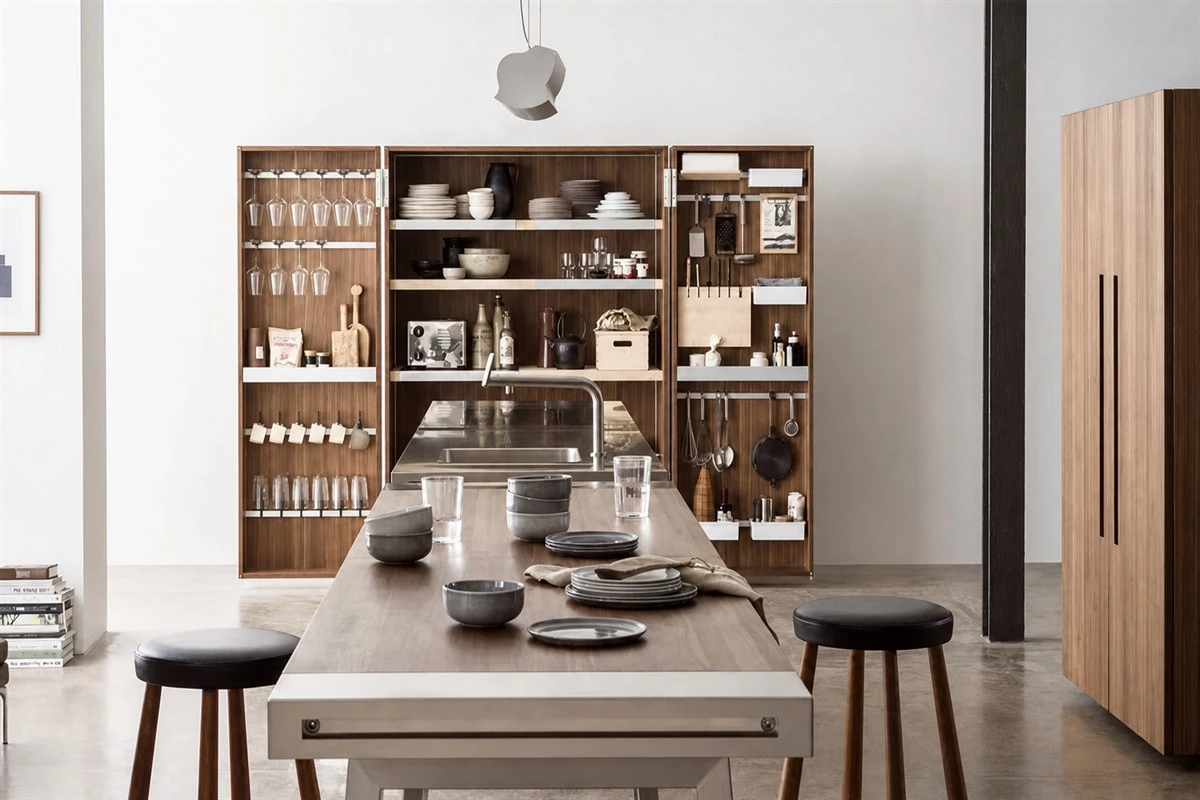
The b2 design from German brand Bulthaup draws inspiration from the golden rule of craftsmanship: arrangement, overview, and interaction with tools and materials. This kitchen workshop allows for exceptional freedom of movement while embracing a unique organizational philosophy.
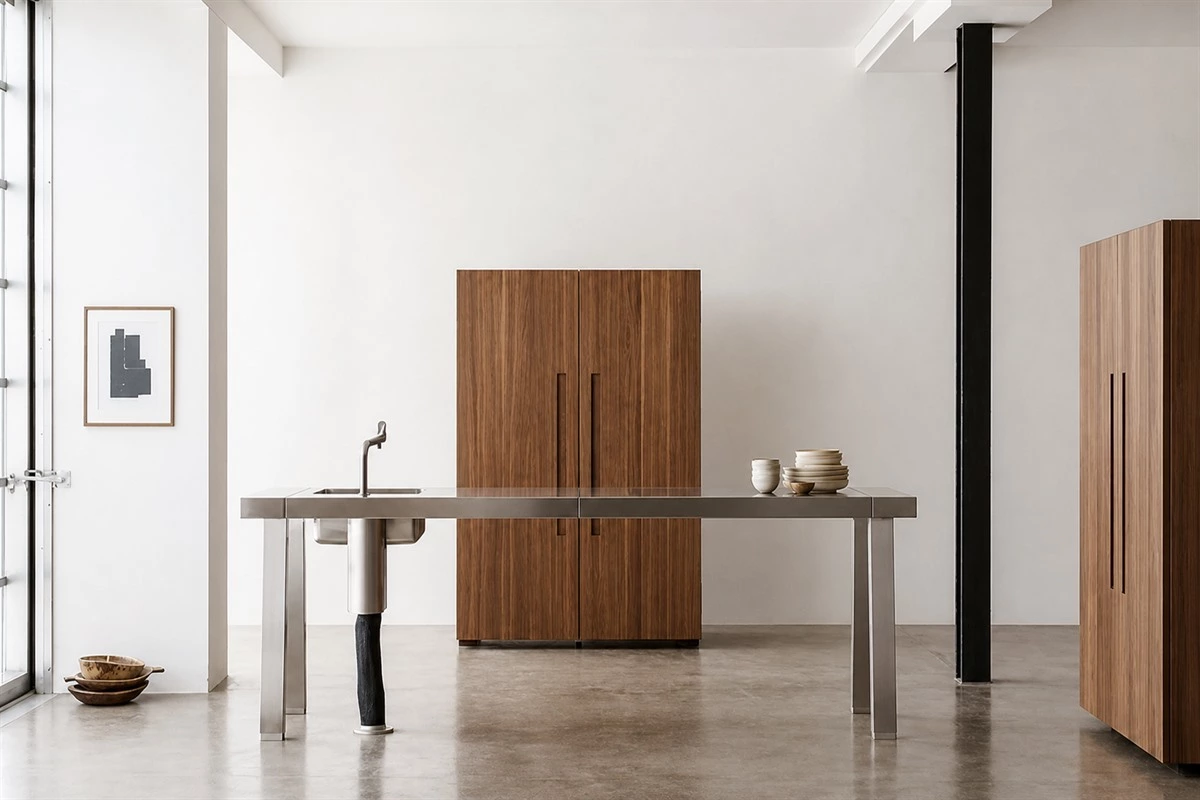
The B2 design simplifies the kitchen into three elements: a work table, a factory cabinet, and an equipment cabinet. These versatile pieces can be creatively arranged in any space, offering flexibility for the modern home.
Modular thinking can be useful in both compact and spacious kitchens. Rather than treating every cabinet as a fixed run, the layout can assign clear roles to a worktable, tall storage, appliance housing, and preparation zone. This approach is particularly useful when the kitchen needs to adapt to entertaining, cooking, and everyday family routines.
How to Plan Stainless Steel Kitchen Units
Stainless steel kitchen units should be planned as part of the entire room, not as an isolated finish. A balanced result considers the lighting, floor colour, wall material, appliance finish, handle design, and amount of visible metal in the composition.
- Define the working zones: Keep preparation, cooking, washing, and storage easy to reach.
- Balance materials: Pair stainless steel with timber, stone, textured panels, or matte finishes for visual warmth and contrast.
- Plan storage internally: Use deep drawers, pull-outs, dividers, and tall units to keep tools organised.
- Coordinate the details: Select handles, recessed pulls, lighting, and countertop edges as one system.
- Consider the wider interior: Link the kitchen to adjacent wall panels, dining furniture, and storage in a whole-house customization project.
The examples above retain the original brand references as design examples only; they do not indicate an affiliation or product supply relationship. For broader kitchen-planning resources, visit the National Kitchen & Bath Association. For information about stainless steel as a material, consult World Stainless.
Frequently Asked Questions
What are stainless steel kitchen units?
Stainless steel kitchen units are cabinets, worktops, shelves, or integrated kitchen elements that use stainless steel as a visible or structural material.
Can stainless steel work in a residential kitchen?
Yes. Stainless steel can be used in residential kitchens when it is balanced with suitable lighting, cabinetry, worktops, and other interior finishes.
How can I make a stainless steel kitchen feel warmer?
Pair metal with wood, stone, warm lighting, textured panels, and comfortable seating. These materials can add contrast while preserving a clean modern appearance.
What storage works well in a stainless steel island?
Deep drawers, pull-out baskets, internal organisers, shelving, and waste-sorting systems can all be incorporated, depending on the island size and intended use.
Can a stainless steel island include a sink or cooktop?
Yes, but the design should be planned around utilities, ventilation, splash control, worktop space, and safe appliance clearances.
Are recessed handles suitable for stainless steel cabinets?
They can create a streamlined, integrated appearance. The final selection should be comfortable to use and suited to the door thickness and cabinet construction.
What countertop materials pair with stainless steel cabinets?
Stainless steel can be paired with stone, quartz, sintered surfaces, solid wood, or other materials depending on the desired contrast, maintenance preference, and overall interior style.
Can a dual-island layout work in a home kitchen?
It can work in larger kitchens with enough circulation space. One island may focus on preparation or cooking while the other supports serving, seating, or cleaning.
How should I light stainless steel kitchen units?
Combine general lighting with focused task lighting at preparation and cooking zones. Internal cabinet lighting can also make storage easier to use.
Are modular kitchen layouts flexible?
Modular layouts can make it easier to assign distinct functions to worktables, storage units, and appliance cabinets. Their suitability depends on the room dimensions and the final kitchen plan.
Conclusion
Stainless steel kitchen units can create a refined kitchen that feels professional, organised, and adaptable. Whether the design uses dual islands, warm wood-and-metal contrasts, or a modular workshop approach, the strongest result comes from careful coordination of workflow, storage, surfaces, lighting, and the wider interior.