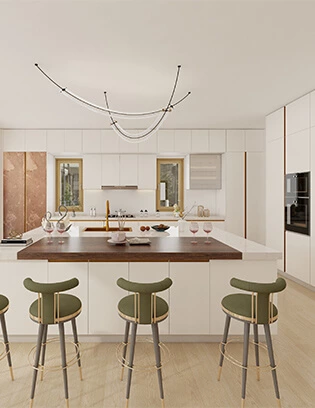
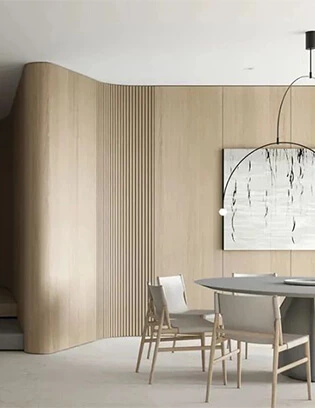
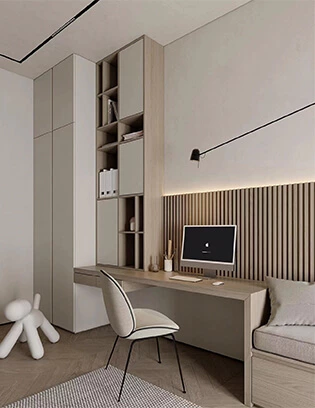
Interior sliding doors can make a home feel more adaptable without adding visual clutter. Pocket doors are one of the most practical options: they slide into a concealed wall cavity instead of opening into the room, helping homeowners create clearer circulation paths, flexible room boundaries, and a more streamlined interior.
Whether the goal is to open a kitchen to a dining room, divide a bedroom and study, conceal a utility area, or improve movement through a compact layout, successful pocket-door planning starts with the wall structure, opening width, hardware, privacy needs, and the surrounding cabinetry or wall finishes.
Pocket doors were once a hallmark of Victorian architecture in the mid-to-late 19th century. However, by the mid-1920s, they began to fall out of favor as hinged doors quickly became the norm. Recently, though, the demand for space-saving solutions and forward-thinking design has brought pocket doors back into the spotlight. Once overlooked, this design has become increasingly common in modern interiors, with its creative potential and functionality now being fully appreciated. These flexible sliding doors effectively divide spaces or, conversely, allow for seamless transitions between them. They save space and contribute to a unique and stylish interior ambiance.
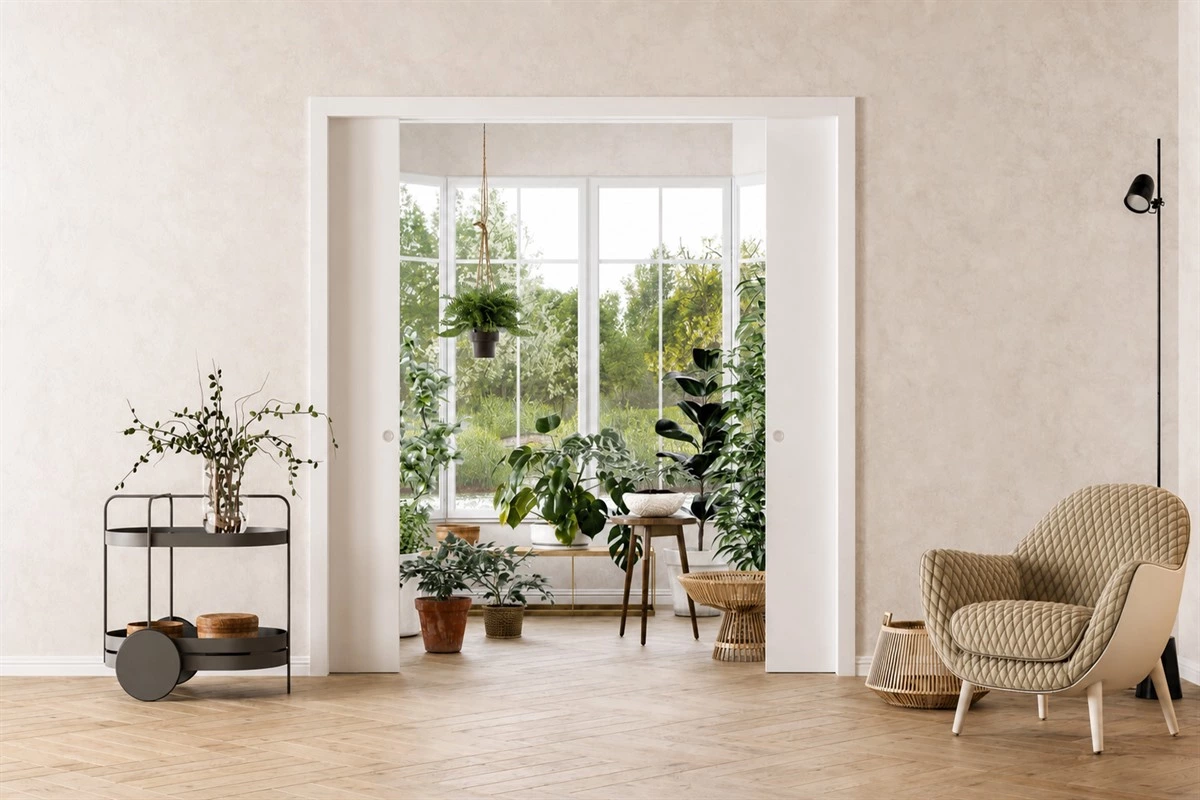
How Pocket Doors Work
Essentially, pocket doors function like sliding doors, but with a reserved space within the wall where the door can retreat when opened. This design saves the required space for the swing radius of a hinged door, freeing up additional space for furniture or movement, and creating the visual impression of a larger room.
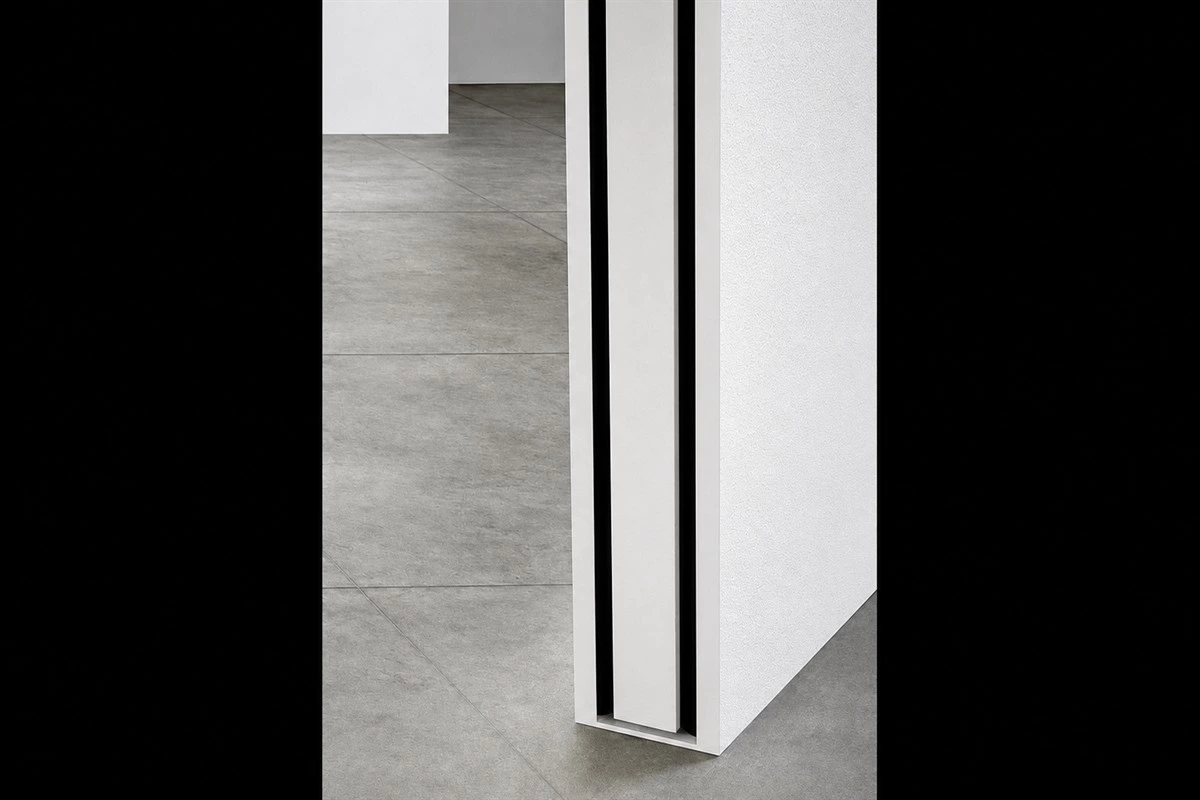
Pocket doors are widely recognized by architects, designers, and homeowners for their unique space-saving capabilities. As our living environments shrink and spaces grow tighter and more precious, these doors are gaining increasing popularity. Keep reading to explore their functional applications in contemporary home interiors and the creative design opportunities they offer.
For a coordinated result, the door leaf, wall cavity, trim detail, pull, and adjacent finishes should be planned together. Explore Allure’s interior doors to compare door styles that can complement a whole-home scheme.
Space Maximization
Compared to traditional doors, a pocket door can save approximately 0.9 square meters of floor space. Additionally, it optimizes wall space, maintaining a clean and uncluttered visual aesthetic. In small spaces where every centimeter matters—such as kitchens, closets, bathrooms, and bedrooms—pocket doors are an ideal choice. They also work well in larger rooms.
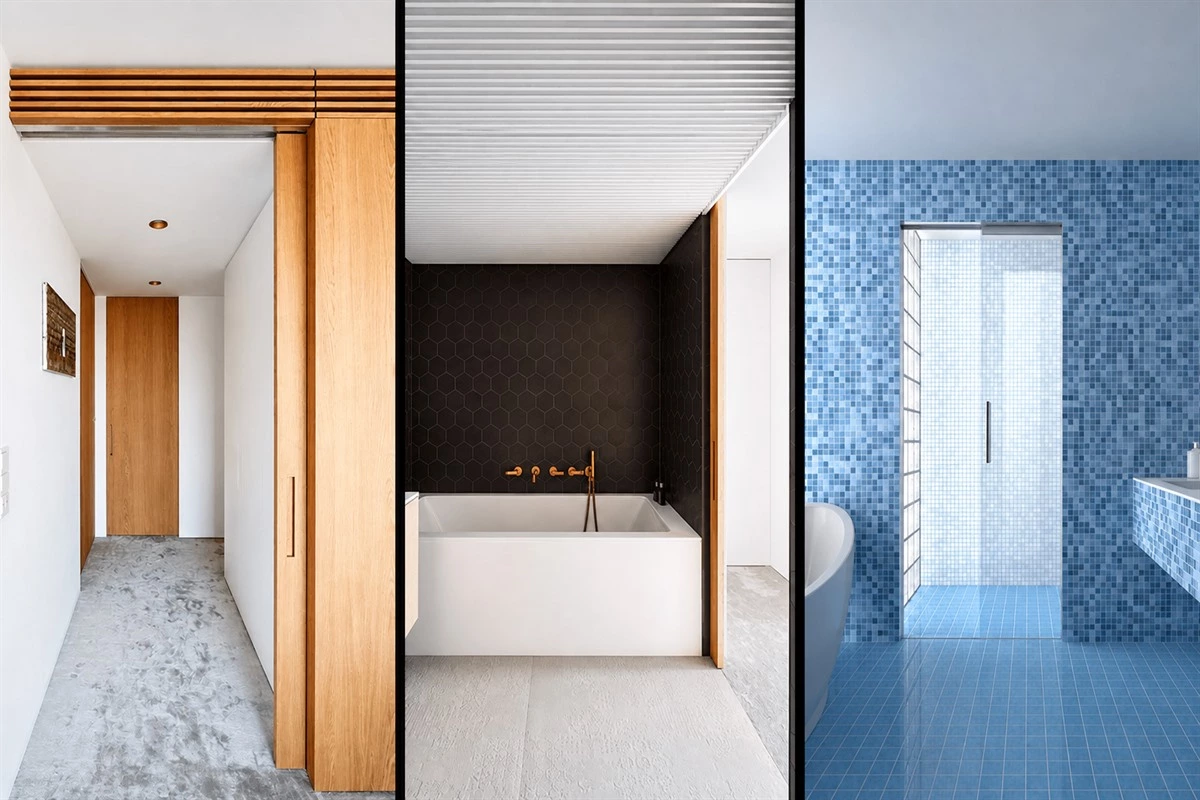
In compact rooms, interior sliding doors can release the area normally reserved for a swinging door. This can make it easier to position bedside furniture, storage units, seating, or kitchen cabinetry. Pocket doors can also be considered beside custom bedroom storage where a clear circulation route is especially valuable.
Smooth Connectivity and Space Division
In a world that demands fluidity between living and working, pocket doors offer the perfect balance. With a simple slide, pocket doors easily separate or connect adjacent spaces. Their hidden design allows for smooth transitions between rooms, for example, to connect a living room to a dining area or a bedroom to a study when a double pocket door is opened. They also provide complete closure and privacy when a space is not in use.
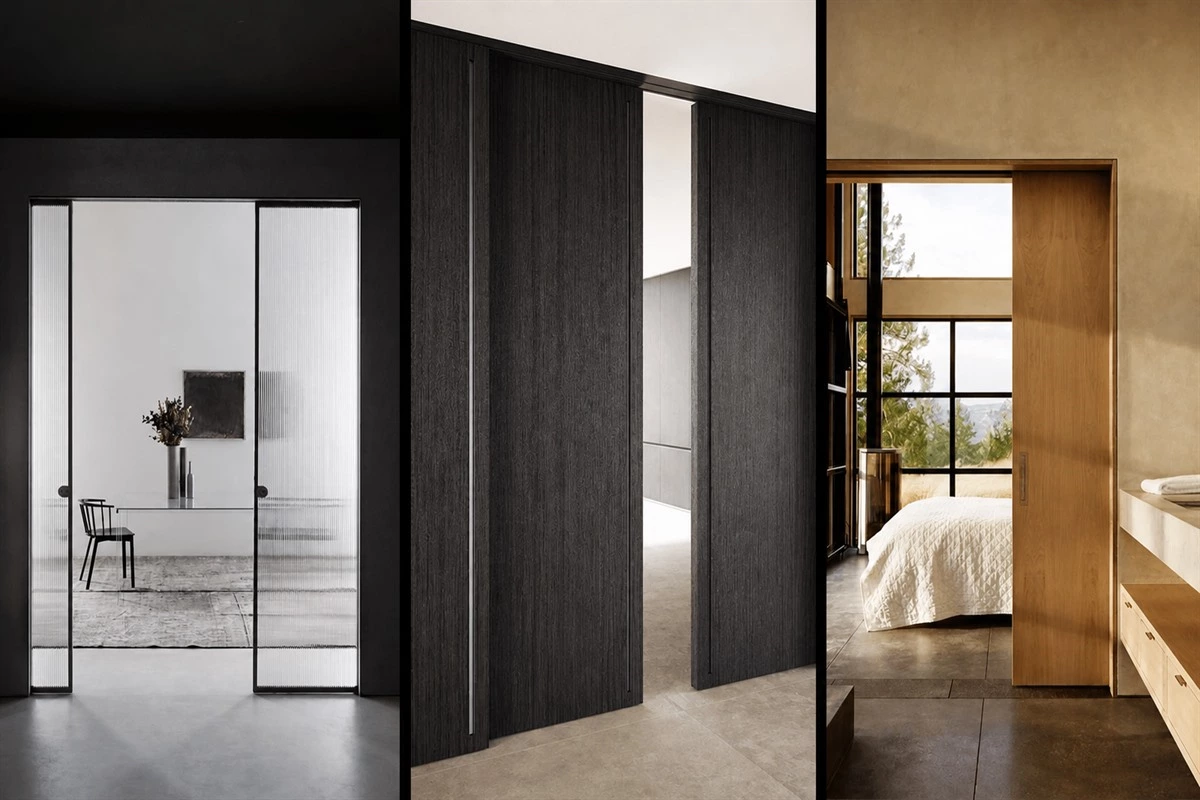
Double pocket doors can be particularly effective between living, dining, study, and bedroom zones because they allow the opening to disappear when a larger shared space is preferred. When privacy is the priority, consider the door’s construction, seals, lock requirements, and the practical sound control expected from the finished room.
Design Aesthetics
Pocket doors also stand out for their endless creative potential. They come in a variety of designs, styles, and materials, such as wood, glass, metal, or a combination of these, and can be paired with various hardware options, including handles or knobs. This allows designers to create striking contrasts with surrounding walls or achieve a cohesive, clean, and minimalist aesthetic with seamless integration. Moreover, pocket doors can be customized in different forms and installation methods to create distinct effects. They can be oversized, flat, or curved, with single doors for smaller spaces and double doors for larger ones.
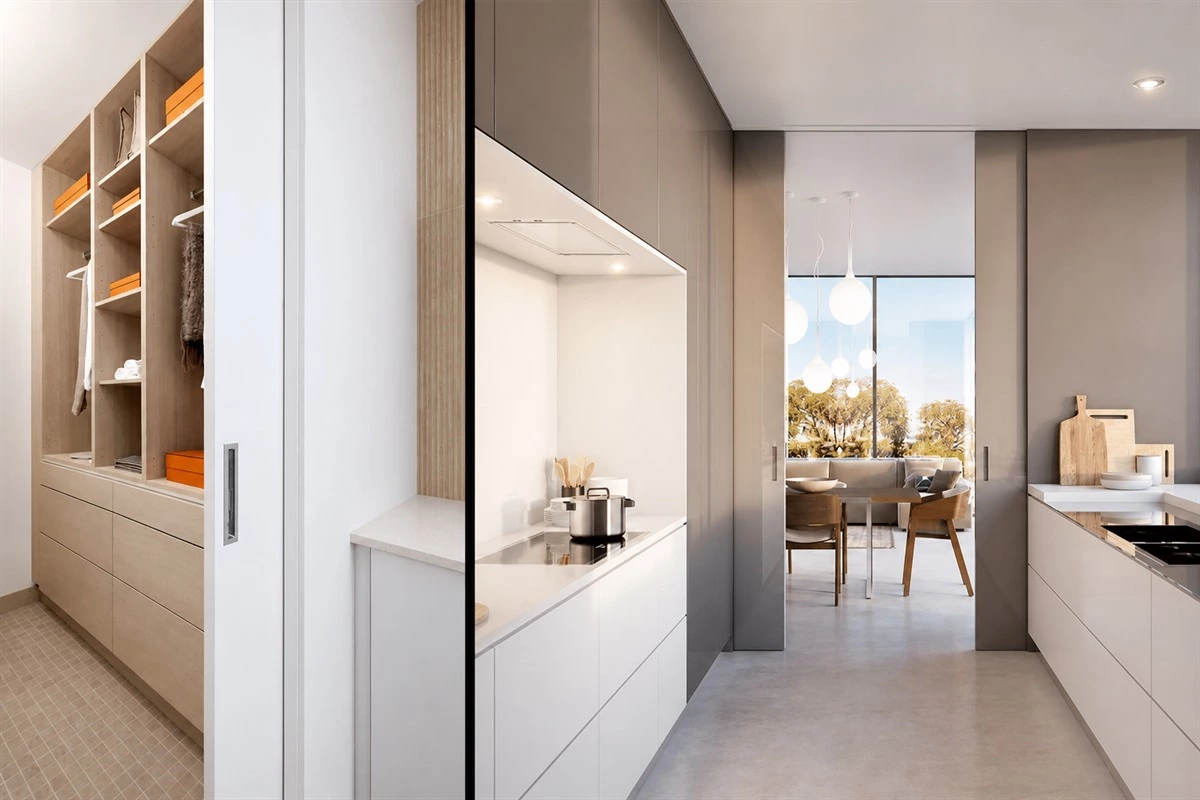
Material selection shapes whether a pocket door becomes a subtle architectural element or a focal point. Wood grain can add warmth, glass can share daylight between rooms, and a finish matched to the surrounding wall can create a nearly hidden transition. Browse door panel finishes and door hardware options when developing these details.
Forward-Thinking and Superior Accessibility
When it comes to improving the flow and accessibility within a home, pocket doors are an excellent choice. They are particularly beneficial for moving large furniture, for wheelchair users, or for others with mobility challenges, as they eliminate the need to reach for a handle to swing the door open. Instead, the door simply slides open to the sides, allowing for easy and unobstructed passage. Of course, the design and user’s specific needs play a significant role, but several key factors should be considered: the door should be wide enough to allow for sufficient clearance, the handle area should be easily accessible to all users, and whether manual or automated, high-quality components or suppliers should be chosen to ensure smooth operation, durability, and ease of maintenance.
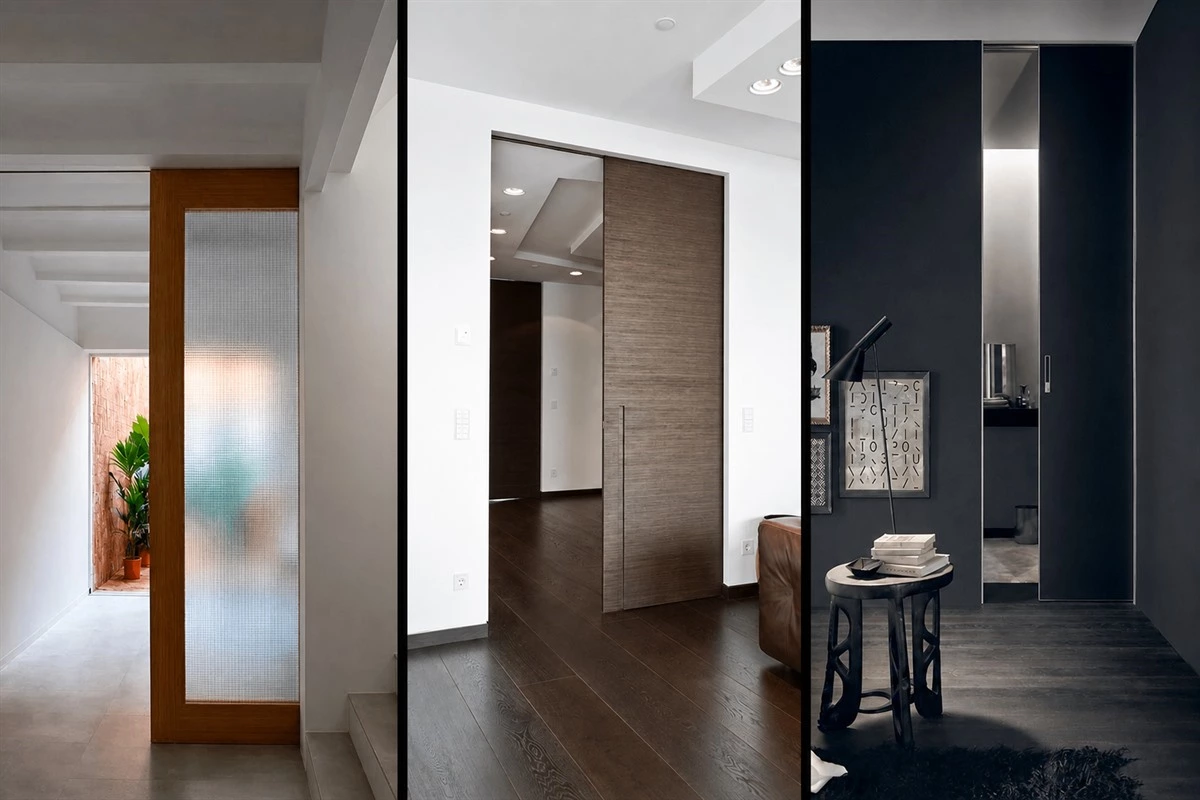
Accessibility needs should be evaluated for the individual project rather than assumed from a single door style. Opening widths, handle placement, floor transitions, automation, and local regulations can all influence the final solution. For formal accessibility guidance, review the official ADA Standards for Accessible Design and confirm applicable local requirements with a qualified professional.
Planning Interior Sliding Doors Before Installation
Because the door disappears into the wall, pocket doors need earlier coordination than ordinary hinged doors. The wall cavity must accommodate the selected door system, while electrical wiring, switches, plumbing, structural elements, and adjacent cabinetry need to be reviewed before construction begins.
- Confirm the wall condition: Check whether the intended pocket location can accept the required cavity and hardware system.
- Choose the opening type: A single pocket door suits narrower openings, while double doors can create a broader connection between two spaces.
- Plan the pull detail: Recessed pulls, edge pulls, locks, and soft-close functions should fit both the door thickness and the intended use.
- Coordinate with furniture: Make sure the open door does not conflict with nearby cabinetry, wall panels, sockets, or built-in storage.
- Think about privacy: Bedrooms, bathrooms, and studies may need more considered door construction and closing details than decorative room dividers.
In a coordinated whole-house customization project, a pocket door can connect cabinetry, wall panelling, and interior doors into one consistent visual language. The National Kitchen & Bath Association also provides useful general design resources for planning functional residential spaces.
Frequently Asked Questions
What are interior sliding doors?
Interior sliding doors move horizontally rather than swinging into a room. Pocket doors are a type of interior sliding door that slide into a concealed wall cavity when open.
What is the difference between a pocket door and a barn door?
A pocket door slides inside the wall, while a barn-style sliding door remains visible on the wall surface when open. The right option depends on available wall space, visual preference, privacy needs, and installation conditions.
Do pocket doors save space?
They can free the floor area normally needed for a hinged door swing. The exact benefit depends on the room layout, door size, furniture arrangement, and the available wall cavity.
Can pocket doors be used in bedrooms?
Yes. They can be used between bedrooms, studies, closets, ensuites, and adjacent living spaces when the wall structure and privacy requirements are suitable.
Are double pocket doors suitable for open-plan interiors?
Yes. Double pocket doors can create a wide opening when open and divide the room when closed, making them useful between living, dining, and work areas.
Can pocket doors use glass panels?
Yes. Glass-panel pocket doors can help share light between rooms while still creating a defined boundary. The glass type and privacy level should be selected for the intended room.
What hardware is needed for a pocket door?
A pocket door system generally includes a track, rollers, guides, stops, and a suitable pull or lock. Optional soft-close or automated components may also be considered.
Can a pocket door be installed in any wall?
Not every wall is suitable. Structural elements, plumbing, electrical wiring, and the required wall cavity must be checked before installation.
Are pocket doors suitable for accessibility-focused homes?
They may help create clearer movement paths, but the final result depends on opening width, handle placement, threshold detail, operating force, and the user’s individual requirements.
How do I choose a pocket-door finish?
Choose a finish that relates to the surrounding interior. Matching the wall or panels creates a seamless look, while contrasting wood, glass, or metal can make the door a feature.
Conclusion
Interior sliding doors offer a flexible way to define, connect, and simplify modern living spaces. Pocket doors are especially valuable where a hinged door would interrupt circulation or limit furniture placement. With careful planning of the wall cavity, door material, hardware, opening width, and surrounding finishes, they can become both a practical space-saving device and a refined part of the interior design.