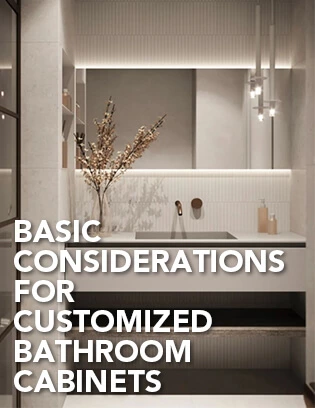
Although the bathroom occupies only a few square meters in the entire house, it needs to fulfill multiple purposes during the renovation, including storage, aesthetics, waterproofing, and moisture resistance. As the sole piece of furniture in the bathroom, the bathroom cabinet not only needs to address most of the storage challenges but also showcase the visual appeal of the space. It can be said that it combines both aesthetics and functionality. In this article, we will reveal how to create a bathroom cabinet that is both visually appealing and practical.
Useful bathroom vanity storage ideas begin with daily routines rather than decoration alone. A well-planned vanity needs to keep frequently used items accessible, protect cabinet materials from repeated splashes, and leave enough clear space for comfortable use. The strongest designs make the bathroom look calmer because storage has been planned where it is needed.
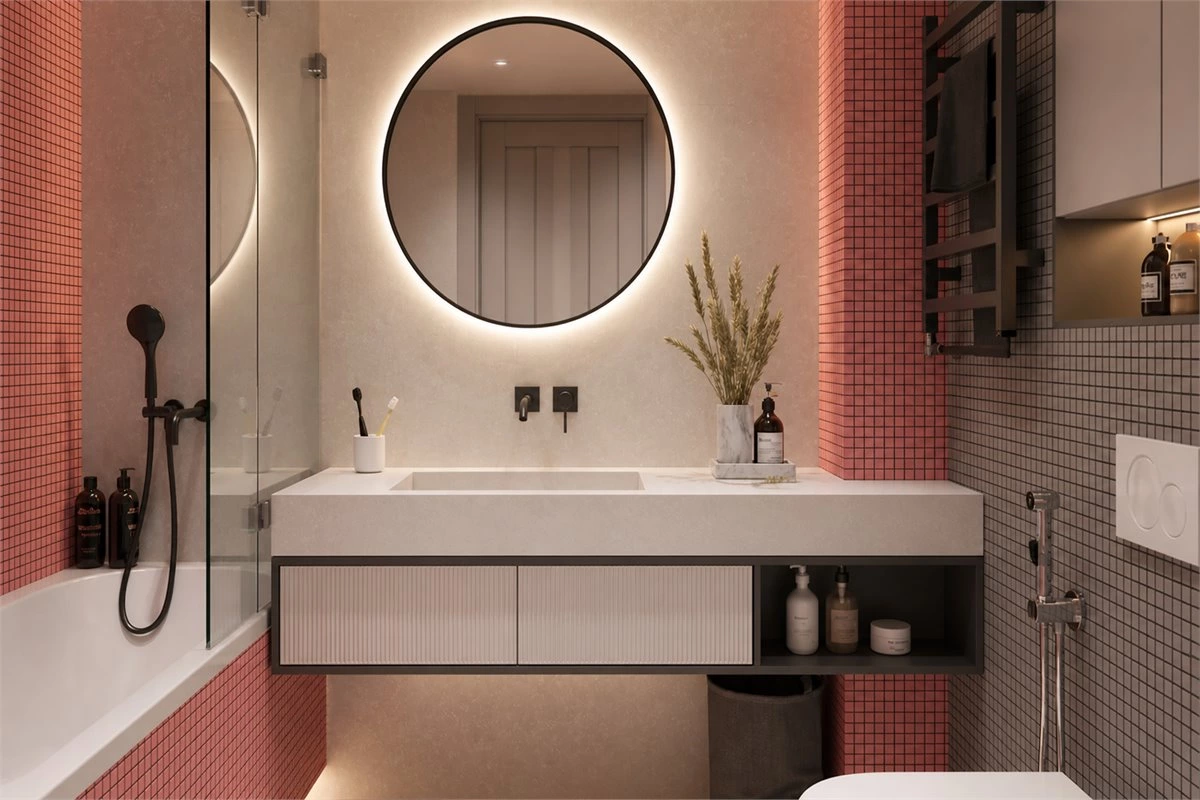
The bathroom cabinet consists of two parts
The wall-mounted mirror cabinet and the basin vanity cabinet. The former provides aesthetics and a grooming effect, while the latter serves as the main storage unit. The size of the vanity cabinet determines the bathroom's storage capacity and overall organizational effect. It is closely related to the size of the bathroom. Please refer to the specific dimensions below.
The mirror cabinet and basin vanity should be planned as one storage system. The mirror cabinet is best for small daily products that need to remain visible but off the countertop, while the vanity cabinet is better for larger items such as towels, extra toiletries, cleaning supplies, and spare household products. Separating these functions prevents a beautiful countertop from becoming a permanent storage surface.
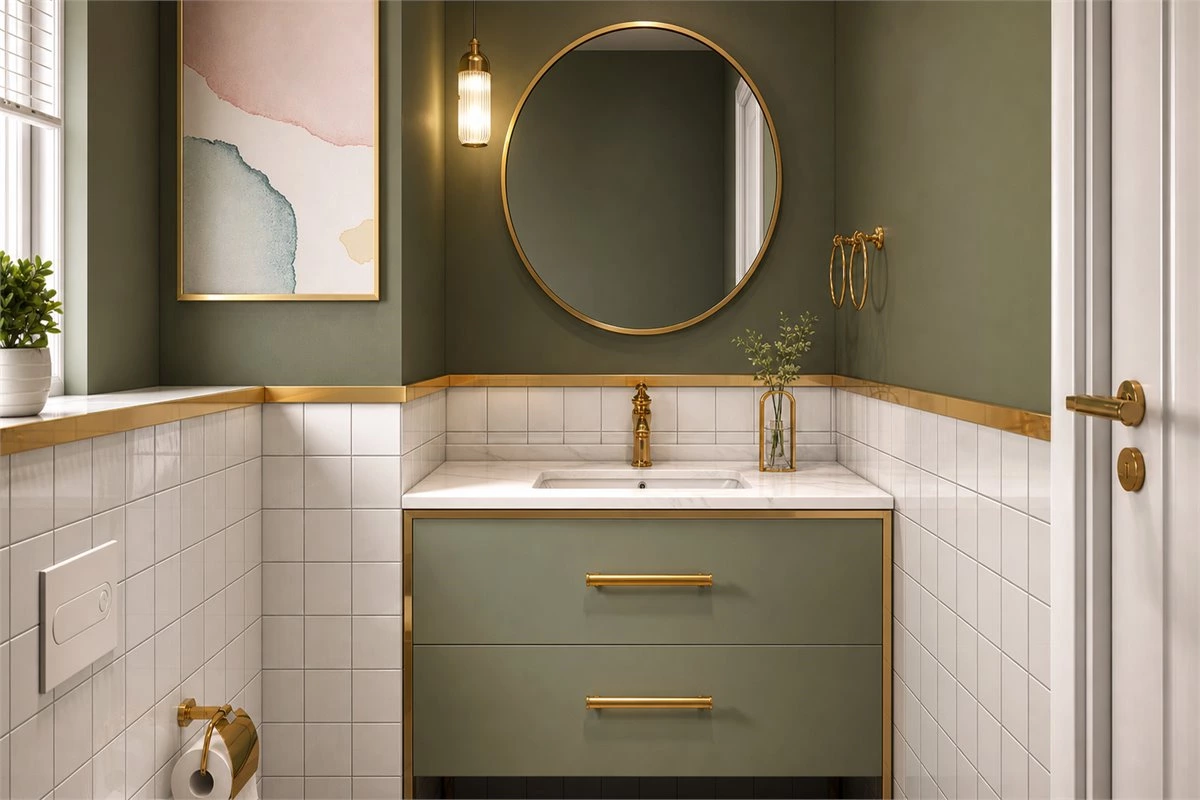
Common dimensions of the bathroom cabinet
Length between 800mm and 1000mm, width between 450mm and 500mm, height between 80cm and 85cm. These dimensions can be customized according to the size and requirements of the bathroom. Once the dimensions of the vanity cabinet are determined, the next step is to consider the placement of the bathroom cabinet.
These are practical reference dimensions, but the final size should be confirmed against finished wall measurements, plumbing positions, faucet reach, door swing, shower-screen clearance, and available standing space. In a compact bathroom, a shallower vanity with a well-organized mirror cabinet can sometimes provide more useful storage than a deep cabinet that interrupts movement.
For a shared bathroom, consider a wider countertop, divided drawers, or separate internal zones so each user has a clear place for daily items. This small planning step makes bathroom vanity storage ideas more effective over time, especially in busy family homes.
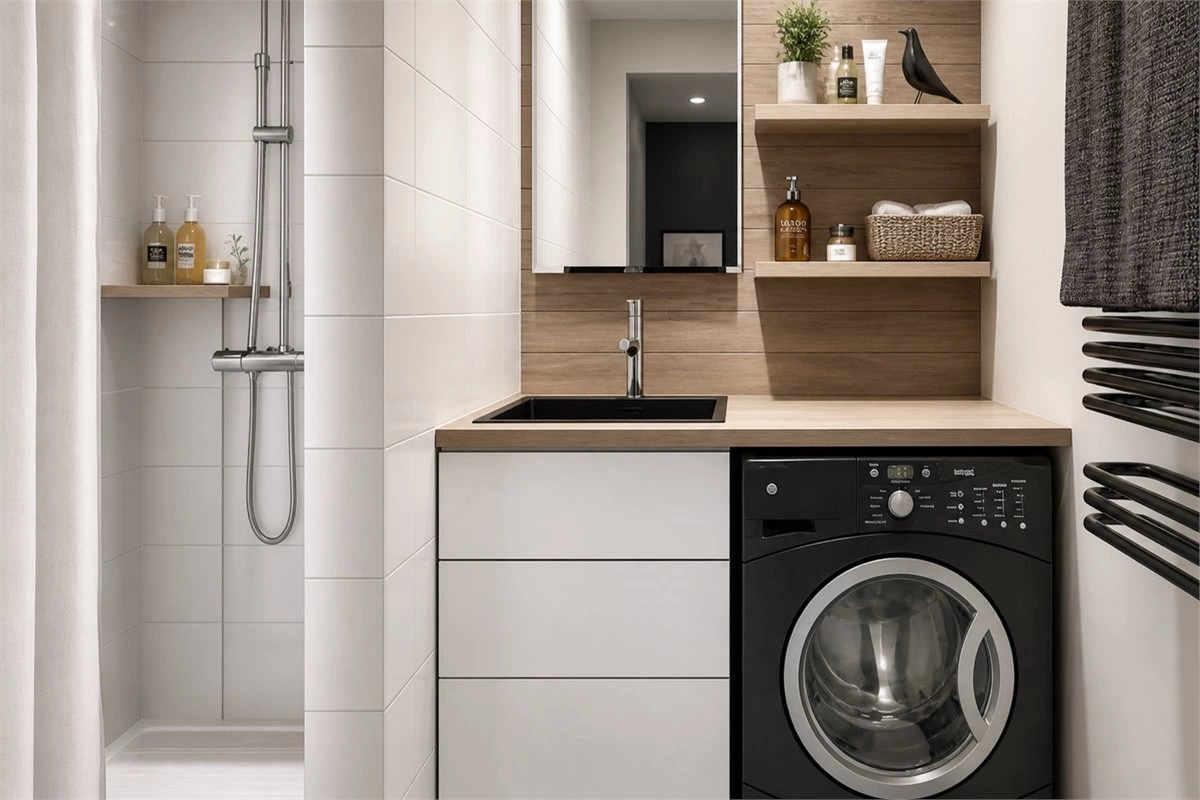
Suspended Bathroom Cabinet
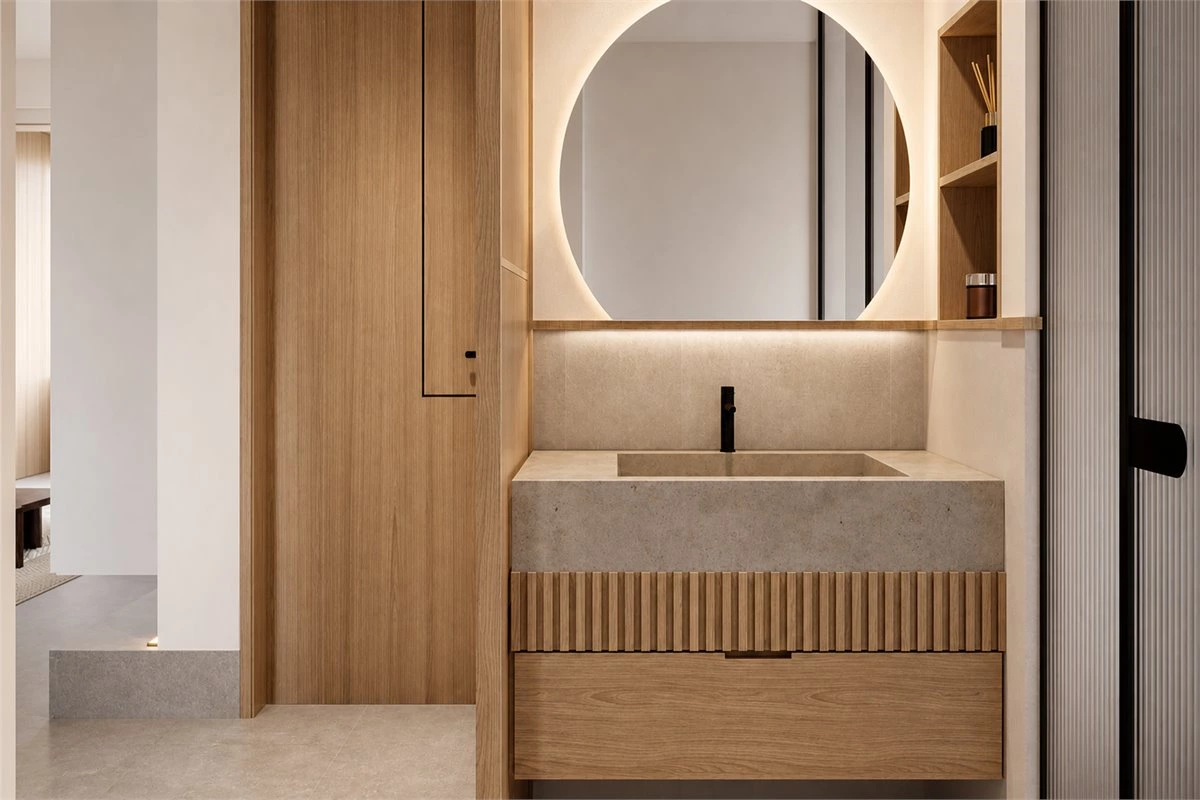
Suspended bathroom cabinets minimize the presence of hard-to-reach corners underneath. This makes cleaning much easier and more convenient. Additionally, the suspended design helps reduce the impact of moisture on the cabinet, further extending its lifespan. Suspended bathroom cabinets are commonly found in custom cabinets, allowing for more efficient utilization of the space within the bathroom.
A suspended vanity can make a narrow bathroom feel lighter because more floor remains visible. It also gives easier access for floor cleaning and lets the cabinet height be adjusted to suit the users and basin design. Before choosing a wall-mounted solution, confirm that the wall structure, fixing method, cabinet weight, countertop, and basin load have all been reviewed by the relevant project professional.
Grounded Bathroom Cabinet
On the other hand, a grounded bathroom cabinet, often found in pre-made furniture, does not have specific requirements for the wall. However, it tends to create difficult-to-clean dead corners and is in frequent contact with the floor, making the cabinet susceptible to moisture and deformation, thus affecting its lifespan.
A floor-standing vanity can still be a suitable option where wall fixing is restricted or when a larger, furniture-like appearance is preferred. In this case, pay particular attention to the cabinet base, floor level, waterproof detailing, ventilation, and cleaning access. Avoid leaving standing water around the feet or kickboard, and make sure any service access remains practical after installation.
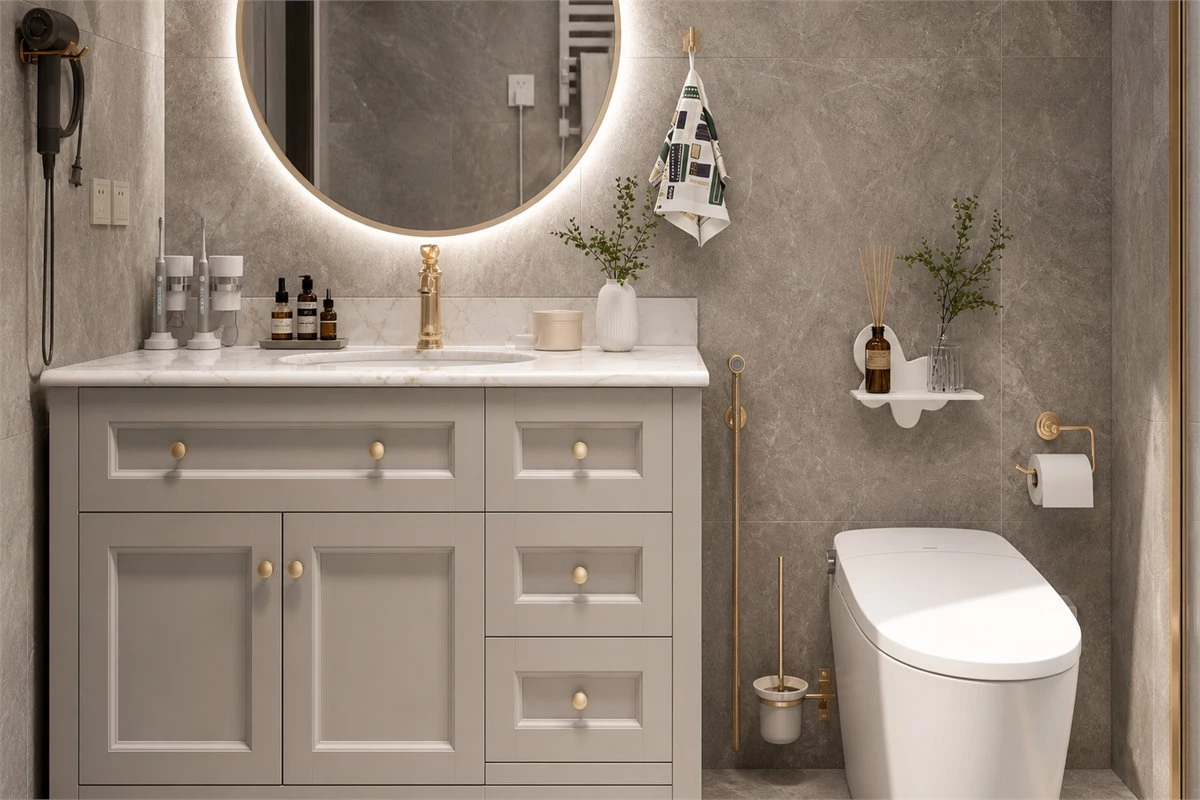
If moisture is a concern, opting for a customized bathroom cabinet with a bamboo charcoal board as the bottom panel is a good choice. This not only ensures environmental friendliness but also provides excellent breathability, eliminating concerns about the cabinet getting damp.
For any cabinet material used near a wet zone, confirm the substrate, finish, edge sealing, cut-out treatment, and installation conditions for the specific project. Good cabinet construction supports moisture resistance, but it does not replace proper bathroom ventilation or the prompt removal of standing water. The U.S. EPA’s moisture-control guidance is a useful general reference for understanding why moisture management matters throughout the room.
Use Mirror Cabinets to Protect Countertop Space
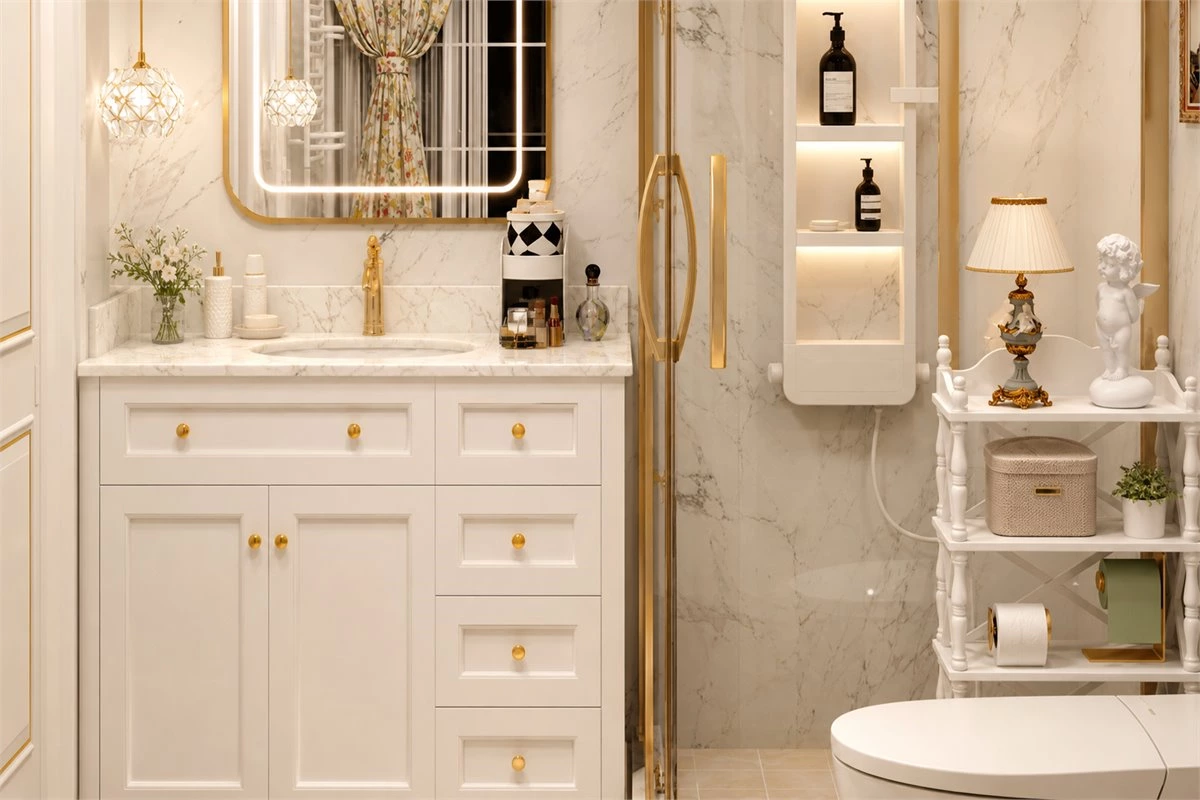
If the bathroom has a large variety of items that cannot be stored solely in the vanity cabinet, it is not practical. Especially for frequently used items like face cleansers, toothbrushes, and cups, storing them inside the vanity cabinet can be inconvenient and affect usability. Placing all these items on the countertop can create a messy appearance. In such cases, a customized mirror cabinet can be chosen to store scattered items.
A good mirror cabinet places the most-used items at eye level and reserves deeper sections for spare products. Adjustable shelves help accommodate bottles of different heights, while a narrow open niche can provide quick access to everyday items without forcing the entire cabinet to stay open. This is one of the most practical bathroom vanity storage ideas for keeping a compact room visually tidy.
For more color, moisture, basin, and mirror-light planning details, see ALLURE’s bathroom cabinet design guide.
Closed Mirror Cabinet
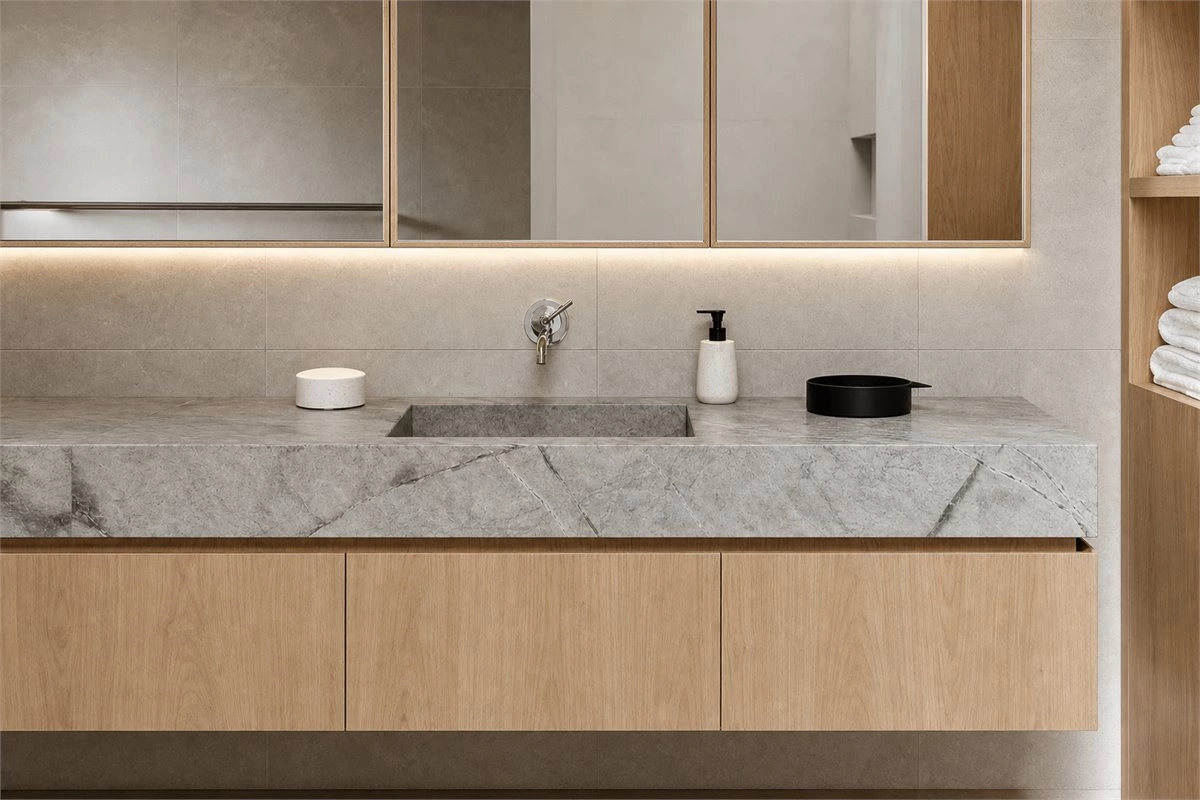
The closed mirror cabinet is the most common style. From the outside, it appears as a full-length mirror, but it actually conceals storage space within it. This design allows for convenient placement of cosmetics, skincare products, and toilet paper, among other items that need to be protected from moisture.
Closed mirror cabinets are especially effective where a calm, minimal appearance is important. They hide visual clutter while keeping daily products close to the basin. Select hinges and shelf supports suitable for the intended load, and allow enough clearance for the mirror doors to open comfortably beside adjacent walls, lights, or shower screens.
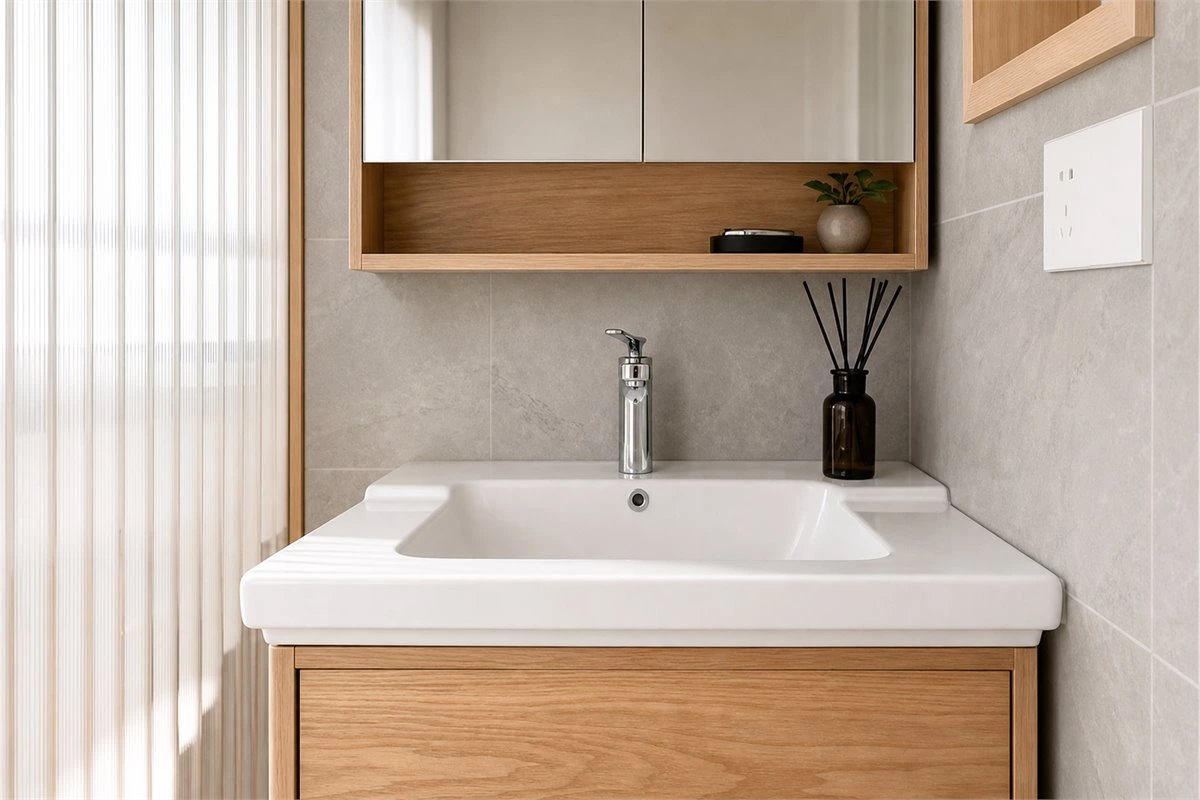
Semi-Open Mirror Cabinet
In contrast to the closed mirror cabinet, there is the semi-open mirror cabinet. It utilizes a design that is half open and half closed to enhance usability. The design of the semi-open mirror cabinet follows the classic 80/20 storage principle, which means hiding 80% of the mess and showcasing 20% of the beauty.
A semi-open design works best when the open section is deliberately limited. Use it for an attractive tray, a small plant, rolled towels, or items reached every day. Keep cleaning products, spare stock, and visually busy packaging behind closed doors. The result feels personal without sacrificing the clean visual order that makes a bathroom more relaxing.
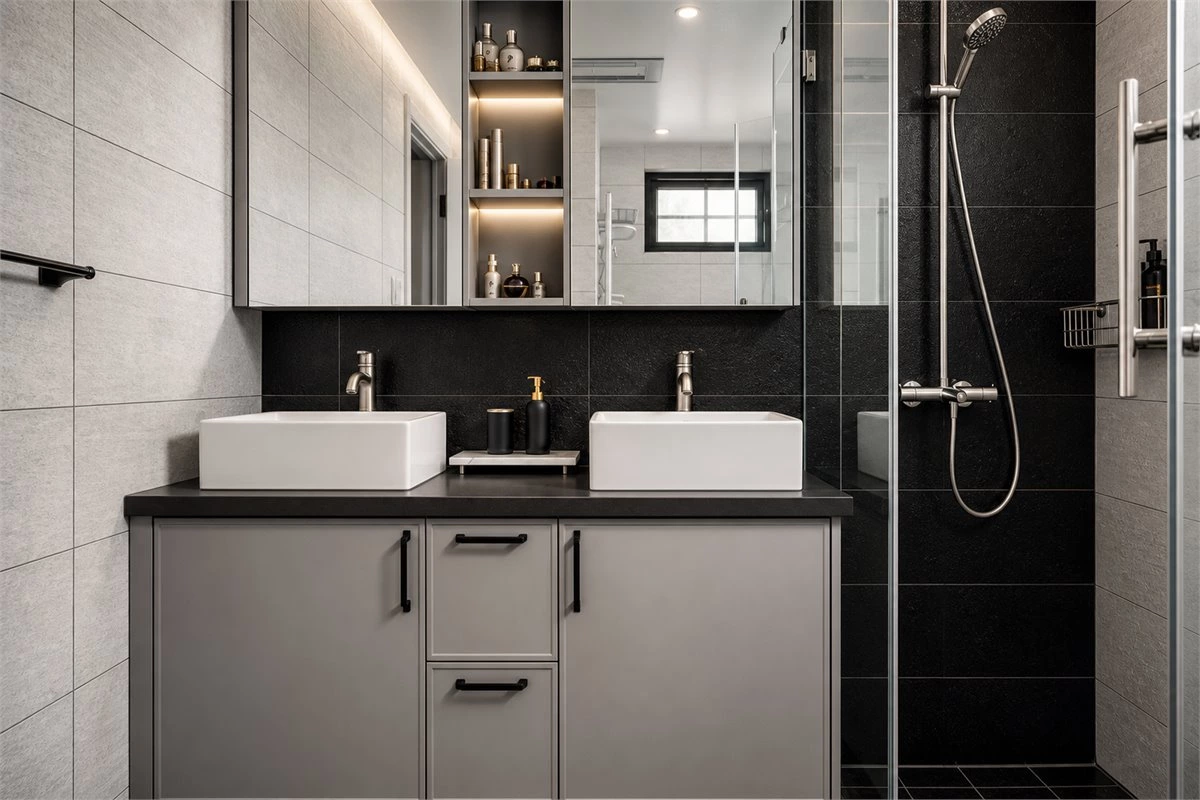
The closed area is used to store seasonal or infrequently used items, while the display area showcases frequently used or aesthetically pleasing items. This design not only makes it more convenient to access and store items but also adds a sense of beauty.
Materials, Hardware, and Lighting Details That Matter
Bathroom cabinetry performs best when the visible design and the hidden construction are planned together. Consider the finish, cabinet-edge treatment, countertop joint, basin cut-out, drawer organization, and ventilation conditions as one system. A good-looking vanity can lose its appeal quickly if splash-prone edges, poorly placed drawers, or difficult-to-clean gaps are ignored.
Soft-close drawers can improve daily use by keeping toiletries organized and reducing slamming. Internal dividers are useful for grooming products, while deeper drawers can store towels or cleaning supplies. Review ALLURE’s cabinet hardware options when comparing drawer systems, hinges, and suspension hardware for a custom project.
Plan mirror lighting and power outlets before finalizing cabinet drawings. Lighting should make grooming easier without casting strong shadows, and outlet locations should be confirmed with an appropriate local electrical professional. For commercial or public-access projects, applicable accessibility requirements should also be reviewed; the U.S. Access Board ADA standards provide a useful reference for those project types.
Bathroom Vanity Storage Ideas: Pre-Production Checklist
- Measure finished wall widths, floor level, plumbing points, sockets, windows, and shower-screen clearance.
- Confirm the basin type, faucet position, countertop depth, mirror width, and cabinet height.
- Separate daily toiletries, towels, cleaning supplies, and spare products before deciding on drawer and shelf sizes.
- Choose the wall-mounted or floor-standing cabinet method based on wall condition, cleaning needs, and room layout.
- Review moisture exposure, cabinet materials, sealed edges, and ventilation before confirming finishes.
- Plan mirror lights, electrical outlets, and appliance storage before wall panels are completed.
- Approve the cabinet elevation, internal layout, material samples, and hardware schedule before production.
When the bathroom is part of a larger renovation, coordinating cabinet colors, door details, and storage logic across multiple rooms can create a more complete result. Explore ALLURE’s whole-home cabinet solutions for connected planning ideas across bathrooms, bedrooms, kitchens, and living areas.
FAQ: Bathroom Vanity Storage Ideas
What are the most useful bathroom vanity storage ideas for a small bathroom?
For a small bathroom, combine a wall-mounted vanity with a mirror cabinet, internal drawers, and a limited open shelf. This keeps daily items accessible while leaving the floor and countertop visually clear.
Is a wall-mounted vanity better than a floor-standing bathroom cabinet?
A wall-mounted vanity can make cleaning easier and create a lighter visual effect. A floor-standing cabinet may be useful where wall fixing is limited or a larger furniture-style vanity is preferred. The final choice should account for wall condition, moisture exposure, and storage needs.
How deep should a bathroom vanity be?
Many bathroom vanities use a depth around 450mm to 500mm, but the final depth should be based on room circulation, basin type, faucet reach, and the available standing space in front of the cabinet.
What should be stored in a mirror cabinet?
Mirror cabinets are ideal for smaller, frequently used items, including skincare products, toothbrushes, toothpaste, medicines stored appropriately, and grooming products. This keeps the countertop cleaner and makes products easier to find.
Can a bathroom vanity include drawers under the sink?
Yes. Custom drawers can be shaped around plumbing or combined with a removable internal organizer. Drawers often provide easier access than a deep cabinet shelf, especially for small personal-care products.
Which cabinet materials are suitable for a humid bathroom?
Suitability depends on the panel substrate, finish, edge sealing, ventilation, splash exposure, and installation detail. Ask the supplier for the product information relevant to the project rather than relying only on a material name.
Should bathroom cabinets have open shelves?
Open shelves are useful for items reached every day or for a small decorative display. Keep most visual clutter behind closed doors and use open space selectively to preserve a calm appearance.
How can I keep a bathroom countertop from looking cluttered?
Use a mirror cabinet for small daily items, shallow top drawers for grooming products, and a tray only for the few products used constantly. Assigning each category a storage zone is more effective than continually rearranging the countertop.
Are soft-close drawers worth using in bathroom cabinetry?
Soft-close drawers can improve comfort and reduce slamming. Select the drawer system based on expected storage weight, cabinet dimensions, and the project’s moisture conditions.
What should be confirmed before ordering a custom bathroom vanity?
Confirm site measurements, plumbing, basin and faucet specifications, countertop, mirror size, outlet locations, lighting, storage requirements, materials, hardware, and approved drawings before production begins.
Conclusion
The best bathroom vanity storage ideas make a small room work more intelligently, not simply look more decorated. By combining an appropriate vanity size, moisture-conscious details, mirror storage, usable drawers, practical lighting, and a clear organization plan, a bathroom cabinet can support smoother daily routines for years. A well-planned design keeps essentials easy to reach while allowing the rest of the room to remain clean, calm, and visually balanced.