4 Basic Considerations for Customized Bathroom Cabinets
The bathroom cabinet, equipped with a washbasin, storage cabinet, and mirror, is undoubtedly one of the most frequently used furniture pieces in a bathroom. It not only serves the purpose of beautifying and decorating the bathroom but also fulfills essential functions such as washing, storage, resistance to moisture, and easy cleaning. Customized bathroom cabinets offer a variety of materials, and every detail reflects the owner's taste, making it a new trend in the market.
Useful bathroom cabinet design ideas begin with the way the room is used each morning and evening. A well-planned vanity should provide a clear washing zone, enough storage for daily supplies, surfaces that are easy to clean, and materials suited to the moisture level of the room. The best result balances visual style with the practical details that are hard to change after installation.
Bathroom Cabinet Color
The color of the bathroom cabinet should be chosen based on the home decor style and personal preference. Different color schemes can create distinct visual effects. For instance, a light-colored bathroom cabinet can be paired with various styles of bathrooms, giving a sense of cleanliness and elegance. On the other hand, dark-colored cabinets are more resistant to dirt, scratches, and wear, making them less noticeable.
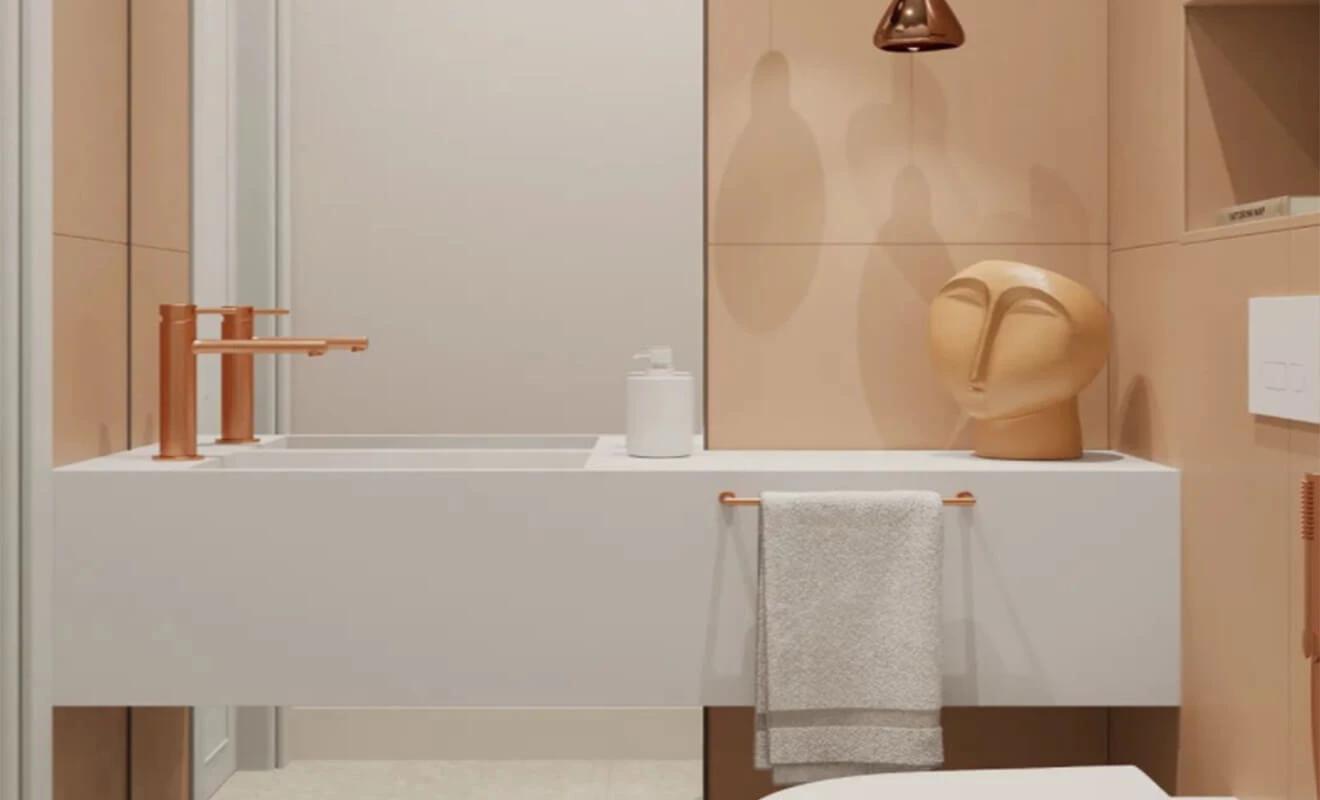
White Bathroom Cabinet:
When unsure of the color choice, white is always a safe option. It can be matched with various styles and is the most common choice. It creates a serene and pure visual effect, making even small spaces appear spacious and bright.
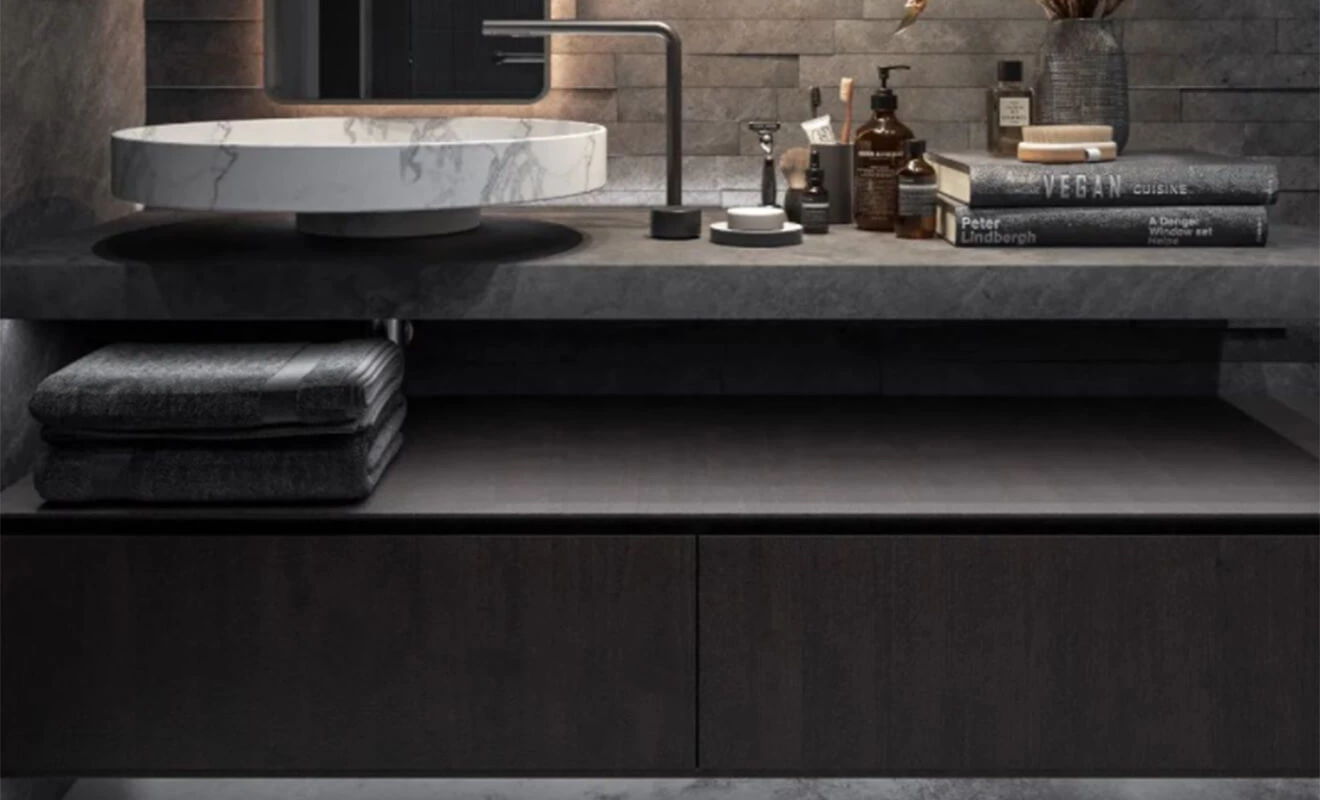
Black Bathroom Cabinet:
Black bathroom cabinets complement white walls, creating a unique black-and-white combination. Black, when paired well with other colors, exudes a sense of youthful luxury, silently showcasing the lifestyle of modern urban living.
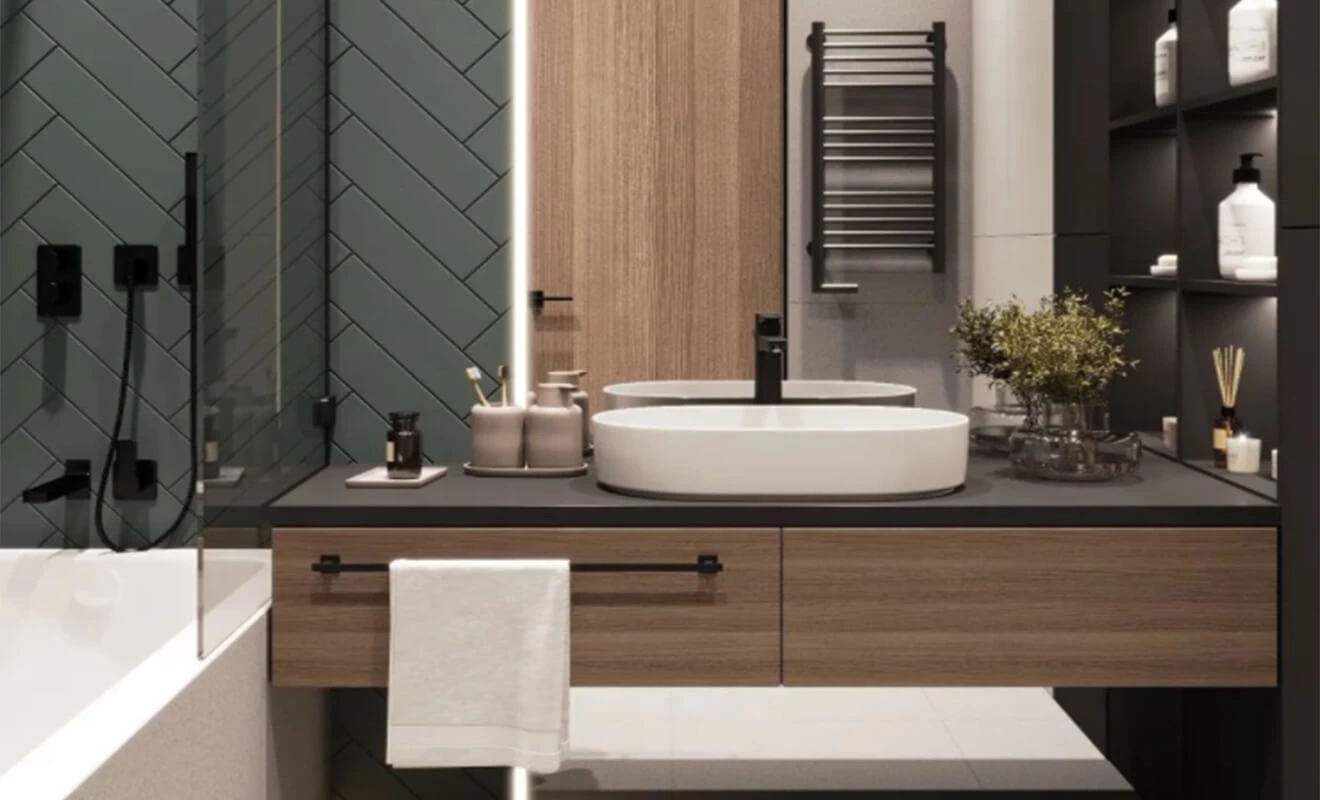
Wood tones:
Common options include natural wood and teak colors. Natural wood tones are more suitable for minimalist-style bathrooms, providing a delicate touch. When paired with green plants, even small bathrooms can emanate a fresh and natural ambiance. Teak colors can satisfy the requirements of Chinese, American, and European styles, offering a sense of luxury. High-quality solid wood materials with natural textures, clean colors, and comfortable textures, coupled with golden handles, add elegance to the bathroom environment, becoming a classic element of bathroom cabinets.
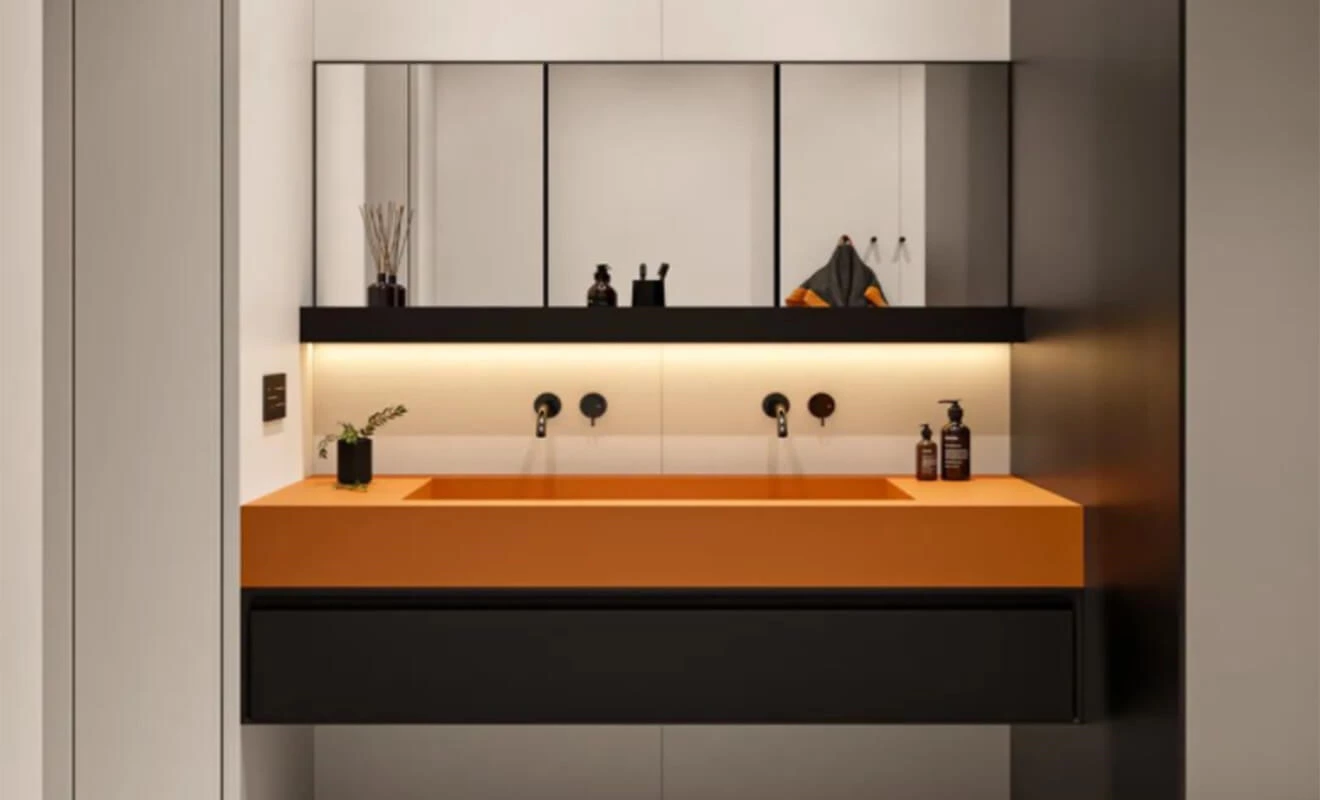
Colorful series:
Colorful bathroom cabinets align with the fast-paced lifestyle of modern people, adding warmth and vitality to the bathroom space.
When choosing a finish, consider the bathroom light as well as the cabinet color. In rooms with little daylight, light fronts and a reflective mirror can keep the room from feeling enclosed. Darker finishes can look sophisticated, but they benefit from balanced wall colors and enough lighting at the mirror. Reviewing a real material sample next to the tile and countertop is more reliable than choosing from a screen alone.
Moisture Resistance
To keep the bathroom cabinet clean and fresh, attention must be paid to moisture resistance. This includes moisture-resistant materials and design features to avoid water damage. Especially for small bathrooms where it's not possible to separate wet and dry areas, it's important to focus on the moisture resistance of the cabinet's panels when selecting a bathroom cabinet. High-quality panels specially treated for moisture resistance can reduce the troubles caused by dampness.
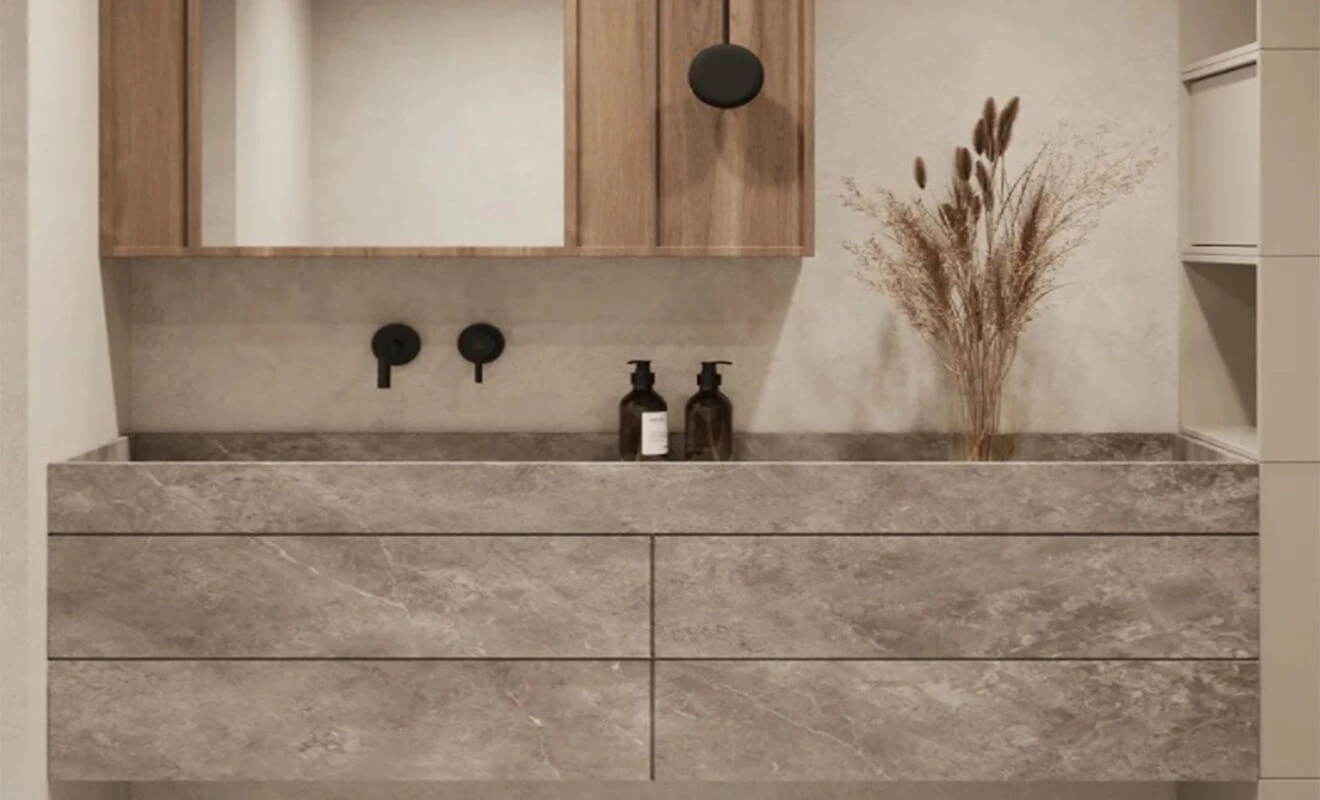
Splash-proof design:
Water accumulation on the countertop is a major cause of bathroom humidity. To prevent water from flowing into the cabinet, "splash-proof strips" can be installed around the countertop. These strips redirect the water deposited on the sink back into the basin, effectively blocking the water flow and preventing the cabinet from getting damp and moldy.
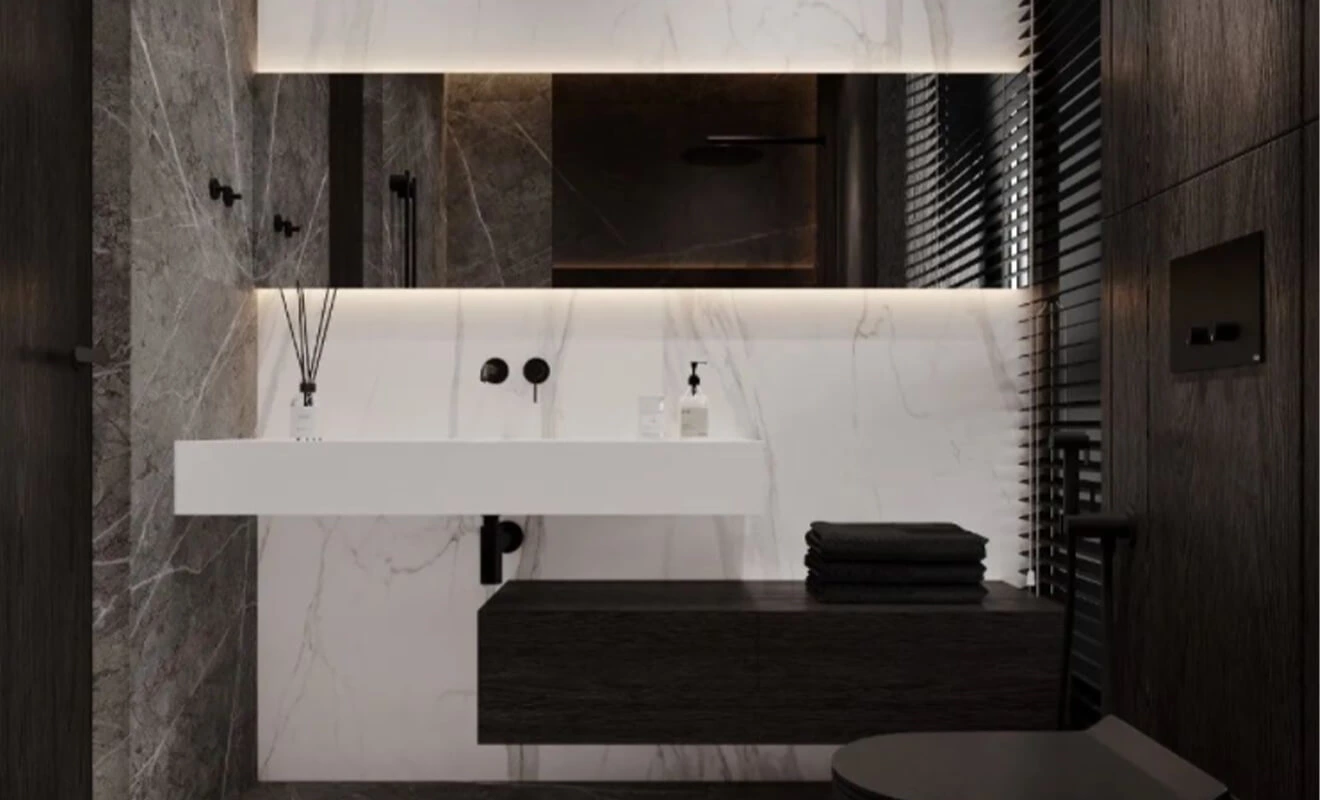
Bottom moisture resistance: Bottom moisture resistance prevents the invasion of ground moisture. The suspended design of wall-mounted bathroom cabinets avoids direct contact between the cabinet and the floor, reducing the possibility of moisture infiltrating the cabinet. This design extends the lifespan of the bathroom cabinet to a certain extent.
Moisture resistance also depends on small construction details: sealed edges, correctly finished cut-outs around the basin, ventilated storage below the sink, and a repairable silicone joint where the countertop meets the wall. A moisture-resistant bathroom cabinet is not a substitute for good ventilation and prompt cleanup of standing water, but it gives the cabinet a stronger foundation in a demanding room.
Bathroom Cabinet Style
For small bathroom areas, it is best to choose a wall-mounted bathroom cabinet to maximize the utilization of the upper space. The bottom-suspended design avoids creating inaccessible corners, making cleaning effortless and reducing household chores. It also offers versatility in terms of matching with other bathroom fixtures.
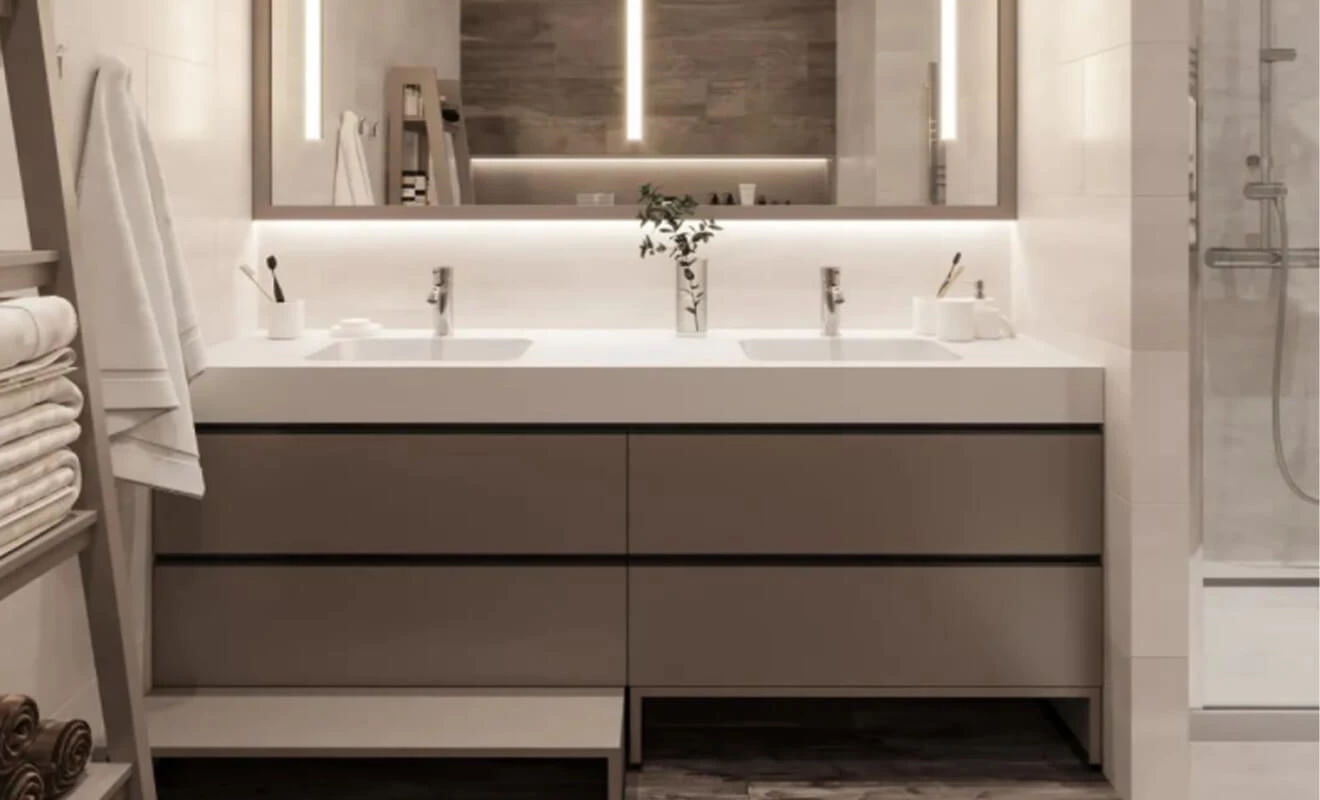
Sink:
Common options include above-counter, under-mount, and integrated sinks. It is recommended to choose an integrated sink for the bathroom cabinet as it combines aesthetics and avoids the hassle of dirt accumulation. Above-counter sinks have a stronger visual appeal, but they tend to splash water onto the cabinet surface, and the area where the sink and countertop meet is prone to dirt accumulation, making cleaning a challenge. If cleanliness is a high priority, it is better to avoid installing above-counter sinks. Moreover, above-counter sinks are generally shallow, making it easy for water to splash onto the countertop and even the cabinet body, resulting in pooling water and inconvenience in cleaning. For bathroom cabinets, under-mount sinks are recommended as they have a more exquisite appearance and offer better practicality. When water accumulates around the countertop, a simple swipe can accurately direct it into the sink, effectively maintaining a clean and tidy countertop.
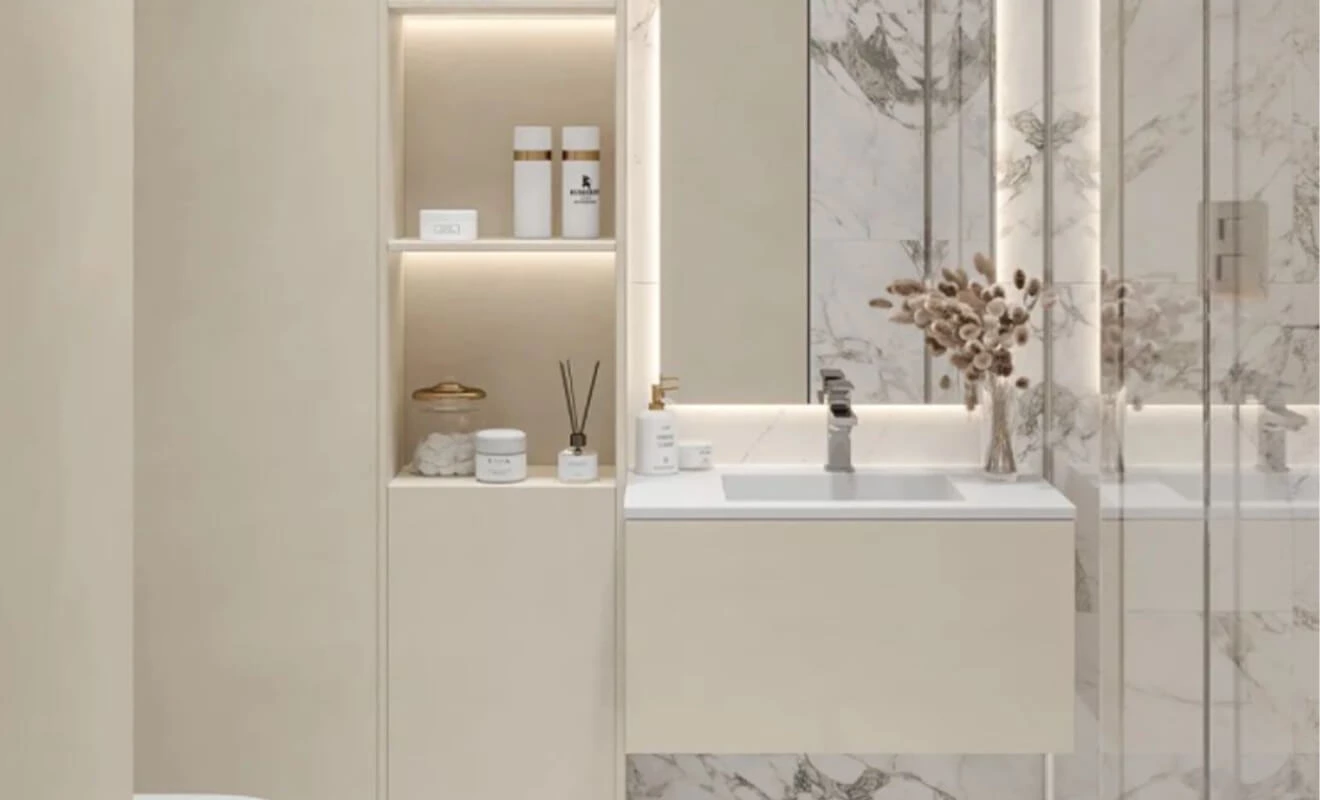
Power outlets and mirror lights:
Electric toothbrushes, hair dryers, and other electronic devices commonly used in bathrooms require power outlets. It is advisable to install two power outlets near the bathroom cabinet. Mirror lights can be installed above the bathroom mirror to facilitate daily grooming.
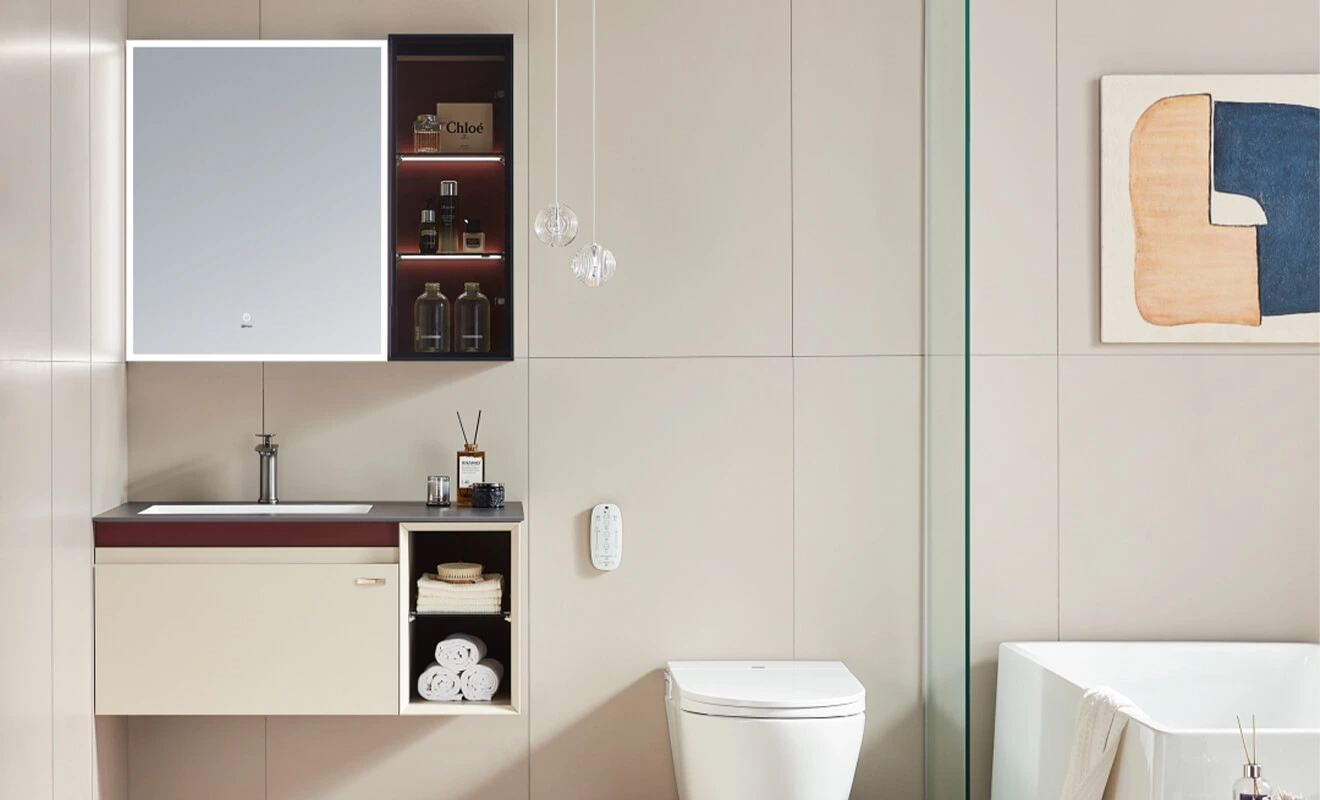
Storage:
Mirror cabinets can hide and store most of the bathroom supplies. Small frequently used items can be placed in open shelves or compartments. Open shelves can be set under the cabinet to hold items like basin towels.
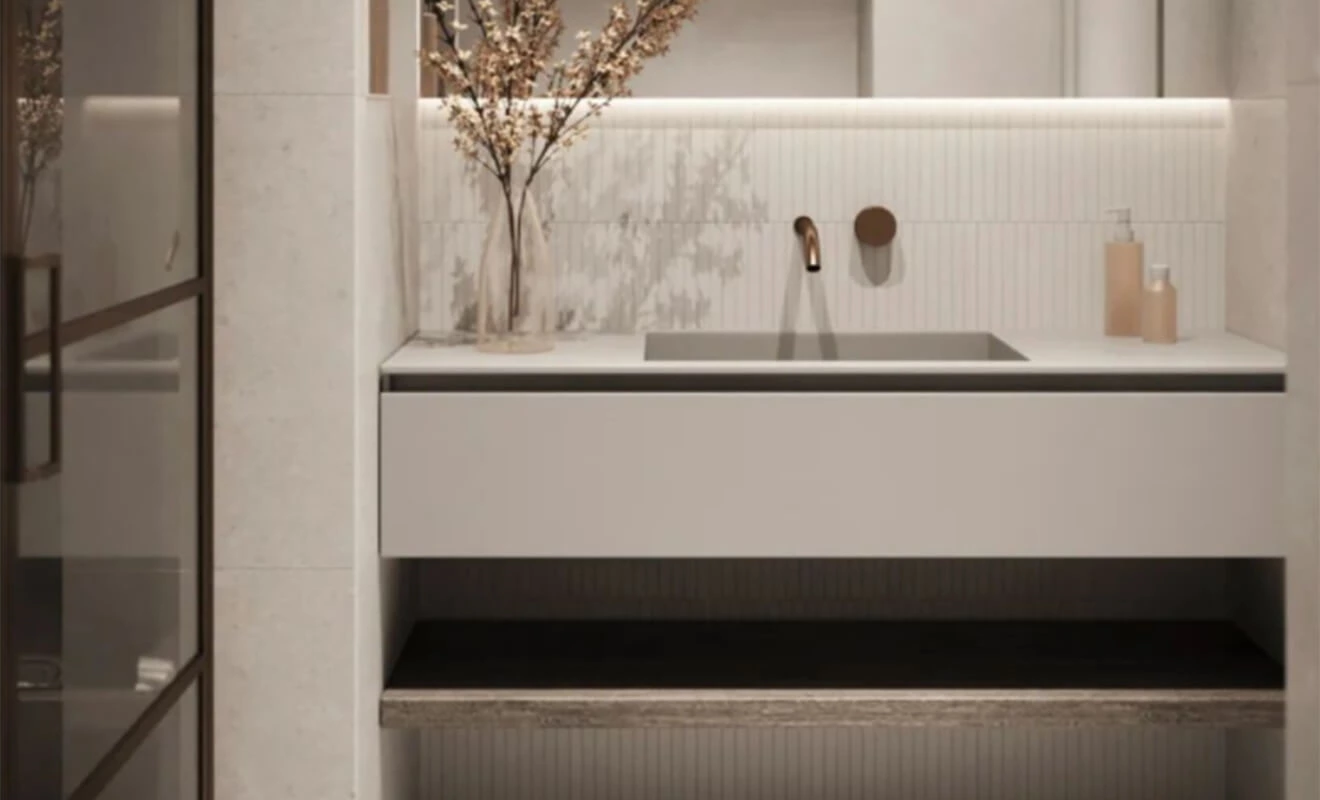
For a shared bathroom, divide storage by function before deciding on the cabinet front. Shallow top drawers can hold grooming items, deeper drawers can hold towels or cleaning supplies, and a mirrored cabinet keeps frequently used products visible without filling the countertop. Explore custom bathroom cabinet solutions and cabinet hardware options when comparing drawer organization, hinges, and opening styles.
Bathroom Cabinet Material
When it comes to home furnishings made from panels, paying attention to their environmental friendliness is crucial. Different materials used for bathroom cabinets vary in their environmental performance. Therefore, environmental friendliness should be the top consideration when making a purchase.
Material selection should also account for water exposure, cleaning routines, and the final finish. Painted, laminate, PET, PVC, plywood, and solid-wood options can each be appropriate in different projects when the substrate, edge treatment, and installation conditions are correctly specified. Rather than assuming one material works in every bathroom, compare the wet-zone exposure, ventilation, countertop detailing, and supplier documentation for the actual project.
For projects that need formaldehyde-emission documentation for composite wood products, the U.S. EPA's composite wood products guidance is a useful destination-market reference. It does not mean that an unverified material or finished cabinet is compliant; buyers should confirm the required documents and labeling for the order.
Bathroom Cabinet Layout, Countertop, and Hardware Planning
Bathroom cabinet design ideas work best when the vanity is planned with the room, not after the plumbing points have been fixed. Confirm the door swing, shower screen, toilet clearance, basin position, mirror width, and the usable standing space in front of the cabinet. In a compact room, a shallow wall-mounted cabinet and mirror storage may be more valuable than a deep floor unit that interrupts circulation.
- Single basin: practical for compact bathrooms, guest bathrooms, and rooms with limited wall width.
- Double basin: useful for shared bathrooms when the counter and circulation space can support it.
- Countertop: choose an edge and basin detail that directs water back toward the sink and is easy to clean.
- Hardware: soft-close drawers, corrosion-conscious fittings and accessible handles improve daily use.
- Lighting: plan mirror lighting and outlet locations before the cabinet and wall panels are installed.
Coordinate the vanity with nearby tile, shower glass, internal doors, and other cabinetry. For larger renovations, whole-house customization solutions can help carry materials and visual details across the bathroom, bedroom, and living spaces.
Bathroom Cabinet Design Checklist Before Production
- Measure the finished wall, floor, plumbing points, sockets, windows, and shower-screen clearance.
- Confirm the basin type, faucet position, mirror size, and countertop material.
- Define what needs drawer storage, mirror storage, open shelving, or tall-cabinet storage.
- Choose moisture-suitable materials, sealed edges, cabinet finish, and hardware.
- Plan outlet positions, mirror lights, and access for maintenance before wall finishing.
- Approve the elevation, internal layout, material samples, and hardware schedule before production.
For project teams considering casework fit and installation expectations, the Architectural Woodwork Institute casework reference offers industry background. It is not a certification claim for any specific supplier or product.
Bathroom Cabinet Design Ideas FAQ
What should be considered when designing a bathroom cabinet?
Bathroom cabinet design ideas should account for wall dimensions, plumbing, basin type, storage needs, ventilation, moisture exposure, countertop cleaning, and the available standing space in front of the vanity.
Is a wall-mounted bathroom cabinet better for a small bathroom?
A wall-mounted cabinet can make a small bathroom feel more open and leave the floor easier to clean. The wall condition and fixing method must be suitable for the cabinet load.
What material is best for a moisture-resistant bathroom cabinet?
The best choice depends on the wet-zone conditions, finish, edge sealing, and ventilation. Review the panel substrate and construction details rather than relying on a material name alone.
Should I choose an integrated, undermount, or above-counter sink?
Integrated and undermount sinks often make countertop cleaning easier. Above-counter sinks can create a strong visual feature but require careful attention to splash control and the joint around the basin.
How much storage should a bathroom cabinet have?
Plan storage around the items used in the room. Daily toiletries need an accessible mirror or drawer storage, while towels and cleaning supplies may need deeper drawers, open shelves, or a separate tall cabinet.
Can a bathroom cabinet include power outlets?
Yes, outlets can be planned near the vanity for grooming appliances. Their position, protection requirements, and installation should be confirmed with the relevant local electrical professional before construction.
Which color works best for a bathroom cabinet?
White can make a compact room feel bright, dark colors can create contrast, and wood tones add warmth. Match the cabinet sample with the tile, countertop, lighting, and mirror frame before approval.
Are soft-close drawers useful in a bathroom cabinet?
Soft-close drawers can improve daily comfort and reduce slamming. The drawer system should be selected for the cabinet size, expected load, and moisture conditions.
What should be checked before a custom bathroom cabinet is manufactured?
Confirm site measurements, plumbing, basin and faucet specifications, countertop, power points, mirror-light location, storage layout, materials, hardware, and approved drawings.
Can a bathroom cabinet match other rooms in the home?
Yes. Coordinating finish tones, handles, and door details can give a renovation a more consistent result. The drawing and production-planning process should record these choices before manufacturing begins.
Conclusion: Make the Bathroom Cabinet Work Every Day
The most useful bathroom cabinet design ideas combine color, moisture protection, storage, basin selection, and lighting into one practical plan. A cabinet that looks attractive but lacks drawer organization, splash control, or appropriate material details will quickly become harder to use.