For contemporary home life, a kitchen is more than a space for culinary artistry; it’s a fusion of functionality, aesthetics, and innovative design. Whether you’re considering a revamp or starting from scratch, here are a few specific options that interior designers think are must-haves in the kitchen—and all of them help better craft your modern kitchen.
The must-have features of a modern kitchen should work together as one practical system. A handleless door may improve the visual flow, but it also needs a durable finish and a comfortable opening method. An island may become the social centre of the room, but it must leave enough circulation space for cooking, cleaning and opening appliances. Planning these relationships early helps homeowners, designers and project buyers avoid expensive changes during production or installation.
For a cabinet-led project, begin with ALLURE’s modern kitchen cabinet collection as a visual reference, then confirm the room dimensions, appliance list, storage priorities, materials and finish samples before approving drawings.
Clean Lines and Minimalism
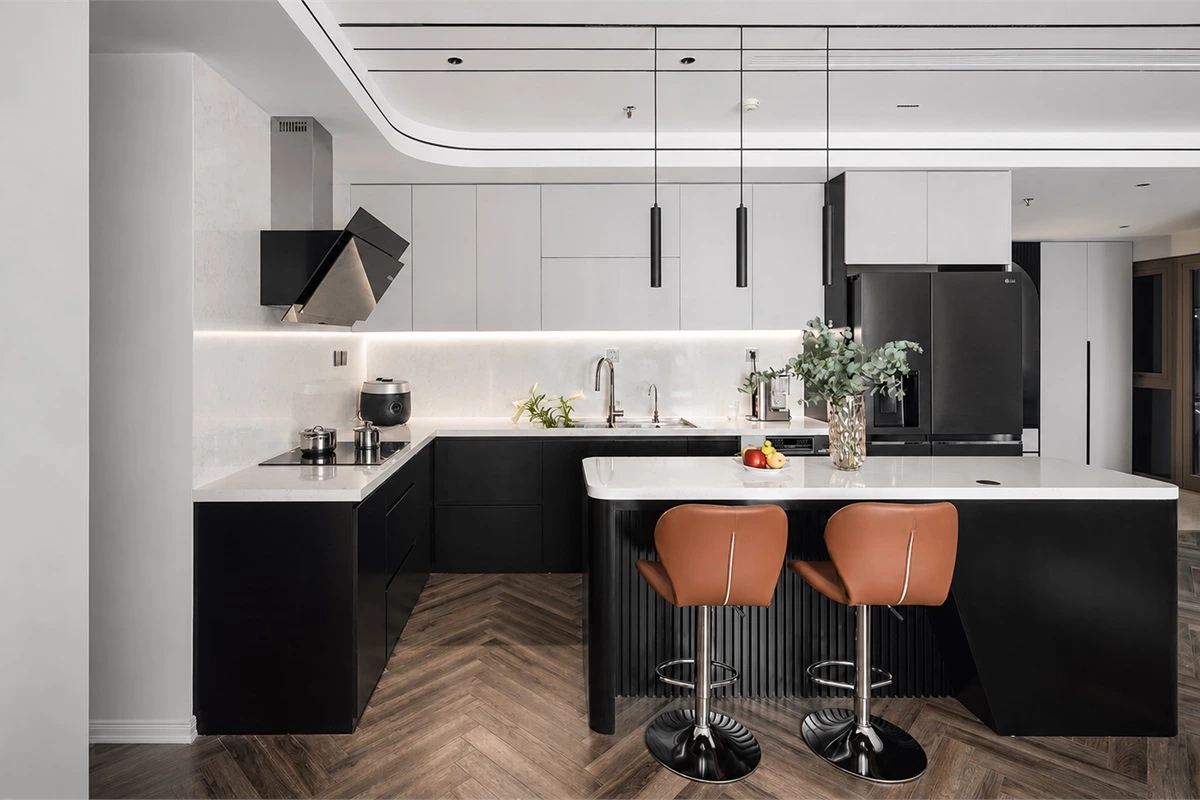
Modern kitchens are about sleek and clean aesthetics. Opt for minimalist designs with clean lines and simple shapes. Streamlined cabinetry, handleless doors and drawers, and uncluttered countertops are key elements. Consider neutral color palettes or bold contrasts like black and white to establish a contemporary feel.
In a real cabinet specification, clean lines depend on more than a flat door. The designer also needs to coordinate reveals, filler panels, plinths, appliance fronts, ventilation grilles and the junction between wall and tall units. Handleless kitchens may use a J-pull profile, a recessed rail or push-to-open hardware; each option creates a different user experience and maintenance requirement. Request a full elevation drawing so the rhythm of every panel is visible before production.
For a family kitchen or a display-led project, clean detailing is one of the must-have features of a modern kitchen because it keeps the room visually calm while the storage works hard behind the fronts.
Functional Layout
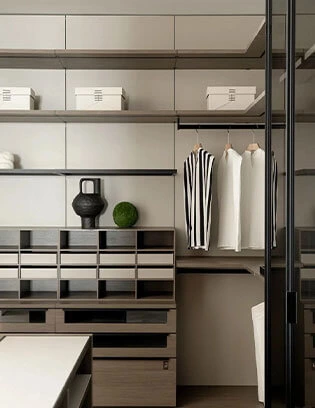
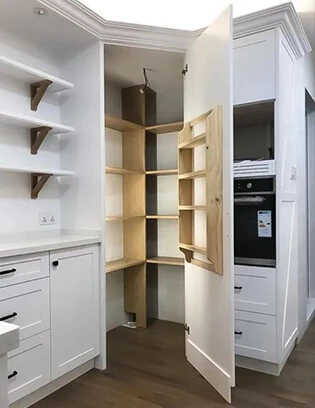
Efficiency is central to modern kitchen design. Prioritize a functional layout that optimizes workflow. The classic “work triangle” (connecting the sink, stove, and refrigerator) remains a foundational principle. Additionally, incorporate ample storage solutions to keep the space organized and clutter-free.
The work triangle is a useful starting point, but today’s kitchens often have several users and multiple work zones. Separate preparation, cooking, cleaning, serving and coffee areas can reduce cross-traffic in an open-plan room. Check the door swing of the refrigerator, dishwasher and oven, and leave a practical landing surface beside each appliance. Drawers near the hob, pull-out waste sorting and a tall pantry can make daily tasks easier. ALLURE’s cabinet storage solutions can be reviewed alongside the floor plan rather than added after the cabinet layout is fixed.
A layout that reflects the household’s routine is one of the must-have features of a modern kitchen, especially when the same room must support cooking, homework, entertaining and quick weekday meals.
Open and Airy Space
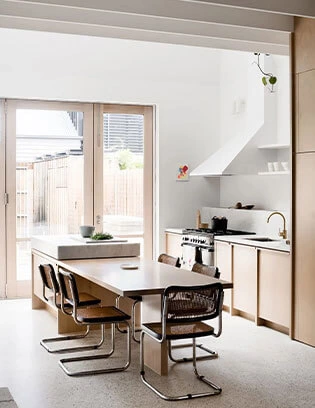
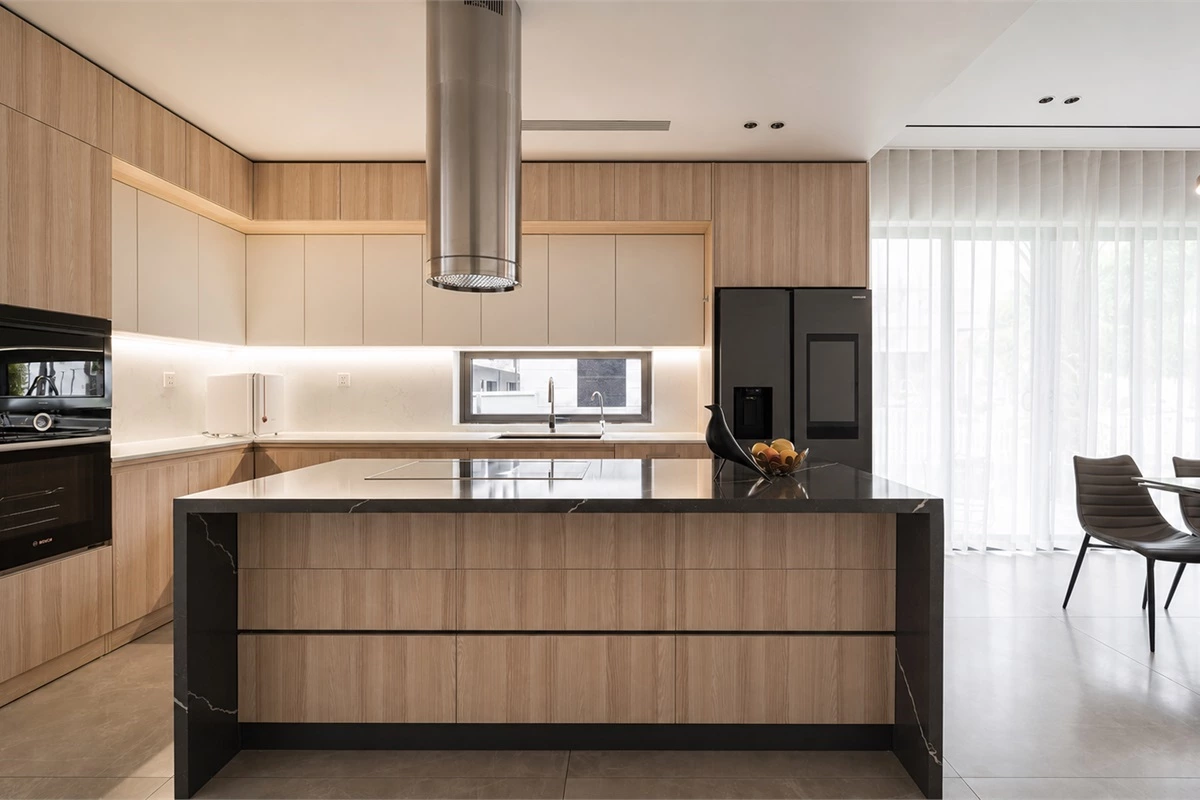
Open-concept designs are synonymous with modern kitchens. Maximize natural light and create an airy atmosphere by using large windows or installing glass doors. Open shelving or transparent cabinets can further contribute to the feeling of expansiveness.
An open kitchen still needs visual control. Use tall cabinets to form a clean storage wall, keep frequently used items within easy reach, and reserve open shelves for pieces that can be kept tidy. When the kitchen connects to a dining or living area, align cabinet heights and finishes with the adjacent interior. A lighting plan should also prevent dark corners behind tall units and around the island. These details preserve the spacious feeling without sacrificing hidden storage.
Natural light and a controlled sightline make open planning one of the must-have features of a modern kitchen, but the final cabinet elevation should still hide clutter from adjoining rooms.
Multiple Lighting
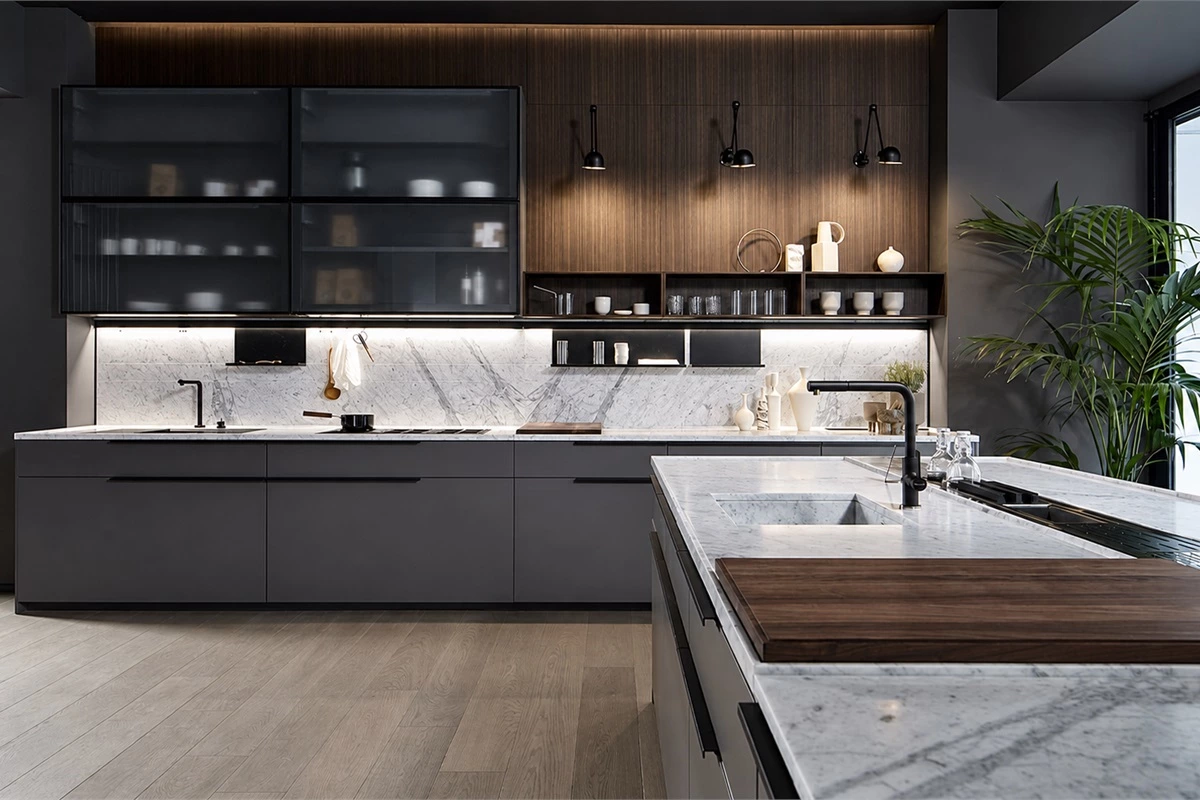
Lighting is a crucial aspect often overlooked in kitchen design. Install layered lighting with a mix of ambient, task, and accent lighting. Pendant lights over the island or counter can serve as stylish focal points while providing functional illumination.
Layered lighting should be coordinated with the cabinet drawings and electrical plan. Ambient ceiling light provides general visibility, task light under wall cabinets supports chopping and cleaning, and accent light can highlight a display cabinet or backsplash. Specify colour temperature, switching zones, dimming, and the position of transformers before the panels are fabricated. For general guidance on efficient LED choices, the U.S. Department of Energy’s LED lighting reference is a useful starting point.
Because lighting affects safety and atmosphere at the same time, a coordinated lighting plan is one of the must-have features of a modern kitchen rather than a finishing-stage decoration.
Integrate Smart Technology
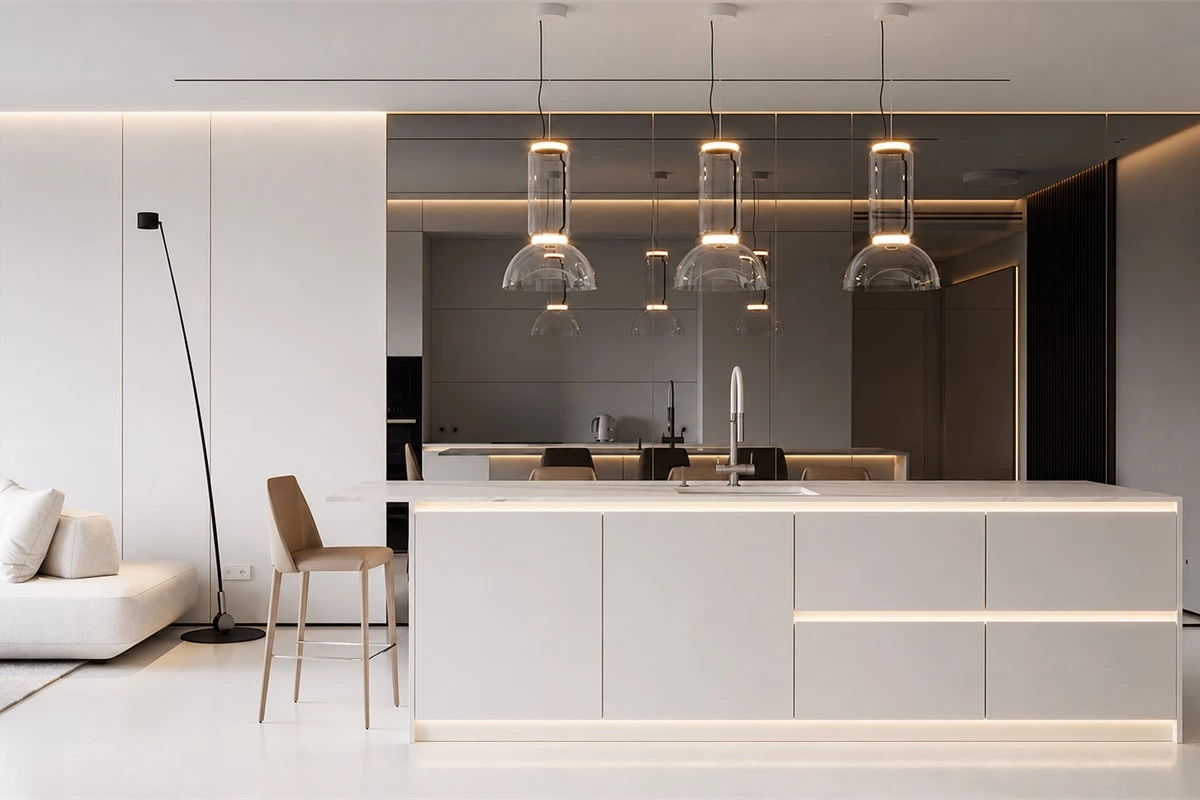
Embrace the future by integrating smart appliances and technology. From touchless faucets to smart refrigerators with interactive screens, these innovations enhance convenience while adding a futuristic touch to your kitchen.
Smart technology is most useful when it solves a specific routine rather than adding complexity. Confirm appliance dimensions, ventilation, power requirements, Wi-Fi access, and service clearance before selecting connected products. Touchless taps, sensor lighting, charging drawers and app-enabled appliances should remain accessible if the technology needs maintenance or replacement. A cabinet manufacturer should receive the final appliance schedule so door fronts, ventilation gaps and integrated panels are made to the correct dimensions.
A carefully integrated, serviceable smart system can be one of the must-have features of a modern kitchen, provided that convenience does not reduce reliability or storage capacity.
Balance between Functionality and Aesthetics
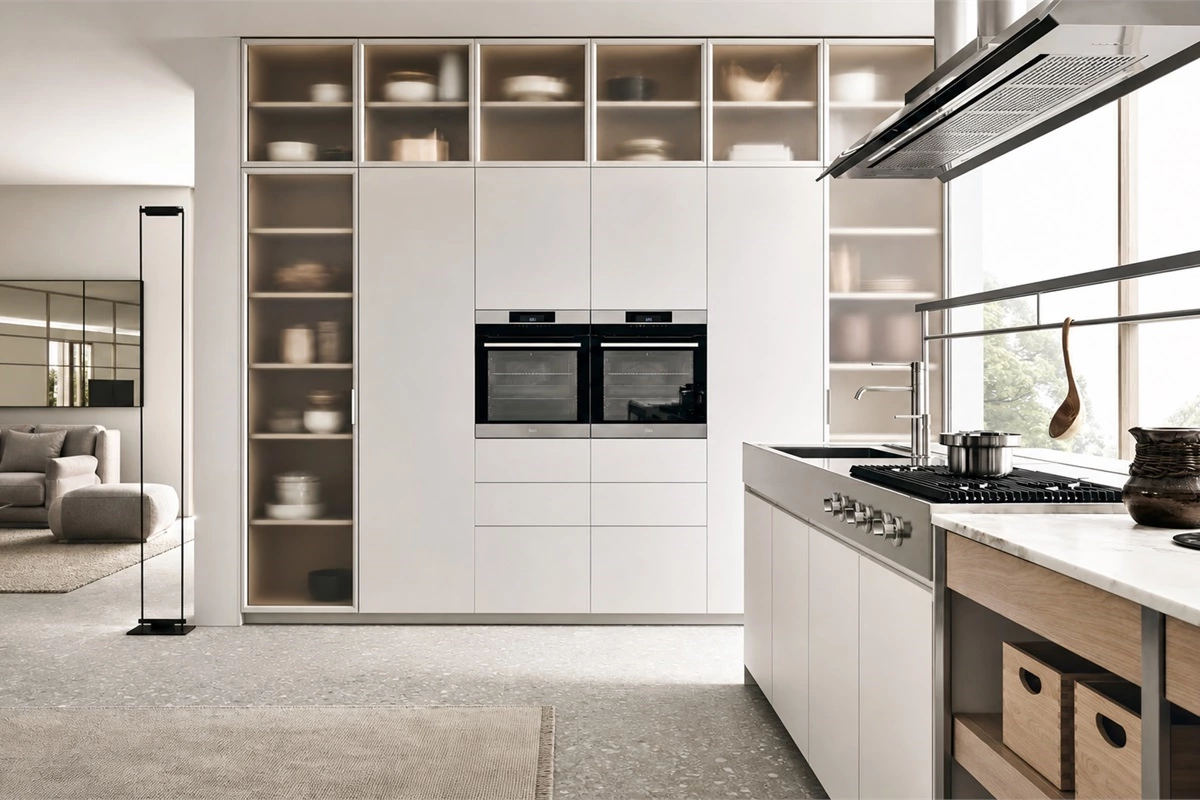
While a modern kitchen prioritizes functionality, don’t compromise on aesthetics. Balance the two aspects harmoniously, ensuring that the design serves your practical needs while being visually appealing.
A balanced scheme gives every visible element a job. Use a consistent door thickness and colour family, then introduce contrast through the island, worktop, wall panel or lighting. At the same time, avoid placing decorative features where they block drawers, appliance doors or cleaning access. Ask for material samples under both daylight and artificial light because gloss, matte and textured finishes can look very different across a large run of cabinets.
The balance between appearance and daily performance is one of the must-have features of a modern kitchen that remains important long after the initial photographs are taken.
Mix and Match Materials and Textures
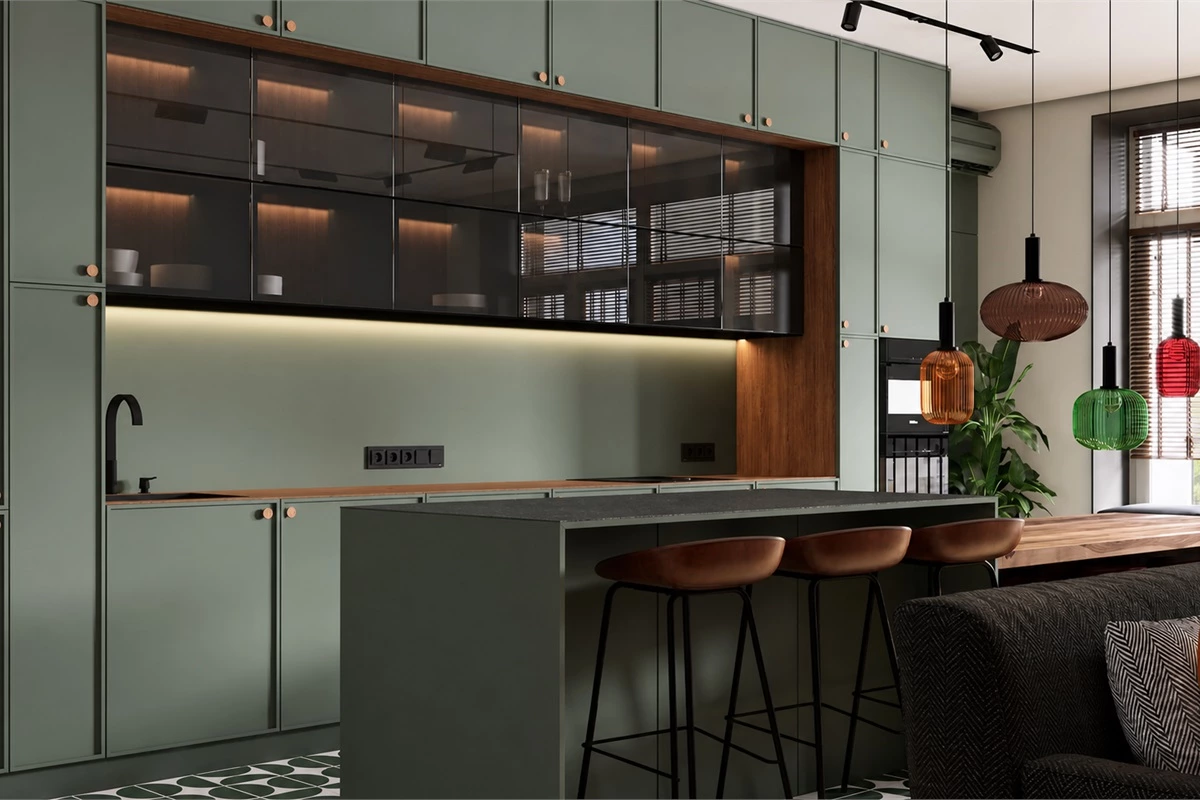
Experiment with various materials to add depth and visual interest. Incorporate sleek stainless steel appliances, glossy surfaces, or matte finishes to create textural contrast. Combine materials like wood, glass, concrete, or stone for a modern yet inviting ambiance.
Material mixing works best when the performance of each surface matches its location. A splash-prone zone may need a sealed, easy-clean finish, while a display panel can use glass or a decorative veneer. Check how the worktop, backsplash, cabinet doors and hardware meet at corners and cut-outs. ALLURE’s raw-materials reference helps project teams compare available board, veneer and finish directions before finalising a colour palette. For worktop planning, coordinate the cabinet dimensions with the selected countertop system.
Durable, coordinated surfaces are among the must-have features of a modern kitchen because they influence cleaning, repairs, colour consistency and the long-term appearance of the cabinet run.
Personalized Statement Pieces
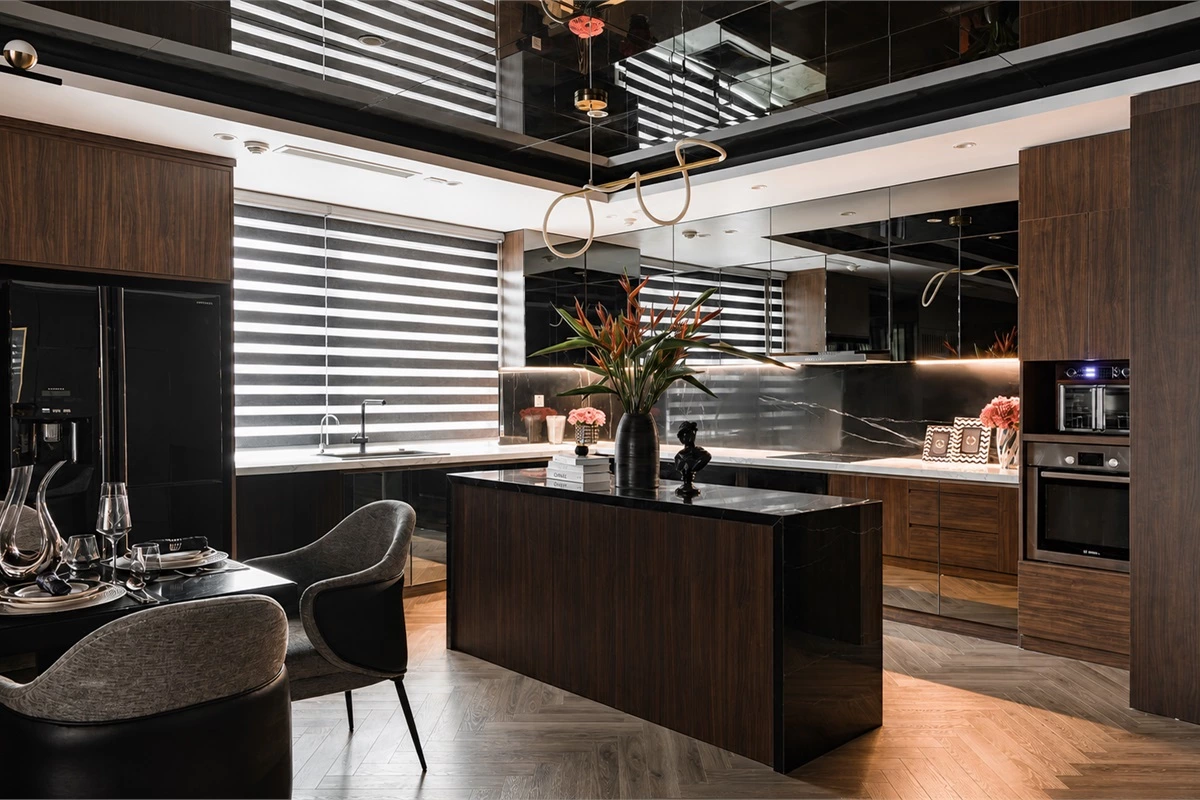
Incorporate your personality into the design through statement pieces. This could be a vibrant backsplash, a unique kitchen island, or artful fixtures. These elements not only serve as conversation starters but also infuse character into the space.
A statement piece should be intentional and proportionate to the room. A waterfall island, fluted panel, coloured backsplash or framed display cabinet can become the visual anchor while the surrounding cabinetry remains calm. Confirm sightlines from the entry, dining area and living room, and check that the feature does not interfere with seating clearance, walkway width or appliance access. A clear elevation drawing makes this decision easier for homeowners and project teams.
One memorable focal point can complete the must-have features of a modern kitchen without turning every cabinet into a competing visual statement.
Sustainability and Eco-friendliness
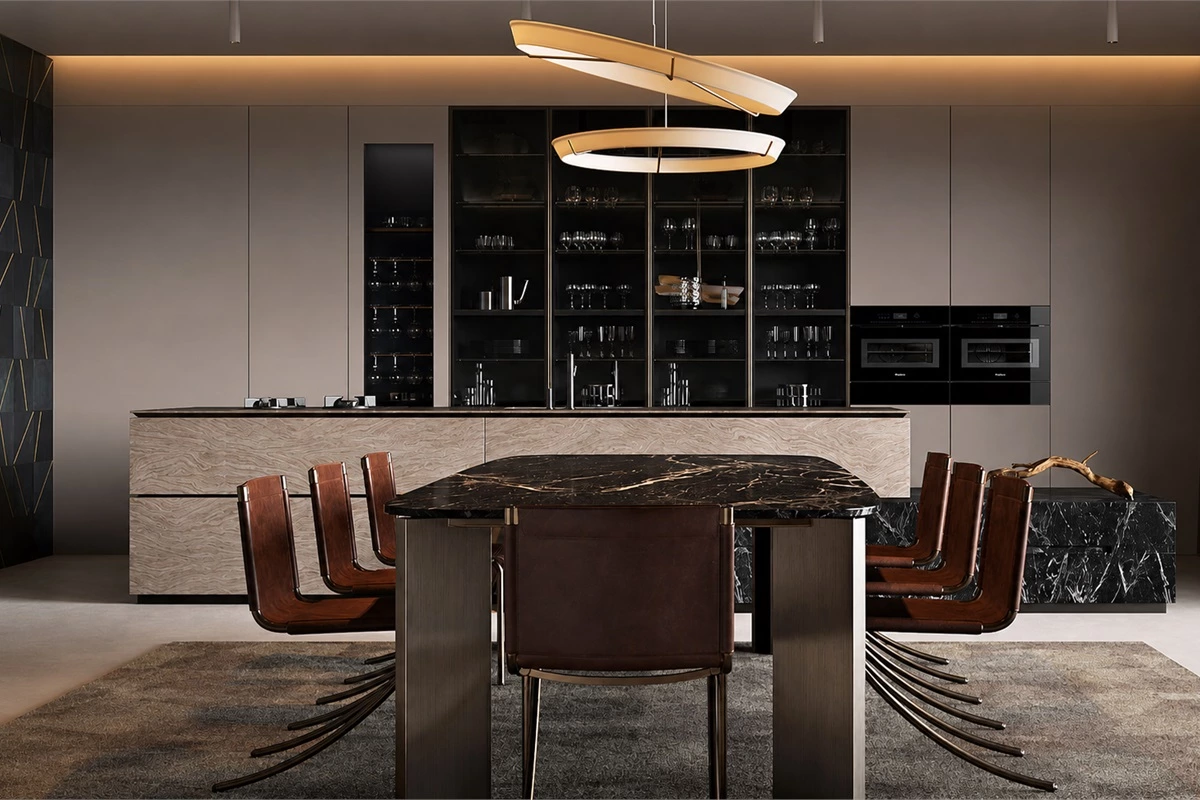
Consider eco-friendly materials and energy-efficient appliances to align with sustainability goals. Recycled materials, energy-saving devices, and water-efficient fixtures not only contribute to a greener environment but also add value to your kitchen in the long run.
Sustainability should be translated into verifiable project requirements. Ask suppliers about the board composition, finish system, packaging choices, replacement parts, and expected service life instead of relying only on broad green claims. Appliance efficiency can be checked through the official ENERGY STAR appliance guidance, while water-saving fixtures can be compared through the U.S. EPA’s WaterSense programme. Availability, local regulations and the final specification should always be confirmed for the project location.
Responsible material and appliance decisions round out the must-have features of a modern kitchen, particularly for projects with documented environmental or operating targets.
How to Prioritize the Must-Have Features of a Modern Kitchen
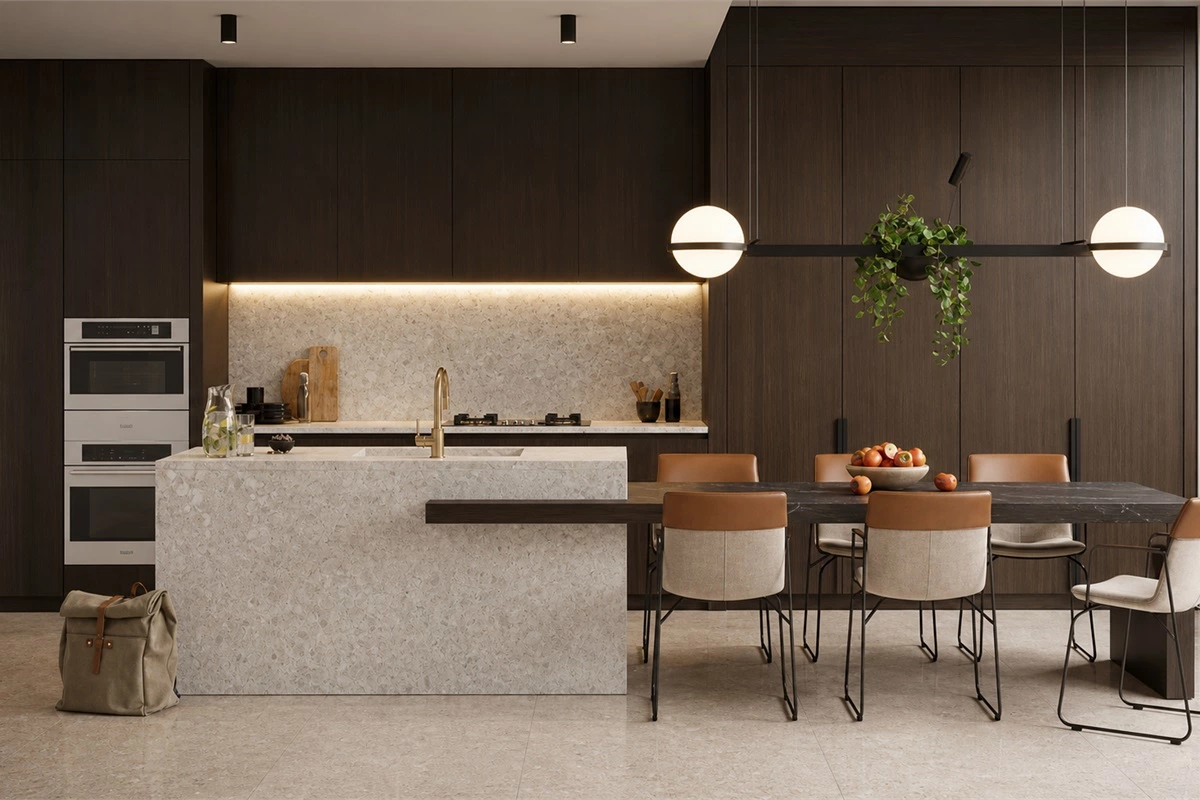
Not every project needs the same combination of features. Use the following sequence before requesting a final cabinet quotation:
- Measure the room: record wall lengths, ceiling height, windows, doors, plumbing points, ventilation and structural limits.
- List the users and routines: note how many people cook, whether children need access, and which appliances are used every day.
- Set the storage brief: separate food, cookware, small appliances, waste sorting, cleaning products and display items.
- Choose the visual language: decide whether the room should feel warm, monochrome, high-contrast, natural or softly coloured.
- Coordinate the technical package: approve appliances, worktops, lighting, sockets, plumbing and ventilation before cabinet production.
- Approve samples and drawings: check finish, edge details, handles, reveals and opening directions in writing.
This process turns inspiration into a buildable specification. It also gives an overseas supplier a clearer brief for 3D design, revisions, production planning, pre-assembly inspection and export packing. ALLURE’s order process overview can be used as a reference when organising these stages.
Frequently Asked Questions
What are the must-have features of a modern kitchen?
The core features are a clear layout, efficient storage, clean-lined cabinetry, layered lighting, suitable appliances, durable materials and a coordinated visual scheme. Open space, smart technology, a statement element and sustainability can then be added according to the room, budget and daily routine.
Is a work triangle still one of the must-have features of a modern kitchen?
Yes, the work triangle remains a useful check between the sink, hob and refrigerator. Larger or open-plan rooms often need several connected work zones, so also review circulation, appliance door swings, preparation space and the distance between storage and the point of use.
How do handleless cabinets support the must-have features of a modern kitchen?
Handleless doors create an uninterrupted front and can make a compact room look calmer. The specification still needs to identify the opening profile, clearances, cleaning access and hardware durability. A sample door is useful because different profiles feel and perform differently.
What lighting belongs among the must-have features of a modern kitchen?
Use a combination of ambient ceiling light, task lighting beneath wall cabinets and accent lighting for islands or display areas. Plan switches, dimmers, colour temperature, cable routes and transformer access together with the cabinet and electrical drawings.
Which materials work well for modern kitchen cabinets?
There is no single best material. Painted panels, PET, melamine, veneer, plywood and other systems can all be suitable when their moisture resistance, edge treatment, cleaning needs, colour consistency and intended location are understood. Compare samples and the complete construction, not only the surface name.
How can an open plan deliver the must-have features of a modern kitchen?
Use a tall cabinet wall, full-height pantry units, deep drawers and carefully planned corner storage to keep everyday items hidden. Reserve open shelving or glass doors for selected items, and maintain a consistent line with the adjoining dining or living space.
Are smart appliances necessary in a modern kitchen?
They are optional. Smart taps, lighting and appliances are valuable when they improve a specific routine, but they should not compromise reliability or service access. Confirm power, ventilation, network compatibility, replacement planning and cabinet dimensions before including connected products.
How do I combine wood, stone, glass and metal without making the room busy?
Choose one dominant material, one supporting material and a restrained accent. Repeat a colour or texture at least twice, and use the island, backsplash or display cabinet as the controlled point of contrast. Review large samples in both daylight and evening light.
What makes a statement island practical?
A statement island should provide a useful work surface, storage or seating while preserving safe circulation. Check aisle widths, stool clearance, electrical outlets, appliance access, worktop joints and sightlines from nearby rooms before approving its shape and finish.
How can sustainability be included in a modern kitchen specification?
Specify durable finishes, efficient appliances, water-saving fittings, responsible material information, repairable hardware and reduced packaging where practical. Ask for documentation relevant to the destination market and avoid assuming that a product is sustainable without checking its construction and performance.
Conclusion
The best modern kitchen is not defined by a single colour, appliance or trend. It is a coordinated result of layout, storage, lighting, materials, technology and personal priorities. These must-have features of a modern kitchen provide a practical framework for comparing design options, preparing accurate drawings and protecting the usability of the room over time.
For a custom project, confirm the floor plan, appliance schedule, cabinet construction, finish samples, countertop details, lighting and installation requirements before production. With a clear brief, ALLURE can support the transition from modern kitchen design features to coordinated cabinet drawings, quality checks, and export-ready delivery for residential and project customers.