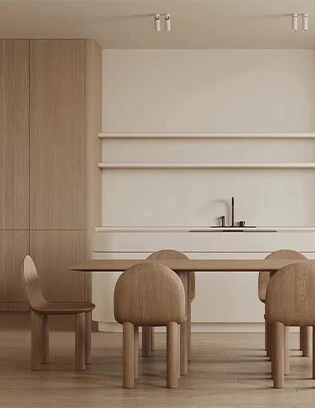
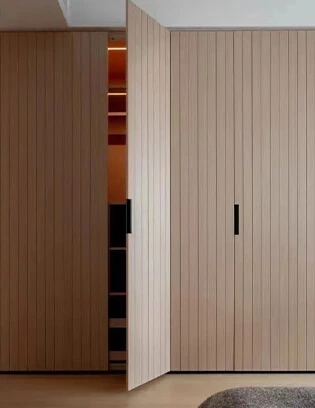
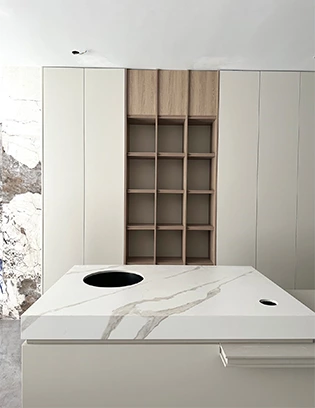
The bevel cutting process, also known as the 45-degree bevel joining technique, is an innovative method used to eliminate gaps during panel joining. By cutting the panels at an angle and finishing them with a beveled edge, the joints between cabinet panels achieve a tight, seamless fit. Traditional panel joining methods often result in imperfect alignments, leading to visual and structural flaws. The 45-degree bevel cut ensures that the panels fit together perfectly, eliminating noticeable gaps. Continue reading to learn more about this technique.
Mitered cabinet doors use this angled edge treatment to create a refined transition between visible panel faces. The detail can make cabinetry feel lighter and more architectural, but it also requires accurate machining, controlled finishing, suitable material selection, and careful installation. A successful bevel joint should be assessed with a full-size sample instead of relying only on a rendering.
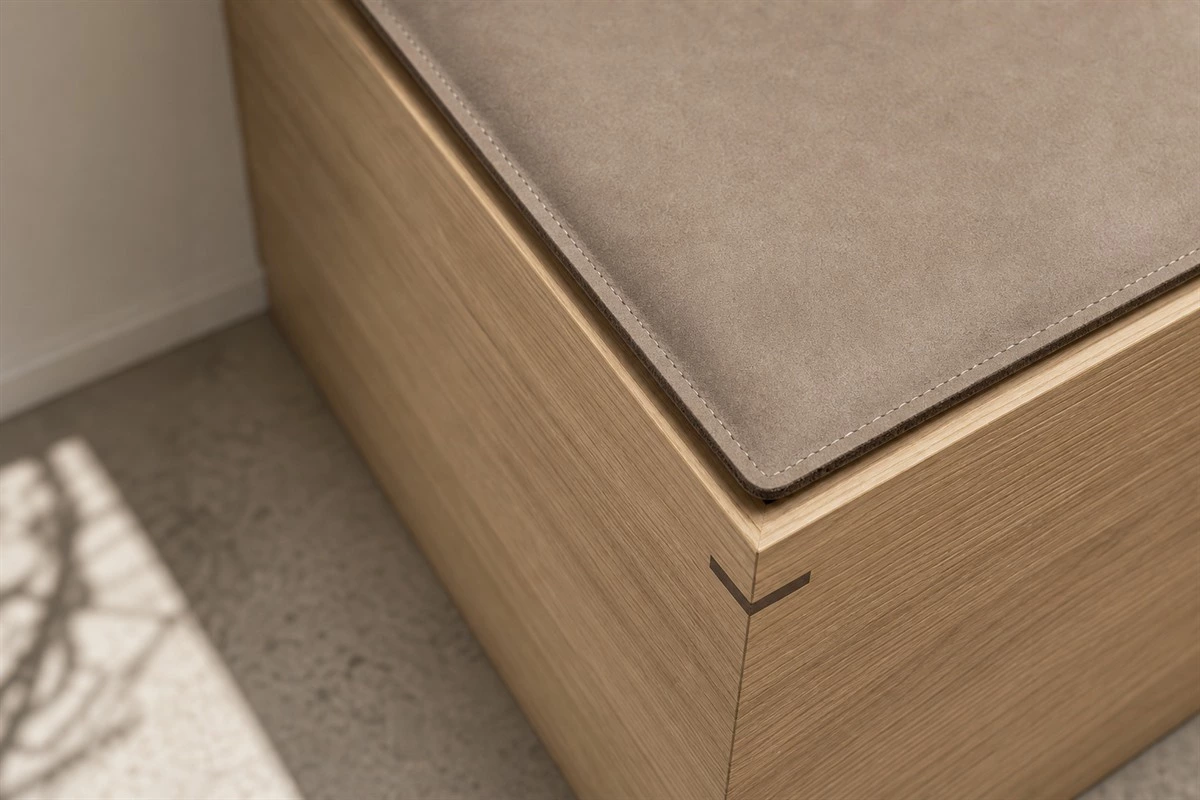
Advantages of Bevel Cutting
In custom home design, bevel cutting has become increasingly popular among designers and homeowners due to its unique design and practicality.
A 45-degree edge can reduce the visual interruption caused by a conventional square joint. On mitered cabinet doors, it can create a continuous line around a door, drawer, side panel, or open niche. The visual result depends on consistent bevel angles, matching finishes, controlled panel gaps, and appropriate lighting.
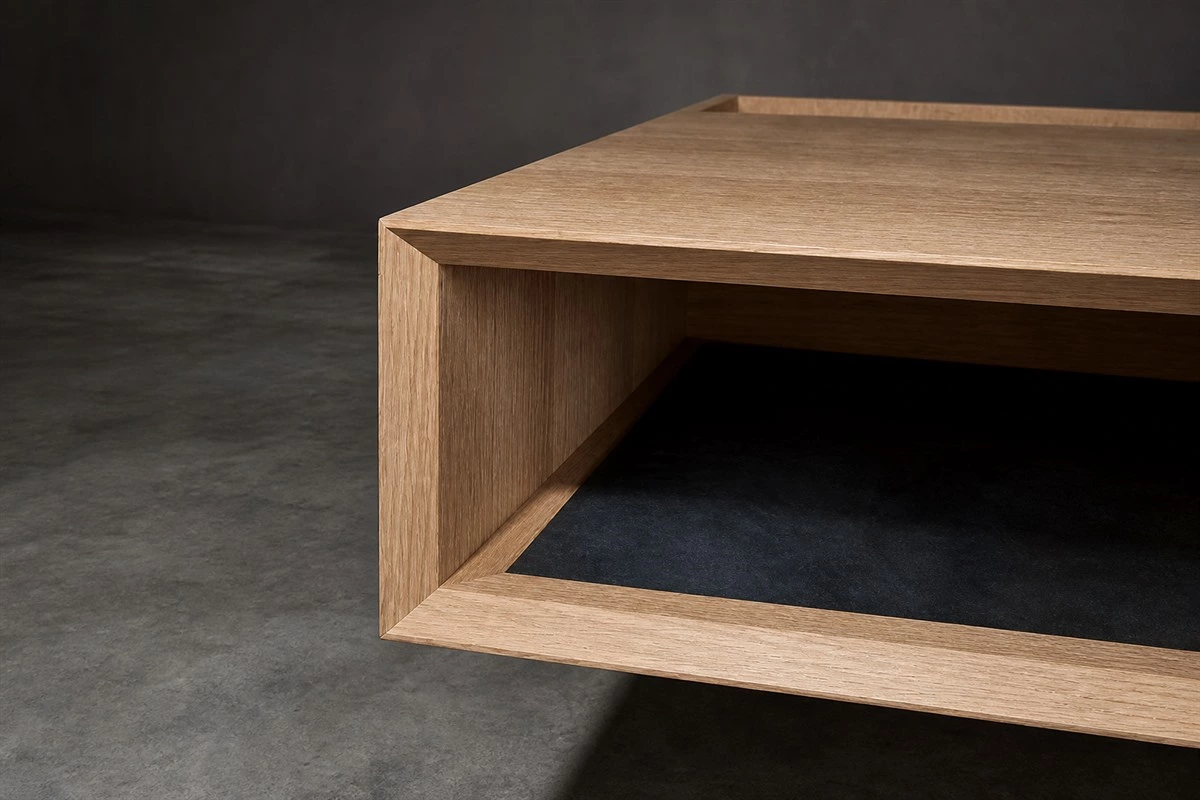
Dimensionality: Bevel-cut panels form sharp, three-dimensional shapes when joined, adding depth and dimension to furniture and interior decor.
Bevels are particularly effective where a cabinet needs a crisp shadow line without applied molding. A door edge, open shelf, or island end can use this detail as a subtle focal point while surrounding panels remain simple.
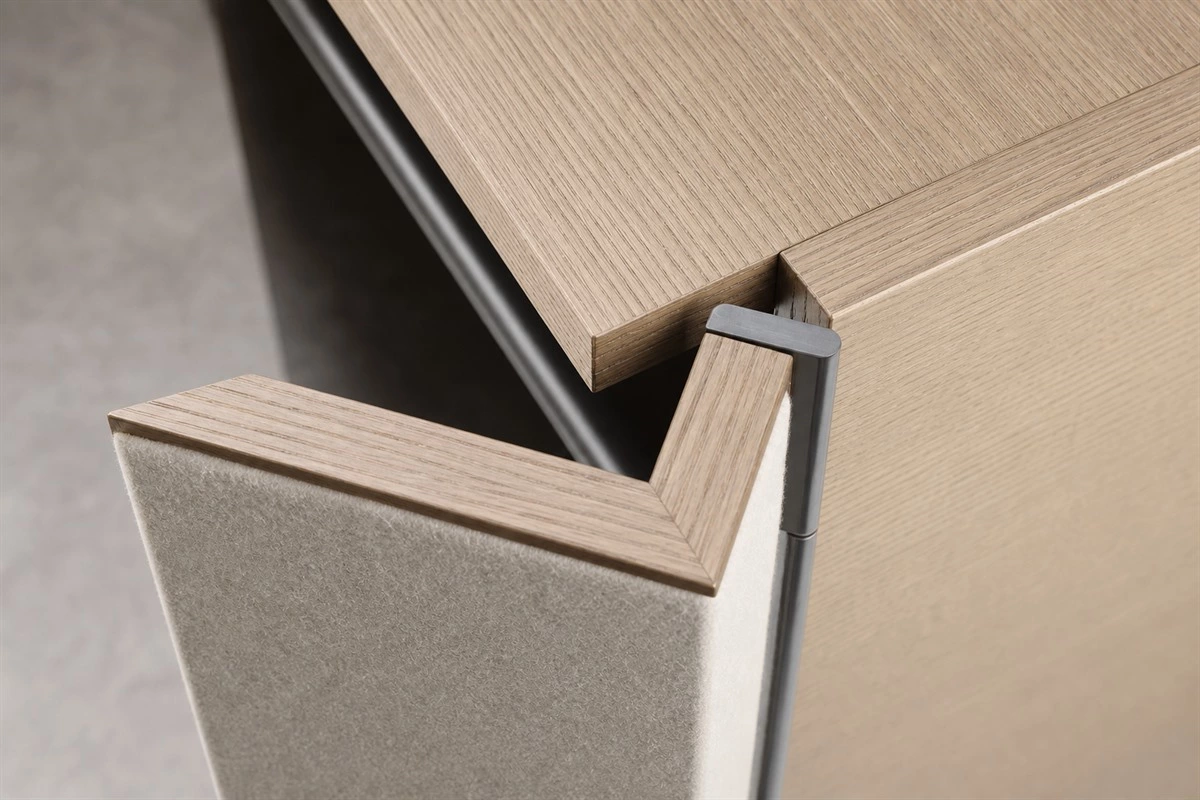
Stability: The increased contact area created by bevel-cut panels enhances the adhesive strength of the joints, resulting in a sturdier furniture structure. Additionally, bevel cutting prevents wood grain breakage, improving the furniture's resistance to deformation.
Actual structural performance depends on the complete construction: substrate, remaining material thickness, adhesive, support, span, fixing method, and expected environment. Do not assume that a beveled profile alone guarantees strength, moisture resistance, or durability. For composite wood specifications, review the applicable material documentation and the U.S. EPA composite wood resources.
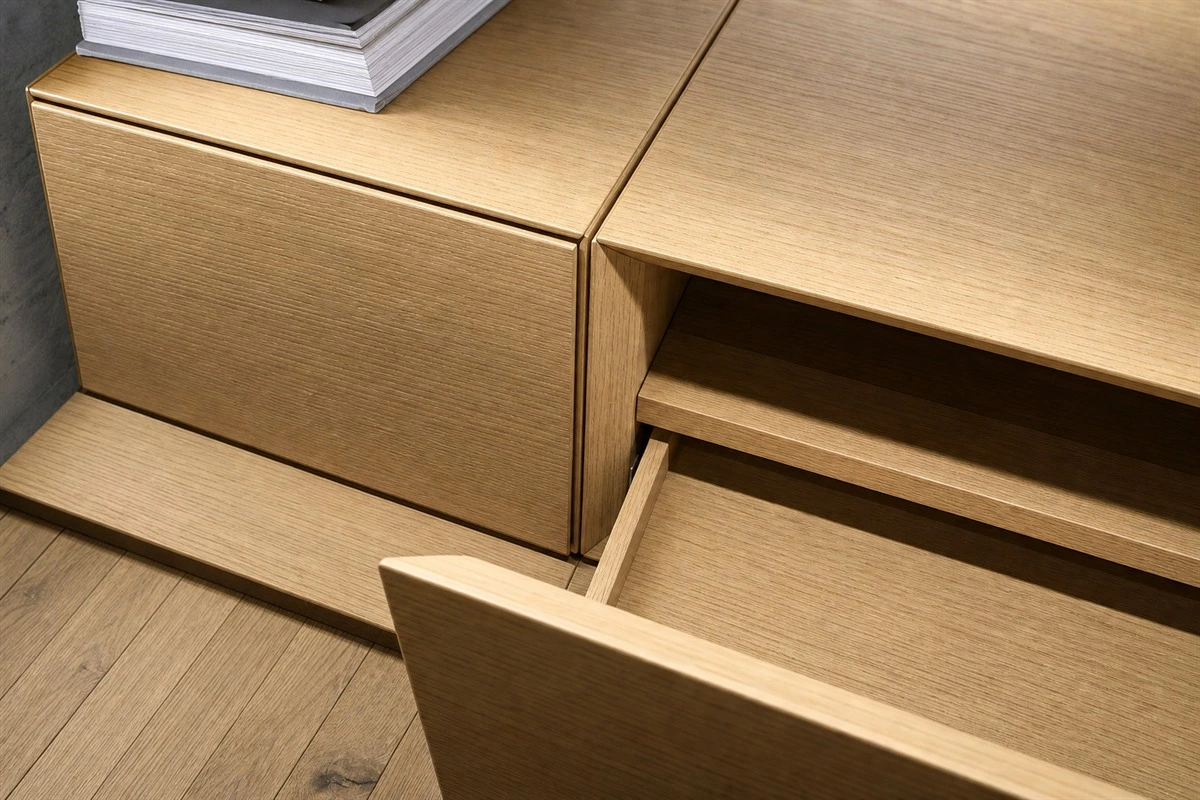
Aesthetic Appeal: Bevel-cut panels can create unique patterns at the joints, such as diagonal lines or herringbone designs, enhancing the visual appeal of furniture and interior decor.
Before production, approve a sample that shows the finished angle, edge condition, grain direction, paint or veneer continuity, and visible reveal. This is especially important when several mitered cabinet doors must align across one elevation.
How 45-Degree Cabinet Joints Are Specified
Precise drawings help turn the design idea into a repeatable result. Record the nominal bevel angle, finished panel thickness, substrate, edge treatment, joint location, permissible gap, grain direction, and hardware clearance. Where the bevel meets an open shelf or wall panel, include an enlarged section showing the full material build-up.
- Panel material: confirm whether the detail uses veneer, lacquer, laminate, solid wood, or another finish.
- Joint alignment: map every door split, drawer front, and adjacent panel so diagonal lines remain intentional.
- Hardware: verify hinge cups, integrated pulls, drawer slides, and soft-close mechanisms using the selected cabinet hardware.
- Production sample: approve one full-size corner or door edge before batch production.
For a coordinated design, pair the joint with the appropriate cabinet door panel style. Architectural millwork teams can also use the Woodwork Institute as a specification reference; this does not indicate certification for a particular project or supplier.
Applications of Bevel Cutting
Door Edge Transition: Treating door edges with bevel cutting eliminates the gaps typically associated with traditional right-angle cuts, resulting in smoother, tighter corners. This technique not only improves the overall aesthetics of the home but also enhances durability.
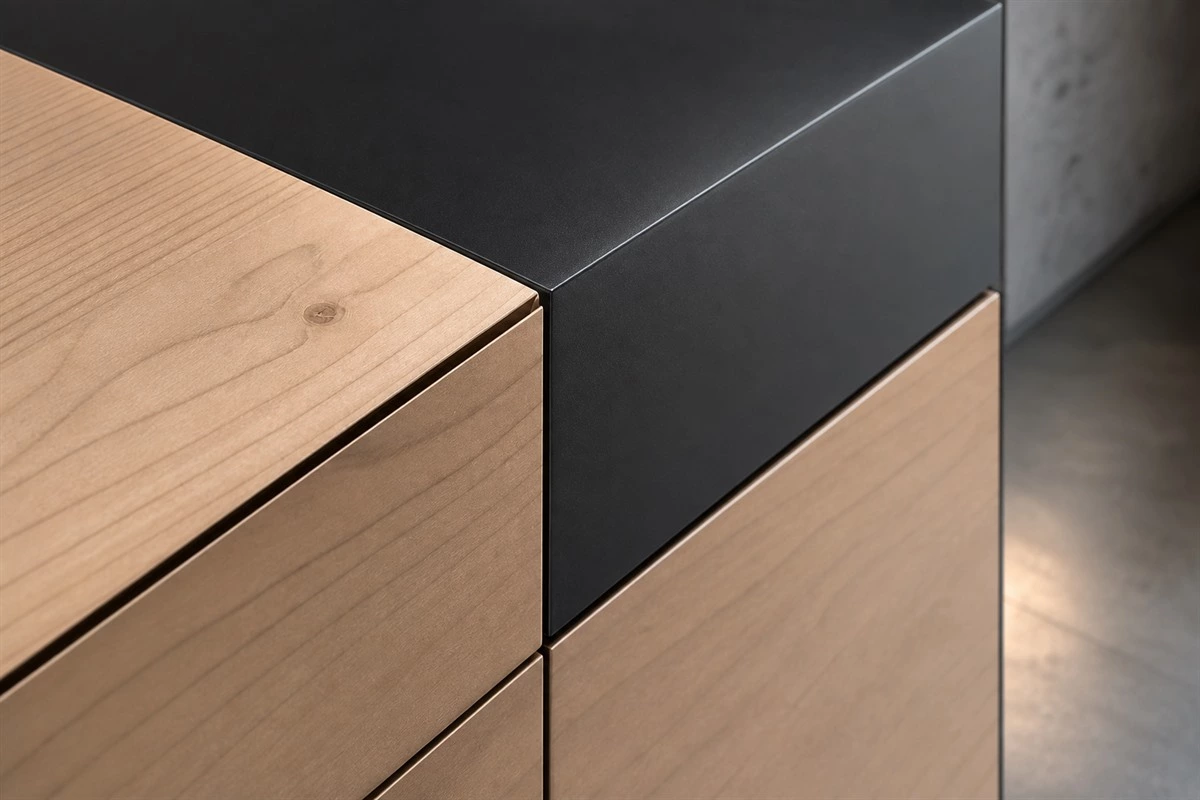
Handleless Cabinet Joint Treatment: The bevel cutting process allows for a handle-free cabinet design, creating a cleaner visual appearance and easier maintenance. This design also results in smoother joint lines, improving the overall harmony of the home decor.
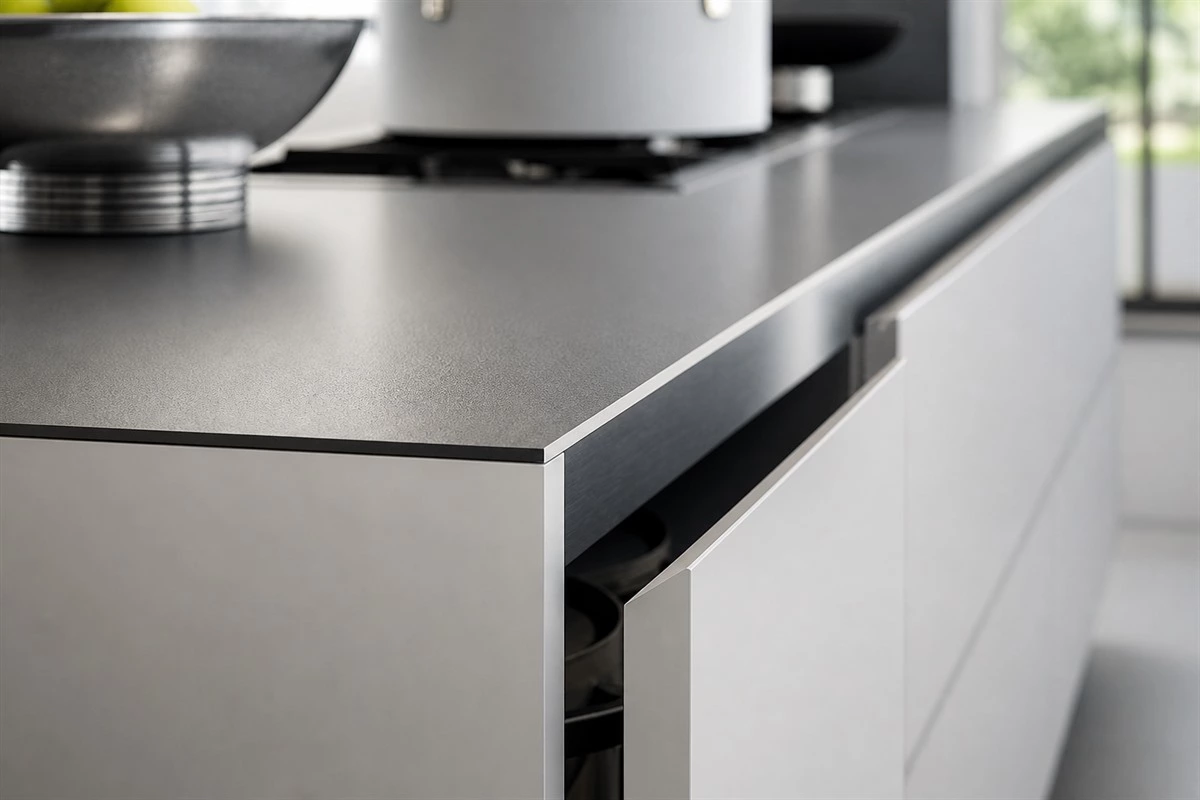
Handleless details need additional clearance checks. Confirm that the bevel remains comfortable to grip, does not create a sharp contact edge, and allows doors or drawers to open without interference.
Drawer Soft Closing: Bevel-cut drawer panels can reduce impact when opening and closing, extending the lifespan of the cabinetry. This attention to detail demonstrates the designer's focus on user experience and does improve functionality.
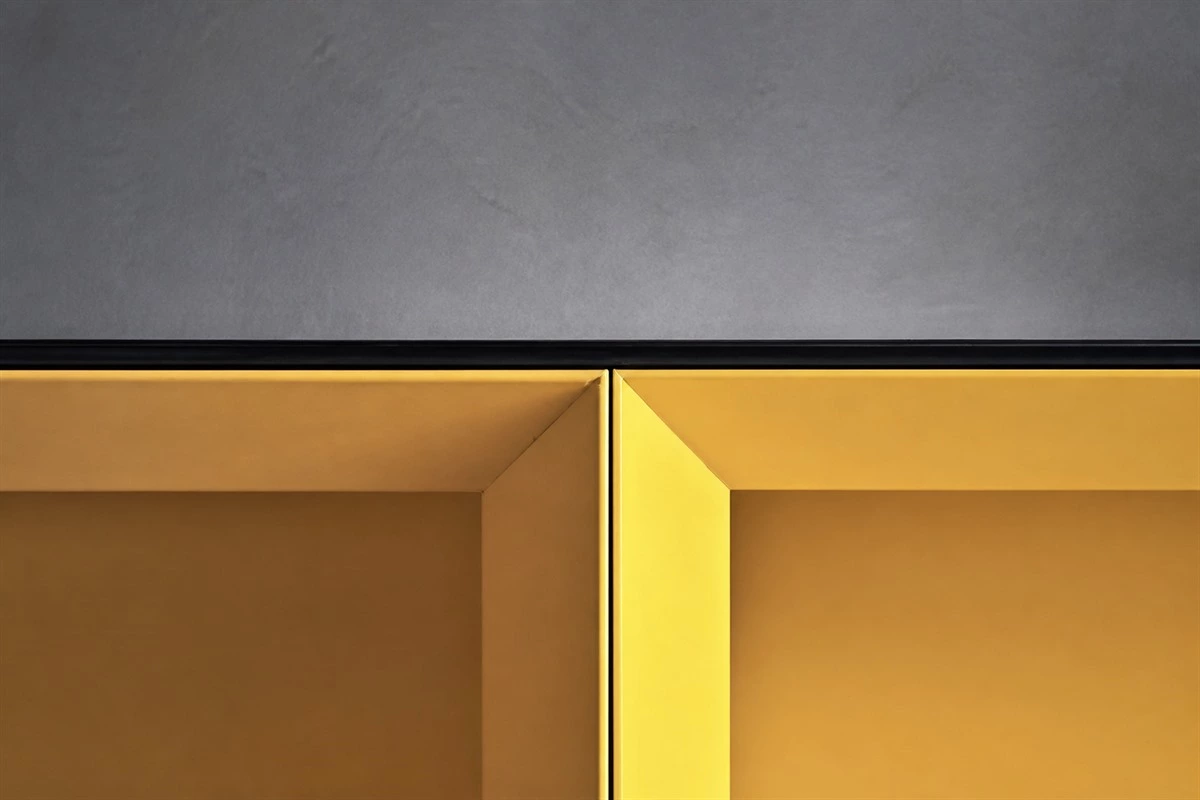
Open Cabinet Edge Optimization: Using bevel cutting for the edges of open shelves and side panels adds a distinct layered look to home design, combining load-bearing capability with modern style. This treatment not only elevates the sophistication of the home but also increases its practicality.
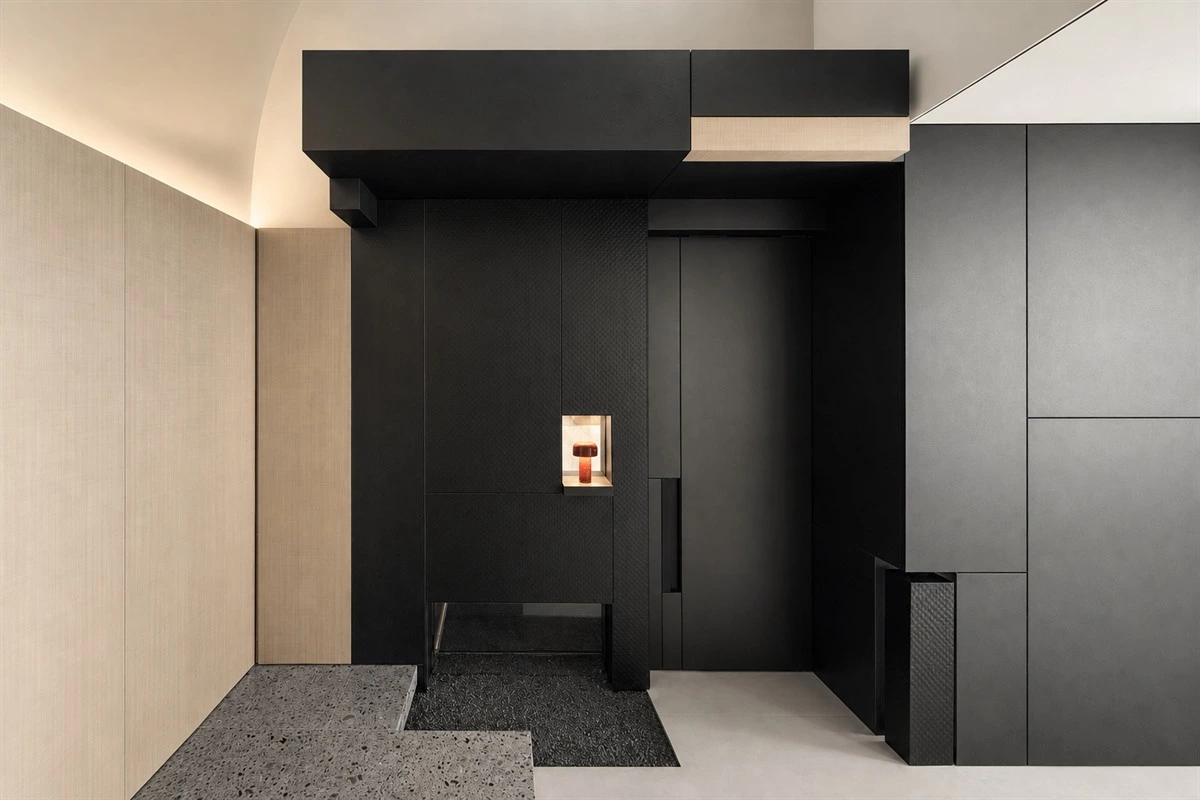
Wall Panel Corner Improvement: Bevel cutting for wall panel corners improves structural integrity, reducing issues such as loosening and cracking that can occur with right-angle joints. This results in longer-lasting wall panels with smoother, seamless corners.
Frequently Asked Questions
What are mitered cabinet doors?
They are cabinet doors or panel assemblies with angled edge joints, commonly using a 45-degree bevel to create a cleaner, more continuous visible transition.
Are 45-degree bevel joints suitable for all cabinet materials?
No. The best method depends on the substrate, finish, panel thickness, machining capability, adhesive system, and intended use.
Do mitered cabinet doors need a full-size sample?
Yes. A full-size sample helps confirm the bevel angle, joint fit, finish continuity, grain direction, edge comfort, and hardware clearance.
Can bevel cutting be used on handleless cabinets?
Yes, provided the grip zone, opening clearance, panel movement, and chosen hardware are coordinated in the technical drawings.
Where is bevel cutting most effective?
It is commonly used on cabinet doors, drawer fronts, open shelves, side panels, island ends, handleless details, and wall-panel corners.
Conclusion
Bevel cutting gives cabinetry a precise way to create seamless-looking transitions, stronger visual depth, and cleaner lines. Mitered cabinet doors work best when material selection, sample approval, hardware clearance, tolerances, and installation details are specified together.