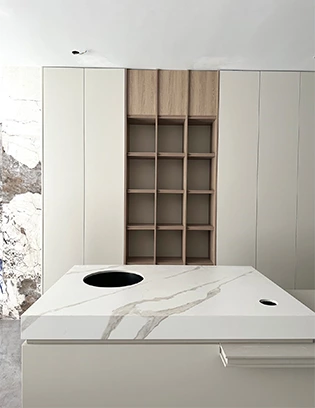
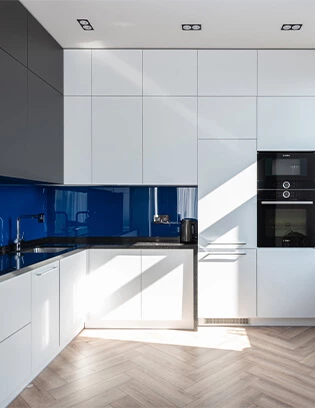
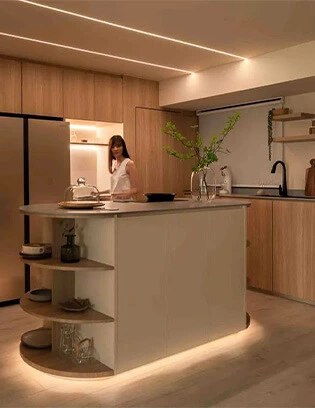
The grooving craftsmanship involves creating specific grooves on the originally smooth surface of the base material, thereby achieving a sense of depth and relief on the finish. This common method significantly enhances visual appeal. The unique aesthetic value and practicality of the grooving craftsmanship make it an excellent choice for those seeking personalized and quality-crafted wood furniture.
For a custom interior, wood cabinet door panels do more than close a cabinet. Their profile, groove rhythm, finish, and relationship to adjacent wall surfaces affect how a room feels at both close range and from a distance. Grooving gives a flat face a controlled pattern of light and shadow, allowing a simple material palette to carry more architectural character.
In practice, a groove is a specified machining detail, not merely a decorative line. Its width, depth, spacing, direction, edge profile, substrate, and finish must work together. Clear samples and drawings are therefore essential before a grooved panel moves into production.
Craftsmanship Value
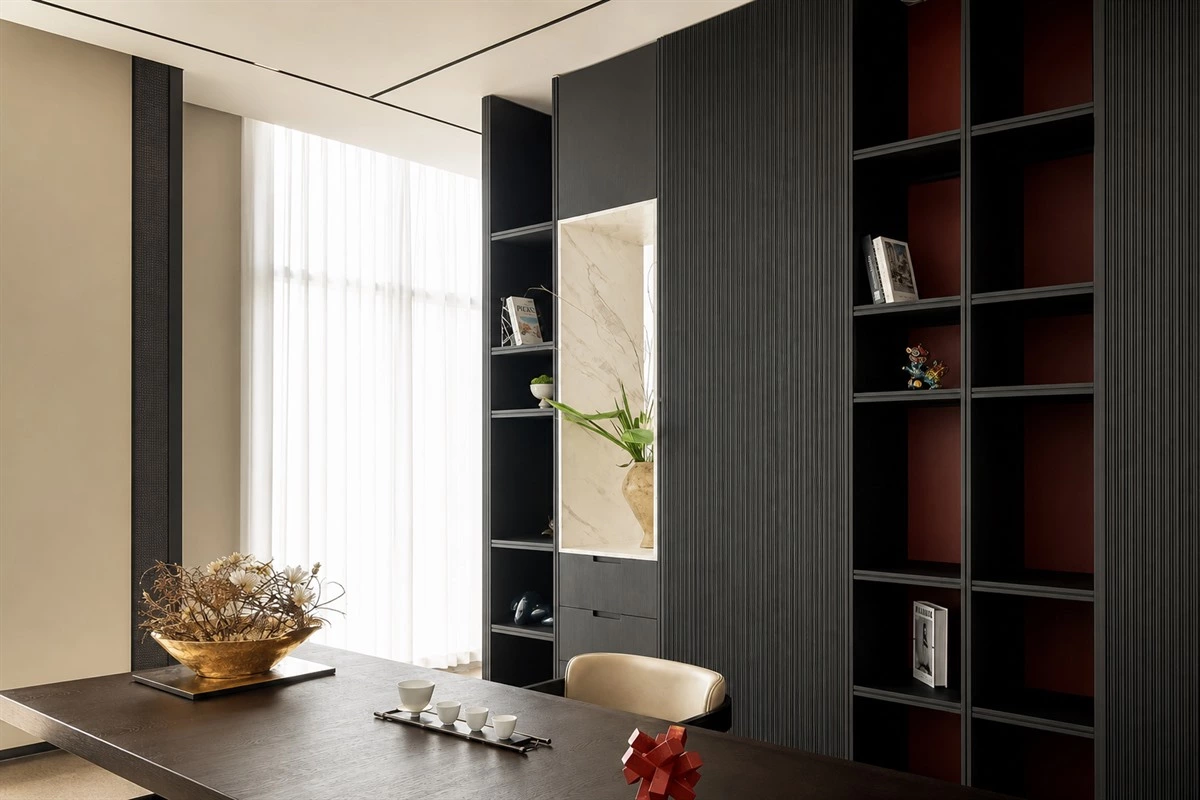
Spatial art is dynamic and boldly avant-garde, and the grooving craftsmanship captures the infinite possibilities hidden within it. By shaping the monotonous base material, it demonstrates superior aesthetic control over wood finishes through its interplay of relief. Commonly used in door panels, wardrobes, wall panels, and other wooden surface decorations, grooves can be square, arc-shaped, V-shaped, through, or non-through. These patterns flow and connect within the space, creating a distinctive scene.
Wood cabinet door panels can use grooving to establish a visual rhythm without adding heavy molding. Fine, evenly spaced lines often support a quiet contemporary look; wider or deeper profiles create a stronger shadow line and a more sculptural result. The right profile should follow the scale of the room, the cabinet height, viewing distance, lighting direction, and the desired maintenance level.
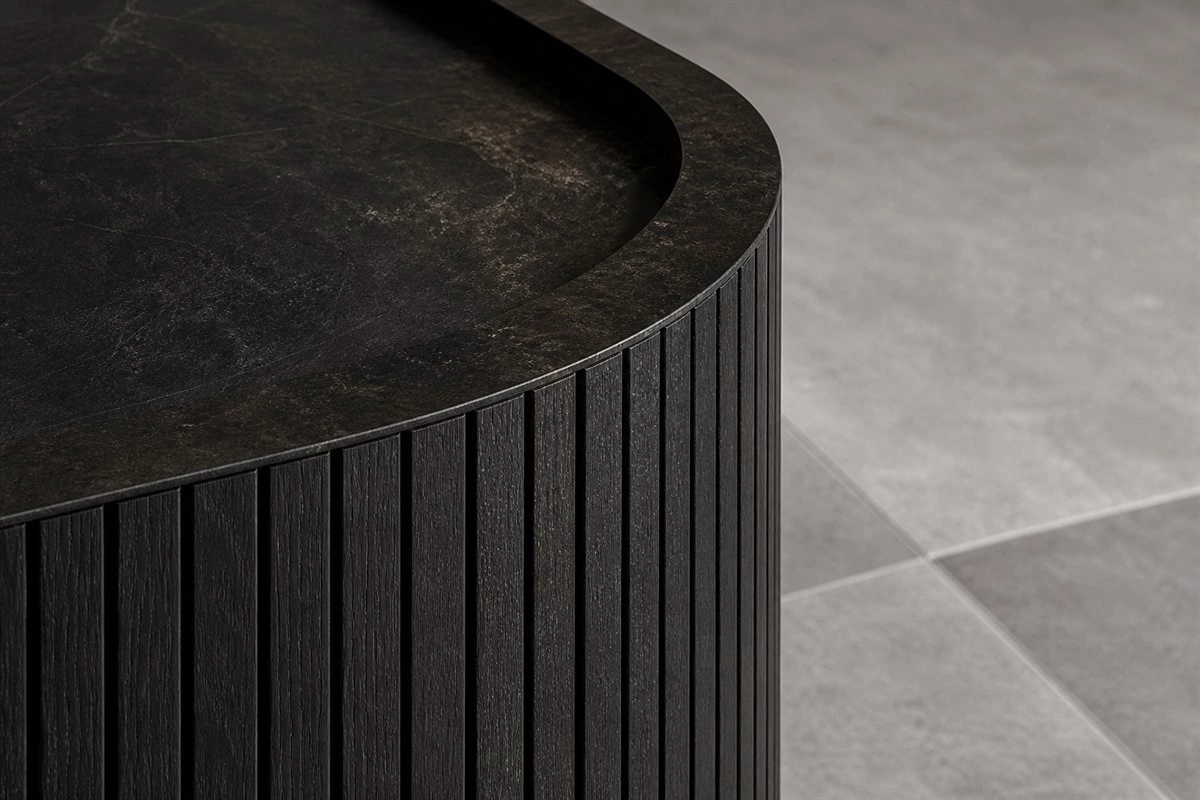
Strong Sense of Layers: The grooving craftsmanship can cut various regular or irregular patterns into the wood surface, forming unique textures and designs. These grooves can be simple and modern straight lines and geometric shapes, or intricate and exquisite curves and patterns. Different groove designs provide varying visual impacts, enhancing the spatial depth and artistic appeal.
When planning wood cabinet door panels, decide whether the groove should align with a door split, an open niche, a drawer front, or a wall-panel joint. Alignment across surfaces makes the detail intentional. Misaligned lines can make a premium installation appear fragmented, especially on tall wardrobes and full-height cabinetry.
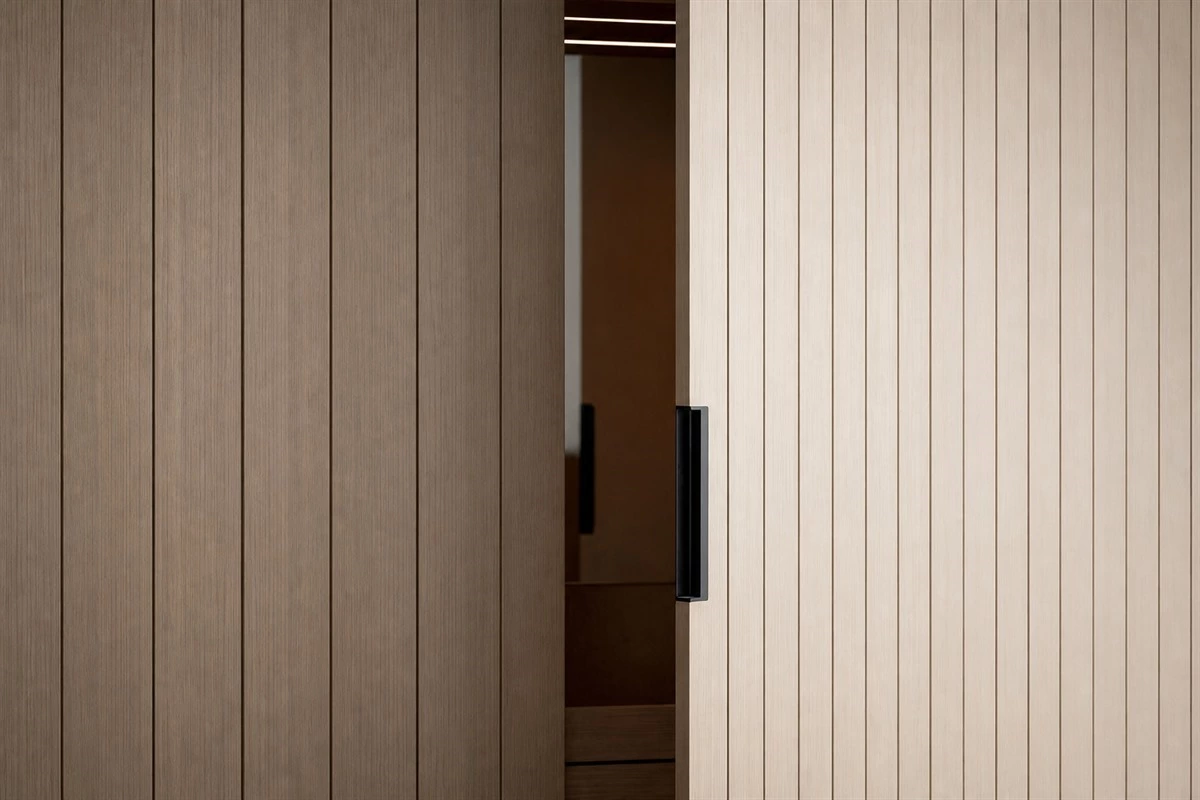
Enhanced Stability: By creating grooves through post-processing, the craftsmanship improves and strengthens the wood's durability and stability, making the furniture more robust and long-lasting.
The final performance of a grooved surface depends on the full construction, not on the groove alone. Substrate type, remaining material thickness, veneer or coating system, humidity exposure, panel support, and installation details all matter. For projects using composite wood, confirm the selected material documentation and applicable requirements; the U.S. EPA composite wood resources provide useful background on formaldehyde-related information.
Groove Profiles and Design Decisions
A groove profile should be selected for both appearance and manufacturability. Square grooves create crisp geometry, V-grooves make a narrow line read more deeply, and rounded profiles give a softer transition. Through-grooves can create dramatic openings or reveal contrasting backing material, while non-through grooves preserve a continuous panel face.
- Width and depth: Specify both dimensions and the acceptable tolerance. A very narrow groove may visually disappear after finishing, while an overly deep groove can weaken the face or complicate cleaning.
- Spacing: Use a repeated module tied to the panel size. Equal spacing helps tall wood cabinet door panels look calm and deliberate.
- Direction: Vertical lines can visually increase height; horizontal lines can widen a long elevation; curved lines create movement but need more careful joining.
- Finish continuity: Confirm how stain, lacquer, veneer grain, laminate, or paint will behave inside the groove and at the edge.
For a coordinated project, review the available door panel options before confirming a groove pattern. Full-size samples of wood cabinet door panels reveal whether the profile is balanced at normal viewing distance. The profile should also allow sufficient clearance for handles, integrated pulls, hinges, and other items in the cabinet hardware selection.
Application
In contemporary custom space design, wood veneer elements are widely used. It is a common challenge in custom home design to achieve visual harmony without compromising functionality. The grooving craftsmanship addresses this by creating a rhythmic flow with the artfully arranged grooves, which keeps the space from falling flat and bulky with large wooden veneers, and adds visual interest. This sophisticated and engaging visual interpretation aligns with the high-quality urban living ideals.
Use the detail selectively. A single grooved feature wall, entrance panel, display niche, or run of wood cabinet door panels can create a focal point; applying the same deep pattern to every surface can make a room feel visually busy. Pair grooved faces with plain panels, calm countertops, and restrained hardware for a balanced composition.
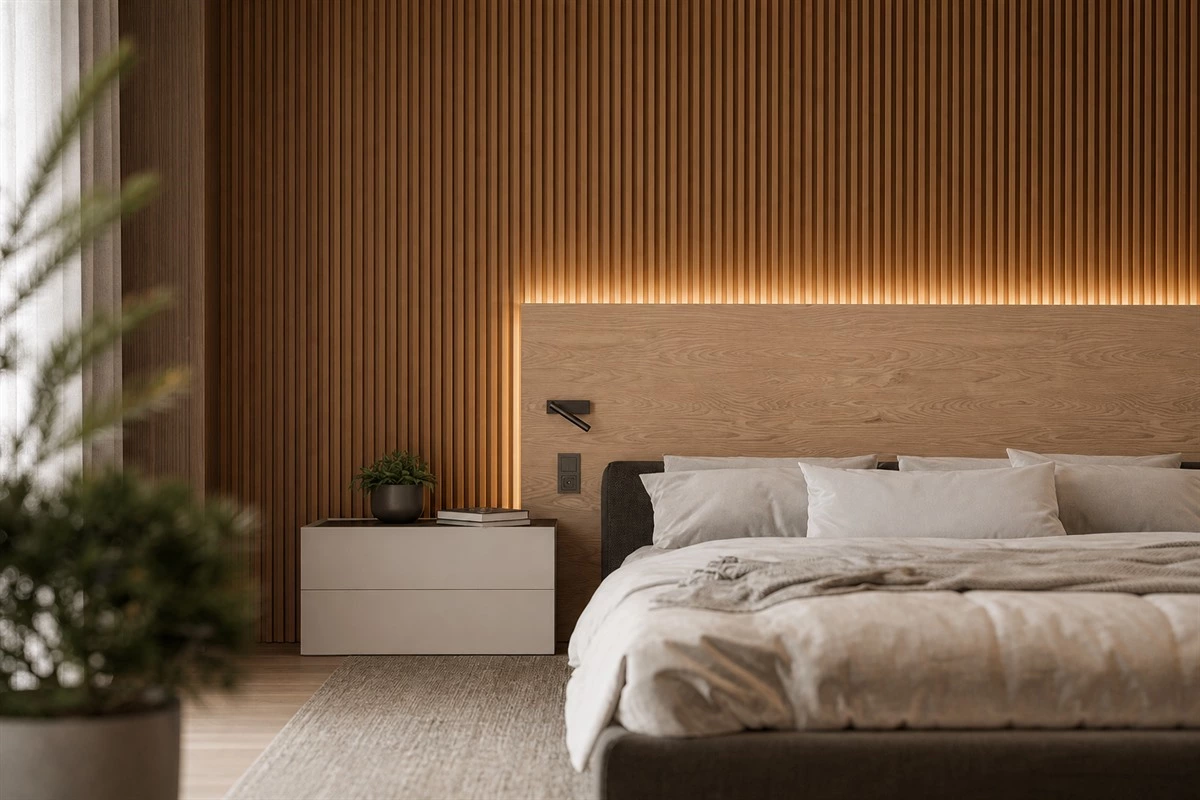
Wall Panel Grooving
Wall panel grooving is effective behind a bed, in an entry, around a TV wall, or as a feature beside built-in storage. Coordinate the groove spacing with power outlets, lighting channels, and panel joints so the completed wall reads as one planned surface. For broader planning, see whole-home cabinetry solutions.
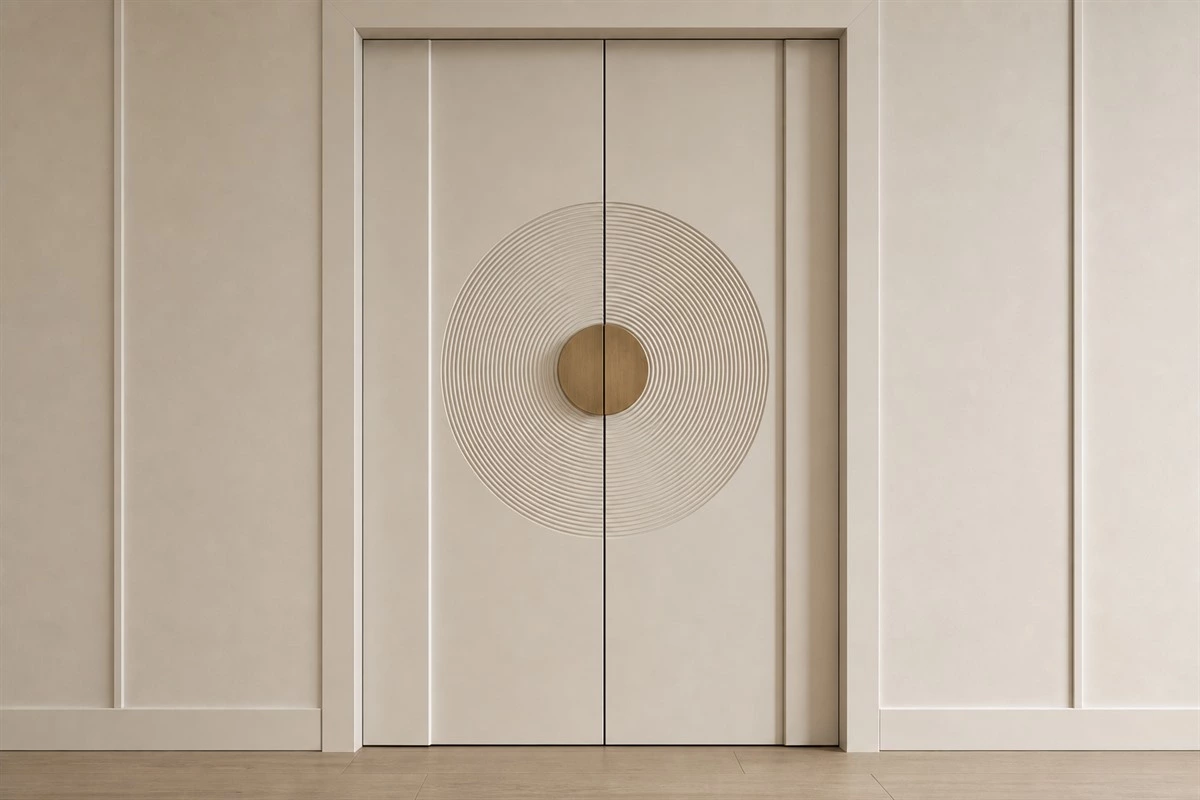
Door Grooving
Door grooving can create a continuous design language between interior doors and adjacent cabinetry. Confirm the door core, edge construction, handle position, swing clearance, and any glazing or lock preparation before machining a repeated pattern.
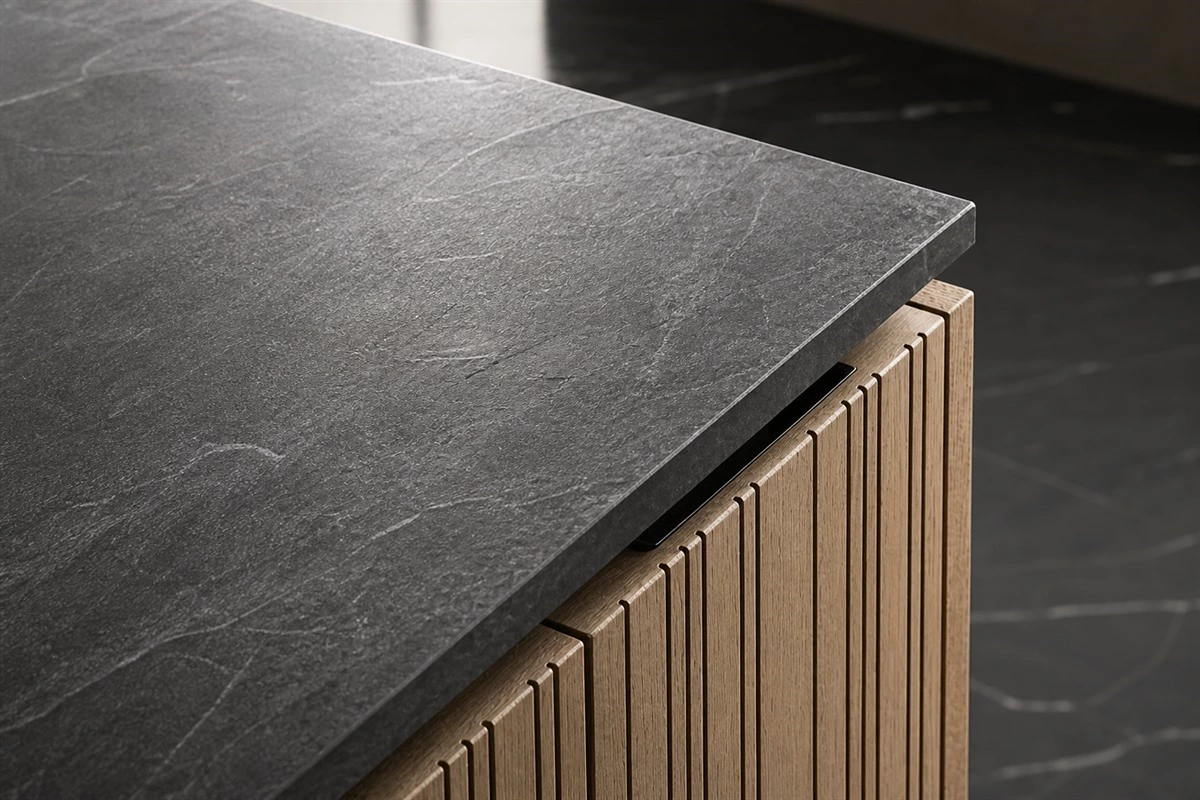
Drawer Front Grooving
On drawers, continue a line across multiple fronts only when the gap pattern is fully mapped. The groove should not interfere with finger clearance, push-to-open operation, or the practical cleaning of high-use storage.
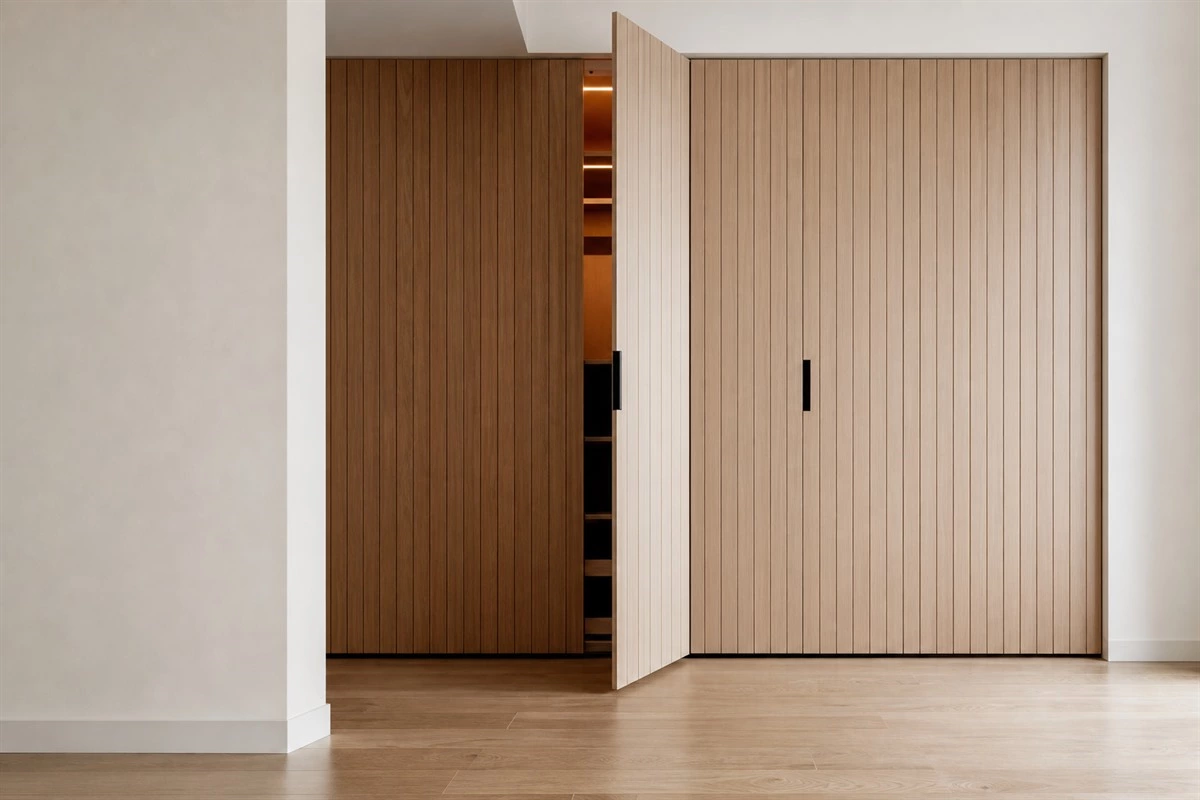
Cabinet Door Grooving
Grooved cabinet faces work particularly well on wardrobes, sideboards, and selected kitchen elevations. Wood cabinet door panels should be shown in an approved full-size sample, because the same profile can look very different under warm LED lighting, daylight, or a dark finish.
Considerations
As a high-end custom craftsmanship, grooving is versatile and compatible with various styles. However, to craft exquisite grooves, it is crucial to remember the following:
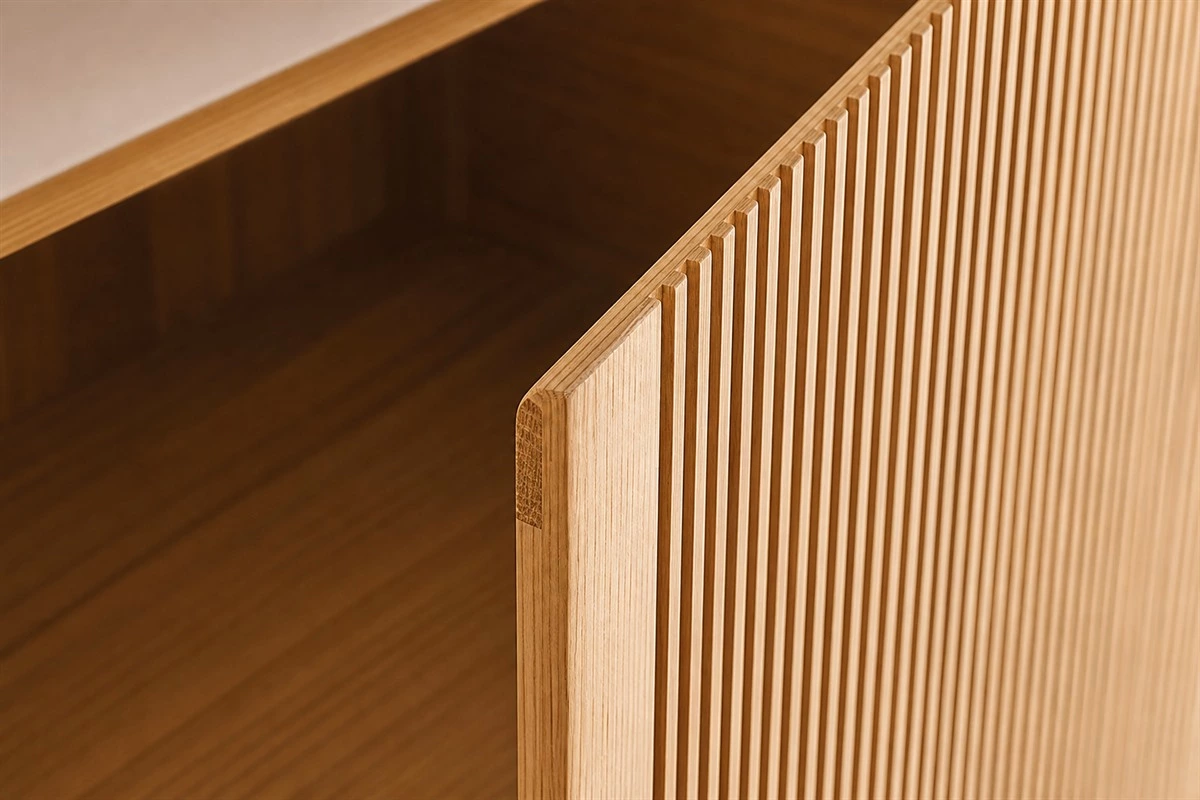
High Precision in Dimensions: Ensure that the groove height and width meet design specifications during processing to avoid effects from being too narrow or shallow, or material waste from being too deep or wide.
For repeatable results, include an enlarged section in the drawing package. It should state the groove profile, finished depth, width, spacing, panel edge condition, and any backing color or material. A physical control sample should be approved before batch production, particularly when several wood cabinet door panels must align across one elevation.
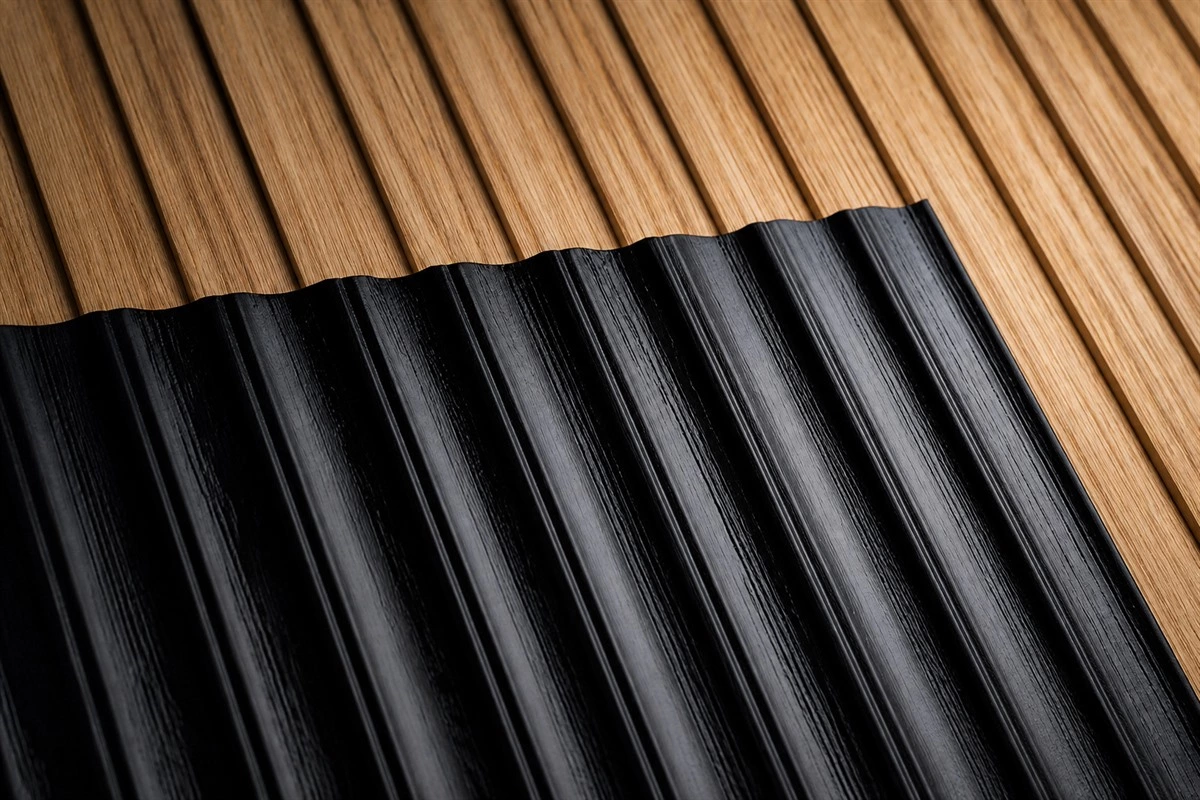
Structural Stability of Thick Panels: The grooving process involves stretching the material, which can cause fatigue fractures or cracks. Therefore, it is advisable to select thick panels or structurally stable materials that are resistant to cracking and deformation and suitable for deep processing.
Before production, verify panel thickness, remaining material behind the deepest groove, fixing locations, hinge drilling zones, and expected environmental conditions. Architectural millwork teams can also consult the Woodwork Institute's quality and specification resources as a reference for woodwork coordination. This reference does not imply certification for a particular project or supplier.
Frequently Asked Questions
What is grooving craftsmanship in custom wood furniture?
It is the controlled machining of lines, channels, or profiles into a panel surface to create texture, relief, shadow, and a more distinctive visual rhythm.
Can wood cabinet door panels be grooved?
Yes. Grooving can be used on selected cabinet doors, wardrobes, sideboards, and drawer fronts when the substrate, remaining thickness, hardware locations, and finish system are specified correctly.
What groove shapes are commonly used?
Square, V-shaped, rounded, arc-shaped, through, and non-through grooves are common. The final choice should suit the desired appearance, cleaning needs, material, and production method.
Do grooves make a panel structurally stronger?
Not automatically. Structural behavior depends on the full panel construction, material thickness, support, groove depth, fixing method, and environmental conditions.
How deep should a groove be?
There is no universal depth. Specify it according to the panel material, the required visual shadow, the amount of material that must remain, and the intended use of the component.
Can grooves be used on veneer finishes?
Yes, but grain direction, veneer thickness, substrate stability, edge treatment, and finishing inside the profile must be tested with an approved sample first.
How should groove lines align across adjacent doors?
Show every panel split, gap, and groove centerline on the elevation drawing. This prevents visual breaks when doors, drawers, and wall panels meet.
Are grooved panels difficult to clean?
Deeper or very narrow grooves can collect dust more readily. Select a practical profile and include suitable cleaning guidance for the chosen finish and room use.
What should be approved before production?
Approve a full-size sample, material and finish, groove dimensions, spacing, edge details, hardware clearance, panel layout, and installation sequence.
Where does grooving work best in a home?
It works well on a feature wall, entry cabinet, interior door, wardrobe, display cabinet, drawer front, or a selected run of wood cabinet door panels.
Conclusion
Grooving craftsmanship gives high-end custom wood furniture a practical way to create depth, texture, and visual rhythm. Used on wall panels, doors, drawers, or wood cabinet door panels, it can turn a plain elevation into a refined focal point. Production drawings should document wood cabinet door panels at every joint, groove, and hardware zone. The strongest results come from clear dimensions, suitable materials, approved samples, coordinated hardware, and detailed production drawings.