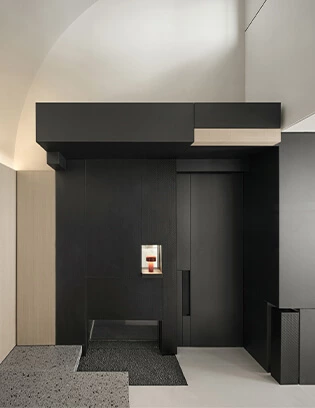
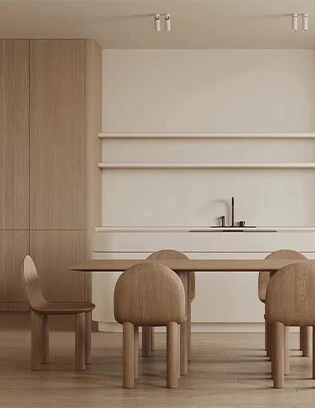
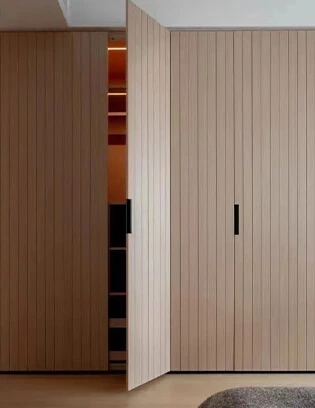
Refined cabinet trim ideas can make a custom interior feel more considered without changing the overall layout. One detail worth understanding is the Haitang corner: a softened 45-degree corner treatment that brings a more continuous transition to cabinet panels, wall panels, drawer fronts, and other fitted furniture.
When it comes to modern home decor, details often dictate the overall aesthetics and quality; even an inconspicuous corner can be crucial in showcasing home style and craftsmanship. Here, we look to one such detail — the "Haitang corner". Inspired by the begonia flower, the Haitang corner is a craftsmanship technique that rounds off the acute angle of a corner by cutting two adjacent faces of the board at a 45-degree angle, forming a begonia-shaped groove that makes the edge look smoother and softer.
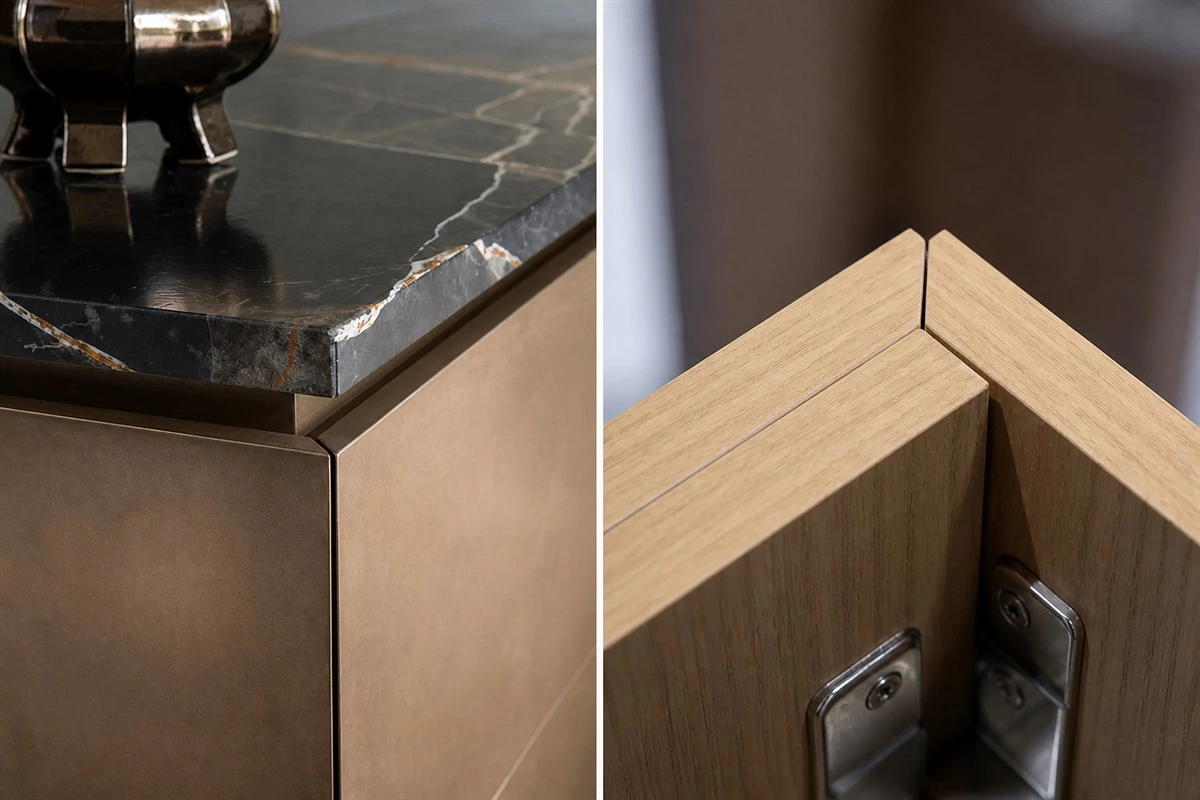
Unlike a standard square corner, this detail is intended to make adjacent surfaces read as one composed element. For homeowners, designers, and project buyers comparing cabinet trim ideas, the value is not only visual. The accuracy of the cut, the condition of the board edge, and the way the finish meets the joint all influence the final result.
For related surface options, explore ALLURE’s door panel collection. Coordinating the panel finish and edge treatment from the beginning helps create a more coherent custom cabinetry scheme.
Advantages of the Haitang Corner
Haitang corner is a favorite of many designers and homeowners for a reason. Some of the advantages you can benefit from this type of craftsmanship include the following: Aesthetic Appeal: Known for its meticulous craftsmanship and minimal chamfer (only 2-3 millimeters), the Haitang corner is more aesthetically pleasing and delicate compared to traditional corner treatments. It softens sharp edges, enhancing the spatial quality and adding elegance to living spaces.
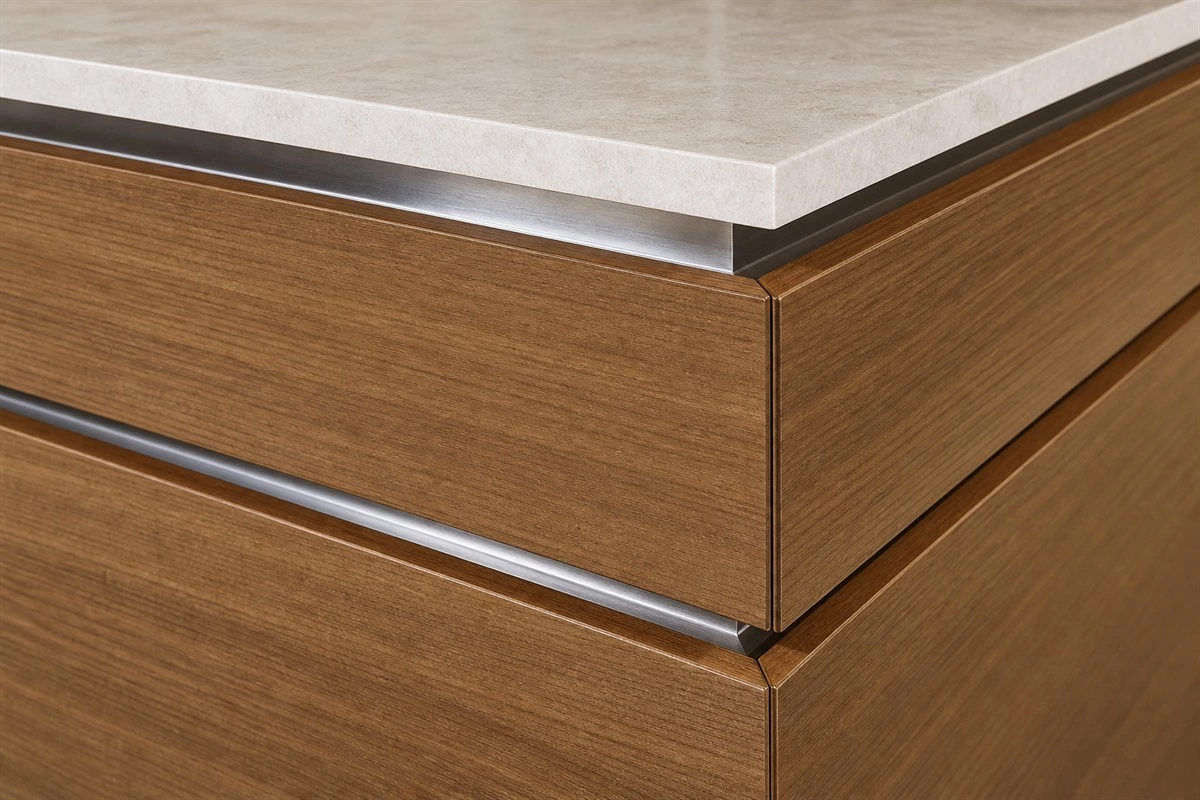
For many cabinet trim ideas, proportion is more important than ornament. A small, consistent edge detail can give tall cabinets, sideboards, and wall-mounted storage a calmer appearance while allowing the main finish to remain the focal point.
Practicality: The Haitang corner reduces vulnerability to cracks and extends the lifespan of wooden furniture at corners. Its grooved design effectively prevents dust accumulation, making cleaning easier.
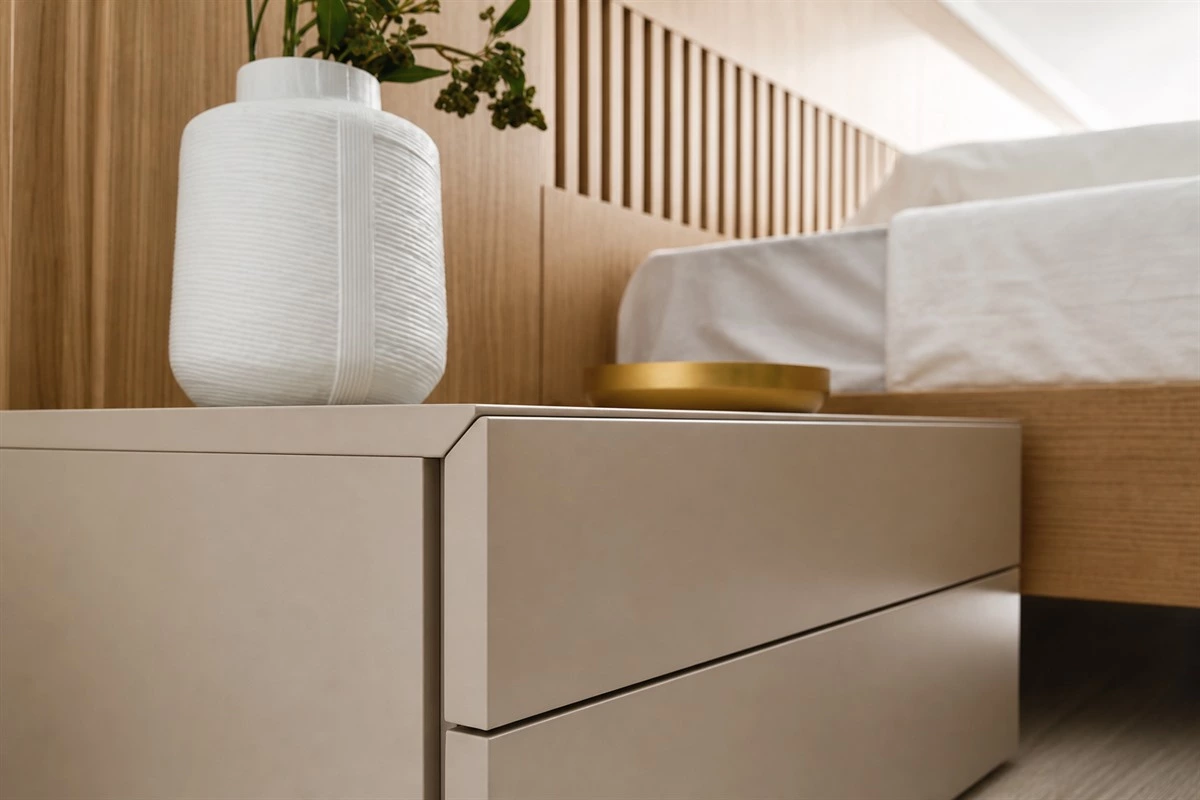
In practice, performance depends on the panel substrate, coating system, corner geometry, and the care taken during machining and installation. When choosing materials for detailed cabinet trim ideas, it is helpful to confirm the panel construction and finish limitations before production. See ALLURE’s raw materials guide for a broader view of material-selection considerations.
Safety: This technique minimizes the risk of injury from sharp corners, making it particularly suitable for homes with children and elderly residents.
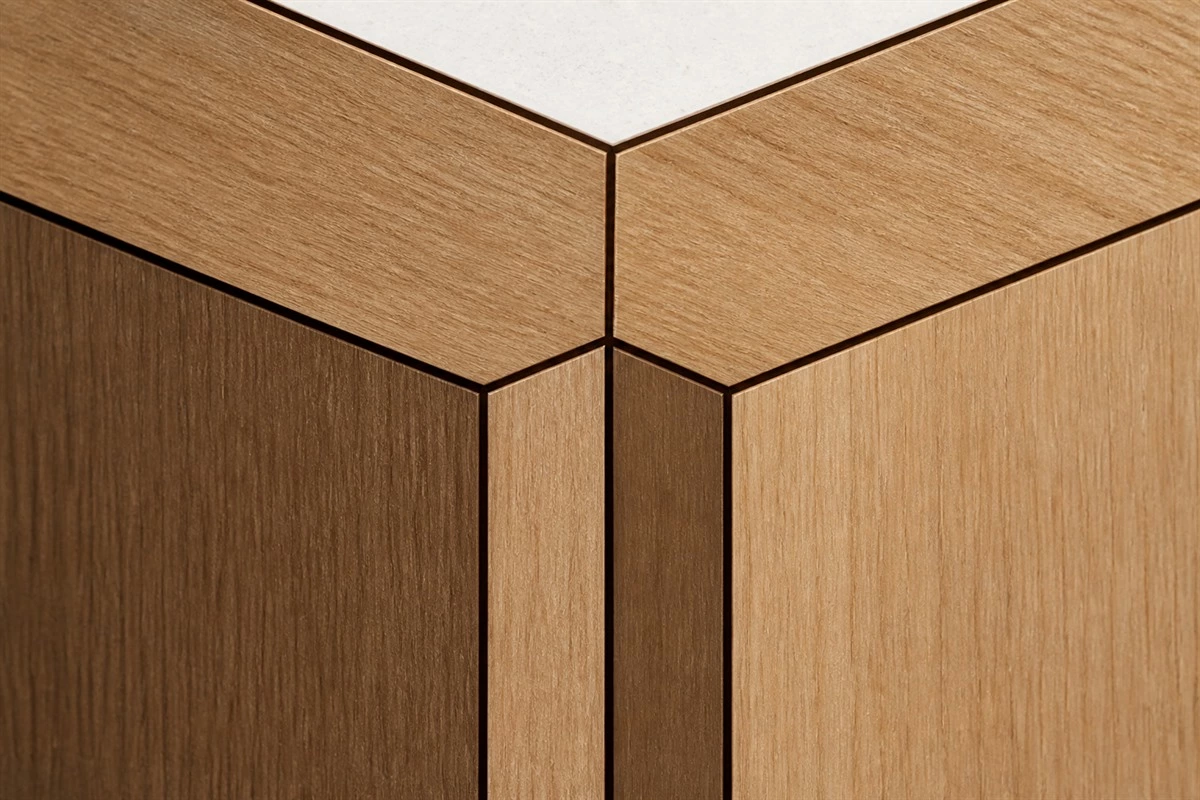
Common techniques for Haitang corners include
Different cabinet trim ideas call for different joining approaches. The best option should be selected according to the panel thickness, finish type, visible edge direction, and the intended use of the cabinet or wall panel.
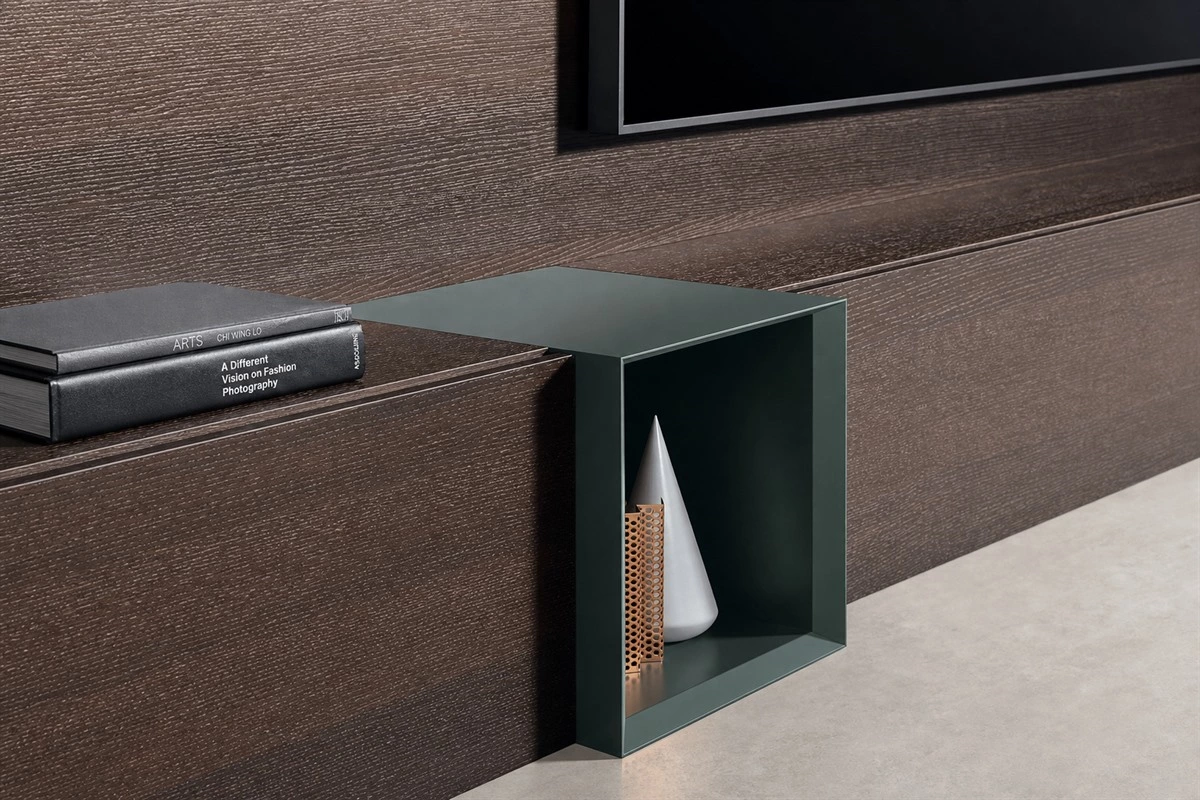
Slant-insert Haitang Corner
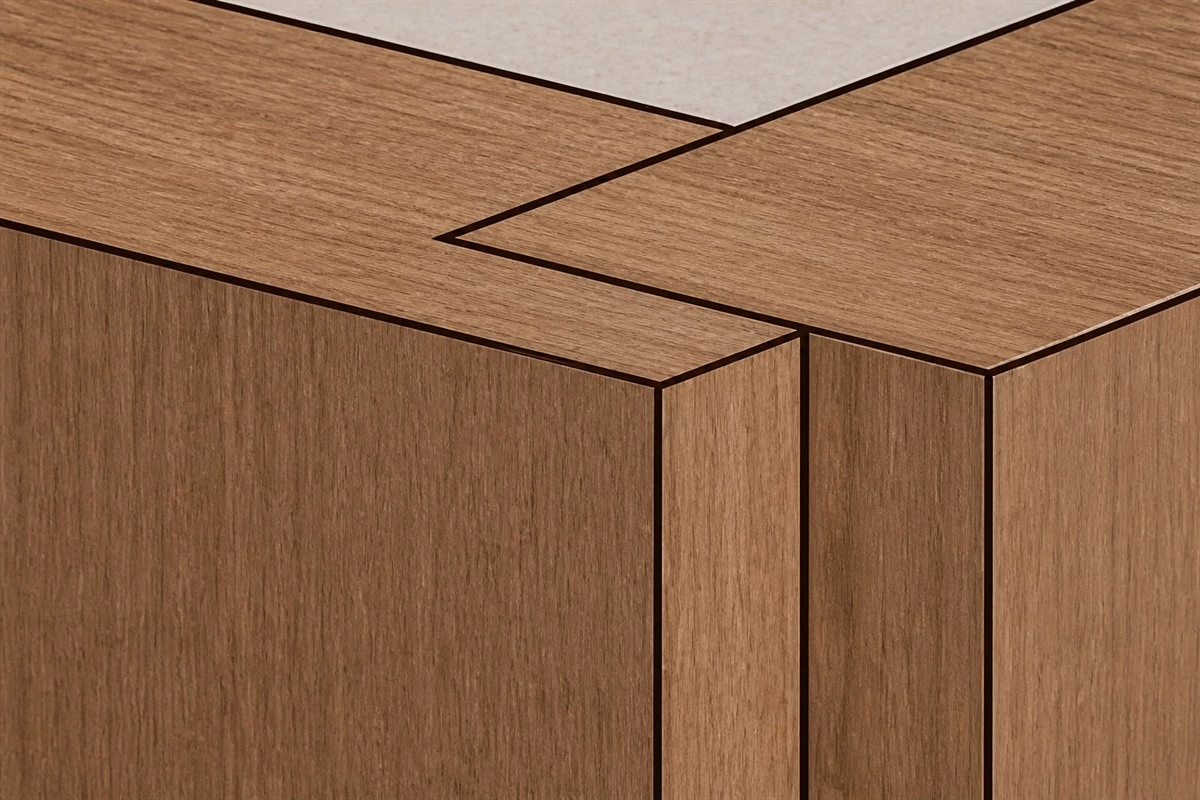
Slot-insert Haitang Corner
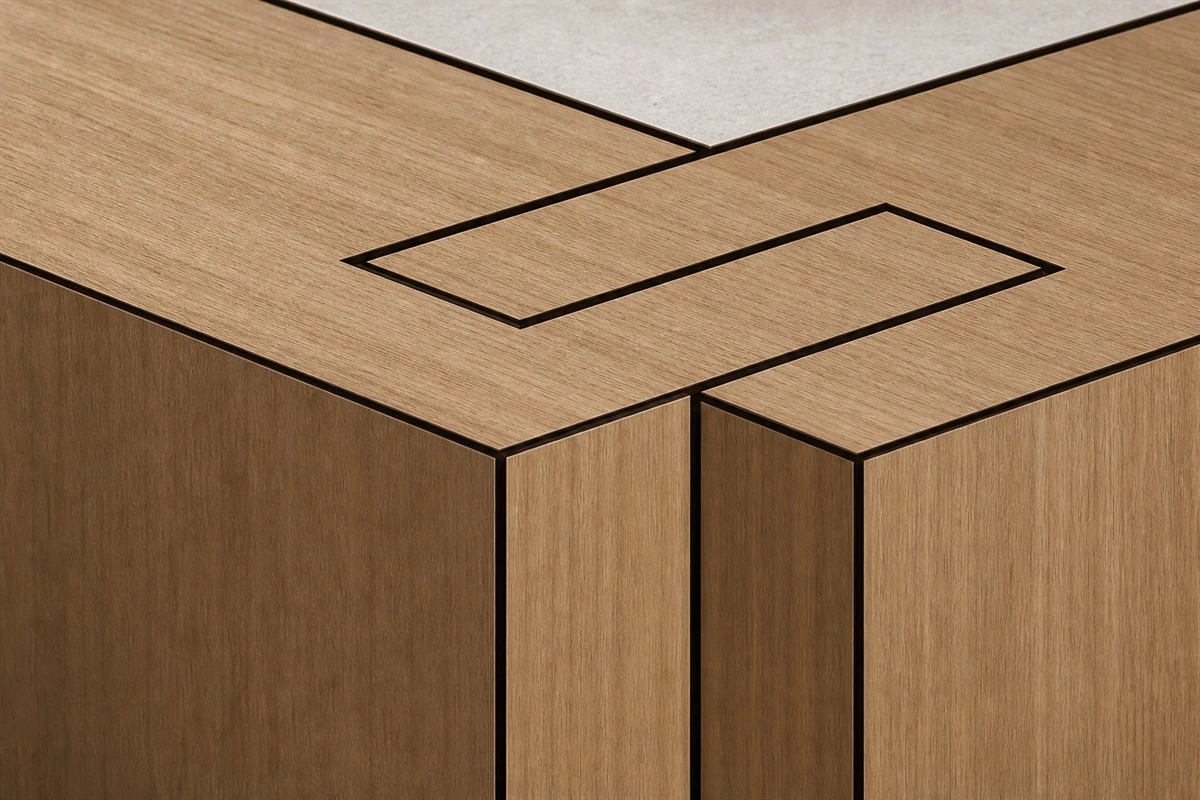
45-degree slant Haitang Corner
How to Choose Cabinet Trim Ideas for a Custom Project
Before confirming a Haitang corner or another edge profile, review the detail in the context of the full space rather than as an isolated sample. A subtle corner can work especially well when the same visual language is repeated across cabinetry, wall panels, storage units, and interior doors.
- Check visibility: Use the more refined detail where the corner will be seen at eye level or touched frequently.
- Confirm panel thickness: The board needs enough material for the intended cut without weakening the visual edge.
- Coordinate the finish: Matte, wood-grain, lacquered, and textured surfaces can show a bevel differently.
- Review sample joints: A physical sample helps confirm the groove depth, shadow line, color consistency, and touch feeling.
- Plan repetition carefully: Repeating the same corner detail selectively can unify a space; using it everywhere may reduce its visual impact.
For a whole-interior approach, a Haitang corner can be considered alongside wardrobes, TV units, wall panels, and storage systems within a whole-house customization plan. This makes it easier to coordinate sightlines and edge details across adjoining spaces.
Applications of Haitang Corner
Wall Panel Corners: In home decoration, corners of wall protection panels can often appear abrupt. Haitang corners provide a smoother transition, elevating the aesthetic appeal of the space.
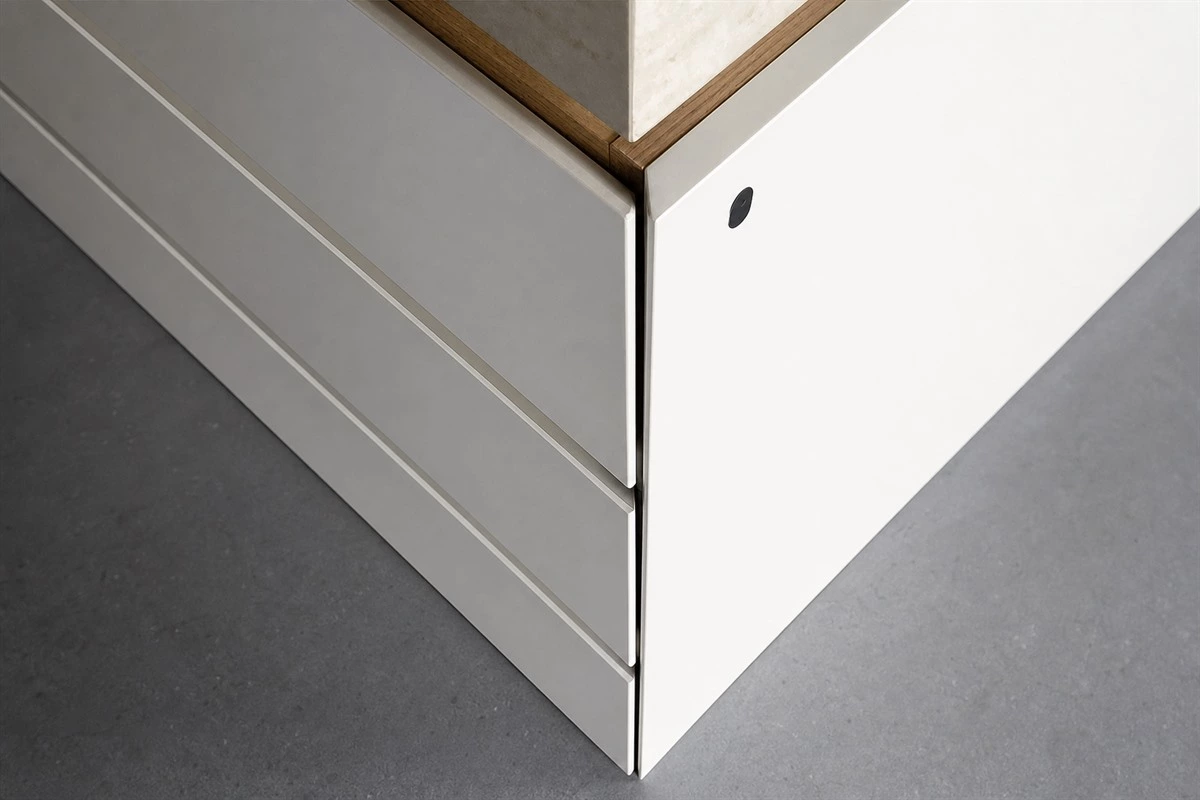
Wall panel transitions are one of the strongest applications for cabinet trim ideas because the detail can soften a long visual line without requiring additional decorative molding. It can also help create continuity between built-in furniture and the surrounding architectural finish.
Cabinet Panel Junctions: Smooth transitions between cabinet drawer fronts and side panels, and between cabinet doors and side panels, are crucial to achieving a flawless appearance. Haitang corner techniques facilitate these transitions, enhancing the overall aesthetics of cabinets.
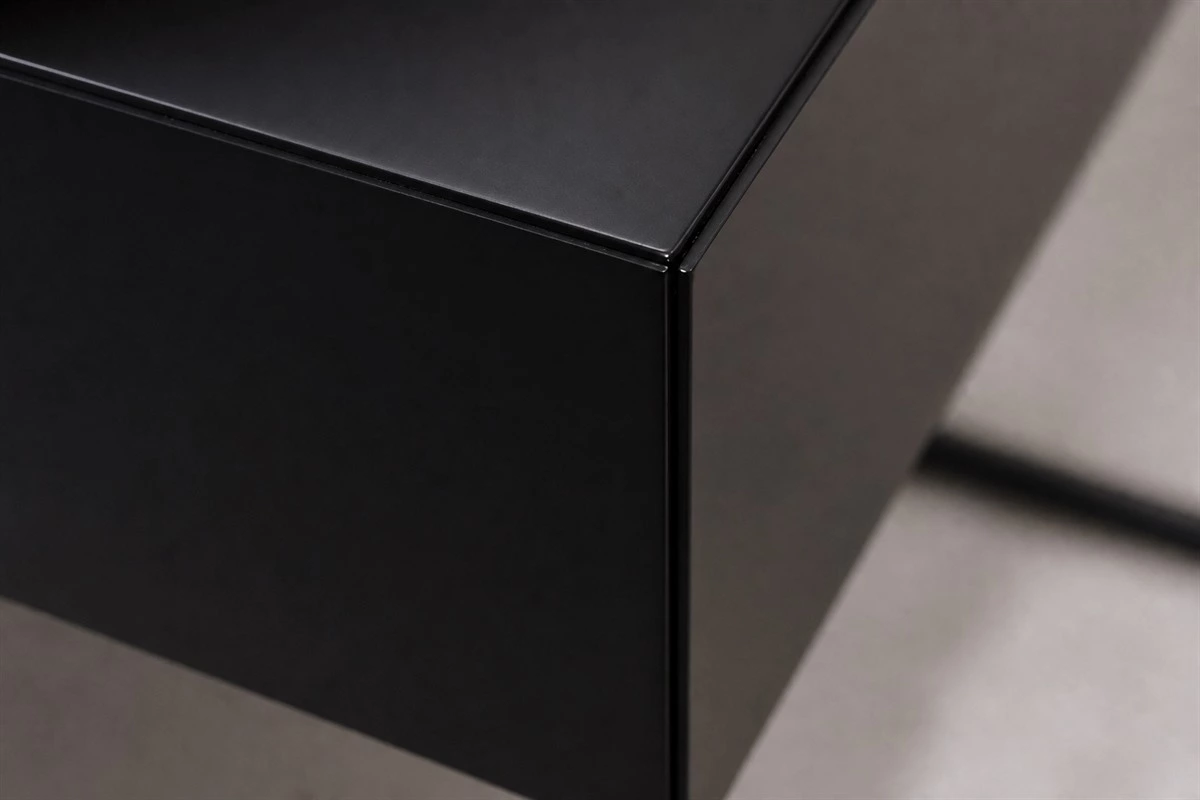
This type of edge treatment can also be coordinated with handleless openings and hardware choices. When reviewing cabinet trim ideas for frequently used storage, consider how the corner detail interacts with the opening method, door clearance, and adjacent cabinet hardware.
Specification Checks Before Production
A Haitang corner is a precision detail, so it should be shown clearly on approved drawings or samples. Specify the panel material, finish direction, visible sides, corner profile, and any acceptable variation before production begins. For larger residential or project orders, keep a confirmed sample as the reference for subsequent cabinet units.
Where composite-wood materials are part of a project, buyers can also review the U.S. Environmental Protection Agency’s formaldehyde information as a general material-safety reference. This does not indicate that a specific project or product has any particular certification; requirements should always be confirmed against the project specification.
For broader architectural woodwork terminology and industry resources, the Woodwork Institute is another useful reference point when discussing detailed joinery, tolerances, and finish expectations with a designer or contractor.
Frequently Asked Questions About Cabinet Trim Ideas and Haitang Corners
What is a Haitang corner in custom cabinetry?
A Haitang corner is a softened corner treatment created by shaping adjacent panel faces, commonly around a 45-degree geometry, to form a fine begonia-inspired groove. It is used to make cabinet and wall-panel edges appear more refined.
Are Haitang corners suitable for kitchen cabinet trim ideas?
They can be suitable for visible cabinet ends, tall units, side panels, drawer-front transitions, and coordinated wall-panel details. The final application should be confirmed according to moisture exposure, panel material, and the selected finish.
Is a Haitang corner the same as a standard 45-degree bevel?
No. Both may involve angled cutting, but a Haitang corner is defined by its softened, grooved visual effect at the meeting point of adjacent surfaces. The exact profile can vary by design and manufacturing method.
Which materials work well for detailed cabinet trim ideas?
The suitable material depends on the profile depth, panel thickness, finish system, and installation conditions. Review a finished sample before approving a detailed corner treatment for the full project.
Can a Haitang corner be used on wall panels?
Yes. It is often used at visible wall-panel corners to reduce the abrupt look of a square edge and create a smoother visual transition between surfaces.
Does a Haitang corner make a cabinet safer?
A softened corner can reduce the sharpness of an exposed edge. However, overall safety also depends on the furniture layout, installation quality, door clearances, and how the space is used.
Will the Haitang corner collect dust?
The groove should be designed with cleaning in mind. A well-proportioned profile can be easier to wipe than a deep, narrow decorative recess, but cleaning needs depend on the final geometry and location.
Can cabinet trim ideas be repeated across different rooms?
Yes. Repeating a related edge treatment on kitchen cabinetry, wardrobes, wall panels, and interior doors can support a consistent whole-home design language.
What should be confirmed before ordering Haitang corner cabinetry?
Confirm the approved drawing, panel thickness, finish sample, groove proportion, visible-edge direction, hardware clearance, and installation details before production.
Can ALLURE incorporate Haitang corner details into a custom project?
For a custom cabinetry project, the design team can review the intended application, drawings, panel finish, and sample requirements to determine whether this edge detail is suitable for the selected units.
Conclusion
Among refined cabinet trim ideas, the Haitang corner shows how a small edge treatment can influence the character of an entire interior. Its value comes from proportion, accurate processing, and thoughtful placement—not simply from adding decoration. When coordinated with the right panel finish, hardware, wall panels, and cabinetry layout, this detail can give custom furniture a softer and more deliberate finish.
For projects that require consistent cabinet trim ideas across multiple rooms, confirm the corner treatment through drawings and finished samples before full production. This helps ensure the Haitang corner supports the intended design language throughout the completed space.