5 Handle Designs to Elevate Your Invisible Door
Invisible Door Design refers to a design that seamlessly integrates with the wall or cabinet, not only enhancing the decorative aspect of the space and extending the visual effects of the expanded area but also improving space utilization, redefining the concept of home living.
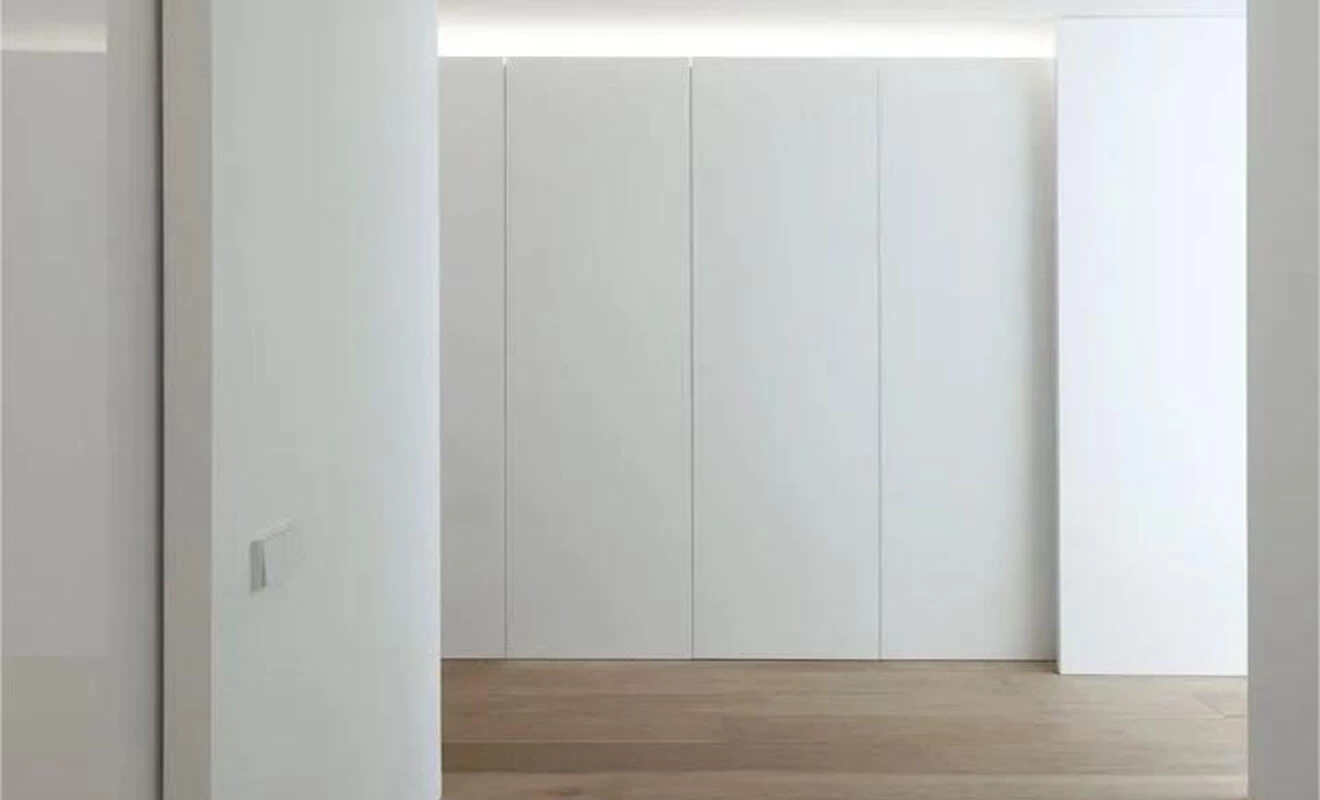
Although there are many such designs in real life, there are still many people who are unfamiliar with them and have questions. For example, how does an invisible door open when it's "invisible"? Does it have a handle? In this article, we will share several handle designs for invisible doors to clarify these doubts.
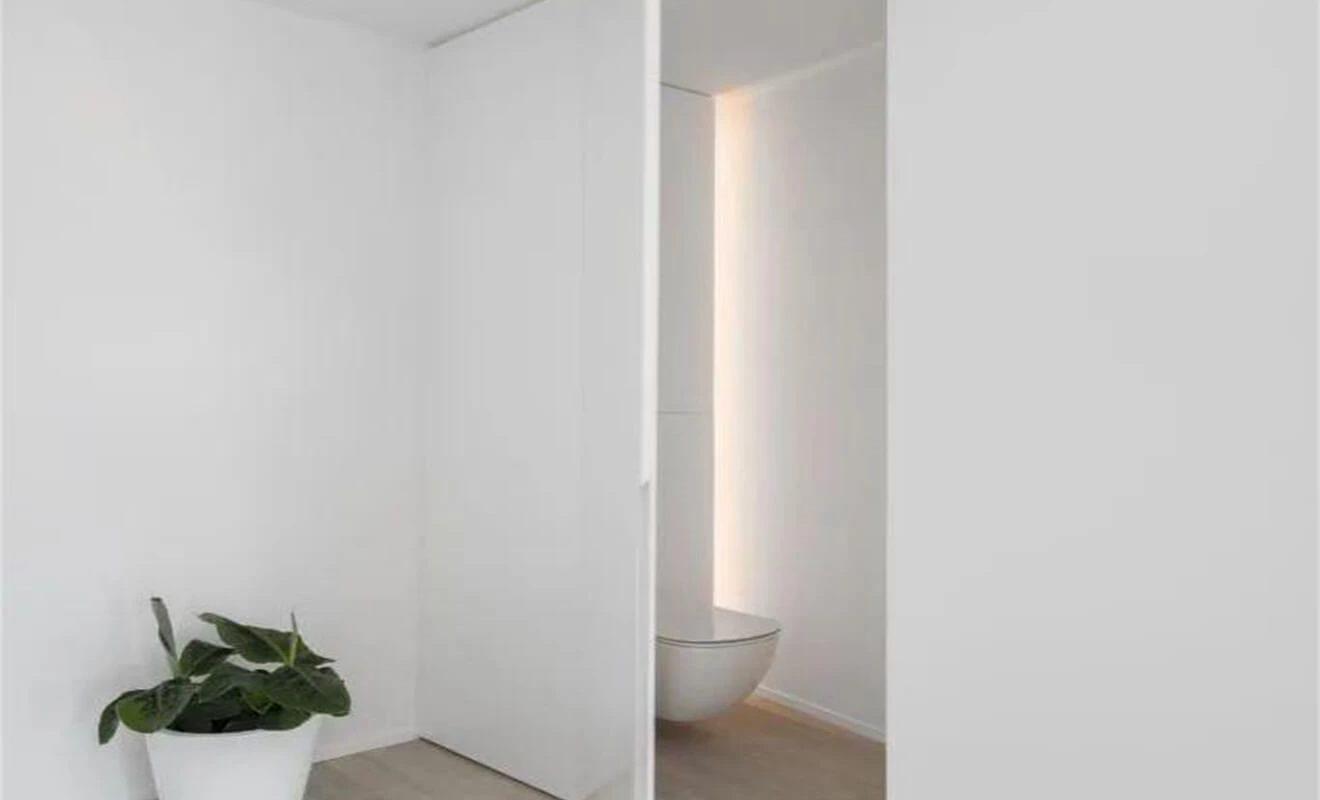
First and foremost, it is certain that invisible doors do have handles. Moreover, the handles of invisible doors are designed to blend in with the overall decor, often presenting themselves discreetly for easy operation. As for the form of handles, there are several common types:
Invisible door handle designs need to balance two goals: the panel should read as part of the wall or cabinetry, and the user should still be able to locate and operate it comfortably. The best option depends on whether the element is a passage door, a tall cabinet, a wardrobe door, or a small storage door, as well as the panel material, opening direction, and frequency of use.
Quick Comparison of 5 Invisible Door Handle Designs
| Handle Style | Visual Effect | Best Consideration | Suitable Use |
|---|---|---|---|
| Slot Handle | Minimal, recessed, and architectural | Finger clearance, edge finish, and cleaning | Wardrobes, wall cabinets, and storage doors |
| Cabinet Edge Handle | Continuous front with a subtle grip line | Panel projection and opening clearance | Kitchens, bookshelves, and tall cabinets |
| Corner-cut Handle | Discreet with a geometric accent | Panel spacing and repeated door rhythm | Closely arranged cabinet fronts |
| Loop Handle | Integrated but more tactile | Projection, finish, and daily-use comfort | Feature cabinets and design-led interiors |
| Bouncer / Push-to-open | Completely flat and handle-free | Hardware quality, alignment, and maintenance access | Light-use cabinet fronts and selected feature panels |
Review a full-size sample whenever possible. A handle that looks invisible in a drawing may feel difficult to find, pinch, or clean once the door is installed at its final height and next to adjacent panels.
Slot Handle
When optimizing the storage design of an apartment, hidden cabinets can be added in areas such as the foyer, living room, and bedroom, thereby increasing the storage capacity of the space.
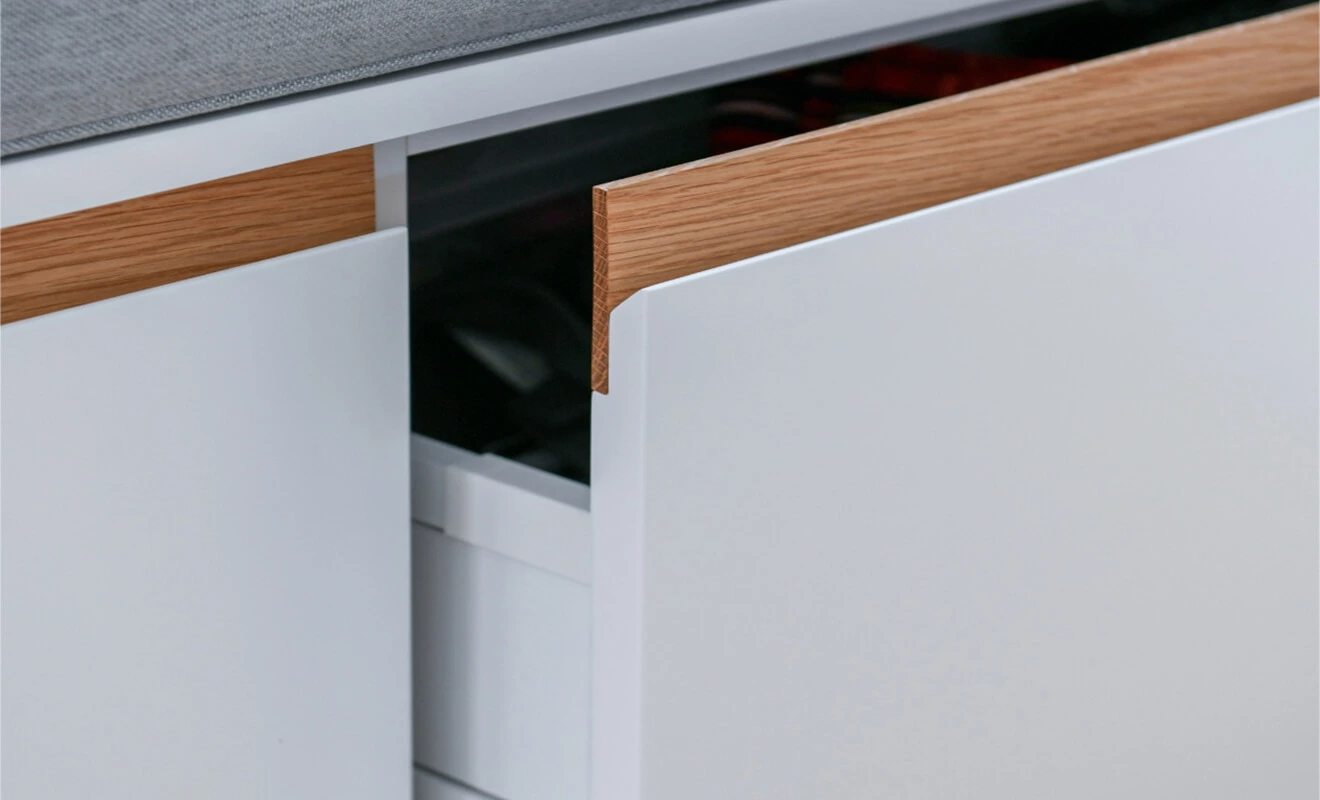
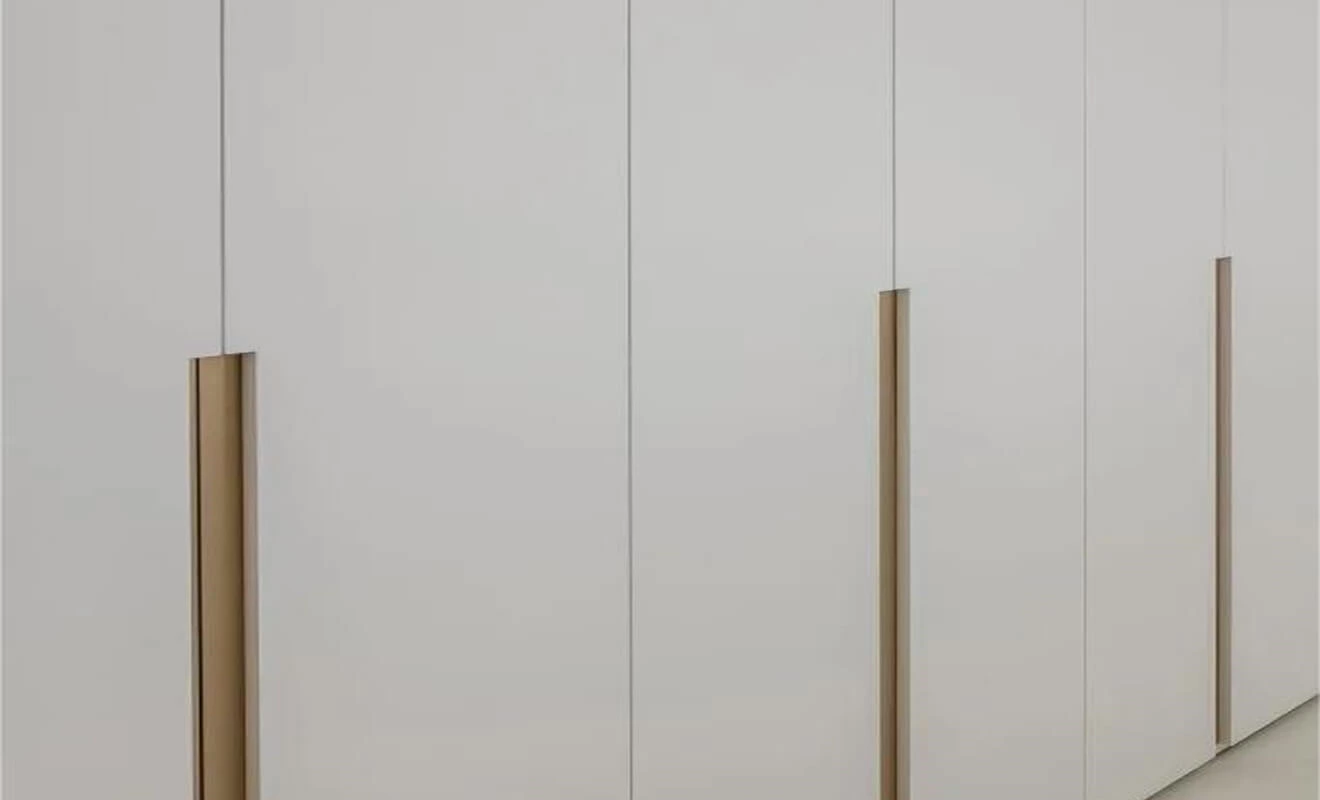
The design of these cabinets appears no different from traditional furniture at first glance, but upon closer inspection, you will discover their highlight—the handle, which is concealed between the cabinet door and the cabinet itself, using slots as handles.
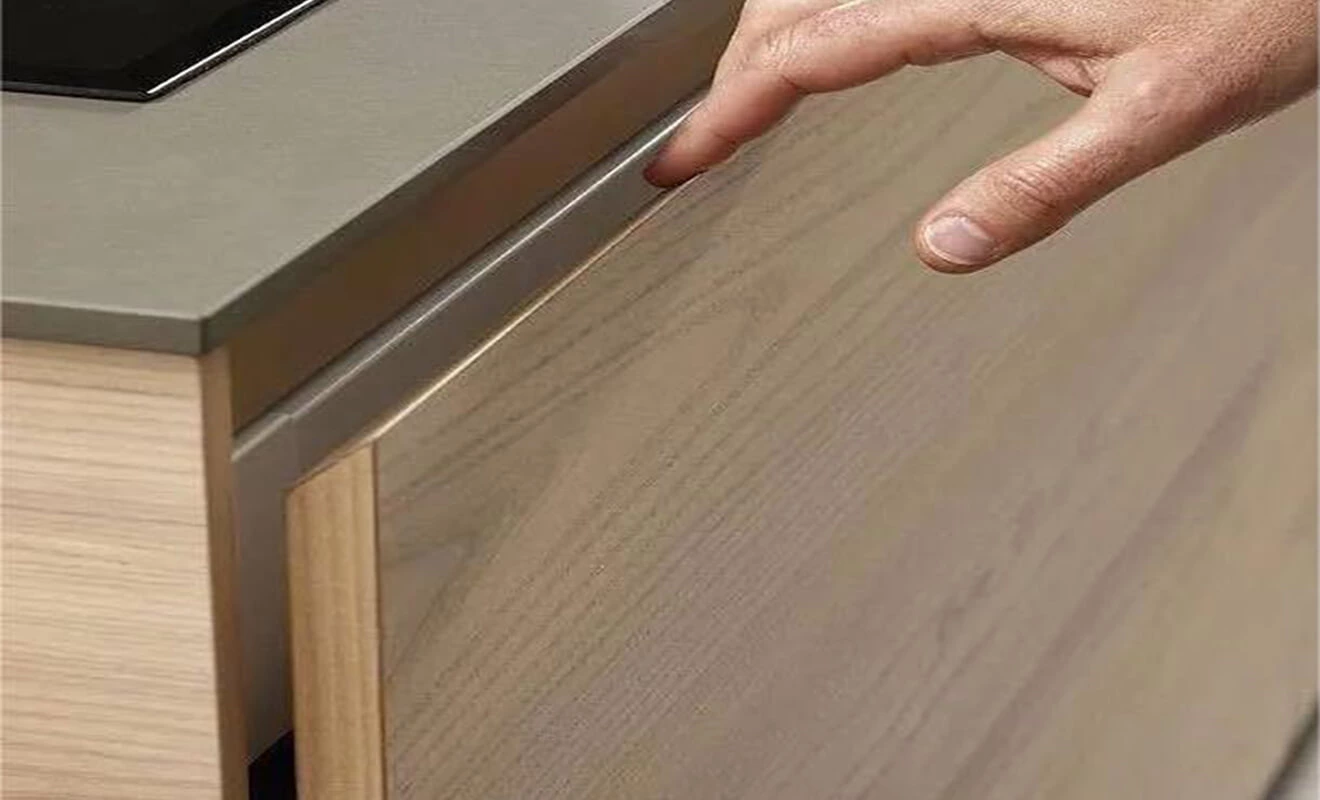
Straight slots, G-shaped slots, semi-circular recessed slots, etc. When using them, simply place your fingers between the slots and gently pull to open the door without the presence of a visible handle, achieving a seamless and handle-free switch.
Slot Handle Planning Details
For a slot handle, the important detail is not only the shape of the groove but also the usable finger clearance after the door is fitted. Confirm the panel thickness, edge banding or paint finish, joint width, and the location of the slot before production. Continuous vertical slots can visually lengthen tall cabinets, while horizontal slots can align with drawer divisions or nearby architectural lines.
Because recessed pulls are touched often, choose a finish that is comfortable to grip and easy to clean. The groove should not create a sharp edge, collect excessive dust, or conflict with a neighboring door, wall return, or appliance handle.
Cabinet Edge Handle
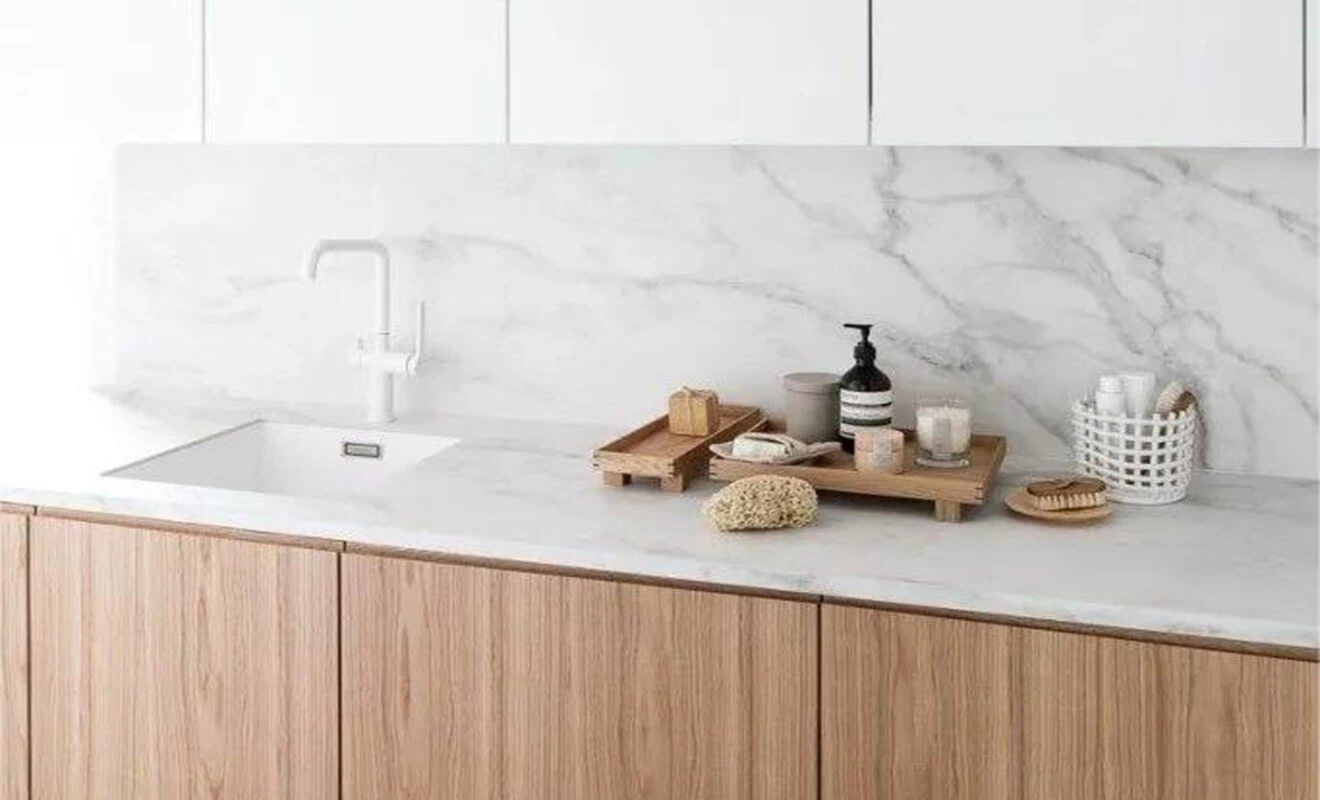
In addition to slot handles, some cabinet designs focus on the cabinet itself to maintain overall aesthetics. For example, in cabinets such as kitchen cabinets, wardrobes, and bookshelves, the side or bottom of the cabinet can be extended by approximately 1-2 cm. This ensures the cabinet's sealability without compromising its uniformity.
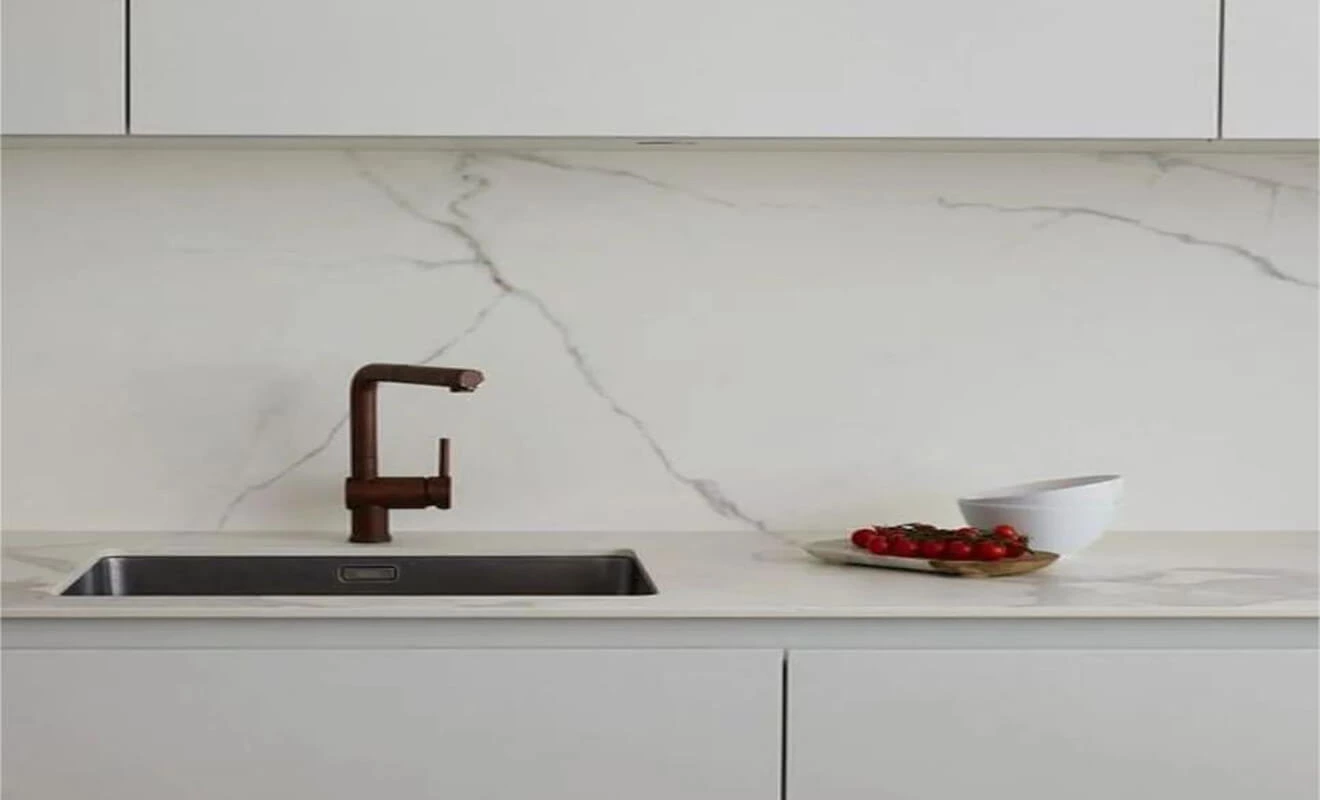
To operate, simply grasp the cabinet from the side or bottom and push or pull to switch, providing a high-end and fashionable experience.
Cabinet Edge Handle Planning Details
An edge handle relies on the projection of the door or panel rather than a separate fitting. Check that the projected edge gives enough grip without catching clothing or interfering with a wall, countertop, adjacent door or handle-free appliance. A consistent reveal is essential: small alignment differences become more visible when the design is intentionally minimal.
For kitchens and other high-use areas, consider how moisture, fingerprints, and cleaning routines affect the edge. The front, side, and back of the panel should be specified as one coordinated detail rather than treating the edge as an afterthought.
Corner-cut Handle

Designing a triangular cutout on the invisible cabinet door itself is also a good option. In cases where the combined cabinets are closely arranged, neither slot handles nor cabinet edge handles are particularly convenient.
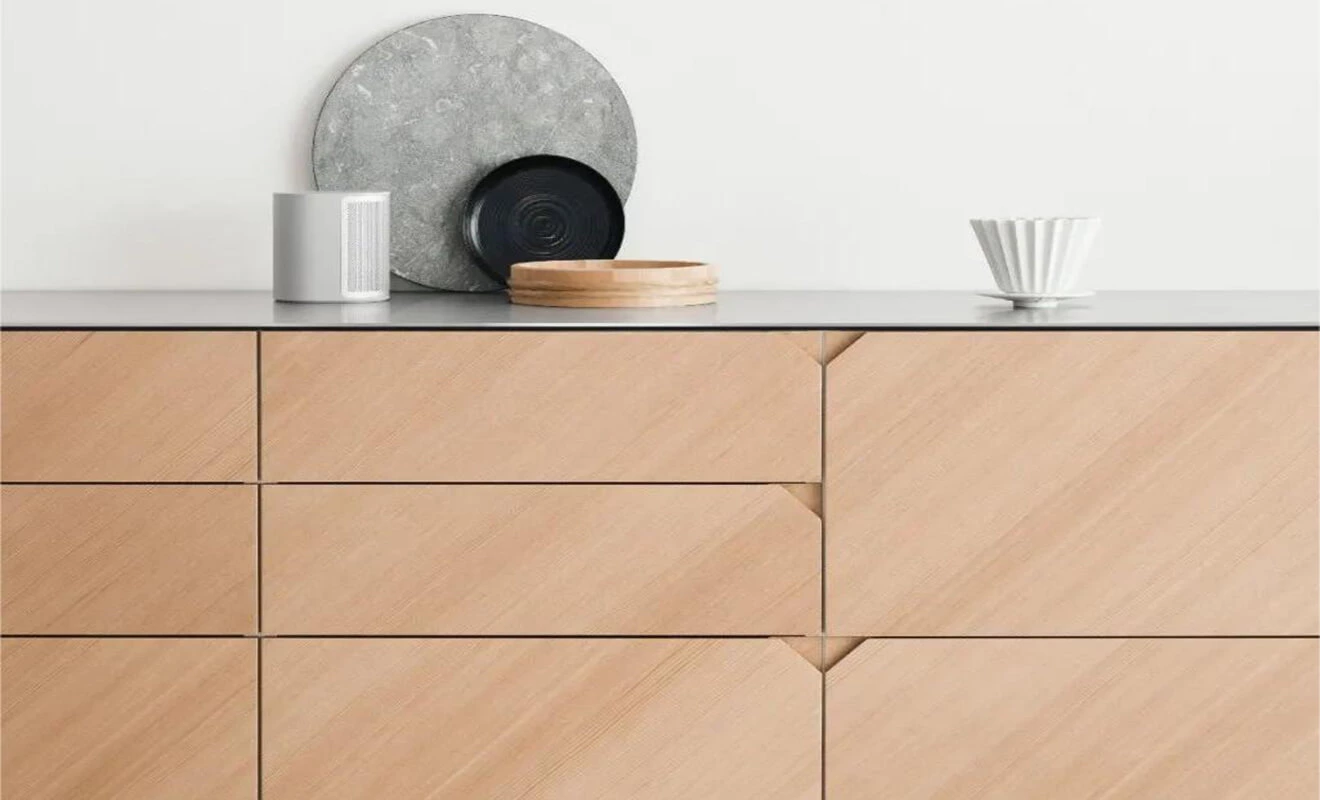
In such situations, the corner above or below the invisible cabinet door can be designed with a triangular cutout. By fitting the hand into the triangular cutout, it can be used as a handle for opening and closing, adding a touch of novelty and style.
Corner-cut Handle Planning Details
Corner cuts can create an intentional opening point when several flush doors share one elevation. Use the same cut direction, size, and location where a repeated rhythm is desired, or use a single contrasting cut to identify one special cabinet. Review the cut with the door swing, hinge location, and neighboring panels so that the opening remains comfortable in use.
Material selection matters. Painted, veneered, laminate, and metal-edged panels each need an appropriate edge treatment at the cutout. A physical sample helps confirm that the exposed edge will look clean and remain durable after repeated contact.
Loop Handle
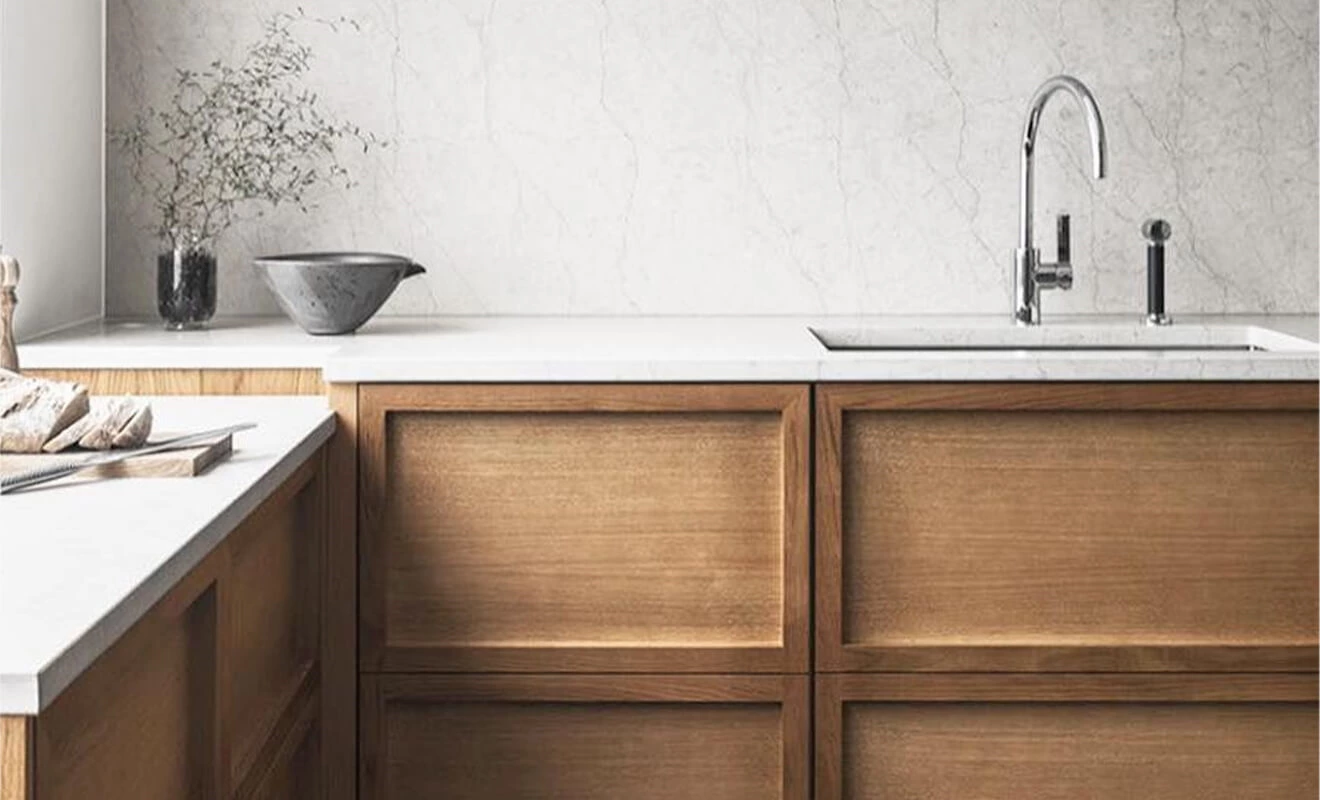
The design of invisible doors is suitable for various styles and apartment layouts, and so are the handles. Building on the concept of invisibility, handles can be directly incorporated into the surface of the cabinet door. Each cabinet door can have a protruding loop-shaped handle, creating a contrast with the door surface.
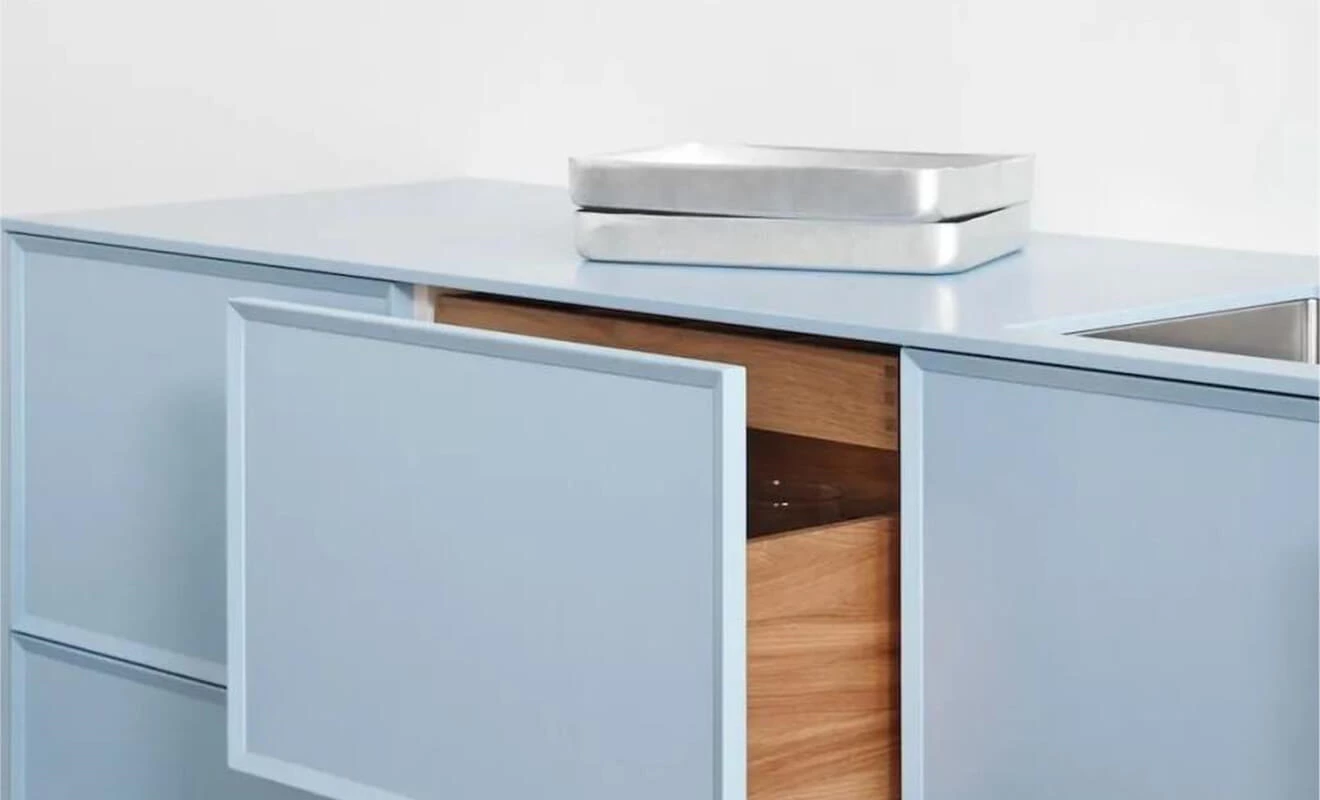
When using the same material and color scheme, the loop-shaped handle blends seamlessly with the door surface while serving as a functional and aesthetically pleasing feature.
Loop Handle Planning Details
Loop handles are more visible than recessed pulls, but they can still belong to an invisible-door composition when their material, color, and proportion match the panel. They offer a clear tactile point for regular use and can be especially practical for users who prefer a more obvious grip than a small recess provides.
Confirm the handle projection, the space required for fingers, and the relationship to passage circulation. When used across multiple doors, align handle heights and spacing with the panel divisions so the elevation appears deliberate rather than busy.
Bouncer
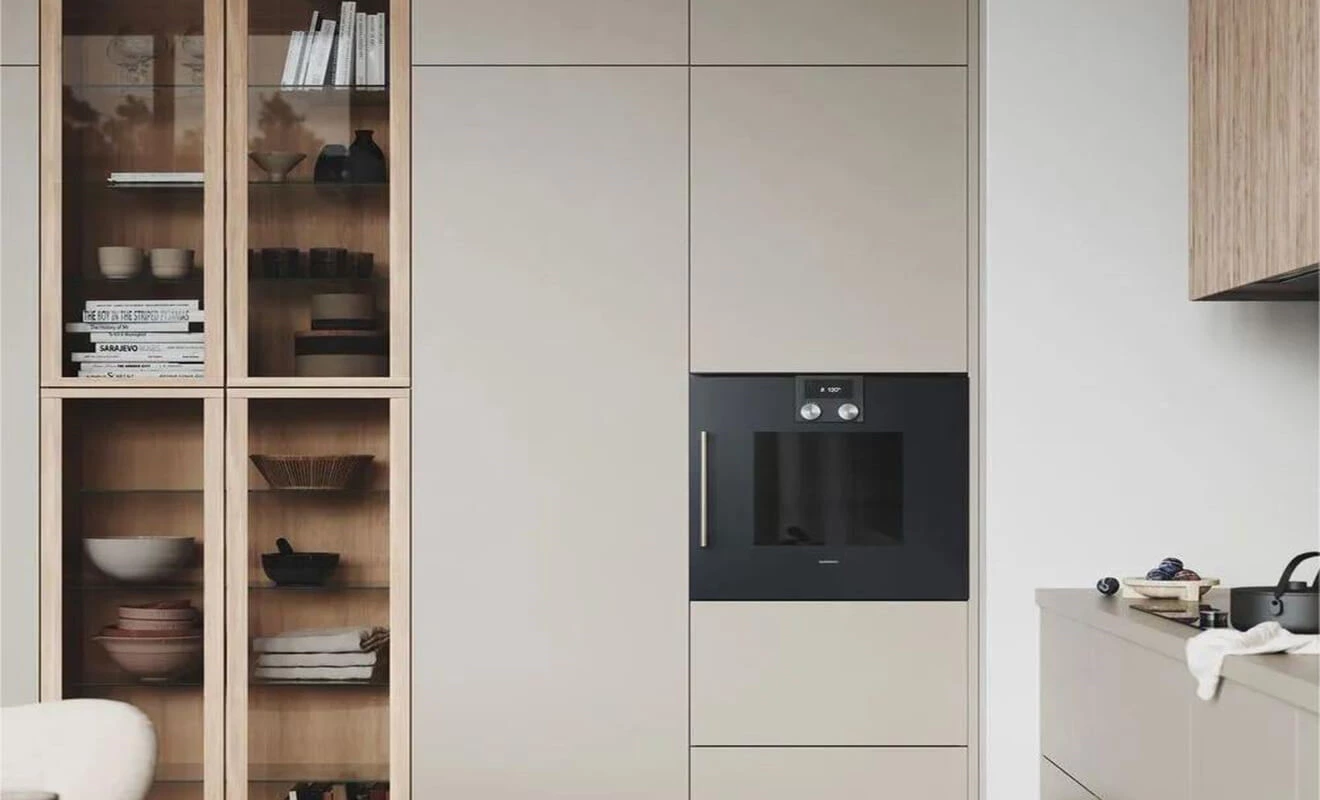
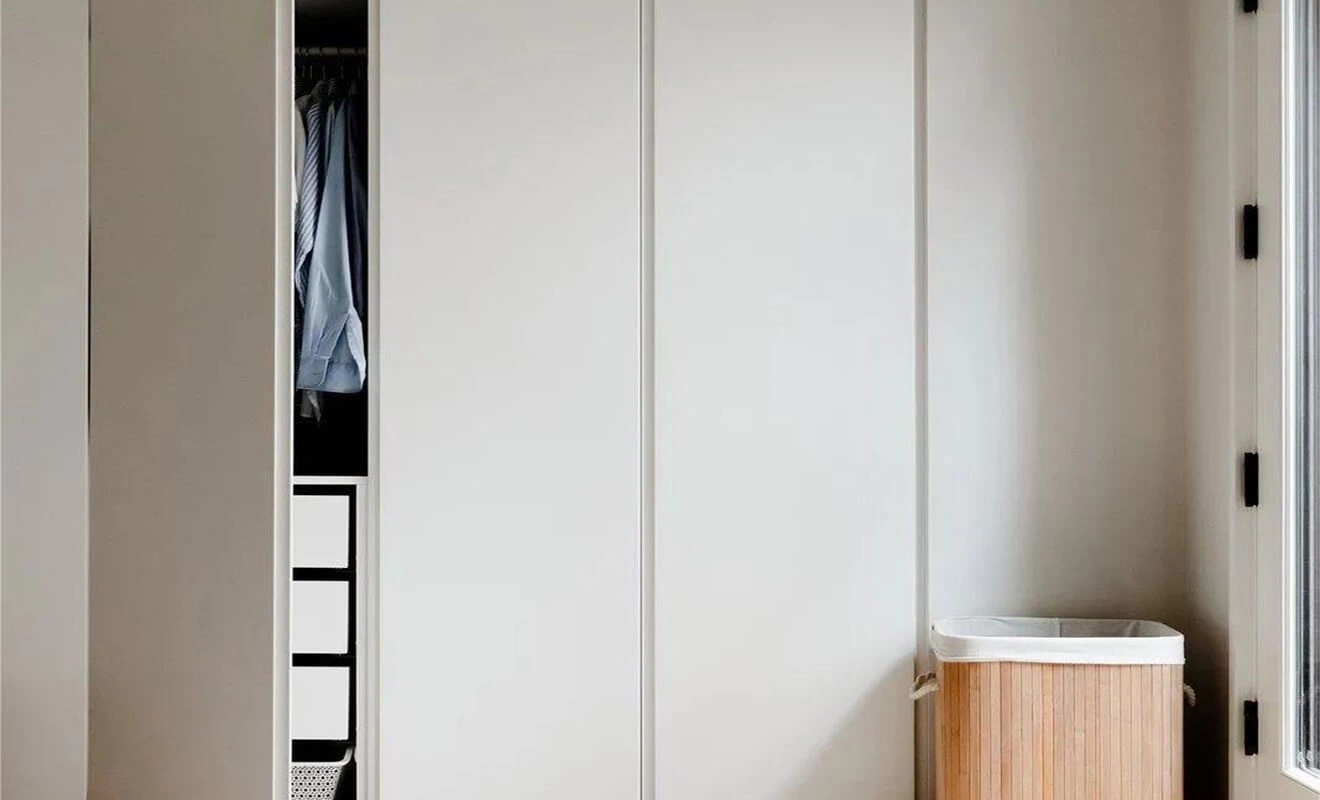
If you prefer a flat and unadorned invisible design, you can choose to install bouncers as hardware to facilitate the opening and closing of the cabinet doors. Unlike the previous handle designs, bouncers are not decorative elements on the cabinet door's surface. Instead, a simple piece of hardware is installed inside the cabinet, either visibly or discreetly. By pressing on the cabinet door, it opens.
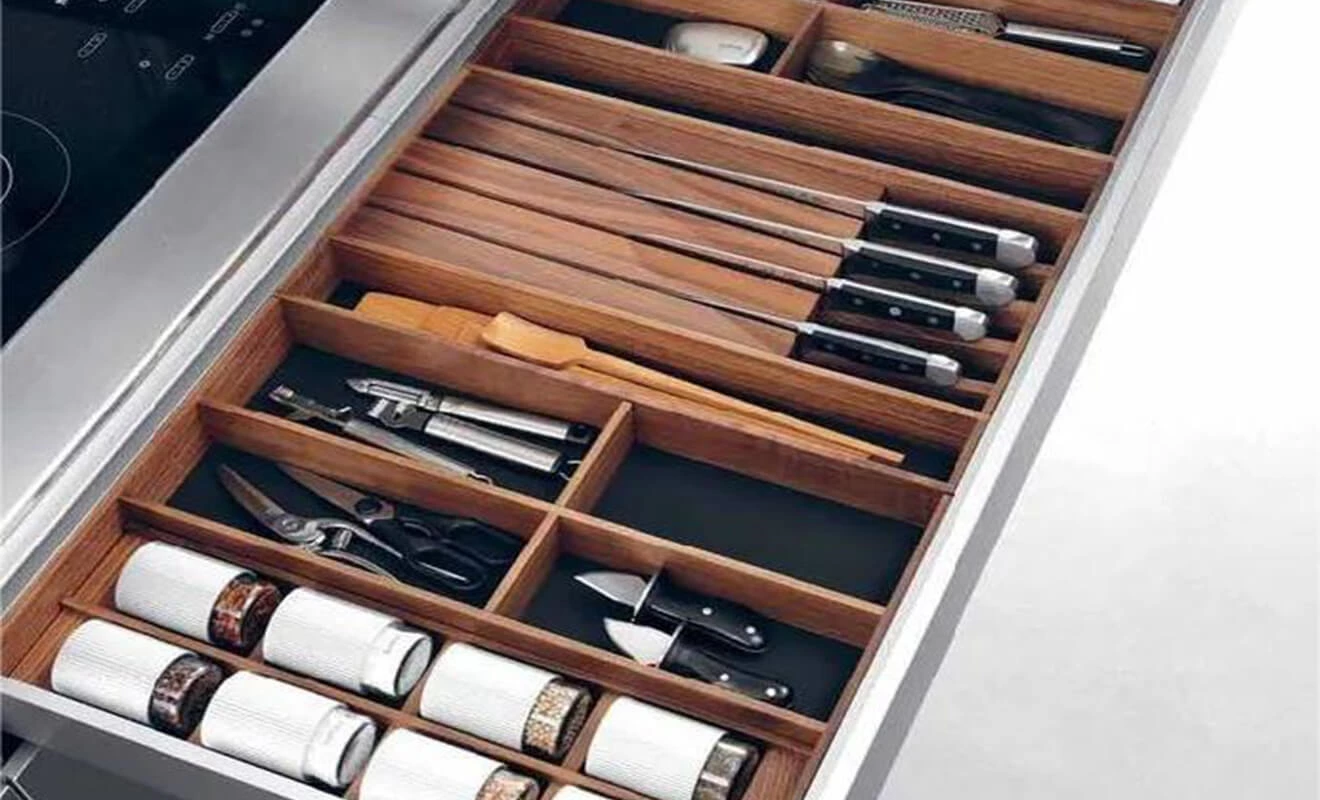
While bouncers truly align with the invisible design, creating a visual harmony between the cabinet and the space, they tend to wear out quickly and may malfunction over time, so careful consideration is required when choosing this option.
How to Choose Invisible Door Handle Designs and Hardware
When comparing invisible door handle designs, identify the panel's weight, size, material, opening type, and expected frequency of use before selecting a concealed door handle or push-to-open system. A light upper cabinet used occasionally has different requirements from a tall wardrobe door, a kitchen drawer, or a full-height passage door. The opening action should also remain comfortable after the panel has been adjusted for normal installation tolerances.
- Panel and finish: Confirm thickness, core material, edge treatment, paint or veneer direction, and how the handle detail will be machined or assembled.
- Opening type: Identify hinged, sliding, folding, lift-up, or drawer operation before choosing the grip or hardware.
- Frequency of use: Use a clear, durable grip for doors opened many times each day; reserve highly concealed details for appropriate applications.
- Clearances: Check adjacent walls, countertops, appliances, door swings, and circulation before fixing panel reveals.
- Serviceability: Confirm adjustment access and a practical replacement path for push-to-open mechanisms, hinges, and catches.
- User comfort: Test whether children, older users, and the main household members can find and operate the handle without excessive force.
For actual hardware selection, review the opening method, load requirement, and adjustment range with the supplier. Well-matched cabinet hardware and functional accessories are as important as the visible panel detail.
Invisible Doors, Cabinets, and Whole-Home Continuity
The most convincing invisible door is planned with the surrounding wall, cabinetry, and architectural lines. Align panel joints with wall cladding, baseboards, ceiling details, adjacent cabinet doors, or material transitions. Avoid adding a concealed opening where the panel layout has no visual logic, as this can make the “invisible” effect harder to achieve.
For passage doors, coordinate the concealment strategy with the door system rather than copying a cabinet-handle detail without checking the opening requirements. Explore custom interior door solutions when the goal is a wall-integrated room entrance. For storage fronts, the same language can continue through kitchen cabinets, bedroom wardrobes, and custom cabinets for other rooms.
Accessibility, Safety, and Code Checks
Minimal hardware should not make a necessary door difficult to operate. For accessible projects, the U.S. Access Board's guidance on operable parts is a useful reference for reach and usable controls. It does not automatically define requirements for every private residence; the final design should respond to the user and applicable local regulations.
Concealed passage doors, particularly those on an exit route, require project-specific review of hardware, latching, opening direction, fire or smoke requirements, and local codes. The International Code Council's model-code resources provide general reference material, while the local authority and qualified project professionals determine what applies to a specific location.
Invisible Door Handle Design Checklist
- Confirm whether the panel is a passage door, cabinet door, drawer, or sliding panel.
- Measure panel size, thickness, weight, and expected opening frequency.
- Choose the handle type before finalizing panel joints and edge details.
- Review finger clearance, reach, handle projection, and comfortable operating force.
- Coordinate the handle with hinges, latches, push-to-open hardware, and door swing.
- Check alignment with walls, cabinets, skirting, ceilings, and nearby finishes.
- Approve a physical sample or full-size mock-up for critical details.
- Confirm adjustment and maintenance access after installation.
- Verify all applicable safety, accessibility, and local code requirements.
Invisible Door Handle Designs FAQ
1. Do invisible doors need handles?
Most invisible doors and cabinet fronts still need a practical way to open. The opening method may be a recessed slot, edge grip, corner cut, integrated loop, push-to-open mechanism, or a door-specific hardware solution.
Which invisible door handle designs work for daily use?
For frequently opened doors, select invisible door handle designs with a clear, durable grip and a comfortable operating action. Slot, edge, and loop solutions are often easier to locate by touch than a fully flat push-to-open front, but the best choice still depends on the panel and user.
2. Which invisible door handle design is most concealed?
Push-to-open hardware can create the flattest front because no grip is visible on the surface. It should be selected only after checking panel alignment, hardware quality, weight, frequency of use, and service access.
3. Are slot handles suitable for tall cabinets?
They can be. A vertical slot can work well on a tall cabinet when the finger clearance, edge finish, panel thickness, and opening force are properly planned.
4. What is a cabinet edge handle?
A cabinet edge handle uses the projected top, bottom, or side edge of a door or drawer as the gripping point instead of adding a separate handle.
5. Can push-to-open hardware be used in a kitchen?
It can be used for selected fronts, but the decision should consider frequent use, fingerprints, drawer or door weight, alignment, cleaning, and the ease of replacing the mechanism later.
6. Are invisible door handles hard to clean?
Recessed grooves and narrow reveals can collect dust or residue. Select an accessible profile, avoid unnecessarily sharp internal corners, and include cleaning access in the detail review.
7. How do I make a cabinet door look seamless?
Coordinate panel divisions, edge treatment, finish direction, gaps, hardware position, and surrounding architectural lines. The handle detail should look intentional within the whole elevation.
8. Can an invisible door use a normal door handle?
Yes, but a visible lever or pull will reduce the wall-integrated effect. A concealed or minimal solution may be preferred when the design goal is a flush, continuous surface.
9. Is a corner-cut handle comfortable to use?
It can be comfortable when the cut size, edge treatment, and location match the user's reach and the panel operation. Test a sample before applying the detail across many doors.
10. What should be considered for an invisible passage door?
Beyond appearance, review the door system, frame, hinges, latch, opening direction, clearance, privacy, safety, and applicable local requirements. Passage doors should not be treated exactly like cabinet fronts.
11. Can hidden handles be used with wood veneer panels?
Yes. Grain direction, veneer matching, edge treatment, and the machining method should be planned carefully so the handle detail does not interrupt the intended visual flow.
12. What should be approved before production?
Approve the final elevations, panel sizes, handle type, finish samples, gaps, hardware, opening direction, clearance, mounting conditions, adjustment method, and maintenance access.
Conclusion: Make the Handle Part of the Invisible Door Design
The strongest invisible door handle designs do not hide function at the expense of usability. Slot, edge, corner-cut, loop, and push-to-open options each create a different balance between visual quietness, tactile clarity, and long-term maintenance.
Start with the panel's real use, then coordinate the handle with materials, joints, hardware, and the wider interior. This approach keeps an invisible door or cabinet front visually integrated while ensuring it remains comfortable and practical to use every day.