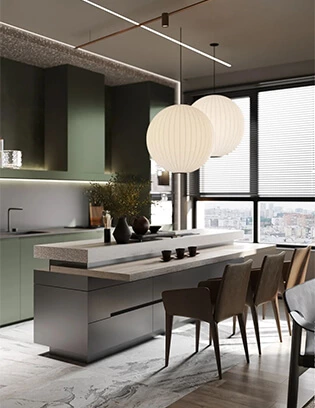
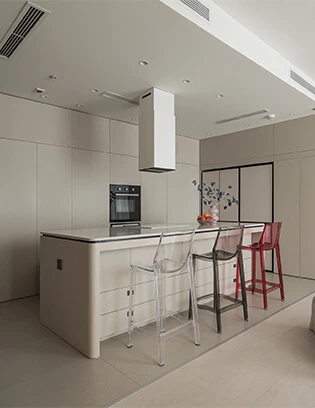
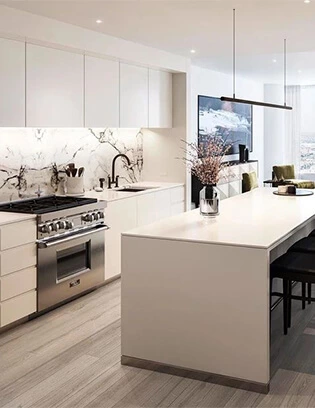
Earthy tones have long remained among the most favored colors in interior design, as they are timeless and can be paired with a touch of fashion. The earthy palette features soft and stable colors, mimicking the natural hues found in soil, moss, trees, and rocks, such as brown, tan, warm grey, and green combos. The natural warmth from these palettes provides comfort and a sense of security, deepening our connection to the outdoors. Here, we will share 5 ideas that use earthy colors to create modern, stylish interiors:
Earth tone interior design uses natural, grounded colors to create a home that feels calm, layered, and welcoming. Rather than relying on one dominant shade, a successful earthy palette combines warm neutrals, natural materials, thoughtful contrast, and soft lighting. These ideas can work across kitchens, living rooms, bedrooms, and whole-home cabinetry.
When planning an earthy interior, start with the fixed elements that will remain for years, such as flooring, wall finishes, countertops, and whole-home cabinets. Then build depth with paint, furniture, textiles, lighting, and accessories that support the same warm and natural direction.
Layer with Different Earthy Colors
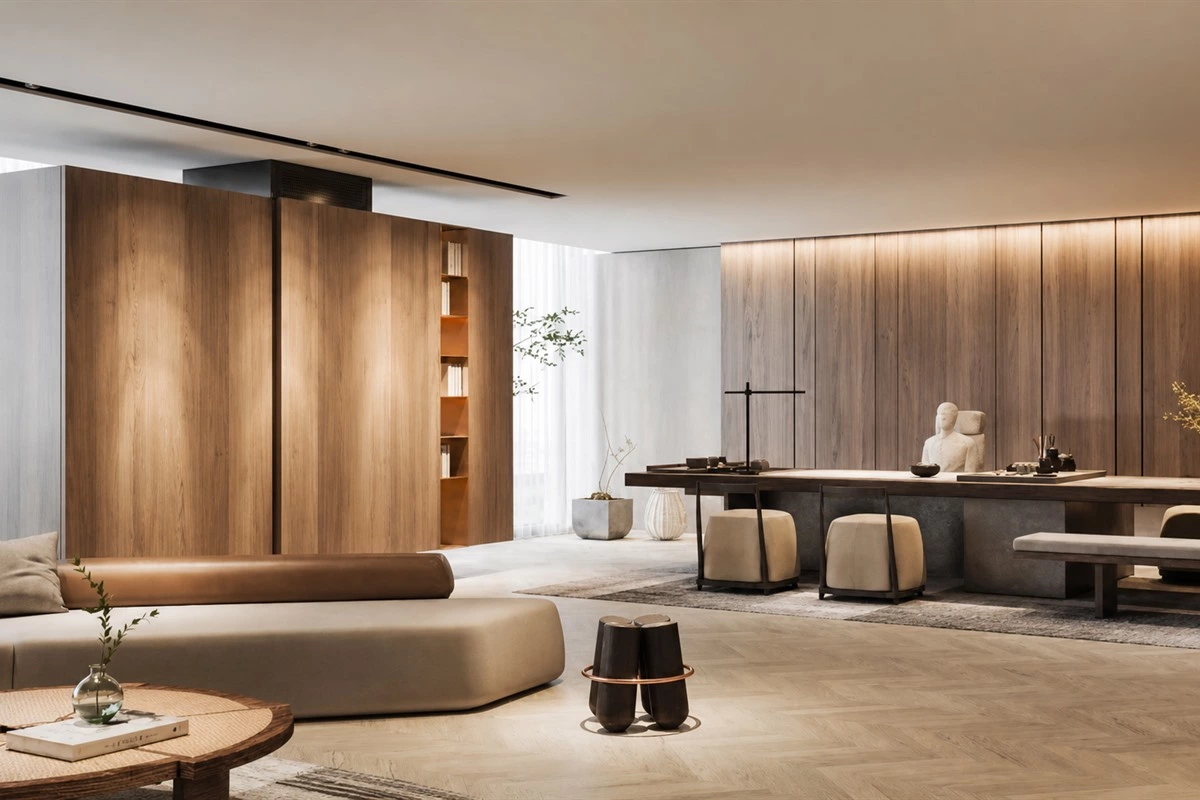
Brown is a warm neutral that pairs perfectly with wood tones. If you think this combination might feel too dull, consider exploring a range of shades from rich dark chocolate to soft beige. With such a broad color palette, you can create enough contrast to keep things lively. Just make sure to use this palette against a light, warm white background, or it may end up looking a bit too muted.
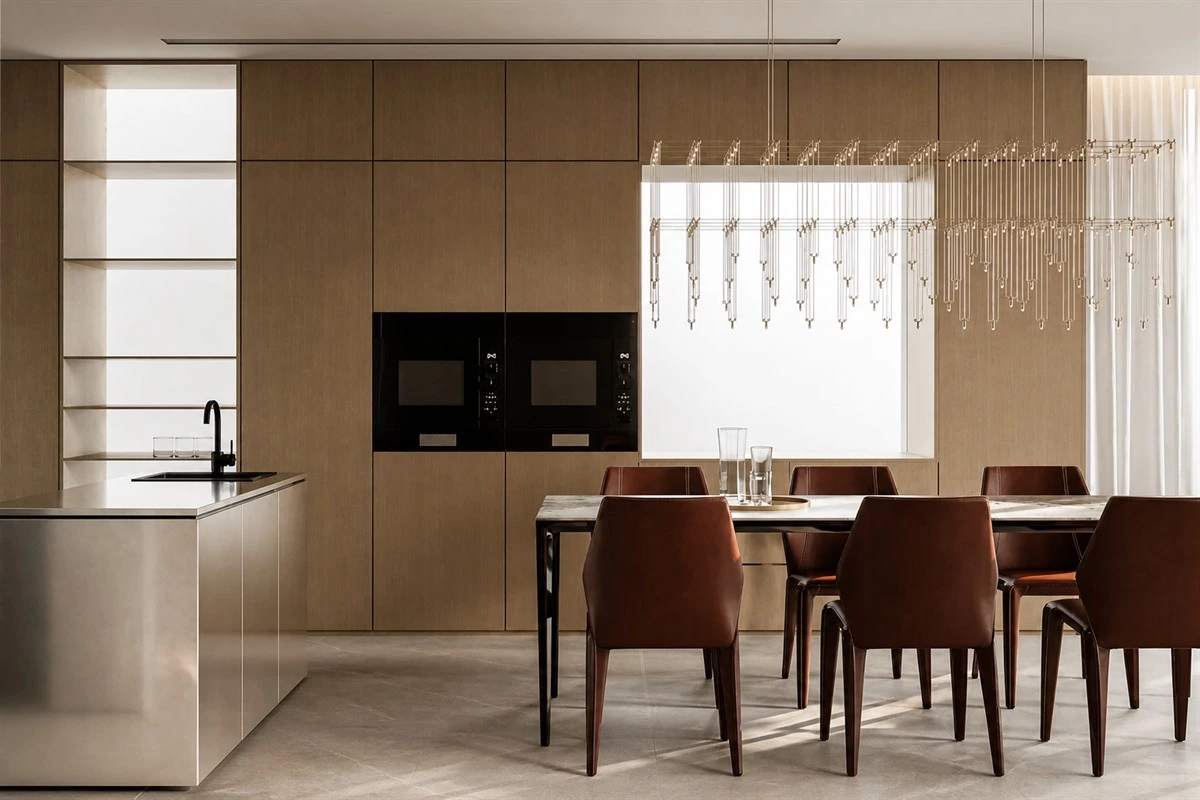
Try using one mid-tone as the visual anchor, such as walnut, taupe, or mushroom brown. Add a lighter tone for openness and a darker tone for definition. This creates a composed palette without making the room feel flat.
Pair with Grey and Black
Since coffee and general earthy tones do exude warmth, you can also opt for the cool contrast of grey or black. The contrast between grey tones and coffee hues is cool, calm, and stable. In fact, it's one of the best color combinations for your home, offering a distinctive personality that doesn't easily go out of style.
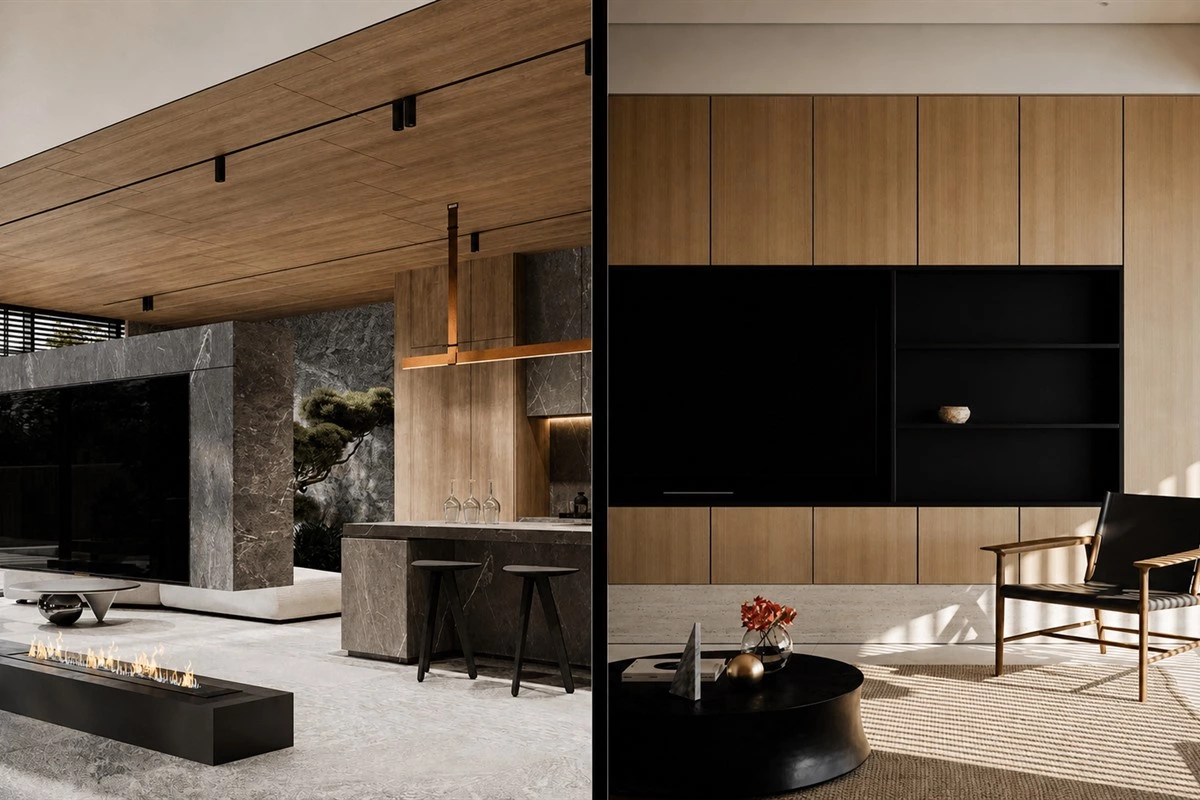
Black works particularly well in smaller, intentional details such as cabinet hardware, lighting frames, chair legs, or a slim countertop edge. This adds definition while allowing the warm brown and wood tones to remain the main visual story. For kitchen-specific contrast examples, explore these black and wood kitchen ideas.
Warm Caramel Tones
Earthy browns, such as tan and caramel, are exceptionally warm and full of character. Combining different shades of caramel with black, white, and grey, along with incorporating curved elements and organic textures, creates a really popular style.
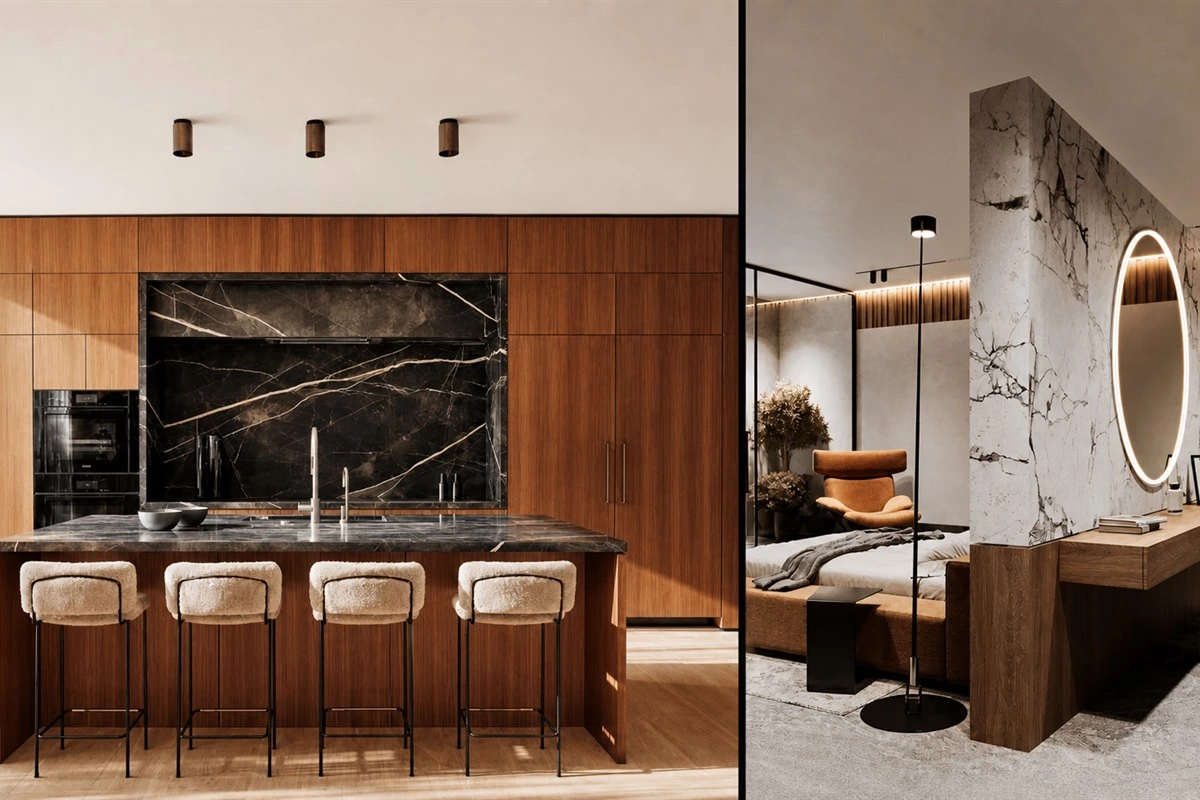
Caramel is especially effective when it appears in tactile materials such as wood veneer, leather, woven fabric, and softly textured wall finishes. Rounded corners and curved furniture can further soften the composition. See how curves can shape a cohesive space in our guide to curved craftsmanship in interior furniture design.
Add Layers with Fabric Soft Furnishings
To add depth to your space with earthy colors, fabric and soft furnishings are the simplest way to do so. Use elements like pillows, rugs, curtains, table lamps, and wall hangings with varying color layers to break the monotony and add interest to your space.
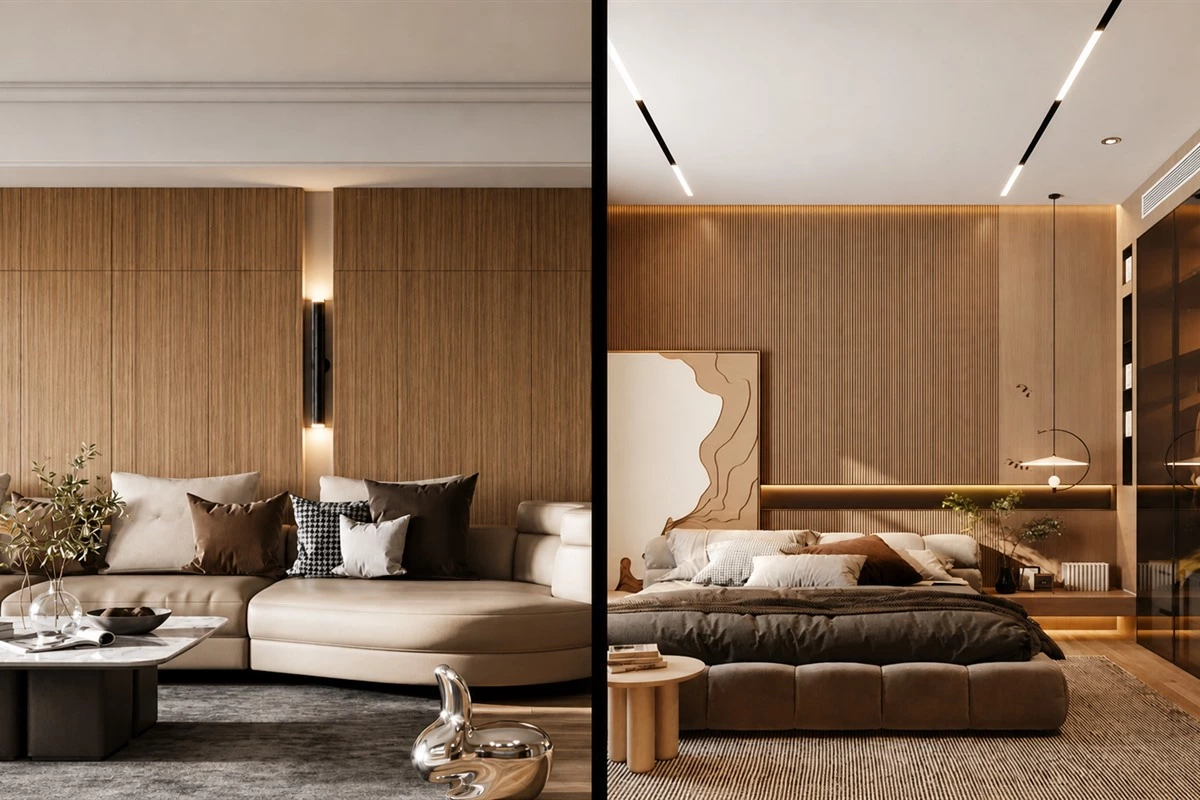
Use different textures rather than many unrelated colors. Linen, bouclé, wool, cotton, leather, and woven fibers can create depth while keeping the palette calm. Select a few accents in clay, olive, rust, or muted green, then repeat them in small amounts throughout the room.
Pair with White
Warm earthy tones can sometimes make a space feel muddled, as they tend to be subdued. To balance this, introduce at least 20% of black, white, or grey. Crisp white particularly helps maintain warmth while creating a calming and natural feel, and it also makes the space appear brighter.
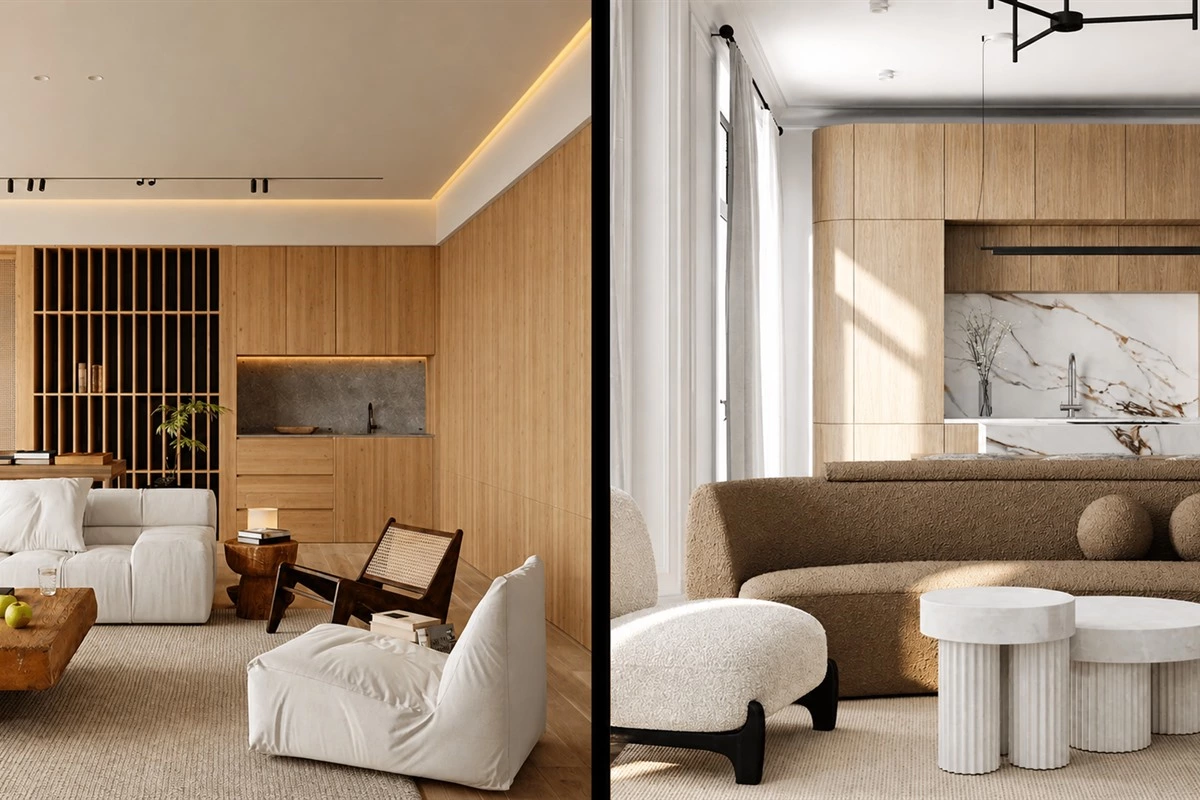
White is most effective when it has a warm undertone that relates to the wood and brown finishes around it. Use it on walls, ceilings, curtains, or large cabinet surfaces to provide visual breathing room and help natural daylight move through the space.
How to Build a Balanced Earth Tone Color Palette
A layered natural palette does not need to be complicated. Use these practical steps to create a space that feels coordinated:
- Choose a foundation: Start with one large neutral, such as warm white, beige, taupe, or soft grey.
- Add a natural material: Introduce wood, stone, rattan, linen, or textured ceramic to bring authentic variation.
- Use contrast sparingly: Black, charcoal, or deep brown details create structure without overpowering the room.
- Repeat key colors: Reusing a tone in cabinetry, textiles, and decor helps the entire interior feel intentional.
- Test samples together: View paint, flooring, cabinet, fabric, and countertop samples together under your home’s daylight and evening lighting.
For a calmer, more streamlined interpretation of warm natural materials, see our minimalist kitchen design tips. For additional color inspiration and color resources, visit the Pantone Color Institute.
Frequently Asked Questions About Earth Tone Interior Design
What colors are considered earth tones?
Earth tones commonly include brown, tan, beige, taupe, terracotta, clay, warm grey, olive green, muted moss, and soft stone shades.
Can earth tones work in a modern home?
Yes. Pair natural colors with clean lines, simple cabinetry, modern lighting, and restrained decor to create a contemporary earthy interior.
How can I stop an earthy room from feeling too dark?
Use warm white walls or ceilings, add reflective or light-toned surfaces, maximize natural light, and include lighter fabrics or cabinetry.
Do grey and black work with earthy colors?
Yes. Grey and black can create a cool, structured contrast with brown, tan, caramel, and wood tones when used in measured amounts.
Which wood tones suit an earthy palette?
Oak, walnut, ash, teak, and other warm wood finishes work well. Choose a wood tone that supports the undertone of your walls and major finishes.
Can I use green in an earth tone interior?
Yes. Olive, moss, sage, and muted forest green naturally complement brown, beige, stone, and wood finishes.
What materials make an earthy interior feel more layered?
Wood, natural stone, linen, wool, leather, rattan, ceramic, plaster, and textured glass add depth while staying within a natural design language.
Final Thoughts
Earth tone interior design offers a flexible way to create spaces that feel contemporary, comfortable, and connected to nature. By balancing warm browns and caramel tones with white, grey, black, natural materials, and soft layered textures, you can achieve a home that feels both stylish and timeless.