5 Custom Dining Sideboard Ideas for Stylish Storage
A well-designed dining sideboard not only serves as a storage powerhouse and a stylish addition to your home but also enhances the practicality and efficiency of your daily routines! Wondering how to optimize your dining sideboard for maximum practicality and utility? Keep reading to find out more.
Custom dining sideboard ideas can do far more than store dinnerware. A tailored sideboard can organize daily tableware, create a coffee or serving station, display a wine collection, define an open-plan room, and add character to the dining area. The most effective design depends on the room layout, the amount of storage required, and whether the cabinet should blend into the wall or become a focal point.
Before choosing a layout, list the items that need to be stored: plates, glassware, serving pieces, small appliances, bottles, linens, or pantry goods. Then decide which items should stay visible and which should be concealed. A mix of closed cabinets, drawers, glass doors, and open niches usually gives a dining sideboard the best balance of function and visual lightness.
Embedded Dining Sideboard
A dining sideboard as an embedded wall unit minimizes its floor footprint. This design seamlessly integrates the sideboard into the overall decor and gives a spacious visual appeal. The middle open section can be used as a temporary storage area for easy access and tidiness. Remember that it requires precise measurement and planning during customization.
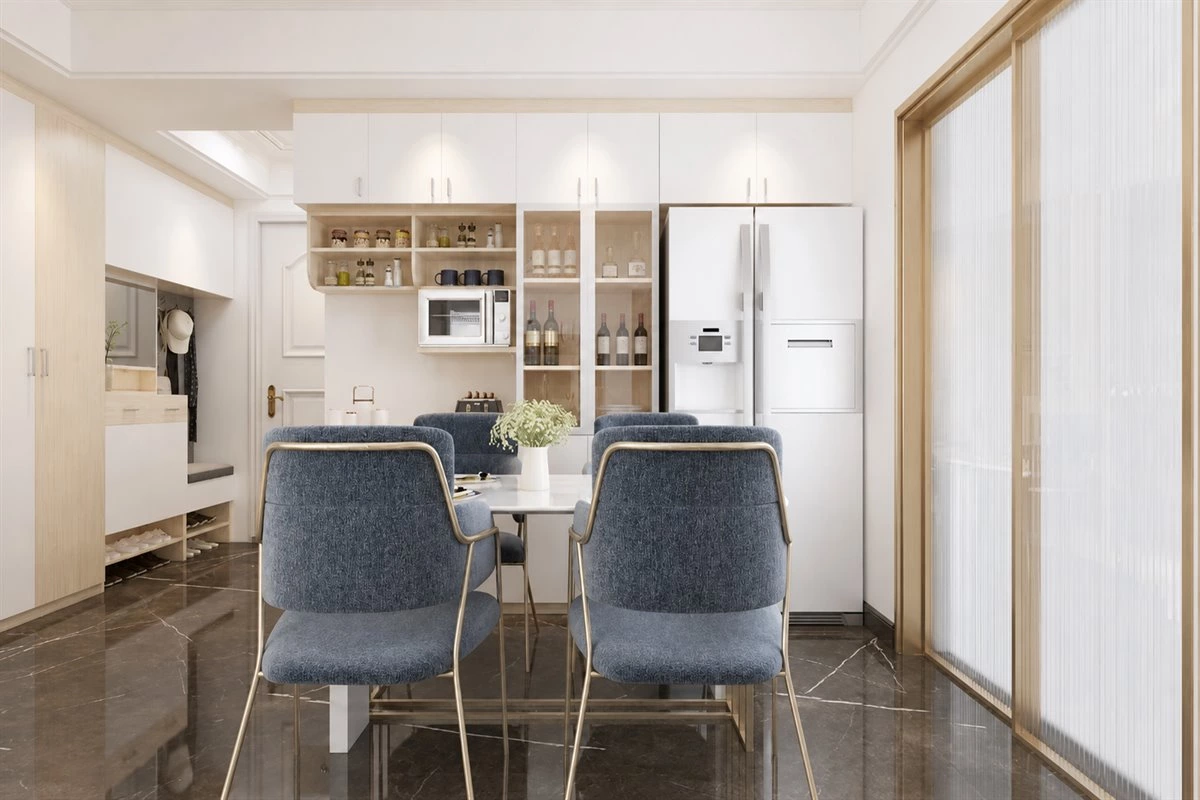
In cases where adjacent walls are non-load-bearing, embedding the dining sideboard flush with the wall surface not only saves space but also enhances the overall aesthetics.
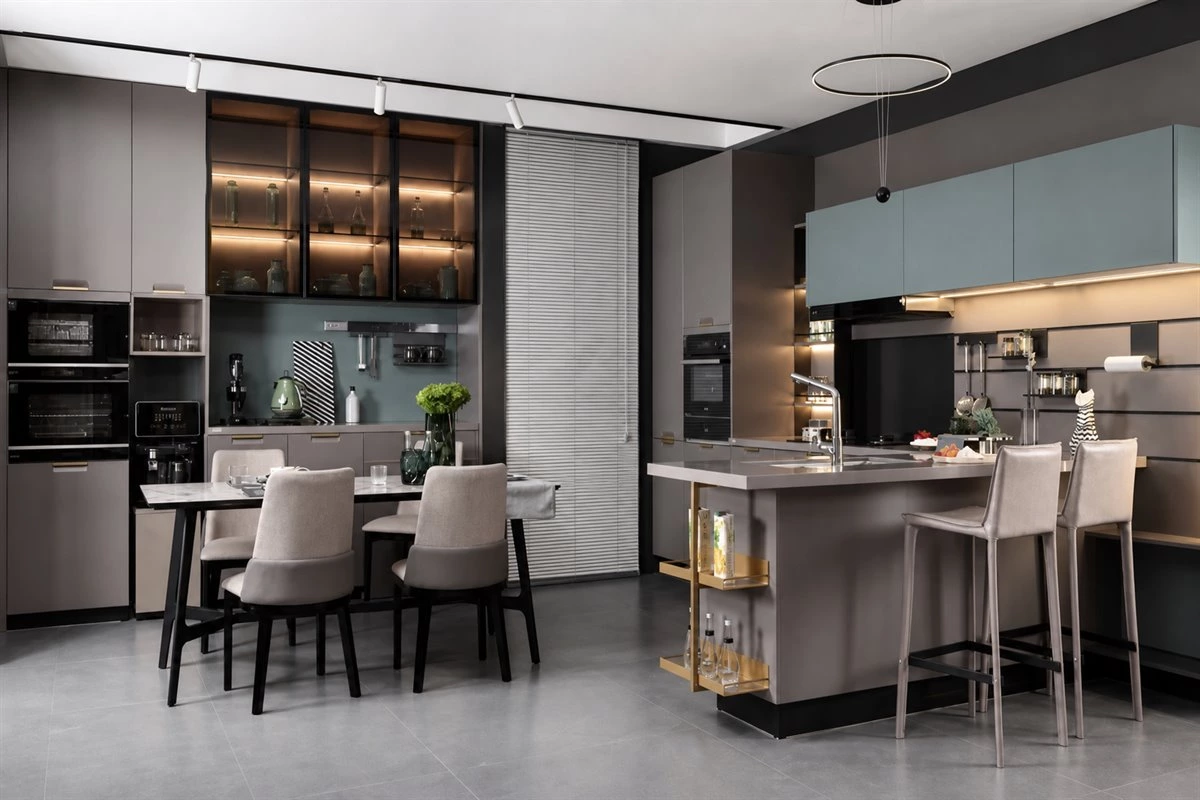
An embedded sideboard is especially useful in narrow dining rooms, hallways, and apartments where every inch of floor space matters. Use the open middle section for everyday access, such as a coffee machine, decorative ceramics, or serving trays. Closed lower cabinets can store heavier items, while upper cupboards are better suited to lighter, less frequently used pieces.
Divider Dining Sideboard
The dining sideboard doesn't just excel at dining table storage. It can also act as a room divider, create spatial divisions, and enhance privacy while preserving the openness of the room.
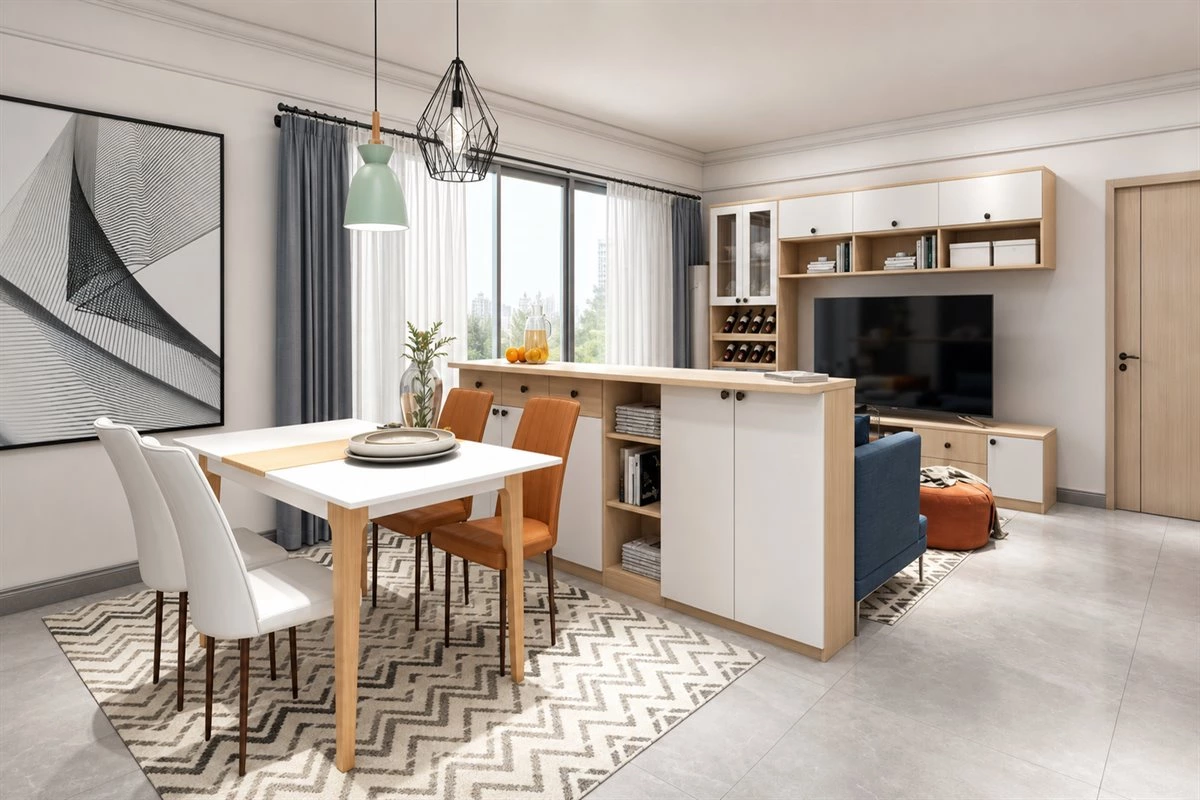
A divider sideboard can define the dining zone without blocking daylight or making an open-plan room feel smaller. Consider combining low closed storage with an upper glass display section or open shelving. This approach creates a visual boundary between the entry, kitchen, and dining space while still allowing the room to feel connected.
Modular Dining Sideboard
Integrating the entryway and the dining sideboard as a unified design maximizes storage functionality. One side serves as an entryway cabinet, while the other functions as a dining sideboard to optimize storage potential.
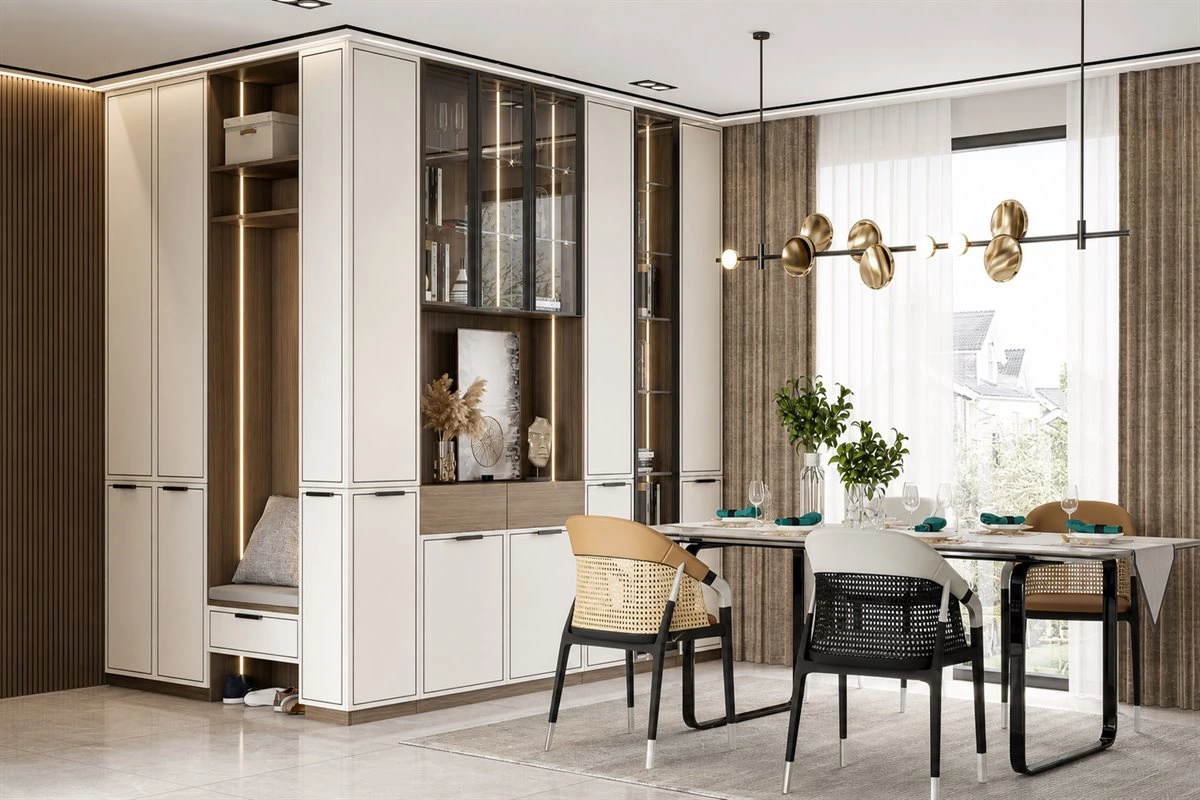
Combine the dining sideboard with a wine cabinet and customize it with wine racks and transparent glass doors to improve its decorative appeal. Embedded lighting lights up the cabinet's interior while creating a sense of sophistication that permeates the space through the glass doors.
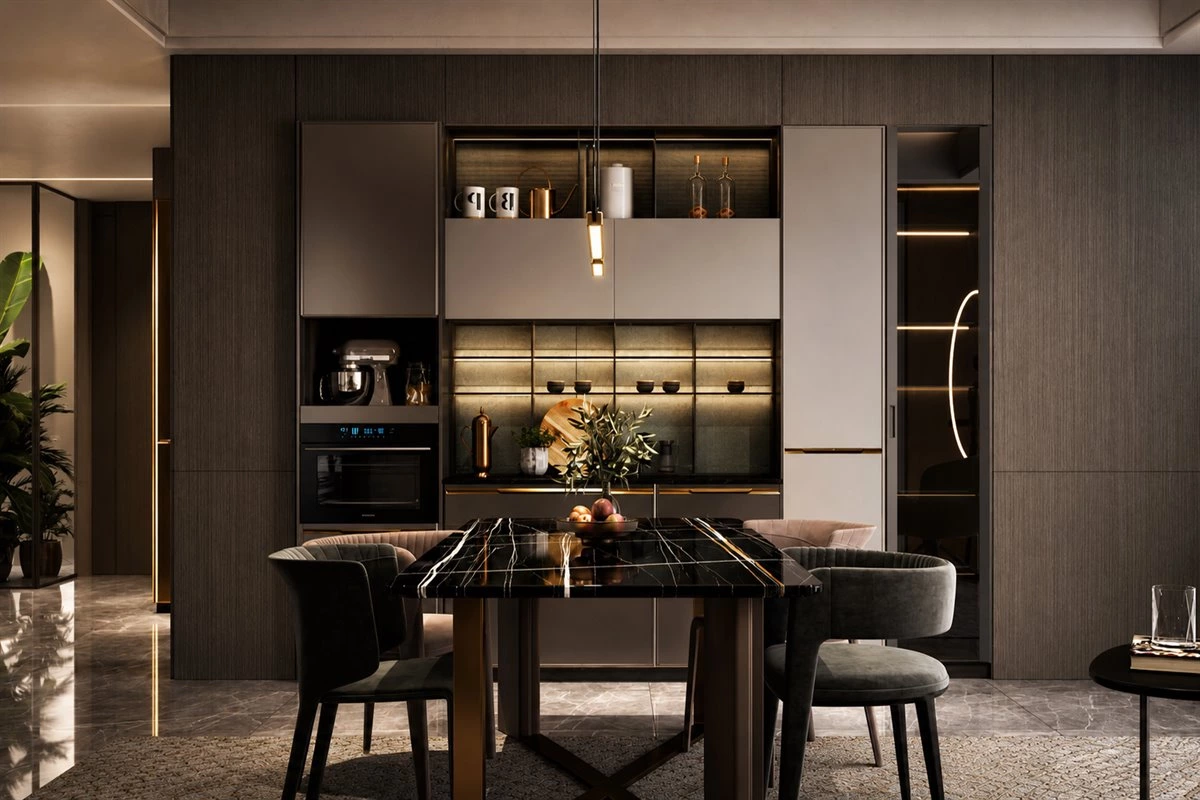
Wine lovers can consider a custom wine cabinet. It not only stores but also decorates, utilizing elements like metal and glass to create an upscale dining ambiance. Embedded LED lighting not only increases interior brightness but also emits a sense of refinement through the glass doors, elevating the overall atmosphere.
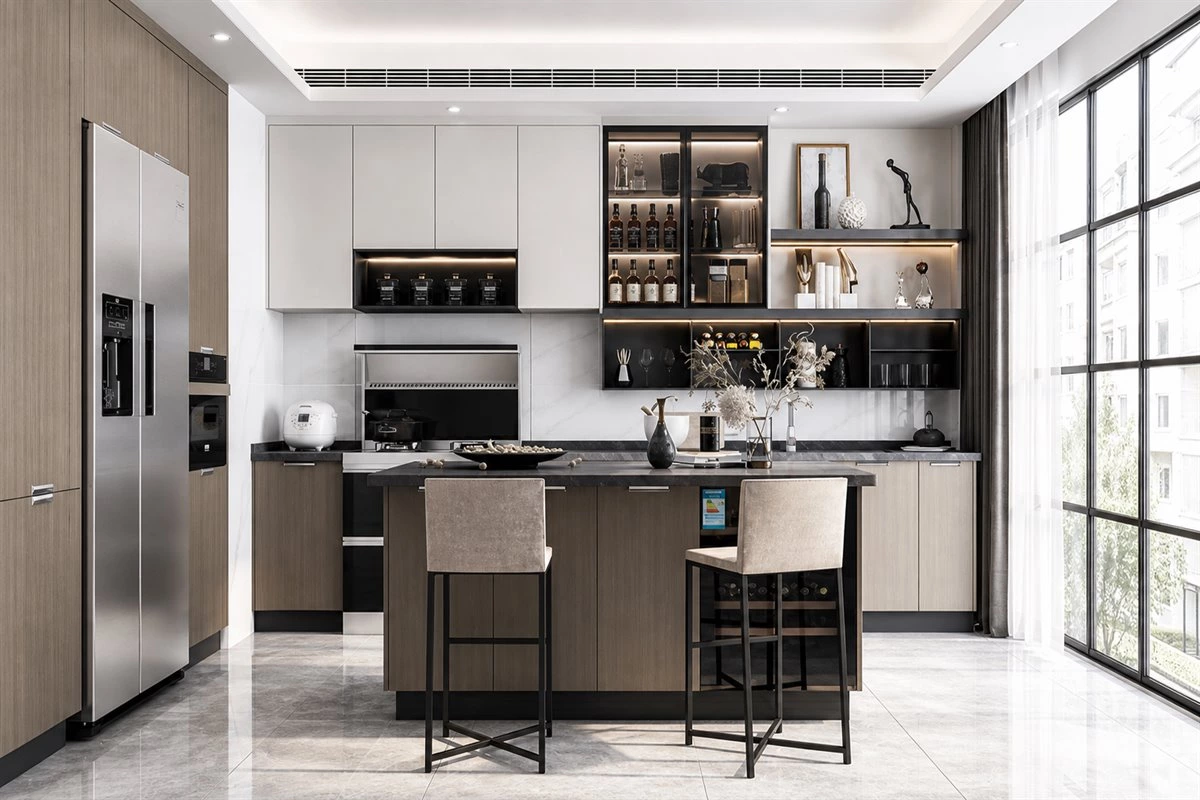
For a sideboard with wine storage, create distinct zones for bottles, glassware, serving pieces, and display. Glass doors protect the collection from dust while allowing the lighting to add atmosphere. Warm LED strips are a practical choice for open niches and glass cabinets because they add gentle illumination without overwhelming the room. For additional inspiration, explore our home wine cabinet ideas.
An open-plan kitchen and dining area are typically designed for a smooth and efficient workflow. Use separate dining tables and chairs, an island counter, or a bar, paired with soft warm lighting, to create a cozy dining atmosphere.
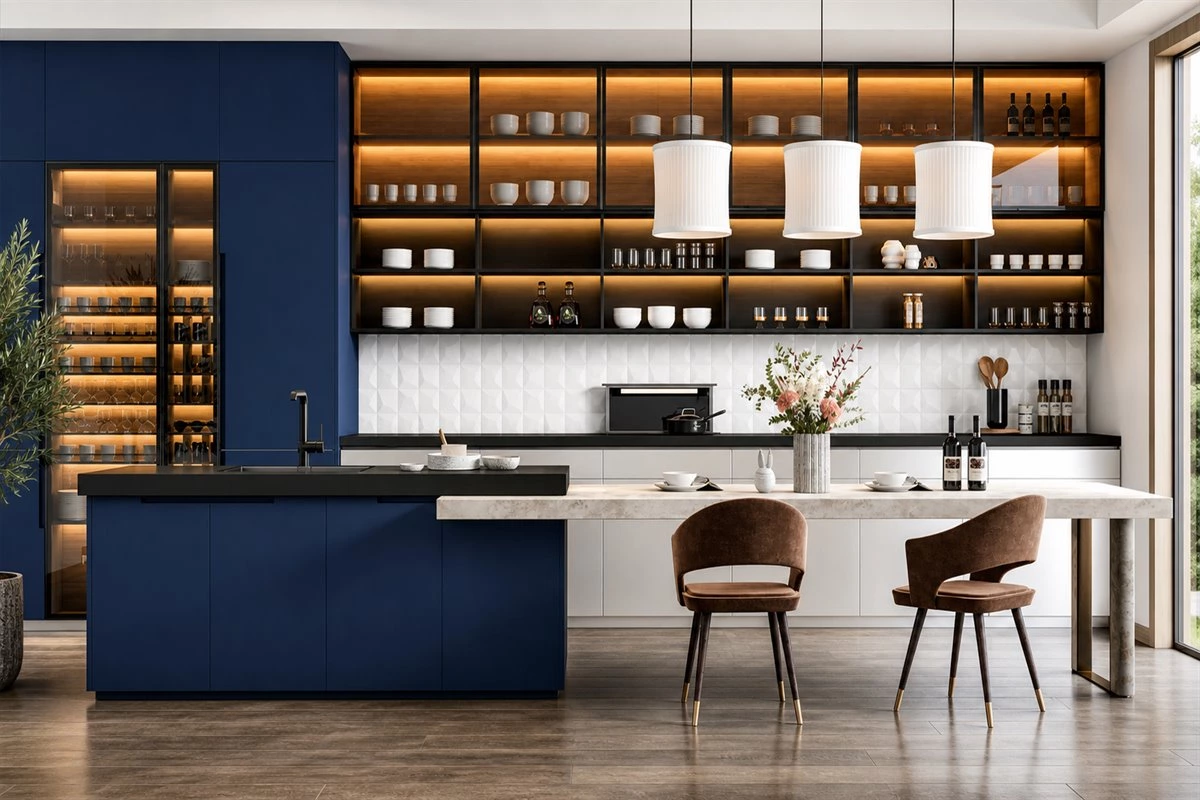
The combination of a kitchen island with a dining sideboard optimizes space utilization and offers additional storage and organization for meal preparation.
In an open kitchen, the sideboard can become the link between cooking and dining. Use it to store serving dishes near the dining table, keep a coffee station away from the main preparation zone, or provide a landing space for meals. Pairing a dining sideboard with an island is particularly effective when the island is used for preparation, and the sideboard manages tableware, drinks, and entertaining supplies. You can also review our kitchen island design styles for more layout ideas.
Booth-Style Dining Sideboard
Offering seating and substantial storage space, booth-style dining sideboards are particularly friendly for homes with limited space. When combined into a unified design, booth seating and the dining sideboard become even more practical.
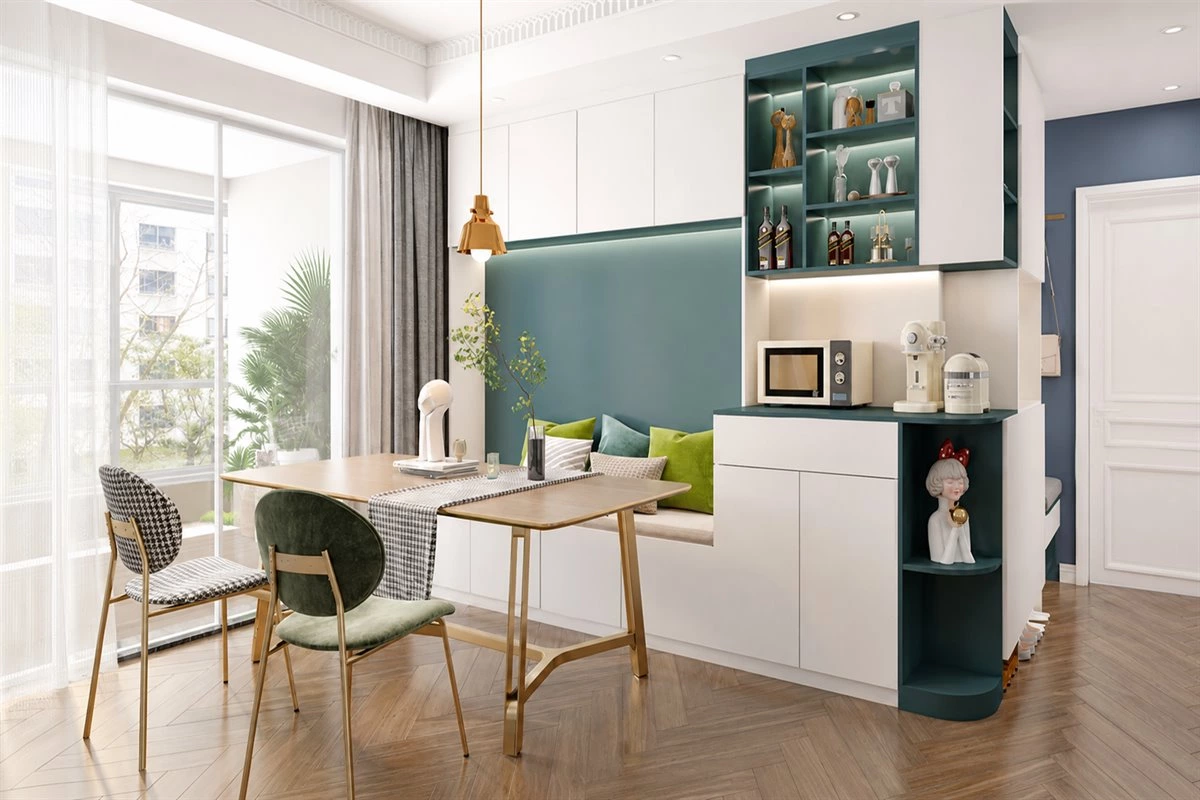
In homes with limited dining space, consider creating a wall-mounted booth seating dining area. This design not only maximizes space utilization but also incorporates storage cabinets beneath the booth for storing everyday items.
Booth seating can make a compact dining corner feel intentional rather than crowded. Drawers beneath the bench are useful for table linens, children’s items, seasonal decorations, or pantry overflow. Use the same cabinet finish for the sideboard, bench base, and nearby wall panel to make the whole composition feel like one custom-built unit.
Freestanding Dining Sideboard
An independent dining room is typically suitable for larger homes, where a dedicated area must be planned for placing dining tables, chairs, and even a dining sideboard. Customizing a ceiling-height dining sideboard in a consistent style adjacent to this area not only provides ample storage but also elevates the overall aesthetics of the dining room.
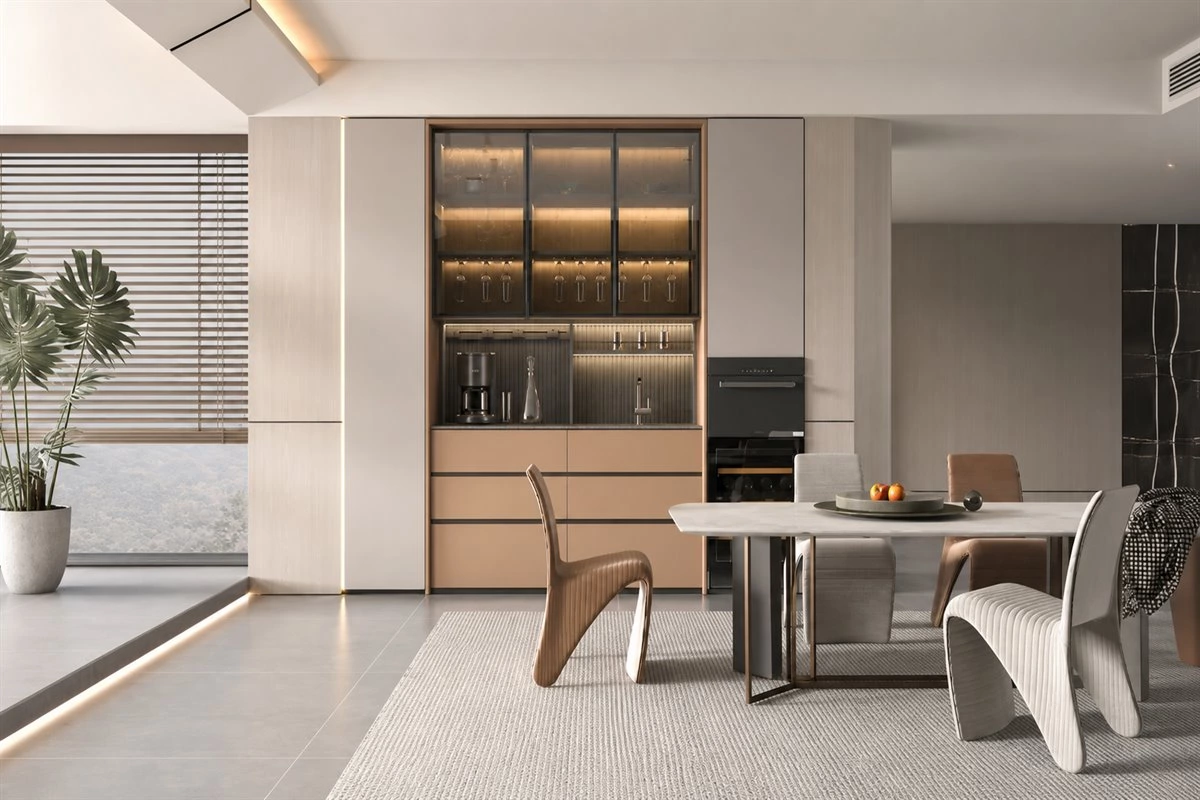
In a larger dining room, a freestanding sideboard can act as the room’s main storage feature. Ceiling-height cabinetry is ideal for formal tableware and seasonal items, while a central countertop or open niche can serve as a buffet, coffee station, or decorative display. Matching the sideboard’s wood tone, handles, or lighting to the dining table helps create a more cohesive room.
How to Plan a Custom Dining Sideboard
Start with the wall dimensions, door swings, nearby circulation, and the dining table position. A sideboard should add storage without making chairs difficult to move or narrowing the walkway. Plan drawers for smaller items such as cutlery and linens, cabinets for larger serving pieces, and shelves or glass sections only where you are comfortable keeping items visible.
Choose materials according to the role of the cabinet. Matte lacquer and wood veneer can suit modern dining rooms, while glass, metal, and integrated lighting work well for wine displays. Quality hinges, drawer runners, and lighting profiles matter because these details determine how the sideboard feels in daily use. The NKBA planning guidelines are a useful professional reference when reviewing storage, circulation, and cabinet planning.
For illuminated glass cabinets, select efficient, low-heat lighting that suits the display. The U.S. Department of Energy’s LED guidance explains why LED technology is well suited to compact, long-life lighting applications.
Frequently Asked Questions
What should a custom dining sideboard store?
A custom dining sideboard can store dinnerware, glassware, serving dishes, linens, small appliances, wine bottles, and entertaining supplies. Plan the interior around what you use most often, keeping daily items easy to reach and seasonal items in higher storage.
How deep should a dining sideboard be?
The ideal depth depends on available space and storage needs. A sideboard should provide useful storage while leaving comfortable circulation around the dining table and chairs. Measure the walkway, chair pull-out space, doors, and nearby cabinets before finalizing dimensions.
Can a dining sideboard divide an open-plan room?
Yes. A divider dining sideboard can define the dining area while retaining visual openness. Low cabinets, open shelves, glass sections, and integrated lighting are useful ways to create separation without fully closing off the room.
Should a dining sideboard include a wine cabinet?
A wine cabinet is a good addition when you regularly entertain or want a dedicated place for bottles and glassware. Glass doors, bottle racks, metal details, and warm lighting can make the sideboard more decorative while keeping the storage organized.
Final Thoughts
The best custom dining sideboard ideas combine storage with the way you actually use the dining area. Whether you choose an embedded wall unit, a room divider, a wine display, booth seating, or a freestanding statement cabinet, thoughtful customization can make the dining room more organized, comfortable, and visually complete.