10 Perfect Matches to Stainless Steel Countertops
Many have mistaken stainless steel kitchen countertops for the outdated, yet they are, in fact, the most durable, sanitary, scratch-resistant, and easy-to-maintain option. When paired thoughtfully, they can infuse a modern touch to kitchen decor. Here, we present 10 combinations of stainless steel countertops to inspire you.
Today, stainless steel kitchen countertops are no longer limited to commercial kitchens. Their clean lines, seamless construction, and ability to pair with wood, stone, color, and glass make them a strong option for modern custom kitchens. A brushed surface can feel warm and architectural, while a polished surface can add a more reflective and refined effect.
Stainless steel is widely used in food-preparation environments because it is durable, non-porous, and straightforward to clean. For an overview of stainless steel in domestic kitchens and food-contact applications, see World Stainless’ kitchen and cooking guidance.
Before selecting a countertop, consider the kitchen layout, the amount of natural light, the cabinet finish, and the level of maintenance you prefer. The ideas below show how stainless steel can become either the main focal point or a carefully placed practical detail within the room.
Why Choose Stainless Steel Kitchen Countertops?
Stainless steel kitchen countertops offer a balance of practicality and visual flexibility. Their smooth surface is easy to wipe after food preparation, while the metal finish creates a crisp contrast against warm wood, matte cabinet colors, natural stone, and textured wall finishes.
- Easy everyday cleaning: A smooth, non-porous surface is practical for food preparation and routine kitchen cleaning.
- Modern visual character: Stainless steel works naturally with contemporary, minimalist, industrial, and transitional kitchen styles.
- Flexible combinations: It can be paired with cabinet finishes ranging from white lacquer and natural oak to dark walnut and bold painted colors.
- Integrated details: Sinks, backsplashes, drainboards, and work zones can be designed as part of one continuous surface.
- Long-term appeal: Light surface marks can develop over time, but many homeowners appreciate the lived-in patina of a well-used metal countertop.
For a broader material comparison before making a final decision, read our Kitchen Countertop Materials Guide.
■ via Ballingslōv
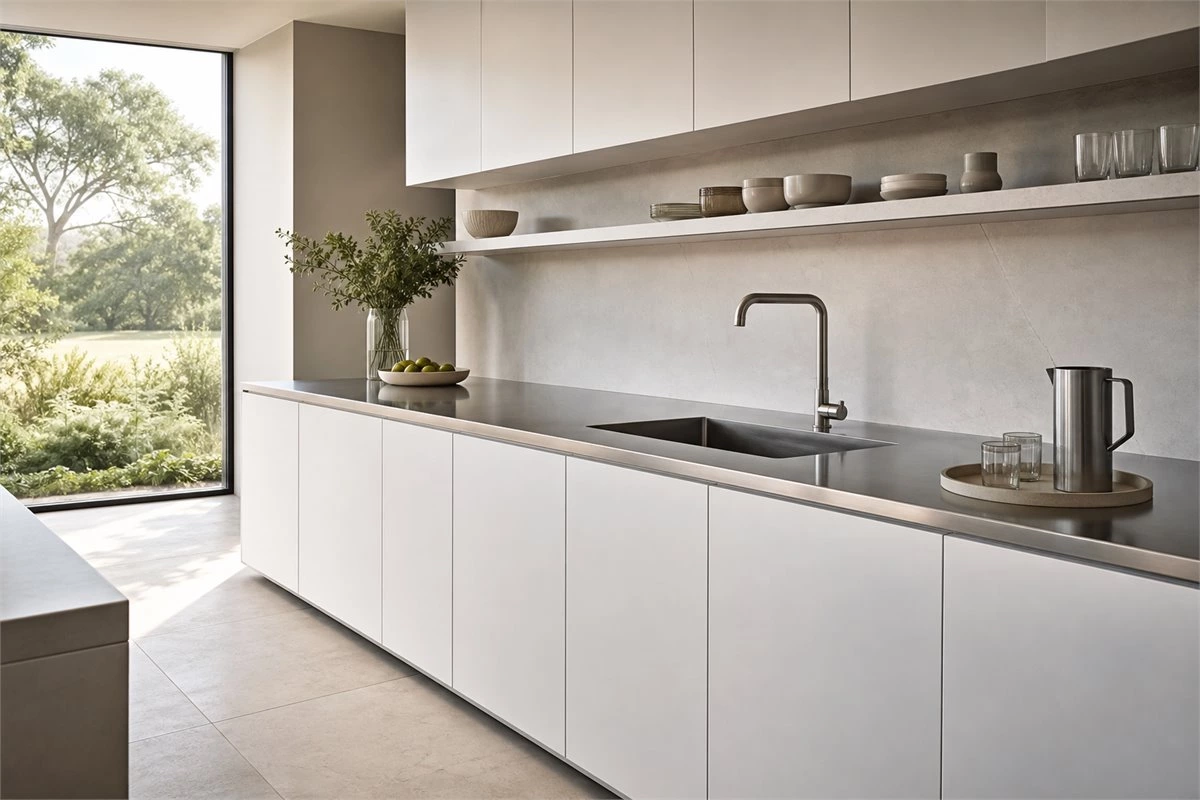
Paired with Minimalist White Cabinets
In this airy white kitchen, the expansive island serves as the primary workspace. The stainless steel surface is ideal for cooking and cleaning, while its thin edges complement the sleek aesthetics of the handleless cabinet doors.
White cabinetry allows the cool tone of stainless steel to stand out without making the room feel dark. This combination is especially effective in open kitchens, where a large island needs to feel clean and visually lightweight. Use warm lighting, natural timber flooring, or bar stools with woven textures to keep the overall atmosphere inviting.
■via Nordiska Kök
Complemented by Light Oak Minimalism
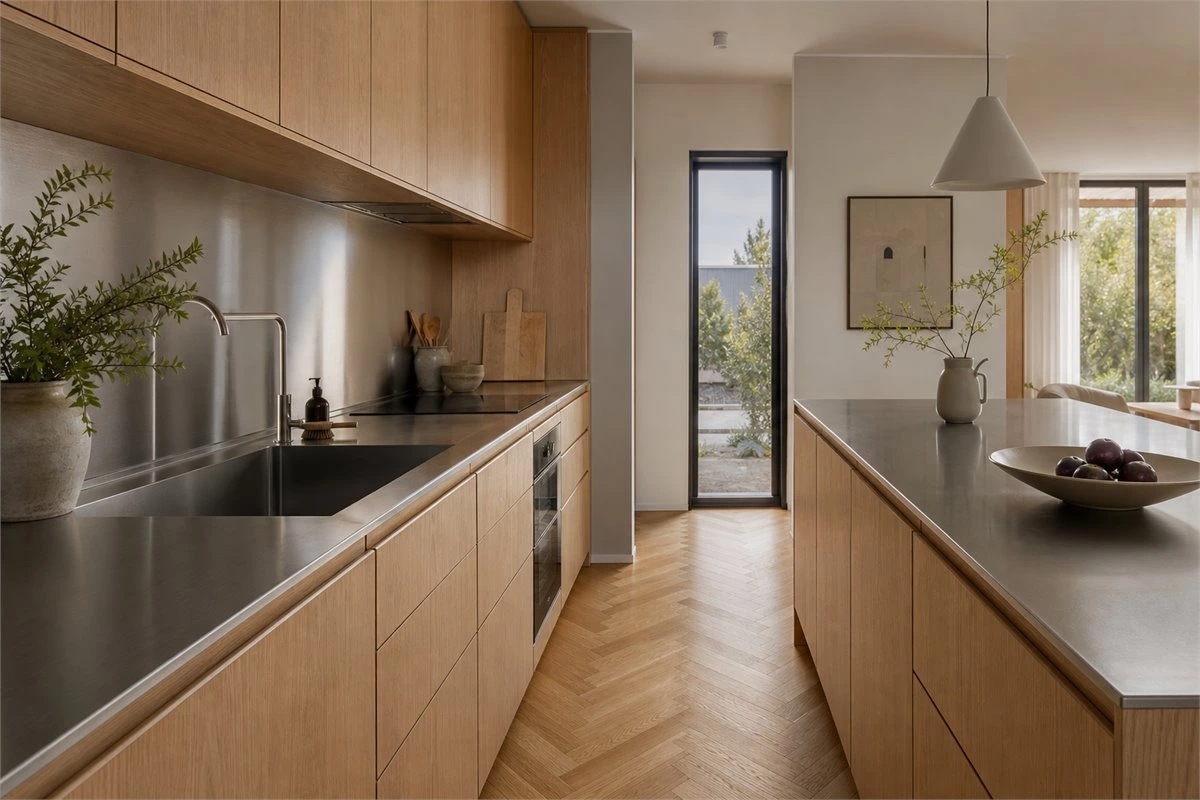
The pairing of stainless steel countertops with light oak kitchen cabinets creates a beautiful harmony of color and material, accentuated by the details of herringbone flooring. Brushed finish and straight edges seamlessly integrate the countertops with the sink and faucet, adding a modern touch to the warm minimalist kitchen design.
Light oak softens the industrial quality of metal and helps stainless steel kitchen countertops feel more residential. A brushed finish is often a practical choice because it creates a more understated surface than a highly reflective polish. Pair the two materials with warm-white walls, simple pendant lights, and natural stone or ceramic accessories for a balanced modern kitchen.
■via Himlekök
Integrated Stainless Steel Sink
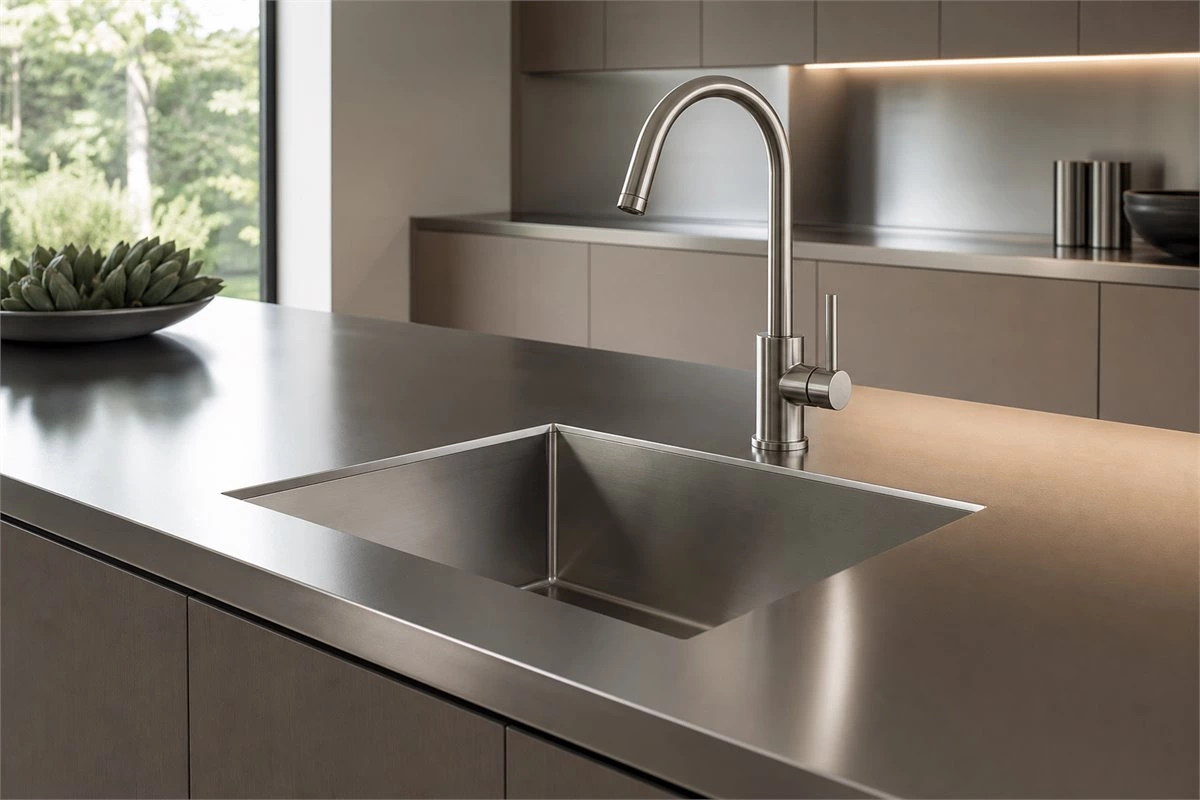
Polished countertops integrate the sink, creating an impressive effect in the space. The large island accentuates the brilliance of stainless steel, while the integrated sink completes the countertop's appearance in such a simple yet elegant manner.
An integrated sink removes the visual interruption created by a separate sink rim. This makes the work zone feel more continuous and can simplify day-to-day cleaning around the sink. It is particularly suitable for modern islands, compact prep kitchens, and households that prefer a streamlined professional-kitchen appearance.
■via Ballingslōv
Paired with Warm Tones
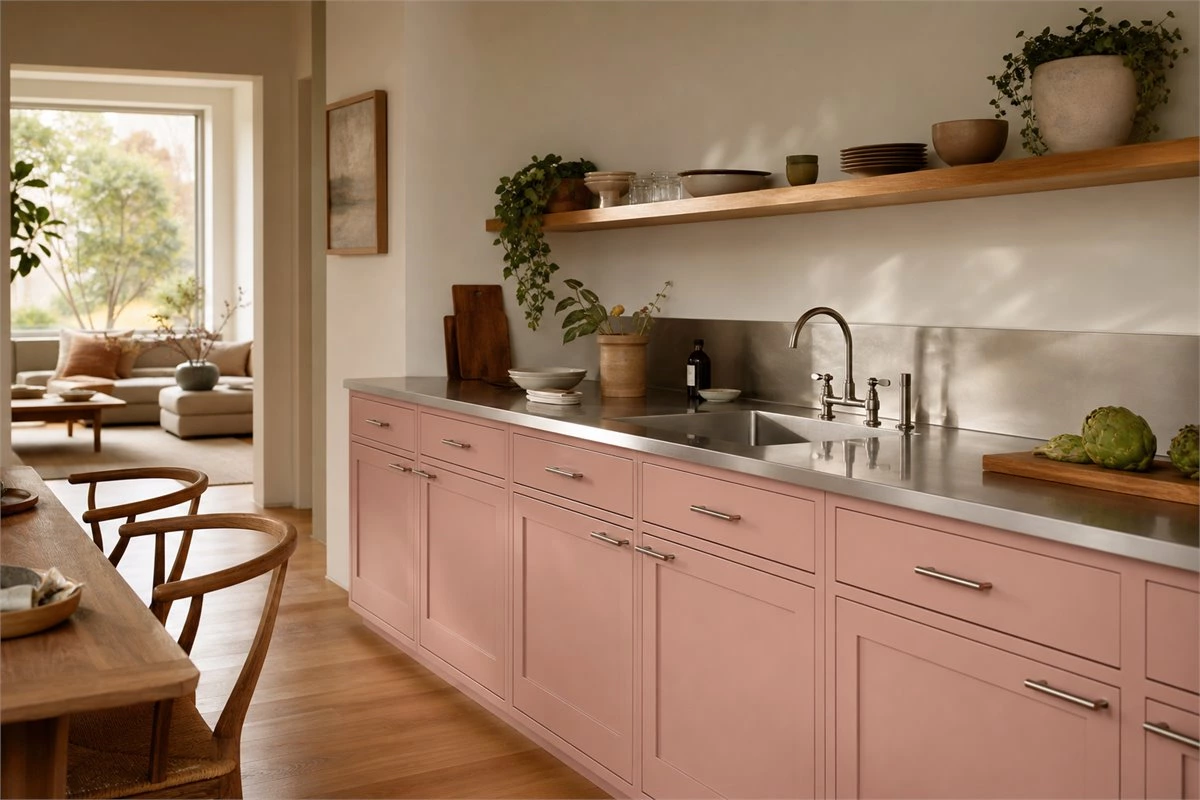
Warm hardwood floors and pink cabinets, paired with smooth stainless steel countertops, balance the color scheme. The combination of metal and wood, along with matching kitchen appliances and faucets, creates a harmonious contrast to the warm tones.
Stainless steel does not need to make a kitchen feel cold. Warm colors such as terracotta, muted pink, clay, burgundy, and sage green can create an appealing contrast with metal surfaces. When using a strong cabinet color, keep the countertop shape simple and repeat the stainless steel finish through the faucet, appliances, or open shelving details.
■via Kulladal
Seamless Blend of Metal and Wood
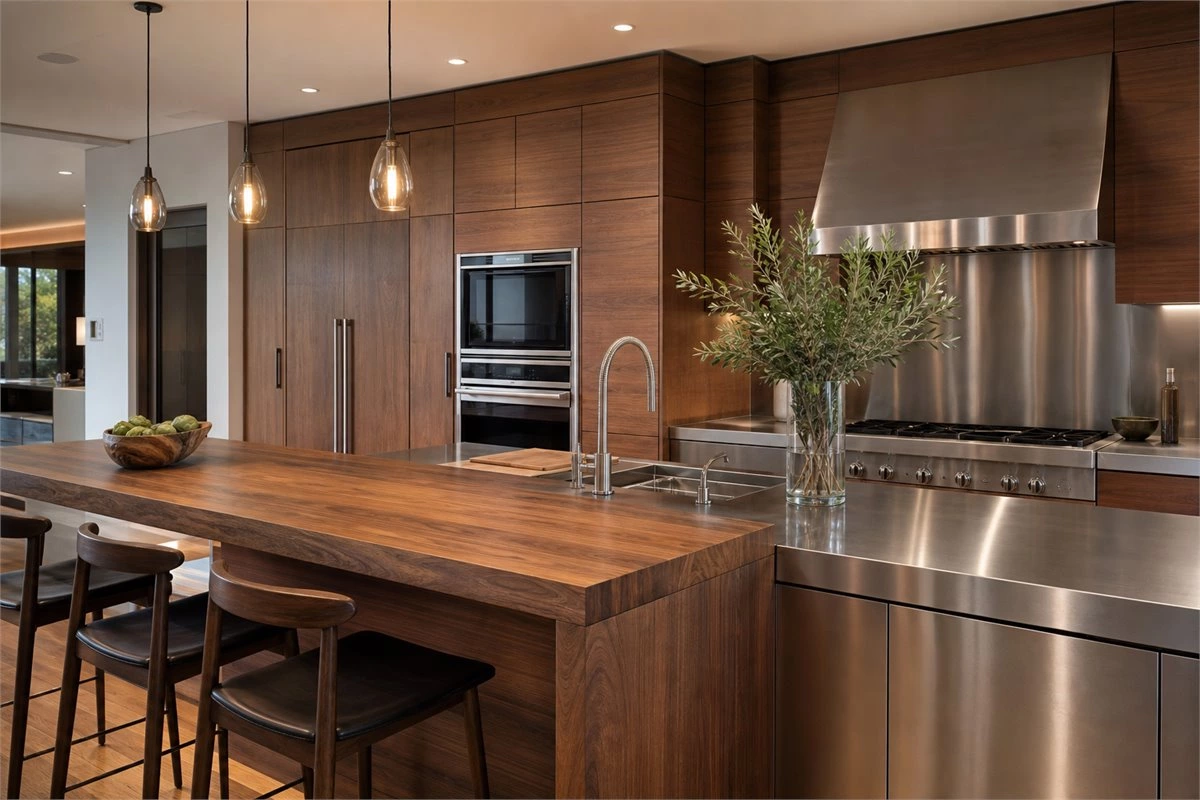
Sometimes, combining two different materials for countertops serves functional purposes. As shown below, the seamless connection of wood and stainless steel creates an intriguing look, aligning perfectly with the adjacent wooden countertop, forming an interesting combination of metal and wood.
Combining materials can also help define zones within the kitchen. Stainless steel can be used around the sink and cooking area, while wood can create a warmer dining, serving, or breakfast-bar surface. The transition should be planned carefully so the height, edge profile, and support details feel intentional rather than accidental.
For more inspiration on using metal and timber together, see our article on stainless steel kitchen cabinet design.
■via Nordiska Kök
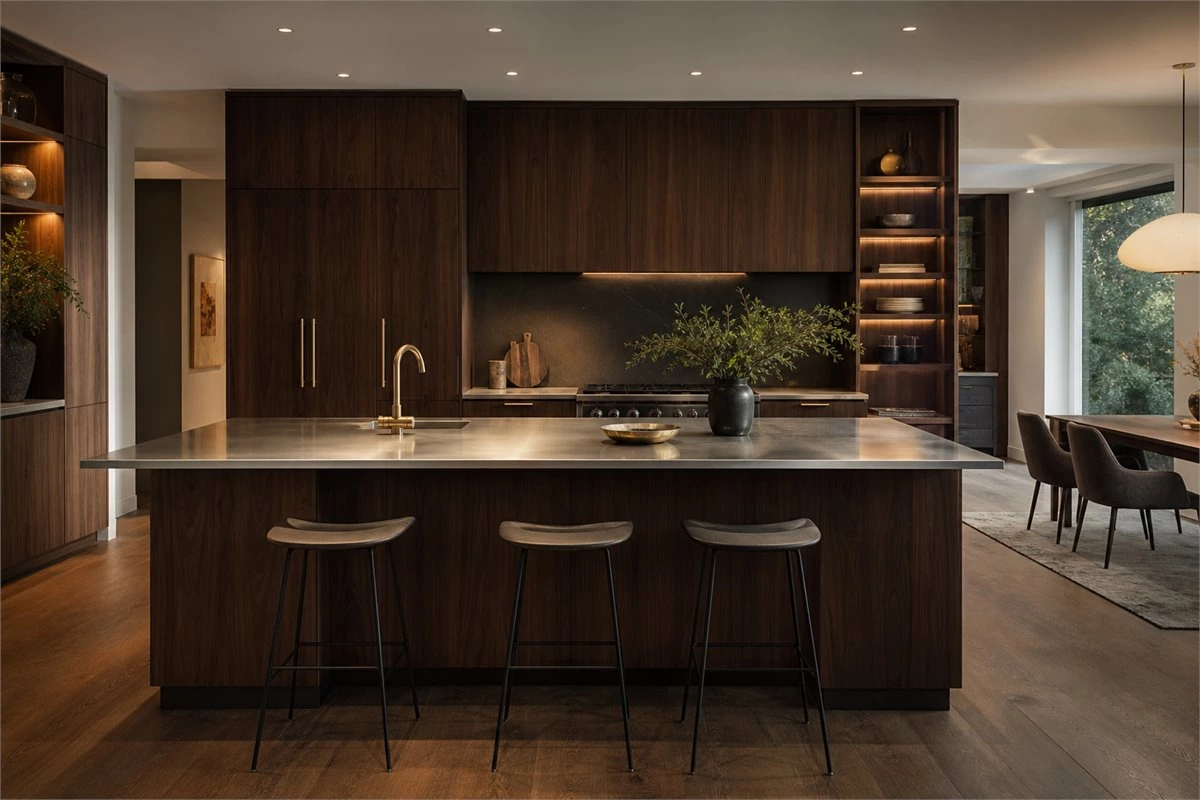
Thin Metal Countertops on the Island
In this stylish kitchen featuring dark wood cabinets, the large kitchen island boasts stainless steel countertops. The wall and ceiling cabinets complement the overall style, providing the perfect finishing touch to the kitchen.
A thin stainless steel edge can make a substantial island look lighter and more contemporary. This approach works particularly well with dark walnut, black, charcoal, or deep green cabinetry. The island remains visually strong, but the slim metal profile prevents the design from becoming overly heavy.
■via Cupboard and Goods
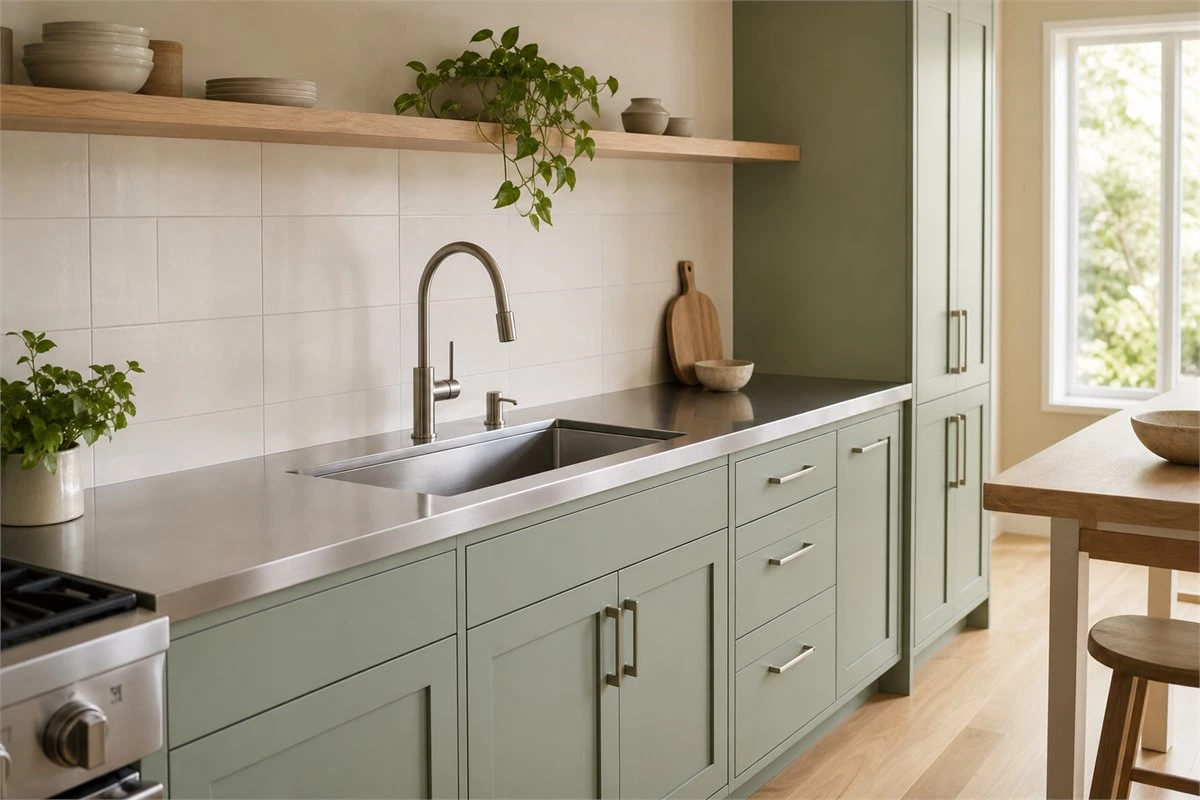
Stainless Steel as a Finishing Touch
In this exquisite sage green kitchen, the island is adorned with white marble countertops, while stainless steel surfaces are installed beside the sink for durability and stain resistance.
You do not need to use stainless steel across every work surface. A targeted metal section beside the sink, cooktop, or coffee station can deliver practical benefits while allowing marble, quartz, or sintered stone to remain the main visual material. This layered approach is ideal for homeowners who want both a soft decorative surface and a hard-working preparation zone.
■via Ballingslōv
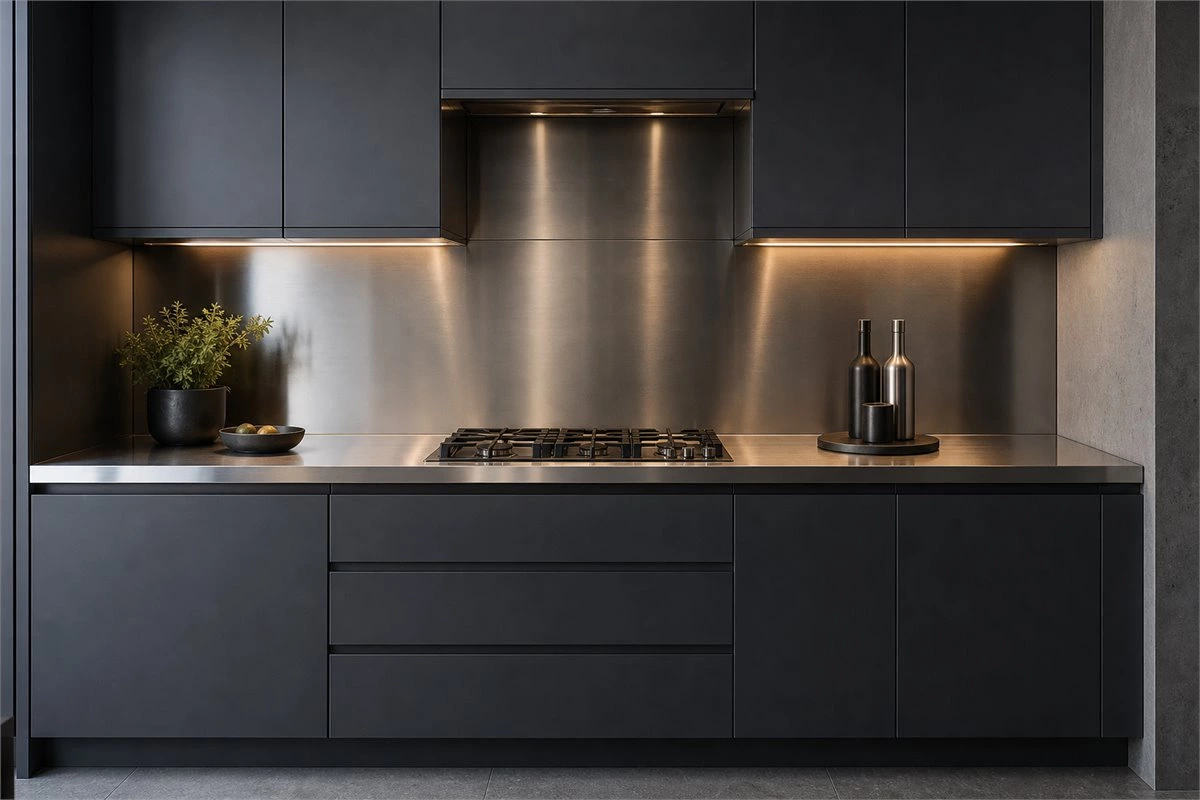
Stainless Steel Backsplash
The walls painted in dark gray serve as a beautiful contrast to the stainless steel countertops, which also extend as a small backsplash, creating an elegant contrast with the dark walls. The shine of the steel complements the matte surface of the minimalist cabinets.
Extending the countertop into a short backsplash creates a more cohesive work zone. It can protect the wall behind a sink or cooktop while visually connecting the countertop, faucet, and appliances. A short backsplash is often enough to add a professional detail without covering the entire wall in metal.
■via Nordiska Kök
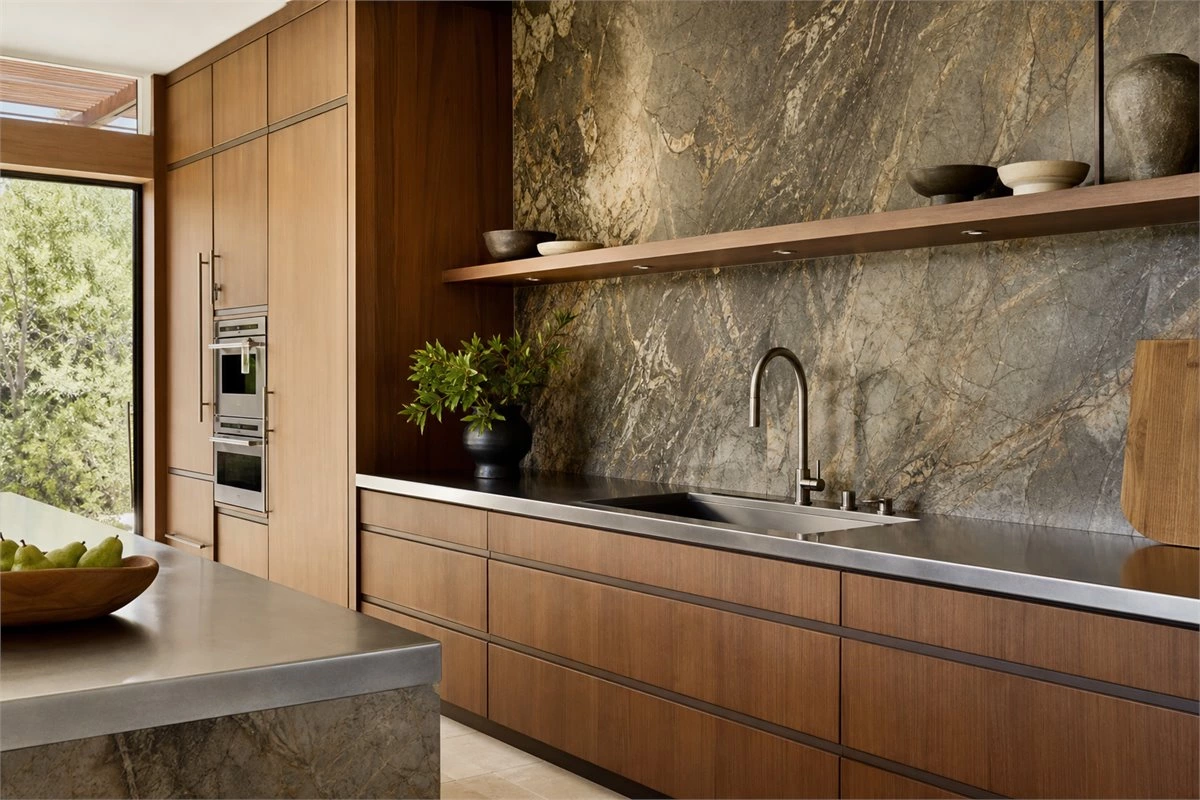
Stainless Steel Countertops with Stone Backsplash
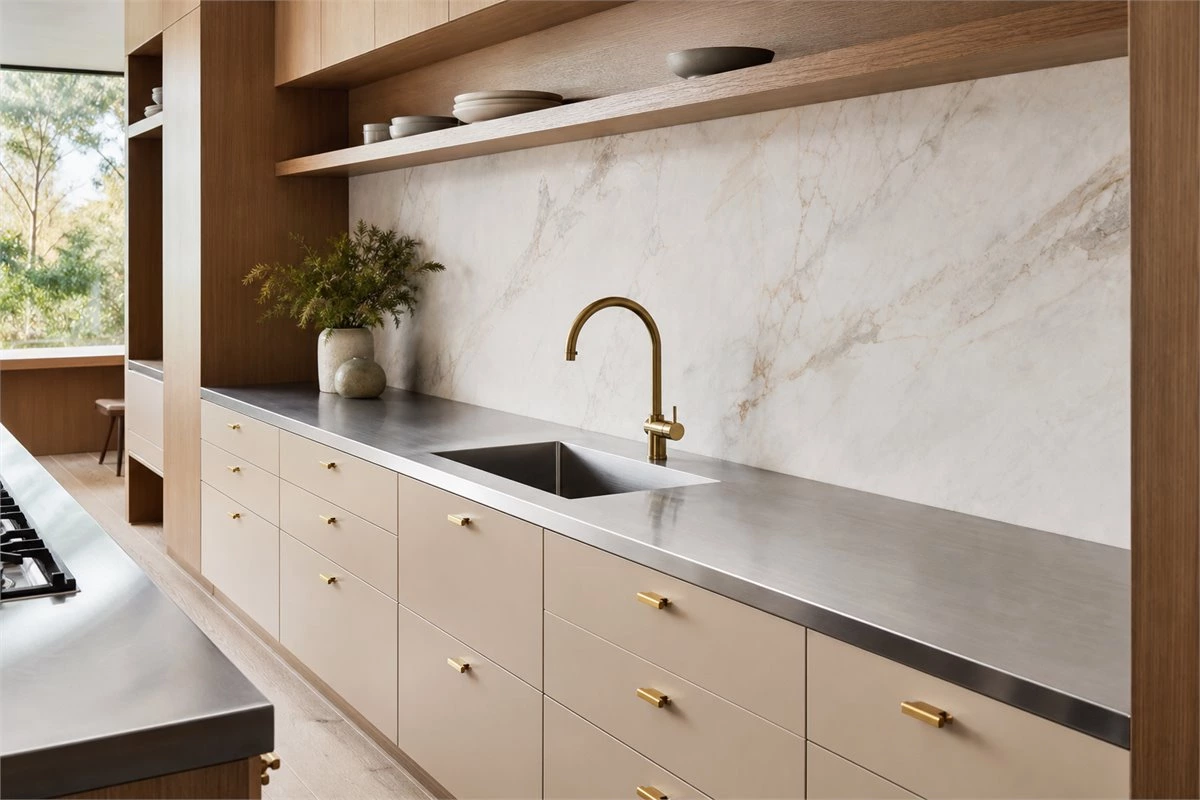
This beautiful kitchen combines the heat-resistant, dent-resistant, and stain-resistant properties of metal countertops with the visible texture of stone backsplashes and wooden cabinets. This combination creates a timeless and elegant design while being highly durable.
Stone and stainless steel are a strong combination because they offer different textures: stone brings natural movement and visual softness, while metal brings precision and reflectivity. Wood cabinetry between the two can warm the composition and make the overall kitchen feel more relaxed and residential.
■ via Nordiska Kök
Paired with Marble Backsplash
Stainless steel countertops add a modern touch to the grandeur of the kitchen's decor, chosen also for its practicality and easy maintenance without worrying about water splashes or oil stains.
Marble and stainless steel create a contrast between natural veining and crisp metal lines. This pairing can feel especially successful in a luxury modern kitchen, where the marble supplies visual drama and the stainless steel provides a practical workspace around the sink or cooktop. Use restrained cabinet colors so the two materials remain the focus.
How to Design with Stainless Steel Kitchen Countertops
Choose the Right Finish
A polished surface reflects more light and can make a small kitchen feel brighter, but it will also show fingerprints and reflections more clearly. A brushed or satin finish often creates a softer look that works well with wood cabinets and matte doors. Ask your fabricator to show a full-size finish sample before making a final choice.
Plan the Work Zones First
Consider where you prepare food, wash dishes, place hot cookware, and serve meals. Stainless steel can be used across the full kitchen, only on the island, or in dedicated wet and cooking zones. A functional layout will create a better result than using metal only as a visual trend.
Coordinate Cabinet Hardware and Appliances
Stainless steel kitchen countertops look more intentional when the metal finish is repeated elsewhere. A stainless steel faucet, integrated sink, appliance trim, dark-framed glass cabinet, or brushed hardware can create a consistent material story without making the room feel overly metallic.
Expect a Working Patina
Like natural wood and stone, stainless steel can develop small marks through everyday use. Rather than expecting a perfectly unchanged surface forever, choose a finish that suits your tolerance for visible wear. A brushed finish often makes normal use less noticeable than a mirror-polished surface.
Stainless Steel Kitchen Countertops FAQ
Are stainless steel kitchen countertops easy to clean?
Yes. Their smooth surface is practical for regular cleaning. Use a soft cloth and appropriate non-abrasive cleaning products, then follow the manufacturer’s maintenance instructions for the specific finish.
Do stainless steel countertops scratch?
Surface marks can appear with use, especially on polished finishes. Many homeowners choose brushed stainless steel because it creates a softer visual effect and can make everyday marks less obvious.
Do stainless steel countertops work in residential kitchens?
Yes. They can be used across an entire kitchen or as a focused work surface around the sink, cooktop, or island. Pairing them with wood, painted cabinetry, or natural stone helps create a residential look.
What cabinet colors work best with stainless steel countertops?
White, cream, light oak, walnut, black, charcoal, sage green, and warm painted tones can all work well. The best choice depends on the desired mood, natural light, and the other materials in the room.
Can I combine stainless steel with marble or stone?
Yes. Combining stainless steel with marble, quartz, sintered stone, or natural stone can define separate kitchen work zones and add material contrast. Keep the edge details and cabinet finishes coordinated so the transition feels purposeful.
Bring Practical Performance and Modern Style Together
Stainless steel kitchen countertops can be bold, subtle, warm, industrial, or luxurious depending on what they are paired with. White cabinets create a good modern effect, wood tones add warmth, colored cabinetry introduces personality, and stone backsplashes bring natural texture.
Whether you use stainless steel across the full kitchen or only in a hard-working preparation zone, the best results come from balancing function, finish, cabinet style, and lighting. With careful planning, this durable material can become a distinctive and long-lasting part of a custom kitchen design.