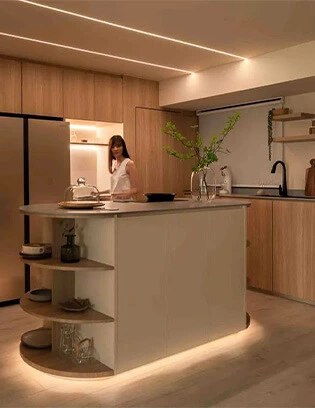
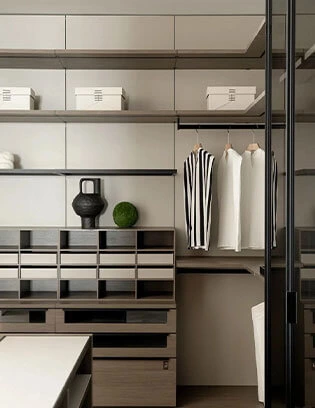
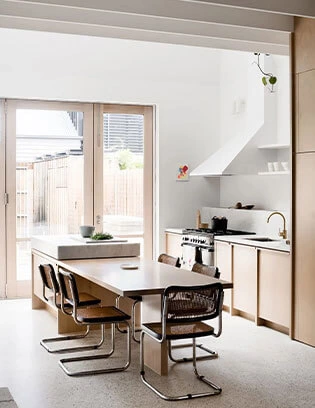
As we step into 2025, the world of interior design is undergoing a profound transformation. No longer are cabinets and storage units seen as mere functional elements—they’ve evolved into expressions of personal style and architectural artistry. In a time when consumers demand both utility and individuality, bespoke cabinetry has become a key player in defining modern living spaces.
Thoughtful cabinet design techniques can make custom storage feel more architectural, balanced, and personal. From subtle recessed seams to bold cantilevered forms, the right composition helps cabinetry support daily storage needs while becoming an intentional part of the interior. For a broader introduction to material, layout, and finish choices, explore ALLURE’s custom kitchen cabinets.
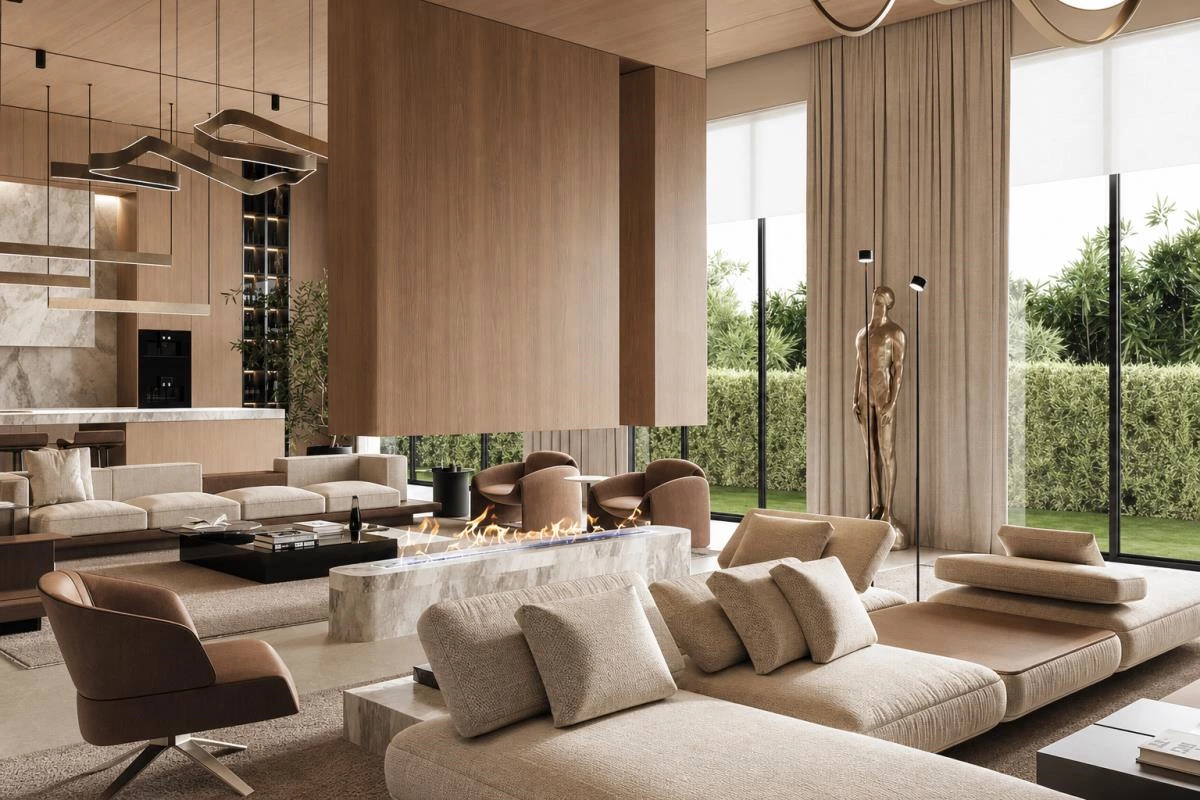
As we step into 2025, the world of interior design is undergoing a profound transformation. No longer are cabinets and storage units seen as mere functional elements—they’ve evolved into expressions of personal style and architectural artistry. In a time when consumers demand both utility and individuality, bespoke cabinetry has become a key player in defining modern living spaces.
When selecting a composition, consider the room’s scale, the available light, the functions the cabinetry must support, and the visual weight of each material. A technique that feels expressive in a large living area may need a quieter interpretation in a compact kitchen, bedroom, or entryway.
Stepped Layers (Scarpian Stacking)
Inspired by the iconic Italian architect Carlo Scarpa, stepped layering plays with depth, symmetry, and rhythm. Often used in foyers or accent corners, this method uses offsets, sequences, and varied materials—wood, metal, or glass—to create a tactile, tiered elegance. When paired with strategic lighting, the effect is a visual dance of light and shadow, adding life and sophistication to the space.
Stepped layers work especially well when a large cabinet wall needs a focal point without relying on excessive decoration. Keep the offsets measured and repeat a limited palette of finishes so the composition remains calm and intentional.
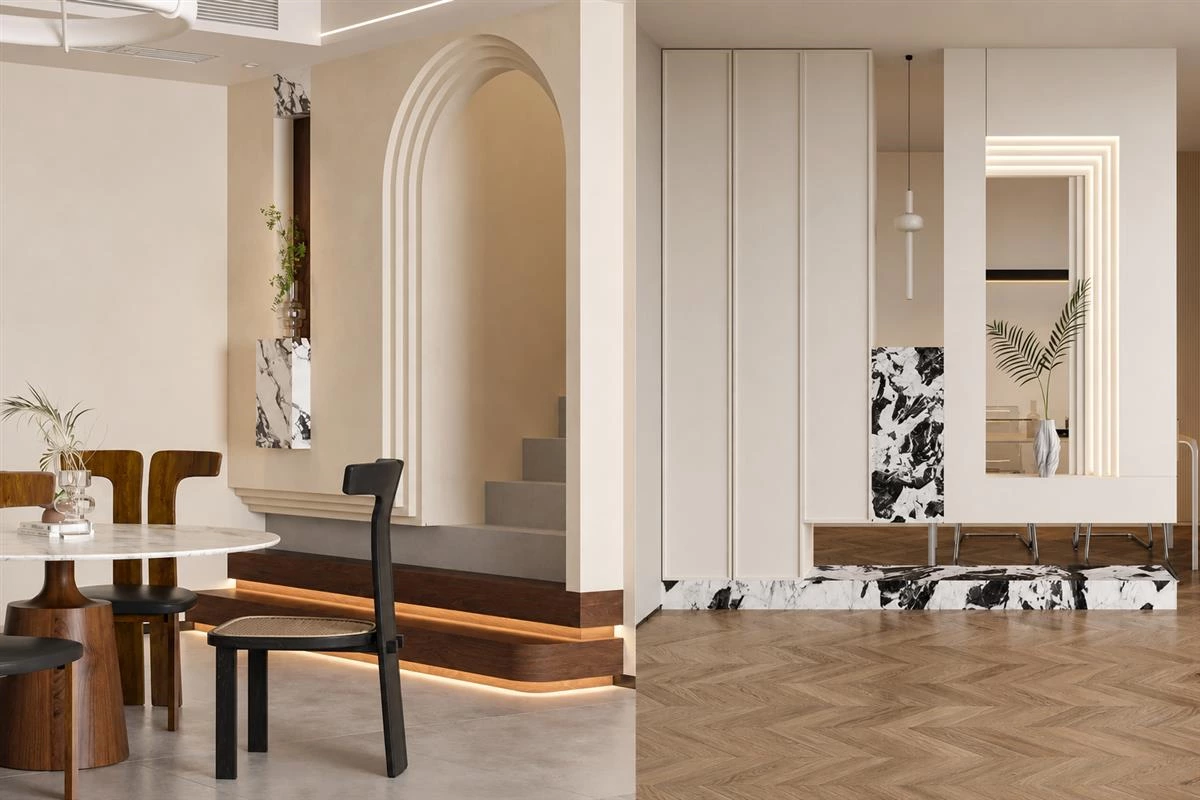
Push and Pull
Say goodbye to the flat-faced cabinet. This technique staggers cabinet blocks to different depths, introducing a dynamic visual rhythm. Particularly effective in minimalist or contemporary interiors, this subtle three-dimensionality enhances form without overpowering the overall aesthetic.
A push-and-pull composition can also create practical zones: shallower sections may suit display niches or frequently used items, while deeper sections can conceal larger storage. The effect is most refined when the reveals and panel alignments are planned consistently.
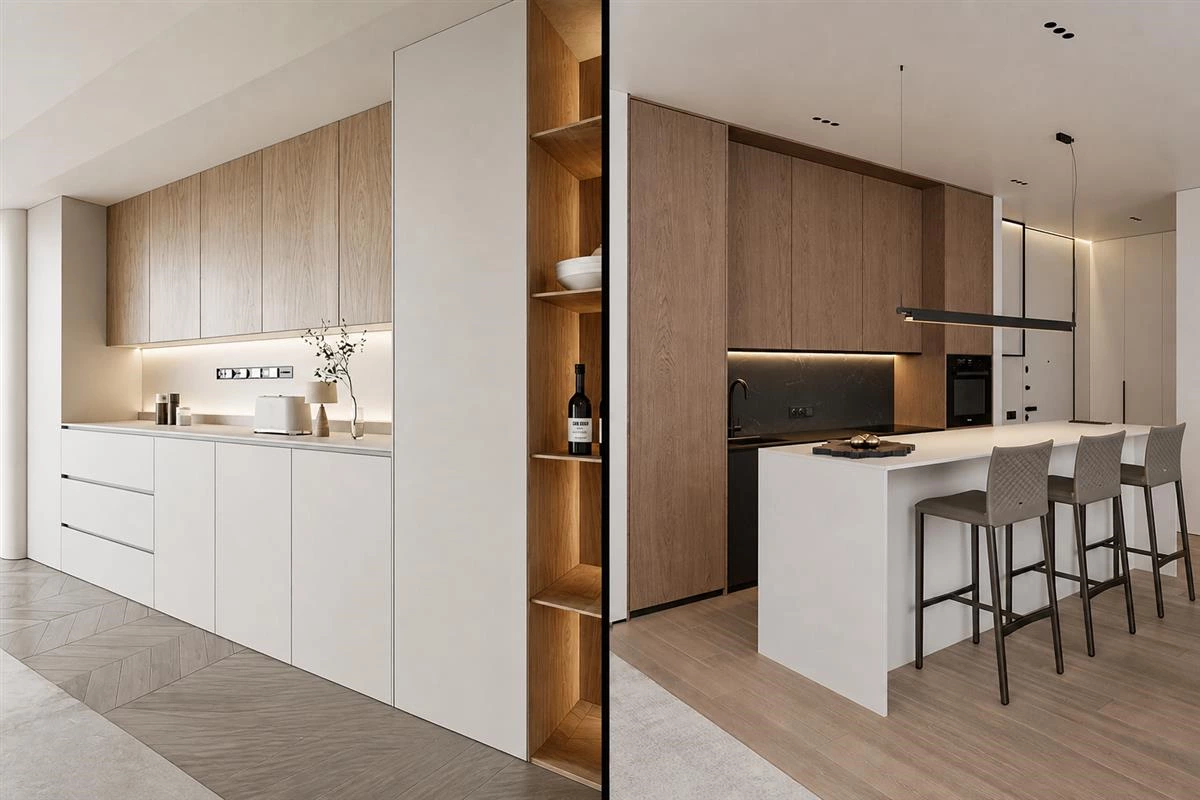
Interweaving
Interweaving elements of cabinetry—whether through massing, color, or material—results in compositions that are both functional and visually engaging. Volumes can intersect in varied configurations: overlapping, perpendicular, staggered, or rotated. This technique is not limited to deconstructivist aesthetics; it is equally effective in minimalist environments, where carefully calibrated material transitions (e.g., wood and stone or matte lacquer and natural veneer) can bring cohesion and visual interest. Color block interweaving, such as vertical or horizontal divisions, adds another layer of articulation to the design.
Use interweaving to connect functions that belong together, such as a display cabinet and a work surface, rather than treating every cabinet as an isolated unit. For more examples of material and composition-led storage, see cabinet design details that make custom storage stand out.
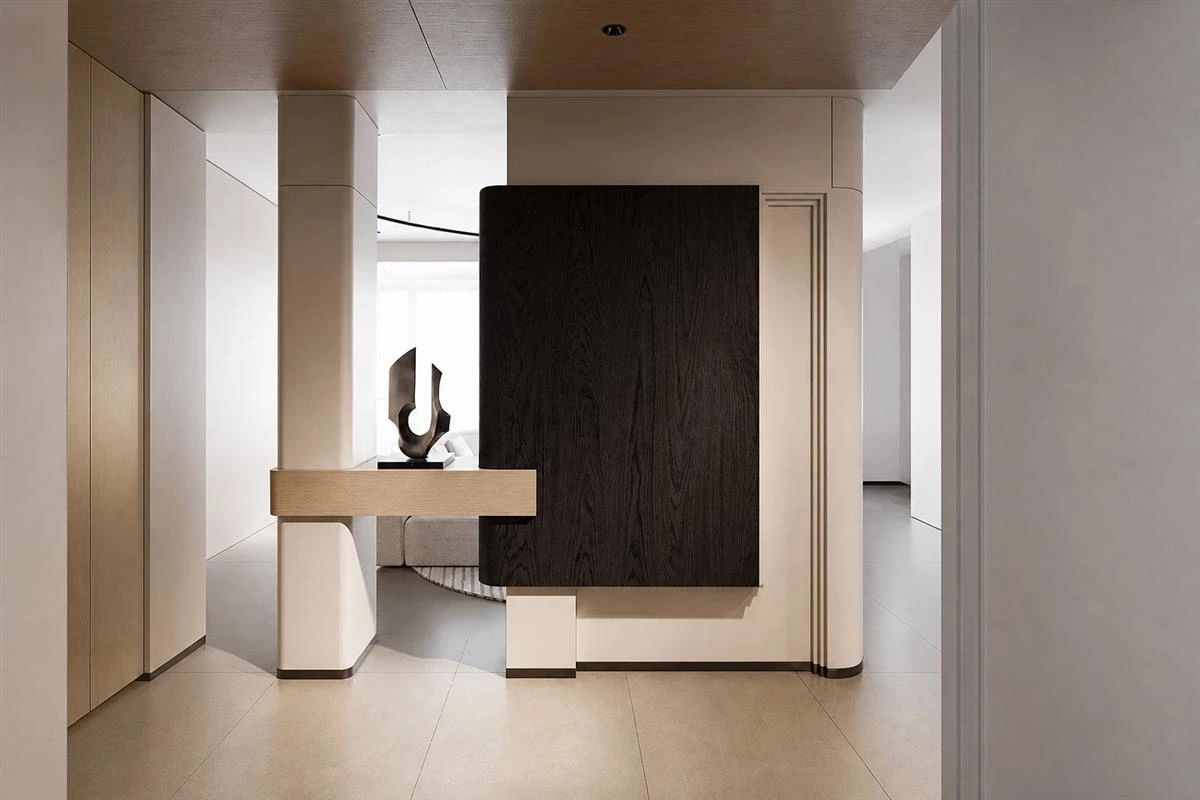
Cantilevering
This design marvel challenges gravity. By projecting cabinet structures outward with no visible support, cantilevered woodwork gives a floating, futuristic vibe. It's lighter, sleeker, and offers a striking silhouette that transforms heavy cabinetry into airy sculpture.
Cantilevered sections are visually powerful, but their proportions and internal support should be coordinated carefully with the cabinet maker and project designer. They are particularly effective for floating consoles, open display volumes, and feature shelves.
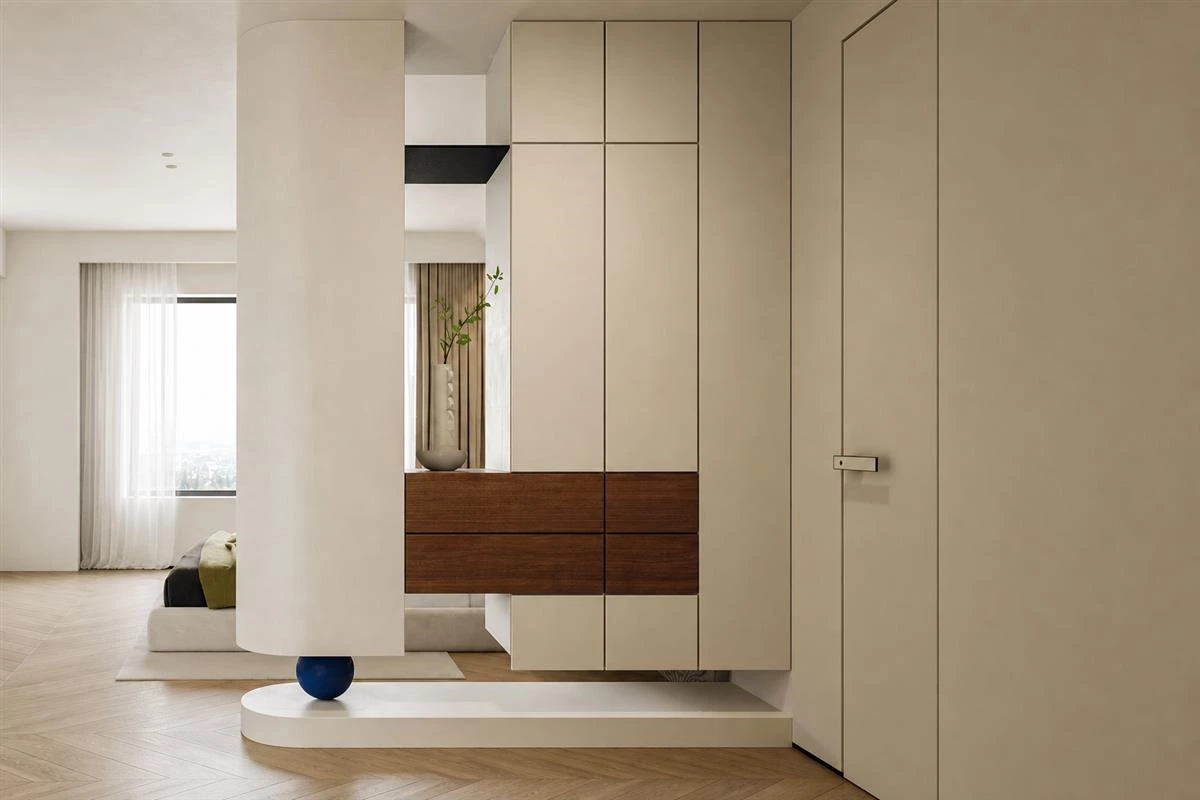
Dislocation
Misdirection has never looked so stylish. Dislocation involves deliberate misalignment of elements to create layered complexity. Perfect for narrow or multifunctional areas, it maximizes spatial potential while adding movement and a touch of surprise.
In a well-resolved design, the misalignment should still follow a clear visual logic—such as aligning with a doorway, countertop, lighting line, or display niche. This keeps the result expressive rather than accidental.
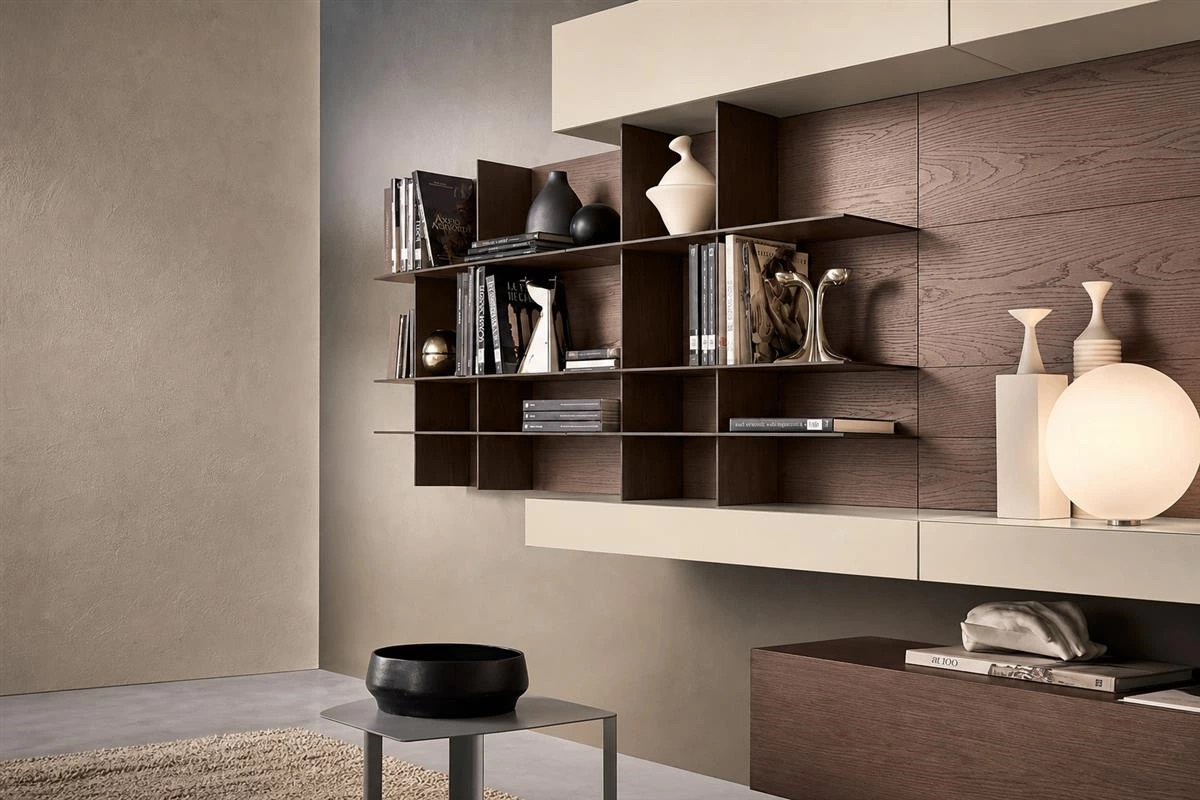
Enclosure & Framing
Creating partial enclosures or frames within the cabinetry can define zones, anchor focal points, or simply add depth. Whether wrapping around a desk nook or outlining a display area, this technique enhances flow while emphasizing function and form.
Framing is useful for giving open shelving a more integrated appearance. It can also visually connect cabinetry with wall panels, interior doors, or an adjacent work area. Explore related ideas in ALLURE’s guide to high-end cabinet details in custom interiors.
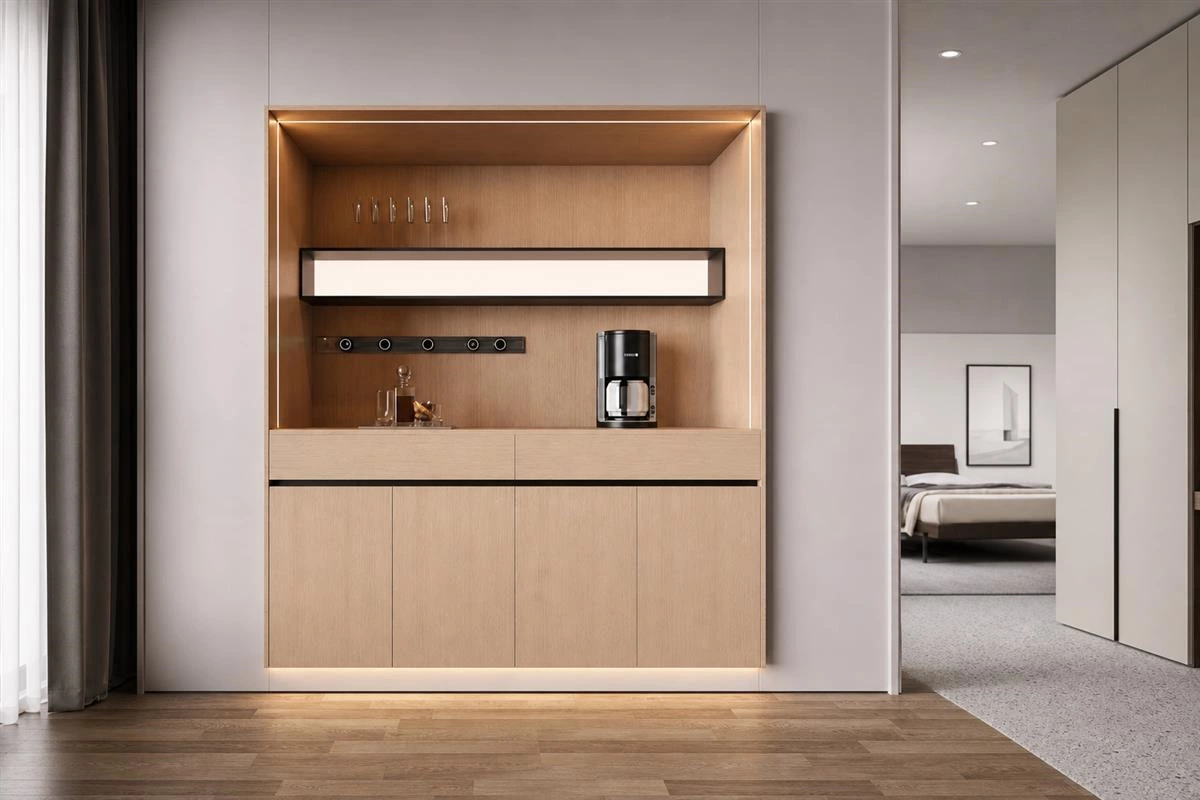
Suspended Inserts
Imagine layered volumes seemingly hung or slotted into place. These visually striking pieces combine mixed materials and suspended components to create rhythm and contrast. Not just decorative, these units often house functional shelving, lighting, or displays—balancing art and utility.
A suspended insert can introduce warmth to a long run of closed storage or make a display area feel lighter. Integrated lighting is often helpful here because it clarifies the layers and gives the recess visual depth at night.
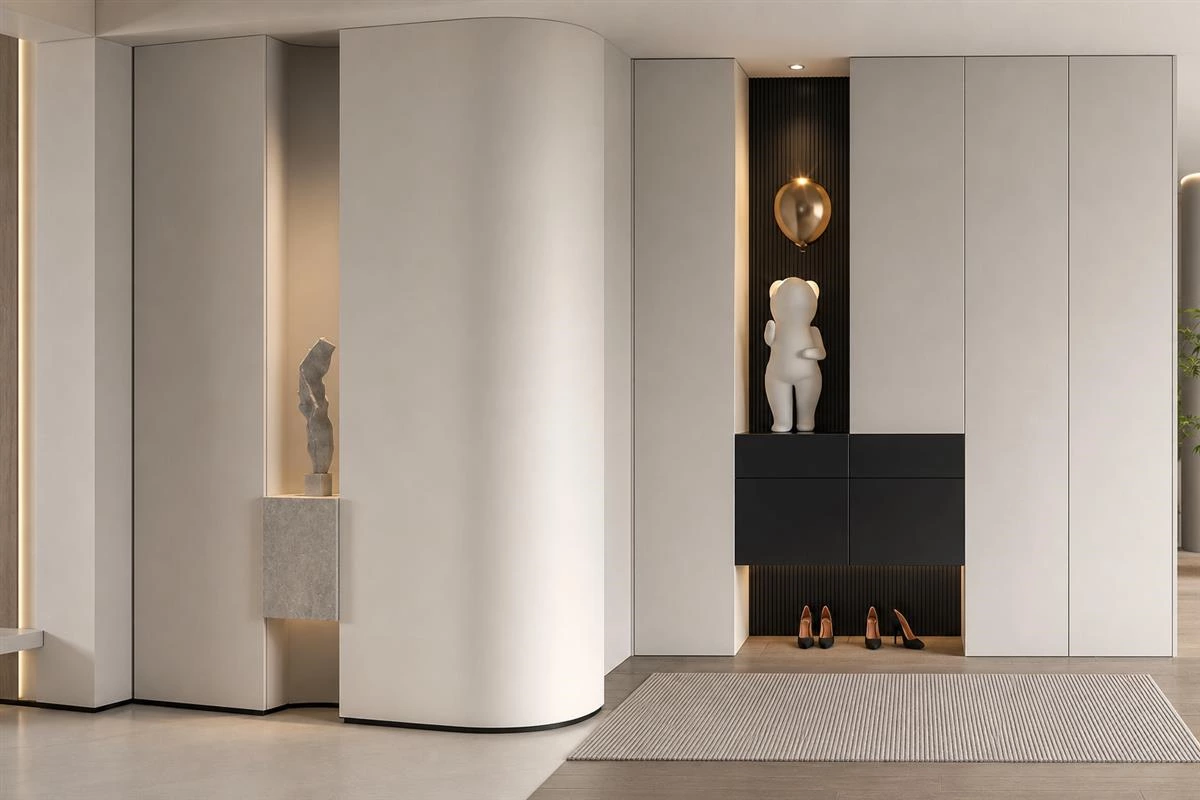
Spacing
A subtle yet impactful detail: the intentional spacing between materials. These recessed seams add sophistication, ease transitions, and prevent construction errors. Used strategically, they give cabinetry a crisp, tailored look while emphasizing design precision.
Spacing should be repeated with discipline across door panels, wall panels, and open niches. Consistent reveals help the cabinetry read as one complete composition while allowing different materials to meet cleanly. For execution references on architectural woodwork, consult the Architectural Woodwork Institute standards.
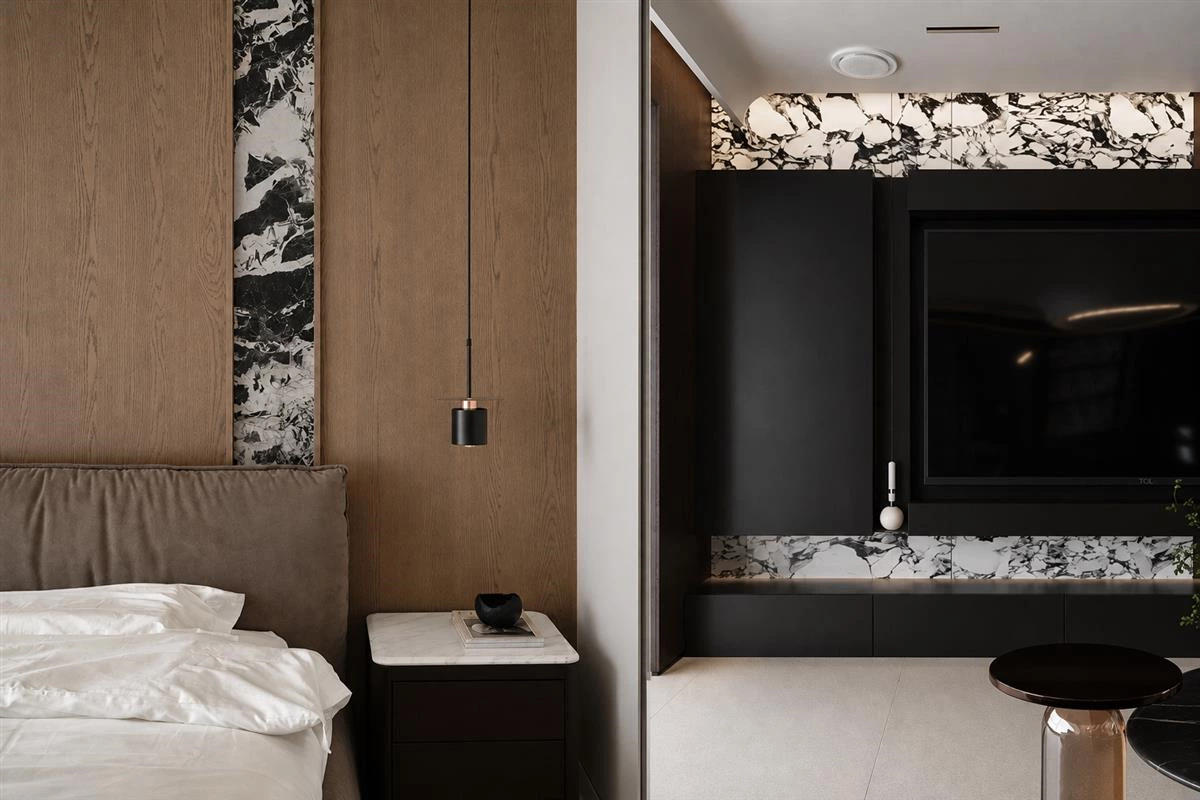
Interlocking
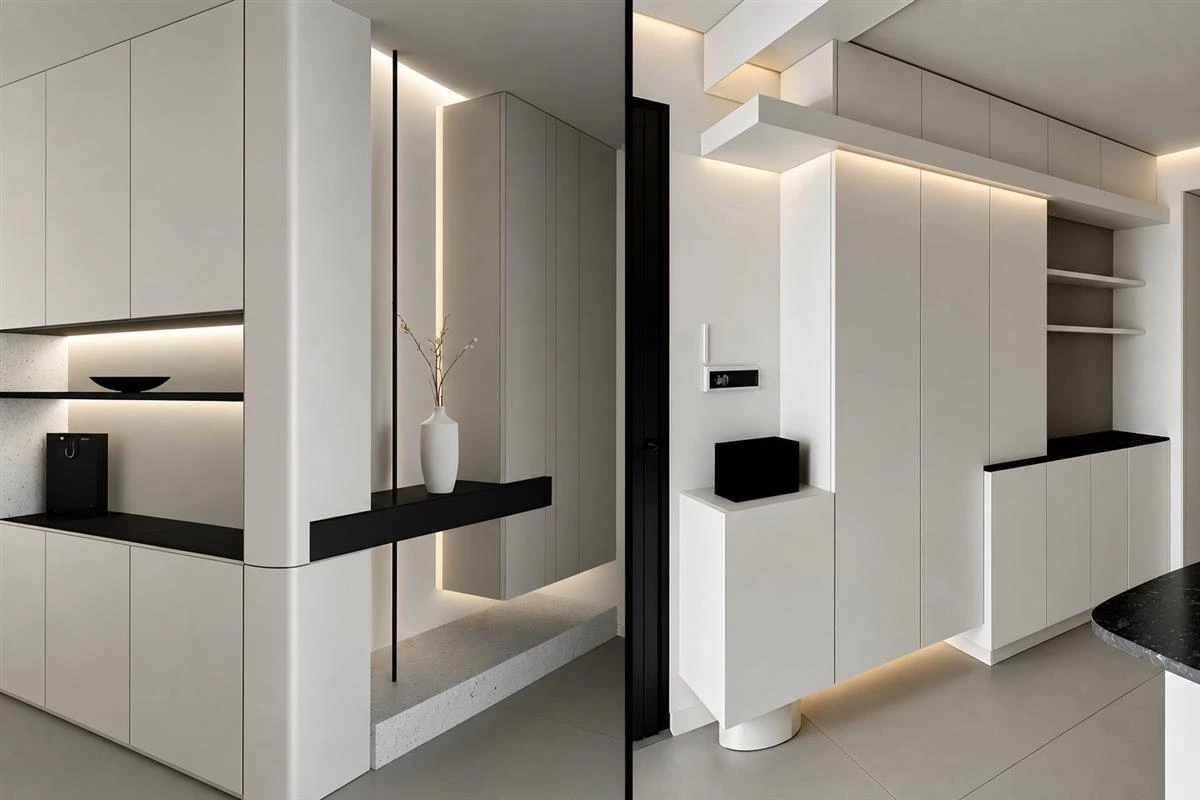
Interlocking design involves fitting multiple components together in a way that emphasizes spatial continuity and structural harmony. This approach enhances storage efficiency while creating a seamless, architectural expression. By integrating different textures, materials, or tonal values, interlocking cabinetry systems reflect a highly curated design language. The interplay of components, whether uniform or asymmetrical, adds depth and sophistication to the spatial experience.
This approach can make a cabinet wall feel continuous across several functions, such as closed storage, open shelving, a desk, or a media unit. Balance is important: one dominant finish and one supporting material usually create a clearer result than too many competing surfaces.
Matrix Composition
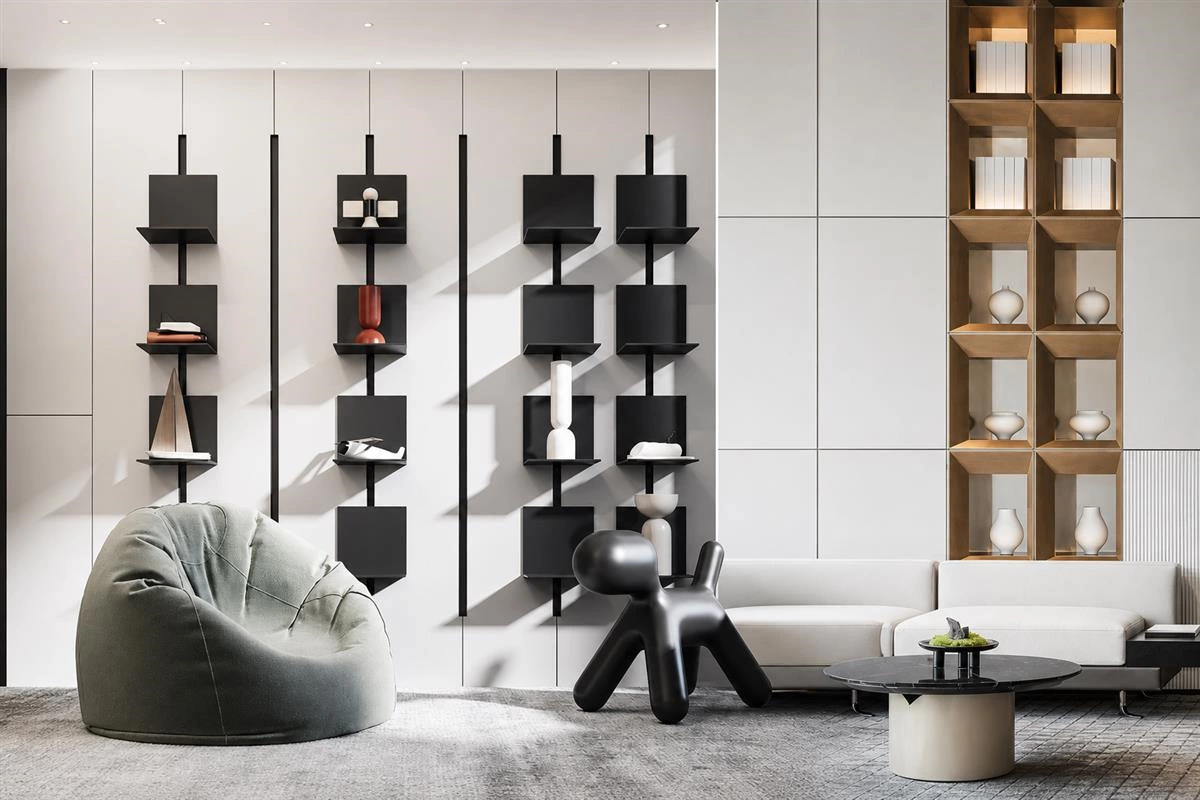
Order meets serenity in matrix design. Using repeated grid-like arrangements, this strategy brings balance and calm, particularly in large communal spaces like tea rooms or libraries. The method serves both form and function, offering generous storage while establishing symmetry and spatial clarity.
A matrix composition is ideal when a large wall needs storage without appearing visually heavy. Varying selected open and closed modules can preserve the grid while leaving room for books, objects, lighting, and everyday essentials.
Choosing the Right Cabinet Design Technique
The most successful custom cabinetry does not use every technique in one room. Start with the function of the space, then select one main compositional idea and one supporting detail. A floating cabinet may pair naturally with recessed spacing, while a framed display niche may work best with layered materials and warm lighting.
Curved elements can also soften highly linear compositions and improve transitions in circulation areas. See our guide to curved craftsmanship in interior furniture design for additional inspiration.
Key Planning Questions
- Which storage functions need to stay concealed, and which items should be displayed?
- Will lighting be needed to define recessed, framed, or suspended sections?
- Do the selected materials maintain a balanced visual weight across the room?
- Are panel reveals, door openings, hardware, and maintenance needs considered from the beginning?
By combining these cabinet design techniques with careful material selection and precise installation planning, custom cabinetry can deliver practical storage while giving the entire interior a more considered architectural character.
Frequently Asked Questions About Cabinet Design Techniques
Which cabinet design technique is best for a small space?
For compact rooms, recessed spacing, framing, and carefully planned push-and-pull cabinetry are often the most effective cabinet design techniques. They add depth and organization without making the room feel crowded.
Can cabinet design techniques improve storage capacity?
Yes. Good cabinet design techniques combine visual composition with practical planning. Interlocking storage, framed niches, and varied cabinet depths can create dedicated areas for display, concealed storage, work surfaces, and everyday items.
Are cantilevered cabinets strong enough for daily use?
Cantilevered cabinetry can be reliable when the internal structure, wall conditions, and expected load are properly considered during design and installation. It is especially suitable for floating TV units, consoles, feature shelves, and lighter display sections.
Why are recessed seams important in custom cabinetry?
Recessed seams create clean separation between panels, materials, and functional zones. Beyond their visual effect, they help cabinetry look more precise and make transitions between doors, wall panels, and open niches feel intentional.
Can different cabinet finishes be combined in one composition?
Yes. Wood veneer, matte lacquer, glass, stone, and metal can work together when there is a clear hierarchy. Select one dominant finish, then use supporting materials to highlight selected areas rather than competing across the entire cabinet wall.
How should open shelving and closed cabinets be balanced?
Closed cabinets are best for keeping daily storage visually calm, while open shelving can display books, artwork, or frequently used objects. A balanced design usually reserves open sections for selected focal points instead of exposing every storage area.
What lighting works best with layered cabinet designs?
Integrated lighting is useful for stepped layers, suspended inserts, and framed niches because it defines depth and adds warmth. Lighting should be planned early so wiring, switch locations, and access for maintenance can be coordinated with the cabinetry.