Choosing the right cabinet finish is one of the most important decisions in a custom kitchen cabinet project. The surface material affects how the kitchen looks, how easy it is to clean, how well it handles daily use, and how much the final cabinet system costs.
For modern kitchens, PET cabinets and acrylic cabinets are two popular options. Both can create a smooth and contemporary look, but they are not the same. PET is often chosen for matte, anti-fingerprint, and soft modern kitchens, while acrylic is known for its high-gloss, reflective, luxury appearance.
This guide compares PET vs acrylic cabinets by appearance, durability, scratch visibility, cleaning, cost, and best project use, helping homeowners, builders, developers, and designers choose the right finish for custom kitchen cabinets.
Quick Comparison: PET vs Acrylic Cabinets
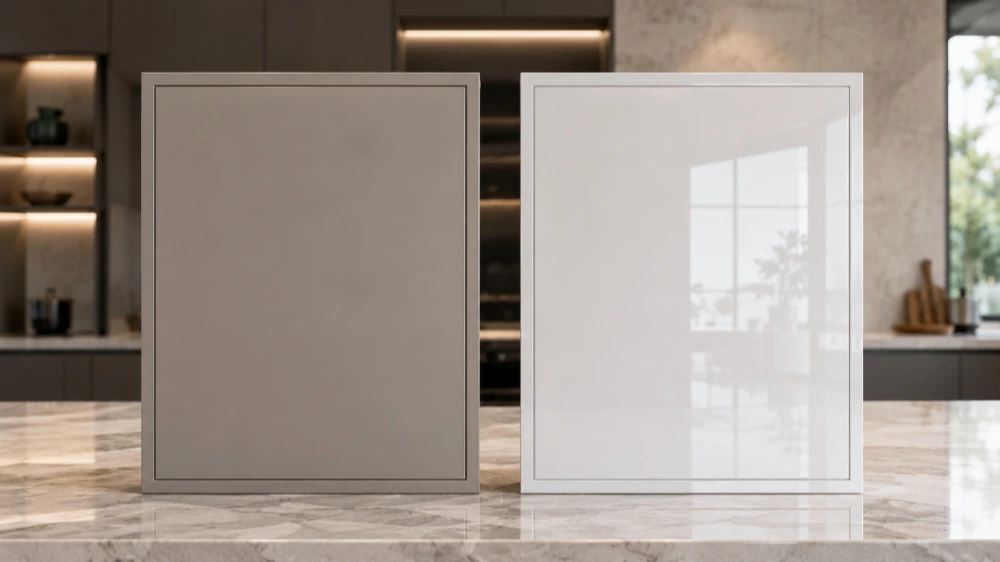
The table below gives a simple overview of how PET cabinets and acrylic cabinets perform in modern kitchen projects.
| Factor | PET Cabinets | Acrylic Cabinets |
|---|---|---|
| Appearance | Smooth matte or gloss finish | High-gloss, mirror-like finish |
| Style | Modern, minimalist, soft luxury | Bright, reflective, bold modern |
| Durability | Good daily resistance | Good surface hardness but scratches may show |
| Scratch Visibility | Lower in matte PET | More visible on glossy acrylic |
| Fingerprints | Lower, especially matte PET | More visible on gloss acrylic |
| Cleaning | Easy to clean | Easy but needs more frequent wiping |
| Cost | Medium to high | Usually higher |
| Best For | Modern homes, apartments, villas | High-gloss kitchens and feature areas |
What Are PET Cabinets?
PET cabinets are cabinet doors finished with a PET surface film or PET panel layer. PET is short for polyethylene terephthalate, a material widely used in different surface and packaging applications. You can read a general material overview from Britannica.
In cabinetry, PET is usually applied to MDF, plywood, or particleboard to create a smooth, modern cabinet surface. If you are comparing board structures, Allure's raw materials resource can help you understand common cabinet core options.
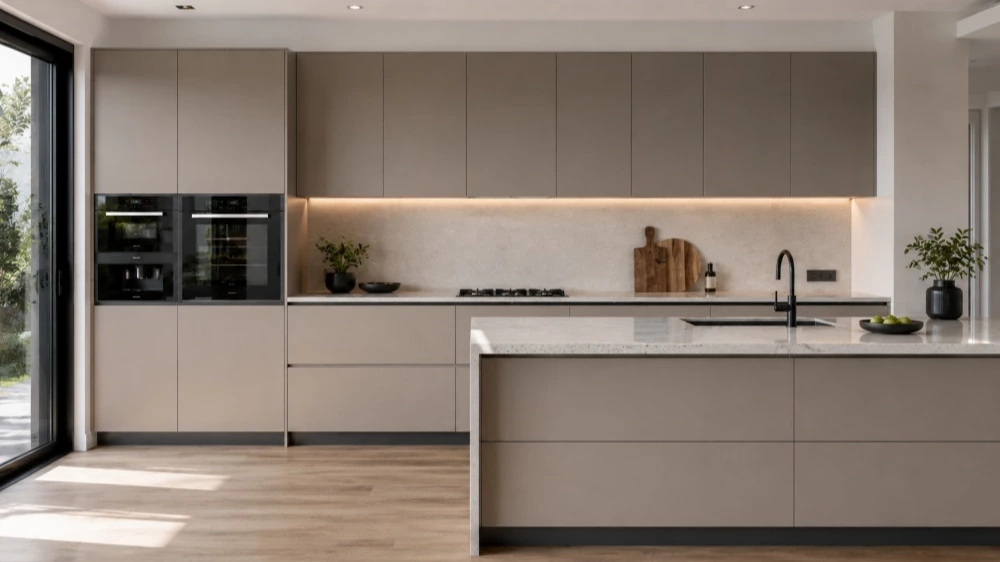
PET finishes are popular in custom kitchen cabinets because they offer a clean appearance without looking overly shiny. They are often used in handleless kitchens, flat-panel cabinets, apartment projects, family kitchens, and modern villas.
Common PET Cabinet Finishes
-
Matte PET cabinet doors for soft modern kitchens.
-
Gloss PET cabinet doors for cleaner reflection and brighter spaces.
-
Solid-color PET panels for minimalist cabinet designs.
-
Soft white, grey, beige, and neutral PET finishes for modern homes.
-
Anti-fingerprint PET surfaces for busy family kitchens.
-
PET finishes for handleless cabinet designs and integrated appliance layouts.
PET is especially suitable for homeowners who want a premium modern kitchen that is easy to maintain in daily life.
Pros of PET Cabinets
PET cabinets are a strong choice when the kitchen needs a smooth finish, modern design, and practical daily maintenance.
-
Smooth modern look: PET cabinets create clean cabinet lines and a calm modern appearance. They work especially well in minimalist kitchens, flat-panel cabinet designs, and soft luxury interiors.
-
Lower fingerprint visibility: Matte PET and anti-fingerprint PET surfaces hide fingerprints better than high-gloss cabinet finishes. This makes PET practical for family kitchens and busy cooking spaces.
-
Good stain resistance: PET cabinet surfaces are easy to wipe and suitable for daily kitchen use. Oil marks, dust, and light stains can usually be cleaned with a soft cloth and mild cleaner.
-
Flexible design style: PET works well with white, grey, beige, black, wood-tone, and two-tone kitchen designs. It can be used in apartments, villas, renovation projects, and full-house customization.
-
Suitable for handleless cabinets: Because PET has a smooth and simple surface, it pairs well with handleless doors, hidden pulls, integrated appliances, and modern kitchen islands.
-
Cost-balanced premium option: PET is more refined than basic melamine or laminate, but it is often more practical and easier to maintain than a full high-gloss acrylic kitchen. For another material comparison, see melamine vs PET cabinets.
Cons of PET Cabinets
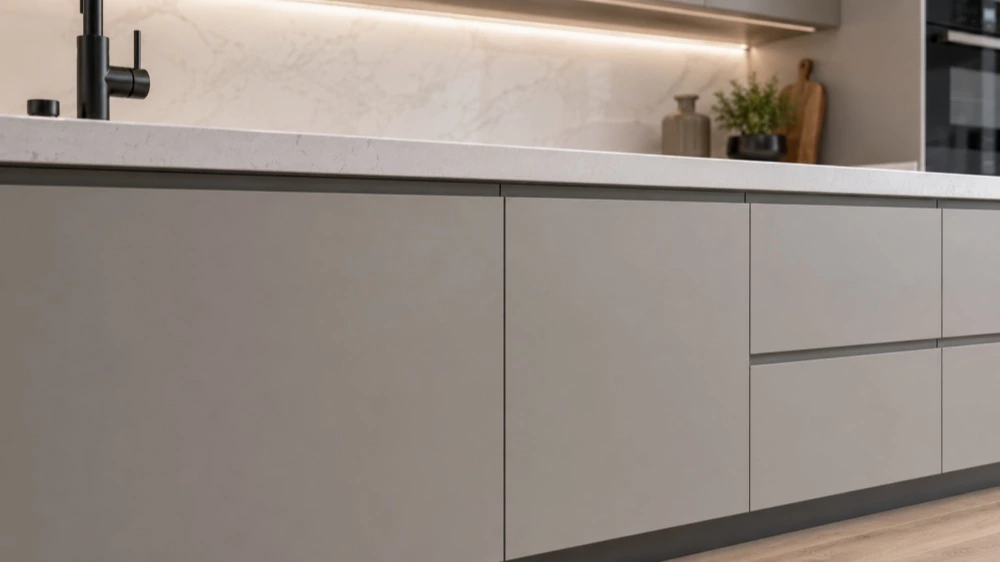
PET cabinets have a premium look, but they do not create the same mirror-like shine as acrylic cabinets. If the design goal is a strong reflective luxury effect, PET may feel more understated.
Premium PET also costs more than standard melamine or laminate. The final result depends heavily on manufacturing quality, board core, edge banding, and installation accuracy.
Gloss PET can still show fingerprints and fine scratches, although matte PET usually performs better for daily maintenance. Lower-grade PET may also look flat if the color, lighting, and kitchen layout are not planned well.
For buyers comparing more practical finish options, the article melamine vs laminate cabinets can help explain lower-cost cabinet surface choices.
What Are Acrylic Cabinets?
Acrylic cabinets are cabinet doors with an acrylic surface layer. Acrylic is known for its glossy, reflective, and showroom-style appearance. For a general material explanation, see Britannica's overview of acrylic.
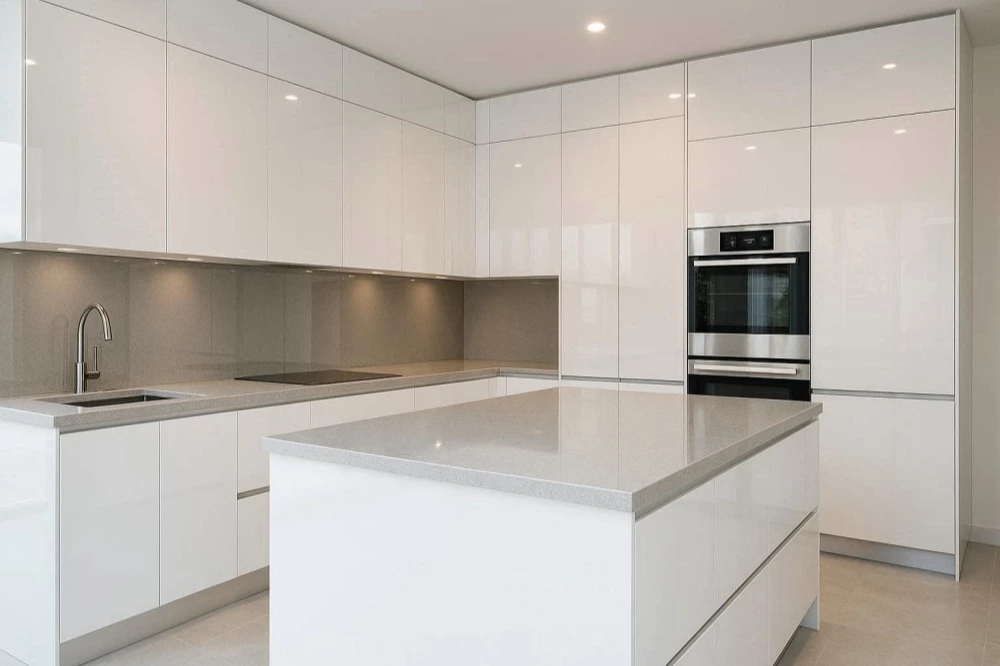
In kitchen cabinet design, acrylic is often used when the buyer wants a good, polished, and high-end visual effect. It reflects light strongly, making the kitchen feel larger, cleaner, and more dramatic.
Common Acrylic Cabinet Styles
-
High-gloss white acrylic cabinets for bright modern kitchens.
-
Gloss grey acrylic cabinets for contemporary apartments.
-
Gloss black acrylic cabinets for bold luxury interiors.
-
Colored acrylic cabinet fronts for statement kitchen designs.
-
Acrylic island panels for a reflective feature area.
-
Acrylic feature cabinet walls for showroom-style interiors.
Acrylic is especially popular in modern apartments, luxury kitchens, showroom displays, and feature areas where visual impact matters.
Pros of Acrylic Cabinets
Acrylic cabinets are chosen when the kitchen needs a stronger visual statement and a polished high-gloss surface.
-
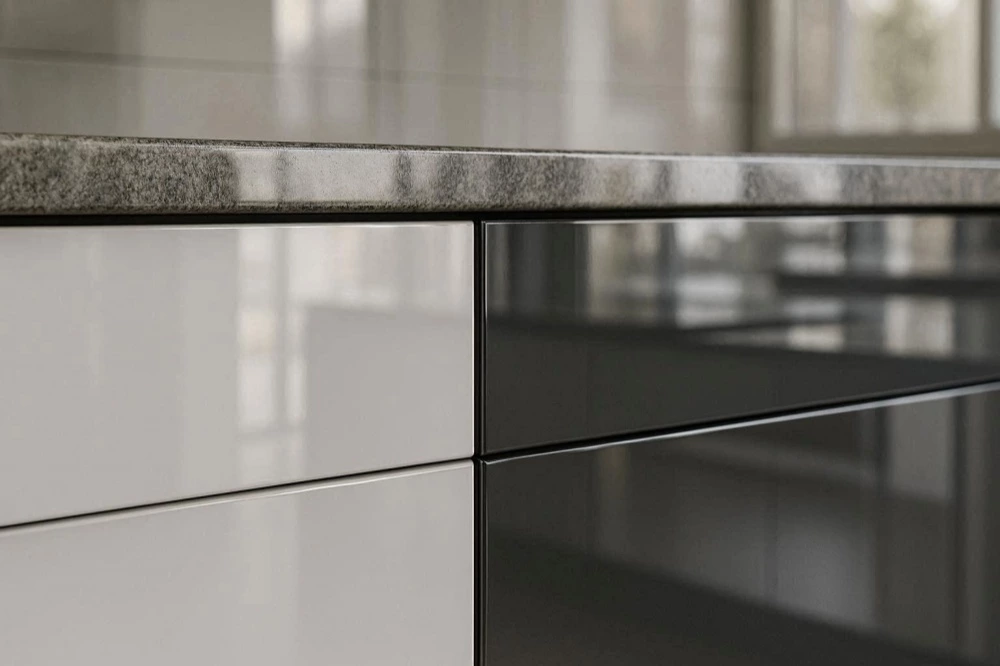
High-gloss premium appearance: Acrylic cabinets create a bright, polished, and luxury kitchen effect. The reflective surface gives the cabinet doors strong visual depth and makes the space feel more expensive.
-
Reflects light: Gloss acrylic can help small or darker kitchens feel brighter. This is useful for compact apartments, kitchens with limited windows, or modern interiors that need a clean and open feeling.
-
Smooth surface: Acrylic cabinet doors are smooth and easy to wipe. When properly cleaned, the surface can maintain a clean and polished appearance.
-
Strong color depth: Gloss acrylic can make white, black, grey, and bold colors look richer. This makes it useful for statement kitchens, modern islands, and feature cabinet walls.
-
Modern design impact: Acrylic works well when the kitchen needs to become a visual focus. It pairs with stone countertops, built-in lighting, reflective surfaces, and premium hardware.
Cons of Acrylic Cabinets
The main disadvantage of acrylic cabinets is that scratches, fingerprints, and streaks are more visible on glossy surfaces. Even if the surface has good hardness, light reflection can make fine marks easier to notice.
Acrylic cabinets are also usually more expensive than PET cabinets. For large projects or budget-sensitive homes, the cost difference can be important.
Acrylic may feel too shiny for warm, natural, or soft luxury interiors. It also requires careful cleaning. Abrasive pads, harsh chemicals, and rough cloths can leave visible marks or reduce the surface quality over time.
For heavy-use family kitchens, acrylic can still work well, but buyers should understand the maintenance expectations before choosing a full high-gloss cabinet system.
PET vs Acrylic Cabinets: Key Differences
When comparing PET vs acrylic cabinets, the right choice depends on design style, cleaning habits, project budget, and how the kitchen will be used.
Appearance
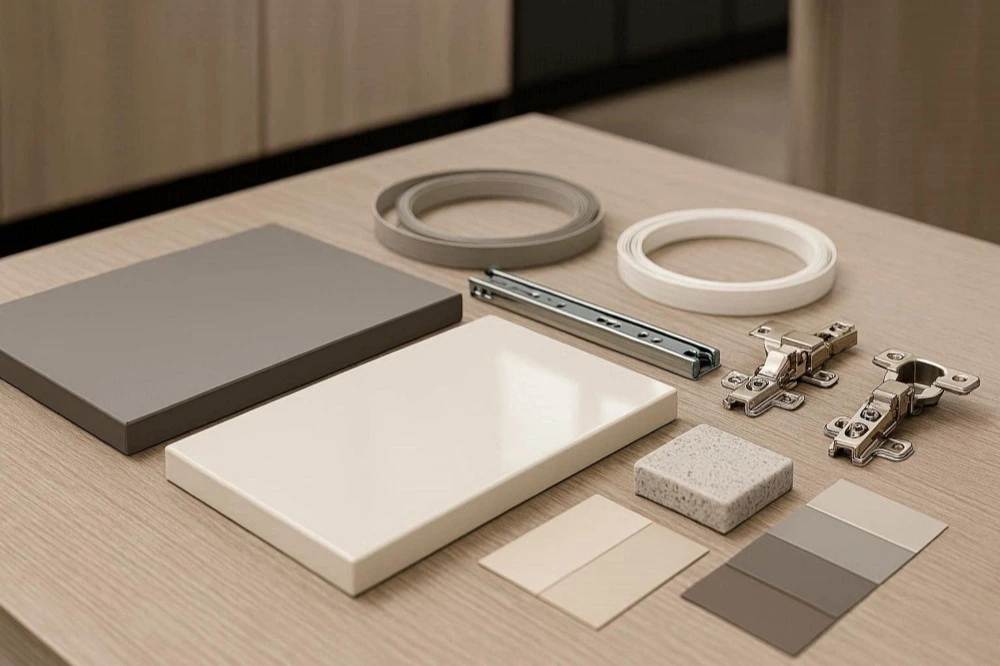
PET cabinets have a softer and calmer look. Matte PET is ideal for minimalist kitchens, soft luxury interiors, and modern homes where the cabinet finish should feel refined but not overly reflective.
Acrylic cabinets have a brighter and more dramatic look. The glossy surface reflects light and creates a stronger showroom effect.
Choose PET if you want quiet modern luxury. Choose acrylic if you want bold high-gloss impact.
Durability
Both PET and acrylic cabinets can perform well when made with quality materials and proper manufacturing.
PET is practical for daily kitchen use, especially when combined with good edge sealing and reliable cabinet hardware. Acrylic also has good surface hardness, but visible scratches can be a concern because of the glossy finish.
Long-term durability depends on more than the surface material. Board core, edge banding, hinges, drawer slides, countertop connection, and installation quality all affect cabinet performance. For hardware selection, visit Allure's cabinet hardware resource.
Scratch Resistance
Matte PET usually hides minor scratches better because the surface is less reflective. This makes it more forgiving in family kitchens and high-use cooking areas.
Acrylic surfaces may resist daily use, but fine scratches are easier to see under light. For high-contact areas, acrylic should be cleaned carefully and protected from sharp tools or abrasive materials.
Fingerprint Resistance
PET, especially matte or anti-fingerprint PET, is usually better for fingerprint control. It is easier to keep clean in homes where cabinets are opened frequently.
Gloss acrylic shows fingerprints more easily. It can look very premium when clean, but it may need more frequent wiping to maintain the polished effect.
Cleaning and Maintenance
Both PET and acrylic cabinets are easy to clean with a soft cloth and mild cleaner.
PET is generally easier for daily maintenance because it hides fingerprints and light marks better. Acrylic needs more careful wiping to avoid streaks, swirl marks, or visible cleaning traces.
Avoid abrasive pads, alcohol-heavy cleaners, harsh chemicals, and excessive water around cabinet edges.
Cost
PET cabinets are usually medium to high cost, depending on surface grade, board core, door thickness, and edge banding quality.
Acrylic cabinets are often more expensive because of the premium high-gloss appearance and surface processing requirements.
The final cabinet cost also depends on cabinet layout, countertop material, hardware system, drawer quantity, packing method, shipping, and installation support.
PET vs Acrylic Cabinets Cost Factors
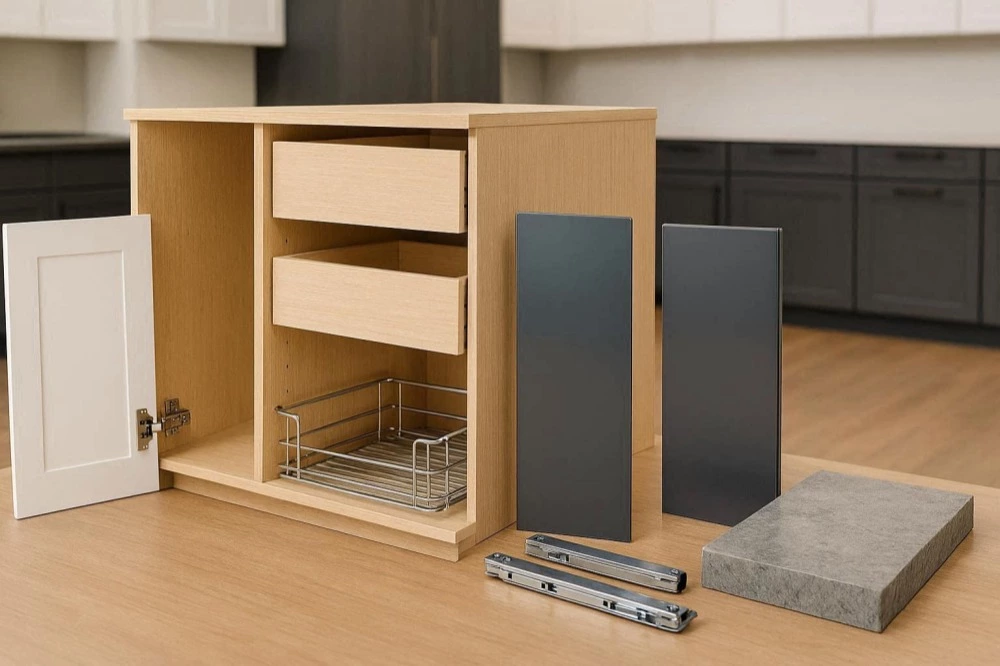
The cost difference between PET and acrylic cabinets is not only about the door finish. A full custom kitchen cabinet quotation includes many details.
-
Door panel substrate: MDF, plywood, particleboard, or moisture-resistant board affect both price and durability.
-
Surface grade: Standard PET, anti-fingerprint PET, gloss PET, and high-gloss acrylic have different cost levels.
-
Door thickness: Thicker cabinet doors usually increase material and production cost.
-
Edge banding quality: Clean edge sealing improves moisture resistance, appearance, and long-term use.
-
Cabinet structure: Base cabinets, wall cabinets, tall cabinets, islands, and pantry systems all affect cost.
-
Hardware systems: Hinges, drawer slides, pull-out baskets, lift-up systems, and soft-close accessories change the final price.
-
Drawer quantity: More drawers usually mean higher hardware and production cost.
-
Countertop material: Quartz, sintered stone, marble, and stainless steel create different budget levels.
-
Project size: Larger orders may have better unit pricing, but more complex project management.
-
Packing and shipping: Export packing, RTA packing, assembled cabinets, and shipping method affect total cost.
-
Installation support: On-site installation, remote installation guidance, and project coordination can influence the final service cost.
If you need a complete custom cabinet solution, Allure's custom kitchen cabinets solution covers material selection, design support, production, packing, shipping, and installation guidance.
Which Is Better for Different Kitchen Styles?
Different kitchens need different cabinet finishes. PET and acrylic can both work well, but each material has stronger use cases.
Modern Minimalist Kitchen
PET is usually the better choice for modern minimalist kitchens. Matte PET creates a clean and calm surface without strong reflections. It pairs well with handleless cabinets, integrated appliances, slim countertops, and hidden storage.
High-Gloss Luxury Kitchen
Acrylic is better when the goal is a high-gloss luxury effect. Its reflective surface creates a bold visual statement and makes the kitchen feel brighter and more polished.
Small Apartment Kitchen
Both PET and acrylic can work for small apartments. Light PET is practical and easier to maintain, while gloss acrylic can reflect light and make the kitchen feel larger.
For rental or high-use apartment kitchens, PET is usually more practical. For premium apartments or show kitchens, acrylic can create stronger visual impact.
Family Kitchen
Matte PET is often the better choice for family kitchens. It hides fingerprints better, needs less frequent wiping, and feels more forgiving in daily cooking.
Acrylic can still be used in family kitchens, but it is better for selected areas rather than every cabinet surface.
Villa Kitchen
Villa kitchens can use either PET or acrylic depending on the design direction. PET is suitable for soft luxury, warm modern, and understated premium kitchens. Acrylic is suitable for high-gloss statement areas, islands, or display cabinet walls.
A mixed strategy can create a more balanced result.
Developer or Multi-Unit Project
PET is often better for developers and multi-unit projects because it balances appearance, maintenance, and cost. It can create a premium modern kitchen without the higher maintenance expectations of full acrylic cabinets.
Acrylic can be used as an upgrade option for luxury units or model homes.
When Should You Choose PET Cabinets?
Choose PET cabinets if you want a modern cabinet finish that is clean, practical, and easier to maintain.
-
You want a modern but not overly shiny finish.
-
You prefer matte or anti-fingerprint surfaces.
-
You need easier daily maintenance.
-
You are designing a family kitchen or apartment kitchen.
-
You want a cost-balanced premium cabinet option.
-
You prefer handleless or minimalist cabinet design.
-
You want a softer luxury look.
-
You need practical cabinet finishes for larger projects.
PET is the better choice for most buyers who want modern custom kitchen cabinets with a clean appearance and strong daily usability.
When Should You Choose Acrylic Cabinets?
Choose acrylic cabinets if you want a cabinet finish with stronger shine, reflection, and design impact.
-
You want a high-gloss, reflective kitchen.
-
You want the cabinets to become the visual focus.
-
Your kitchen needs more light reflection.
-
You like bold white, black, grey, or colored cabinet fronts.
-
You are designing a showroom-style kitchen.
-
You accept more frequent cleaning.
-
You want to use cabinet doors as a luxury design feature.
Acrylic is best when visual impact is more important than low-maintenance daily use.
Best Material Strategy: PET + Acrylic Combination
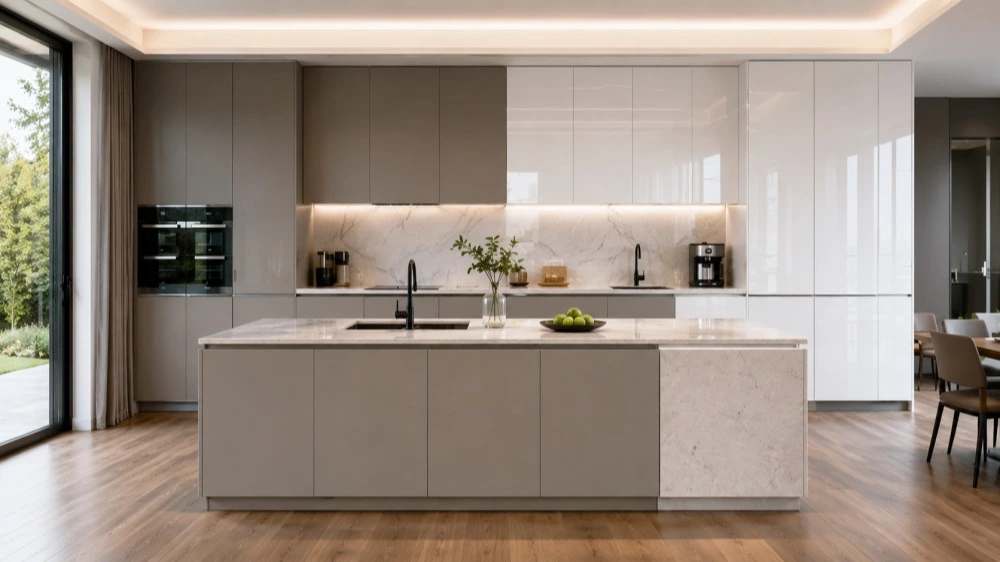
For many custom kitchen cabinet projects, the best solution is not choosing only one material. PET and acrylic can be combined to balance cost, maintenance, and design impact.
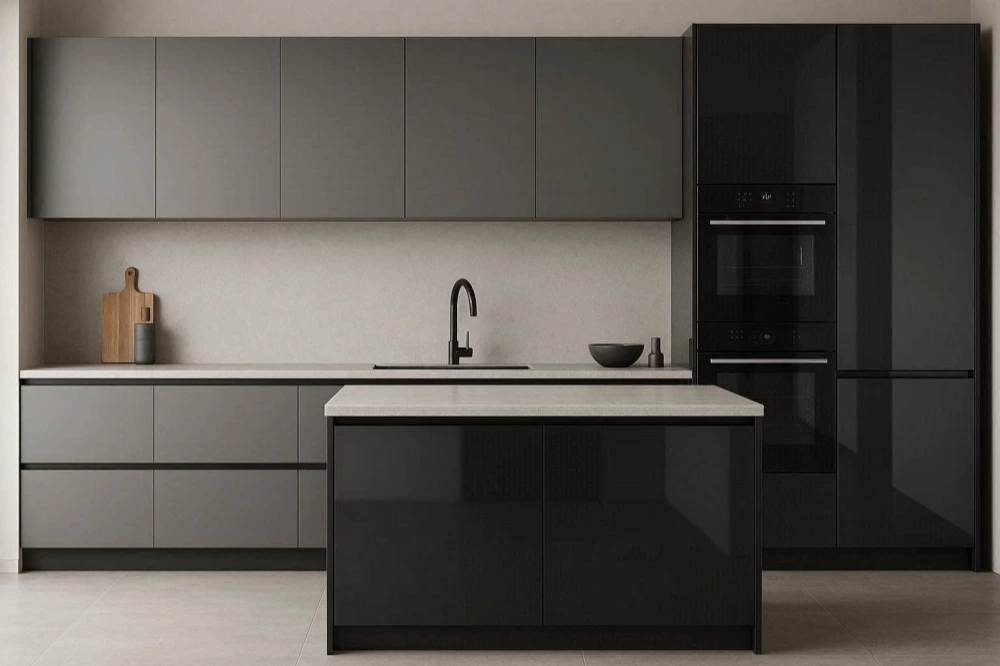
A practical strategy is to use PET for the main cabinet doors and acrylic for selected feature areas.
Where Acrylic Can Be Used as an Accent
-
Kitchen island front panels.
-
Feature wall cabinets.
-
Tall cabinet sections.
-
Display cabinet areas.
-
High-gloss accent doors.
This combination helps control cost, reduce daily maintenance, and still create a premium focal point. It also prevents the full kitchen from feeling too shiny or visually heavy.
For complete kitchen planning, you can also read Allure's kitchen cabinet design guide.
Allure Cabinetry Material Support
Allure Cabinetry provides custom kitchen cabinet solutions for homeowners, builders, developers, contractors, importers, and designers.
Our door panel options and cabinet material support help buyers compare appearance, durability, cost, cleaning, and installation needs before production.
Available Cabinet Material Options
-
PET cabinet doors.
-
Acrylic cabinet doors.
-
Melamine cabinets.
-
Laminate cabinets.
-
Lacquer cabinets.
-
Veneer cabinet doors.
-
Solid wood cabinets.
-
PVC cabinet finishes.
-
Stainless steel cabinets.
-
MDF, plywood, particleboard, and other board options.
Project Support
-
Kitchen layout planning.
-
Material comparison and finish selection.
-
Cabinet door customization.
-
Hardware matching and storage system planning.
-
Countertop matching.
-
Production, packing, shipping, and installation guidance.
Whether you are planning a modern apartment kitchen, a villa kitchen, a developer project, or a full-house customization project, the right cabinet finish can improve both design value and daily living experience.
FAQ: PET vs Acrylic Cabinets
Are PET cabinets better than acrylic cabinets?
PET cabinets are better for matte modern kitchens, easier maintenance, and lower fingerprint visibility. Acrylic cabinets are better for high-gloss visual impact. The better choice depends on your kitchen style, budget, and daily usage.
Are acrylic cabinets more expensive than PET cabinets?
Yes, acrylic cabinets are usually more expensive than PET cabinets. However, the final price depends on surface grade, board core, door size, edge banding, hardware, countertop, and project details.
Do acrylic cabinets scratch easily?
Acrylic has good surface hardness, but scratches are more visible because of the glossy reflective surface. Use a soft cloth for cleaning and avoid abrasive pads or sharp objects.
Are PET cabinets good for family kitchens?
Yes. Matte PET and anti-fingerprint PET cabinets are suitable for family kitchens because they are easier to maintain and hide fingerprints better than high-gloss surfaces.
Which is easier to clean, PET or acrylic cabinets?
Both are easy to clean, but PET usually hides fingerprints and light marks better. Acrylic needs more frequent wiping to keep the glossy surface looking clean.
Can PET and acrylic cabinets be used together?
Yes. PET can be used for the main cabinet doors, while acrylic can be used for islands, feature panels, or display areas. This creates a balanced design with better cost control.
Which cabinet finish is better for small kitchens?
Light PET is practical and easy to maintain. Gloss acrylic can make small kitchens feel brighter because it reflects light. Choose based on your maintenance preference and design style.
Conclusion
PET and acrylic cabinets are both strong choices for modern custom kitchen cabinets, but they serve different design goals.
PET cabinets are smooth, modern, easier to maintain, and more suitable for practical daily use. They are ideal for family kitchens, apartments, minimalist interiors, and cost-balanced premium projects.
Acrylic cabinets create a high-gloss, reflective, and luxury appearance. They are best for showroom-style kitchens, feature areas, high-end apartments, and buyers who want stronger visual impact.
For many projects, the best approach is to use PET for the main kitchen cabinets and acrylic for selected feature areas. This creates a refined modern kitchen while balancing cost, maintenance, and design value.
Share your kitchen layout with Allure Cabinetry to compare PET, acrylic, melamine, lacquer, and other cabinet finishes for your custom kitchen project.