Key Takeaways
Moisture-resistant kitchen cabinets should be selected as a complete cabinet system. The board material matters, but so do sealed edges, sink-base construction, back panels, hardware, countertops, ventilation, plumbing, installation details, shipping protection, and site storage.
Moisture-resistant does not mean waterproof. A properly specified cabinet can manage normal humidity, cooking steam, and occasional splashes. Repeated leaks, standing water, damaged edges, poor ventilation, or unsuitable hardware can still damage almost any cabinet system.
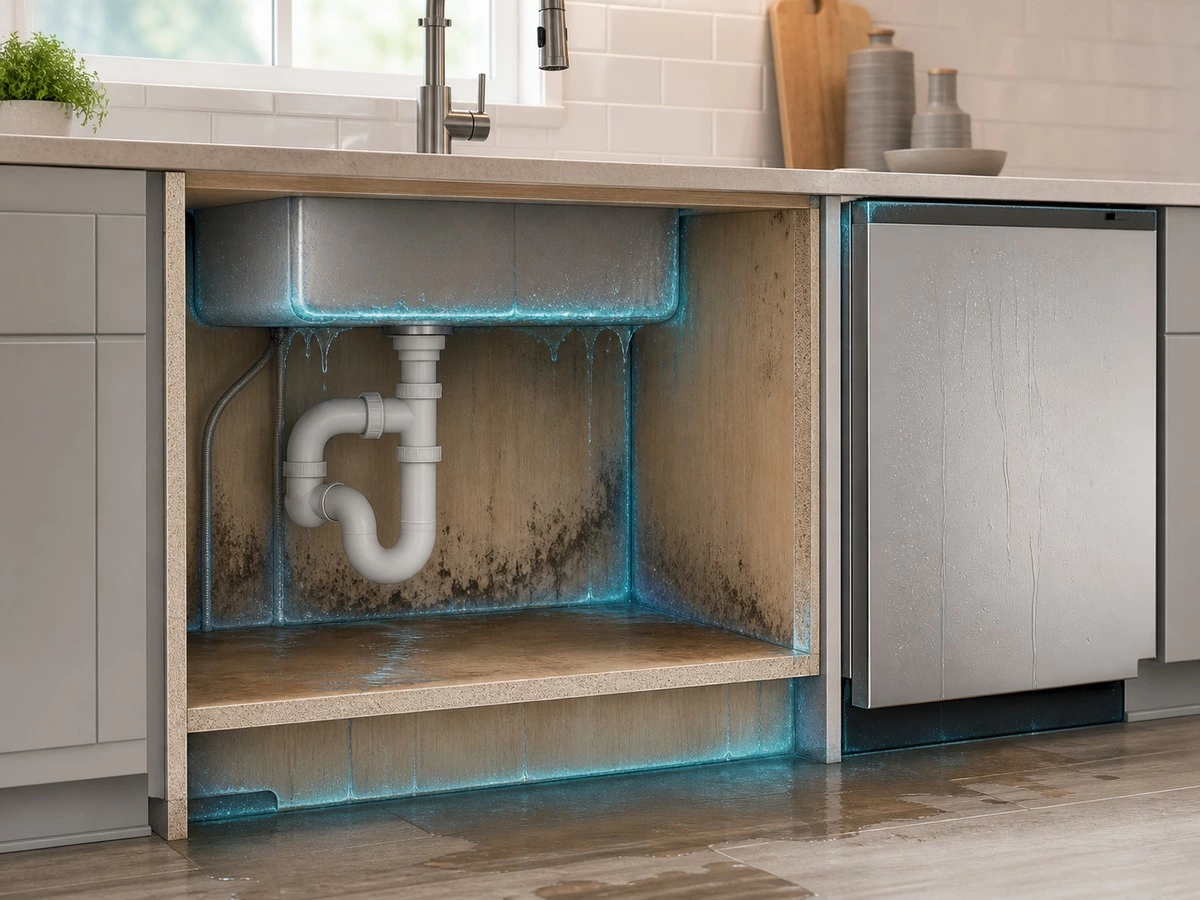
In humid climates, kitchen cabinet problems rarely begin with the visible door. They often start where no one looks first: under the sink, behind the dishwasher, at an exposed cut edge, under a toe kick, around a plumbing hole, or inside a cabinet stored on a damp jobsite before installation.
That is why a moisture-resistant kitchen cannot be chosen from a door sample alone. This guide explains how builders, distributors, designers, and homeowners should evaluate moisture-resistant kitchen cabinets by material, cabinet zone, finish, hardware, ventilation, installation, and project handoff requirements.
What Does Moisture-Resistant Mean for Kitchen Cabinets?
Moisture resistance is not a product feature. It is the ability of a cabinet system to manage normal kitchen humidity and localized water exposure without unnecessary swelling, edge deterioration, hardware corrosion, finish damage, or loss of cabinet alignment. The board material is one part of that system, but the design must also account for the way water and steam reach the cabinet.
In practical terms, a moisture-resistant kitchen cabinet package may include a suitable carcass material, protected panel edges, a planned sink-base detail, compatible hardware, countertop and backsplash interfaces, ventilation, adjustable legs, toe-kick protection, and installation information. The appropriate detail changes according to the kitchen layout, climate, appliance schedule, and user habits.
Buyers should distinguish between the following terms:
- Moisture-resistant board: a board selected for more controlled performance in humid or moisture-aware applications.
- Water-resistant surface: a finish that helps protect the visible surface from everyday splashes and cleaning.
- Waterproof component: a component designed to block water penetration under specified conditions; this should not be assumed for every cabinet panel.
- Sealed edge: an exposed edge protected through edge banding, coating, sealant, or another approved cabinet detail.
- Moisture-aware installation: a cabinet installation that manages plumbing, ventilation, wall conditions, floors, and site storage.
Best for:
Coastal homes, tropical markets, humid apartments, frequently used kitchens, utility-heavy homes, and projects where ventilation or plumbing conditions need extra attention.
Check:
Identify the main risk: high ambient humidity, cooking steam, direct splash, plumbing leaks, dishwasher condensation, floor washing, salt air, or poor site storage.
Risk:
A supplier may describe a cabinet as “waterproof” when only one visible surface or selected panel has moisture-aware properties.
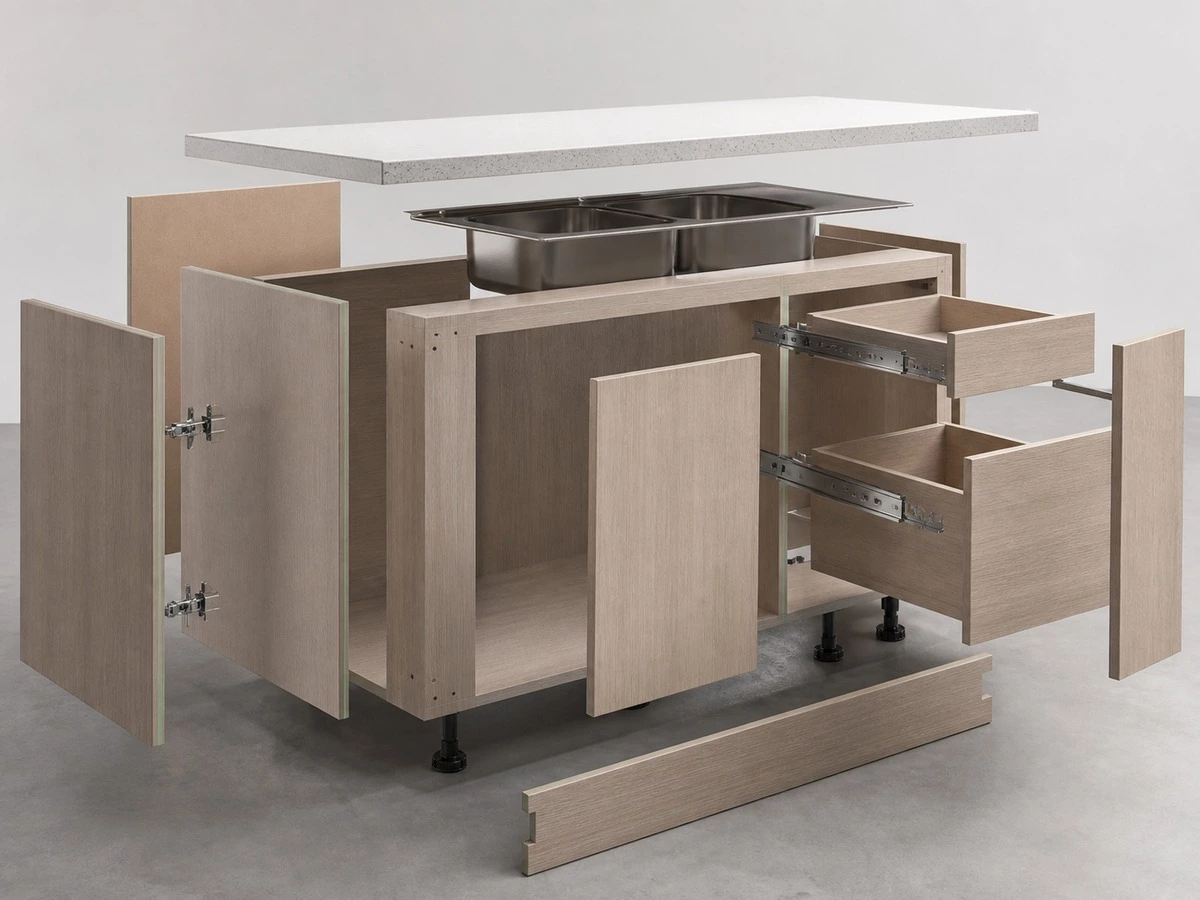
Where Moisture Actually Enters a Kitchen Cabinet
Moisture does not affect every cabinet location in the same way. A tall pantry away from water services has different requirements from a sink base, dishwasher panel, island with plumbing, or cabinet next to an exterior wall. The project team should identify high-risk zones before selecting one material specification for the entire kitchen.
Sink base cabinets
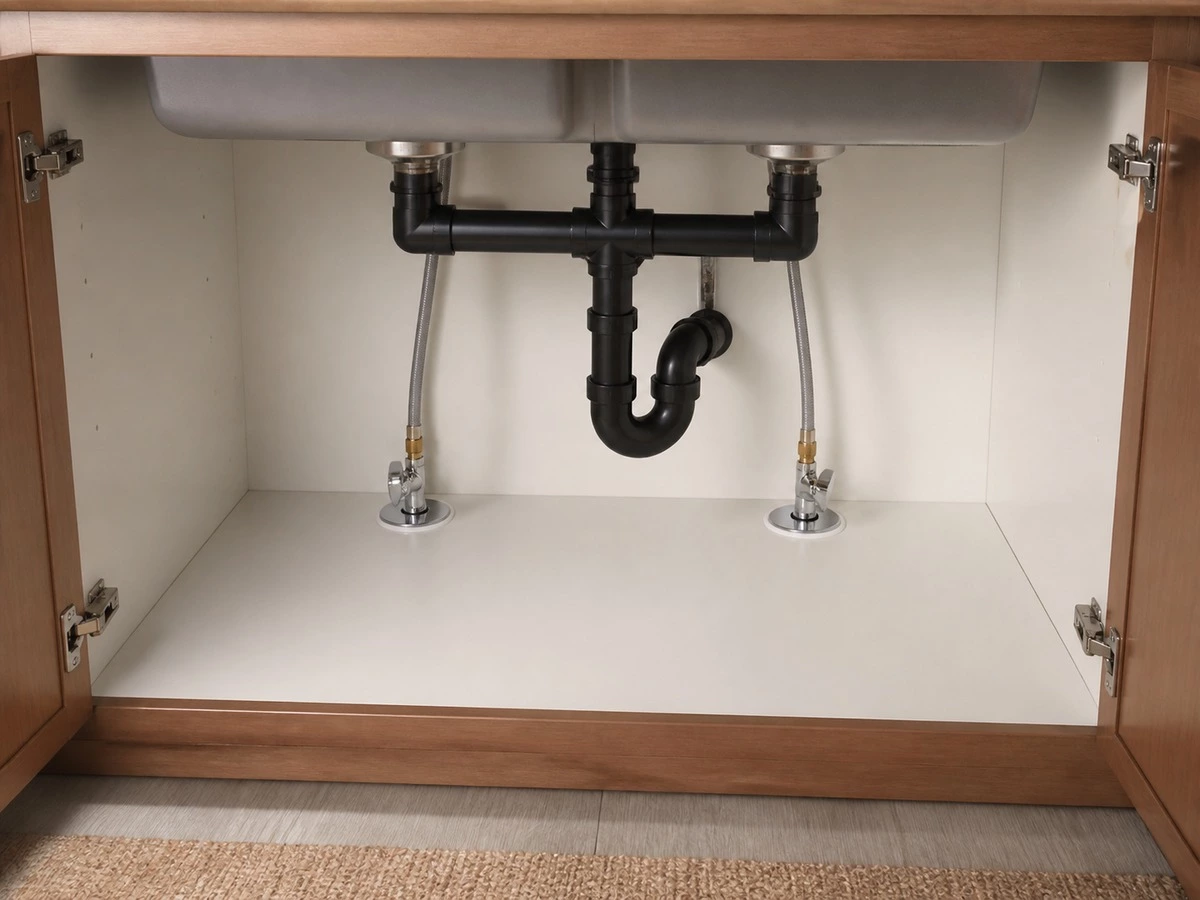
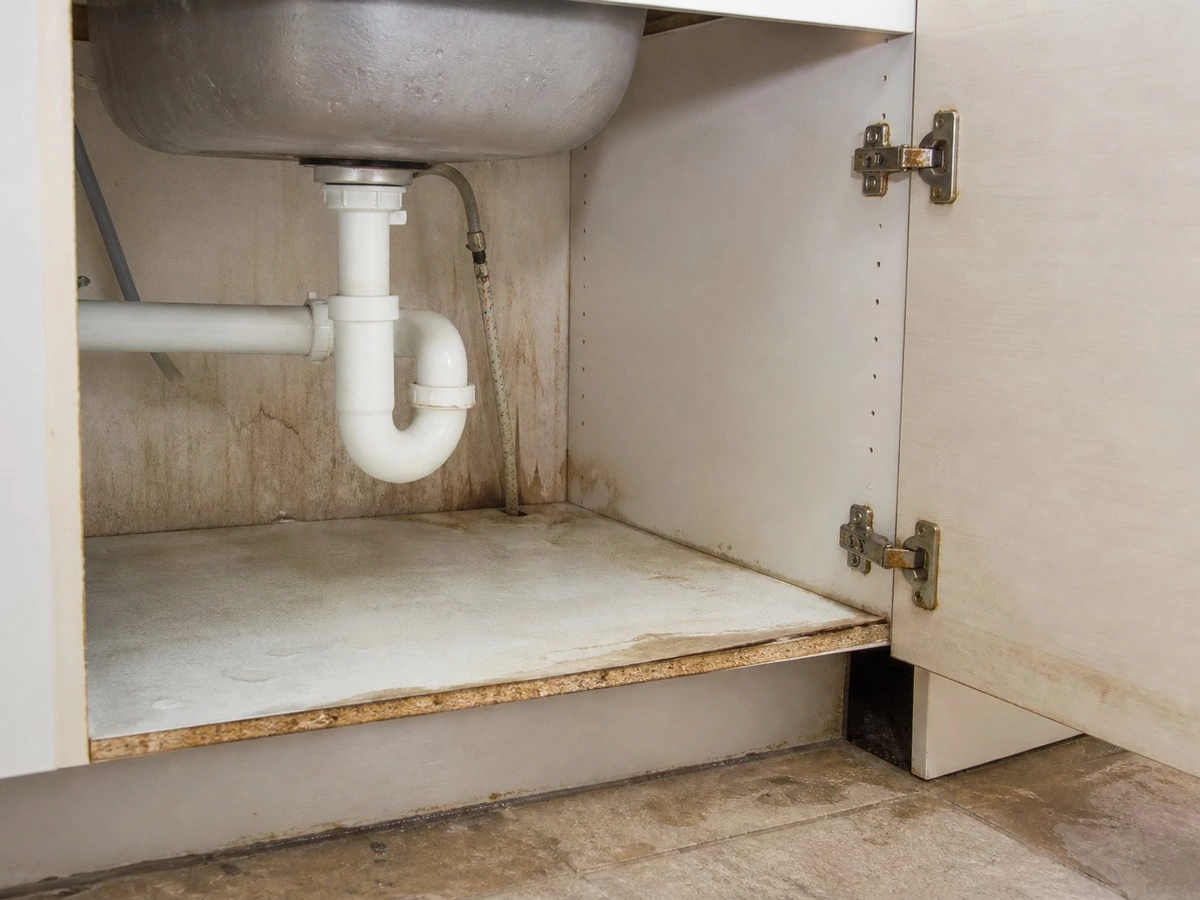
Sink bases may contain water filters, waste pipes, valves, cleaning products, garbage disposal equipment, and flexible hoses. Minor leaks can remain hidden for a long time. The cabinet bottom, side panels, exposed edges, plumbing cutouts, and any protective tray or liner detail should be discussed before production.
Dishwasher and appliance zones
Dishwashers can introduce steam, heat, condensation, and service-access requirements. The cabinet system must be coordinated with appliance instructions, adjacent panels, ventilation spaces, countertop support, and door opening. A moisture-resistant board alone cannot solve an appliance installation conflict.
Cabinet edges and cutouts
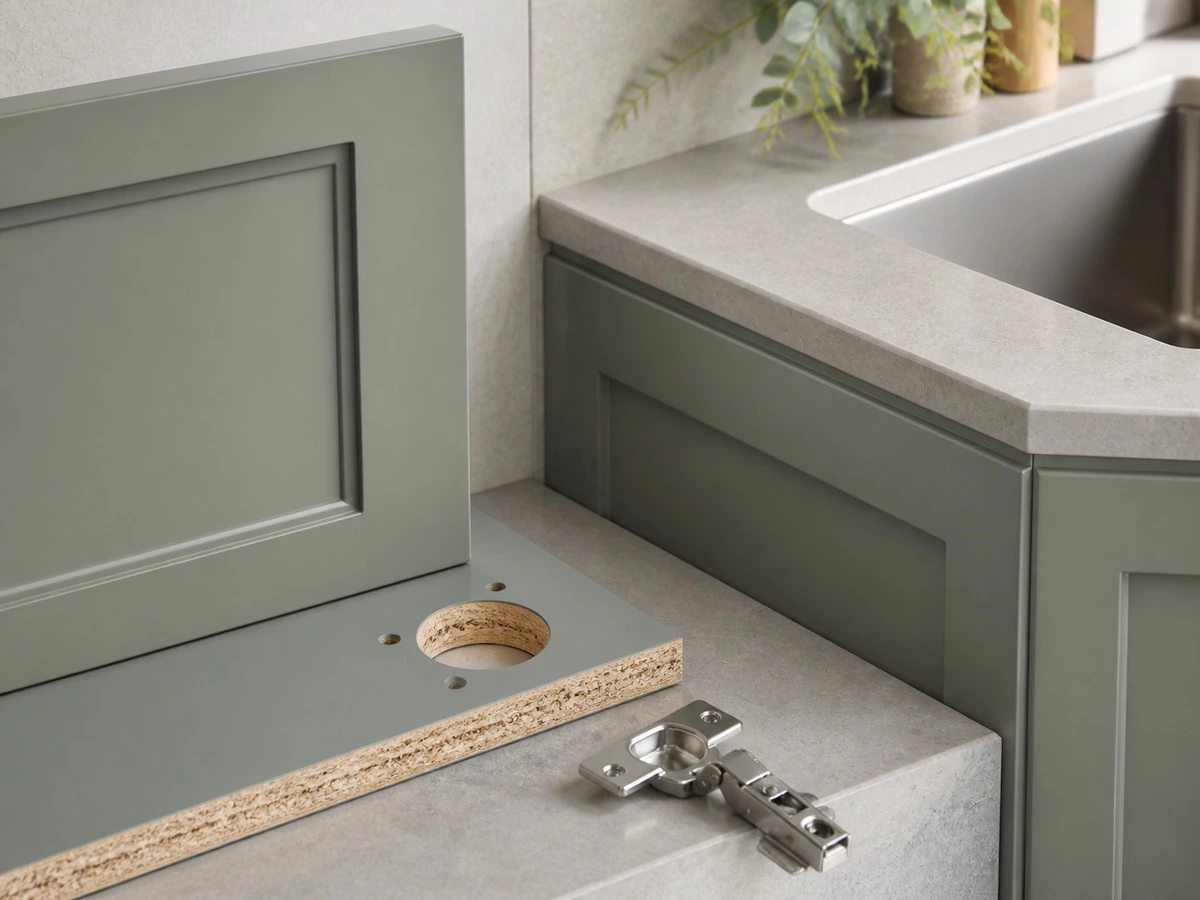
Panel edges, sink cutouts, appliance cutouts, drilled holes, cabinet-bottom edges, and end panels can become vulnerable if they are chipped, exposed, poorly sealed, or damaged during installation. These locations should be visible in the technical specification, not left to an installer’s assumption.
Back panels and wall conditions
Condensation can develop behind cabinets where exterior walls, plumbing routes, insufficient ventilation, or damp site conditions are present. Back-panel construction, wall fixing, airflow, and water-service routes should be reviewed before cabinetry closes off an inaccessible problem area.
Toe kicks and floor contact
Wet mopping, kitchen spills, uneven finished floors, and minor leaks can affect low cabinet areas. Adjustable legs, toe-kick construction, end-panel finishing, and the relationship between the cabinet bottom and floor should be clear before installation.
Material Choices for Moisture-Resistant Kitchen Cabinets
The correct material depends on the cabinet function, exposure level, budget, hardware requirements, panel construction, visible finish, and destination market. The board name does not provide enough information by itself. Builders should request a material schedule that identifies the cabinet side, bottom, shelf, back panel, toe-kick, sink base, and any special appliance or utility areas.
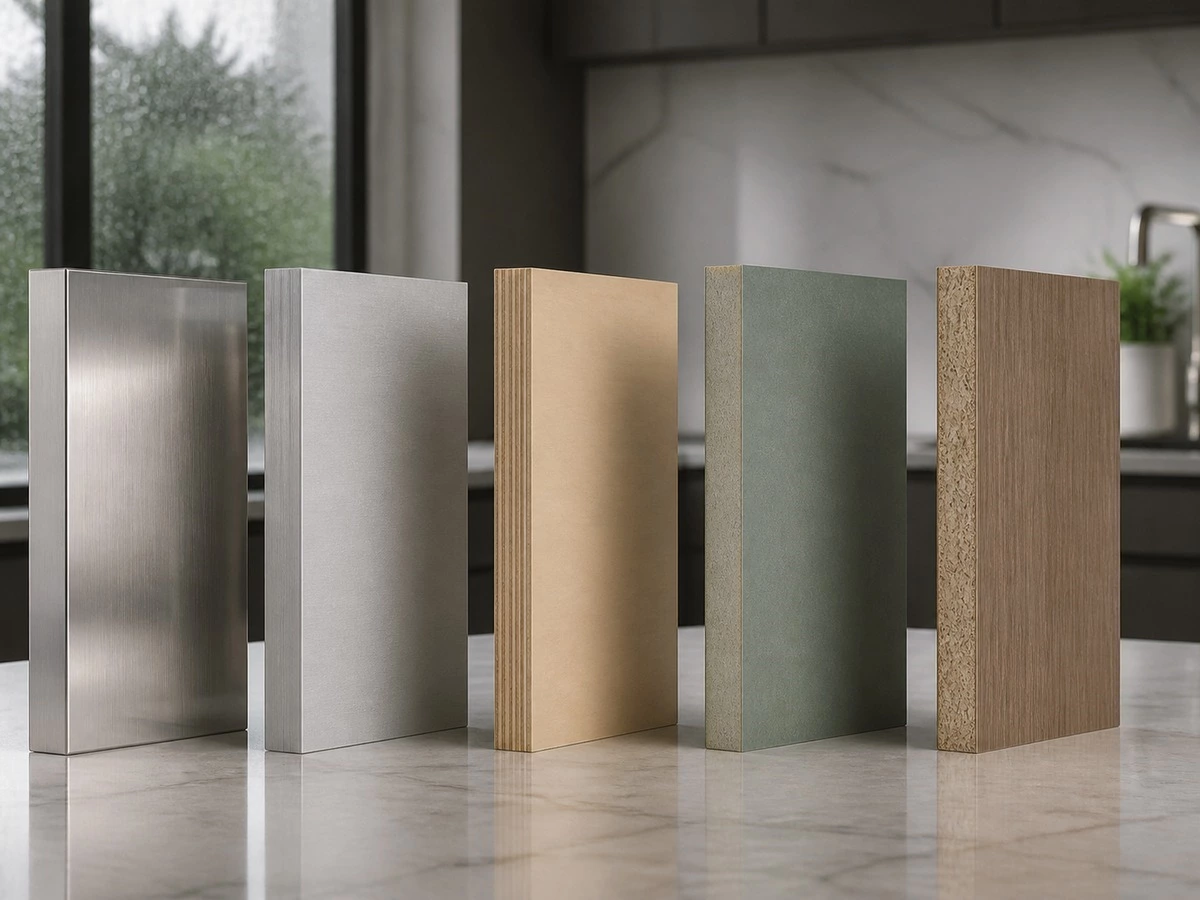
Moisture-aware plywood cabinet boxes
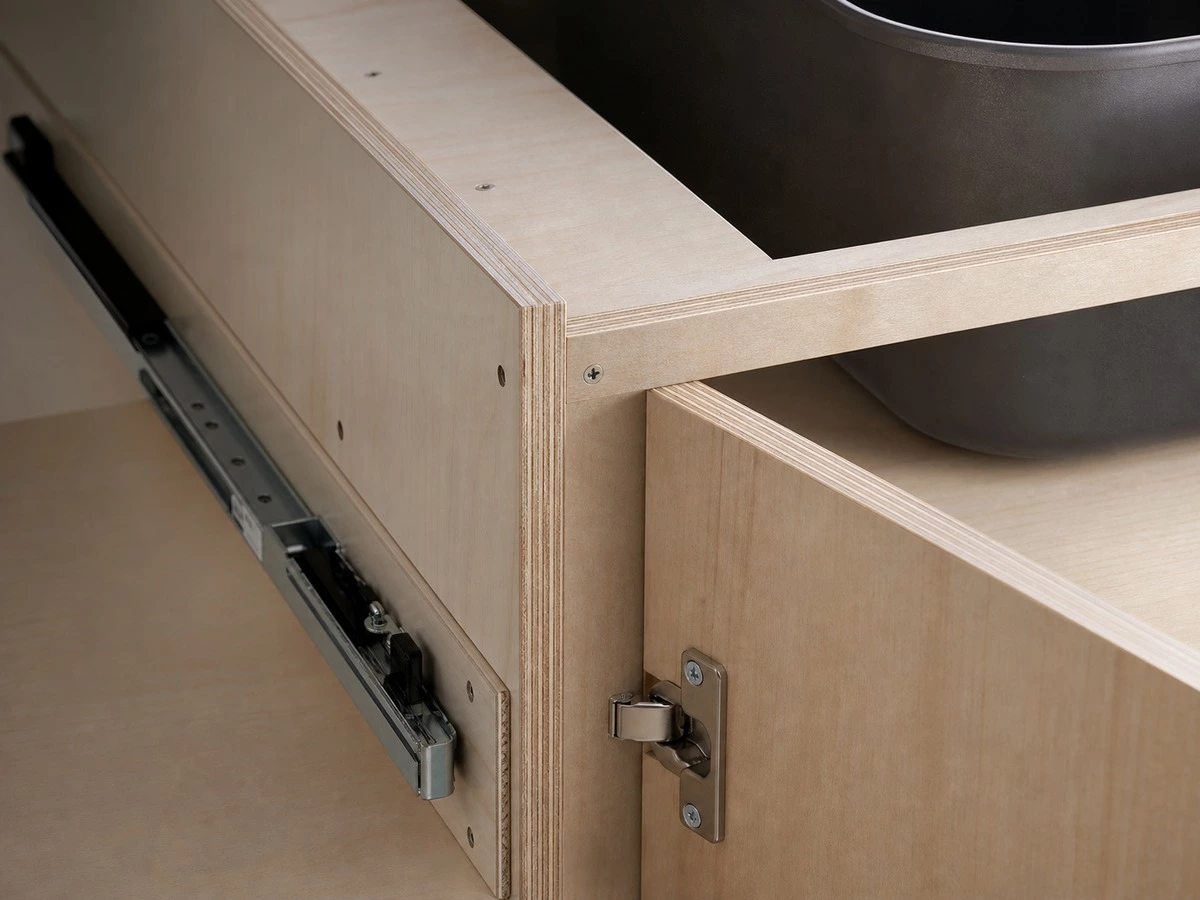
Plywood may be selected when the project values structural confidence, repeated hardware use, transport resilience, and moisture-aware construction. Its actual suitability varies by grade, veneer core, adhesive system, panel thickness, surface finish, edge treatment, and the location where it is used. A buyer should inspect a sample cross-section and clarify whether plywood is used throughout the cabinet box or only in selected components.
Moisture-resistant MDF
Moisture-resistant MDF can be considered for controlled applications where smooth surfaces, precise machining, or painted finishes are important. It should not be treated as a universal solution for unresolved plumbing leaks or prolonged water exposure. Edge sealing, sink-base design, cabinet location, back-panel construction, and floor protection remain essential.
Moisture-resistant particle board
Moisture-resistant particle board can be used in selected kitchen cabinet systems when its board grade, thickness, surface finish, edge banding, hardware fixing, and intended conditions are clearly specified. It may be practical for controlled indoor environments and repeatable cabinet programs, but high-risk water zones require more detailed review.
Stainless steel and aluminum components
Stainless steel or aluminum may be appropriate for selected utility, coastal, outdoor-adjacent, or high-moisture applications. They create a different cost structure, visual language, fabrication method, and maintenance approach from wood-based cabinets. Buyers should review metal finish, joints, hardware, sound, dent resistance, cleaning requirements, and compatibility with nearby materials.
Mixed-material cabinet systems
A project does not always need one material in every location. A practical cabinet package may use one material structure for dry cabinet runs and more moisture-aware construction or protection at sink bases, appliance zones, utility cabinets, or laundry-adjacent areas. The key is to document the change rather than mixing materials without a clear reason.
Material Comparison for Humid Kitchen Projects
This table is a project planning tool. It does not replace the supplier’s technical material specification, physical samples, project drawings, or local installation requirements.
| Material Option | Typical Strength | Moisture Planning Requirement | Potential Project Fit | Buyer Verification |
|---|---|---|---|---|
| Plywood | Often selected for structural confidence and hardware fixing. | Check grade, core quality, thickness, finishing, and edge treatment. | High-use kitchens, deep drawers, selected sink or pantry areas. | Cross-section sample, board schedule, sink-base detail, and hardware plan. |
| Moisture-resistant MDF | Smooth surface and controlled machining potential. | Requires edge sealing and defined moisture exposure conditions. | Selected painted or controlled cabinet applications. | Board type, panel thickness, edge condition, and protection at wet zones. |
| Moisture-resistant particle board | Efficient cabinet system option in suitable conditions. | Needs protected edges, suitable finish, sink-base review, and proper installation. | Standard indoor kitchens and repeatable cabinet packages. | Board grade, thickness, hardware fixing, edges, shelves, and packing plan. |
| Stainless steel or aluminum | Material option for selected high-moisture or utility conditions. | Review joints, finish, fabrication, hardware, and local corrosion conditions. | Utility, coastal, outdoor-adjacent, or commercial-inspired zones. | Metal type, finish, connections, hardware, and maintenance expectations. |
Doors, Surface Finishes and Edge Sealing
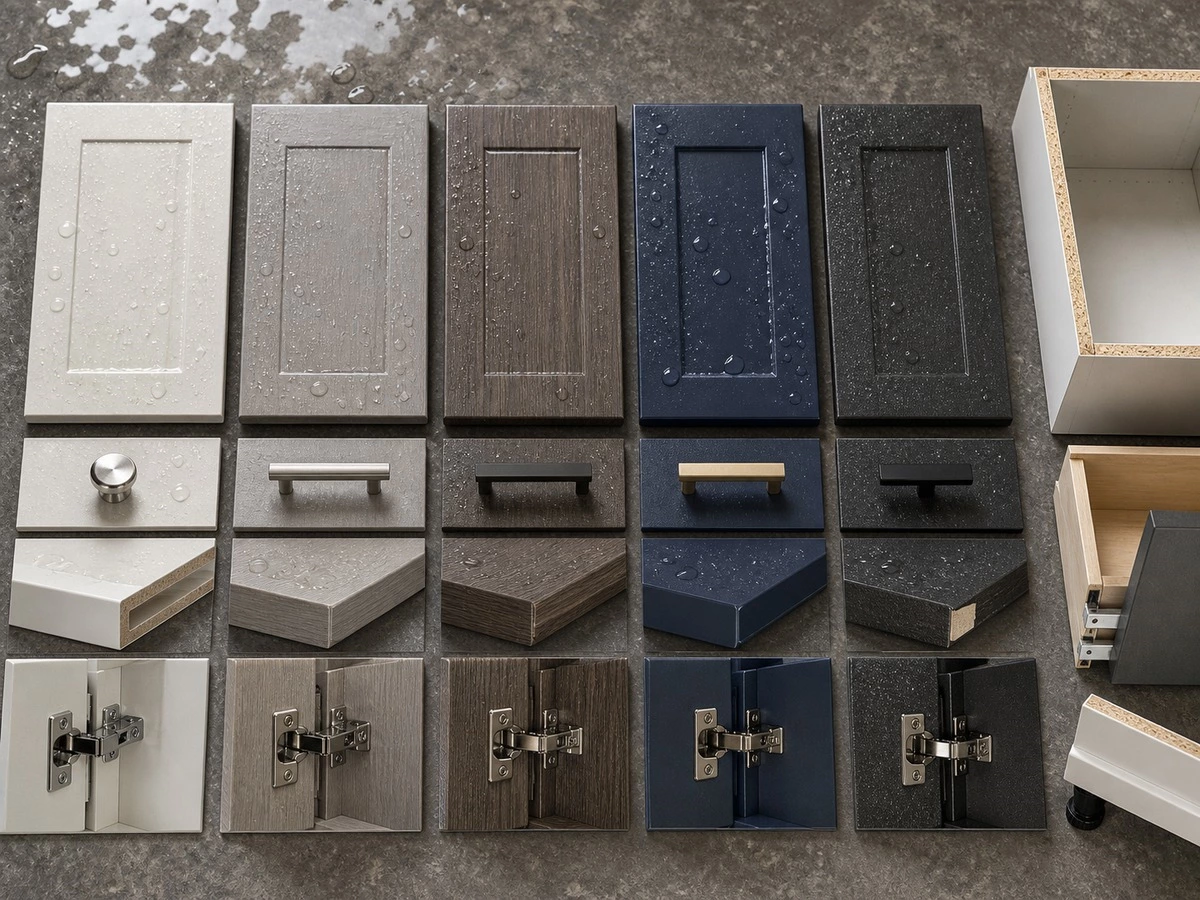
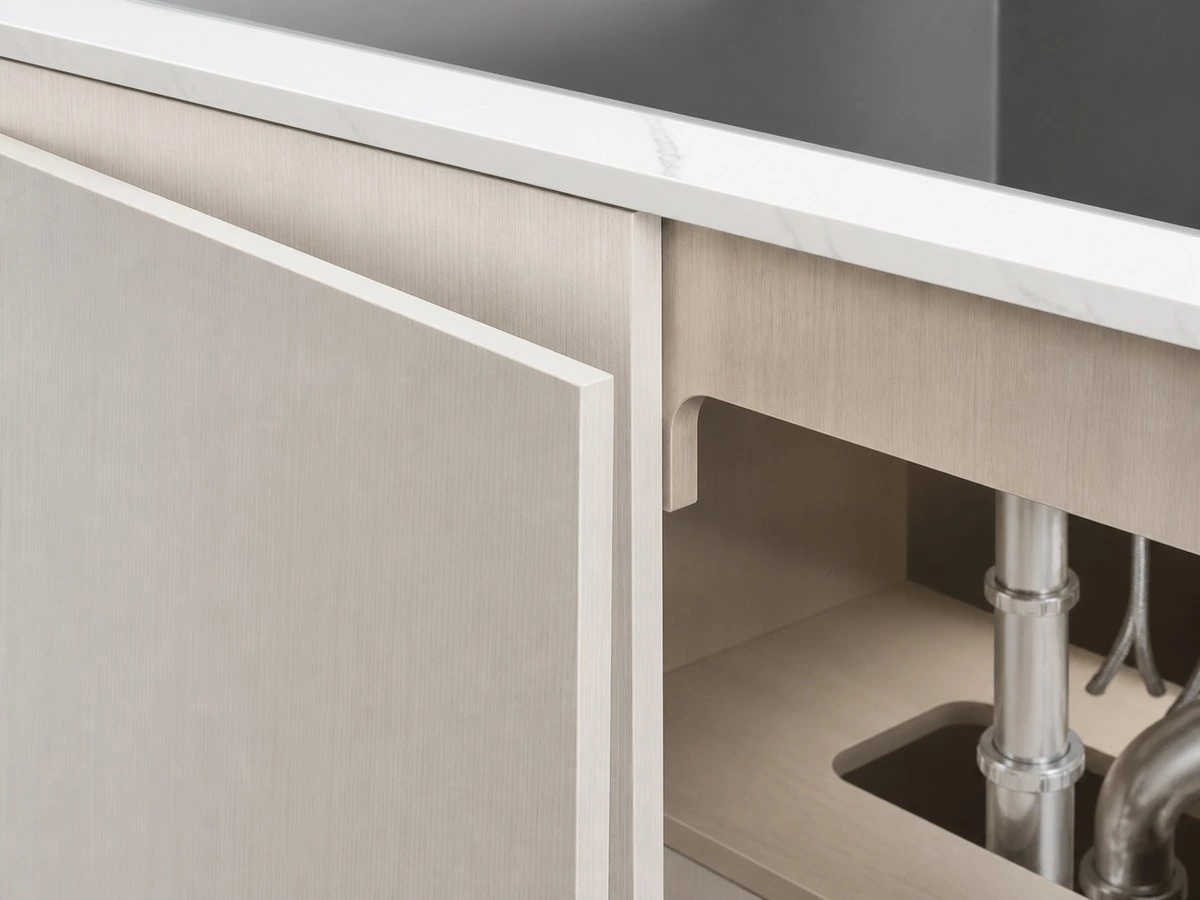
The visible cabinet door is only one line of defense. Lacquer, laminate, melamine, veneer, acrylic, glass, metal, and other surfaces can create different cleaning and moisture-management conditions, but the project must also address where the surface ends. Vulnerable locations include door edges, carcass edges, drilled holes, sink cutouts, appliance openings, end panels, and damaged corners.
Door surfaces
Choose door finishes according to the intended visual style, cleaning routine, expected use, and adjacent moisture exposure. A high-gloss door and a matte door may need different cleaning approaches. A wood veneer finish may need a different edge and repair strategy from a laminate panel. The supplier should identify the surface construction rather than describing every finish with broad terms such as “waterproof.”
Edge banding
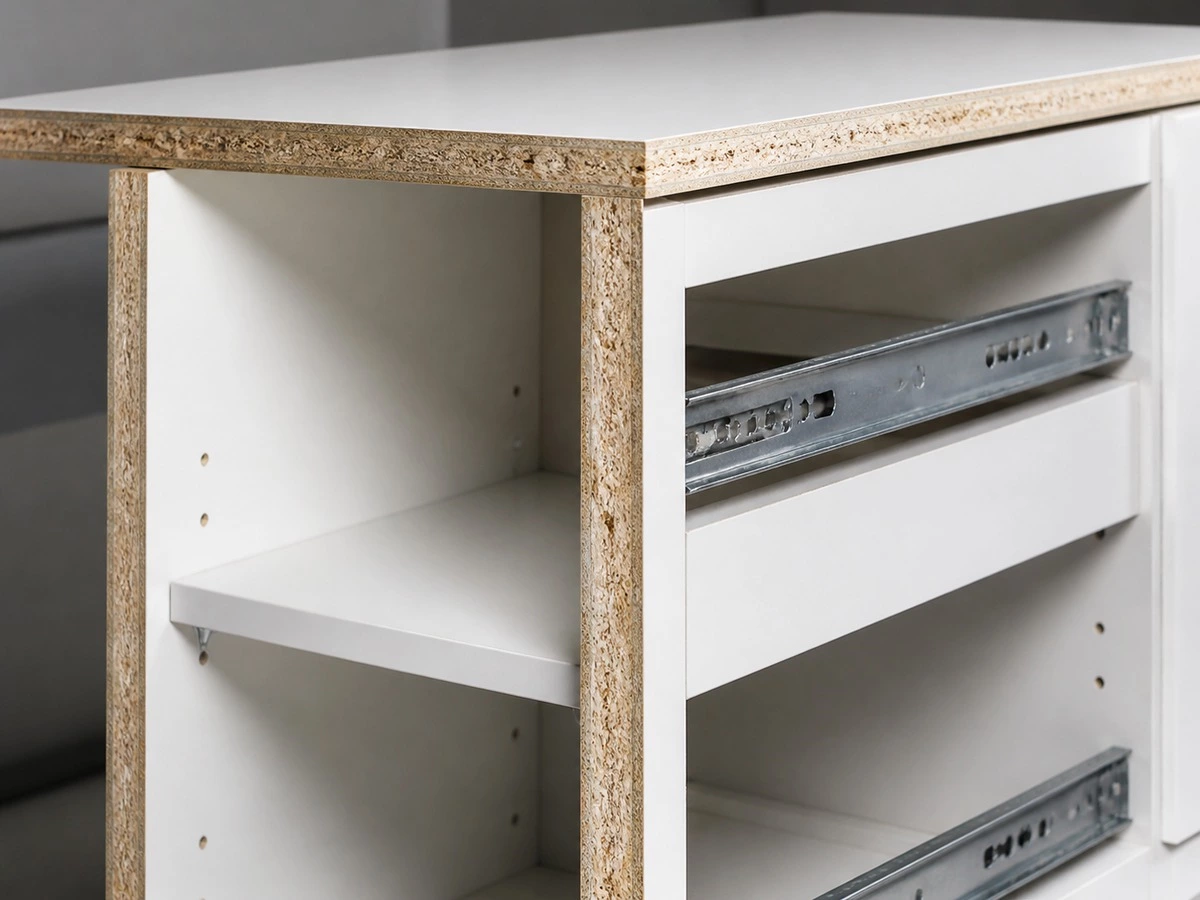
Edge banding protects exposed board edges from impacts, cleaning, moisture, and visible chipping. Buyers should ask what edge material is used, how it is applied, which edges receive extra protection, and how cut or damaged edges are handled on site. This is especially important around sink bases, end panels, floor-adjacent zones, and heavily used drawers.
Cutouts and penetrations
Plumbing holes, sink cutouts, appliance cutouts, electrical openings, and hardware drilling can create weak points. They should be coordinated in drawings and protected according to the actual cabinet material and cabinet location.
Best for:
Any kitchen project in which sink, appliance, island, utility, or floor-adjacent details create repeated moisture exposure.
Check:
Review a physical sample showing the real board, surface, corner, edge-banding, drilling, and cut-edge condition.
Risk:
A durable face surface cannot protect a raw, chipped, poorly sealed, or damaged panel edge after installation.
Hardware for Humid and Coastal Kitchens
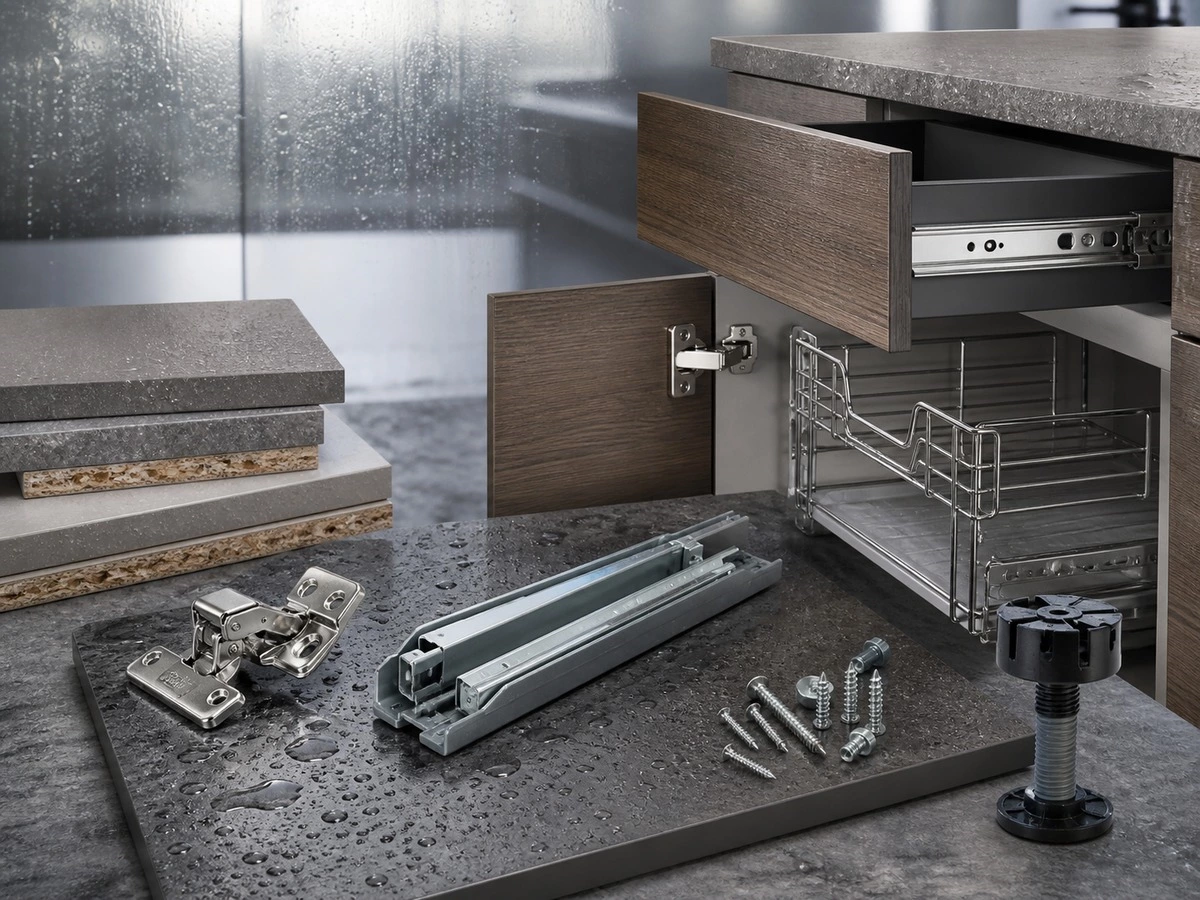
Humidity affects more than the cabinet board. Hinges, drawer slides, screws, pull-out baskets, lift-up systems, handles, adjustable legs, and cabinet connectors all need to suit their intended use and location. A cabinet can have a strong carcass and still feel poor in daily use if hinges corrode, slides lose adjustment, pull-outs become difficult to clean, or replacement hardware is unavailable.
When reviewing hardware, ask about:
- Hinge series, adjustment range, and finish.
- Drawer-slide type, load capacity, fixing arrangement, and expected use.
- Metal pull-out baskets, pantry systems, and corner hardware.
- Fastener and fixing details in sink, dishwasher, or utility zones.
- Adjustable legs, toe-kick connections, and floor-level adjustment.
- Replacement-component availability for the project’s destination market.
Ventilation, Countertops and Installation Details
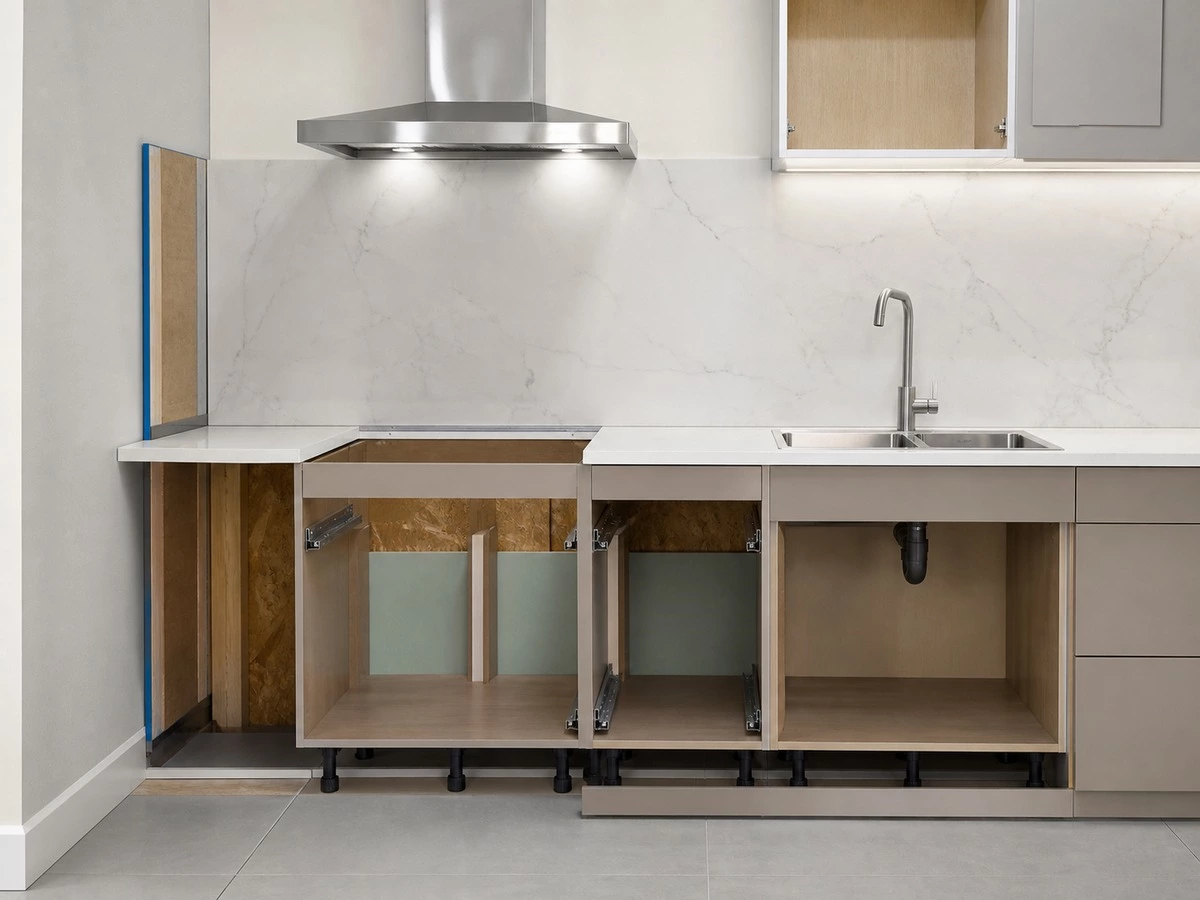
Ventilation should be planned with cabinet design, not after cabinets are installed. Extractor performance, windows, airflow, appliance ventilation, cooking habits, and room size influence the amount of steam and humidity that remains inside the kitchen. Cabinet material cannot compensate for poor ventilation or persistent moisture trapped behind panels.
Countertop and backsplash interfaces
Countertop joints, backsplash connections, sink cutouts, appliance edges, and wall conditions need to be coordinated before installation. The project team should identify where water is expected to run, how splashes are managed, and what detail separates cabinet materials from high-risk areas.
Installation tolerances
Walls and floors are rarely perfect. Adjustable legs, toe kicks, fillers, scribe panels, end panels, and countertop templates allow cabinetry to manage real site conditions. These items should be planned in drawings, not treated as emergency fixes once cabinets are delivered.
Site storage
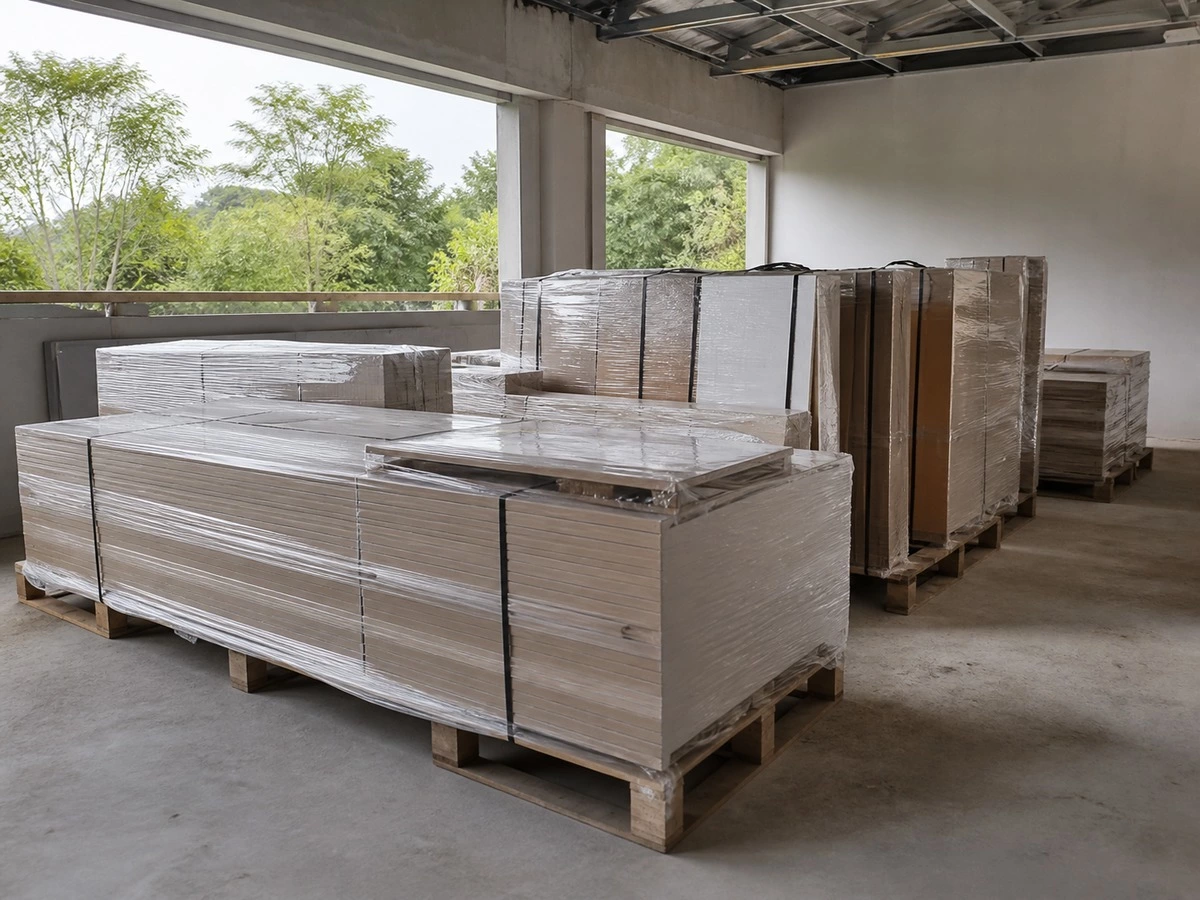
Cabinet panels can be damaged before installation if they are stored directly on damp floors, exposed to rain, placed against wet walls, or left in unventilated areas. The receiving team should know where to unload, how to protect packages, and when cabinets can safely be moved into the installation area.
Planning for Tropical, Coastal and High-Humidity Markets
Climate changes the way a cabinet package should be reviewed. The supplier does not need to use the same details in every country, but the project team should identify environmental conditions before approving the material schedule and packing plan.
Tropical and high-humidity locations
In tropical climates, cabinet planning should consider high ambient humidity, daily steam, rainy-season delivery, ventilation, mold risk, and jobsite storage. The project should separate normal indoor humidity from direct water risk at sinks, dishwashers, laundries, and floor-adjacent areas.
Coastal locations
Coastal projects may require extra attention to hardware, metal components, salt-air exposure, transport, storage, and the way cabinets are kept before installation. Hardware and finishes should be discussed for their actual location rather than assumed to perform equally in every environment.
Hot climates and air-conditioned interiors
High external temperatures, direct sun, indoor cooling, and long shipping or storage periods can create changing environmental conditions. Material selection, finish approval, packaging, and site handoff should be considered together.
Export documentation
For U.S.-bound projects, buyers should discuss applicable composite-wood documentation and labeling requirements with their supplier and project advisers. The U.S. EPA composite wood standards guidance and the CARB Composite Wood Products Program are useful references for project teams. Other markets should confirm their own contract and material documentation requirements before production approval.
Factory Quality Checks and Export Packing
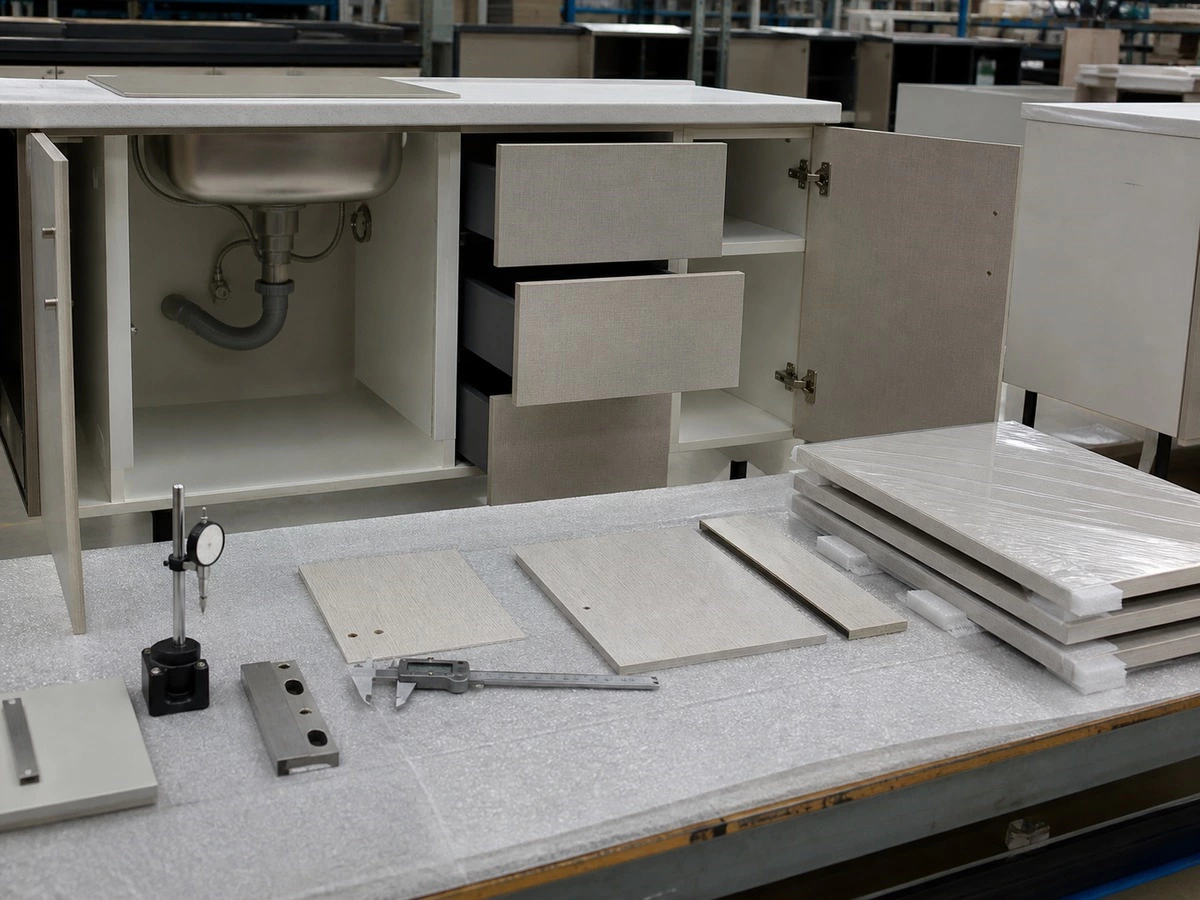
For a moisture-resistant cabinet package, quality control should check vulnerable details before packing. The objective is not only to verify that doors look correct. The factory and project team should also confirm the material schedule, cut edges, hardware drilling, sink-base components, panel protection, and packing logic.
- Confirm the approved board, finish, edge-banding, and hardware schedule.
- Verify material allocation for sink bases, appliance zones, utility cabinets, and special components.
- Inspect cutting, drilling, and edge-banding quality.
- Check cabinet bottoms, exposed corners, plumbing penetrations, and vulnerable edges.
- Test door, drawer, hinge, slide, and pull-out operation.
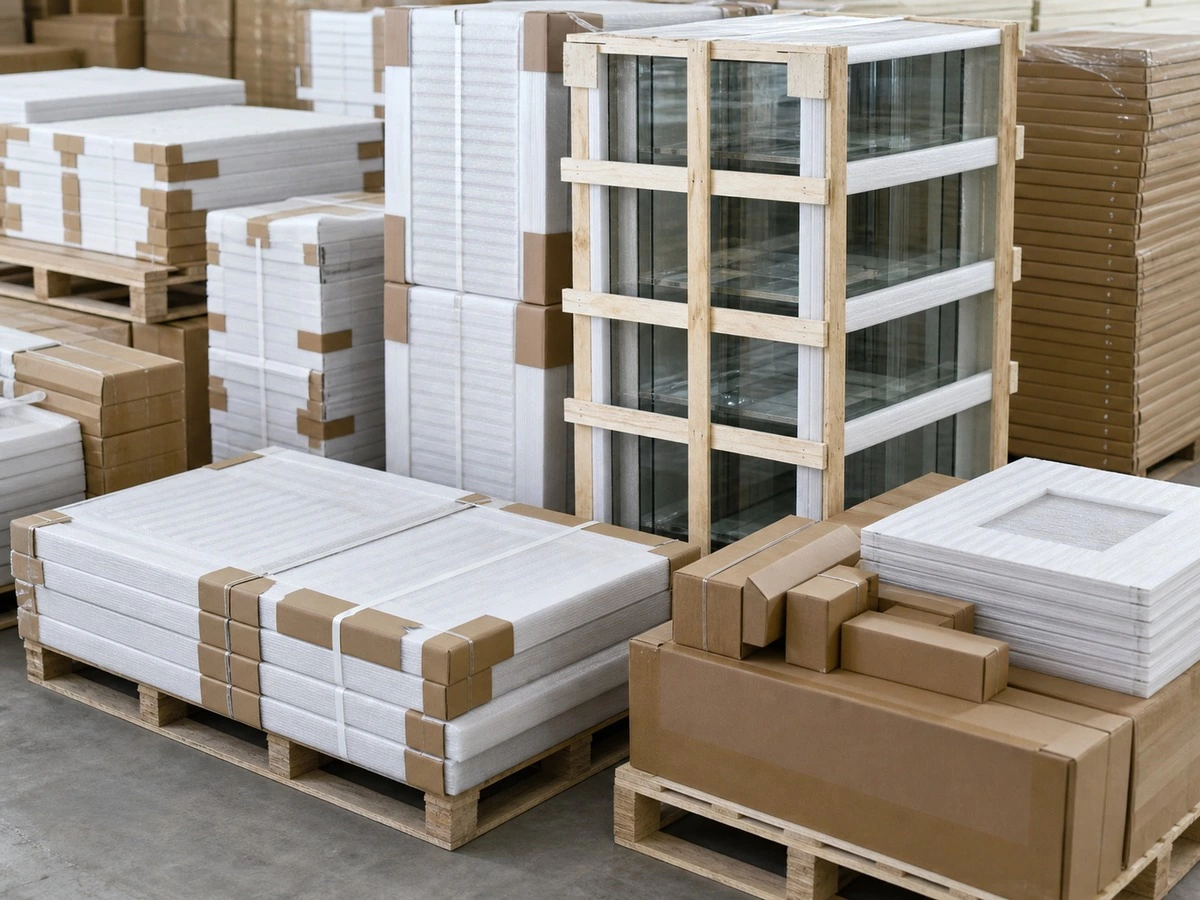
- Protect finished doors, panels, glass, hardware, and special components during packing.
- Prepare packing information, cabinet codes, and installation references for the receiving team.
For a clearer view of the order sequence, review the ALLURE order process. Buyers can also review the ALLURE factory video before discussing a project-specific material, quality-control, and packing plan.
12 Questions to Ask Before Ordering Moisture-Resistant Kitchen Cabinets
- Which cabinet components use moisture-resistant materials?
- What material is used for cabinet sides, bottoms, shelves, and back panels?
- What special detail is used for the sink base and dishwasher-adjacent cabinets?
- How are exposed edges, plumbing holes, cutouts, and cabinet bottoms protected?
- What board thickness and surface finish are specified?
- Which hinges, drawer slides, baskets, screws, and legs are used in higher-risk zones?
- How does the cabinet design account for ventilation and appliance requirements?
- How should cabinets be stored after delivery and before installation?
- Are special details needed for tropical, coastal, or high-humidity projects?
- Which material documents are available for the destination market?
- Who confirms final room conditions and appliance details before production?
- What drawings, packing lists, and installation information will the contractor receive?
Common Mistakes That Cause Moisture Damage
- Calling a cabinet waterproof when only one board, door, or surface is moisture-resistant.
- Selecting a board without reviewing edges, back panels, sink-base construction, or cabinet-bottom exposure.
- Ignoring dishwasher steam, appliance ventilation, and service access.
- Install cabinetry before plumbing, walls, floors, and ventilation conditions are confirmed.
- Leaving cabinet packages directly on damp floors or against wet walls before installation.
- Using unsuitable or poorly protected hardware in humid or coastal conditions.
- Approving only a door sample without inspecting the carcass, cut edges, and internal cabinet construction.
- Forgetting that floor cleaning, toe kicks, end panels, and low cabinet edges may encounter moisture.
- Changing materials after drawings are approved without revising hardware, panels, edges, and cabinet interfaces.
- Waiting for swelling, corrosion, or a leak before reviewing the cabinet protection strategy.
For broader custom cabinet sourcing guidance, see How to Choose the Right Kitchen Cabinet Manufacturer for Custom Projects. If the project is comparing overseas manufacturing with a nearby supplier, see Kitchen Cabinet Factory vs Local Cabinet Maker.
FAQ: Moisture-Resistant Kitchen Cabinets
1. Are moisture-resistant kitchen cabinets waterproof?
No. Moisture-resistant kitchen cabinets are designed to manage normal humidity, steam, and limited accidental splash exposure when their boards, finishes, edges, hardware, and installation details are appropriate. Waterproof is a much stronger claim and should not be assumed for ordinary wood-based cabinet systems. Repeated leaks, standing water, damaged edges, poor ventilation, or wet site storage can still cause damage. Buyers should ask which exact components have moisture-related protection and where the limits of that protection apply.
2. What is the best cabinet material for humid climates?
There is no one best material for every humid kitchen. The project should compare cabinet location, plumbing risk, appliance steam, storage load, visible finish, hardware fixing, budget, transport conditions, and maintenance expectations. Plywood, moisture-resistant MDF, moisture-resistant particle board, stainless steel, and aluminum can each have a role in suitable conditions. The correct choice comes from a complete material and construction schedule, not from selecting the most expensive board name or a generic waterproof claim.
3. Is plywood better than MDF for a humid kitchen?
Plywood and MDF have different characteristics, and suitability depends on the exact grade, thickness, finish, edge treatment, cabinet function, and exposure conditions. Plywood may be selected where structural confidence and hardware fixing are priorities. MDF may be suitable in controlled applications where smooth machining or painted finishes are important. Neither material will solve a leaking sink, exposed edge, damp wall, or poor installation detail by itself. Buyers should compare the full cabinet construction and high-risk zones before deciding.
4. Can particle board be used in a moisture-resistant kitchen?
It can be used in selected kitchen cabinet systems when the board specification, surface finish, edge banding, thickness, sink-base detail, hardware design, and installation conditions are appropriate. Particle board should not be treated as one uniform material. A cabinet in a dry, controlled pantry location has different needs from a sink base or dishwasher-adjacent unit. Buyers should request the actual board schedule, inspect samples, and clarify what protection is planned at exposed edges and water-prone locations.
5. What cabinet material should be used under a kitchen sink?
A sink base should be specified according to its plumbing arrangement, leak risk, cabinet material, bottom-panel construction, edge treatment, and maintenance access. There is no universal answer that applies to every kitchen. The buyer should ask how the cabinet bottom, side panels, cutouts, back panel, and exposed edges are protected and whether additional moisture-management details are included. It is also important that water valves, filters, and waste connections remain accessible so small leaks can be found before they damage the cabinet.
6. How does edge banding protect kitchen cabinets from moisture?
Edge banding protects exposed board edges from impact, cleaning, moisture, and visible chipping. It is especially important around cabinet ends, drawers, sink bases, floor-adjacent panels, cutouts, and heavily used storage. Buyers should ask what edge material is used, how it is applied, and whether damaged or cut edges receive a defined treatment during installation. Edge banding improves cabinet protection, but it cannot compensate for a leaking plumbing connection, poor ventilation, unsuitable board location, or prolonged standing water.
7. What hardware is best for coastal kitchens?
Coastal kitchens should review hinges, drawer slides, fasteners, pull-out baskets, handles, adjustable legs, and metal profiles according to their expected humidity and salt-air exposure. The appropriate hardware depends on the exact kitchen location, ventilation, cabinet use, maintenance routine, and project specification. Ask the supplier to identify the hardware series, finish, fixing method, load capacity, and replacement plan. Do not assume that a premium-looking handle or hinge will perform the same way in every coastal or humid environment.
8. Can humidity damage cabinet doors and drawer fronts?
Humidity can affect cabinet doors and drawer fronts when material, finish, edges, storage, or installation conditions are unsuitable. The degree of risk depends on the specific panel construction, surface finish, direct water exposure, ventilation, temperature changes, and maintenance. Doors can also appear misaligned when cabinet boxes, walls, floors, or hardware are affected by site conditions. Buyers should approve real material samples, confirm the intended room use, and make sure cabinetry is protected during shipping, storage, and installation.
Final Recommendation
Moisture-resistant kitchen cabinets are not defined by one board, one finish, or one catalogue claim. They are the result of matching cabinet materials with protected edges, suitable hardware, sink and appliance details, ventilation, installation tolerances, climate conditions, and correct storage before installation.
Before requesting a cabinet proposal, prepare the floor plan, site climate information, finished room dimensions, appliance schedule, sink and plumbing details, material preferences, destination market, packing requirements, and installation date. This allows the supplier to create a cabinet specification that addresses actual moisture risks before production begins.