When planning a kitchen renovation, new-build, villa project, or whole-house cabinetry package, one question often comes up early:
Should you work with a local cabinet maker or buy from a kitchen cabinet factory?
Both options can be suitable. A local cabinet maker may offer convenient communication and local installation. A professional kitchen cabinet factory may offer greater production capacity, a wider range of materials, factory-direct pricing, and better support for larger custom projects.
The best choice depends on your project size, budget, customization needs, delivery location, and service expectations. Homeowners may care more about design support and daily convenience, while builders, designers, and developers may focus more on lead time, repeatable quality, cost control, and project coordination.
In this guide, we compare a kitchen cabinet factory and a local cabinet maker across design flexibility, materials, production quality, pricing, delivery, installation support, and project suitability. If you are planning custom kitchen cabinets, this comparison can help you make a more confident decision.

What Is a Kitchen Cabinet Factory?
A kitchen cabinet factory is a manufacturer that designs, produces, and supplies cabinets through a structured production system. Unlike a small workshop that may handle one project at a time, a professional cabinet factory usually has specialized equipment, material sourcing channels, production teams, quality control processes, packing systems, and logistics experience.
A kitchen cabinet factory can produce custom or semi-custom cabinets for different project types, including residential kitchens, wardrobes, walk-in closets, bathroom vanities, laundry cabinets, apartment projects, villas, hotels, dealer showrooms, and whole-house cabinetry packages.
For homeowners, this can mean more design choices and better value control. For builders, developers, and designers, it can mean more stable production capacity, clearer drawings, batch delivery, and consistent quality across multiple rooms or units.
Allure is a China-based custom cabinet manufacturer with 18 years of experience in custom cabinetry production. The company provides custom cabinetry products such as kitchen cabinets, wardrobes, bathroom cabinets, wall panels, doors, and whole-home furniture solutions for global clients.

What Does a Local Cabinet Maker Offer?
A local cabinet maker is usually a nearby craftsman, workshop, or cabinet business that designs, builds, and installs cabinets for customers in the same city or region. For small residential projects, this can be a practical and convenient choice.
The main advantage of a local cabinet maker is proximity. They may be able to visit your home, take measurements, communicate face to face, make small adjustments on site, and provide local after-sales support more easily.
However, local cabinet makers may also have limitations. Material choices can depend on local suppliers. Production capacity may be smaller. Labor costs may be higher in some markets. Large projects, multi-unit developments, or whole-house cabinetry packages may take longer or cost more if the workshop does not have enough production scale.
This does not mean a local cabinet maker is bad. For a small kitchen renovation, urgent repair, or a project that needs immediate local service, a local option can be useful. The key is to match the supplier type with your project needs.

Design Flexibility: Factory Customization vs Local Craftsmanship
Design flexibility is one of the most important factors when choosing between a kitchen cabinet factory and a local cabinet maker.
A local cabinet maker may be flexible with small on-site changes, unusual wall conditions, or hands-on installation details. This can be helpful when the project is small, and the homeowner wants direct communication with the person building the cabinets.
A professional kitchen cabinet factory, on the other hand, may offer broader design systems. This can include 3D drawings, production drawings, storage planning, material libraries, finish combinations, cabinet modules, and whole-house design coordination.
For larger projects, design flexibility is not only about changing a cabinet size. It is also about making sure the layout, materials, storage systems, hardware, appliance spaces, and installation details all work together before production begins.
Allure offers free design service and one-on-one design consultation. Clients can send floor plans, measurements, inspiration photos, or project requirements, and the design team can help create practical cabinet solutions. If you want to understand how to evaluate design ability in more detail, you can also read Allure's guide on how to choose a custom cabinet maker.

Material and Finish Options
Materials and finishes have a direct impact on cabinet durability, appearance, maintenance, moisture resistance, and budget. This is why buyers should compare material options carefully before choosing a supplier.
A local cabinet maker may use locally available boards, door panels, and hardware. This can be convenient, but the selection may be limited depending on the local market.
A kitchen cabinet factory often has access to a wider material system, including cabinet panels, door finishes, countertops, hardware, storage accessories, and surface options. Common choices may include melamine, PET, acrylic, lacquer, wood veneer, shaker doors, handleless doors, stone countertops, soft-close hinges, drawer slides and pull-out systems.
The right choice depends on your project. A rental apartment project may need durable and cost-controlled materials. A villa kitchen may require premium finishes and luxury hardware. A coastal home may need moisture-resistant materials. A developer project may require repeatable quality and stable supply.
Allure provides resource pages for raw materials, door panels, countertops, and hardware, helping clients compare different cabinet materials and finishes before production.

Production Capacity and Quality Control
Production capacity matters when a project includes more than one kitchen or one room. A large villa, apartment project, hotel, builder package, or whole-house custom cabinetry project requires accurate production, consistent finishes, and clear delivery planning.
A smaller local workshop may be suitable for one kitchen, but may face pressure when handling larger quantities, multiple rooms, or tight project timelines.
A kitchen cabinet factory usually has a more structured process. This may include cutting, edge banding, drilling, finishing, hardware fitting, pre-assembly, quality inspection, labeling, packing, and logistics coordination. For overseas orders, these steps are especially important because fixing mistakes after delivery can be costly and time-consuming.
Before choosing a cabinet manufacturer, ask how they check dimensions, confirm drawings, inspect materials, test assembly, label parts, and pack cabinets before shipment.
Allure has a 5,000 m² test-assembly and inspection area, full QC and assembly processes, export-grade packaging and 18 years of manufacturing experience. These production details help reduce project risk for homeowners, builders, designers, developers and dealers.
For additional industry context, the Kitchen Cabinet Manufacturers Association provides information about cabinetry manufacturing standards and environmental stewardship programs.

Pricing and Cost Transparency
Price is often one of the biggest reasons buyers compare a kitchen cabinet factory with a local cabinet maker. However, cabinet pricing should never be judged only by the lowest number.
A local cabinet maker may include local measurement, installation, and after-sales support in the price. This can be valuable for homeowners who want a simple local service experience. However, local labor costs and limited supplier options may make the final price higher in some markets.
A kitchen cabinet factory may offer factory-direct pricing and more flexible material choices. This can help clients control cost, especially for larger projects or whole-house cabinetry packages. But buyers should also consider shipping, packing, installation support, import costs, and project coordination.
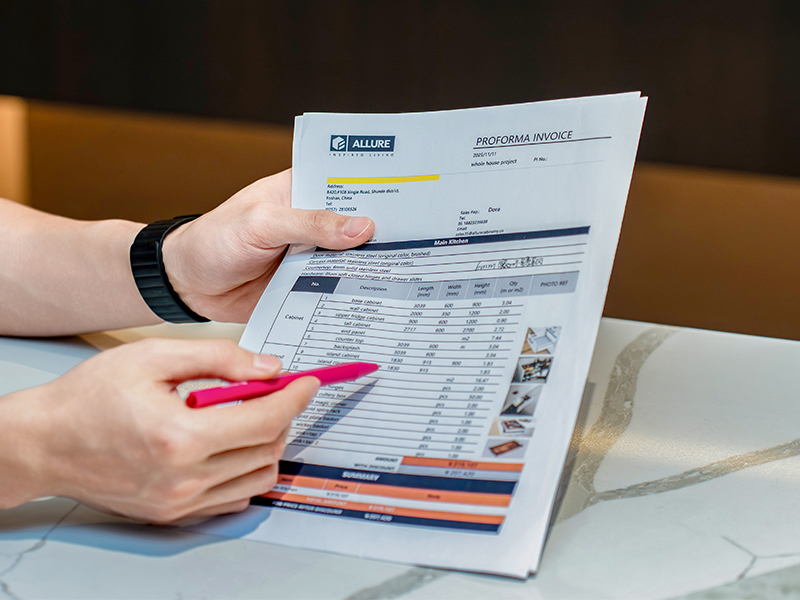
A clear quotation should include cabinet dimensions, material specifications, door finishes, hardware, accessories, countertops, drawings, production lead time, packing method, shipping terms, and support services. A transparent quote allows you to compare value, not just price.
Allure's factory-direct customization model is suitable for clients who want personalized cabinets with clearer production and pricing control. Homeowners, builders, and project clients can send floor plans or project details to receive design suggestions and a factory quotation.

Delivery, Packing and Installation Support
Delivery and installation support are major differences between a local cabinet maker and a kitchen cabinet factory.
A local cabinet maker may handle local delivery and installation directly, which can be convenient for small projects in the same city. If the installer is also the cabinet maker, communication can be simple.
For overseas orders, a kitchen cabinet factory needs to provide strong export packing, clear labels, installation drawings, logistics support, and technical guidance. Cabinets should be protected during transportation, and parts should be organized so that local installers can understand the system quickly.
Depending on the destination and project type, buyers may need FOB, CIF, DDP, or other shipping arrangements. Builders and developers may also need batch delivery, project tracking, and phased shipment planning.
Allure provides global delivery support, export-grade packaging, worldwide logistics coverage, remote technical support, step-by-step video guidance, and on-site installation support for selected projects. For overseas homeowners and project clients, these services can make factory-direct cabinet purchasing more practical.

Which Option Is Better for Homeowners?
For homeowners, the better option depends on the project scope.
A local cabinet maker may be better if you have a small kitchen renovation, need urgent local measurement, want simple communication in the same city, or require immediate local after-sales service.
A kitchen cabinet factory may be better if you are planning a full kitchen renovation, luxury villa, new build, whole-house cabinetry package or multiple rooms at the same time. Factory production can provide more material options, better cost control and more consistent design across kitchens, wardrobes, vanities and laundry areas.
For homeowners who already have floor plans, measurements or a designer's concept, working with a factory can be efficient. You can send the information online, receive design suggestions, review material options and confirm production details before ordering.
Allure supports homeowners with free design, custom kitchen cabinets, whole-home cabinetry solutions and global delivery support. This can be especially useful for clients who want custom cabinets from a factory but still need design guidance before production.

Which Option Is Better for Builders, Designers and Developers?
For builders, designers and developers, a kitchen cabinet factory is often the stronger option because project clients usually need more than one set of cabinets.
Builders need stable lead times, accurate drawings, repeatable quality and clear installation instructions. Interior designers need flexible material choices, custom finishes and the ability to turn design concepts into real production details. Developers need production capacity, cost control, batch delivery and project coordination.
A local cabinet maker may still be useful for small boutique projects, but larger residential developments, apartment buildings, villas, hotels and dealer orders often require a factory-level production system.
Allure works with builders, interior designers, developers, dealers and project owners worldwide. As a custom cabinet supplier and cabinet manufacturer, Allure can support kitchens, wardrobes, bathroom vanities, laundry cabinets and whole-house cabinetry packages based on project drawings and requirements.

When to Choose a China Kitchen Cabinet Factory
A China kitchen cabinet factory may be a strong choice when your project needs customization, production scale, material flexibility and factory-direct cost control.
You may consider working with a China kitchen cabinet factory if:
- You need custom kitchen cabinets, wardrobes or whole-house cabinetry.
- You are managing a builder, developer, dealer or project order.
- You want factory-direct pricing and clear material options.
- You can provide floor plans, measurements or project drawings.
- You need custom materials, finishes, hardware and storage systems.
- You want scalable production for multiple rooms or multiple units.
- You need export packing, global shipping and installation guidance.
However, a China cabinet factory may not be the best choice for every situation. If you only need a small urgent repair, have no measurements, need same-day local service, or want the cabinet maker to visit your home immediately, a local cabinet maker may be more suitable.
The key is to choose based on project reality, not only location. For larger custom projects, a professional factory can offer strong value. For small urgent local work, local service may be more convenient.

Why Work with Allure for Custom Cabinets?
Allure is a China-based kitchen cabinet factory and custom cabinet manufacturer serving homeowners, builders, designers, dealers, developers, and project clients worldwide.
With 18 years of manufacturing experience, 120+ exported countries, 30,000+ completed custom projects, free design service, wide material choices, factory production, quality inspection, test assembly, global delivery and installation support, Allure helps clients turn floor plans into practical custom cabinet solutions.
If you are comparing a kitchen cabinet factory and a local cabinet maker for your next project, Allure can help you review your floor plan, recommend cabinet solutions, and provide a factory quotation.
Contact Allure today to send your layout or project requirements.
FAQ: Kitchen Cabinet Factory vs Local Cabinet Maker
Is a kitchen cabinet factory cheaper than a local cabinet maker?
A kitchen cabinet factory may offer factory-direct pricing and more flexible material options, but the final cost depends on cabinet size, materials, finishes, hardware, shipping, installation, and project scope. It is better to compare full quotations instead of only cabinet unit prices.
Is a local cabinet maker better for small kitchen renovations?
Often yes. A local cabinet maker can be a good choice for small renovations, urgent local measurement, on-site adjustment, and immediate local service. For larger custom or overseas projects, a kitchen cabinet factory may offer better production capacity and cost control.
Can a kitchen cabinet factory make fully custom cabinets?
Yes. A professional kitchen cabinet factory can make custom cabinet sizes, finishes, storage systems, wardrobes, bathroom vanities, and whole-house cabinetry based on floor plans, measurements, and project drawings.
Can overseas homeowners buy directly from a China kitchen cabinet factory?
Yes. Overseas homeowners can buy directly from a China kitchen cabinet factory if they can provide floor plans, measurements, style preferences, and project details. The factory should support design, quotation, production, packing, shipping, and installation guidance.
Which is better for builders and developers?
For larger projects, builders and developers often benefit from working with a kitchen cabinet factory because factories usually provide stronger production capacity, consistent quality, batch delivery, clearer cost control, and project coordination.
What should I ask before working with a cabinet factory?
Ask about design drawings, material options, hardware, quality control, pre-assembly, packaging, shipping terms, installation support, lead time, and past project cases. These details help you judge whether the factory can support your project properly.
Does Allure work with local installers?
Allure can provide installation drawings, video guidance, and remote technical support. For selected projects, Allure can also provide on-site installation support. This helps local installers understand the cabinet system more clearly.
How do I get a factory quotation from Allure?
You can send your floor plan, measurements, project location, preferred style, material requirements, and budget range to Allure. The team can review your project and provide design suggestions and a custom cabinet quotation.


