Before Choosing Melamine vs Laminate Cabinets, Read This First
If you’re planning a kitchen remodel, wardrobe system, apartment project, or full-house cabinetry solution, there’s a high chance you’ve already searched for:
“Melamine vs Laminate”
At first glance, these two cabinet materials look very similar.
Both can offer:
- modern finishes
- wood grain textures
- matte surfaces
- clean contemporary designs
And in many showroom displays, most homeowners honestly can’t tell the difference.
But after working on international cabinet projects for villas, apartments, and luxury homes across the USA, Australia, Canada, and the Middle East, I can tell you something very important:
The biggest mistakes usually happen after installation — not before purchase.
I’ve seen:
- “Premium-looking” cabinets swell around sinks within two years
- Cheap apartment melamine systems perform surprisingly well for rental properties
- Expensive laminate kitchens fail because of poor edge sealing
- Homeowners overspend on materials they never actually needed
The reality is this:
The “melamine vs laminate” decision is not simply about appearance.
It’s about:
- durability
- moisture exposure
- expected lifespan
- project budget
- manufacturing quality
- and how the cabinets will actually be used daily
Unfortunately, most online articles only explain surface-level differences.
They rarely discuss:
- core board density
- edge banding quality
- manufacturing shortcuts
- long-term maintenance costs
- Or why two cabinets that look identical can perform completely differently after five years.
This guide is designed to give you the real comparison.
Not marketing language.
Not supplier sales talk.
Just practical insights based on real-world cabinetry projects.

What Are Melamine Cabinets?
Understanding Melamine Cabinet Construction
One of the biggest misconceptions in the melamine vs laminate debate is that melamine is a type of wood.
It’s not.
Melamine is actually a decorative resin-infused paper surface that is thermally fused onto an engineered wood core under heat and pressure.
The core board is typically:
- particle board
- MDF
- or plywood
This creates a finished panel with:
- a decorative outer layer
- and a structural internal core
The outer melamine layer gives the cabinet:
- color consistency
- stain resistance
- scratch resistance
- easy cleaning
- modern visual appearance
Because melamine is factory-fused directly onto the board surface, it is highly efficient to manufacture at scale.
This is one reason melamine cabinets dominate:
- apartment projects
- wardrobe systems
- budget kitchens
- rental developments
- office furniture production
How Melamine Is Manufactured
Melamine belongs to a category called:
Low Pressure Laminate (LPL or TFL)
During manufacturing:
- Decorative paper is saturated with resin
- heat and pressure are applied
- The paper permanently bonds to the substrate
Typical production pressure:
- approximately 300–500 PSI
Compared to laminate, melamine uses:
- lower pressure
- thinner decorative layers
- faster manufacturing processes
This is why melamine cabinets are generally:
- more affordable
- faster to produce
- more common in large-scale housing projects
Why the Core Board Matters More Than Most Buyers Realize
This is one of the most overlooked aspects in the entire melamine vs laminate comparison.
Most buyers only focus on:
- surface color
- texture
- finish appearance
But internally, cabinet quality can vary dramatically.
Particle Board Core
Most economical option.
Advantages:
- affordable
- lightweight
- smooth surface
Disadvantages:
- weaker screw holding
- vulnerable to moisture swelling
- shorter lifespan
MDF Core
Denser and smoother.
Advantages:
- cleaner machining
- smoother edges
- better finish consistency
Disadvantages:
- heavier
- still vulnerable to water penetration
Plywood Core
Higher-end structural option.
Advantages:
- excellent screw retention
- better moisture resistance
- stronger long-term durability
Disadvantages:
- significantly higher cost
This means:
Two melamine cabinets may look identical externally but perform completely differently internally.
And this is something many suppliers never explain clearly.
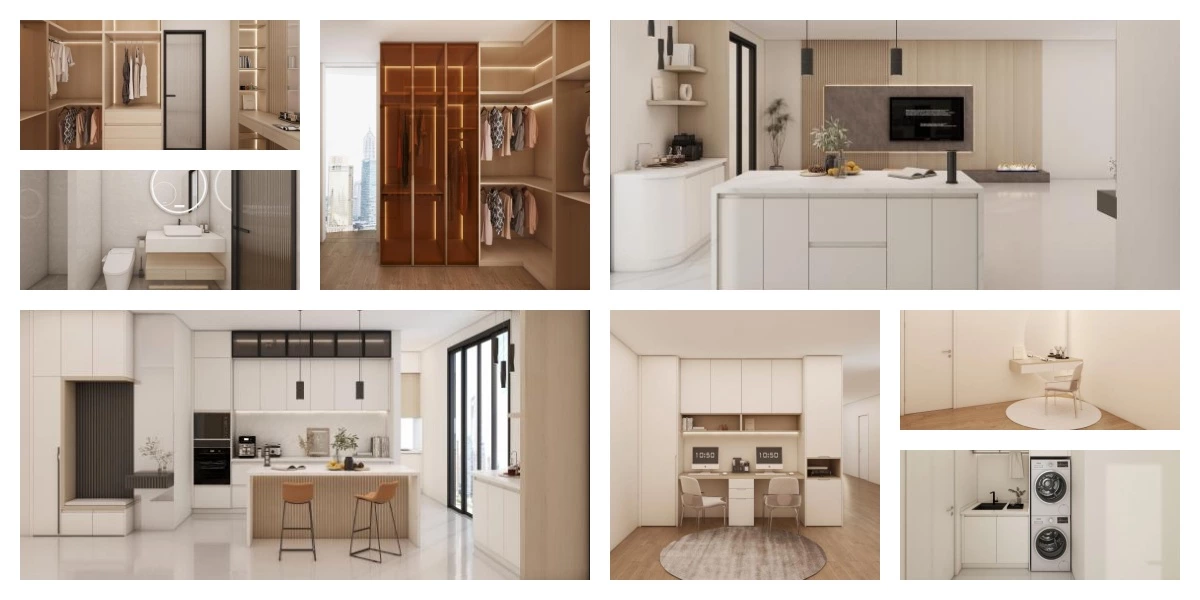
Where Melamine Cabinets Work Best
From a practical project perspective, melamine cabinets work extremely well for:
- wardrobes
- closets
- apartment developments
- laundry rooms
- budget-conscious kitchens
- rental properties
Why developers love melamine:
- cost control
- consistent finishes
- fast production
- modern appearance
- easy scalability
In fact, many large apartment projects in Australia and North America rely heavily on melamine cabinetry because replacing units every 7–10 years is already built into the investment model.
But for luxury villas or long-term premium homes, melamine may not always be the ideal solution.
What Is Laminate?
Understanding Laminate Cabinet Materials
In the melamine vs laminate discussion, laminate usually refers to:
High Pressure Laminate (HPL)
Unlike melamine, laminate is constructed from:
- multiple kraft paper layers
- decorative printed paper
- resin coatings
- protective wear surfaces
These layers are compressed together under very high pressure.
The result is:
- a thicker surface
- stronger durability
- improved impact resistance
- longer-term wear performance
Laminate is then applied separately onto a substrate board using adhesives.
Why Laminate Is Considered More Durable
One major difference between melamine vs laminate is the manufacturing pressure.
| Material | Pressure |
|---|---|
| Melamine (LPL) | 300–500 PSI |
| Laminate (HPL) | 1400+ PSI |
This pressure difference creates:
- denser surfaces
- harder finishes
- better scratch resistance
- improved impact performance
This is why laminate cabinets are commonly used in:
- commercial spaces
- luxury kitchens
- hotels
- restaurants
- high-traffic environments
Laminate Finishes Have Improved Dramatically
Years ago, laminate had a reputation for looking artificial.
That’s no longer true.
Modern laminate manufacturing now offers:
- realistic wood grain textures
- ultra-matte finishes
- fingerprint-resistant technology
- concrete looks
- stone-inspired surfaces
Some premium laminate finishes now look remarkably similar to:
- natural oak
- walnut veneer
- textured stone panels
This is one reason laminate has become increasingly popular in modern luxury kitchen design.

Melamine vs Laminate: The Real Manufacturing Differences
Surface Thickness Comparison
One of the biggest structural differences between melamine vs laminate is surface thickness.
Melamine
- thinner fused layer
- integrated into the panel surface
Laminate
- thicker independent sheet layer
- applied separately
That thickness directly impacts:
- impact resistance
- edge durability
- long-term wear performance
Edge Performance: The Hidden Weak Point
Most cabinet failures do not start in the center panel.
They start at:
- corners
- sink areas
- edge joints
- poorly sealed seams
This is why edge quality matters enormously.
Cheap edge banding often leads to:
- swelling
- peeling
- chipping
- moisture penetration
In real-world kitchen projects, edge failure is one of the most common complaints.
Manufacturing Quality Is More Important Than Material Name
This is probably the biggest truth most suppliers never discuss.
A poorly manufactured laminate cabinet can perform worse than a properly manufactured melamine cabinet.
Critical quality factors include:
- CNC precision
- adhesive quality
- board density
- edge sealing
- hardware installation
- pressing consistency
This is why factory selection matters just as much as material selection.
Durability Comparison: Which Material Lasts Longer?
Scratch Resistance
Laminate generally performs better in scratch resistance because:
- Its protective layer is thicker
- The surface density is higher
For high-use family kitchens, this can make a noticeable long-term difference.
Melamine still performs reasonably well in everyday residential use, especially in:
- wardrobes
- closets
- lower-traffic cabinetry
Impact Resistance
In the melamine vs laminate durability comparison, laminate clearly has the advantage for impact resistance.
Melamine edges can chip more easily when hit by:
- cookware
- vacuum cleaners
- hard objects
Once the edge chips:
- Moisture can enter
- The core becomes exposed
- deterioration accelerates
Laminate’s thicker structure offers better protection.
Moisture Resistance
One of the most misunderstood topics online is:
“waterproof cabinets”
The reality:
- Neither melamine nor laminate is truly waterproof
The real issue is:
water penetration at the edges
Once moisture reaches the internal board:
- particle board swells
- MDF expands
- Cabinet panels deform permanently
This is why:
- sink cabinets
- dishwasher areas
- bathroom vanities
are often the first failure points.
Heat Resistance
Laminate usually tolerates heat better than melamine.
In compact kitchens with heavy cooking:
- Melamine may discolor faster
- Edges may weaken over time
Especially near:
- ovens
- cooktops
- steam-heavy areas
UV & Aging Performance
Low-quality white melamine may yellow over time when exposed to strong sunlight.
Higher-end laminate products generally offer:
- better UV stability
- stronger color consistency
- slower visible aging
But again:
Quality varies massively between manufacturers.

Appearance & Design Comparison
Which Looks More Premium?
This depends heavily on:
- finish quality
- texture realism
- edge detailing
- lighting conditions
But in high-end projects:
- Laminate usually delivers a more luxurious appearance
- Deeper textures feel more realistic
- surfaces appear richer and more refined
Melamine, however, performs extremely well in:
- modern minimalist interiors
- practical contemporary spaces
- budget-controlled projects
Matte Finishes Are Dominating Modern Kitchens
In both melamine vs laminate cabinet trends, matte finishes have become extremely popular.
Why homeowners prefer matte finishes:
- fewer fingerprints
- softer luxury appearance
- modern architectural style
- cleaner visual effect
This trend is especially strong in:
- Australian kitchens
- European-style interiors
- modern villas
Design Flexibility
Both materials now offer extensive design possibilities:
- wood grain finishes
- concrete textures
- solid matte colors
- stone-inspired surfaces
Modern manufacturing technology has dramatically improved visual realism.
Cost Comparison: Initial Price vs Long-Term Value
Average Cost Comparison
Typical pricing ranges:
| Material | Average Range |
|---|---|
| Melamine | $120–250/m² |
| Laminate | $250–450/m² |
Final pricing depends on:
- board quality
- hardware
- finish grade
- production standards
Why Cheap Cabinets Become Expensive Later
This is where many homeowners make costly mistakes.
A low-cost cabinet system may initially save:
- $3,000–$8,000
But later create:
- swelling problems
- hinge failures
- edge repairs
- full replacements
The cheapest upfront option is not always the best financial decision in the long term.
Which Material Offers Better Value?
For:
- rental apartments
- moderate-use spaces
- wardrobes
Melamine often delivers excellent value.
For:
- luxury kitchens
- family homes
- long-term residences
- high-traffic spaces
Laminate may justify the higher investment.
Common Buyer Mistakes
Choosing Based Only on Appearance
Small showroom samples hide:
- internal structure quality
- edge durability
- board density differences
Beautiful finishes do not guarantee long-term performance.
Ignoring Edge Banding Quality
This is one of the biggest hidden problems in cabinet manufacturing.
Poor edge sealing is responsible for many failures involving:
- swelling
- peeling
- moisture penetration
Assuming All Factories Use the Same Standards
This is far from true.
In Chinese manufacturing, especially, huge quality differences exist between factories.
Some suppliers reduce costs by using:
- lower-density boards
- weaker adhesives
- thinner surfaces
- inferior hardware
This is why supplier selection matters enormously.
Final Verdict: Which One Should You Choose?
There is no universal “best” material in the melamine vs laminate debate.
The right choice depends on:
- your budget
- project type
- expected lifespan
- design goals
- maintenance expectations
We Typically Recommend Melamine For:
- wardrobes
- rental apartments
- budget-conscious projects
- large-scale developments
We Typically Recommend Laminate For:
- luxury kitchens
- premium modern interiors
- commercial projects
- high-traffic family homes
The smartest cabinet decision is not choosing the most expensive material.
It’s choosing the right material for the right environment.

FAQ
Is laminate more durable than melamine?
Generally yes. Laminate usually offers better impact and scratch resistance.
Is melamine waterproof?
No. It is moisture-resistant on the surface but vulnerable at exposed edges.
Which is better for kitchens: melamine vs laminate?
For premium kitchens, laminate is often the stronger long-term choice.
Why do cabinet edges swell?
Usually, because moisture penetrates poorly sealed edge banding.
Can melamine cabinets last long term?
Yes, especially in wardrobes and moderate-use environments.
📩 Planning a Kitchen or Cabinet Project?
Choosing the wrong cabinet material can lead to:
- swelling
- edge failure
- expensive replacements
- disappointing durability
At ALLURE, we help homeowners, designers, and developers compare:
- melamine vs laminate
- budget vs lifespan
- appearance vs durability
- cost vs long-term value
👉 Contact our team today for expert recommendations and factory-direct cabinetry solutions.


