A custom kitchen can completely change how a home looks, works, and feels. But before homeowners start choosing cabinet colours, benchtops, handles, or island layouts, one question usually comes first: how much do custom kitchen cabinets cost in Australia?
The answer is not a single fixed number. The final cost depends on kitchen size, cabinet layout, material, finish, hardware, storage accessories, benchtop selection, delivery, installation, and the level of customisation required. A compact apartment kitchen will cost differently from a large open-plan kitchen with an island, pantry wall, integrated appliances, and premium finishes.
For Australian homeowners, builders, developers, and project buyers, cabinet cost should not be judged only by the cabinet door appearance. A kitchen cabinet quote may include cabinet boxes, door panels, drawers, hardware, storage systems, benchtops, packaging, shipping, installation guidance, or local labour. If these details are not clearly separated, it becomes difficult to compare prices accurately.
That is why understanding custom kitchen cabinets cost Australia is important before requesting a quote. With the right planning, homeowners can control budget, choose suitable materials, avoid unnecessary upgrades, and create a kitchen that is practical, durable, and visually consistent with the rest of the home.
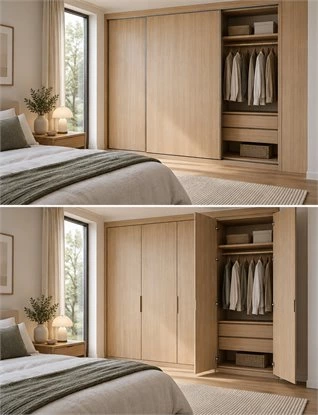
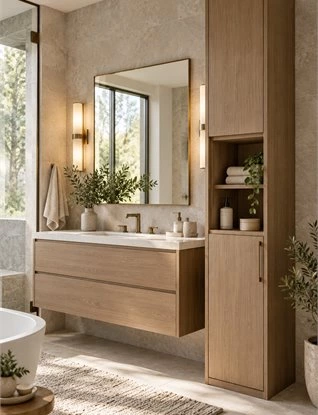
ALLURE provides custom kitchen cabinets and whole-house cabinetry solutions for international projects, including design support, 3D drawings, material selection, production, export packaging, delivery support, and installation guidance. For Australian homes, apartments, villas, and project developments, a clear cabinet plan helps buyers compare options before production begins.
Why Custom Kitchen Cabinet Cost in Australia Varies
Custom kitchen cabinet prices vary because every kitchen has different dimensions, layouts, material requirements, and design expectations. Two kitchens may look similar in photos, but their cost can be very different once cabinet structure, finishes, hardware, storage systems, benchtops, and installation details are included.
A simple straight-line kitchen with standard cabinets is usually easier to produce and install. A large open-plan kitchen with island cabinets, full-height storage, integrated appliances, finished side panels, and premium lighting requires more material, more hardware, and more design coordination.
Cabinet Size and Quantity
Kitchen size is one of the first factors that affects cost. A small apartment kitchen may only need a few base cabinets, wall cabinets, drawers, and a compact pantry unit. A medium family kitchen may need more drawers, upper cabinets, tall storage, appliance cabinets, and better internal organisation.
A large Australian open-plan kitchen may include:
-
Island cabinets
-
Full-height pantry wall
-
Built-in oven cabinet
-
Integrated fridge panels
-
Extra drawer systems
-
Finished side and back panels
-
Open shelves or display sections
-
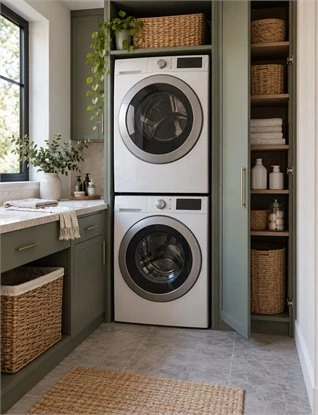
Butler’s pantry or laundry cabinetry
More cabinets mean more board material, door panels, drawers, hinges, slides, handles, packaging, transport volume, and installation work. This is why kitchen cabinet cost should always be calculated based on actual layout and cabinet quantity.
Layout Complexity
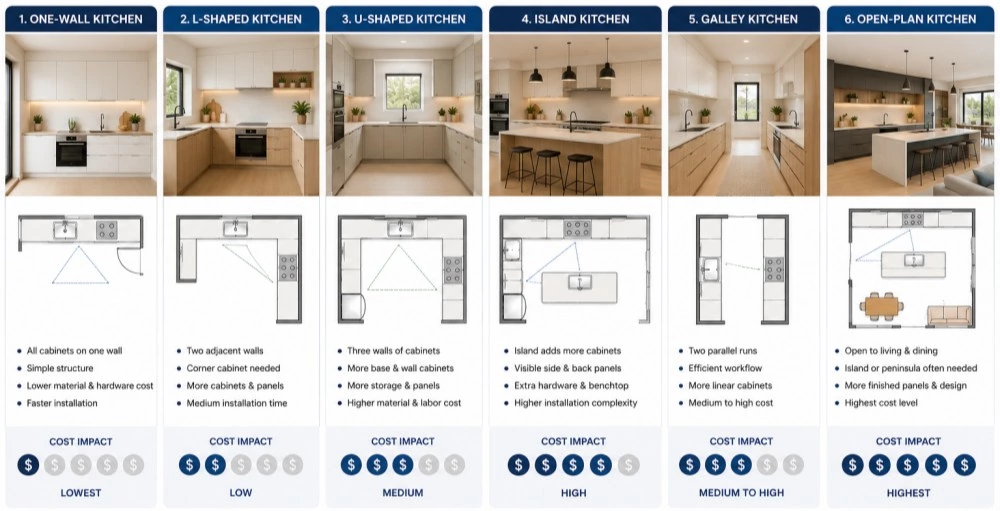
Kitchen layout also changes the total cost. A one-wall kitchen is usually simpler than an L-shaped, U-shaped, galley, or island kitchen. The more complex the layout, the more design planning and installation details are required.
For example, L-shaped kitchens often need corner cabinet solutions. Island kitchens require finished panels on multiple sides because the island is visible from the living or dining area. U-shaped kitchens may need more base cabinets, more wall cabinets, more fillers, and better workflow planning.
Common layouts that affect cabinet cost include:
-
One-wall kitchens
-
L-shaped kitchens
-
U-shaped kitchens
-
Island kitchens
-
Galley kitchens
-
Open-plan kitchens
-
Kitchens with butler’s pantry
-
Kitchens with built-in appliances
In Australian homes, open-plan kitchens are very common. Since the kitchen is often connected to the dining and living area, cabinet finishes, side panels, island backs, lighting, and storage details need to look more refined. This can increase the overall cabinet investment.
Material and Finish Selection
Material and finish are major cost drivers. A budget-friendly melamine kitchen cabinet system will not cost the same as a plywood cabinet system with lacquer doors, wood veneer panels, premium handles, and a stone benchtop.
Common cabinet materials and finishes include:
-
Particle board
-
MDF
-
Plywood
-
Melamine
-
Laminate
-
Lacquer
-
Wood veneer
-
Solid wood
-
PVC finishes
-
Quartz or sintered stone benchtops
Melamine and laminate are often used for cost-controlled projects because they offer practical surfaces, many colour choices, and easier maintenance. Lacquer and wood veneer usually cost more because they require more finishing work and create a more premium visual effect. Plywood cabinet boxes can also increase cost but offer better structural strength and long-term durability.
Kitchen Size: Small, Medium, and Large Kitchen Costs
Kitchen size directly affects cabinet quantity, material use, hardware quantity, and installation complexity. Before asking for a quote, homeowners should understand whether their project is a compact apartment kitchen, a medium family kitchen, or a large open-plan kitchen.
Small Apartment Kitchens
Small kitchens are usually more affordable because they require fewer cabinets. They are common in apartments, compact homes, rental units, and renovation projects where space is limited.
A small kitchen may include:
-
One-wall or L-shaped layout
-
Base cabinets
-
Wall cabinets
-
A few drawer units
-
Compact pantry storage
-
Simple benchtop
-
Limited appliance integration
Although the cabinet quantity is lower, small kitchens still need careful planning. Poor design can waste valuable space. Full-height cabinets, pull-out baskets, hidden appliance storage, and smart drawer organisation can make a compact kitchen feel much more practical.
For small Australian apartments, the goal is not simply to reduce cost. The goal is to use every centimetre efficiently while keeping the kitchen clean, bright, and easy to maintain.
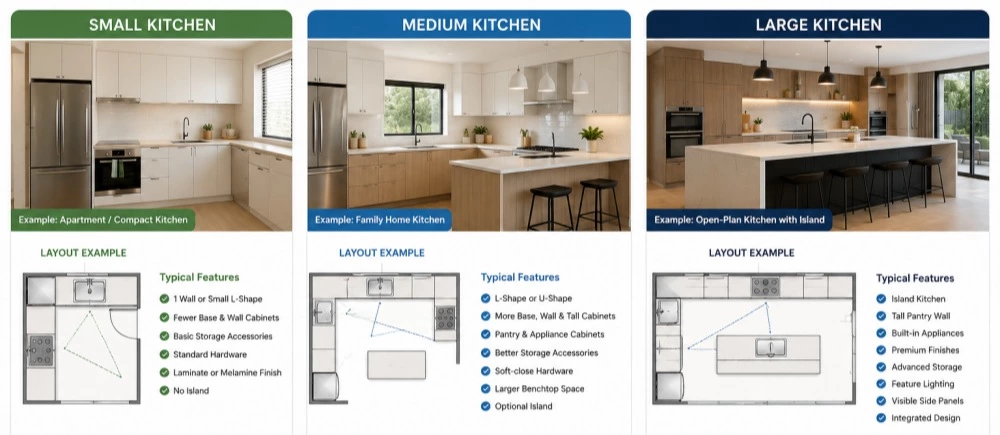
Medium Family Kitchens
Medium-sized kitchens are common in family homes and townhouses. They usually need more storage for cookware, food, tableware, cleaning supplies, and daily appliances.
A medium kitchen may include:
-
More base cabinets
-
Upper wall cabinets
-
Pantry cabinets
-
Appliance cabinet
-
Deep drawers
-
Soft-close hinges
-
Pull-out storage
-
More benchtop space
This type of kitchen often sits in the middle cost range. Homeowners can control the budget by choosing practical materials such as melamine or laminate, while still upgrading key areas such as drawer slides, pantry systems, and cabinet hardware.
For family kitchens, daily function is more important than decorative details. Storage planning, drawer depth, easy-clean finishes, and durable hardware can improve long-term use without wasting budget on unnecessary features.
Large Open-Plan Kitchens
Large open-plan kitchens usually cost more because they require more cabinets, more visible finishes, and more design consistency. In many Australian homes, the kitchen is part of the main living area, so it needs to look refined from multiple angles.
A large open-plan kitchen may include:
-
Large kitchen island
-
Full-height pantry wall
-
Built-in appliances
-
Integrated fridge panels
-
Wine storage
-
Display cabinets
-
Hidden appliance garage
-
Waterfall benchtop
-
LED lighting
-
Premium cabinet finishes
The island alone can increase the cabinet budget because it needs base cabinets, side panels, back panels, drawer systems, and a larger benchtop. If seating, power outlets, sink installation, or waterfall stone edges are added, the total project cost increases further.
For large kitchens, custom cabinetry provides better value because it allows the layout, materials, colours, appliance positions, and storage systems to be planned together.
Cabinet Type: Stock, Semi-Custom, and Fully Custom
The level of customisation also affects cost. In Australia, homeowners may compare stock cabinets, semi-custom cabinets, and fully custom kitchen cabinets before making a decision.
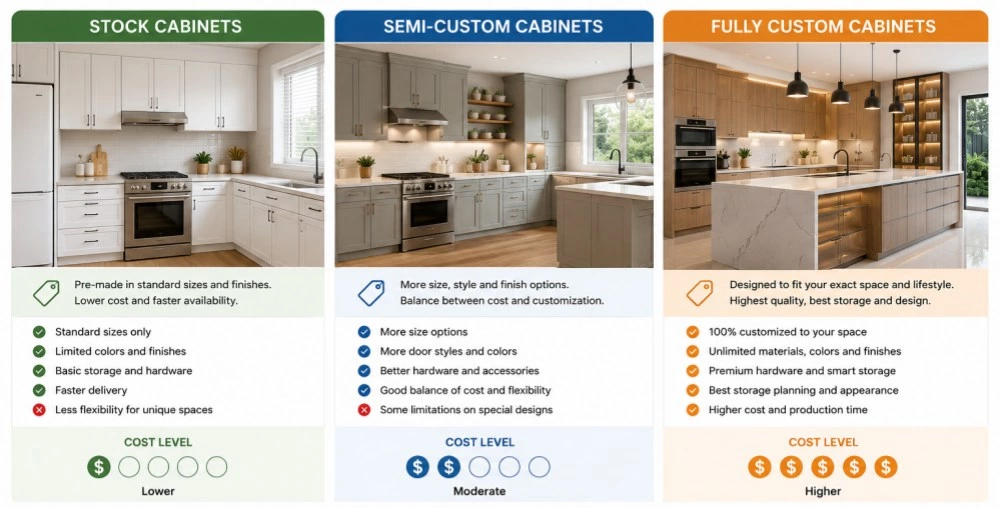
Stock Cabinets
Stock cabinets are pre-made in standard sizes and finishes. They usually have a lower upfront cost and faster availability.
Stock cabinets may suit:
-
Rental properties
-
Budget renovations
-
Simple layouts
-
Standard kitchen sizes
-
Short-term projects
However, stock cabinets may not fully fit the kitchen space. They offer limited sizes, colours, materials, storage options, and design flexibility. If the kitchen has unusual dimensions, awkward corners, tall ceilings, or integrated appliances, stock cabinets may leave gaps or require extra fillers.
For homeowners who want a seamless built-in look, strong storage planning, or a premium open-plan kitchen, stock cabinets may feel limited.
Semi-Custom Cabinets
Semi-custom cabinets provide more options than stock cabinets. Homeowners can usually choose from more door styles, colours, finishes, cabinet sizes, and storage accessories.
Semi-custom cabinets are suitable for homeowners who want:
-
More colour options
-
More cabinet sizes
-
Better storage accessories
-
Improved hardware
-
Some design flexibility
-
A mid-range budget
They are often a good balance between cost and personalisation. However, semi-custom cabinets still have limitations compared with fully custom cabinets. Some dimensions, finishes, and structural details may not be completely adjustable.
Fully custom kitchen cabinets are designed around the exact room measurements, lifestyle needs, appliance positions, material preferences, and design goals.
Custom cabinets are ideal for:
-
Australian open-plan homes
-
Luxury kitchens
-
Apartments with limited space
-
Villas and large homes
-
Builder projects
-
Developer projects
-
Full-house cabinetry projects
-
Kitchens with island and pantry walls
Fully custom cabinets usually cost more than stock or semi-custom cabinets, but they provide better fit, stronger storage planning, more material control, and a more refined final result. For homeowners who want a kitchen designed around their actual space instead of standard cabinet sizes, custom cabinetry is often the better long-term solution.
Materials That Affect Custom Kitchen Cabinets Cost in Australia
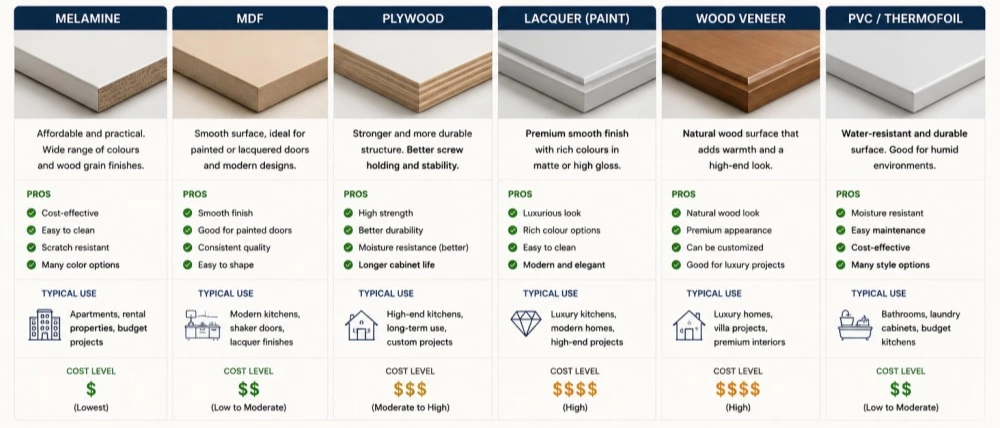
Material selection can significantly change the total cost. When comparing quotes, homeowners should check both the cabinet box material and the door panel material because they may not always be the same.
Melamine Cabinets
Melamine cabinets are popular for budget-conscious kitchens, apartments, rental projects, and builder developments. They offer a practical surface, many colour choices, and easy daily maintenance.
Melamine is suitable for:
-
Cost-controlled projects
-
Modern flat-panel kitchens
-
Apartments
-
Rental homes
-
Project kitchens
-
Easy-clean cabinet surfaces
Melamine can help control the overall cabinet budget while still offering clean, modern design options. It is a good choice when homeowners want practical kitchen cabinets without paying for premium lacquer or natural veneer finishes.
MDF Cabinets
MDF is commonly used for painted or lacquered cabinet doors because it has a smooth surface. It works well for modern flat-panel doors, shaker-style doors, and routed cabinet designs.
MDF is suitable for:
-
Painted doors
-
Lacquer finishes
-
Smooth modern designs
-
Shaker cabinet doors
-
Decorative door profiles
MDF usually costs more than basic particleboard but offers better surface quality for painted finishes. However, moisture protection, edge sealing, and finish quality are important, especially near sinks, dishwashers, and wet zones.
Plywood Cabinets
Plywood is often chosen for stronger cabinet boxes and better long-term stability. It offers better screw-holding strength and structural durability compared with many lower-cost materials.
Plywood is suitable for:
-
Higher-end kitchens
-
Long-term residential use
-
Stronger cabinet boxes
-
Heavy drawer systems
-
Humid or demanding environments
-
Project buyers who want durability
Plywood usually increases the cabinet cost, but it can improve cabinet strength and long-term performance. For homeowners who want durable custom kitchen cabinets, plywood is often worth considering.
Lacquer and Wood Veneer Finishes
Lacquer and wood veneer finishes usually cost more than melamine or laminate because they involve more detailed finishing processes.
Lacquer finishes offer:
-
Smooth surface
-
Custom colour options
-
Matte or gloss effects
-
Premium modern appearance
Wood veneer finishes offer:
-
Natural wood texture
-
Warmer residential feeling
-
High-end visual effect
-
Better design depth than printed wood grain
These finishes are especially suitable for luxury kitchens, open-plan homes, and projects where the kitchen is a visible part of the living space.
Countertop Materials
Benchtop selection can greatly affect the total kitchen budget. Some cabinet quotes include benchtops, while others only include cabinetry. This is one of the most common reasons homeowners misunderstand cabinet pricing.
Common benchtop options include:
-
Laminate benchtop
-
Quartz
-
Sintered stone
-
Natural stone
-
Marble-look surfaces
-
Waterfall island benchtop
A large island with a stone benchtop will cost much more than a simple laminate benchtop. Before comparing quotes, homeowners should confirm whether benchtops are included and what material is specified.
Hardware, Storage Accessories, and Functional Upgrades
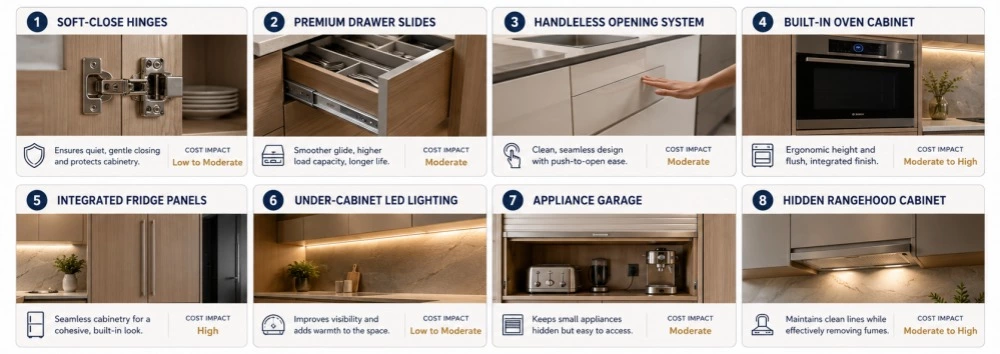
Hardware and storage accessories may seem like small details, but they affect both cost and daily comfort. A kitchen with basic hinges and shelves will cost less than a kitchen with premium soft-close drawers, pull-out pantry systems, corner hardware, and integrated lighting.
Basic Hardware vs Premium Hardware
Basic hardware includes standard hinges, handles, drawer slides, and simple cabinet opening systems. Premium hardware may include soft-close hinges, heavy-duty drawer slides, push-to-open systems, hidden handles, and high-quality pull-out mechanisms.
Premium hardware can increase cost, but it improves:
-
Daily comfort
-
Drawer stability
-
Long-term durability
-
Noise reduction
-
Cabinet performance
-
User experience
For kitchens used every day, upgrading key hardware areas can be a smart investment. Deep drawers, pantry units, and heavy cookware storage should use stronger hardware because they carry more weight.
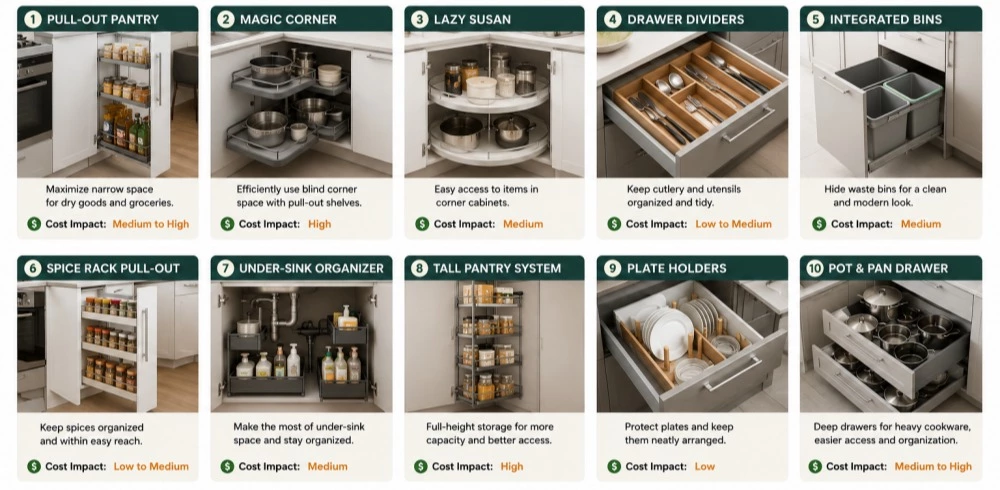
Smart storage accessories help homeowners organise the kitchen more efficiently. These upgrades are especially useful in compact Australian apartments, open-plan kitchens, and family homes with high storage needs.
Popular storage accessories include:
-
Pull-out pantry racks
-
Magic corner systems
-
Lazy Susan corner storage
-
Drawer dividers
-
Integrated rubbish bins
-
Spice racks
-
Under-sink organizers
-
Tall pantry systems
-
Plate holders
-
Pot and pan drawers
These features add cost because they require extra hardware, production planning, and installation adjustment. However, they also make the kitchen easier to use every day.
A good approach is to choose smart storage where it brings real value. For example, a pull-out pantry near the fridge, drawer dividers near the cooking zone, and under-sink organisers near the cleaning area can improve workflow without overloading the budget.
Lighting and Built-In Appliances
Lighting and appliance integration can also increase cabinet cost. Many modern kitchens include under-cabinet lighting, display lighting, appliance garages, integrated rangehood cabinets, built-in ovens, and fridge panels.
These details make the kitchen look cleaner and more premium, but they require more accurate design coordination. Electrical planning, appliance dimensions, ventilation space, and cabinet structure must be confirmed before production.
Common upgrades include:
-
Under-cabinet LED lighting
-
Open shelf lighting
-
Glass cabinet lighting
-
Built-in oven cabinet
-
Hidden rangehood cabinet
-
Integrated fridge panels
-
Appliance garage
-
Microwave cabinet
-
Coffee station cabinet
For open-plan Australian homes, these details can make the kitchen feel more connected to the living space.
Installation, Delivery, and Local Labour in Australia
The cost of custom kitchen cabinets does not end at production. Delivery, installation, local labour, site preparation, and final adjustment can all affect the final budget.
What Installation May Include
Kitchen cabinet installation may involve several steps, depending on the project.
Installation may include:
-
Removing old cabinets
-
Preparing walls
-
Assembling cabinets
-
Levelling base cabinets
-
Installing wall cabinets
-
Adding filler panels
-
Installing toe kicks
-
Adjusting doors and drawers
-
Coordinating benchtop installation
-
Coordinating plumbing
-
Coordinating appliance positions
-
Final alignment and cleaning
A simple kitchen is easier and faster to install. A complex kitchen with tall cabinets, an island, integrated appliances, stone benchtops, uneven walls, or apartment access restrictions will usually require more labour.
Why Australian Labour Costs Matter
Local labour costs can vary by city, installer availability, project complexity, and site condition. Sydney, Melbourne, Brisbane, Perth, Adelaide, and regional areas may have different installation rates and delivery conditions.
Factors that may affect local labour include:
-
Apartment access
-
Lift availability
-
Site parking
-
Old cabinet removal
-
Wall condition
-
Floor levelling
-
Plumbing adjustment
-
Electrical work
-
Benchtop coordination
-
Custom panel fitting
When comparing custom kitchen cabinets cost Australia, homeowners should always confirm whether installation is included, excluded, or provided as guidance only.
Remote Guidance and Installation Support
For imported custom cabinets, installation may be handled by a local installer, builder, contractor, or homeowner’s renovation team. In this case, accurate drawings and installation instructions are very important.
A reliable custom cabinet supplier should provide:
-
Detailed cabinet drawings
-
3D renderings
-
Packing list
-
Installation sequence
-
Hardware details
-
Panel labels
-
Remote installation guidance
-
Support for project questions
ALLURE supports international project buyers with design drawings, production details, export packaging, delivery support, and installation guidance, helping local teams understand how each cabinet system should be installed.
Imported Custom Kitchen Cabinets for Australia
Many Australian homeowners, builders, and project buyers compare local cabinet makers with imported custom kitchen cabinets. Imported cabinets can provide flexible customisation and factory-direct value, but buyers need to understand the full cost structure.
What Costs Are Included in Imported Cabinets
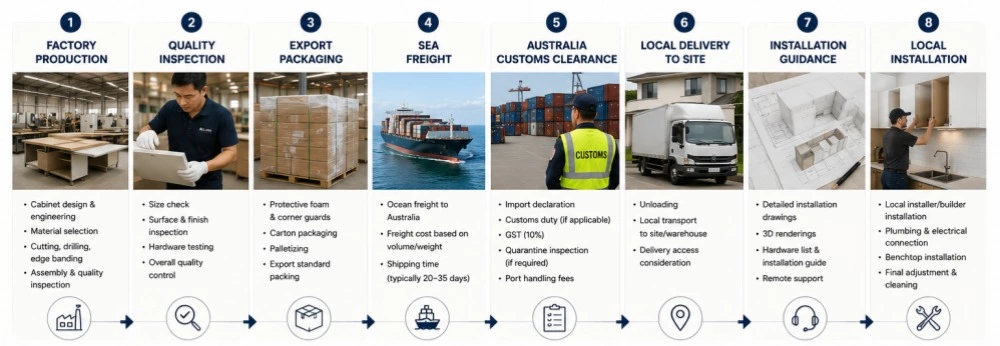
Imported custom kitchen cabinet costs may include:
-
Cabinet design
-
Material selection
-
Door finish selection
-
Hardware selection
-
Factory production
-
Quality inspection
-
Export packaging
-
Sea freight
-
Customs or import fees
-
Local delivery
-
Installation guidance
-
Local installation labour
The factory price is only one part of the full landed cost. Shipping, packaging, customs, local transport, and installation should all be considered before making a decision.
Why Some Australian Buyers Choose Imported Cabinets
Imported custom cabinets can be attractive for Australian buyers who want more design flexibility, more material choices, and factory-direct pricing. They are especially suitable for builders, developers, dealers, and full-house customisation projects.
Benefits may include:
-
Flexible sizing
-
More colour options
-
Wider material selection
-
Custom kitchen, wardrobe, bathroom, and laundry packages
-
Consistent design across the whole house
-
Factory-direct value
-
Project-based production
-
Export packaging support
For a single kitchen renovation, local service may be easier for some homeowners. For larger projects, full-house cabinetry, apartments, villas, and multi-room custom work, imported cabinets can offer strong value when managed properly.
What Buyers Should Confirm Before Importing
Before importing custom kitchen cabinets to Australia, buyers should confirm every detail clearly.
Important questions include:
-
Are the drawings based on exact measurements?
-
What material is used for cabinet boxes?
-
What material is used for door panels?
-
What hardware brand or type is included?
-
Are benchtops included?
-
Are cabinets shipped assembled or flat packed?
-
What packaging method is used?
-
What is the production lead time?
-
What shipping term is used?
-
Who handles customs and local delivery?
-
Who installs the cabinets locally?
-
What happens if parts are damaged during shipping?
Clear communication before production helps reduce mistakes, delays, and unexpected costs.
How to Get an Accurate Kitchen Cabinet Quote in Australia
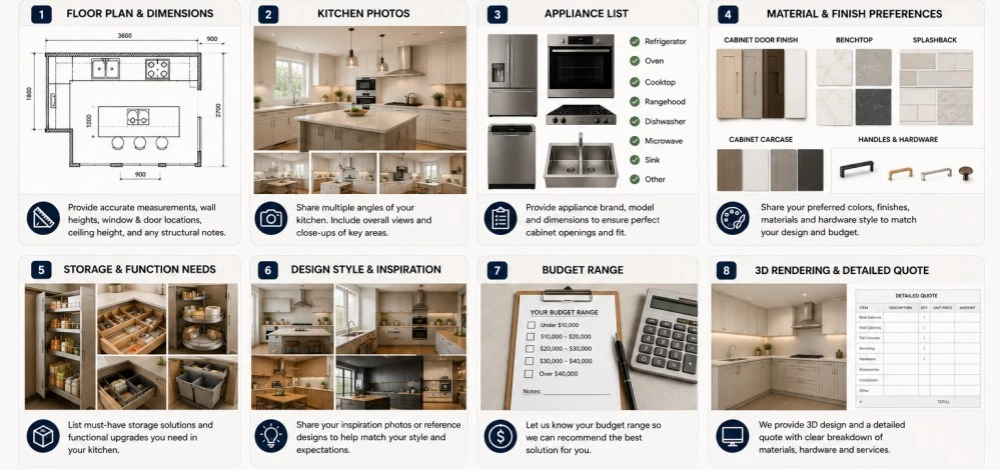
A reliable kitchen cabinet quote needs accurate project information. If the supplier only receives rough photos without measurements, the quote can only be approximate.
Prepare Your Floor Plan and Measurements
Before requesting a quote, prepare:
-
Wall dimensions
-
Ceiling height
-
Window position
-
Door position
-
Plumbing location
-
Electrical points
-
Appliance dimensions
-
Preferred kitchen layout
-
Site photos
-
Project location
These details help the supplier calculate cabinet quantity, material use, layout requirements, and installation details more accurately.
Confirm Your Preferred Style and Colour
Colour and finish selection can affect both appearance and cost. Some finishes are easier to produce, while others require more finishing work.
Popular custom kitchen cabinet colours in Australia include:
-
White kitchen cabinets
-
Wood grain kitchen cabinets
-
Grey kitchen cabinets
-
Black kitchen cabinets
-
Green kitchen cabinets
-
Two-tone kitchen cabinets
White cabinets create a bright and timeless look. Wood grain cabinets add warmth and natural texture. Grey cabinets feel calm and modern. Black cabinets create a bold luxury effect. Green cabinets add freshness and personality. Two-tone cabinets create more depth and design contrast.
Confirm Material, Hardware, and Storage Needs
A detailed quote should include your preferred cabinet materials, door finishes, hardware level, and storage accessories.
Confirm whether you need:
-
Melamine or lacquer finish
-
MDF or plywood cabinet structure
-
Soft-close hardware
-
Pull-out pantry
-
Corner storage
-
Drawer dividers
-
Integrated bins
-
Built-in appliances
-
Island cabinets
-
Benchtop included or excluded
The more clearly these details are confirmed, the more accurate the quote will be.
Ask for a Detailed Itemised Quote
A professional quote should show what is included instead of giving only one total number.
The quote should clearly separate:
-
Cabinet boxes
-
Door panels
-
Drawers
-
Hardware
-
Benchtop
-
Storage accessories
-
Lighting
-
Packaging
-
Shipping
-
Installation guidance
-
Lead time
This helps homeowners compare value, not just price.
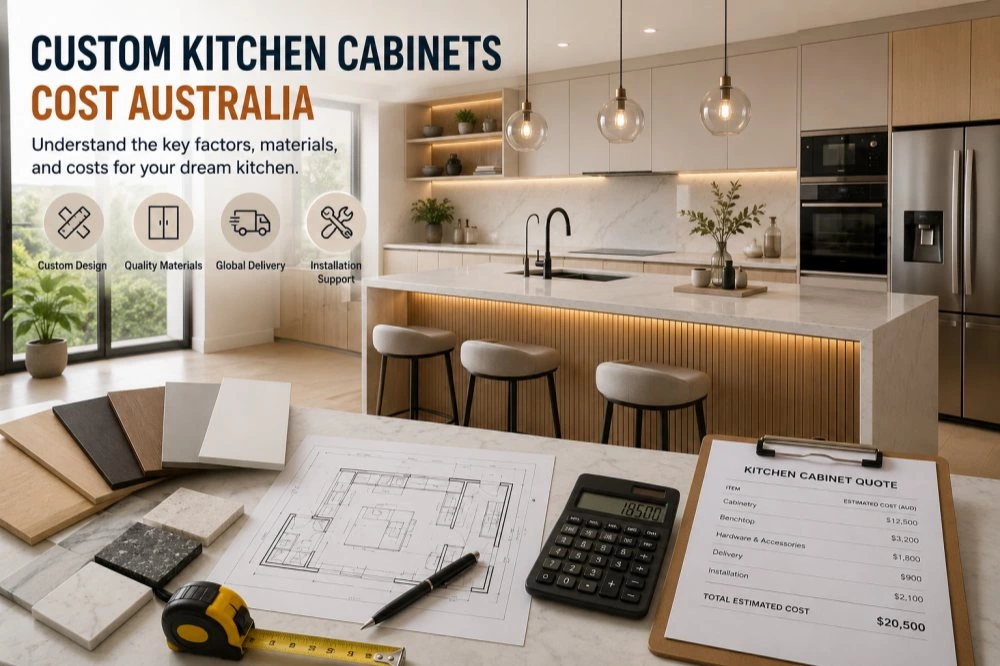
Custom Kitchen Cabinets Cost Australia: What Should Be Included in a Quote?
When comparing cabinet quotes, it is important to check what each quote includes. A cheaper quote may look attractive at first, but it may exclude benchtops, hardware, delivery, installation, or storage accessories.
| Cost Item | What It Includes | Why It Matters |
|---|---|---|
| Cabinet Boxes | Base, wall, and tall cabinets | Forms the main structure and storage capacity |
| Door Panels | Colour, finish, thickness, and door style | Affects the kitchen appearance and price |
| Drawers | Drawer boxes, slides, dividers | Improves daily storage and function |
| Hardware | Hinges, handles, drawer slides | Affects durability and user comfort |
| Benchtop | Quartz, stone, sintered stone, laminate | Can greatly change total project cost |
| Storage Accessories | Pantry pull-outs, corner systems, bins | Adds convenience and cost |
| Design Service | Layout drawings and 3D renderings | Helps avoid mistakes before production |
| Packing & Shipping | Export packaging, freight, delivery | Important for imported cabinets |
| Installation | Local labour or installation guidance | Affects final appearance and usability |
A complete quote allows homeowners to understand the real project cost and avoid unexpected expenses later.
How ALLURE Helps Australian Homeowners and Project Buyers Control Cabinet Cost
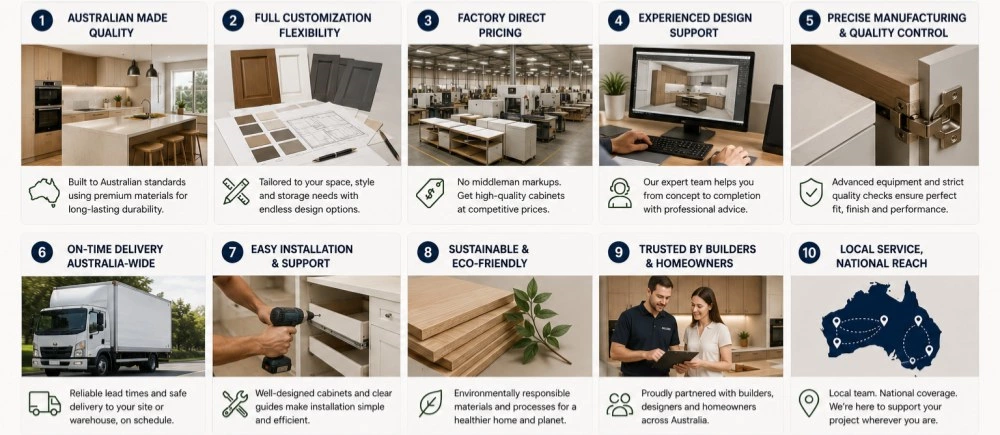
ALLURE helps Australian homeowners, builders, developers, and project buyers control kitchen cabinet cost from the design stage. Instead of quoting only by rough cabinet quantity, ALLURE can provide custom cabinet planning based on the actual layout, material preference, finish selection, and project requirements.
-
Custom kitchen cabinets
-
Whole-house cabinetry solutions
-
3D drawings and renderings
-
Material and finish selection
-
Kitchen, wardrobe, bathroom, and laundry cabinetry
-
Project-based quotations
-
Export packaging
-
Delivery support
-
Installation guidance
-
International project coordination
This helps buyers compare materials, storage systems, colours, hardware, and production details before confirming the order.
For Australian projects, this approach is useful because it allows buyers to control both design and budget. Whether the project is a compact apartment kitchen, a family home renovation, an open-plan island kitchen, or a full-house cabinetry package, clear planning helps reduce cost confusion and improve final results.
FAQ About Custom Kitchen Cabinets Cost Australia
What affects custom kitchen cabinets cost in Australia the most?
Kitchen size, layout, material, finish, hardware, benchtop, storage accessories, installation, delivery, and customisation level usually have the biggest impact on cost. A compact kitchen with simple cabinets costs less than a large open-plan kitchen with island cabinets, pantry walls, premium finishes, and smart storage.
Are custom kitchen cabinets more expensive than stock cabinets?
Yes. Custom kitchen cabinets usually cost more than stock cabinets because they are designed around exact measurements, materials, finishes, appliance positions, and storage needs. However, they can improve space use, visual consistency, and long-term value.
Is it cheaper to import custom kitchen cabinets to Australia?
Imported cabinets can offer factory-direct value, especially for larger projects or whole-house cabinetry packages. However, buyers should calculate the full landed cost, including production, packaging, sea freight, customs, local delivery, and installation.
What should I prepare before requesting a quote?
Prepare your floor plan, kitchen measurements, appliance list, preferred cabinet colour, material preference, storage needs, benchtop requirement, project location, and budget range. This helps the supplier provide a more accurate quotation.
Does the quoted cabinet cost include installation?
Not always. Some quotes include only cabinet production, while others may include delivery, installation guidance, or full installation. Always confirm what is included before comparing prices.
Can I customise cabinet colour and finish?
Yes. Custom kitchen cabinets can be designed in white, wood grain, grey, black, green, two-tone finishes, lacquer, melamine, veneer, PVC, and other material options.
Are custom cabinets suitable for Australian open-plan kitchens?
Yes. Custom cabinets are ideal for Australian open-plan kitchens because island design, tall storage, appliance integration, hidden storage, and visible side panels can be planned together for a clean and consistent living space.
What is the best material for custom kitchen cabinets in Australia?
The best material depends on budget, usage, design style, and durability needs. Melamine is practical and cost-effective, MDF is suitable for painted doors, plywood offers stronger structure, and wood veneer or lacquer creates a more premium finish.
How can I reduce custom kitchen cabinet cost without losing quality?
You can control cost by choosing practical materials, using premium hardware only where needed, keeping the layout efficient, avoiding unnecessary decorative panels, and confirming all details before production.
How long does custom kitchen cabinet production usually take?
Production time depends on project size, material selection, finish complexity, order quantity, and shipping method. A single kitchen cabinet order is usually faster than a full-house customisation project with wardrobes, bathroom cabinets, laundry cabinetry, and interior doors.
Conclusion
Custom kitchen cabinets cost Australia are not a fixed price. It depends on kitchen size, layout, material, finish, hardware, benchtop, storage accessories, shipping, installation, and project requirements.
Small kitchens usually cost less because they need fewer cabinets. Medium family kitchens require more storage and stronger daily function. Large open-plan kitchens with island cabinets, pantry walls, built-in appliances, premium finishes, and smart storage usually require a higher investment.
For Australian homeowners, builders, developers, and project buyers, the best way to control cabinet cost is to start with a clear layout, accurate measurements, preferred materials, colour direction, and storage requirements.
ALLURE provides custom kitchen cabinet design, 3D drawings, material selection, project-based quotation, production, export packaging, delivery support, and installation guidance for Australian and international projects. Whether you are planning a compact apartment kitchen, an open-plan island kitchen, or a full-house cabinetry project, ALLURE can help you compare options and control your cabinet budget before production.