A small kitchen does not always need a bigger floor plan. In most homes, apartments, rental units, and compact residential projects, the real problem is not the kitchen size but the way storage is planned.
Poor cabinet depth, wasted corner space, limited pantry storage, cluttered countertops, and hard-to-reach upper cabinets can make a small kitchen feel even smaller. With the right cabinet layout, a compact kitchen can become cleaner, more organized, and easier to use every day.
If you are looking for practical small kitchen cabinet ideas, the key is to use every inch wisely. Floor-to-ceiling cabinets, pull-out pantry units, deep drawers, hidden storage, built-in appliances, and custom cabinet interiors can all help improve space efficiency without making the kitchen feel crowded.
Below are 10 smart cabinet ideas that can help maximize storage, improve daily cooking efficiency, and create a more comfortable kitchen layout for modern homes.
Use Floor-to-Ceiling Kitchen Cabinets
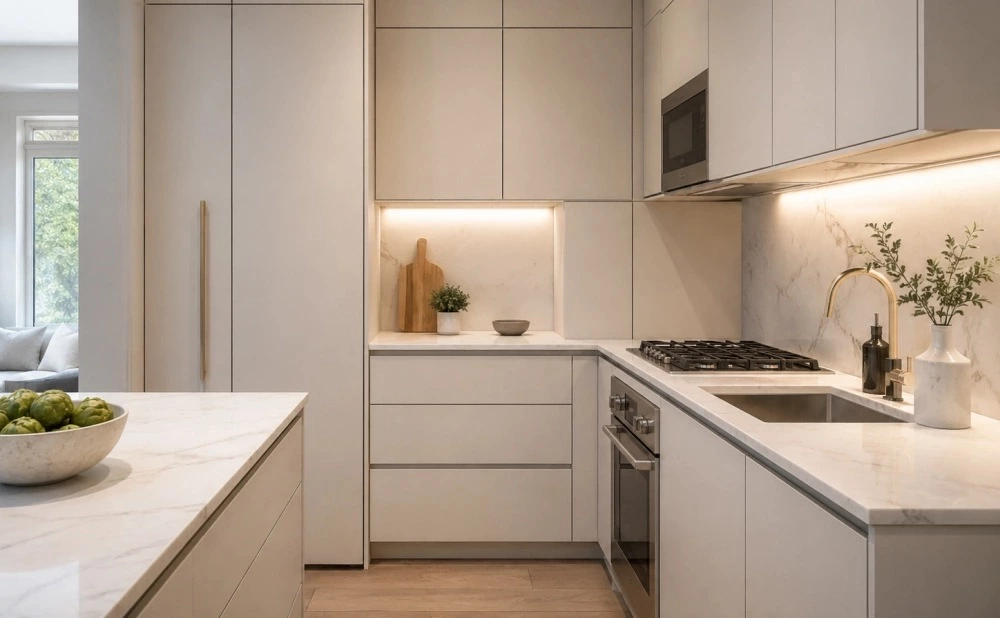
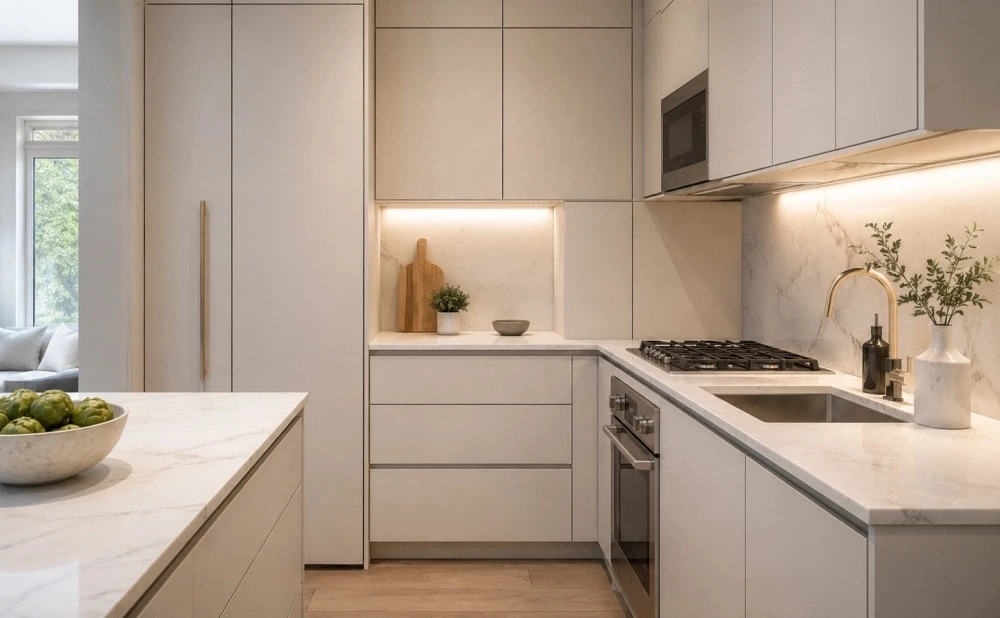
Floor-to-ceiling cabinets are one of the most effective small kitchen cabinet ideas for compact homes and apartments. Instead of leaving unused space above wall cabinets, a full-height cabinet system uses the entire wall to create more storage.
This design is especially useful for storing items that are not used every day, such as seasonal cookware, extra dishes, dry food, cleaning supplies, and small appliances. It helps keep the countertop clear and makes the whole kitchen look more organized.
For small kitchens, floor-to-ceiling cabinets also create a cleaner vertical line. When designed with simple cabinet doors, light colors, or handleless panels, they can make the kitchen feel taller and more unified instead of heavy.
Best for:
Apartment kitchens, studio kitchens, compact family homes, rental projects, and modern residential developments.
Design Benefits:
- Uses full wall height for extra storage
- Reduces wasted upper space
- Keeps dry food, cookware, and appliances hidden
- Creates a cleaner and more seamless kitchen wall
- Makes compact kitchens feel more organized
For a more customized result, cabinet height, internal shelves, lift-up doors, and upper storage zones can be designed according to ceiling height and daily storage habits.
Add Pull-Out Pantry Cabinets
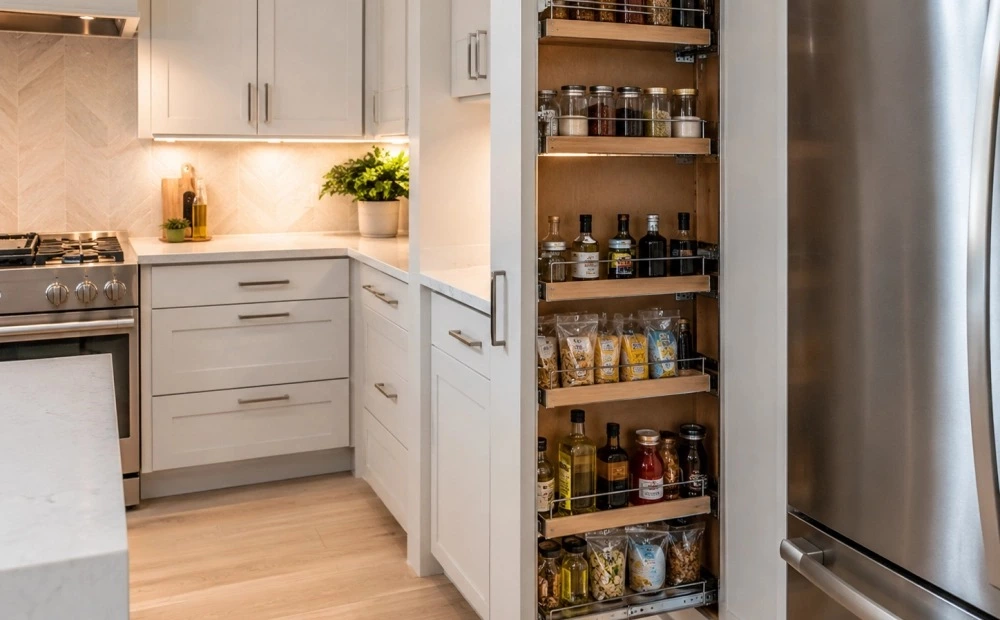
A pull-out pantry cabinet is a smart way to turn a narrow kitchen gap into practical storage. It is commonly placed beside a refrigerator, oven, wall cabinet, or tall cabinet unit.
Unlike fixed shelves, a pull-out pantry allows users to see and reach stored items more easily. Spices, bottles, snacks, canned food, sauces, and dry ingredients can be arranged in a slim vertical system instead of being scattered across the countertop.
This is one of the most useful small kitchen cabinet ideas because many compact kitchens have narrow spaces that are too small for a standard cabinet, but are still valuable for storage.
Best for:
Small apartments, narrow kitchens, rental units, and homes with limited pantry space.
Design Benefits:
- Uses narrow spaces efficiently
- Keeps spices, bottles, and food items organized
- Makes stored items easier to reach
- Reduces countertop clutter
- Improves daily cooking convenience
A custom pull-out pantry cabinet can be adjusted by width, height, basket depth, handle design, and weight capacity to match the actual kitchen layout.
Choose Deep Drawers Instead of Fixed Shelves
Traditional lower cabinets with fixed shelves often create storage problems in small kitchens. Items placed at the back are hard to see and difficult to reach. As a result, many cabinets become messy or underused.
Deep drawers solve this problem by bringing the entire storage area forward. Users can easily access pots, pans, plates, bowls, food containers, and cooking tools without bending down or searching through dark cabinet corners.
This design makes lower cabinets more practical and improves daily kitchen efficiency. For homeowners who cook often, deep drawers are usually more useful than basic shelf cabinets.
Best for:
Lower cabinets, cooking zones, kitchen islands, compact kitchens, and family kitchens.
Design Benefits:
- Easier access than fixed shelves
- Better for pots, pans, plates, and food containers
- Prevents items from being hidden at the back
- Supports drawer dividers and organizers
- Makes daily cooking faster and more convenient
For better performance, deep drawers should use durable drawer slides, soft-close hardware, and internal organizers based on the size of cookware and tableware.
Use Corner Cabinet Storage Systems
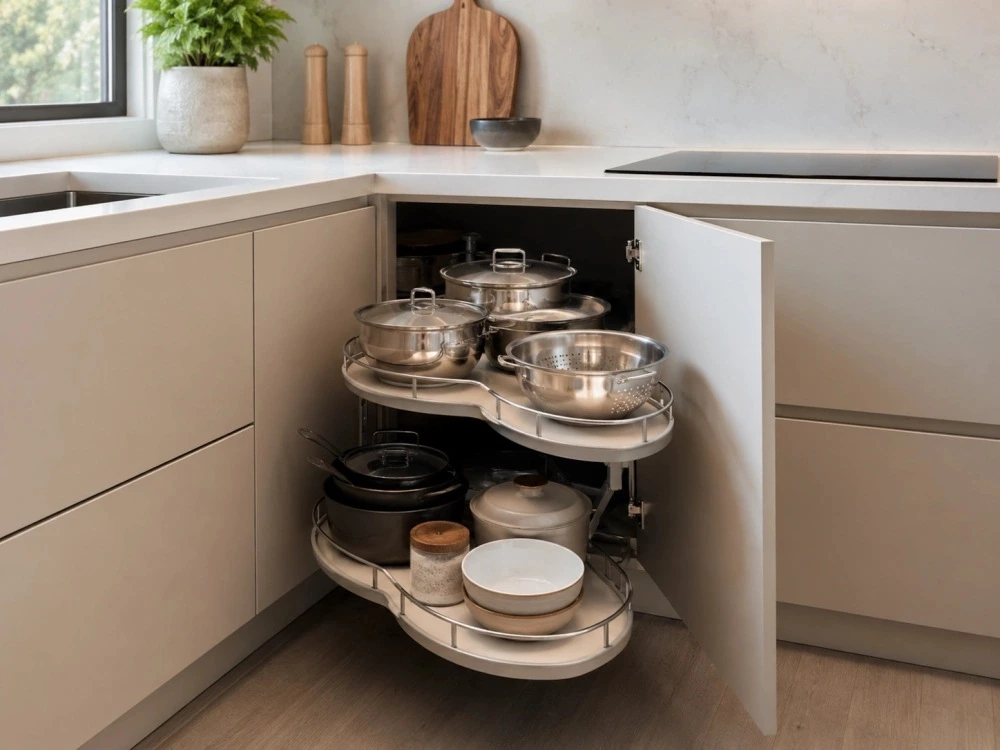
Corner space is often wasted in small kitchen layouts. Standard corner cabinets can be deep and difficult to access, making them one of the least efficient parts of the kitchen.
A smart corner storage system can turn this difficult area into practical storage. Options include lazy Susan trays, magic corner units, swing-out baskets, pull-out corner shelves, and rotating storage systems.
These solutions allow users to store pots, pans, dry food, small appliances, or cleaning supplies in corners without losing access.
Best for:
L-shaped kitchens, U-shaped kitchens, compact kitchen corners, and apartment kitchens.
Design Benefits:
- Makes blind corners usable
- Improves access to deep cabinet space
- Stores cookware and pantry items efficiently
- Reduces wasted storage areas
- Helps small kitchens work harder
For custom kitchen projects, the corner cabinet solution should be selected according to cabinet depth, door opening direction, user height, and daily cooking habits.
Install Wall-Mounted Upper Cabinets
Wall-mounted upper cabinets are a classic but important storage solution for small kitchens. They add storage without taking up floor space, making them ideal for plates, glasses, food items, and daily kitchen tools.
However, upper cabinets should be designed carefully. If they are too bulky or too dark, they can make a small kitchen feel heavy. Light colors, glass doors, slim frames, open sections, and under-cabinet lighting can help reduce visual pressure.
Upper cabinets can also be combined with tall cabinets, open shelves, or built-in appliance storage to create a more balanced kitchen wall.
Best for:
Compact kitchens, apartment kitchens, rental homes, and narrow kitchen layouts.
Design Benefits:
- Adds storage without using floor area
- Keeps plates, cups, and food items organized
- Makes daily items easy to access
- Works well with under-cabinet lighting
- Improves kitchen wall organization
For small kitchens, upper cabinets should balance storage and openness. A fully covered wall may provide more storage, but a mix of closed cabinets and open display areas often feels lighter.
Add Open Shelves for Daily-Use Items
Open shelves are not a replacement for cabinets, but they are a useful addition in small kitchens. They provide quick access to cups, plates, spice jars, small plants, decorative items, or frequently used cooking tools.
Compared with closed cabinets, open shelves make the kitchen feel more relaxed and visually open. They can also break up large cabinet walls and add a lifestyle-focused detail to the kitchen.
However, open shelves should be used in moderation. Too many open shelves can make a small kitchen look messy, especially if items are not arranged neatly.
Best for:
Coffee corners, spice zones, compact walls, breakfast areas, and modern apartment kitchens.
Design Benefits:
- Keeps daily-use items within reach
- Makes the kitchen feel lighter and more open
- Adds decorative value
- Reduces the visual weight of full-wall cabinets
- Works well with wood, metal, or floating shelf designs
For a cleaner look, open shelves should be placed near the cooking or preparation area and used for items with similar colors, shapes, or materials.
Use Slim Cabinets for Narrow Spaces
Small kitchens often have narrow gaps beside the refrigerator, stove, sink, or wall. These spaces are usually too small for standard cabinets, but they can still become useful storage zones.
Slim cabinets are perfect for storing spice bottles, oil bottles, trays, cutting boards, cleaning tools, and baking sheets. A narrow pull-out cabinet can make these items easy to reach while keeping them hidden when not in use.
This is one of the most practical small kitchen cabinet ideas because it improves storage without changing the main kitchen layout.
Best for:
Narrow gaps, refrigerator sides, oven sides, sink areas, and compact cooking zones.
Design Benefits:
- Uses small gaps efficiently
- Stores spices, oils, trays, and cutting boards
- Keeps narrow items organized
- Reduces wasted side spaces
- Improves kitchen workflow
Slim cabinets can be customized with pull-out baskets, vertical dividers, metal racks, or adjustable shelves, depending on what needs to be stored.
Choose Handleless Cabinet Doors
Handleless cabinet doors help small kitchens look cleaner and more spacious. Without visible handles, the cabinet surface appears smoother and less crowded.
This design is especially useful in narrow kitchen aisles where protruding handles can get in the way. Handleless doors also work well with modern, minimalist, and high-end kitchen styles.
Push-to-open systems, recessed handles, J-pull profiles, and aluminum grip channels are common options for handleless kitchen cabinets.
Best for:
Modern apartments, minimalist kitchens, narrow kitchen layouts, and luxury compact homes.
Design Benefits:
- Creates a clean and seamless cabinet surface
- Reduces visual clutter
- Avoids handle bumps in narrow aisles
- Makes small kitchens look more modern
- Works well with matte, glossy, or wood finishes
For long-term use, handleless cabinet systems should be designed with durable hardware and easy-clean surfaces.
Add Built-In Appliance Cabinets
Countertop appliances can quickly make a small kitchen feel crowded. Microwaves, ovens, coffee machines, rice cookers, mixers, and small kitchen tools often take up valuable working space.
Built-in appliance cabinets help solve this problem by giving each appliance a dedicated position. A built-in oven cabinet, microwave tower, appliance garage, refrigerator side cabinet, or pull-out appliance shelf can make the kitchen more organized and easier to use.
This design improves both storage and visual order. It also helps create a more professional and integrated kitchen appearance.
Best for:
Small modern kitchens, open-plan apartments, rental projects, and family homes.
Design Benefits:
- Frees up valuable countertop space
- Keeps appliances organized
- Improves kitchen workflow
- Creates a cleaner built-in look
- Supports modern kitchen design
When planning appliance cabinets, it is important to consider ventilation, plug positions, appliance size, door opening direction, and daily usage frequency.
Customize Cabinet Interiors for Daily Habits
The outside appearance of a kitchen cabinet is important, but the interior layout decides how well the kitchen works every day.
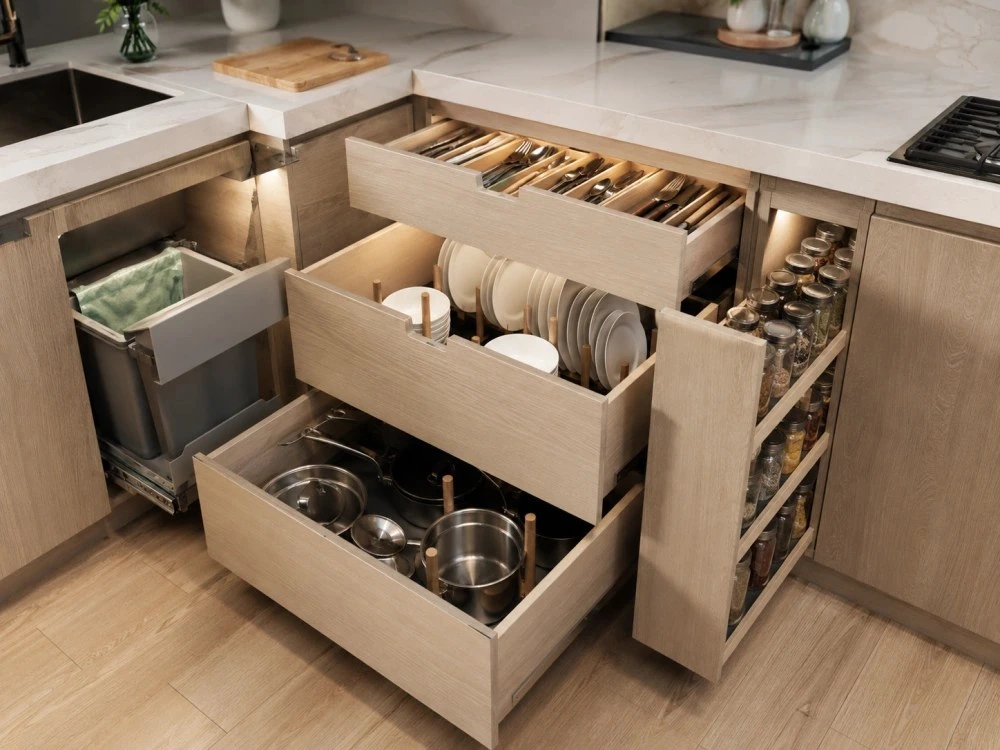
Custom cabinet interiors allow storage to be planned around real cooking habits. Cutlery trays, spice racks, plate organizers, drawer dividers, waste bin pull-outs, cleaning supply storage, adjustable shelves, and pot drawers can all make a small kitchen more efficient.
A good custom kitchen cabinet design should consider how the homeowner cooks, cleans, stores food, uses appliances, and prepares meals.
Best for:
Custom kitchens, family homes, apartments, hotels, and full-house customization projects.
Design Benefits:
- Improves daily organization
- Reduces wasted cabinet space
- Keeps items easier to find
- Supports different cooking habits
- Makes the kitchen cleaner and more practical
This is the most important part of many small kitchen cabinet ideas because a well-organized cabinet interior can make even a compact kitchen feel easier to use.
Best Materials for Small Kitchen Cabinets
Small kitchen cabinets need to be attractive, durable, easy to clean, and suitable for daily use. Material selection affects not only appearance but also long-term performance.
Plywood Cabinets
Plywood is a strong and stable material for kitchen cabinet structures. It has good screw-holding strength and better moisture resistance than some basic board materials.
For kitchens that are used frequently, plywood can provide a durable cabinet foundation, especially for base cabinets, sink areas, and heavy storage zones.
MDF Cabinet Doors
MDF is commonly used for cabinet doors because it has a smooth surface and works well with painted, matte, glossy, or lacquered finishes.
For modern small kitchens, MDF doors can create a clean and refined look. They are suitable for flat-front cabinet designs, handleless styles, and simple minimalist kitchens.
E0 / E1 Eco-Friendly Boards
For residential projects, indoor air quality is an important concern. E0 and E1 eco-friendly boards help meet better environmental standards and are suitable for apartments, family homes, hotels, and full-house customization projects.
Using eco-conscious materials can also improve buyer confidence, especially for families, developers, and project clients.
Durable Hardware Systems
Hardware has a major impact on daily use. Soft-close hinges, full-extension drawer slides, pull-out baskets, lift-up door systems, and corner storage mechanisms should be selected carefully.
In a small kitchen, cabinets are used frequently, so reliable hardware helps improve comfort, safety, and long-term durability.
Design Tips to Make a Small Kitchen Look Bigger
Storage is important, but visual comfort also matters. A small kitchen should not only store more items but also feel bright, clean, and easy to move around.
Use Light Cabinet Colors
White, cream, light grey, beige, and natural wood tones can make a small kitchen feel brighter and more spacious. These colors reflect light better than dark finishes and reduce visual heaviness.
Keep Cabinet Lines Simple
Flat cabinet fronts, handleless doors, slim frames, and straight cabinet lines create a cleaner appearance. Too many patterns or decorative panels can make a compact kitchen feel busy.
Add Under-Cabinet Lighting
Lighting under upper cabinets improves visibility for cooking and preparation. It also adds depth to the cabinet wall and makes the kitchen feel warmer and more refined.
Use Reflective Surfaces Carefully
Glossy backsplash panels, glass cabinet doors, or light stone countertops can reflect light and make the space feel larger. However, they should be balanced with matte or wood textures to avoid a cold feeling.
Avoid Too Many Open Shelves
Open shelves can make the kitchen feel lighter, but too many displayed items may create clutter. Use open shelves only for selected daily-use items or decorative pieces.
Match Cabinet and Countertop Tones
A coordinated color palette helps small kitchens feel more unified. Matching or softly contrasting cabinet, countertop, wall, and floor colors can create a cleaner visual flow.
Custom Small Kitchen Cabinets for Apartments, Villas, and Projects
Different users need different cabinet solutions. A small apartment kitchen, a villa secondary kitchen, a serviced apartment unit, and a hotel kitchenette may all require different layouts, materials, and storage systems.
Apartment Owners
Apartment owners often face limited kitchen space, narrow aisles, and not enough storage. Custom kitchen cabinets can use wall height, corners, and narrow gaps to create more storage without increasing the kitchen footprint.
For apartments, the most useful solutions include tall cabinets, pull-out pantry units, deep drawers, wall-mounted cabinets, and built-in appliance storage.
Villa Projects
Villa kitchens often need better design consistency with the rest of the home. Custom kitchen cabinets can be matched with wardrobes, bathroom vanities, TV cabinets, and other whole-house furniture.
For villas, cabinet design should focus on premium materials, smooth workflow, appliance integration, and a unified modern or luxury interior style.
Rental and Serviced Apartments
Rental and serviced apartment kitchens need durable materials and easy-maintenance finishes. Cabinets should be practical, cost-efficient, and able to handle frequent daily use.
Simple flat doors, moisture-resistant boards, durable hardware, and stain-resistant countertops can help reduce long-term maintenance costs.
Hotel and Residential Projects
Hotels and residential developments need stable quality, consistent appearance, and efficient installation. Custom cabinet modules can be planned based on project size, room type, and delivery schedule.
For project clients, standardized dimensions, reliable hardware, easy-clean surfaces, and professional installation support are especially important.
Common Mistakes to Avoid in Small Kitchen Cabinet Design
A small kitchen can become difficult to use if cabinet planning is not done carefully. Avoiding common mistakes can improve storage, appearance, and long-term comfort.
Using Too Many Dark Cabinets
Dark cabinets can look elegant, but too much dark color may make a small kitchen feel smaller. If dark finishes are used, they should be balanced with light countertops, bright walls, glass, or under-cabinet lighting.
Ignoring Corner Storage
Corner cabinets are often wasted because they are difficult to access. A good corner storage system can turn blind corners into practical storage for cookware, pantry items, or small appliances.
Choosing Fixed Shelves for Deep Base Cabinets
Fixed shelves can make lower cabinets hard to use. Deep drawers or pull-out shelves are usually better for compact kitchens because they make stored items easier to see and reach.
Leaving Empty Space Above Upper Cabinets
Unused space above wall cabinets often collects dust and wastes valuable storage. Full-height cabinets or extended upper cabinets can make better use of vertical space.
Not Planning Appliance Storage
Small appliances can quickly crowd the countertop. Built-in appliance cabinets, appliance garages, and dedicated storage zones help keep the kitchen cleaner.
Using Poor-Quality Hardware
Low-quality hinges and drawer slides may affect daily use, especially in small kitchens where cabinets are opened frequently. Durable hardware is important for long-term performance.
Overusing Open Shelves
Open shelves should be functional and decorative, not excessive. Too many open shelves can make a small kitchen look messy and harder to clean.
Not Considering Daily Cooking Habits
A cabinet layout should match how the user actually cooks, stores food, cleans, and uses appliances. A beautiful kitchen may still feel inconvenient if the interior planning does not match daily habits.
Why Choose Custom Cabinets for Small Kitchens?
Custom cabinets are especially valuable for small kitchens because standard cabinets often leave unused gaps, awkward corners, and inefficient storage areas.
With a custom cabinet design, every wall, corner, narrow gap, cabinet depth, drawer layout, and appliance position can be planned according to the actual space.
Key Advantages of Custom Small Kitchen Cabinets
- Perfect wall-to-wall fit
- Better use of vertical space
- Customized drawer and shelf layout
- Flexible color and material options
- Integrated appliance storage
- Better corner and narrow-space solutions
- Cleaner modern appearance
- Professional measurement and installation support
For homeowners, custom cabinets improve daily convenience. For hotels, apartments, and residential projects, they also help create a more consistent, durable, and high-value kitchen solution.
A professional custom cabinet supplier can help with layout planning, material selection, internal storage design, production, delivery, and installation support.
FAQ About Small Kitchen Cabinet Ideas
What cabinet design is best for a small kitchen?
The best cabinet design for a small kitchen usually includes floor-to-ceiling cabinets, deep drawers, pull-out pantry storage, corner cabinet systems, and built-in appliance cabinets. These solutions help maximize storage while keeping the kitchen clean and practical.
Are custom cabinets worth it for a small kitchen?
Yes. Custom cabinets are especially useful for small kitchens because they can fit exact wall sizes, use narrow gaps, improve corner storage, and create a more efficient cabinet interior. This reduces wasted space and improves daily kitchen use.
What color cabinets make a small kitchen look bigger?
Light colors such as white, cream, beige, light grey, and natural wood tones can make a small kitchen feel brighter and more spacious. Handleless doors and simple cabinet lines can also help reduce visual clutter.
How can I add more storage to a small kitchen?
You can add more storage with tall cabinets, pull-out pantry units, deep drawers, wall-mounted upper cabinets, slim side cabinets, corner storage systems, and built-in appliance cabinets.
What materials are suitable for small kitchen cabinets?
Plywood, MDF, and E0/E1 eco-friendly boards are commonly used for kitchen cabinets. Durable hinges, full-extension drawer slides, moisture-resistant finishes, and easy-clean surfaces are also important for long-term use.
How do I make a small kitchen look less crowded?
Use light colors, simple cabinet fronts, hidden handles, under-cabinet lighting, organized drawer interiors, and limited open shelving. Keeping appliances and daily items hidden inside cabinets also helps the kitchen look cleaner.
Can small kitchen cabinets be customized for apartments or hotels?
Yes. Small kitchen cabinets can be customized for apartments, hotels, serviced apartments, rental projects, villas, and residential developments. Cabinet size, material, color, internal storage, appliance position, and installation method can all be adjusted.
Conclusion
Small kitchens can be highly functional when the cabinet layout is planned carefully. From floor-to-ceiling cabinets and pull-out pantry systems to deep drawers, corner storage, slim cabinets, and built-in appliance storage, the right design can improve both storage and daily efficiency.
The best small kitchen cabinet ideas are not only about adding more cabinets. They are about using space more intelligently, reducing visual clutter, improving workflow, and creating a kitchen that feels clean, comfortable, and easy to use.
For apartments, villas, hotels, serviced apartments, and whole-house customization projects, custom kitchen cabinets can be designed around exact room size, storage needs, material preferences, and installation requirements. A well-planned cabinet system helps every small kitchen feel larger, cleaner, and more practical.